I write more often about animals (insects, reptiles, birds, mammals) than plants, but I glory in it all. Look at a corner of my wetlands back here in Maine.
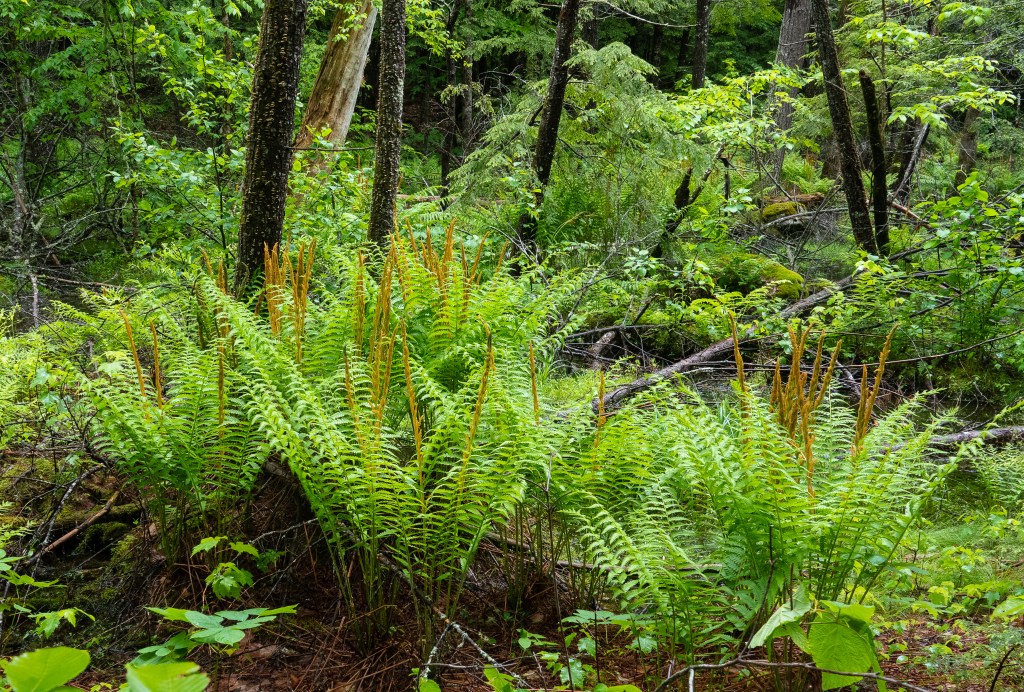
These rusty spikes in the foreground were familiar to the dinosaurs 180 million years ago, and have barely changed since.
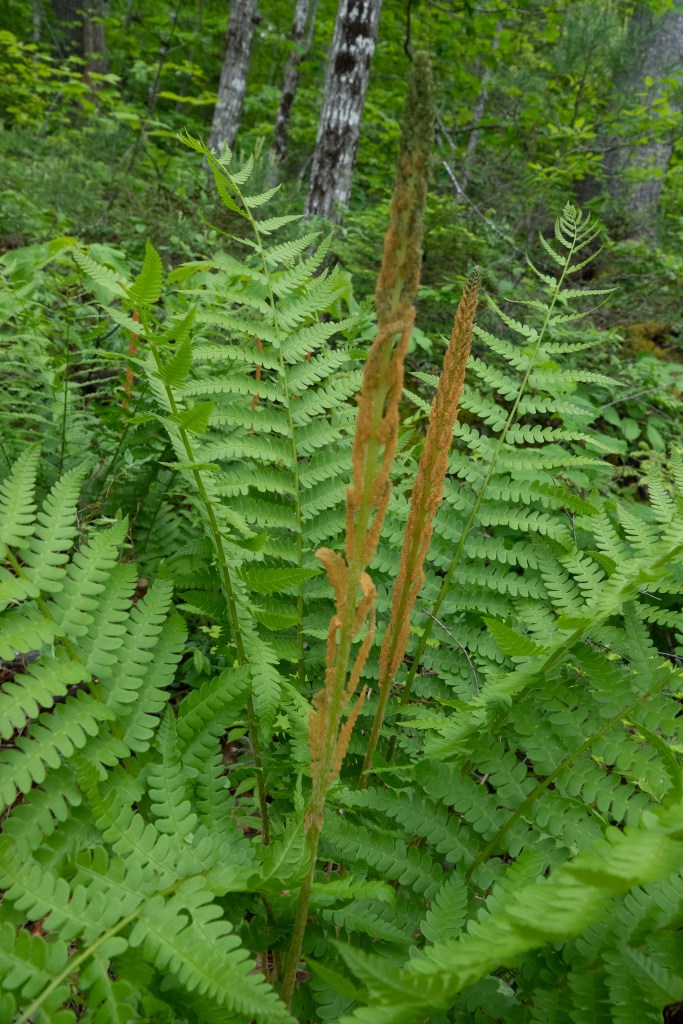
They are Cinnamon Ferns, Osmundastrum cinnamomeum, and are considered a living fossil. Their name comes only from their color: don’t put them in your apple pie. Unlike our more modern plants, they do not produce seeds. They reproduce by spores, like fungi do.
The ferns are six feet tall, and they send up specialized dark green fertile fronds,
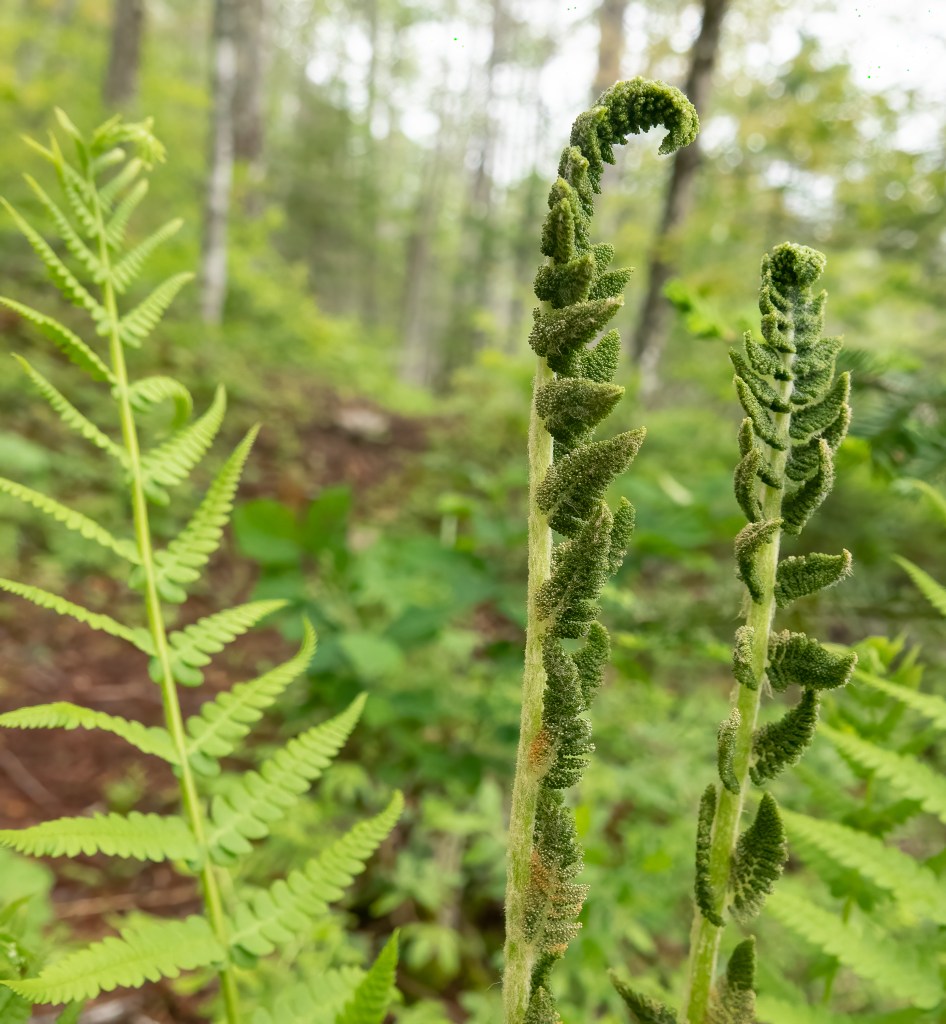
The fronds are covered in tiny globules called sporangia, within which the spores are gestating.
As they ripen, they turn a cinnamon orange, like the flanking spikes below:
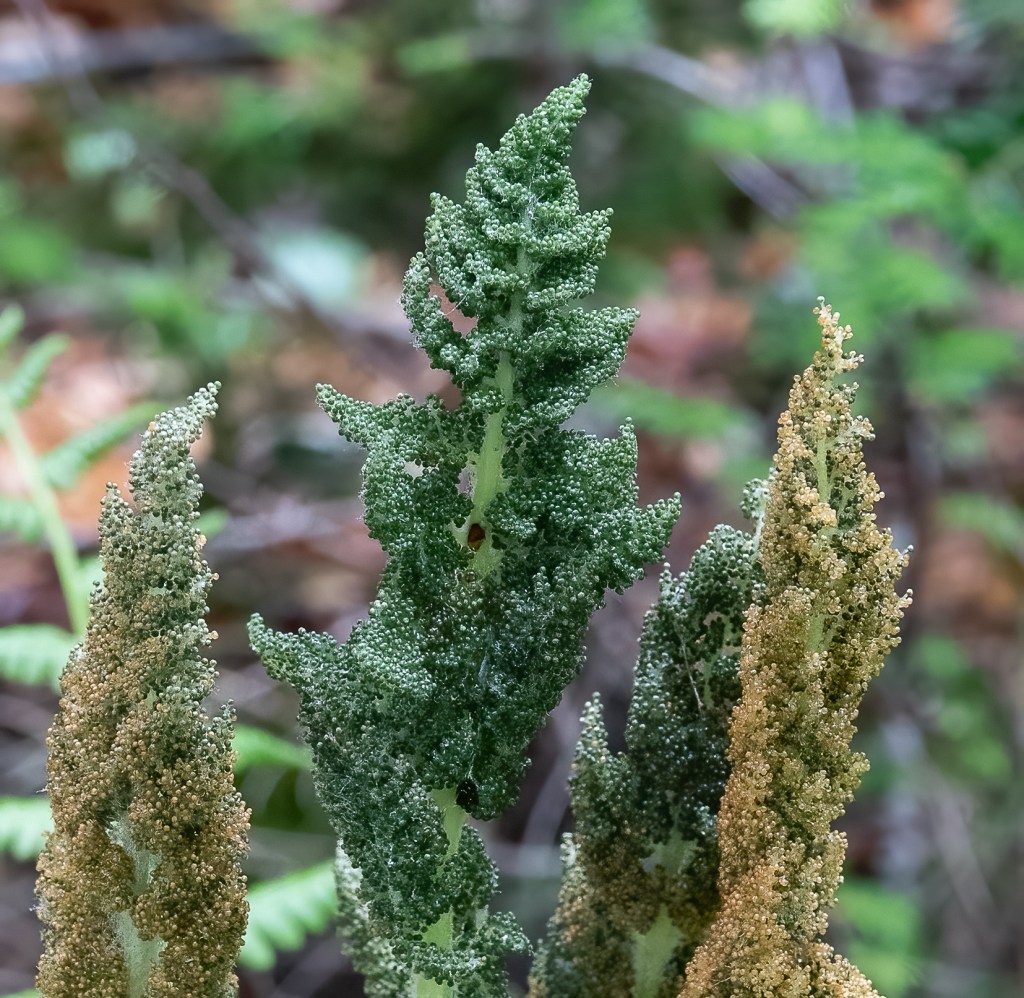
working from the bottom up:

until eventually the whole spike blazes with color:

In extreme close-up, you can see that the tiny globules open up like a clamshell and release their spores:
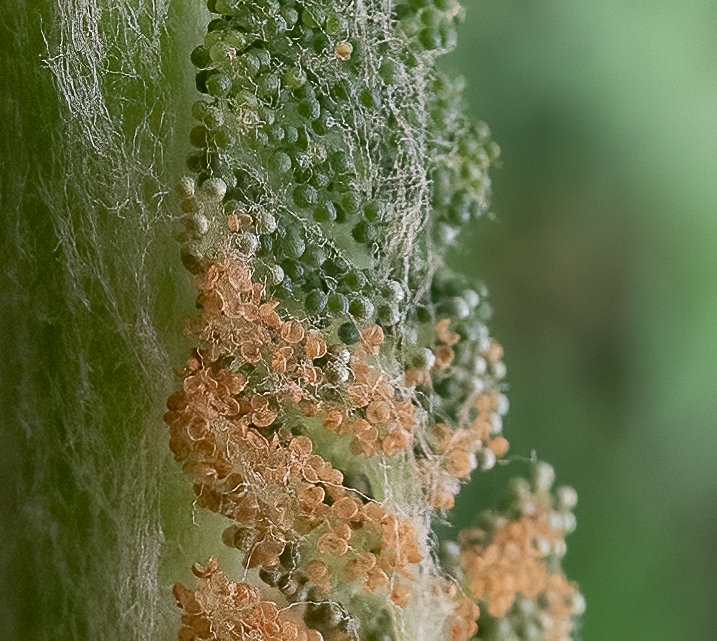
Each sporangium is by my calculation about 1/60″ inch (0.4mm) across. A spore is about 50 micrometers in size ( a micrometer is 1/1000 of a millimeter). One sporangium can produce up to 500 spores, and a single stem can produce 52 million.
I picked a few ripe fertile fronds and brought them inside. The next morning there was a dusting of green spores on the sheet of paper. The first photo includes an American nickel for scale.

The second one is a close-up of an opened sporangium surrounded by some of its spores:

I have not even tried to photograph the spores themselves in close-up, unless someone would like to lend me an electron microscope?
If you’d like to know more, explore this site:
https://www.amerfernsoc.org/about-ferns
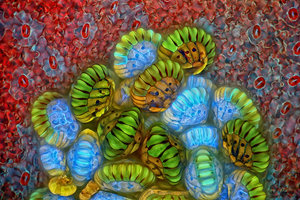
And, to end, a wonderful image of spores by Rogelio Moreno:
 Eyes on the Wild
I can almost hear the (plant eating) dinosaurs chomping. Little did they know what was about to happen!
LikeLike
Fascination with nature…so much to see and learn about. There must be an electron microscope that you can go to and rent. How much does a flatbed scanner enlarge?
LikeLike
Thank you! Fantastic!!!
LikeLike