Birds of the wetlands, with long curved bills, I have a fondness for ibis, even though I can’t work out which plural is preferable: ibises, Latin ibes, Greek ibides or just plain collective ibis.
We saw three new species (to me) in the Pantanal. The most handsome was clearly the Buff-necked Ibis, Theristicus caudatus:
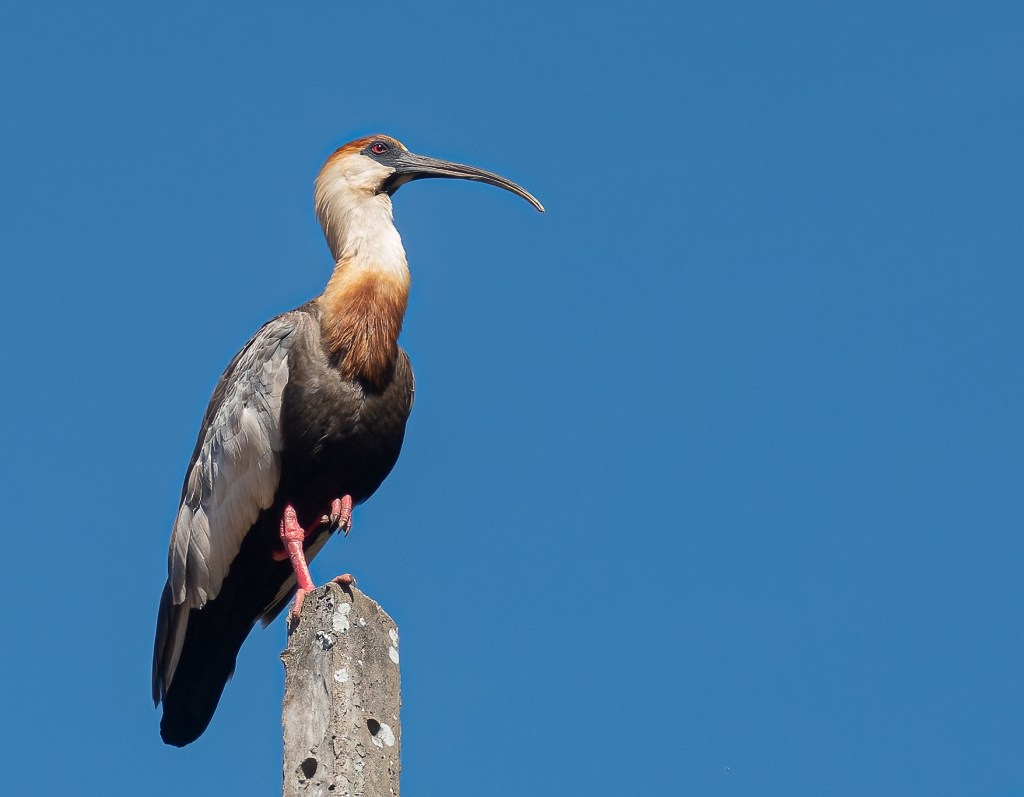
They are comfortable with humans, and this one was hanging around in the garden of Baia das Pedras. At dawn, they perched on the palms:
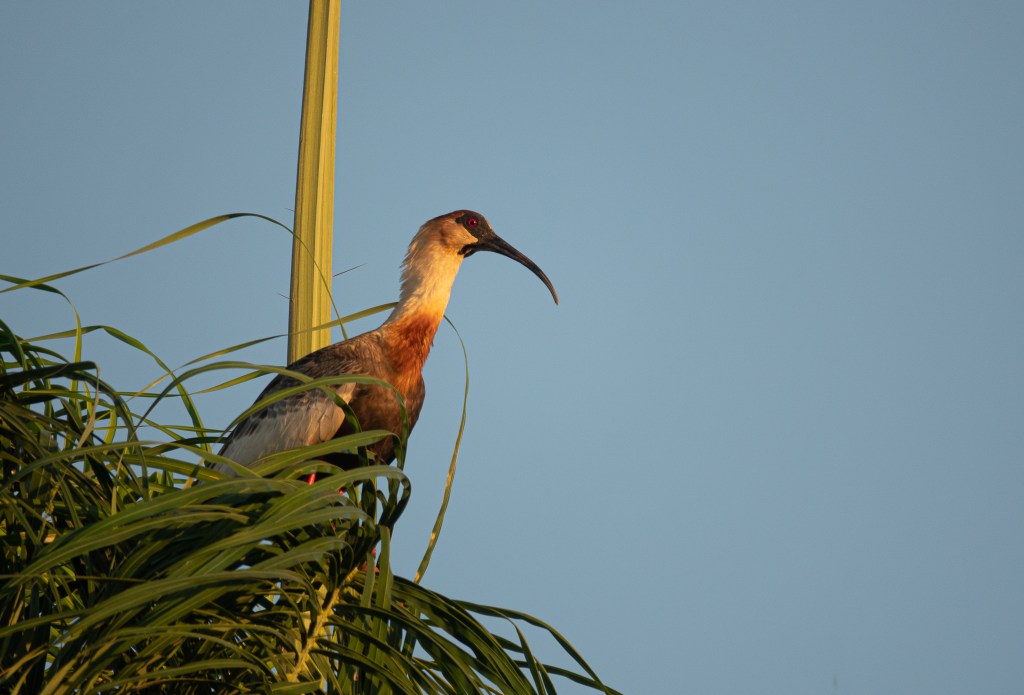
They forage for insects and small vertebrates, often far from water.

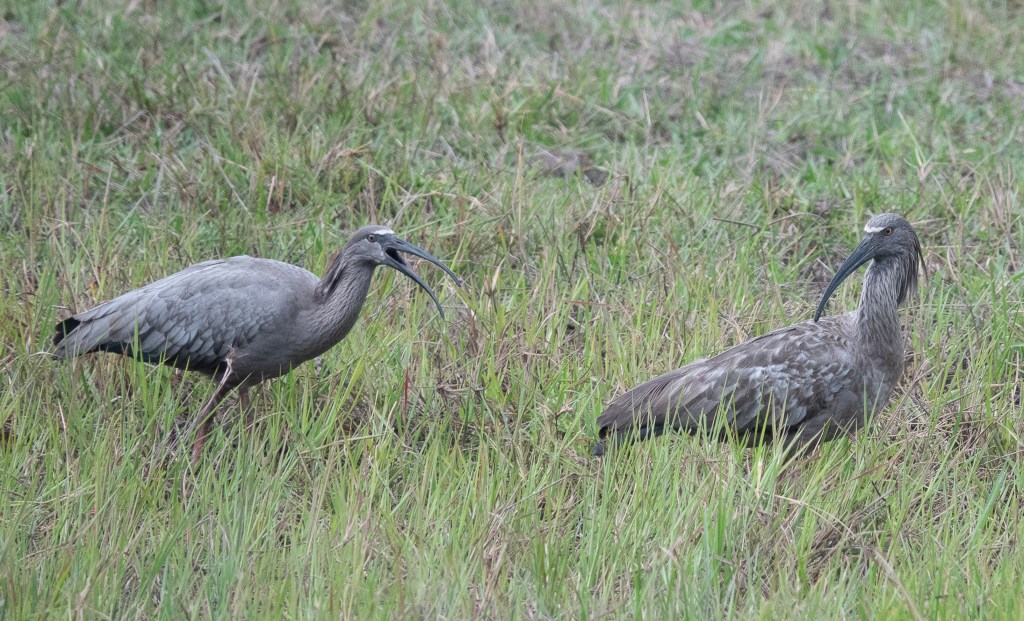
The easiest to miss are the Plumbeous Ibis, Theristicus caerulescens, in their subtle blue-grey plumage. They are typically wetland birds, like most ibis, and feed on mollusks and insects. The youngster below still clearly expects handouts, but the mother is having none of it.
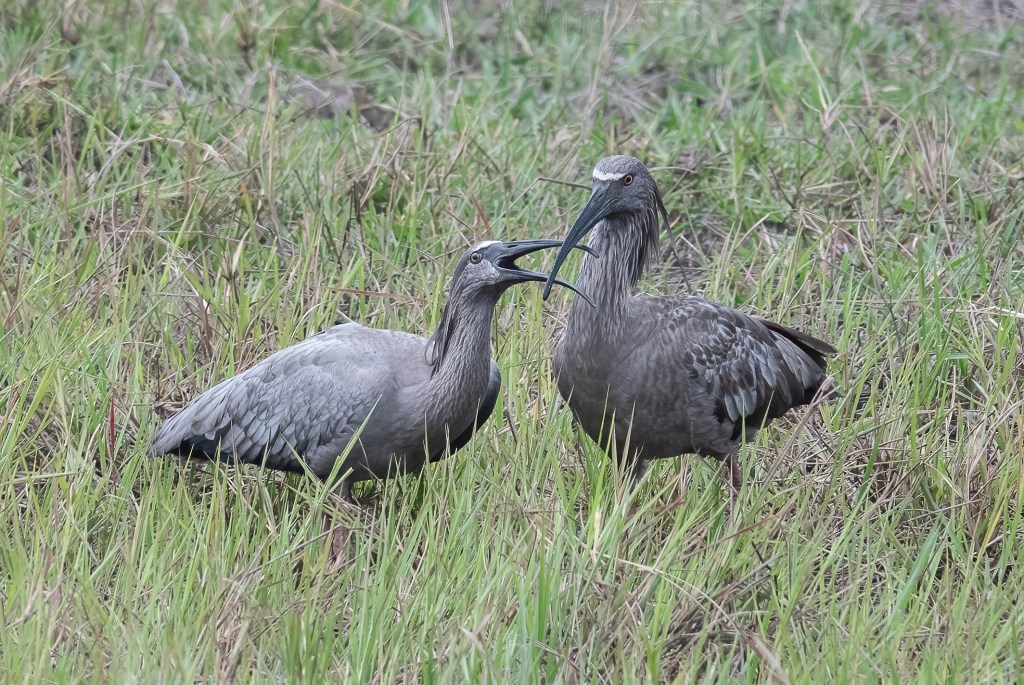
and walks off:
The Bare-faced Ibis, Phimosus infuscatus, do not make a big first impression,
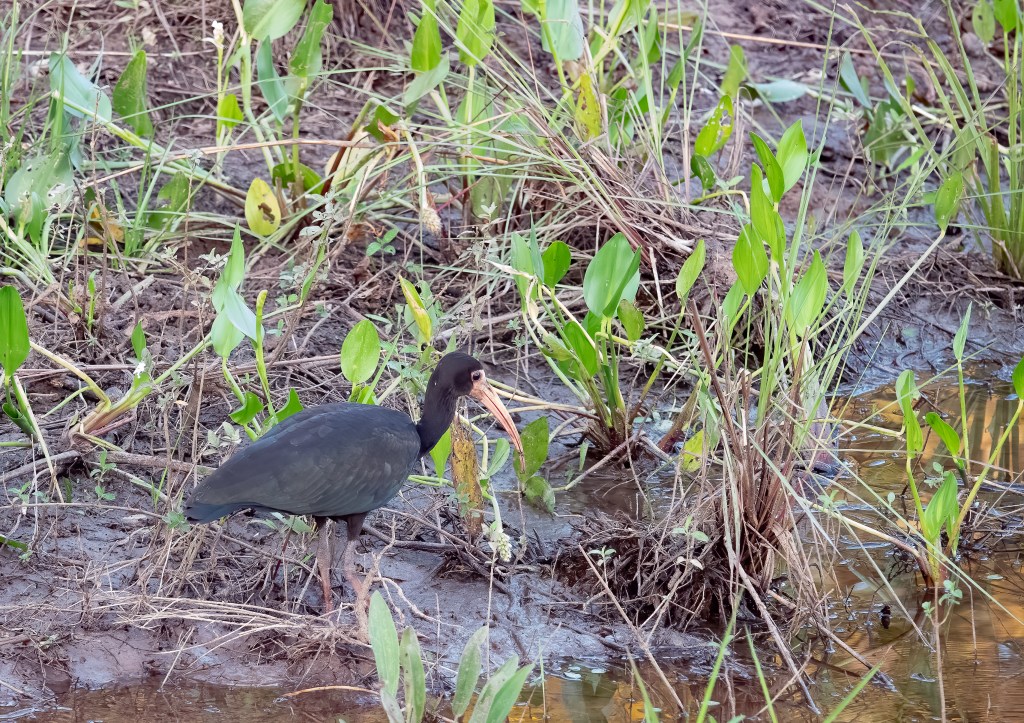
until they gather in large flocks:
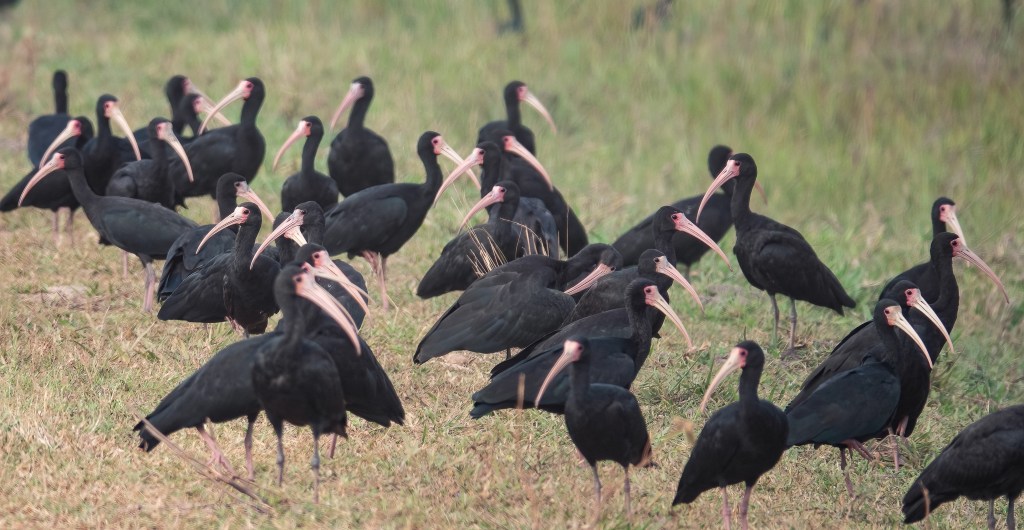
En masse, they remind me irresistibly of a convocation of 17th century plague doctors. A perfect match down to the black eyes with reddish rings around them.
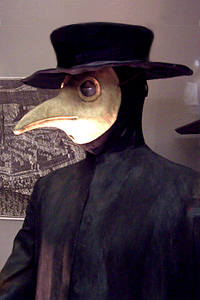
If it weren’t for the fact that this species of ibis is not found in the Old World, you would think they had deliberately copied its costume (Actually, the mask’s long “beak” was filled with herbs in the vain hope of combating infection.) I suspect the mask might have instead been inspired by the distantly related but similar looking Northern Bald Ibis, Geronticus eremita, which went extinct in Europe in the mid 17th century. The plague mask is thought to have been invented by Charles de Lorme in Paris around 1619.
PS Ibises are tactile foragers, sensing their food with bony bill-tip organs called Herbst corpuscles, whose origins go back to the Cretaceous. Du Toit, Chinsamy, and Cunningham (2020) say this:
“The remote-touch bony bill-tip organ, used for remote tactile probe foraging; comprising groups of mechanoreceptors, known as Herbst corpuscles, embedded within densely clustered pits in the bone at the tip of the beak …..”
Memorize this, and all you need to impress is for someone to ask you the question to which this is the correct answer.
 Eyes on the Wild
Once again, amazing photos! I would say “ibises” for the plural. I guess I wouldn’t use the collective “ibis” because I can’t imagine myself eating it (is that the generalization? e.g. “four quail”, “four wildebeest” = grammatical, *four seagull, *four elephant).
LikeLike
I love the photo: “mom, I’m hungry!” What a horrid thought: “plague doctors.”
LikeLike
Those 17th century doctors were on the right track with those masks. If only they had used a most tightly woven and layered fine cloth they would have had some good protection, and with goggle style glasses! Amazing similarity.
LikeLike