Ideally, macaws nest in existing holes in old trees,

which they then enlarge by ‘beaking’ away at the edge and chipping off wood shavings.

These are in turn used to line their nests.
Because of the demand for natural nest sites, the Hyacinth Macaw Project not only researches the birds’ behavior and populations, but also sets up nest boxes. They monitor both the natural nests and the nest boxes.
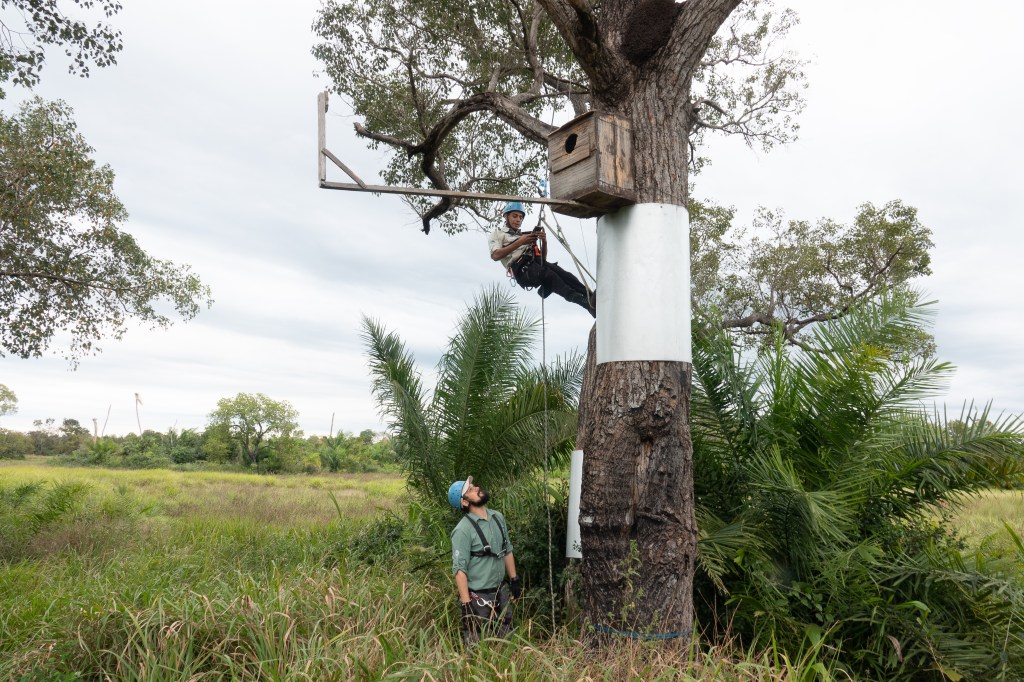
The metal strip is to keep predators from accessing the nest, something I do on my Wood Duck boxes here in Maine. It turns out to also inhibit the spread of fire.
The team climb up, inspect the inside for fresh wood chips that might indicate it is being used, look for damage from their ‘beaking’ that might need repairing, and photograph the inside. This extra-tall box houses a camera at the top. The bottom front corner needs repair, before the wood chips fall out.
The macaws do not like the intrusion:
The natural holes are monitored in the same way. This tree has been monitored for about 30 years. A smartphone is poked in to “see” the interior, while the displaced macaws complain loudly.
In the breeding season, you can tell the females by their curved tail feathers, bent from squeezing into the nesthole.
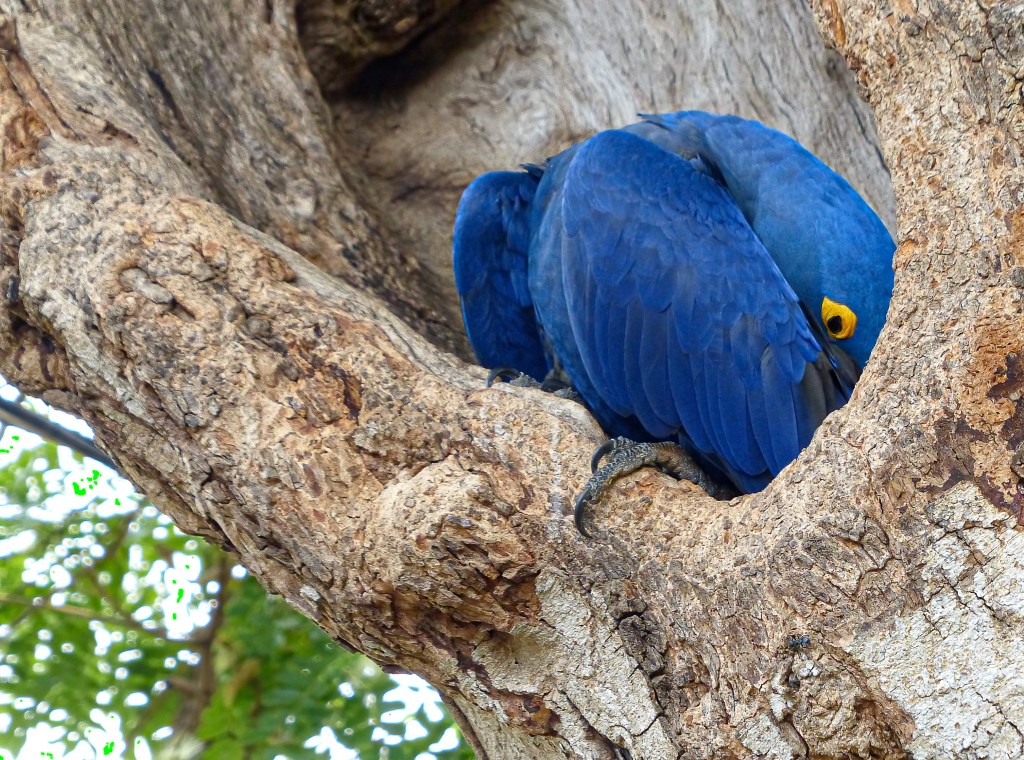
Merlin, an eerily accurate Cornell app that identifies birds from their songs and calls, consistently told us that these were Blue-and-gold Macaws, but they are a different species. The researchers told us that Hyacinth Macaws have various geographical dialects, and that Merlin was trained on macaws from the North Pantanal, where they sound like Blue-and-golds.
PS You can read more about the Hyacinth Macaw Project here:
PPS Caiman Ecological Refuge was hit by a terrible fire in the second half of September 2019. Its devastating effects on the macaws and their food source is documented here.

 Eyes on the Wild
I hope there are always people who help & care about these beautiful birds!
LikeLike