Armadillos are very strange mash-ups. The small ones are like guineapigs with scales, and the bigger ones remind me slightly of armored capybaras. Here is a six-ringed armadillo:
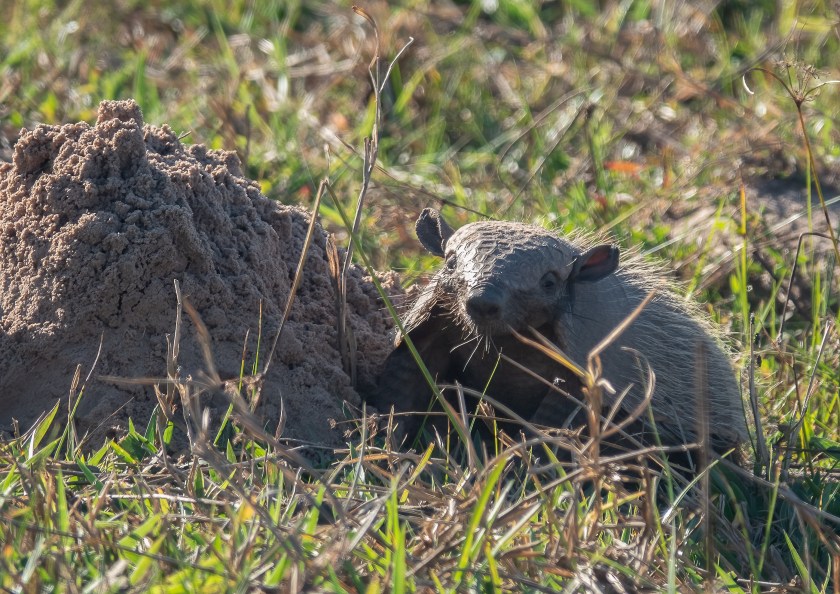
Despite the scales, they are mammals, and suckle their young. This one is a female, if you look carefully you can see her teats.
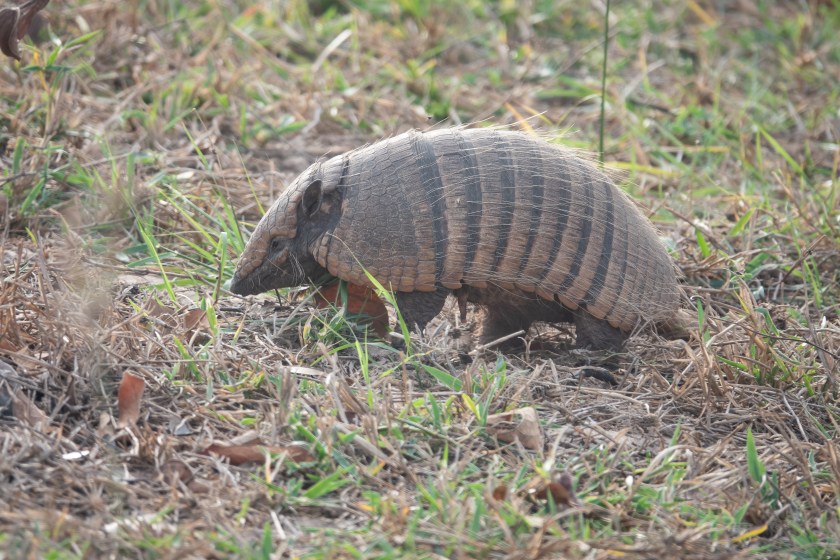
They are anteaters, and at Baia das Pedras the pampas were littered with small piles of earth where they had been digging for their dinner. The larger holes were their dens.
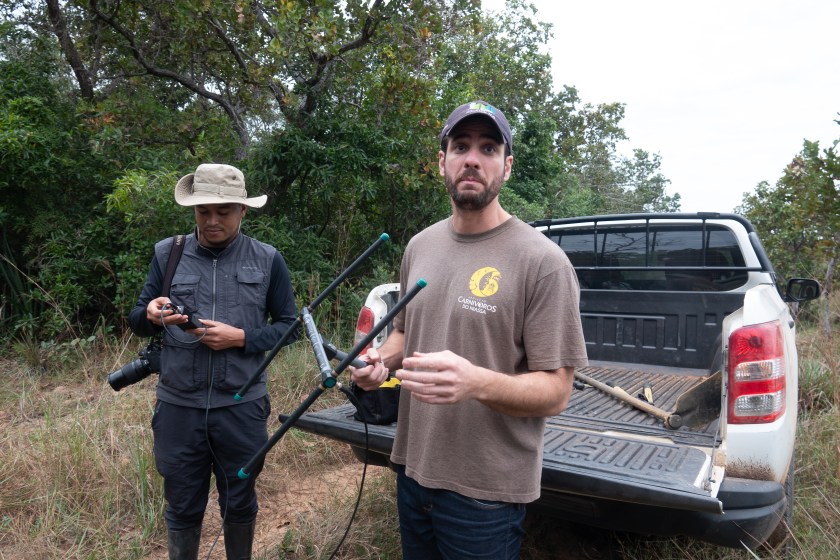
The biggest of all is the Giant Armadillo, a nocturnal recluse about whom little is known. They are now the object of study for Gabriel (right) and Carlos, a visiting researcher from Colombia:
Our hostess, Rita, has lived on her farm for her entire life, and had never seen one until the research team appeared. Over the past ten years they have been tagging and monitoring about forty of these animals to learn more about their range and their habits.
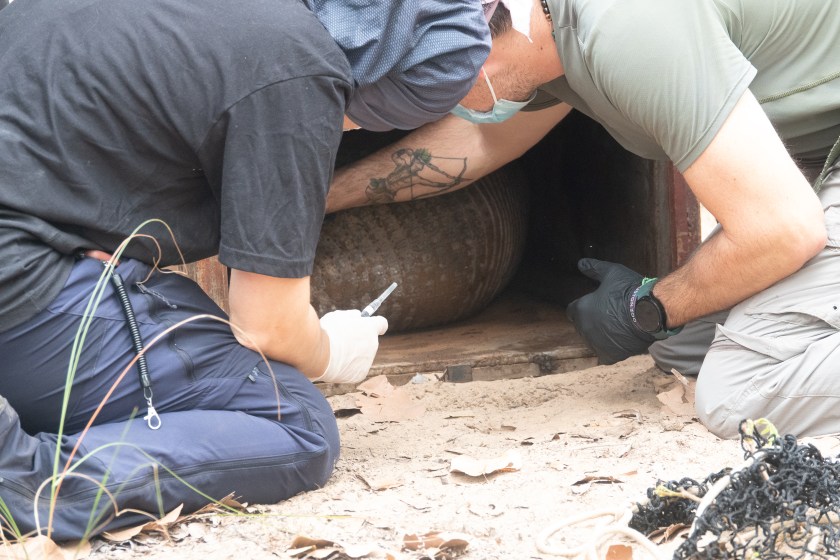
They start by finding one of the huge mounds they excavate for their dens, where they sleep the day away:

Then they put a trap over the hole, and when the animal emerges at dusk it is caught, and crated.
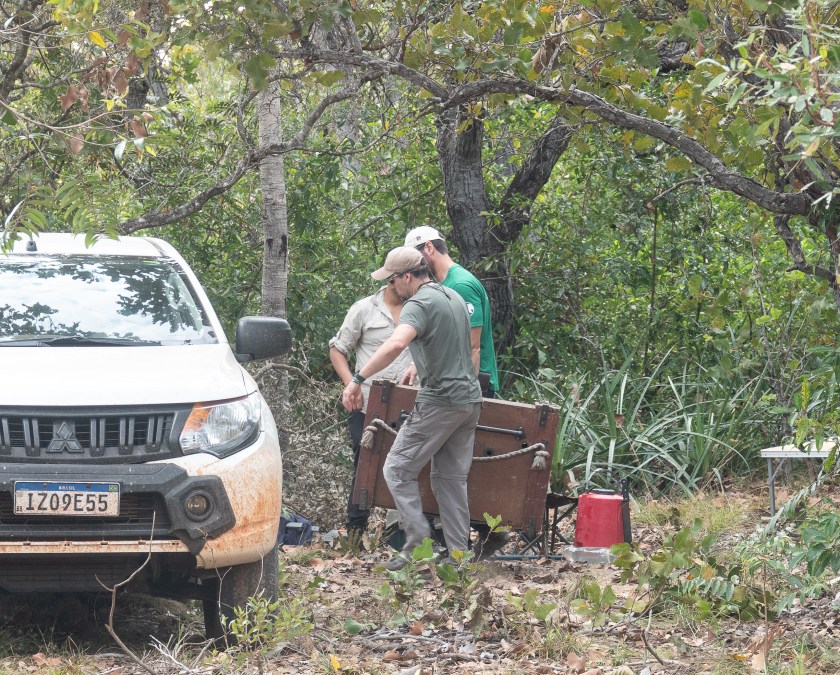
Early the next morning, they set up a field operating theatre on the tailgate of a pickup. Here is the armadillo, asleep in the crate:

He is anaethsetized:
After ten minutes his vital signs are checked:

and he is weighed, all 35Kg of him:
He is given a good scrubbing so his belly is clean for the upcoming procedure, and then he is lifted onto the tailgate operating table, and measured, totaling 1.35m from nose to tail:
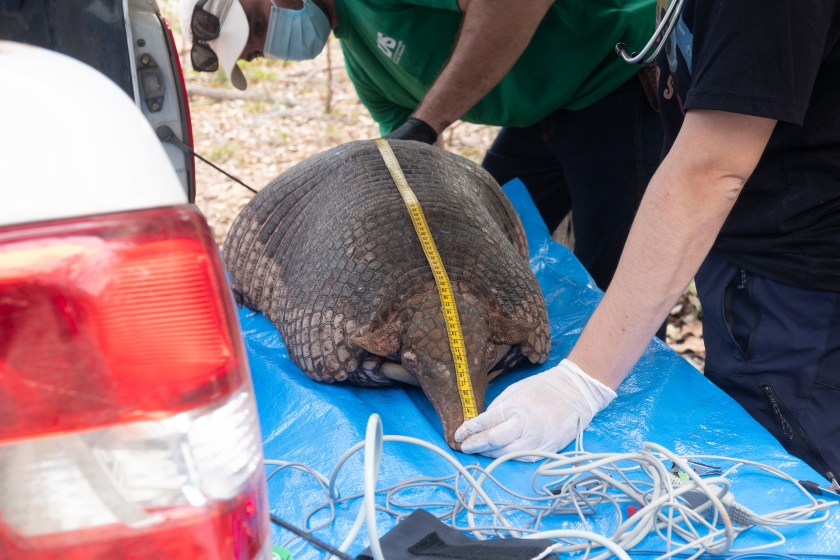
The veterinary team are masked and gloved, and then they prep for the implantation of a tiny transmitter under the skin of the armadillos belly. He is clearly a male!

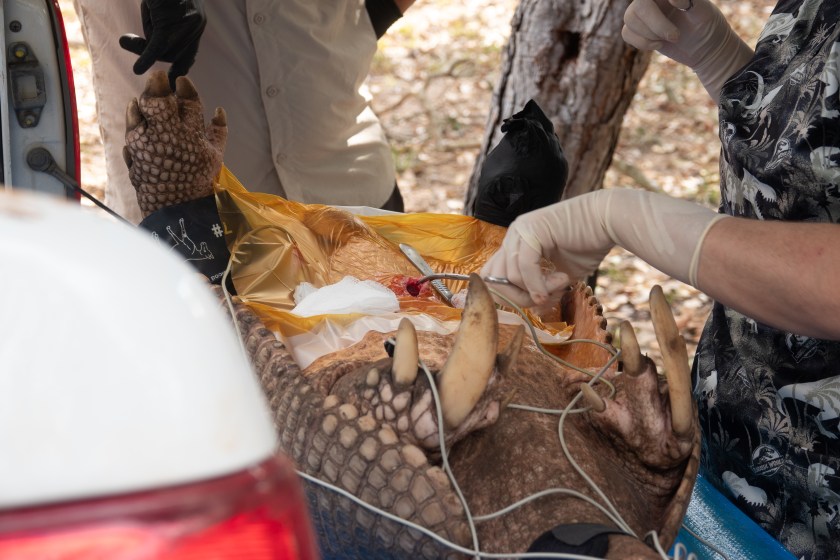
The spectacular claws are for all that digging. Next he is fitted with a blood pressure cuff:
Then they attach a heart monitor, before the sterile field is made ready, followed by a small incision, into which a tiny transmitter is inserted. It will work for several years.
Separately, they attach a more short-lived external GPS tracker to his carapace, because it has a larger range. “Carlos” was named after one of the team members, and here he is five days later, none the worse for wear:

and showing his enormous claws. You can still see the water mark where his belly was scrubbed clean, but his back retains years of accumulated dirt!
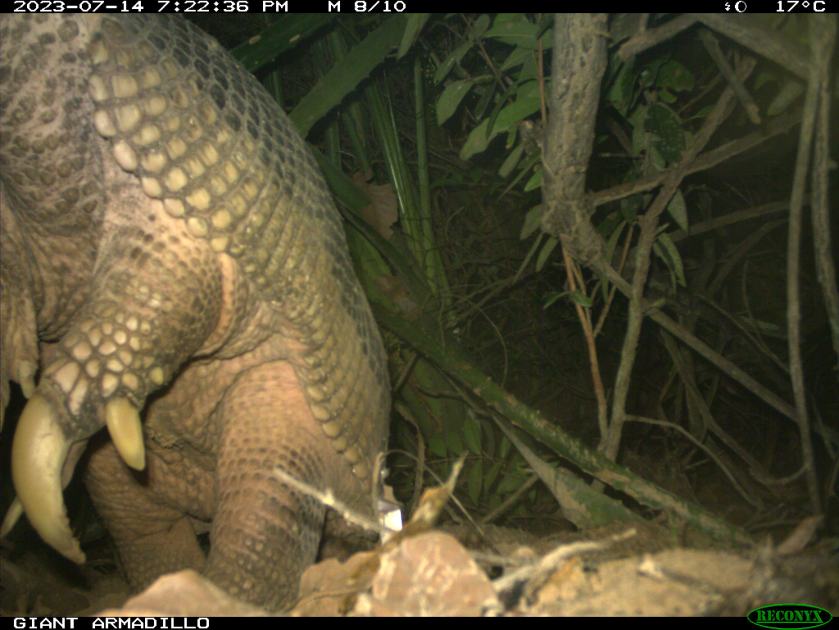
Thanks to Gabriel for the last two photos.
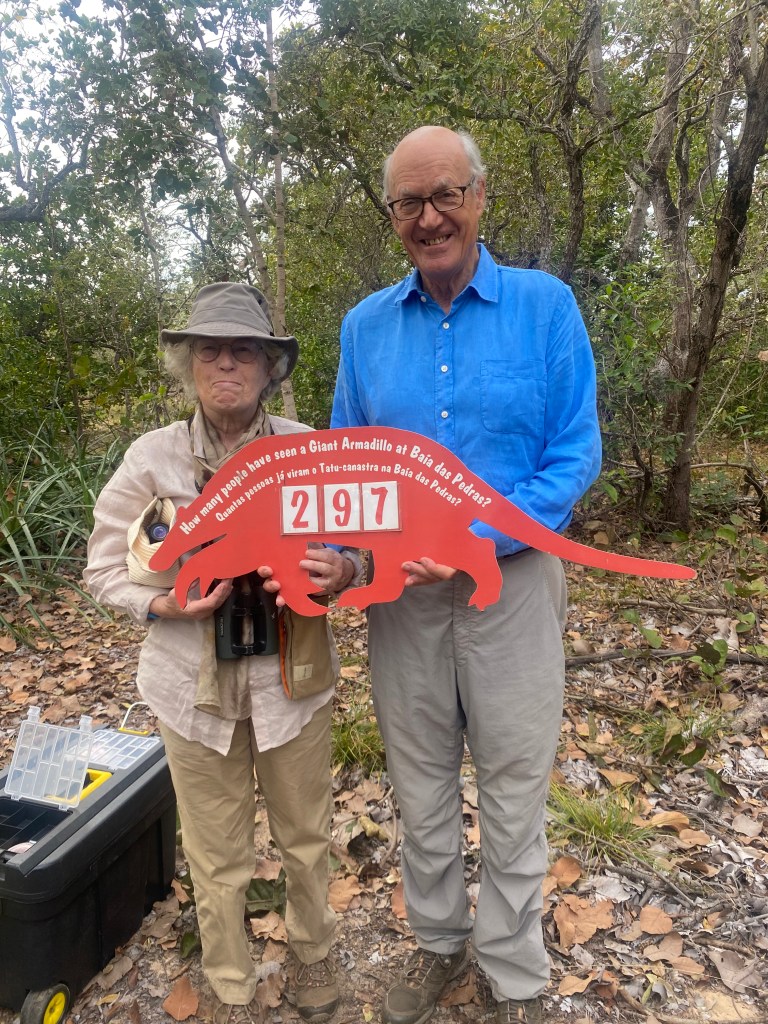
Being permitted to watch this highly skilled team at work was a great privilege, and a huge piece of luck that they caught an armadillo while we were there. We are among a select few: here are our friends Jane and Stephen with documentary proof of their presence.
PPS: Here is a link to the project that monitors Giant Armadillos.

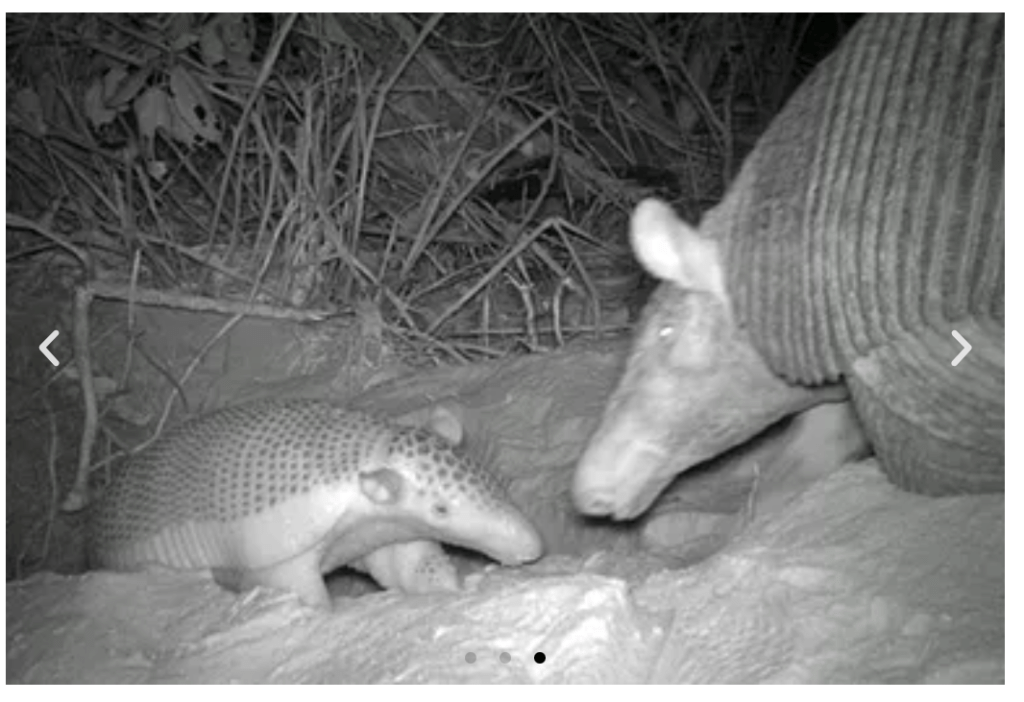
There are more details in Portuguese under “Learn more”, from which I took a screenshot of this stunning photo of a mother and baby.
Click to access Giant_Armadillo_Project_Update_September_2018.pdf
 Eyes on the Wild
I’ve already read thru this post several times, to make sure I didn’t miss anything. Very interesting to see all this so close up. Very interesting animal…formidable claws. You do go on such interesting expeditions…glad you document it & share.
LikeLike