The star mammals are of course jaguars and tapirs, but there are other mammals to be seen too. At dusk, we often saw small delicate crab-eating foxes, Cerdocyon thous, usually in pairs:

They do not immediately run off, so we got a good look:
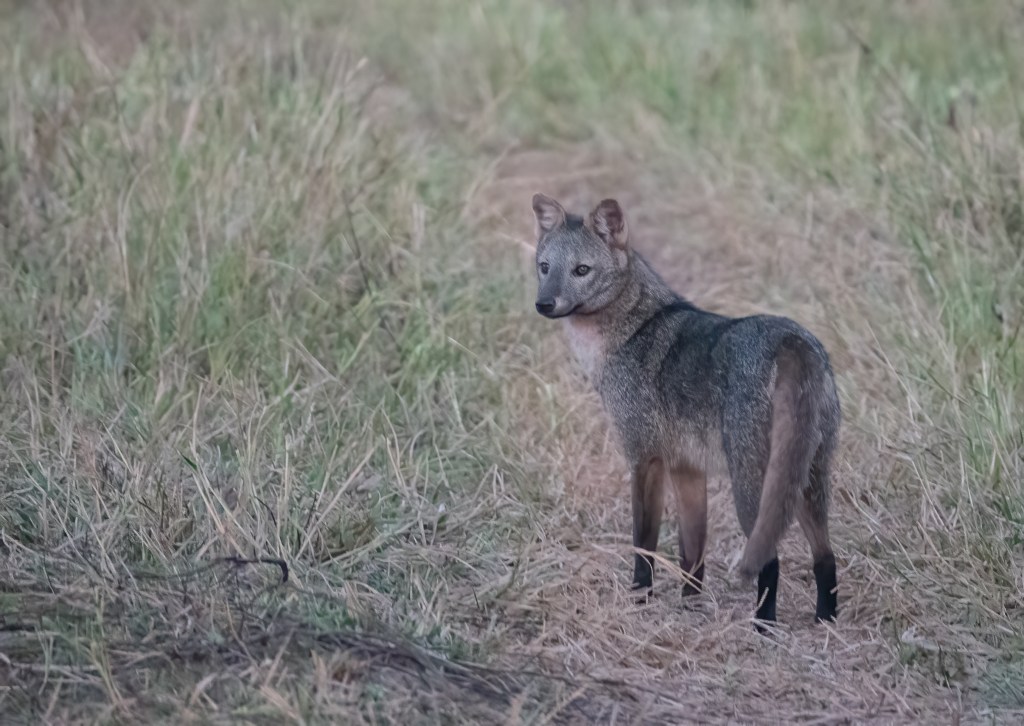
As their name suggests, they eat crabs, but also small mammals, amphibians, fruit, pretty much anything, including kitchen scraps from lodges. I found them rather charming.
The most ubiquitous and laughable mammals are the capybaras, Hydrochaeris hydrochaeris, although we saw far more of them ten years ago in the Northern Pantanal than we did in the south. They are like giant guineapig/beaver crosses, and are the world’s largest rodents.. This mother and baby hung out near Caiman Lodge.
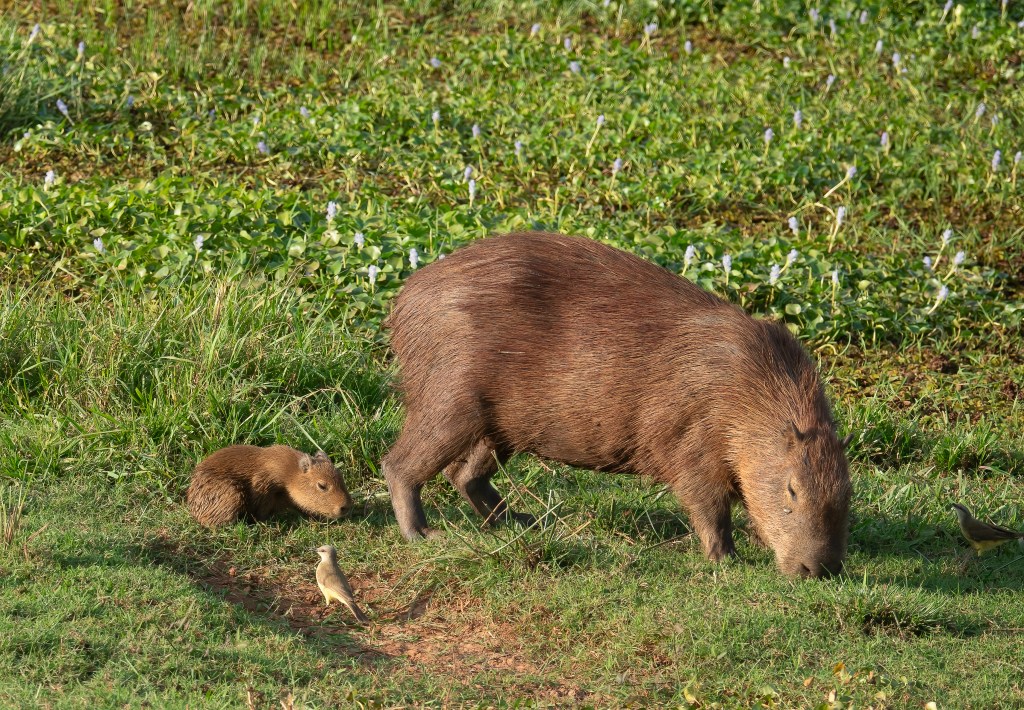
The guides had named the baby Bean.
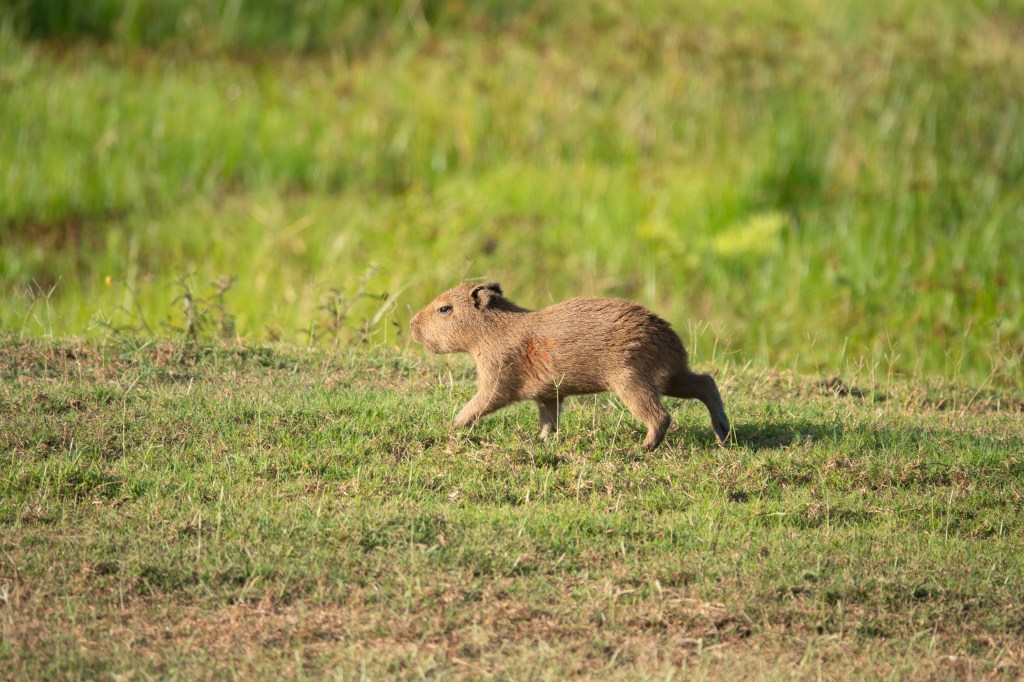
An adult male can weigh 50Kg, and makes a good meal for a caiman. The dock at the lodge is a pretty safe space:
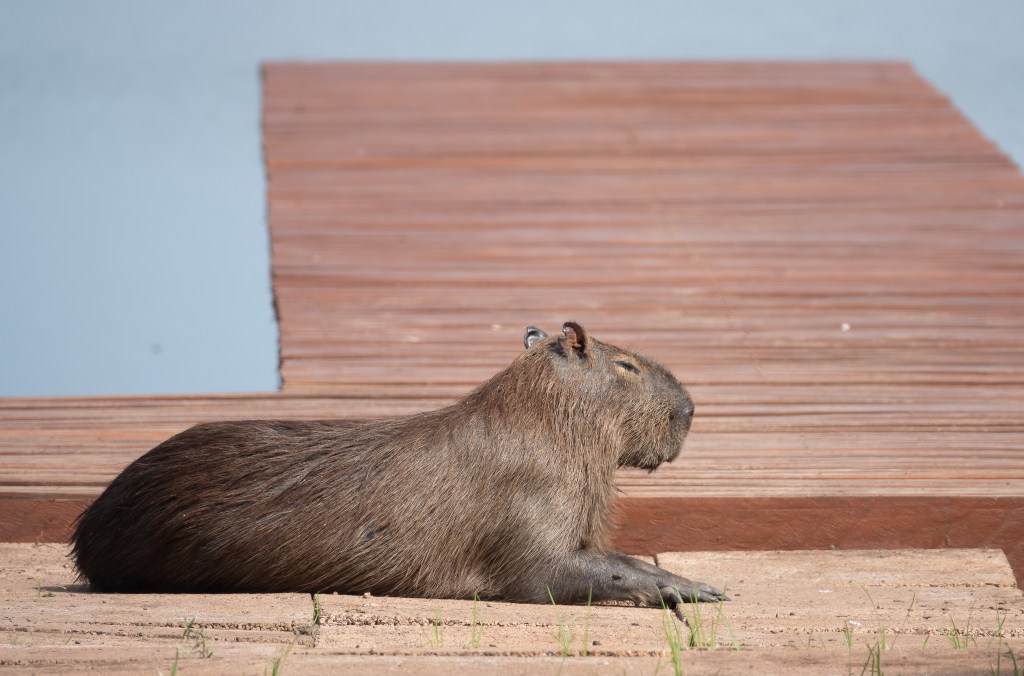
They are vegetarian, and eat water plants especially. An egret is standing on the submerged shoulders of this one:

A family group were grazing in the shallows, and some unseen predator, almost certainly a caiman, made a charge from the left. Look carefully and you can glimpse two tiny babies in front of the leaping adult’s back, peering out through the water hyacinths as the adults scatter:

They have a large scent gland bump between their eyes:
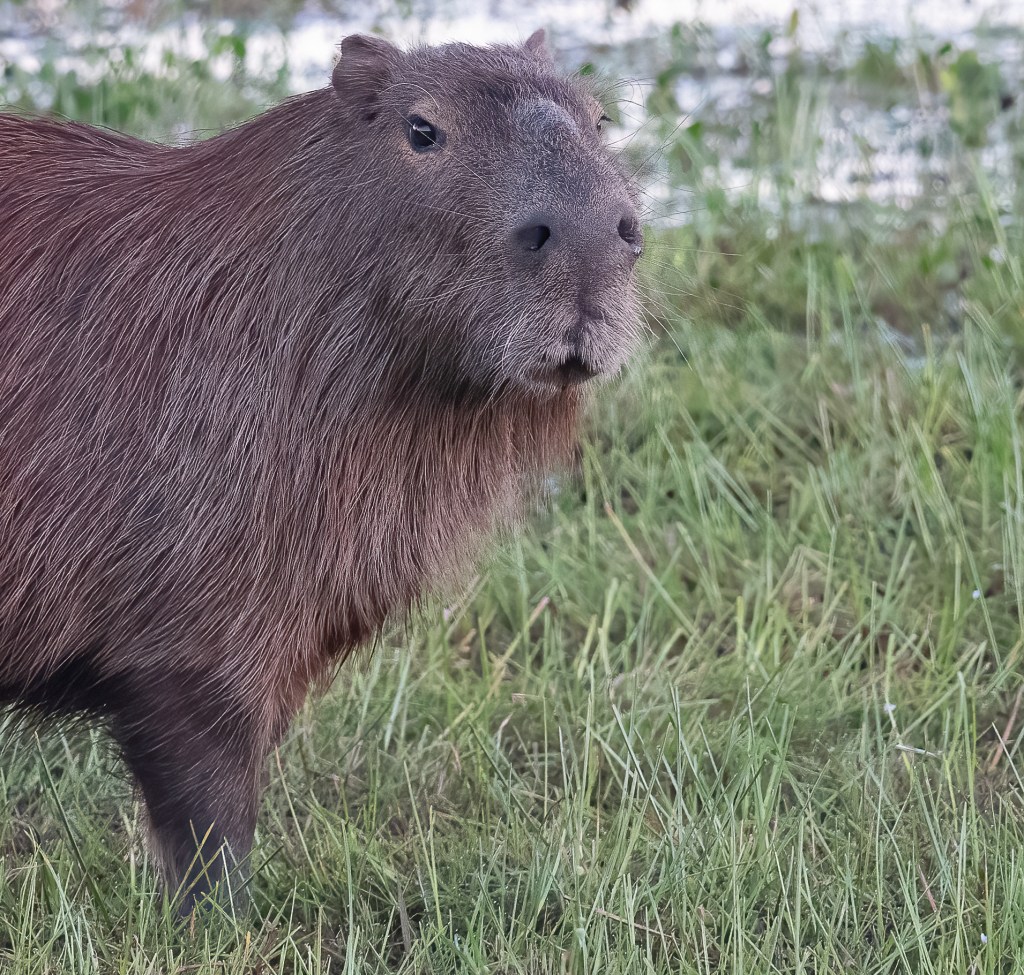
and they rub this against the lower branches of trees to mark their territory:
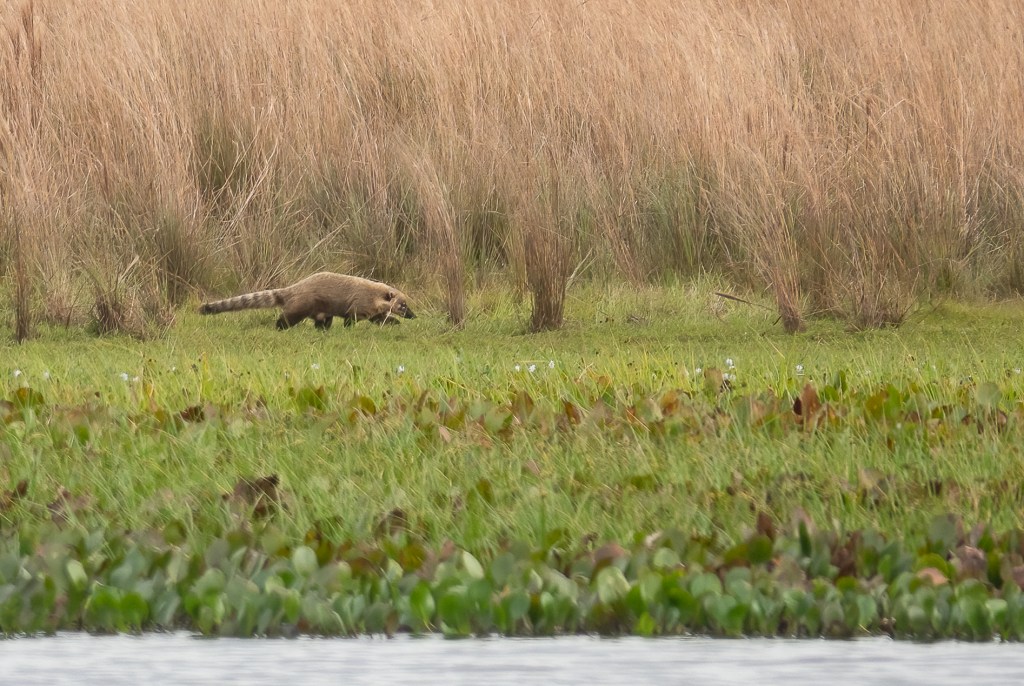
Finally, the Coati, Nasua nasua, a relative of the raccoon, and also an omnivore. We saw solitary males on three occasions, but only briefly. This one was on the far side of the river, and stayed visible for long enough to photograph :
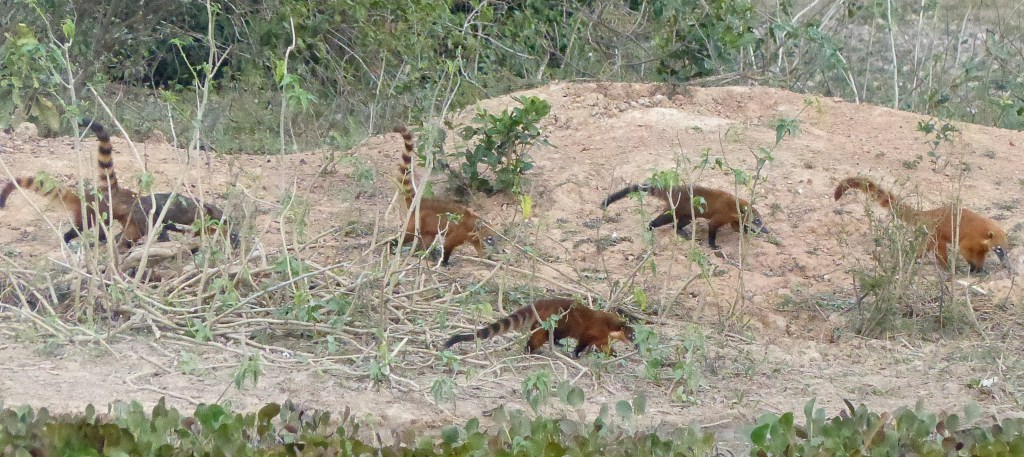
On our previous trip, we saw large groups of females and youngsters, like this, often with their tails in the air:
 Eyes on the Wild
That photo of Capybara’s snout! What fun you had, seeing all this wildlife!
LikeLike