In the mist, humpbacks are calm and peaceful.
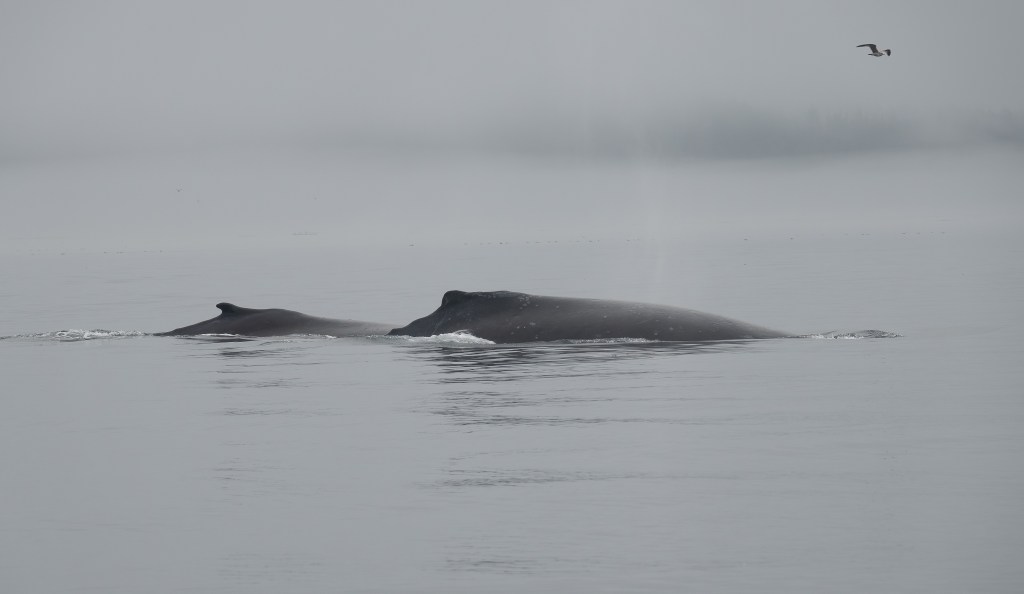
But..
In a few parts of the world, including South-eastern Alaska and ‘our’ part of British Columbia, humpbacks have developed a feeding technique called bubble-net feeding. It is a behavior they learn from each other and pass on within their own community. It can involve up to 20 whales, but we saw small groups of two or three doing this, regularly, right off Spirit Bear Lodge:

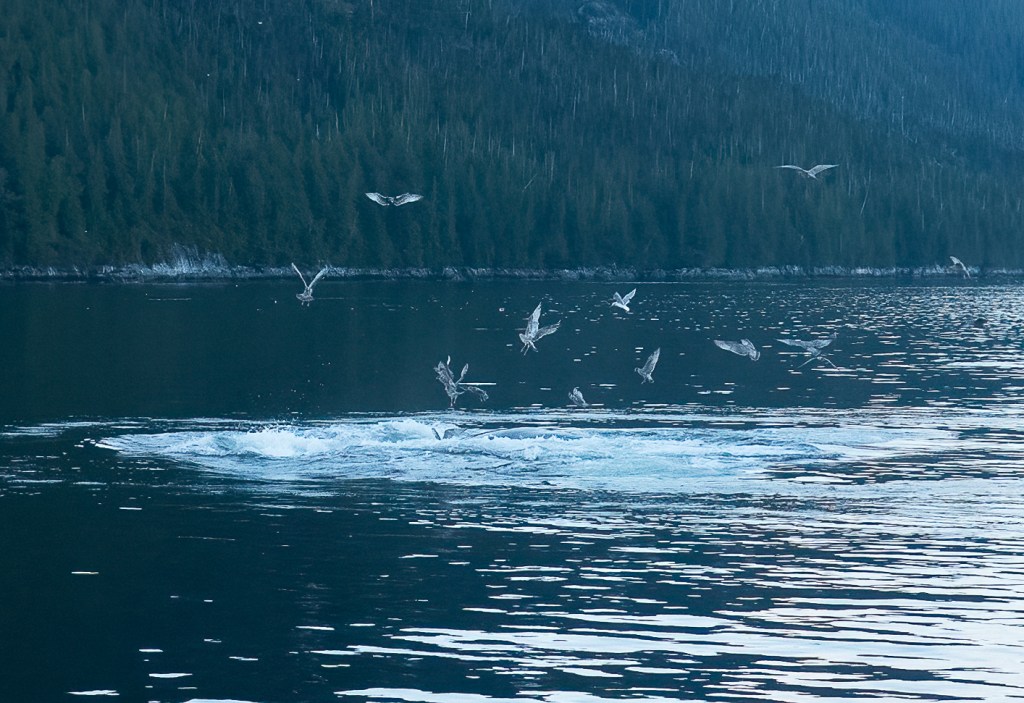
Although we are close to shore, the water is about 300 feet deep. The first sign is an easy-to-miss faint ring of bubbles, 3 – 30 meters wide, sometimes also signaled by low-flying expectant gulls. (In the photo below the righthand portion of the circle is out of shot. )

The bubbles are created by the whales well below the surface surrounding the fish, and swimming upward in a spiral blowing bubbles, which apparently creates a barrier net that the herring don’t cross, for reasons that are unclear. Once they have the fish trapped, the whales burst upwards, together, gulping gigantic mouthfuls of fish and seawater.
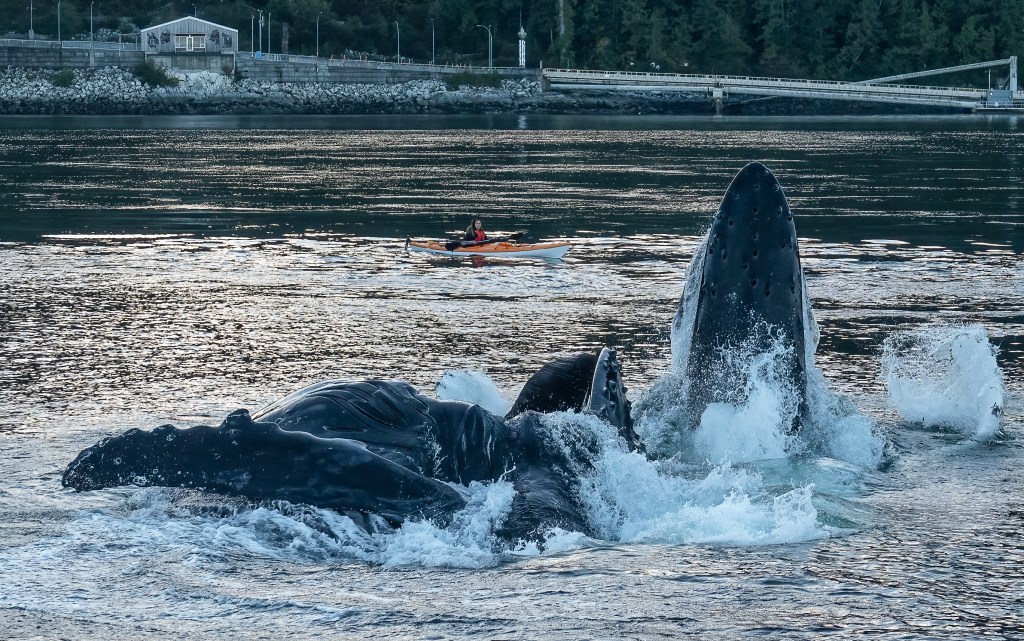
There are three whales in this photo, all with their mouths wide open. Look carefully. (1) Left, facing left, lower jaw in the water, upper jaw vertical. (2) Centre, upper jaw with pink palate facing us at 45 degrees, lower jaw in water pointing towards us. (3) Right, whale on its side in the water facing left, with underside of lower jaw displaying the ventral folds.

These folds expand to hold a huge volume of water and fish, mostly below the waterline in this next photo.
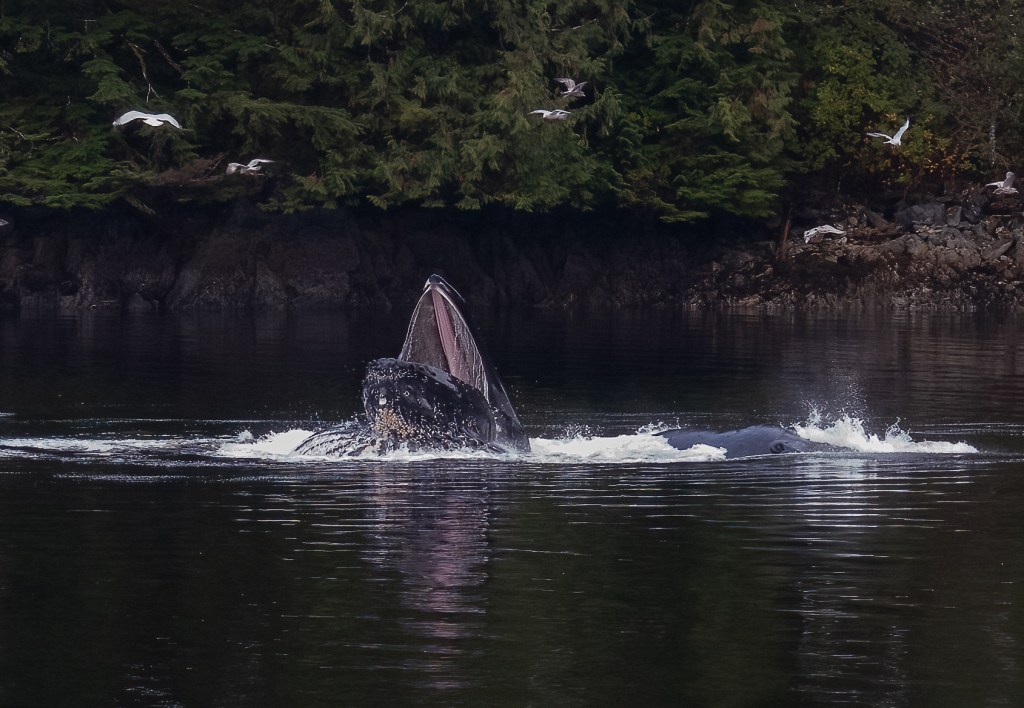
Once the whale has a mouthful, up to 15,000 gallons worth, it closes its mouth
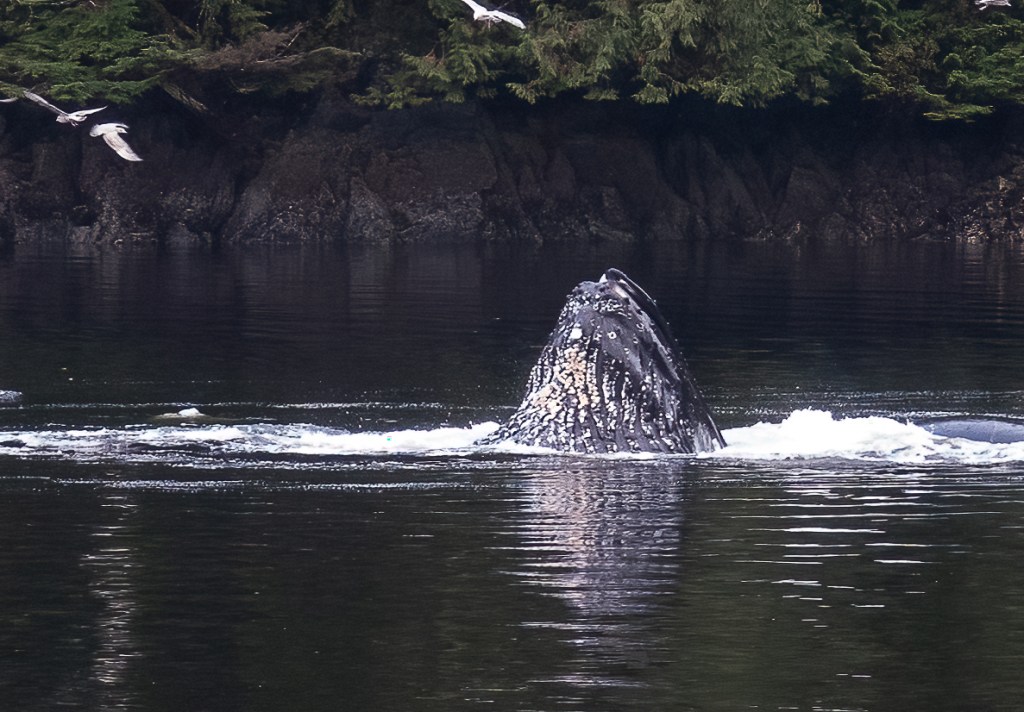
The water then spills out through the baleen plates, leaving the fish inside:
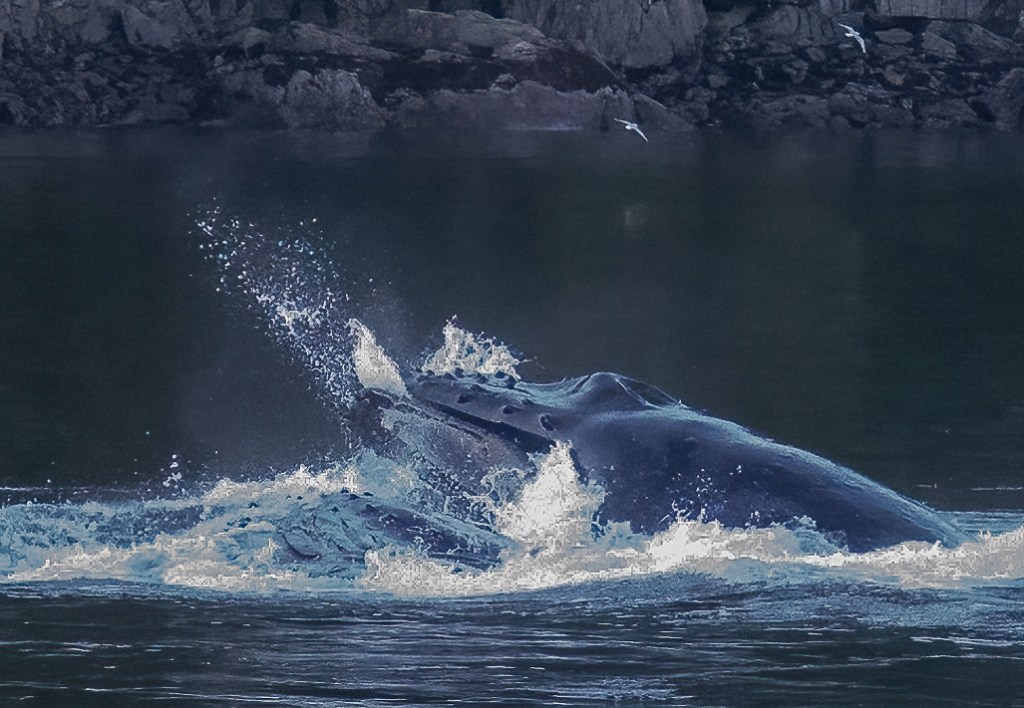
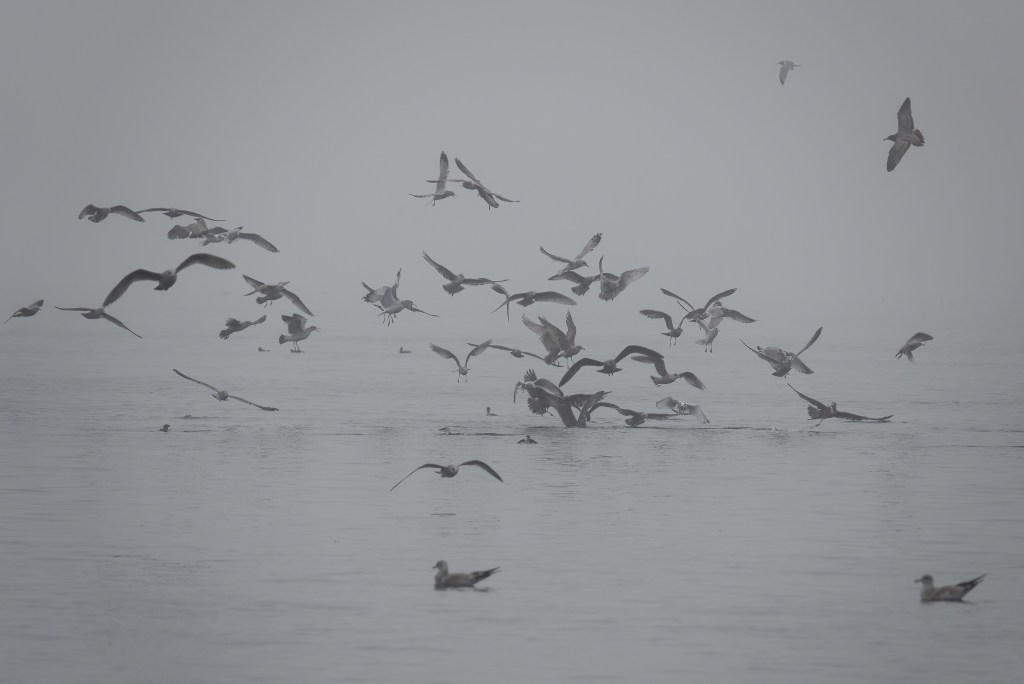
This all happens fast, and usually I was looking the other way when they erupted from the depths. The whole thing was 7 seconds from bubble circle to a calm ocean and scavenging seagulls again:
It can be very dramatic: behind this group is a stunned kayaker:
In closeup the baleen fringes surrounding the pink palate are quite visible. They are 2-3 feet long, and made of keratin.
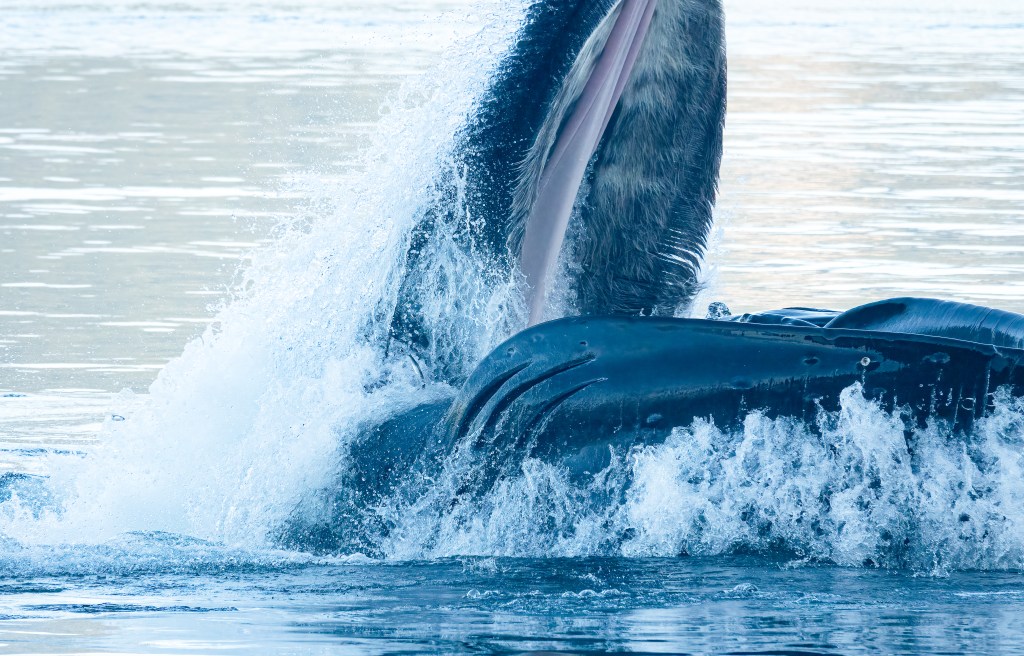
Here you can see how they work as filters:
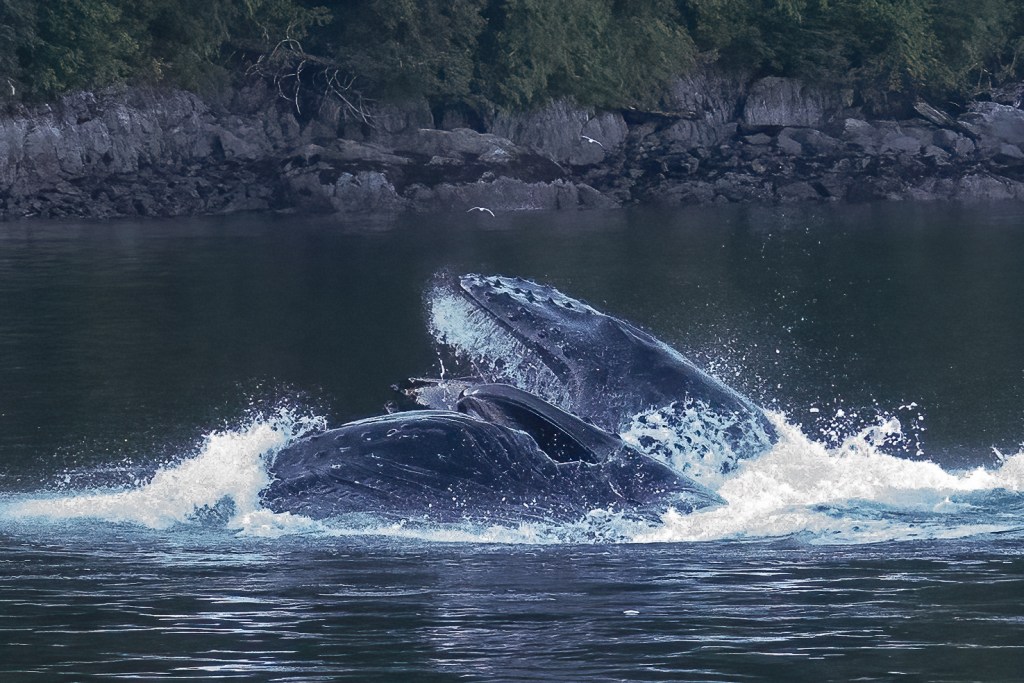
As the whales sink beneath the surface, the ever-hopeful gulls swoop in:
This feeding behavior goes on only during the summer and fall months when the whales gorge on the rich cold-water fish stocks. They build up body fat for their migration south to their winter breeding grounds in Mexico or Hawaii.
 Eyes on the Wild
Hi,
I was in BC in Sept doing a similar trip – I was a bit concerned to see this:
How a huge new LNG plant spells ‘dire’ trouble for whales off Canada’s coast | Whales | The Guardian https://www.theguardian.com/environment/2023/oct/07/how-a-huge-new-lng-plant-spells-dire-trouble-for-whales-off-canadas-coast?CMP=oth_b-aplnews_d-5
Best,
Alec
LikeLike
I did not know about this. Very worrying, and much too close to where we were for comfort. At a minimum, it will change the feel of a very pristine corner of the planet.
LikeLike
I agree â this does not bode well. It kind of feels like âLast chance to seeââ¦
LikeLike
The fact that there are so many fish in that area to sustain whale’s appetites & the thought of 15,000 gallons in their mouths is such an enormous perspective on how large these precious creatures are..…so that’s why the gulls are there! Awesome photos, again, & thank you! I was looking fwd to this 2nd post!
LikeLike
Dear Moira, This seems like a dream come true, to be able to see whales up close as they work together to fish. I am curious about how you found this place, Spirit Bear Lodge, and what all that you did to enroll in this pursuit of these beautiful creatures! Finding a place to watch whales is on my bucket list.
LikeLike