Snow has fallen, snow on snow..

On New Year’s Day, still no snow. Beech leaves in a puddle were striped with light refracted through a skim of ice.

Needle ice pushed up through the dead grass, powered by capillary action, with the water freezing as it reached the cold ai:.

The bottom “stalks” pushed up the previous night’s crop to create tiered candelabra:

and tiny air bubbles were trapped inside the stems:

But finally on January 7 it snowed,

and we went exploring:
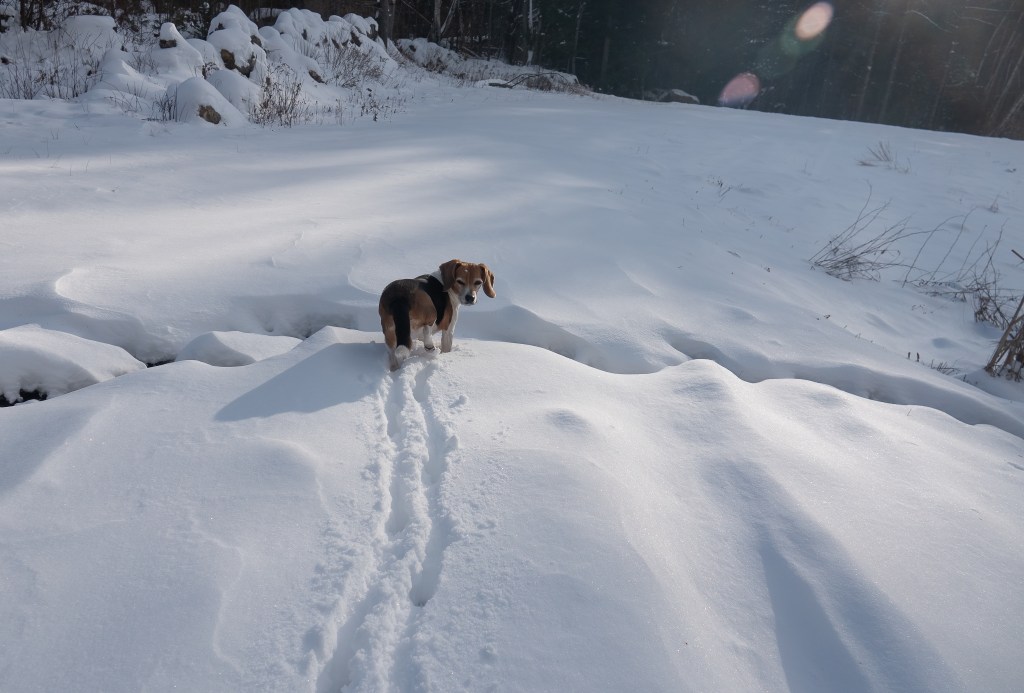
Four coyotes had wandered across the field by the barn:

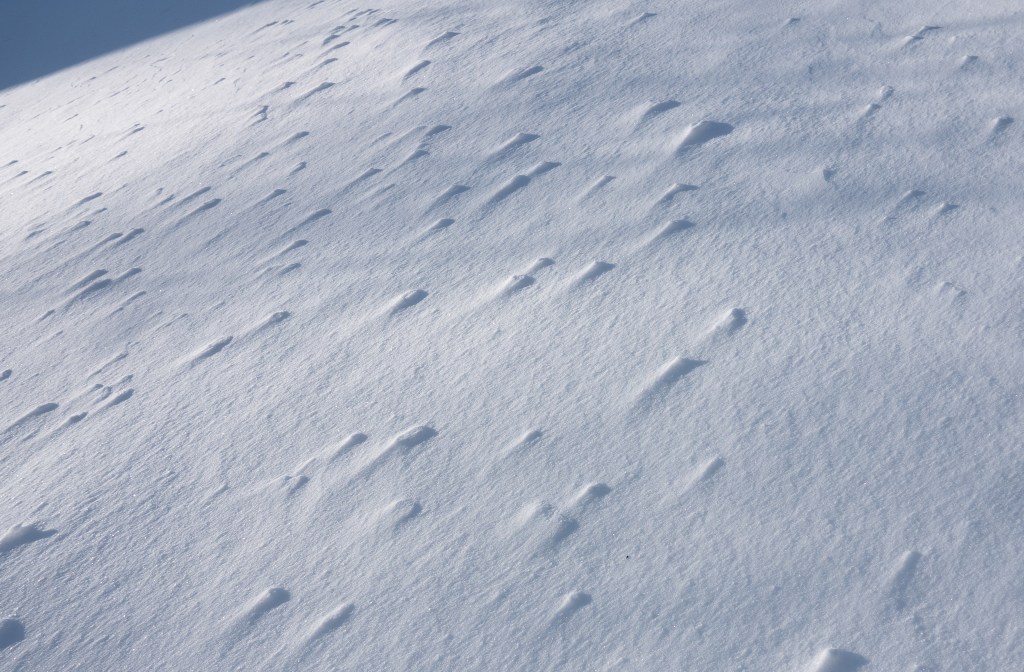
The wind had dragged patterns in the crust:
We had three snowstorms in one week, adding up to around two feet of snow. That’s a tough time for birds. This is a Dark-eyed Junco, Junco hyemalis, weighing in at between 0.5 and 1 ounce.

They eat seeds, and are mainly ground feeders.

They spend the winter in small flocks. There were twenty in my garden that day.

Mourning Doves, Zenaida macroura, are much larger,
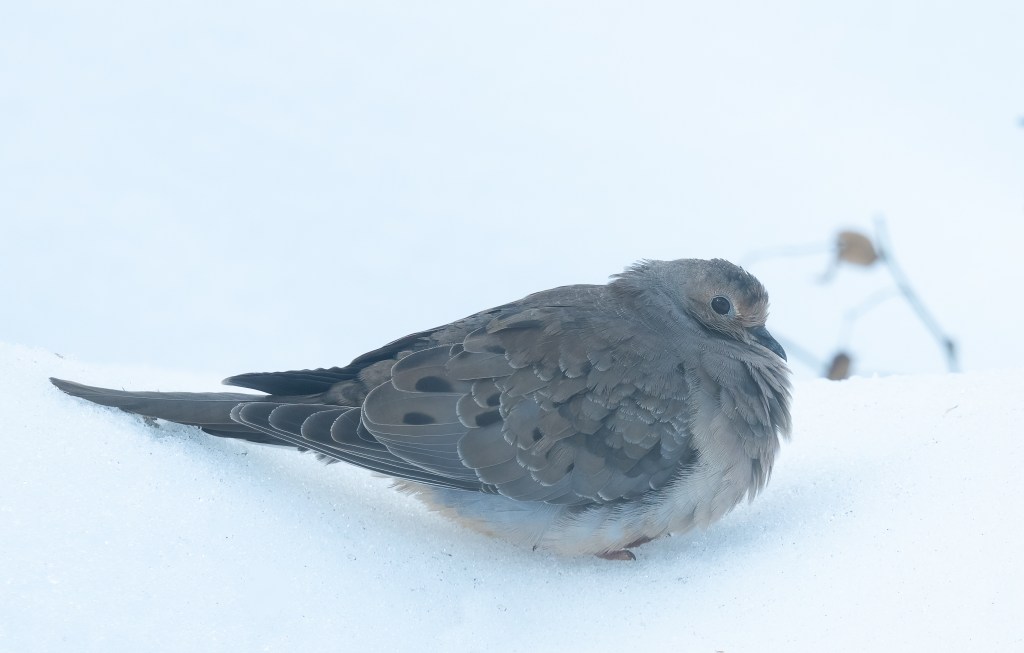
with a delicate blue-grey wash under their wings.

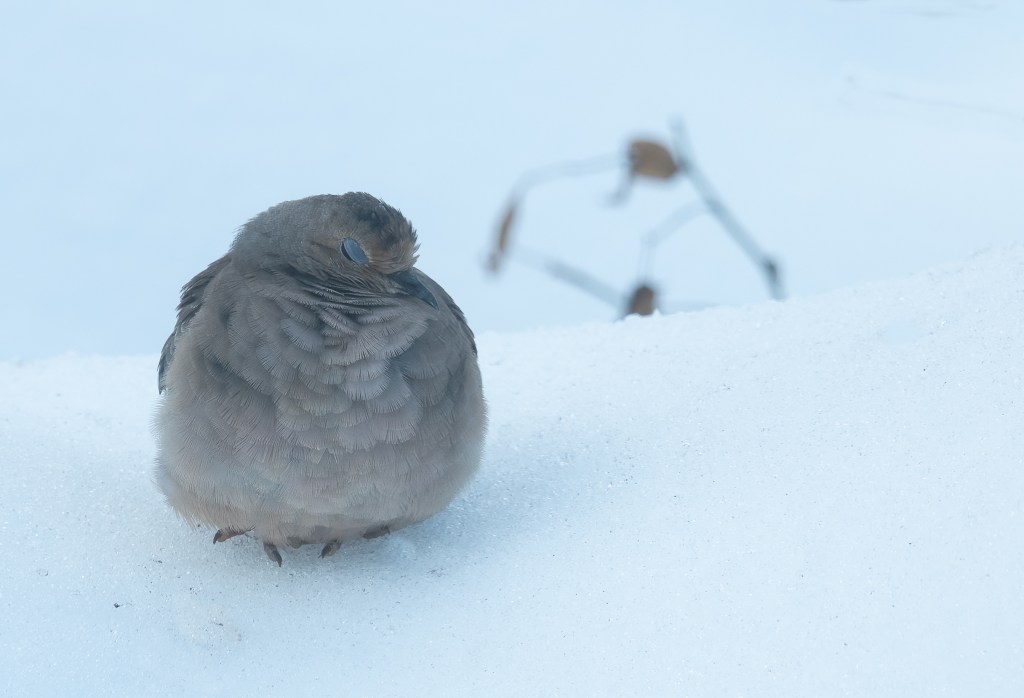
This one was alone, but pairs are common. It settled down for a rest, fluffed up against the cold.

Then closed its eyes, and went to sleep:
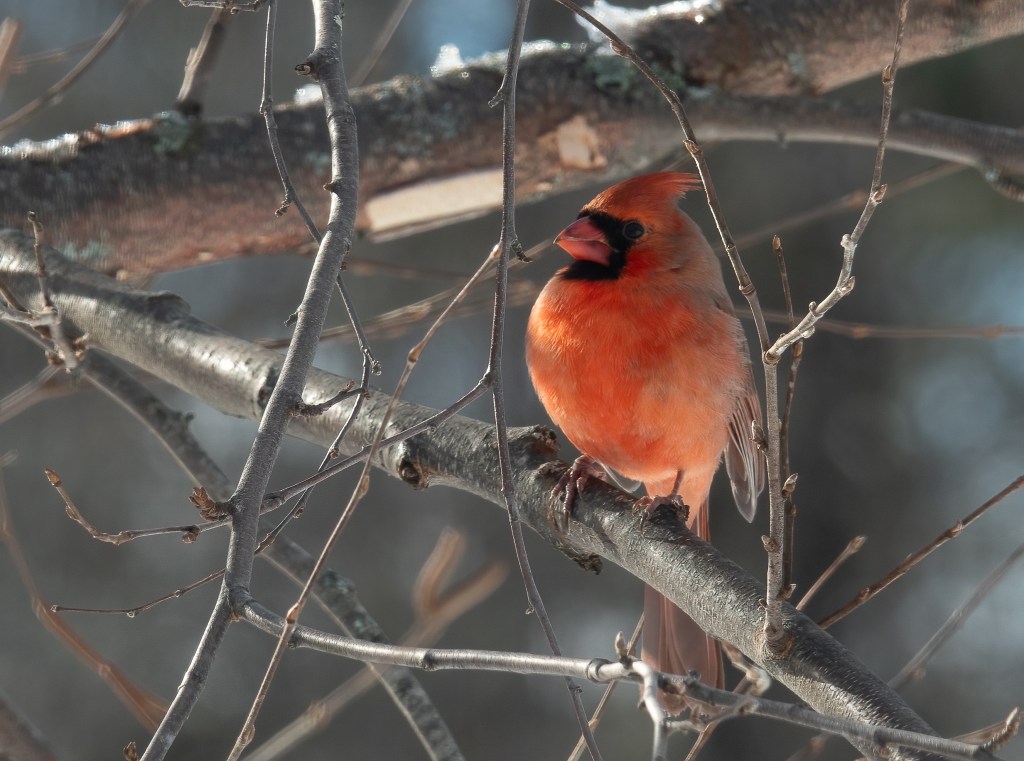
After all those soothing subtle dove-greys, a startling flash of vermilion, a male Cardinal.
I’m leaving for a few weeks for warmer climes. This will go out while I’m gone. And when I return, I’ll show you where I’ve been. Meanwhile, curl up under your duvet and read a good book, with a glass of wine and a warm dog.
Wildlife CCTV

There are animals you rarely see, for various reasons. Some are very rare or shy, some are nocturnal, some are tiny, and others are aquatic and therefore usually far away for a land-bound naturalist.

So you set up your CCTV, aka a game camera or a camera trap. The art is in knowing where to put it. In some spots, no animals might pass by for weeks at a time. But if you know your land well, you have learnt to see small signs: scat, tracks, scrapes, etc, that tell you animals come this way more often

My game cameras are run-of-the mill pieces of kit, sold to amateurs and hunters. Professionals attach a seriously good camera to a beam, and get the kind of pictures you see in Wildlife Photographer of the Year.

I start with a place where animals like to cross the stream. And sure enough, a bobcat, an animal I have still never actually seen:

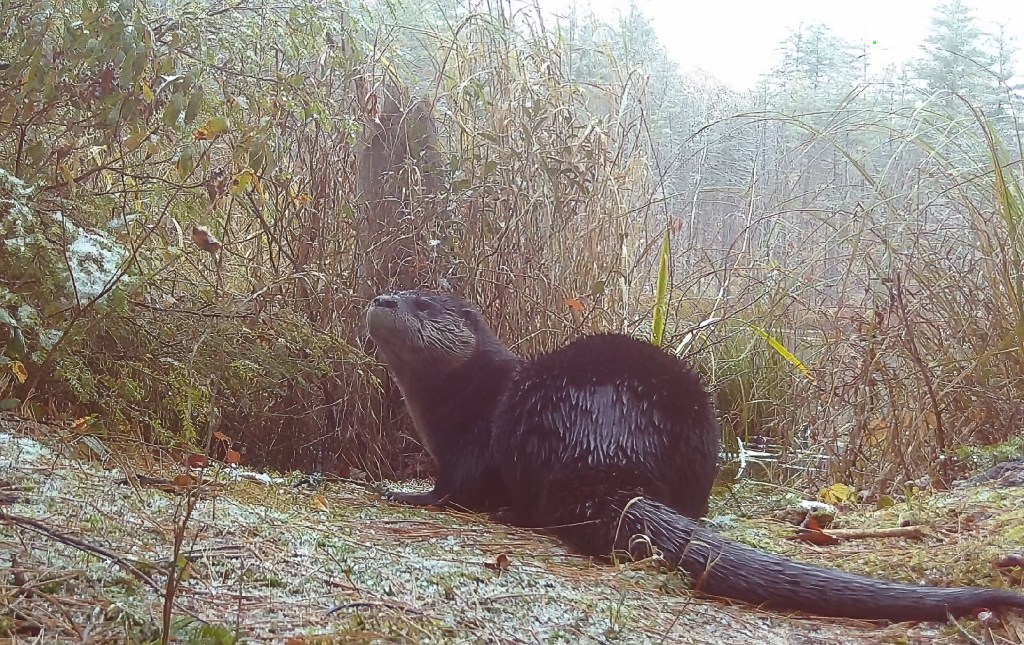
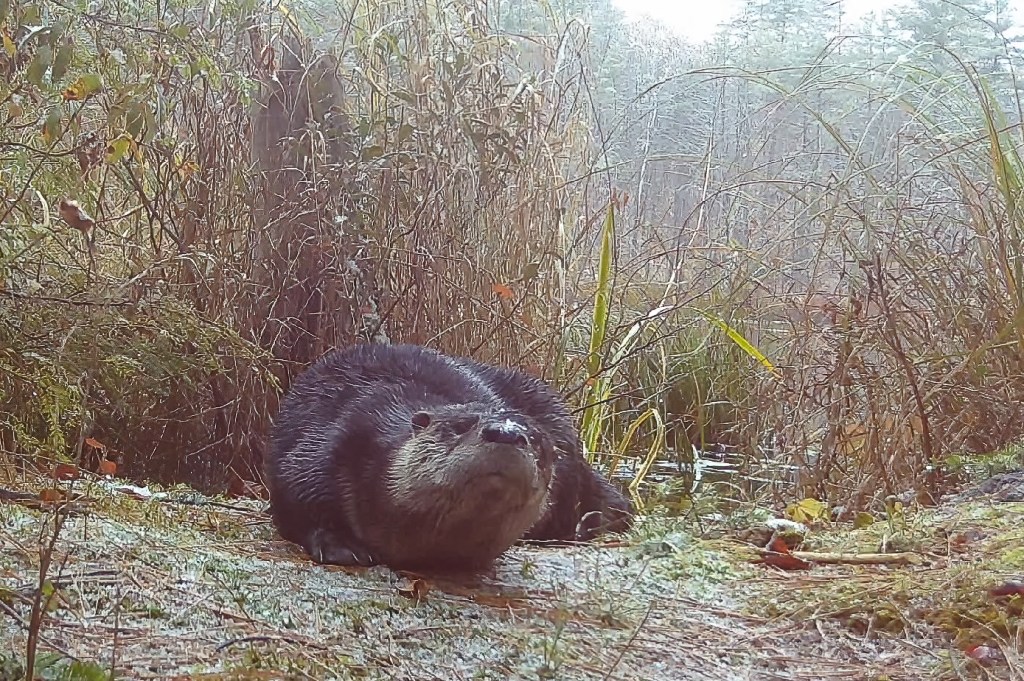
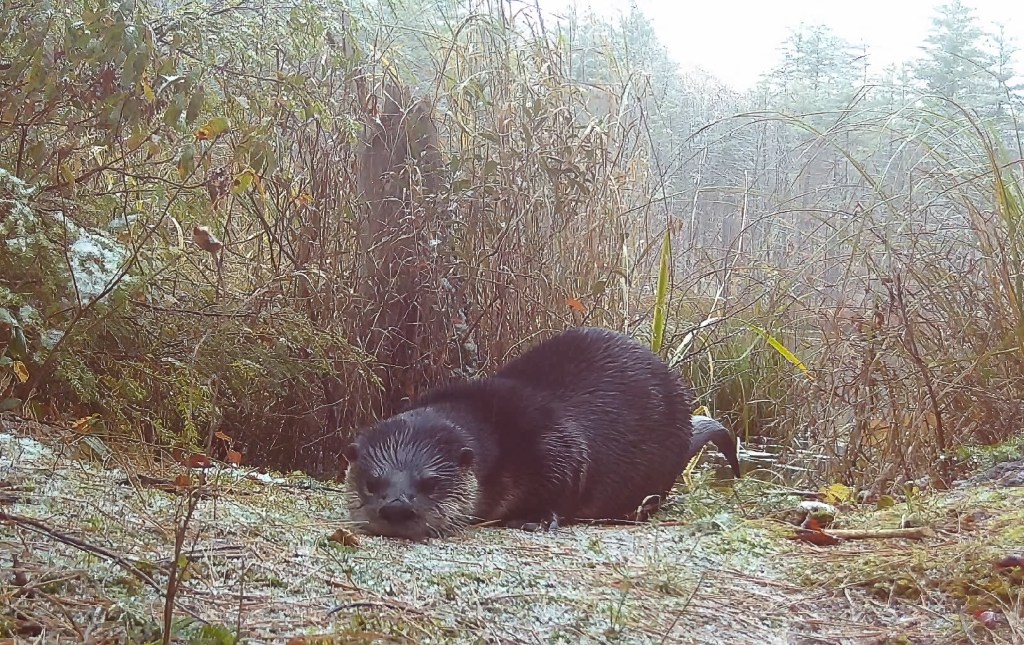
There is a place on the shore of beaver pond where I found fresh otter scat, so I put up the camera. Here is a selection of what I captured First , an otter, on three different days.

Second, a beaver (at night of course) fetching a hemlock branch from a tree he had cut down earlier and dragging it off to the pond:

And the beaver giving itself a thorough face and bib grooming:

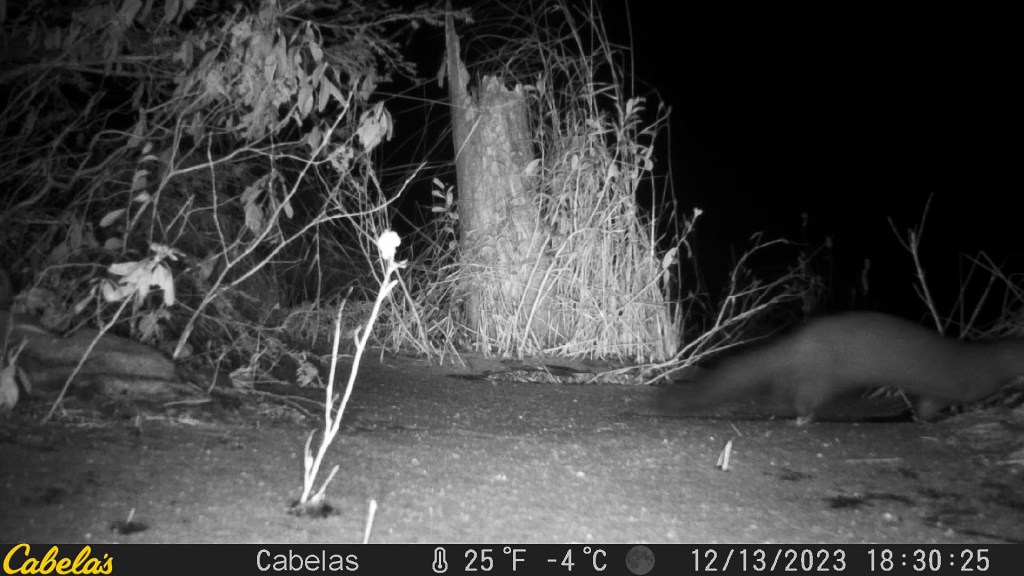
Third, a mink (or the rear section of one!):

And last but not least, Robert Burns’ “Wee, sleeket, cowran, tim’rous beastie”,  a mouse:

It’s not the same as seeing the animals for myself, but nonetheless it feels good to know I live and walk amongst them.

A beaver’s work is never done

(PS If you read my last post, about porcupines, it included a tree whose bark and cambium had been chewed off. A Maine Master Naturalist whom I greatly respect has just told me she thinks I got this wrong, and it is actually beaver after all! It is now under deep snow, so we can’t check, but be skeptical of my earlier claims!)

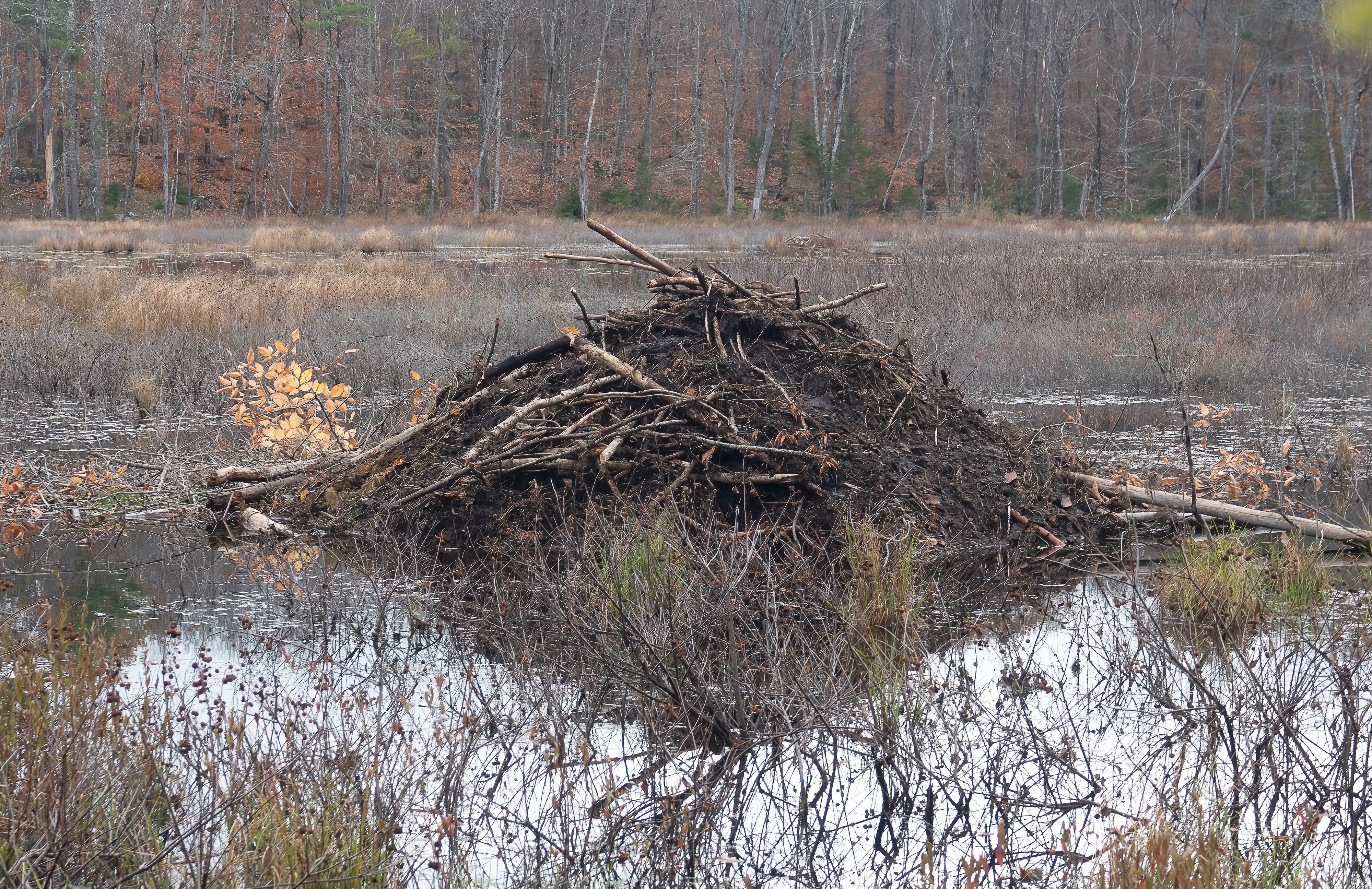
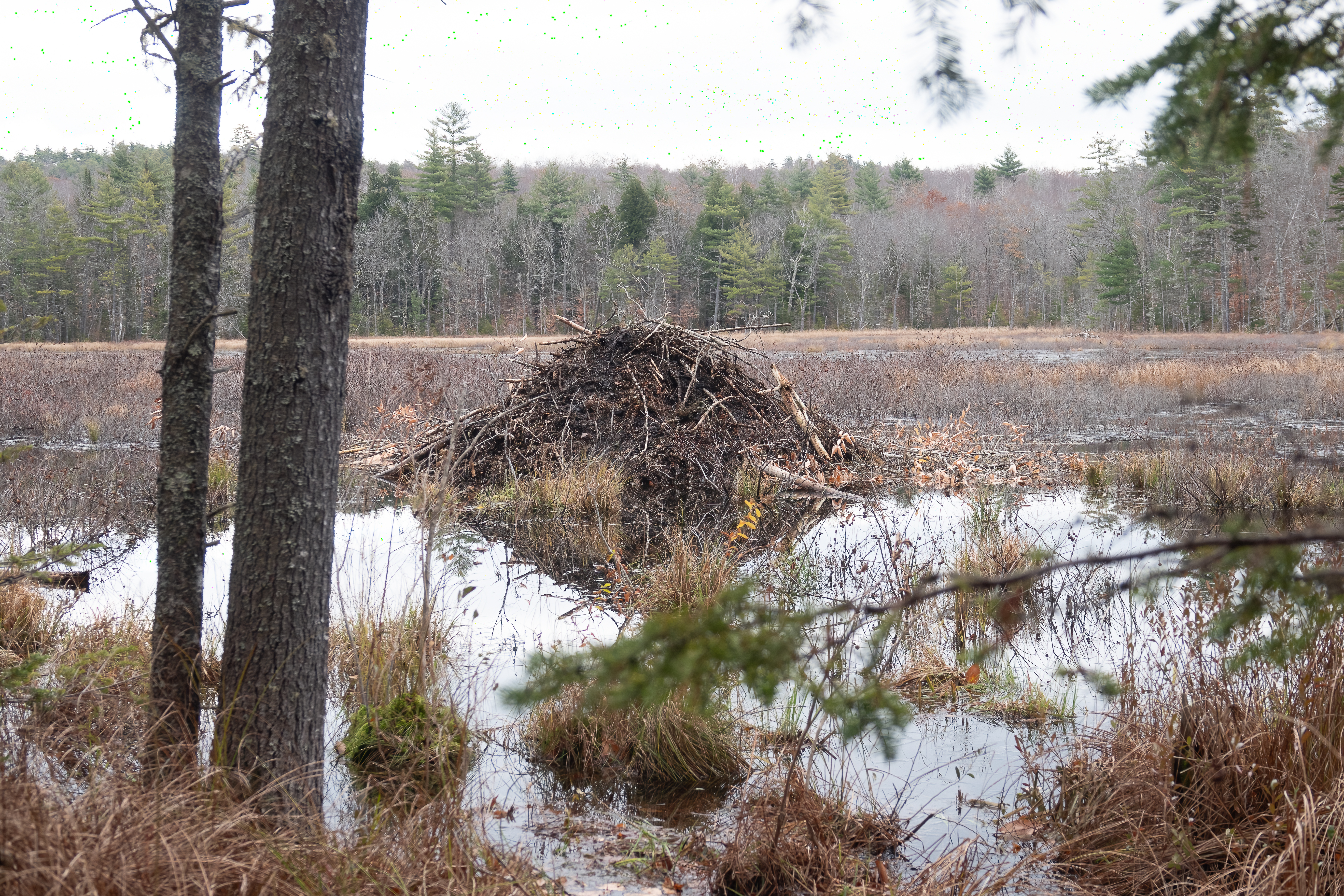
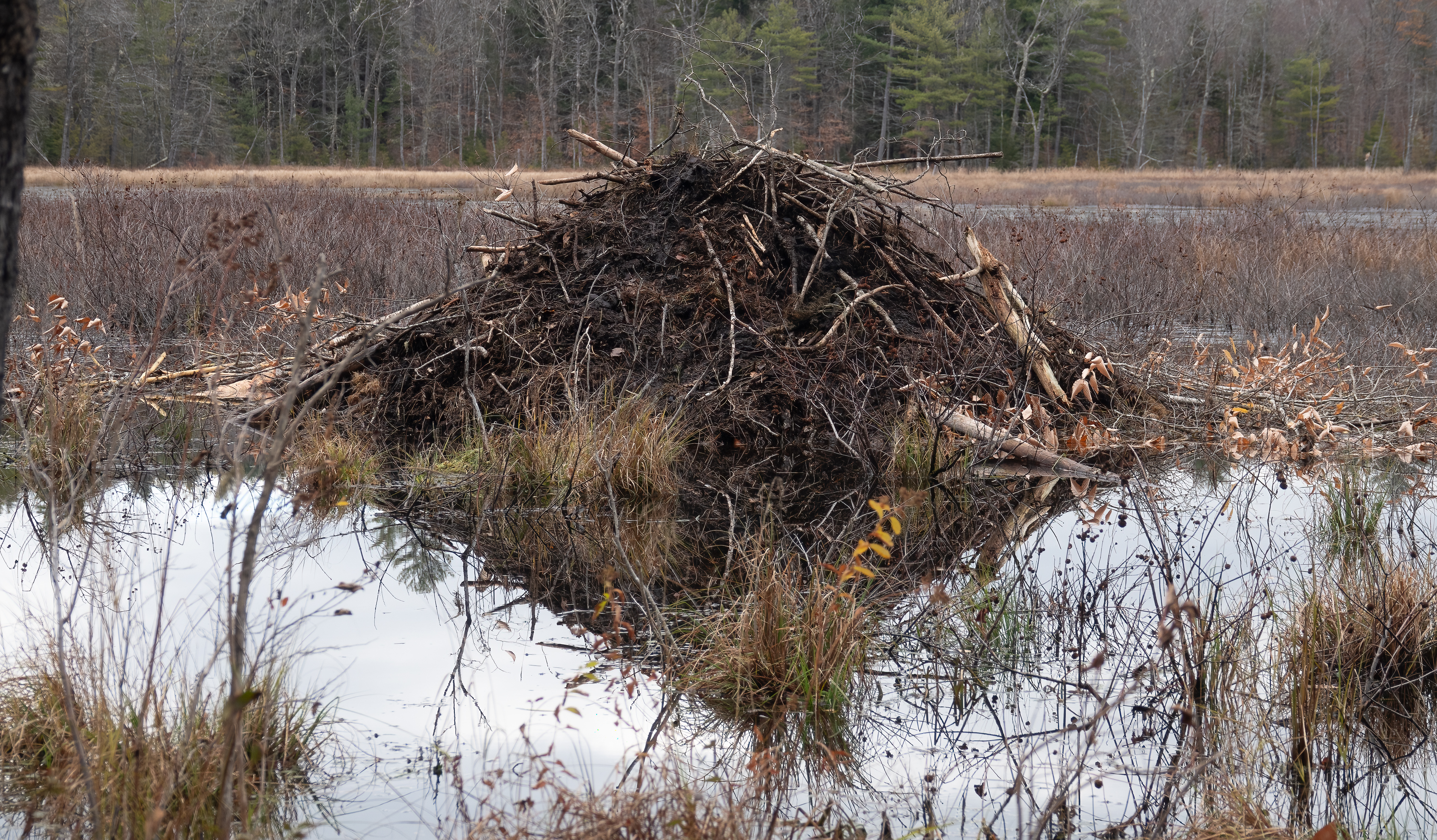
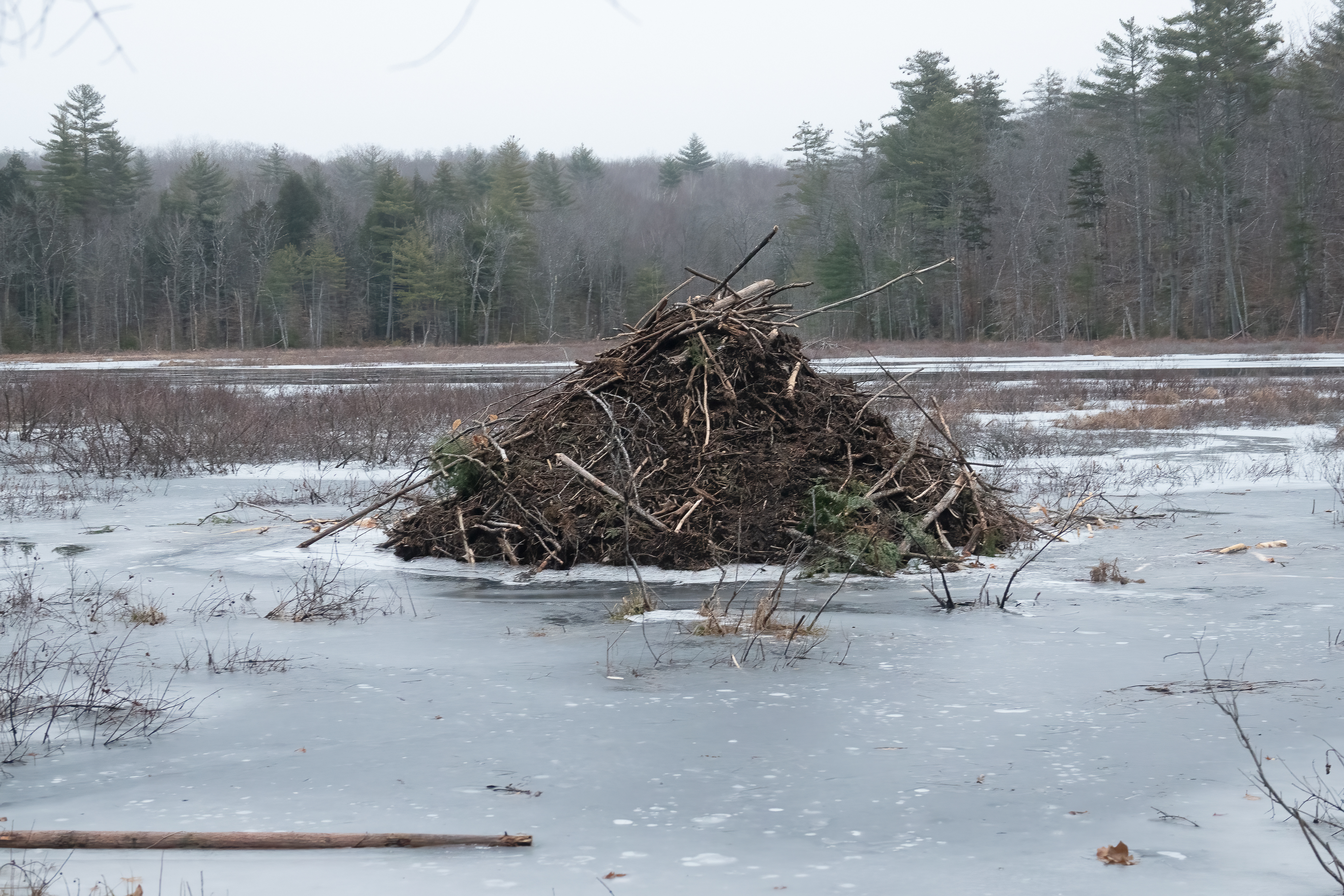
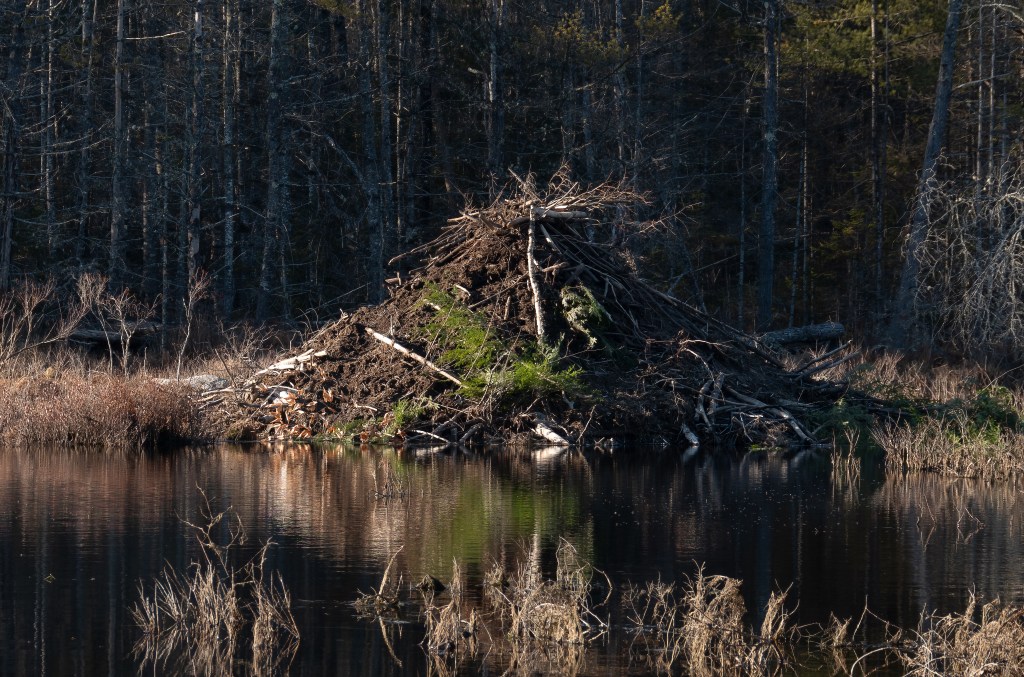
The beavers are definitely around, but playing hard to get. They have built a new lodge, inconveniently on the opposite shore of the pond, where I can only reach it when the stream’s water level is low enough to cross. These photos show it growing, from November 14 to December 17:

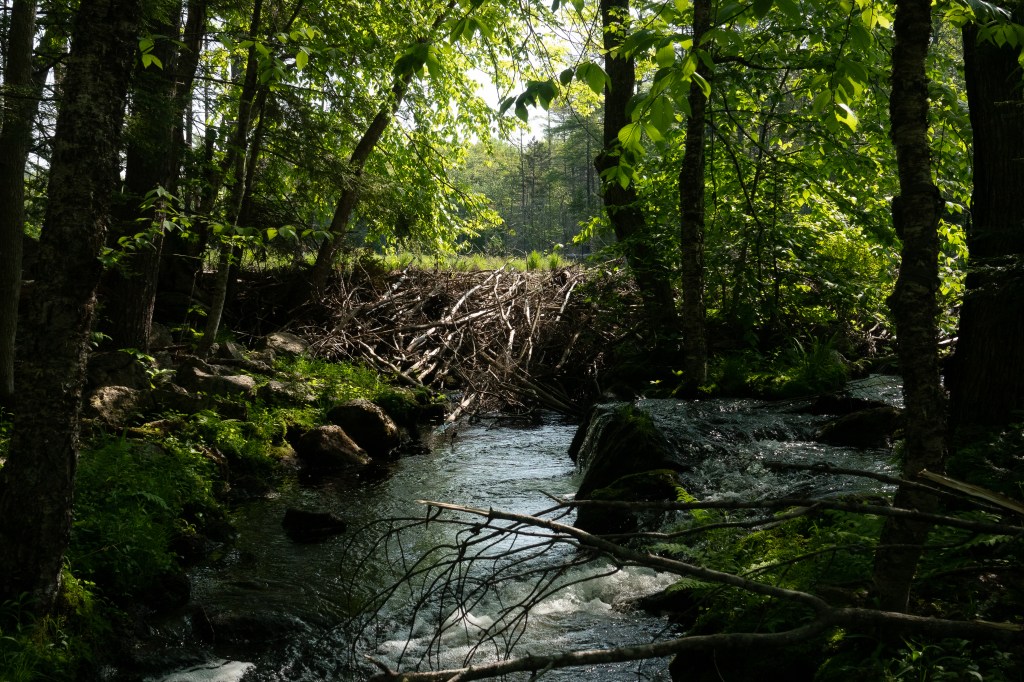
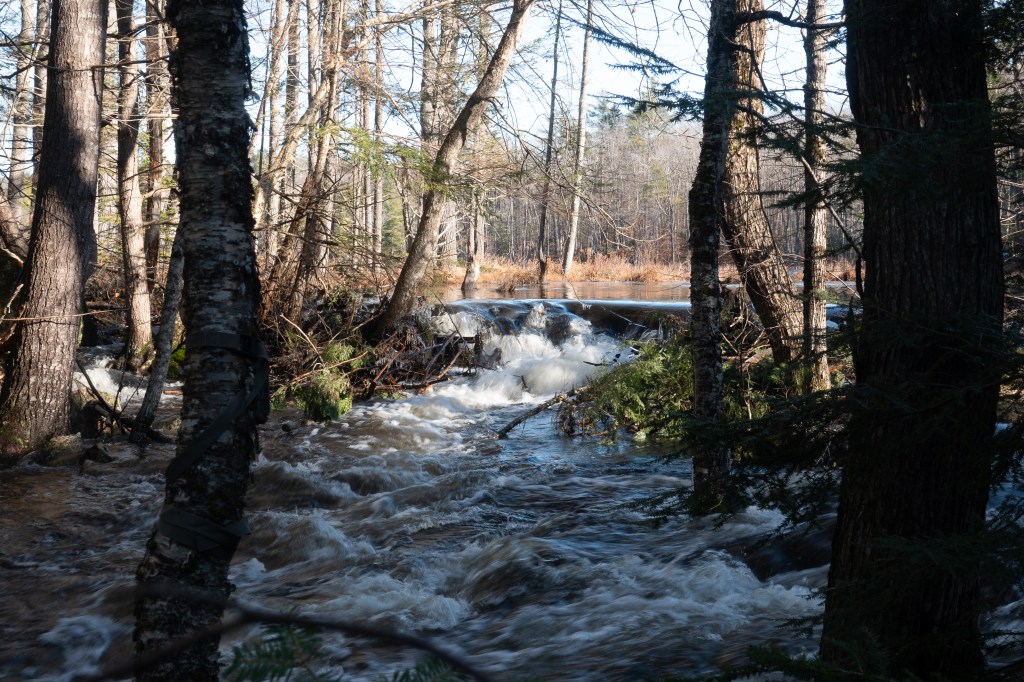
No sooner were they settling in for the winter, than the weather gods turned their normal winter world upside down. We had six inches of rain in 24 hours, and everything flooded. Their beautiful dam, seen here in May:

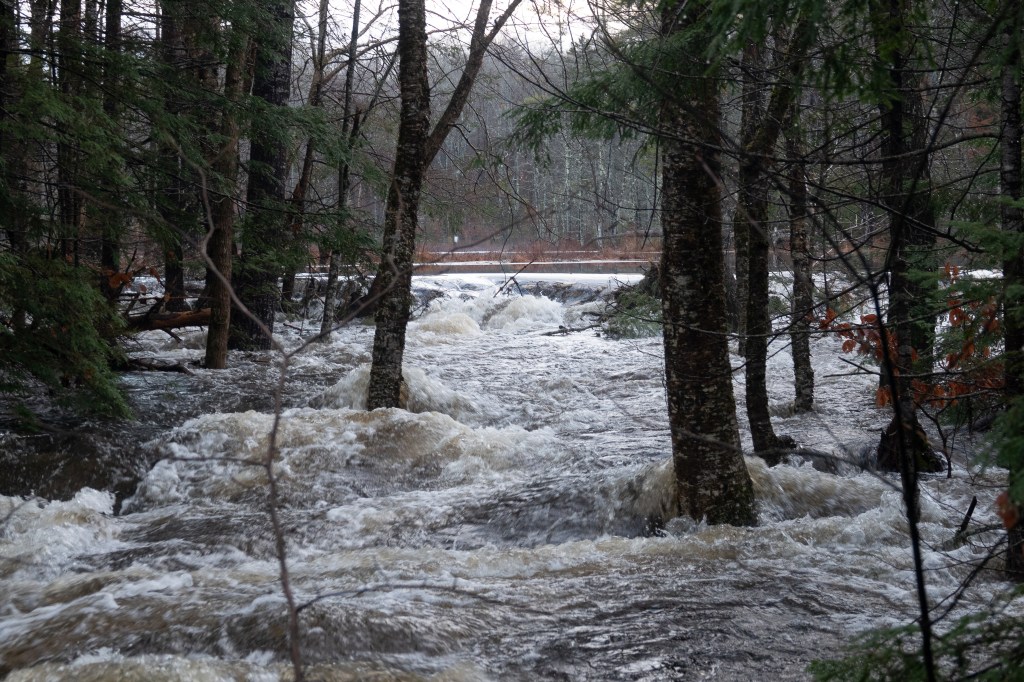
was overwhelmed by the flood waters:

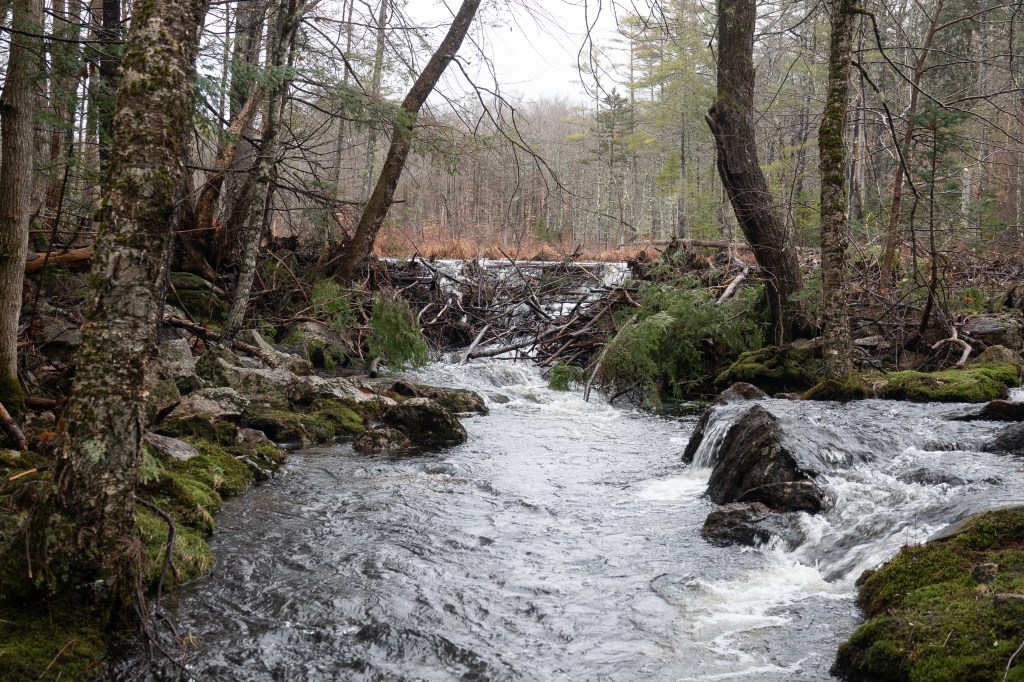
When the water subsided, much of the dam was gone:

But a few days later, they started to rebuild, rather haphazardly:

Indefatigable.

PS The big rain storm may have badly damaged their new lodge. I can’t reach it to look while the stream is so high, but last year’s lodge, a particularly impressive one, but which they had not repaired in preparation for this winter, has suddenly shown signs of fresh occupation. New mud, and new hemlock branches. So they have may have moved back in.

Quilled

Happy New Year. It is 2024 as I write this from Maine. It is a worrying year. Instead of snow, we have had rain, and lots of it. The ground is muddy and brown rather than hard and white.

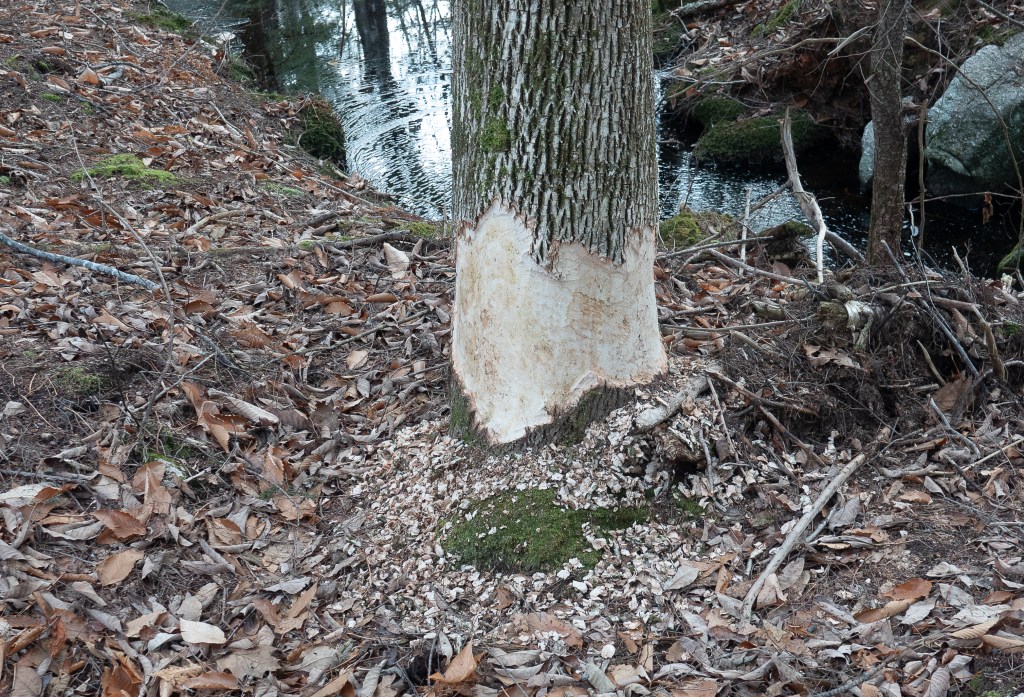
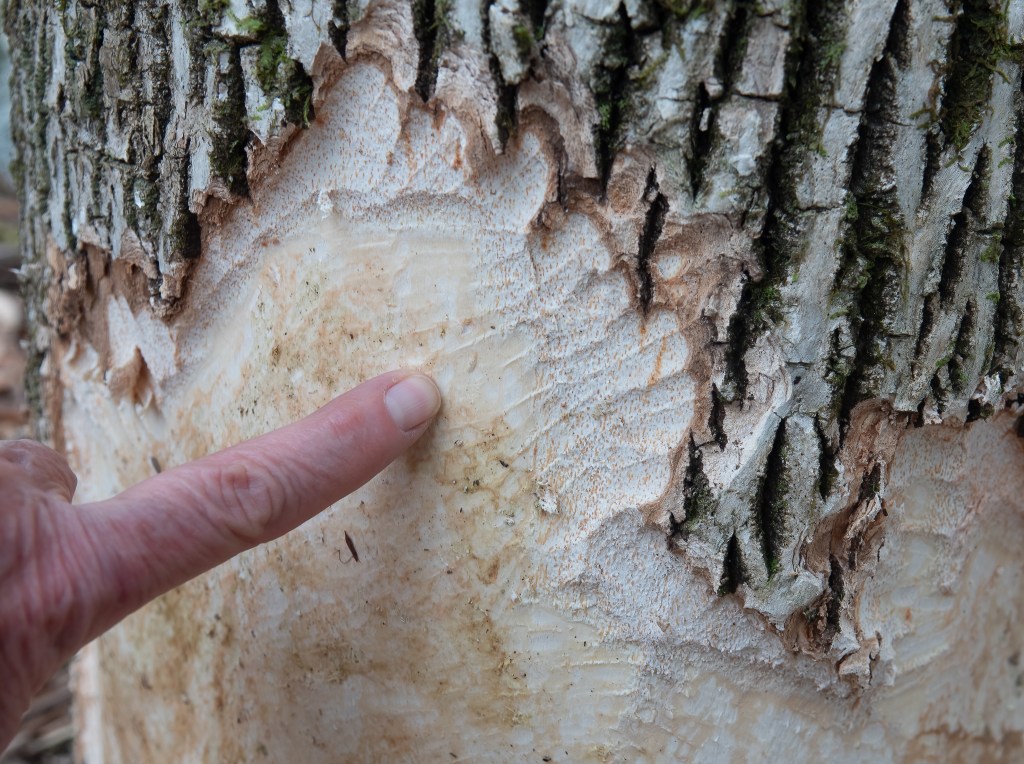
But there are still things to discover out in the woods. I came across this tree, recently gnawed.

Typical porcupine, just shallow bites to reach the cambium, which you can clearly see contains nutritious sap (the little dots):

Unlike beavers, they do not chew into the wood proper. (PS A Maine Master Naturalist whom I greatly respect has just told me she thinks I got this wrong, and it is actually beaver after all! It is now under deep snow, so we can’t check, but be skeptical of my claims!)

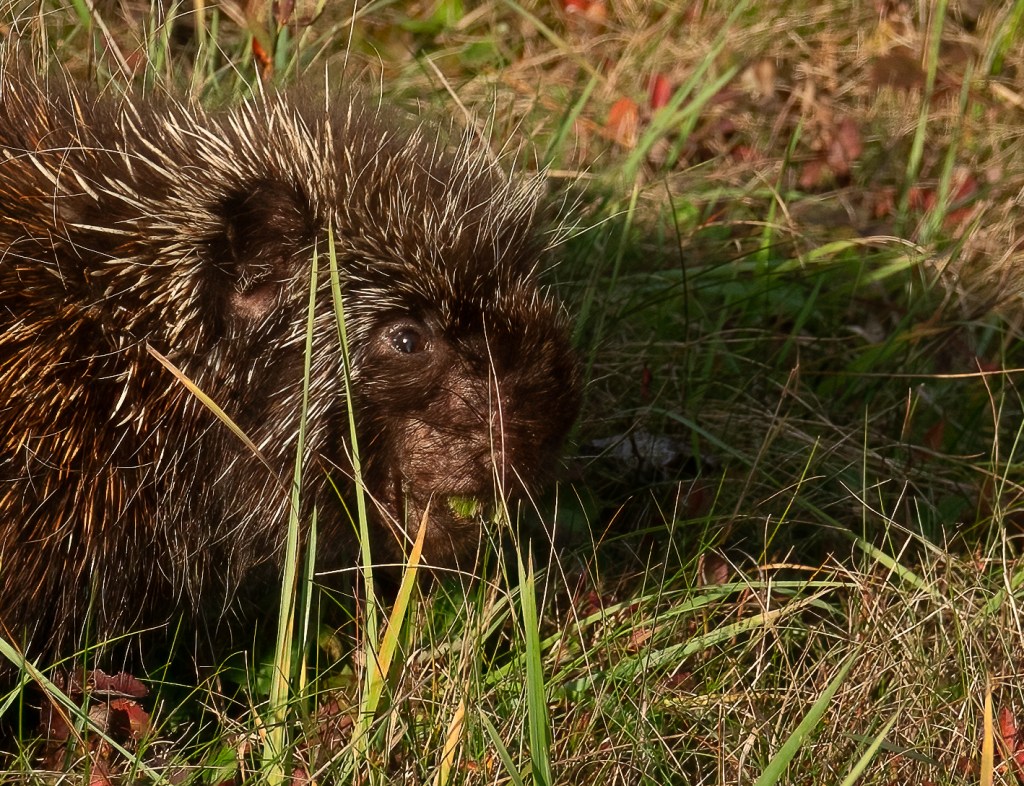
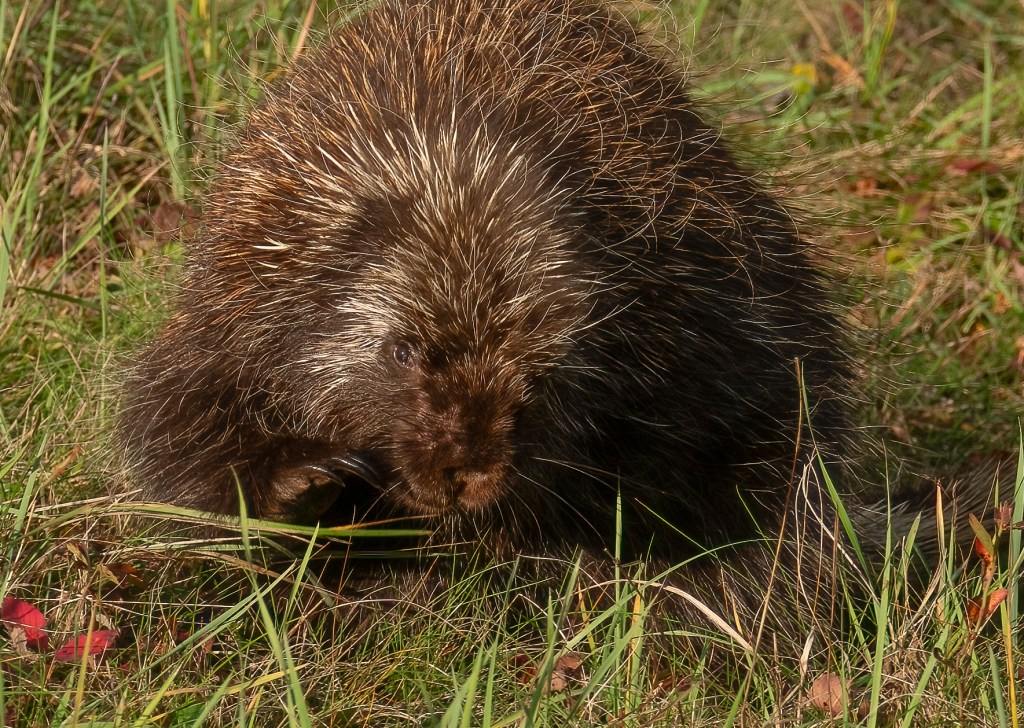
Porcupines are common round there, and in early November this one spent a lot of time in my field. Sometimes it was asleep, catching the final rays of an Indian summer, relaxed and unaware of my presence, quills down:

I could get very close before it opened its tiny eyes.

One other occasions it was feeding on the last green plants of the year, before the usual snow cover makes foraging harder and they are reduced to chewing trees.

They don’t hibernate, but they do become less active.

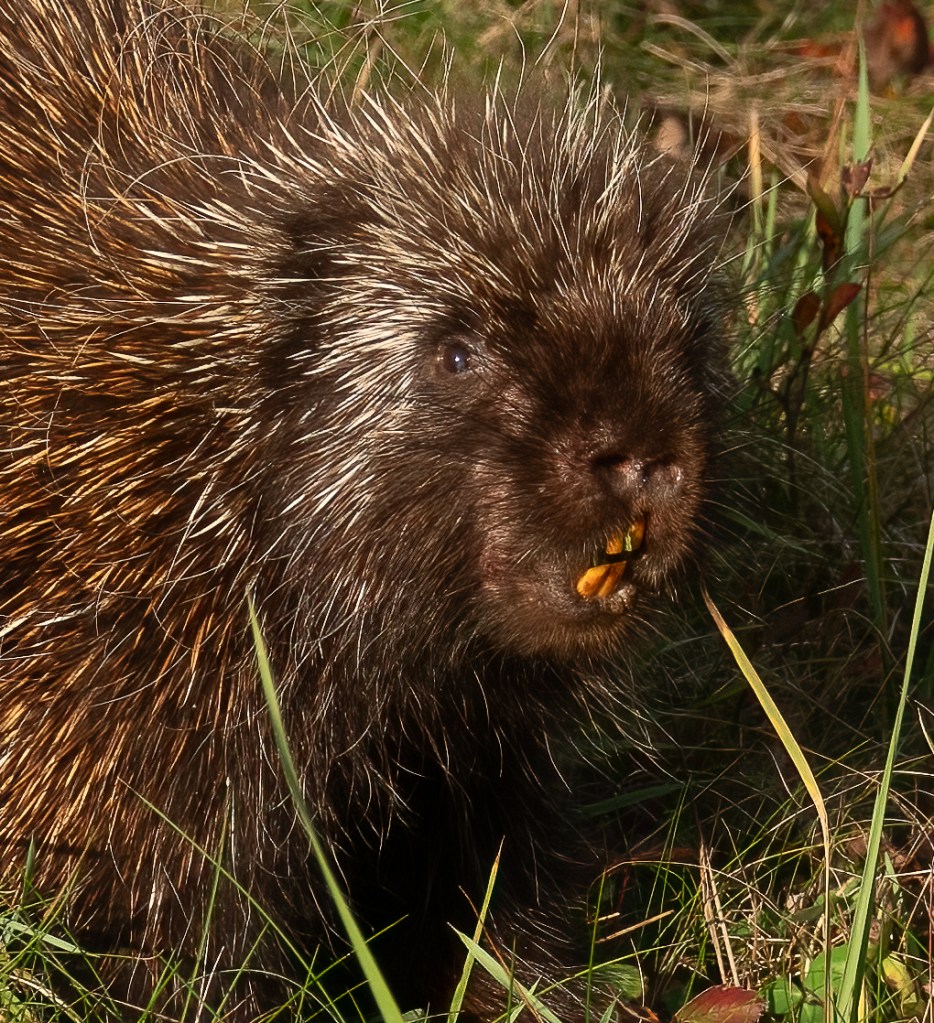
Their incisors are a startling orange color:

The color is caused by iron oxide, which is incorporated into the teeth as they grow. It is thought to harden the teeth, so they can chew wood. The incisors grow throughout their lives.

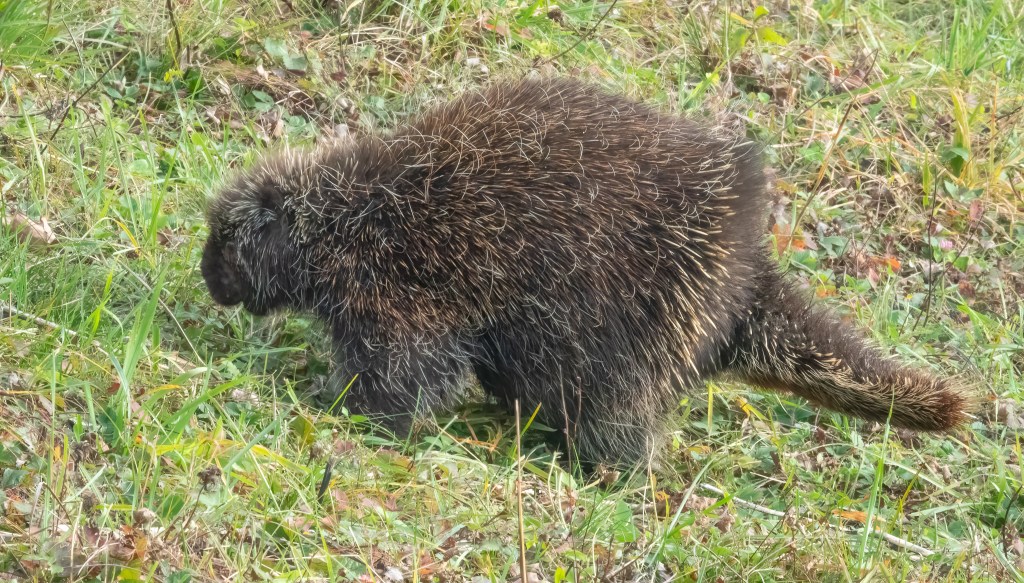
When a porcupine is disturbed, it erects its quills. As it retreats, you can clearly see the posterior quills in action:

Their other weapon is their claws, visible on lower left:

But their defensive behavior is all about those quills. They will sometimes turn their backs and stand their ground, and in the modern world that doesn’t always work. Pickup trucks, for example, are undeterred, hence the high number of roadkills.

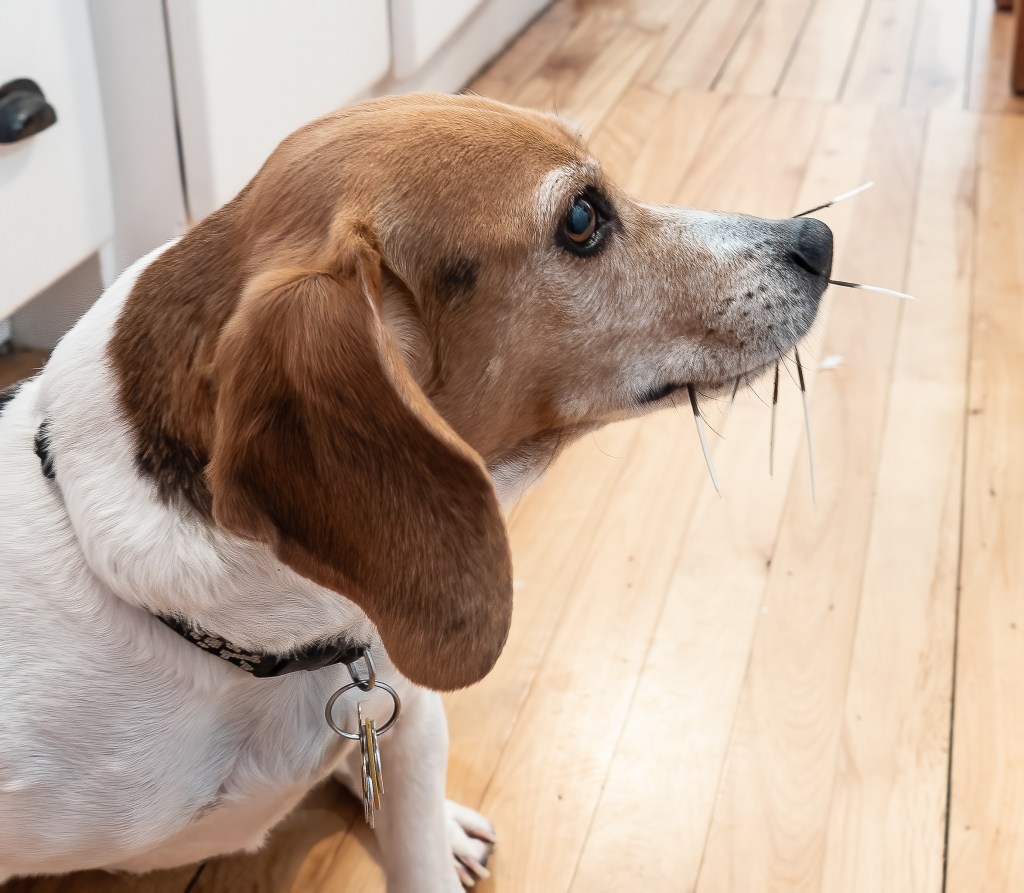
Any animal brave enough or foolish enough to tangle with a porcupine pays a price. Gemma, our beagle, found one in February:

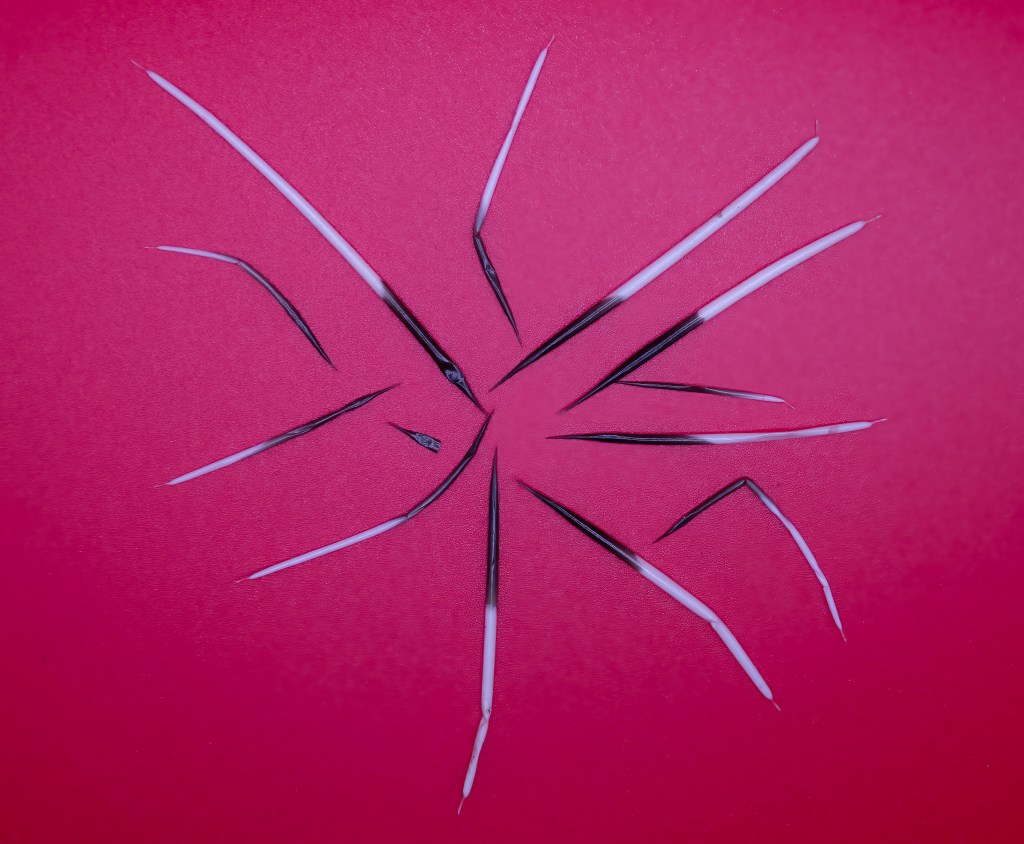
There were quills in her lips, up her nose, and one on her tongue, which she patiently let us extract with tweezers. There were twelve of them, but sometimes dogs get 50 or 60, and a trip to the vet is needed.

I’ll let Ogden Nash have the final word:

The Porcupine, by Ogden Nash (1902-1971)

Any hound a porcupine nudges
Can’t be blamed for harboring grudges.
I know one hound that laughed all winter 
At a porcupine that sat on a splinter.