Although the Makgadikgadi pans were mostly very dry, punctuated only by occasional trees and termite mounds
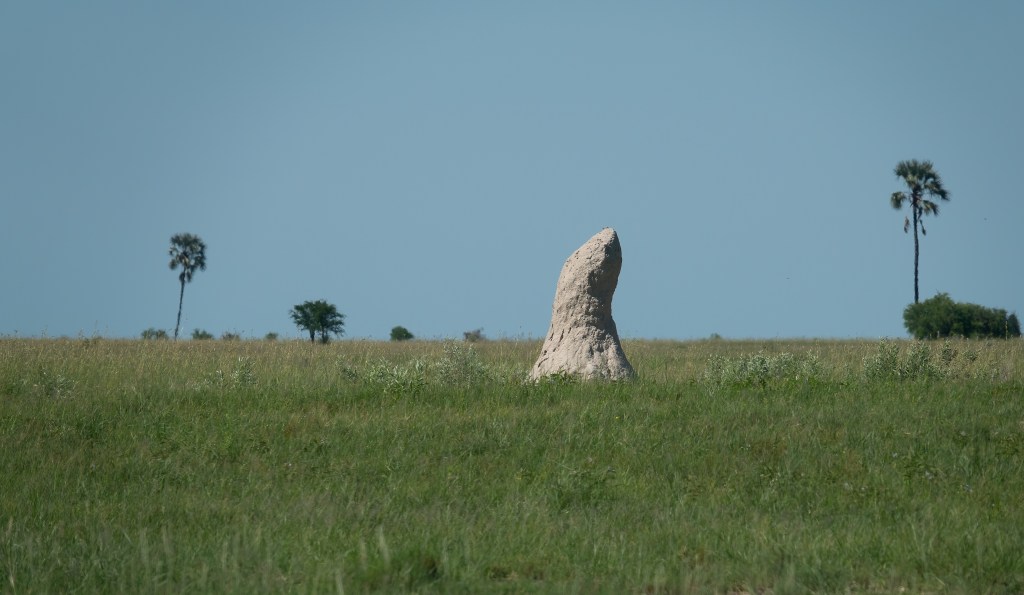
there were a few that retained some water:

and where there is water, there are water birds. These are Blue-billed Teal, Spatula hottentota, formerly commonly known as the Hottentot Teal, a name less used now for obvious reasons.

When their wings are spread, there is a stunning green patch:

You can clearly see below that even this pond is in the process of evaporating into nothingness, and the ducks will be forced to move on.

We had hoped for big flocks of pelicans and flamingoes, but it was far too dry for that. However, we did see comically implausible African Spoonbills, Platalea alba:
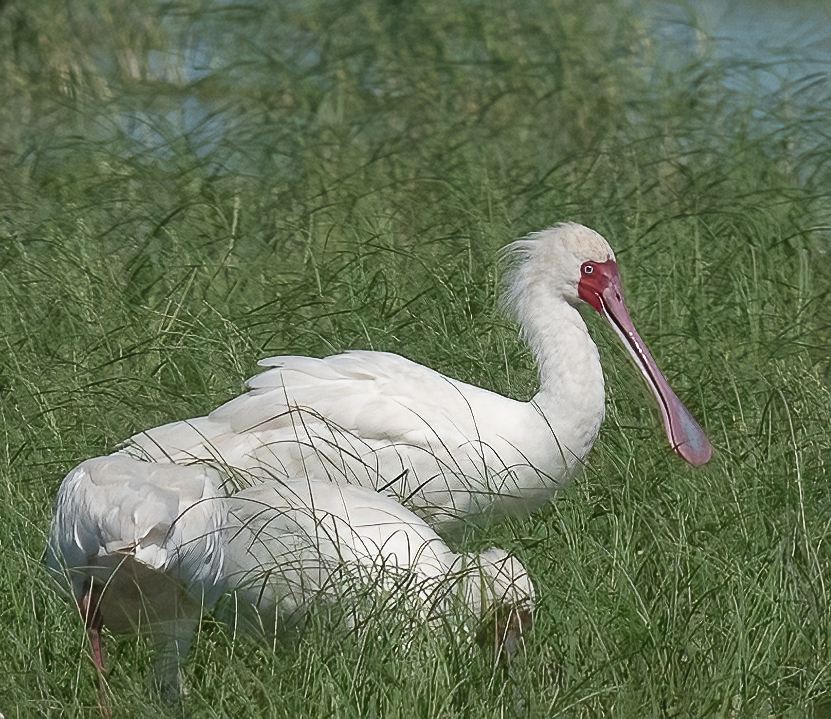
lined up as if on on parade:

and Glossy Ibis, Plegadis falcinellus, just plain black at first glance, but a handsome a dark purplish metallic bronze in good light:
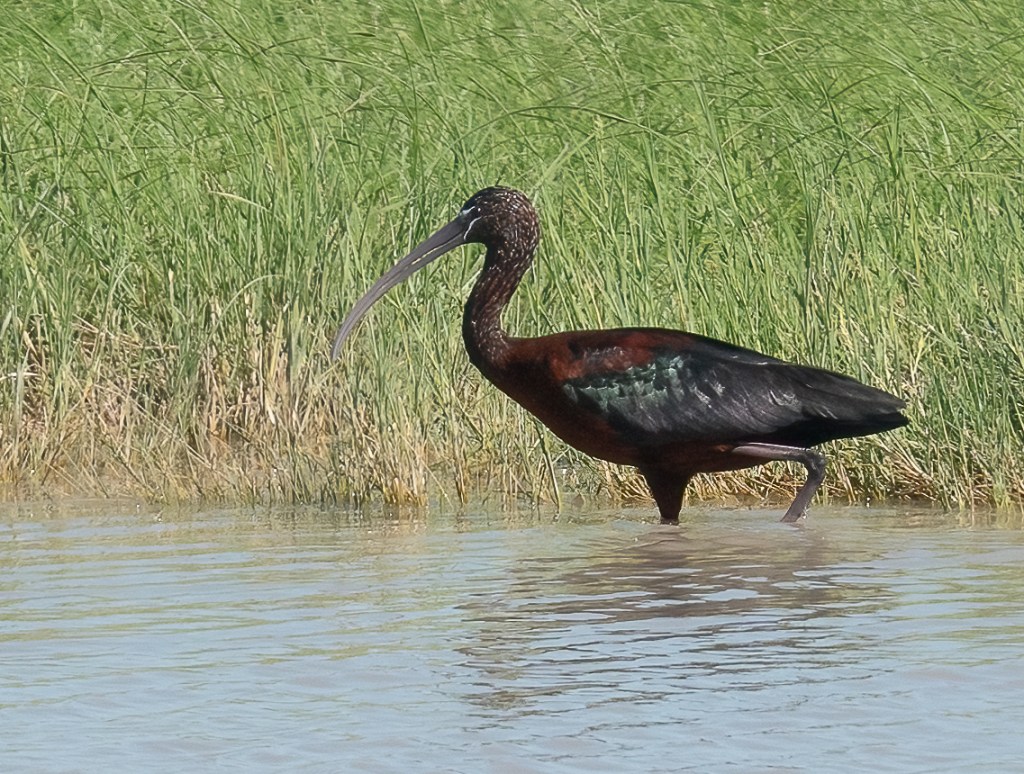
with a flash of green when the light catches their iridescent wings:
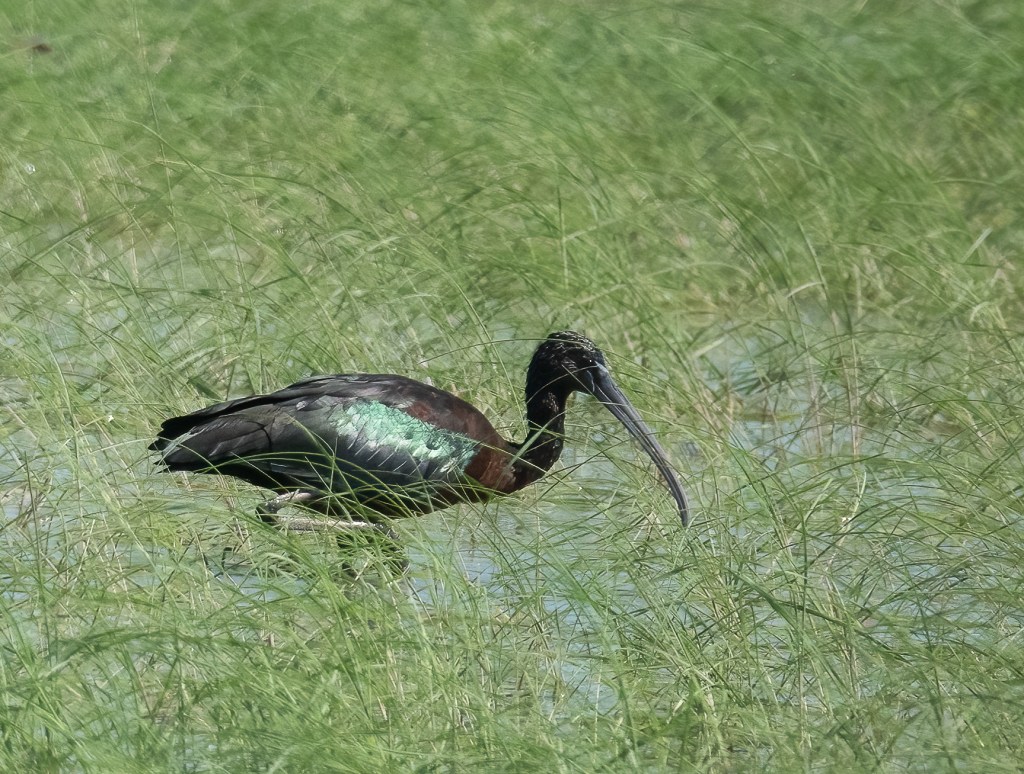
All three of these birds live year-round in much of sub-Saharan Africa, and forage in shallow water, feeding mainly on invertebrates. They are not threatened, and the ibis have even spread to the Americas. Spoonbills show up more and more often as far afield as Europe and even the UK.
PS As the effects of climate change become more and more worrying, we all know that trees have a major role to play in storing the carbon that is causing the problem. But much less publicized has been the positive role of grasslands, which store their carbon in the soil. Recent research suggests that both natural grasslands like the Makgadikgadi, and managed ones, may be better carbon sinks than forests in unstable, warming, drought-like conditions.
 Eyes on the Wild
It’s wonderful to see all the birds…Spoonbills were one of my very favorites, when we played Bird Lotto in the 1950’s. Good to know about the grasslands and carbon…at least trees aren’t expected to do all the work, especially the way they are being burnt and chopped in the tropics.
LikeLike