The Cape Hare was fairly easy to see at night in the Makgadikgadi, because out on the open dried-up pan they froze in the headlights:

They have enormous eyes, being mainly nocturnal:

and of course big ears:

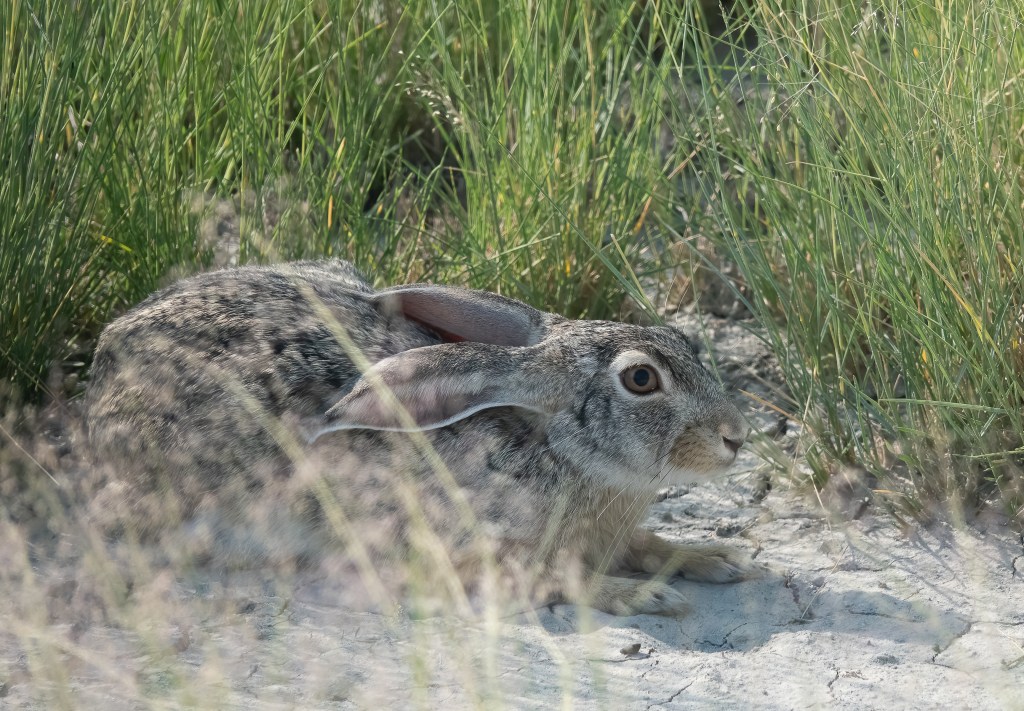
In the daytime, they are very well camouflaged:

But their response to danger is still to hunker down and stay very still, so it is possible to get a good look:
On the night drives in the Makgadikgadi we regularly glimpsed yet another animal I had never heard of, called a Springhare, Pedetes capensis.
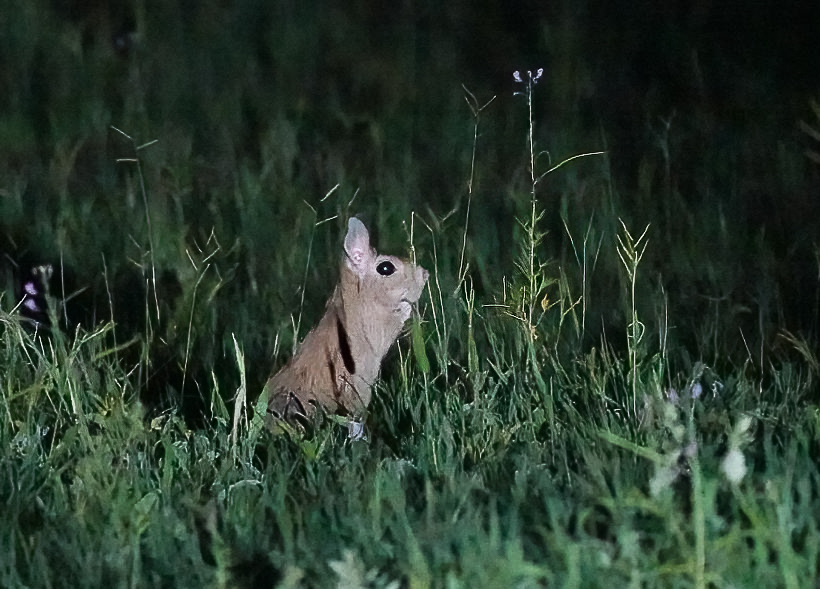
It is not in fact a hare at all:

and it bounds through the long grass like a tiny kangaroo with a long tail that it uses for balance.
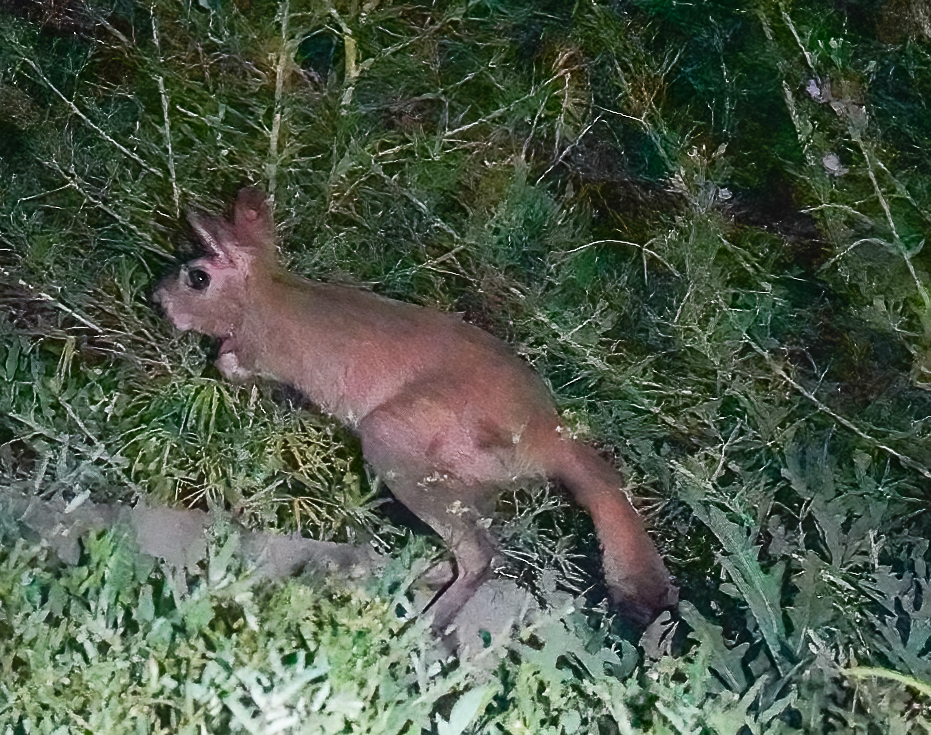
It is nocturnal, and impossible to photograph. (All these photos were taken by my brilliant friend Annie).
Here is a video (not ours!), showing its long tail and how it hops around: https://www.youtube.com/watch?v=67Kt3R3C7Ec
They’re saltatorial rodents, able to leap up to two meters, and they are herbivorous and live in burrows. The genus used to have only one species, which the taxonomists have now divided into two. Both live in dry parts of Africa.
Last, but most beautiful, was a serval, cleverly spotted by Laura:

The most elegant little cats, about which I have written before. It lingered, so we got a clear view:

before it nonchalantly wandered off into the darkness:

 Eyes on the Wild