(Oops, I hit “Publish” by mistake before I intended to. Apologies for the second post of the week! )
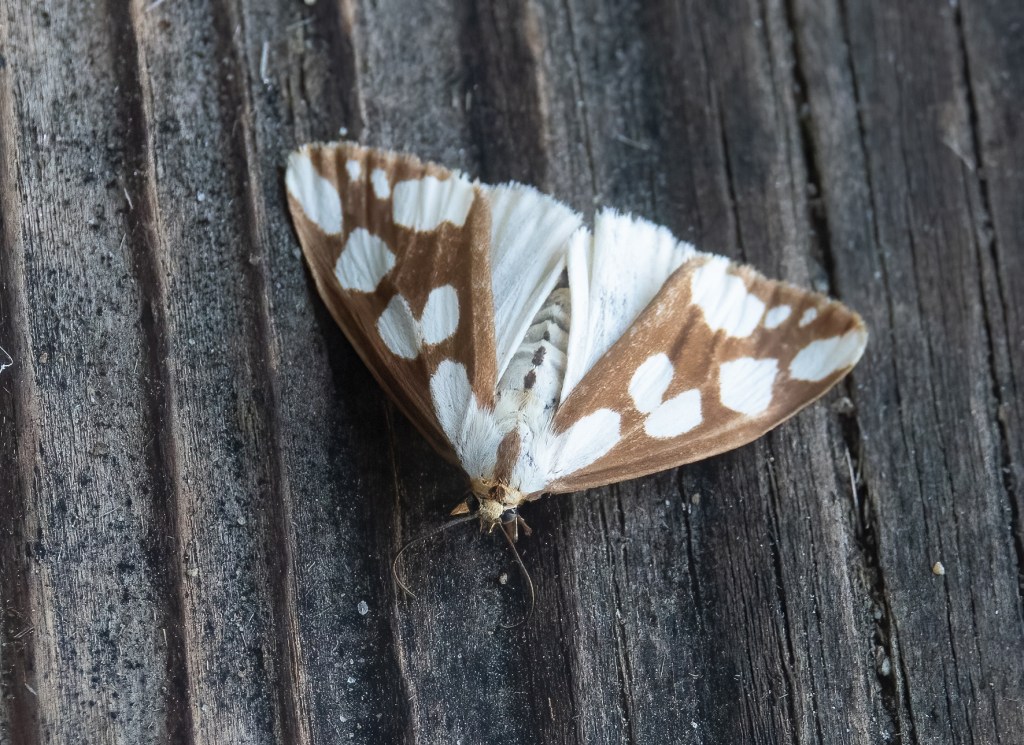
I have found myself interested in the unusual names boasted by some moths. This interest was sparked by finding a striking Confused Haploa Moth, Haploa confusa, on the step of my porch, below the light. It actually is named ‘confused’, and its behavior may have been also. There is no clear consensus as to why it has such an odd name.
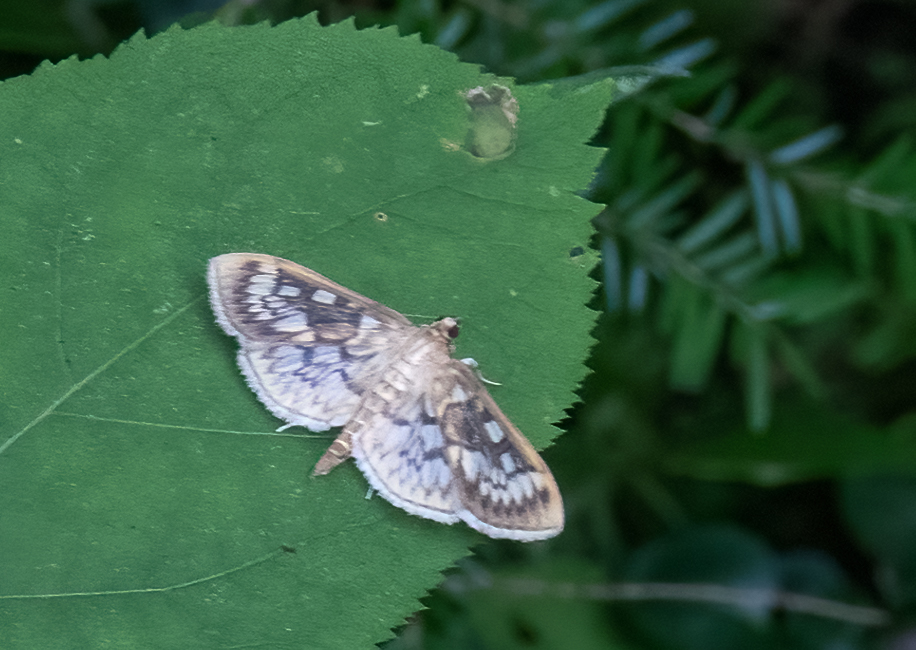
A new one for me is the Zigzag Herpetogramma Moth, Herpetogramma thesteali. Its common and scientific names use the Greek words for ‘reptile’, and for ‘drawing’, I think because its pattern looks like the scales of a snake.
The Virginia Ctenucha Moth, Ctenucha virginica, has a name from the Greek stem κτεν- meaning “comb”, in reference to the showy antennae of the male below:

It has a metallic blue body, and despite its name it is found as far North as Labrador, with Virginia being the southern end of its range.
The Northern Petrophora Moth, Petrophora subaequaria , brandishes a name that comes from the Greek for “rock” and the Greek suffix -φορος meaning “carrying”. I cannot for the life of me work out where this name comes from. As for the subaquatic portion of its name, that is even more mysterious. If anyone knows, do enlighten me.

Rather unusually, the caterpillars of this moth eat ferns, despite the compounds in fern leaves that means most insects avoid them.
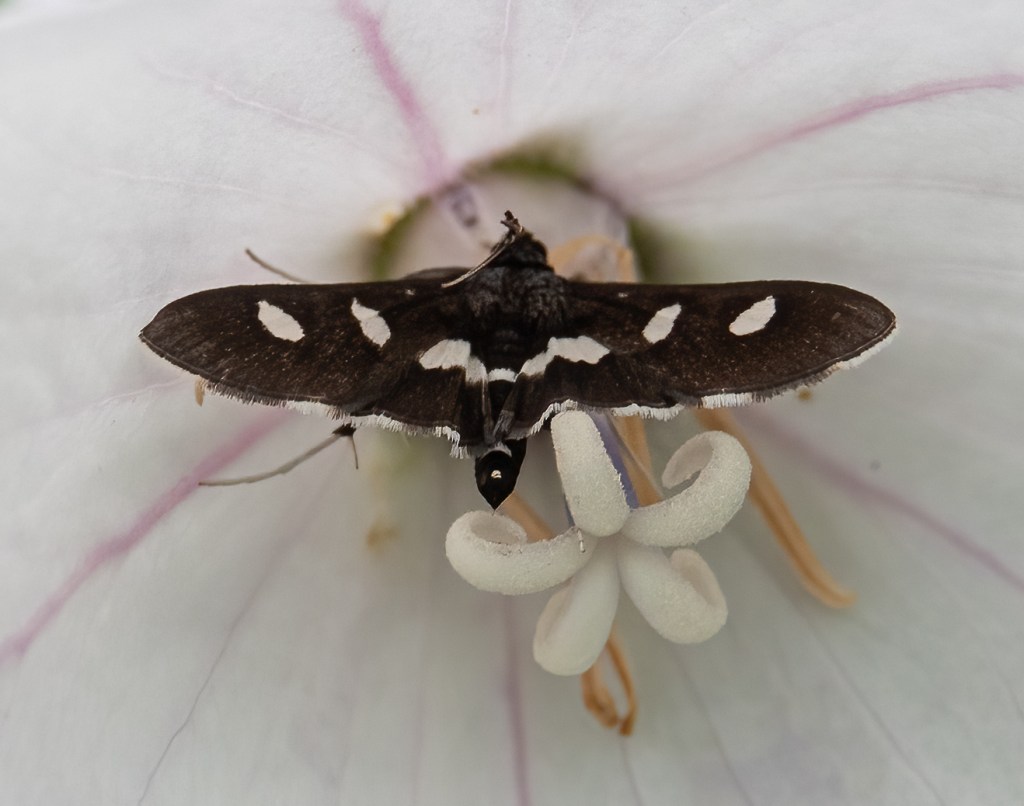
Grape Leaffolder Moth, Desmia funeralis, must be named for its funereal costume:
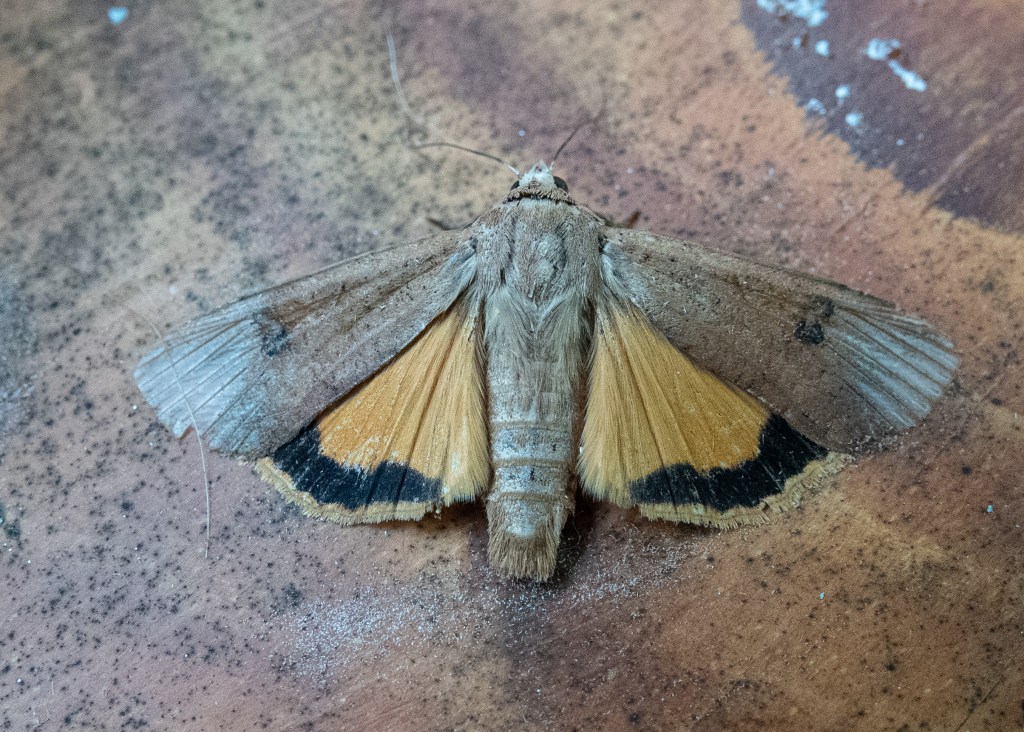
The Large Yellow Underwing, Noctua pronuba, has a glorious scientific name. ‘Noctua’ means “night owl” and ‘pronuba’ means “maid of honor”. Fitting names for a nocturnal beauty .
I could go on and on but your eyelids may need propping open by now. As you fall asleep, dream of moths.
 Eyes on the Wild
World Press ate this latest comment, too. Moths are so pretty. We rarely get to see them. Virginia moth looks ‘waspy.’ Uellow underwing is super pretty!
LikeLike
Amazing photos! How did you keep the moths still for your shots?
Catherine and I love moths. We get inundated with them every time we turn on an outside light here since we’re the only light source for half a mile here.
We were so inspired by your blog, by the way, that we took an insect and flower macro-photography class in a prairie in the Loire last week.
LikeLike
Go ahead – post three or four times a week. They are always interesting!
LikeLike