Phoebes often nest under eaves, and these ones nested inside a latticed shed that holds our generator!

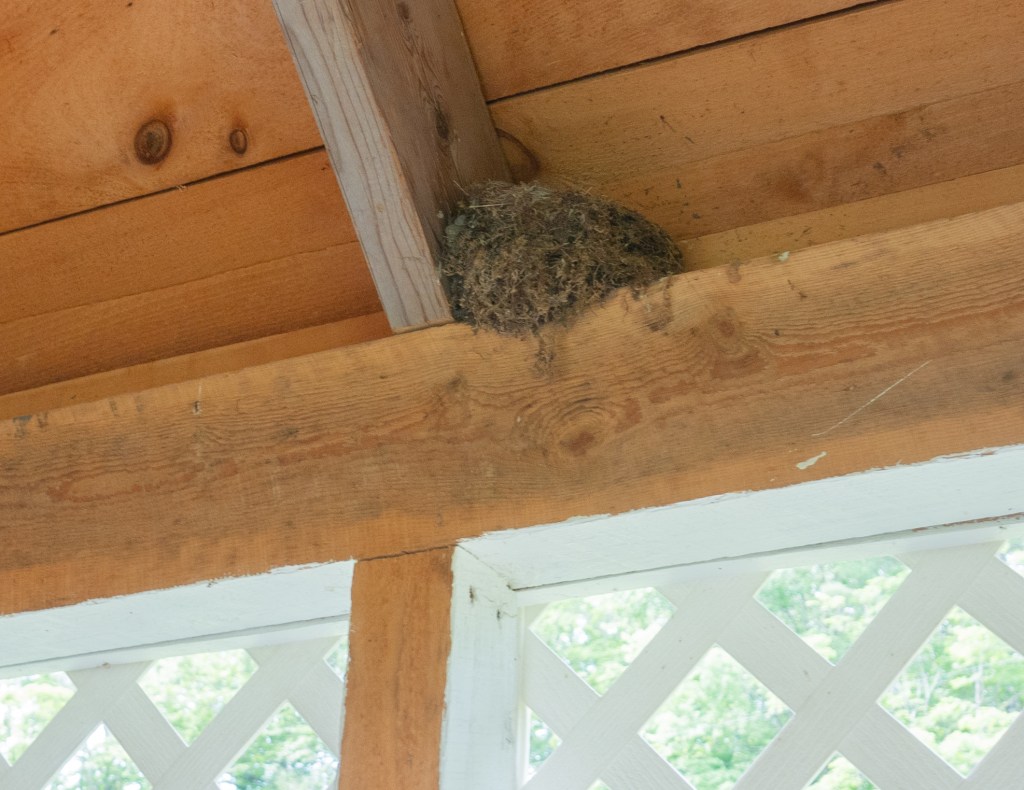
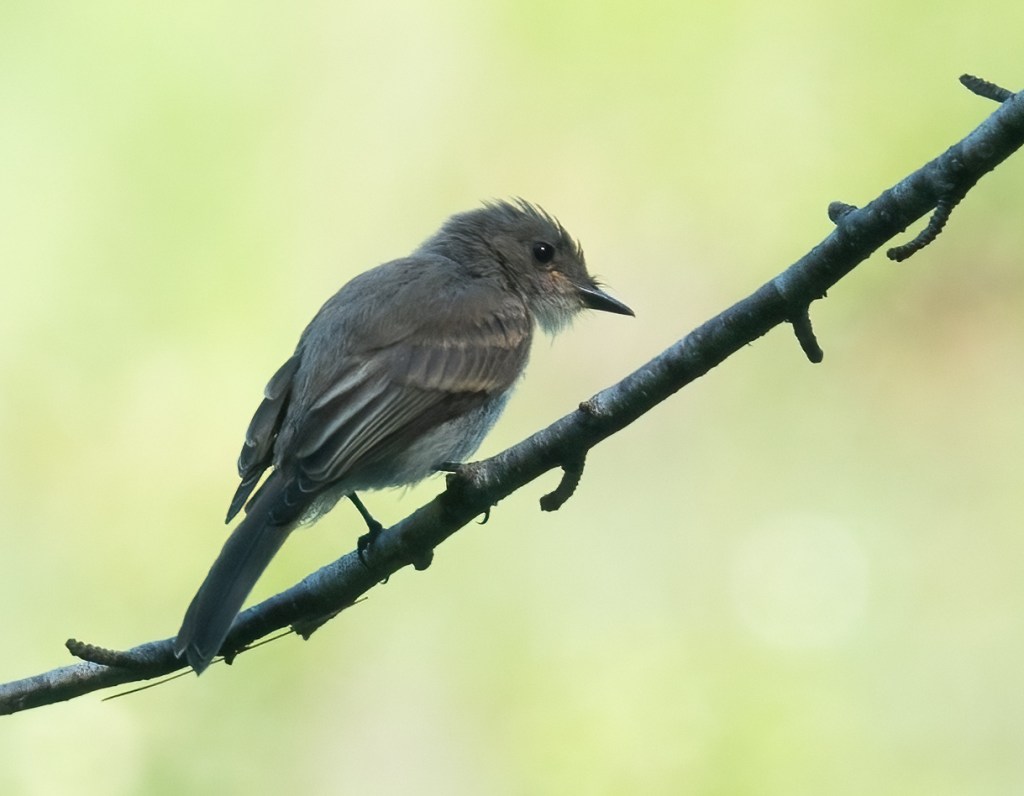
The babies have now fledged, and are learning to fend for themselves. The yellow corners of the mouth are the gape that babies have, not yet all gone.
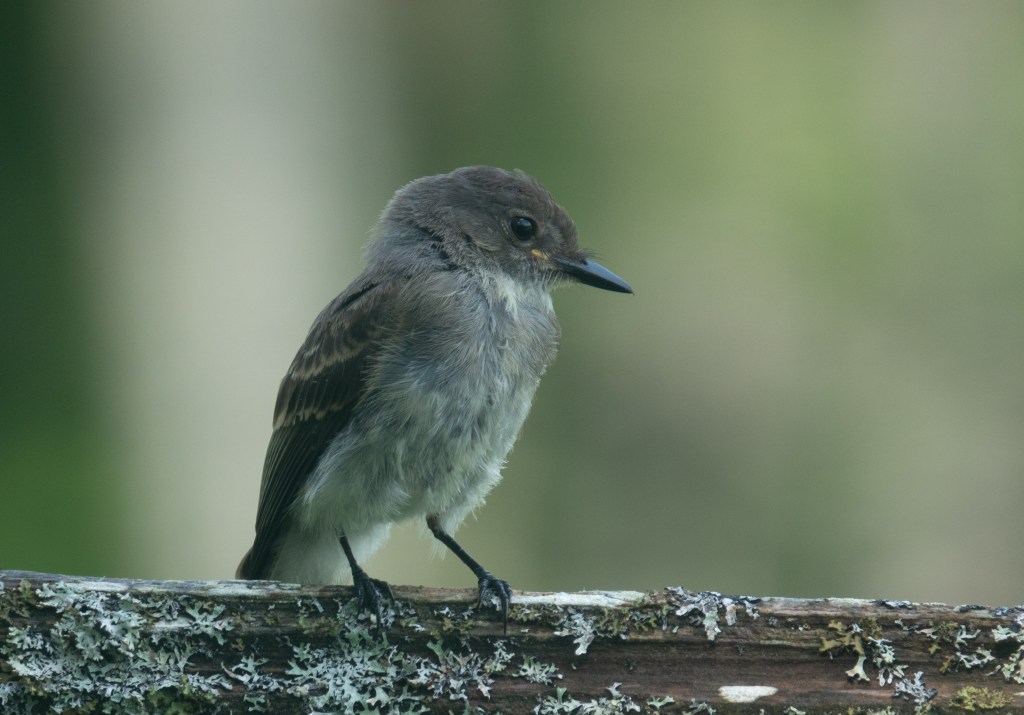
They are insectivores, flycatchers, often catching their prey in mid air. This one has been hanging around my beaver pond, perching in the overhanging trees,

and is hunting successfully:
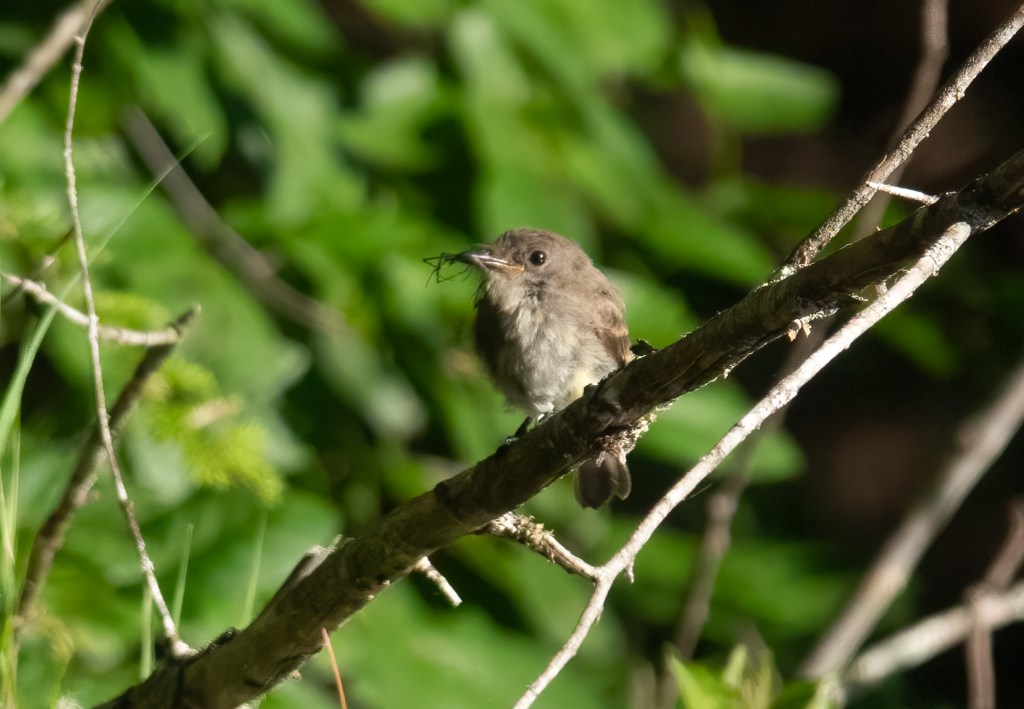
They also snatch bugs from twigs, hovering the while.
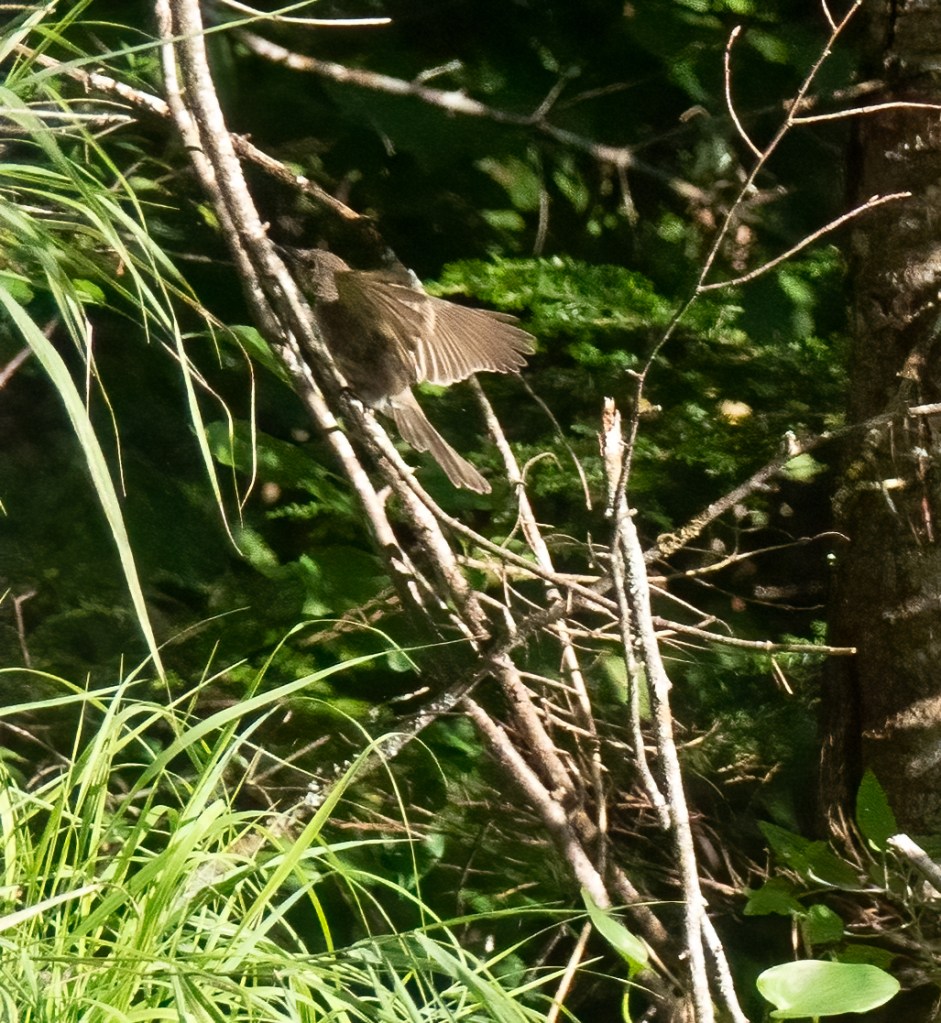
I have been enjoying bath time. This fledgling has been well brought up, and starts its day with ablutions. According to Cornell’s Birds of the World, Eastern Phoebes swoop down from a perch and wet their head and breast, keeping their wings as dry as possible, then return to the perch to groom. This is incredibly hard for me to film, because you don’t know when they are going to launch, where they are going to hit the water, and the return trip perch-water-perch takes less than one second. This sequence is the best I have got, but it will give you a rough idea of their technique.
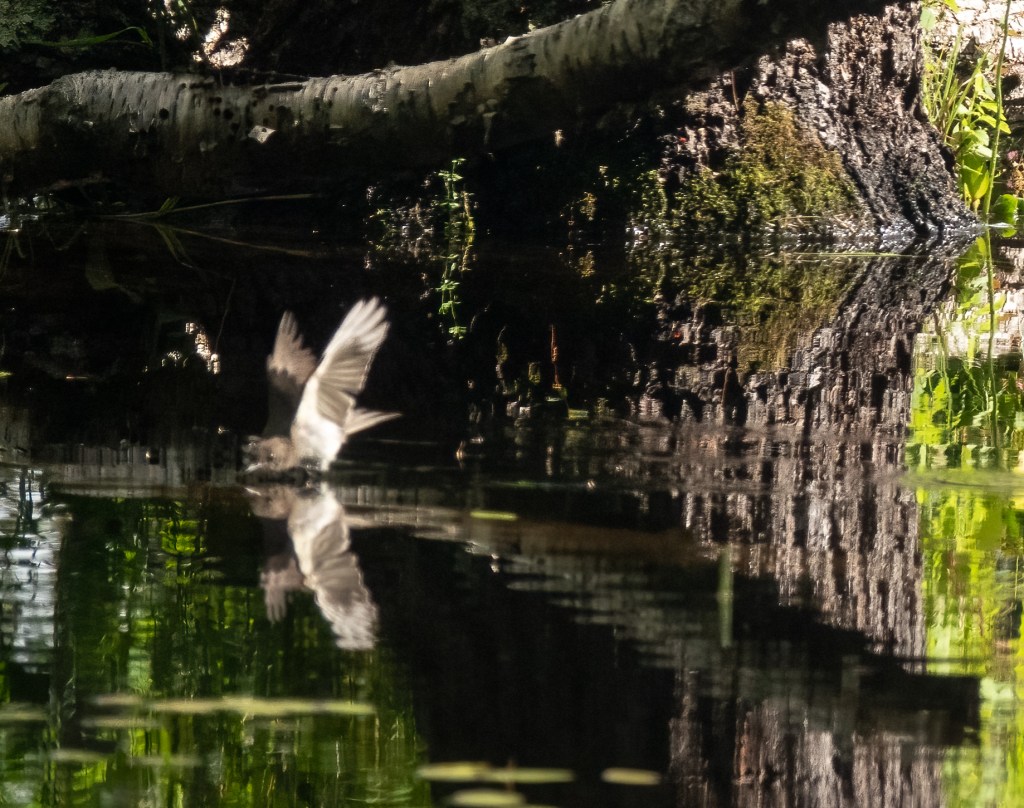
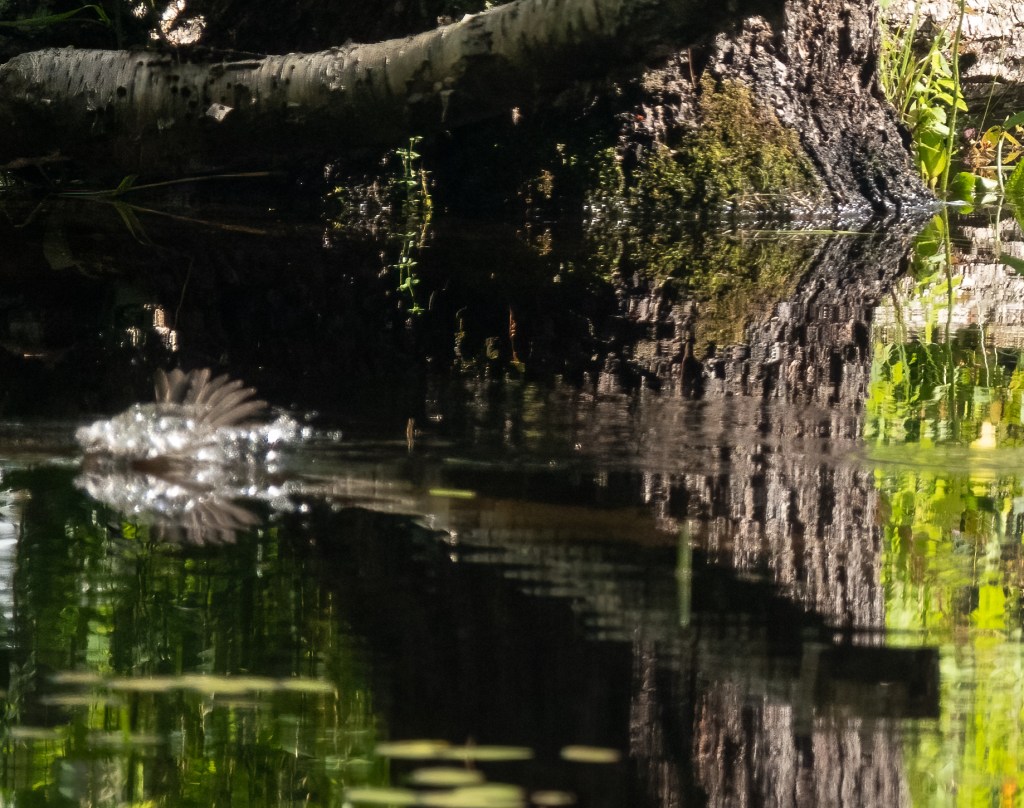
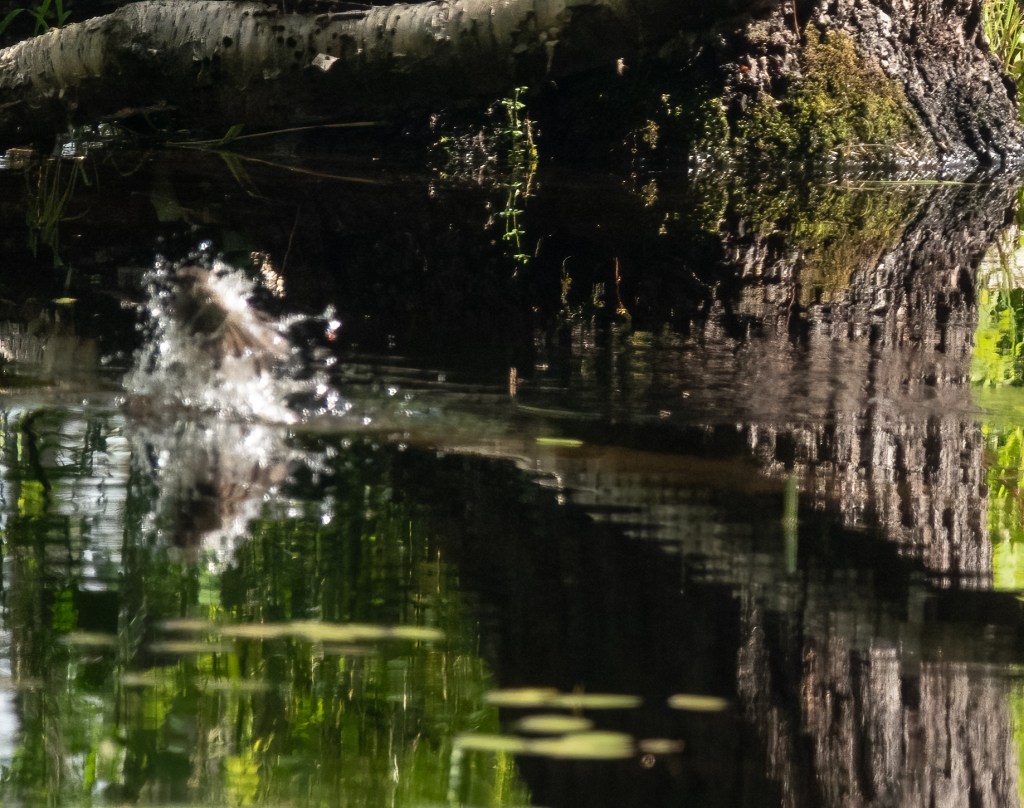
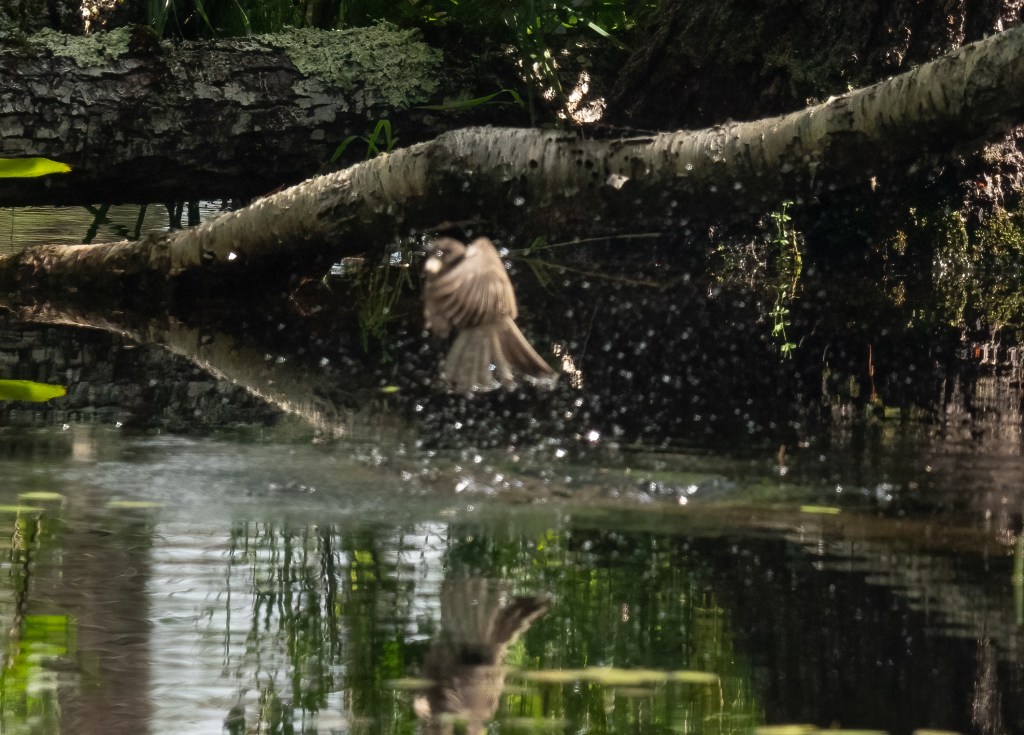
You can see that the top of its head, chin and breast are still damp.
 Eyes on the Wild
They sure know how to take a quick dip! Catbirds & Cardinals love the birdbath.
LikeLike
I love it! My daughter’s name. I think I have Phoebe’s under the back corner of my roof, or some other nester who likes those spaces. Will have to look closer and try to get a shot.
LikeLike