Catcalls

The Gray Catbird, Dumetella carolinensis, gets its name from its “Mew” call:

Grey, with a black cap, the adults are bright chestnut under the tail:
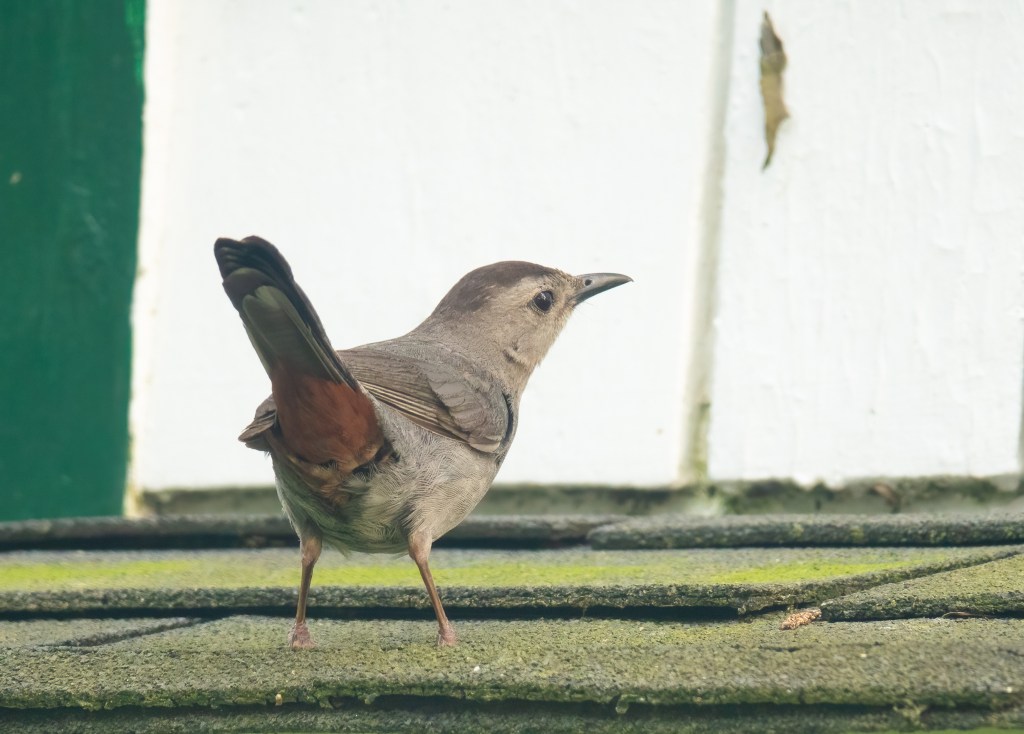
Late this summer, the elderberries were ripening, much to the catbirds’ delight.
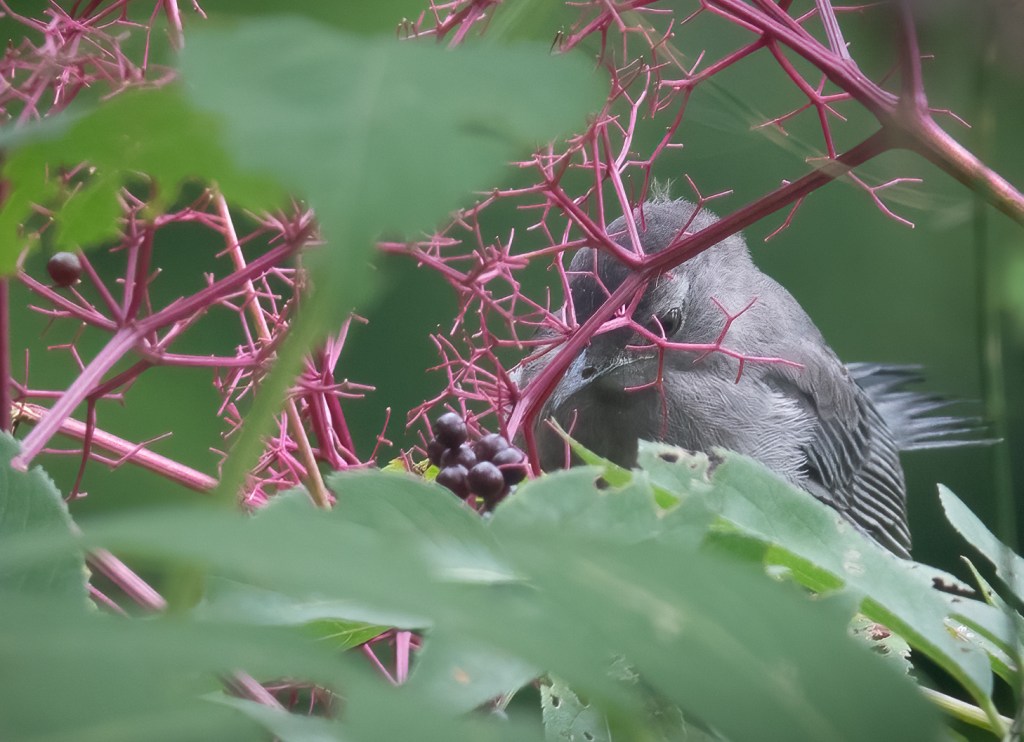
This one is a fledgling. It has no black cap yet, and its undertail is buff, not chestnut
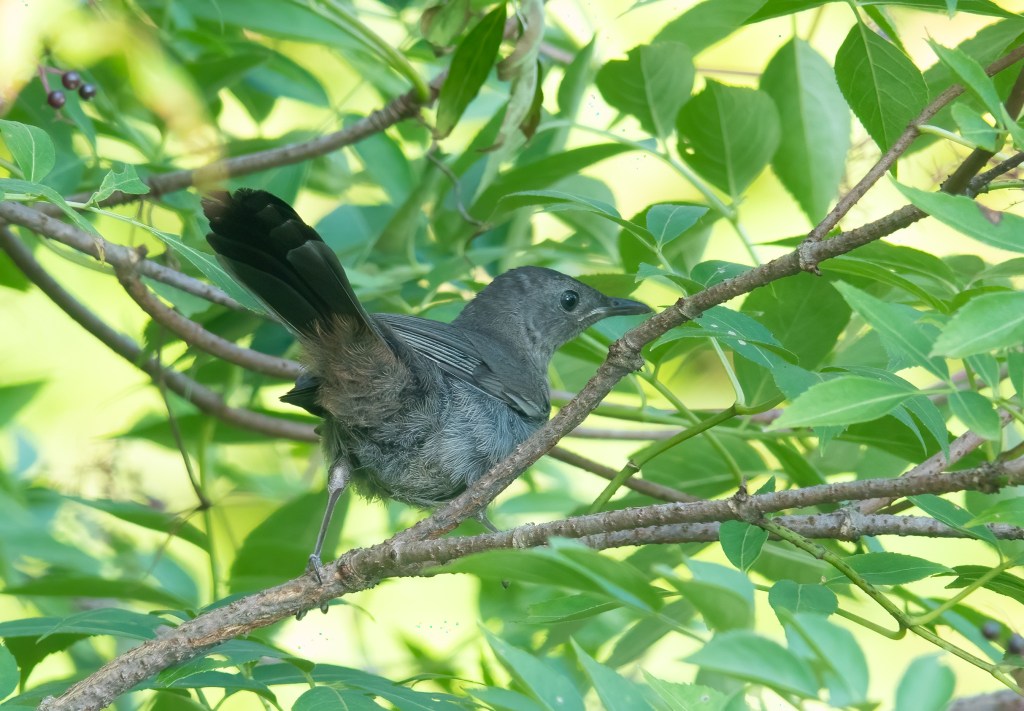
It performed acrobatic manoeuvres to reach the berries:
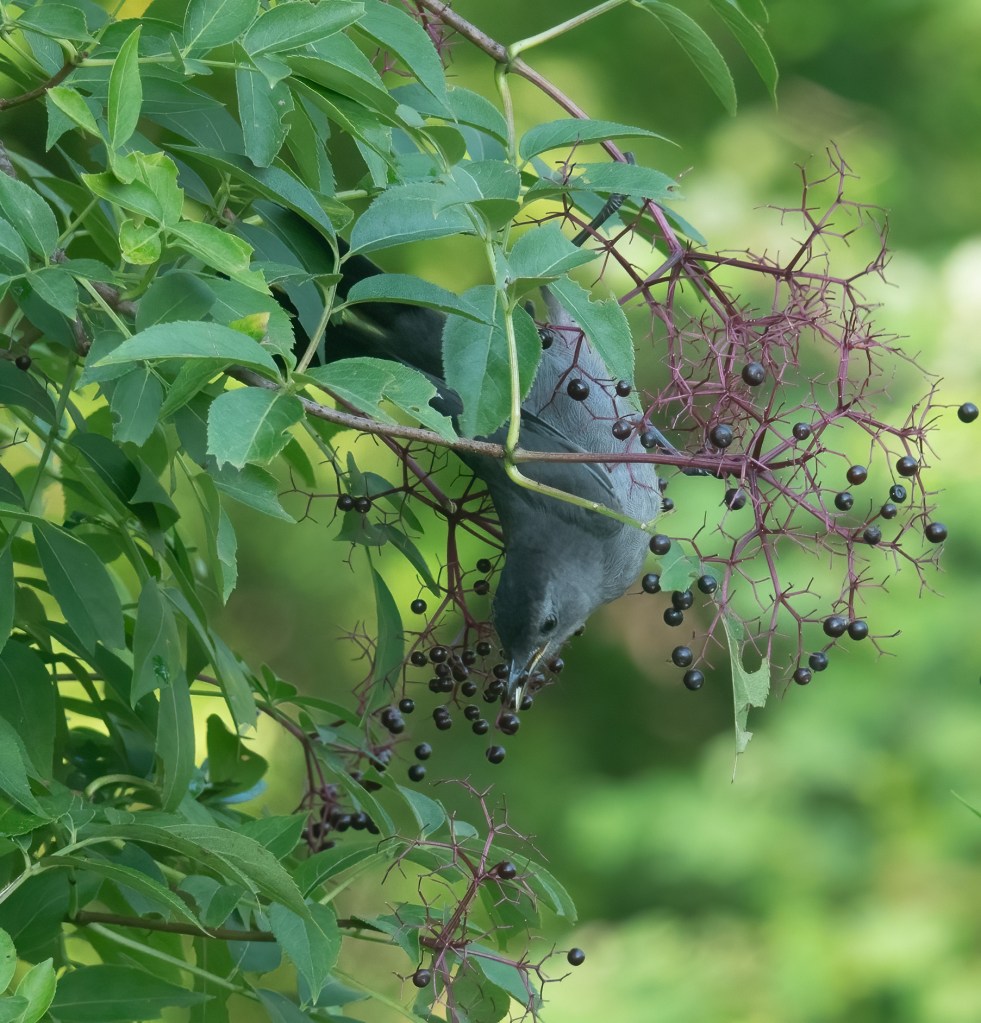
And it used its wing to lift the bunch of berries closer to its beak:

Catbirds are related to mockingbirds, and like them they are accomplished mimics. Its song is long and complex, using snippets from other birds’ songs. It is able to control the separate sides of its syrinx to produce two notes either alternately or simultaneously:

The females sing too, but much less and more quietly.

Cornell’s Birds of the World says it is “believed to mimic at least 44 species of birds, gray tree frog (Hyla versicolor), and a variety of mechanical sounds”, although others say the huge song repertoire (170 syllables were recorded in a 4.5 minute song) is largely the result of improvisation and invention.

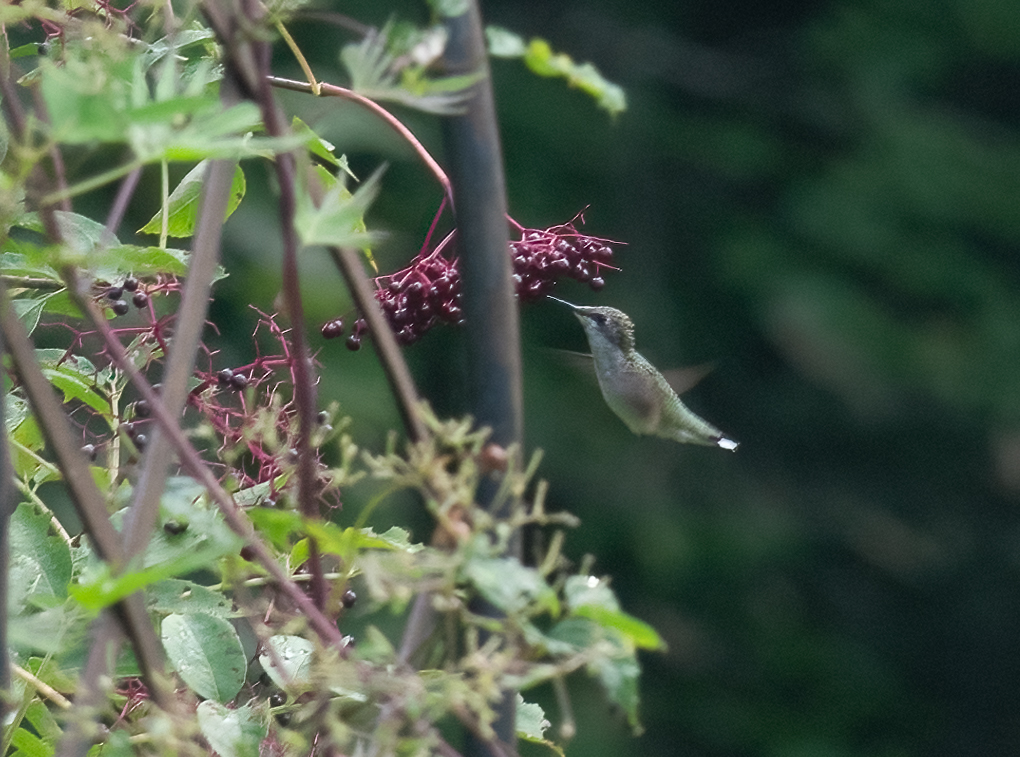
The elderberries were also being eaten by a hummingbird!! This behavior is rarely reported. I suspect that a catbird had punctured a berry, and the hummingbird came to the juice, just as it will come to sugar-water on a feeder. And the elderberries of course have bright red stalks!
PS The catbird Mew call is given in various contexts, including when a recent fledgling is approached by a predator (i.e. me).

PPS Unless otherwise stated, all my sound files including these two are my own recordings. I just use Merlin, and my iPhone, so they are not professional quality. I do some editing to shorten the files by cutting out irrelevant stretches.
Slime sublime

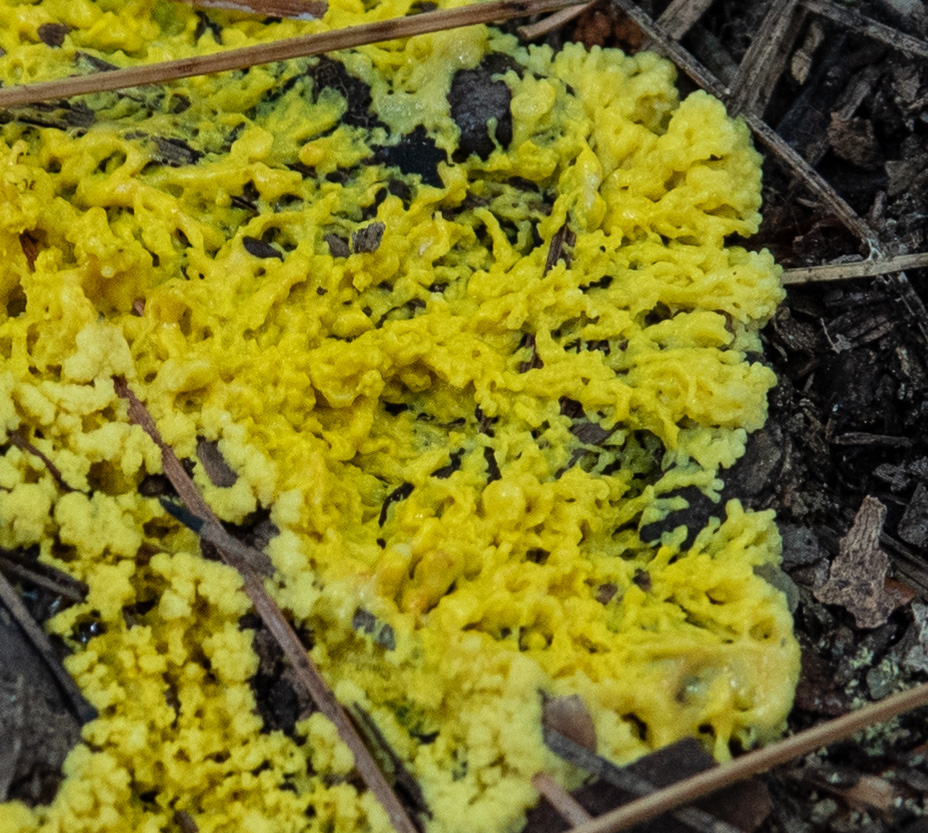
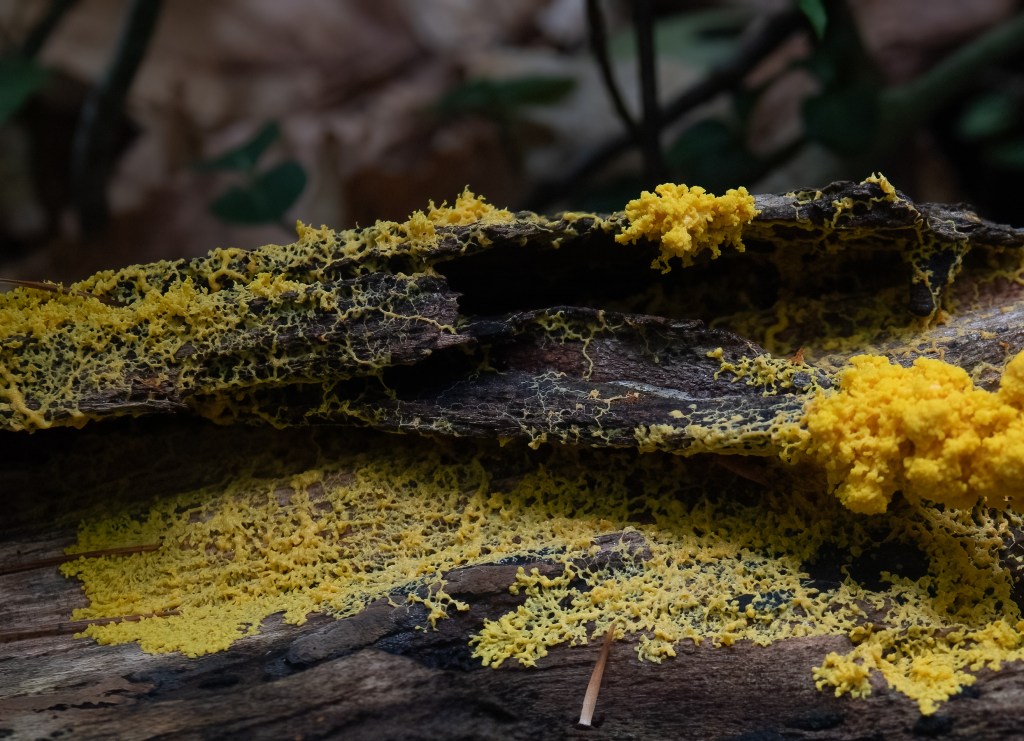
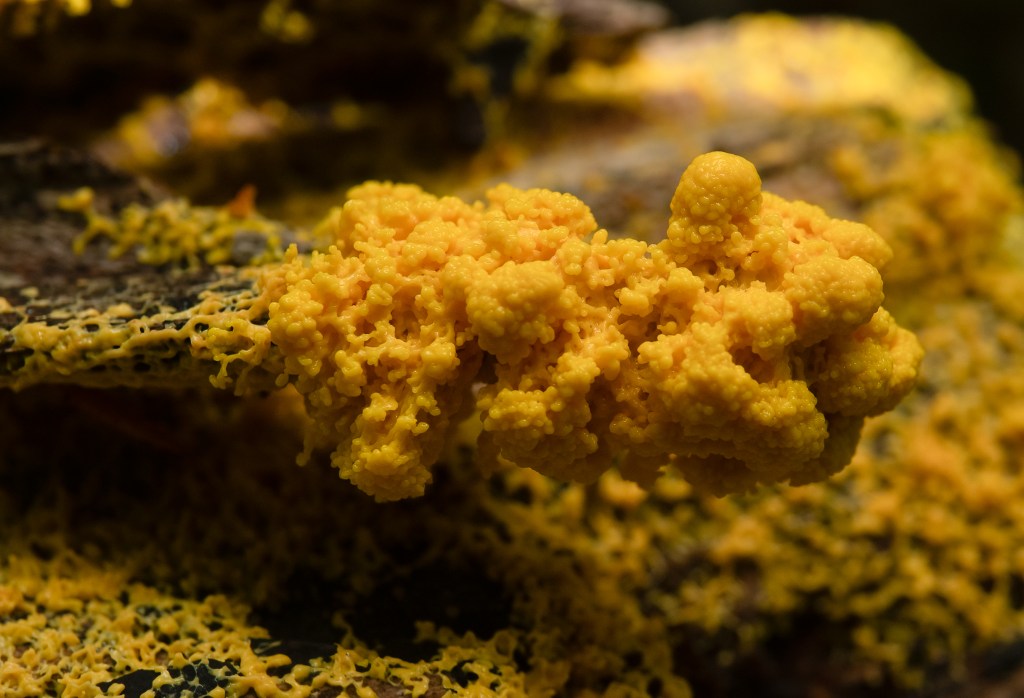
An even more bizarre group of organisms are the distinctly horror-scifi-movie-like slime molds. They actually hunt their food, crawling outwards as they sense delicious decaying vegetative matter.  This one rejoices in the name of Dog Vomit slime mold or Scrambled Egg slime mold,  Fuligo Septica:

This phase, the plasmodium, is one single cell with many nuclei, and has this extraordinary amoeba-like ability to shape-shift, clumping up, like here:

or fanning out across the forest floor, in search of food:

Dog Vomit Slime mold or Scrambled Egg slimemold.

Time-Lapse photography (not mine!) shows it in action:

https://www.facebook.com/ScienceChannel/videos/2812668395470735

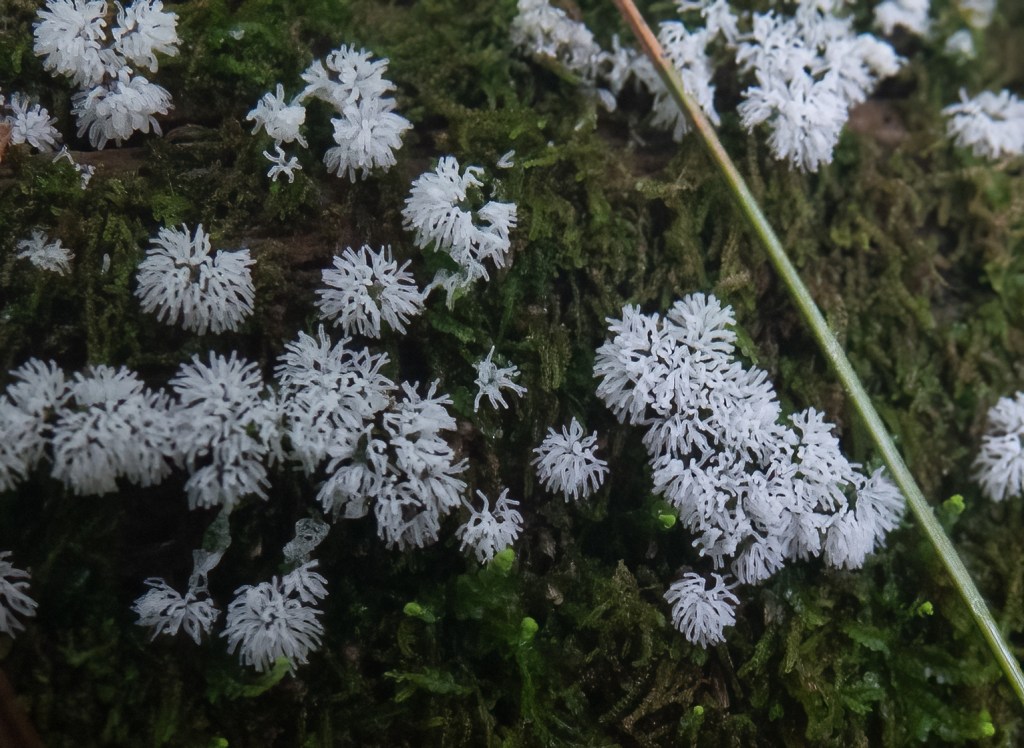
 Some slime molds are more delicate, like this Honeycomb Coral Slime Mold, Ceratiomyxa fruticulosa, known in Australia as Icicle Fairy Fans. The pine-needle provides some scale!

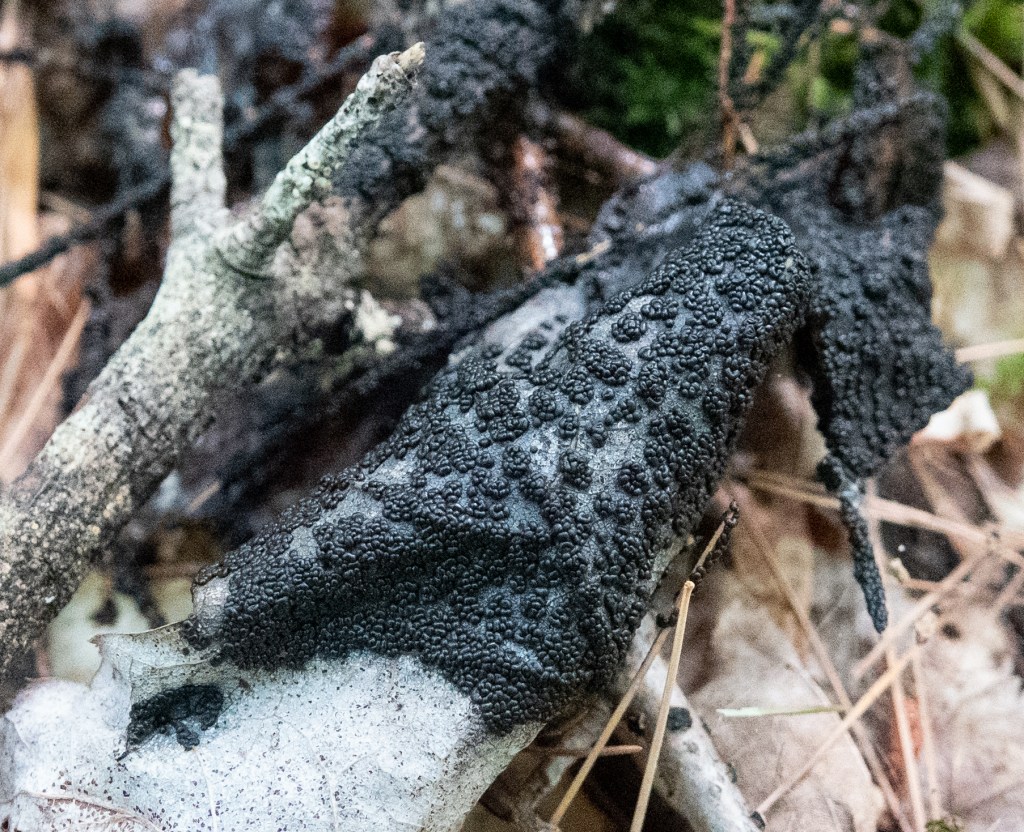
Some are jet black. This I think is Lindbladia tubulina. It is coating a leaf in the foreground, with more on the dead sticks behind it.

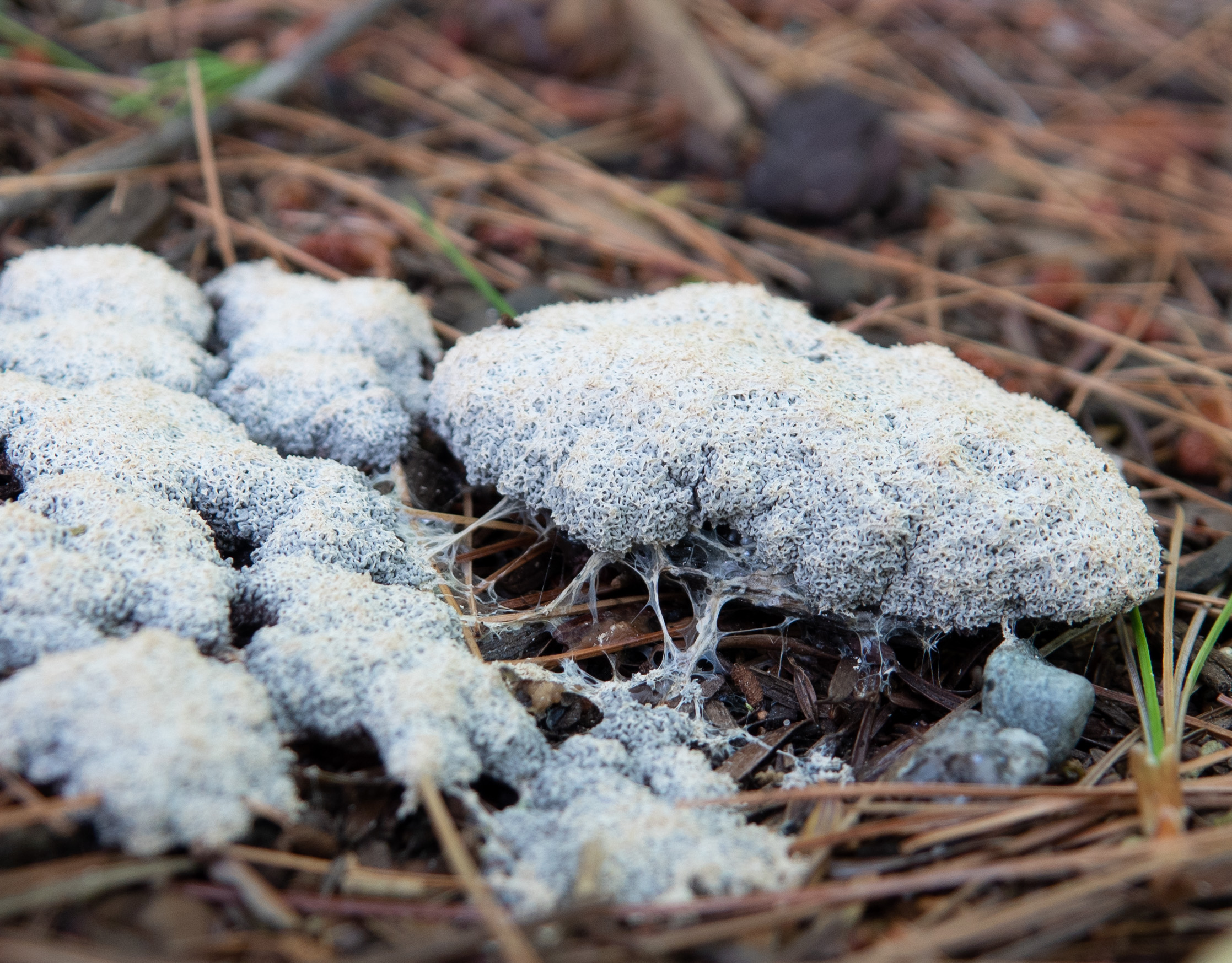
This unidentified white slime mould is trailing threads behind as it goes:

DSC03807

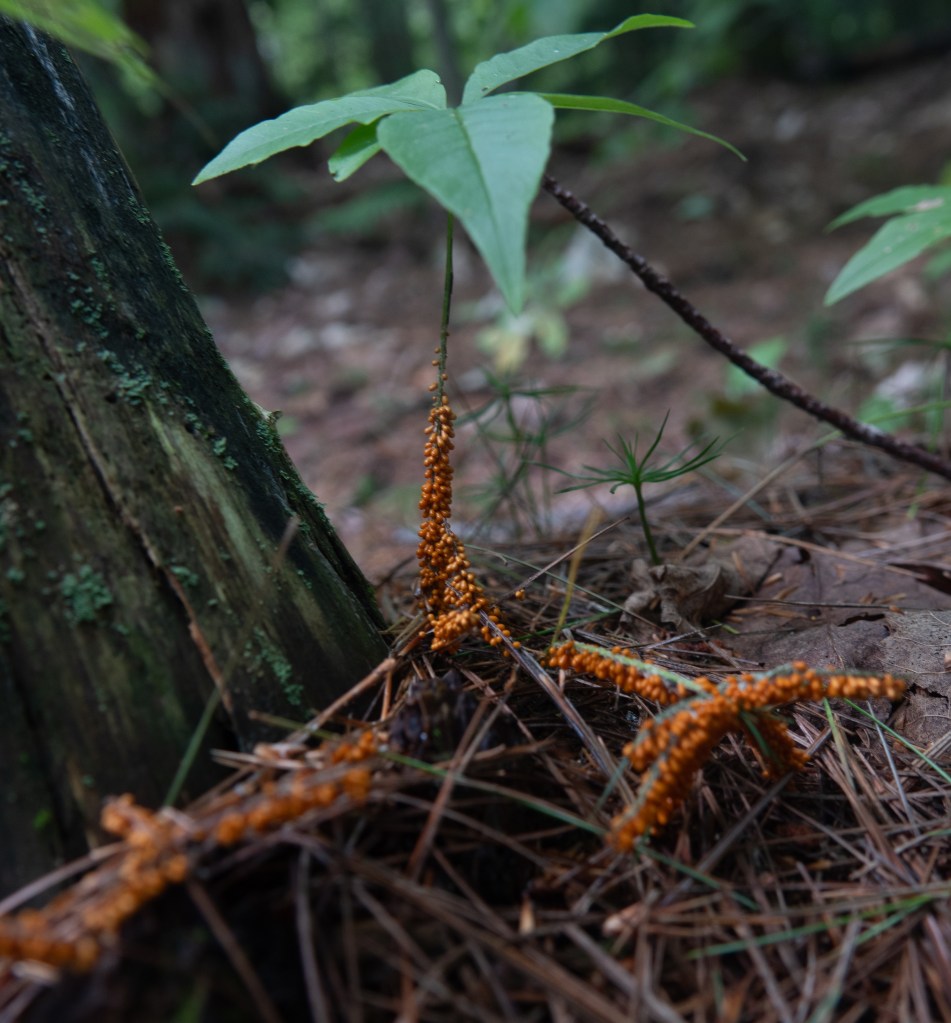
I end with my favorite, the aptly named Insect-egg Slime Mold, Leocarpus fragilis, creeping up the stalk of a plant, and completely engulfing the one lying on the ground.

The 2mm “eggs” are the fruiting bodies hanging from the slimy substrate. In due course they will release their spores, creating the next generation.

PS According to Wikipedia, there are 888 species of slime molds, or Myxomycetes, the plasmodial or acellular slime molds.

“All species pass through several very different .. phases, such as microscopic individual cells, slimy amorphous organisms visible with the naked eye, and conspicuously shaped fruiting bodies…. In extreme cases the organism can be up to 1 metre (3 ft 3 in) across and weigh up to 20 kilograms (44 lb).”

A not-so-Scarlet Tanager

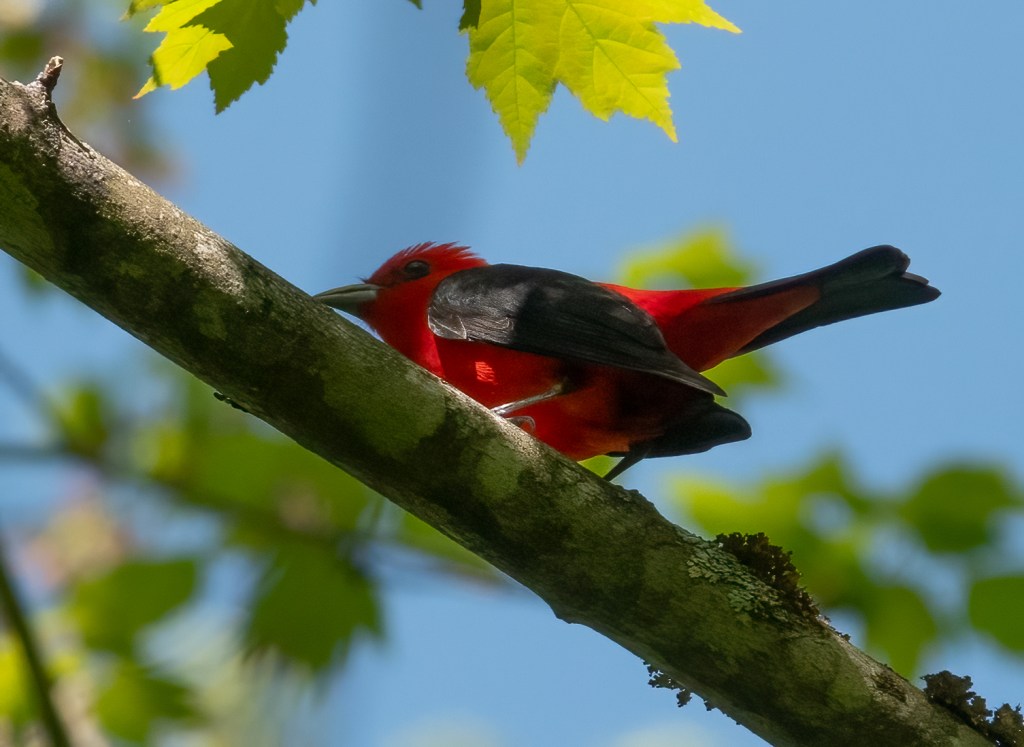
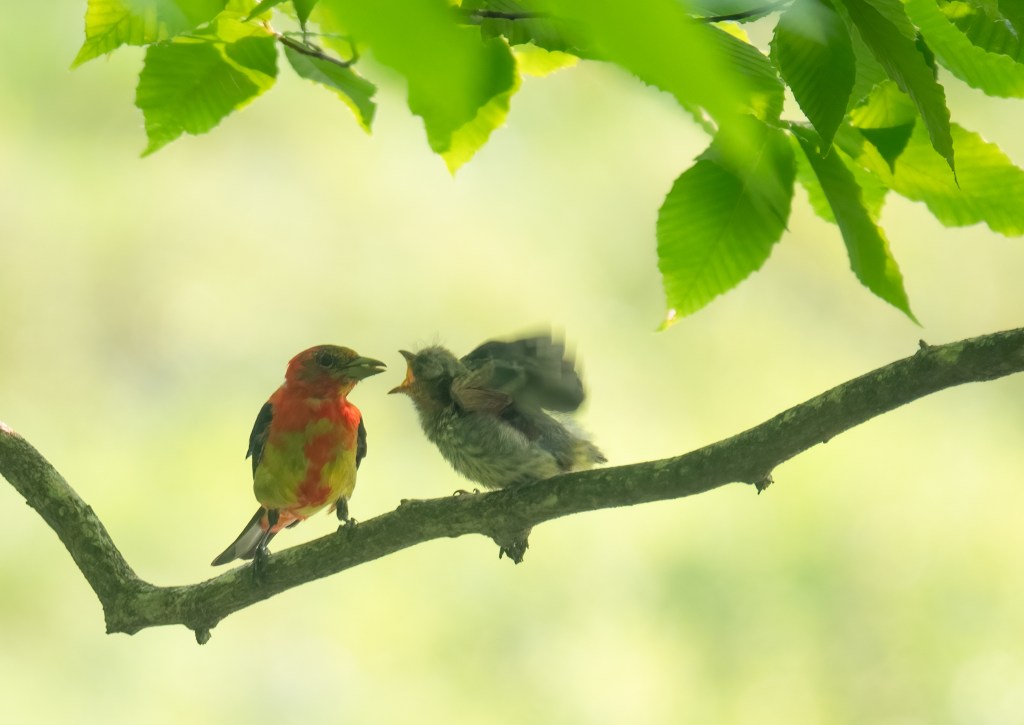
This is a male Scarlet Tanager in breeding season. Brilliant crimson with jet black wings. It is a bird of the deep woods, heard more often than seen.

It has a simple but pretty song:

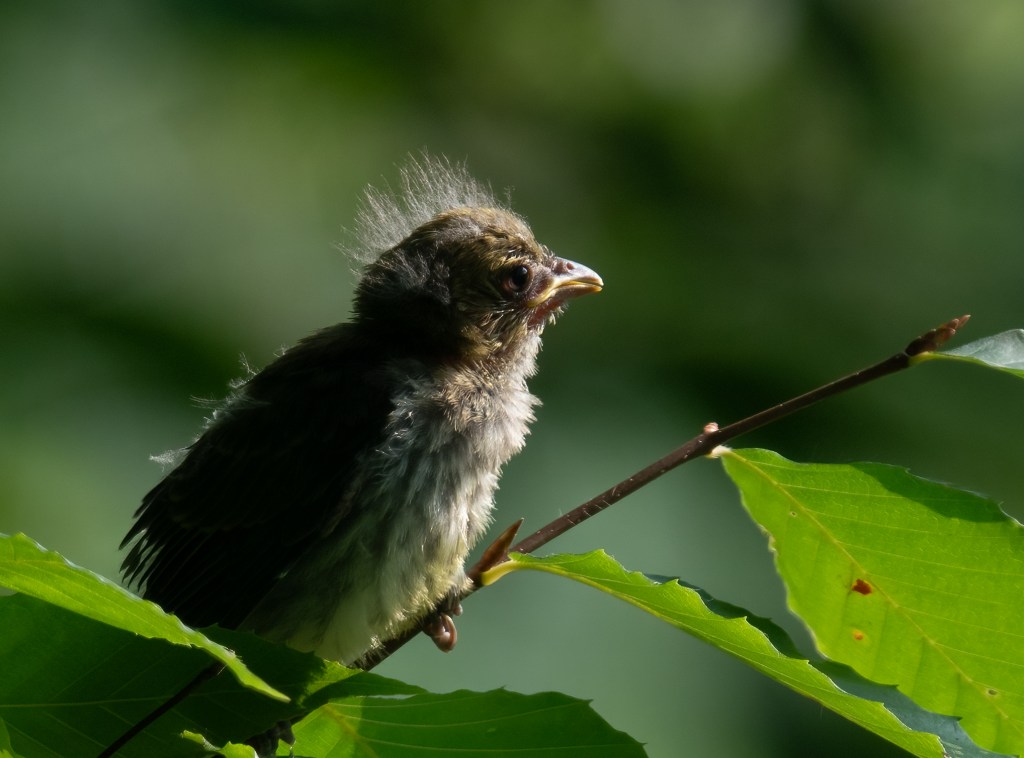
This is a fledgling, having left its nest perhaps 10m above the ground at about 10 days old. It is seemingly all alone, and hungry.

But along comes papa, with a bug:

though he seems to have eaten it himself:

But the adult reappears, this time with what looks like a green caterpillar:

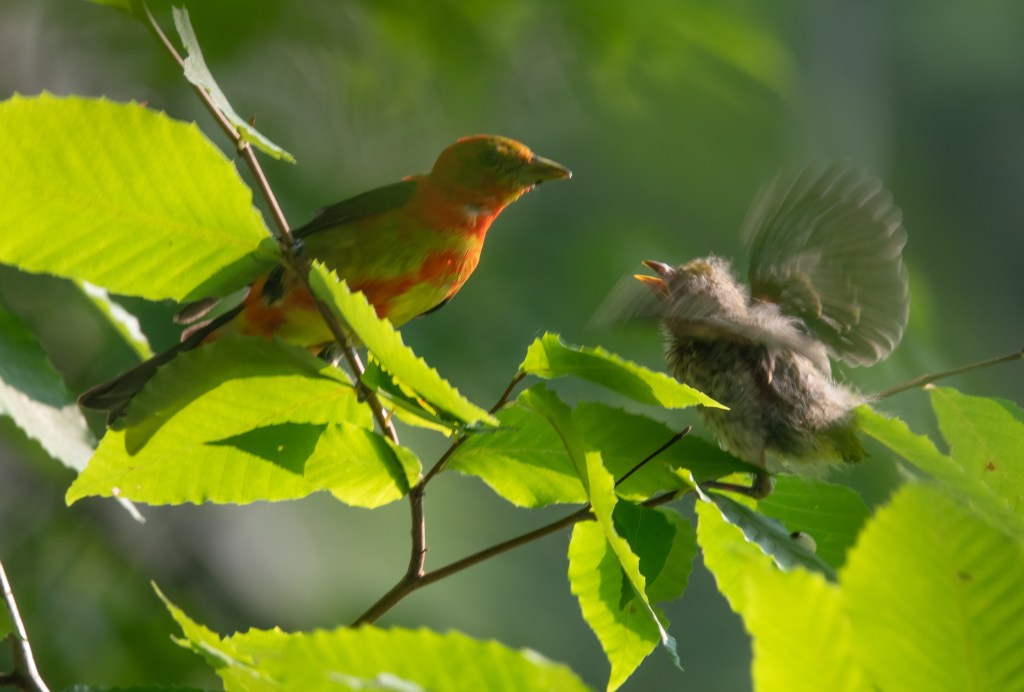
The fledgling moves further away, but the adult finds it:

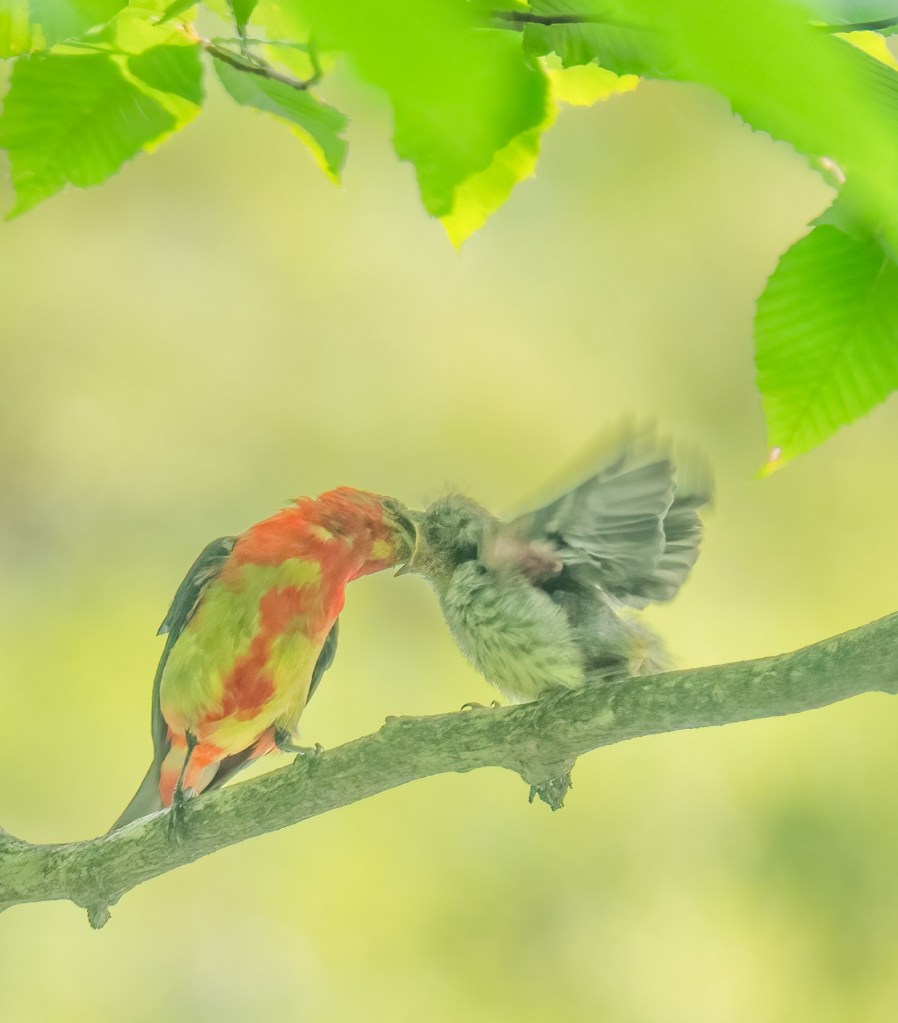
and makes quite sure the chick doesn’t drop its meal as it frantically flaps to stay upright:

One last image, an artistic accident when Lightroom took matters into its own hands rather successfully:

Now you may have been thinking that surely this adult was a female, since it isn’t scarlet all over. But the female is a dusky olive, with no trace of red. It took me a while, but I eventually realized that this is indeed a male, and August is the month when they molt their breeding plumage and revert to their non-breeding plumage, a bright olive green (still with black wings). It is part-way through this process, hence the blotchy garb.

This chick is late in the season (the photos were taken on August 13th) and it will need to migrate from mid-September onwards. Let’s hope it makes it to its winter home in NW South America.

PS Scarlet Tanagers are not found in Europe, until November 2024:

https://www.bbc.com/news/articles/cg571eygj97o#

PPS The word tanager comes from Tupí tanagorá, via Portuguese tangará.

“The choreographers of biodiversity”

The wondrous diversity of the insect kingdom is under threat as our environment changes and shrinks (from an insect’s perspective, anyway). But I still find new ones all the time. Today I’m going to be disciplined, and restrict myself entirely to beetles. Just when you think you’ve seen them all, along come four new beetles all at once.

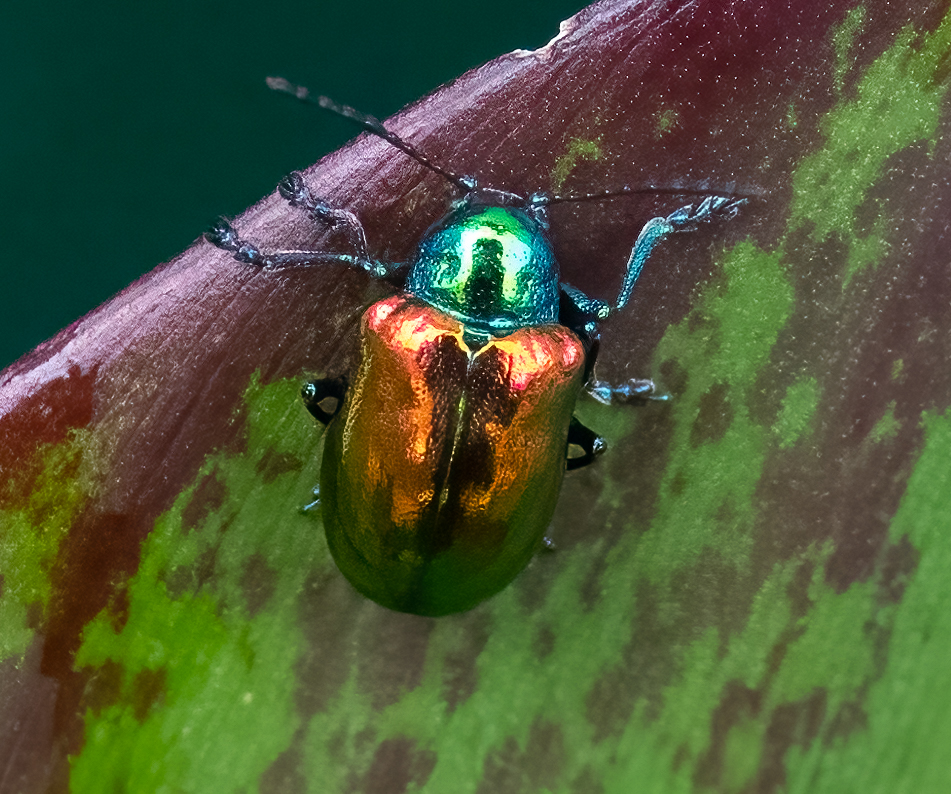
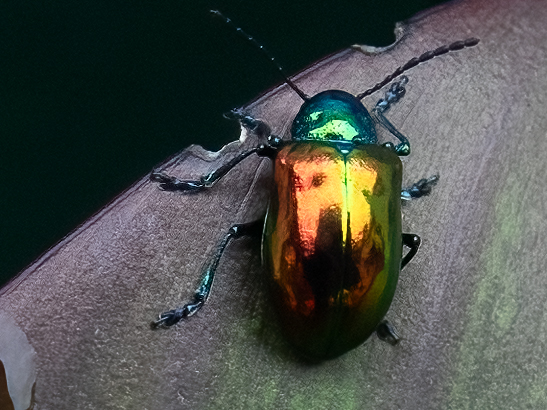
The Dogbane Leaf Beetle, Chrysochus auratus, a fragment of polished stained glass, is about 10mm long:

The color is structural, and varies depending on how the light hits it:

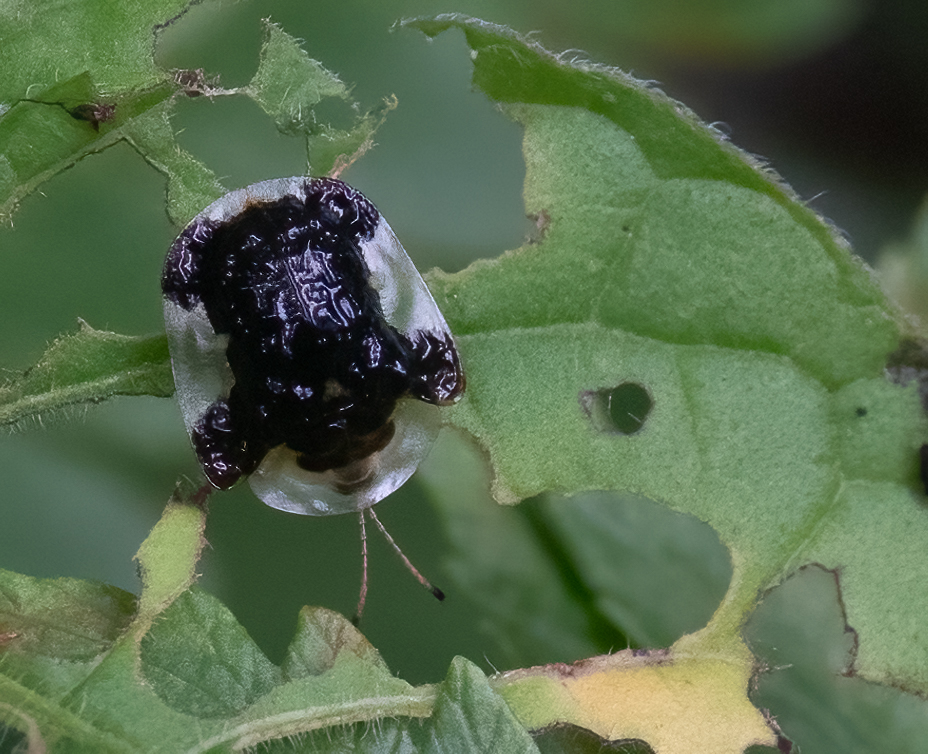
The Clavate Tortoise Beetle, Plagiometriona clavata, looks for all the world like a tiny 7mm long teddy bear. Its translucent carapace totally covers its body and legs, so it looks just like a tortoise. It has also been described as looking like a World War 1 US infantry helmet! In life, they’re brown or green, but turn black when dead, though I could swear it moved its antennae.

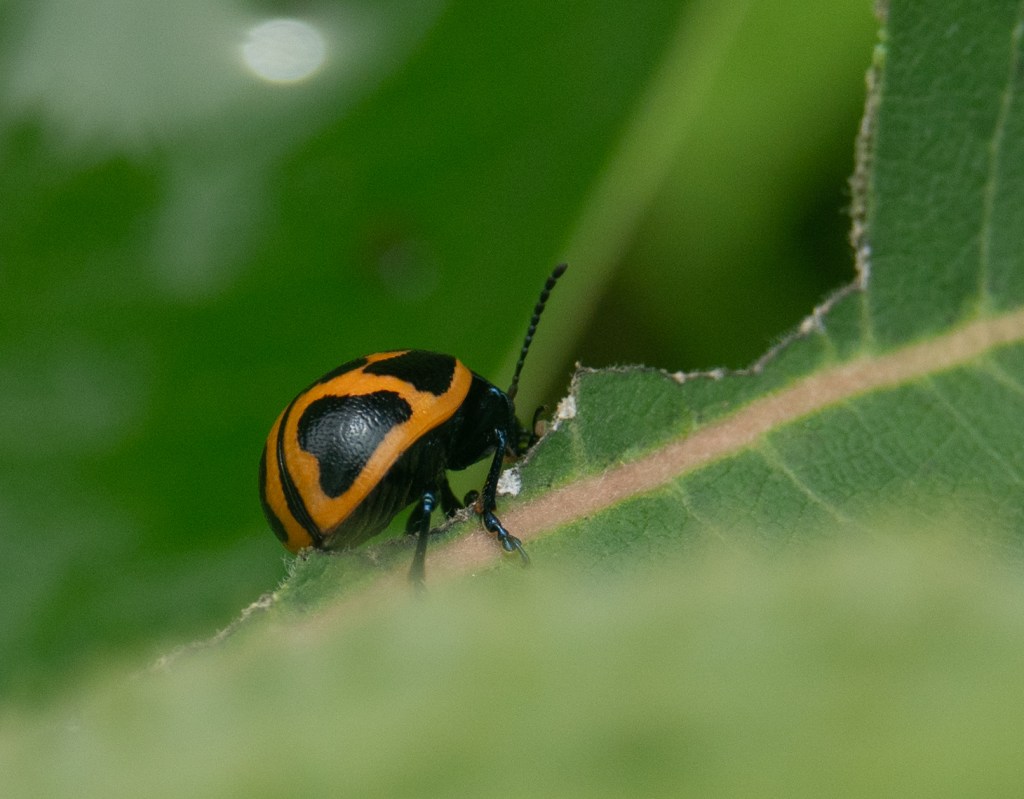
The Swamp Milkweed Beetle, Labidomera clivicollis, sports a smartly tailored livery of orange and black:

These 10mm beetles are adapted to the poisonous milkweed leaves, but even so they eat the leaves from the outside in, avoiding the main veins. Some reports also say that they first sever some of these veins to reduce the sap flow. They’re not exactly camouflaged (!) but that aposematic coloring warns predators that they may not be good to eat.

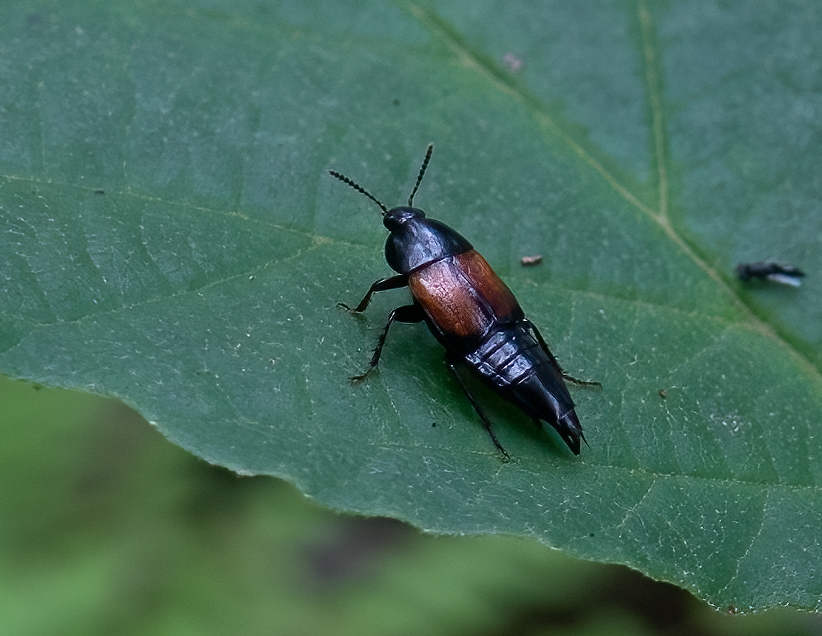
The Crablike Rove Beetle, Tachinus fimbriatus, has wing cases (elytra) that cover only half of its wings and abdomen, which stick out the end, unprotected. It measures about 9mm. There are thought to be around 66,000 species of rove beetles, dating back to the Triassic, and they are mostly predators. This particular one feeds on rotting mushrooms.

PS My title is taken from the great scientist E.O. Wilson, who said: “In the intricate dance of nature, insects are the choreographers of biodiversity.”

PPS The Dogbane Leaf Beetle turns out to have fascinating adaptations for its specialized diet of dogbane leaves. Read more here:

https://en.wikipedia.org/wiki/Chrysochus_auratus