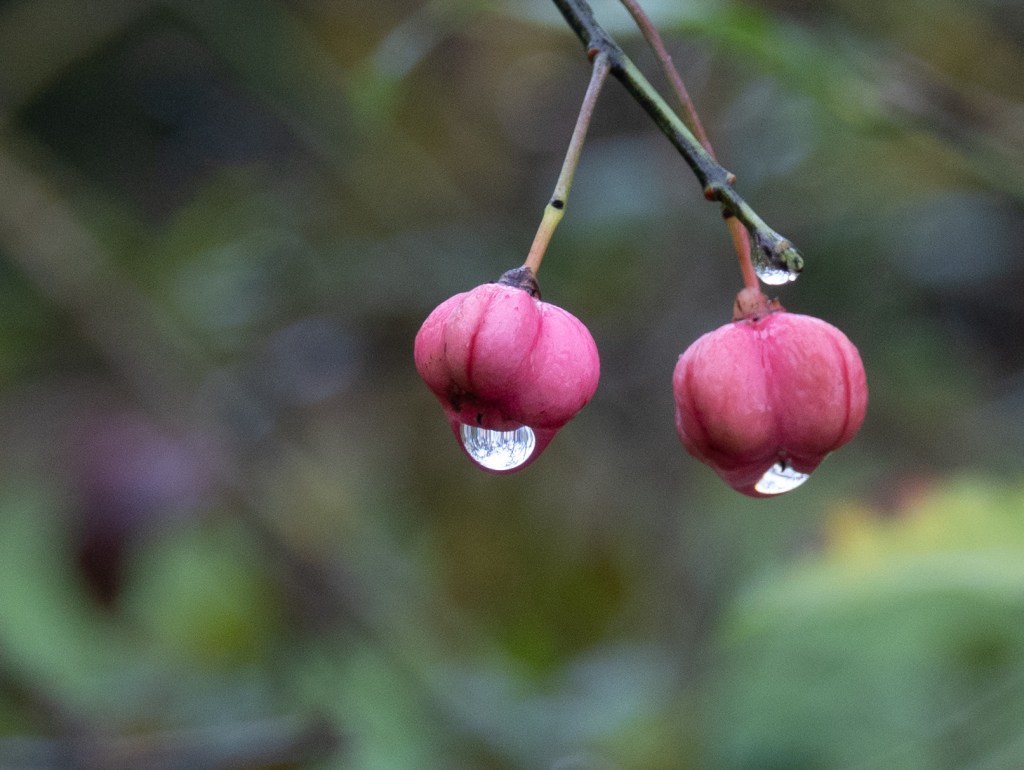
Autumn in Tuscany, where we spent a week in late October, is definitely the land of mists and mellow fruitfulness. We had three days of torrential, biblical rain, at one stage flooding the small bridge that linked us to the outside world. The spindle berries dripped:
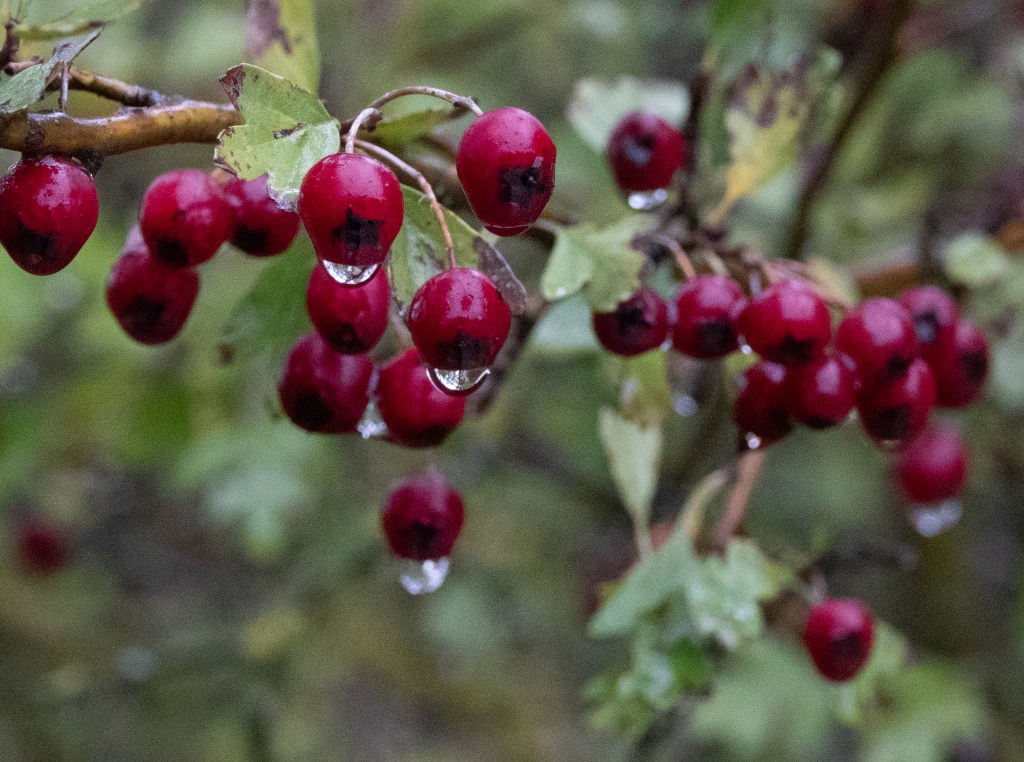
The hawthorn berries dripped:
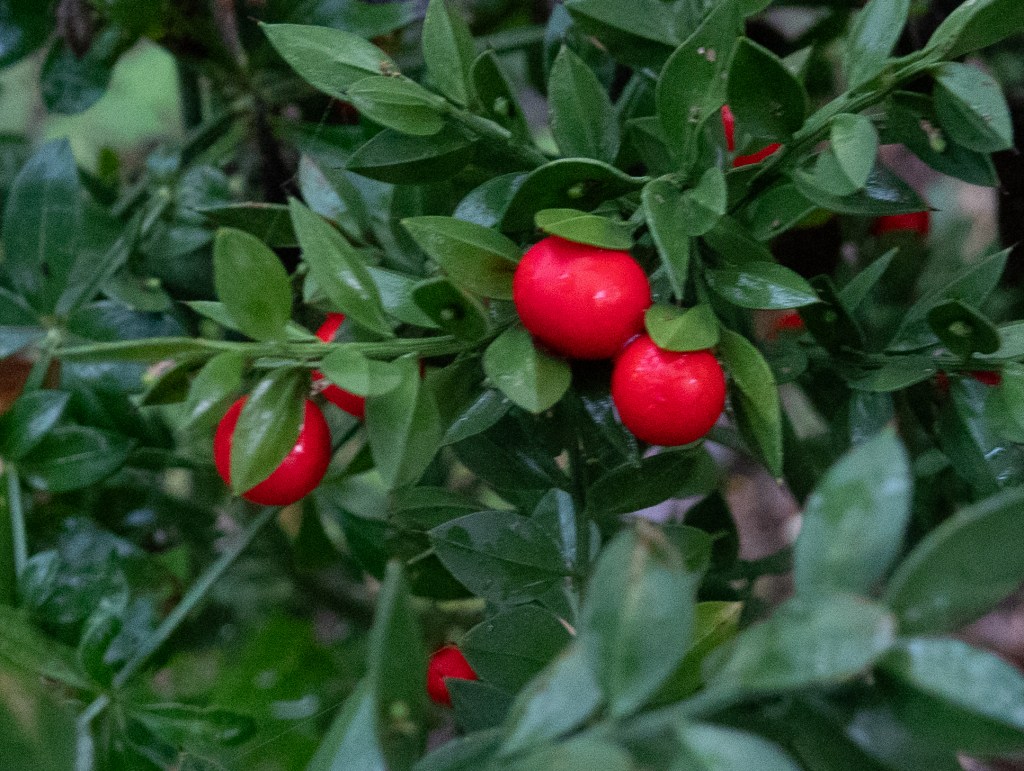
The Butcher’s Broom, Ruscus aculeatus, whose 1 cm berries emerge from the centre of what looks like a small leaf but is actually botanically a modified stem called a cladode, gleamed in the shadows:
Medlars ripened:

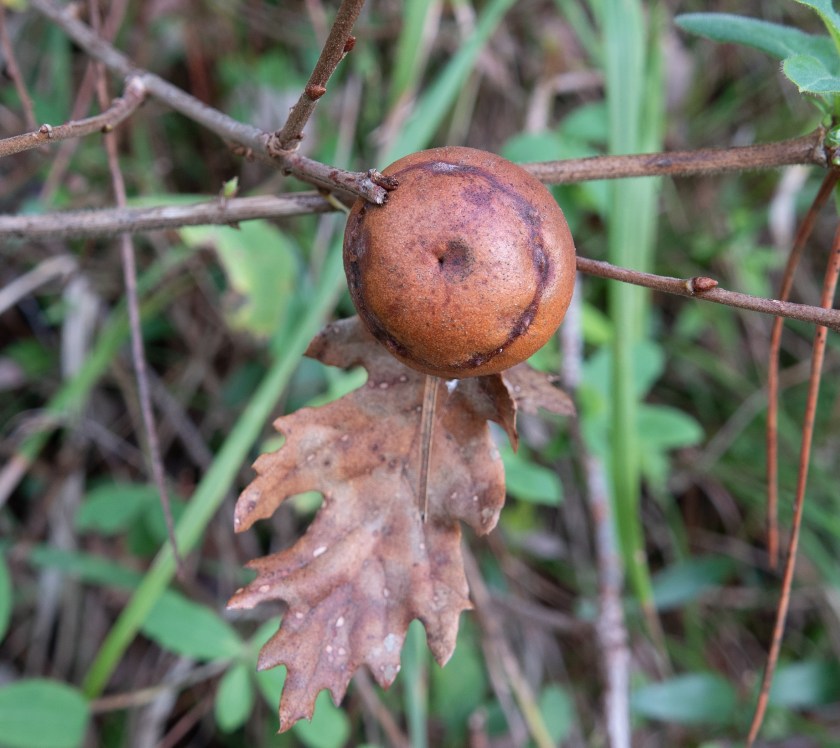
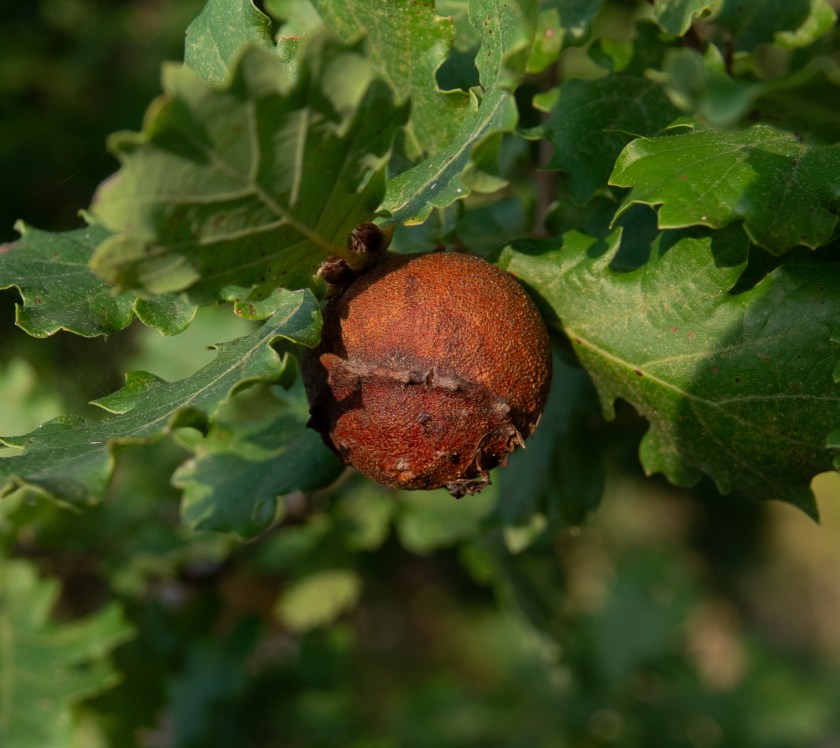
The oak trees were still green, but a variety of galls were swelling. Three different kinds on one branch, sometimes. This first photo looks not unlike varieties of oak apple I know from the US or the UK, but it is bigger, with an encircling coronet, and made by the Andricus quercustozae wasp:
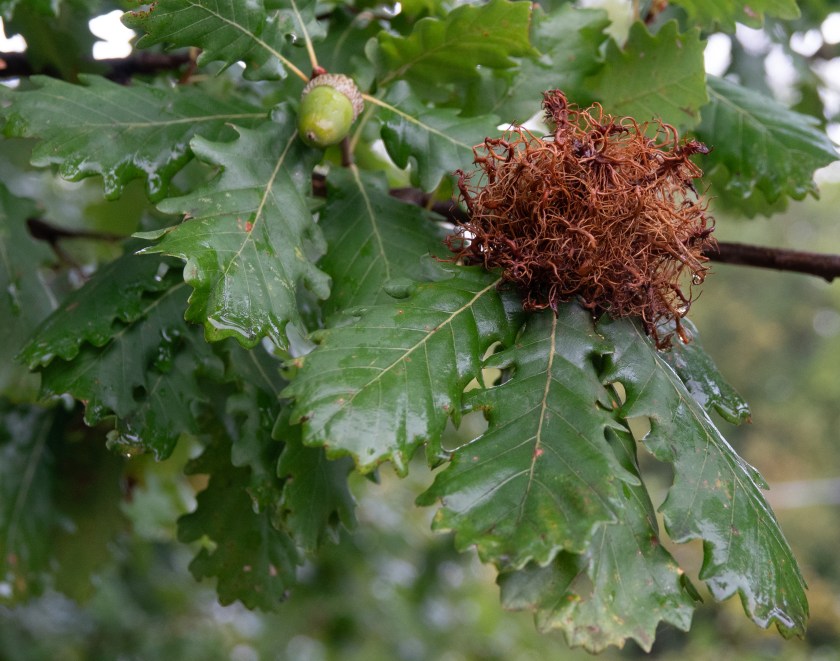
The aptly named Andricus caputmedusae looks innocuously like a sweet chestnut, but it contains a single wasp larva:
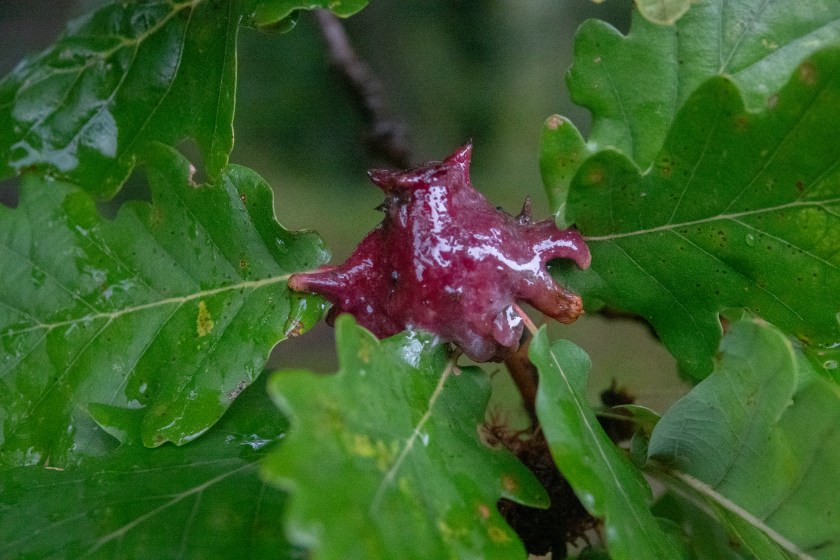
and this shiny purple mass is a small Andricus dentrimitratus; it will grow much bigger:
A good description of how galls are formed and why can be found here: https://lpfw.org/our-region/wildlife/gall-wasps/
“Galls are plant growths (similar to tumors) that are induced by various organisms such as bacteria, fungi, and insects. Gall wasps have evolved to “trick” the plant into forming this growth which they then use for food and shelter as they transform from a larva to an adult. The wasp larvae secrete chemicals that mimic growth hormones in a particular plant upon hatching. The chemicals trick the oak into growing a gall on its flowers, acorns, leaves, or stems. The larva is then encapsulated by the gall as it grows, waiting patiently inside until its metamorphosis is complete. “
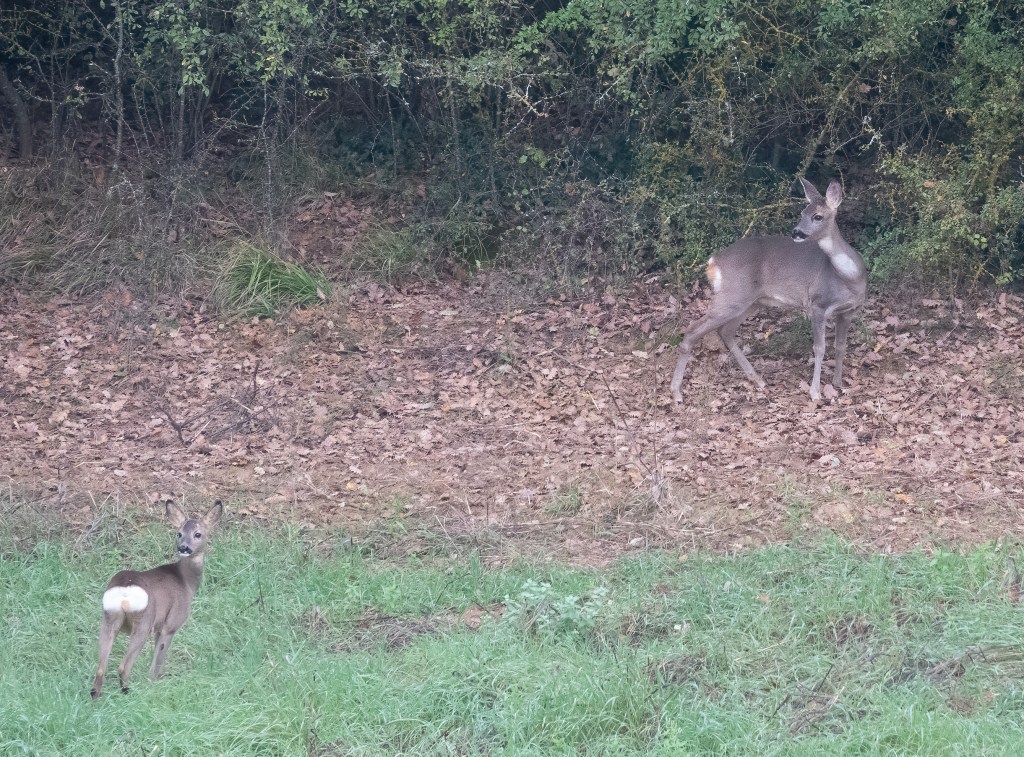
And all around the wild boars were rooting in the undergrowth, and the mother deer and her (two) fawns risked the hunters to emerge in the early morning mist:
I’ll save the mushrooms for an other time.
PS We are only barely beginning to understand how different (but related) wasps can affect a single tree (often an oak) and then cause quite different galls to be created. It appears that different gall types arise from distinct metabolites. If you would like to know more, read here:
 Eyes on the Wild