[My second puma post, to see out 2024. Happy 2025, and thankyou for reading my blog.]
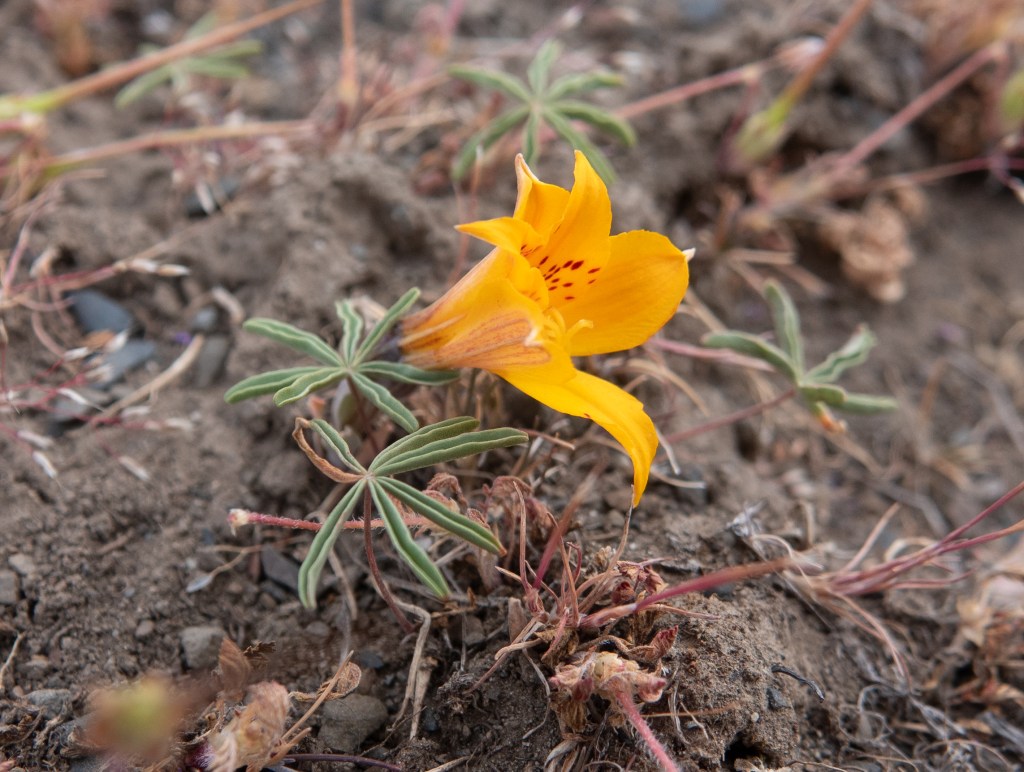
After our stunning sighting of the mother and cub it seemed clear that finding pumas was a doddle. Next day, we set off at 4am for the one-hour drive to Estancia Laguna Amarga to meet our tracker Angelo. We drove around for a couple of hours, seeing nothing much of anything. We stretched our legs, and looked for wildflowers like this lovely Sand Alstroemeria, or Alstroemeria patagonica, aka Mariposa del Campo, growing stalkless right out of the gravel:

Then a different tracker contacted us on the radio: he had seen something, and he’d meet us there. He pointed at this:
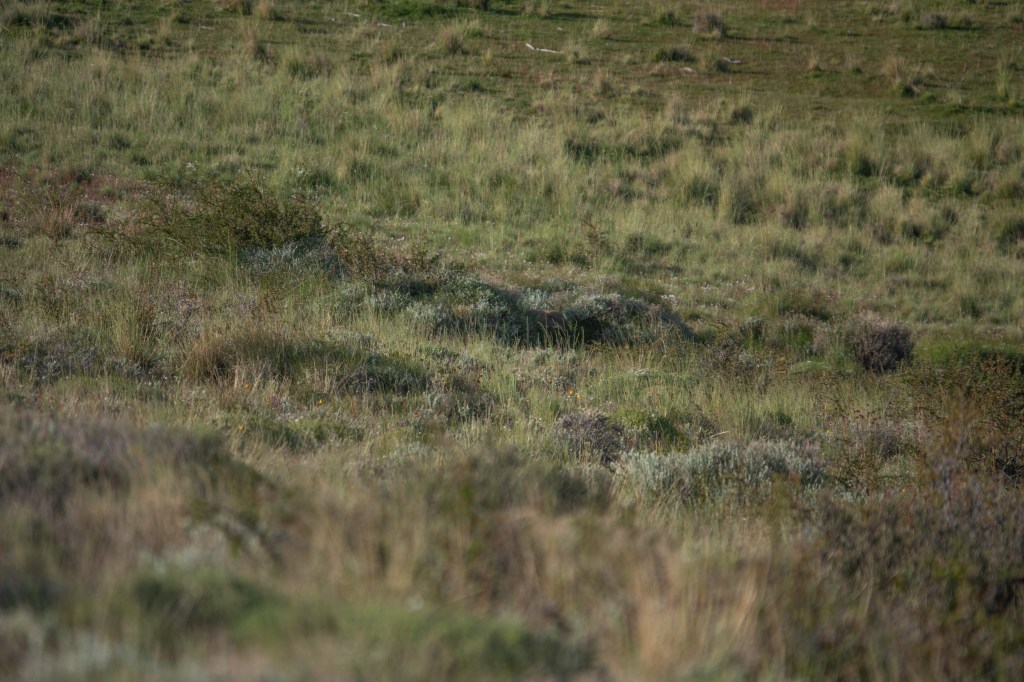
We looked, hard:
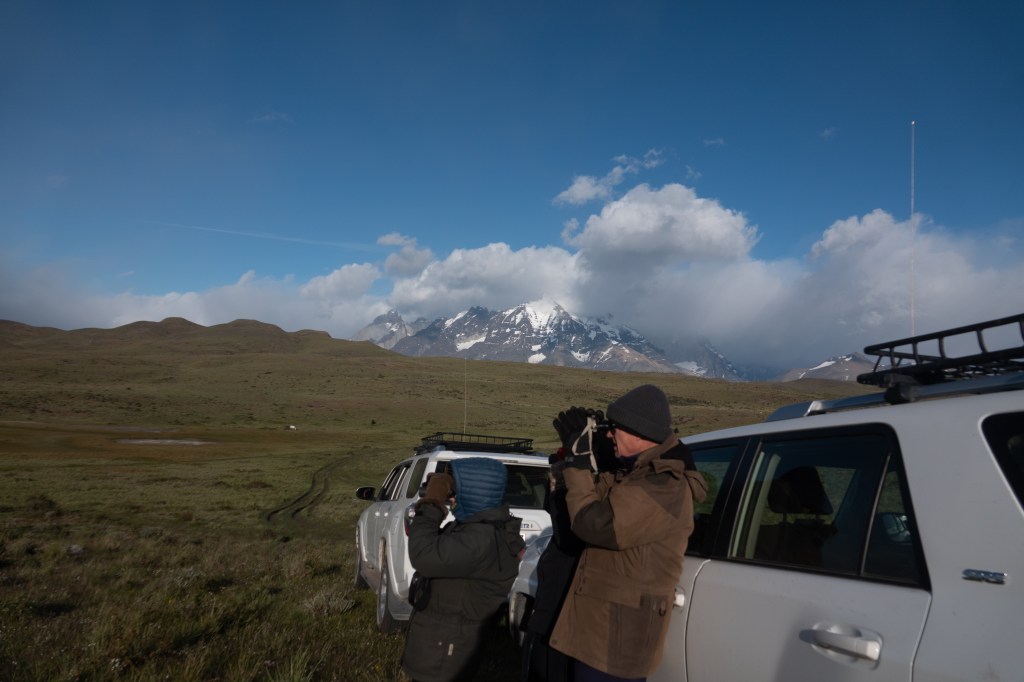
Nothing, or maybe a sliver of brownish back?? But an hour later he raised his head, and we saw that he was real, and wearing a white collar:
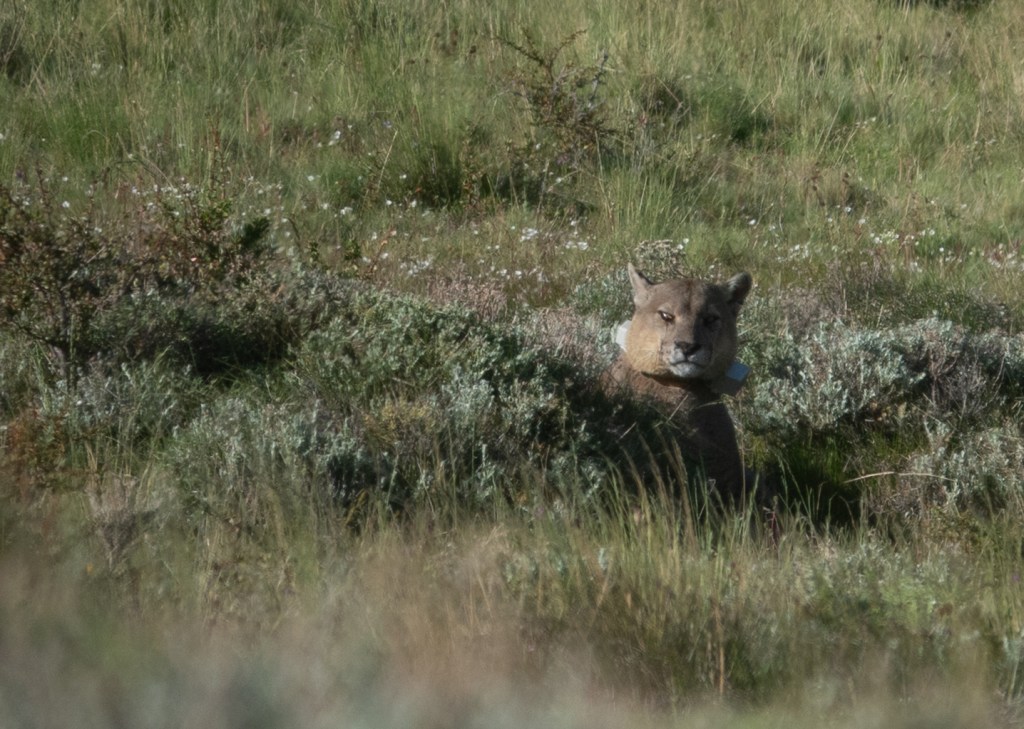
His name is Dark, and he was the alpha male for a very large area, where he would father all the cubs. He was collared by the Cerro Guido Conservation Foundation, who are based on a neighboring estancia. Our trackers did not find him via the collar, because they don’t have the tracking equipment; it was just skill, great eyes, and a dollop of luck.
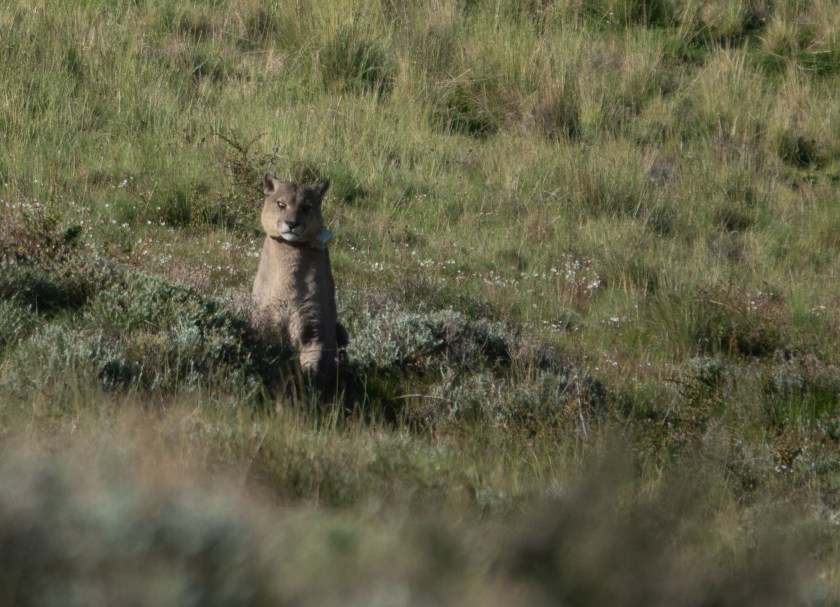
We were told that Dark is shy and does not like people, and indeed after sitting, stretching, and defecating he went back to sleep behind the bush.
In the vicinity there were three horses (circled, top right), and some guanaco. This equine trio are feral, but unlike most horses they do not run at the scent of puma, they just watch carefully from a distance. The puma is circled, bottom left.

The guanaco, out of shot in the photo above, reacted quite differently. One whiff of Dark, and they were off:
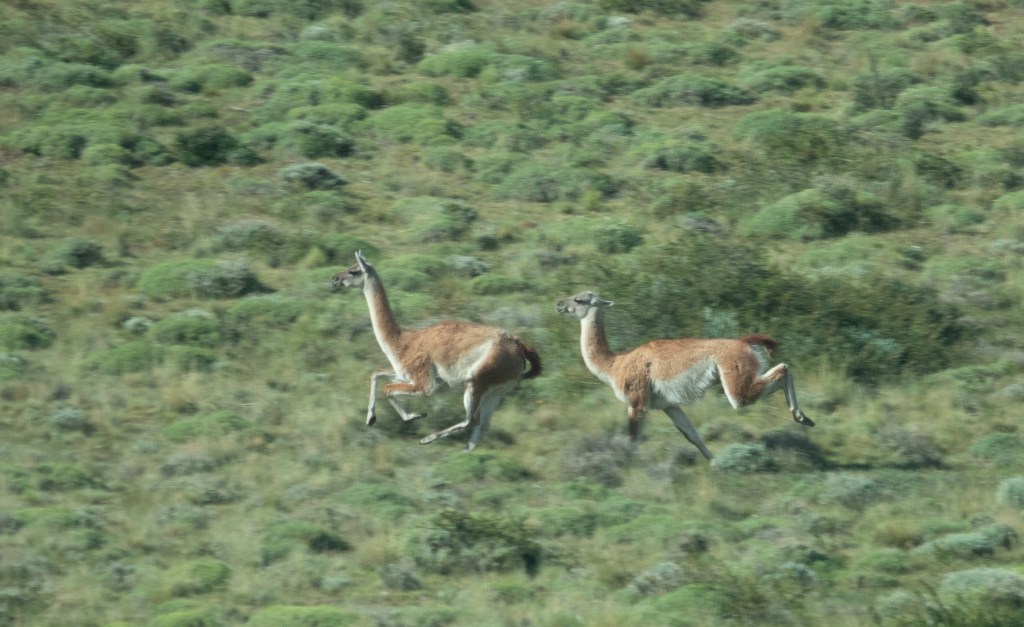
About two and half hours after we arrived, Dark finally showed himself fully,
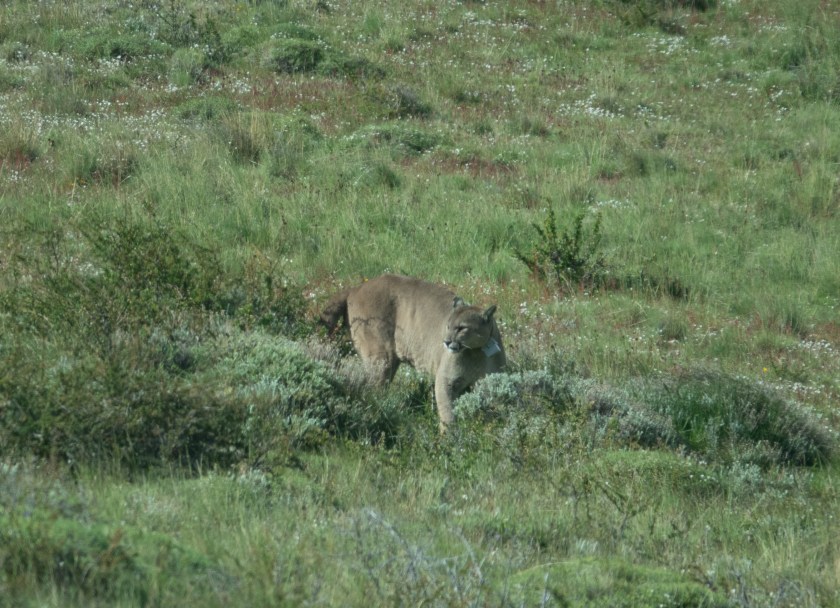
and immediately walked languidly off up the hill:

with a brief irritated backwards glance:

We tried to follow him, but he was having none of it.
A frustrating morning, and we arrived back exhausted after nearly 10 hours. Clearly seeing pumas is not as easy as it had seemed the day before!
PS The total puma population in the Torres del Paine National Park and its neighboring estancias is estimated at between 50-200 animals, but nobody really knows. This story tells you a little more about the conservation project at Cerro Guido.
 Eyes on the Wild
Moira, you amaze me and this report with photos is amazing. Thank you.
LikeLike
What an awesome post and photos. Alstromeria is beautiful! I really enjoyed reading the interesting article on ‘Changing attitudes’….hard work, but I hope it gets adopted by many more areas, globally. Have a wonderful 2025…enjoying nature, of course!
LikeLike
He looks well fed and very majestic
LikeLike
I wonder if he is happy with that big tracker collar around his neck, but maybe it’s for the best
LikeLike