Back at the Ranch: Hanging out on the Ice

For some time I’ve been sending you blogs from Chile, but back at home, even though winter is fairly quiet, there are things to report, so here is a Maine update.

The beaver pond is frozen, and the beavers are supposed to be safely in their lodges, but mine hadn’t got the memo. New Year’s Eve was warmish, and and in the late afternoon I saw a small moving object in the distance on the ice, rear left:

The beaver had decided to catch a few rays:
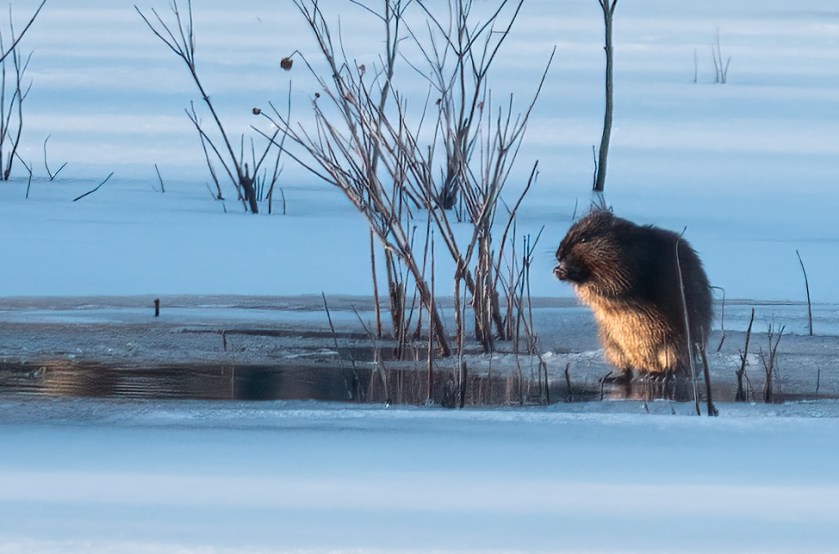
After half an hour the sun had sunk below the horizon, so he slid back into the water:

but remerged a little later chewing on a twig he had found under the ice, presumably in his stash. I’ve never seen one out in the open in the middle of winter before.

The otters, on the other hand, are regulars all winter long. I will see them three days in a row, then not at all for several days, and then they return. This one had just come out of the water. He is shaking just his head (blurry), while holding his body still (sharp):
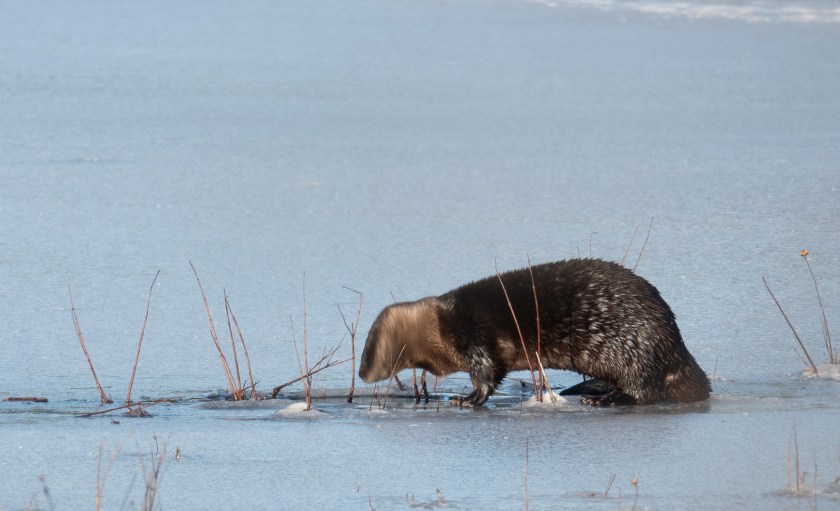
They are vigilant out on the ice, but tolerate my presence so long as I am not too close:
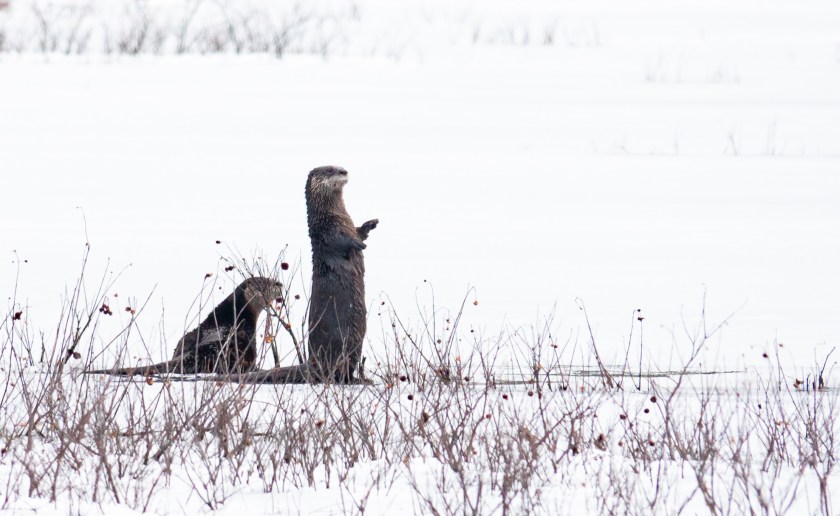
This one is pretending to be a mongoose. Once in a while one emerges very close to me, and usually doesn’t stick around:
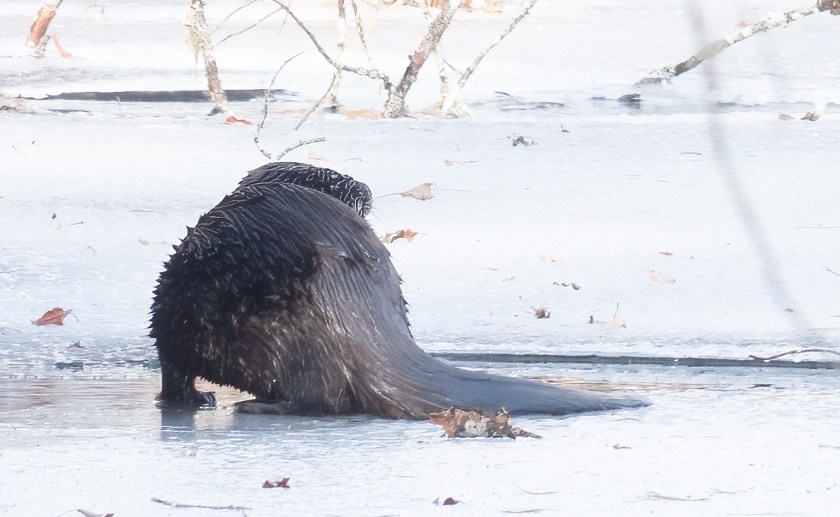
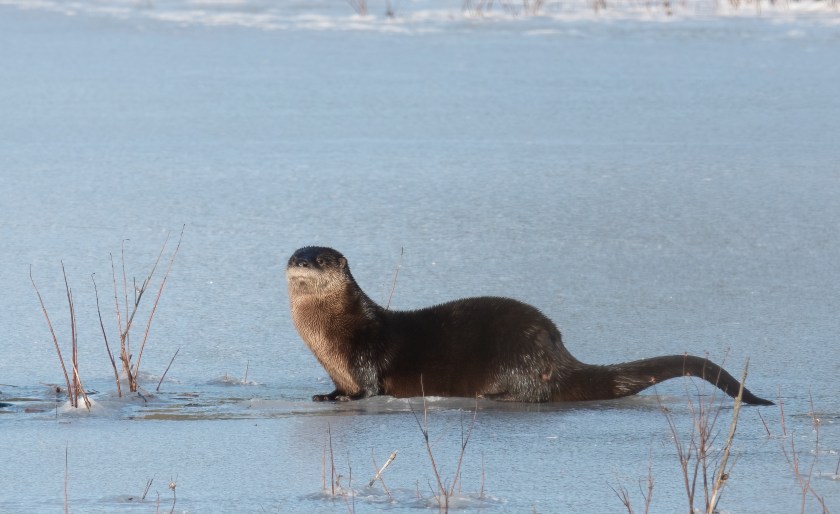
They pose too:
But best of all is when they play; I think this is probably a mother and two nearly fully-grown cubs. The video is about 2 minutes; they go in and out of the water, and near the end they briefly look straight at the camera.

Back to Chile next time.
Peruvian Pelicans

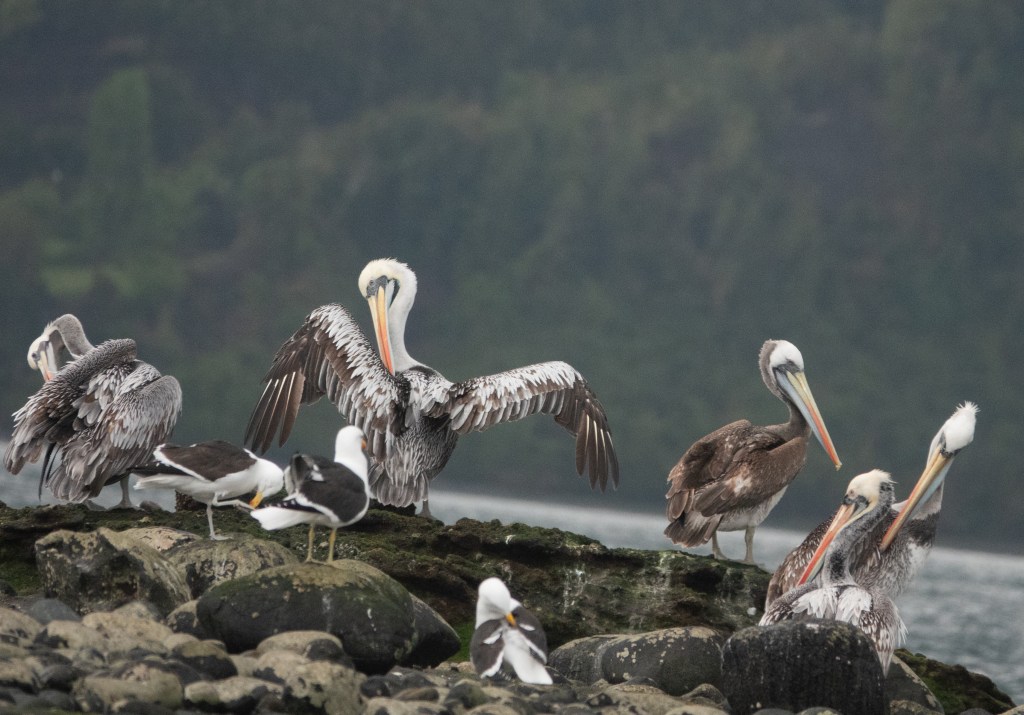
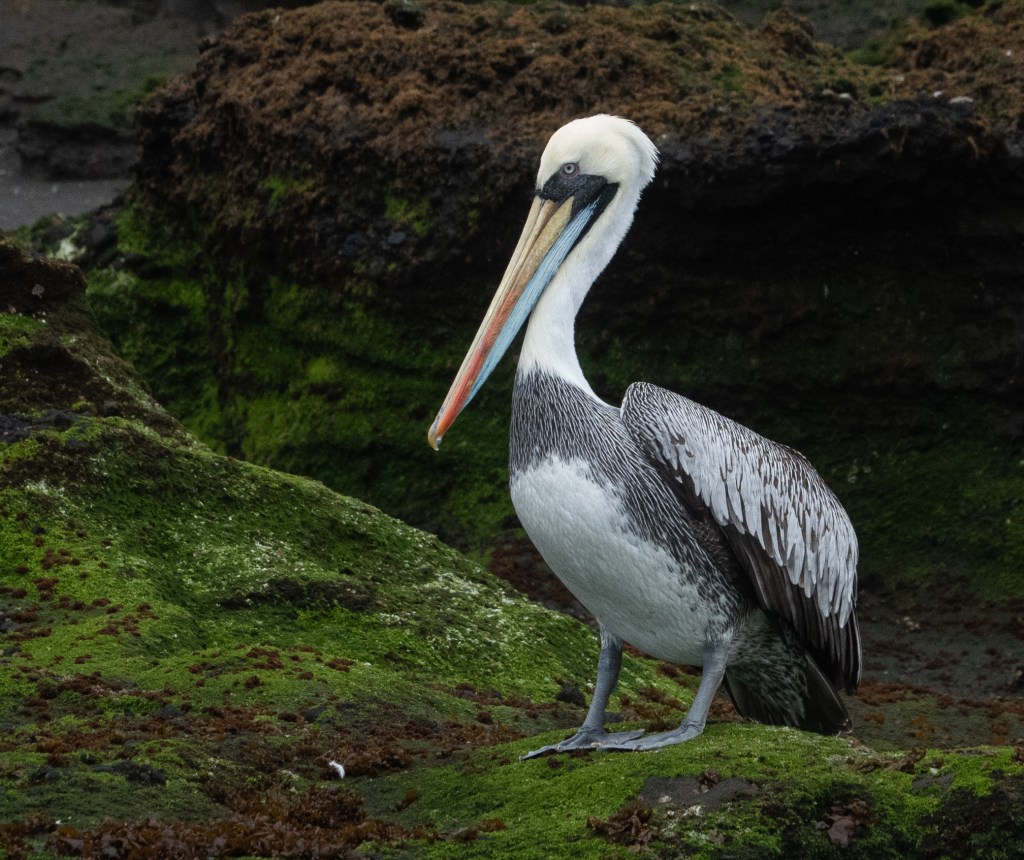
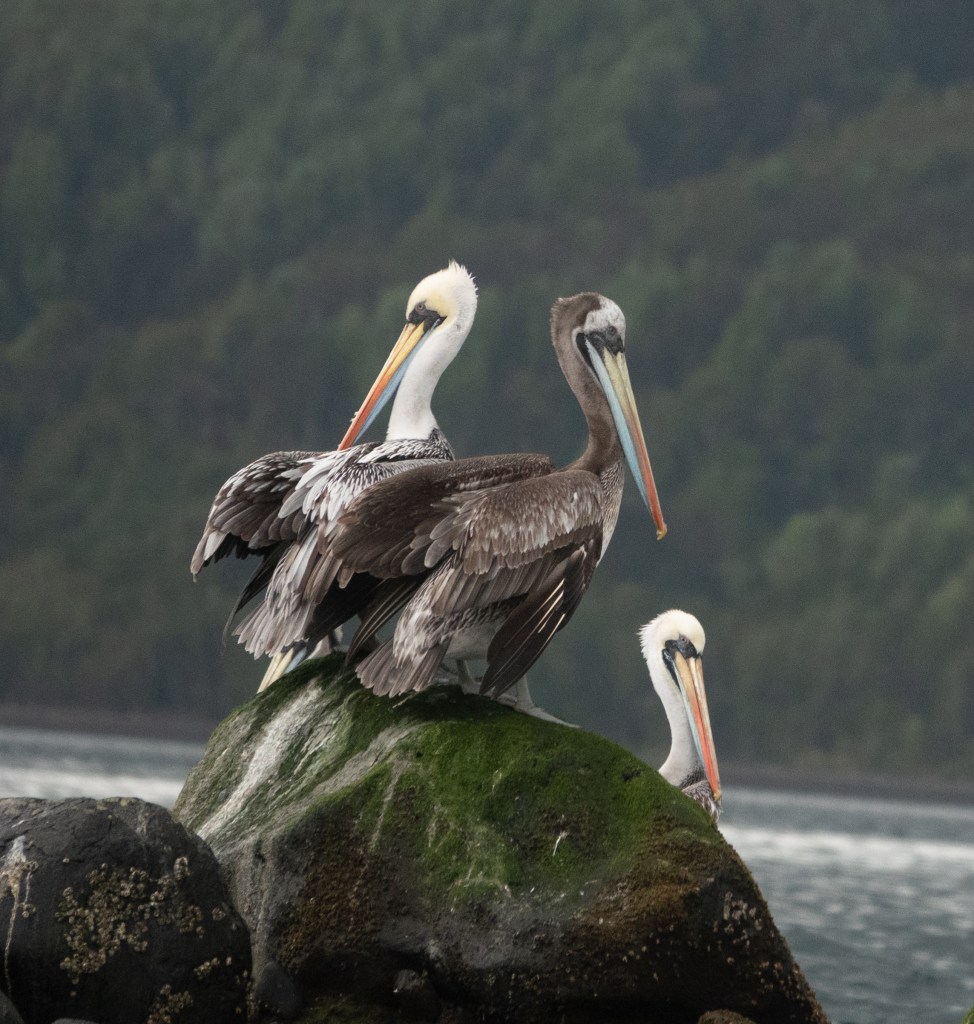
By turns magnificent and comic, the Peruvian Pelican, Pelecanus thagus, is one of three New World pelican species. It breeds along the coast of Peru and Chile. Chiloé is the extreme south of its non-breeding range, and populations there are increasing, though not yet breeding.

These are huge birds, with wingspans well over 2m (78in). They live only on the coasts, and eat mainly Peruvian Anchovies, often heading out to fish at night. But they can eat other things: well-grown chicks have been know to eat smaller (unrelated!) ones.  They seem to be sociable birds, usually in small groups, like these ones preening and drying their wings.

They mingle with other birds, such as gulls, Kelp Geese, Magellanic Penguins, steamer ducks (back left below), and cormorants.

These gulls are fighting over a fish, while the pelicans stand by, aloof and patrician.

The red bill and blue gular pouch are quite distinctive:*

This one was heading out to sea, taking a running jump:

For the photographer, they’re a gift. Even from a bobbing boat you can take their portraits.

PS They have been in this part of the world for a long time, and were represented in rock art in northern Chile between 1,700 BC and 1,000 AD. Overall populations have been adversely affected by El Niño fluctuations, and a reduction in food stocks, especially anchovies. The IUCN classifies it as Near Threatened.

* A favorite children’s book comes to mind, Roald Dahl’s The Giraffe, the Pelly, and Me, in which the pelican’s gular pouch carries the water for the monkey’s window-washing business:

Chiloé: Denizens of The Valdivian Rainforest

Chiloé is a large island off the coast of Chile, near the Lake Region. It has a climate rather like that of the Olympic Peninsula in Washington State: its west coast and uplands get a torrential 120″ inches of rain a year. We walked in the mossy Valdivian temperate rain forests, stayed in lovely lodges in two of the national parks, and went out on rivers, estuaries, and the Pacific ocean.

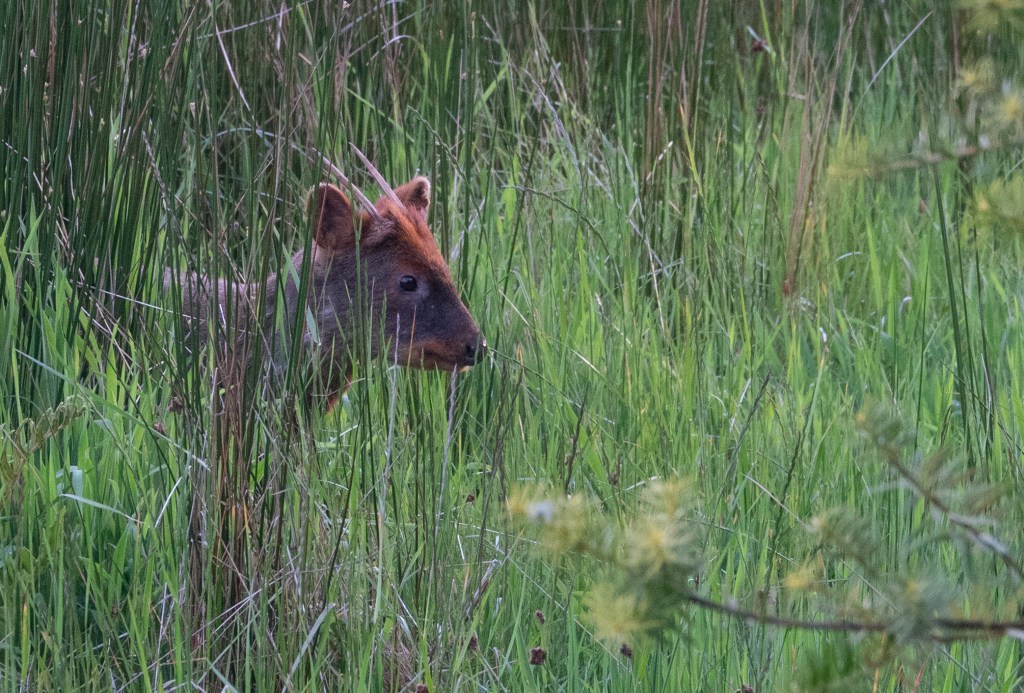
We had hoped to see a variety of small rare mammals, but of course we didn’t. With one exception: we saw four Southern Pudu, the second smallest deer in the world (smaller than a muntjac, but beaten to bottom spot by the Northern Pudu!). They are only 14-18″ tall, and 14-30lbs. Here is a male:

His unforked antlers are no more than 3.5 in long and very delicate.

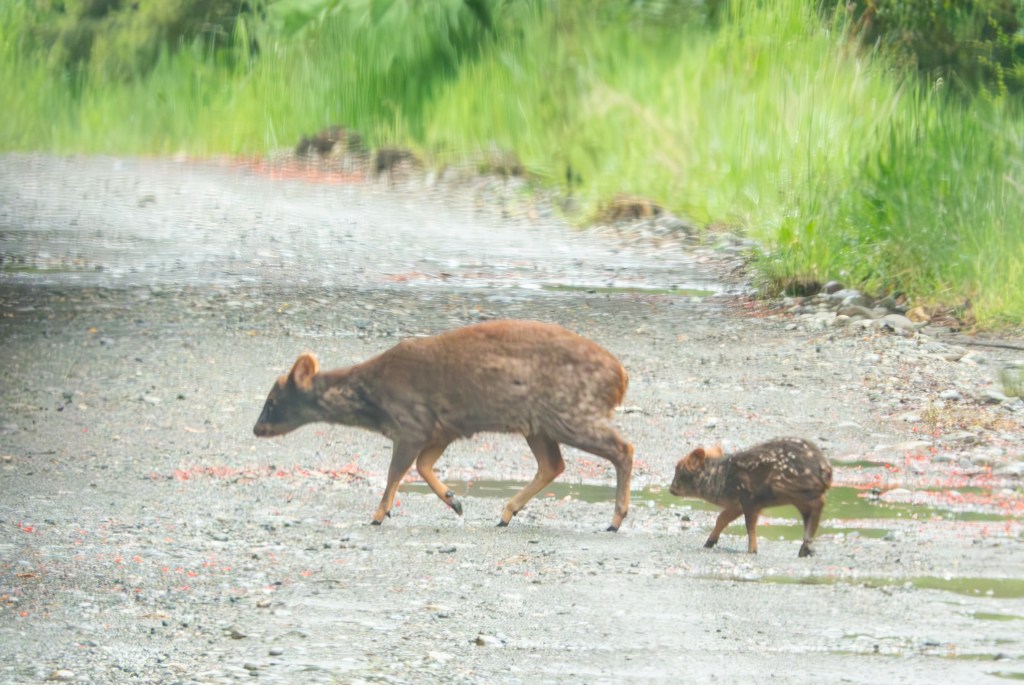
The first one we saw was a female, and, lucky us, she had a tiny spotted fawn:

The IUCN considers these deer Near Threatened overall, and the Chiloé population has been isolated from the mainland for over 200,000 years, and is a particularly vulnerable separate gene pool.

All that rain means rivers, and waterfalls,

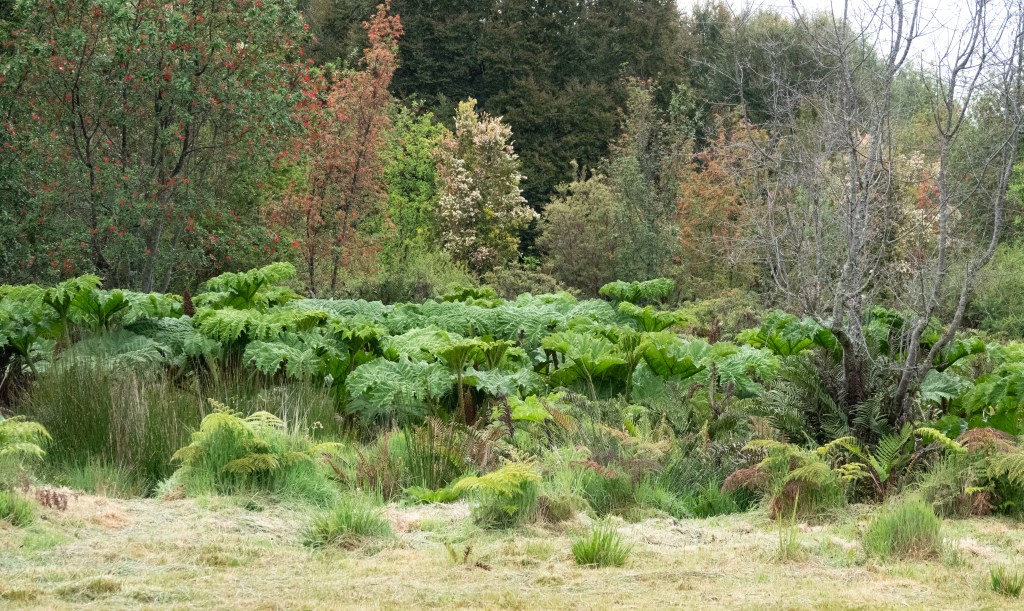
amidst lush rainforest with giant ferns:

and Gunnera tinctoria, known as “nalca”, everywhere:*

The leaves can be 2.5m across:

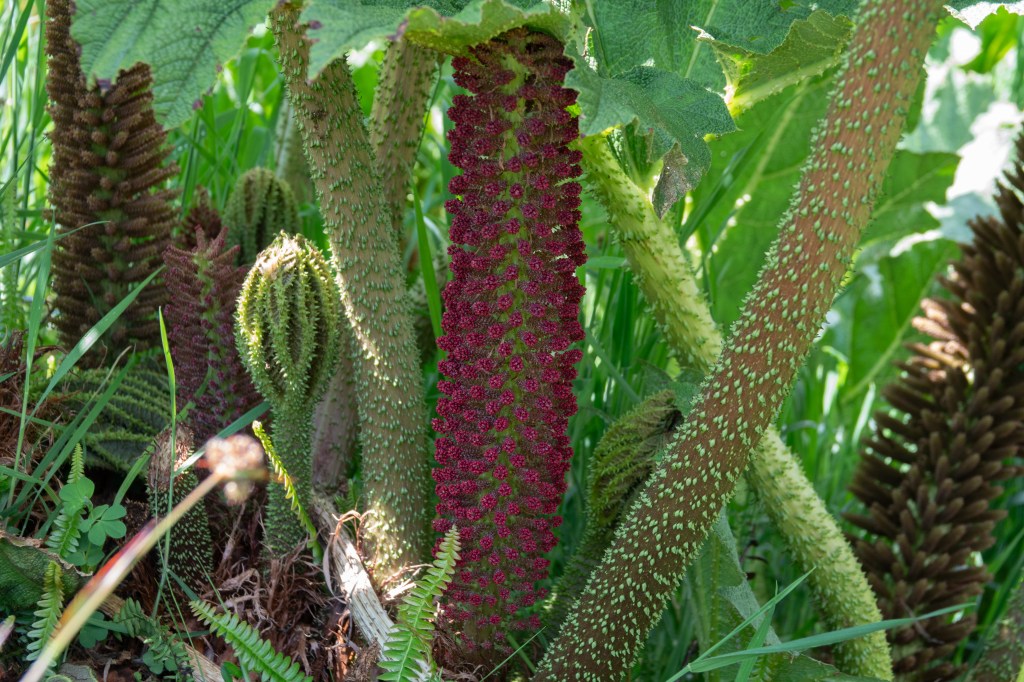
And beneath them is a secretive lush world of spiny stalks

and 1m tall flower spikes.

The stalks are peeled and eaten just like we eat rhubarb.

In November it is early summer down in Chile, and the wildflowers are starting. This is a delicate vine called Luzuriaga polyphylla, endemic to Chile:

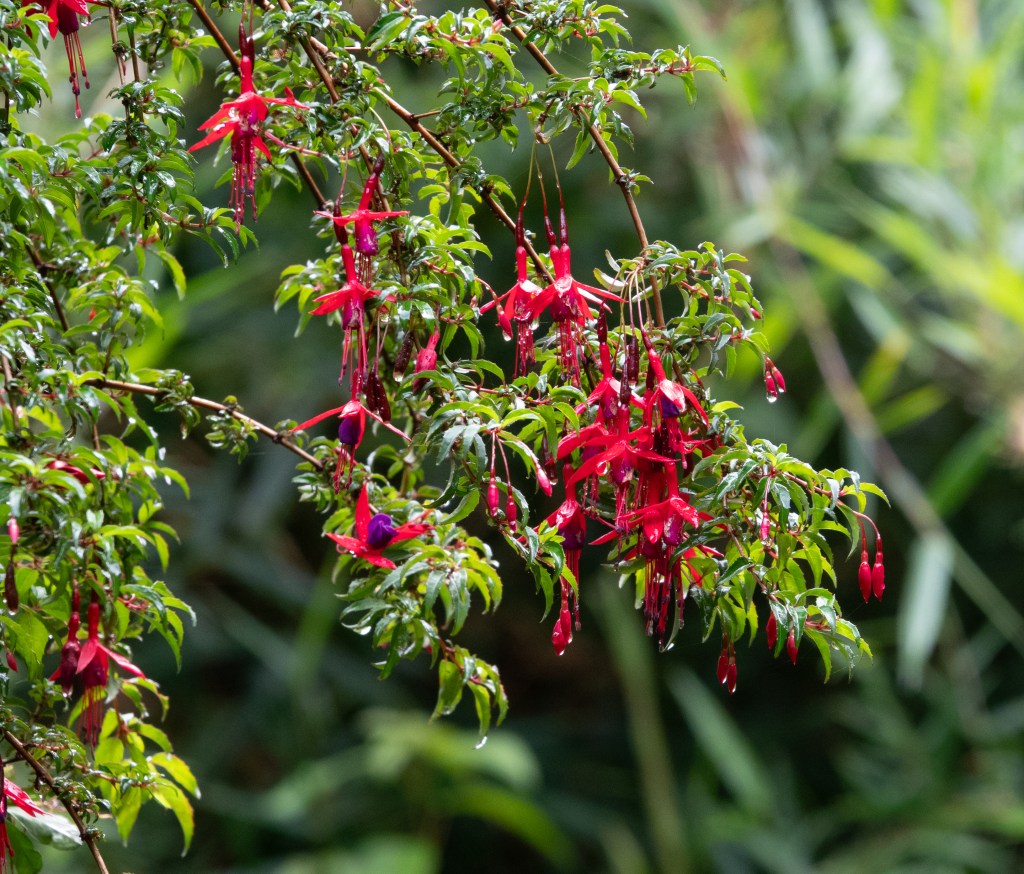
Fuchsias, like many of these plants familiar from our UK or US gardens, come from this part of the world. This is a wild Magellanic Fuchsia:

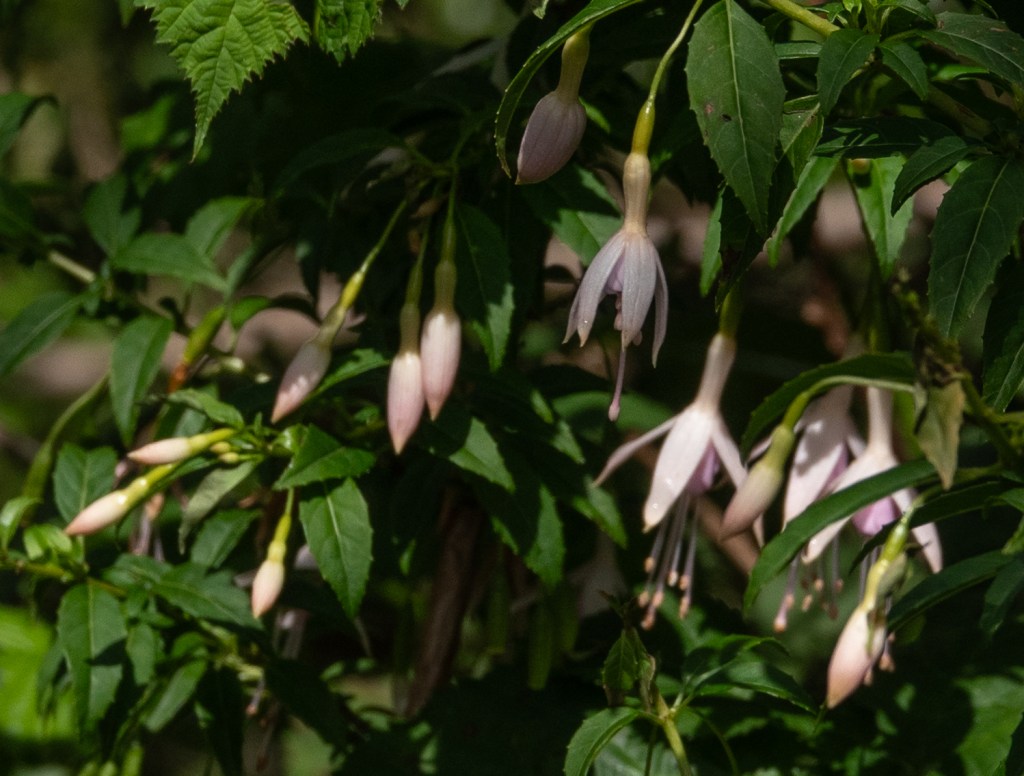
and so is this:

A ragged looking plant with orange flowers with scarlet centres called Loasa acerifolia:

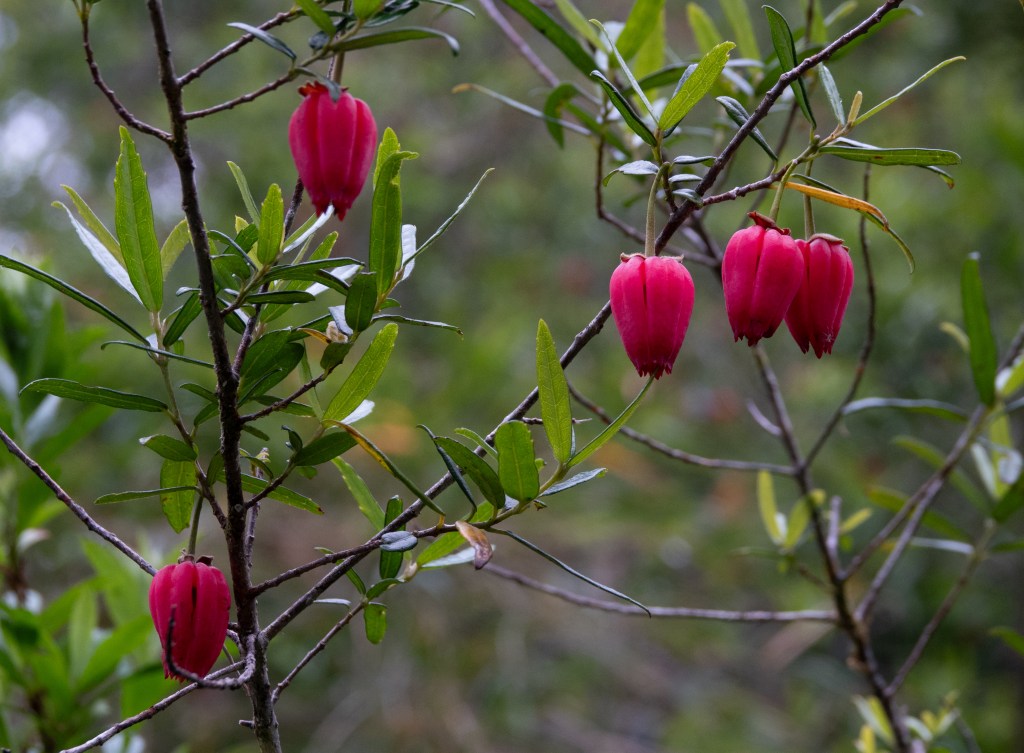
and finally a Chilean Lantern Tree, Crinodendron hookerianum, found only in Chile; it is much loved by hornets, so we beat a hasty retreat:

Everywhere we saw Chilean Firebush, but I’ll let that wait for another day.

PS * Around the time of anti-goverment protests in 2019, a vegetable vendor in Puerto Montt dressed himself in nalca leaves. He went viral, and became a symbol of the protests, known as Nalcaman:

The Tale of Seven Pumas: Number 7

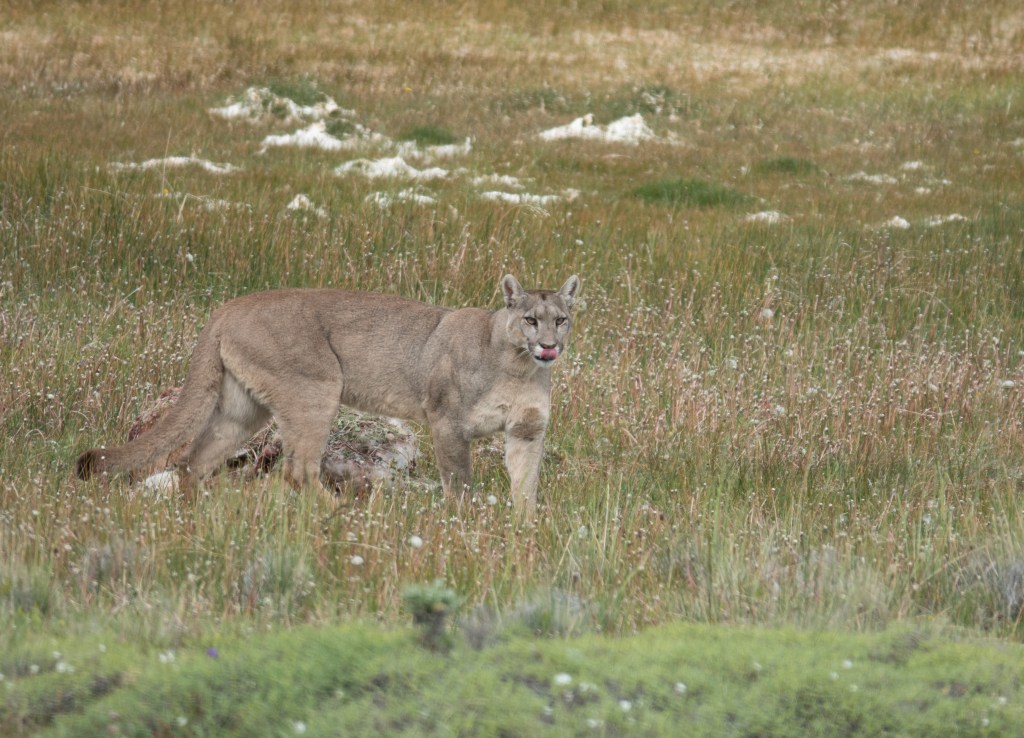
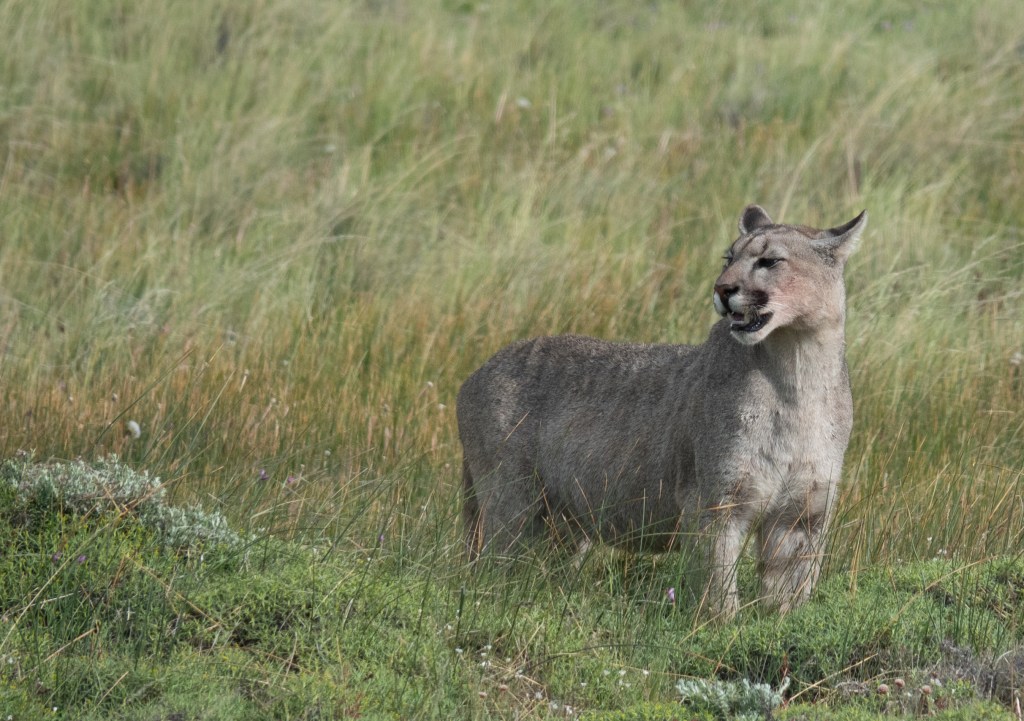
Pumas are solitary animals, by and large, unlike African lions, and we do not think of them as sharing their food with the larger community. It turns out this is not true.

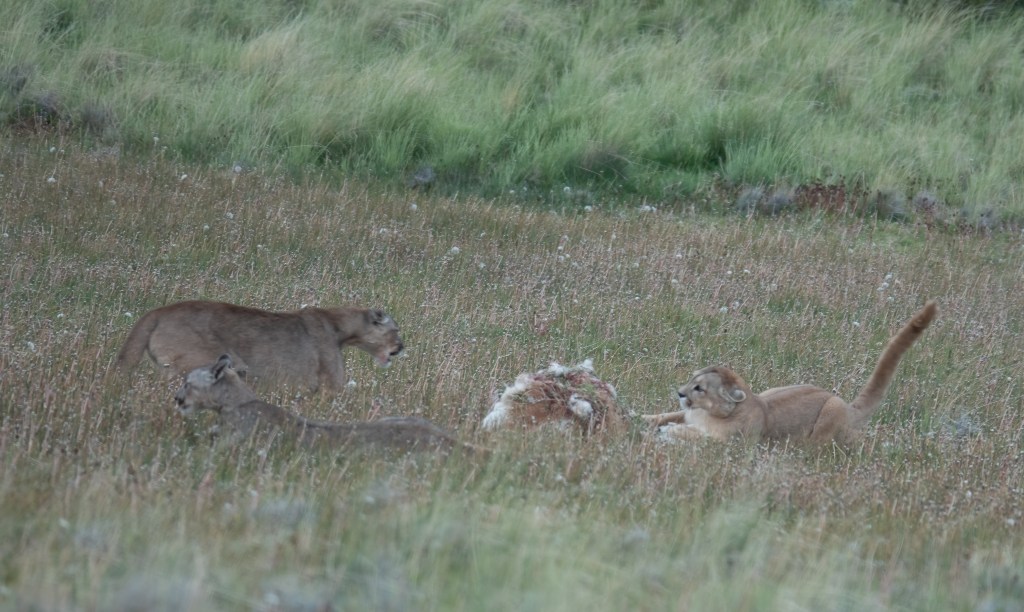
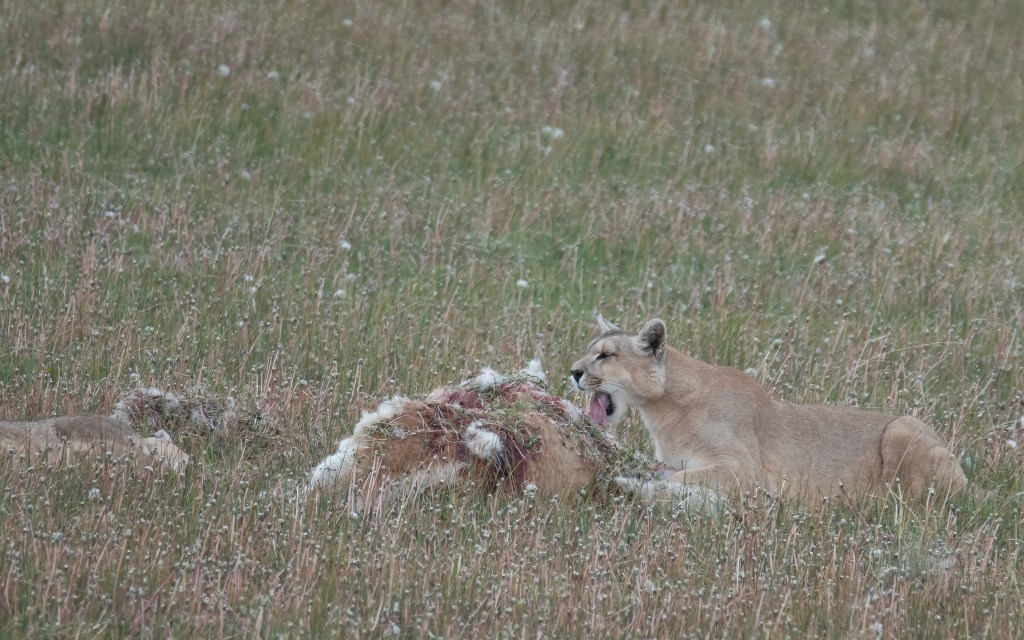
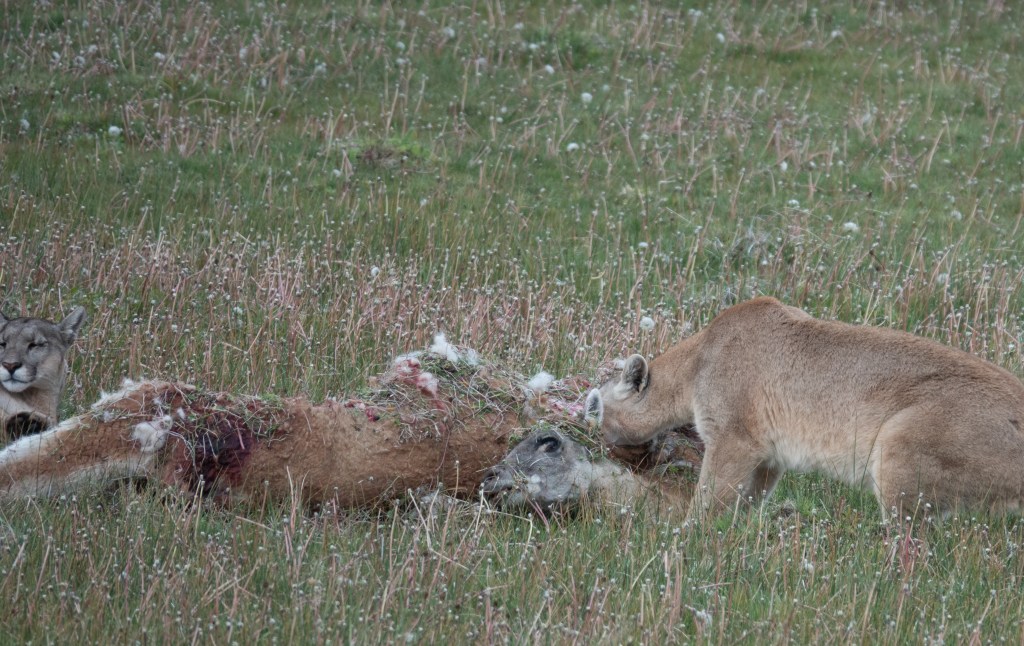
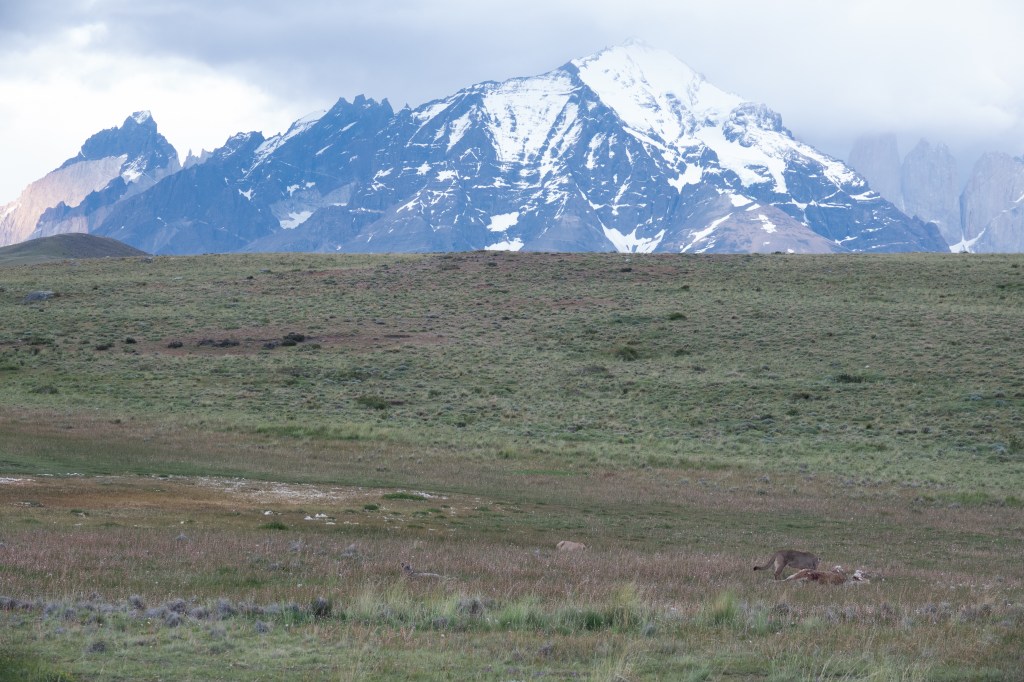
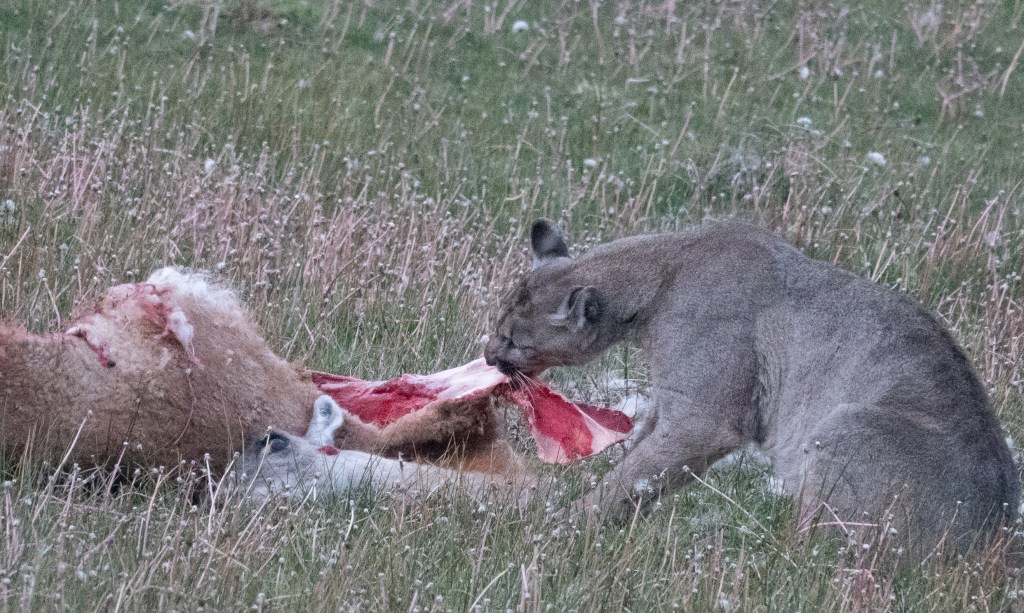
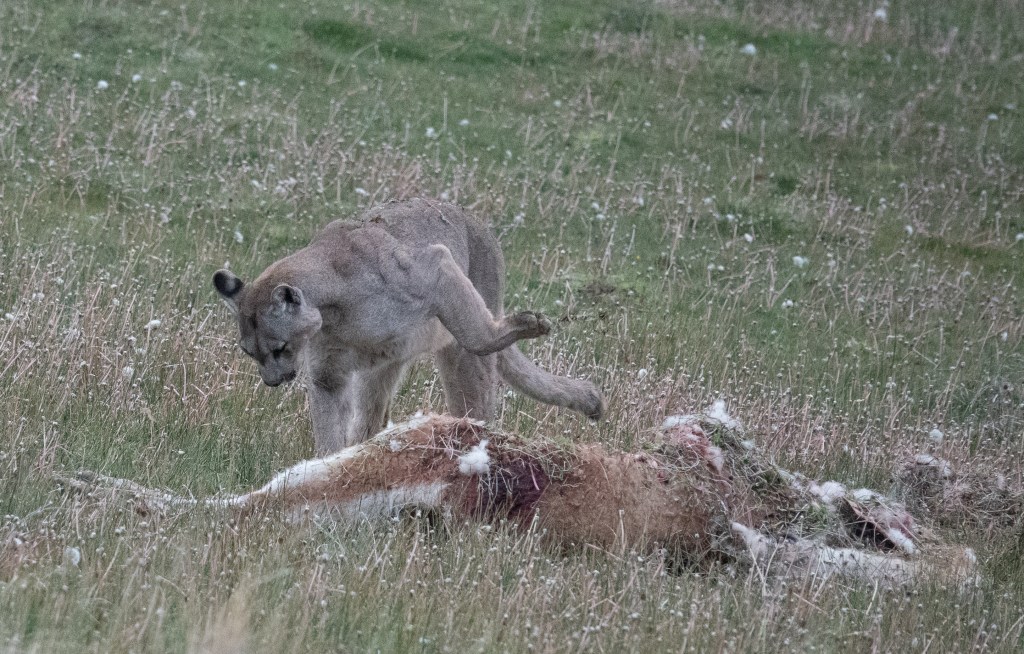
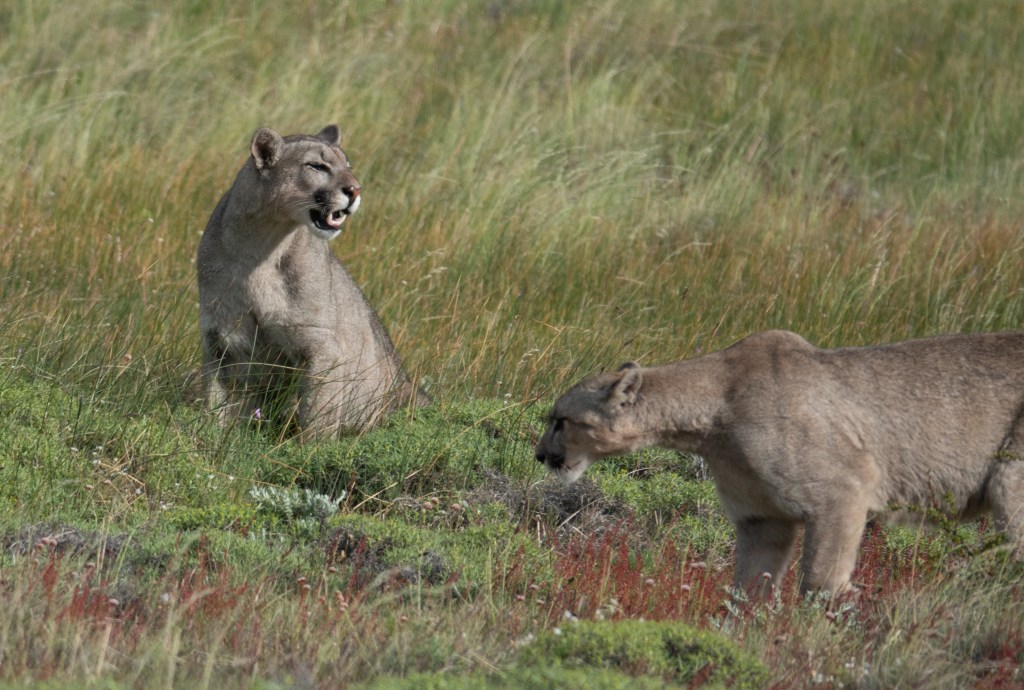
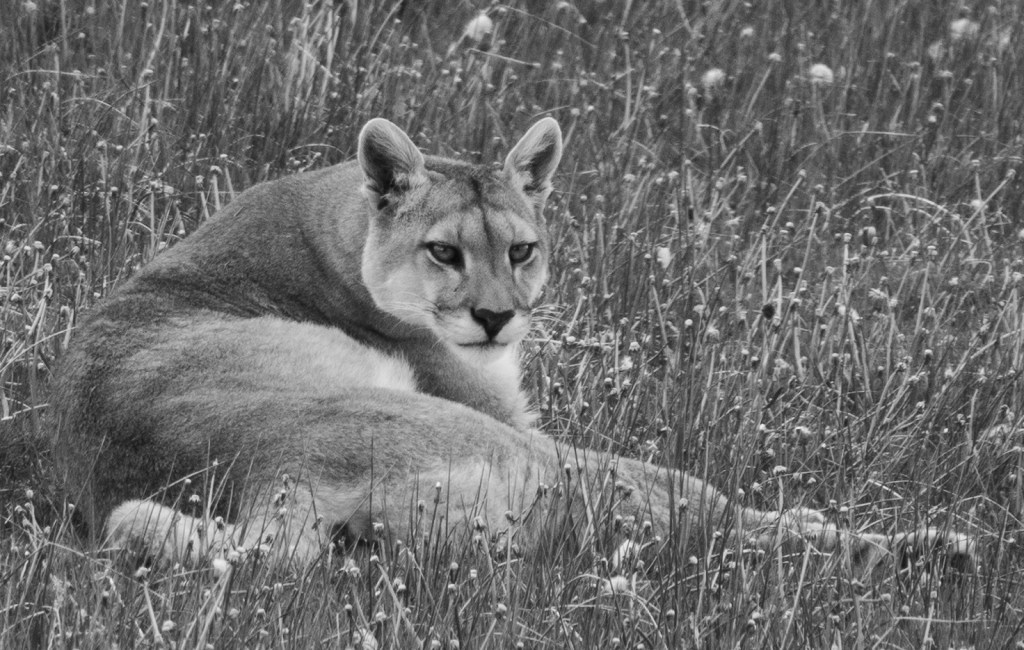
The fourth puma, who we nicknamed Goldie, was hanging around Petaca and her cubs, and she had not eaten. Angelo told us that the female was familiar, living in the same area, and quite possibly a distant relative. He said that the mother would probably let her feed eventually, but not till she and the cubs were done. Since they were all asleep we nipped back to the vehicle for a quick coffee, and while we were there Goldie made her move. These photos are taken from further away and are not great but they tell the story. She circled around to the far side of the kill:

and grabbed a first bite:

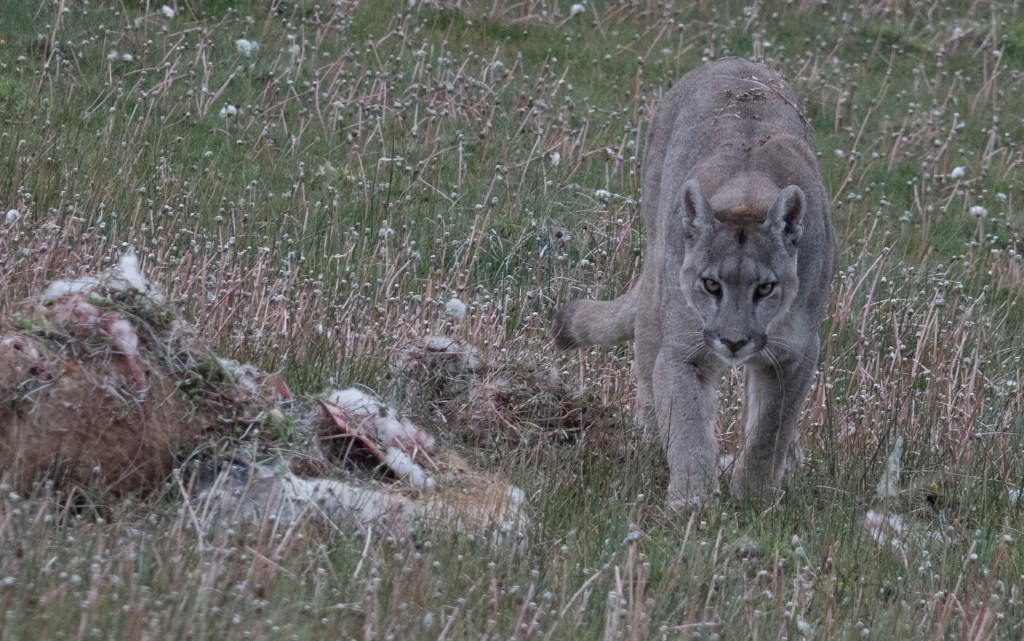
Petaca arrived.

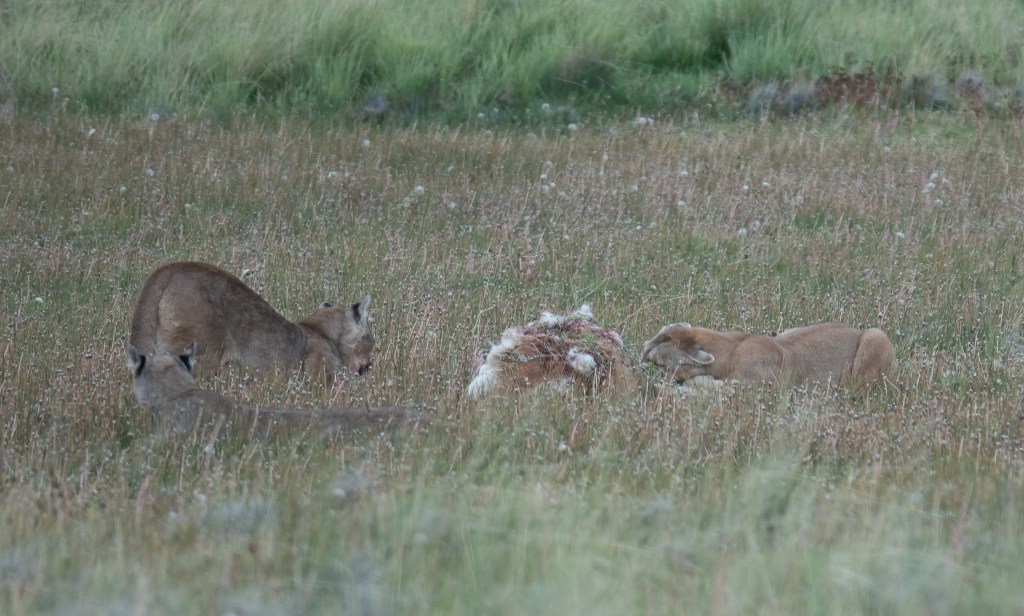
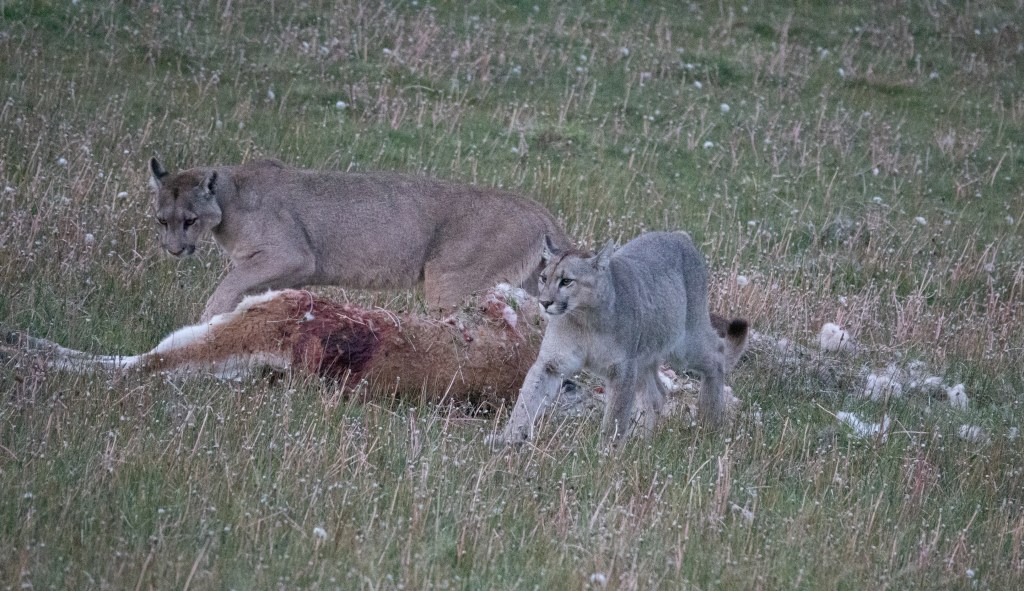
Watch Goldie’s body language in the next few shots:

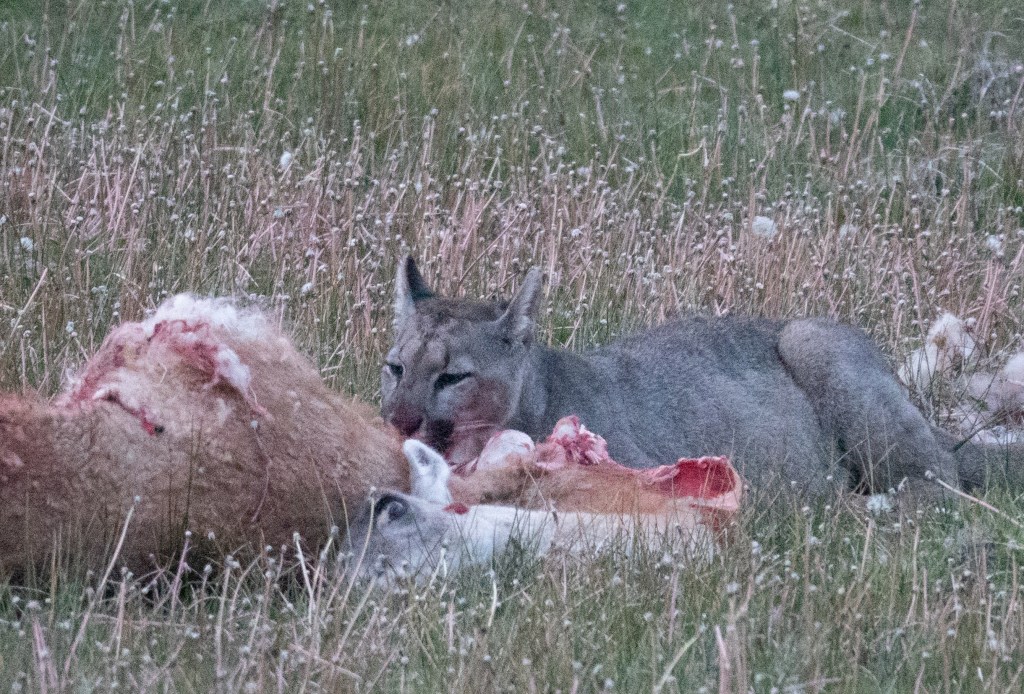
But as Angelo had predicted, once she had made her point Petaca let Goldie eat:

She settled next to the kill so Goldie couldn’t drag it away:

though she shifted it just enough so that you can see the poor guanaco’s head:

Petaca even fell asleep.

Something in the distance attracted their attention:

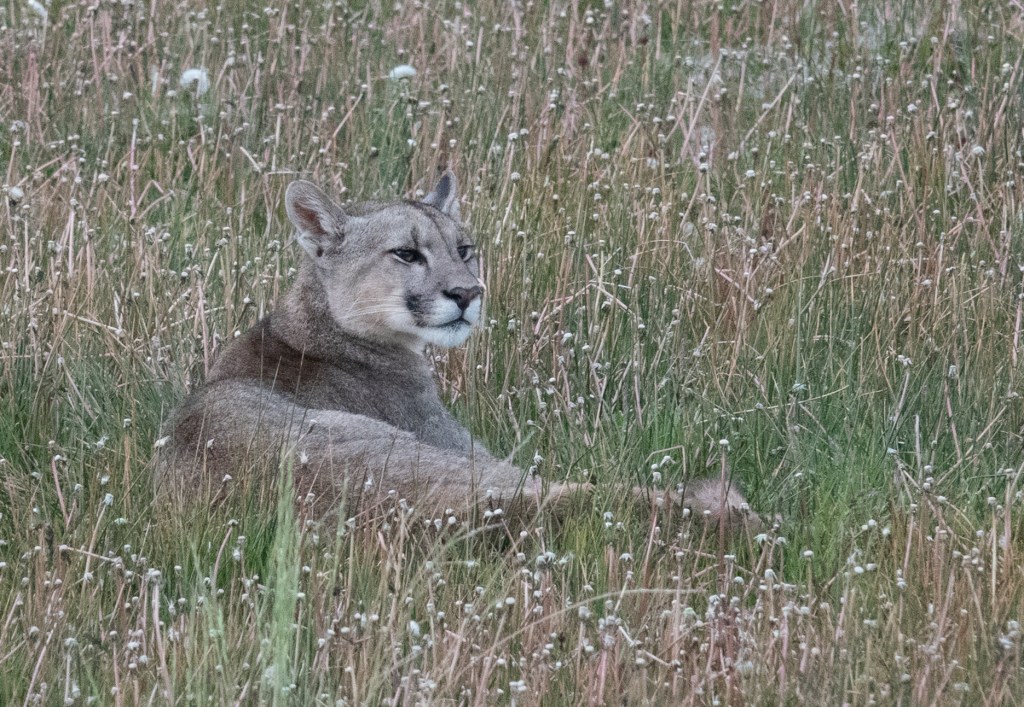
Replete, Goldie moved a little way off, and groomed.

Here’s a video:

Petaca stayed next to the kill, ever vigilant:

Eventually, all the pumas had left the kill. Even Petaca moved away, lurking in the bushes and watching us carefully as we headed for our vehicle:

What a privileged morning. And the last of our pumas.

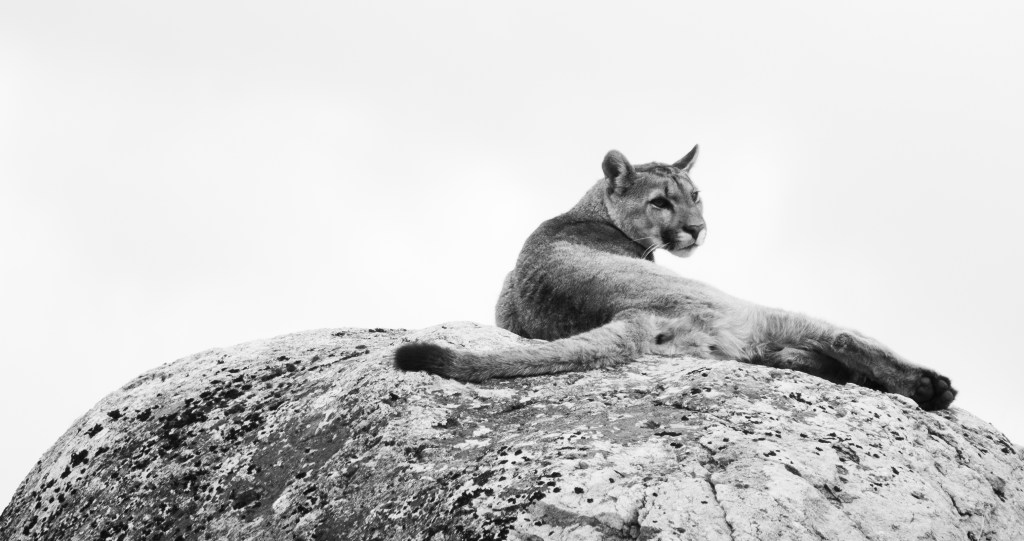
PS Puma coat color varies quite a bit, from the golden color of Blondie, to the gray of Petaca and her cubs, to the tan of Dark. They never have markings, hence the scientific name Puma concolor, meaning ‘uniform color’.

A Tale of Seven Pumas: Numbers 4-6

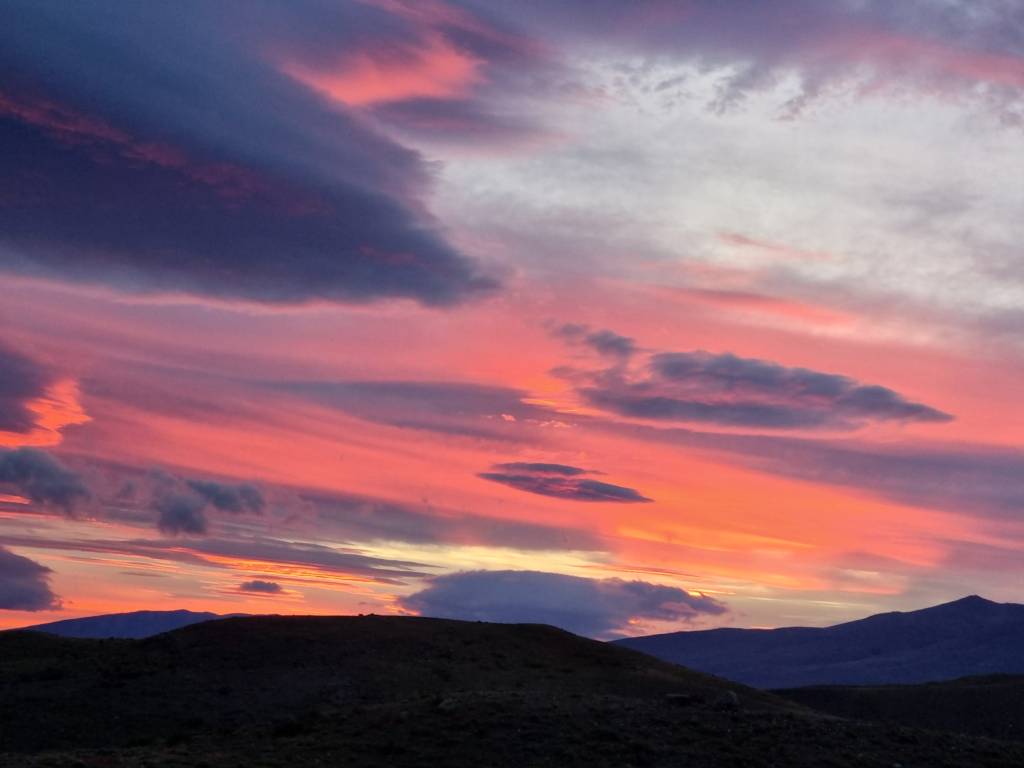
After the previous day, we were slightly dreading another day of howling gales, low temperatures, and not much puma. But at 4am we headed out to Estancia Laguna Amarga again, down the mountain in the dark. The compensation for the early start is a spectacular sunrise, like this one photographed by my friend Kerstin:

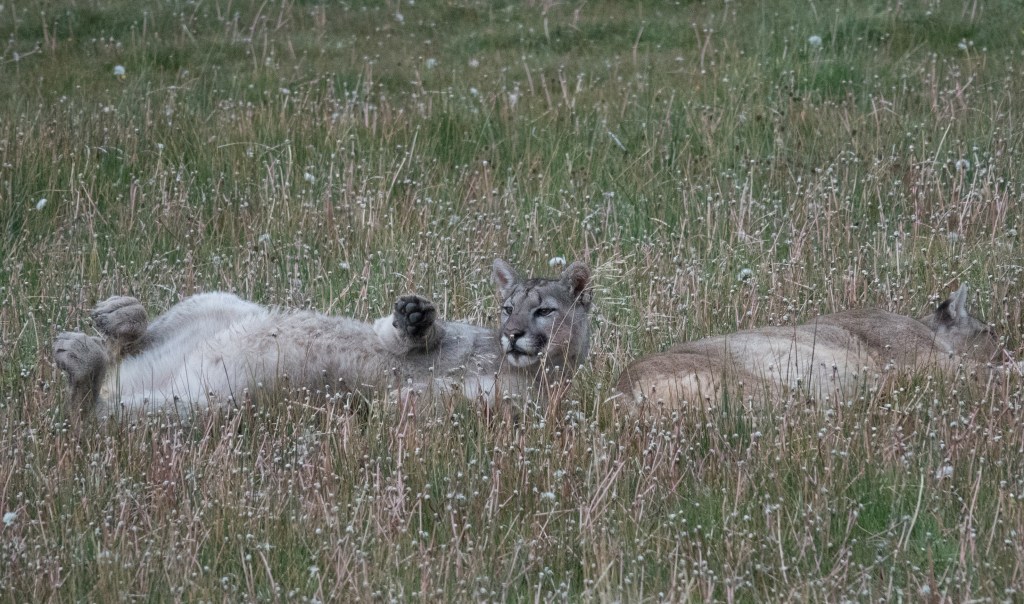
And today, after less than an hour, Angelo our tracker radioed us from quite nearby. With a huge grin, he pointed: there, spread out before us, as if on a stage, were four pumas and one dead guanaco (right foreground). So of course there we stayed, four and a half hours, riveted.

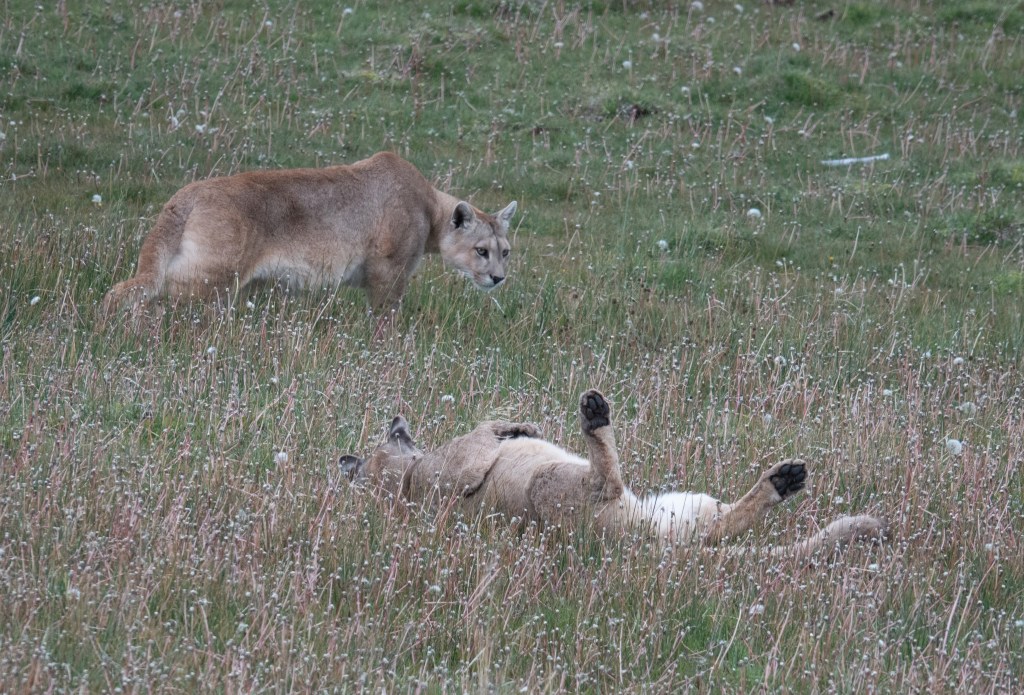
It was a mother, known as Petaca which rudely means “Shorty”, and two 11-month old cubs , one male and one female. (The fourth puma was a young adult female, who will be the subject of my next and final puma post.)

Angelo had seen Petaca the previous evening, looking as though she was hunting, so he had gone searching for her again this morning. She had indeed killed, an adult guanaco, and when we arrived the male cub was still feeding:

but they were clearly sated,

and beginning to nap:

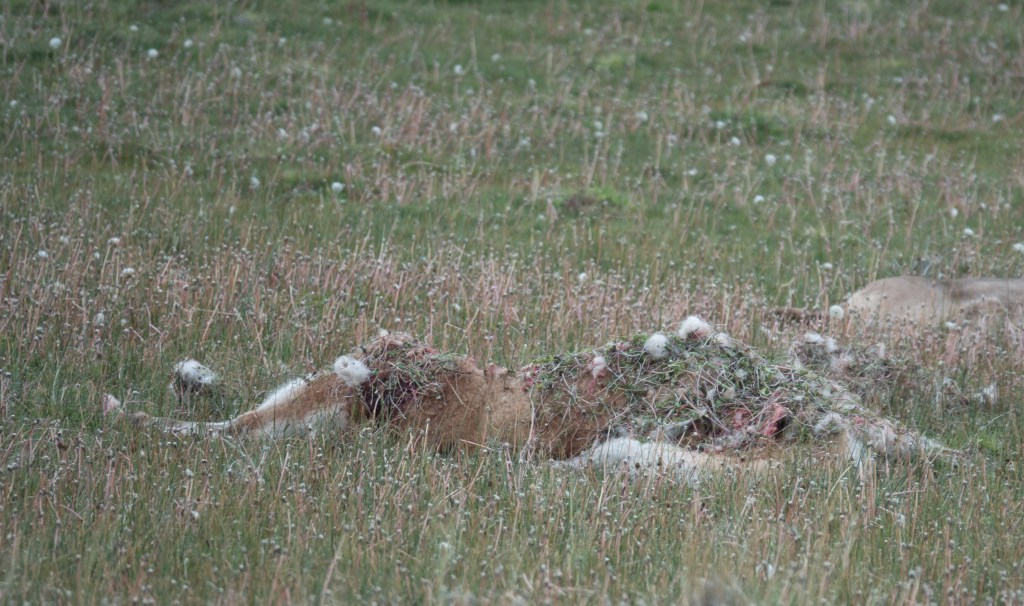
The kill would last them 2-3 days, so long as the condors didn’t find it, so they were scraping up clumps of grass to camouflage it from above:

Here’s a video:

It looked for all the world like a leg of lamb à la Provencale, ready for the oven.

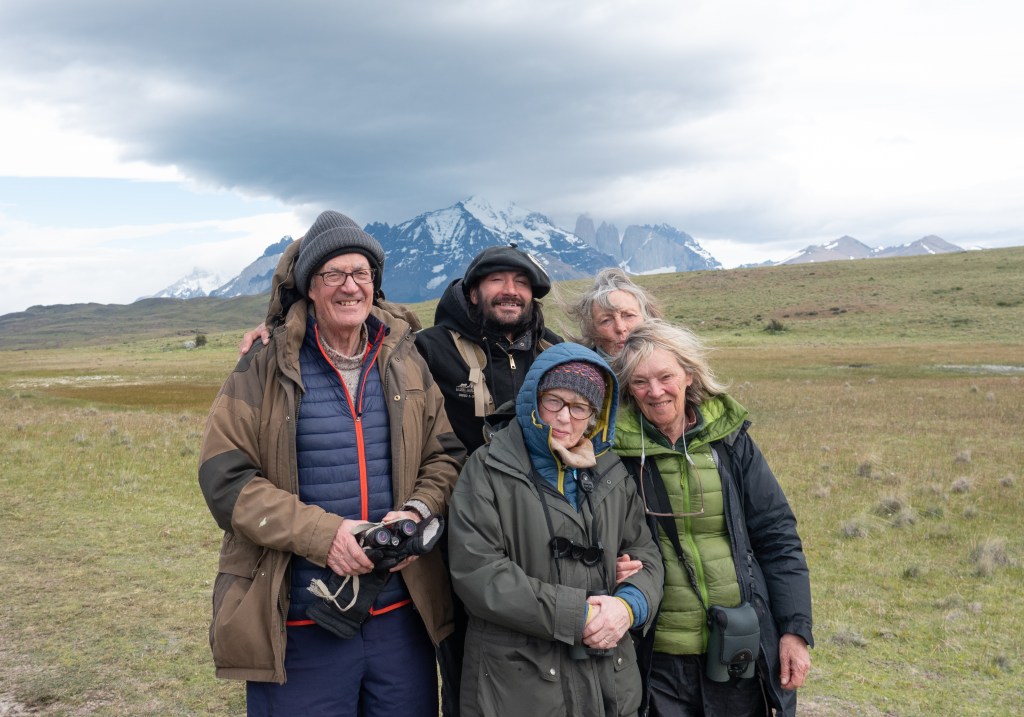
Thankyou, Angelo (the one with the beard!).

I’m ending this post with a small gallery of photos as they move through the landscape finding good spots to rest in for a while. You can I hope see how the wind whips through the grasses, and how their muscles ripple beneath the skin.

At one point the female cub had a good sniff at the ground, then savored it in a classic Flehmen response:

She was then joined by her mother:

The two cubs later walked right past one of my friends (I was behind a bush at the time!), and headed for a good vantage point:

Next time, we meet our final puma.

PS The cubs will stay with their mother till they are 15-24 months old.

PPS The Flehmen response is explained here: https://eyesonthewild.blog/2023/08/15/jaguar-encounters-ii/

The Ancestral Llama

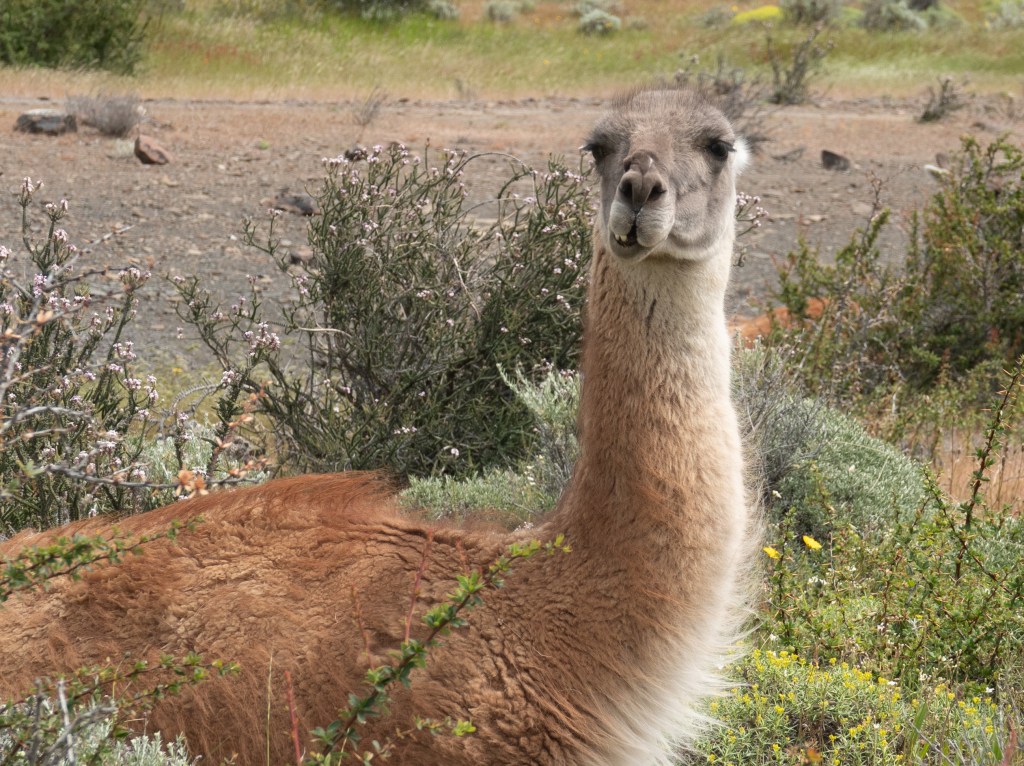
Guanacos are very endearing animals. About 43″ high at the shoulder, and about 60″ to the top of the head, only a tiny bit shorter than me. This one looked me right in the eye:
They are related to vicuñas, in the camelid family. Llamas and alpacas are the domesticated versions of guanacos and vicuñas respectively, so you might say that a guanaco is to a llama what a wolf is to a dog! In Chilean Patagonia, there are an estimated 160,000 guanaco, and they are considered of Least Concern, but before the Europeans came there were probably 20-50 million of them in the larger region. They are a major food for the pumas.

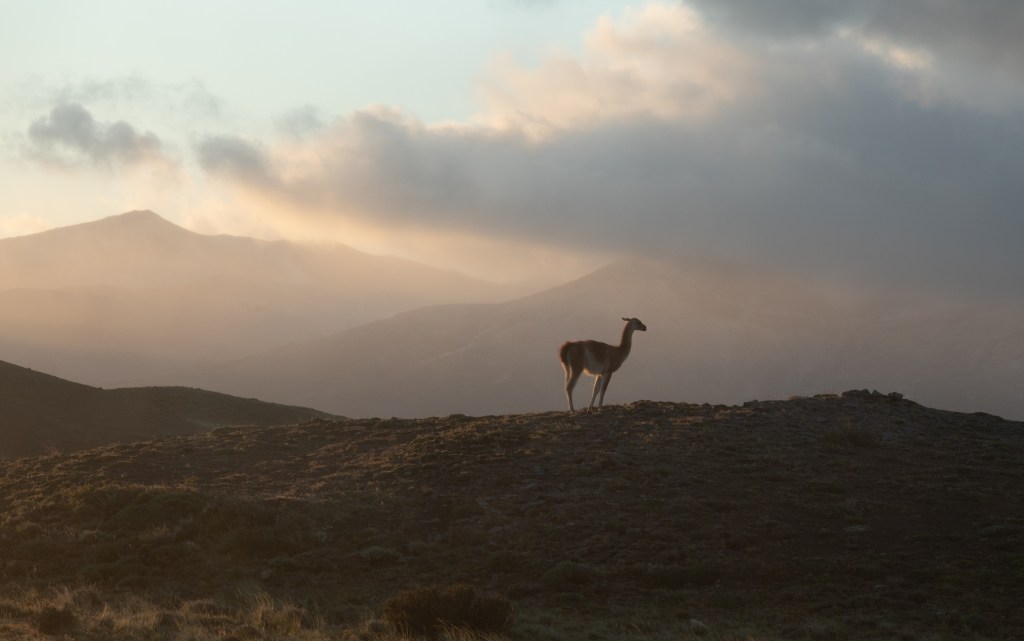
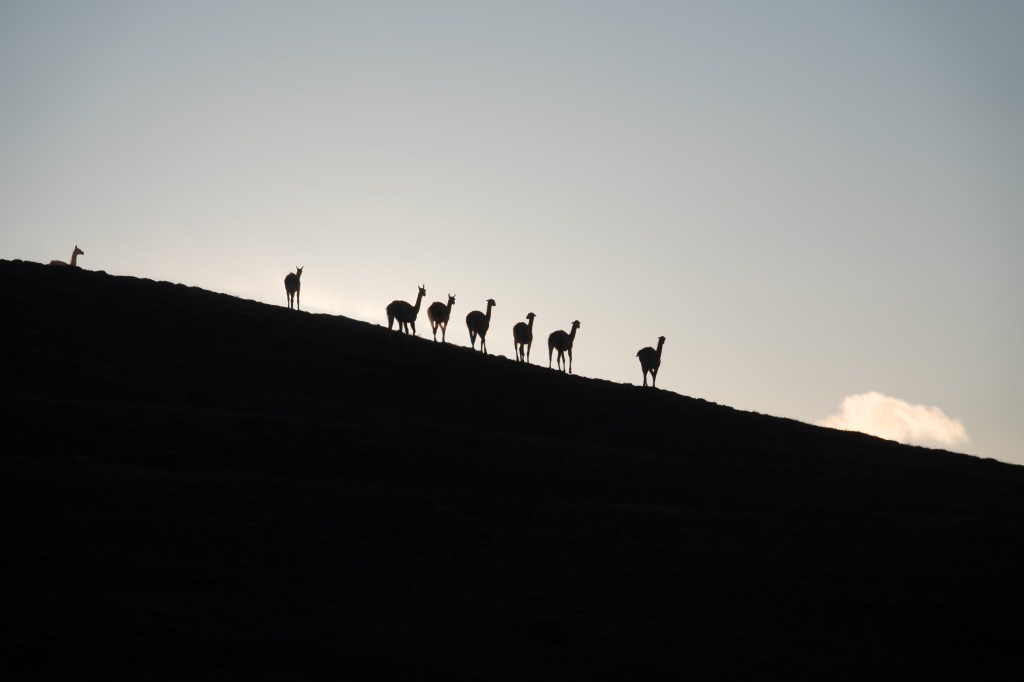
Often the first thing you see is one on the skyline, standing watch:

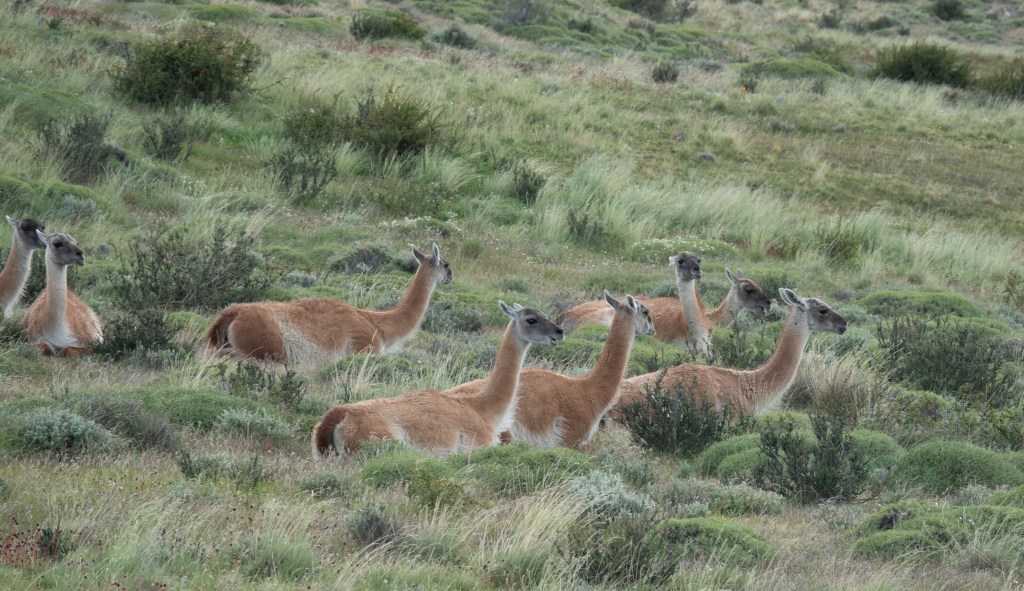
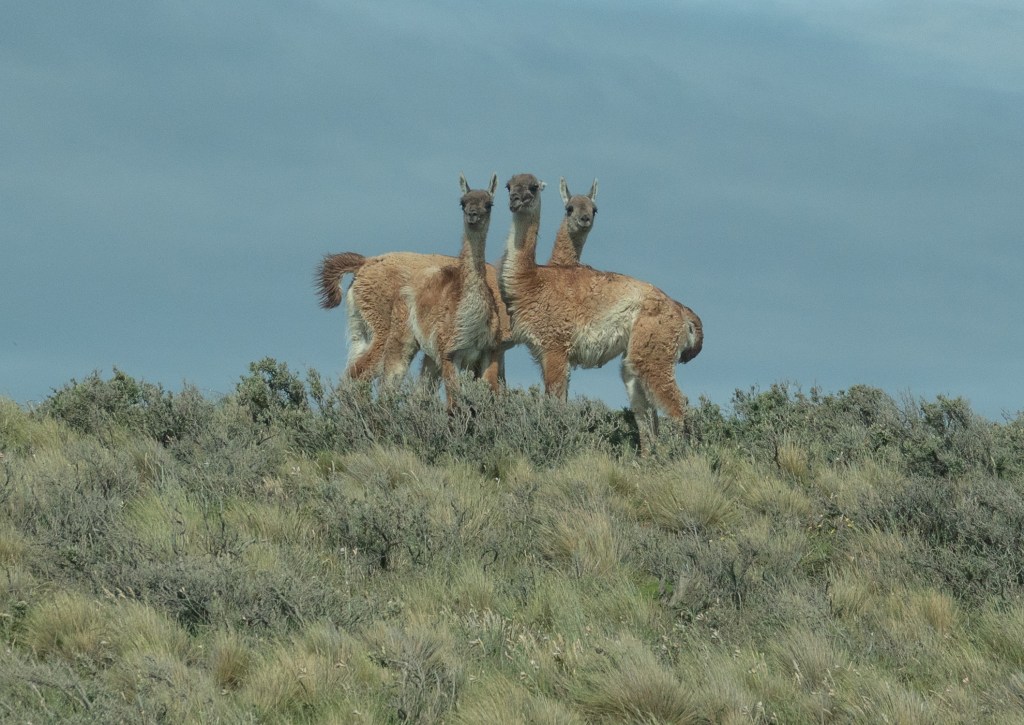
They live in small groups, typically all females and their young, with perhaps one adult male:

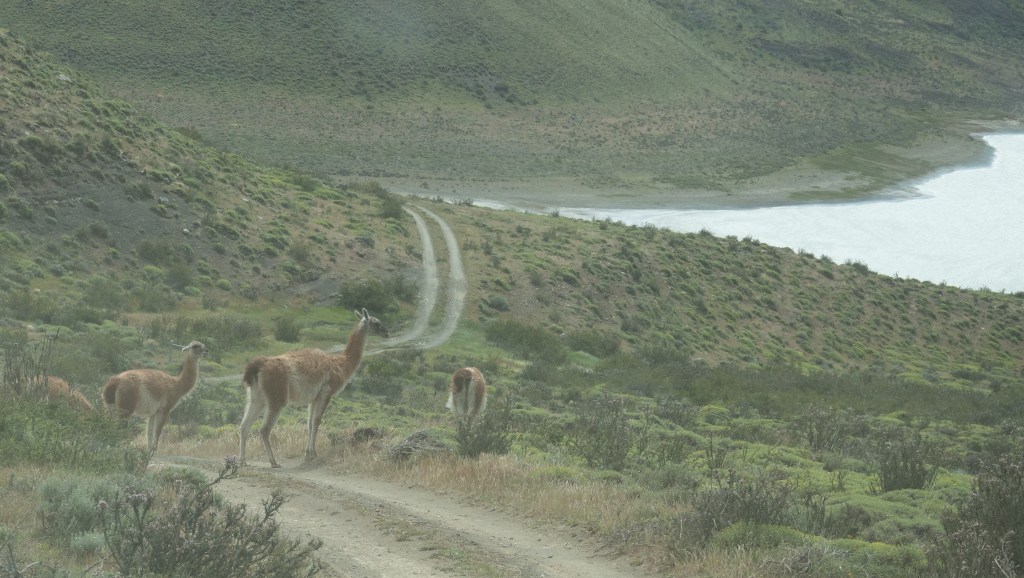
and they were not very bothered by our vehicle:

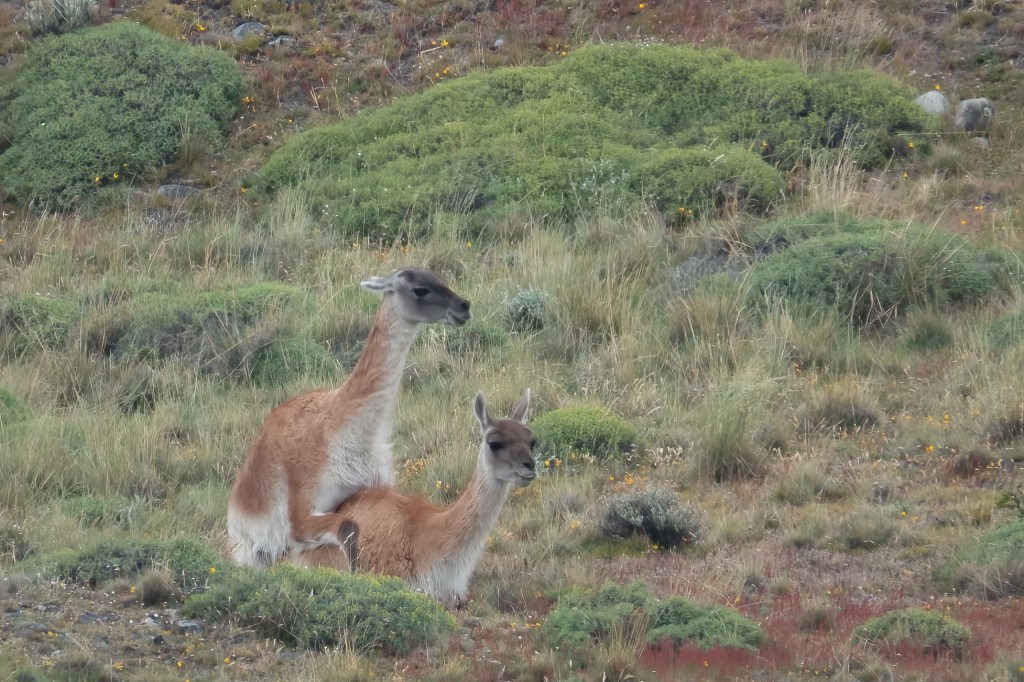
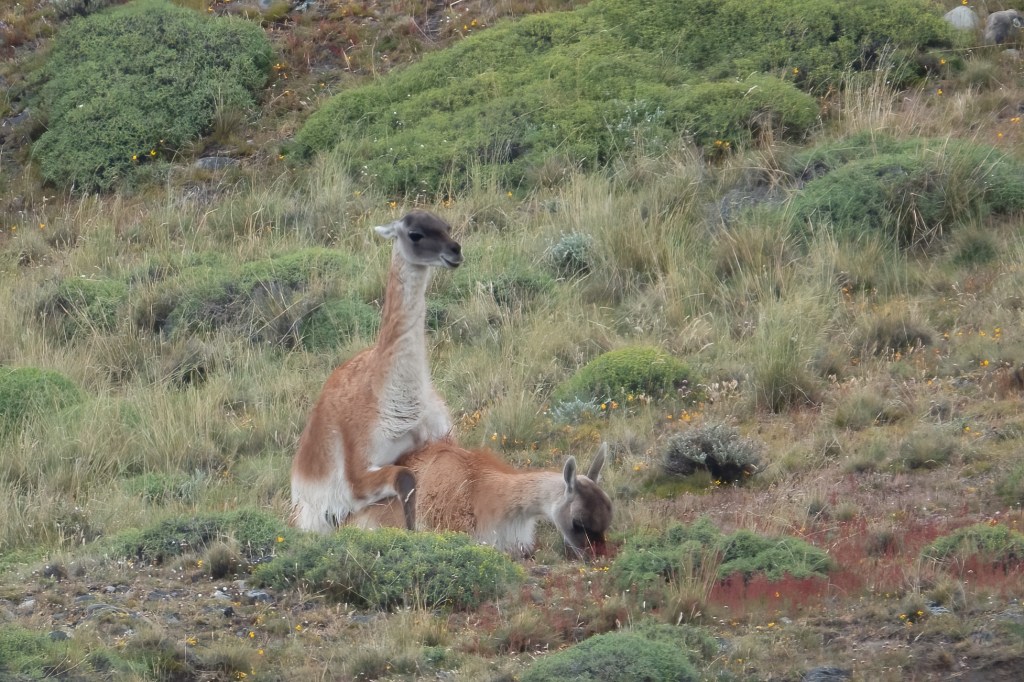
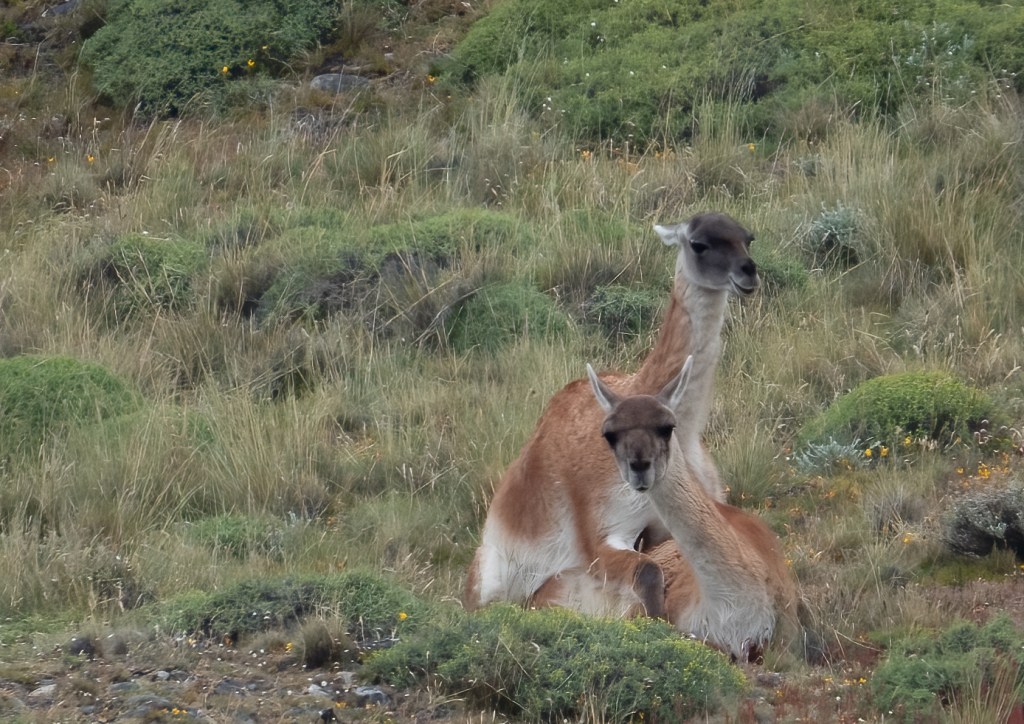
We encountered two adults alone in a secluded valley, quite far away from us, and it took us a minute or two to realize what was going on:

Apparently they can stay in their marital embrace for five hours, and we weren’t sure whether they had just met up, or were ready to part. She seemed resigned, or perhaps bored, and a little hungry:

They noticed us, so we gave them some space for their private date, hopefully uninterrupted by any pumas:

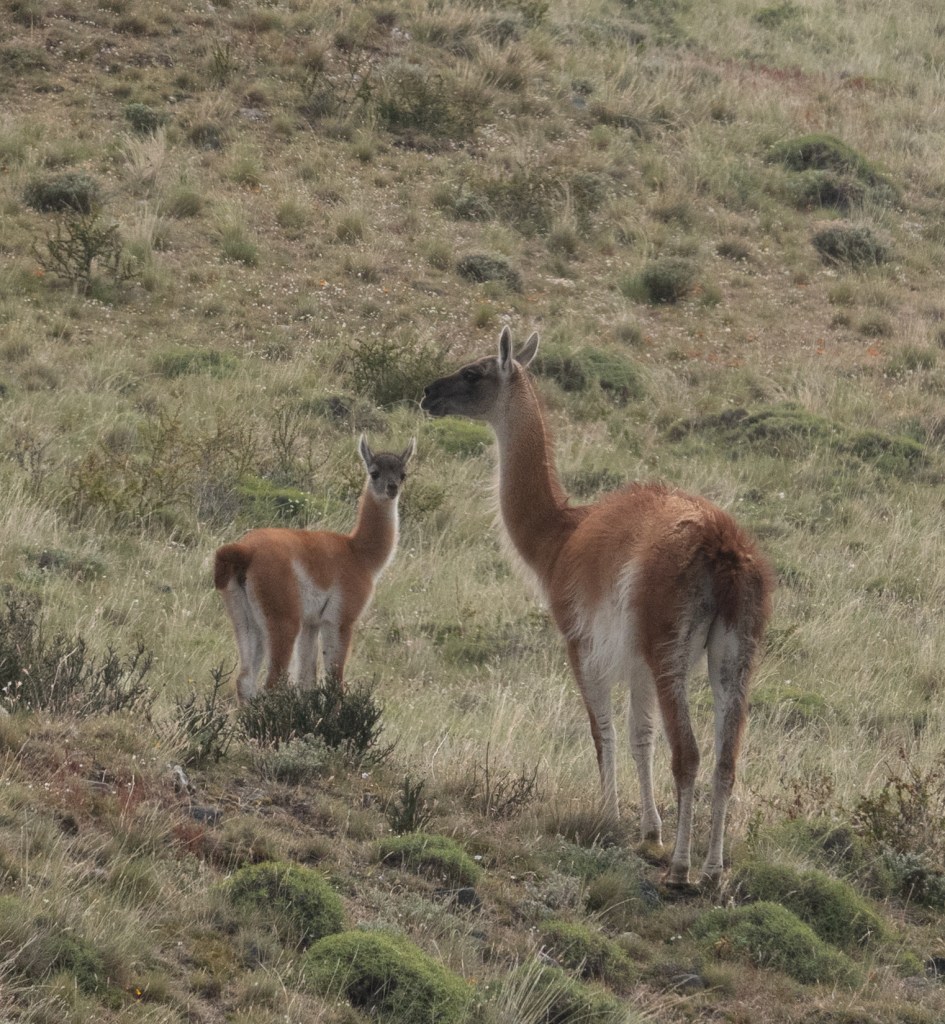
She will give birth just under a year from now. The young ones have a special name, “chulengos”, and we were there during the short season when they are born. Concentrating the births means more of them survive the pumas. The chulengos are irresistible:

Irresistible to humans, but also to pumas. The very first puma we saw had just killed a chulengo, and a puma is entirely capable of killing an adult guanaco too, as you will see in my next puma post.

But guanacos are fast, and if they notice the puma in time they will usually escape. Hence the need to stay on ridges, so that an ambush is difficult:

Their thick coat is an excellent insulator against the driving winds of the region, and it is prized as a luxury fibre, like alpaca and vicuña. Indeed, there are places where wild guanacos are sheared and released back into the wild.
In closing, I rather liked this double-bodied but triple-headed coven, because it reminded me of author Hugh Lofting’s two-headed Push-me-Pull-you llama:

“They were very shy and terribly hard to catch. [Predators…….] get most of their animals by sneaking up behind them while they are not looking. But you could not do this with the pushmi–pullyu — because no matter which way you came towards him, he was always facing you.” [The Story of Doctor Dolittle]