The quiet bays and lagoons around Chiloé are the perfect habitat for waterfowl.
Some shore birds are famous for their long-distance migrations from the sub-Arctic to southern South America. Chiloé Island is where 21,000 Hudsonian Godwits, Limosa haemastica, go outside the Alaskan summer. They comprise 99% of those estimated to occur along the Pacific coast during the boreal winter (Andres et al 2009). And there they were, in Caulín Bay near Ancud on Chiloé island, hundreds of them stoically facing the wind and doing their best to catch forty winks.
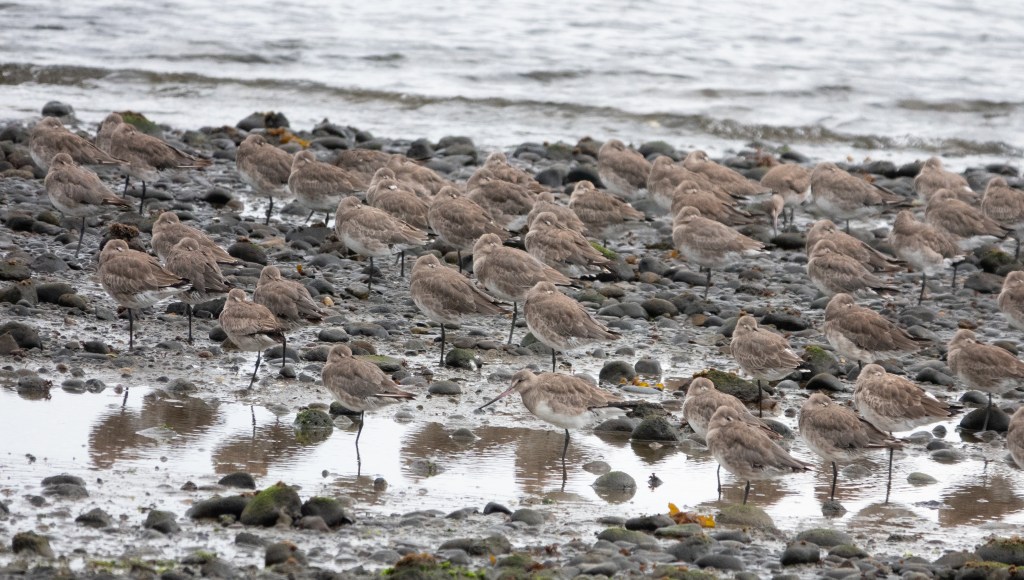
They are not flamboyant birds, at least in their non-breeding plumage, except for that long slightly upcurved bill (look at the one on lower right):

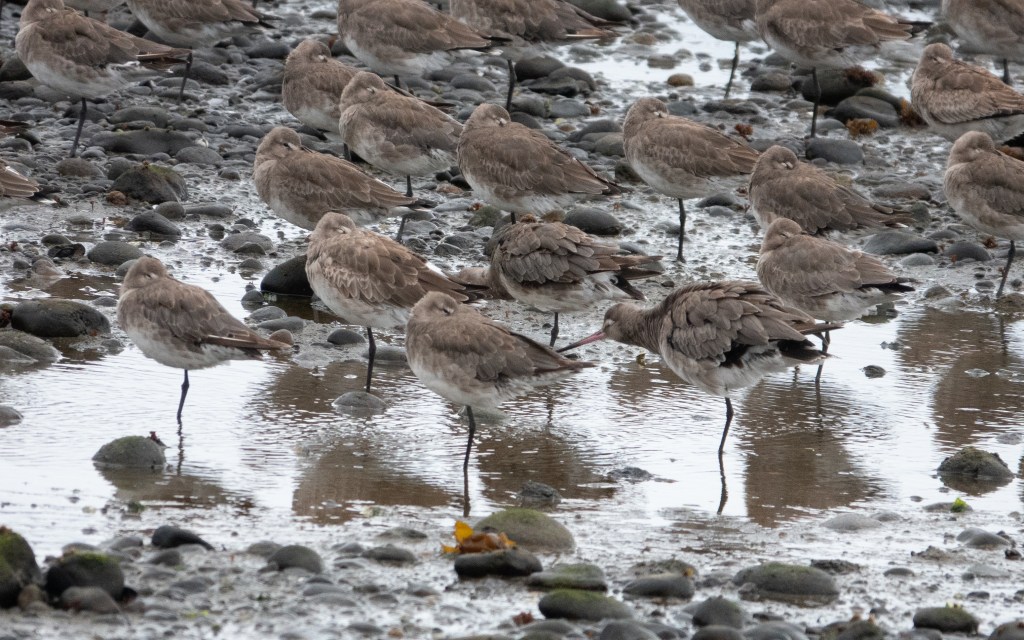
Their wings are not huge, either, making their long migrations (including stretches of as much as 8000Km over five days without stopping) even more remarkable:

They like to sleep with one foot tucked into their feathers for warmth:

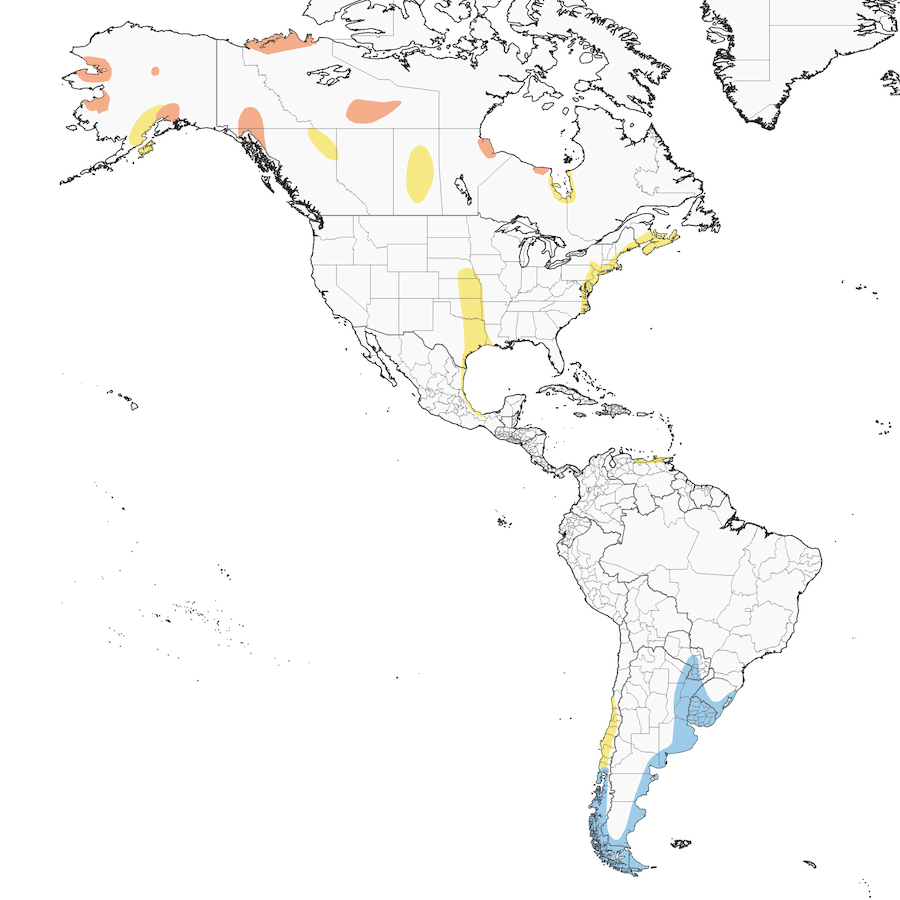
Until the 1940’s, they were considered extremely rare, and in danger of extinction, but it turned out that both their breeding grounds and their non-breeding hangouts are so remote (Alaska, Chiloé..) that we humans just hadn’t noticed them! This Birds of the World map has breeding grounds in pink, migration in yellow, and non-breeding in blue.
The world population is thought to be 50,000 to 70,000 birds, and stable. Nevertheless, in Chile their hunting or capture is, thankfully, forbidden. This website tracks their migration from Chiloé to Alaska and back: https://storymaps.arcgis.com/stories/1ebf7c221c654e6d8a06355501f40cb9
They are under pressure from increasing development in the area, but blessedly at present they seem to be stable enough. Nonetheless, one study found that even traditional artisan seaweed harvesting adversely affects the birds, (Navedo et al 2019), so there is some reason for concern that the high concentration in this one spot leaves them vulnerable in the future.
Close by to the godwits we saw these charming Chiloé Wigeon, Mareca sibilatrix, a duck found only in southern South America, with a flash of iridescent turquoise on its head. It is not endangered. Locally, it has two other splendid names: Pato Real (ie Royal) or Pato Picasso.

Finally, even more majestically, we saw a group of black-necked swans, Cygnus melancoryphus, including this family:
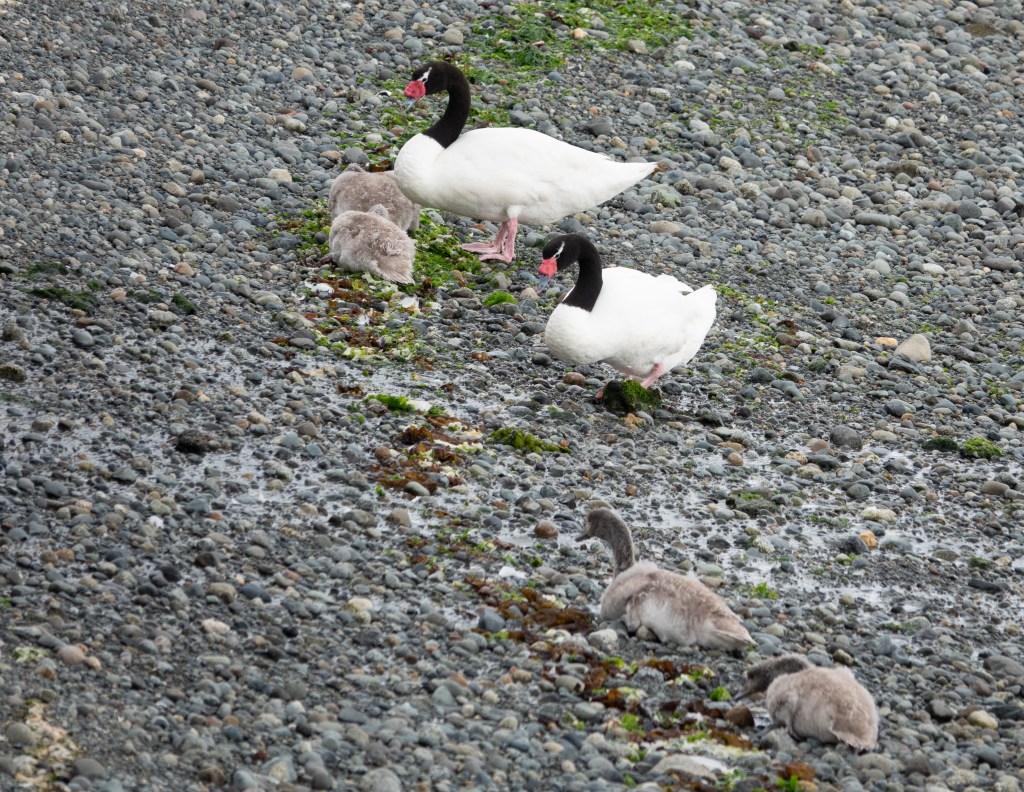
They have a huge red knob above their bill:

One had a very disconcerting neck-ring: our guide didn’t know if this was a proper scientific research-related ring, unlikely, or put there by a seriously misguided jokester.
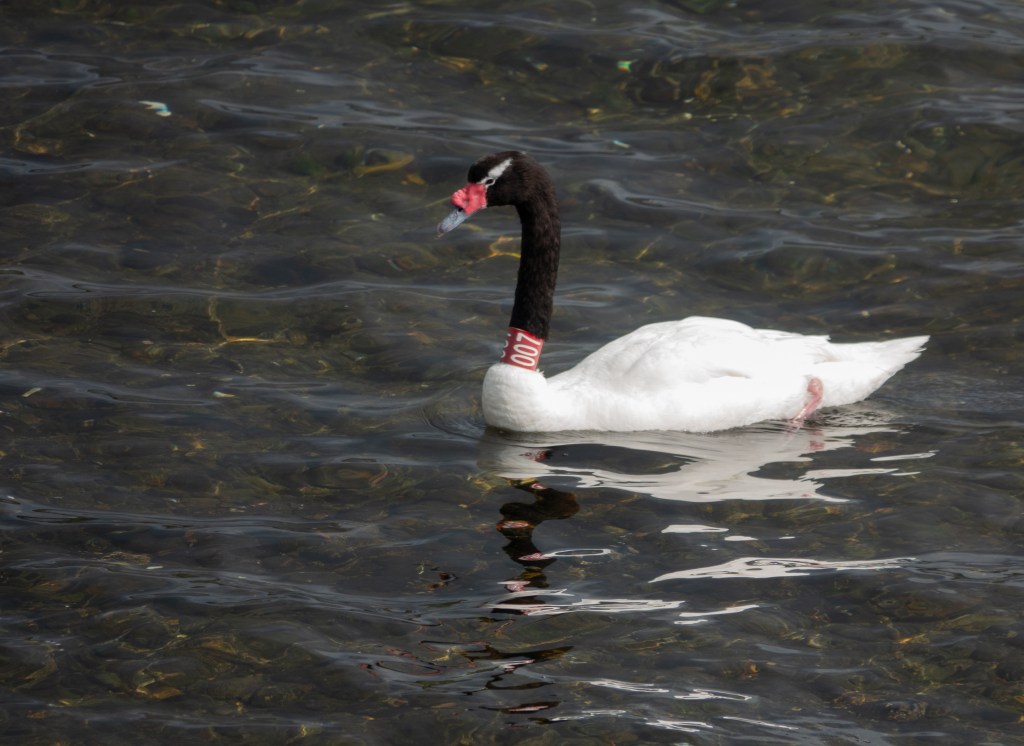
This is the only swan that breeds in the Neotropics, and the worldwide population is thought to be less than 100,000, of which around 20,000 are in Chile. Around Chiloé the population is if anything increasing, and they are not considered endangered.
PS One of my previous posts is about a different godwit, and its migration:
Breaking all records: the Bar-Tailed Godwit
 Eyes on the Wild
What an amazing adventure, to see so much wildlife! The swans with black neck feathers certainly look different.
LikeLike
Moira and George, you are certainly having fun on your birding and animal expeditions, and adding to our knowledge. Thank you!
Janice Anderson janicerobbanderson@gmail.com 620 Sand Hill Road Apt. 121 E Palo Alto, CA 94304
>
LikeLike