Taking a break from Mongolia, let’s take a look at what’s going on back in Maine
Winter is approaching, time to fill up on food, and get the house in order. A chipmunk was busily downing something delicious, a beetle, I think:
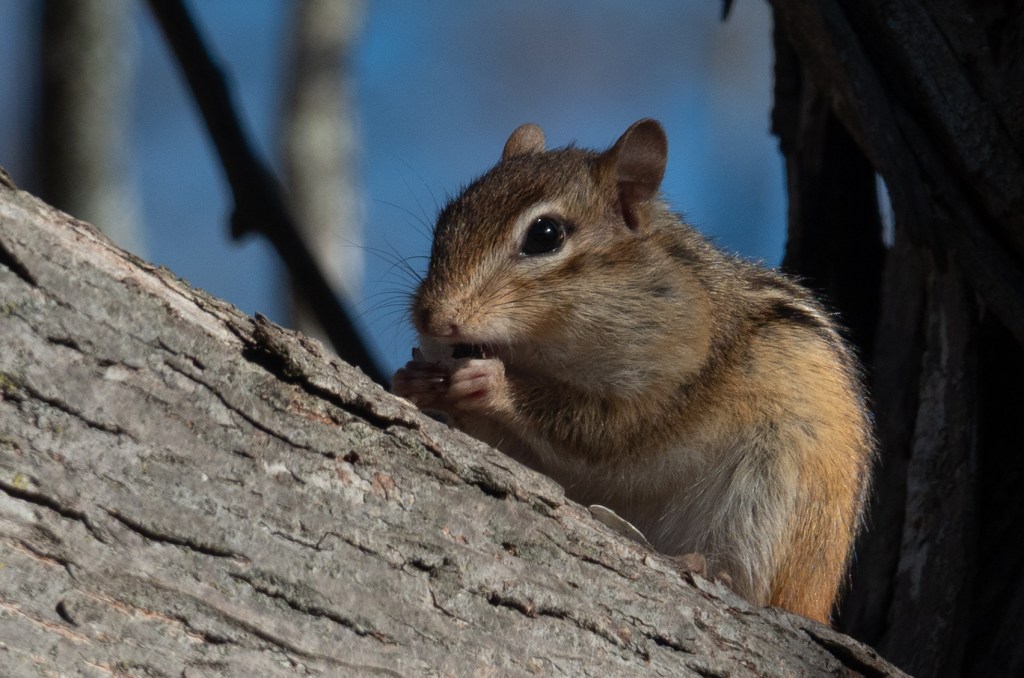
Now stored in those cheek pouches, to transport to its stash.

The Downy Woodpecker does not migrate, so it needs a winter roost. Each bird excavates its own; this one is removing hefty chunks of wood. The red head patch indicates that this one is a male:
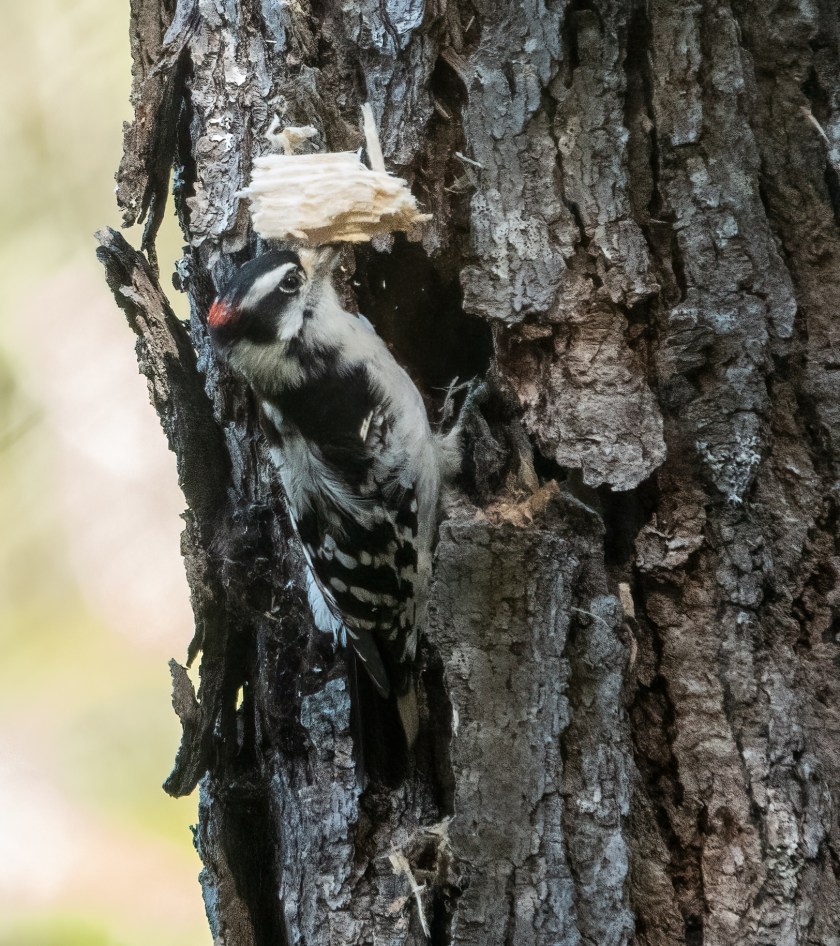
They like riparian habitat, and this is a dead tree at the edge of the beaver pond. The wood is clearly soft and punky, and he doesn’t pause to eat any grubs, he just throws the wood over his shoulder:
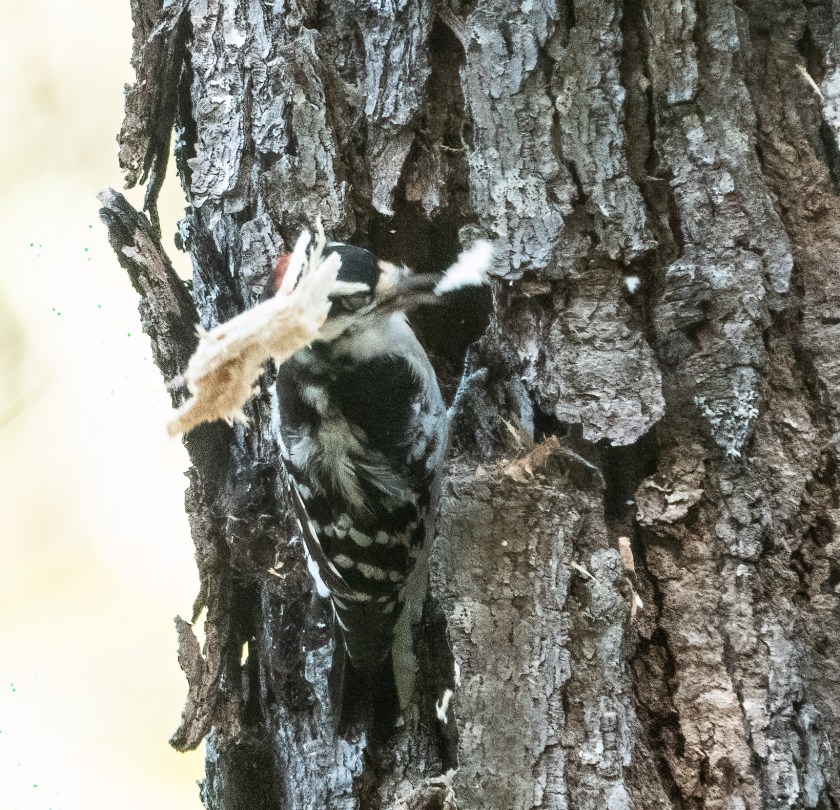
In the video below you can see that the hole is getting so large that he can almost disappear inside:
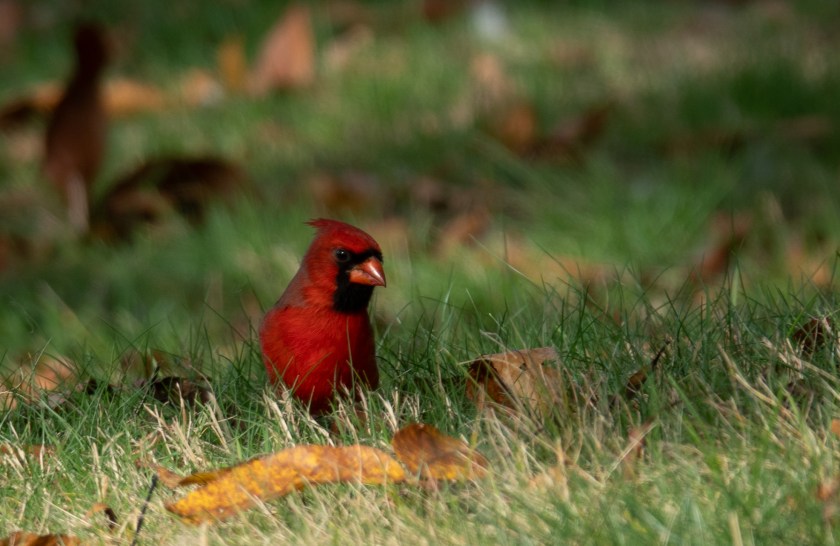
The flashy cardinal is lazy, gleaning sunflower seeds from underneath the birdfeeder:
The beaver is renovating the lodge:

I went down at first light, 6am, to try and catch him at work. Too late, though he was still swimming around:

but then he saw me, slapped his tail, and dove:

To end, some earth-bound creatures. A late Wood Frog, looking for insects in the leaf mold before heading off to hibernate.

In a lovely coincidence, we saw a relative, a Siberian Wood Frog, in Mongolia, the northernmost frog in the world, living as far as 71 degrees N.

Both survive underwater in winter, with very little oxygen, and can freeze their bodies and then defrost themselves in the spring.
And finally one of those rare late insect sightings, a Black-sided Pygmy Grasshopper:

Later this month the ground will freeze, and all will go quiet till spring. But these inhabitants of my world will still be out there, somewhere.
 Eyes on the Wild
Great video of the woodpecker making its cavity. It seems so silent and empty in the forest right now and you’re reminding us to slow down and pay attention to nature still at work.
Joe
LikeLike
…….and all the animals & insects, have evolved to have adaptations, so they can survive…we’ll look forward to seeing them in the Spring and ‘discovering’ them all over, again. Great photos!
LikeLike
How amazing and beautiful!
LikeLike
How amazing and beautiful!
LikeLike
How amazing and beautiful!
LikeLike