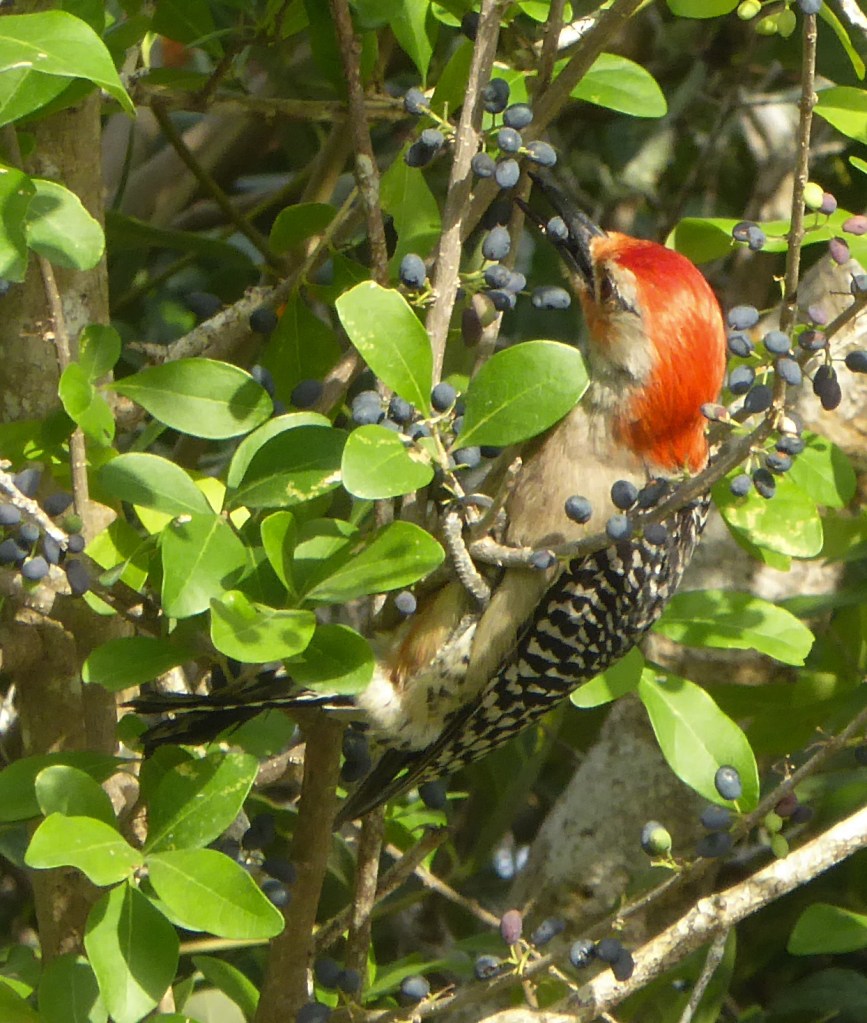
Red-bellied Woodpeckers, Melanerpes carolinus, are common in the US, but they used to be southerners. I photographed this male in Florida several years ago.
They have been moving steadily northwards at an ever-accelerating rate since the 1950’s if not before, and this expansion is closely linked to the warming winters. Here in Maine I have occasionally seen them in the warmer months, but this is the first time I have seen them in the winter, on and around my bird feeder. All the following photos were taken from mid-December 2025 to early January 2026 in Western Maine.
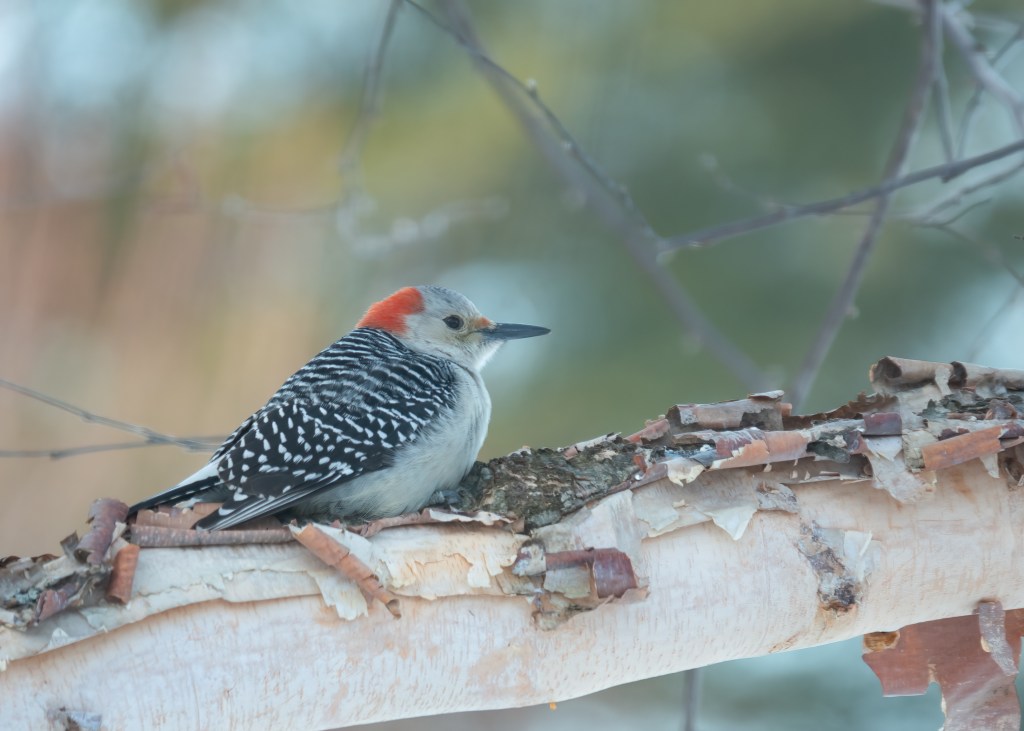
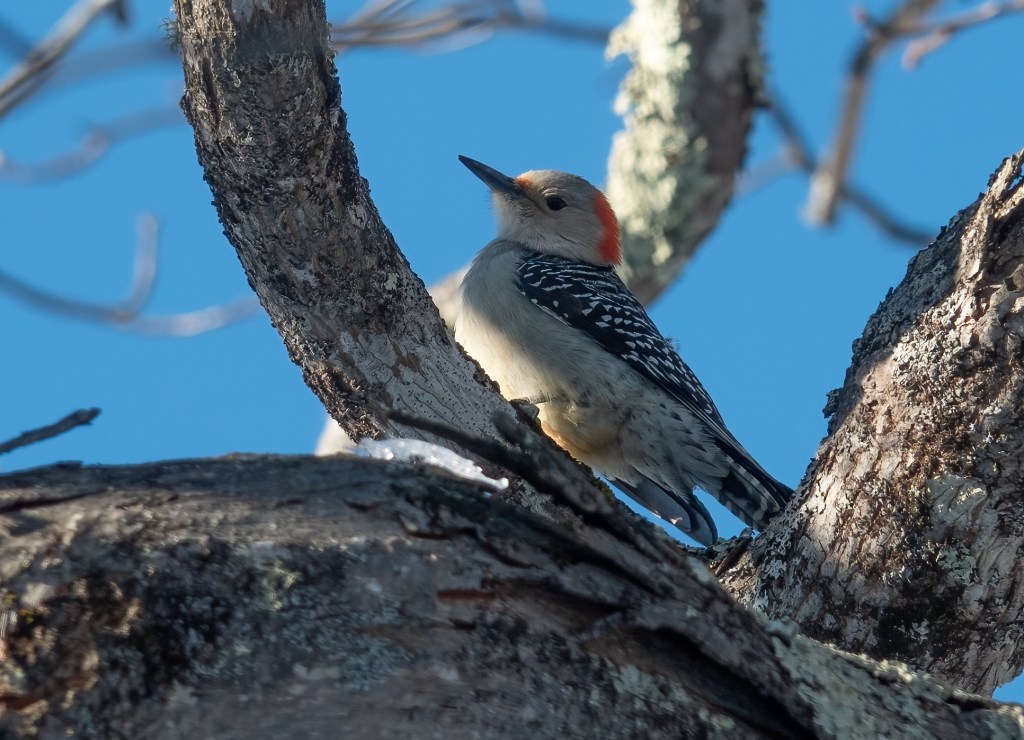
This is a female; only the back of her head is red, not the crown.
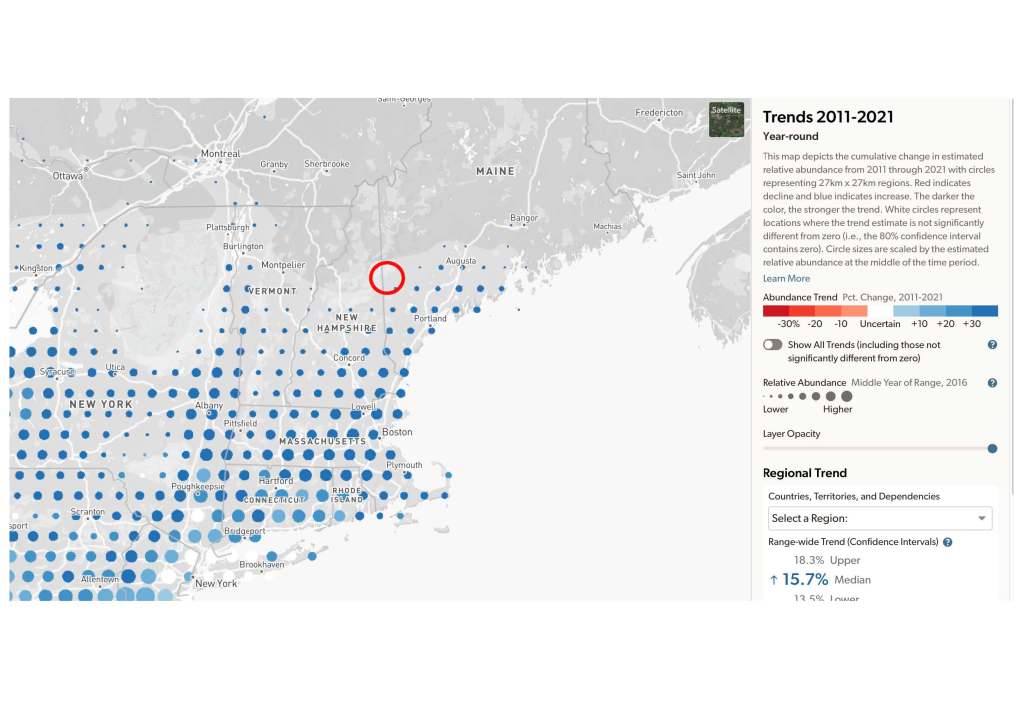
The red circle on the map below (constructed in Cornell’s eBird) is where I live. The blue dots show increased winter abundance of these woodpeckers, and as you can see we are on the northern edge of the area where they are now found.
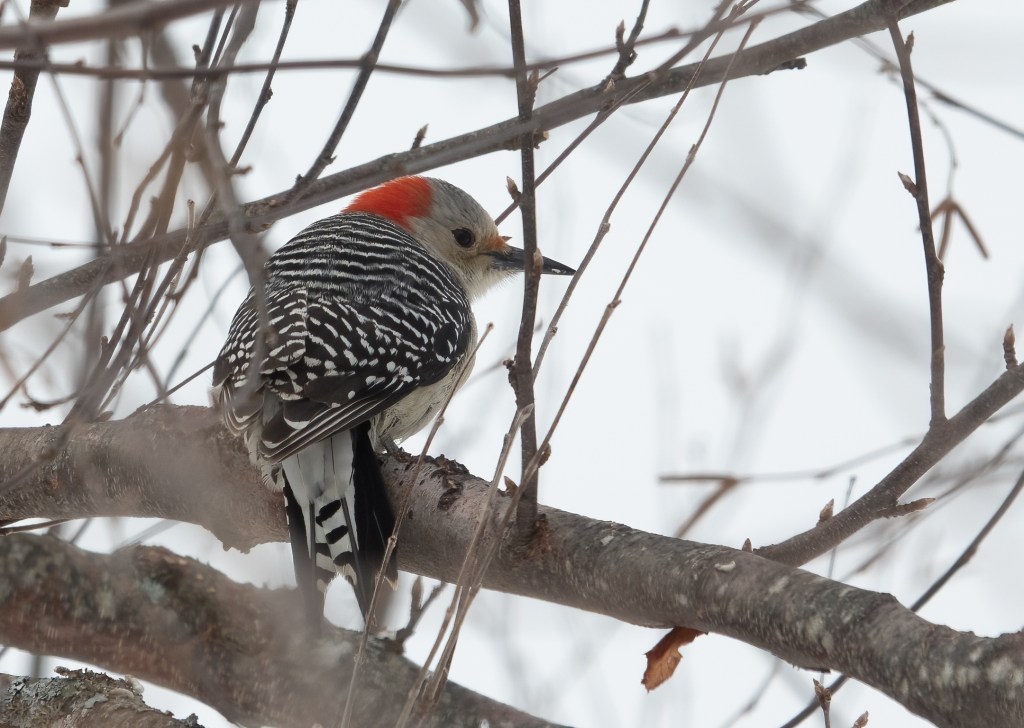
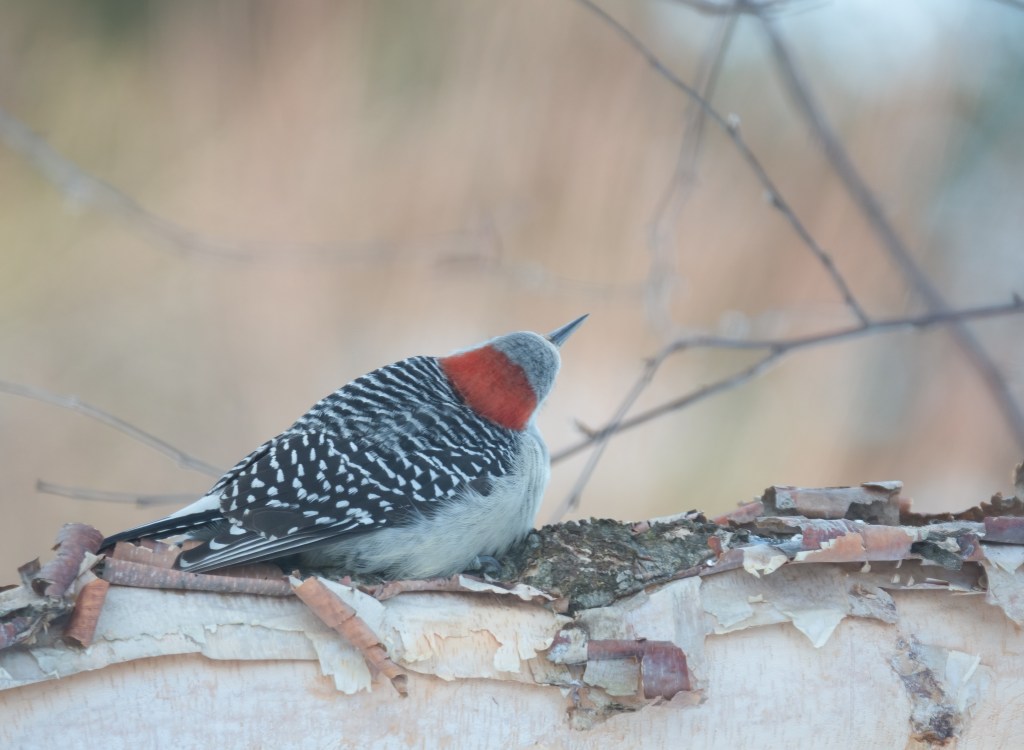
They are very misleadingly named, since their belly is mostly white, with just a faint reddish wash on the lower belly. You can just see it here:
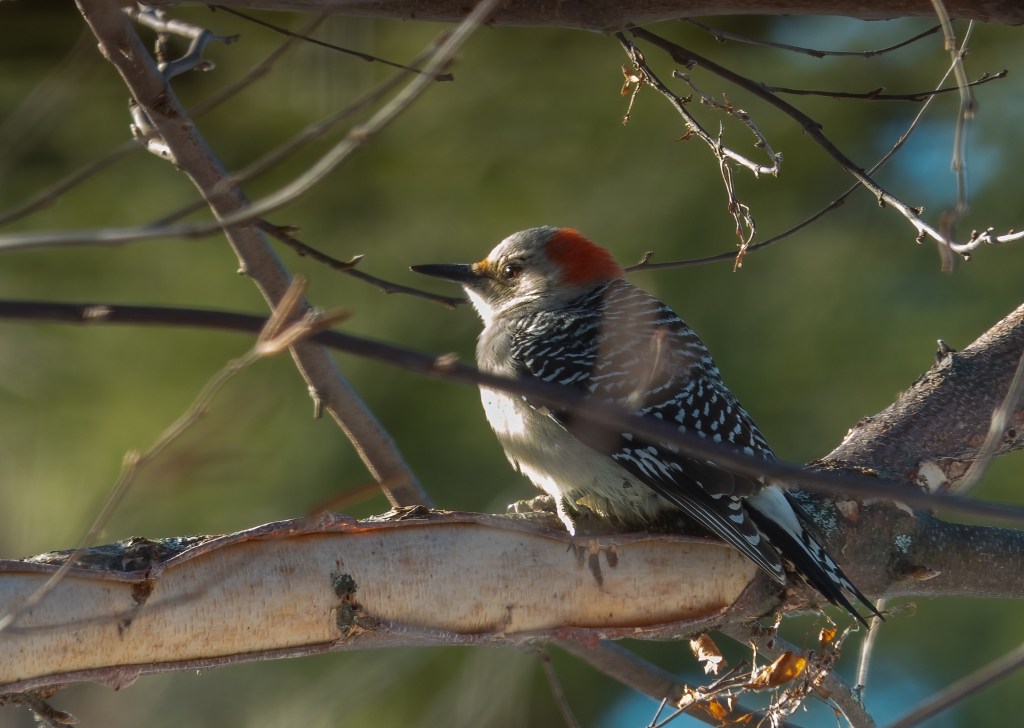
They’re charming birds, about 24cm long, with beautiful plumage:
Unlike most woodpeckers they rarely excavate trees to find insects. Instead, they are opportunistic generalists, eating fruit (as in the first photo of this post), insects, nuts, and seeds, (and occasionally lizards!) and willing to come to feeders. This varied diet makes them very adaptable, and helps them spread into new habitats.

This one was hopping around high in the hickory tree:
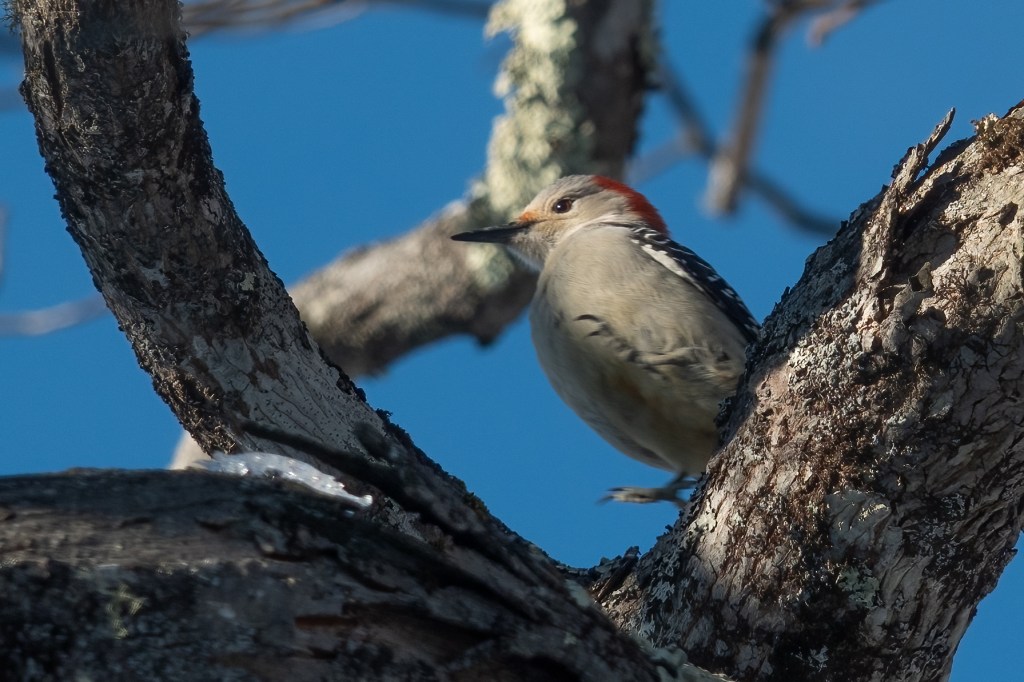
I’m happy to welcome a fourth woodpecker to my year-round ecosystem., alongside Pileated Woodpeckers, Hairy Woodpeckers, and Downy Woodpeckers!
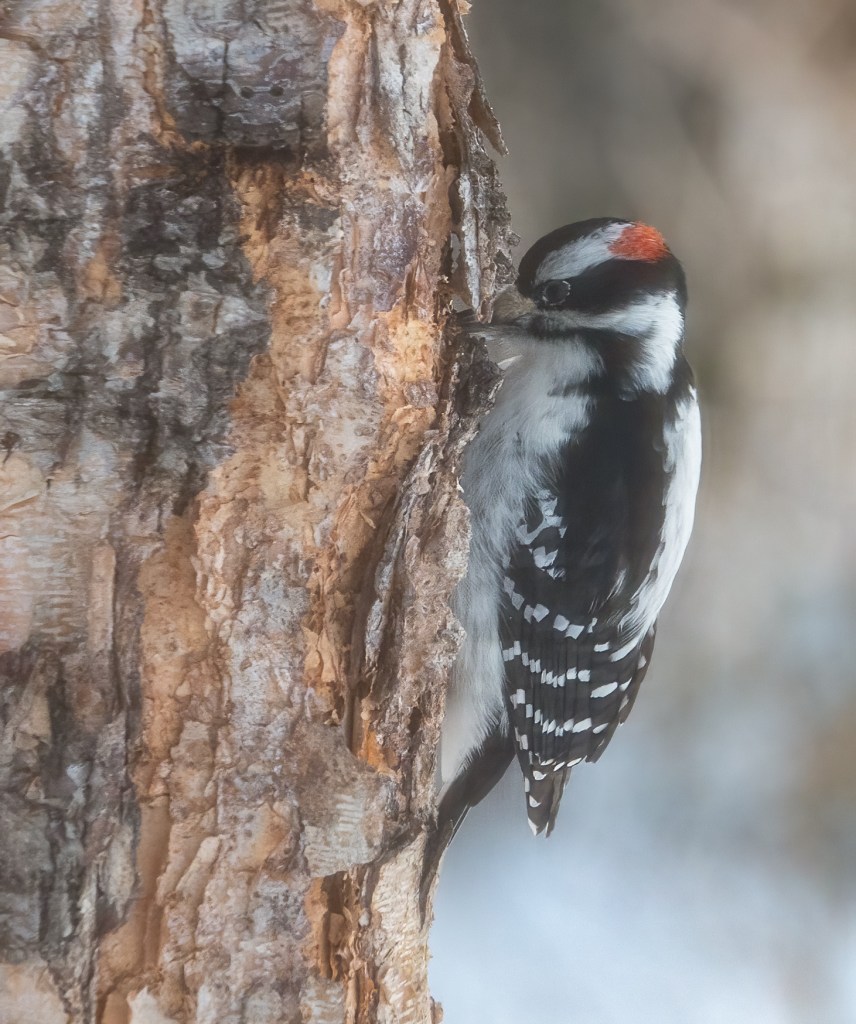
PS Zuckerberg et al (2011) link the range expansion to the rise in average minimum temperature during the core winter season.
*The bad pun in my title is with apologies to Leadbelly.
 Eyes on the Wild
Red-bellied are one of my favorite birds, we have them year round & often, here. I love the kissing sound they make. I’m thrilled with all the Blue birds. We had them last year, starting Jan. 11th, this year: Jan 5th…this morning there were 5 on the feeder at once. Saw a Pileated once, last year…they are impressive!
LikeLike