The Giant that Eats Ants: I

I’ve just returned from the South Pantanal in Brazil, my second visit. My first visit was ten years ago, to the North Pantanal, long before I had a blog. Both trips were quite magical, and I’ll show you some of what I saw.

I’m starting with the animal I most wanted to see on this trip, because it is the one I didn’t see last time.. the Giant Anteater, Myrmecophaga tridactyla. For me it has almost mythical status. As a child, I read and re-read Gerald Durrell’s 1954 book Three Singles to Adventure, in which he chases a giant anteater across the pampas, trying to lasso it. So now I am happy.

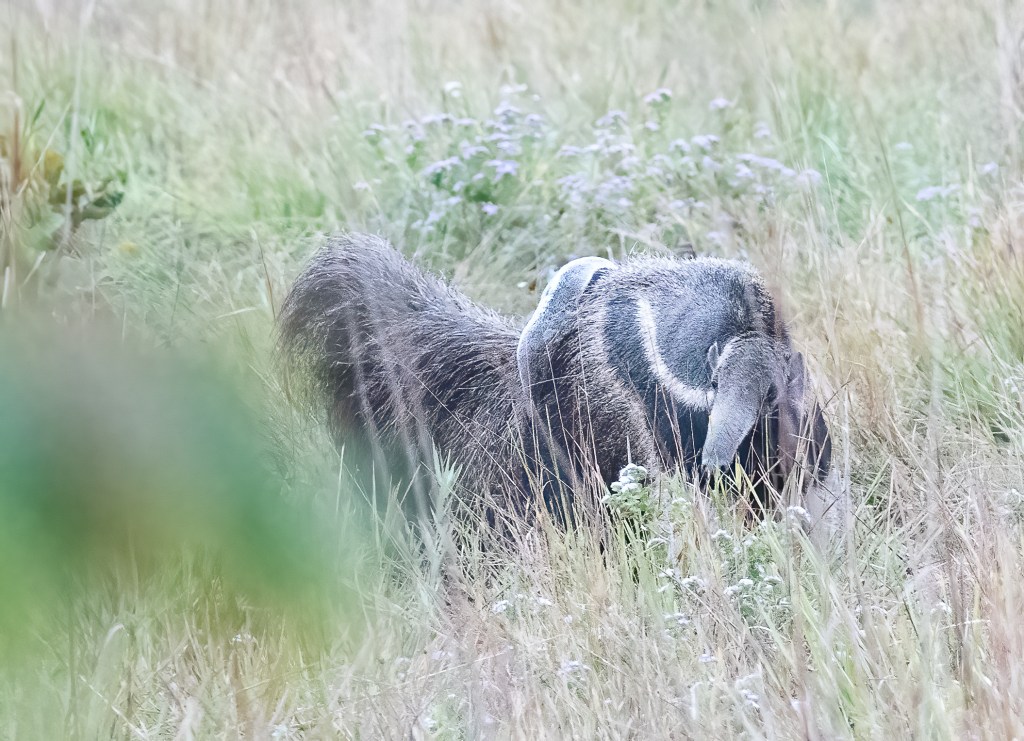
These animals are huge, up to 8 feet long and 100lbs. They are 1/3 head, 1/3 body, and 1/3 tail.

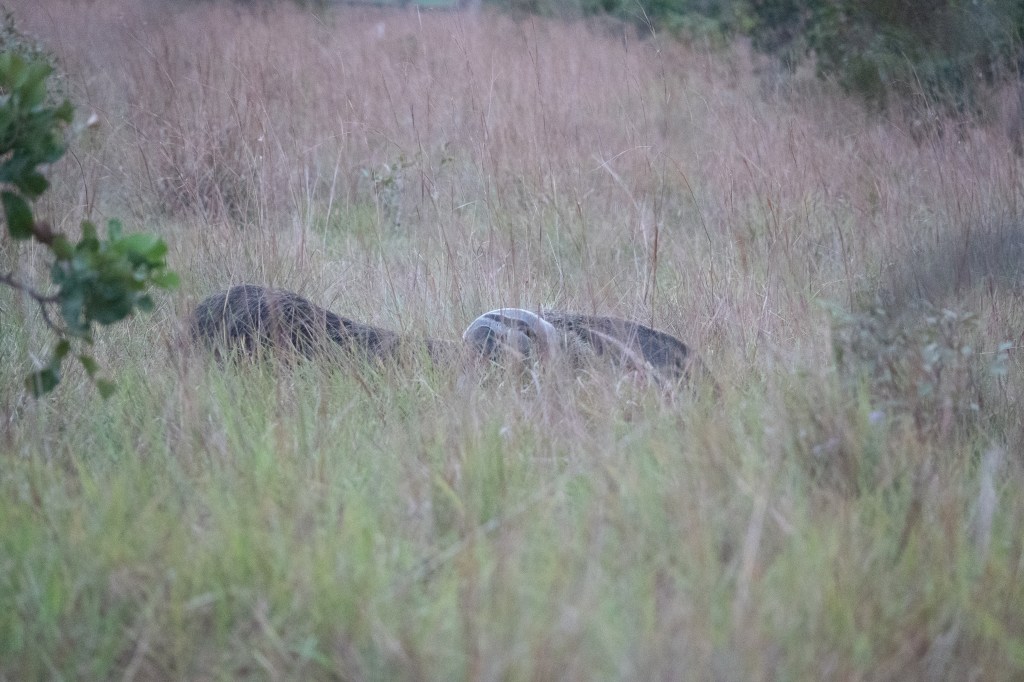
As you can see, this is not exactly wilderness. The Pantanal has for 200 years had vast cattle ranches, but some, including Baia das Pedras, are now devoting much of their effort to conservation. The idea is to make a mixed model viable, cows and wildlife too. And since cows and deer don’t eat ants (or anteaters) , and anteaters don’t eat cows and can usually find their way through the local fences, it works. (Jaguars are more complicated, for another day.) We saw this one from very far off, and to reach it we walked through still-flooded fields in knee deep water in our hiking boots. It was worth every squelching step.

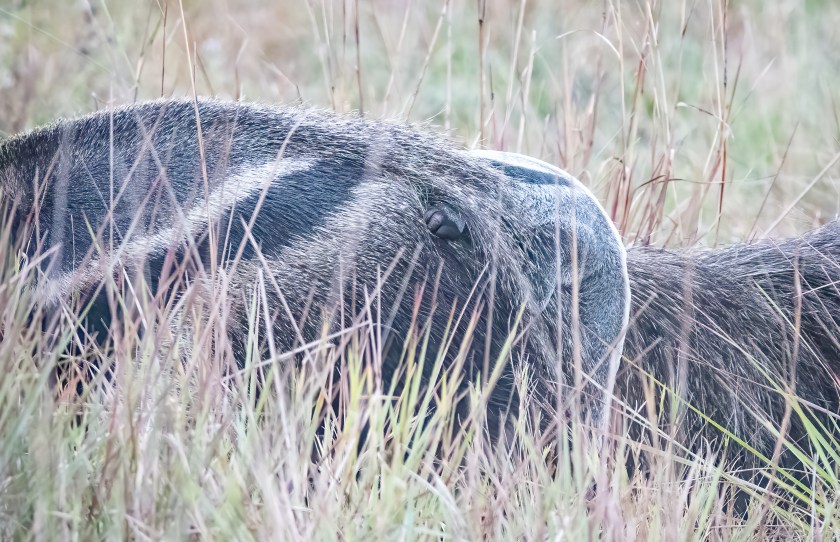
Here is a close up of the remarkable head, which houses a 2-foot long tongue, but no teeth.

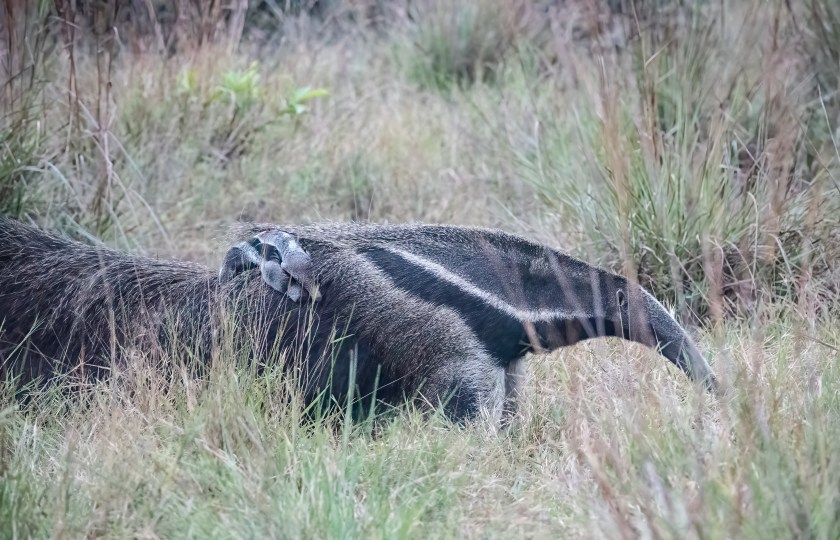
They have three huge claws on the front foot, for ripping apart termite mounds. They are very hard to see in the long grass, but you can glimpse them here if you look carefully, at bottom right. .

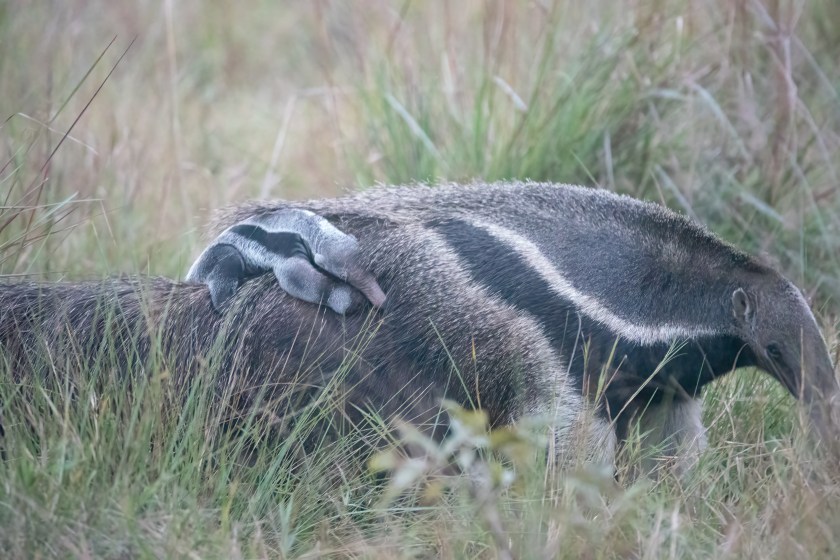
You have probably also noticed that when you look at one of these creatures it is remarkably hard to tell what you are looking AT. Their odd shape, coupled with the stripes, creates a very confusing image. They emerge into the grasslands from concealment in small above-water hummocks of trees and bromeliads :

and forage for ants.

They conduct commando raids: fast in, and fast out, before the soldier ants counter-attack. If they do, they use their front feet to swipe them off:

The best is yet to come, but with great restraint I will wait for my next blog, and so must you.

PS They are related to the Three-toed Sloth, something else I have never seen..

All puffed up

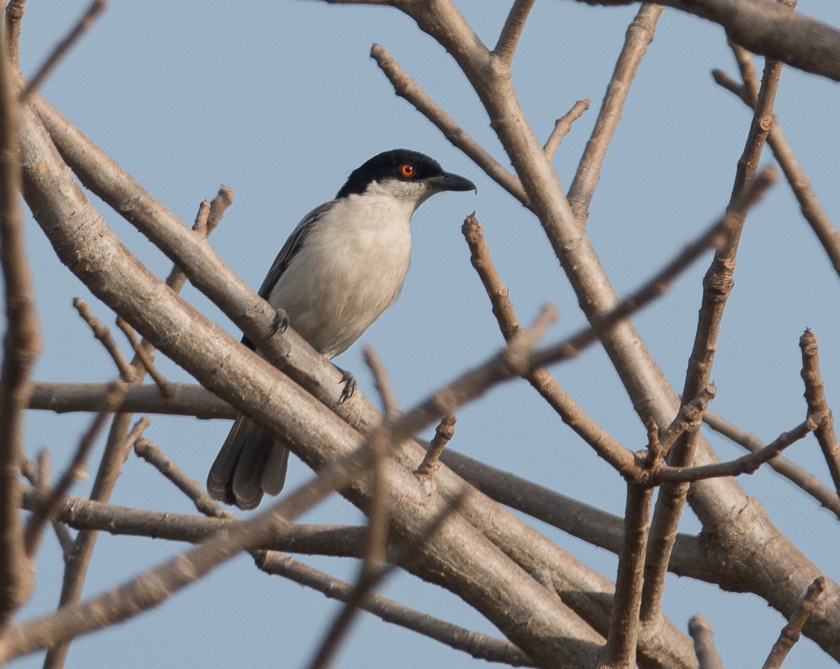
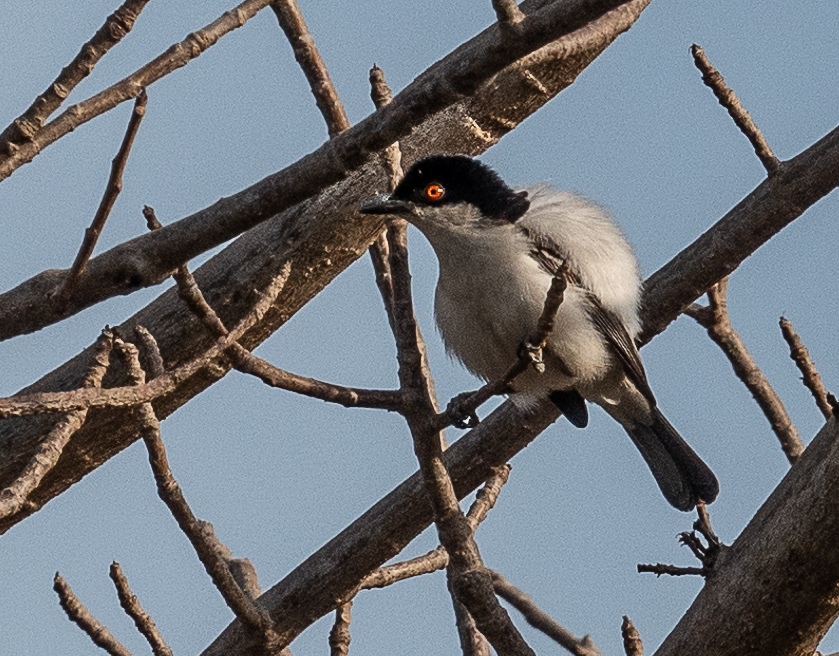
A smart but fairly ordinary bush shrike, the Northern Puffback’s name gives away its claim to fame. Its scientific name is Dryoscopus gambensis, meaning ‘tree-watcher’, and this one lives up to its name:

It forages stealthily for insects, mostly in the canopy, but sometimes coming down to the top of tall bushes. Birds of the World describes it as “retiring, secretive and easily overlooked”.

But when it is courting, watch how the male transforms himself:

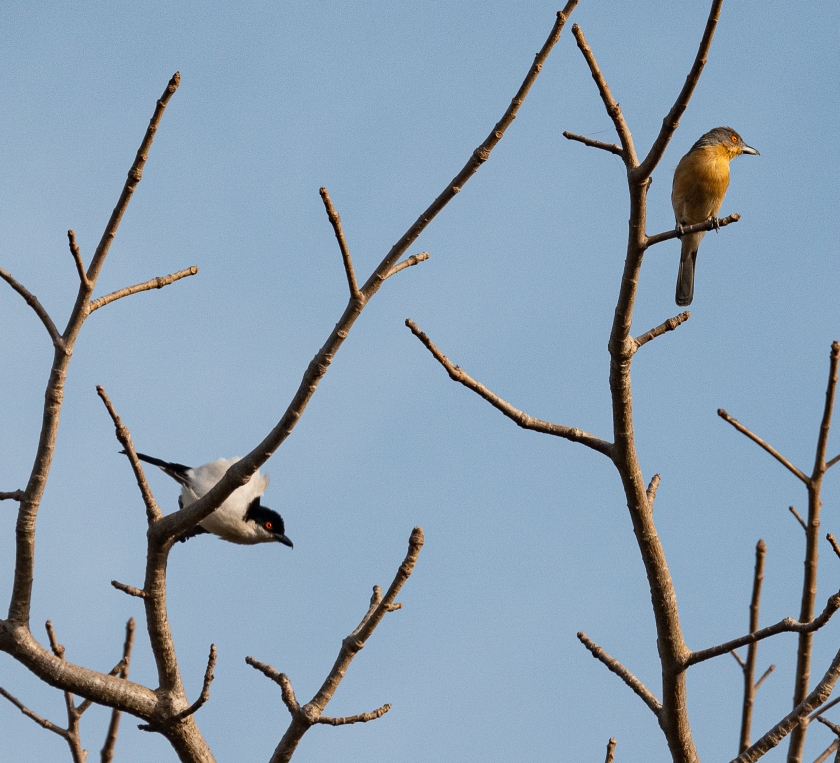
He does this by puffing out his white back and rump feathers to cover the darker back and base of his wings, till he looks like a fluffy pompom. In the next photo the bird at top right is the female. She looks entirely different, but she too has a bright orangey-red eye:

.

Northern Puffbacks range across the tropical woodlands of central Africa north of the equator, and are not currently threatened, but habitat loss is a worry, and in some countries they are apparently killed for traditional medicine.

The Beautiful Sunbird

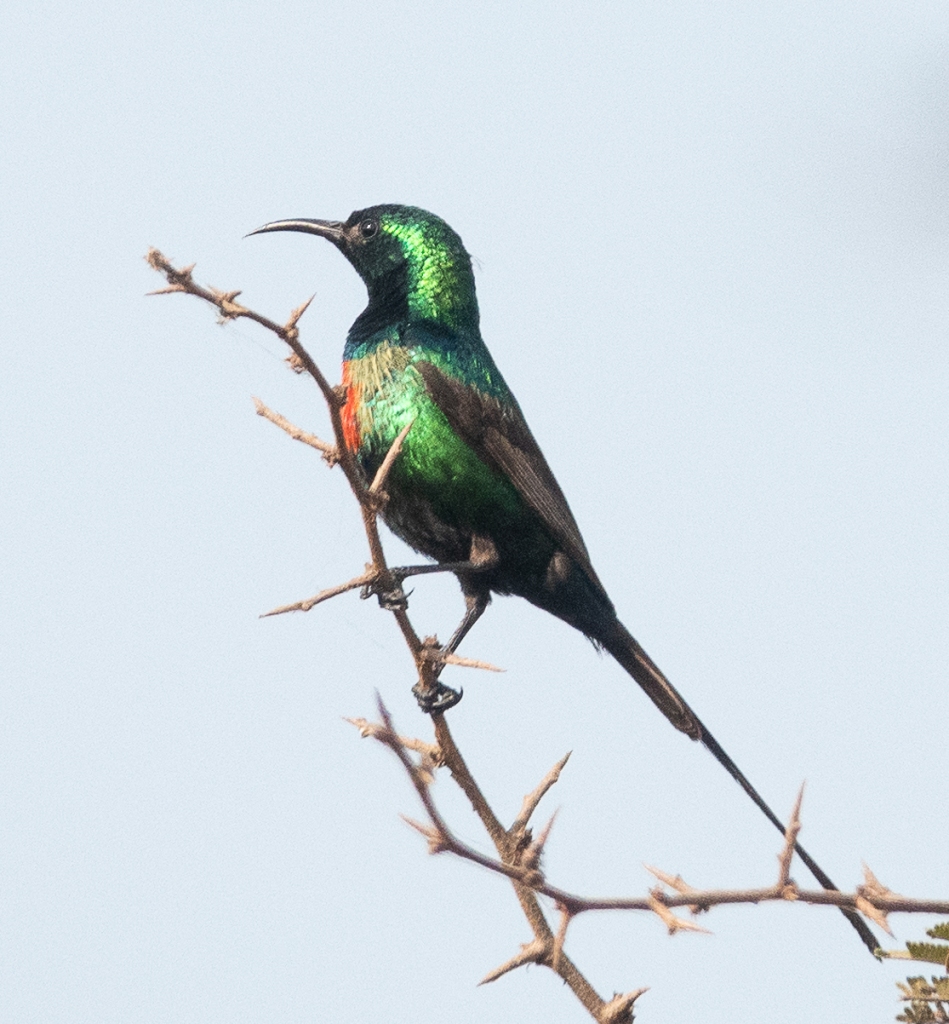
Sunbirds are small birds with long curved bills that feed on nectar and flowers. The male Beautiful Sunbird, Cinnyris pulchellus, is about 10cm (4in) long with another 5cm (2in) of tail and weighs up to 10g; here he is in his iridescent breeding plumage:

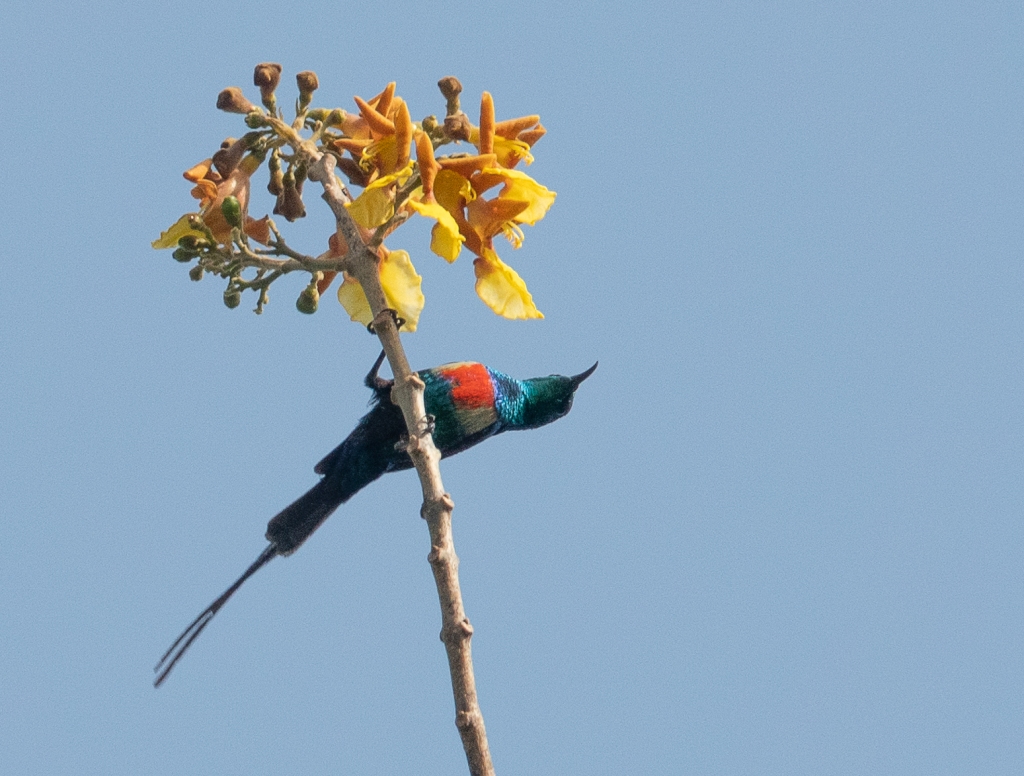
When he turns, you can see his chest colors (sorry about the blurry photo):

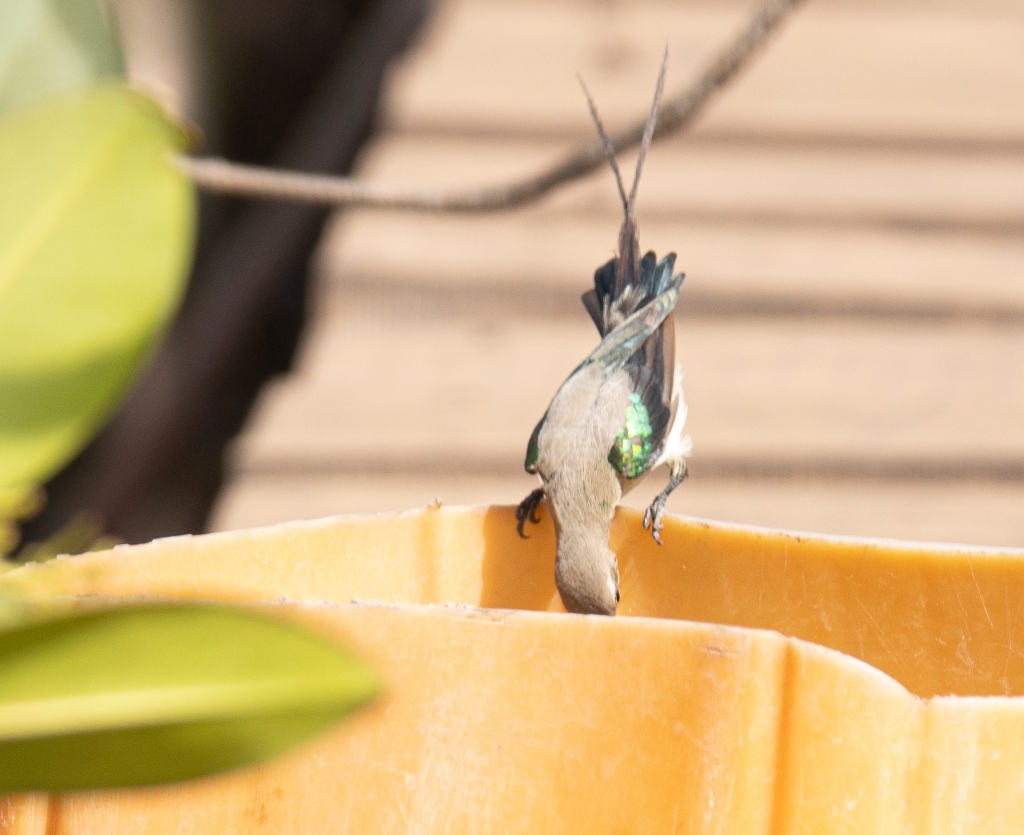
His non-breeding (eclipse) plumage is much more subdued; this one is drinking from a container in the grounds of our lodge.

In The Gambia March is the end of the breeding season, so the one above has shed his glad rags.

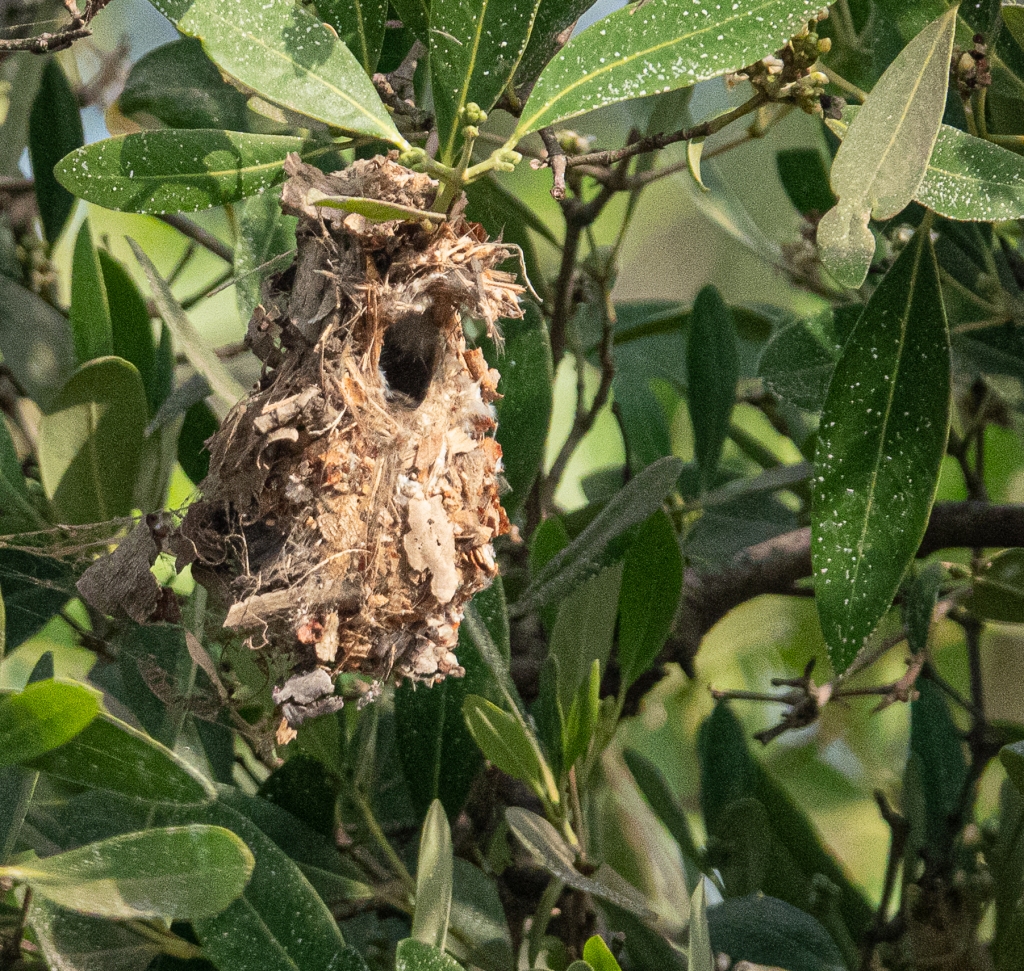
They build a nest out of almost any available vegetation or soft substance, including snakeskins, cobwebs, and lichens. Some nests, including this one, have a charming roofed porch over the entrance:

This nest seems to be made mostly of grass and bark, with downy feathers escaping from the entrance. They lay only 1-2 eggs. It was suspended from a tree about 3m above the ground.

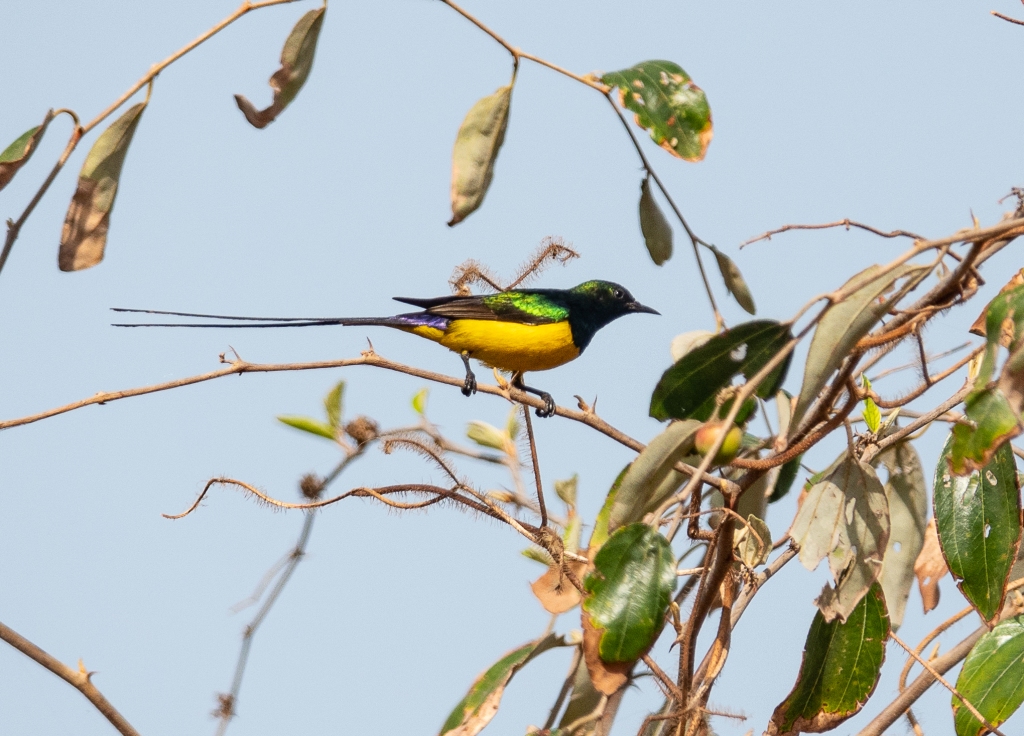
I end with a photo of a male Pygmy Sunbird, Hedydipna platura, in his breeding plumage. He is smaller than the Beautiful Sunbird, weighing in at a mere 7gm. But his long tail streamers and purple rump compensate for his diminutive stature.

Mating Ebony Jewelwings

[I’m back in Maine, briefly, then off to the Pantanal in Brazil for a bit. One or two more Gambian posts will reach you while I’m gone.]

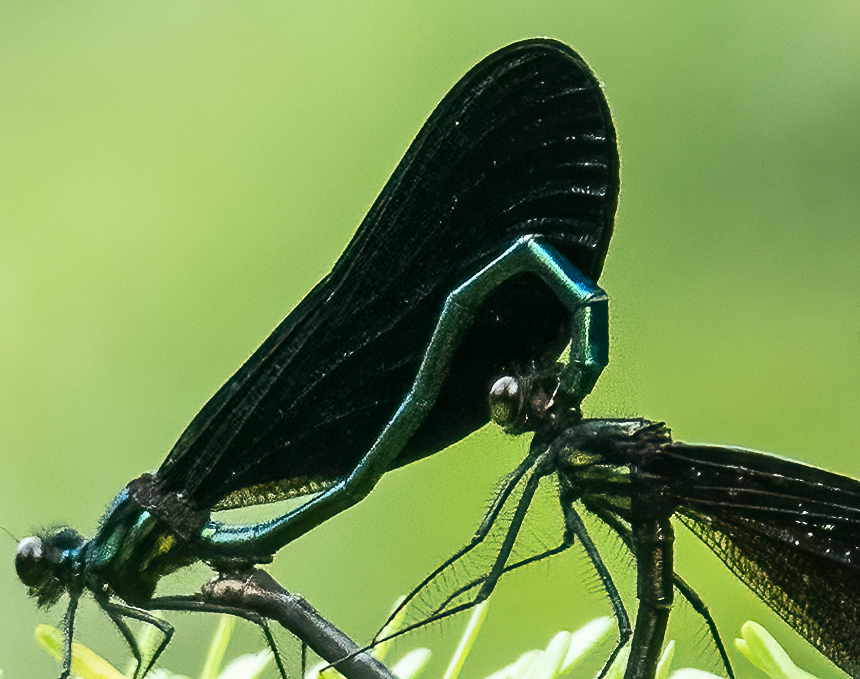
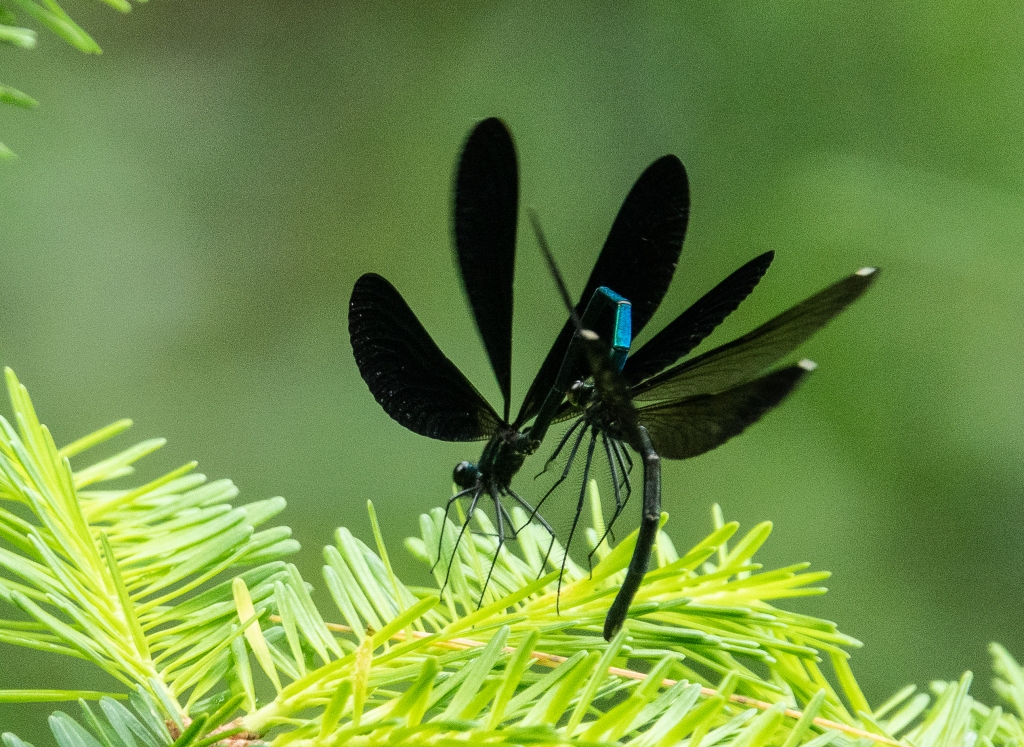
For me these are the most magical of all damselflies. Jet black, with iridescent bodies, the females have contrasting pure white wingtips. They flit around close to my ponds and streams.

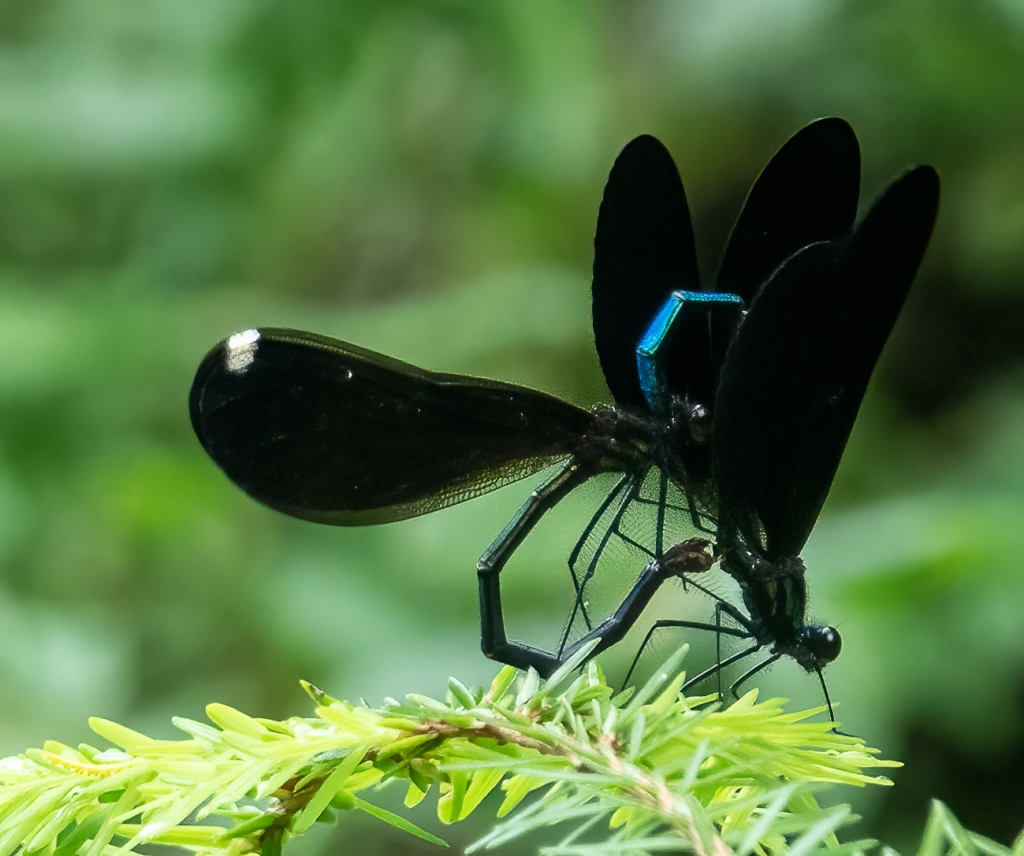
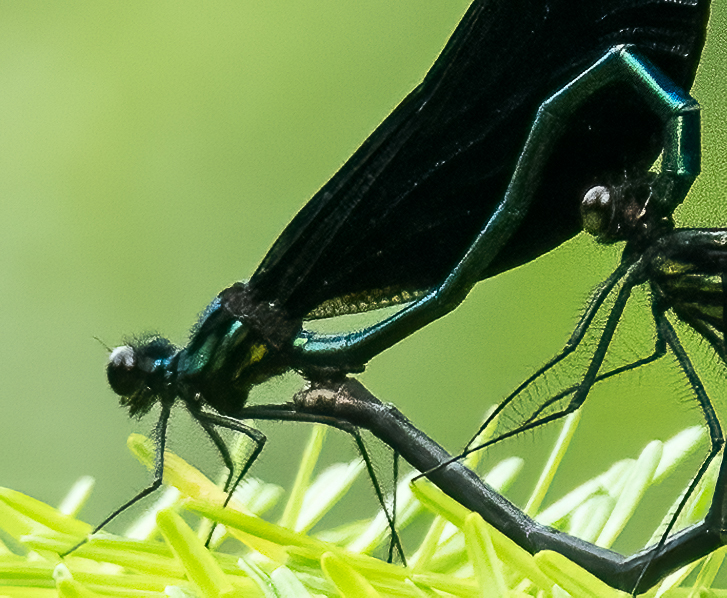
At the moment they’re mating. It is a complicated process. The male on the left uses his abdomen to clasp the poor female by the back of her neck.

If the female is not keen, she may struggle:

maybe forcefully

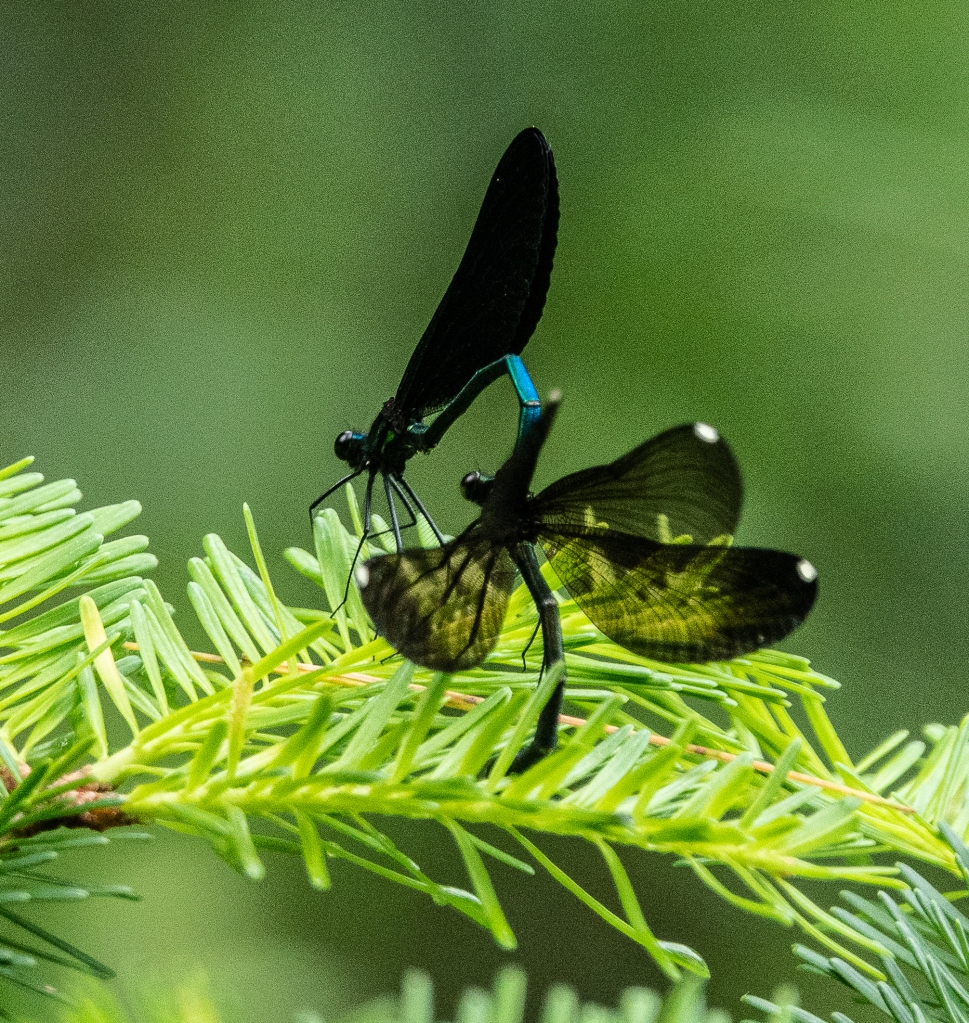
but if she likes him, she lifts her abdomen up receptively:

and they mate.

His sperm is actually produced at tip of his long thin abdomen, and he transfers the sperm to his penis on his second abdominal segment. So that is where the female must place her genitals, to receive his sperm. She is up to the challenge.

Mercifully even the Kama Sutra does not demand such contortions of us humans.

PS The male can also use his penis to scoop out any sperm left by earlier males!

Lute players, cobblers, fisherman, oyster catchers and wood gatherers

I know this is a nature blog, but the birds and animals live in a country where humans have lived for thousands of years too, and I thought that some of you might be interested to see glimpses of Gambian life and culture. We were asked not to photograph people without their permission, so I do not have any street scenes, just a few odds and ends.

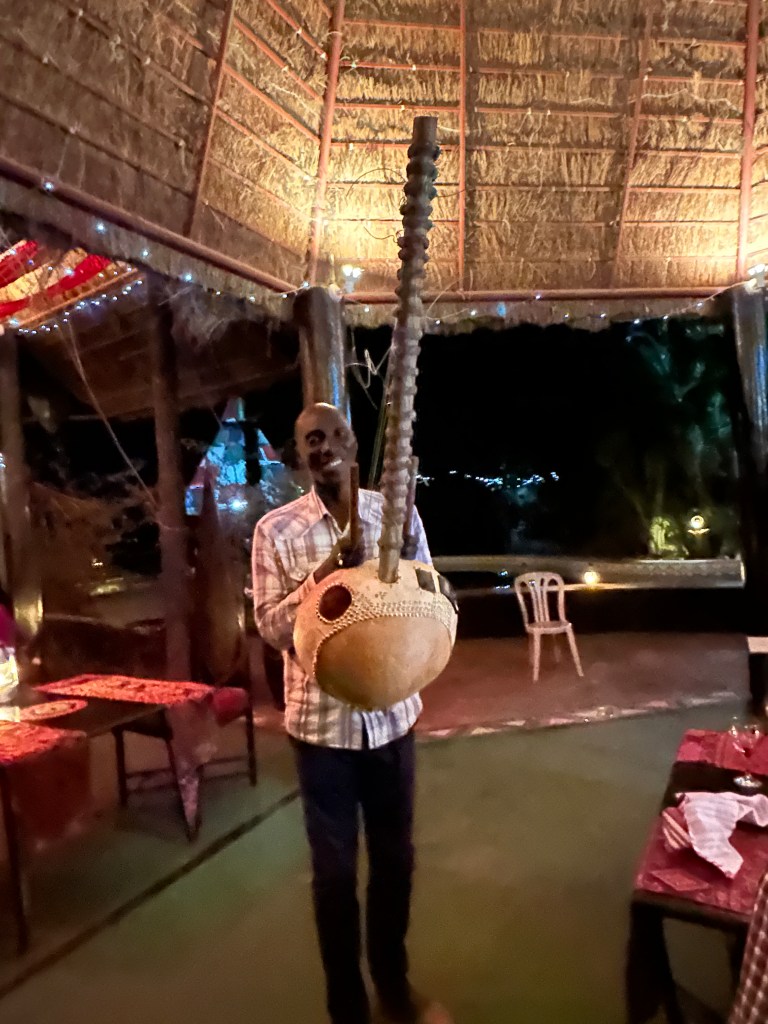
This is Omar Kuyateh, who played for us during dinner on two evenings. His instrument is called a kora and it has 21 strings. It is considered a “plucked harp-lute”. Kora players come from traditional jali familes, jali being the Mandinka name for a griot, who passes on oral traditions. Mr Kutayeh made it himself, out of a gourd and a calfskin. Here is one of his songs.

One day, we went to Tanji fish market. En route, the sole of my boot detached itself from the uppers, and my only other shoes were Tevas. So AJ our guide took me to the market, where Muhammed first glued the sole back on, then meticulously sewed it on neatly all the way round with strong black thread and a lethal-looking needle.

He charged me two dollars. It took about 15 minutes, and is as good as new.

At the fish market, there are no jetties or docks; the boats pull in and people wade out to offload the fish:

The boats are painted and named, and they have prows with wooden totems (right rear), and flags (the boat on the left supports the Spanish soccer team Barca!). When they are moored, the gulls and turnstones arrive:

And on shore, boats are pulled up for maintenance:

The fish market wastes nothing. These meticulously filed fish are being dried, and many had been collected dead from the foreshore.

The garbage along the seashore was horrendous, and I do not know if this is local to the fish market, or widespread. The Common Sandpipers below do not seem to care about the garbage festooning the sand behind them.

Amongst the mangrove swamps there are oysters, and these are gathered and cooked for sale (they are not eaten raw). The women collect them from tiny skiffs, many if which are true dugout canoes:

The white heaps on the left are oyster shells. Then, in the evening, from my floating lodge :

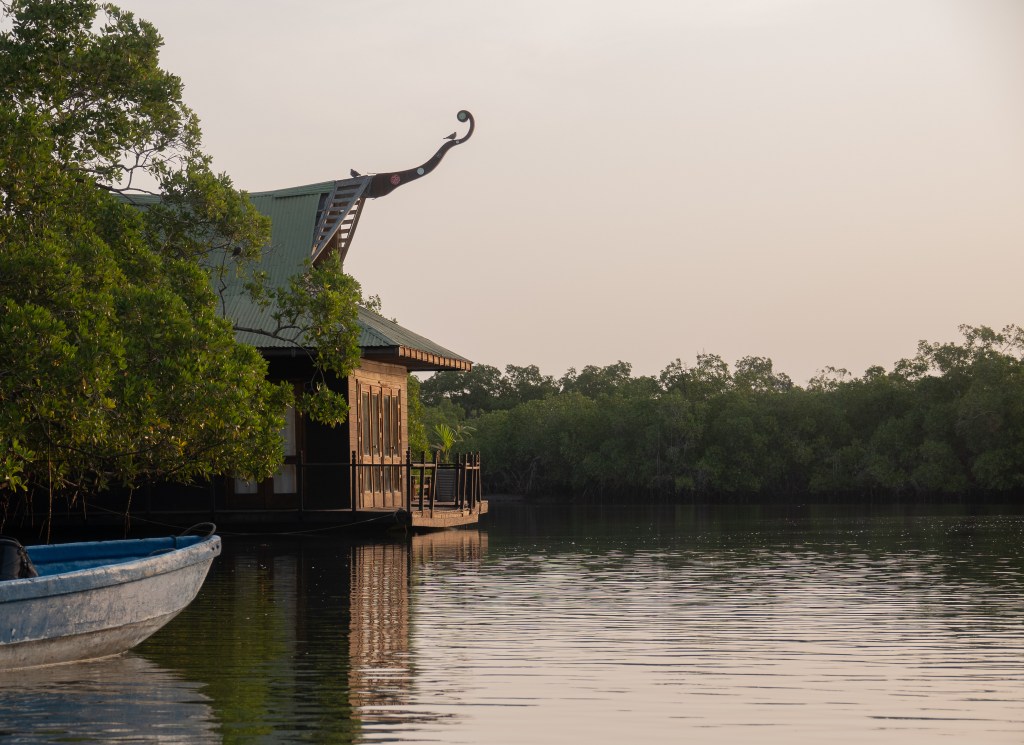
I saw them paddling back with canoes full of firewood. They are allowed to collect fallen branches in the national park:

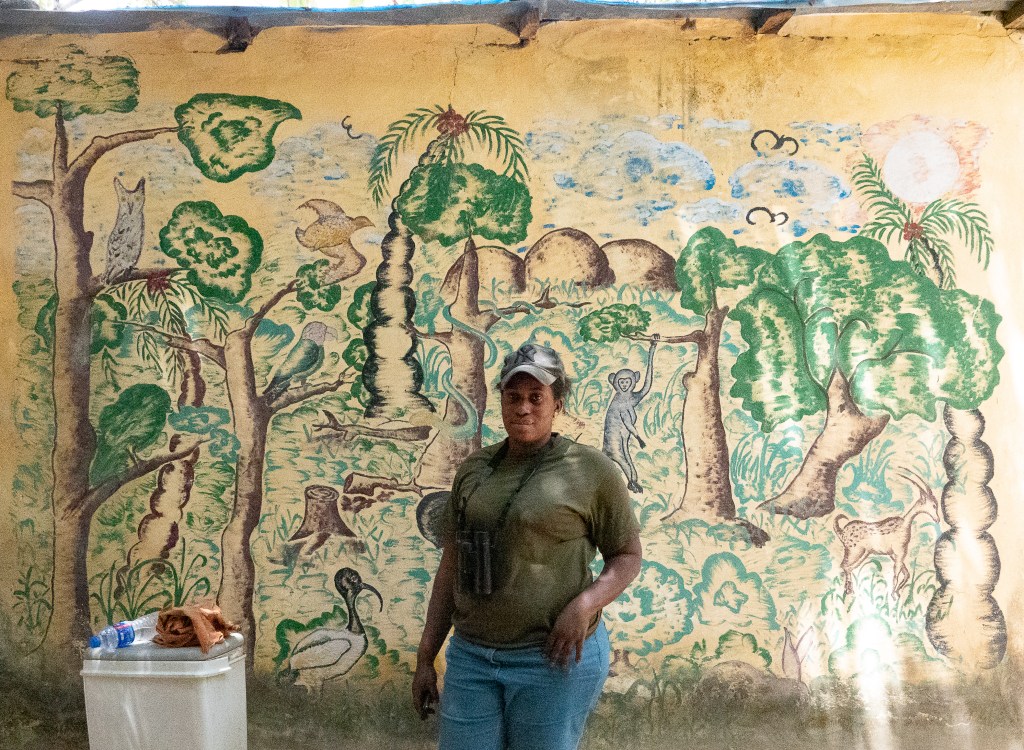
Our guides have good jobs, and they’re usually men. We had one woman, Mariana, in Bonto forest.

She told me that she was 26, that her father had died, and she was the sole support of her mother and three younger siblings. She was a terrific guide.

This is not an easy life, and you become very aware of how extraordinarily privileged you are to fly thousands of miles just to see birds.

Baboon babies

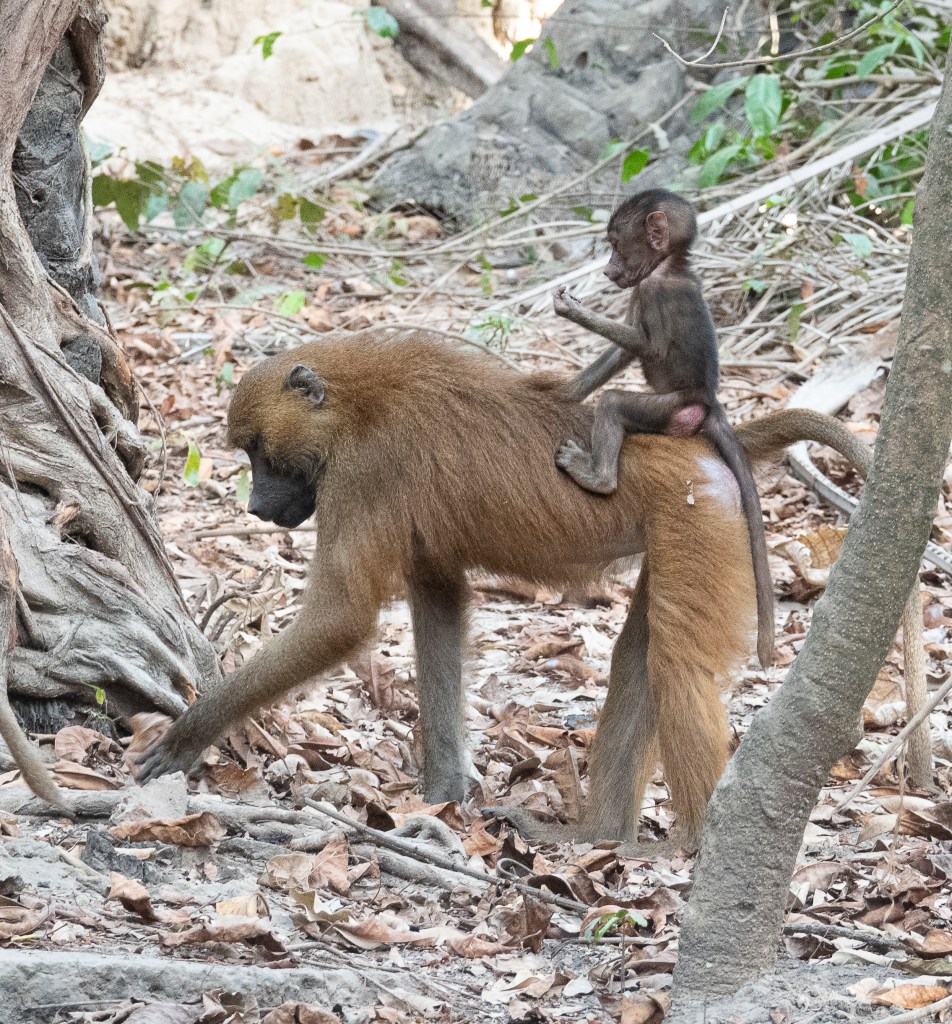
One afternoon in The Gambia we ran into a large troop of Guinea Baboons, Papio papio . This is the smallest species of baboon, weighing a maximum of about 26Kg or 57lbs, and is classified as Near Threatened because it is found in only a relatively small area of West Africa (including The Gambia,  Senegal, Guinea, southern Mauritania and western Mali), and its habitat is under threat. Their fur is crimped, making them look fuzzy, and posing a challenge to photographers.

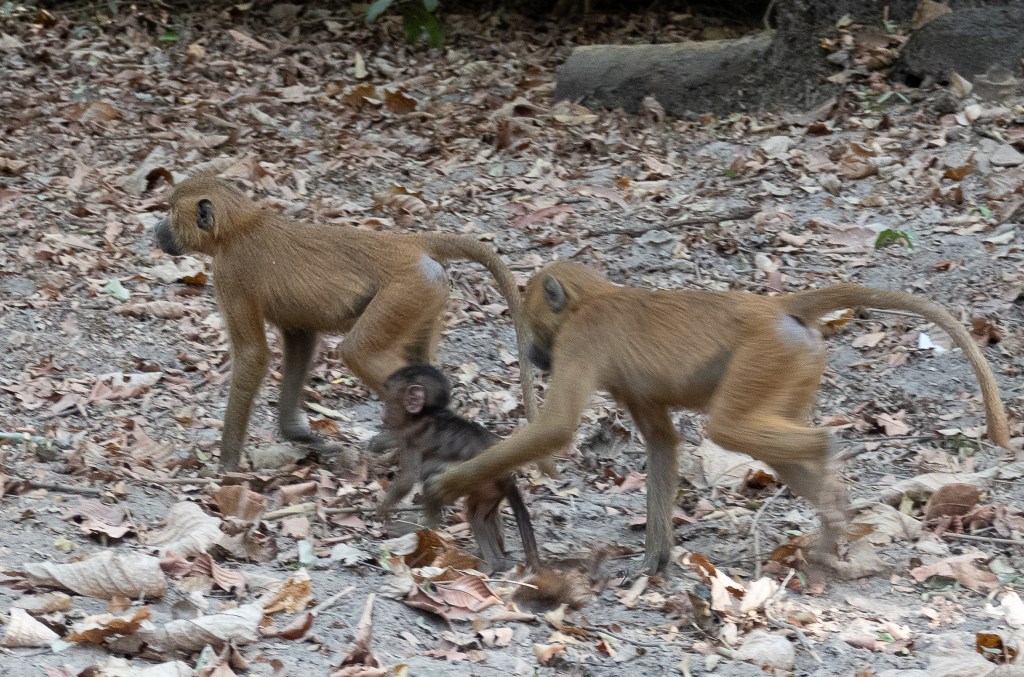
There were lots of young ones in this group, and they were a delight to watch. This looked like a real newborn, being investigated by an adult female. The adult on the right is a male. They are larger and have a sort of mane around the head and shoulders:

The males are more laid back than the males of other baboon species, being more willing to share females, and forming friendships with other males, The little ones hung onto their mothers’ bellies, allowing them to suckle as they hitched a ride.

The adults kept a careful eye on the smallest babies, making sure they didn’t get left behind as the troupe moved past us:

Sometimes they rode on their mother’s backs, like tiny jockeys:

They are remarkably independent from the get-go. This one, who the guide said was only 2 or 3 days old, suddenly stood up, ran along his mother’s spine, and jumped off over her head:

Like all baby animals, a lot of time is spent in play. Also, notice the big male on the right of the group of adults, and his “mane”:

This whole group of maybe 50 baboons moved through the forest, flowing around us, parting only minimally to get past us while we stayed still.

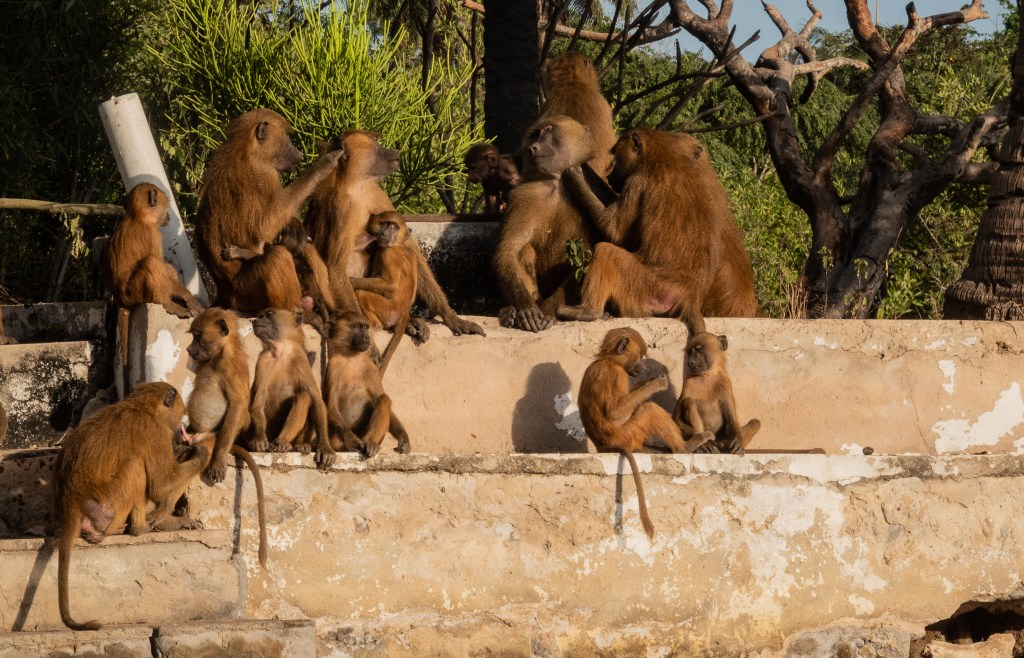
On a different day, we were on the river passing a semi-abandoned park with broad steps cascading down to the water, and another big baboon group was in residence. They sunbathed, and groomed each other:

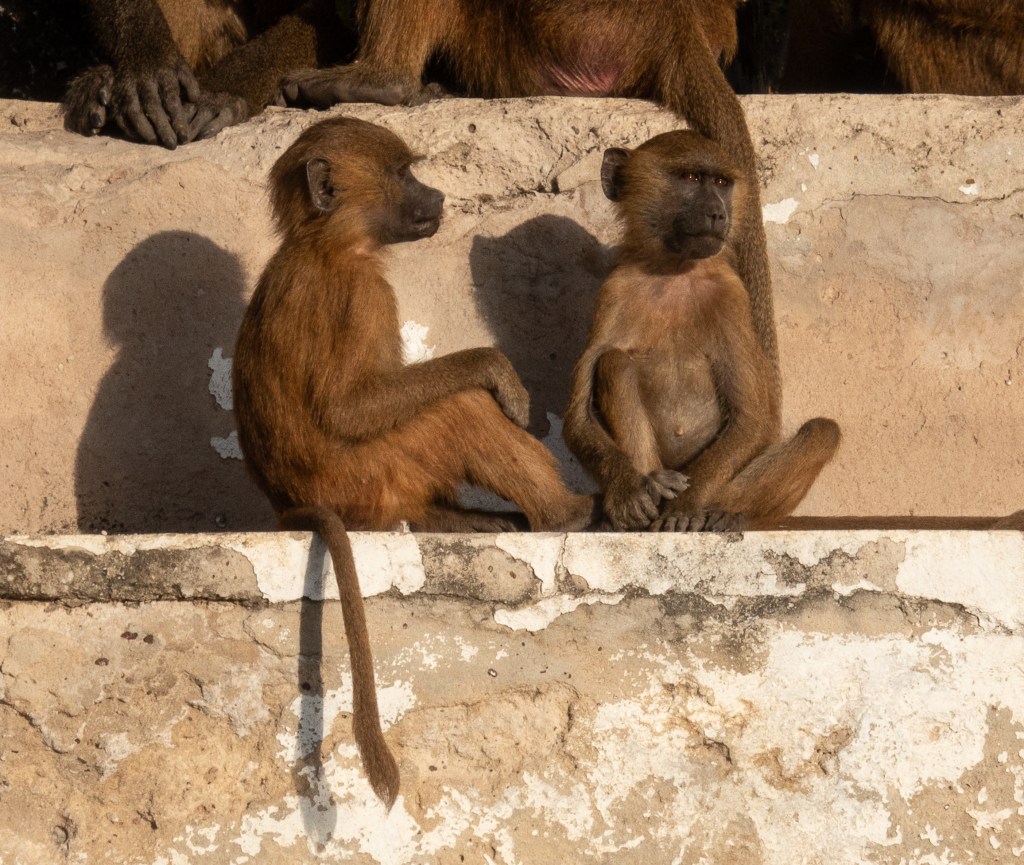
just hung out:

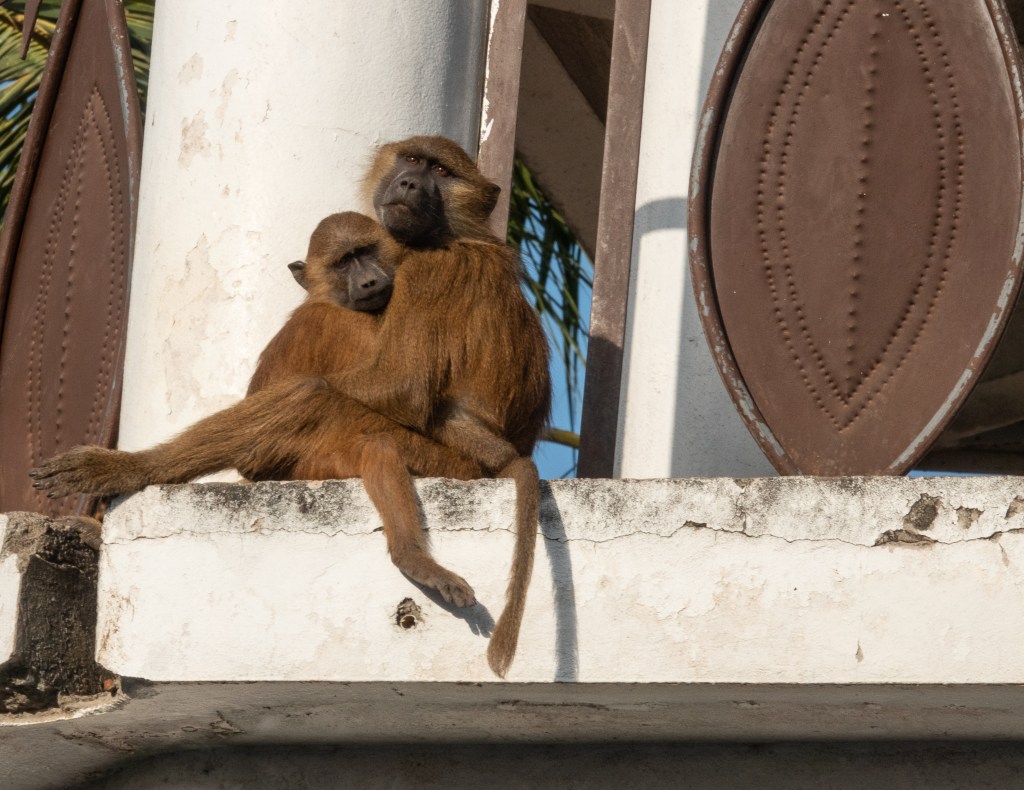
and bonded.

PS Their intricate social system is not as well studied as that of other baboon species, but this Wikipedia entry gives you some idea:

https://en.wikipedia.org/wiki/Guinea_baboon

The oldest cinnamon on earth

I write more often about animals (insects, reptiles, birds, mammals) than plants, but I glory in it all. Look at a corner of my wetlands back here in Maine.

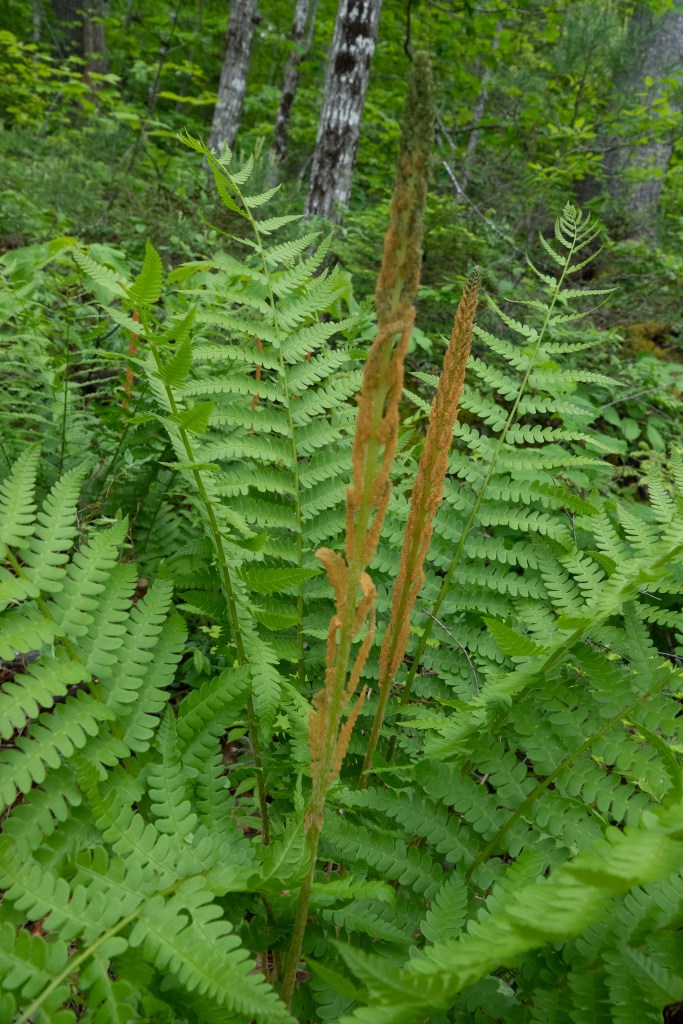
These rusty spikes in the foreground were familiar to the dinosaurs 180 million years ago, and have barely changed since.

They are Cinnamon Ferns, Osmundastrum cinnamomeum, and are considered a living fossil. Their name comes only from their color: don’t put them in your apple pie. Unlike our more modern plants, they do not produce seeds. They reproduce by spores, like fungi do.

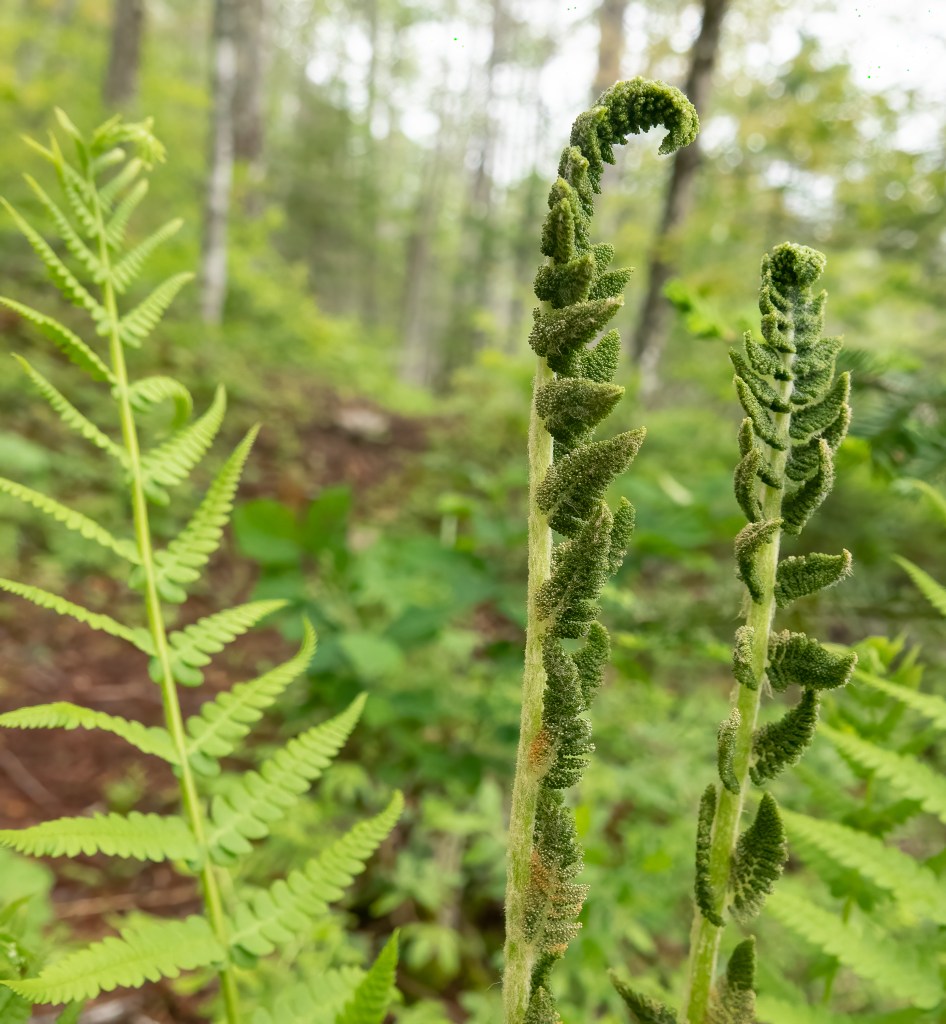
The ferns are six feet tall, and they send up specialized dark green fertile fronds,

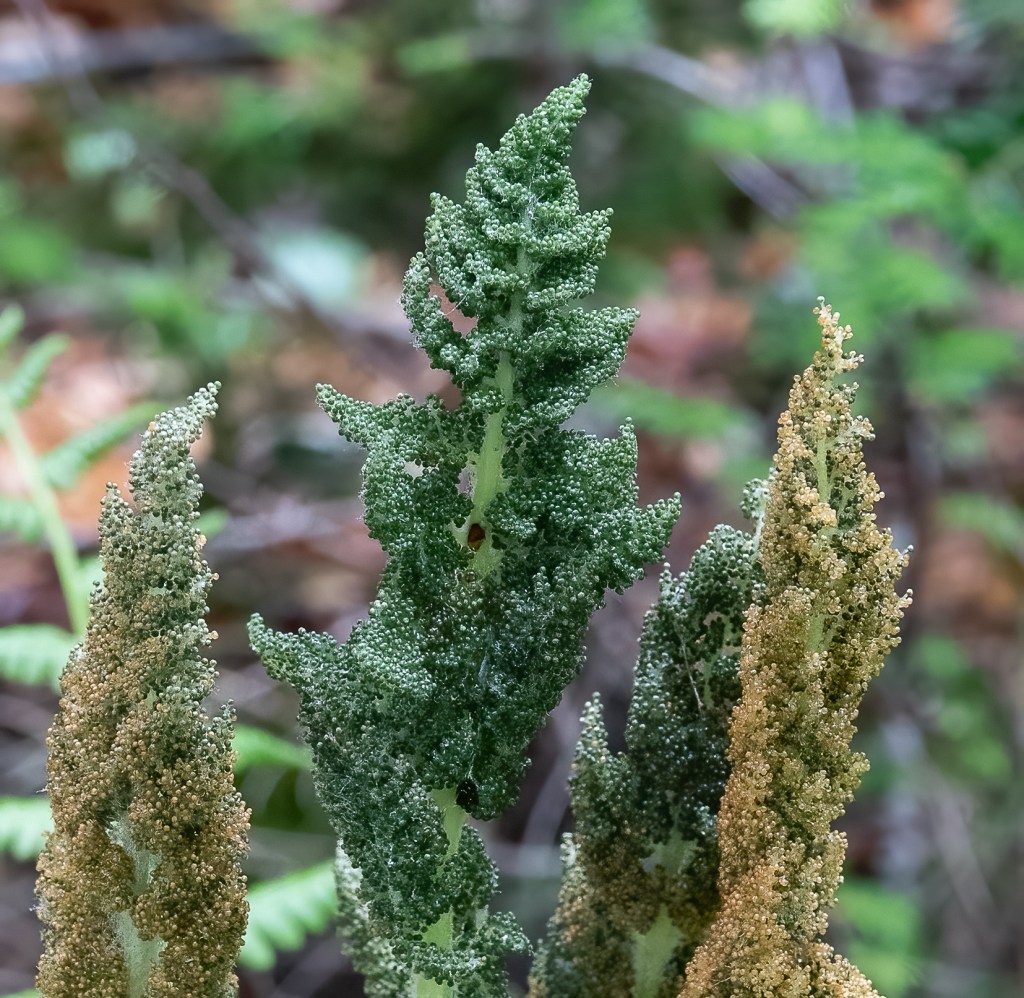
The fronds are covered in tiny globules called sporangia, within which the spores are gestating.

As they ripen, they turn a cinnamon orange, like the flanking spikes below:

working from the bottom up:

until eventually the whole spike blazes with color:

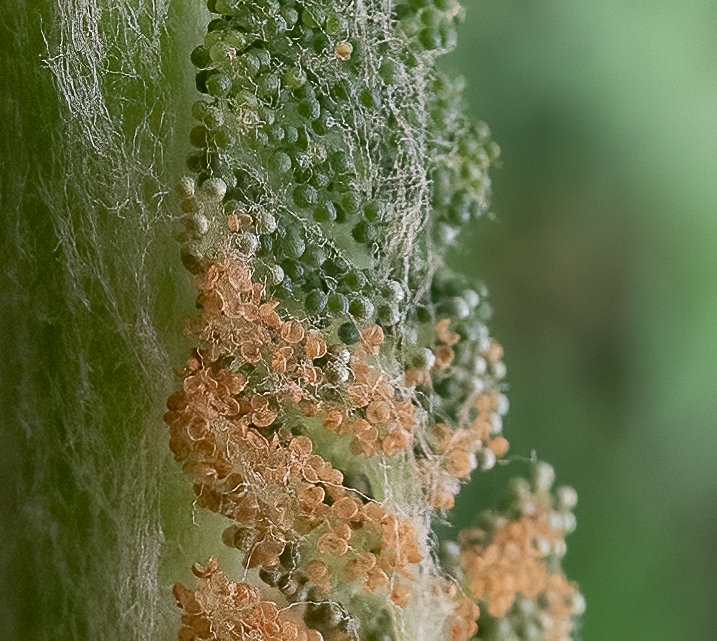
In extreme close-up, you can see that the tiny globules open up like a clamshell and release their spores:

Each sporangium is by my calculation about 1/60″ inch (0.4mm) across. A spore is about 50 micrometers in size ( a micrometer is 1/1000 of a millimeter). One sporangium can produce up to 500 spores, and a single stem can produce 52 million.

I picked a few ripe fertile fronds and brought them inside. The next morning there was a dusting of green spores on the sheet of paper. The first photo includes an American nickel for scale.

The second one is a close-up of an opened sporangium surrounded by some of its spores:

I have not even tried to photograph the spores themselves in close-up, unless someone would like to lend me an electron microscope?

If you’d like to know more, explore this site:

https://www.amerfernsoc.org/about-ferns

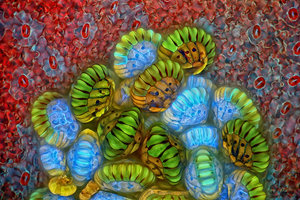
And, to end, a wonderful image of spores by Rogelio Moreno:

Nikon TE300, S Plan Fluor 20x/0.45, fluorescence (UV-2B), Canon 6D mounted on the front port of the TE300, image stacking.

The Limits of Flight

The African Goliath Heron, Ardea goliath, is one of the world’s largest flying birds. It weighs up to 5Kg (11 lbs), is 1.5m (5′) tall, and has a wingspan of 230cm, or 7′ 7″.

This one stood in the Gambian mangroves as we drifted along, looking at something overhead:

They hunt passively, waiting for an unwary fish to swim by, and then they pounce with that lethal beak.

They only eat 2 or 3 fish a day, but big ones, over a pound each, so they gobble about 25% of their body weight a day. And they can live for 22 years.

The full glory of this huge bird shows best in flight, I think:

How on earth do they do it? Rayner (1988) is a fascinating article on the aerodynamics of bird flight. Herons have large wings in comparison to their load (weight divided by wing area), which puts them in the same group as thermal soaring birds like hawks, storks, and eagles. They have similarly shaped wings too, broad with squarish tips, and separate primary feathers.

The surprise is that the Goliath Heron can fly at all. It is distinguished by having a very slow wing beat of 1.8 beats per second, and this puts it at the outer limits of all birds and near the theoretical limit of possible flight (apologies for the poor quality of the graphic, I couldn’t find a better one; the vertical axis is wing-beat rate, and the horizontal axis is mass):

PS That very slow wing beat is why I was able to get sharp flight photos even from a moving boat. Here’s another one, just taking off on a different flight, though quite possibly the same heron:

As you can see, gaining height takes time! The jumbo jet of the avian world.

Wattle-wearers

[I seem to be alternating continents, but I still have lots of Gambian birds to show you!]

Wattles are brightly colored fleshy outcroppings, usually on the head of a bird. Some are around the eye, some near the bill or under the chin. They are thought to attract the opposite sex, and indeed in some species they only appear in breeding season, or get larger, or are limited to the males. This trio have wattles in both sexes, all year-round.

The White-crowned Helmetshrike, Prionops plumatus, has a splendid feathered crest, and fleshy yellow eye-wattles that look like an artificial plastic sunflower:

These are social birds, and very versatile.

They forage as a group, eating insects (on the leaves or ground, and occasionally in flight), but also lizards, and fruit.

Somehow they seem rather parrot-like to me.

Common or Brown-throated Wattle-eye, Platysteira cyanea, (female, below) are usually in pairs, foraging for insects in vegetation and in flight. The red eyebrow wattles are fleshy, not feathery.

My final Gambian wattle-wearer is the Wattled Lapwing, Vanellus senegallus, whose yellow wattles droop down from the corners of its bill:

(The bird lurking in middle in the foreground above is a Spur-winged Lapwing).

Both sexes carry wattles.

PS You might have noticed that all the helmetshrikes are looking downwards. One of our group had brought with him an app with the sounds of Gambian birds, and a tiny loudspeaker. He placed it at the base of the tree near the helmetshrikes, and played helmetshrike calls. They were fascinated by it. This is a very controversial technique, many people worry that it disturbs the birds’ natural social order and that it can interfere with courting and breeding. Our guide did not bring this technology himself, but he allowed it to be be used, and none of the rest of us objected. I did discuss the issue with our guide, and he said that he would never allow it to be used in breeding season. We did indeed get a much closer look at some birds than we would otherwise have done, but I feel somewhat guilty that I didn’t protest. Or I may be over-reacting. Let me know what you think in the Comments.

I have also just discovered that the Audubon Society has taken a strong stand against the use of playback, and that none of the photos we (ie me) took using this technique could be entered in their contests:

https://www.audubon.org/news/why-photographers-should-reconsider-using-playback-field

Luckily I never planned to do that anyway.

The kettle-drummer of the wild: the American Bullfrog

[All these photos and videos were taken last week at Gardens in the Wild in Framingham, Massachussets, the home of the New England Wildflower Society. Highly recommended! and the frogs are used to people, so they are much less skittish than they are around me in Maine. ]

The American Bullfrog, Lithobates catesbeianus, is a substantial chap. He can weigh up to 0.5Kg, more than 1lb. The bullfrog male’s mating call is low in pitch, with a frequency around 200-300Hz, and can be heard for up to one kilometer. Here is a recording (made in Maine a year or two ago.)

These calls are very very loud, and yet they call with their mouths closed. How do they do it?

When the male calls, he fills his bright yellow throat pouches with air. Each call lasts approximately 0.5 seconds: I have slowed down this video so you see this more clearly:

I had always thought that was why his calls were so loud.

But it turns out that is wrong. The inflated pouches are used as a sort of air reservoir so that air can be recycled to the lungs across the vocal folds where the sound is actually produced. Some sound is indeed then transmitted to the world through these pouches, but that is not the main source. The male has a greatly enlarged tympanum (ear-drum), the round patch behind the eye, as you can see in the photo.

It is this which hugely amplifies the sound energy, being responsible for some 98% of the energy actually transmitted. (Purgue 1997). Its resonating frequencies match those of the calls, so effectively it acts as a drum. (Purgue says you can see the eardrum move, but even when I slow my videos right down I can’t detect this!).

Even if I can’t see the eardrums move, what I can see is the whole body vibrations that are transmitted to the water: look at those ripples radiating outward as the frog calls.

Note also how much smaller the female’s ear-drum is: hers is used just to transmit sound to her inner ear, like ours.

There is always something new to learn: who knew that ear-drums could be a two-way sound system. They even look just like a high-end stereo speaker!

PS More on the generation of the initial sounds: (Ryan and Guerra 2014) ” In most frogs, air is expelled by contracting trunk muscles surrounding the lungs, which pushes the air through the larynx .. The incoming air causes the vibration of the vocal cords and the larynx itself. The air then enters the buccal cavity and passes through the vocal slits to inflate the vocal sac. One of the most conspicuous and near-universal traits of male frogs is the vocal sac. Its main function is to recycle air from the lungs to the vocal sac and back again. The vocal sac also radiates sound.”

PPS The kettle-drums used in classical music are more formally called timpani, essentially the plural of the same word as an ear-drum, tympanum. Hence my title.

PPPS It took about 250 photos to get those two still shots of the 0.5 second period when the vocal sac is inflated!