A rose by any other name…

(Oops, I hit “Publish” by mistake before I intended to. Apologies for the second post of the week! )

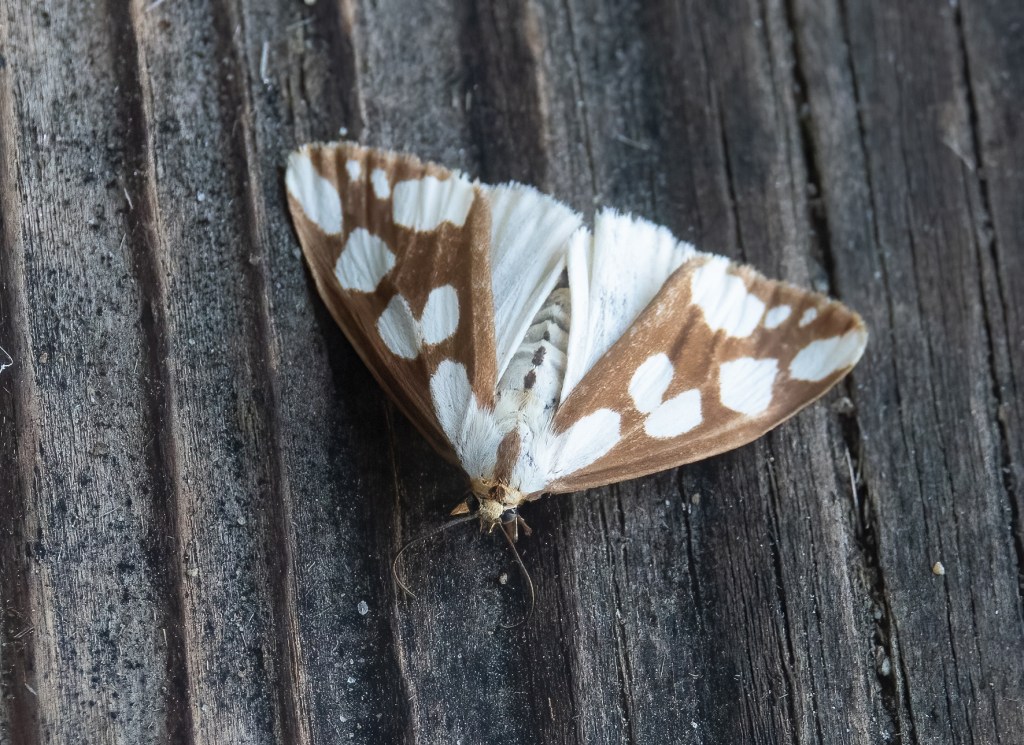
I have found myself interested in the unusual names boasted by some moths. This interest was sparked by finding a striking Confused Haploa Moth, Haploa confusa, on the step of my porch, below the light. It actually is named ‘confused’, and its behavior may have been also. There is no clear consensus as to why it has such an odd name.
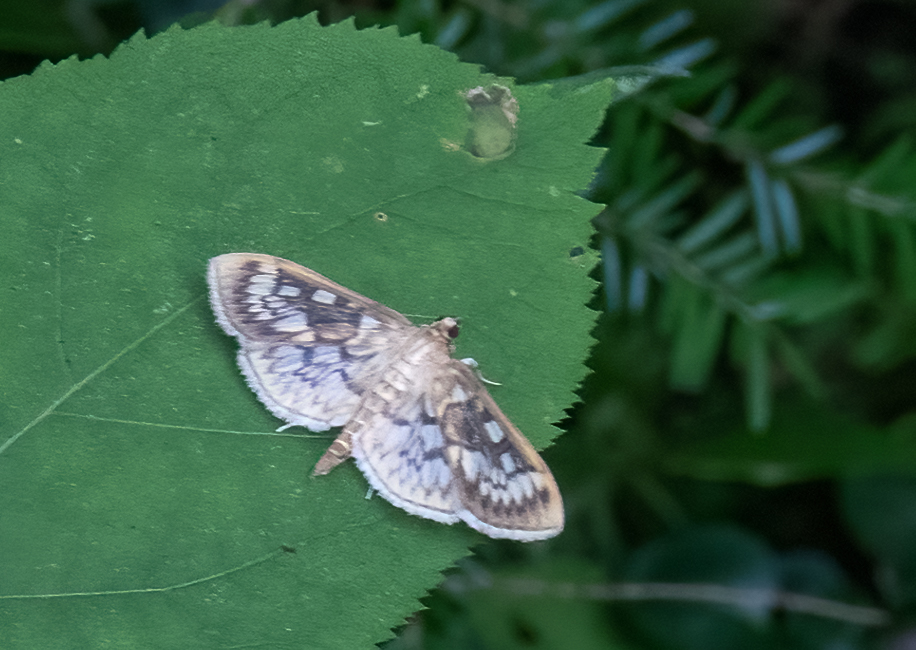
A new one for me is the Zigzag Herpetogramma Moth, Herpetogramma thesteali. Its common and scientific names use the Greek words for ‘reptile’, and for ‘drawing’, I think because its pattern looks like the scales of a snake.

The Virginia Ctenucha Moth, Ctenucha virginica, has a name from the Greek stem κτεν- meaning “comb”, in reference to the showy antennae of the male below:

It has a metallic blue body, and despite its name it is found as far North as Labrador, with Virginia being the southern end of its range.

The Northern Petrophora Moth, Petrophora subaequaria , brandishes a name that comes from the Greek for “rock” and the Greek suffix -φορος meaning “carrying”. I cannot for the life of me work out where this name comes from. As for the subaquatic portion of its name, that is even more mysterious. If anyone knows, do enlighten me.

Rather unusually, the caterpillars of this moth eat ferns, despite the compounds in fern leaves that means most insects avoid them.

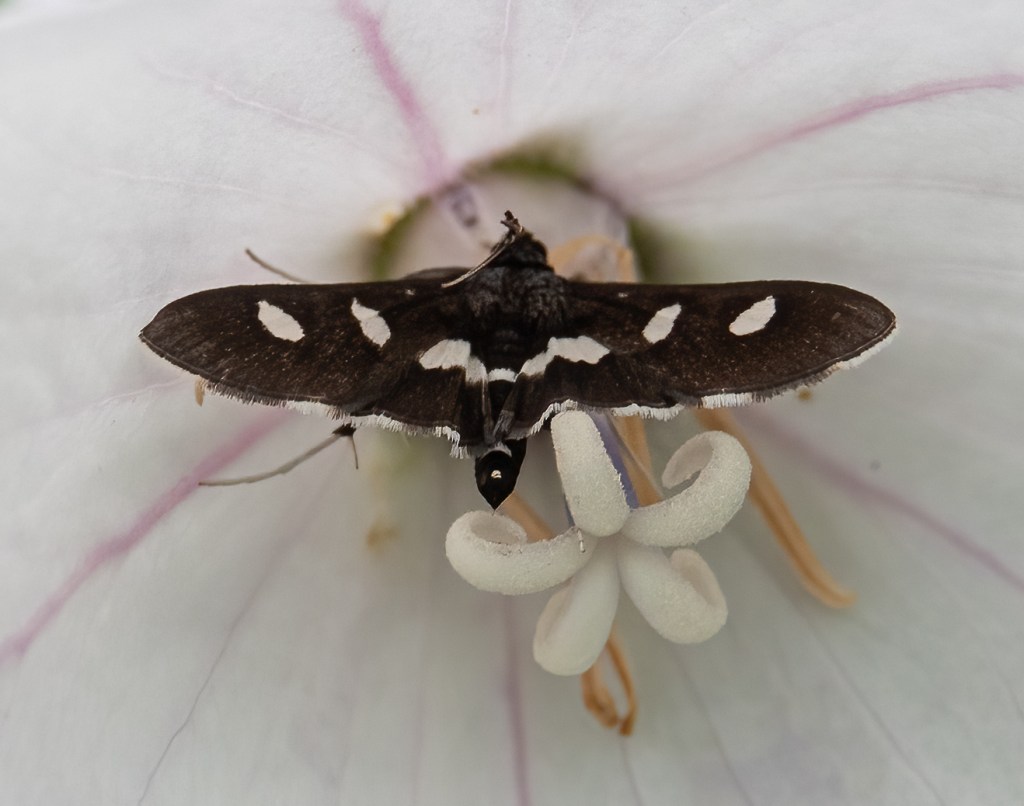
Grape Leaffolder Moth, Desmia funeralis, must be named for its funereal costume:

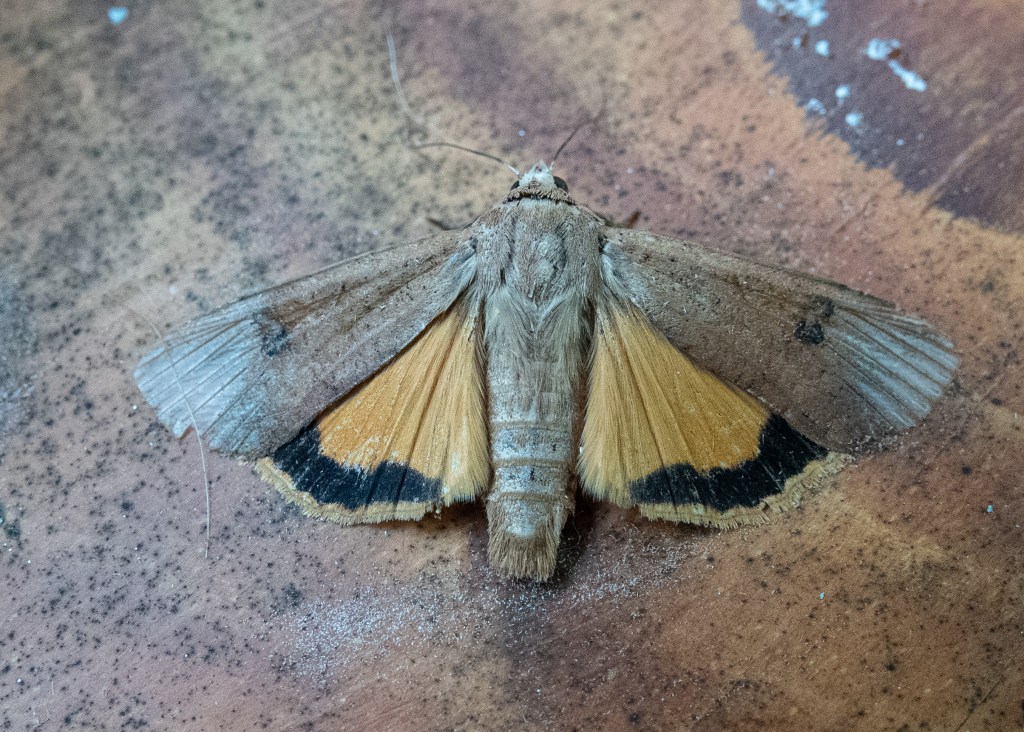
The Large Yellow Underwing, Noctua pronuba, has a glorious scientific name. ‘Noctua’ means “night owl” and ‘pronuba’ means “maid of honor”. Fitting names for a nocturnal beauty .

I could go on and on but your eyelids may need propping open by now. As you fall asleep, dream of moths.

A meal of small plates

An accumulation of small things can add up to a banquet of delights.

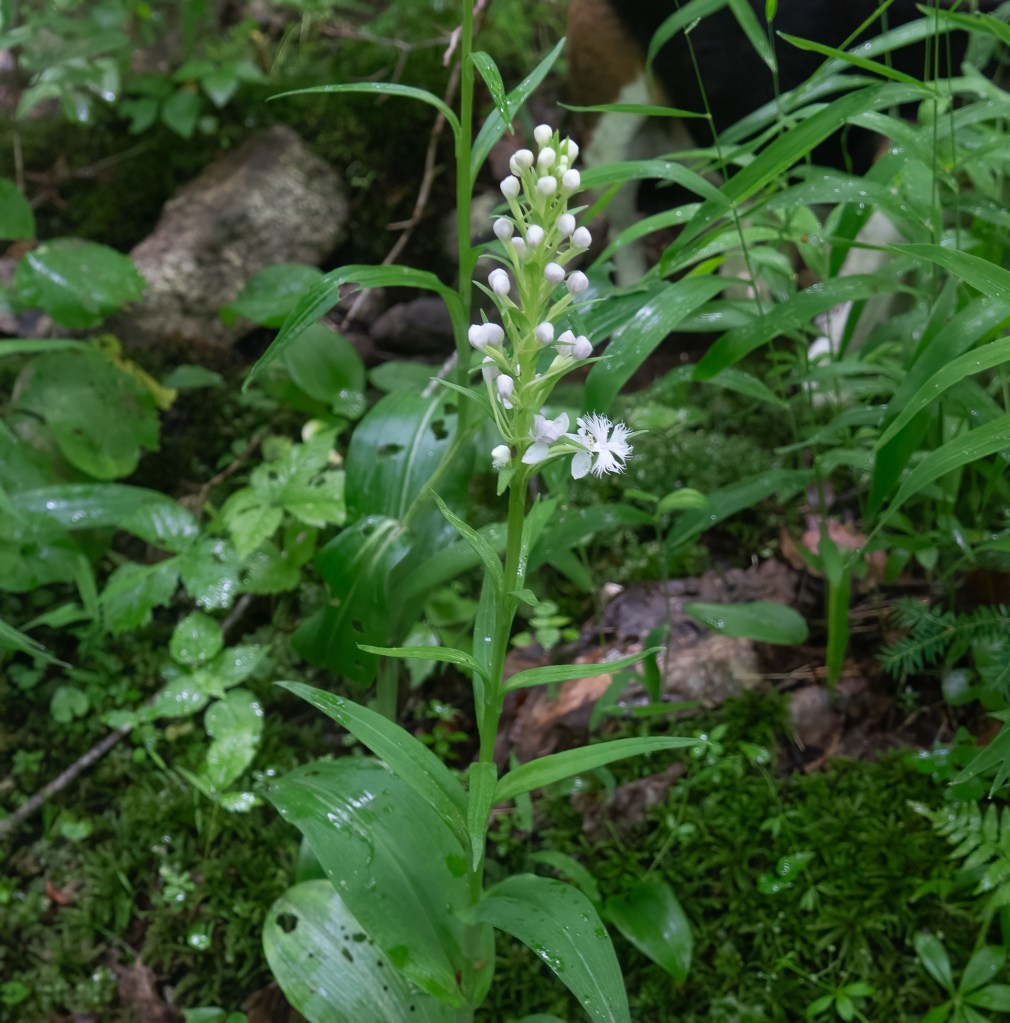
Deep in the woods by a stream I found a pure white orchid, about 18″ high, that I had never seen before.

Being me, I of course identified it as something only known in Maine at one site nowhere near me.

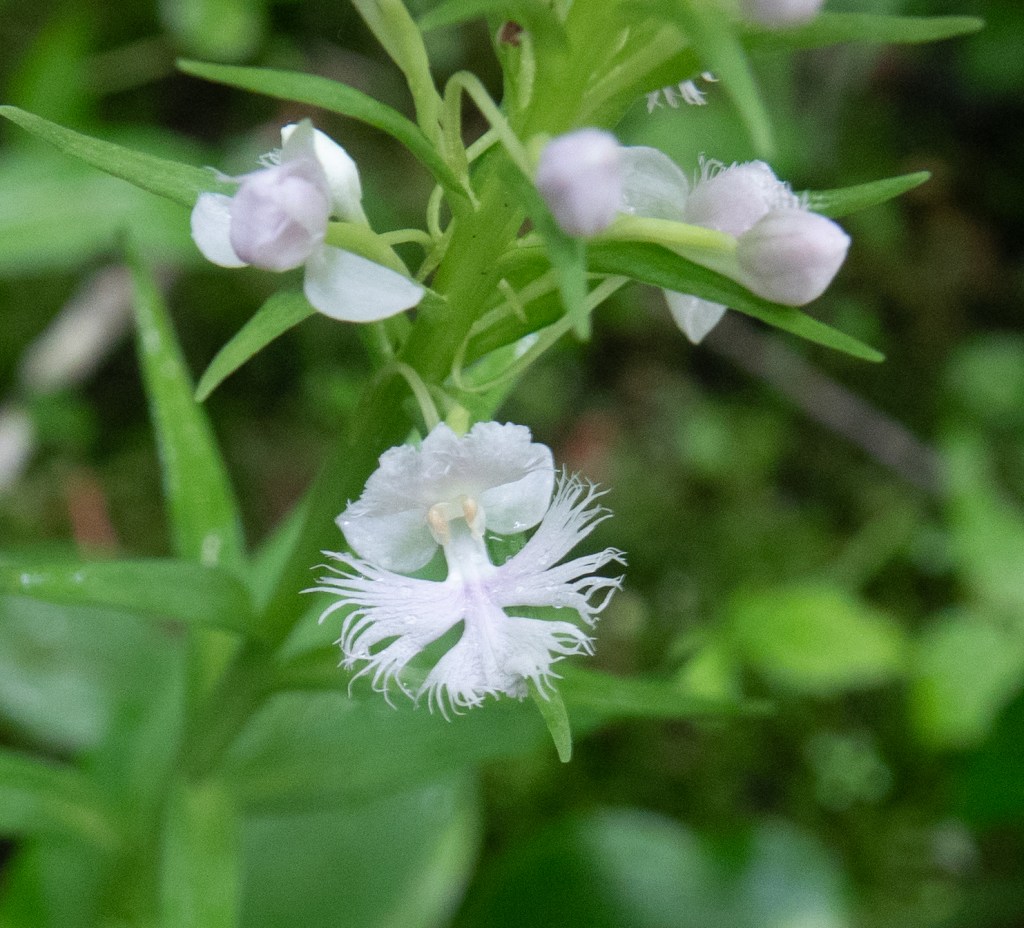
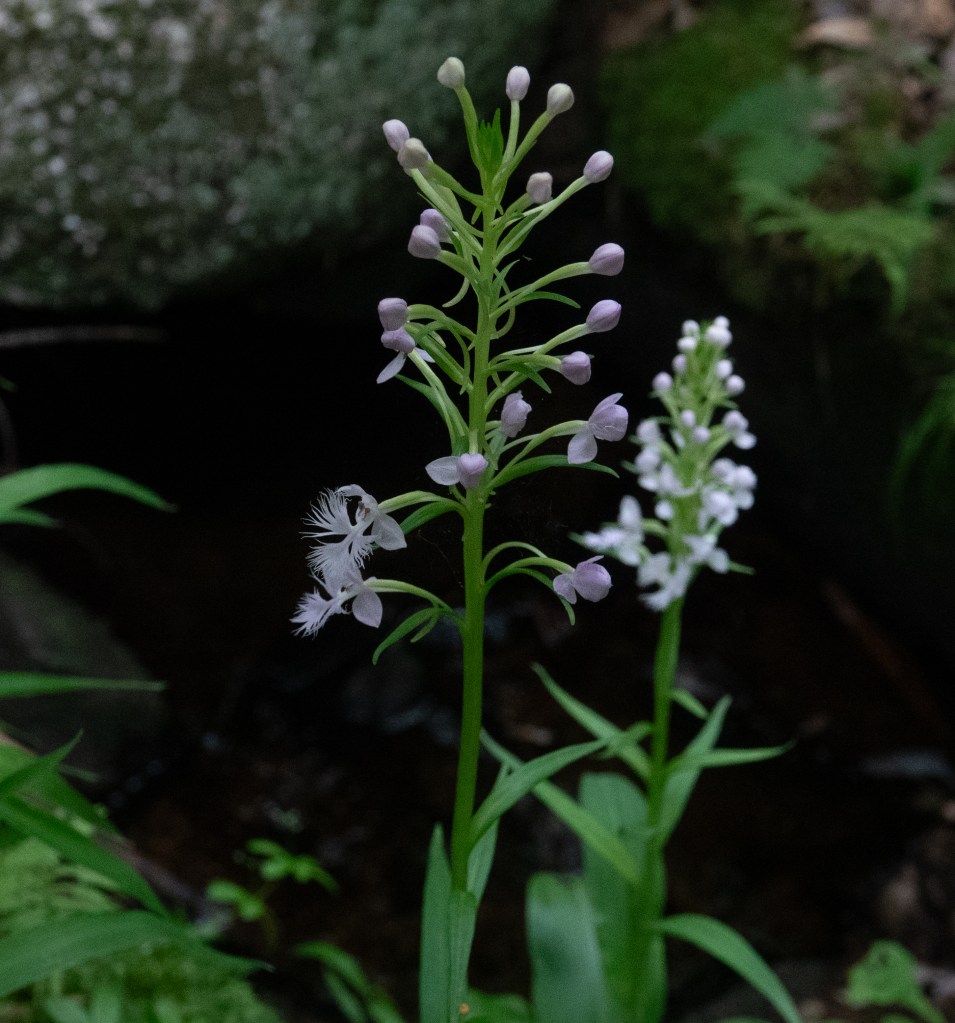
I was wrong. My white orchid was actually a purple orchid, a Greater Purple-fringed Orchid, Platanthera grandiflora, to be more precise, which perversely is occasionally white. I was forced to accept this when the second stalk more sensibly produced pale purple flowers. The turncoat sister stalks in the background of this shot.

Despite its deceptive behavior, it is very beautiful.

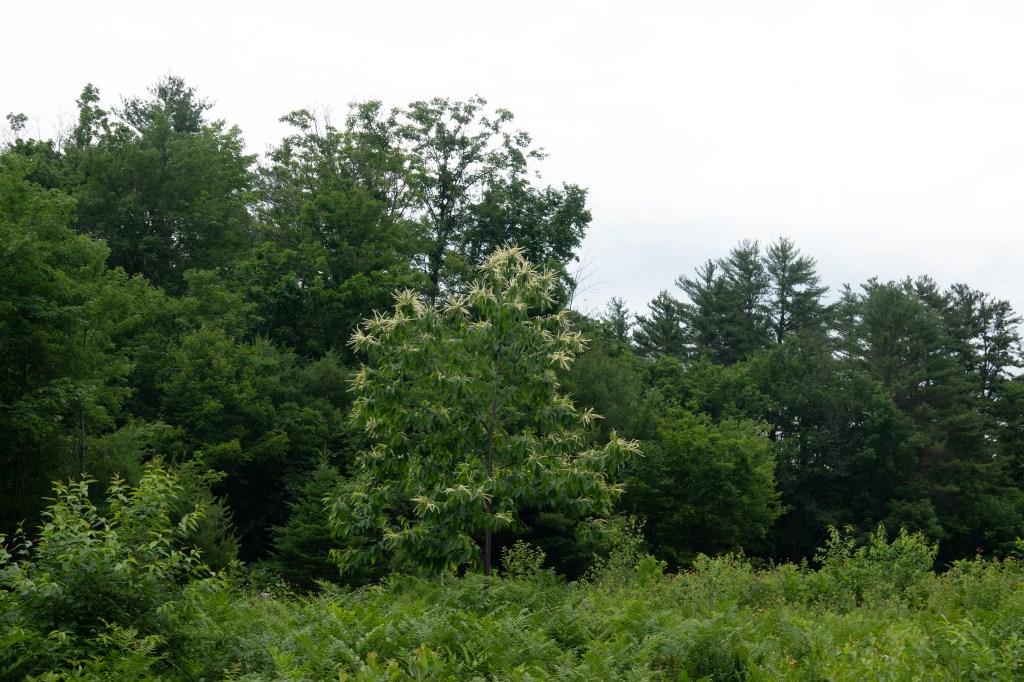
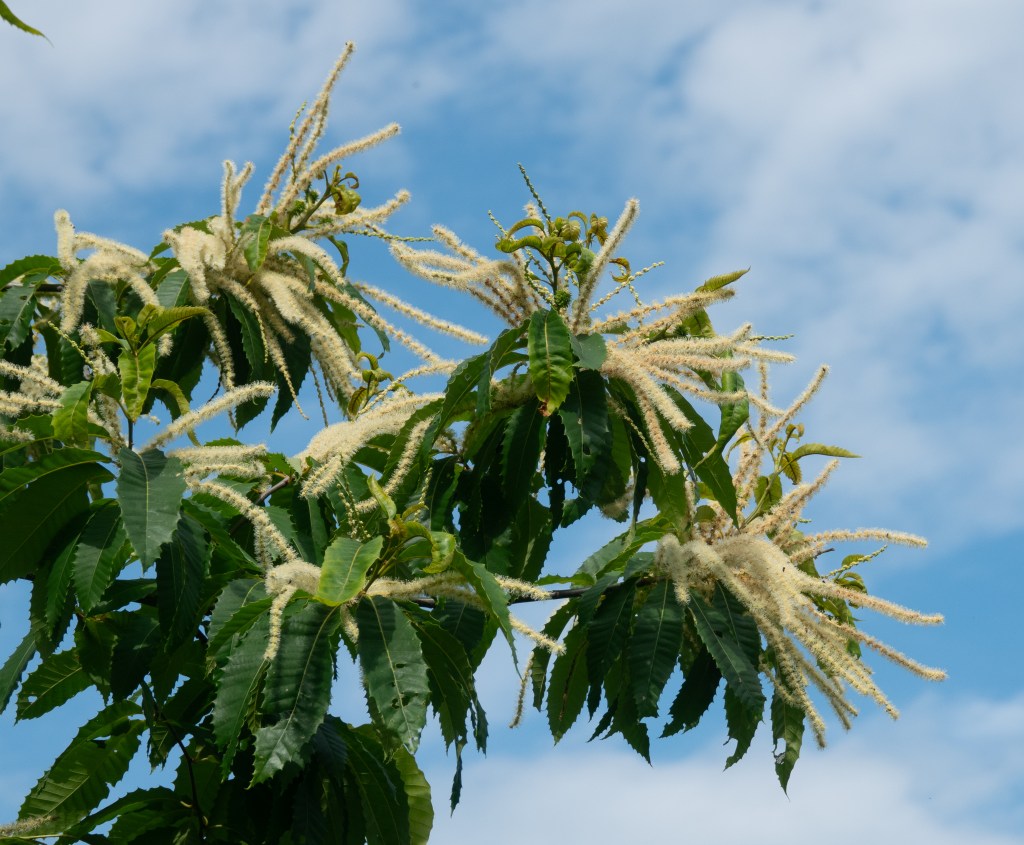
The American Chestnut has pretty much disappeared after the chestnut blight imported from Asia killed about 4 billion trees in the 20th century.

But every now and again one decides to grow, and lo and behold there is a very healthy-looking sapling on the edge of my field, maybe twenty feet tall, and in full flower:

I know that they often start off fine, and then succumb a few years later, usually before the tree reaches sexual maturity. That this one is flowering suggests it is currently beating the odds, so for now I am just enjoying it:

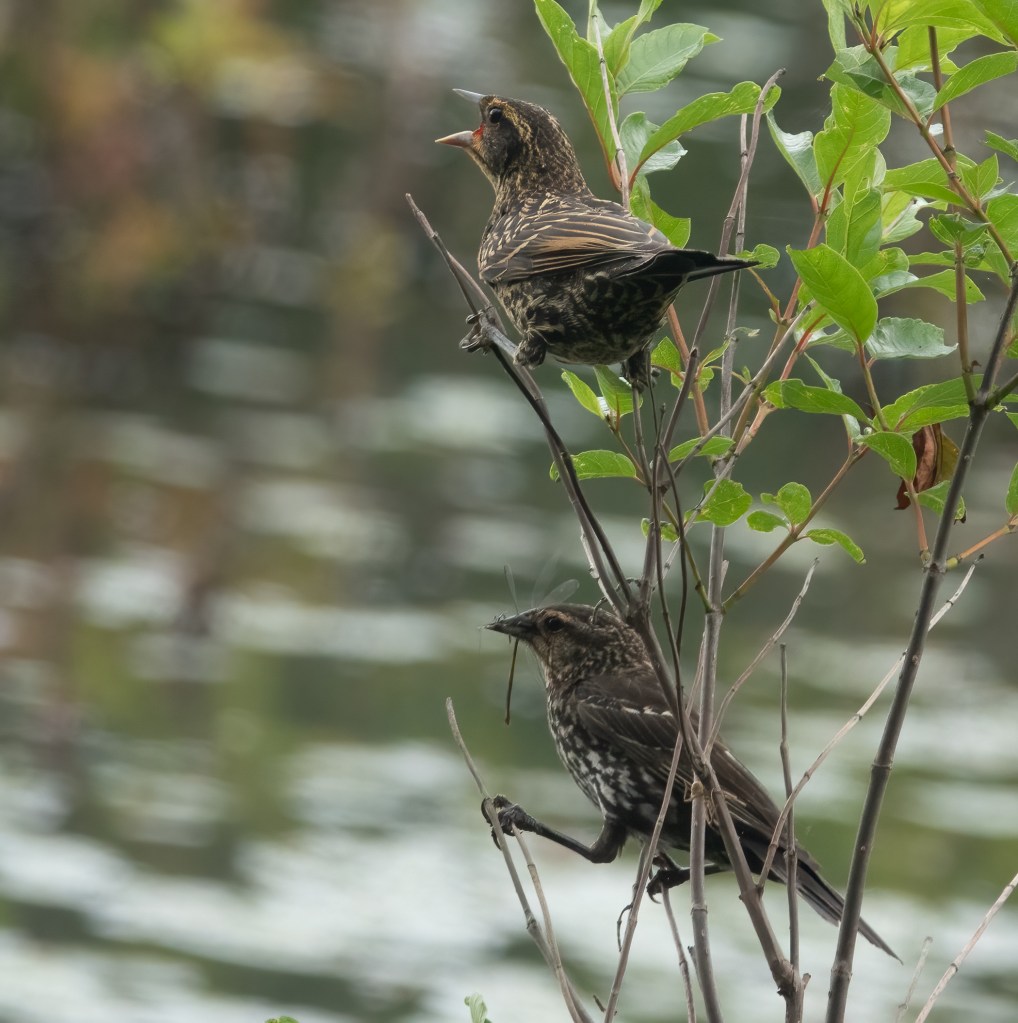
The Red-winged blackbirds have been nesting on my beaver pond, and the young have now fledged. They are still being fed by their diligent parents.

The mother (bottom) has caught a dragonfly (look carefully). The fledgling, top, is starving.

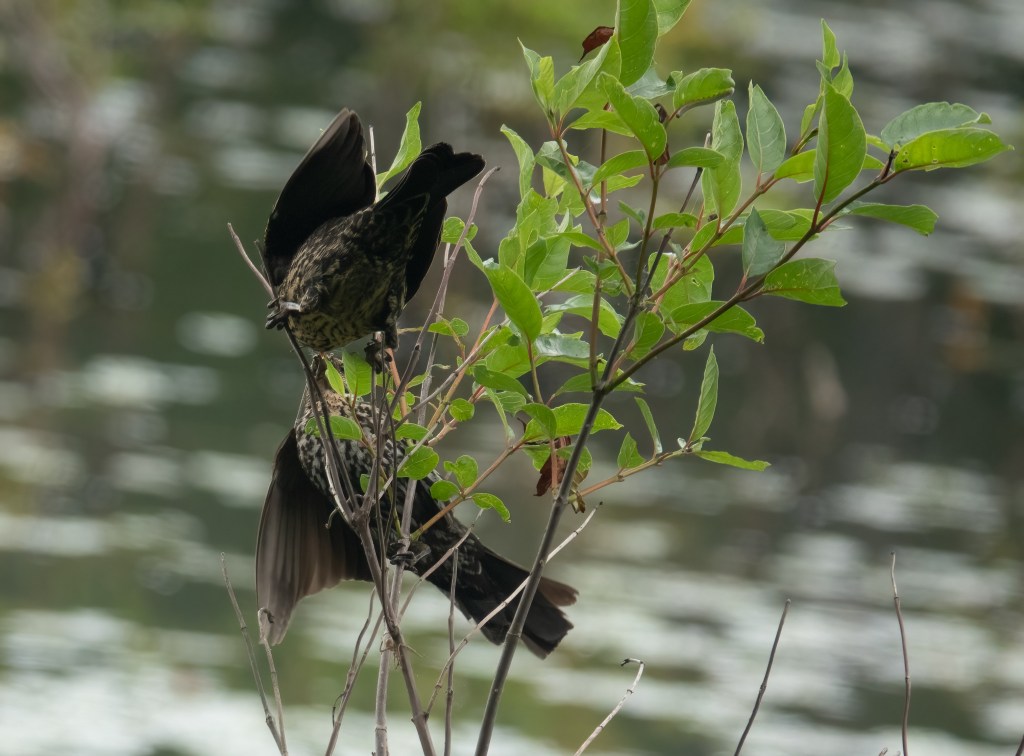
She moves higher,

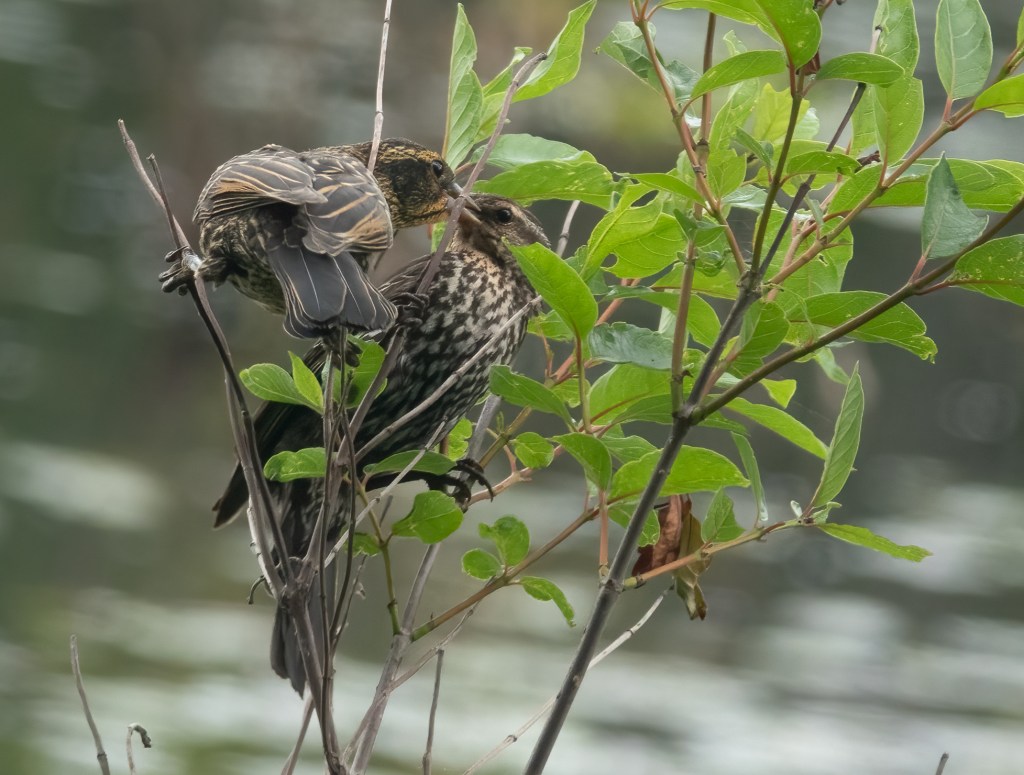
then stuffs the dragonfly into the youngster’s mouth (the mother is on the right). She had two to feed, and kept up a steady flow of provisions.

Otherwise, all is calm. The American Black Ducks have seven ducklings, and the stray loon was still there when I wrote this, and apparently healthy. (He/she has now moved on.)

And I am replete.

Study in Black-and-White

[This is, finally, my last post from my Botswana trip. I hope you enjoyed the ride. For a while now it will all be my backyard woods in Maine.]

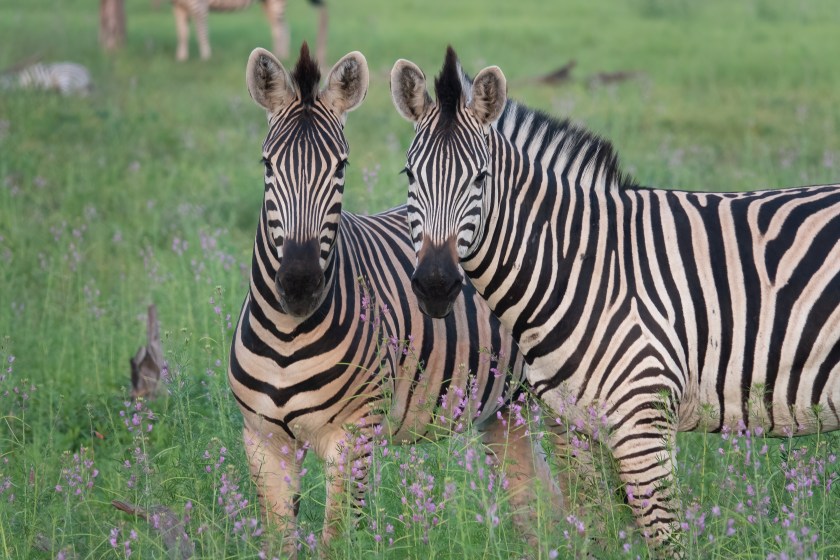
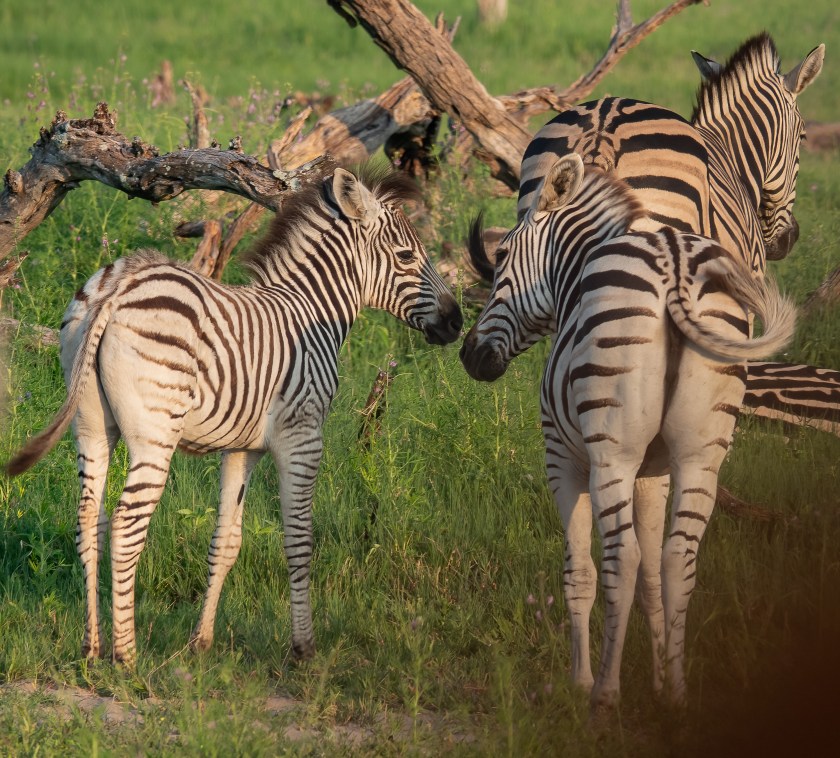
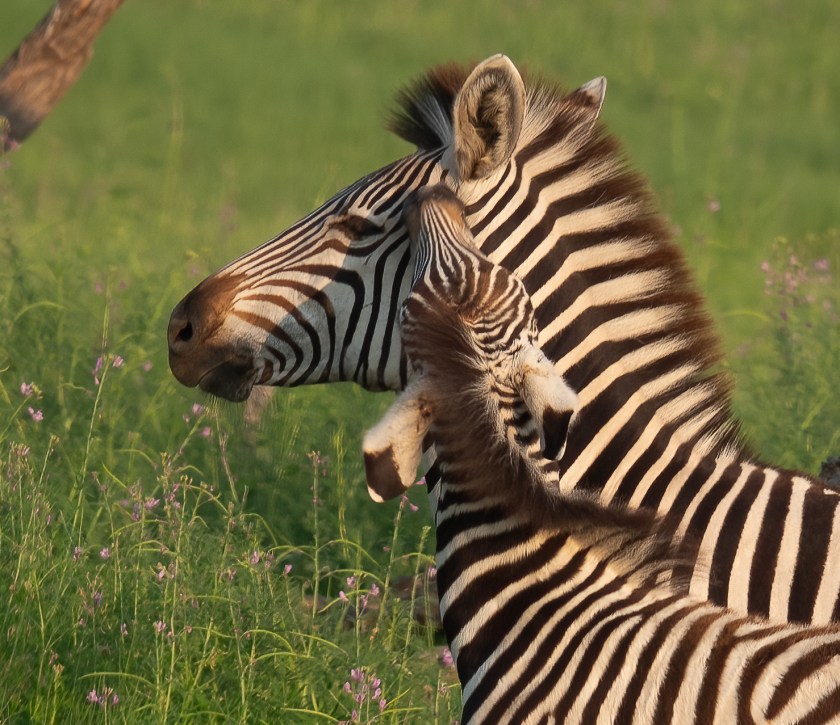
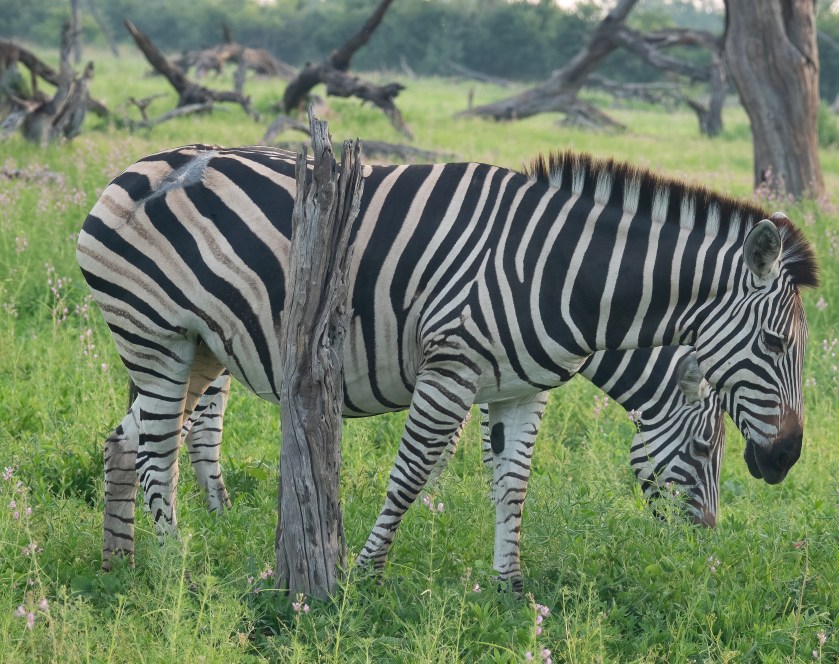
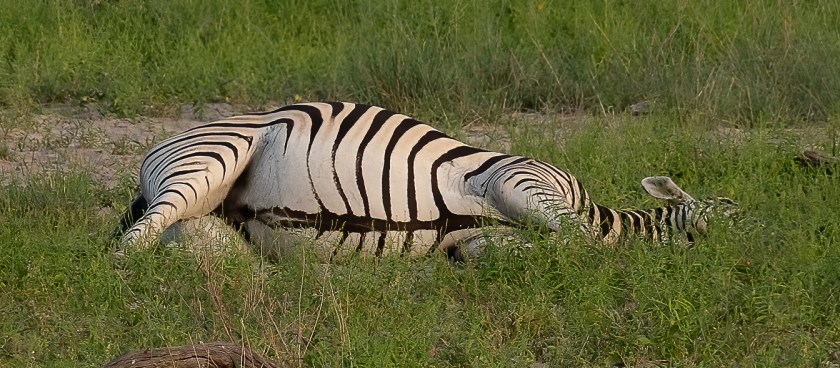
The zebras in this part of Africa are Burchell’s (or Plains) Zebra. Their stripes are separated by ghostly brown shadow stripes, and each animal is slightly different. Look for example at the center of their noses, just below the eyes.

Or the necks of the front two below:

The stripes form a corset all the way under their bellies to the middle, as displayed by this snoozing animal:

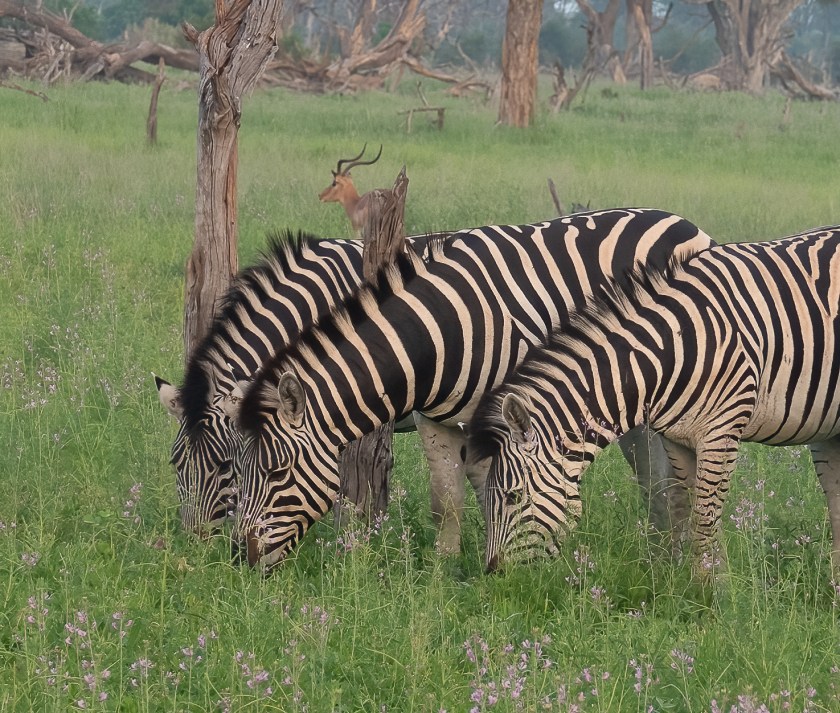
These were in a mixed group with wildebeest (and impala):

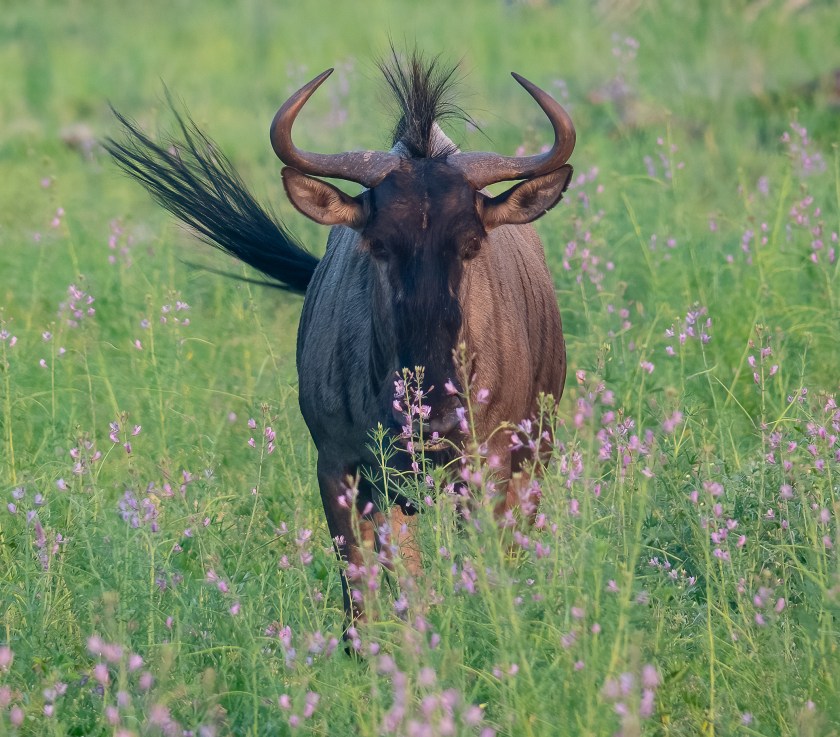
The wildebeest, potentially intimidating, do not seem to bother the zebras:

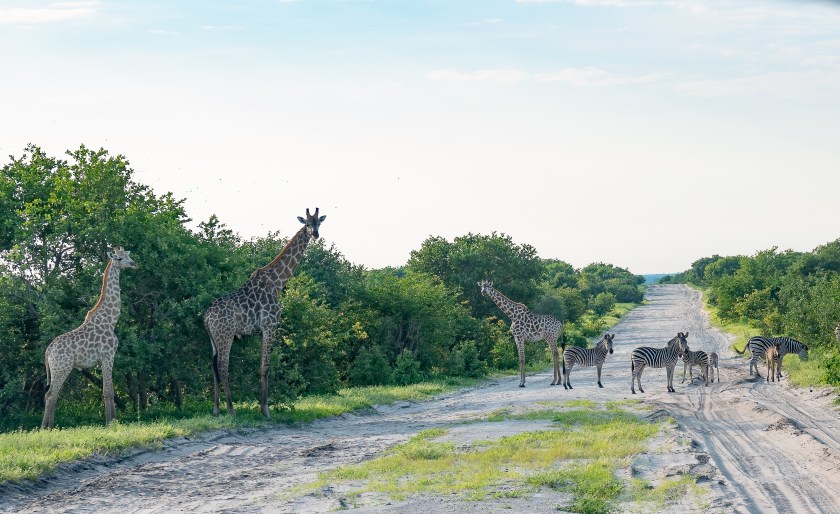
On another occasion they were mingled with giraffe:

The mothers and babies are a delight.

Most of the babies were quite big in February, but still very affectionate:

They are somewhat independent now:

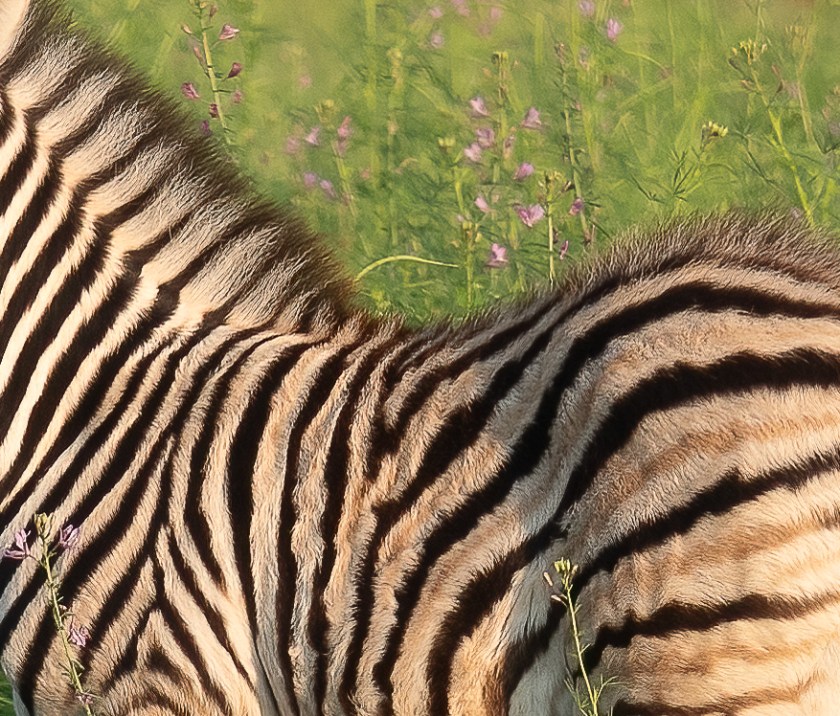
but their coat is still fluffy:

Zebra often host oxpeckers, which remove parasites. This one has three:

And some show wounds from encounters with lions. Look at the rump of the one below:

The dark circle on the inside of its foreleg is a callous, often called a Chestnut. It may be the vestige of a gland like those that antelope have, but it seems to have no such function in the zebra. Domestic horses have these too, on all four legs.

The life of a little loon

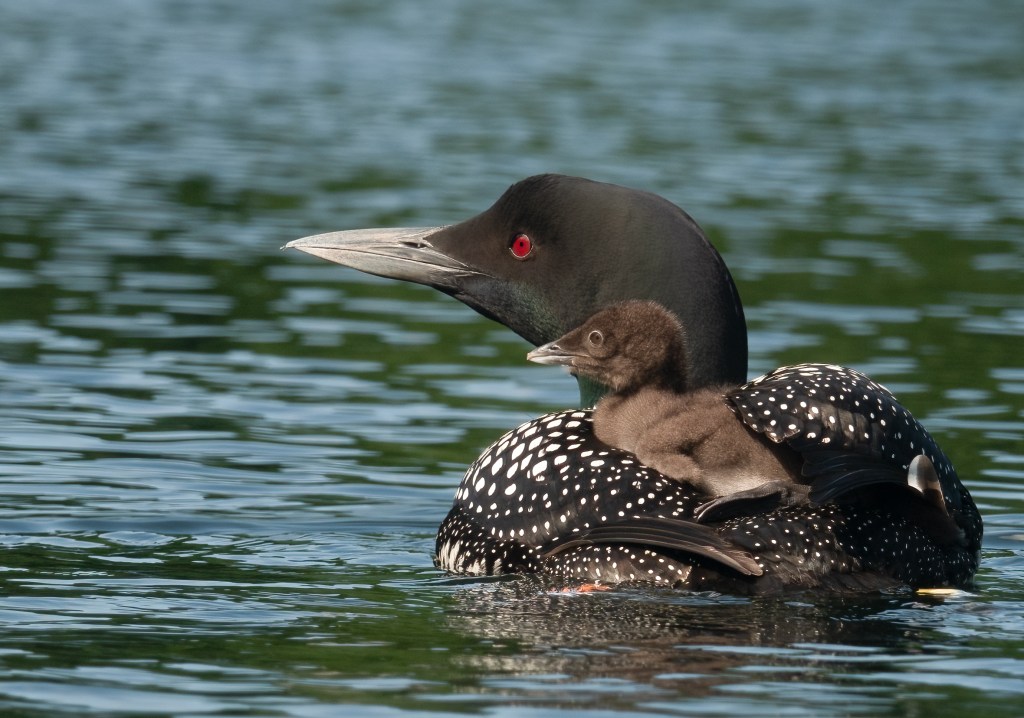
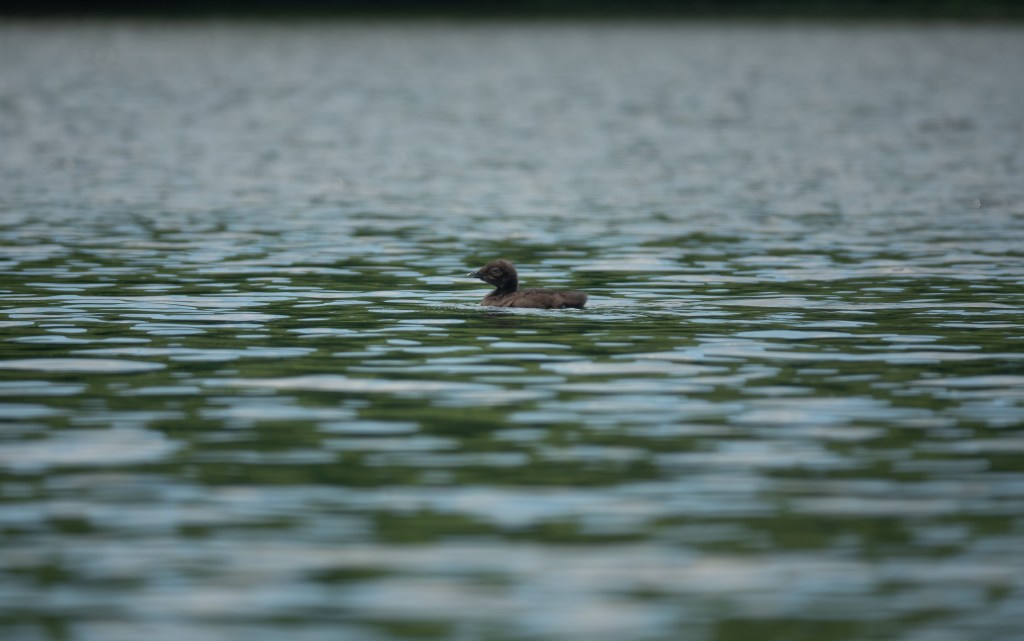
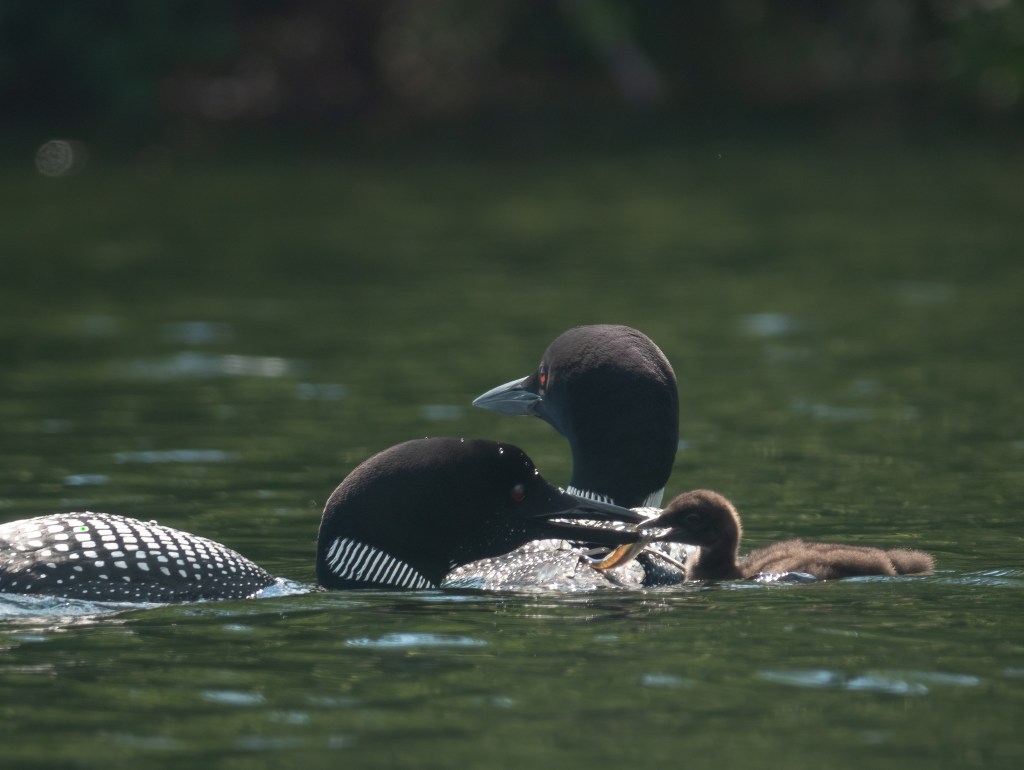
The pair of loons on a pond near me (not my beaver pond) had two chicks about 10 days ago. One did not last long, taken by an eagle or a snapping turtle no doubt. But I photographed this one from about 8 days old.

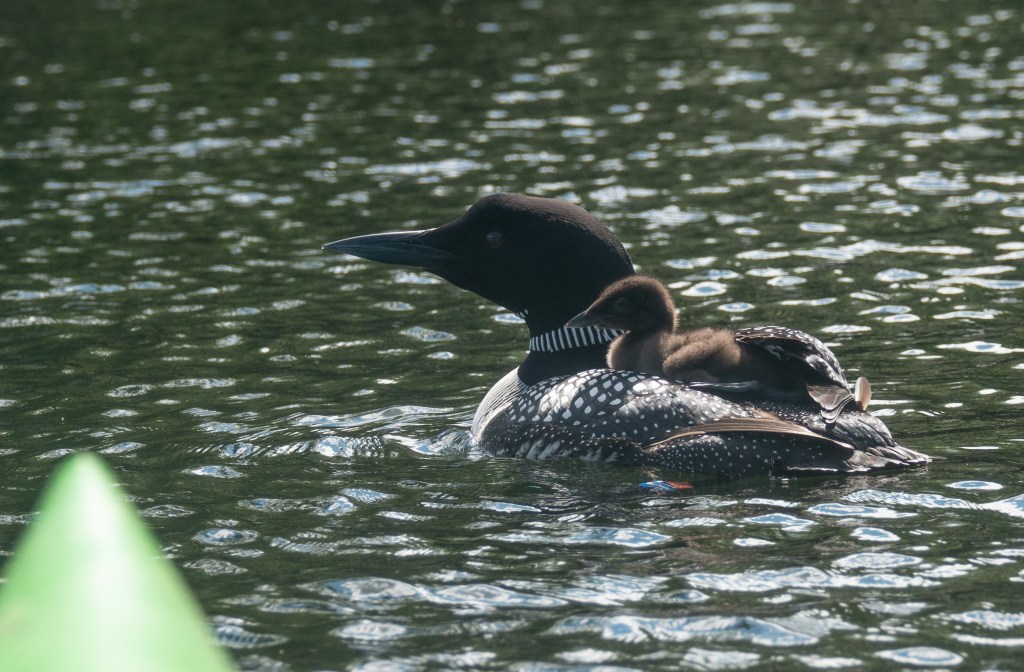
At 10 days old, it still rides on its mother’s back when it feels like it.

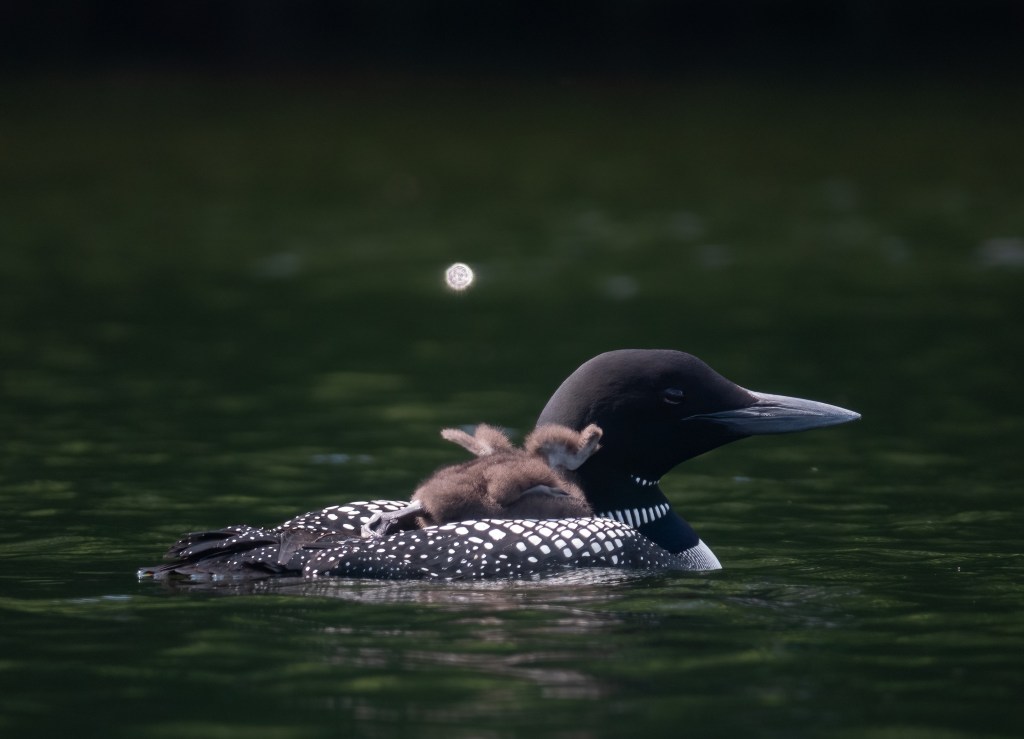
It nestles in between her wings, so it can’t fall out sideways, and she sometimes places a foot behind it, so it can’t slide off her back if she accelerates.

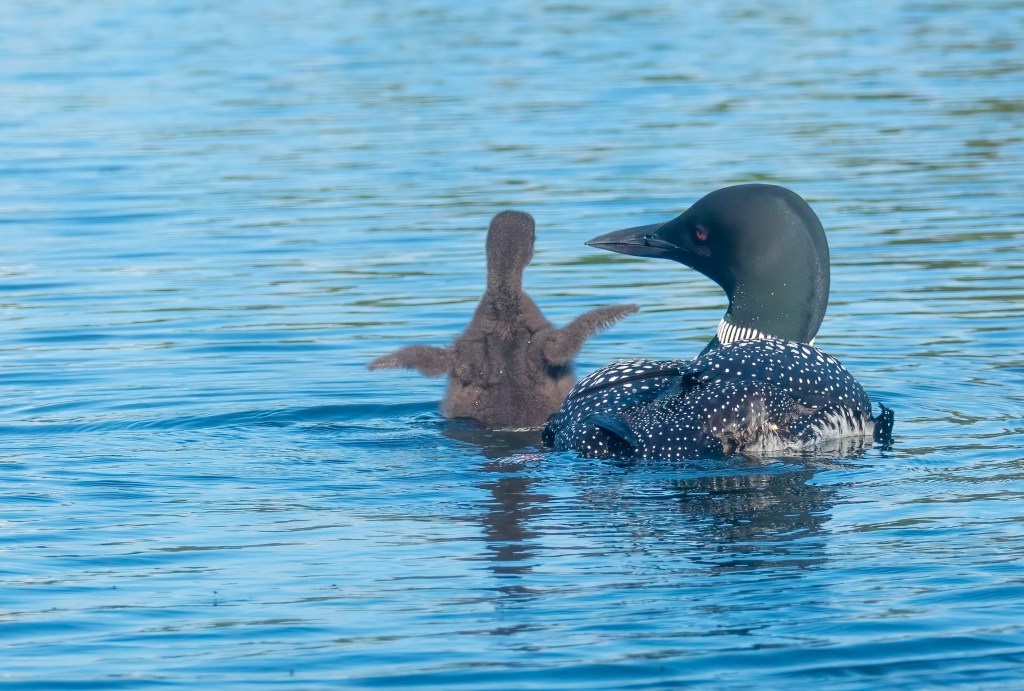
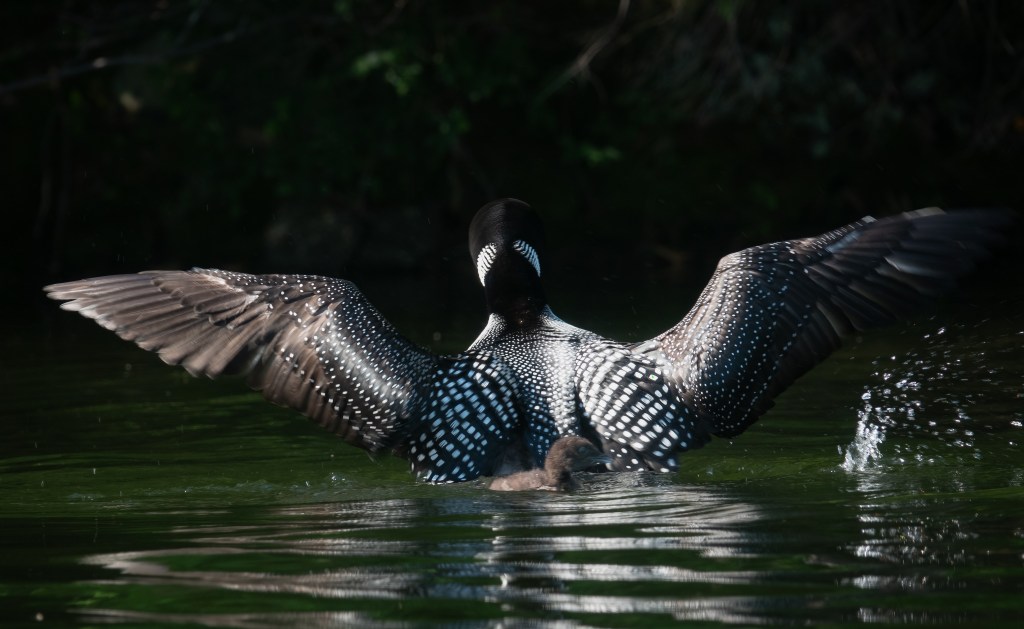
But like any youngster, it gets adventurous. The dismount.

From around three days old, it dives for short periods, and exercises its tiny wings:

Sometimes it tucks its head in and sleeps beside the mother, bobbing happily up and down alongside. She makes sure it doesn’t drift away by gently using her foot as a corral:

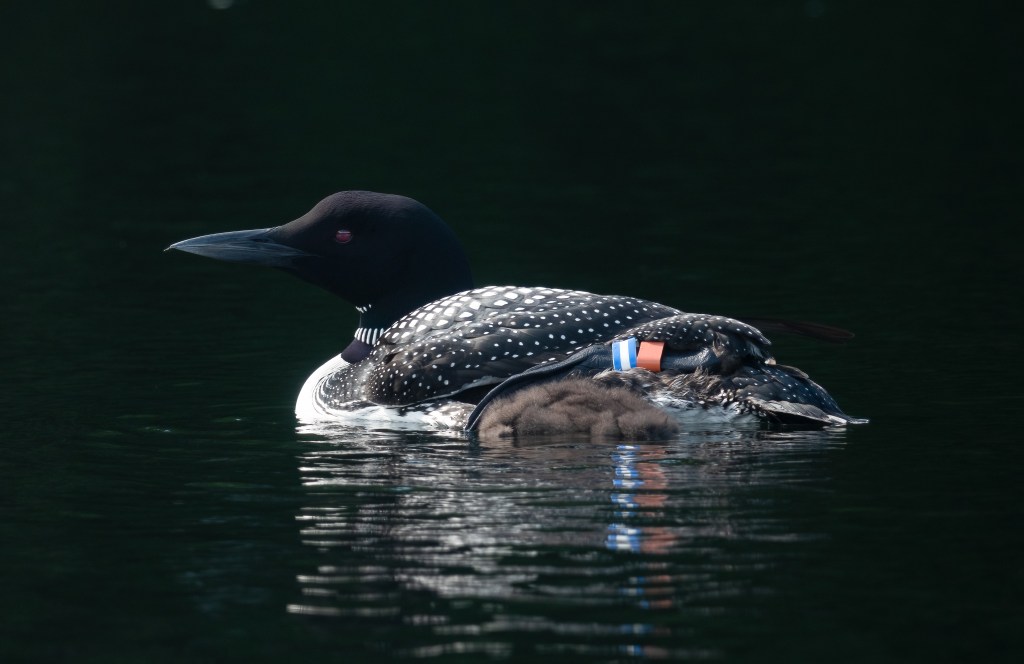
Like many loons around here, she is banded, and has bred on this pond before. Experience shows.

The chick gets hungry, so the parents go fishing, leaving the chick alone and vulnerable

but they return with supplies:

It will have to eat a lot if it is to grow up to be as big as its parents:

PS: I am sometimes asked how I get these shots. I kayak out, and sit some distance off, maybe 30 feet away, if possible in a direction where the light is right. I stop paddling, and just watch quietly, taking the odd shot. They are very relaxed, and sometimes swim straight at me and cross just in front of my bow:

If I ever get the impression they are changing their behavior because of me, I back right off. I also never kayak straight towards them, and try not to look them in the eye. These shots came from four sessions, each of an hour or so.

Creatures of the night

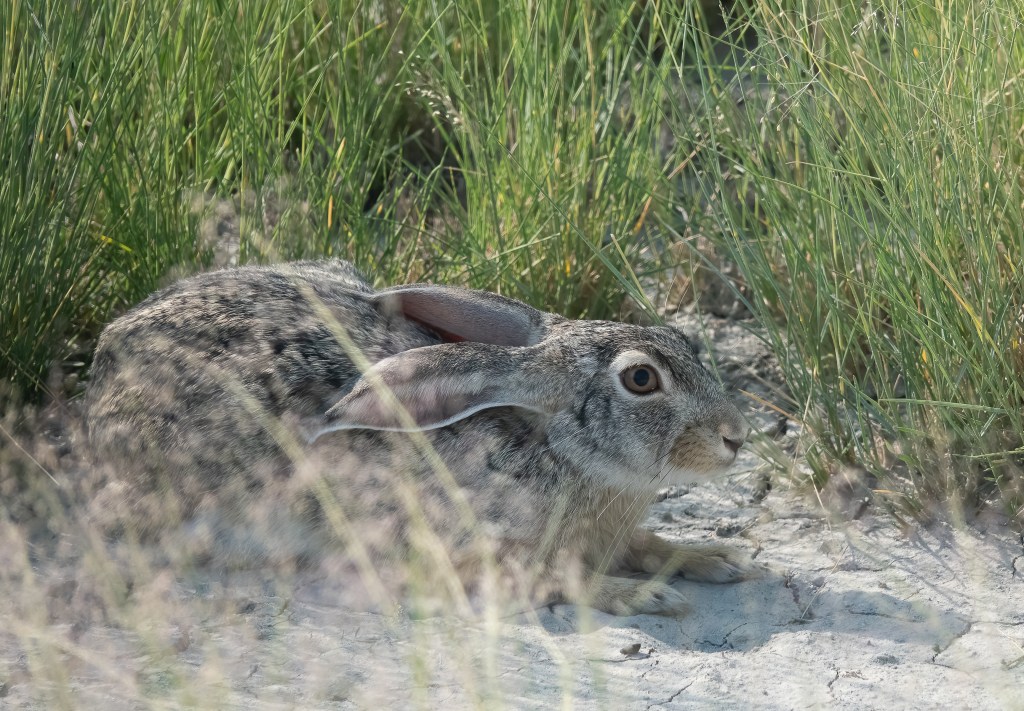
The Cape Hare was fairly easy to see at night in the Makgadikgadi, because out on the open dried-up pan they froze in the headlights:

They have enormous eyes, being mainly nocturnal:

and of course big ears:

In the daytime, they are very well camouflaged:

But their response to danger is still to hunker down and stay very still, so it is possible to get a good look:

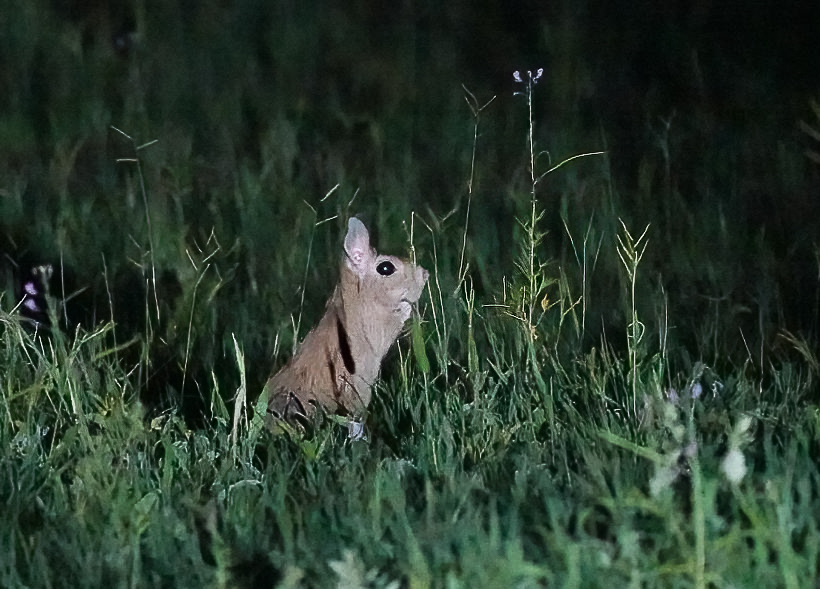
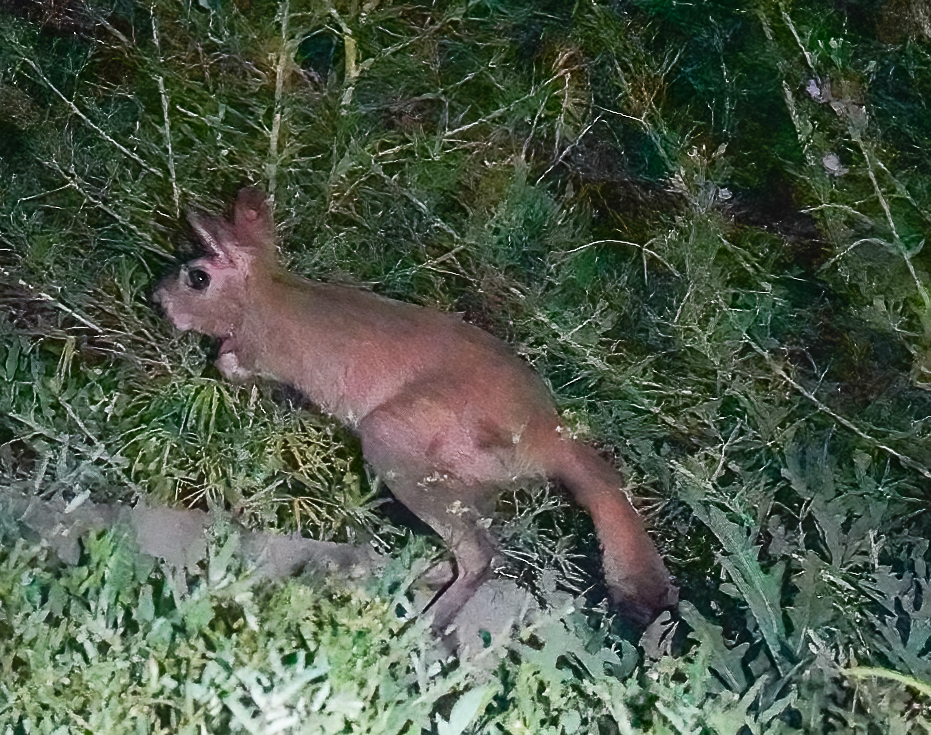
On the night drives in the Makgadikgadi we regularly glimpsed yet another animal I had never heard of, called a Springhare, Pedetes capensis.

It is not in fact a hare at all:

and it bounds through the long grass like a tiny kangaroo with a long tail that it uses for balance.

It is nocturnal, and impossible to photograph. (All these photos were taken by my brilliant friend Annie).

Here is a video (not ours!), showing its long tail and how it hops around: https://www.youtube.com/watch?v=67Kt3R3C7Ec

They’re saltatorial rodents, able to leap up to two meters, and they are herbivorous and live in burrows. The genus used to have only one species, which the taxonomists have now divided into two. Both live in dry parts of Africa.

Last, but most beautiful, was a serval, cleverly spotted by Laura:

The most elegant little cats, about which I have written before. It lingered, so we got a clear view:

before it nonchalantly wandered off into the darkness:


A (very) belated Valentine

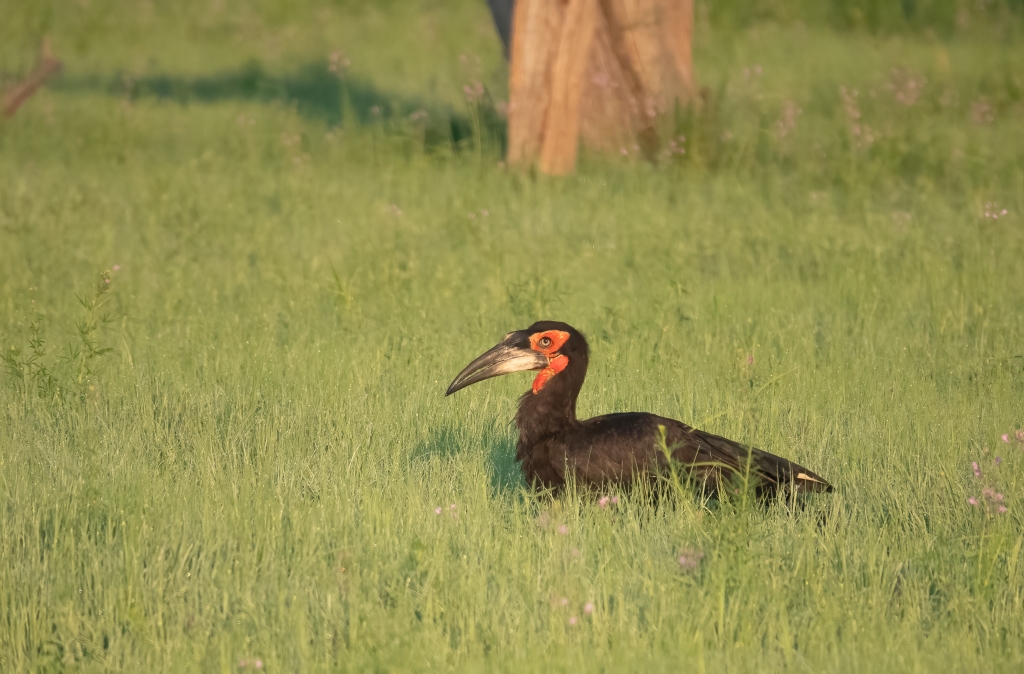
The last time I watched African Giant Hornbills in action was in Ethiopia in 2019, where we watched one wrestling with a chameleon.

https://eyesonthewild.blog/2019/10/19/harbingers-of-death/

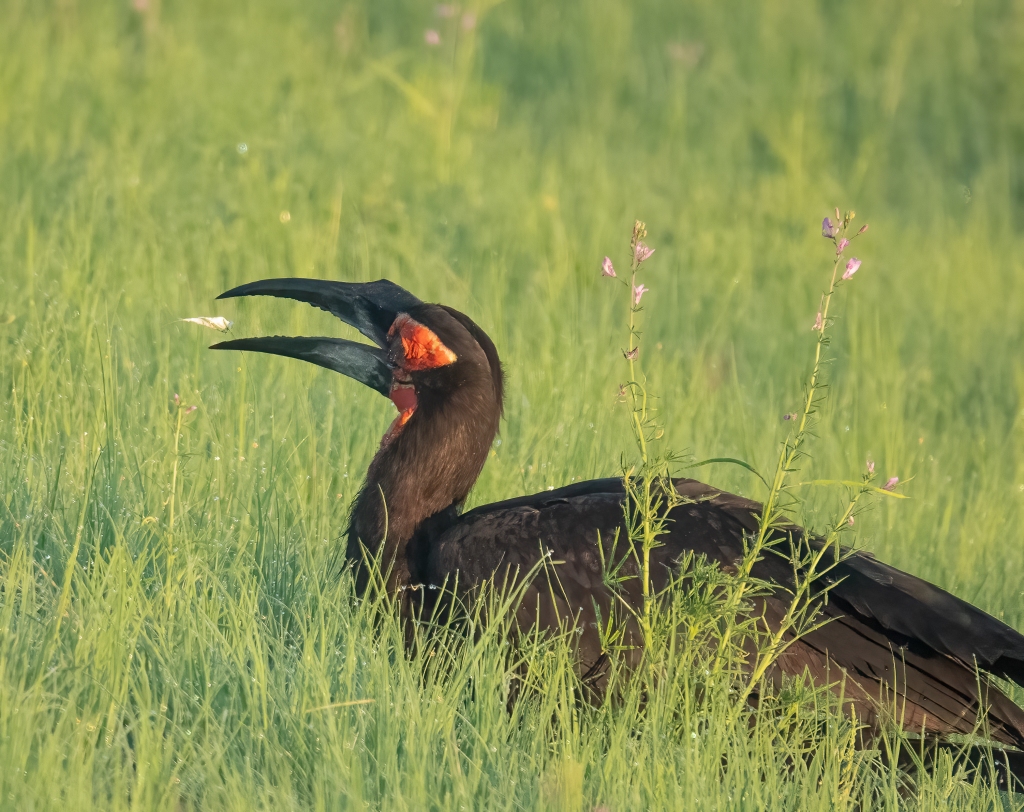
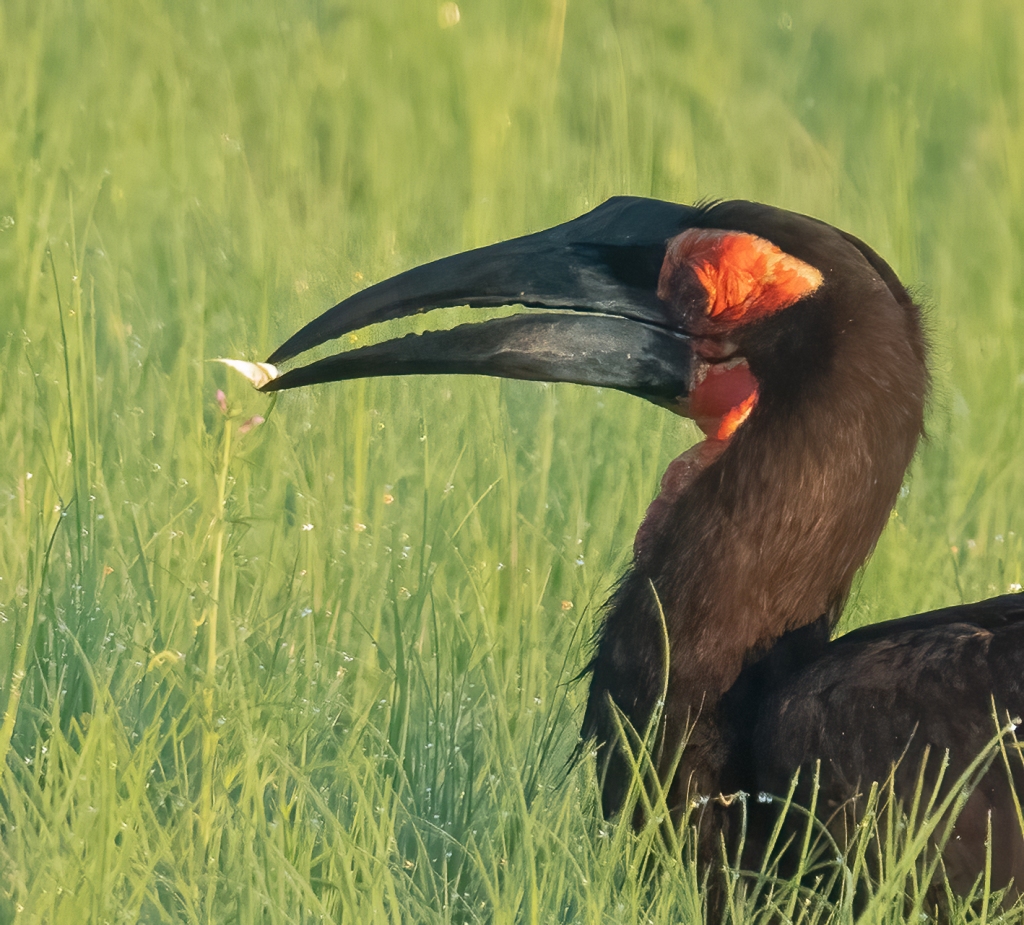
This time, they were eating much much tinier prey, small origami cocoons containing the grubs of some insect. To swallow these, they tossed them the air, just like toucans do. Those big bills don’t always make life easy.

Here is the tasty morsel:

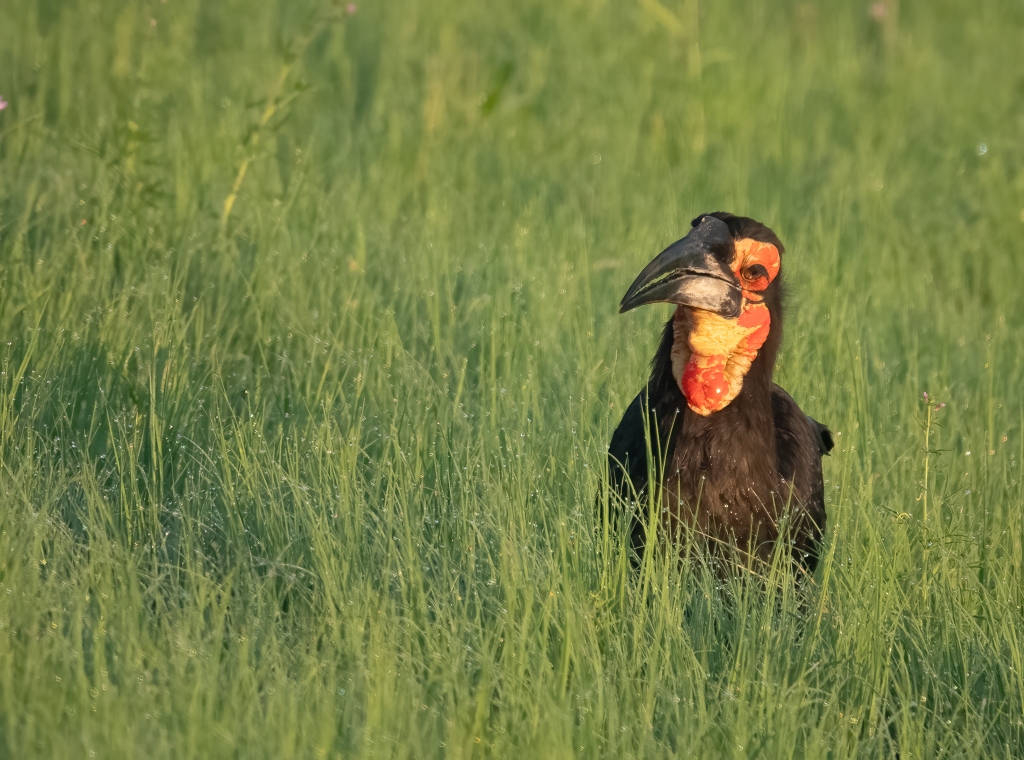
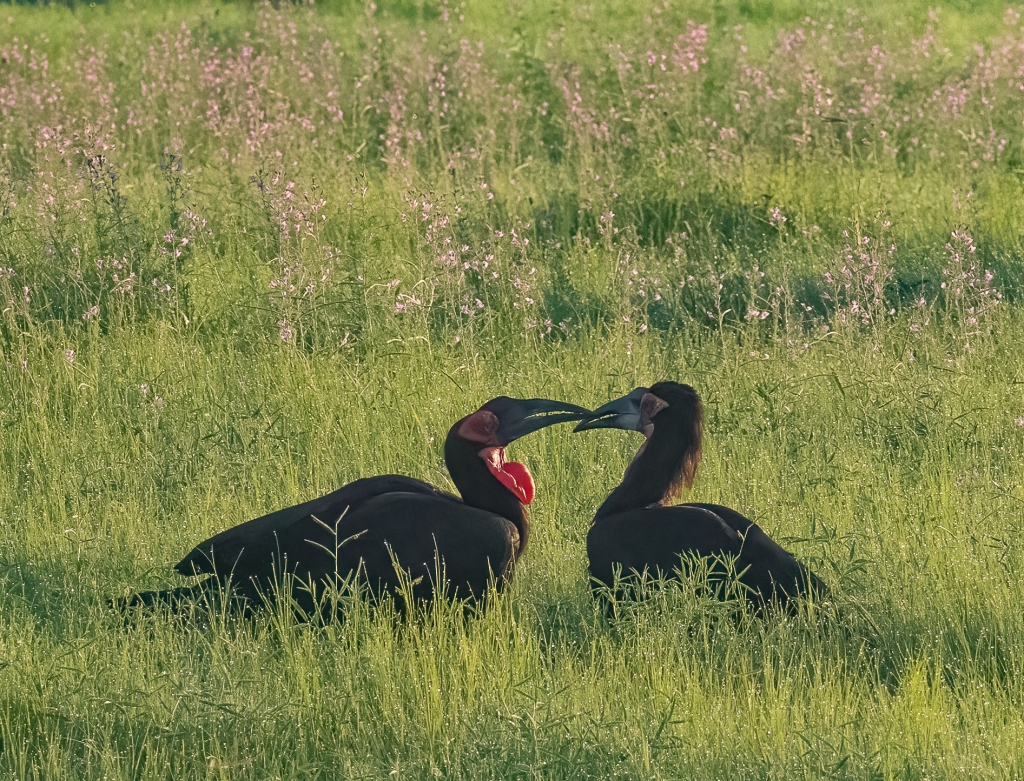
We were watching a nesting pair. This is the male. The folds of bare skin under his beak are usually folded up:

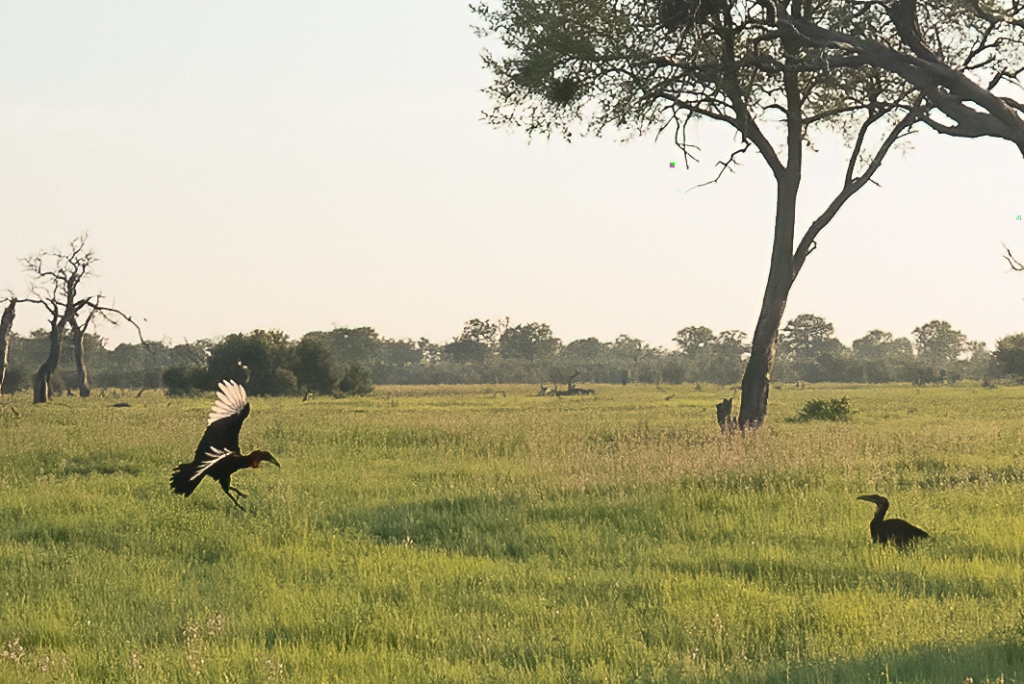
He flew to join his mate, his previously concealed white wing feathers signaling his imminent arrival:

And as they greeted each other lovingly, in front of a Hallmark-worthy wildflower backdrop, those throaty skin folds swelled to form a perfect Valentine:

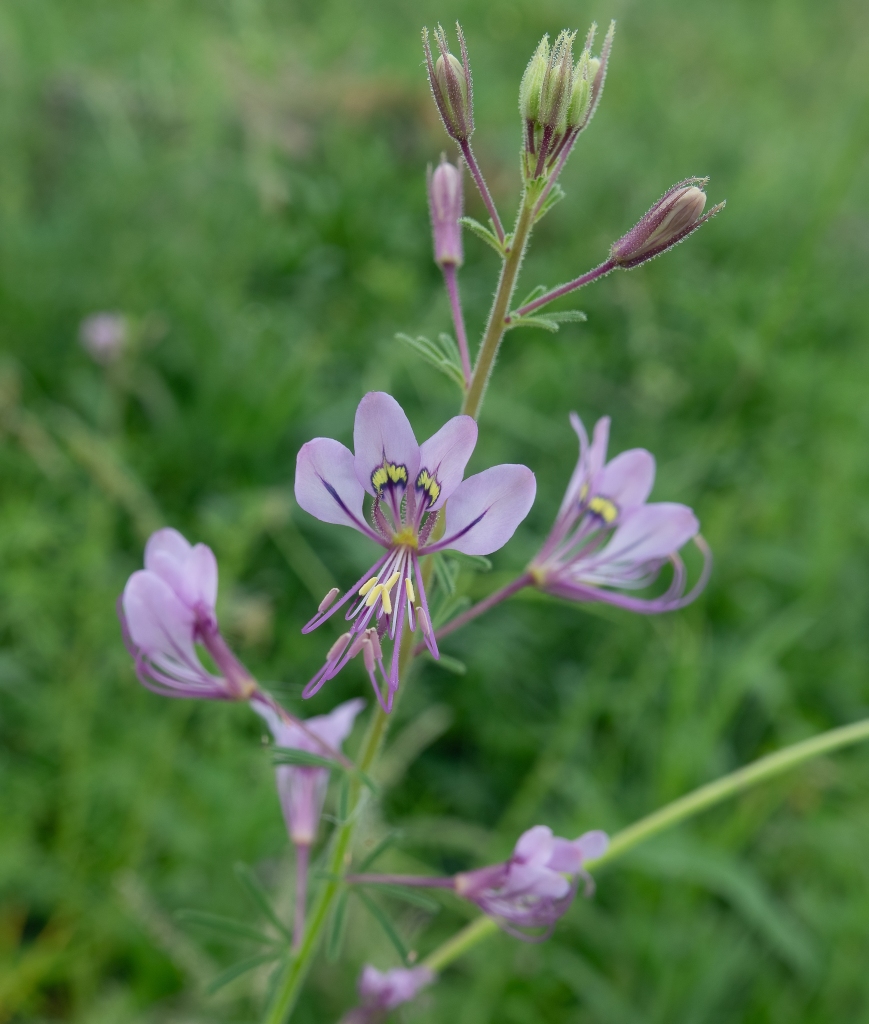
PS Here is one of those wildflowers, known as a Pretty Lady, or much less romantically a Hairy Spindlepod, Cleome hirta.

The unknown unknowns: Tsessebe

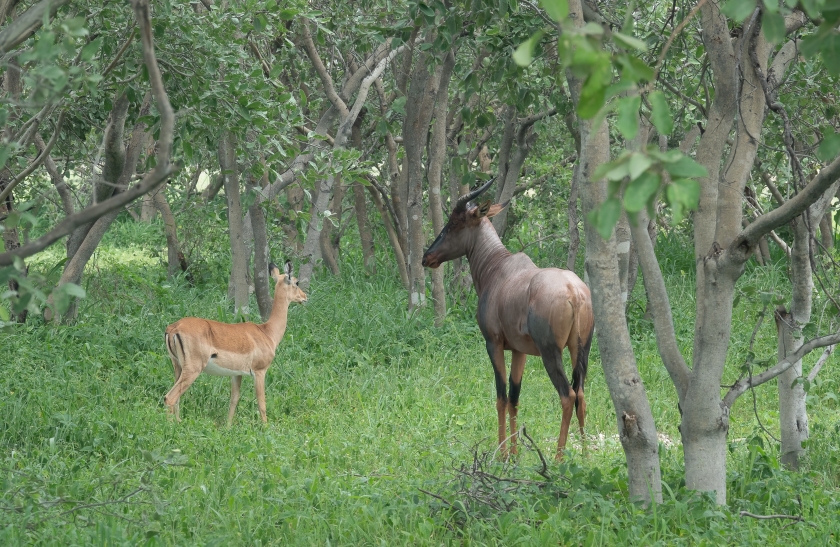
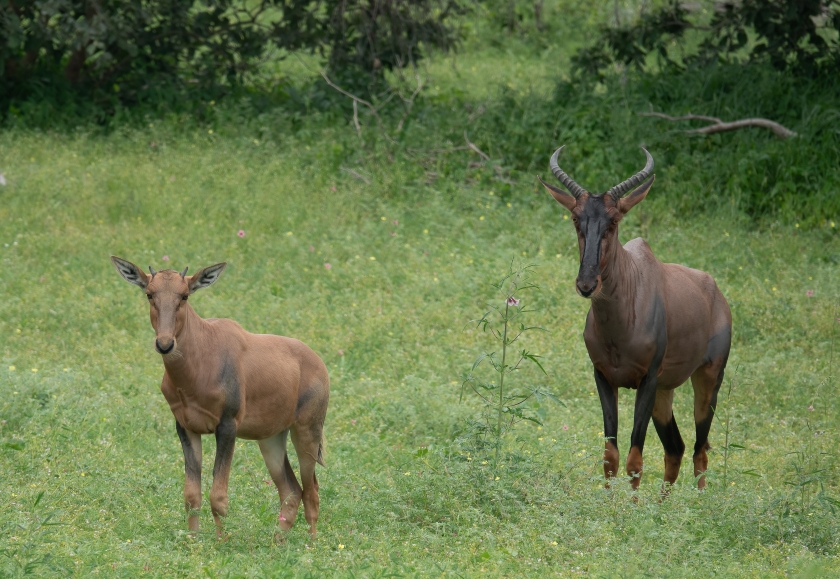
I am always delighted to discover an animal that I have not only never seen before, but never even heard of, and indeed can barely pronounce. Such a one was the Common Tsessebe, Damaliscus lunatus lunatus. These Eureka moments remind you that no matter how old you get, there is still a vast undiscovered world out there to learn about.

First, there was a single male, amongst a group of impala.

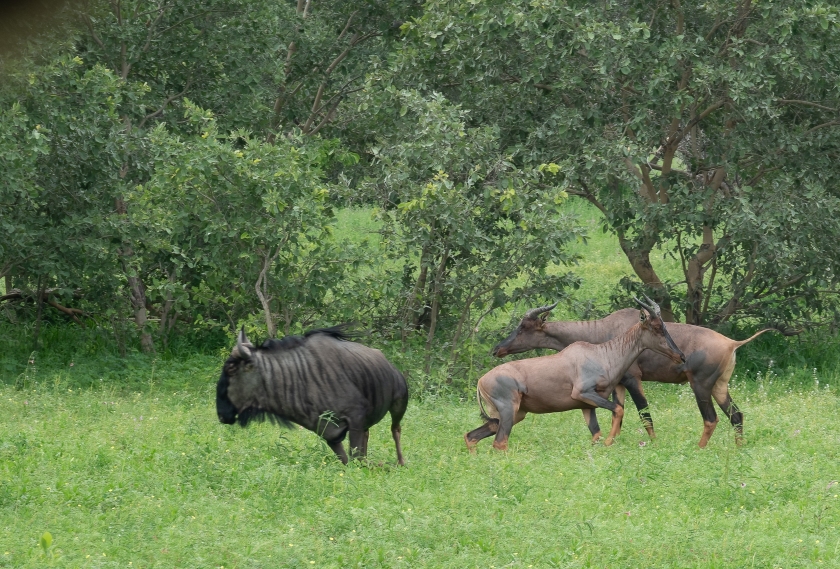
Then, there was a group of females, with a wildebeest.

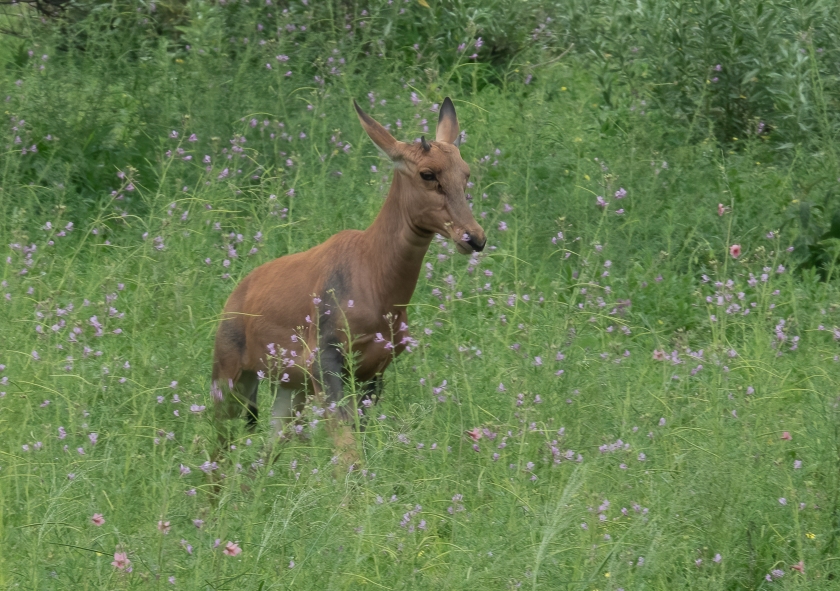
And they had little ones

with tiny horns

The tsessebe is a large strong antelope, the fastest on the planet. It can top 90kmh. I thought to myself “It looks rather like a topi”, and indeed they are closely related, but the horns are differently shaped.

A bug blog

We read a great deal about the huge declines in insect populations worldwide, so I am always thrilled to discover a new bug. Most of these I have never seen before: always something new under the sun.

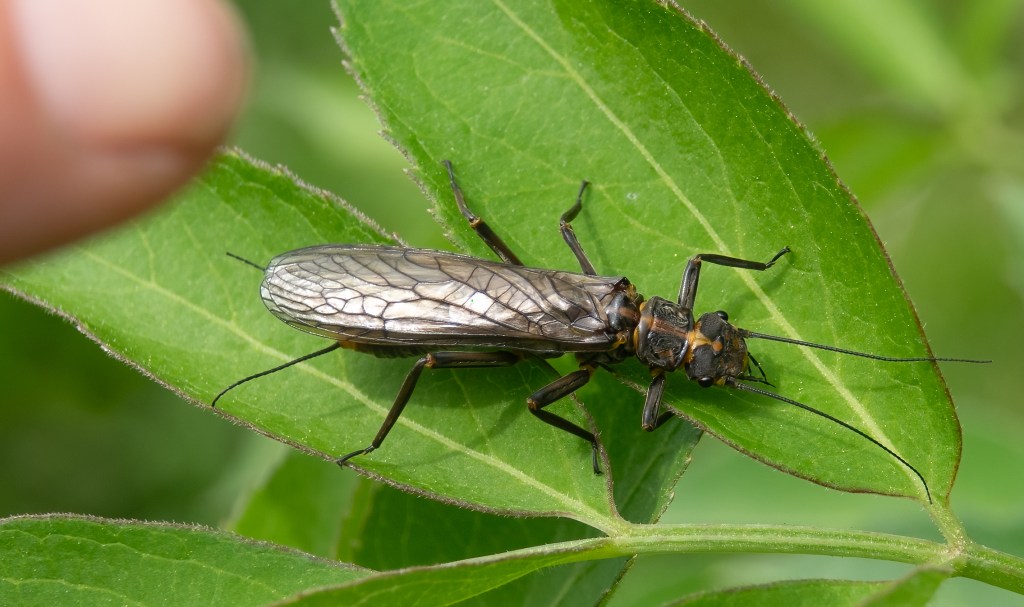
Look at this enormous Stonefly, about 1 1/2 inches long; my finger is there for scale. Its belly was bright orange.

I tried to get an accurate ID, and found, rather excitingly, a photograph of what looks like the same species, labelled by Bugguide as “unknown to science”. I’ve uploaded my photo and am waiting with bated breath for some entomologist to name it after me.

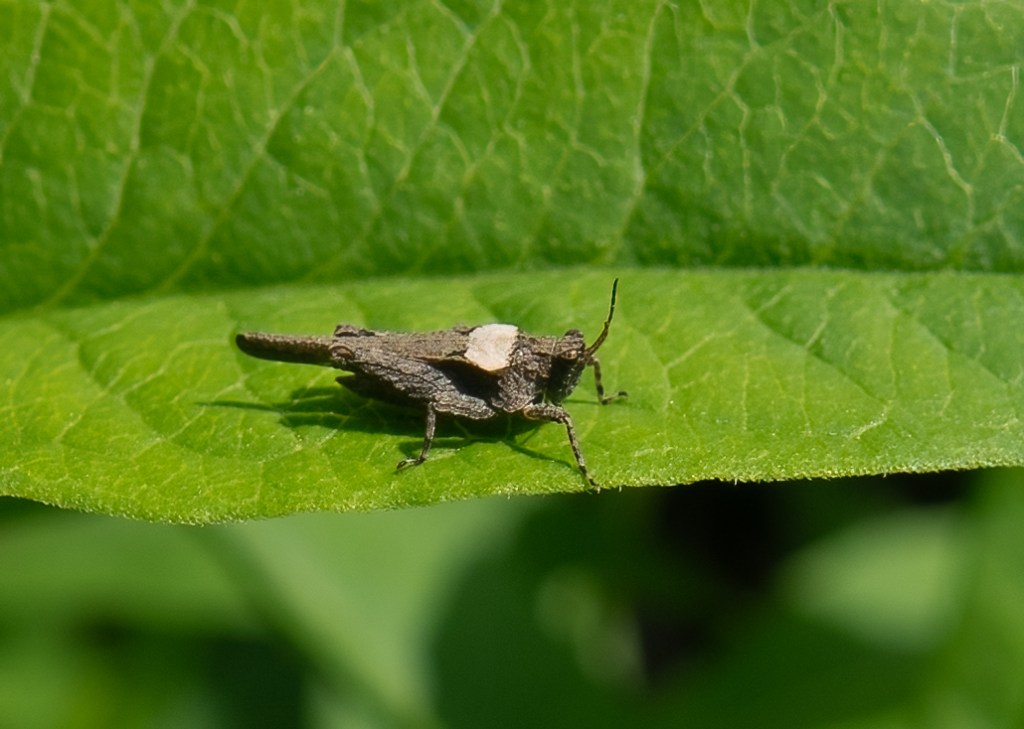
In contrast, here is one of the world’s tiniest grasshoppers, at about 1/4″ long. It rejoices in the modest name of Obscure Pygmy Grasshopper, Tetrix arenosa, in contrast to all those more bombastic Famous Giant Grasshoppers out there. It took some work to ID it, ably assisted by Brandon Woo of Texas A&M.

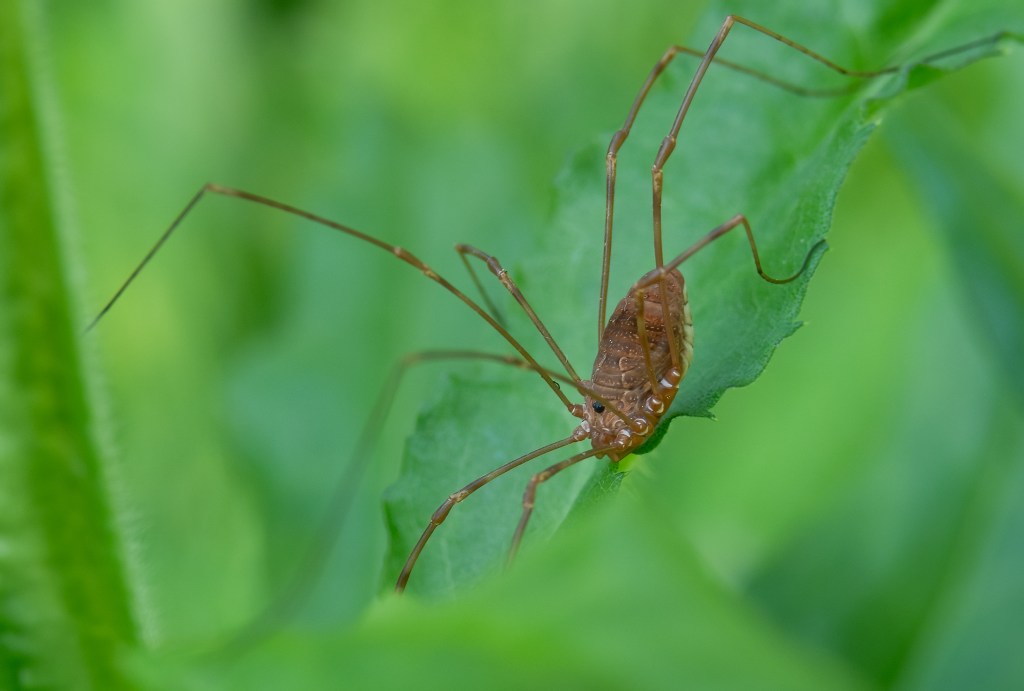
When I was a child, I had an irrational fear of Daddy Longlegs, not strictly insects since they’re eight-legged arachnids, like spiders. Having long since put aside childish things, I now find them fascinating. More properly called harvestmen, in close up they are intricately put together.

This one is, I think, Leiobunum ventricosum. Unlike spiders, they do not produce silk, have a single pair of eyes, and the thorax and abdomen are almost fused into a single body part. The second pair of legs are extra long and double as antennae; you can see it reaching out with one, exploring its world.

I’ll end with two species of damselfly, both bluets, on the edge of my beaver pond. Although these are not new to me, they are beautiful, and remind me that summer is upon us. These four Azure Bluets, Enallagma aspersum, have all recently emerged, and their wings are spread while they harden .

Right next to them was a pair of amorous Vernal Bluets, Enallagma vernale, the male distinguished from the Azure Bluets by having most of its abdomen blue rather than black. The rather drab female attempting to get into the appropriate position has a greenish head and beige body.

I should note that the male is not trying to strangle his bride. During mating he holds her still while she raises her abdomen to receive his sperm.

Old friends

Two solitary elderly male elephants approached each other from opposite directions.

This short video shows what happened; it is briefly silent at the start, but make sure your sound is on high:

The trunk greeting, in which they smell each others’ mouths, is common. Our guide said they were likely to be old friends reuniting, and would now hang out together for a while. Although he suggested that the rumbling sounds you hear are deliberate tummy rumbles/burps, the scientific literature disagrees, and says they are laryngeal in origin (yellow below), mediated via very large resonating cavities including the trunk, in light blue below (from Beeck et al 2022).

Stoeger et al 2012 show that in bonding situations, when the animals are close to each other like the two we watched, the rumbles are emitted orally, not nasally.

As for me, I’m off to lunch with old friends from high school. In this bonding context, any nasal snorting sounds will be caused by laughter.

Report from my turf

Time to update you on Lovell. The migrating waterbirds have moved on to Canada, but others breed here:

Hooded Merganser with 13 ducklings

Canada Goose gander with one of his three goslings, a few hours old.

A solitary Double-crested Cormorant has been hanging around

and most surprisingly a loon, usually only found on much much bigger water bodies, here amongst the spatterdock and dragonflies:

Off the water, the songbirds are here. Merlin and I heard 19 species in 20 minutes in my backyard on May 25. Migrants like the indigo bunting and the scarlet tanager breed here too:

Indigo Bunting
Scarlet Tanager

and something has built a clever nest in a cleft in this huge rock:

Bird’s nest in glacial erratic boulder
An Eastern Phoebe: both parents were watching me warily

Reptiles and amphibians are out and about:

Garter Snake

Green Frog

Butterflies and moths are emerging:

Eight-spotted Forester Moth

That is not pollen, but its own hairy orange legs.

Tiger Swallowtail butterfly
Black Swallowtail butterfly

As are mayflies and tiger beetles:

Mayfly sub-imago
Six-spotted Tiger beetle

Wildflowers appear deep in the woods, before the tree foliage blocks out the sun. Here is a Rose Twisted Stalk, with the tiny midges that pollinate it hovering nearby:

Rose Twisted Stalk

And finally, mammals. Deer, bear, and moose are around, though none have posed for me. But this beaver did:

May in Maine.