Pink Elephants

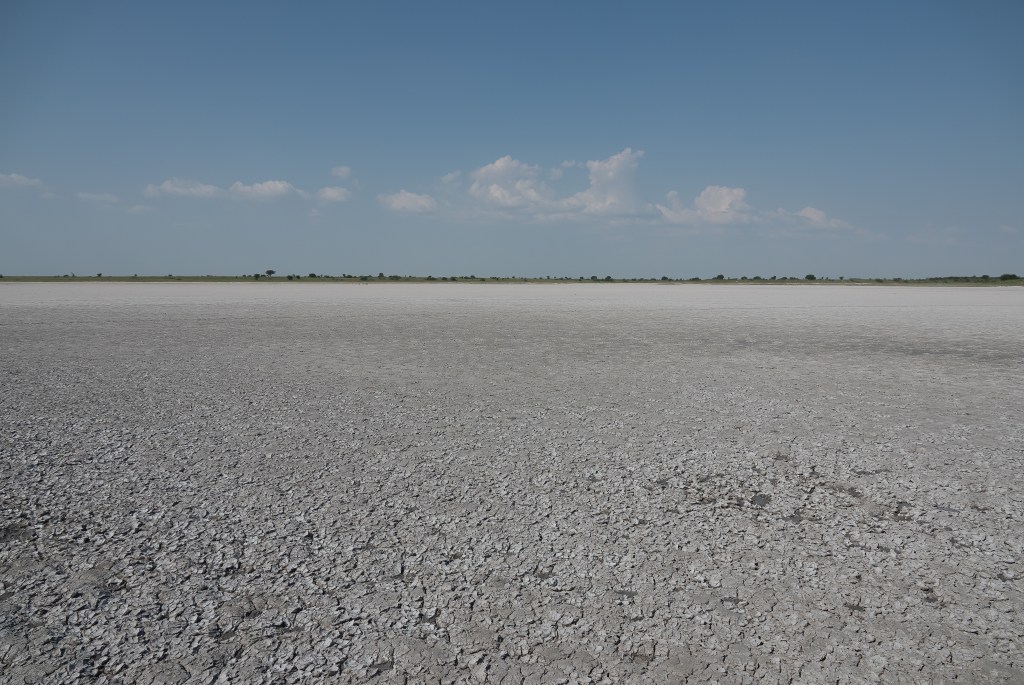
The elephants hereabouts in the Makgadikgadi find shallow muddy pans and roll in them. Here is a fully dry pan:

When the salty mud dries, the elephant looks almost white.
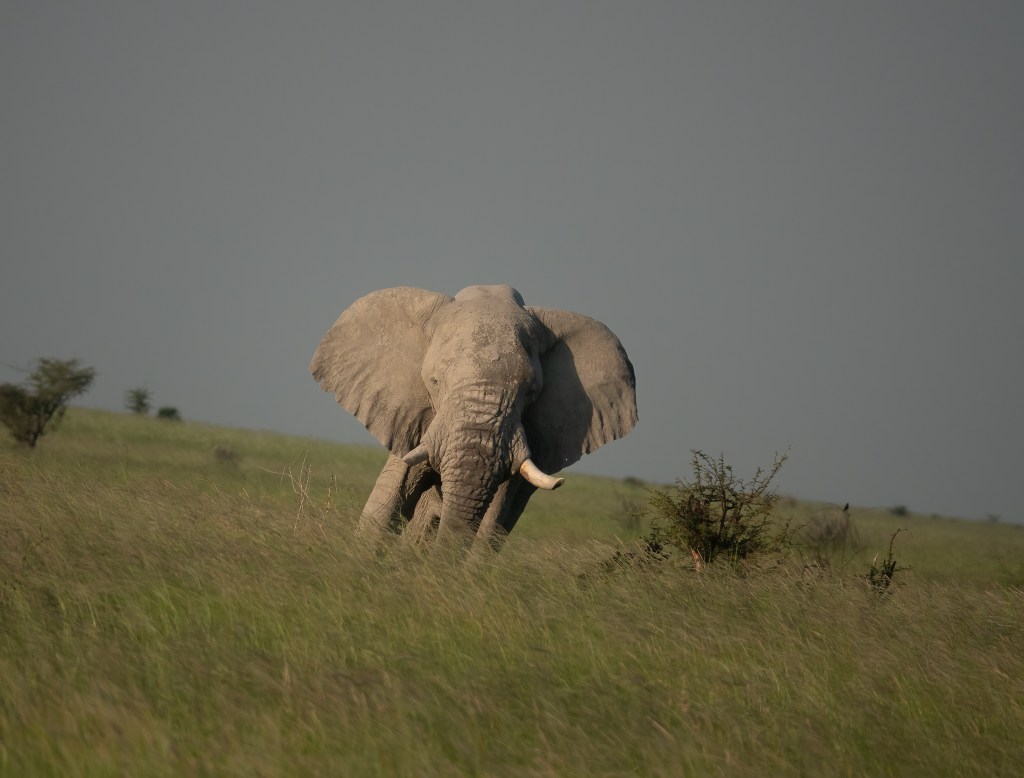
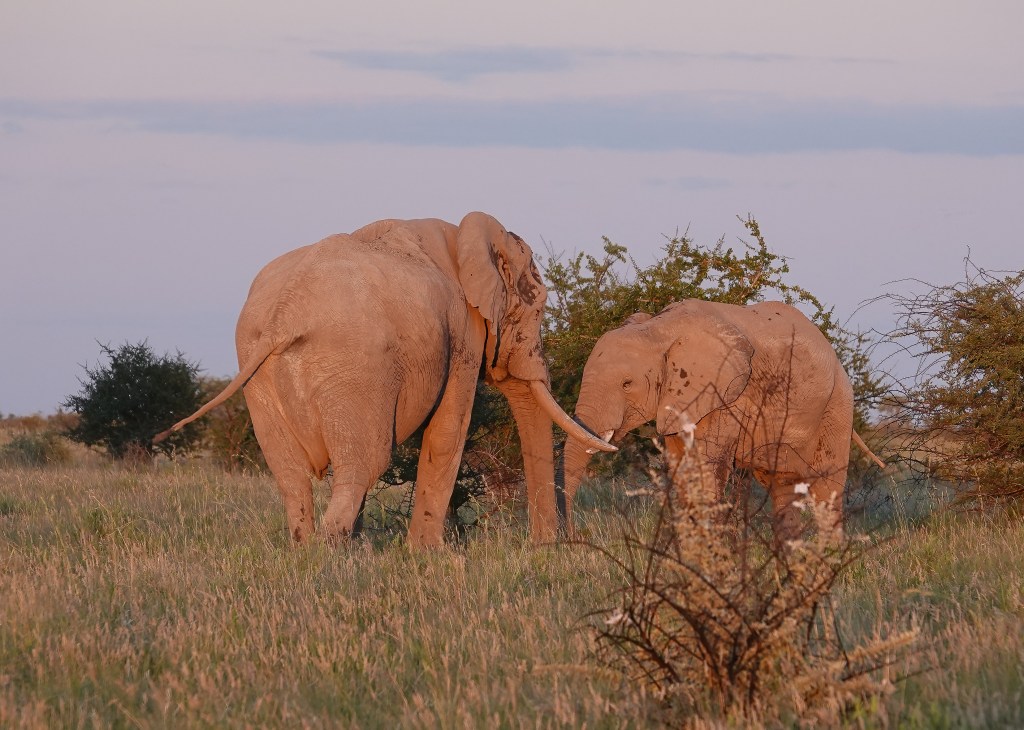
But as the sun sets, they are gradually transformed:

This was a small breeding herd of females and youngsters. The sun is quickly getting lower:

No rose-tinted spectacles or tot of gin is required to see this effect.
But at this time of year, most of the elephants here are solitary aging males. This one is in musth, shown by the secretions leaking from the gland between his ear and his eye.
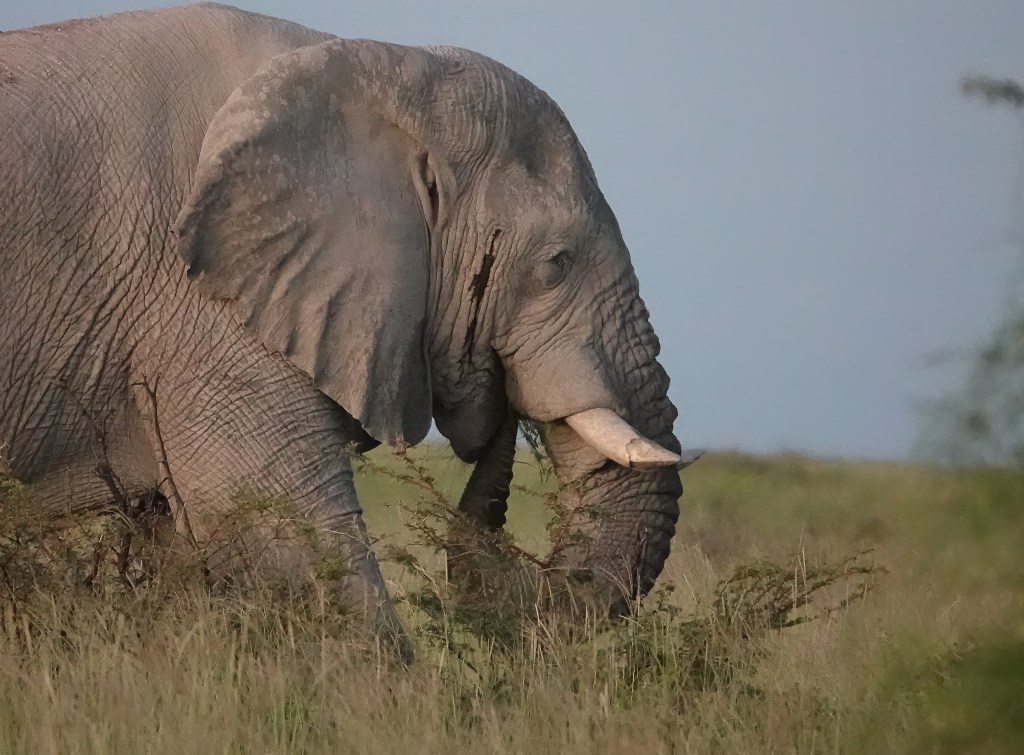
If he were still young and virile, he’d be quite dangerous at this time, rampaging around in search of females. But he is near the end of his life, tusks broken off, too tired for all that fuss.

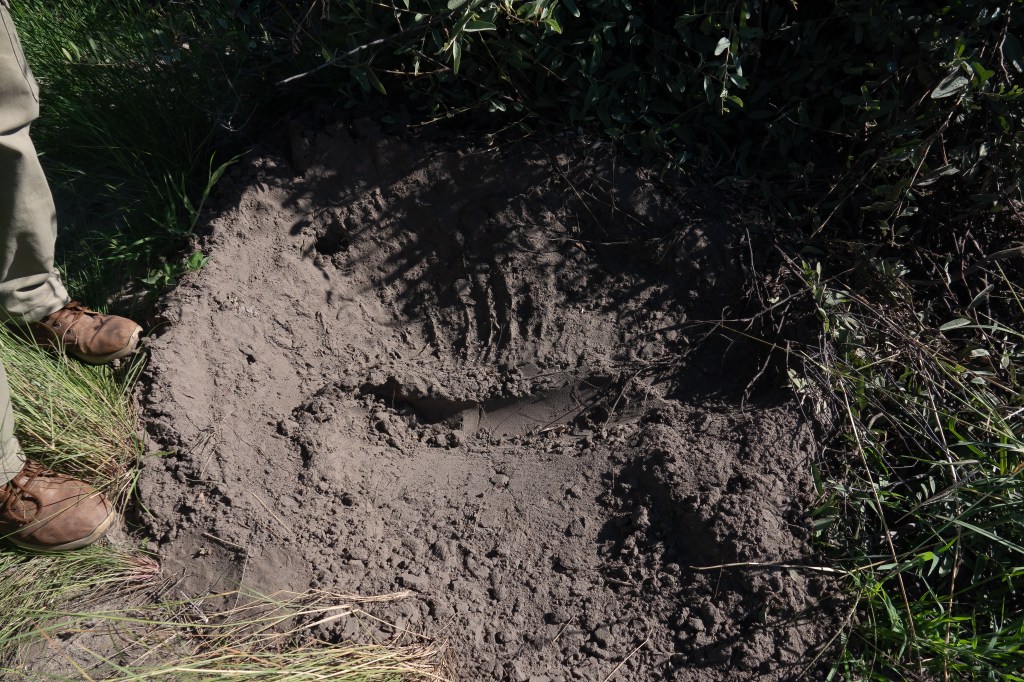
As the elephants move through the landscape, you sometimes find their bedrooms. They choose a small sloping bank, and scrape a depression in it. They lie so that their feet are lower than their head, making it easier to get up in the morning! In this shot, TJ is standing near the head rest area, the feet would be in the foreground.

Here you can see the impression of his wrinkled trunk, and a single tusk:
My final shot of this story is a rare view of the underside of an elephant’s trunk. The sides fold inwards, so he can get a good grip on a bunch of grass or a mouthful of twigs.

Farewell for now, as he and we leave the Makgadikgadi for the Kalahari.

Oases

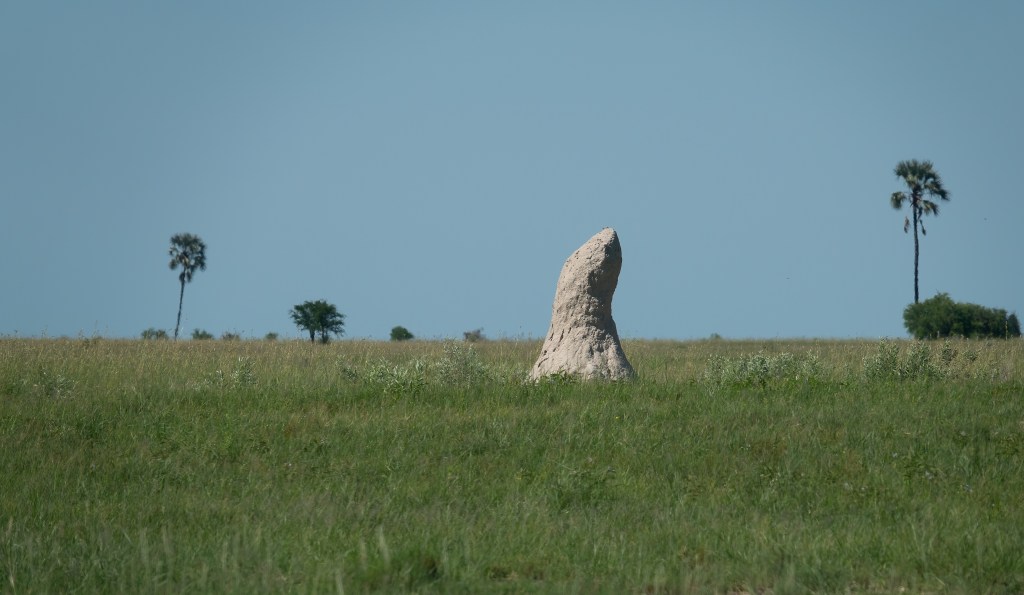
Although the Makgadikgadi pans were mostly very dry, punctuated only by occasional trees and termite mounds

there were a few that retained some water:

and where there is water, there are water birds. These are Blue-billed Teal, Spatula hottentota, formerly commonly known as the Hottentot Teal, a name less used now for obvious reasons.

When their wings are spread, there is a stunning green patch:

You can clearly see below that even this pond is in the process of evaporating into nothingness, and the ducks will be forced to move on.

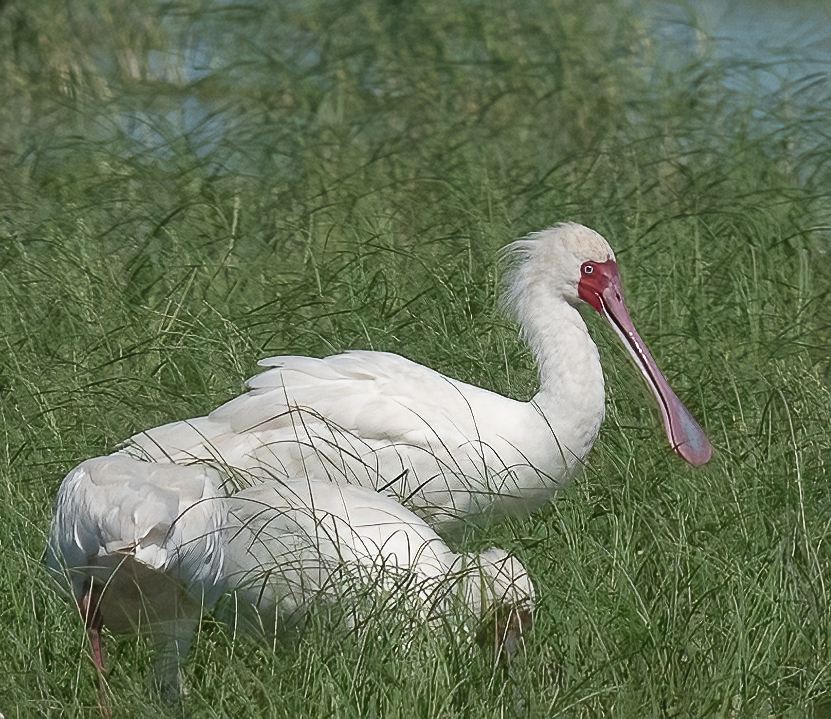
We had hoped for big flocks of pelicans and flamingoes, but it was far too dry for that. However, we did see comically implausible African Spoonbills, Platalea alba:

lined up as if on on parade:

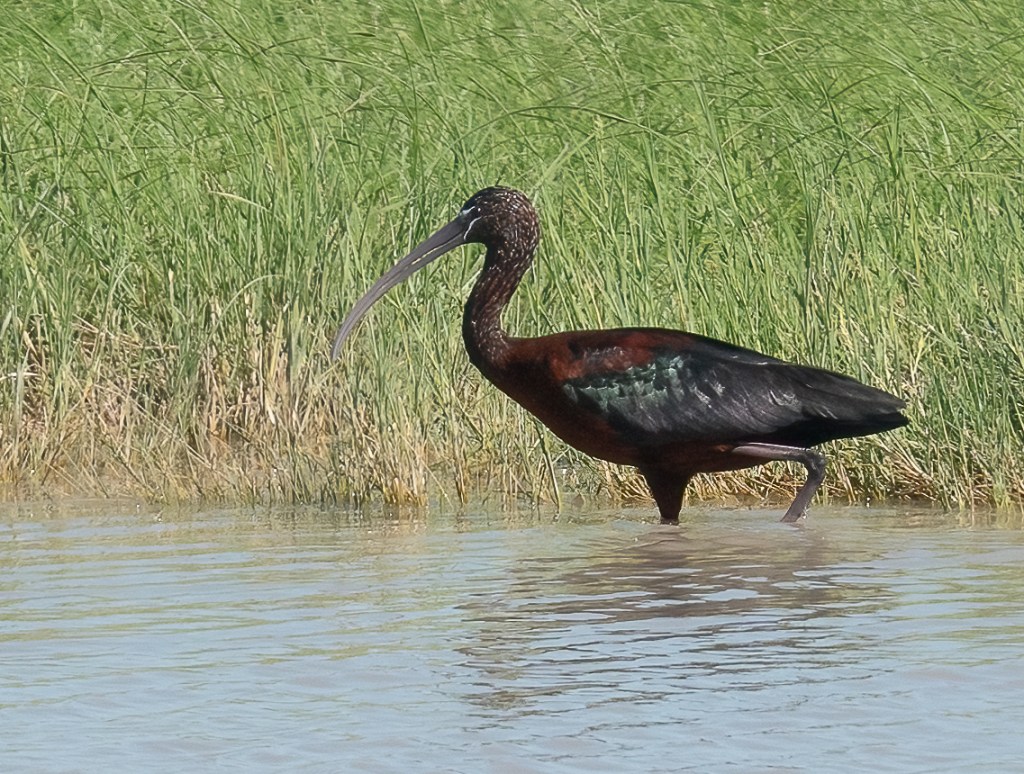
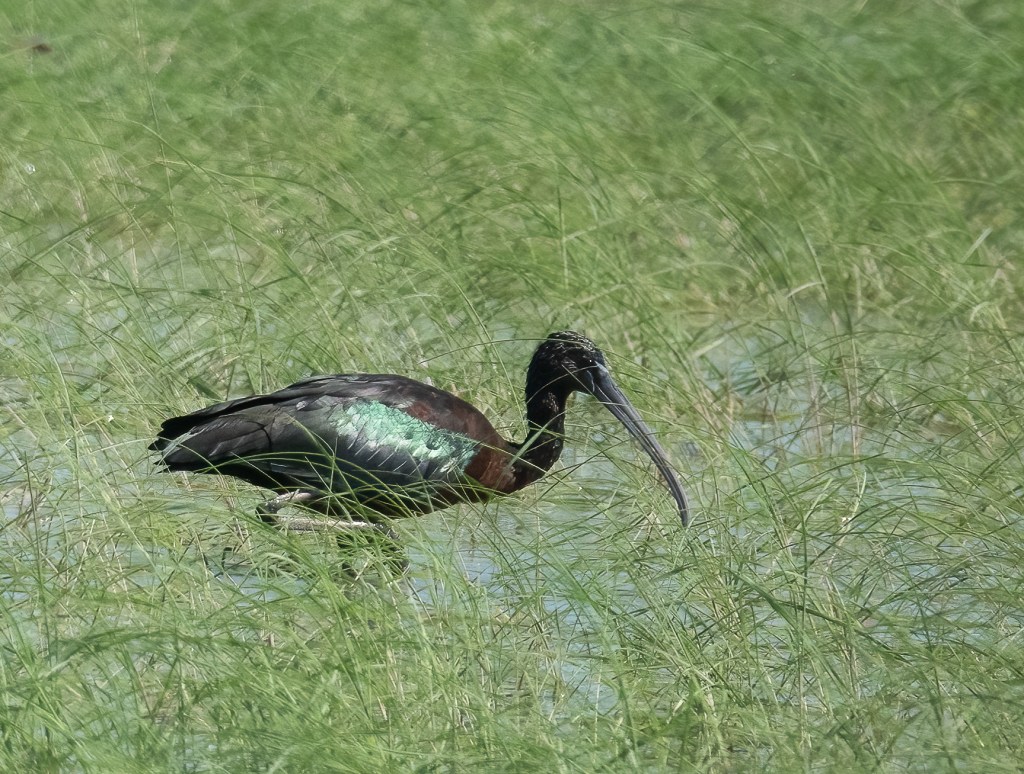
and Glossy Ibis, Plegadis falcinellus, just plain black at first glance, but a handsome a dark purplish metallic bronze in good light:

with a flash of green when the light catches their iridescent wings:

All three of these birds live year-round in much of sub-Saharan Africa, and forage in shallow water, feeding mainly on invertebrates. They are not threatened, and the ibis have even spread to the Americas. Spoonbills show up more and more often as far afield as Europe and even the UK.

PS As the effects of climate change become more and more worrying, we all know that trees have a major role to play in storing the carbon that is causing the problem. But much less publicized has been the positive role of grasslands, which store their carbon in the soil. Recent research suggests that both natural grasslands like the Makgadikgadi, and managed ones, may be better carbon sinks than forests in unstable, warming, drought-like conditions.

https://climatechange.ucdavis.edu/climate/news/grasslands-more-reliable-carbon-sink-than-trees#:~:text=Unlike%20forests%2C%20grasslands%20sequester%20most,in%20woody%20biomass%20and%20leaves.

Foxed

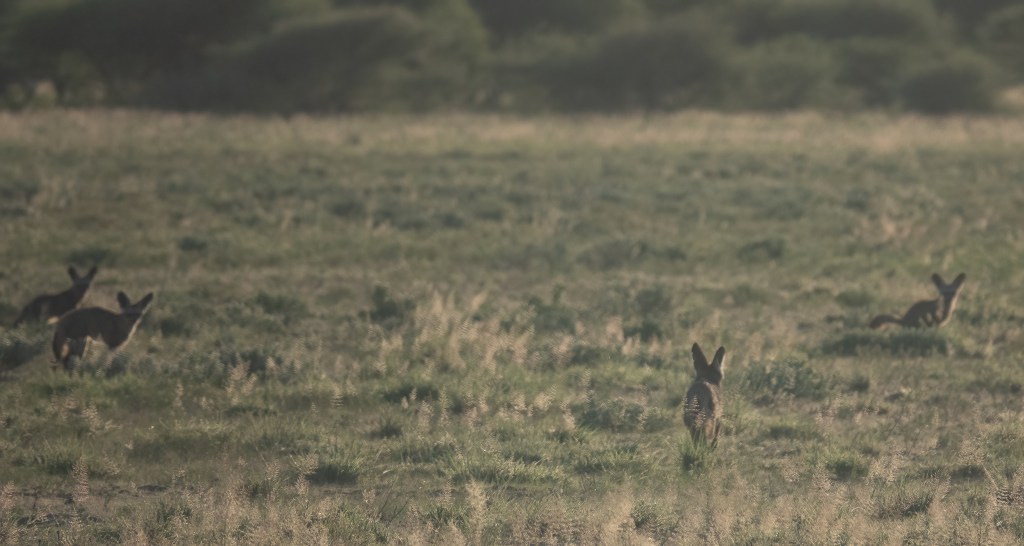
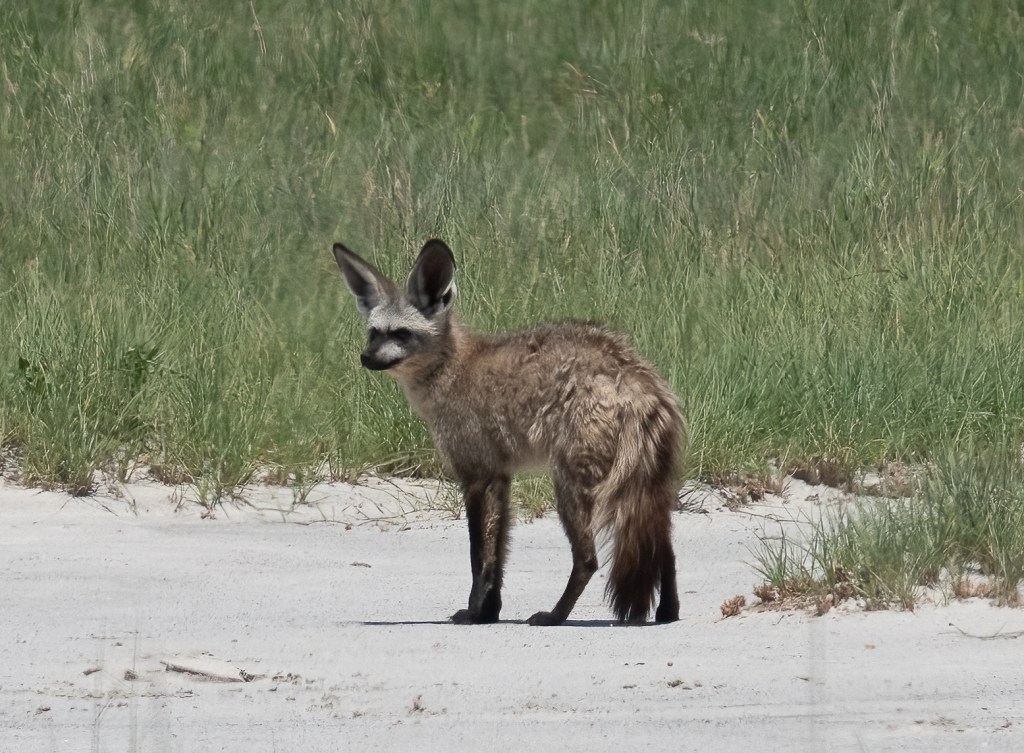
We saw two species of fox in Botswana. Our favorite was the Bat-eared Fox, Otocyon megalotis. Here are four from a distance (in the Kalahari), either a pair with two cubs, or possibly two pairs.

They weigh about 4Kg, and are the only truly insectivorous canids, eating mainly termites. Their teeth are adapted for this diet, and they have no really close relatives, being the only members of their genus. The rest of these pictures were taken in Makgadikgadi NP.

They have enormous ears, which help in thermoregulation;

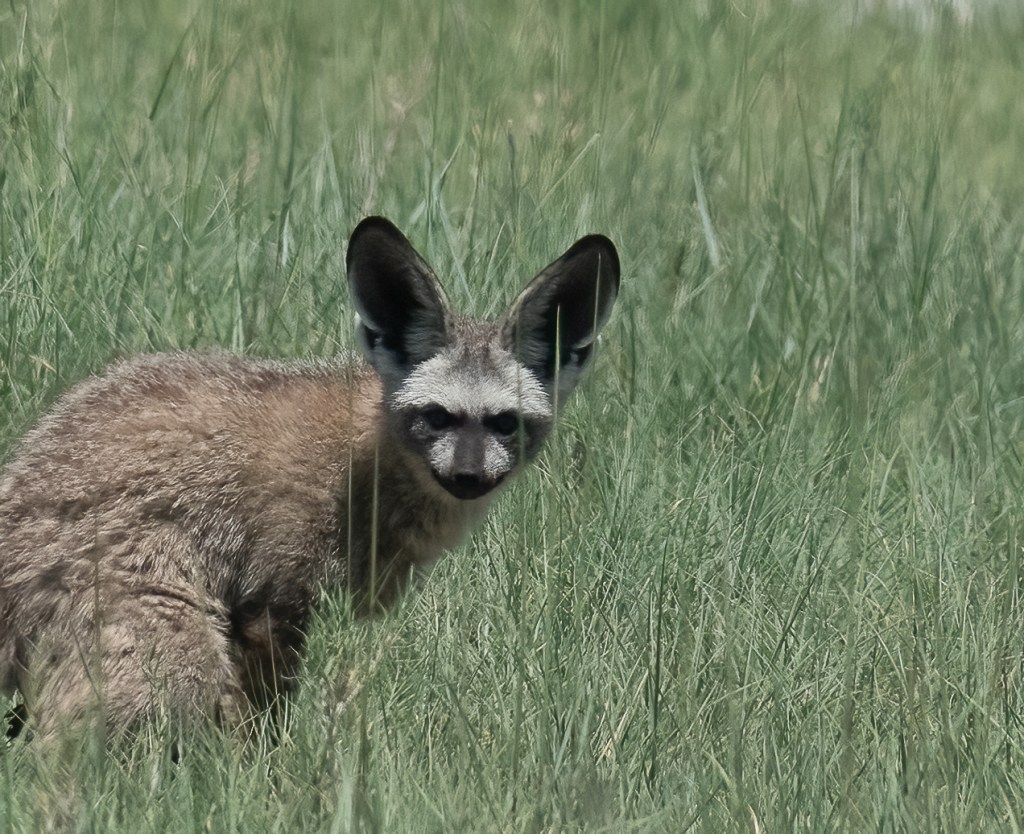
and they have charming faces:

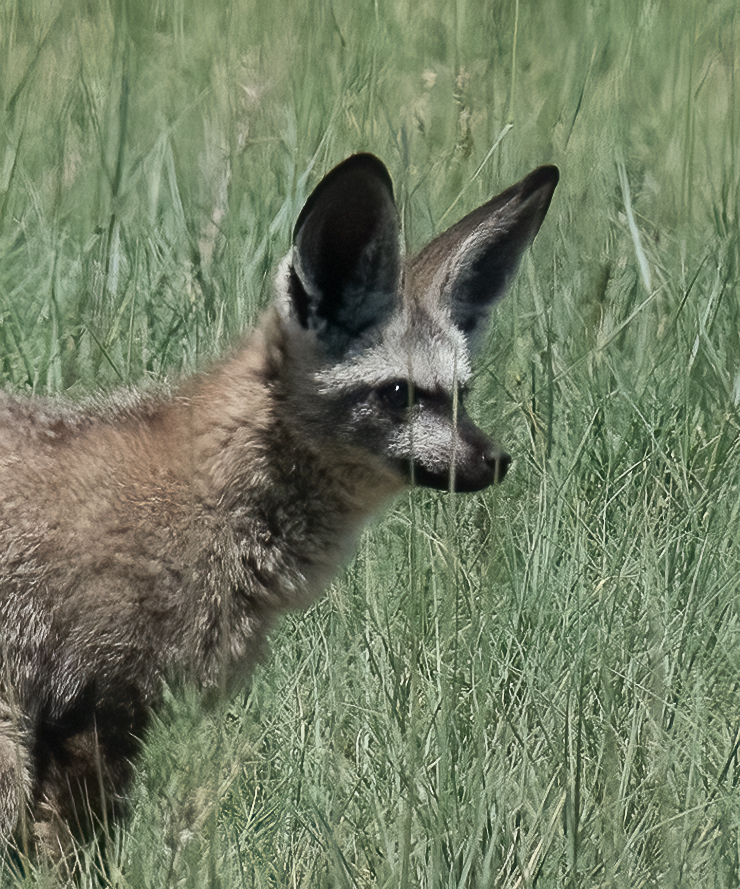
This one was motionless*,

giving me time for a second close-up:

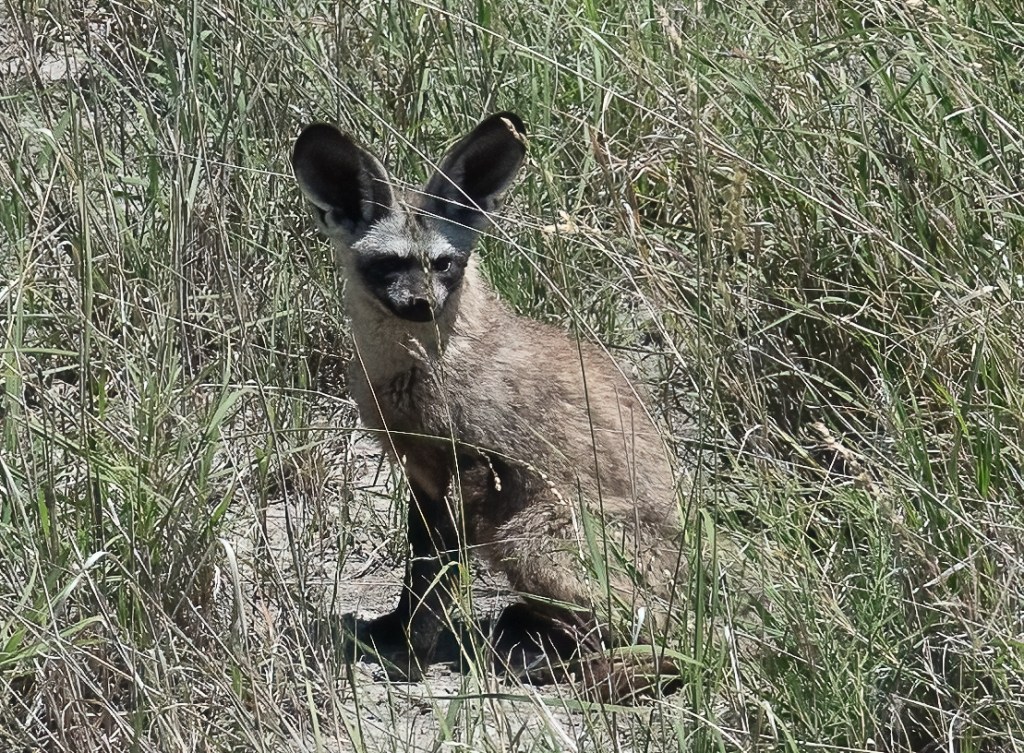
They are socially monogamous, these two were part of a family of three,

The cub was fascinated by us and sat down close to the vehicle to study us more closely:

Socially monogamous species are not always sexually monogamous, as shown by studies of Extra-Pair Paternity (EPP). In these foxes, though, the level of EPP is low, under 10% of cubs (Wright 2010). This may be one reason that males invest large amounts of time in caring for the cubs: more than the females, in fact. In socially monogamous birds there is known to be a correlation between low rates of EPP, and high rates of paternal care. (Søraker et al 2023).

To close, the other fox species we saw, the Cape Fox:

* We Brits love a good pun.

A heavenly clatter

The omnipresent soundtrack of the Makgadikgadi grasslands was this:

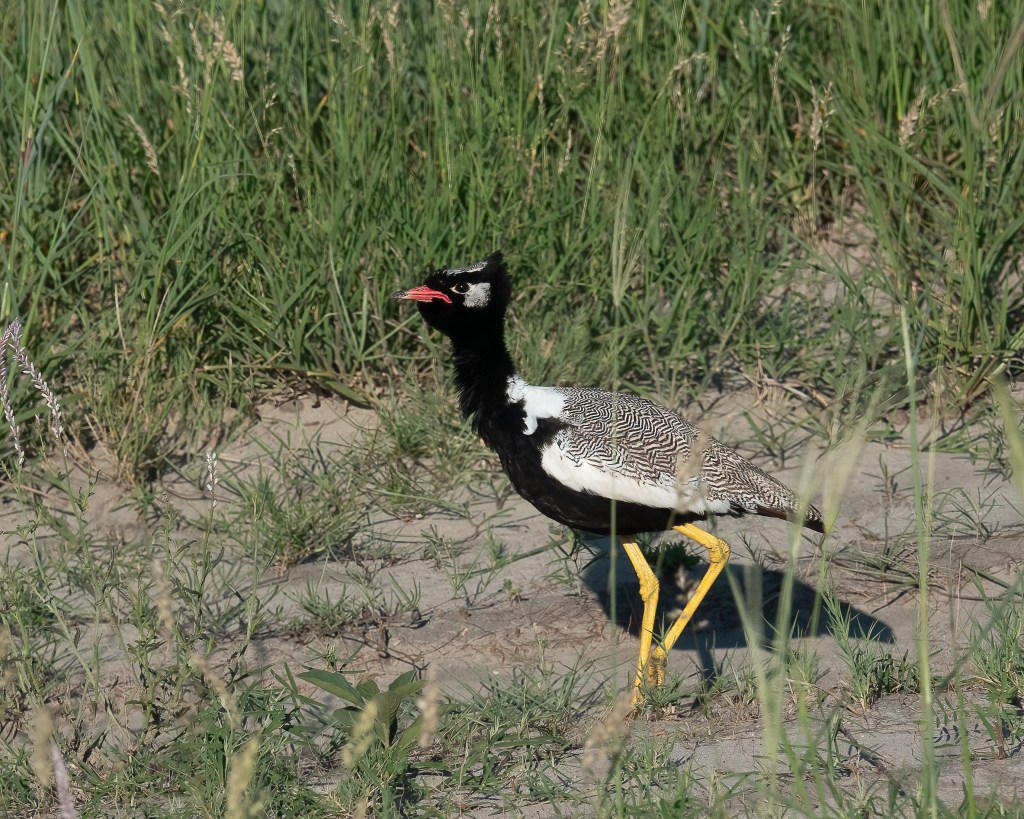
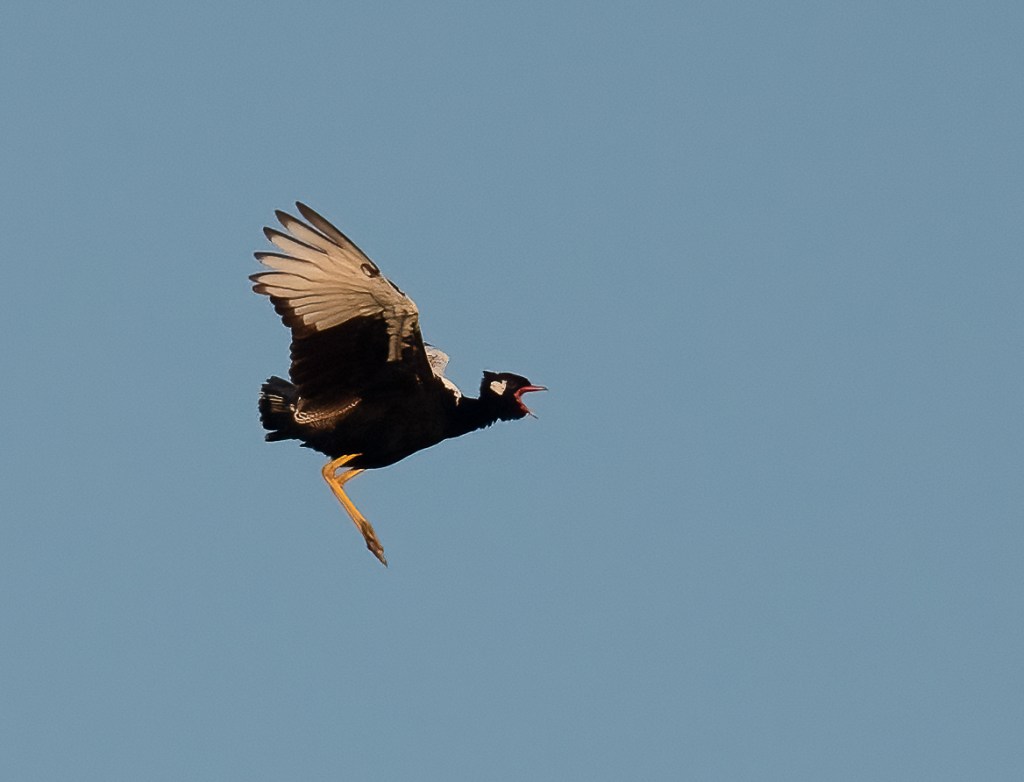
Loud, insistant, and everywhere. The male Northern Black Korhaan, aka the White-quilled Bustard, Afrotis afraoides, attracts the girls by flying along, squawking as he goes, then suddenly dive-bombing her. The guides call them Suicide Birds.

He is quite handsome when strolling calmly along:

But once he’s in the mood for love, his recitative begins:

Take-off, still singing:

Once he reaches maximum altitude, he begins to plan his descent, and his legs go down:

Here he is in closeup, still mouthing off. He will keep it up all day.

If I were a female Black Korhaan, I’d succumb: anything to get him to shut up, rather like tipping strolling minstrels not to play at your table in an Italian restaurant.

Ankle-height to a giraffe

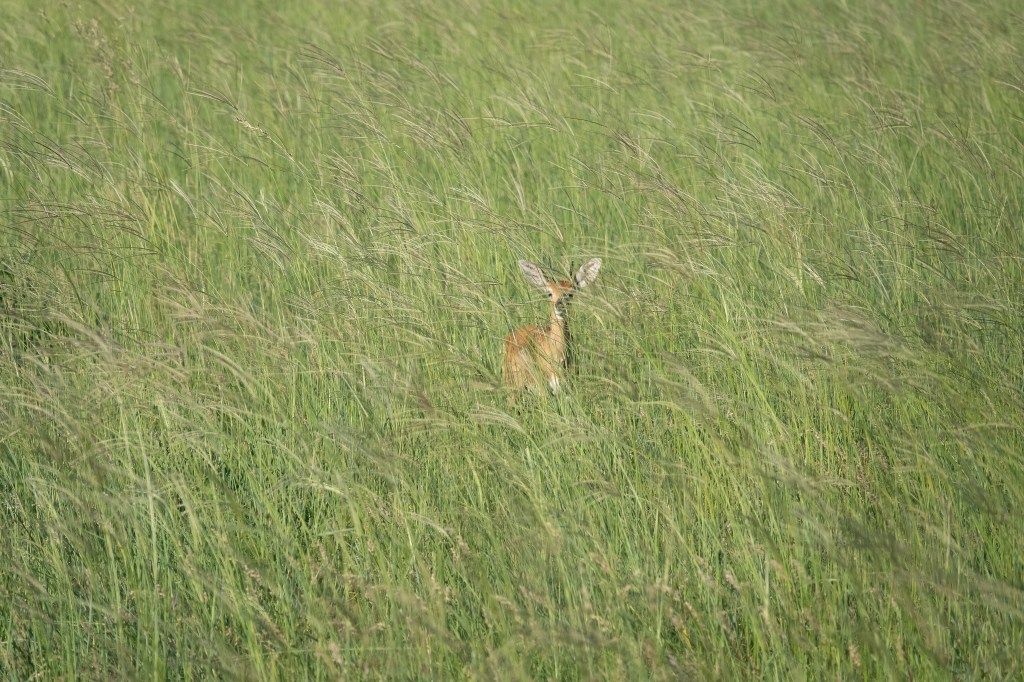
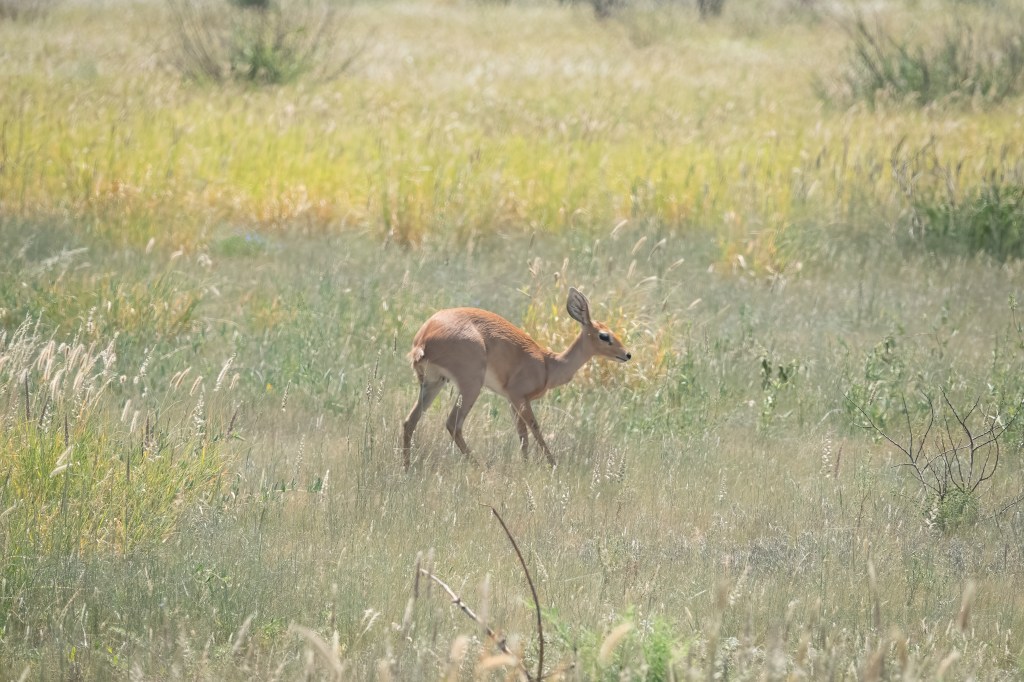
The Steenbok, Raphicerus campestris, is a miniature antelope, 24″ tall at the shoulder. The grasses that barely reached the giraffe’s knees rise over the steenbok’s head:

They can melt into the grasses in an instant:

but sometimes they emerge amongst shorter plants, and you can see one entire:

Only the males have horns, short abrupt black prongs just visible here:

And here is a female, one ear folded back, with long eyelashes, and a gland beneath the eye that looks for all the world as though her mascara has run.

By and large, you see only one steenbok at a time, which suggests they are solitary, but our guide told us that there are usually two of them in the neighborhood, staying loosely in touch but not joined at the hip. We did once see a second one appear after the first one startled, which fits his explanation.

The sere Makgadikgadi is an unforgiving environment but steenboks can survive almost entirely without water, getting all the moisture they need from their browsing.

Giants of the grassy ocean

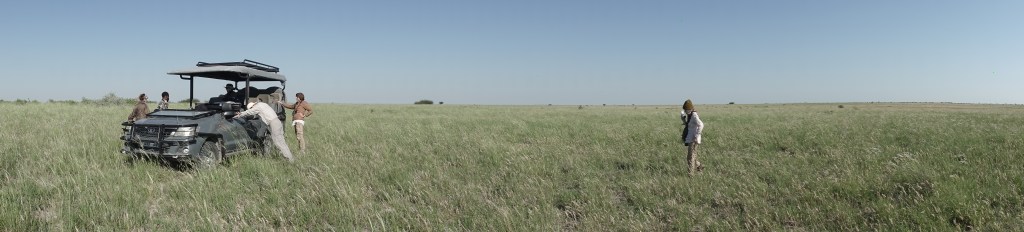
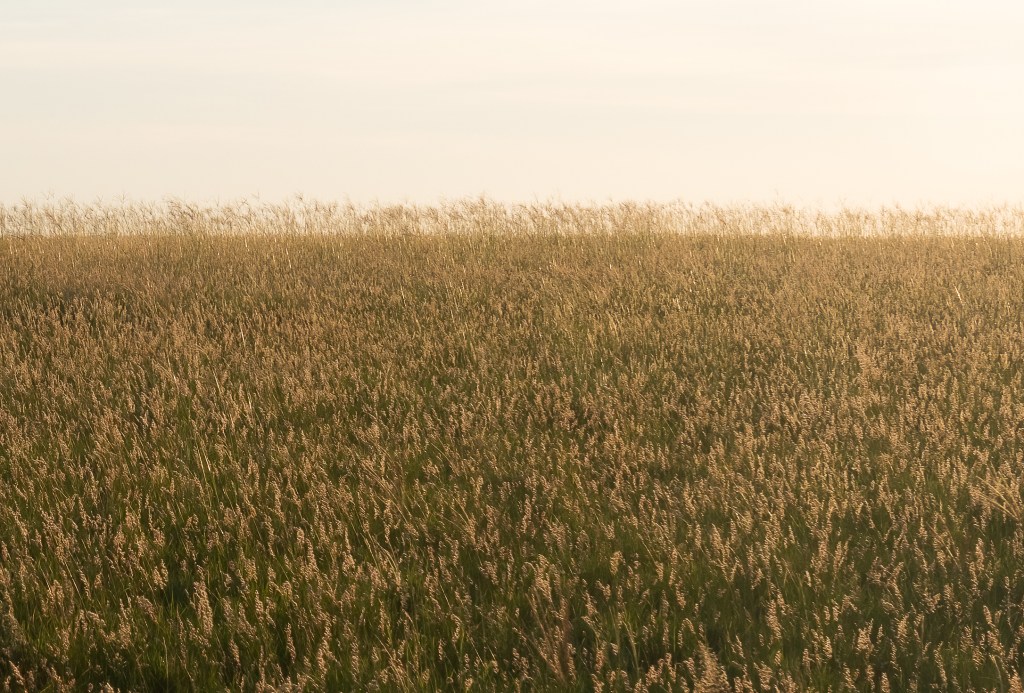
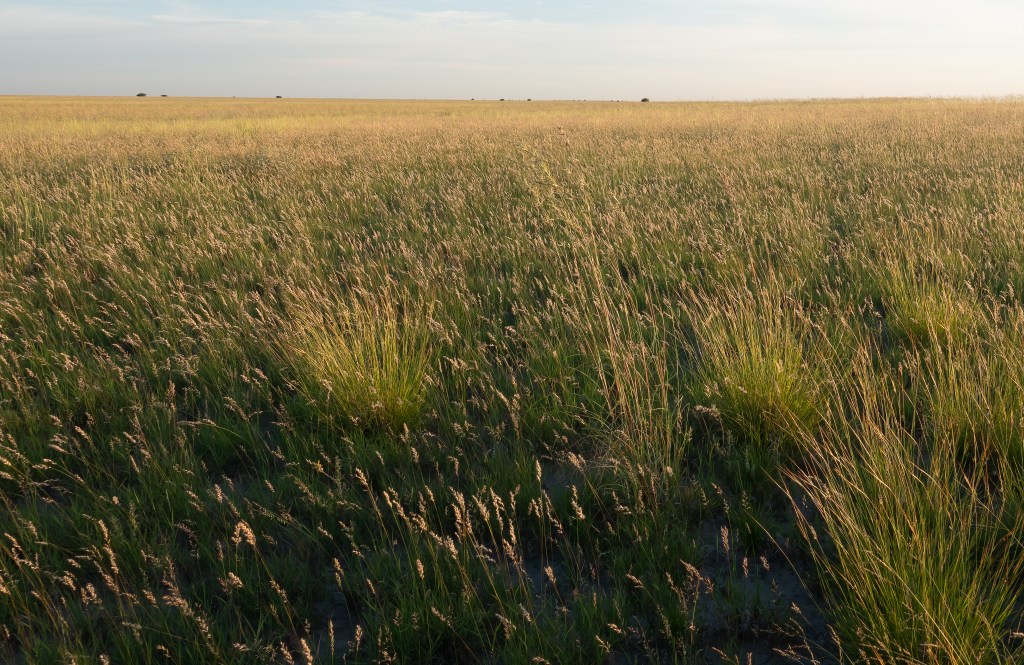
I have just returned from Botswana, on a trip that turned into more of an adventure than we had planned. I’ll tell the story gradually, and I’ll start in the Makgadikgadi Pan grasslands, a vast plain with a 360 degree horizon:*

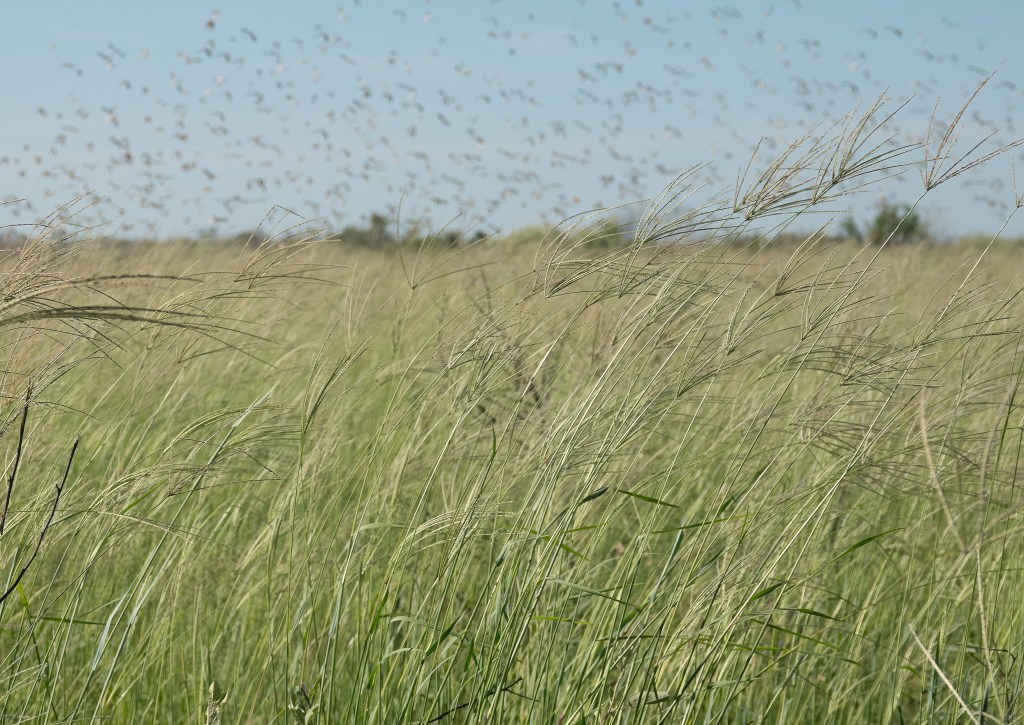
The endless vistas were covered in a tapestry of grasses and wildflowers, sometimes with flocks of tiny queleas:

The land is dotted with salt pans, a few with water,

but most dry:

The National Park itself covers nearly 5000 sq km, and the entire pan system is 16,000 sq km.

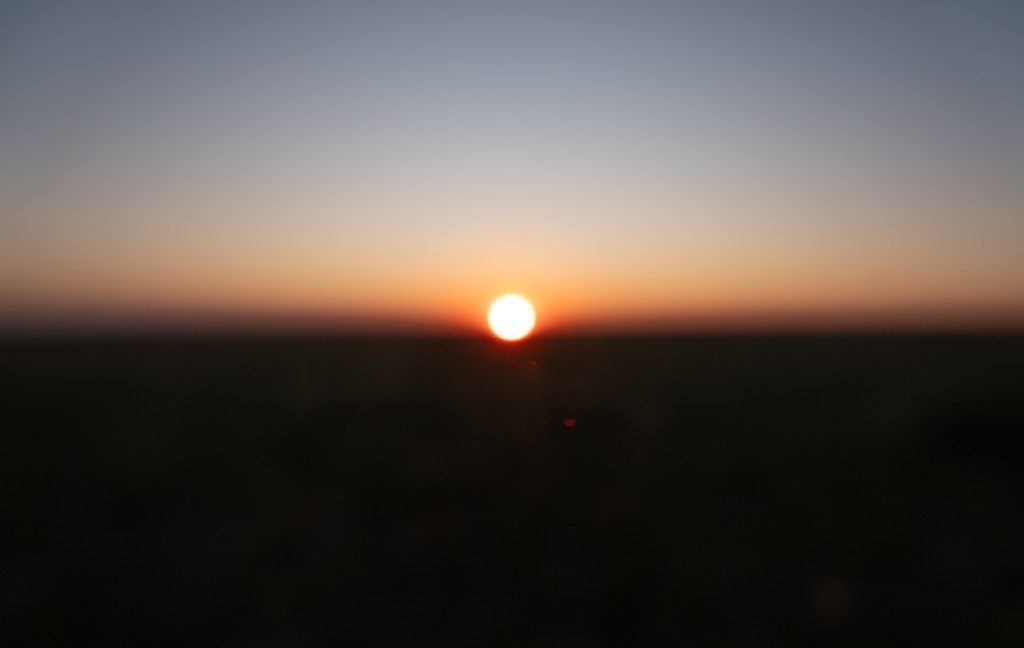
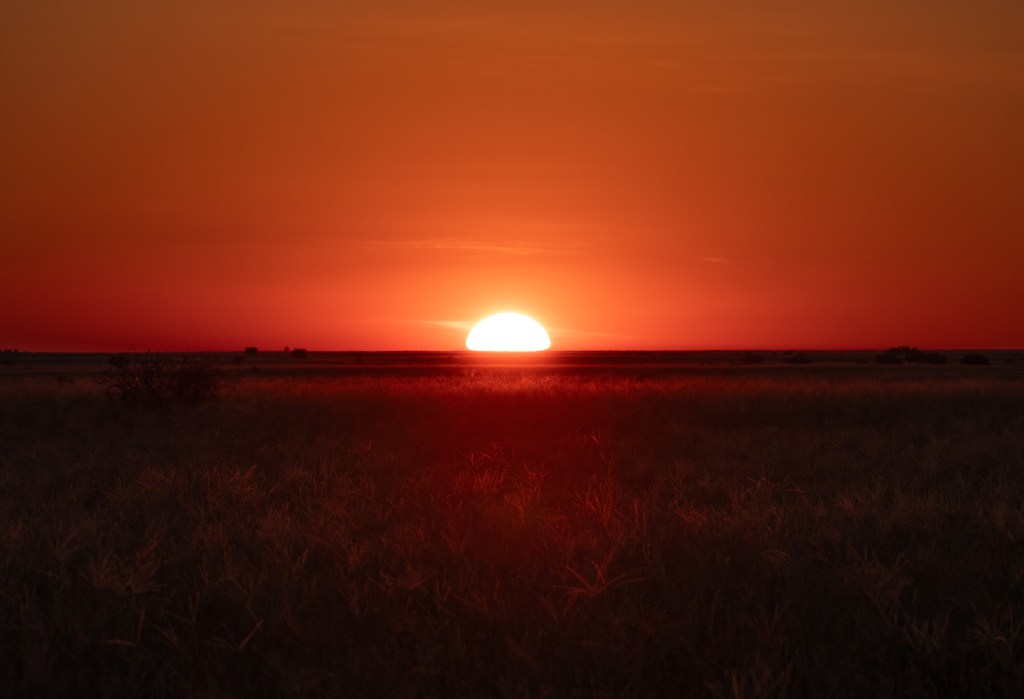
The flatness produces distorted mirage-like sunets:

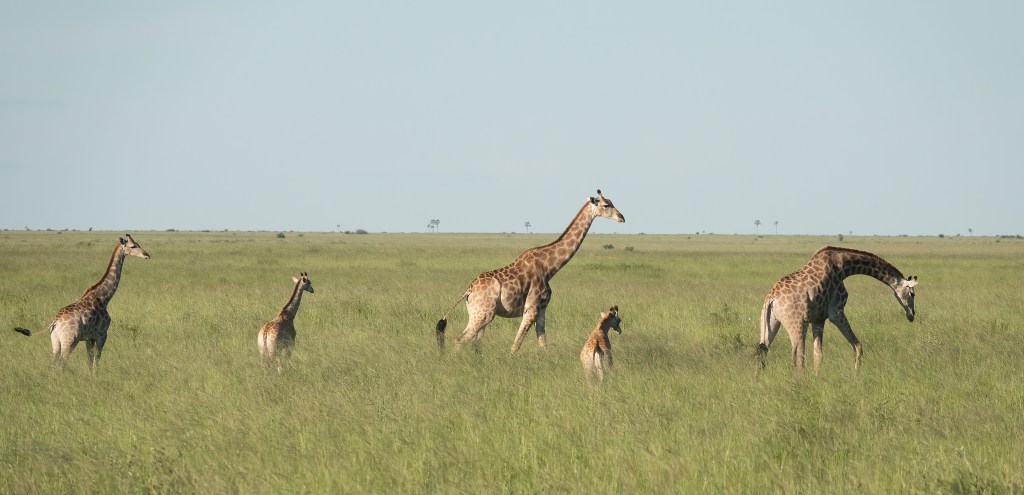
I was with five friends, and our guide TJ, camping. For three days we saw not a single other human being or vehicle, our own private wilderness. Jane, who has eagle eyes, found us five giraffe, four of which are in this photo if you look hard:

As we got closer we got the once-over:

There were two adult females, and three youngsters, two of whom were very young indeed.

These are Southern Giraffe, widespread in Southern Africa. Adults can reach 6m (19 feet) and the babies are six feet tall at birth.

The two smallest are roughly the same age, so the likelihood is that they are from the two different mothers, since twins are extremely rare. One of them kept trying to nurse, and eventually its mother let her/him:

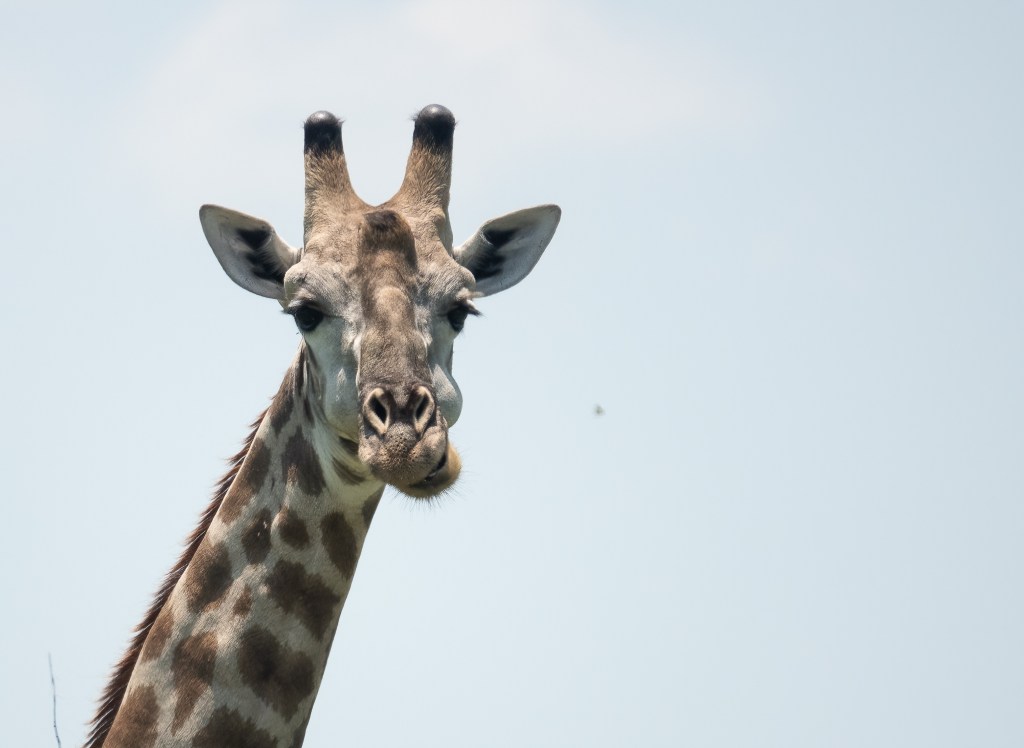
You can tell the sex of the adults by the state of their horns, or more precisely their ossicones. The males fight, so the tops of the horns quickly lose their hair and become shiny:

Males like the one above also have a third ossicone in the middle of their forehead that develops as a sort of callus from head-butting their rivals.

This video is of a male, showing both these badges of combat; the third ossicone can be seen in profile at the end of the video:

At birth the ossicones are cartilage, folded down, and then they straighten and harden as the animal grows. Something went amiss for this female, but luckily she doesn’t need them for fighting:

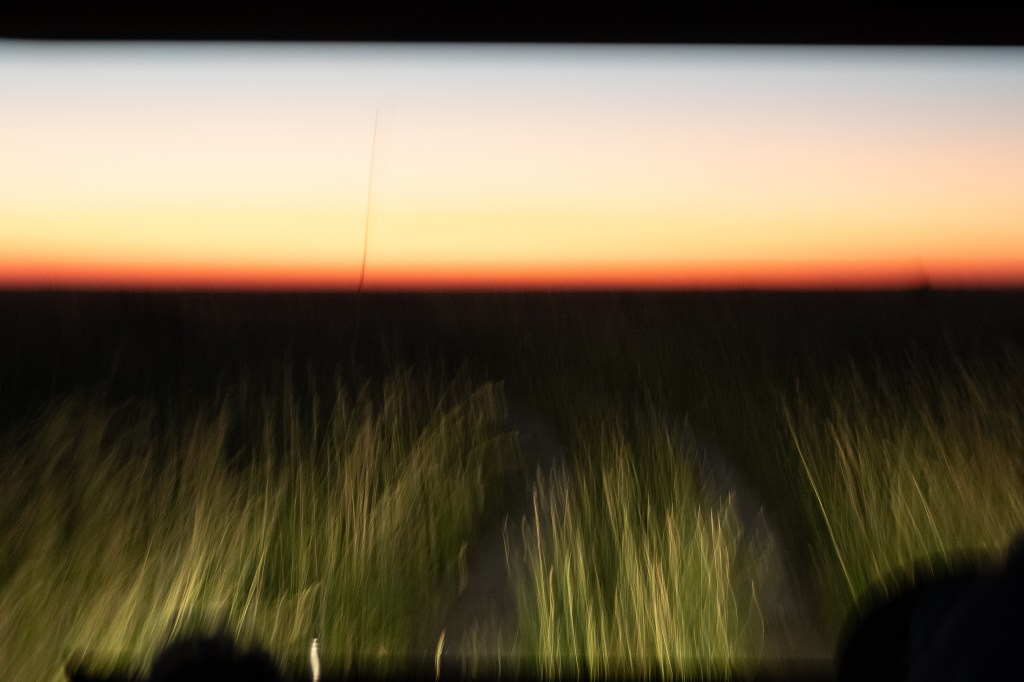
As the sun went down I stuck the camera out of the moving vehicle, and captured the flavor of the place.

PS Jane is using her phone to try and ID birdsong with Merlin, not to make a call. We were several hours drive from cellphone reception. Merlin was, sadly, pretty hopeless in Botswana

Snow has fallen, snow on snow..

On New Year’s Day, still no snow. Beech leaves in a puddle were striped with light refracted through a skim of ice.

Needle ice pushed up through the dead grass, powered by capillary action, with the water freezing as it reached the cold ai:.

The bottom “stalks” pushed up the previous night’s crop to create tiered candelabra:

and tiny air bubbles were trapped inside the stems:

But finally on January 7 it snowed,

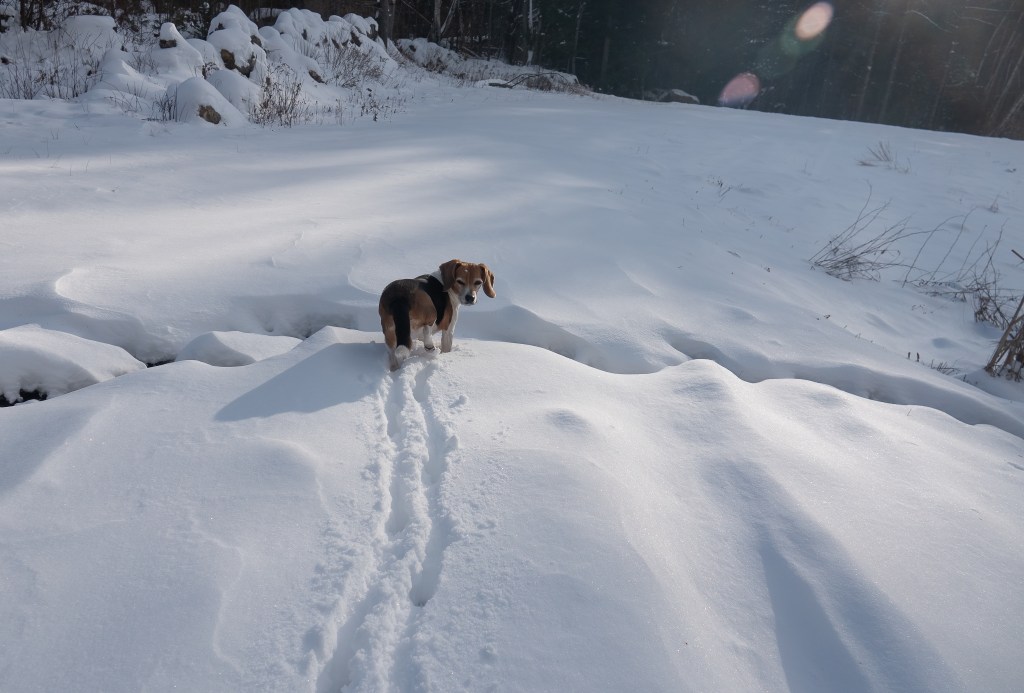
and we went exploring:

Four coyotes had wandered across the field by the barn:

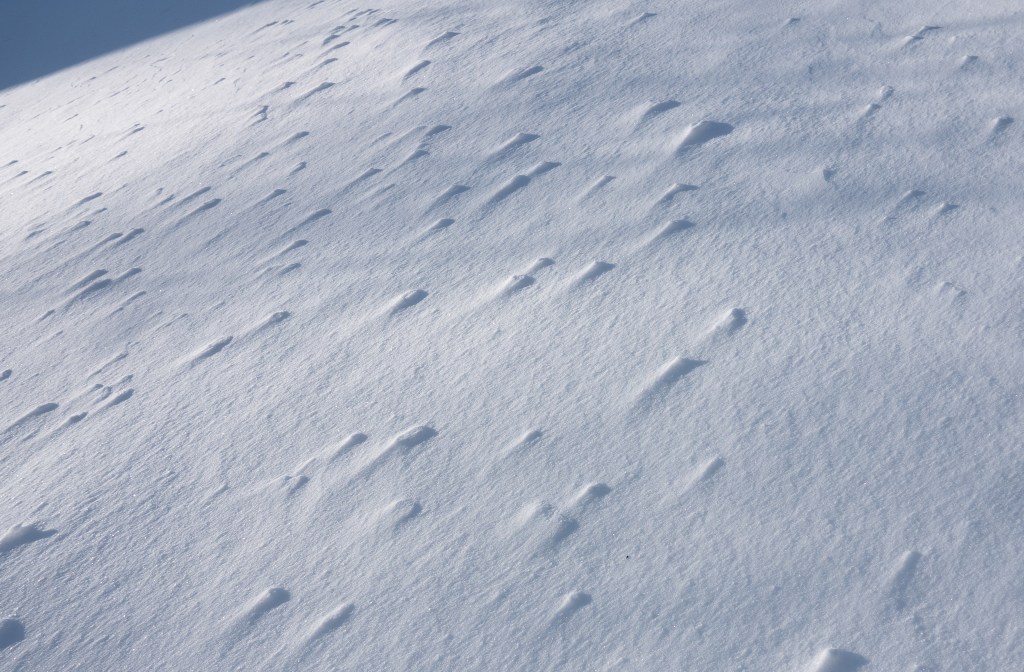
The wind had dragged patterns in the crust:

We had three snowstorms in one week, adding up to around two feet of snow. That’s a tough time for birds. This is a Dark-eyed Junco, Junco hyemalis, weighing in at between 0.5 and 1 ounce.

They eat seeds, and are mainly ground feeders.

They spend the winter in small flocks. There were twenty in my garden that day.

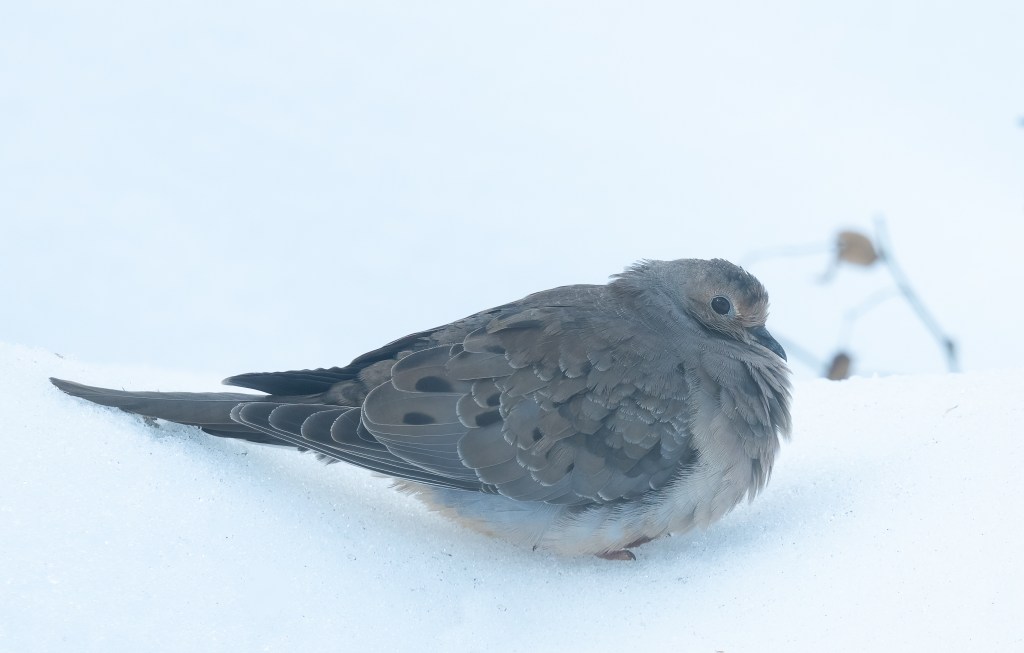
Mourning Doves, Zenaida macroura, are much larger,

with a delicate blue-grey wash under their wings.

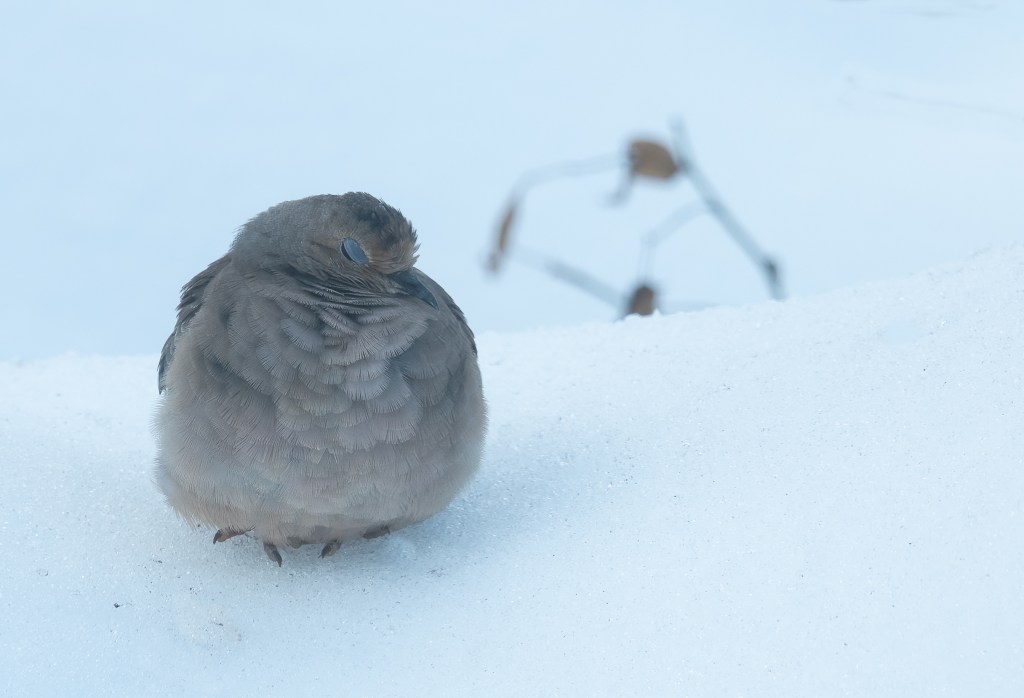
This one was alone, but pairs are common. It settled down for a rest, fluffed up against the cold.

Then closed its eyes, and went to sleep:

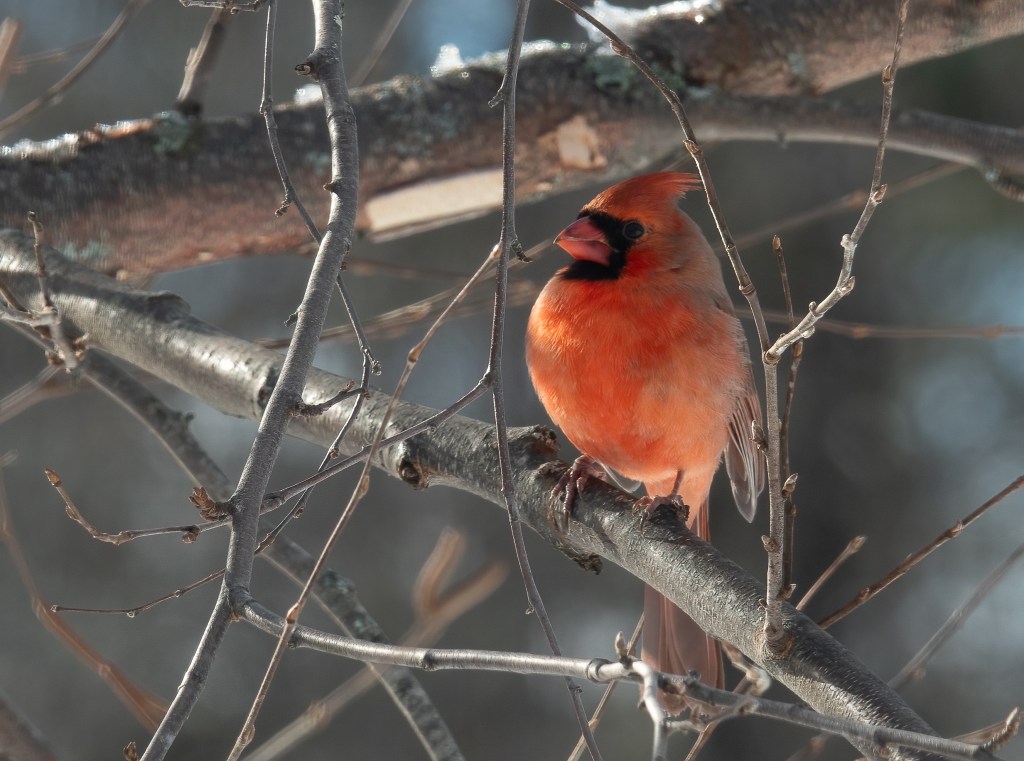
After all those soothing subtle dove-greys, a startling flash of vermilion, a male Cardinal.

I’m leaving for a few weeks for warmer climes. This will go out while I’m gone. And when I return, I’ll show you where I’ve been. Meanwhile, curl up under your duvet and read a good book, with a glass of wine and a warm dog.

Wildlife CCTV

There are animals you rarely see, for various reasons. Some are very rare or shy, some are nocturnal, some are tiny, and others are aquatic and therefore usually far away for a land-bound naturalist.

So you set up your CCTV, aka a game camera or a camera trap. The art is in knowing where to put it. In some spots, no animals might pass by for weeks at a time. But if you know your land well, you have learnt to see small signs: scat, tracks, scrapes, etc, that tell you animals come this way more often

My game cameras are run-of-the mill pieces of kit, sold to amateurs and hunters. Professionals attach a seriously good camera to a beam, and get the kind of pictures you see in Wildlife Photographer of the Year.

I start with a place where animals like to cross the stream. And sure enough, a bobcat, an animal I have still never actually seen:

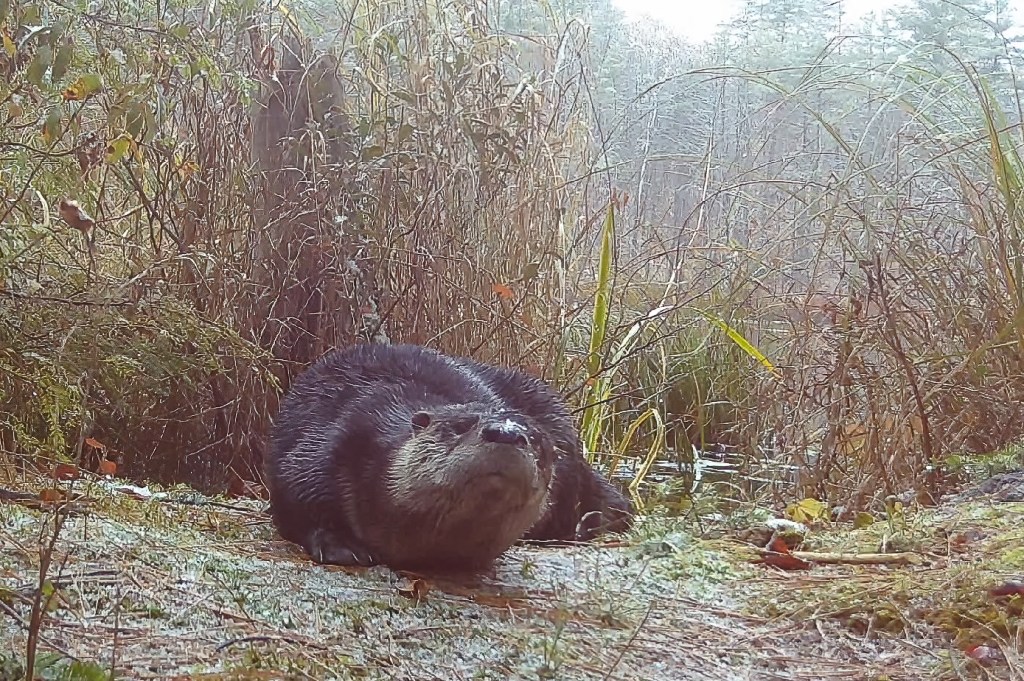
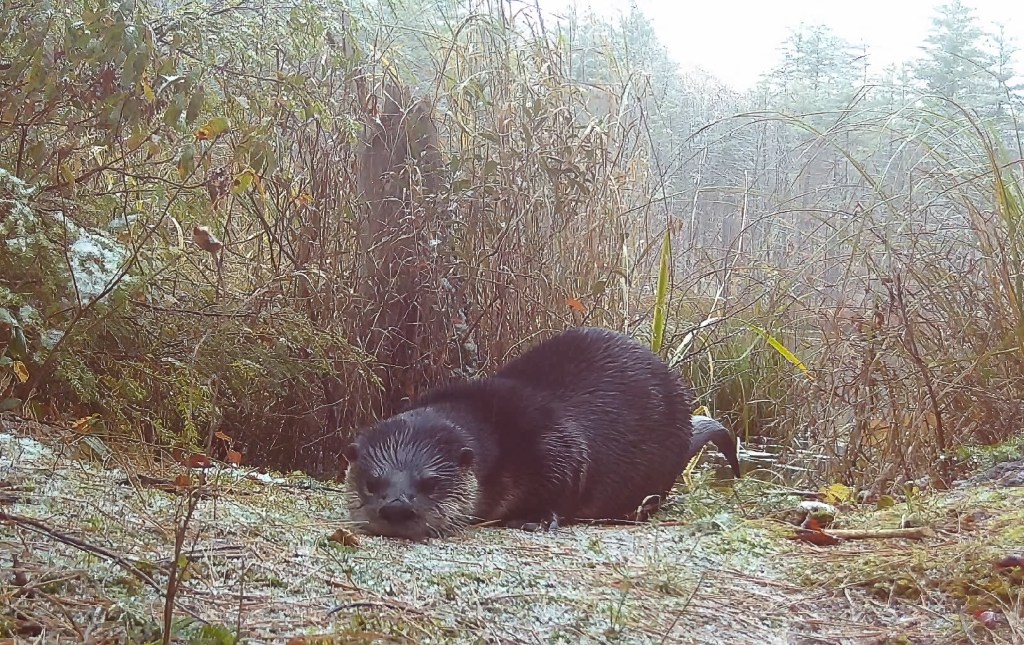
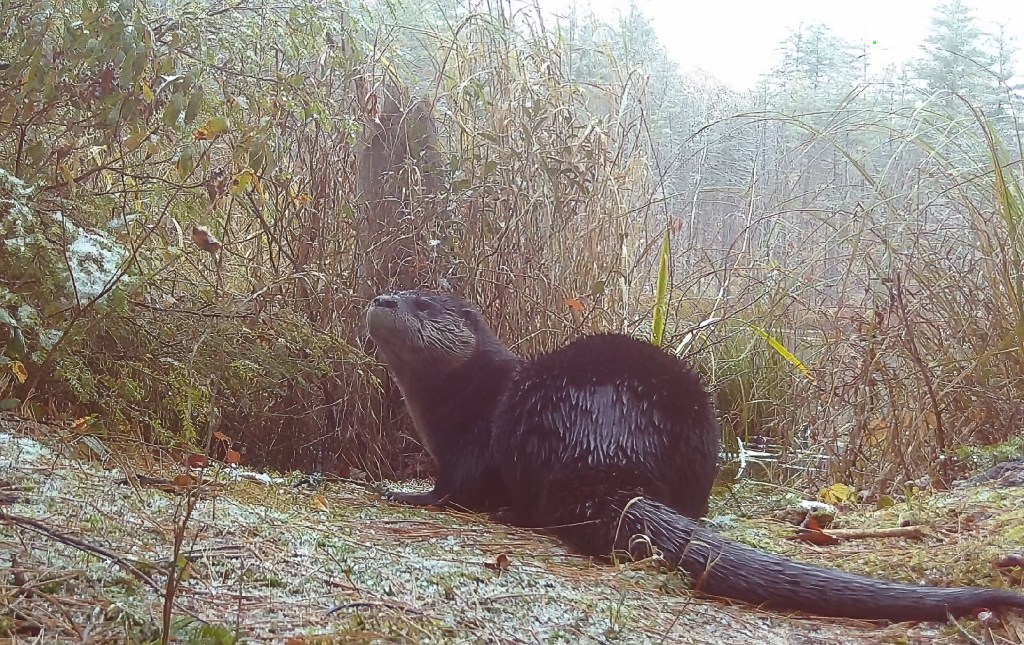
There is a place on the shore of beaver pond where I found fresh otter scat, so I put up the camera. Here is a selection of what I captured First , an otter, on three different days.

Second, a beaver (at night of course) fetching a hemlock branch from a tree he had cut down earlier and dragging it off to the pond:

And the beaver giving itself a thorough face and bib grooming:

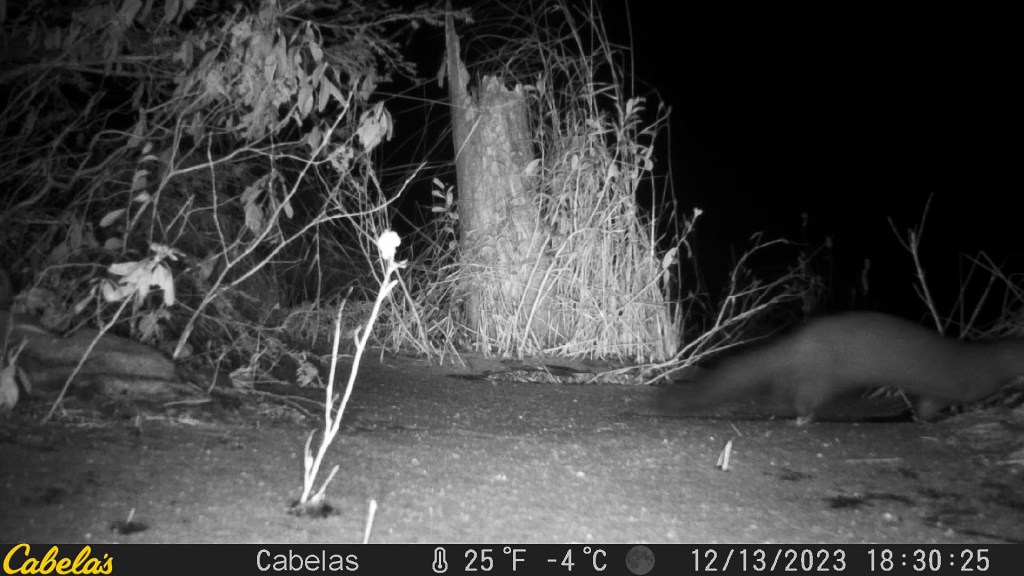
Third, a mink (or the rear section of one!):

And last but not least, Robert Burns’ “Wee, sleeket, cowran, tim’rous beastie”,  a mouse:

It’s not the same as seeing the animals for myself, but nonetheless it feels good to know I live and walk amongst them.

A beaver’s work is never done

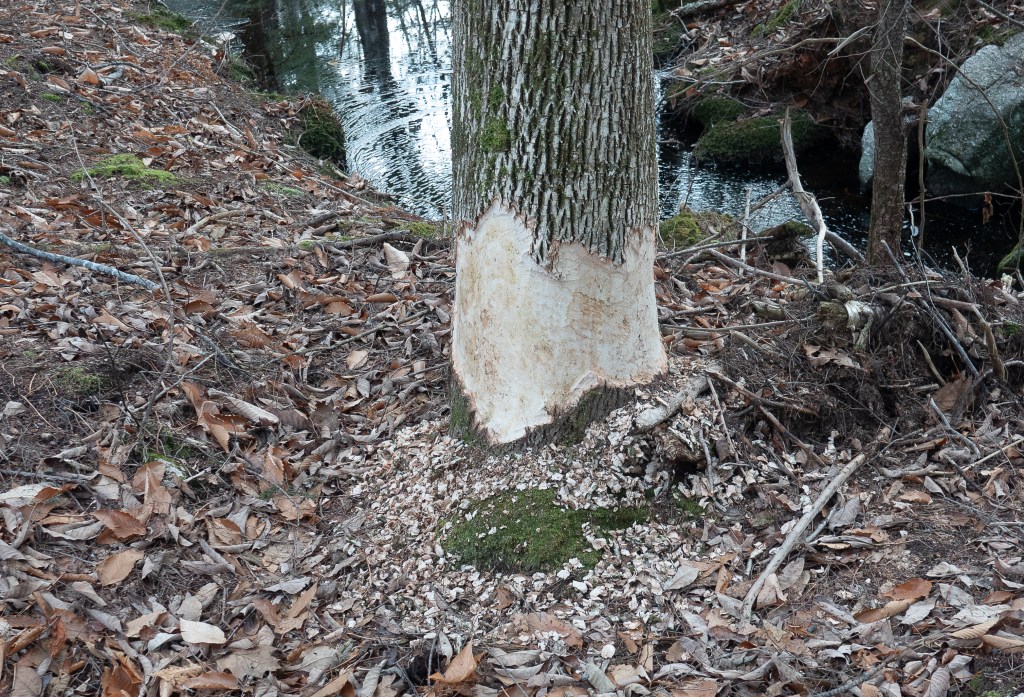
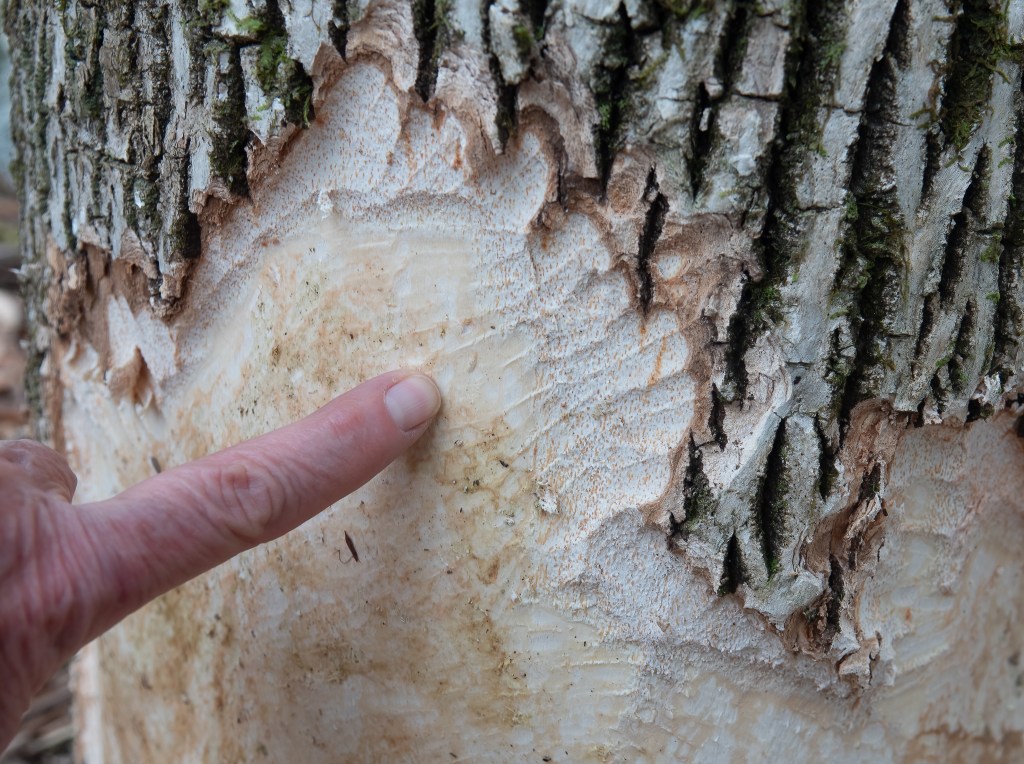
(PS If you read my last post, about porcupines, it included a tree whose bark and cambium had been chewed off. A Maine Master Naturalist whom I greatly respect has just told me she thinks I got this wrong, and it is actually beaver after all! It is now under deep snow, so we can’t check, but be skeptical of my earlier claims!)

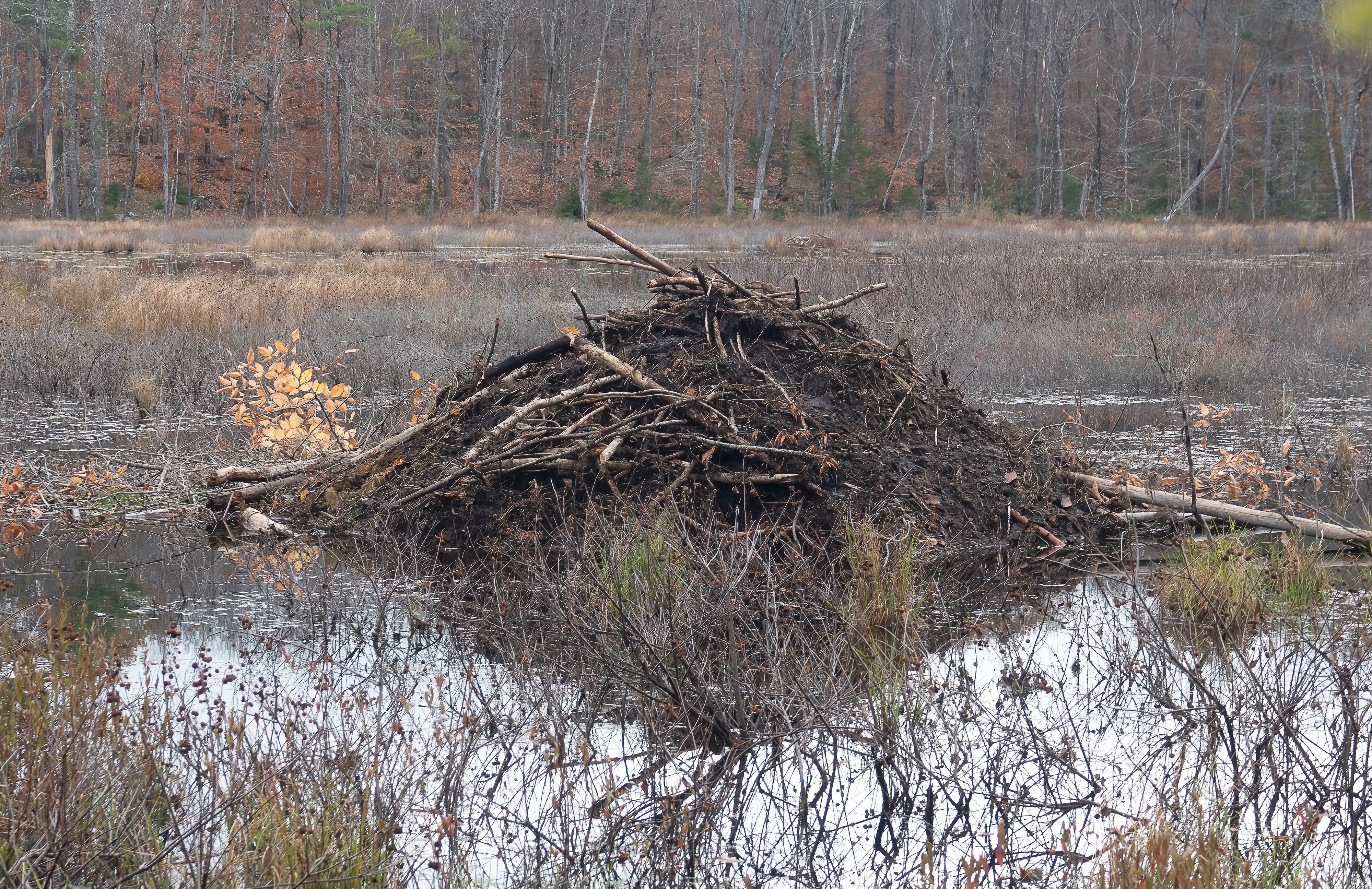
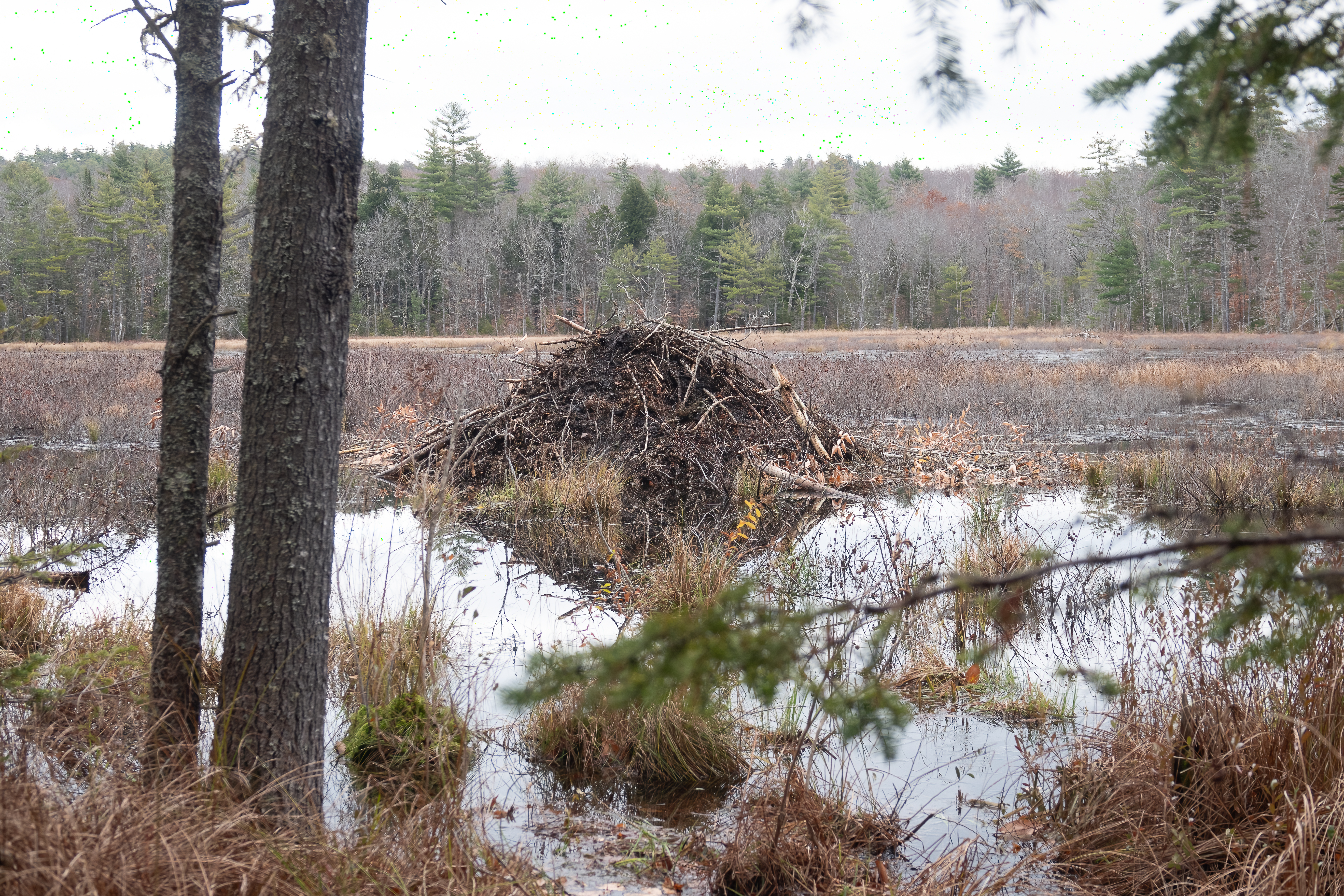
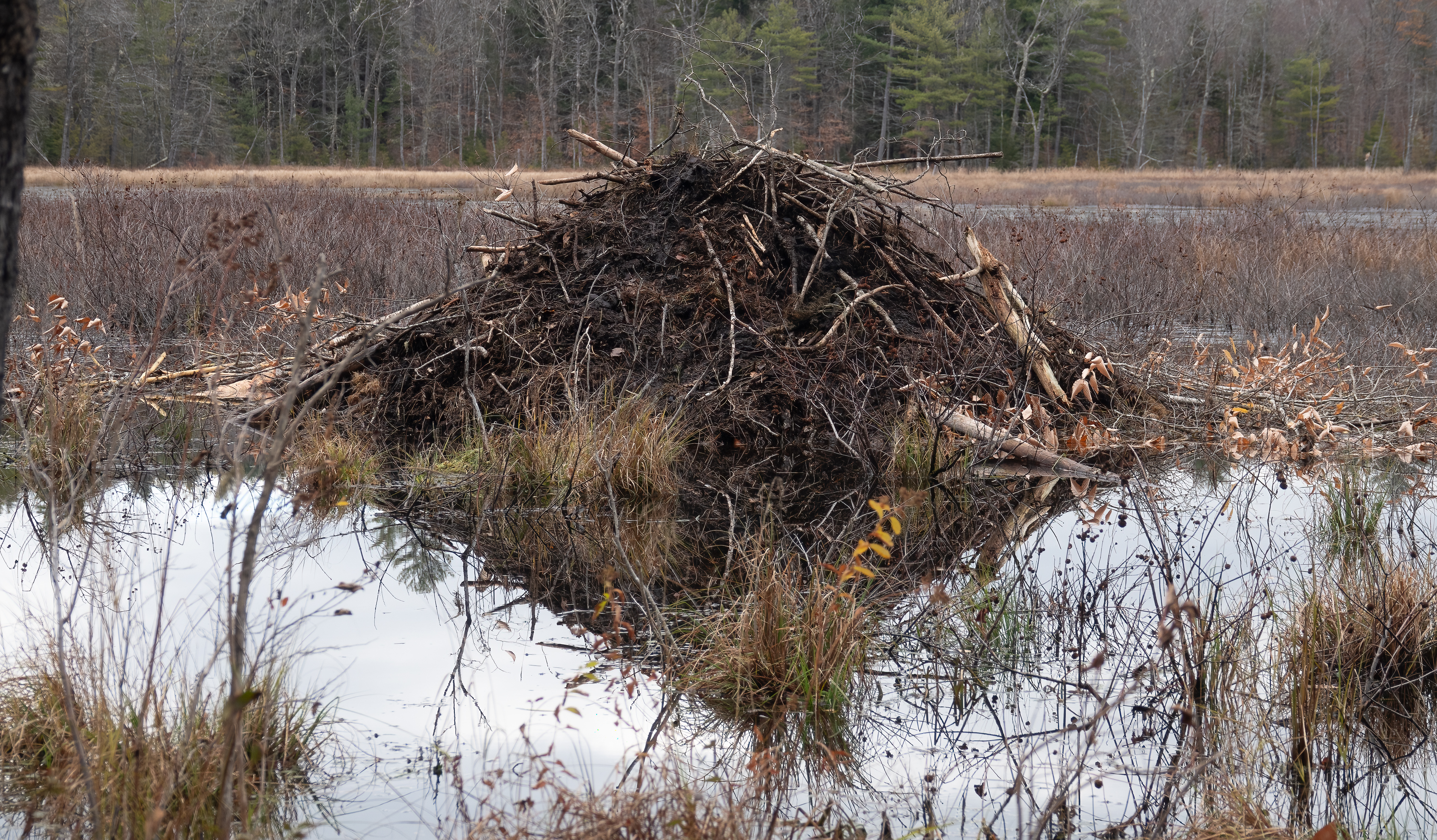
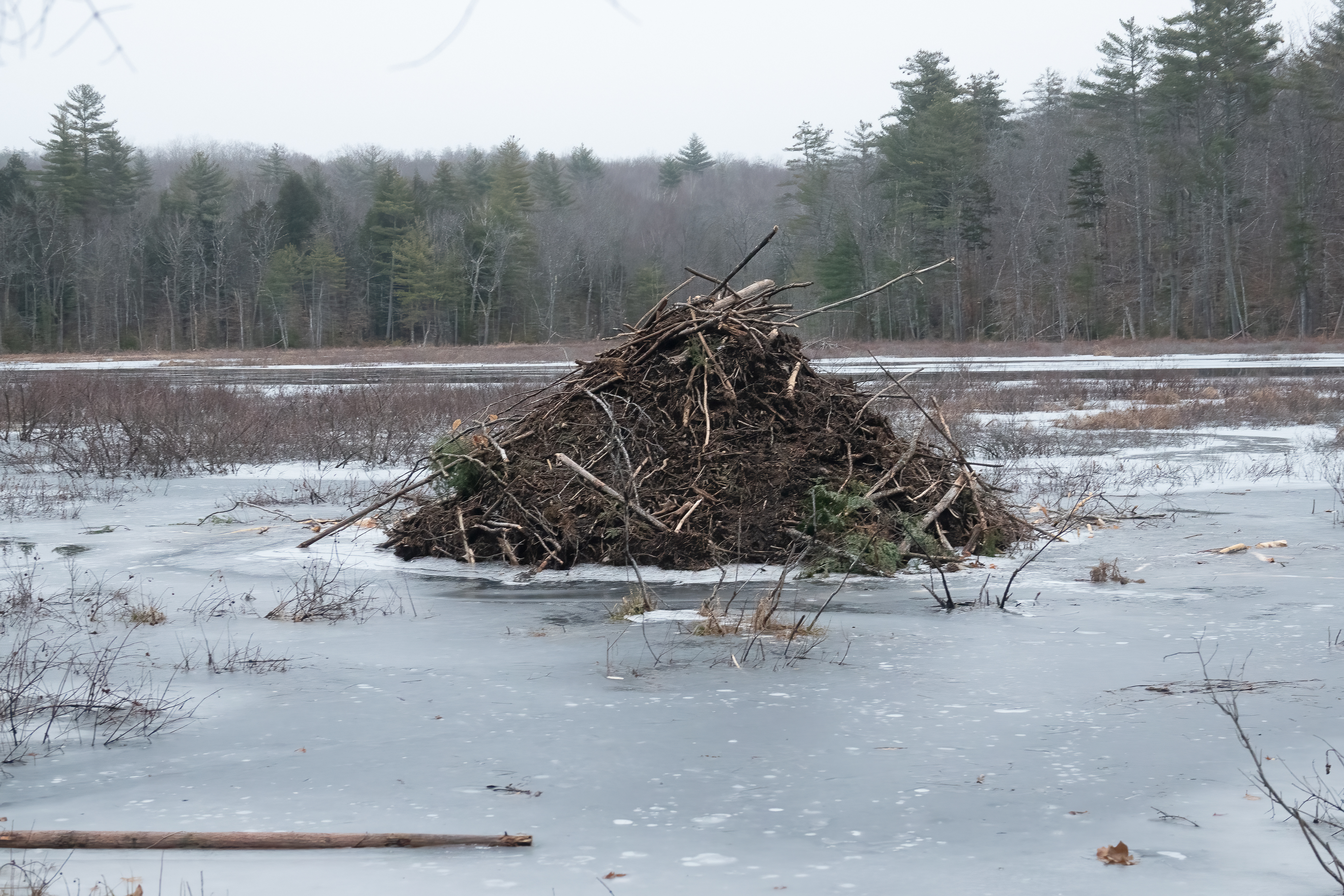
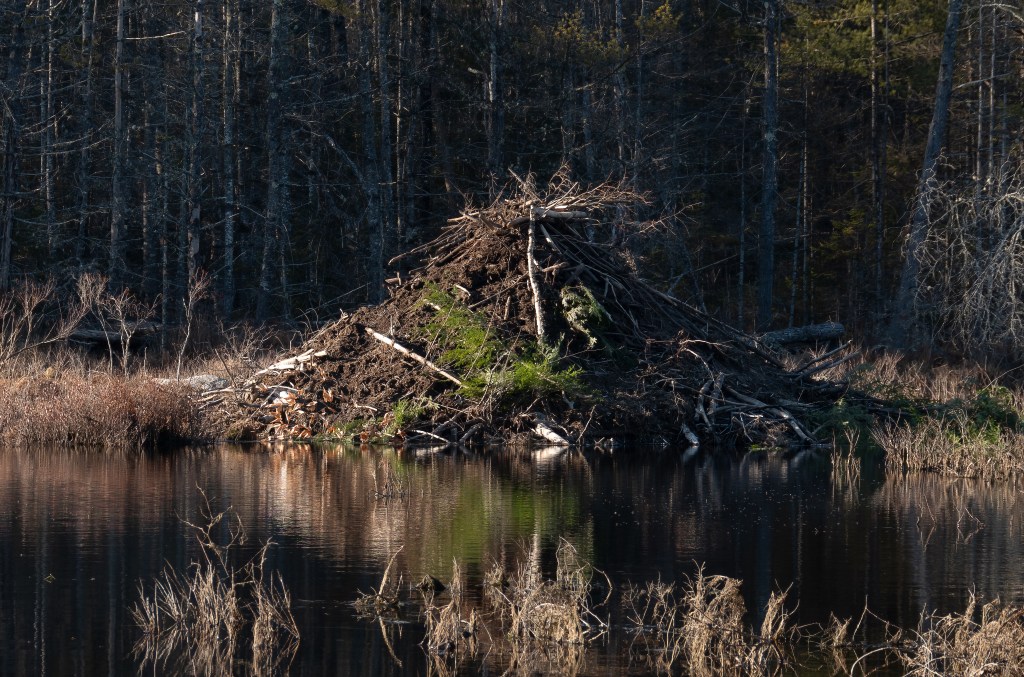
The beavers are definitely around, but playing hard to get. They have built a new lodge, inconveniently on the opposite shore of the pond, where I can only reach it when the stream’s water level is low enough to cross. These photos show it growing, from November 14 to December 17:

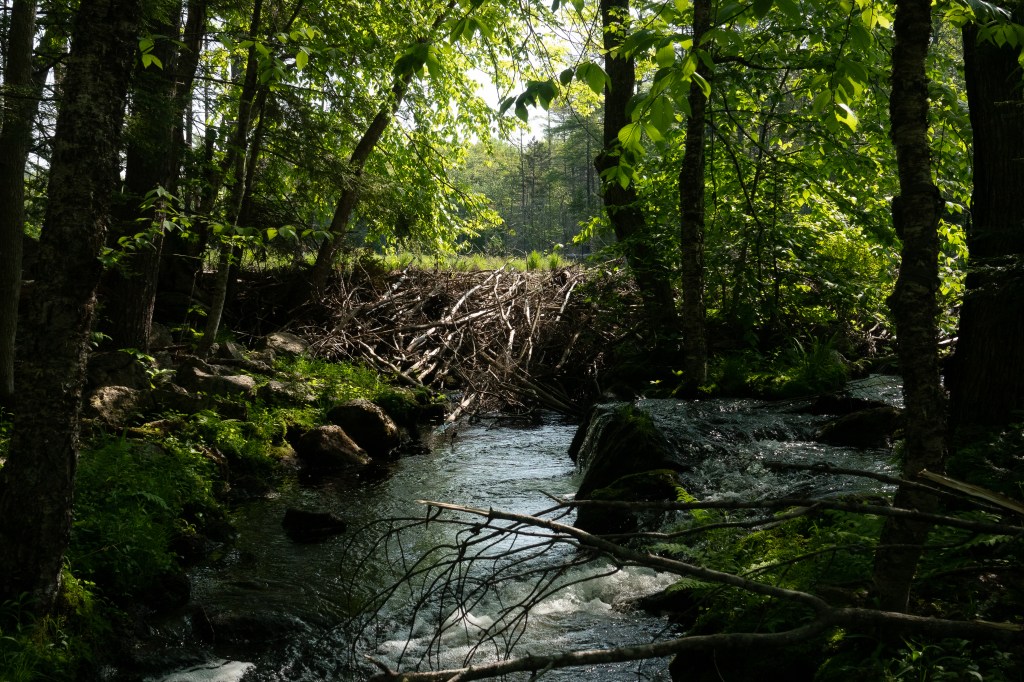
No sooner were they settling in for the winter, than the weather gods turned their normal winter world upside down. We had six inches of rain in 24 hours, and everything flooded. Their beautiful dam, seen here in May:

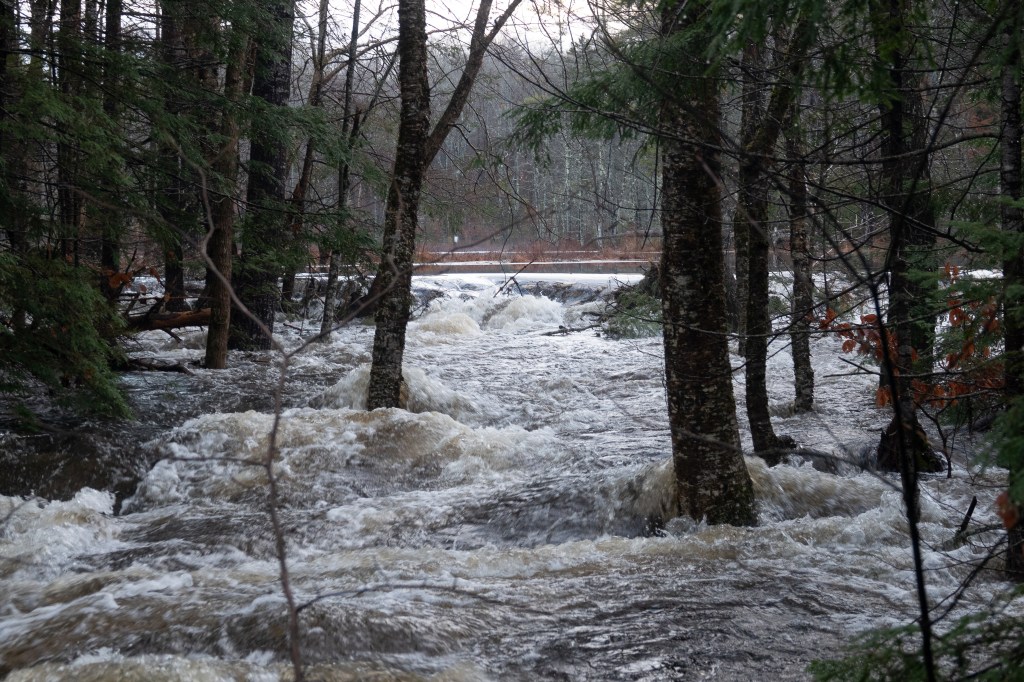
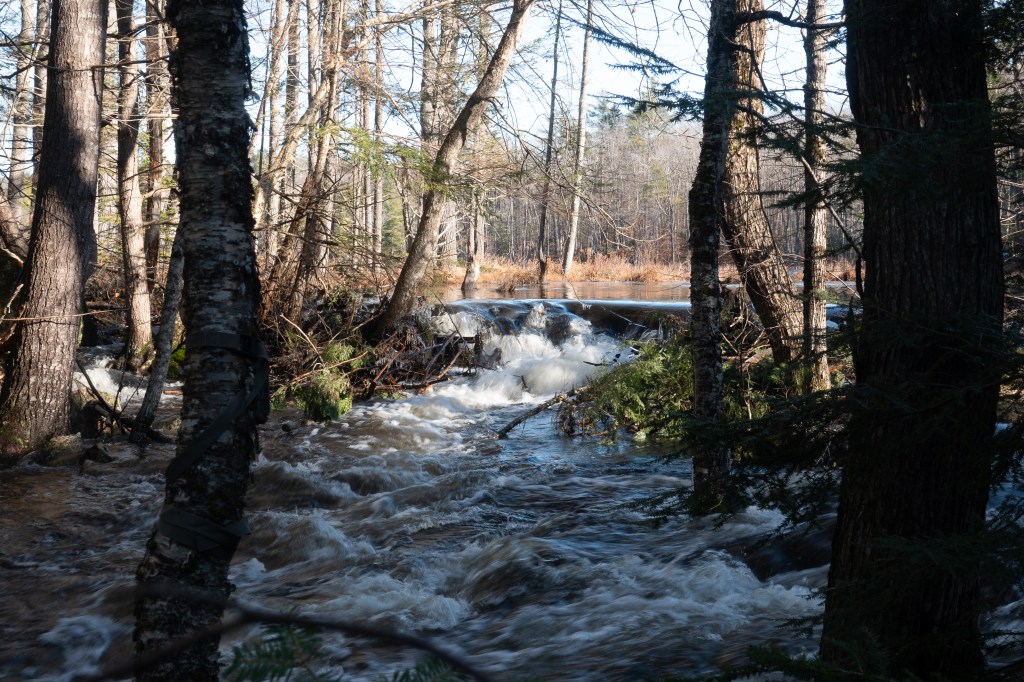
was overwhelmed by the flood waters:

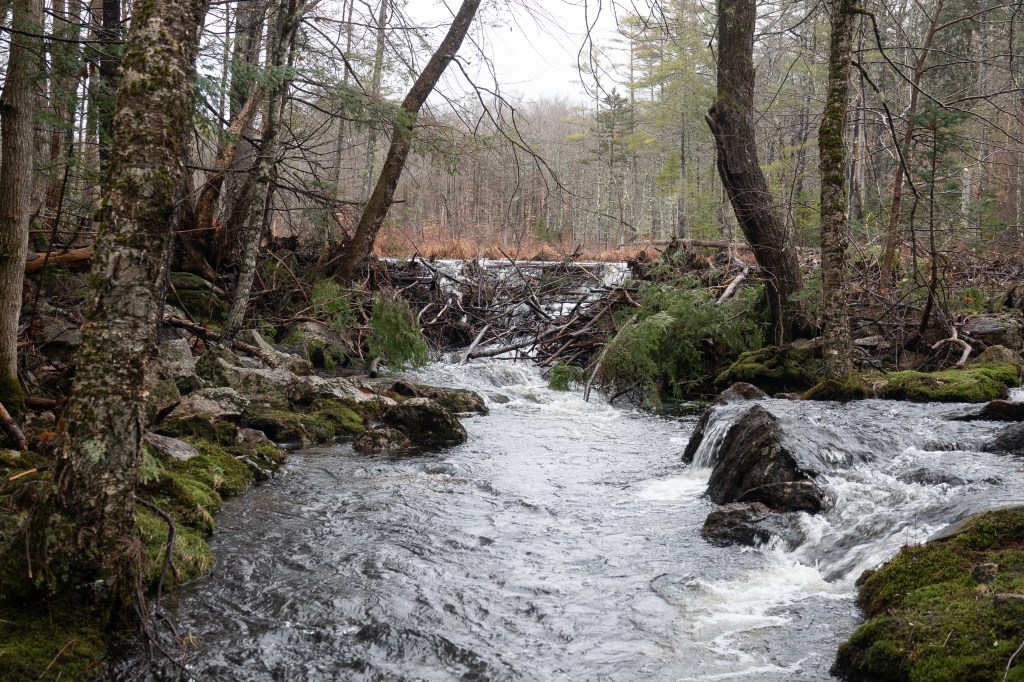
When the water subsided, much of the dam was gone:

But a few days later, they started to rebuild, rather haphazardly:

Indefatigable.

PS The big rain storm may have badly damaged their new lodge. I can’t reach it to look while the stream is so high, but last year’s lodge, a particularly impressive one, but which they had not repaired in preparation for this winter, has suddenly shown signs of fresh occupation. New mud, and new hemlock branches. So they have may have moved back in.

Quilled

Happy New Year. It is 2024 as I write this from Maine. It is a worrying year. Instead of snow, we have had rain, and lots of it. The ground is muddy and brown rather than hard and white.

But there are still things to discover out in the woods. I came across this tree, recently gnawed.

Typical porcupine, just shallow bites to reach the cambium, which you can clearly see contains nutritious sap (the little dots):

Unlike beavers, they do not chew into the wood proper. (PS A Maine Master Naturalist whom I greatly respect has just told me she thinks I got this wrong, and it is actually beaver after all! It is now under deep snow, so we can’t check, but be skeptical of my claims!)

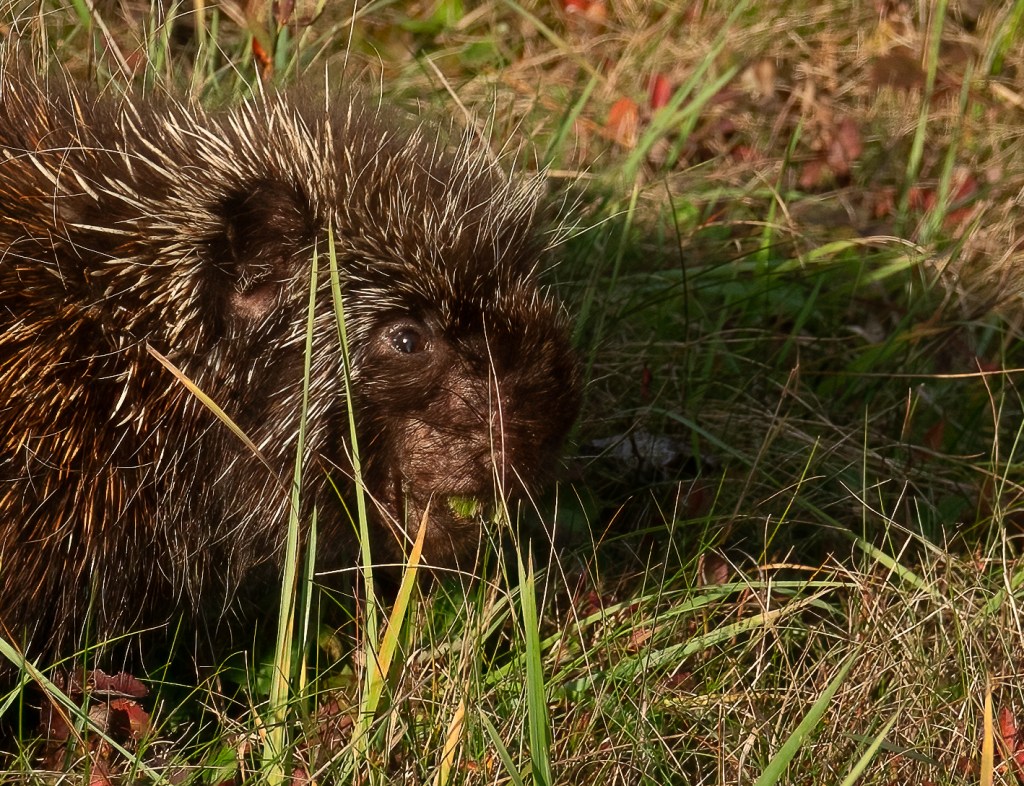
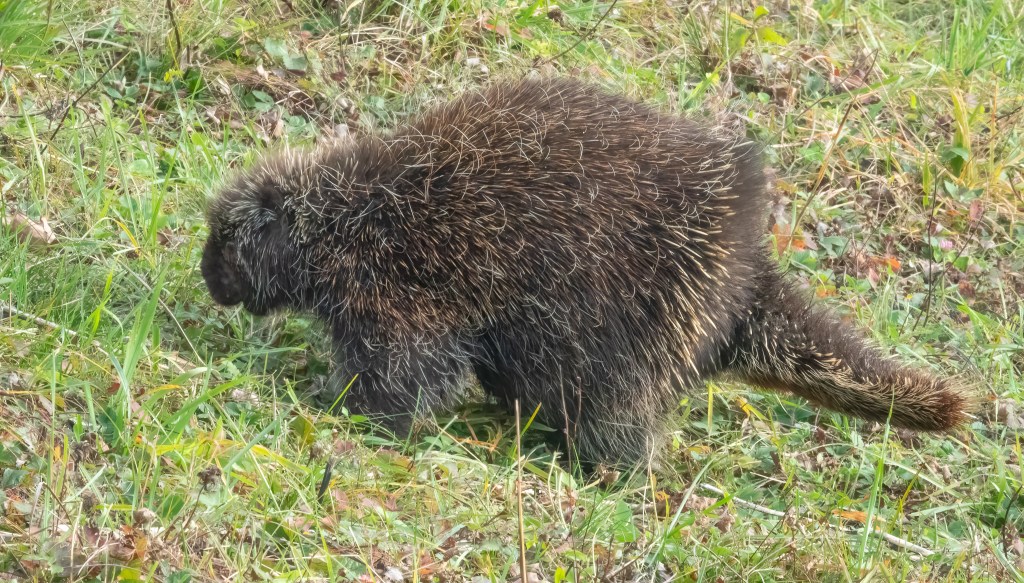
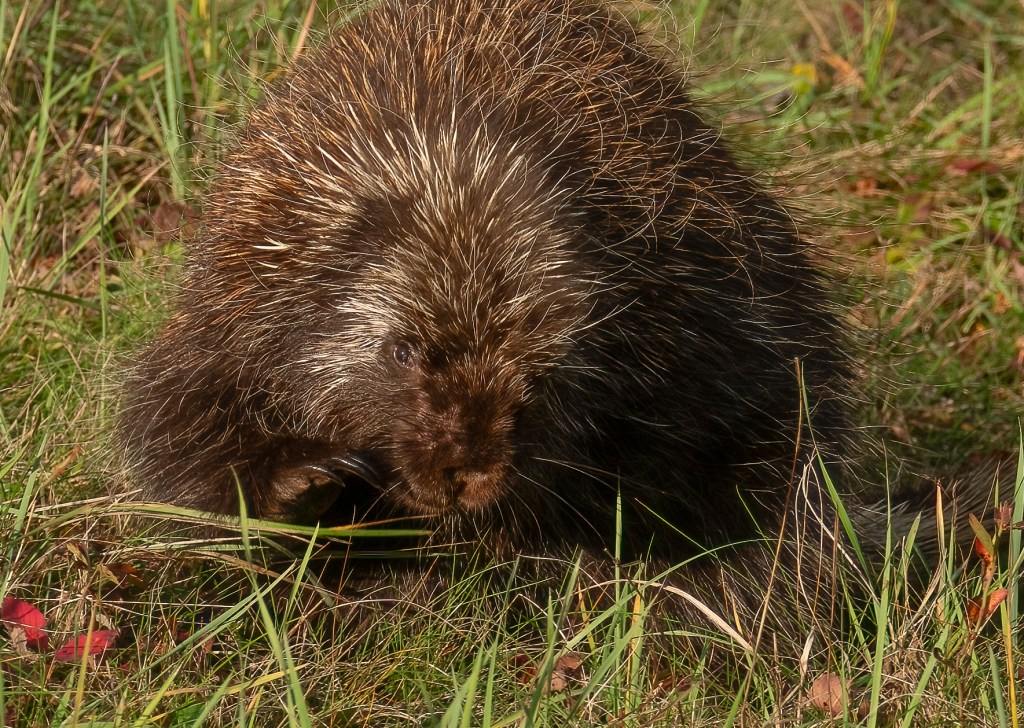
Porcupines are common round there, and in early November this one spent a lot of time in my field. Sometimes it was asleep, catching the final rays of an Indian summer, relaxed and unaware of my presence, quills down:

I could get very close before it opened its tiny eyes.

One other occasions it was feeding on the last green plants of the year, before the usual snow cover makes foraging harder and they are reduced to chewing trees.

They don’t hibernate, but they do become less active.

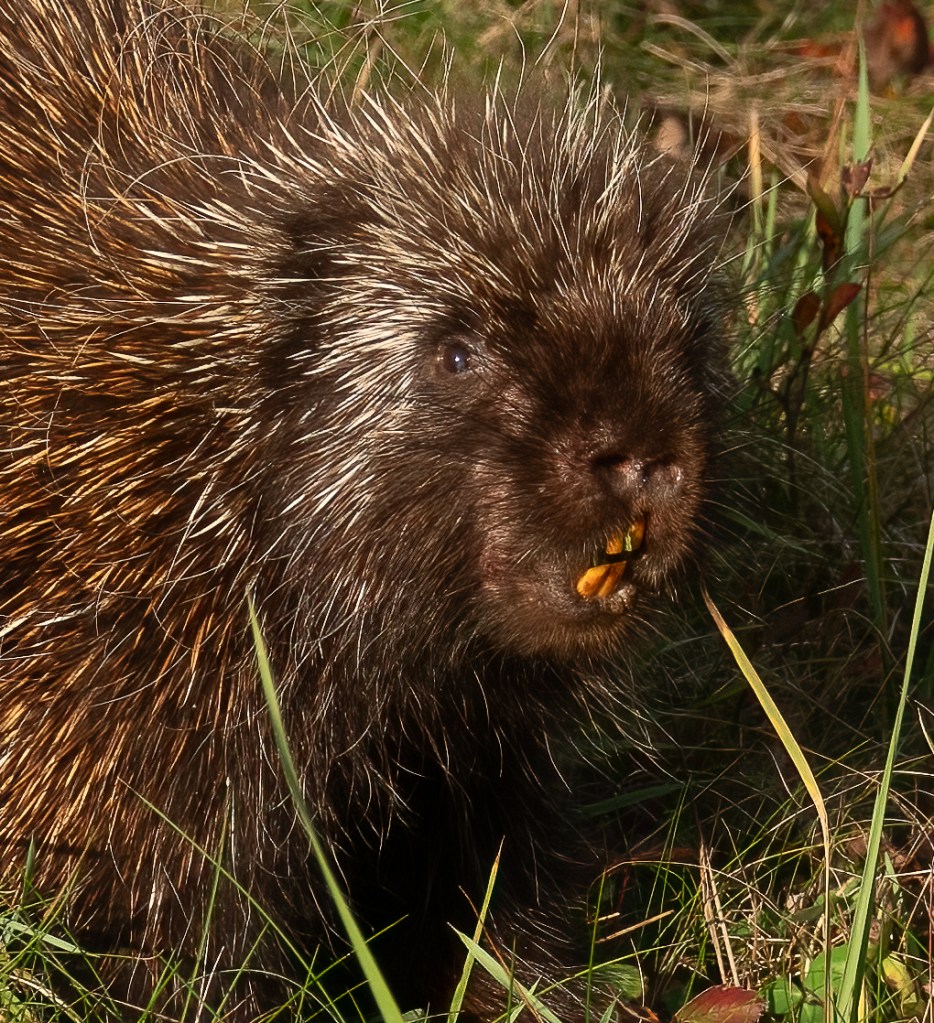
Their incisors are a startling orange color:

The color is caused by iron oxide, which is incorporated into the teeth as they grow. It is thought to harden the teeth, so they can chew wood. The incisors grow throughout their lives.

When a porcupine is disturbed, it erects its quills. As it retreats, you can clearly see the posterior quills in action:

Their other weapon is their claws, visible on lower left:

But their defensive behavior is all about those quills. They will sometimes turn their backs and stand their ground, and in the modern world that doesn’t always work. Pickup trucks, for example, are undeterred, hence the high number of roadkills.

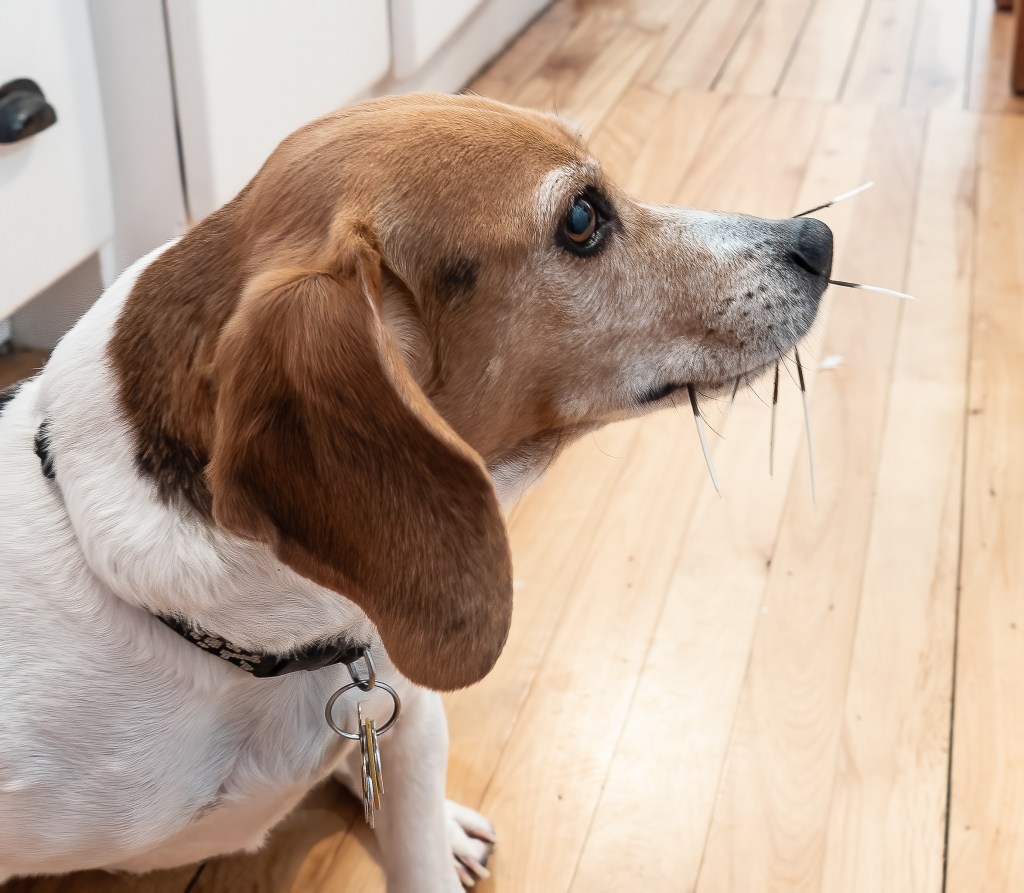
Any animal brave enough or foolish enough to tangle with a porcupine pays a price. Gemma, our beagle, found one in February:

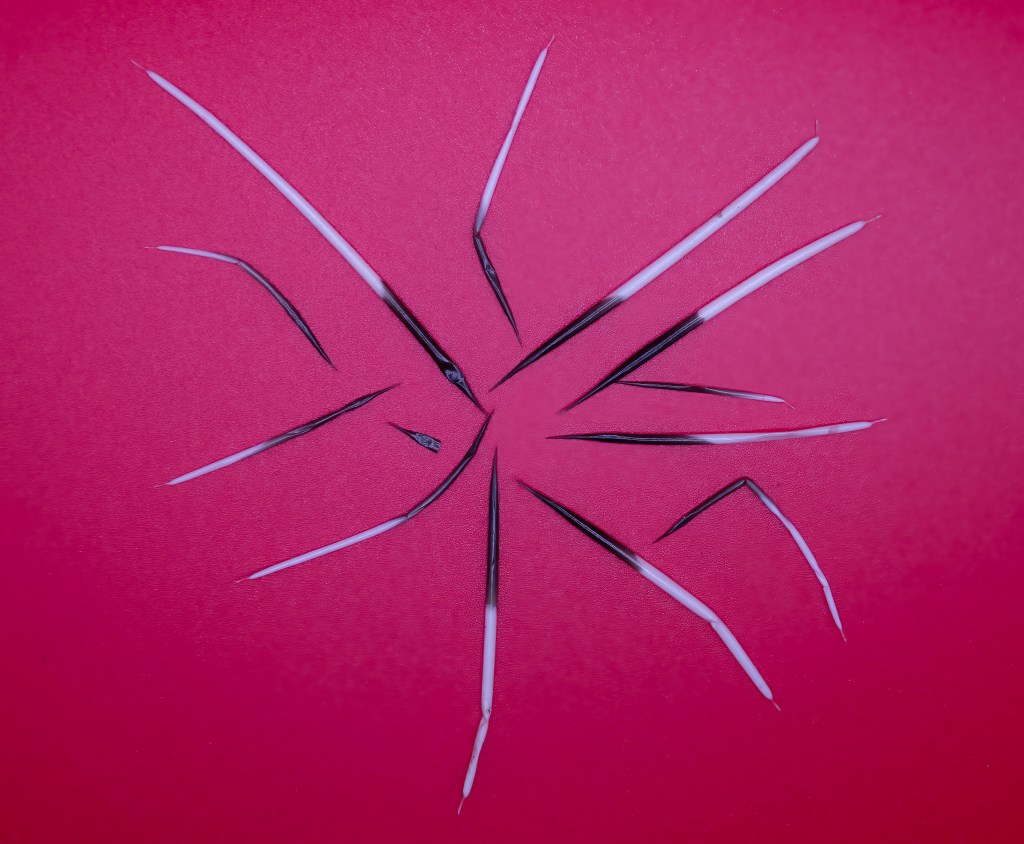
There were quills in her lips, up her nose, and one on her tongue, which she patiently let us extract with tweezers. There were twelve of them, but sometimes dogs get 50 or 60, and a trip to the vet is needed.

I’ll let Ogden Nash have the final word:

The Porcupine, by Ogden Nash (1902-1971)

Any hound a porcupine nudges
Can’t be blamed for harboring grudges.
I know one hound that laughed all winter 
At a porcupine that sat on a splinter.