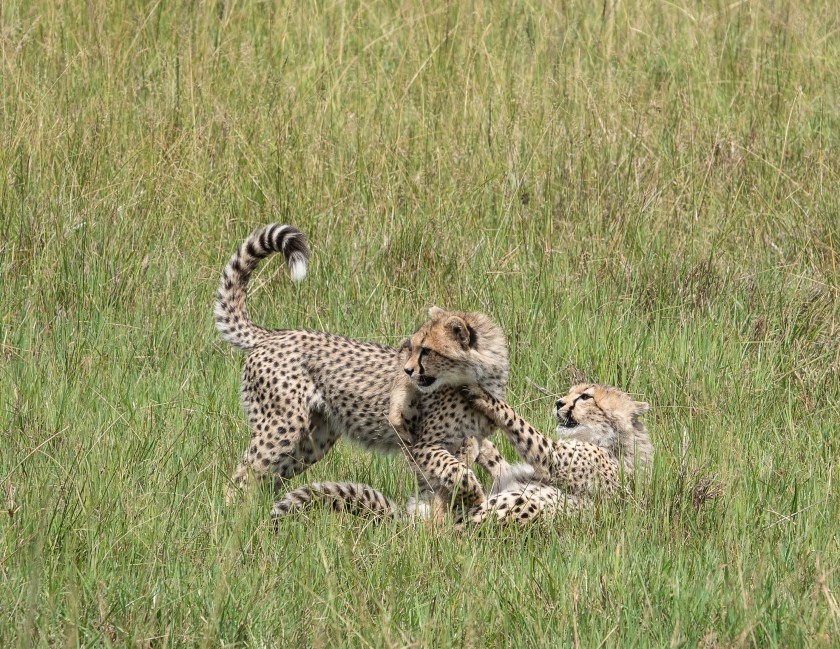
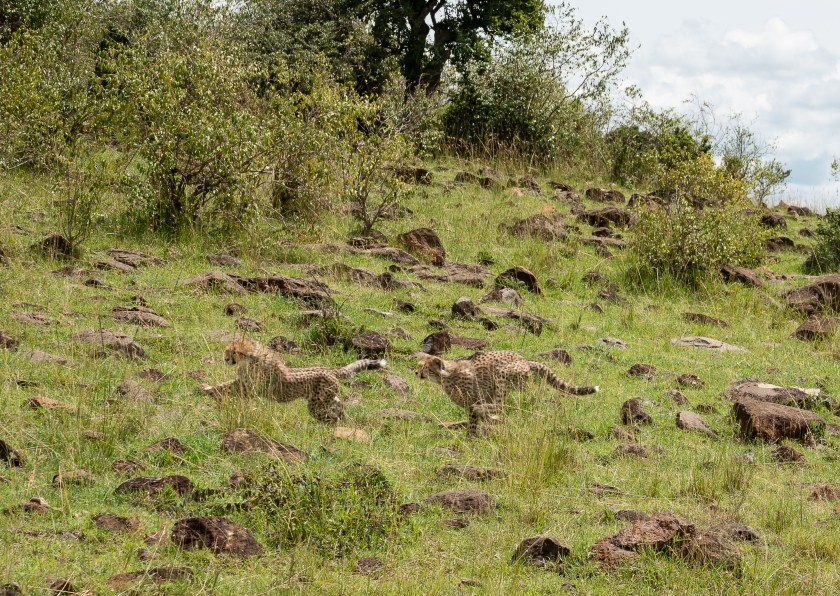
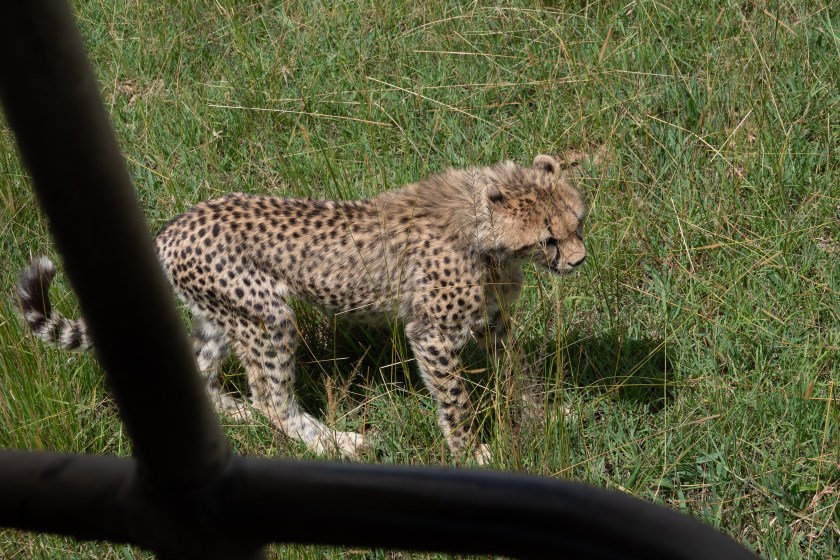
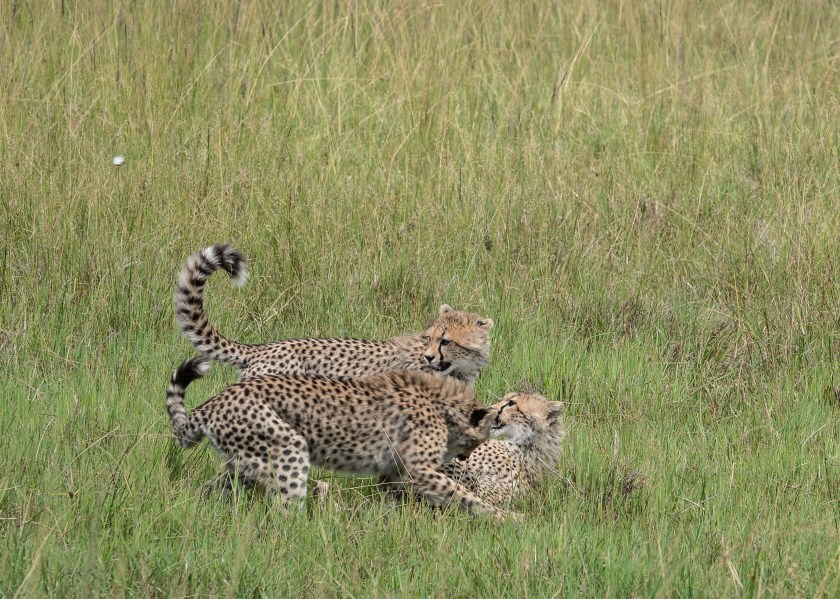
Flying foxes

[I’m not done with Kenya, but now that I’m back in Maine there are some stories that demand to be told.]

A neighbor told me about a red fox family in an open field close to the road, so I jumped in the truck. The first two photos were taken by Heinrich Wurm in early May, when there were six cubs, aged around four to six weeks old, and still nursing:

By the time I got back from Kenya there were only four cubs left, now aged between eight and nine weeks old. The remaining photos are mine.

They come out of the den in the early evening:

The sand is the output of the mother’s den construction, conveniently visible in the otherwise grassy meadow. The cubs don’t seem to stray too far from the den just yet, and if I stay in the truck they are not bothered by my presence. Watch them play:

A week later, on a sunnier evening, they were practicing their hunting skills. They would levitate and then pounce down on top of either a mouse,

or a sibling:

They jumped quite high, hard to convey in a photo.

Then the mother arrived, carrying what appeared to be a dead bird:

A cub appeared and she gave it the bird. Two of the cubs disappeared with their prey (or toy?) into the undergrowth. I can’t imagine this is much food divided between four cubs, but they certainly looked healthy.

To end, a portrait of the mother:

and a cub:

PS: There are many species of fox worldwide, and here in Maine we have both red and gray foxes. I found myself wondering whether these reds are the same species as the British red foxes, and the answer seems to be that nobody really knows. British settlers may have brought some European foxes, Vulpes vulpes, from the old country over to have the right kind of fox to hunt, and they may have interbred with local foxes, Vulpes fulva, but this seems to have been mainly in the Eastern US near settlements, and the native bloodlines still seem to have survived. For more details, read here:

https://www.wildlifeonline.me.uk/questions/answer/are-north-american-and-european-red-foxes-different-species

PPS In England many people loathe foxes, especially in cities, where they have adapted remarkably successfully to urban living, and become a pest. Read (or watch) Roald Dahl’s Fantastic Mr Fox to get a sense of the British attitude to foxes! Here in Maine anyone who has chickens hates them, but a lot of the rest of us (including me) rather like them.

PPS My title is due to Linda Wurm. Thankyou Linda!
One topi, three cheetah, and a leopard

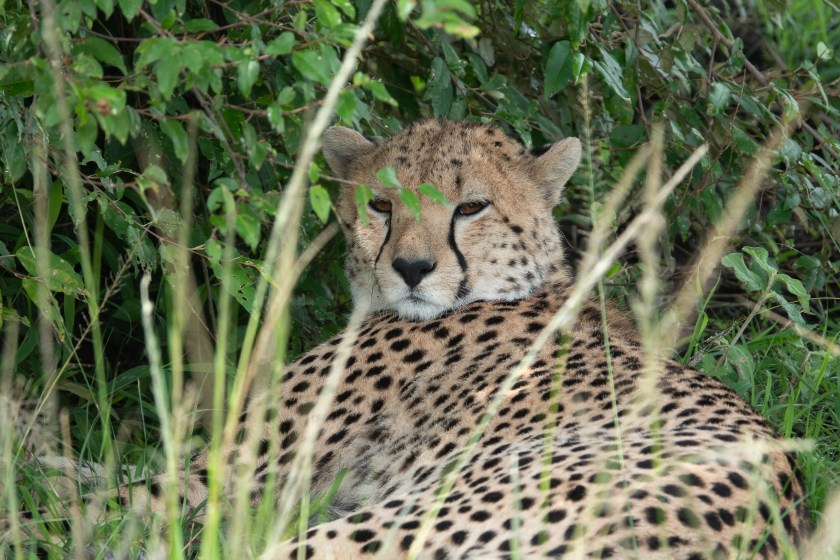
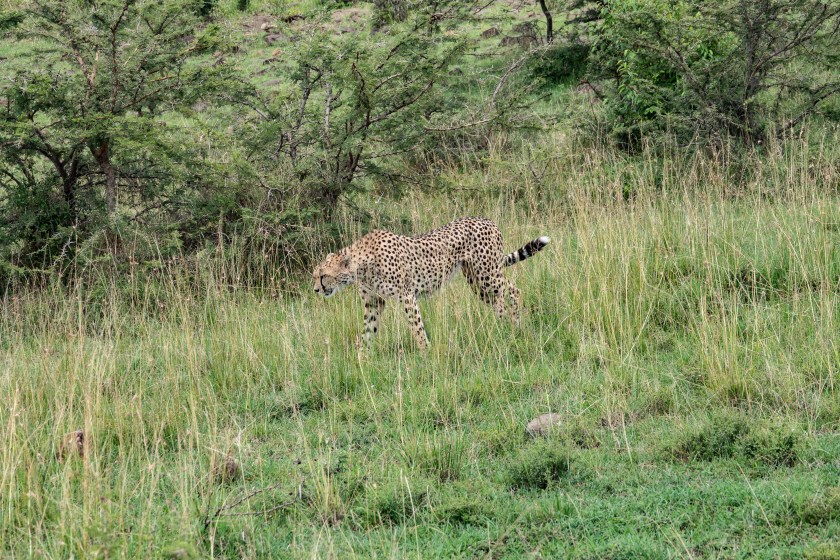
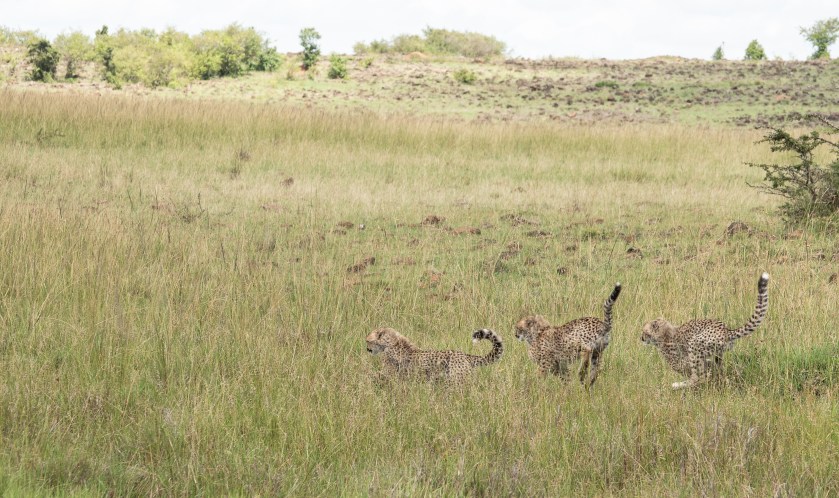
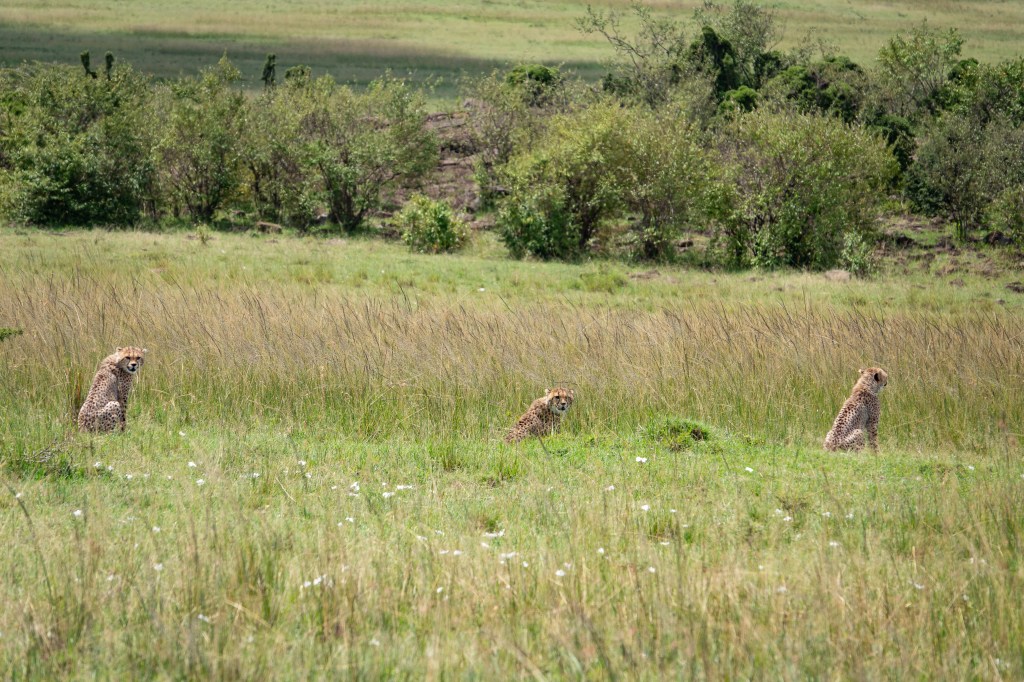
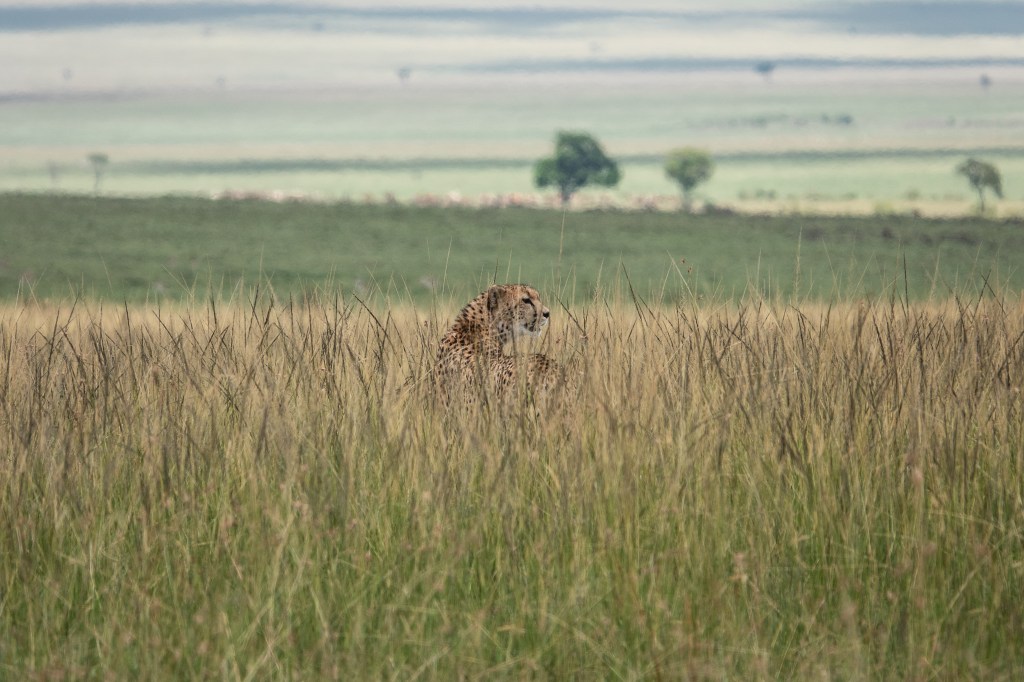
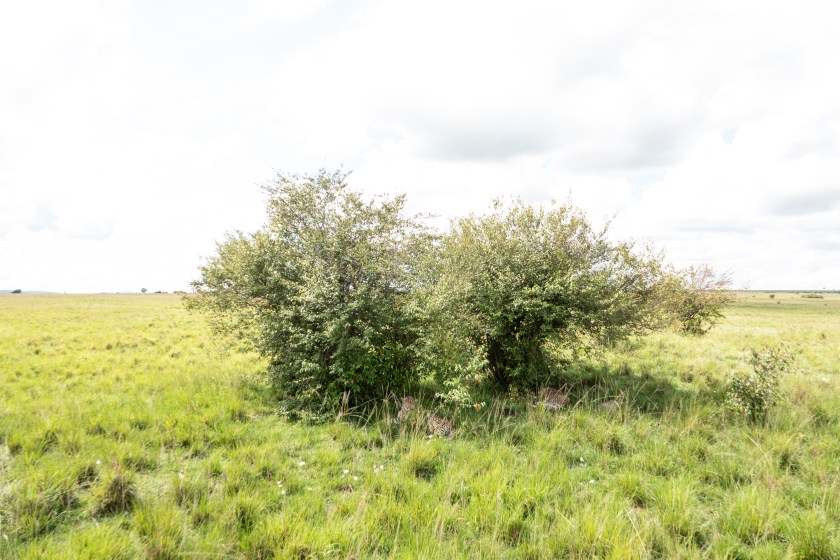
Fairly near the cheetah mother and cubs that I showed you before, there were three other young three-year old cheetah siblings (one male, two female) that had been thrown out by their mother a month ago, and were learning to manage on their own. My guide somehow found them asleep under a tree one morning (don’t worry, I couldn’t see them either):

Two were asleep

and one was on watch:

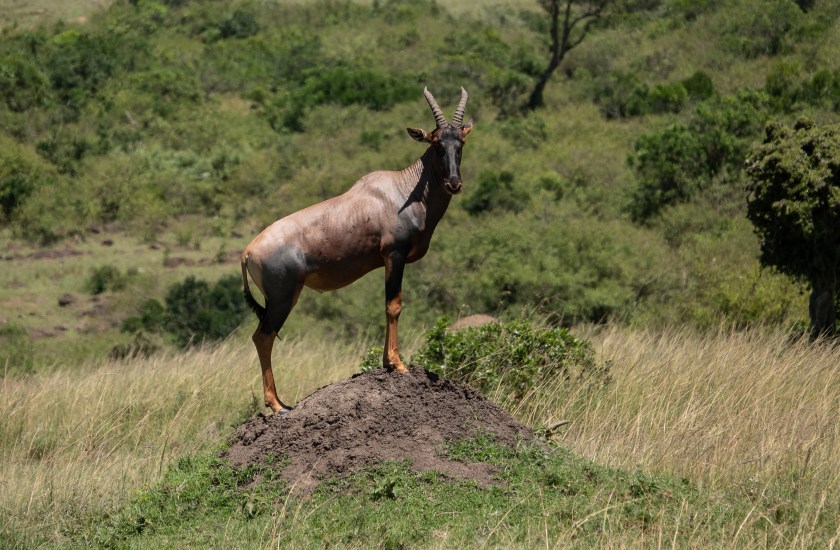
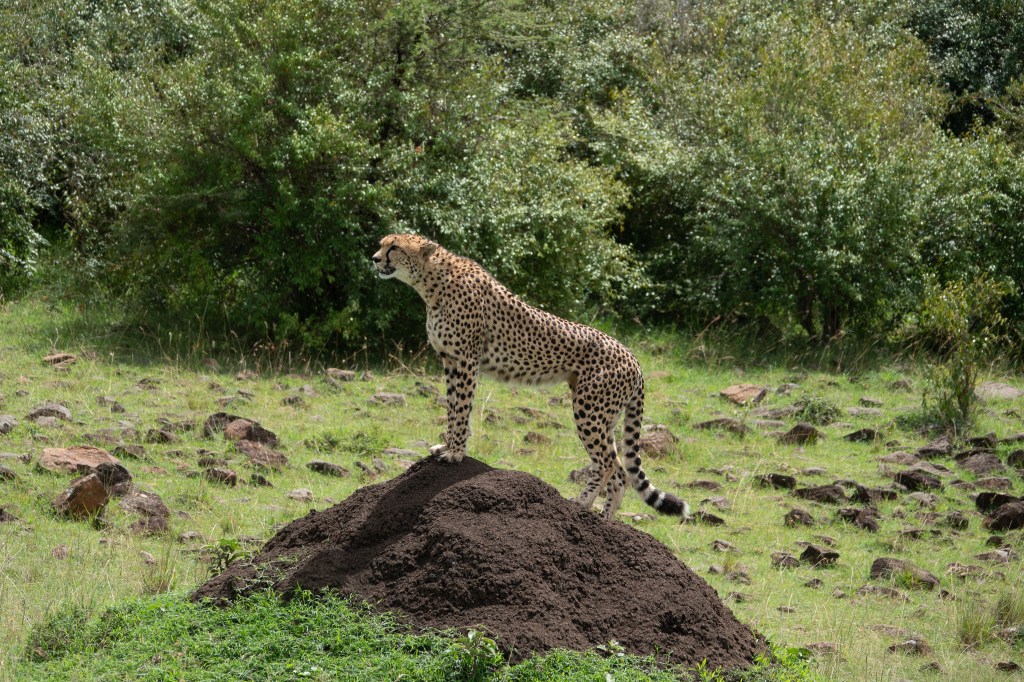
The previous evening they had been seen hunting and killing a young topi. Topi adults are good-sized antelope, 90-150Kg, much too big for the cheetah to tackle. Rather charmingly, the males are prone to standing with their forefeet on termite mounds to improve the view:

The males at this time of year are fighting for territory for their harem of females:

But there are also youngsters around, and the cheetah got one, near some woods. Big mistake. Out of the woods came a 70Kg leopard, much bigger than the 40Kg cheetah, and stole the topi.

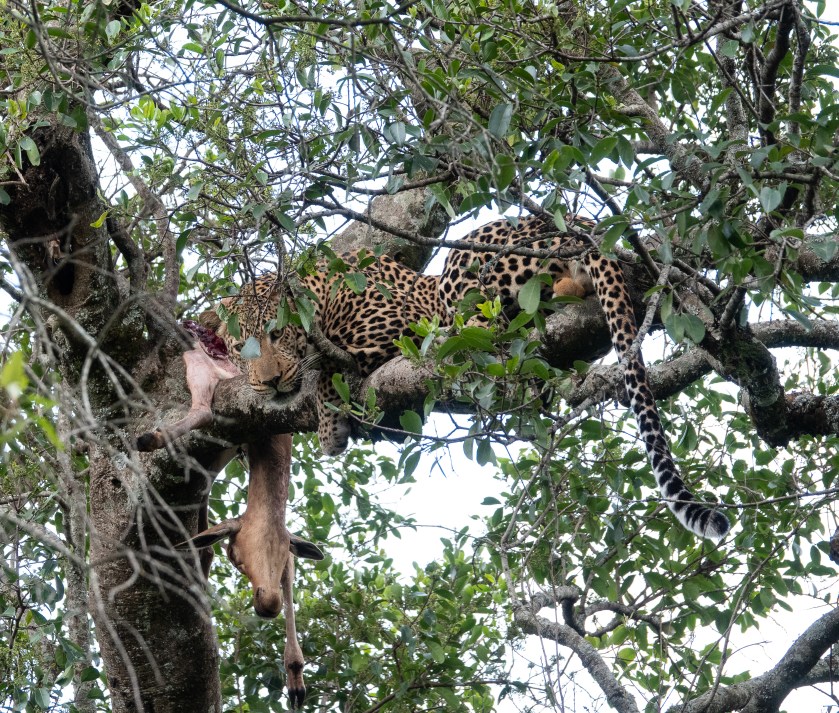
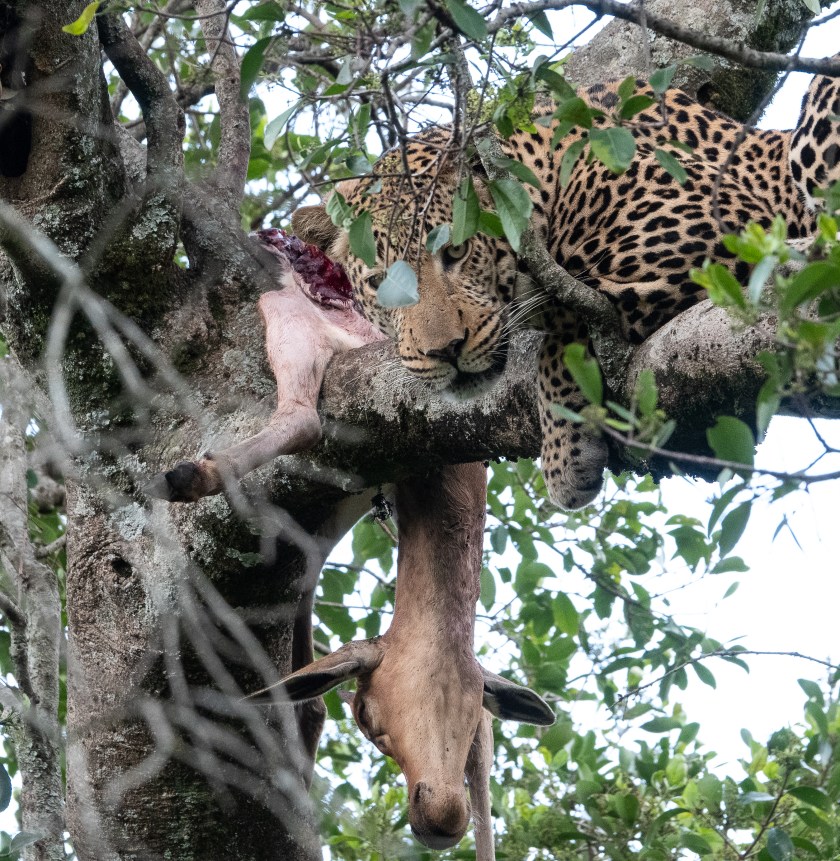
I saw none of this, but it was the talk of the camp that evening. So next morning we went looking, and there, up in a tree in distinctively leopard style, was the ex-topi.

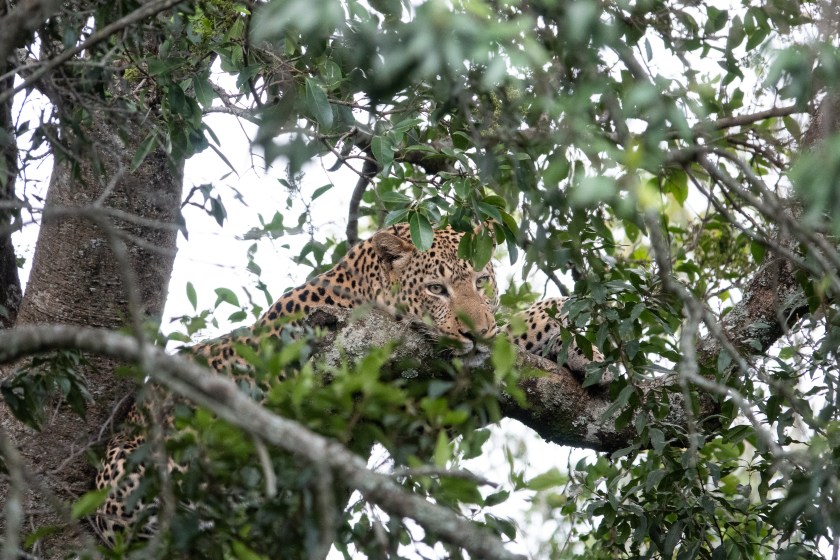
The leopard was nowhere to be seen, probably sleeping nearby on the ground. So we came back at 4pm, and there he was, sleeping on a branch just below the carcase.

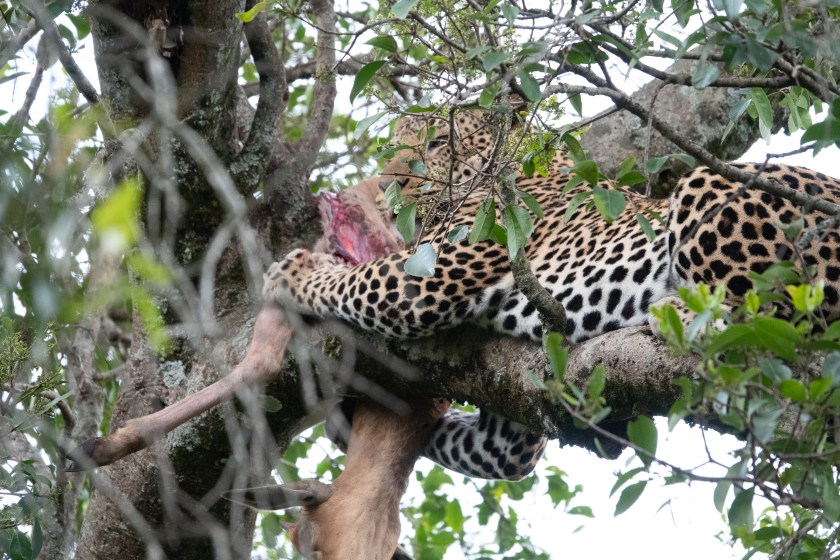
He woke up, and decided dinner was in order:

He was hungry:

So he climbed up and claimed his meal:

Holding it in a deathly embrace:

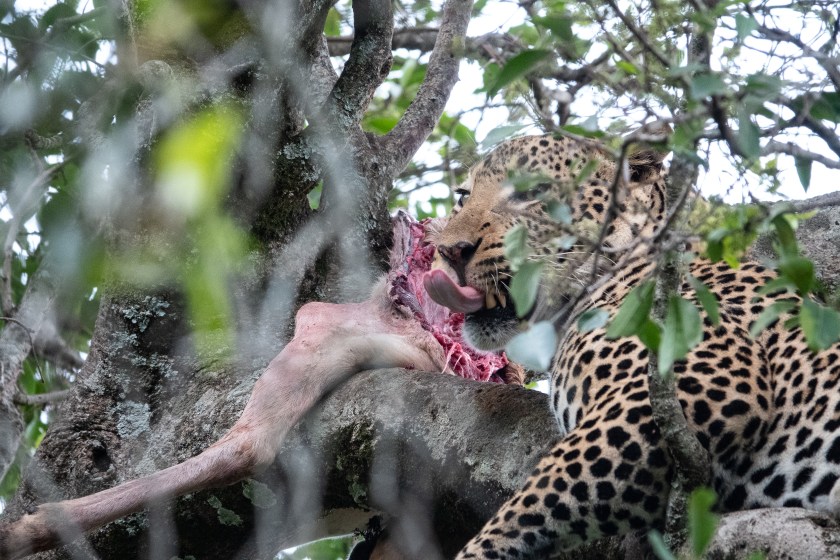
He ate:

And after feeding for an hour or so, he gracefully descended to the ground to sleep off his full belly:

Startling Starlings

[Birds today, but fear not, there will be more big mammals in the weeks ahead.]

Kenya is full of starlings. And not your common-or-garden European ones either. Here is a selection, ending with the most resplendent!

The two most common ones I saw were the Greater Blue-Eared Starling, Lamprotornis chalybaeus, iridescent blue with a yellow eye:

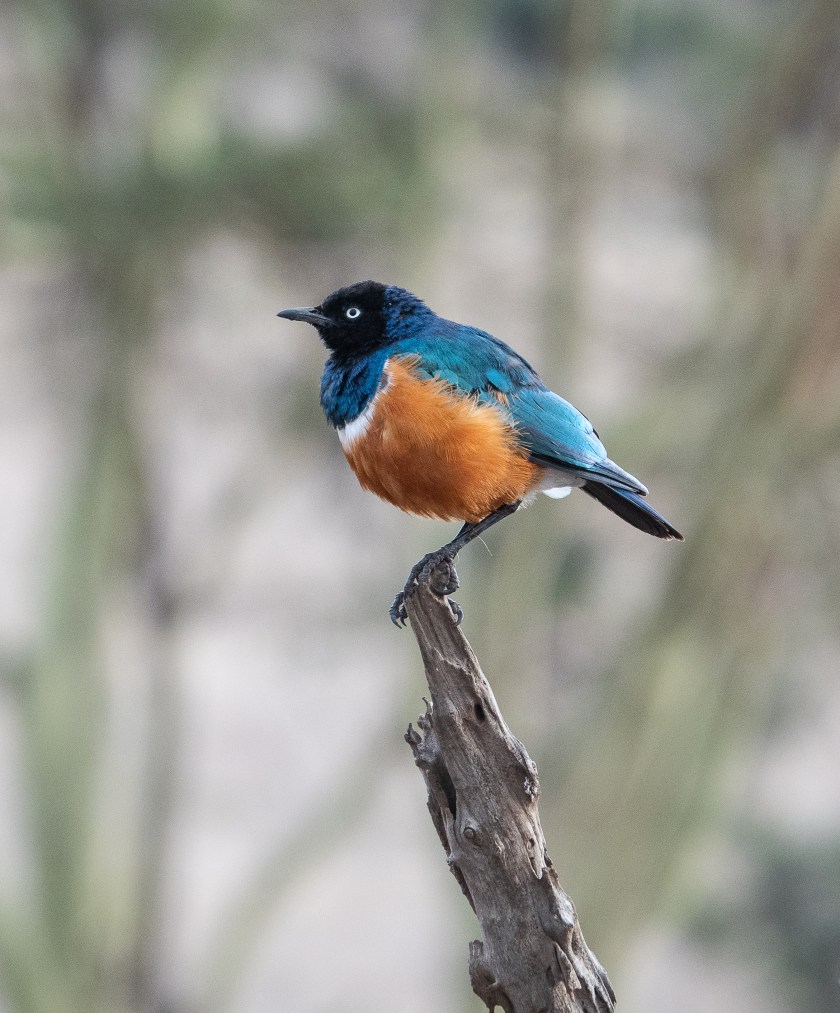
and the Superb Starling, Lamprotornis superbus, with its orange underside.

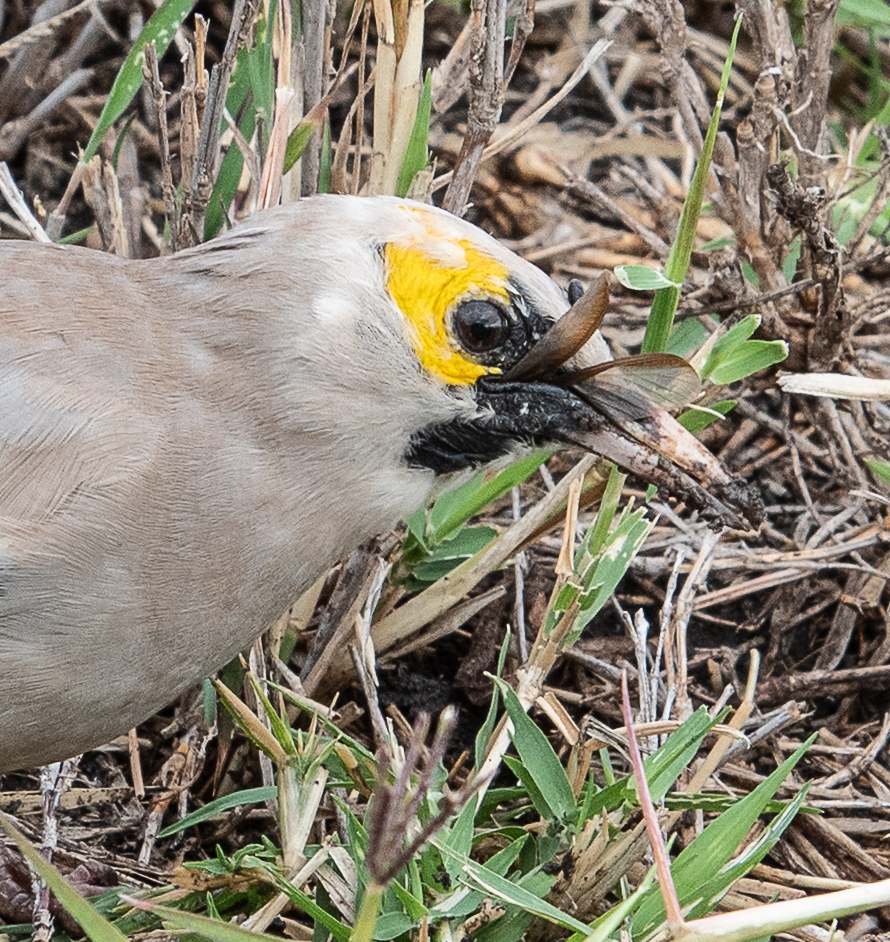
Also common is the Wattled Starling, Creatophora cinerea, member of a different genus from the glossy blue Lamprotornis starlings in the rest of this post. It has an entirely different and less flashy color scheme. The male (centre below) has a bright yellow patch behind its eye, and in breeding season it grows big black wattles, only beginning in my photos. The females lack all of this. Here is a trio (girl, boy, girl) hoping for insects stirred up by the zebra crossing:

The one below was part of a mixed group of birds attracted to a termite mound on the morning after a nighttime shower; the termites were emerging on the wing, causing a feeding frenzy, and this male got lucky:

Here is his catch in close-up:

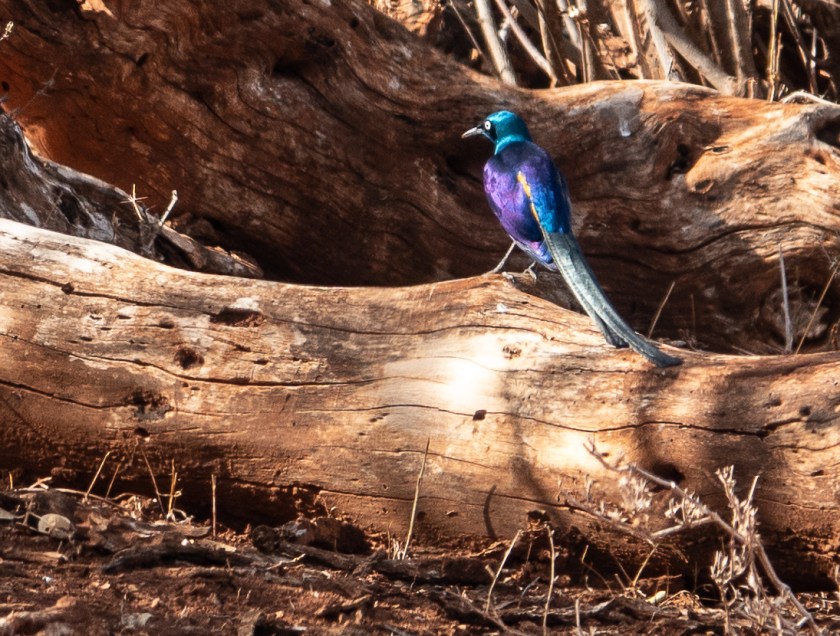
Hildebrandt’s Starling, Lamprotornis hildebrandti, is burnished with orange and yellow below:

and iridescent blue above:

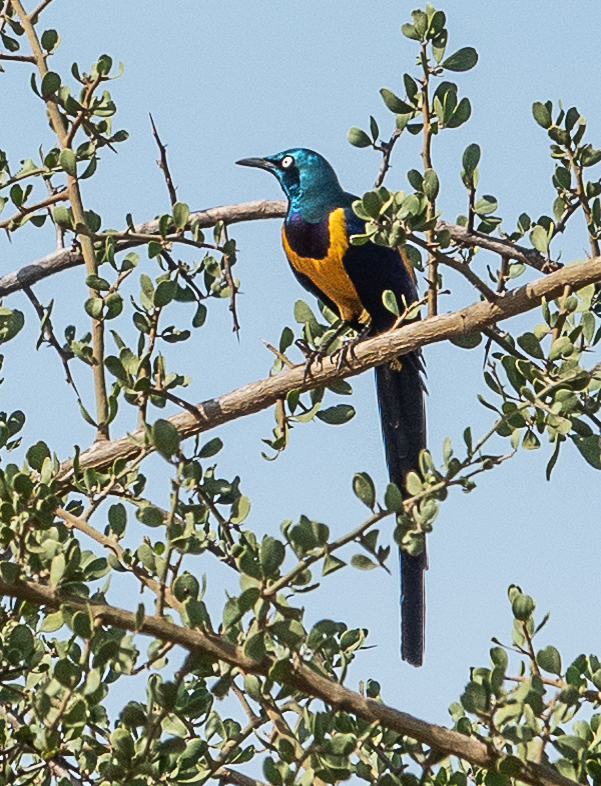
But the most spectacular by far is the Golden-breasted Starling, Lamprotornis regius, aptly named. I asked my guides Steven Sankei and Joel Gilisho at Il Ngwesi in Laikipia if they could find them, and Steven said he knew a place where they hung out. After ten minutes or so, not just one but a pair appeared, for once both equally resplendent, though the male has a longer tail.

Its back is iridescent purple and its head is azure:

Its breast and underwings are burnished gold, unmistakable in flight:

And the total effect is glorious:

PS The range of the Golden-Breasted Starling is limited to S & E Ethiopia, Somalia, E Kenya and NE Tanzania. It inhabits thinly populated regions, but is not endangered. It is found in Kenya during the rains, which are supposed to happen in April, but as of this week in Il Ngwesi (where I saw the Golden-breasted Starlings) they had still not yet arrived. The drought is taking a terrible toll, on both livestock (the Maasai’s livelihood) and wildlife.

An unlikely antelope

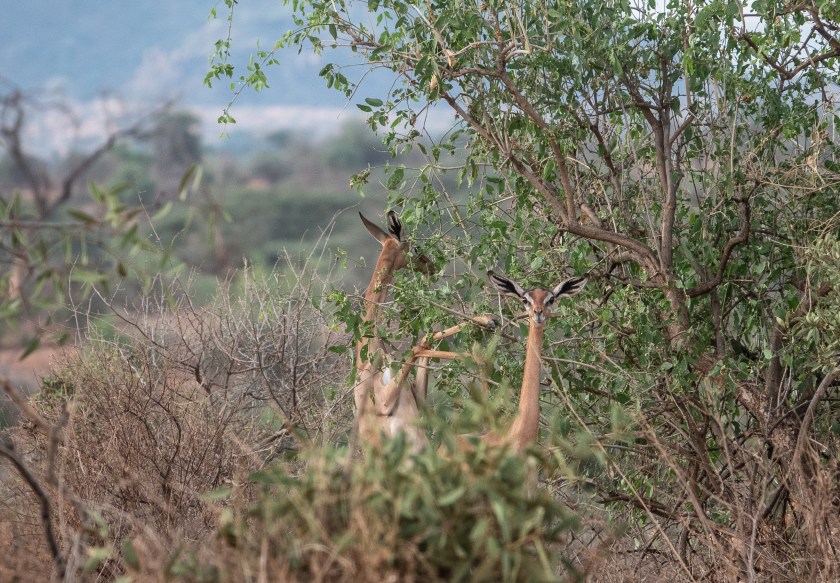
The gerenuk, Litocranius walleri, was new to me. I had never even heard of it. Its name comes from the Somali garanuug, and its Swahili name is swala twiga, meaning ‘gazelle giraffe’. You can see why.

=

It is a creature of dry acacia savannahs in the Horn of Africa and northern Kenya (here, Lewa and Il Ngwesi in Laikipia) , and it uses that long neck to browse higher in the trees, just like a small giraffe. It is famous for its unusual habit (for an antelope) of standing on its hind legs to reach the best leaves up to two metres off the ground:

This one went on eating, but kept an eye on us:

I find their slender necks and huge ears very endearing.

Like most antelope, the social unit is a male and his harem, here numbering seven (only six are in the shot and the male is in the centre.)

If a female is coming into season he follows her, sniffing:

If she doesn’t respond, his next ice-breaking move is to kick her, as a way of getting her attention:

Rather surprisingly, this sometimes works, but not this time.

You can see from the photos how dry everything is: the rains are late, and the drought is severe. This graceful animal is classified by the IUCN as “Near Threatened”. Its population declined by 25% between 2001 and 2016, due to hunting and habitat loss from grazing. To think I have only just learnt of its existence, and yet it may be vanishing. How sad.

PS I kept hoping that two of them would position themselves so I could take a “push-me-pull you” shot, but they failed to oblige.

A right bustard

That’s not a typo in my title.

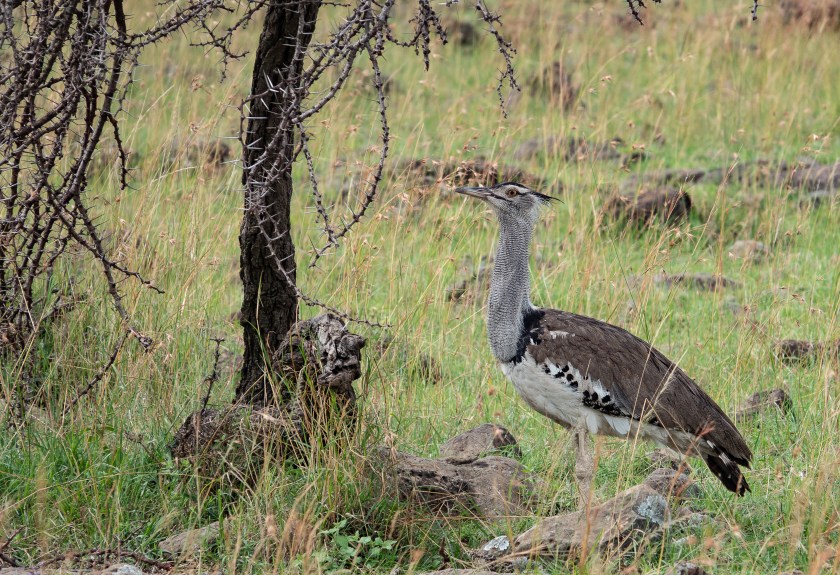
I want to introduce you to a male Kori Bustard in his pomp, but first some background. Here he is on an ordinary day, hanging out in the shade. He is the heaviest flying bird in Africa, up to 19Kg and stands about five feet tall. (Females are much smaller).

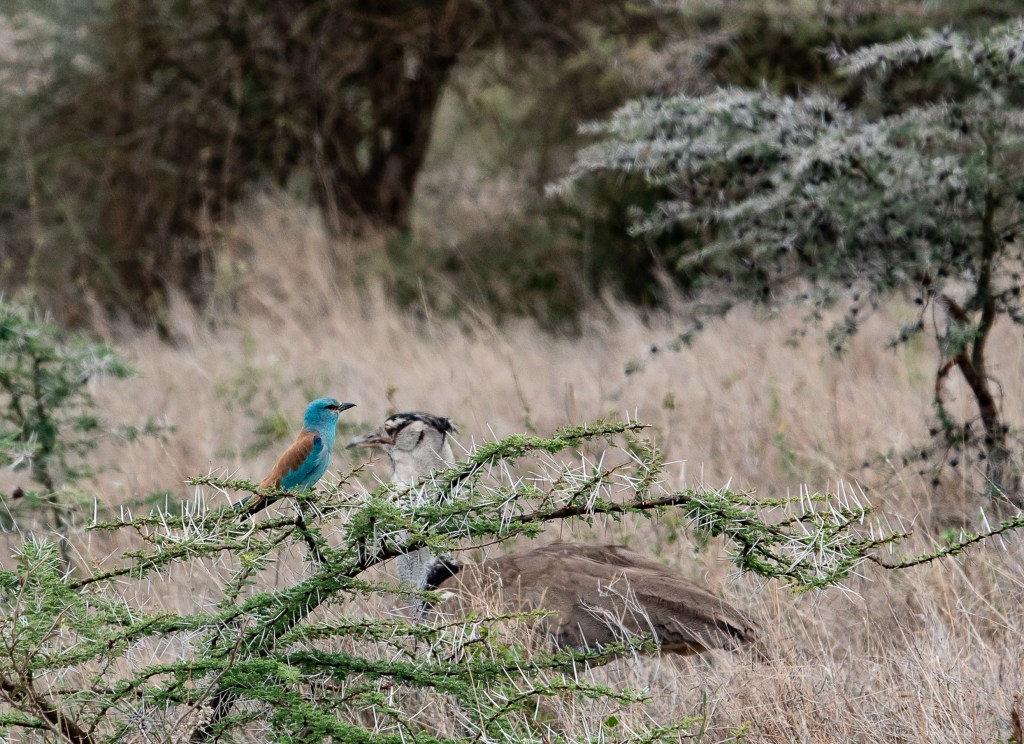
He walks through the long grass looking for insects, often followed by birds like this European Roller, waiting for things that fly up as he passes. The bustard is visible to the right of the Roller, behind the acacia bush:

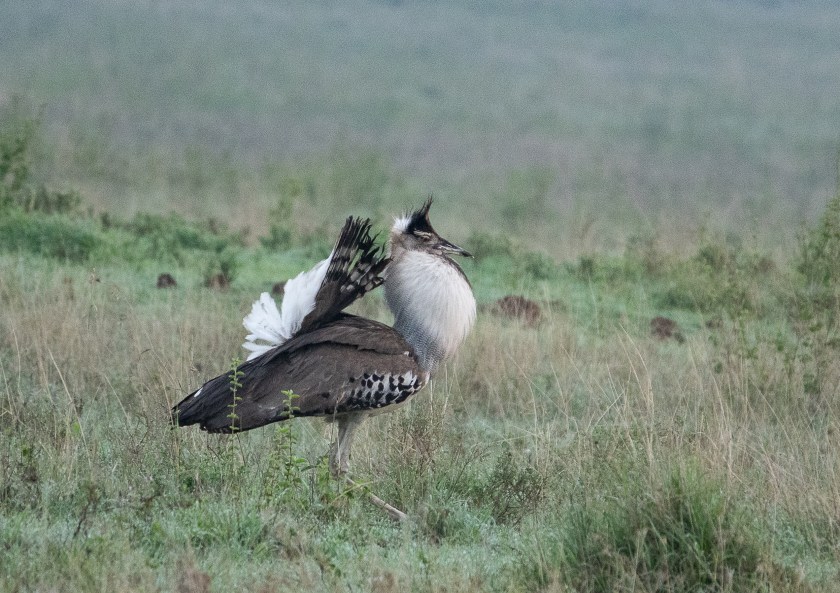
But now in Nairobi National Park it is mating season, and a female is nearby. So he transforms himself. First, the tail goes up:

looking good from behind:

Then the wings are lowered to the ground, and he puffs out his neck:

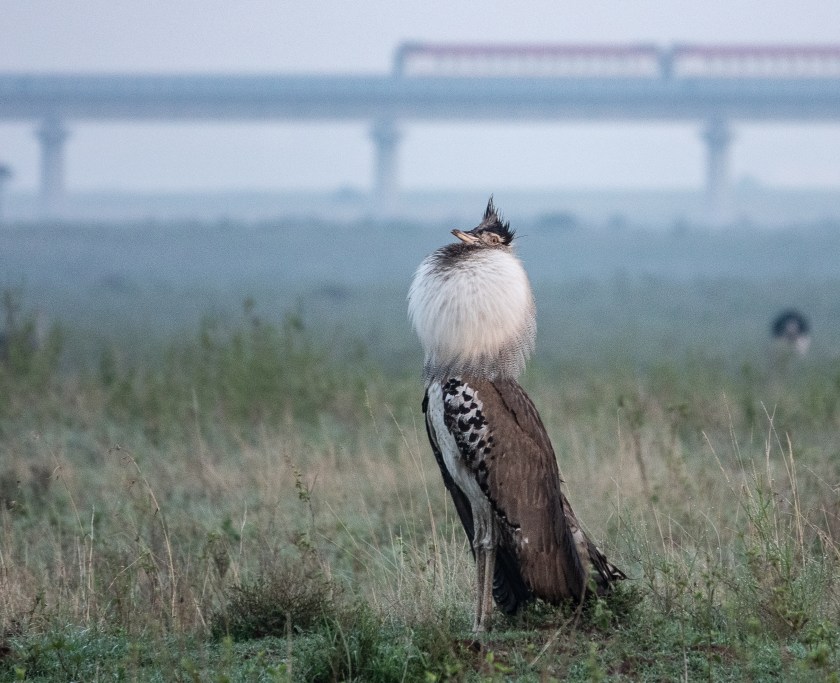
And in the final result he looks for all the world like a monarch in floor length robes complete with coronet and train, and a neck ruff:

He even makes a deep booming drumroll to announce his presence. How could any girl resist?

PS I’m sure you noticed the raised train line in the background. Nairobi National Park is a wonderful place where I stayed for one night before my flight back, at The Emakoko lodge, (highly recommended) It is 30,000 acres right on the edge of Nairobi next to the airport, and a few years back they ran a new train line straight through it. They did at least raise it up high enough for giraffe to walk underneath, and apparently the animals are used to it now, and find it useful for shade. It was hugely controversial, as you can read here (the article is about a variety of threats to Kenya’s national parks, including this one):

https://e360.yale.edu/features/how-kenyas-push-for-development-is-threatening-its-prized-wild-lands

A morning in the life of a cheetah mother: Part III

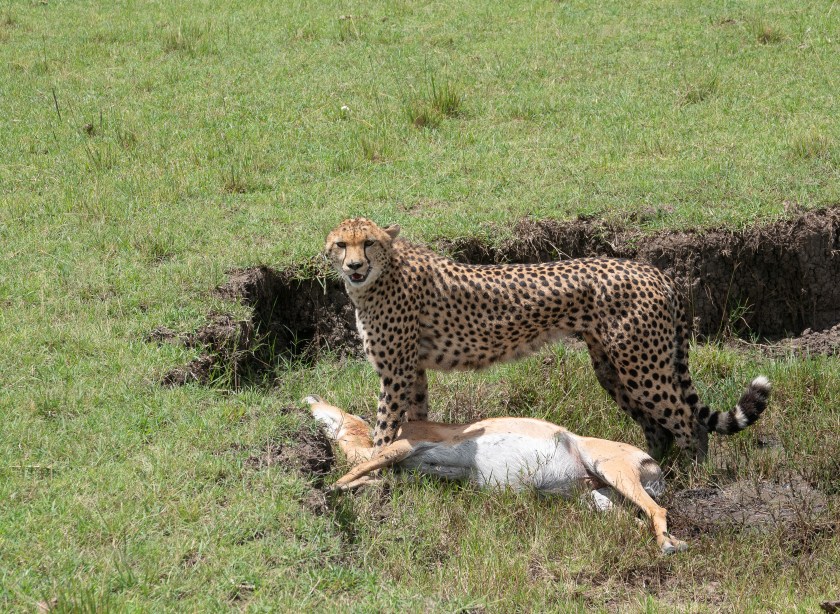
Once the impala was well and truly dead,

the proud cheetah focussed on getting it under cover so vultures, jackals, and leopards couldn’t find it. Dragging was hard work, as you can see:

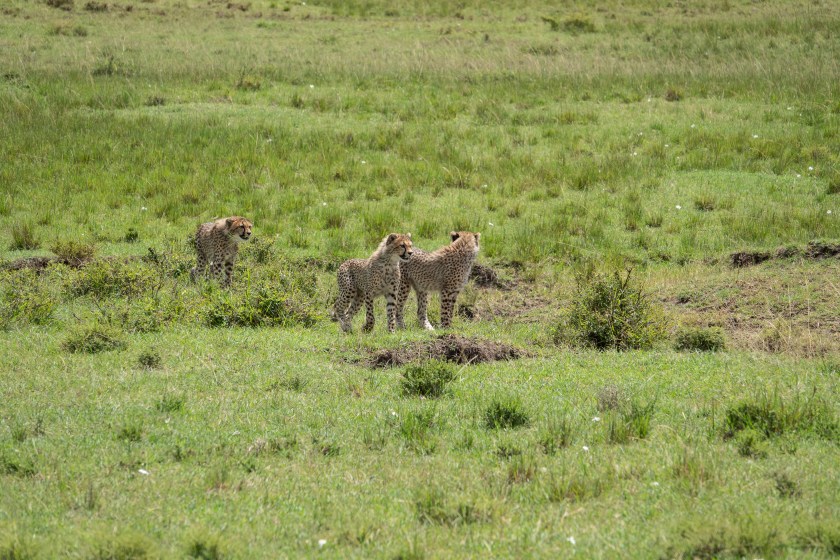
Then she called the cubs, rather a quiet sound, but they responded:

quickly but calmly:

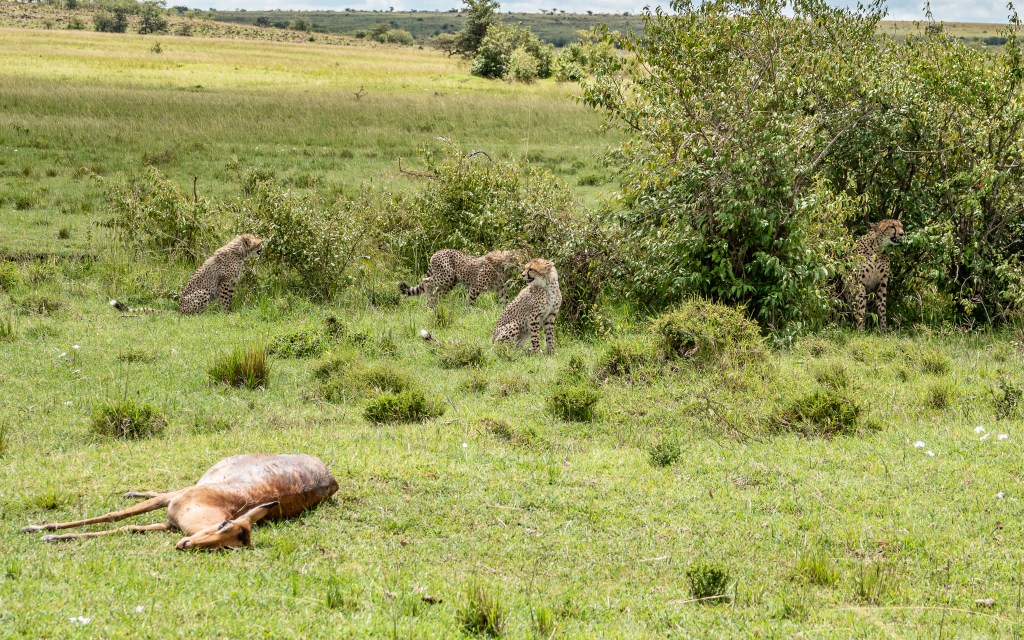
They didn’t approach the kill, but headed for the mother who was cooling off under a bush (at the back on the right):

Then she led them to the kill,

and dragged it deep into the bush:

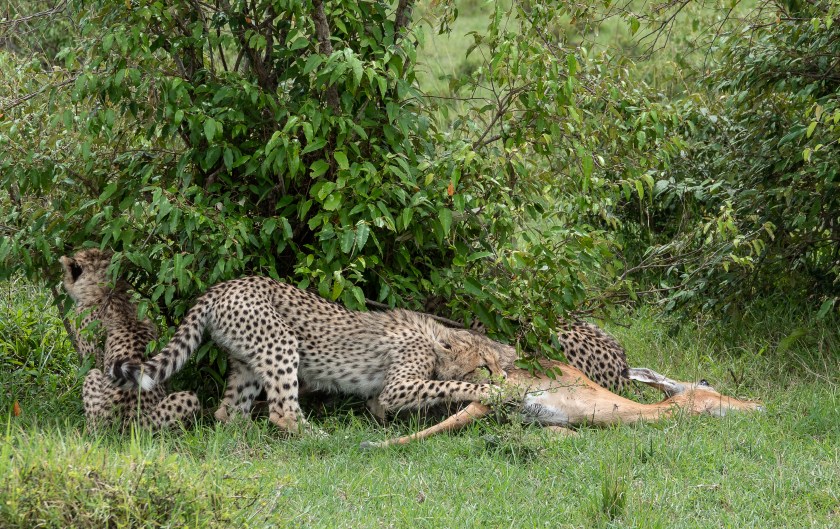
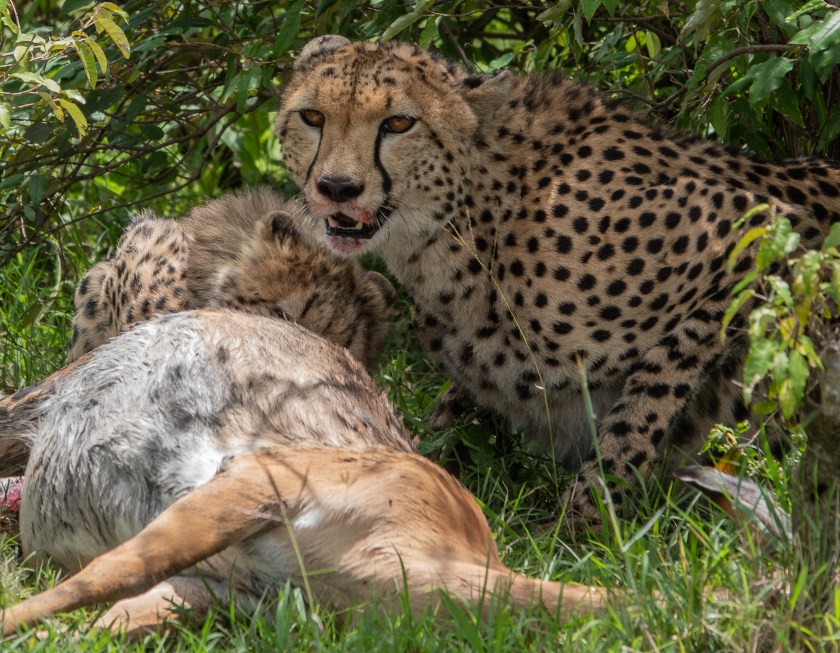
where they tucked in:

One cub seemed intent on dragging it further, mimicking its mother. The cubs ate some, and played with the carcass, but the mother (right below) put her head down and just ate:

I am full of admiration for the skill, effort, and care this mother takes to raise her cubs, alone.

A morning in the life of a cheetah mother, Part II

She saw impala on the other side of the valley, and crept through the long grass on her belly, invisible, for as long as she could. Then, when the grass had been grazed short and there was no cover, she kept a termite mound in between her and the impala. In the photo below, the left-hand circle is the cheetah, the termite mound is in the center, and the impala are to the right.

Once she reached the termite mound, she settled down behind it and waited for the impala to come to her, which they foolishly did, oblivious to her presence..

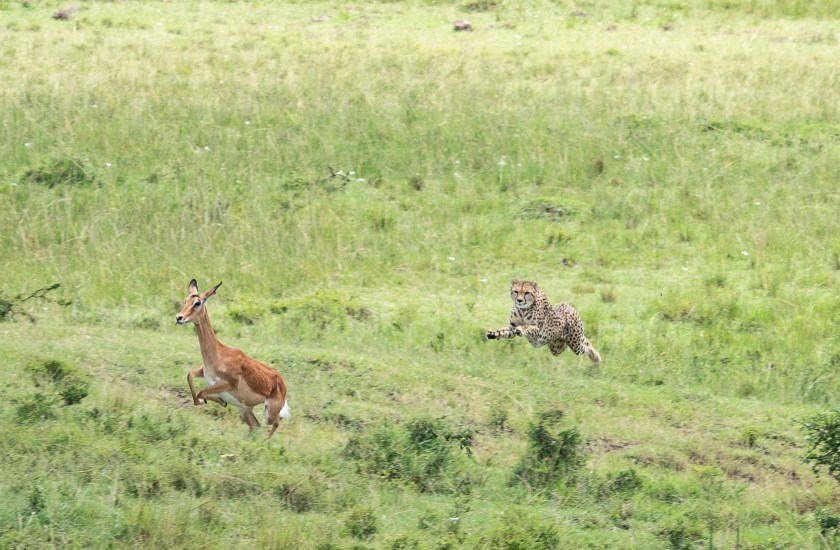
Tinka thought they were still too far away, but the cheetah disagreed. When the impala reached her side of a clump of bushes, she burst out, heading for the one on the right in the picture below, but it saw her, and the one on the left didn’t, so she changed direction and headed for that one. (In case you can’t see her, she is just behind the bushes.)

This was smart: this impala was pregnant, and a fraction slower than the other one. The cheetah is astonishingly fast:

She can reach speeds of nearly 6o mph in a sprint like this, and she accelerates faster than a Lamborghini, and four times faster than Usain Bolt.

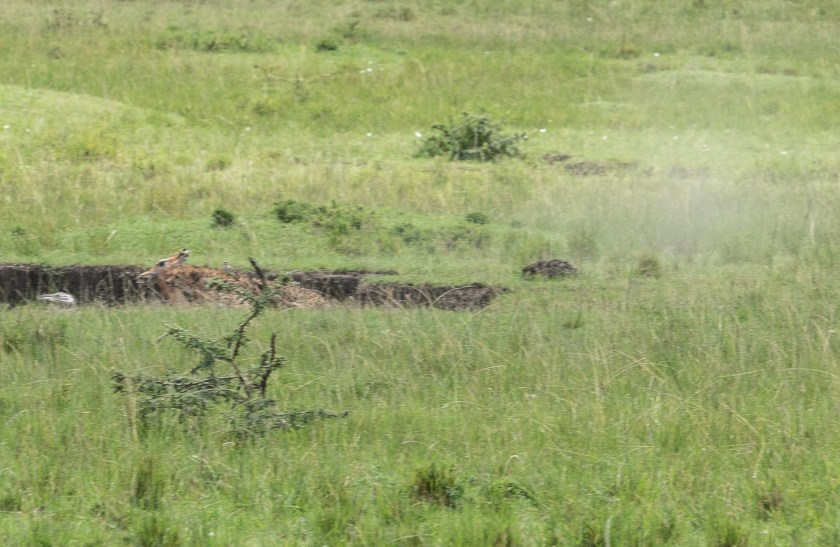
The impala sought refuge in a gully: big mistake. This blurry photo shows the moment the cheetah caught her, grabbing her by the throat. The impala is on the left, the cheetah on the right.

From when she began her final assault it took 11 seconds to the kill.

My guide pointed out that you can see from this shot that the impala’s nipples are enlarged, confirming her pregnancy.

Something they don’t often show on TV is how long it can take for the animals to die. This one took a good five minutes. The cheetah holds it by the throat and asphyxiates it, but every now and again she drops it, thinking it is all over, and the poor thing moves or gasps, so she grabs it again.

This video makes that painfully clear. Not everyone will want to watch. If you listen carefully the poor impala can be heard.

You can also see that the cheetah’s flanks heaving from the exhaustion of the chase, and my guide says that is one reason it took so long for her to finally kill the impala. And she will have to do it all over again two days later.

This is glimpse of the realities of how the sacrifice of one mother and her unborn fawn feeds another mother and her three cubs. My next post will show you the feast.

PS More on the cheetah’s speed and acceleration here:

https://www.nationalgeographic.com/animals/article/130612-cheetah-speed-hunting-big-cats-animal-science?loggedin=true

If you point your camera at a cheetah, mother or cub, it is often not there any more. They flash past at dazzling speed, and turn on a dime. This piece is also interesting:

PPS As many of you know, this is not my first safari, and every one has been wonderful . But in case you think you see this every time, it is my first clear look a successful hunt from start to finish in 13 safaris. (Lions and leopards hunt at night.)

A morning in the life of a cheetah mother: Part 1

[I am back from a trip to Kenya that recharged my batteries which had been yearning for the wild. After deleting the obvious duds, I have only 2500 photos to go through, and many many stories to tell you. I had settled into a routine of blogging weekly, but now I will just send them once I have something ready to show you. If the tale I want to tell is long, like this one, it will be in two or more installments.]

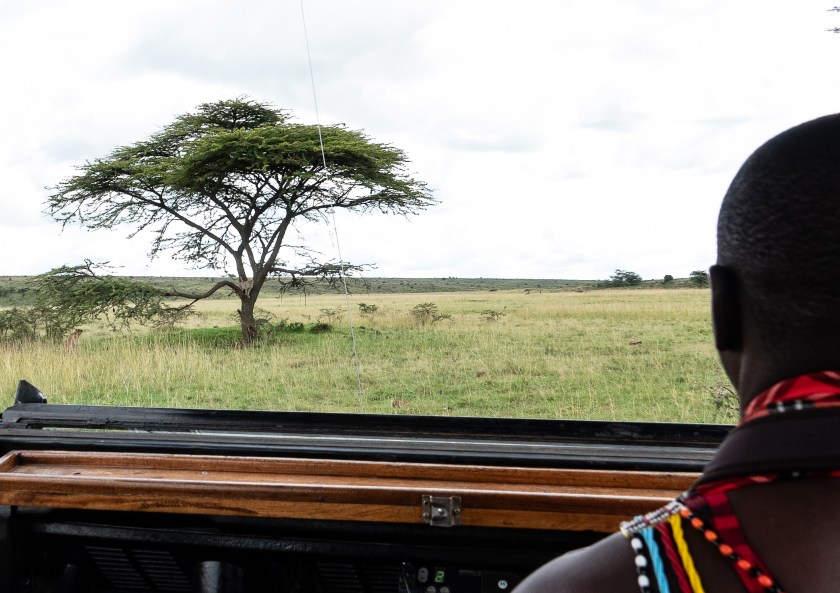
In the Maasai Mara, I stayed for the second time at Saruni Wild, a Maasai run camp in Lemek Conservancy with only 3 tents. My extraordinary guide was William Tinka.

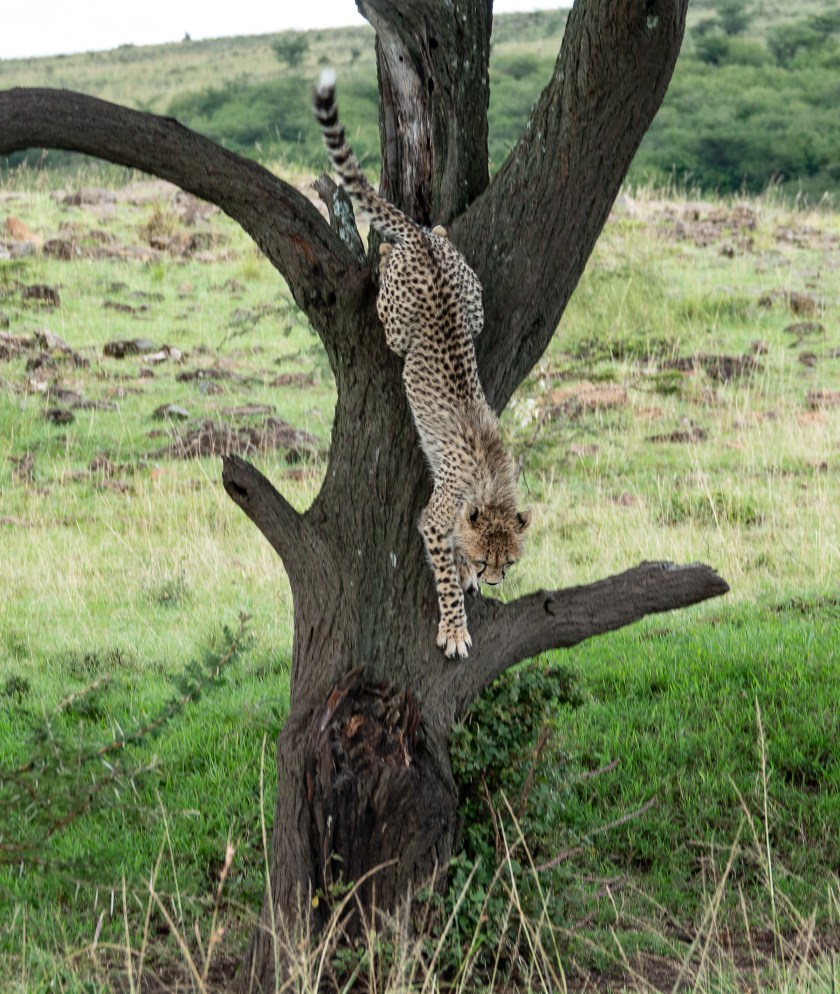
One morning we were looking for cheetah, and as usual Tinka saw them long before I could discern them even with binoculars. We got close, and you may be able to see that one has climbed the tree, not something I associate with cheetah:

It was a five-month old cub, one of three.

It came down:

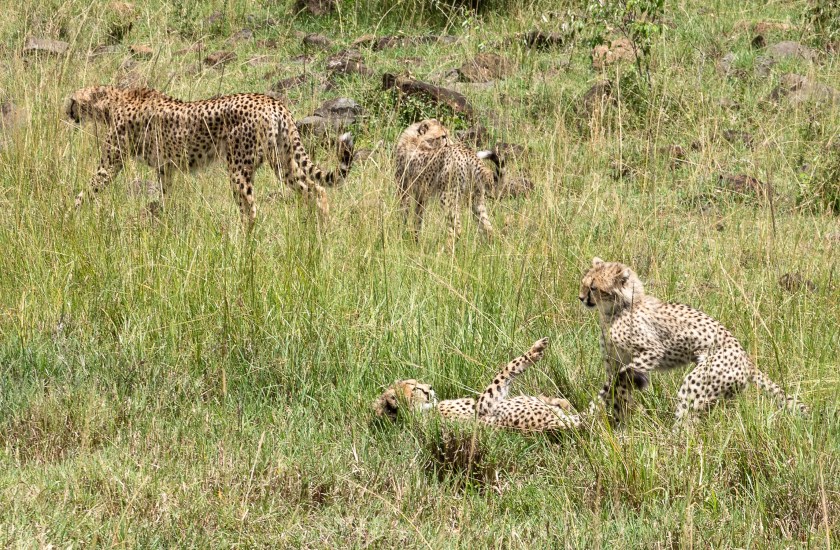
and joined its mother and the others:

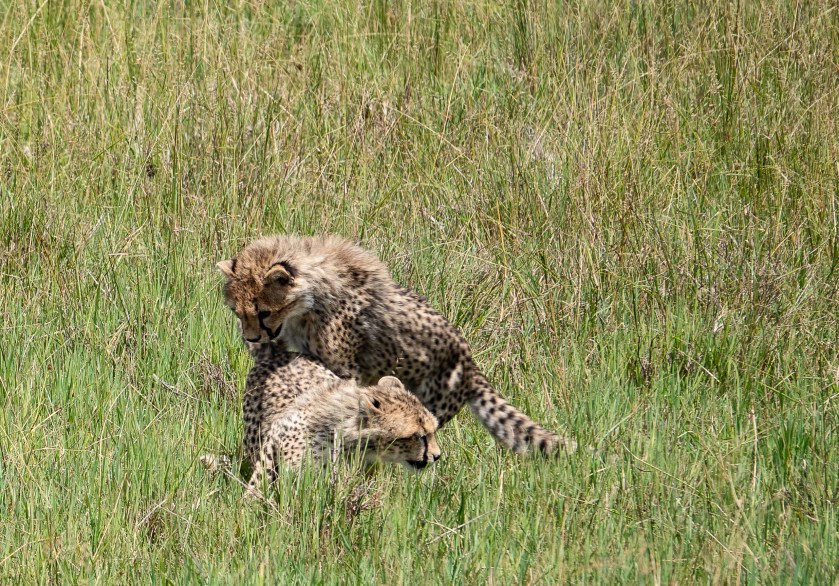
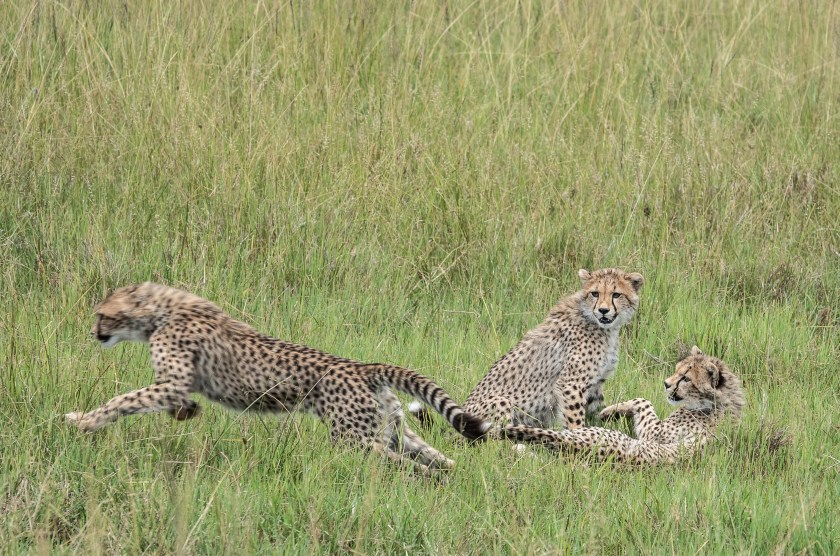
They played for about 20 minutes

until the mother began to move, though they kept playing as they followed.

When they run, you can see how their back feet land in front of the front feet, the iconic picture of a cheetah at speed.

Two of the cubs came to investigate the vehicle

One tried to climb in

But then the mother appeared like greased lightning and chased it off, sending a clear message that this was too close.

While they continued to play,

the mother checked out the landscape for game,

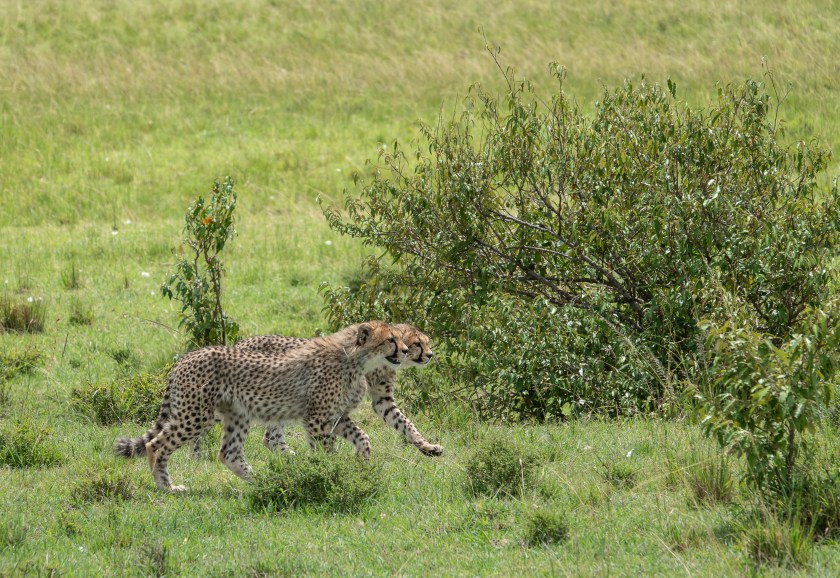
then started a purposeful slink through the long grass:

The cubs followed

still playing

but then, with no clear signal, they stopped dead, sat completely still (our kids never did that),

and their mother set out alone on the day’s grocery shopping.

You will have to wait to see what happened next.

Bugs and birds: Springtails and sapsuckers

[Well, the best laid plans…. etc etc… I am not going to get to England for another week, for Covid-related reasons. (Everyone is fine.) So I dug out this blog that I composed this time last year and never sent.]

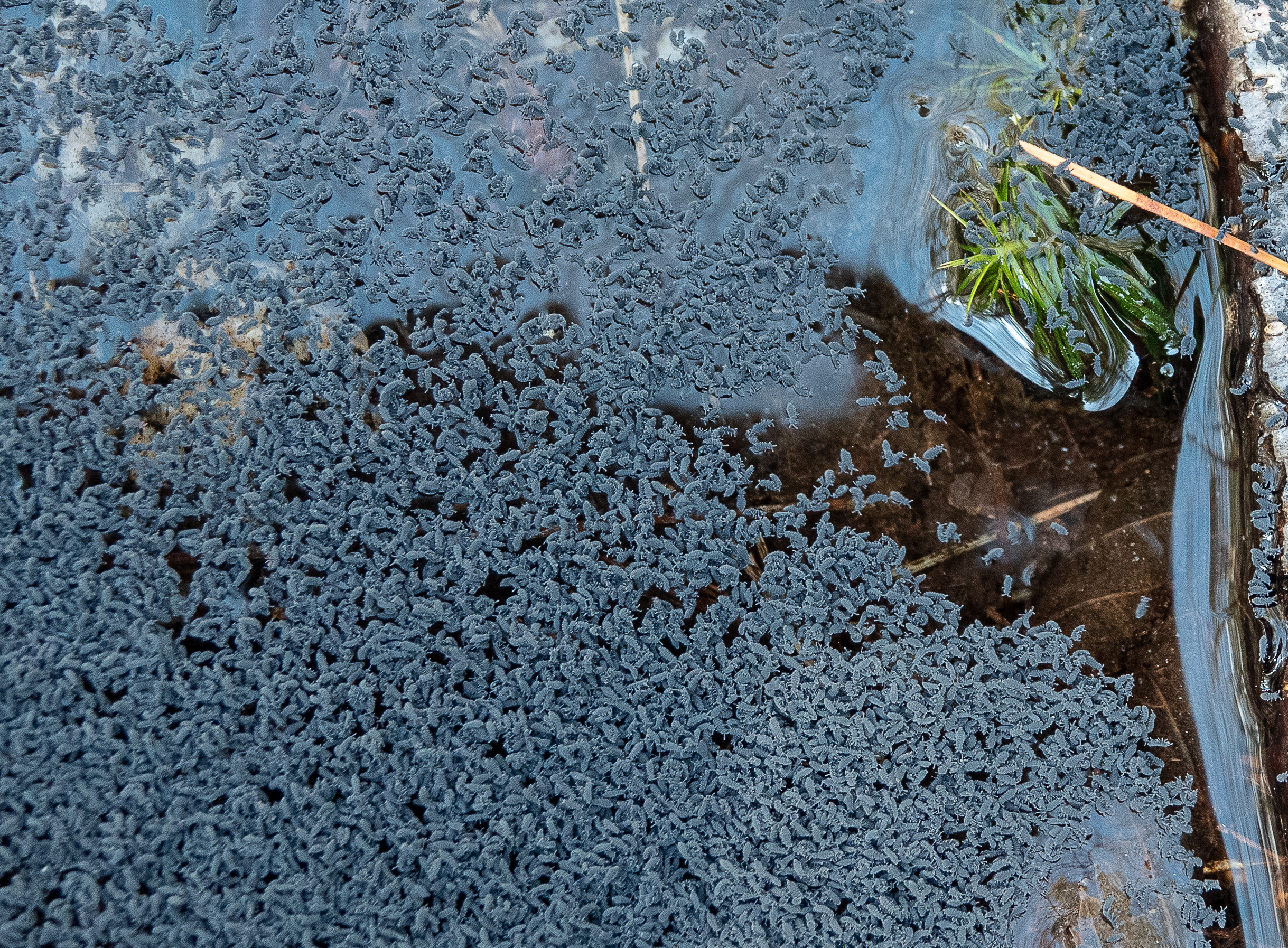
In the woods a tiny rivulet flowed across the trail, creating miniature ponds amongst the leafmold.  In one of these there was a huge swarm of tiny dark grey insects, so small they looked at first glance like poppy seeds.

DSC04135

I had no idea what they were, but they moved, so they were alive.

In closeup, they look like this:

DSC04135

They are Springtails, also called Snowfleas, Podura aquatica. They do not live in the water, but on the water, held up by the surface tension. Why Springtail?? Under their tail there is a hinged structure, and if they are disturbed they shoot many times their own height up into the air. Mind you, since they are only 1.5mm long this is not actually all that high!

They are very primitive insects that never evolved wings, and they don’t go through different metamorphic stages. They are thought to be vegetarians.

More elegantly, two Yellow-bellied Sapsuckers, Sphyrapicus varius, were drumming to each other in the treetops. Like the red-bellied Woodpecker I showed you last year, they have flashes of brilliant scarlet plumage. Here is the male, with yellow(ish) belly in evidence:

Yellow-bellied sapsucker

Here is another male, this time feeding:

Male, Yellow-bellied Sapsucker


They are called sapsuckers because they really do eat sap. They have a highly systematic drilling technique, which produces rows of small holes, like this:

DSC04357

This passage from Wikipedia describes how they operate:

Before feeding consistently on a tree, this sapsucker lays down exploratory bands near a live branch. These bands are laid down in horizontal rows. When it finds a tree that is photosynthesizing, then it lays down more holes to feed, about 0.5 centimetres (0.20 in) above the primary bands. These form columns. Each hole is started as an oval elongated horizontally, drilled through the bark and phloem layers to the outside of the xylem. They are then drilled further, with the sapsucker enlarging it vertically, making it yield more sap, but only for a few days. The top holes in each column thus provides phloem sap, and this sapsucker also utilizes the bast (fibrous tissue, MY) from the edges of the holes drilled. In the winter, when the holes are drilled on conifers, bast is likely the most important food.”

Watch and hear him drill in this video, and then two more photos to finish with. The first is a juvenile, and the second is a close-up of the male in the video.

Hopefully there will be no more delays to my travel plans, and I will go quiet on you for a few weeks. No news is good news.

The pond reawakens

[There is no single story to this blog, just a desire to show you what early spring is like round here, before I leave town for a while. This is my last week in Maine till late May; I’m off to England, Kenya and Sicily. I may blog once or twice en route, or I may hoard stuff and let it trickle out bit by bit on my return. It will depend in what I see, whether I have wifi, and any spare time. Wherever you are, delight in the signs of new life.]

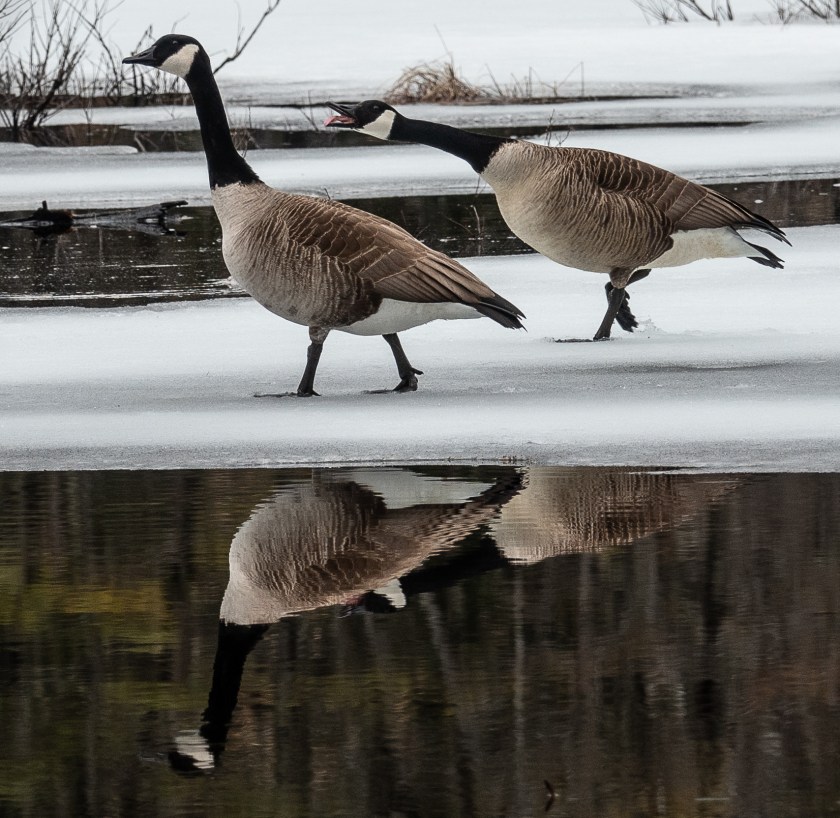
There is still some snow in the woods, and some ice on the pond, but with every passing day it shrinks. So the waterbirds are returning. The Canada Geese, of course.

There were twelve today, and here in their home habitat they are handsome creatures, though she does not seem to find him enticing:

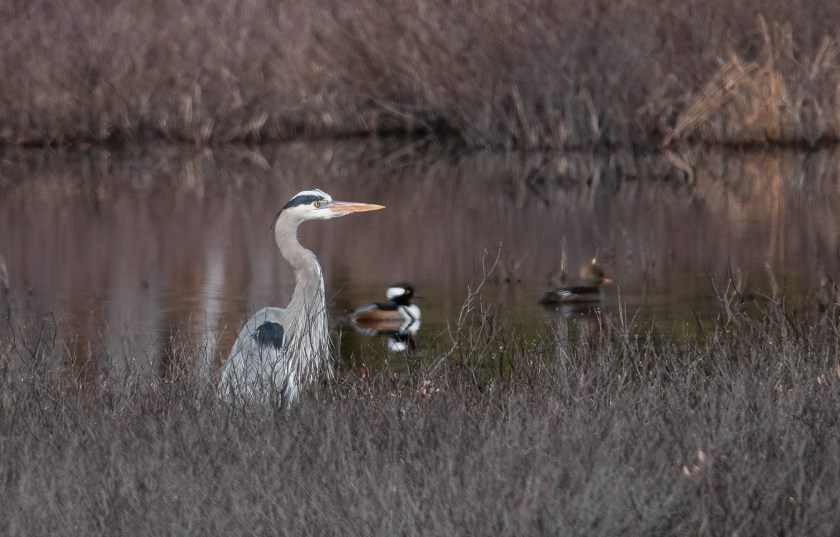
The Hooded Mergansers, swimming amongst tiny suspended icy chandeliers:

and today they are joined by the first Great Blue Heron of the year:

It puffed out its chest to display its pectoral plumes:

Yawned:

Spread its wings:

and took off:

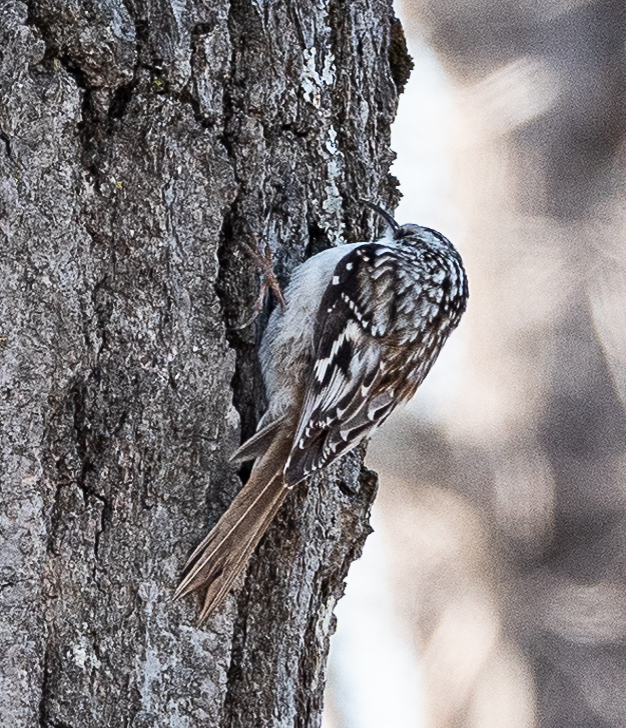
Around the pond the redwinged blackbirds chorus, and a a tiny Brown Creeper works its way up a dead tree probing for bugs:

and singing beautifully:

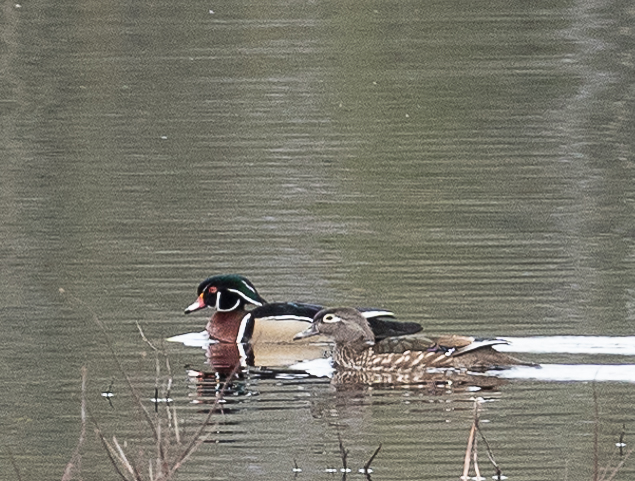
I heard (but didn’t see) a beaver slap its tail, but I did see a pair of Wood Duck,

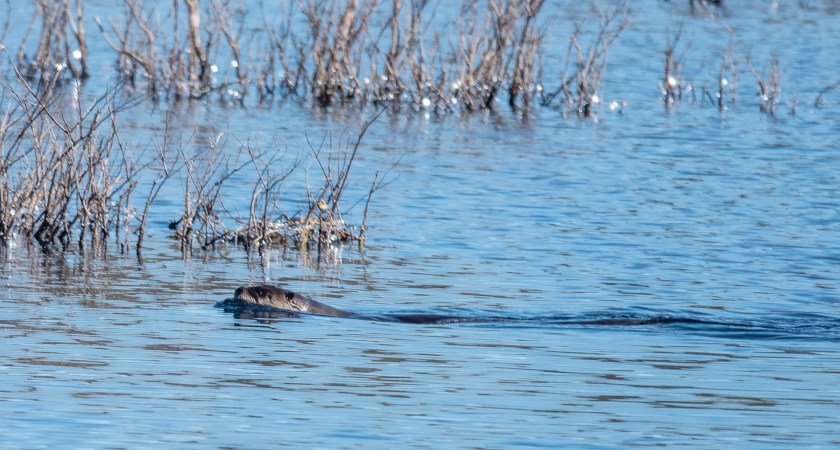
and an otter, swimming fast and elegantly across the pond in a series of shallow dives like a porpoise:

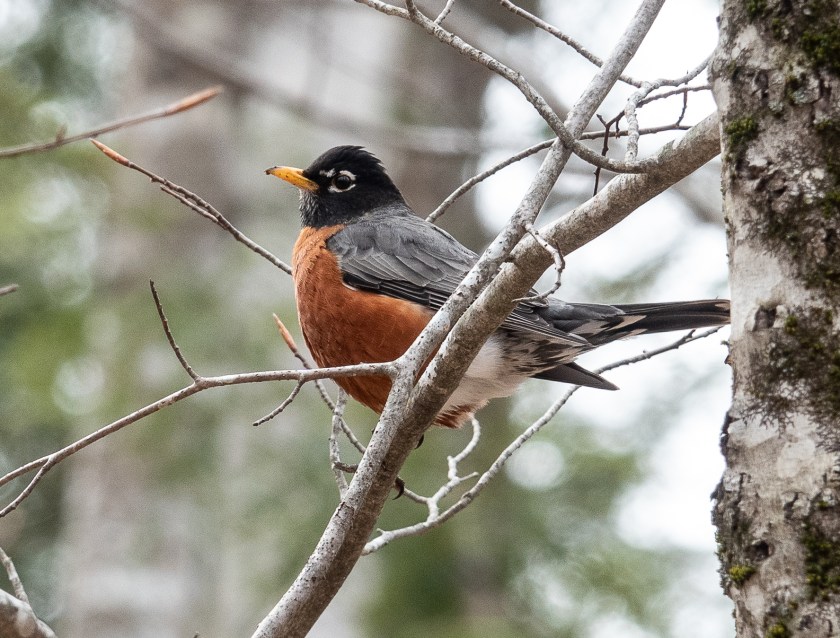
On land, the American Robins are all over the place:

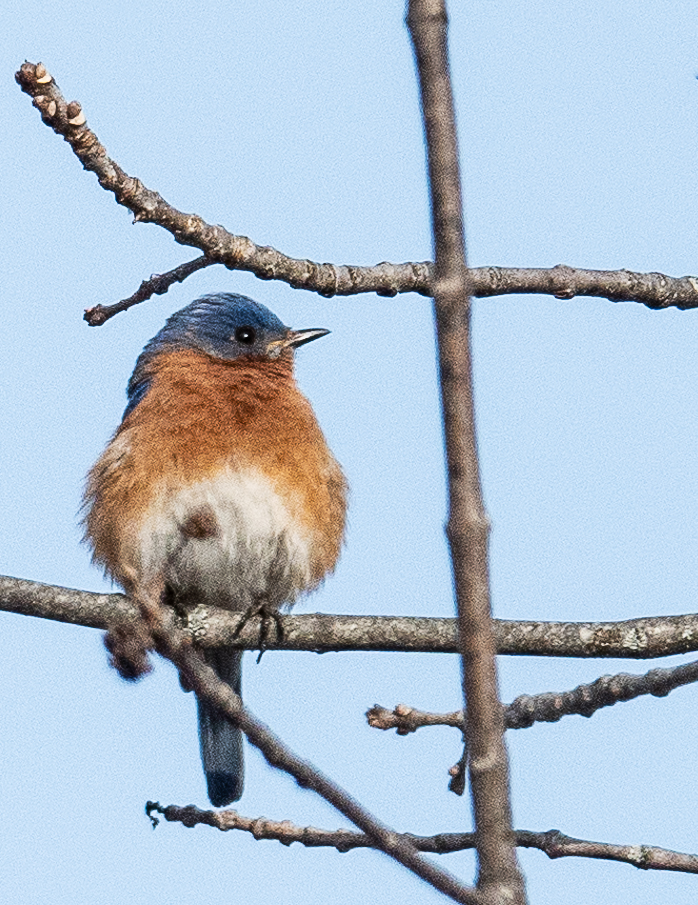
The Eastern Bluebirds are back:

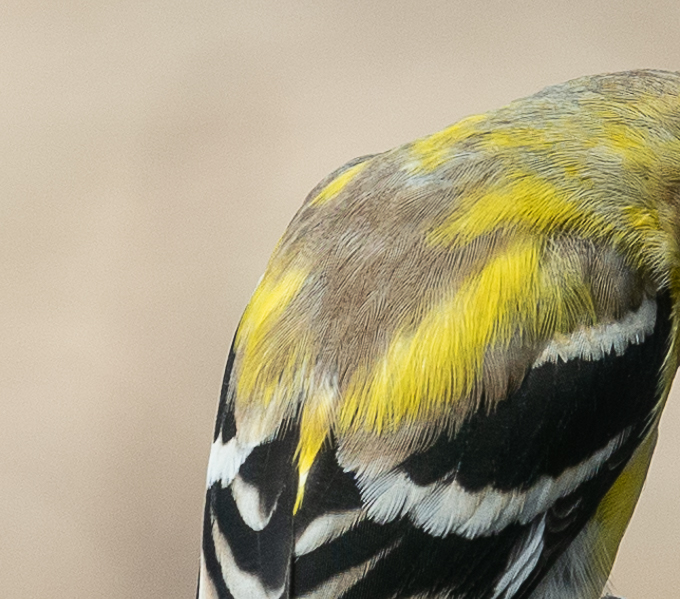
and the American Goldfinch is growing its bright yellow breeding plumage, supplanting its drab brown winter costume:

And the very earliest of woodland wildflowers, Trailing Arbutus, is in bud:

Ben the house, the first chipmunk today, and on the trail, fresh bear scat. They are leaving hibernation… and so am I.

PS Birds of the world describes the heron’s breeding plumage as follows (both sexes):

“At height of mating season (Feb-Apr) when basic feathers fully developed, ornamental black, lanceolated, occipital plumes extend from side of crown up to 210 mm in length, grayish lanceolated scapular plumes extend over back up to 280 mm in length, and grayish to whitish, filamentous to lanceolated pectoral plumes extend below breast up to 300 mm in length (Pyle and Howell 2004). “

Last fall I showed you a juvenile heron on this pond whose plumes had not yet grown. Could this be the same bird? His bill was then dusky blue, a juvenile trait. Now this adult has a yellow one.

A brown pin-striped heron? Really?