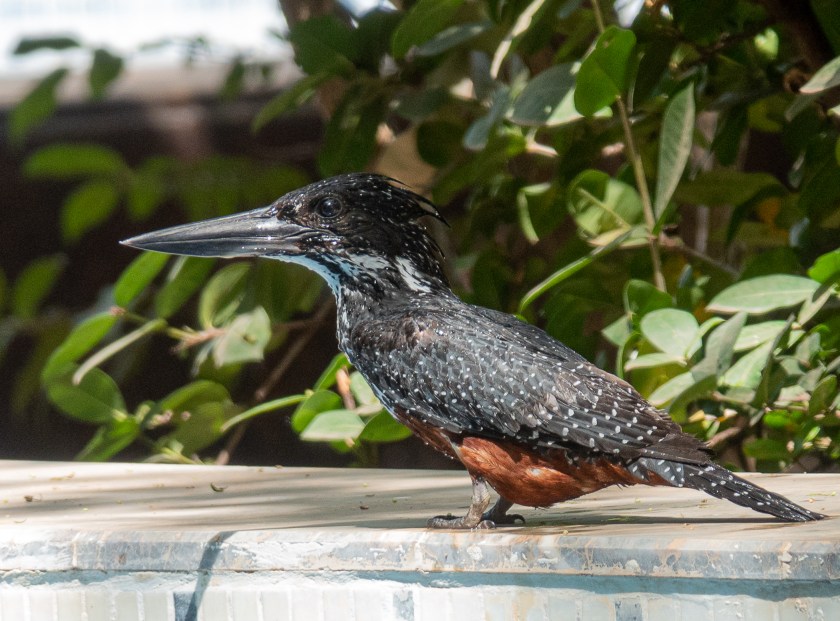
The Giant Kingfisher, Megaceryle maxima, is a majestic bird measuring 46cm (18 in) . The female (below) has a streaked chest and a reddish lower belly; the male reverses the coloring!
I only ever saw females on this trip,
Although in Zambia five years ago I did see a male:
Back in the Gambia, this one diving on a fish could have been either:
They eat mainly fish, but also frogs and even crabs. And that beak must strike terror into the heart of any target: this is the view the victim gets just before the denouement.
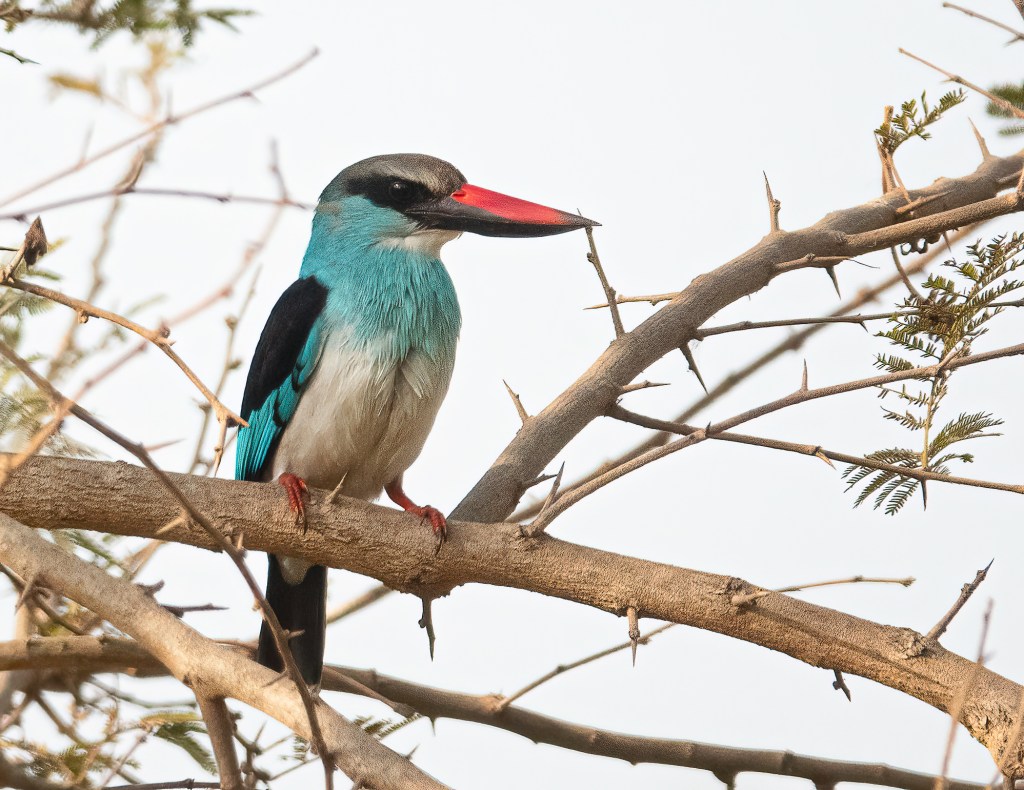
Not as big at 25cm, but far more cheerful, is this Blue-breasted Kingfisher, Halcyon malimbica:
From behind it is a brilliant turquoise:
It is a tree kingfisher, and not a specialist fish-eater. It mainly eats invertebrates, including insects and crabs, beating them on the ground before eating them. That huge bill must help.
[We saw several different kingfishers in The Gambia, each in their own way lovely, so I’m doing three posts just about them. ]
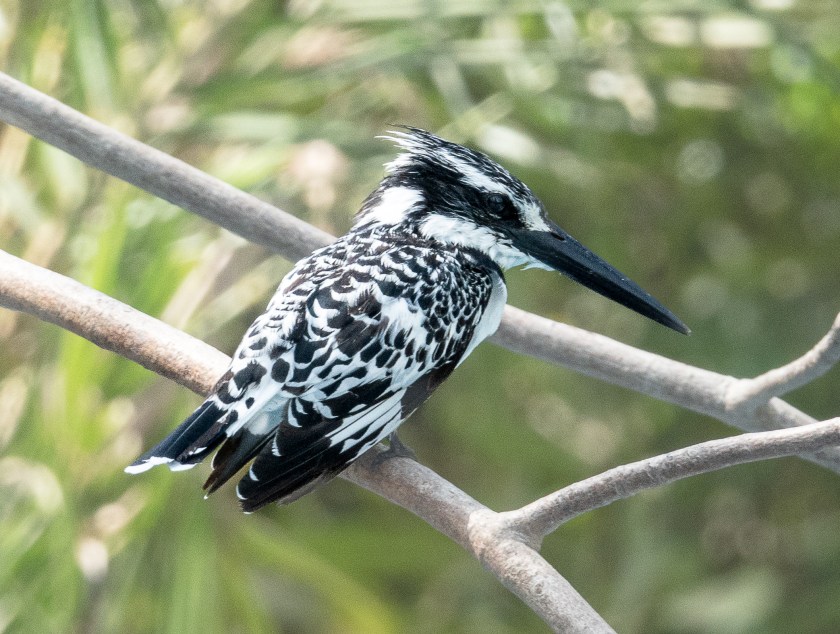
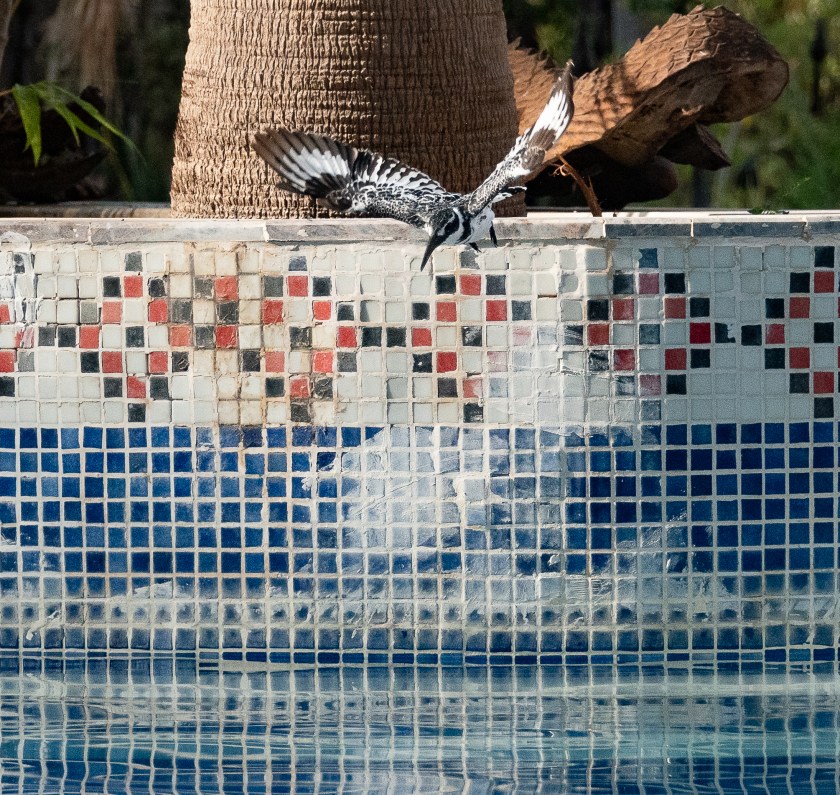
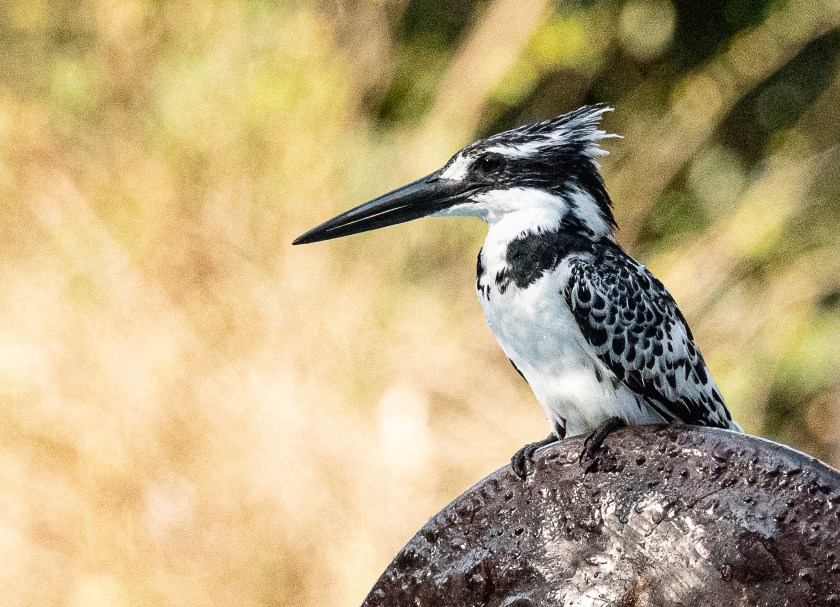
Pied Kingfishers, Ceryle rudis, are common throughout sub-Saharan Africa.
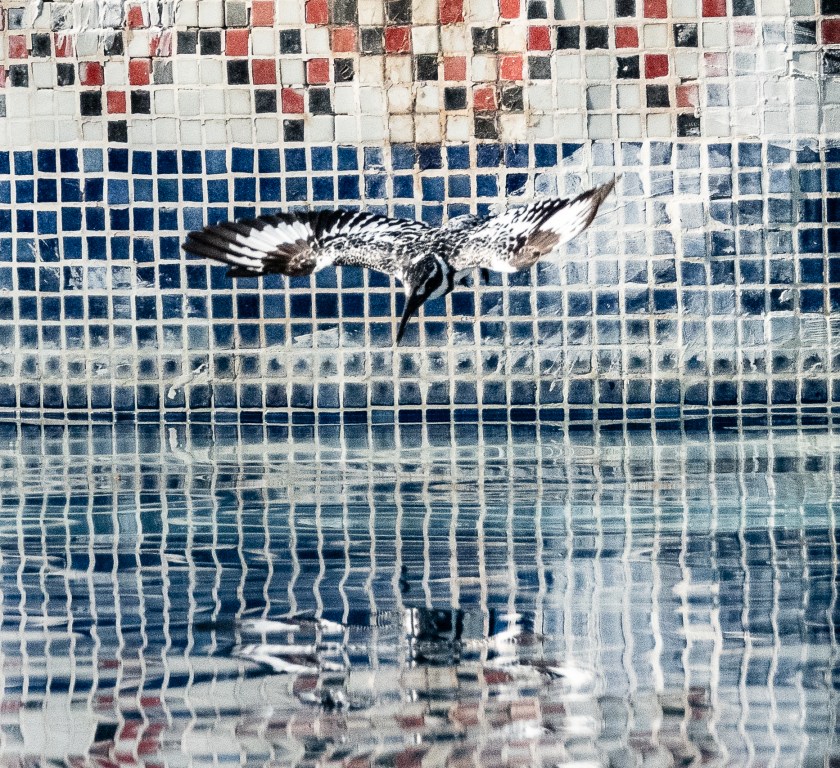
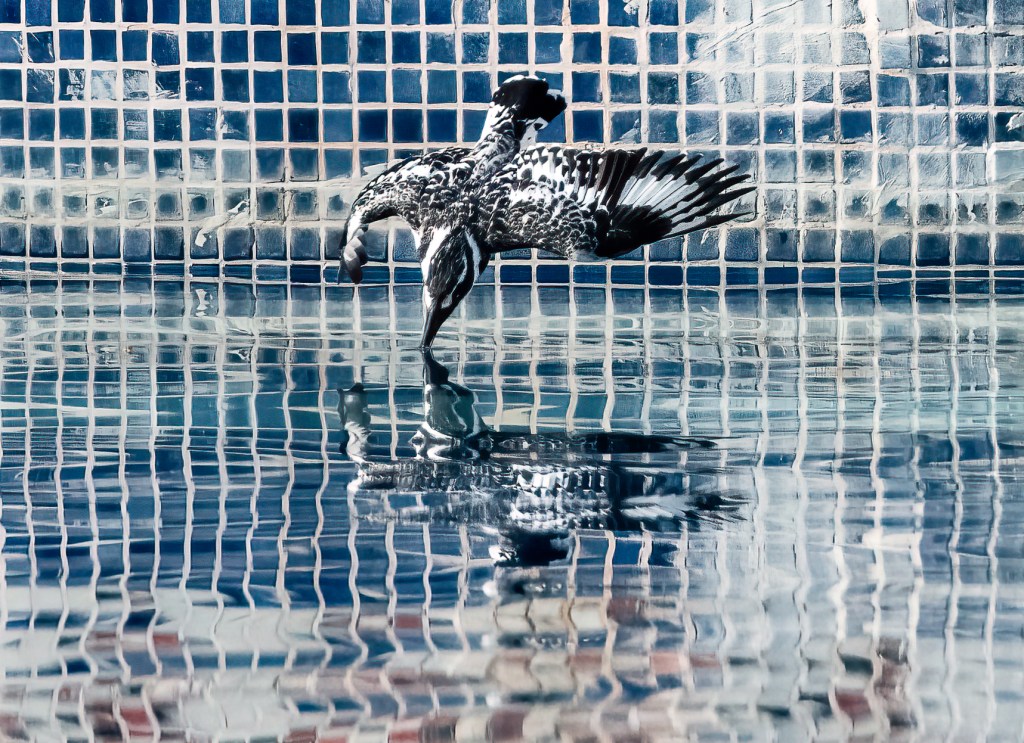
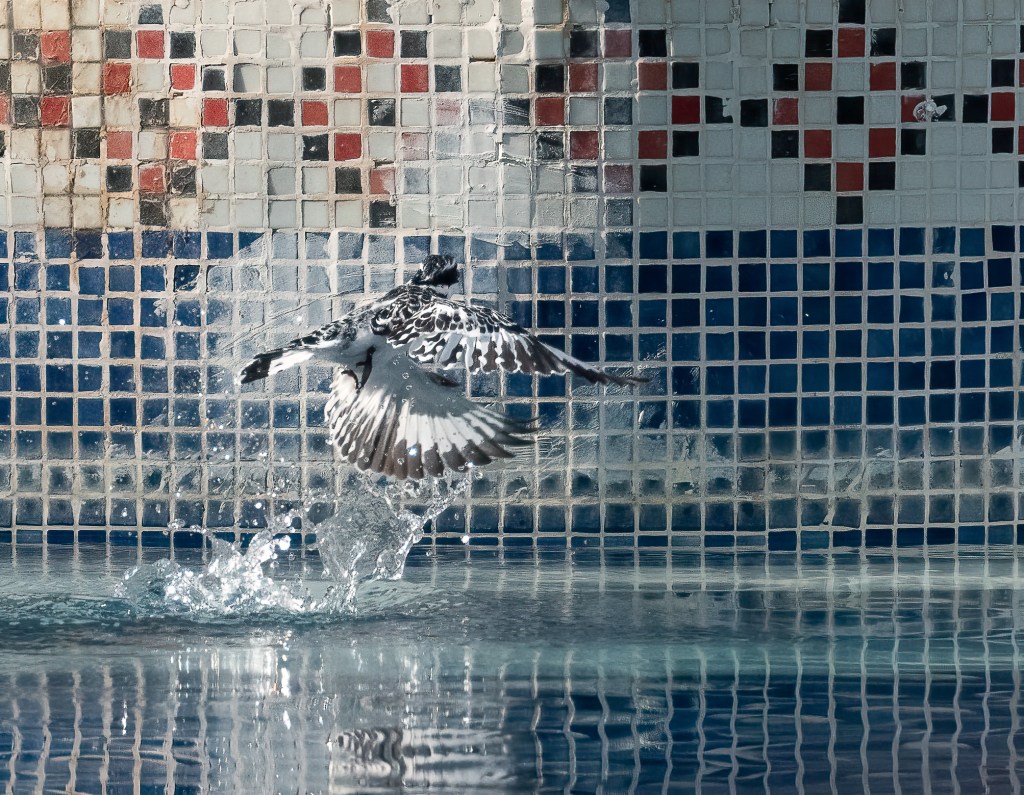
I’m showing you this one because he repeatedly dived into the pool and returned to the same perch, so I took a burst of shots, and put together this sequence; the two black breastbands tell you it is a male:
He launched himself:
Dived,
and emerged..
and back to his perch. And all in a total of two seconds:
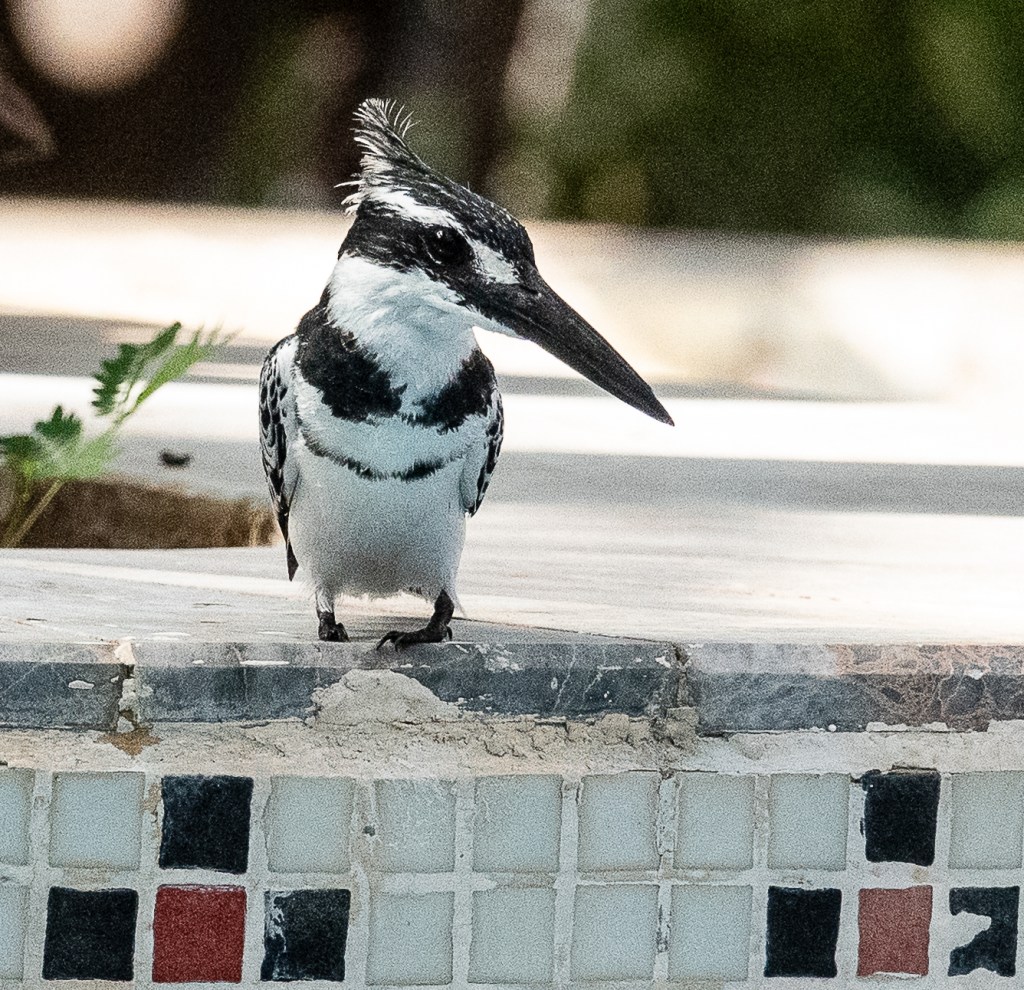
Later the female (only a single black breast-band) had a dip from a separate perch:
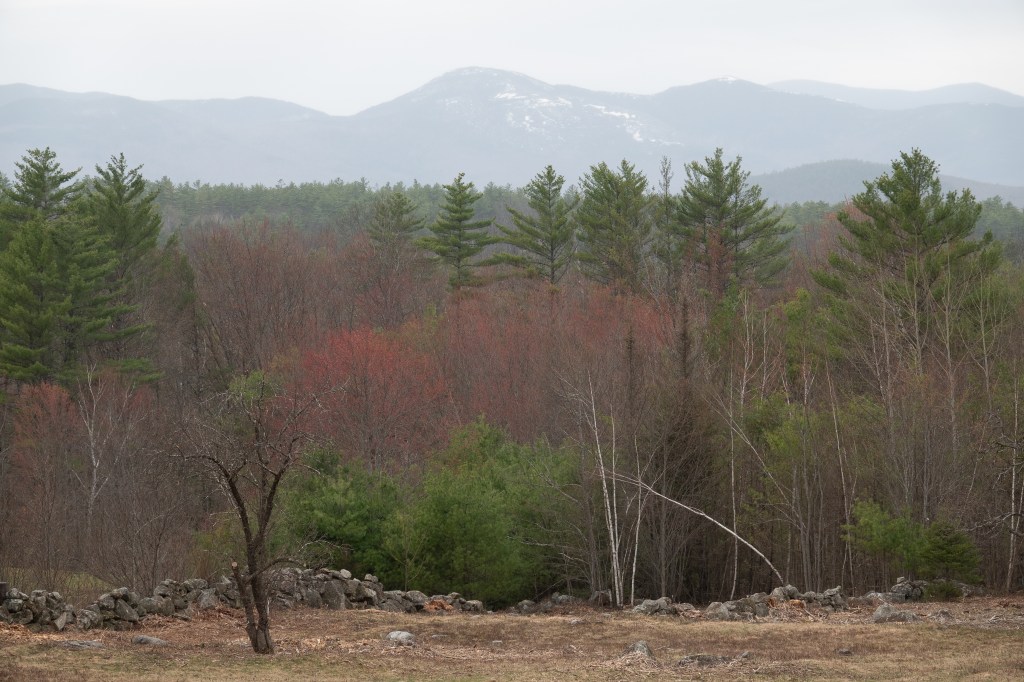
[I usually tell a story about some particular animal, bird, bug, or plant in my blog, and recently I have been bingeing on The Gambia. But I know that some of you are always curious about what is happening in my corner of Maine, so this is a sort of current affairs report from Lake Wobegon, and then I may go back to The Gambia for a while! It’s a long blog, with no special storyline, just early spring in Western Maine.]
When the month began, it was was definitely still winter:
Snowstorm, April Fools Day
But as the month unfolded, life poked through
Buds swelled:
Striped Maple
some with the promise of flowers soon to follow, their tightly knotted buds making a bird out of the unfolding leaves:
Hobblebush
Red Maples flowered in a distant red haze:
and in close-up:
Male Weeping Willow catkins opened:
A few brave early wildflowers opened too. Trailing Arbutus, usually white but occasionally a luscious pink:
or an early violet.
Northern White Violet
Or Bloodroot, complete with the necessary insect to pollinate it:
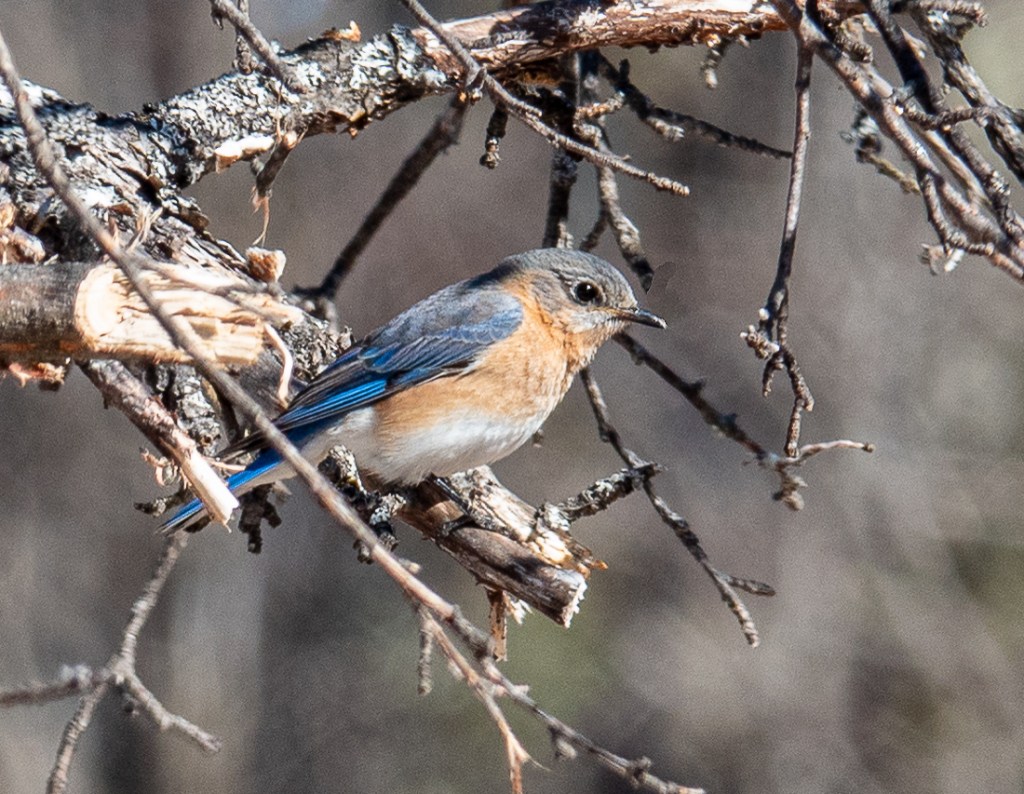
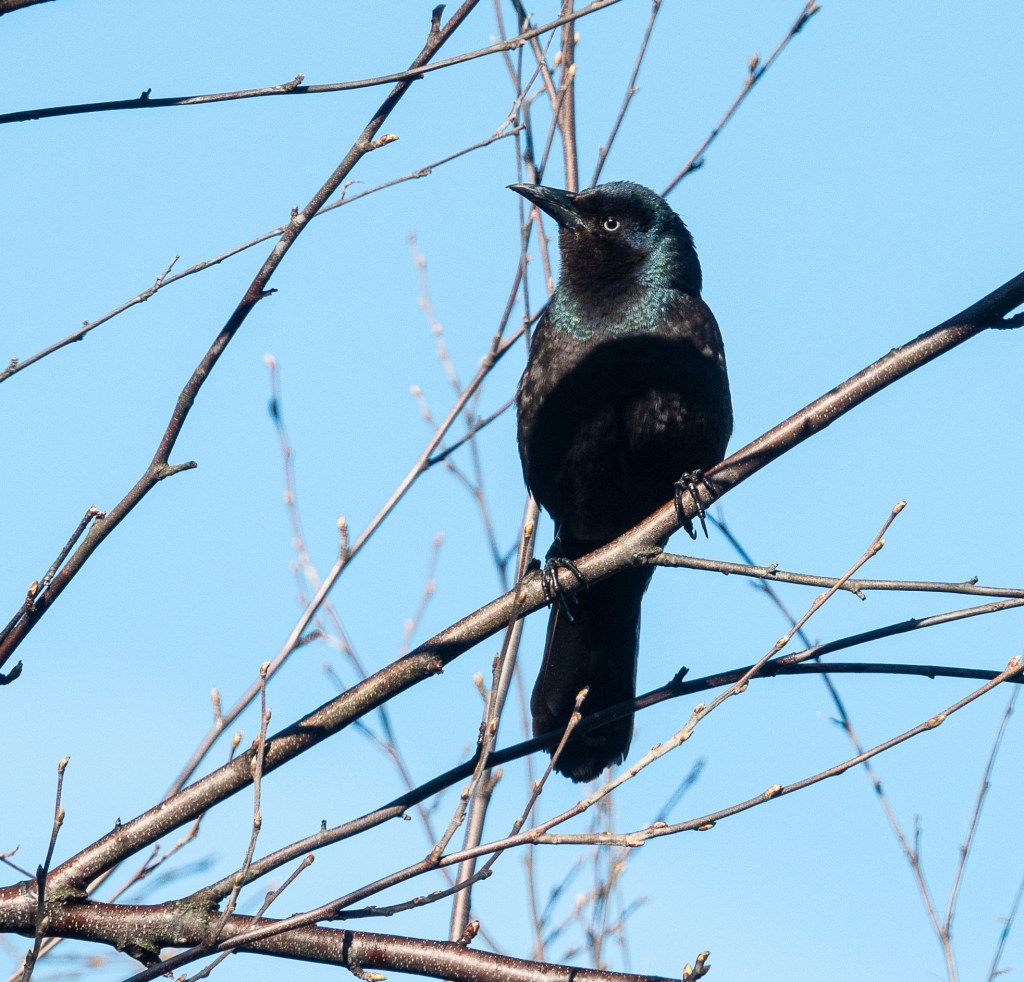
Migratory songbirds returned, some to stay, and some passing through en route to the far North:
House FinchEastern Bluebird Song SparrowYellow-rumped WarblerCommon Grackle
Waterbirds came back too, some while the ponds were still partially iced over, and my kayak invisible under the snow:
Hooded Mergansers in flightMale Wood ducksCanada Geese
Some came a little later:
Blue Heron
Some are only passing through:
Bufflehead
The beaver emerged from their lodges and left scent mounds around the shoreline:
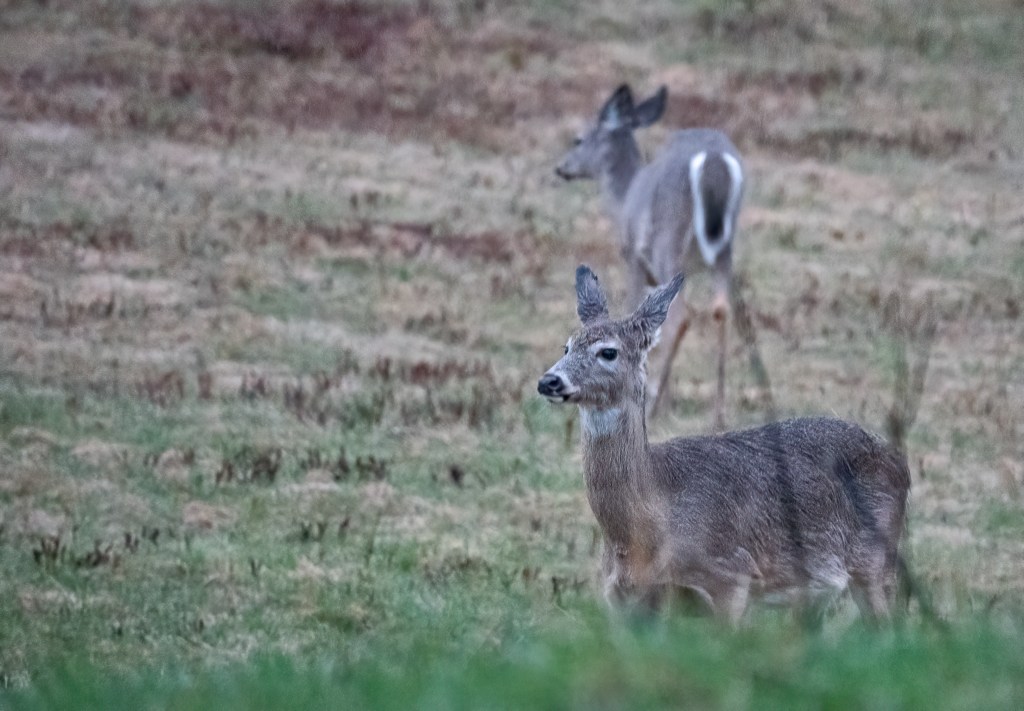
The deer, in their grey winter coats and hungry from a long lean winter, came out at dusk near the house to graze:
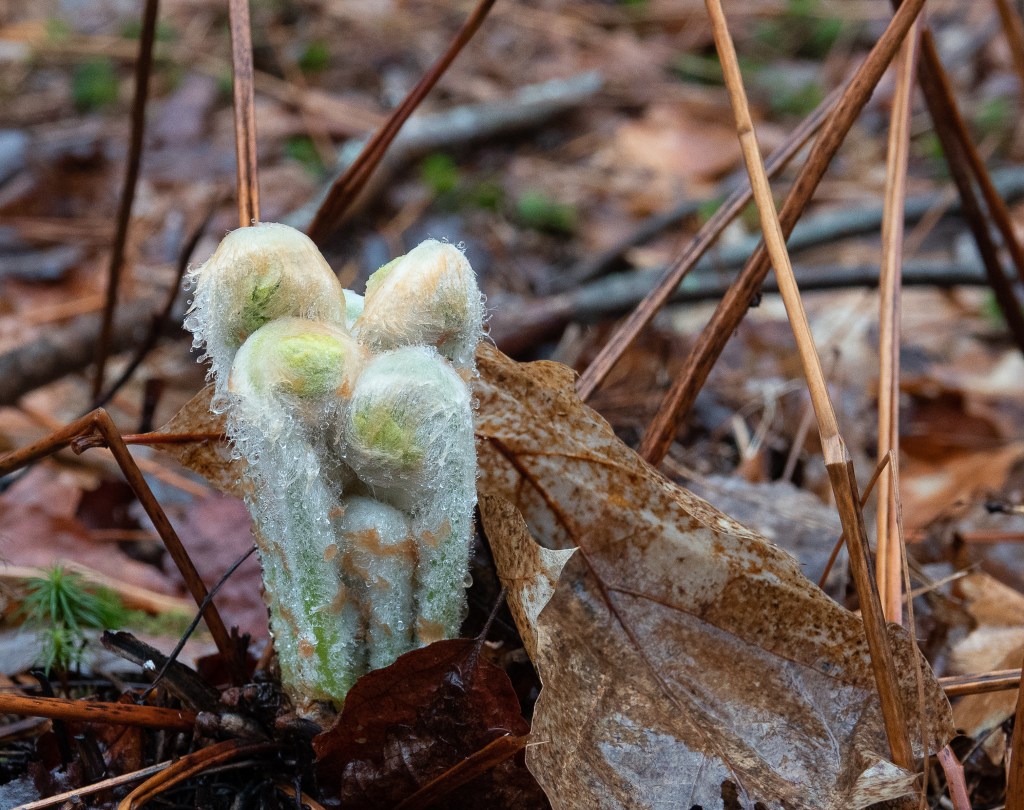
The ferns pushed up their swaddled fronds:
:
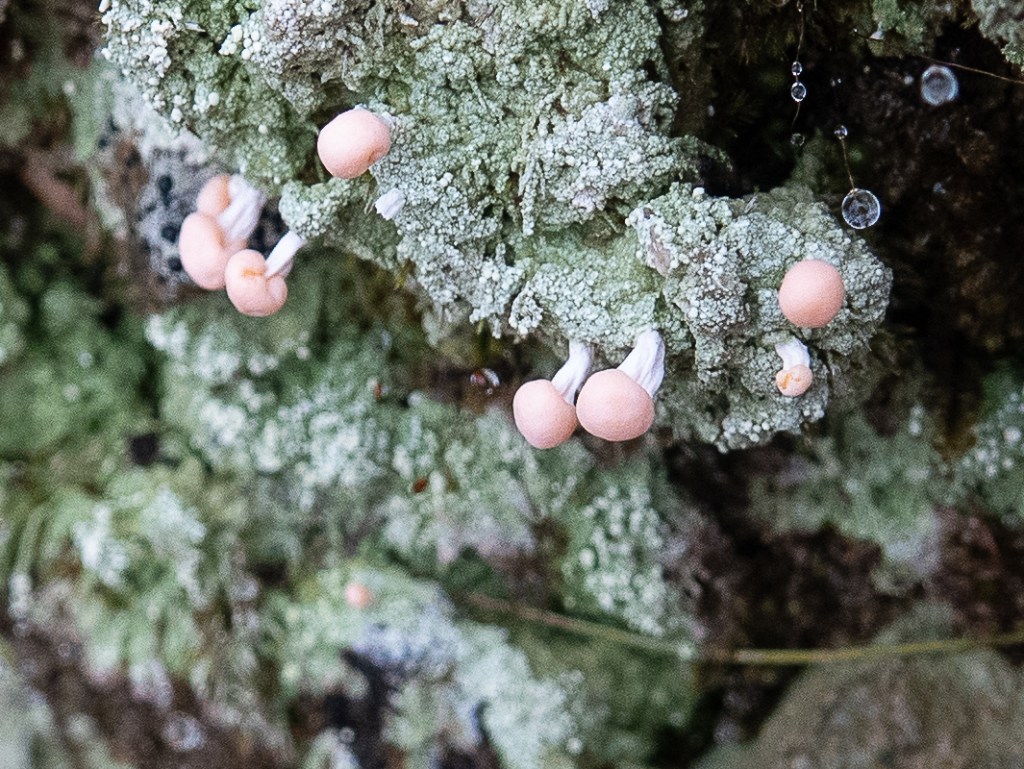
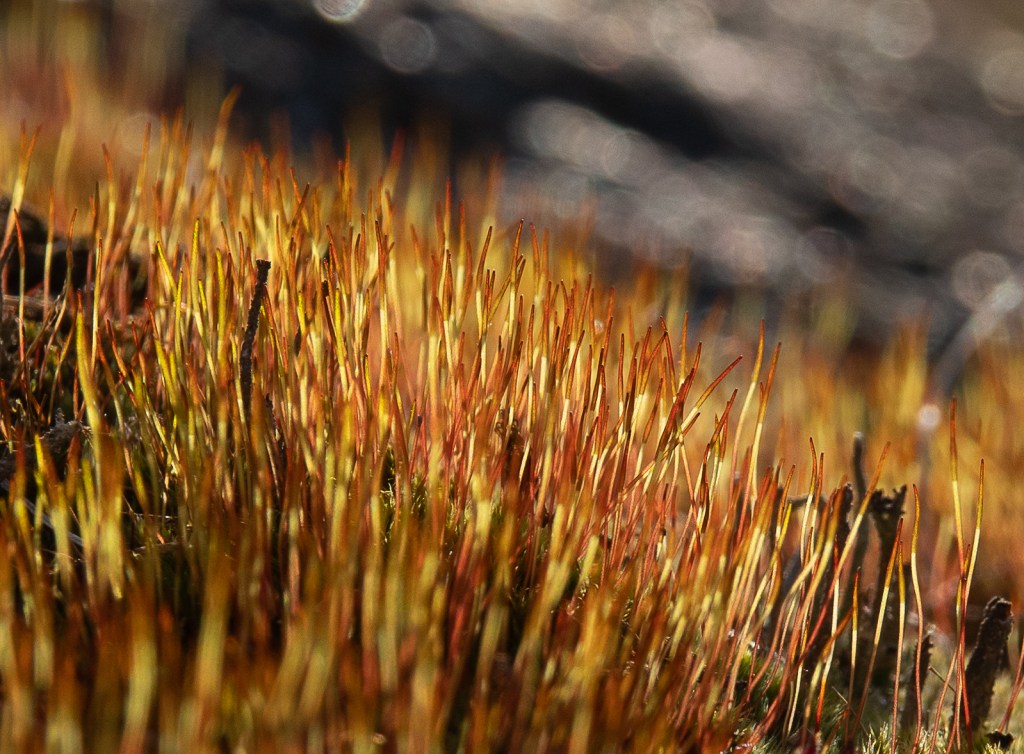
Even the lichens and the mosses unfurled their spore capsules:
Pink Earth Lichen
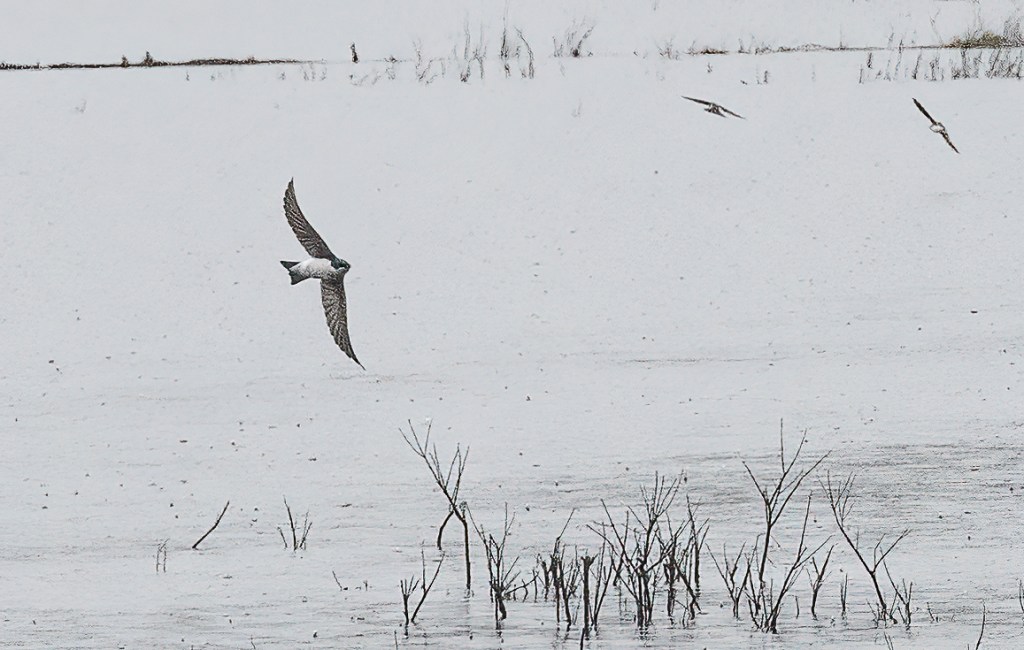
My title is of course the first line of T. S. Eliot’s ‘The Wasteland’. We may yet get more snow, but it won’t stay long, and all the promise of an incipient spring lies in the air, giving the lie to “April’s cruelty”. If you need proof, even the swallows have returned, swooping low over the pond in the rain.
Tree swallows
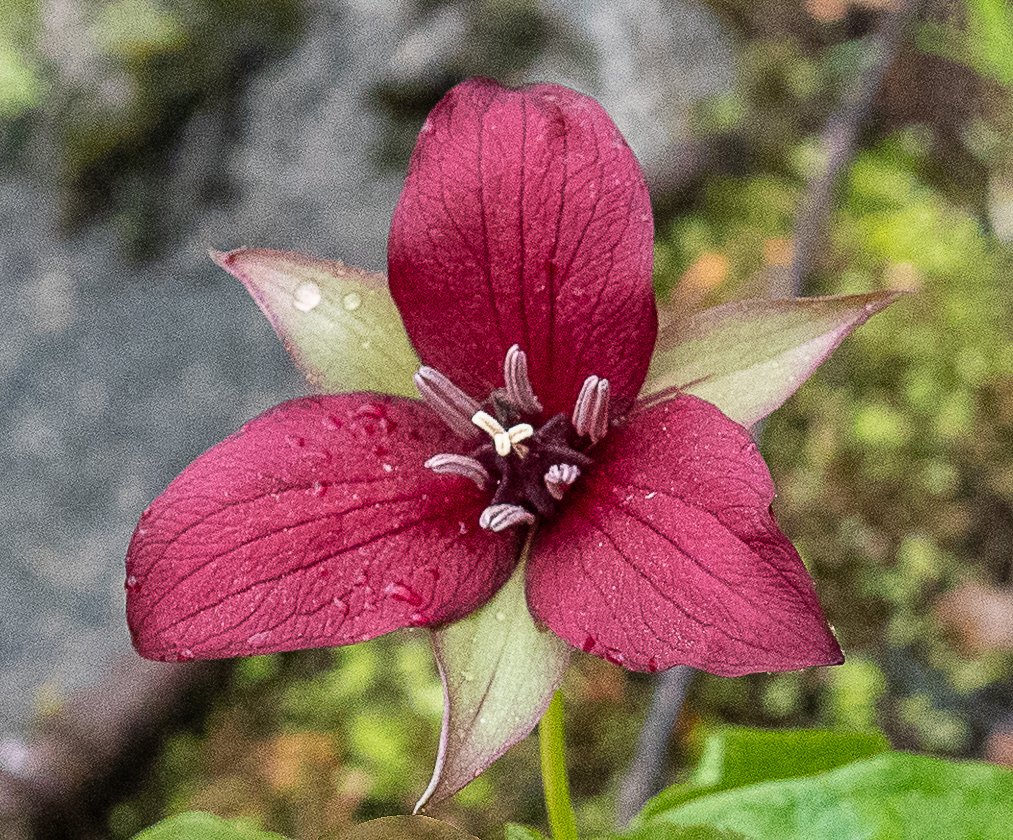
PS I sent this out this morning, April 30, because the forecast was for rain all day, which meant no chance of adding more photos on this last day of the month. But then the rain eased up for an hour, out I went, and these are the result
A Red Trillium, or Wake-Robin (such a charming name):
And the Hobblebush earlier in this post, with the flowers just opened:
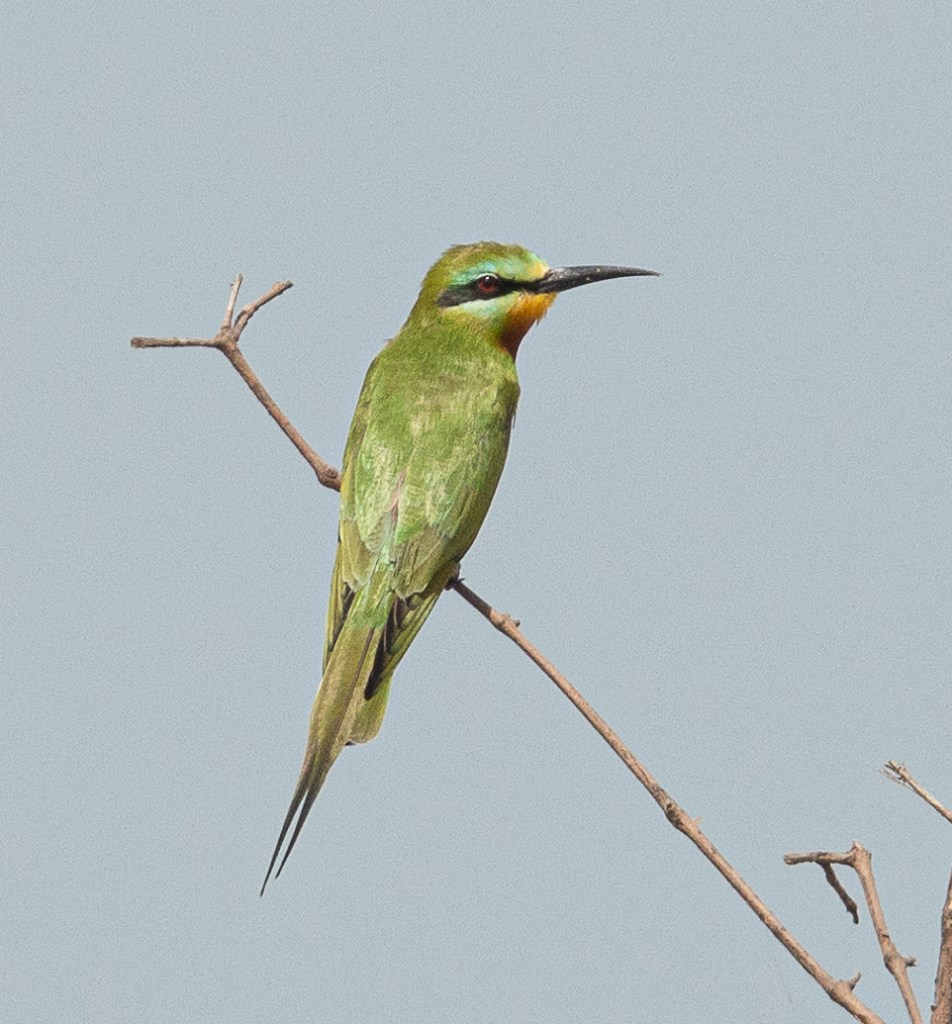
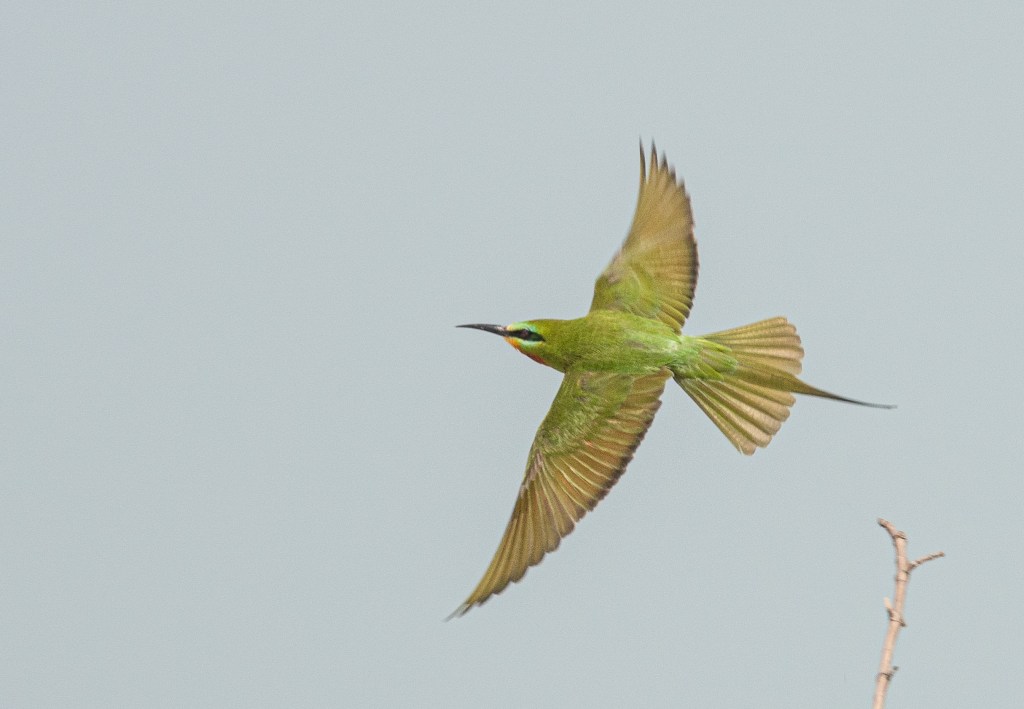
The Blue-cheeked Bee-eater, Merops persicus, is elegance personified.
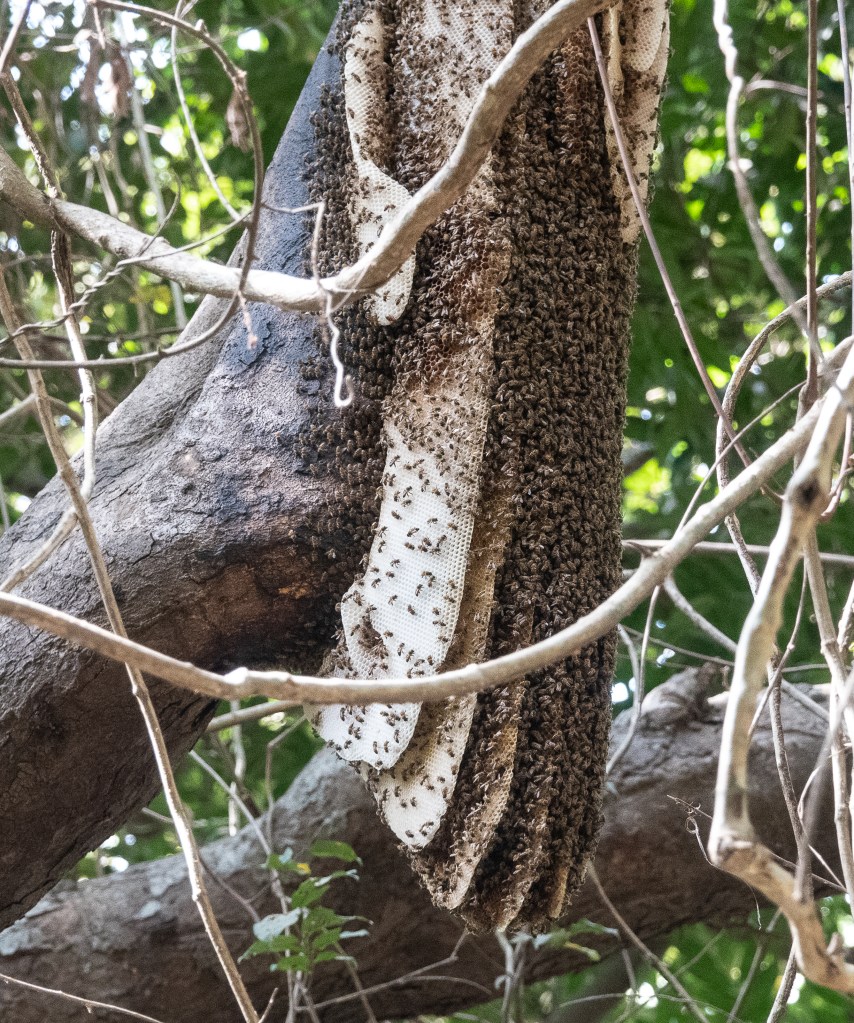
It breeds in Morocco and Algeria, but winters south of the Sahara in West Africa, including The Gambia. It really does eat bees, and also dragonflies. They will not go short of food. Here is a local wild bee-hive, a huge dramatic edifice hanging from a large rainforest tree in the Bonto forest:
The bee-eater is off to hunt.
a graceful turn
and it’s on its way.
I have left room for one more, a close relative, the Swallow-tailed Bee-eater, Merops hirundineus:
Azure eyebrows, gorget (a great word, from the days of armory) and rump: maybe the most gorgeous yet?
It doesn’t seem to migrate, but no-one really knows. It’s not very common north of the equator (ie Gambia!), more often seen in southern Africa.
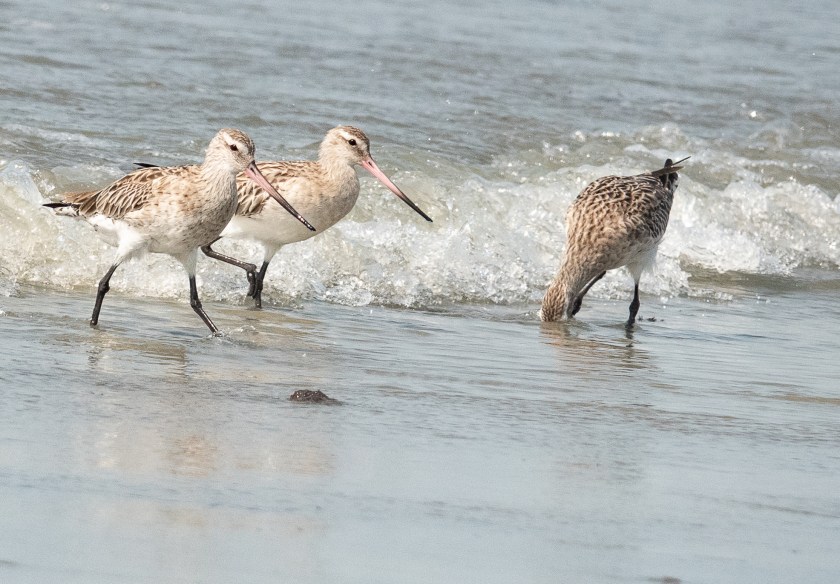
I’ve never lived on any coast anywhere, and so shorebirds (let alone gulls, terns etc) are a mystery to me. We spent a day in The Gambia at Kartong Wetland and Tanji beach and fish market. This smallish beige bird didn’t seem impressive at first glance, except for that insouciant slightly up-curved bill.
It’s a Bar-tailed Godwit, Limosa lapponica. I watched a trio of them foraging the tidal zone. They dig that long 12cm (5 inch) bill deep into the wet sand, looking for tiny shellfish and worms:
If necessary their whole head goes underwater:
but if the next wave threatens deeper water, they run for the shore:
And if either an excessively large wave, or a human, approaches, they take off, finally allowing me to see that barred tail:
These ones are the sub-species Limosa lapponicataymyrensis, in pale green. Every year they fly to the top of the world and back, a journey of some 16,000 km a year. They stop halfway at the Wadden Sea in the Netherlands for a month to refuel, before continuing further to Siberia (or Greenland). The map below has more detail for where these West African birds go in the summer, (from Versluijs et al 2011):
The population of this subspecies, though still large, is in worrying decline, having dropped from 746,000 to 495,000 over the past 30 years. The species as a whole is now considered Near Threatened by the IUCN
PS The sub-species of the Bar-tailed Godwit found in Alaska migrates even further, down to New Zealand, for a round trip journey of some 25,000 km p.a. Their non-stop southbound migration of 11,000km in the boreal fall “may represent the longest nonstop migratory flight of any bird, certainly that of any shorebird.”(Birds of the World). To do this, they build up huge fat reserves and reduce the size of their digestive apparatus.
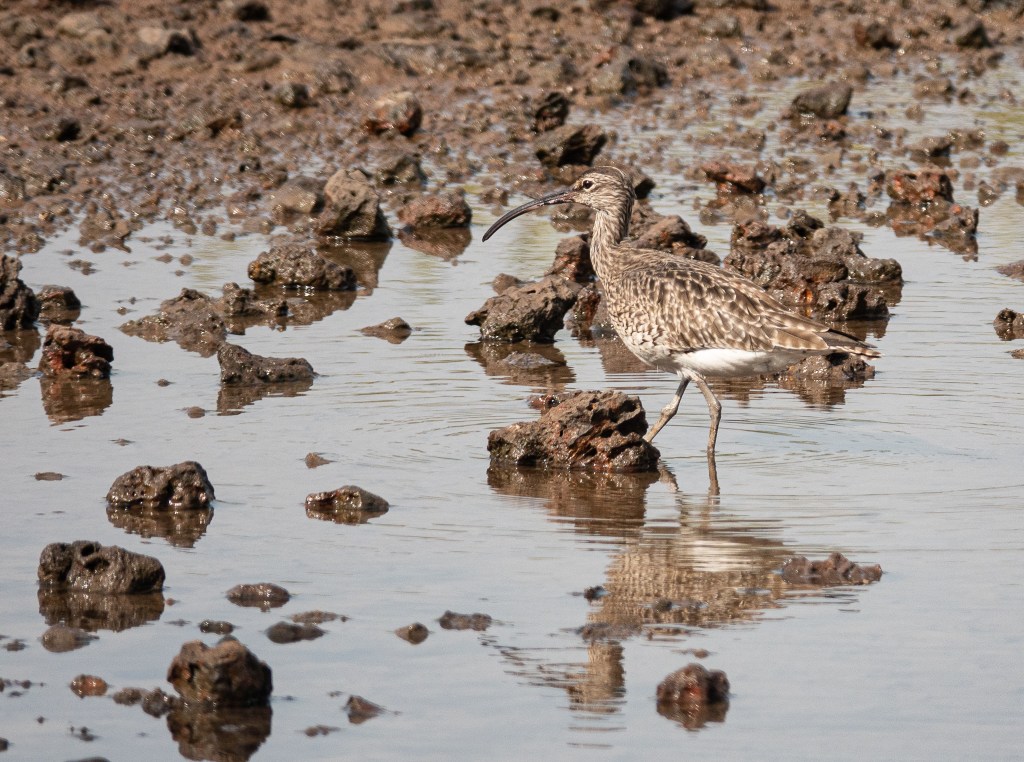
PPS Another record-breaker that winters in West Africa is the curlew relative the Eurasian Whimbrel, Numeniusphaeopus. This population mainly goes north to Iceland to breed. Some stop in Ireland en route, but many fly direct, over the Atlantic, up to 1000 Km a day! Birds of the World reports that “Four birds tracked in 2012 using geolocators flew non-stop from Iceland to their wintering areas in West Africa, covering distances of c. 3,900 to 5,500km in five days and, on occasion, achieving the fastest recorded speeds for terrestrial birds on long-distance flight over oceanic waters (up to 18–24m/s)”.
(The North American Whimbrel is now considered a different species, Numeniushudsonicus.)
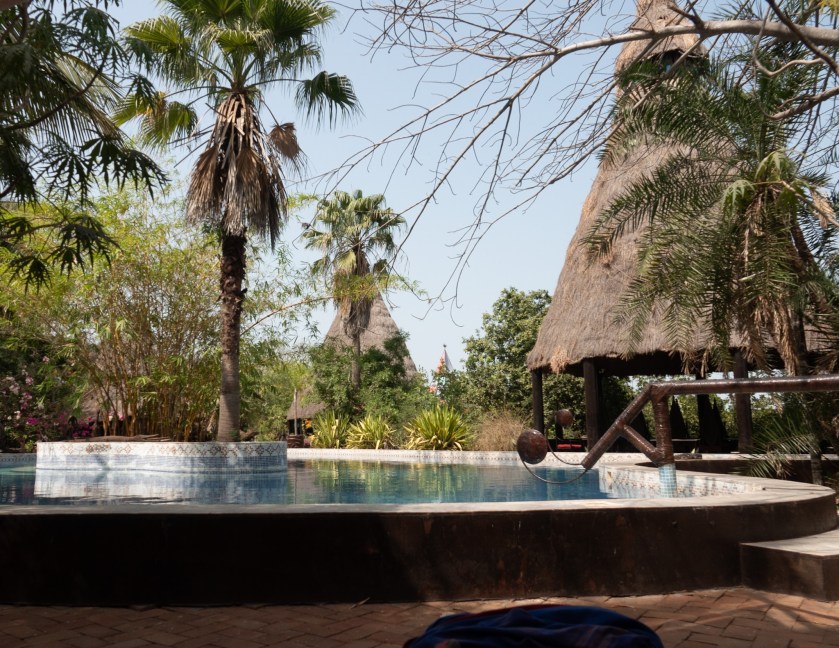
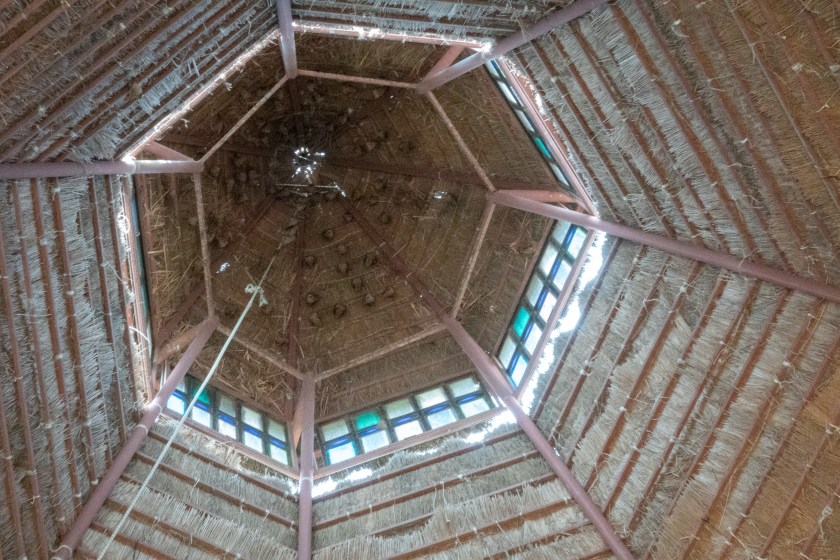
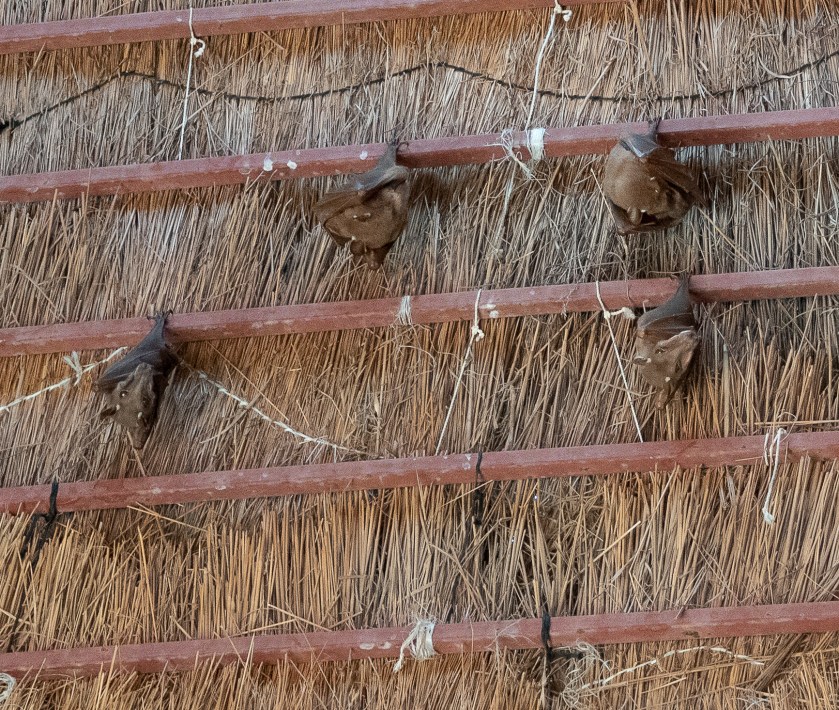
Birds are not the only warm-bodied flying objects. A sizable colony of Gambian Epauletted Fruit Bats, Epomophorus gambianus, lived in our lodge’s dining room roof. Before you shudder, here is our dining room: three 40-foot tall open thatched pavilions each large enough to take a dining table for 12:
The bats snoozed all day upside down in the rafters:
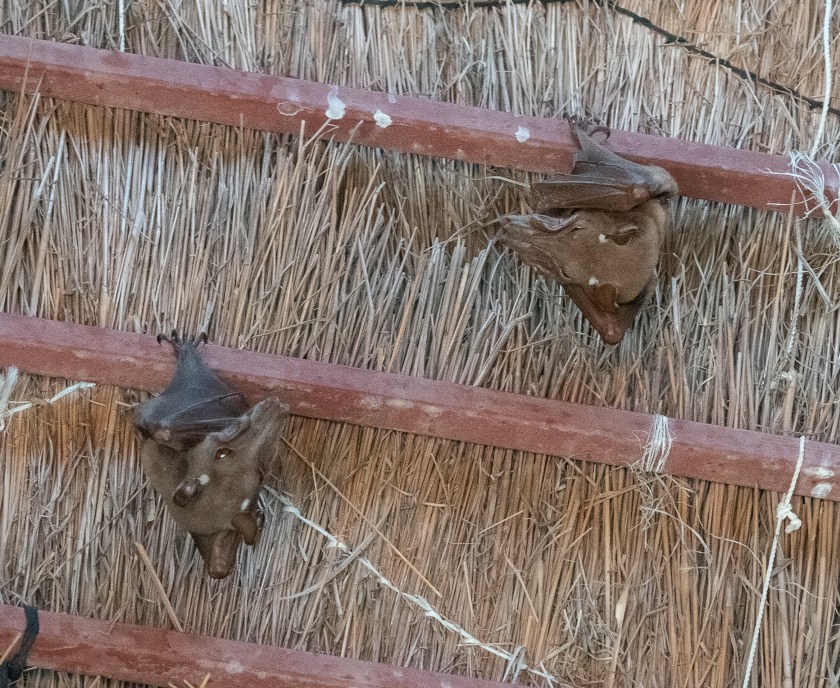
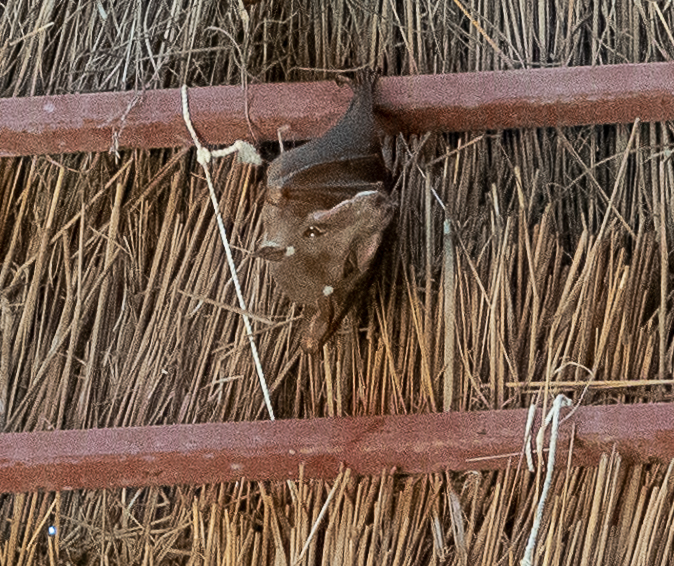
Most were at the very top, just visible above the windows, but a few roosted a little lower-down, so I could get closeups:
They are fruit (and nectar) bats, so they had no interest in tangling in our hair in a hunt for insects, let alone sucking our blood. They really look very much like small dogs:
Of course, they have wings instead of front legs, with little hands they use to cling on to the rafters.
Both sexes have white patches in front of their ears, and the males have tufted scent glands on their shoulders, not visible in my photos, which give them their “epaulette” name. The males have a wingspan of up to 20 inches. The females are a little smaller.
Unlike most bats, they do not use echo-location to find their food, but instead they depend on sight and smell. They have a complex social hierarchy (see below for more details) and can live as long as 28 years in captivity.
At dusk we would see them flying out to forage, and at our pre-dawn tea-and-biscuit rendezvous they would be returning for a good day’s sleep.
This short video gives you a closer look:
They’re found through a swathe of West and Central Africa, and are not endangered, though habitat loss and pesticides are a potential threat.
Wikipedia has a good description of their social organization, if you are curious for more:
“The social behavior within fruit-bat camps does not stop at individual family groups. The whole colony is organized, with separate peripheral groups of immatures and non-breeding adults. The epauletted fruit bats travel in small groups of six to twenty bats. When the fruit bats are in flight, they remain together in long processions. The leaders often change, yet they retain the same direction of flight. (Mickleburgh)
They frequently sniff at each other’s scent glands to establish personal recognition. Which represents high levels of social organization. When one is shot down, they show great concern and gather round swooping low to inspect it; a sign of affinity rather than totally independent behaviour. They roost during the day in mango trees and bamboo reeds or other trees. The Gambian epauletted fruit bats hang upside down alone or in groups up to twenty. The species’ droppings support whole ecosystems of unique organisms, including bacteria useful in detoxifying wastes, and producing gasohol. This species feeds on nectar and fruits of many West African trees, presumably acting as pollinator and/or seed disperser. Some flowering trees depend on the bats for pollination. (Fenton)
The pack moves during sunset in large flocks from resting areas to feeding areas. To avoid predators, the bats will carry fruit away from the tree before eating. Over several nights bats may carry more than a ton of seeds from a single wild fig tree, dramatically increasing the number of seedlings that will survive in new locations. The fruit bats spend over half their lives roosting in various places. (Wilson)
On the outskirts of the camp, non-territorial males act as guards. They are alert to the slightest disturbance. They perform a visual inspection and either give a loud alarm signal, or remain still, keeping an eye open.[8]“
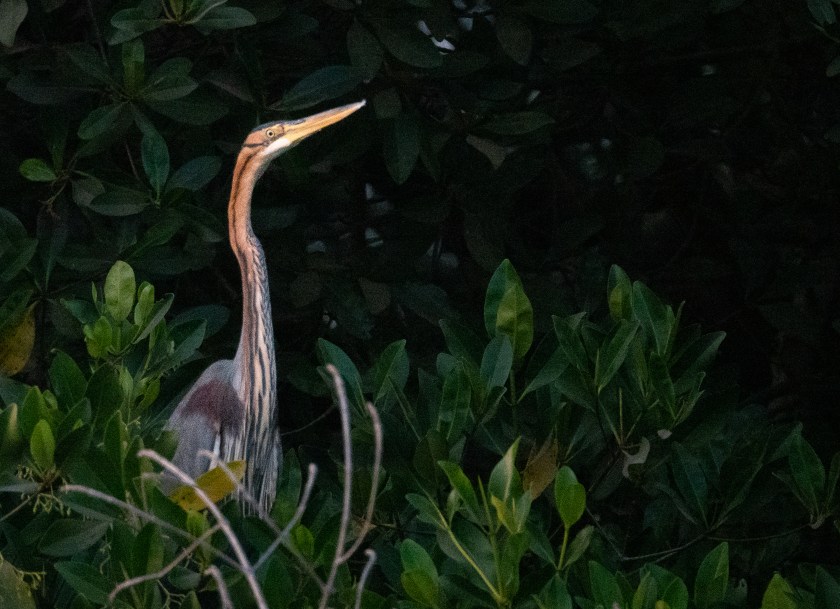
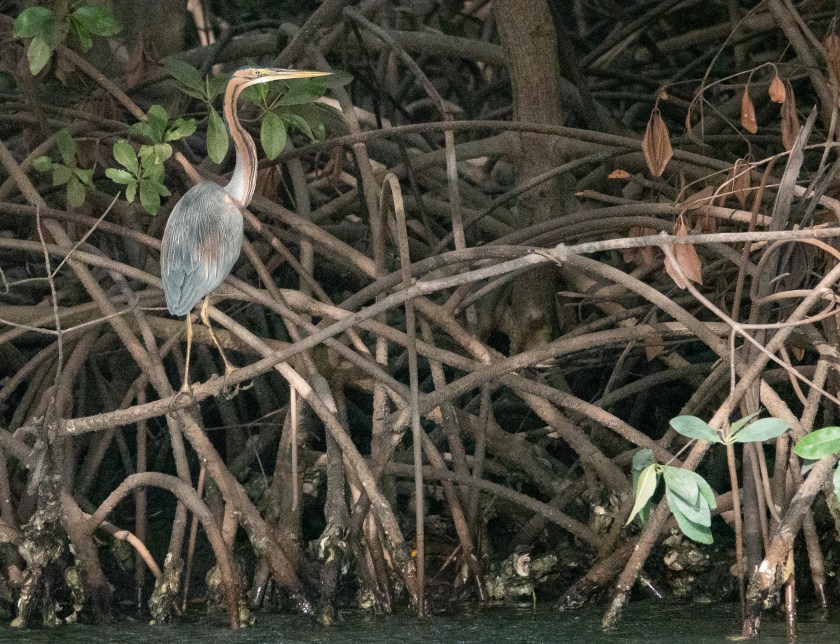
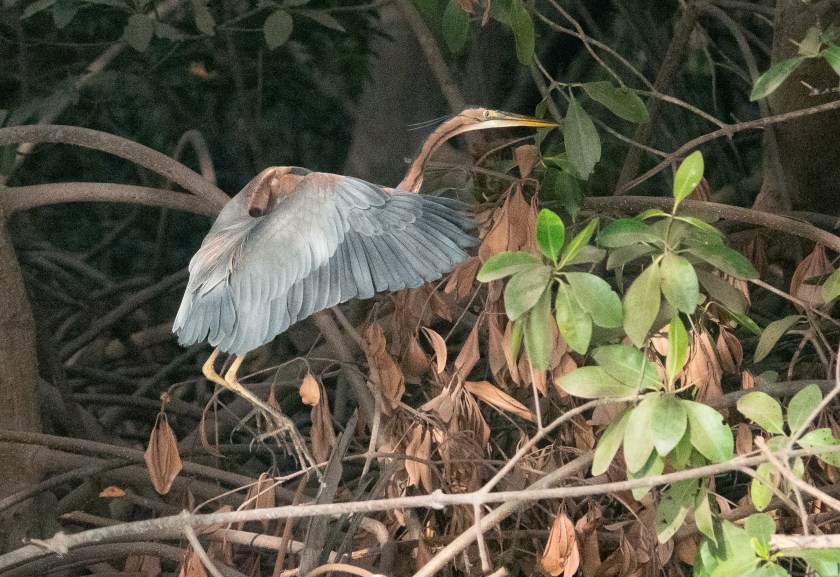
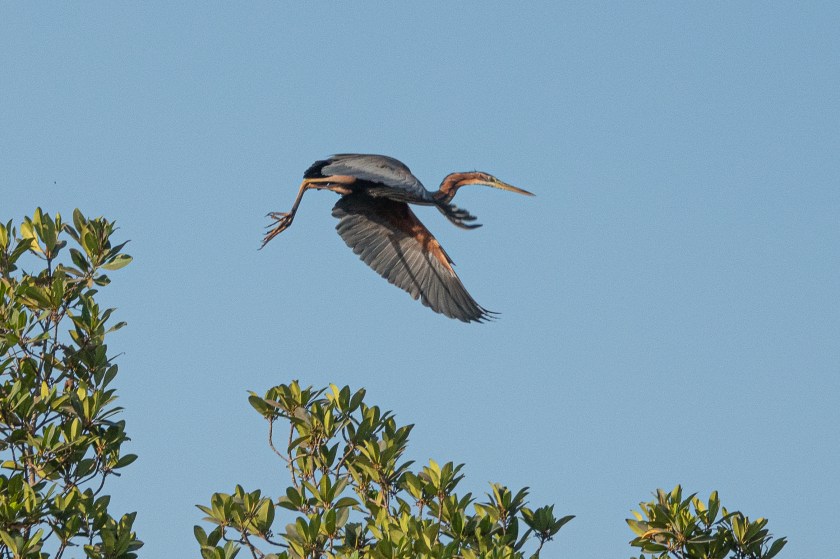
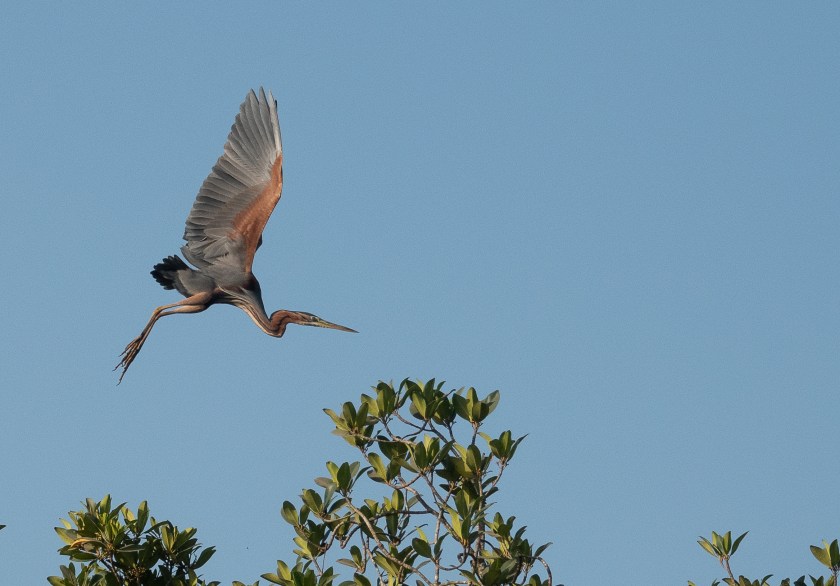
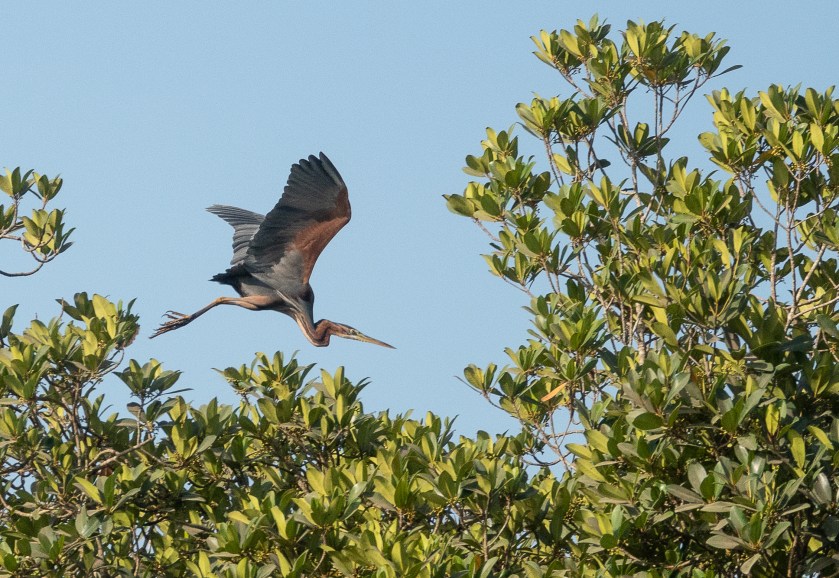
I am used to living in places with a single common heron (Great Grey in England, Great Blue in Maine), plus maybe an egret or two. But The Gambia has many. Today’s focus is the Purple Heron, a graceful smallish heron that lurks in the mangrove roots and is often glimpsed when an evening sunbeam catches its paler head and neck:
The Purple heron, Ardea purpurea, is up to 90cm (3ft) tall. It lives year-round in sub-Saharan Arica (especially west Africa) , India and SE Asia, and some breed in Southern Europe.
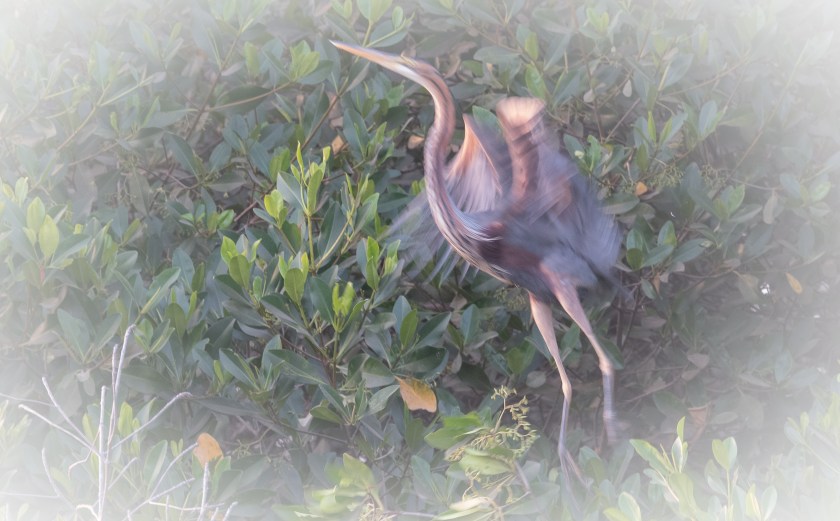
When this one took off, I wasn’t quite ready, but the soft out-of-focus image looked so like a ghostly apparition of a ballerina that I embellished it:
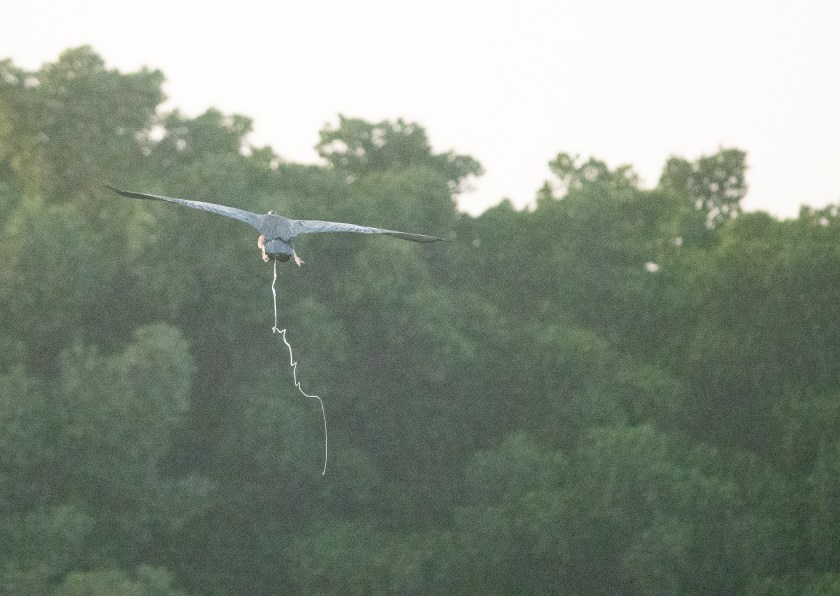
In flight, it proceeded to lighten its load:
Then it soared off above the trees, with the sun behind it casting a shadow of its legs onto the underside of its wings:
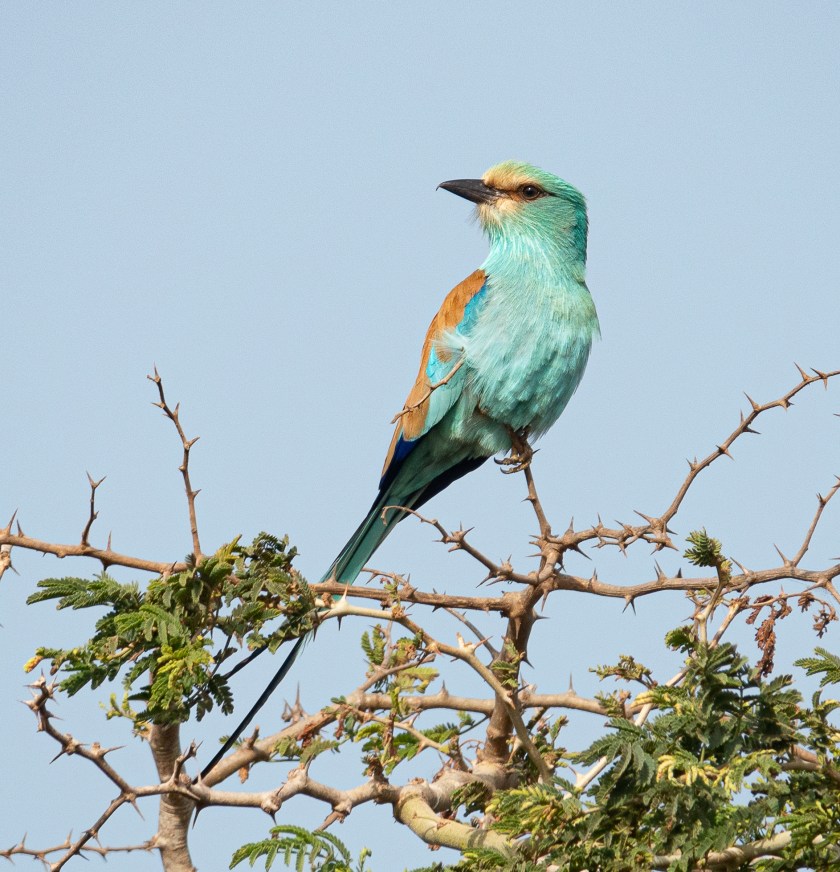
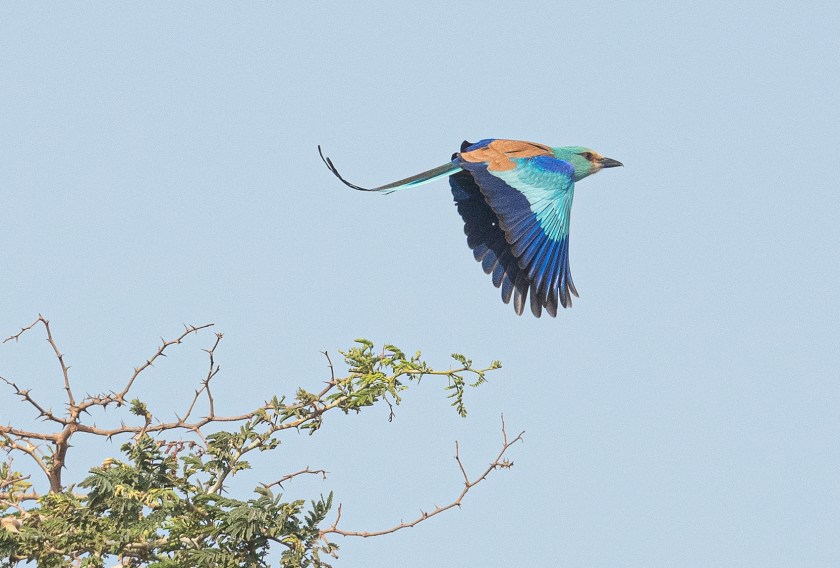
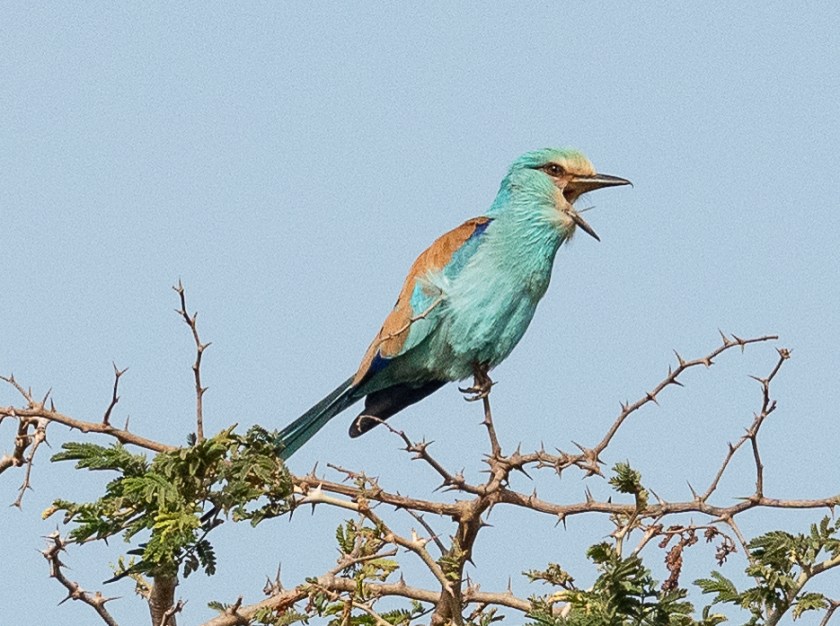
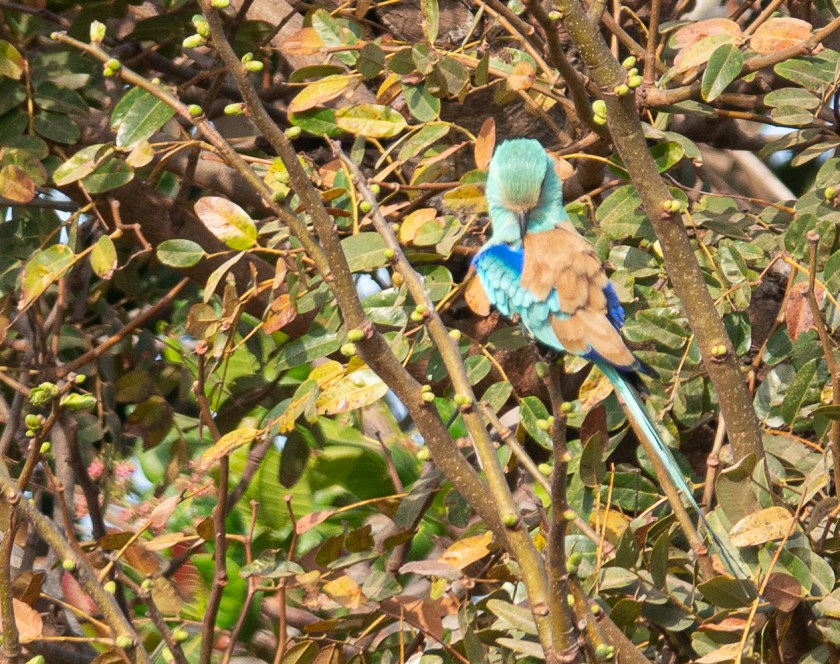
The Abyssinian Roller, Coracias abyssinicus, is 30cm long plus 12cm streamers (elongated outer tail feathers, on both sexes):
In flight, it is even more spectacular:
You can see its tongue as it yawns.
And a little preening:
It swoops down on large insects on the ground. It likes open areas near woods, often tilled fields or village areas, and may have benefited from human habitation.
Rollers get their name from their courtship display, which involves diving towards the ground, rolling as they go. Just like a young pilot showing off. I have never managed to video this.
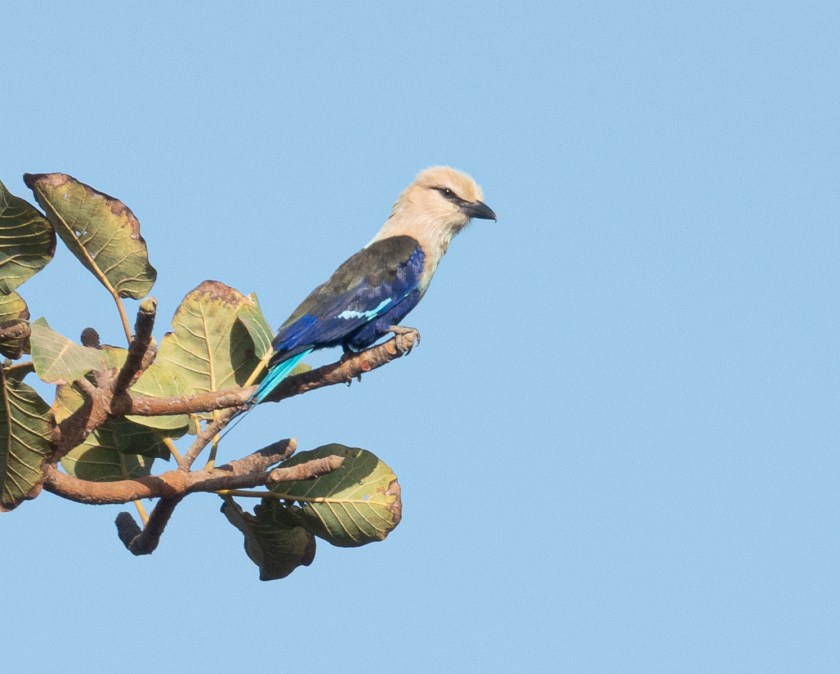
We also saw the less flamboyant but still handsome Blue-Bellied Roller, Coracias cyanogaster:
[This post is coming rather soon after the last, for reasons that will be apparent in the final paragraph!]
Two good-sized raptors that frequent the Gambia are the African Harrier, and the Lizard Buzzard. Let me introduce you.
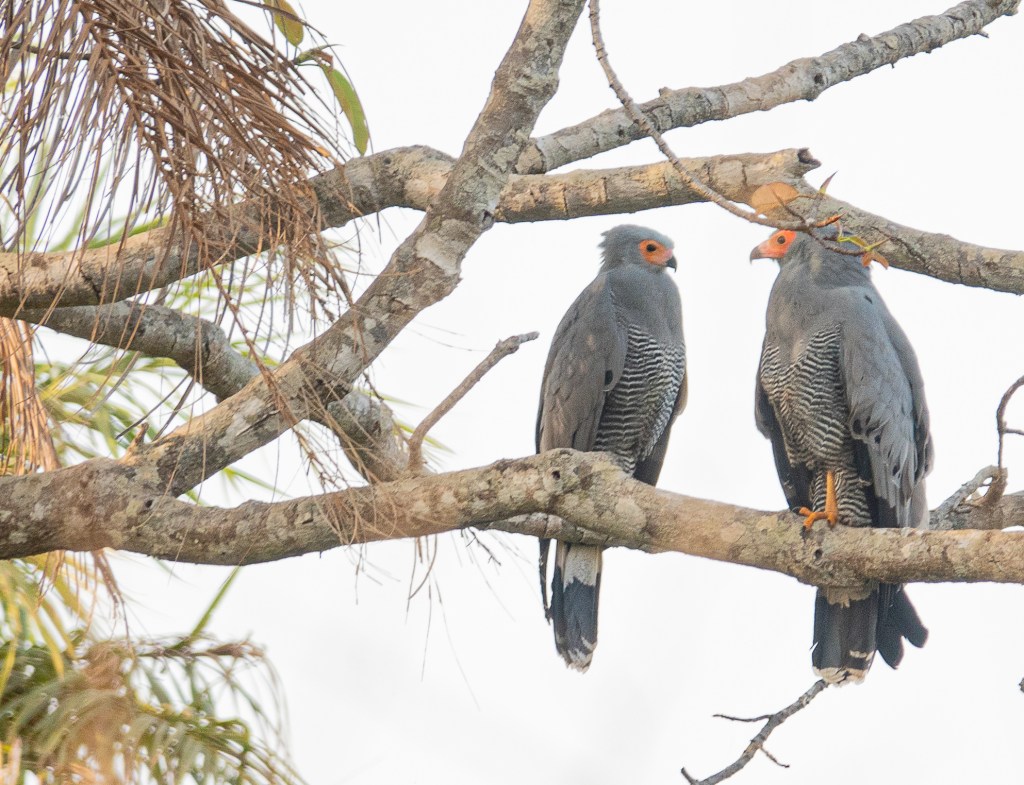
A pair of African Harrier Hawks, Polyboroides typus, posed for us late one afternoon.
They have a wingspan of up to five feet. Unusually for hawks, they mostly hunt their prey by poking around in holes and crevices in trees. They are looking for nestlings, lizards, squirrels and the like. They have long flexibly jointed legs, with an intertarsal joint that is flexible through 190°–205°, meaning it can bend both backwards and forwards, which helps get into cavities.
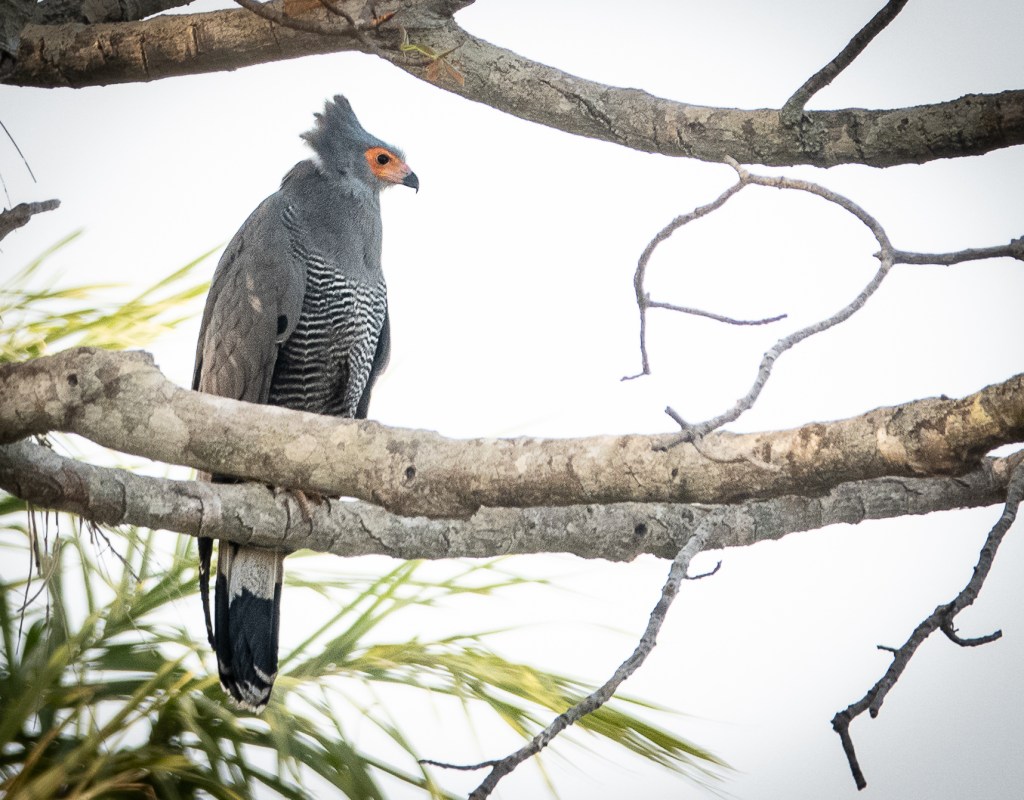
They have a jaunty crest, and a bare orangey red face.
Those specialized legs are an interesting example of convergent evolution. The Crane Hawk, a unrelated New World species, has a similar hunting technique, and similar legs. I photographed this one in the Pantanal in Brazil in 2013.
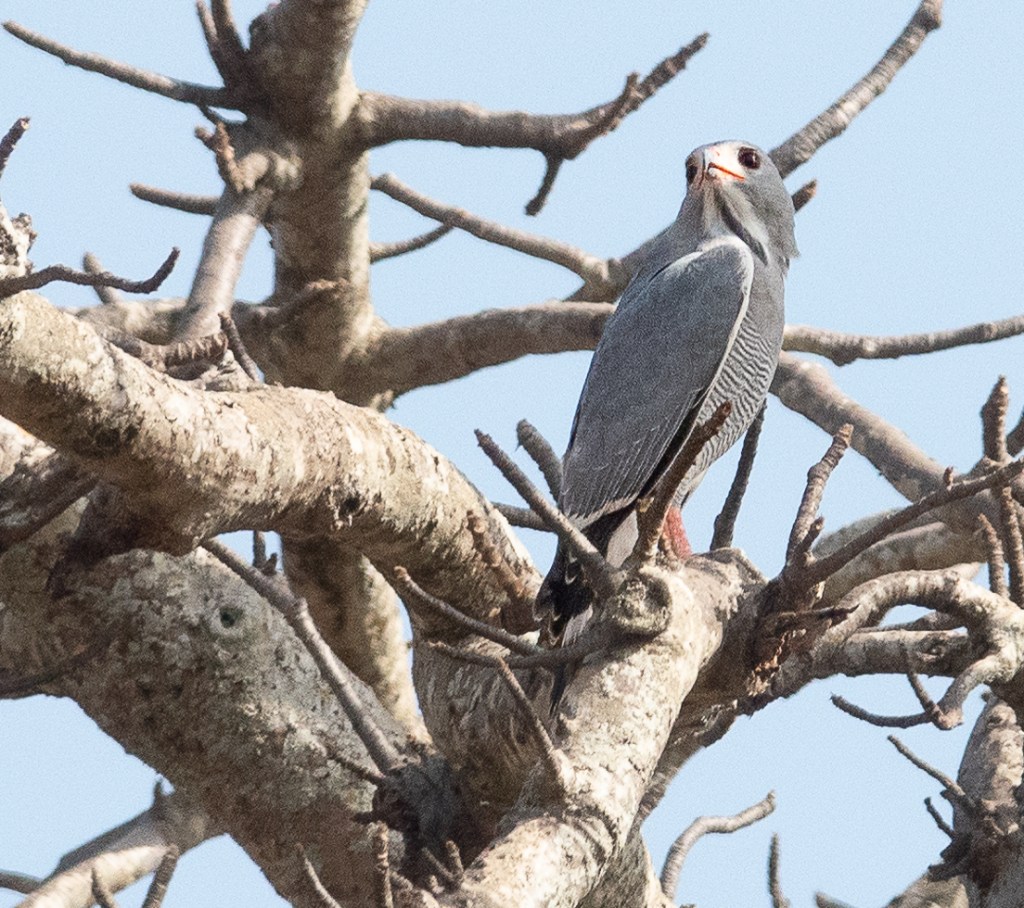
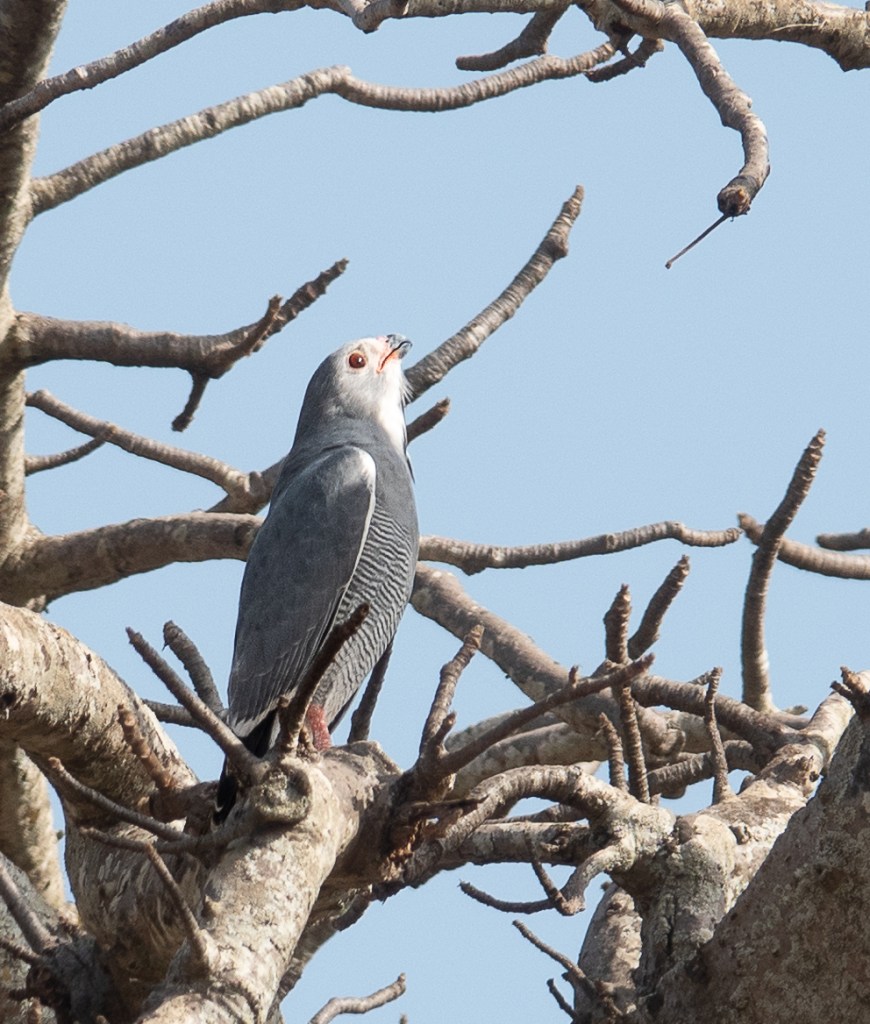
The much smaller Lizard Buzzard, Kaupifalco monogrammicus, is a handsome bird with a distinctive single vertical black stripe down the centre of its throat,
like a skinny necktie* :
The Lizard Buzzard has a shortish stubby bill:
and a wingspan of about 2 1/2 feet.
Despite its name, it doesn’t eat only lizards; large insects make up a lot of its diet.
* Thankyou Brad Vernatter, General Director and CEO of Boston Lyric Opera, for this photo on the opening night of their wonderful Bluebeard’s Castle. If you are in Boston, it’s still on this weekend, March 25 and 26. Do go.





























 Eyes on the Wild