[In pale imitation of the BBC’s documentaries which always include a section on “Making Planet Earth”, this post is more about ‘how we saw it’ than about the nature itself, so it may not interest you. Back to proper nature next time.]
To penetrate the mountain fastness where the elusive snow leopard lives takes planning, time, and the skill of a lot of wonderful people.
This is what we went to see, up to 59″long plus 41″ tail, 120lbs of predatory grace (photo from the World Wildlife Fund website):

They live in Central Asia and the Himalayas, and we saw them in the Altai area of Mongolia. We flew to Khovd, 2 hours west of the capital Ulaanbaatar

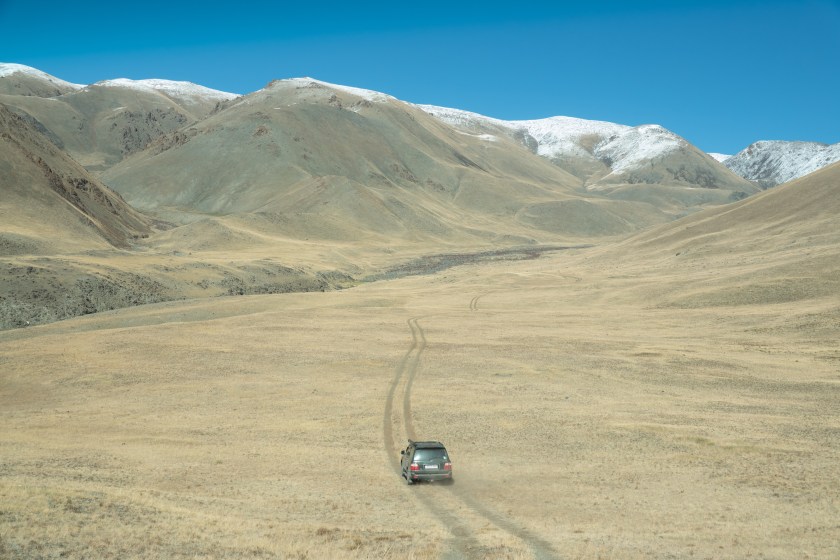
then drove from Khovd, top left, another 2 hours or so to our base camp at 1500m high, bottom right.
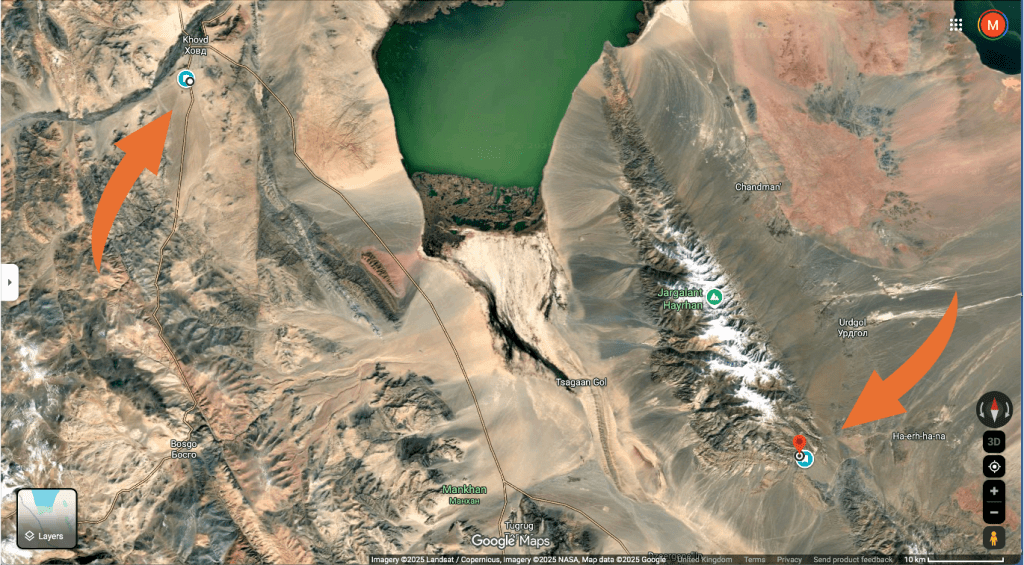
The leopards live in the Jargalant mountains, snow-topped on the map.
Our base camp had eight gers, each with painted doors, wooden beds and a pot-bellied stove. :


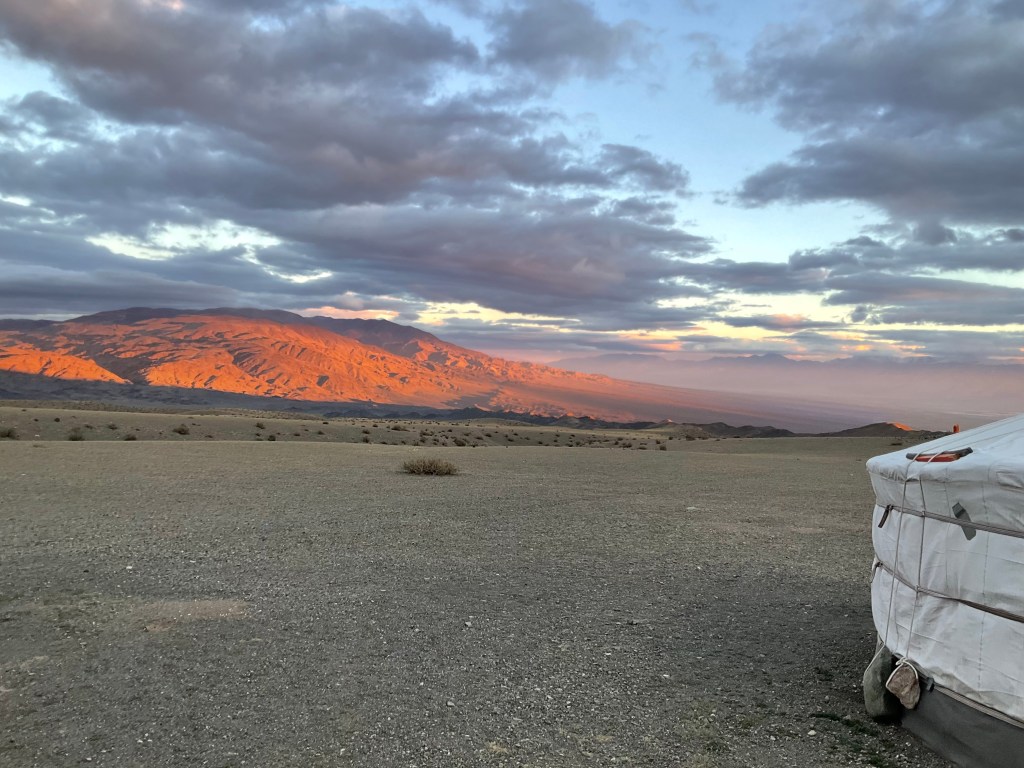
The camp was owned and run by a family. The pater familias was Soronzon, (who we nicknamed Big Daddy):

plus his wife and daughter (our excellent cooks, not just dinner at camp but a hot lunch in the field every day):

And then his two sons, who were a driver and a scout respectively, as well as being of necessity resourceful mechanics:

even if they eventually needed reinforcements:

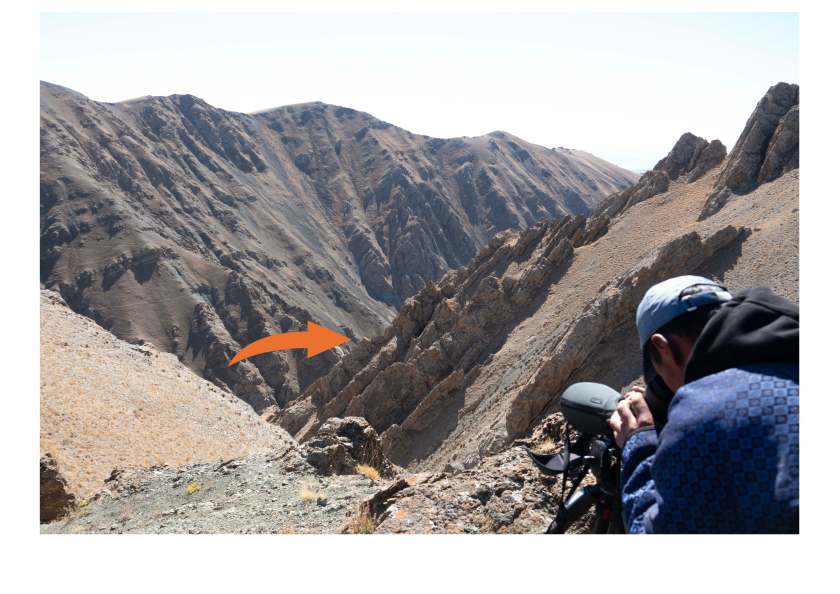
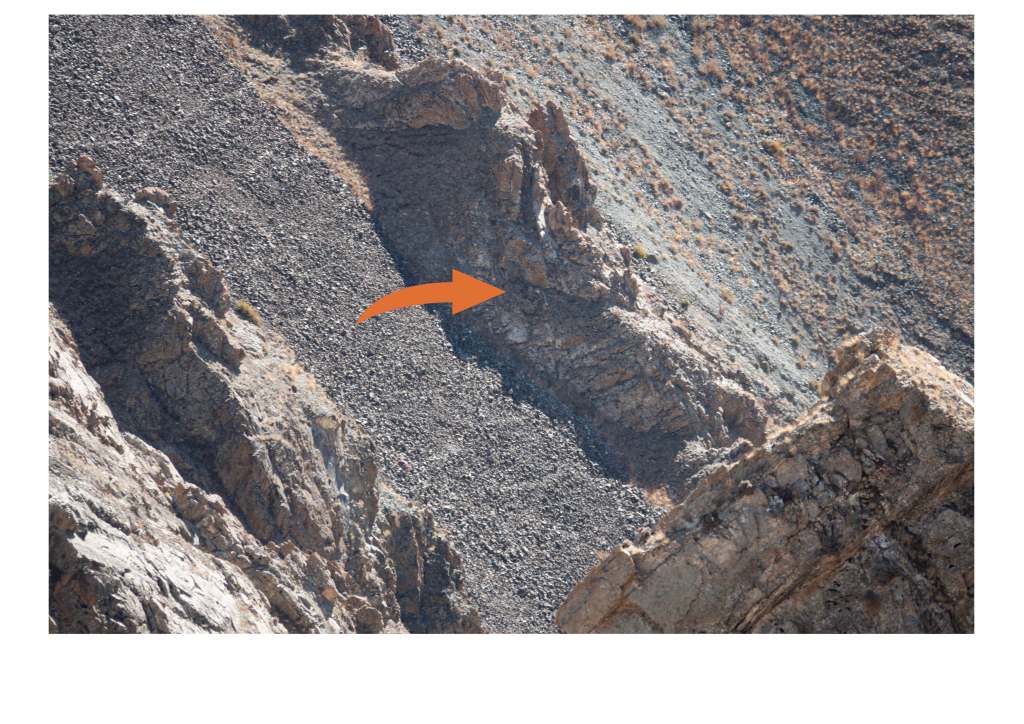
The scouts live in an isolated ger, scanning for snow leopards; theirs was on top of the mountain, and I’ve lost my photo, but the different one shown by the arrow below shows you how they are dwarfed by this landscape:

The grand-daughter came along one day too:

And of course the excellent Istvan, our Hungarian guide, whose photo you saw in the last post, and a translator called Eta, the daughter of herders.
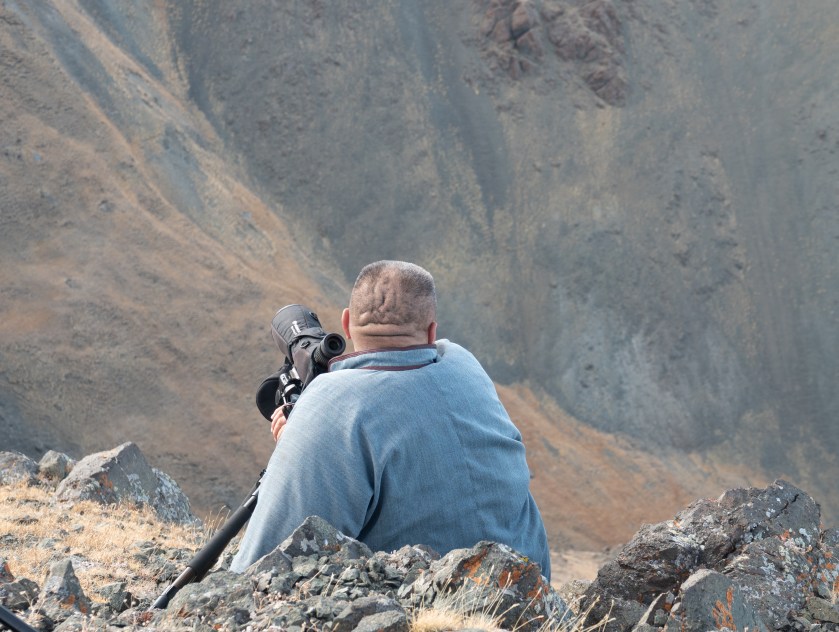
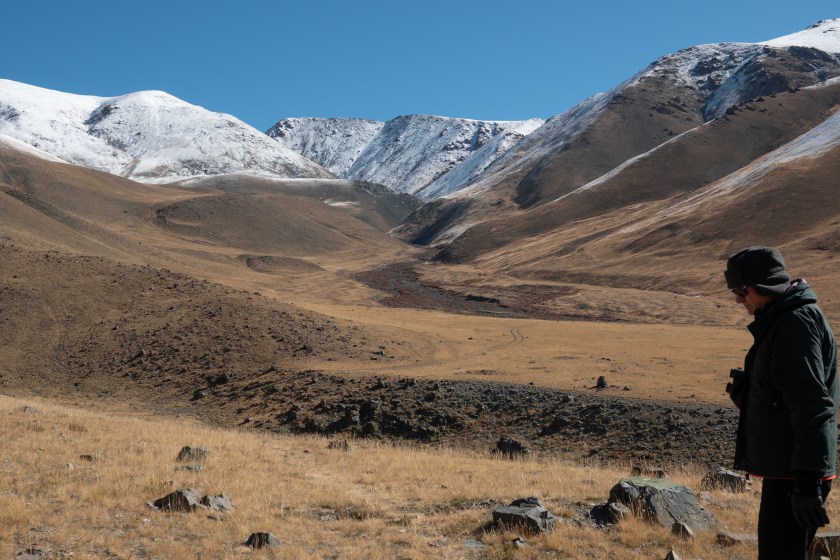
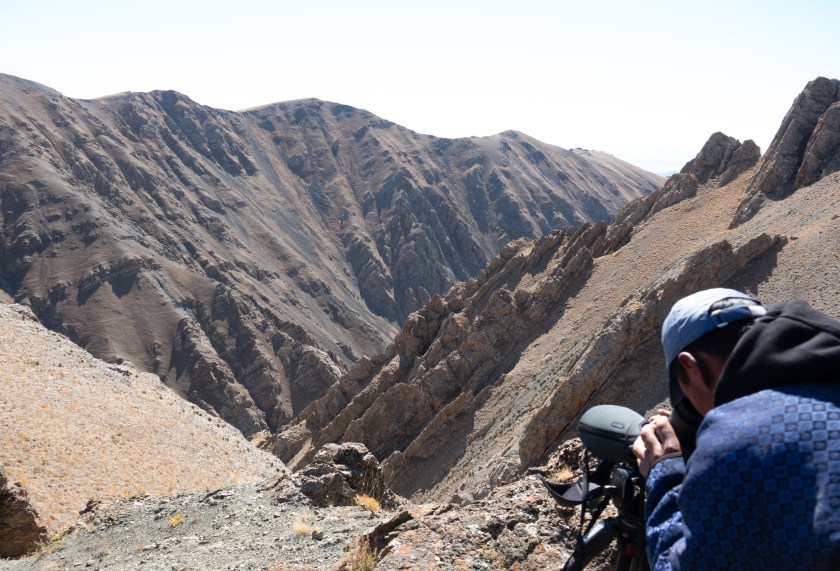
All these photos were taken on our first full day of searching, us sitting on the rocky ground with our binoculars, the guides using their scopes. We were at about 3300m, nearly 11,000 feet (5000 feet higher than Mt Washington, the highest peak east of the Mississippi).
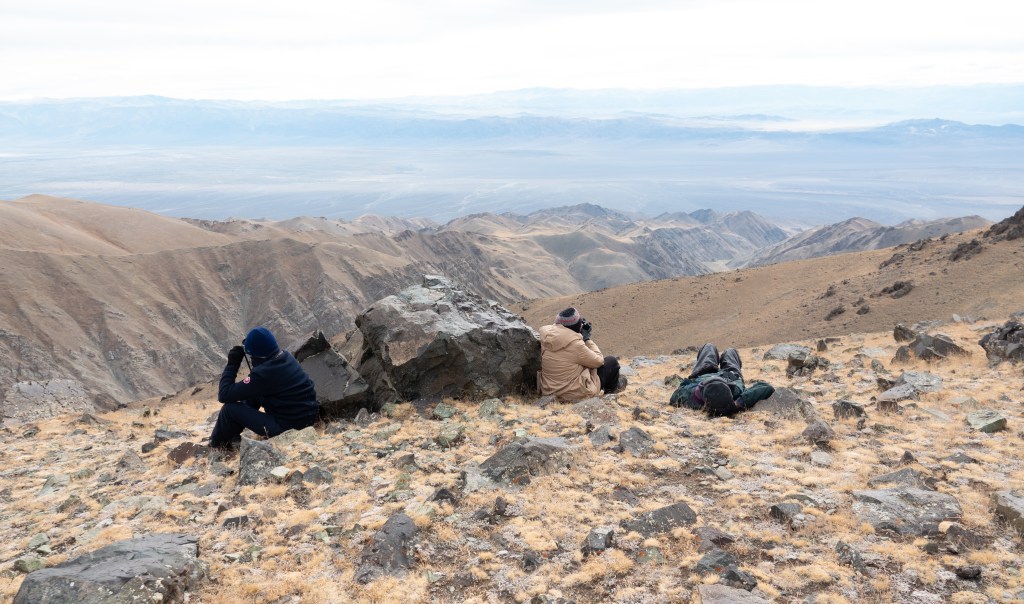
The vistas are wild and open and stark:

But no amount of scanning rustled up a leopard that day.
The next day it rained, and we were also told the leopards had probably descended to lower altitudes, following their prey, so we too stayed low down and looked for other animals.
The following day the mountains were covered in cloud, and the rain of the lower altitudes had been snow up there, so we stayed lower during the morning, but after lunch we were told the clouds were starting to lift, so we set off, into a whiteout. The intrepid scouts, who live high in the mountains all summer, emerged from the mist:

and scanned the hillsides whenever there was a break in the clouds.
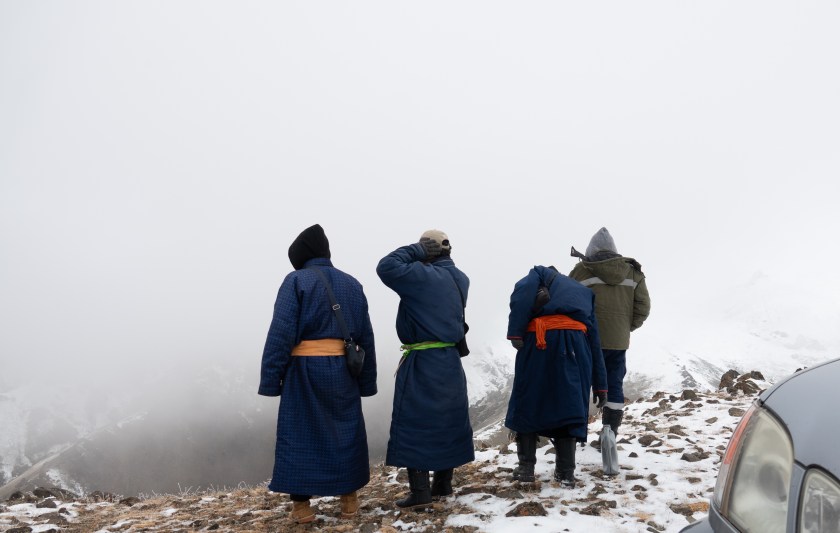
As predicted, the clouds lifted, slowly, and for hours we scanned in the cold, retreating to the vehicles when we couldn’t take it any more.

But Istvan and the scouts stayed there throughout.
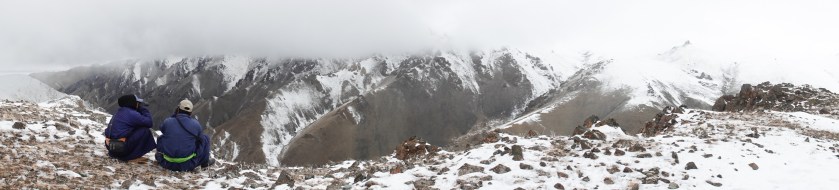
Unsurprisingly we saw nothing, but the views were extraordinary:
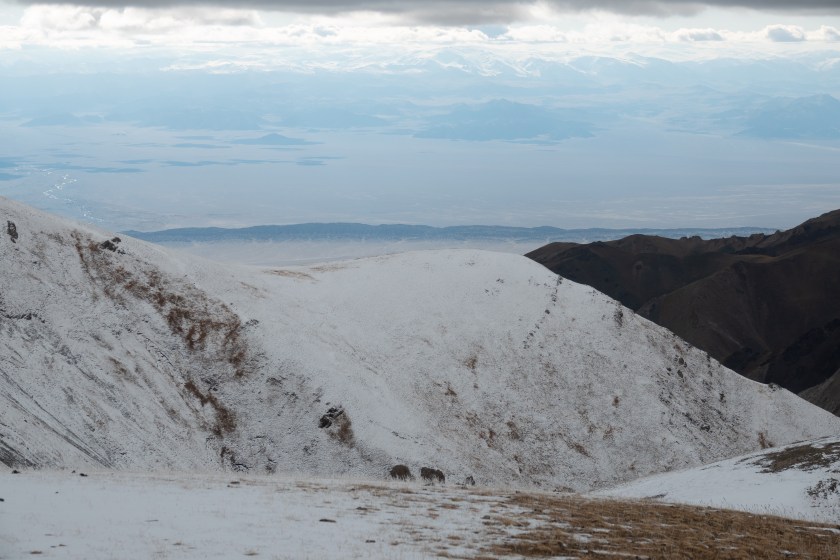
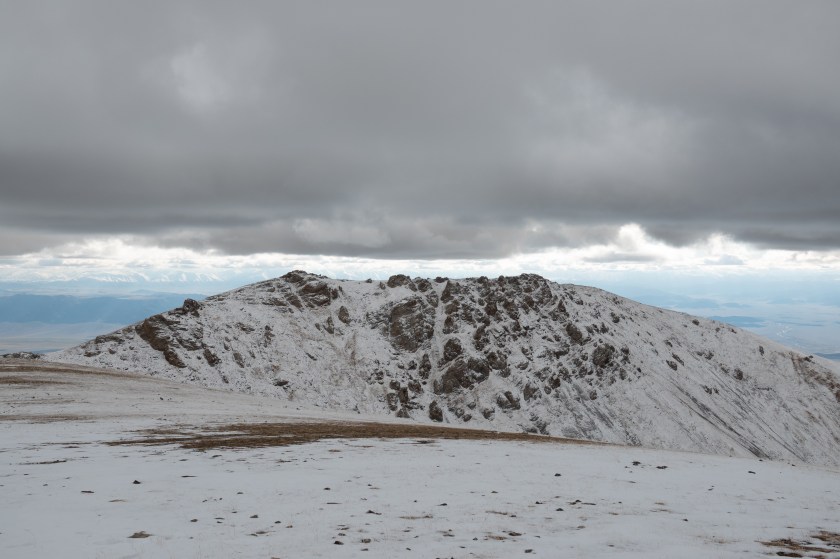
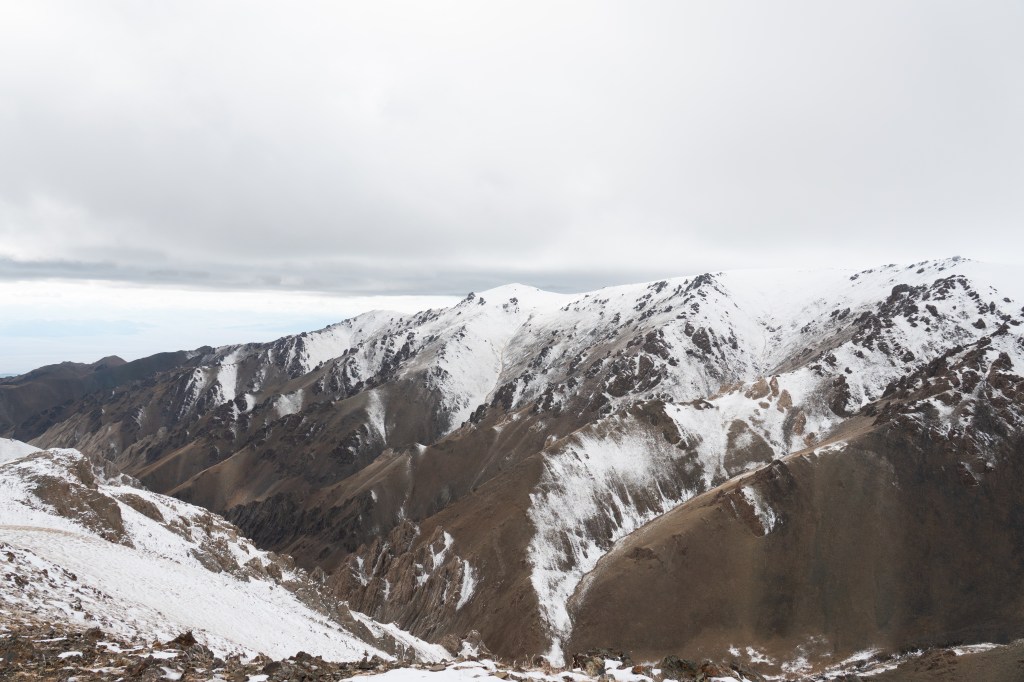
The next day was our last day, and the skies cleared. The team decided to search lower down on the other side of the mountain range, and you know what happened next… (from my last post).
A former producer for one of the BBC’s nature shows said that snow leopards were for her “a bit too hard core for the reward”. For me, it was worth it. She also said that it “needs the most expensive cameras on the planet”! True, and sadly, I didn’t have one.
PS On our last evening in camp, two musicians from the local village of Chandman played for us. One was a throat singer, listen and watch here. The last portion is the Q&A in which he demonstrates his techniques. (Thanks to Stephen and Kerstin for the videos).




 Eyes on the Wild