The American Chestnut disappeared in a few short years after the chestnut blight, imported from Asia, killed about 4 billion trees in the early 20th century.
But every now and again one decides to regrow, and lo and behold a few years ago I noticed a very healthy-looking sapling on the edge of my field. By last year it was maybe twenty feet tall, and in full flower:
I have read that very few trees reach the flowering stage before succumbing to the blight, but perhaps I had a winner?
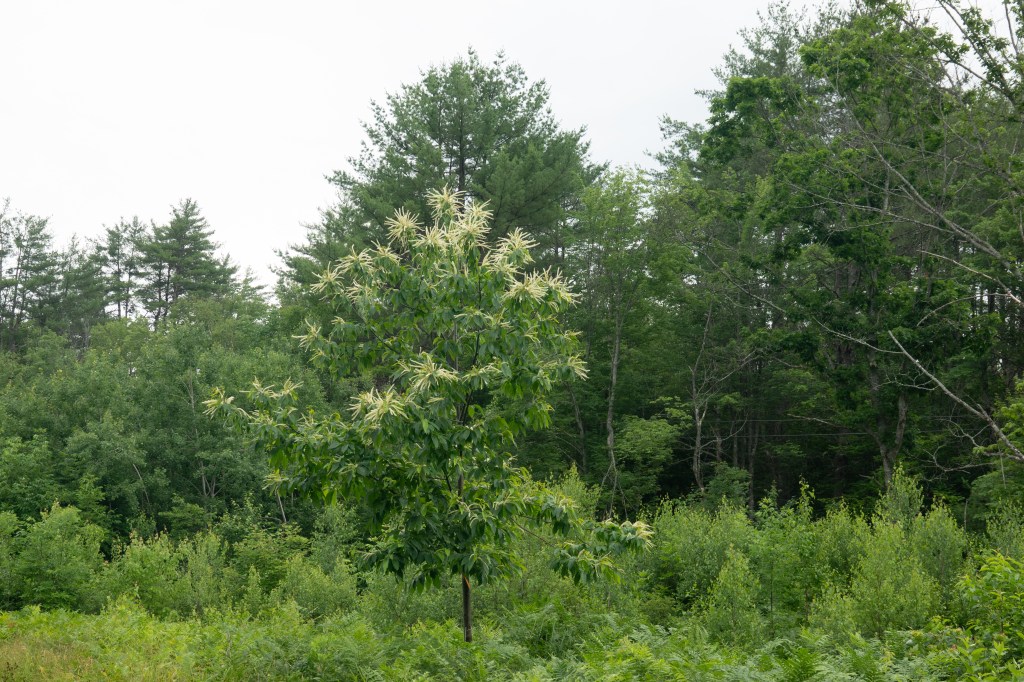
This year, it flowered again. The long creamy fronds are the male flowers, full of pollen that the Common Eastern Bumblebee gorges on. The smaller round prickly ones are the female flowers, which will eventually become the fruit.
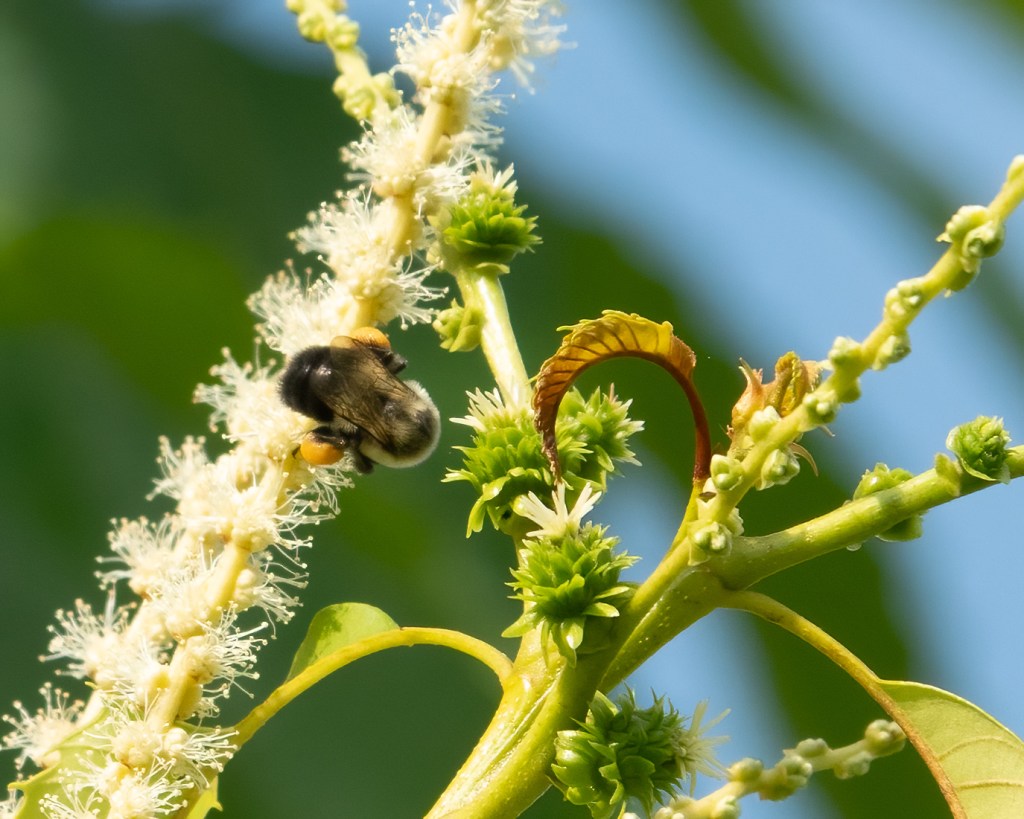


These photos were all taken on July 6th.
Five days later, on July 11th, the entire tree drooped:

Two days later, on July 13, it was moribund:

and three days after that, on July 16, it was dead.

The speed with which this fungus kills is horrifying. Ten days from healthy-looking flowers, to death.
The blight is a fungus that enters the tree through a small wound of some kind, creates a canker. Once it girdles the tree, it is doomed:

The trees send up suckers from the roots and the base of the trunk, and all of those below the canker were entirely healthy, but everything above it was brown and dead; the arrow points to the canker, and you can see healthy shoots in the foreground and to the left.

Most of my posts are (I hope) joyous, but this is a dispiriting tale of loss.
 Eyes on the Wild