I know this is a nature blog, but the birds and animals live in a country where humans have lived for thousands of years too, and I thought that some of you might be interested to see glimpses of Gambian life and culture. We were asked not to photograph people without their permission, so I do not have any street scenes, just a few odds and ends.
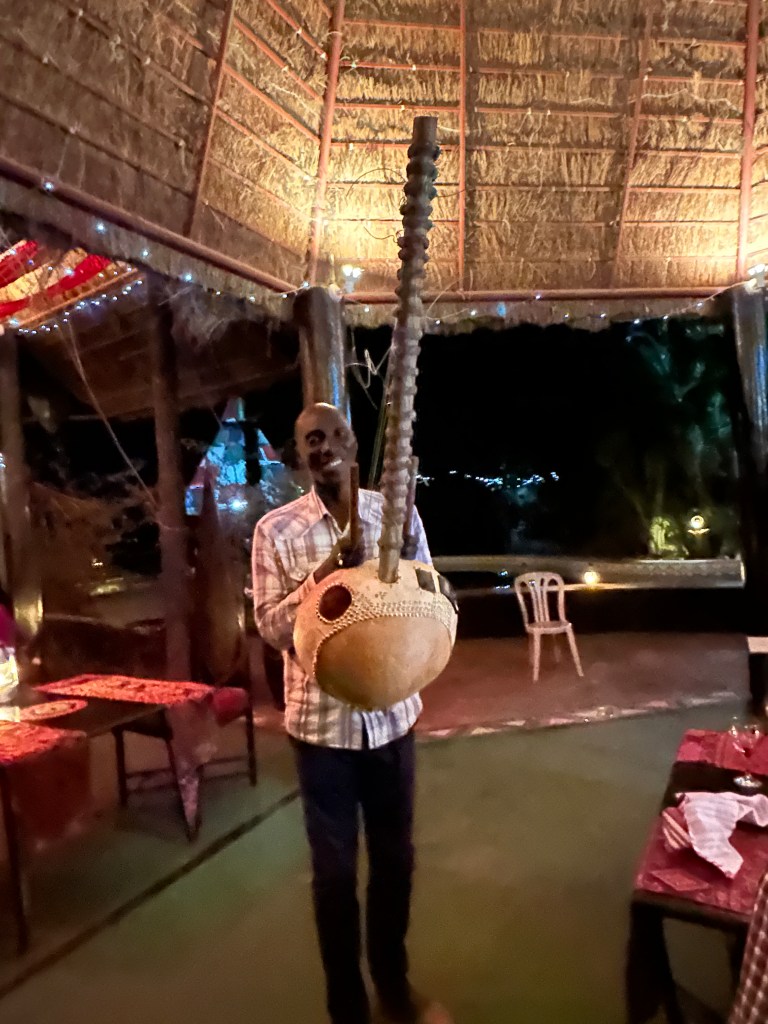
This is Omar Kuyateh, who played for us during dinner on two evenings. His instrument is called a kora and it has 21 strings. It is considered a “plucked harp-lute”. Kora players come from traditional jali familes, jali being the Mandinka name for a griot, who passes on oral traditions. Mr Kutayeh made it himself, out of a gourd and a calfskin. Here is one of his songs.
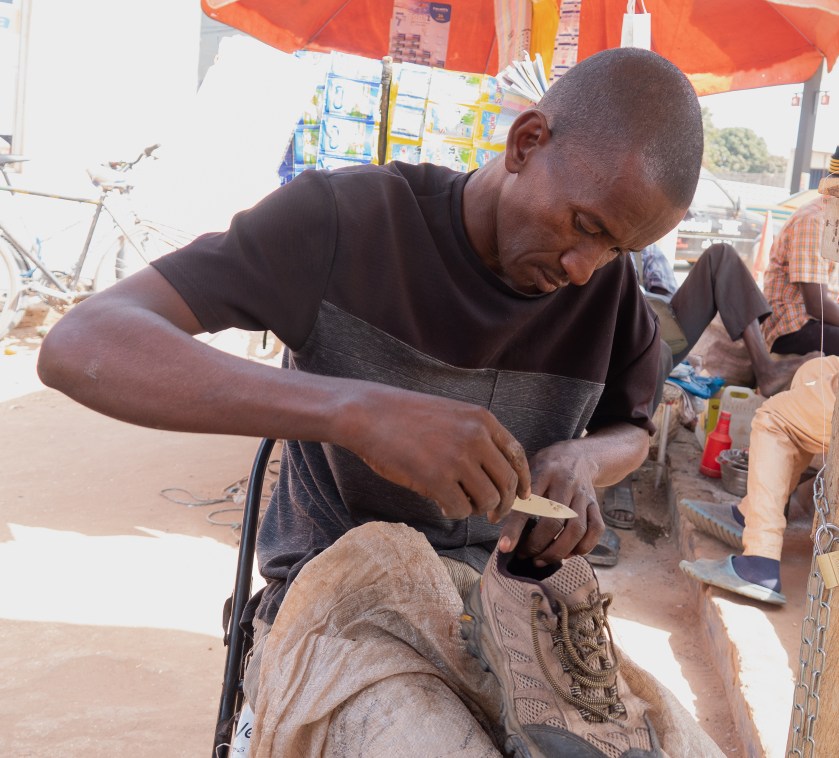
One day, we went to Tanji fish market. En route, the sole of my boot detached itself from the uppers, and my only other shoes were Tevas. So AJ our guide took me to the market, where Muhammed first glued the sole back on, then meticulously sewed it on neatly all the way round with strong black thread and a lethal-looking needle.

He charged me two dollars. It took about 15 minutes, and is as good as new.
At the fish market, there are no jetties or docks; the boats pull in and people wade out to offload the fish:

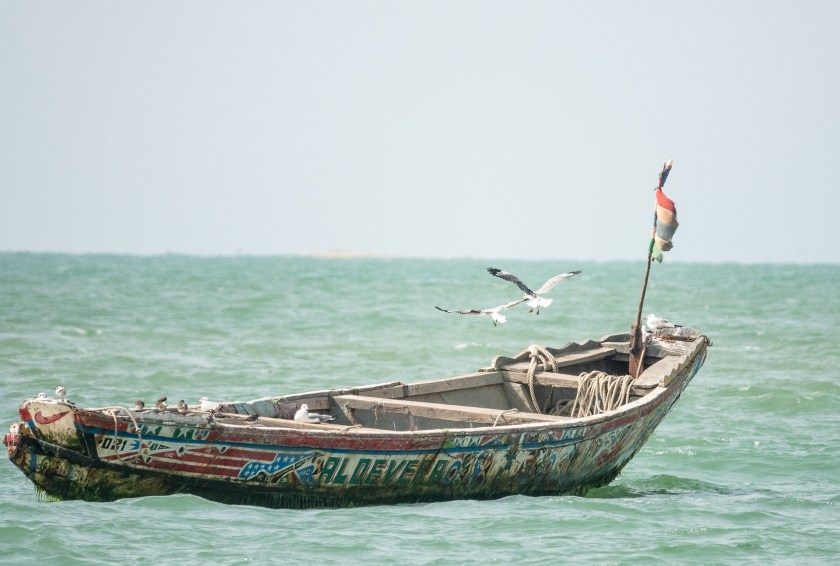
The boats are painted and named, and they have prows with wooden totems (right rear), and flags (the boat on the left supports the Spanish soccer team Barca!). When they are moored, the gulls and turnstones arrive:
And on shore, boats are pulled up for maintenance:

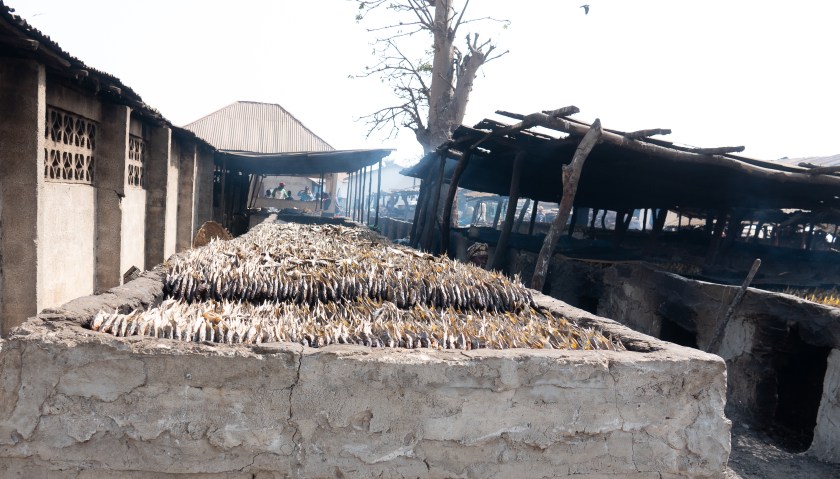
The fish market wastes nothing. These meticulously filed fish are being dried, and many had been collected dead from the foreshore.
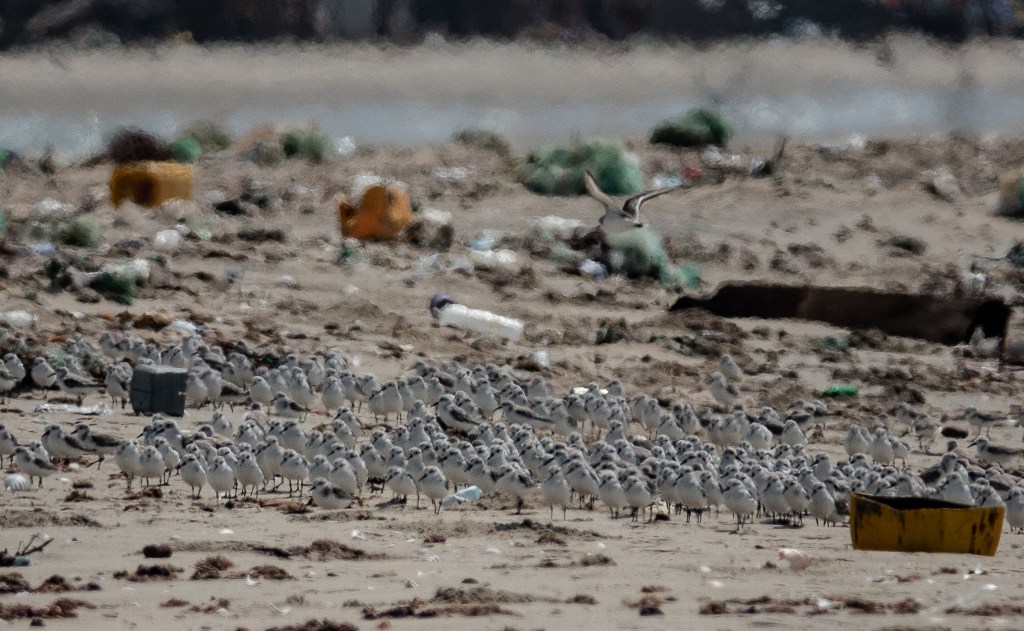
The garbage along the seashore was horrendous, and I do not know if this is local to the fish market, or widespread. The Common Sandpipers below do not seem to care about the garbage festooning the sand behind them.
Amongst the mangrove swamps there are oysters, and these are gathered and cooked for sale (they are not eaten raw). The women collect them from tiny skiffs, many if which are true dugout canoes:

The white heaps on the left are oyster shells. Then, in the evening, from my floating lodge :
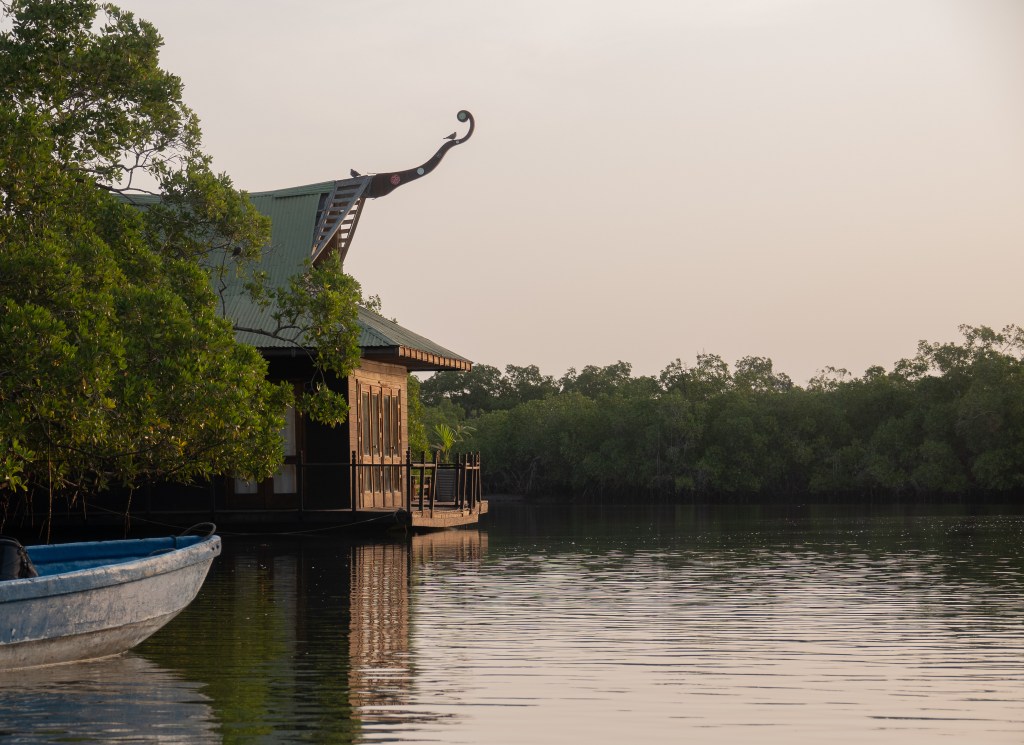
I saw them paddling back with canoes full of firewood. They are allowed to collect fallen branches in the national park:

Our guides have good jobs, and they’re usually men. We had one woman, Mariana, in Bonto forest.
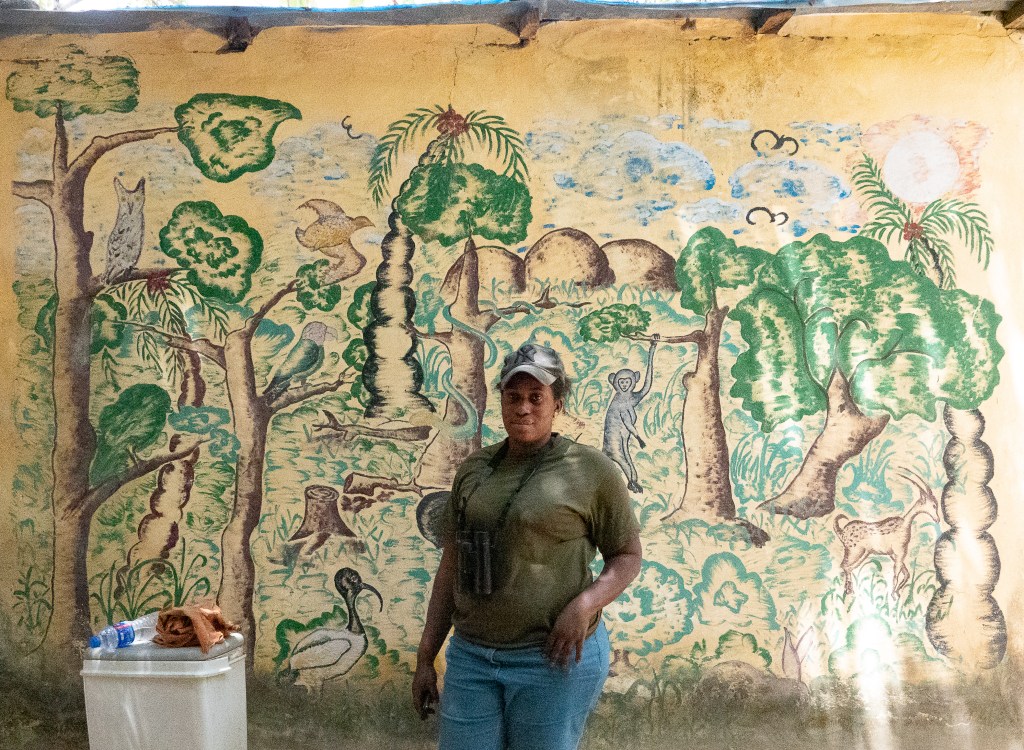
She told me that she was 26, that her father had died, and she was the sole support of her mother and three younger siblings. She was a terrific guide.
This is not an easy life, and you become very aware of how extraordinarily privileged you are to fly thousands of miles just to see birds.
 Eyes on the Wild
Lovely, thanks! Anne
>
LikeLike
Moira! This was magnificent! The kora player’s singing and playing was so beautiful, reminding me of my husband who made African instruments, mostly kalimbas (also made out of gourds and skins). The boats reminded me of Pakistan where boats are also painted with beautiful and meaningful images (like their buses). And yes, how privileged we are here in America where we have garbage trucks to haul away our tons of plastic. I am lucky to work with several co-workers from Africa. I often hear them talking to each other in their languages. Kind, respectful and without the horrible emotional baggage of slavery in America handed down through the generations. Did you know that a large percentage of African American men suffer from what is medically called “Idiosyncratic Hypertension”? It is believed to be caused by the particular kind of underlying stress these men experience growing up in America. How envious we Americans might be to know how gracefully the children of deceased parents support their relatives? I know that my African friends at work send money back home to their relatives also in support. I could keep writing a large essay based on these wonderful images you have shared with us. Thank you once again!
LikeLike
The Gambian life is certainly so much different that what ‘we’ are used to. Omar’s music was very soothing to listen to…clever to make an instrument with those materials. What kind of food did you savor there? It’s a special experience to travel and be immersed in a culture.
LikeLike
You notice everything, Moira, not just birds. ________________________________
LikeLike