We had begun learning to identify the large dark low shapes of distant Giant Anteaters. This time in the long grass we saw two shorter shapes, following each other closely.
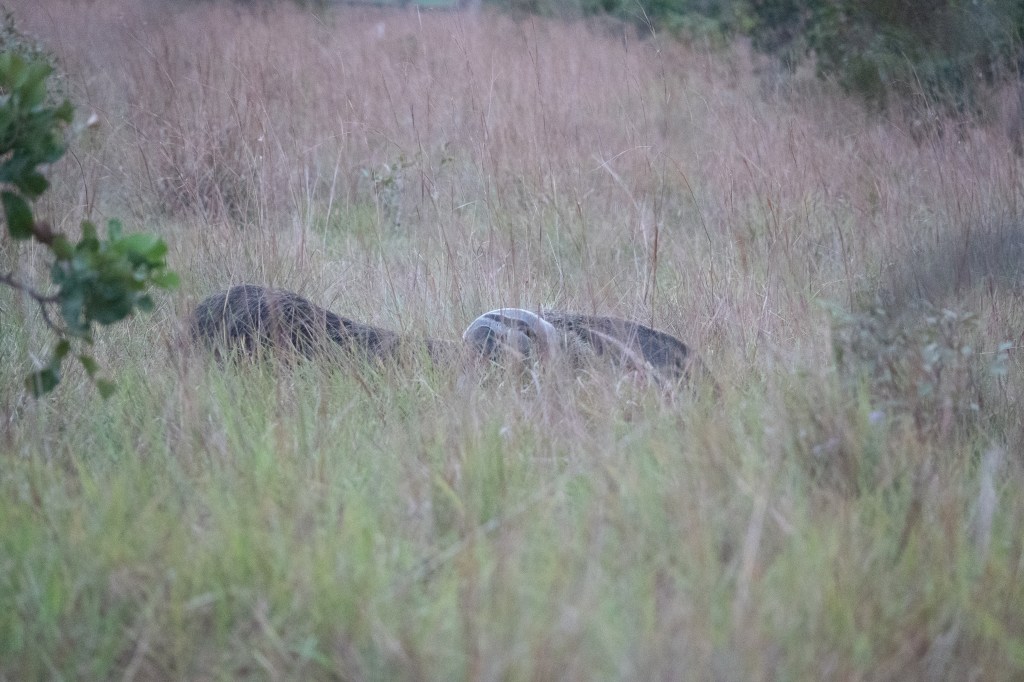
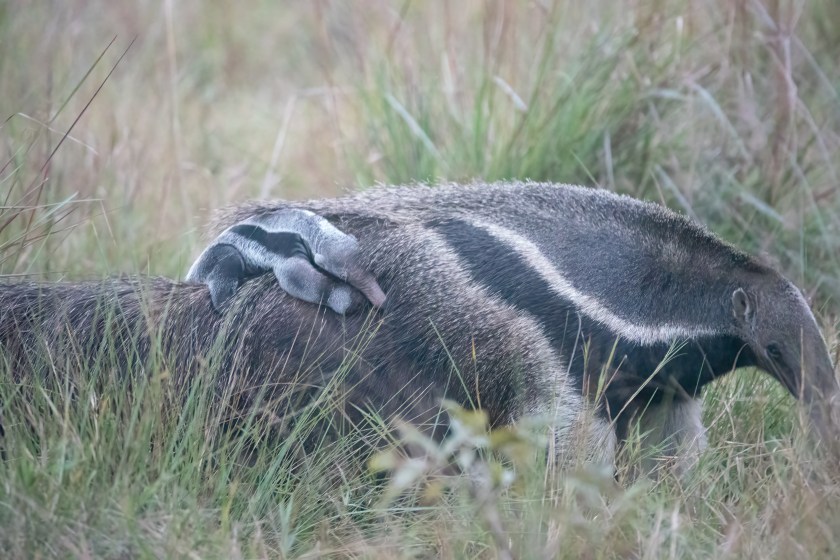
The guides, of course, knew exactly what it was: a single anteater, with a baby riding sidesaddle on its back, bisecting the usual single dark silhouette into two shorter ones.
It was so young that it had that floppy look of newborns, and we showed the photo to Danilo Kluyber, the wildlife vet for the Giant Armadillo and Giant Anteater Project (more about them in a later post.). He estimated it at no more than two weeks old. At birth, it will have weighed about 1.2Kg.
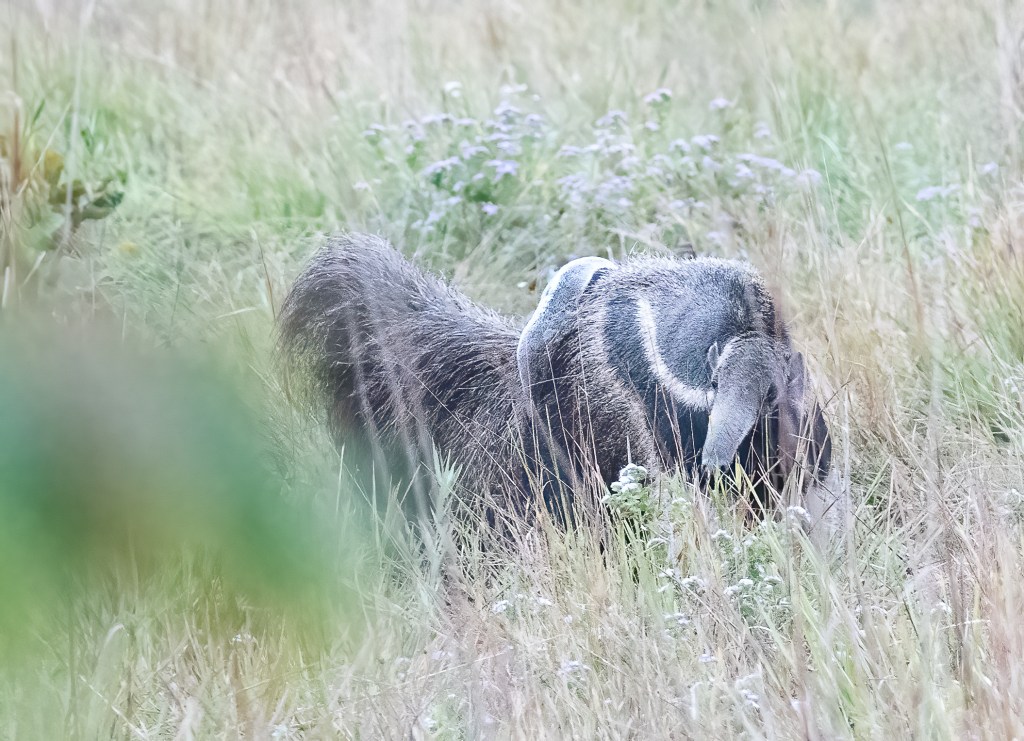
It was holding on tightly with tiny tiny hands, at the end of the back and the base of the tail. Look closely in the center of this photo to see its hand:
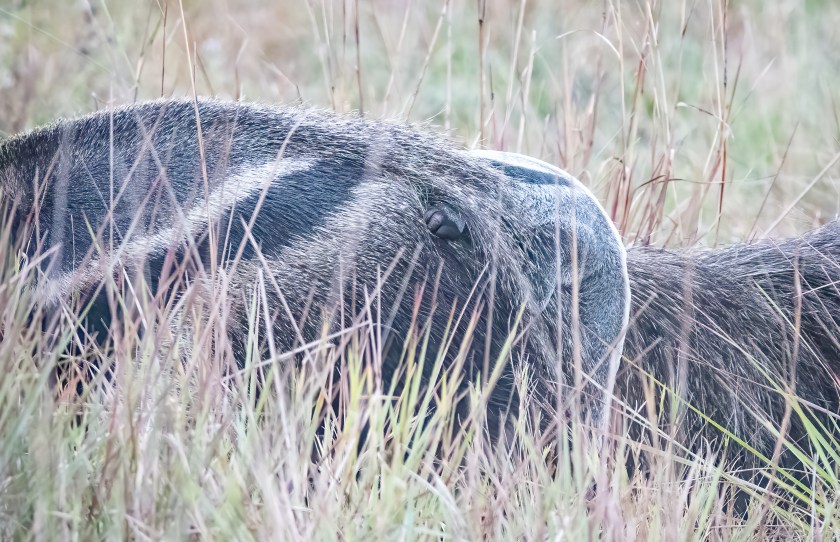
We walked very slowly and very quietly, stopping if she showed any signs of alarm, and we got a really magnificent look:
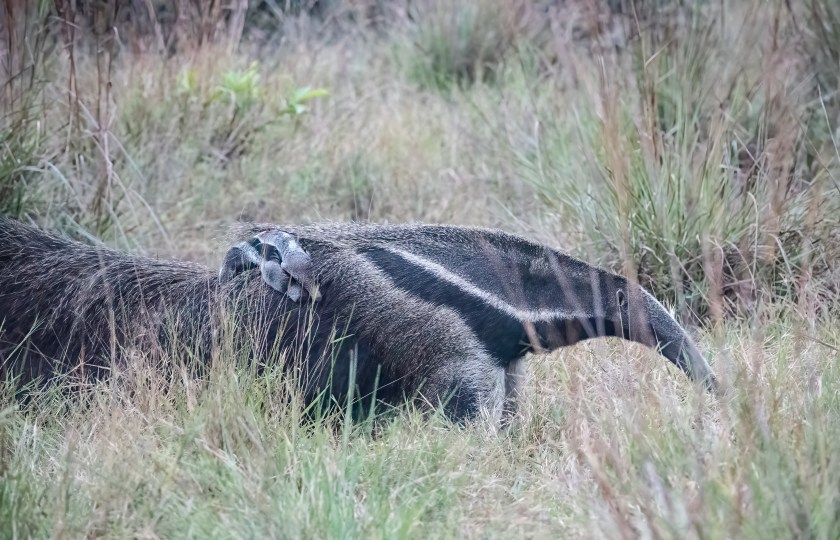
And in close-up you can see that this irresistibly cute small animal is a perfect replica of its mother.
It will ride around with her for a full year. When it needs to nurse, she lies down and the baby just crawls around to feed, without having to get off. She will stay with her mother for up to two years., and she may live till the age of 14 years in the wild, perhaps 26 in captivity.
So there you have it, one of the great moments of my life.
PS: Wikipedia says this about the Giant Anteater’s conservation status, as assessed by IUCN in 2013: “The species is listed as vulnerable by the International Union for Conservation of Nature, due to the number of regional extirpations, and under Appendix II by CITES, tightly restricting international trade in specimens of the animal and its parts and derivatives. Between 2000 and 2010, the total population declined by 30%. In 1994, some 340 giant anteaters died due to wildfires at Emas National Park in Brazil.The animal is particularly vulnerable to fires due to its slow movement and flammable coat.”
Wildfires are part of the normal cycle in the Pantanal, but since this 2013 assessment there have been fiercer and more extensive fires than usual, which cannot have helped. This story makes the scale of the problem clear.
 Eyes on the Wild
Absolutely adorable! Did you ever think of becoming a Zookeeper? What devastation fires cause for animals…hard to think about.
LikeLike
The pleasure and interest for me lie in seeing the animals in their natural habitat, going about their normal behaviors. Zoos don’t appeal! But yes, I know it was a joke!
LikeLike