The Pantanal is a huge wetland, ten times the size of the Everglades and fifteen times the size of the Okavanago. The red roofs just left of centre are Baia das Pedras, our first stop.

Much of it is flooded from November to March. This makes it splendid habitat for an estimated 35 million caimans. The fellow below used to be called the Spectacled Caiman, Caiman crocodilus to be precise. Its name comes from the ridge circling the front of the eye. However, it is now considered a separate species, the Yacaré Caiman, Caiman yacaré.
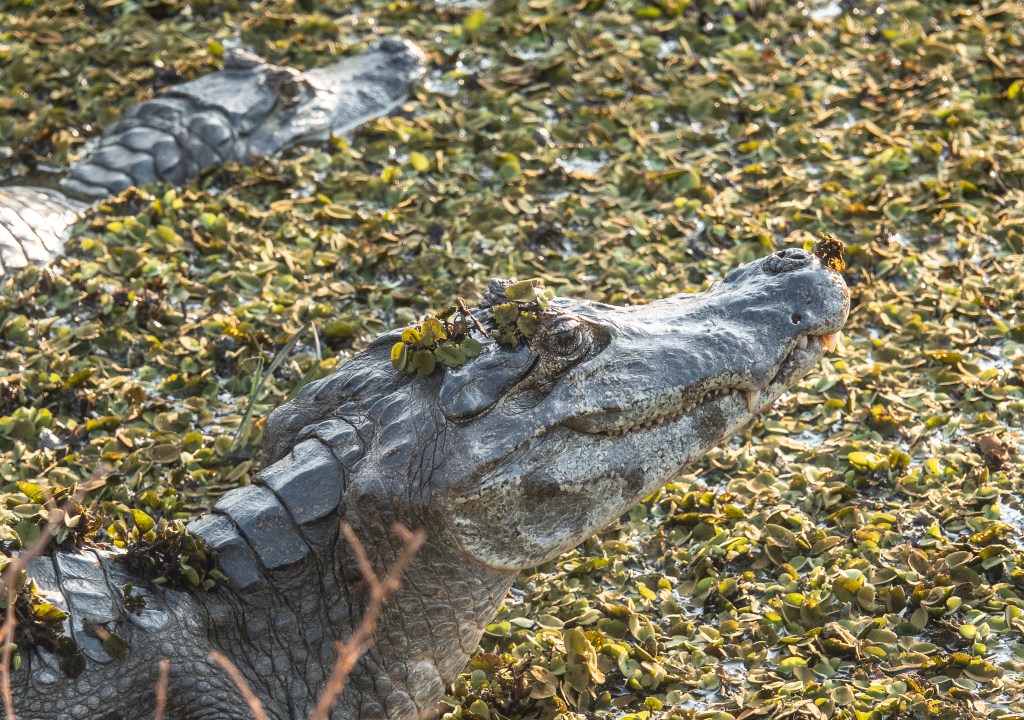
Males are 2-3m long, and 58 Kg. They are not really dangerous to humans, but when we were riding through the shallow water one of the cattle dogs was attacked, and only just escaped. The Pantaneiro horses didn’t bat an eyelid.

Caiman have the usual intimidating crocodilian array of teeth, seventy-eight of them, which they use mainly on small aquatic prey, such as fish and amphibians, but they also eat carrion and capybara (and apparently dogs.) As water levels drop in the dry season, they congregate in huge numbers on the receding shorelines. The rains were late this year, so there was lots of open water left for them when we were there.
We went out fishing, giving a waiting caiman a wide berth.

We caught piranha on makeshift poles, baited for us by our guides. As soon as the meat touched the water, Jane got a bite, and she turned out to be our champion fisherman. Here our guide Alessandra nervously displays her catch for its portrait:
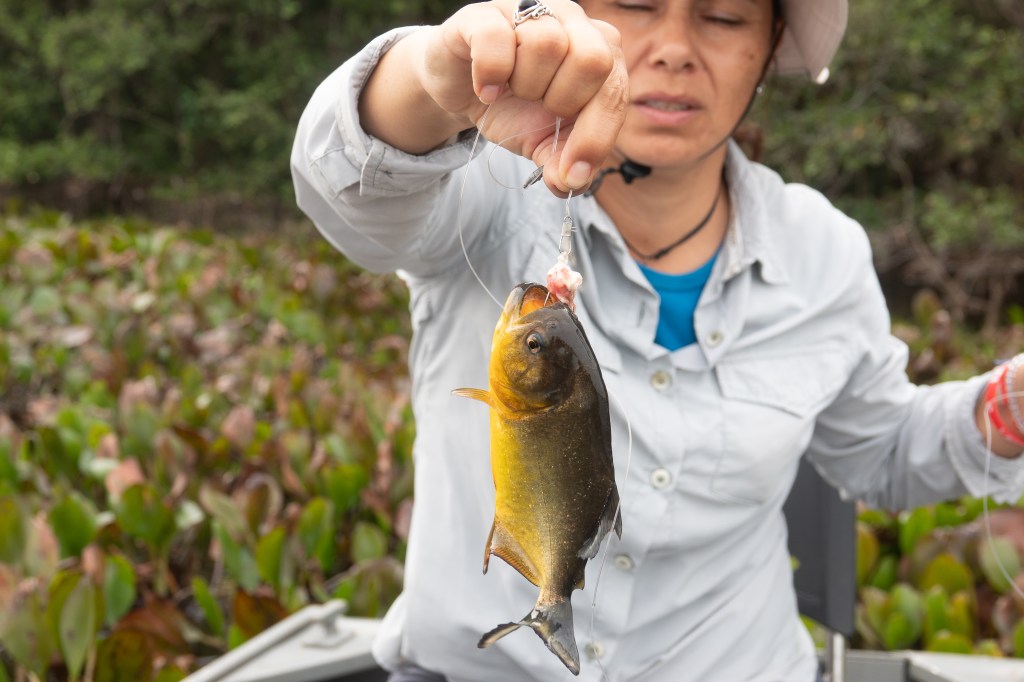
The hooks were removed, very cautiously, avoiding those famous teeth, all twenty of them:

When we looked up, a caiman was circling.

Our boatman dangled a piranha over the side, and the caiman lunged:

The boatman managed to pull the fish close enough that he could cut the nylon line, but it is clear this doesn’t always happen. Look closely at the next photo, towards the rear of the lower jaw:

This photo is interesting for a different reason. Near the snout, one of the lower teeth has grown right through the upper lip of this animal.

Apparently this is the norm on large adult males. The lower teeth are in general invisible when the mouth is closed, being behind the upper teeth. The 4th maxillary tooth, however, slides into a special fossa (groove) on the upper jaw, but it can wear a hole through the bone and lip and then it can been seen when the mouth is closed, as here.
In crocodiles, by contrast, the lower teeth are just visible even when the jaw is closed. This chap is snoozing by the Luangwa river in Zambia.

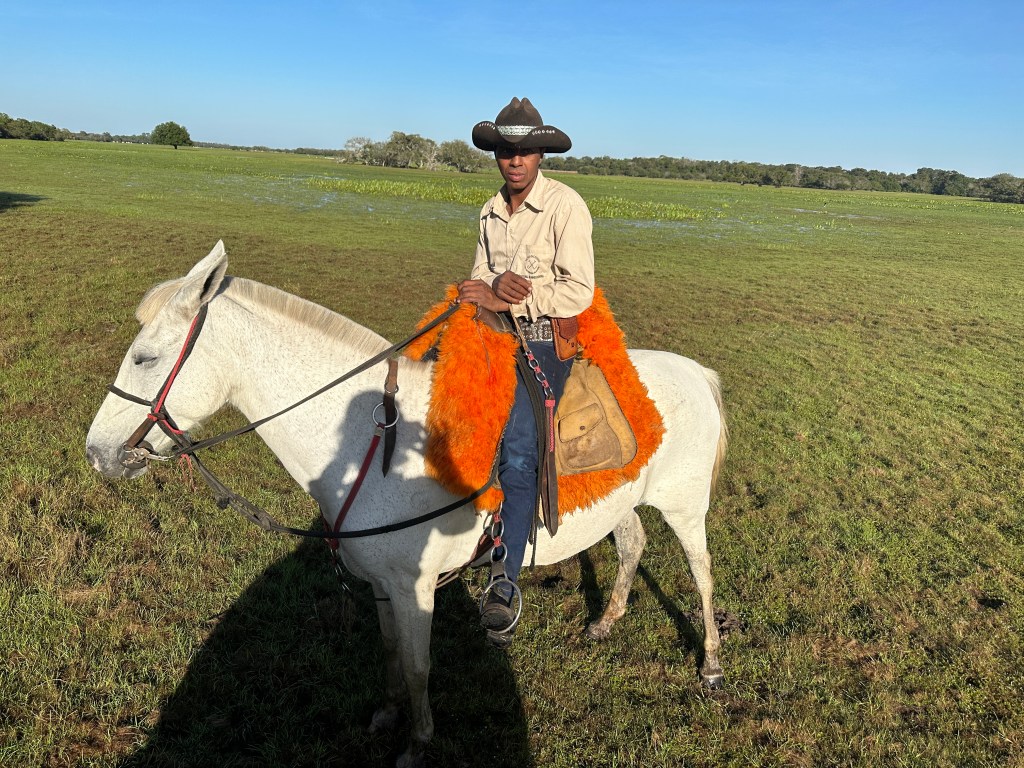
PS Our riding guide, the owner of the lucky dog. Admire his traditional saddle and his belt.
PS My title aggregates the number of teeth in a caiman and a piranha!
PPS “Piranhas have a single row of extremely sharp teeth that runs all the way around their mouth, top and bottom. Each tooth is tightly fitted to the next tooth. In fact; they’re so close that they actually overlap.
Piranha teeth have three sharp, triangular cusps. The central cusp is by far the largest, and it’s razor sharp. The two smaller cusps on either side of the center cusp are used to lock each tooth into the teeth on either side of it. The razor-like teeth are wide from front to back, and narrow from side to side–like a straight razor.
When the piranha closes its mouth, the top and bottom rows of teeth act together to form a pair of scalpel sharp scissors.” From https://a-z-animals.com/blog/piranha-teeth-everything-you-need-to-know/
 Eyes on the Wild
I was drawn to this post despite having a horrible fear of these creatures! Fascinating post.
LikeLike
What a vast area and such an interesting trip, on horseback and great photos!
LikeLike
What a great adventure and wonderful photos!
LikeLike
Yikes!
LikeLike