Think of three-foot long flying rainbows.
Macaws are a sub-group of parrots, native to Mexico, Central and South America. They have larger beaks, longer tails, and barer paler facial areas than other parrots. Two large species decorated our trip to the Pantanal. The Red-and-Green Macaw, Ara chloropterus, and the Hyacinth Macaw, Anodorhynchus hyacinthinus.
The Red-and-Greens were nesting in a dead palm-tree behind Baia das Pedras.
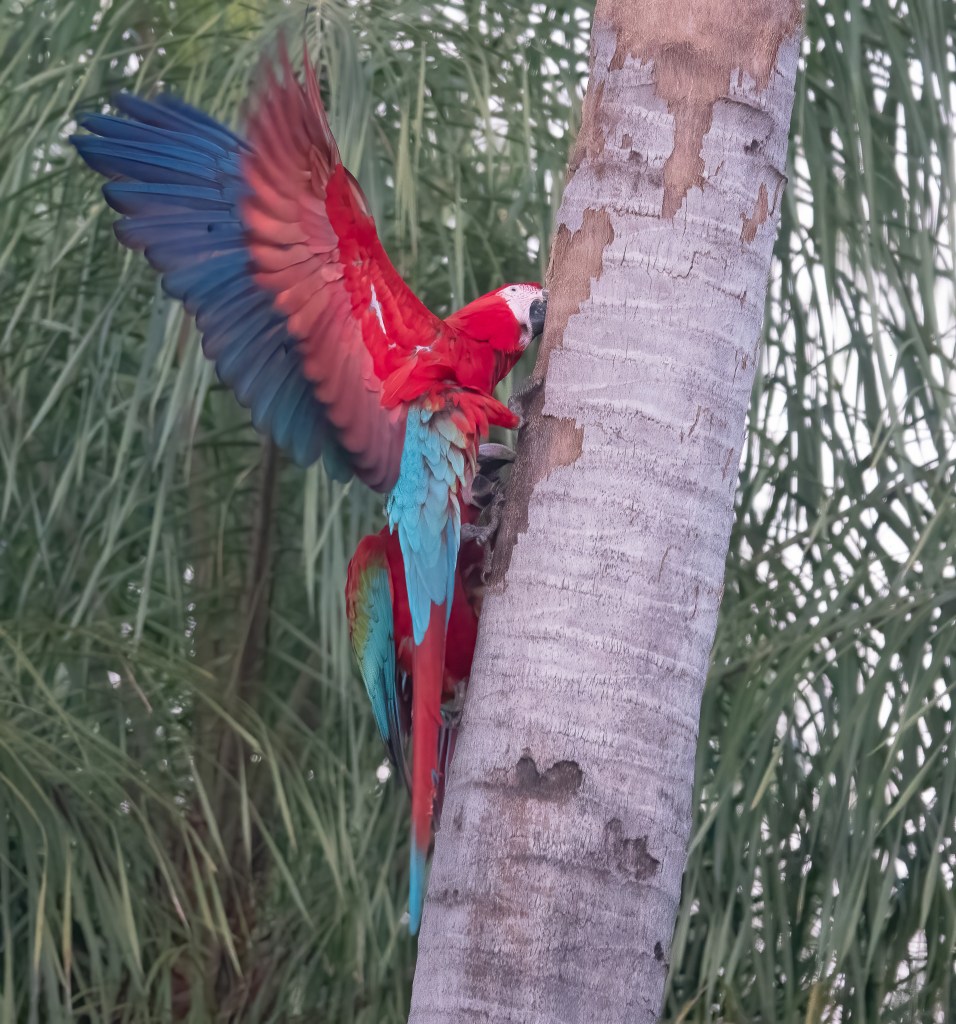
They would appear at first light, and canoodle affectionately upside down outside the nest hole.
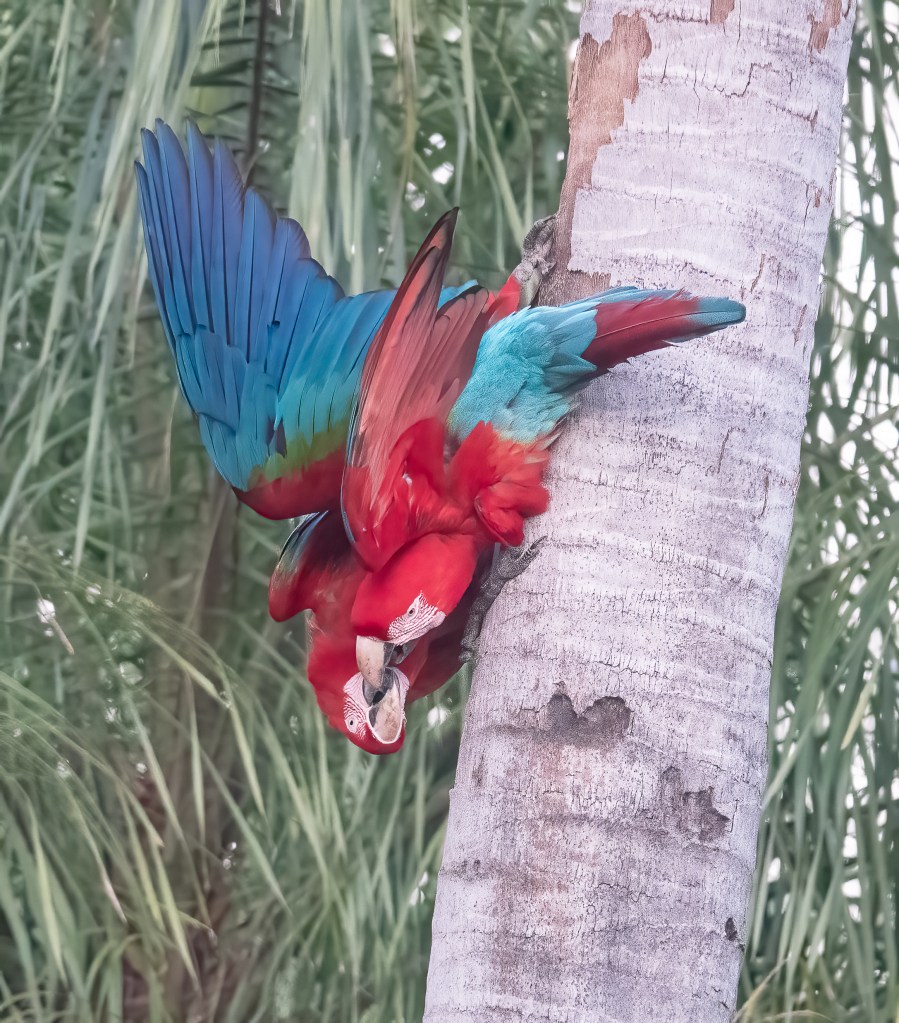
A macaw’s facial feather pattern is unique, like our fingerprints.
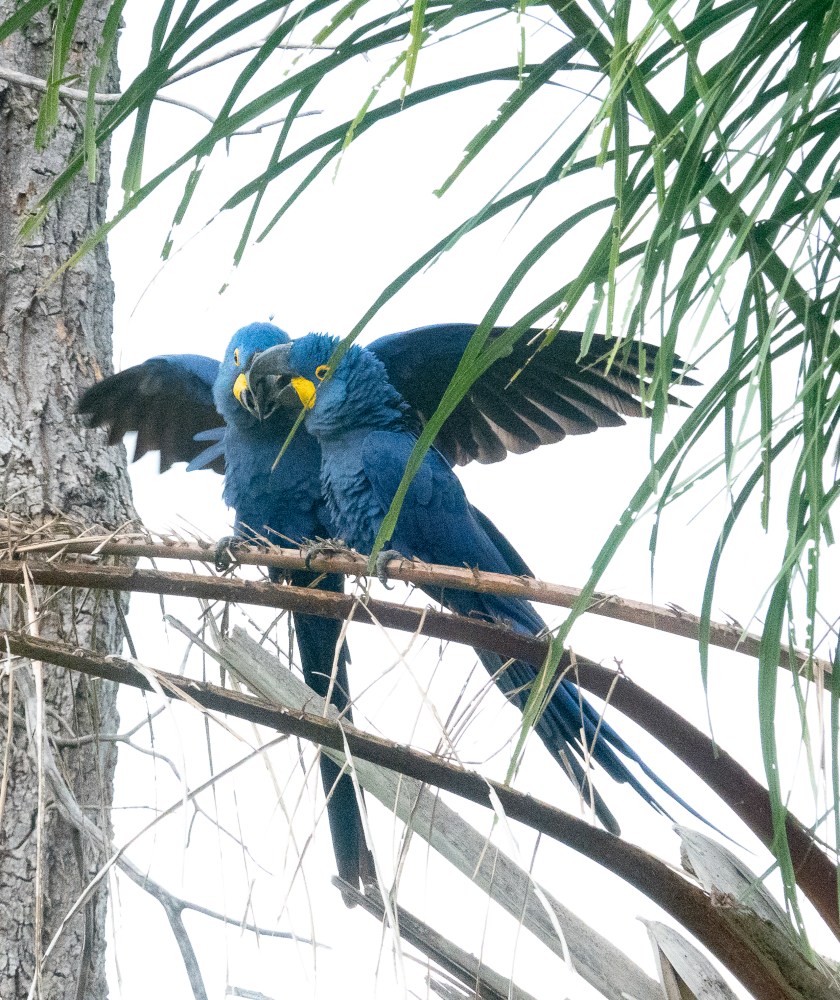
We saw (and heard) Hyacinth Macaws, routinely around our second stop, Caiman Lodge, partly because it is the base of the Hyacinth Macaw Project. In the Hyacinth Macaw the bare facial patch is smaller than many other macaws, being limited to a yellow patch around the eyes and near the base of the beak. One pair were nesting in a nest box in the grounds:
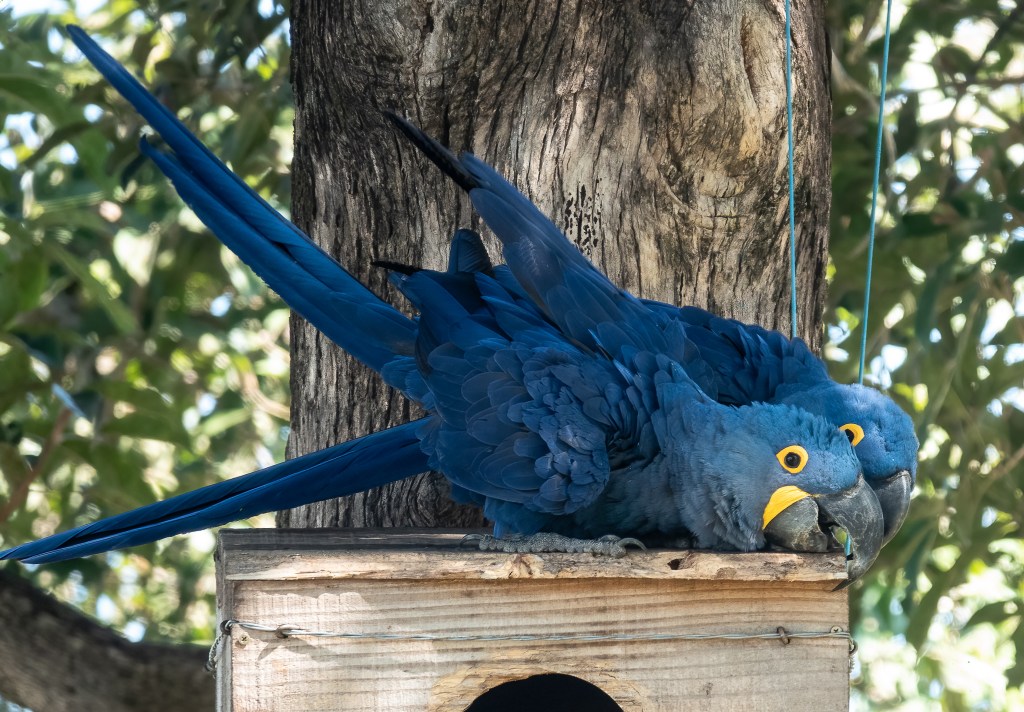
These irresistible birds are monogamous, and under the right circumstances they mate for life, which can be up to 50 years.

If you get too close to their nest, they squawk from a nearby branch:
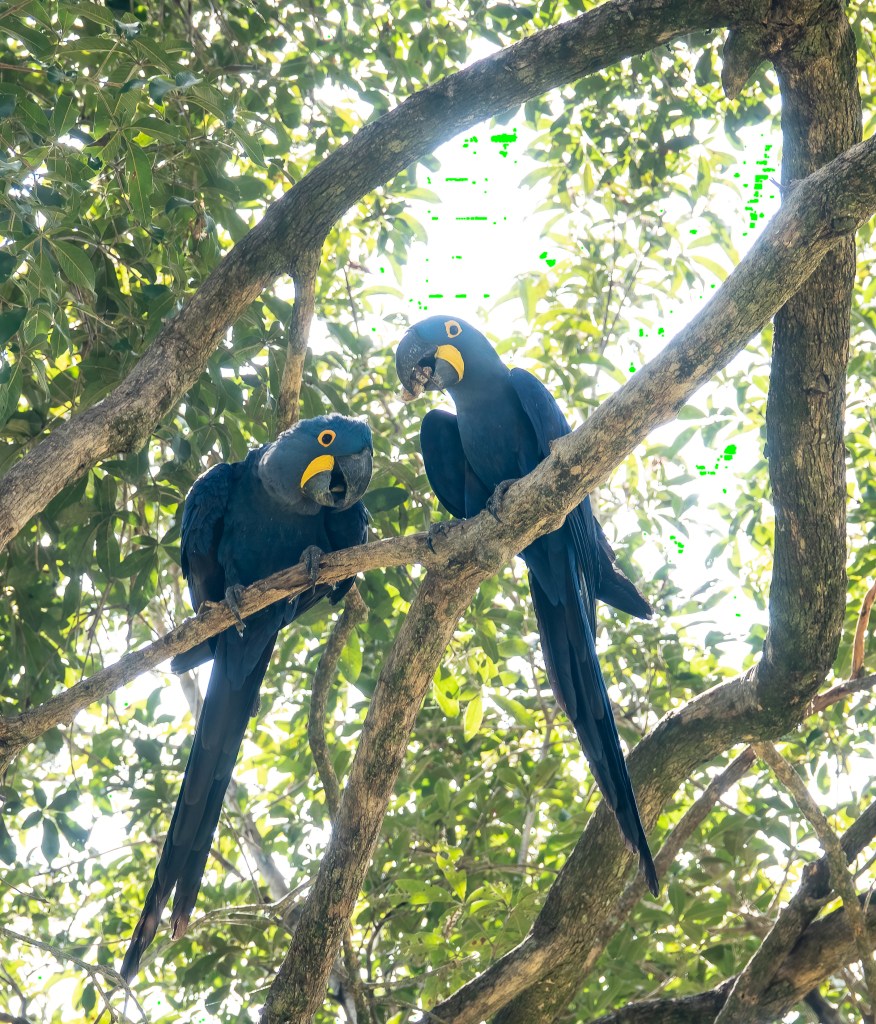
The largest flying parrot in the world, the hyacinth macaw measures 1 m (3 ft 3 in). with a wingspan of up to 1.5m. It weighs up to 1.7 kg (3 lb 12 oz). Here it is in flight.
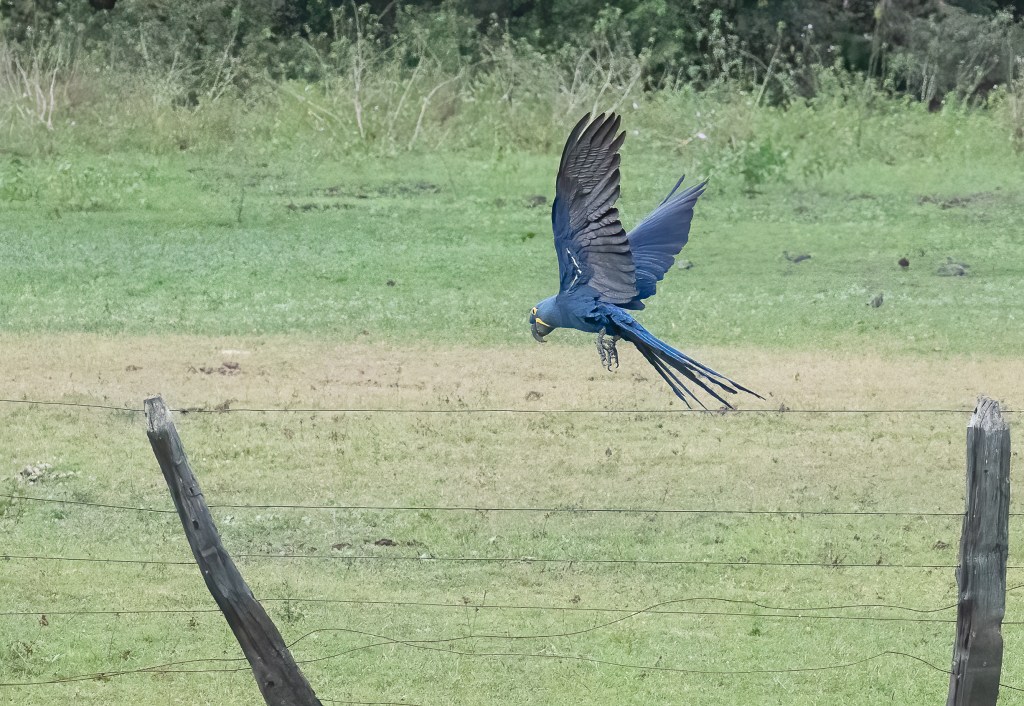
Hyacinth macaws are listed as Vulnerable by the IUCN. There are thought to be around 6500 left in the wild, 5000 of which are in the Pantanal. There are many reasons for their decline. Habitat loss and the pet trade are obvious issues. Another reason is that hyacinth macaws are picky eaters. In the Pantanal, they feed exclusively on the nuts of just two species of palm tree.
Their breeding behavior also makes them fragile. They don’t breed till they’re seven years old. The breeding cycle takes about 7 months: one month of incubation, nearly four months before they fledge, and then another two months or so of being fed by their parents. A big investment of time and energy. They rarely raise more than one chick, and they don’t breed every year.
This pair were mating high in a tree at sunset; they hang horizontally under a branch.
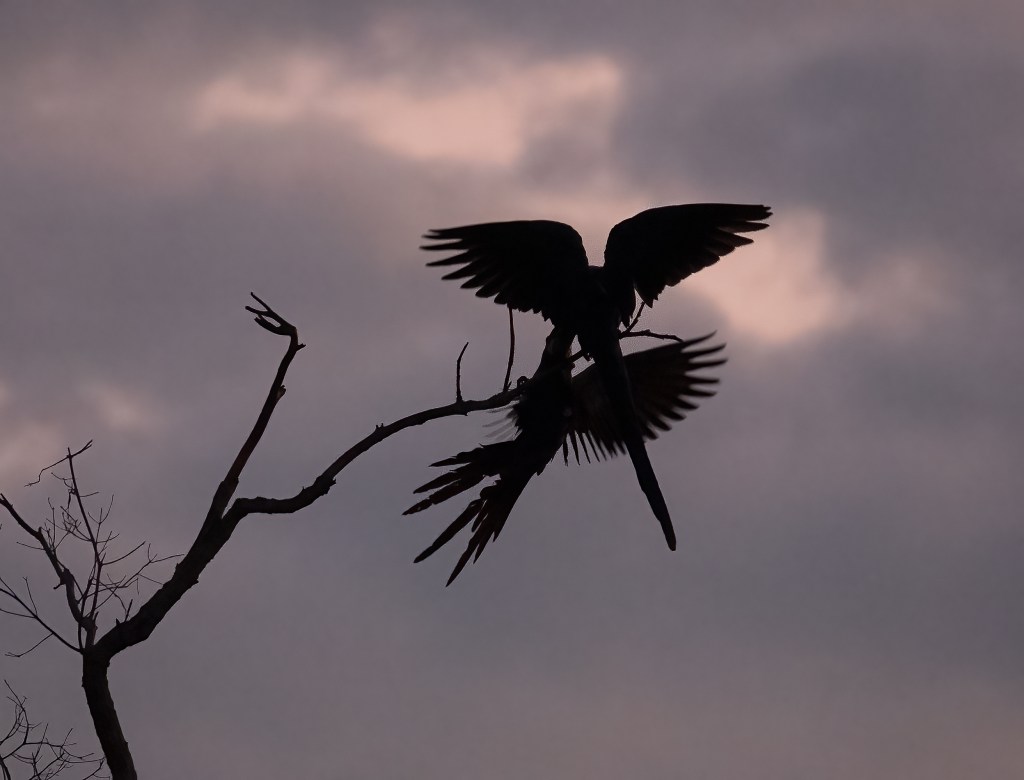
A third macaw joined them, perhaps a young hopeful male?

They nest almost entirely in large (over 60 year-old) Manduvi trees. Increasing fires threaten the young trees, so large old ones are becoming fewer and farther between, and competition for nesting sites is fierce.
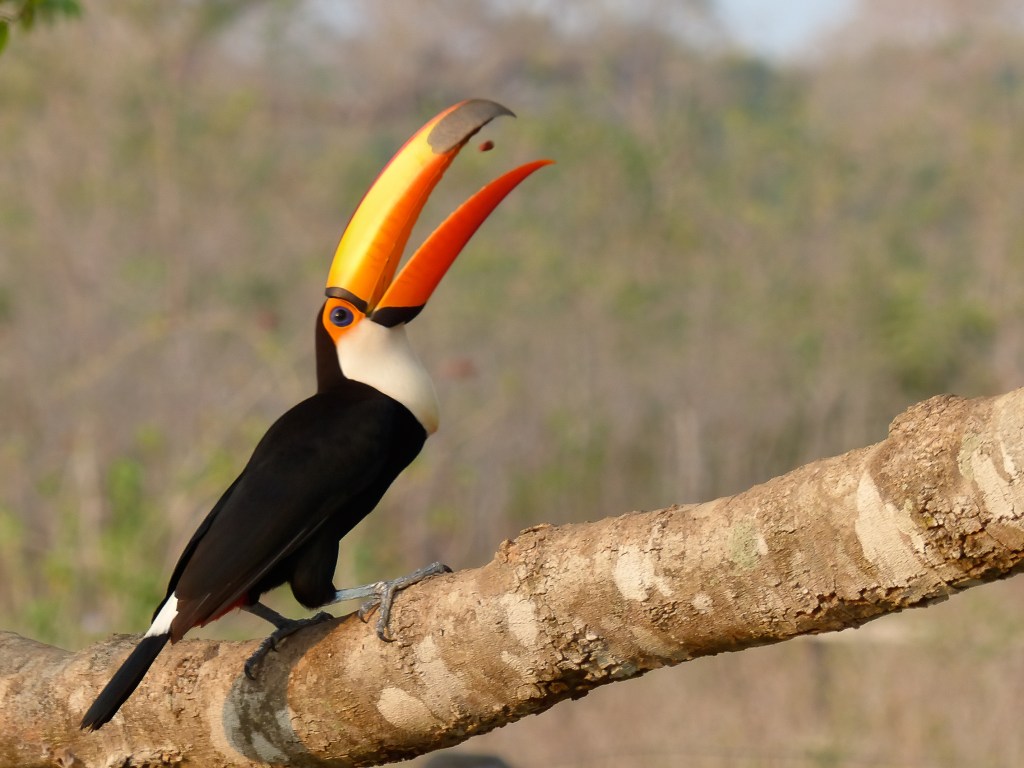
Manduvi trees rely on the Toco Toucan for their seed distribution. So to protect the macaw we must also protect the toucan (not that we really need an additional reason!)..
The Hyacinth Macaw Project monitors the natural macaw nests, and also puts up nesting boxes to provide extra nest sites. More on this next time.
 Eyes on the Wild
What a great post! What beautiful and special birds they all are.
LikeLike