Sea otters, harbor seals, and sea lions are all in my same conceptual filing system as furry water-adapted mammals. Sea-otters were right at the top of animals I had never seen in the wild, and now I have, thanks to a remarkable conservation success story.
Here is a sea otter, Enhydra lutris,

They have the densest coat of any mammal, about 500,000 hairs per square cm, and the fur trade almost exterminated them; in 1911 their population was estimated at about 2000 worldwide. After strenuous protection efforts the world population has rebounded to some 120,000, but they are still considered endangered.
The IUCN says “Between 1969 and 1972, 89 Sea Otters were translocated from Alaska .. to the west coast of Vancouver Island, British Columbia, where they established a healthy population. Sea Otter range expansion has continued and in 2008 it was documented that they have left Vancouver Island and moved into northern Queen Charlotte Strait and the adjacent British Columbia mainland coast and in some portions of the central British Columbia mainland coast. The most recent population estimate is 6,754 (Nichol et al.2015), representing around 7–8% of the global population. ”
They are the most endearing creatures, very social and famously playful:

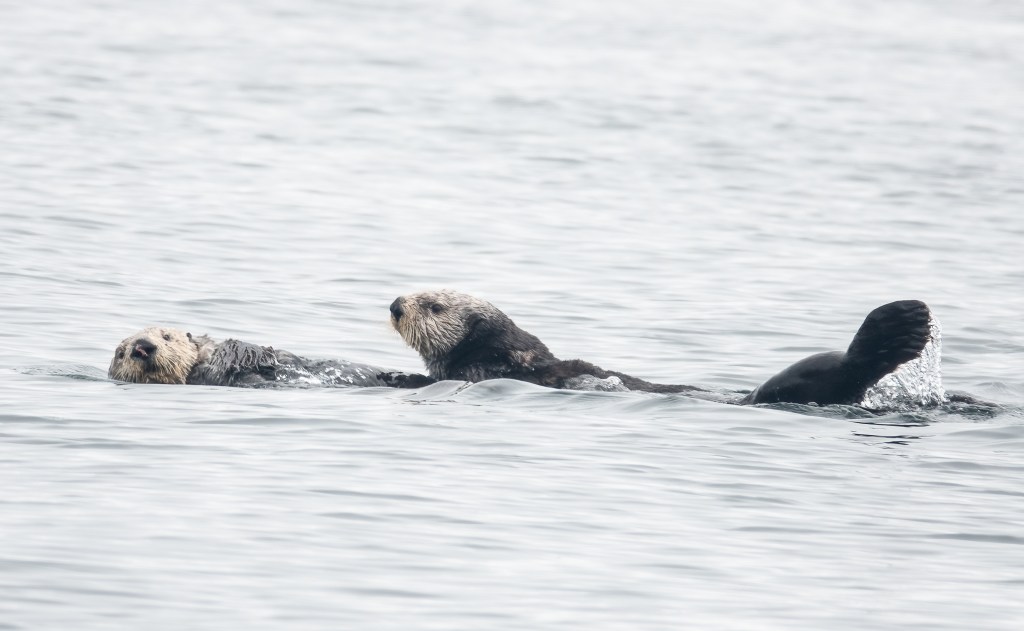

They swim just as comfortably on their back as on their front, nonchalantly corkscrewing through the water:
And when they rest, they bask on their backs, toes in the air,

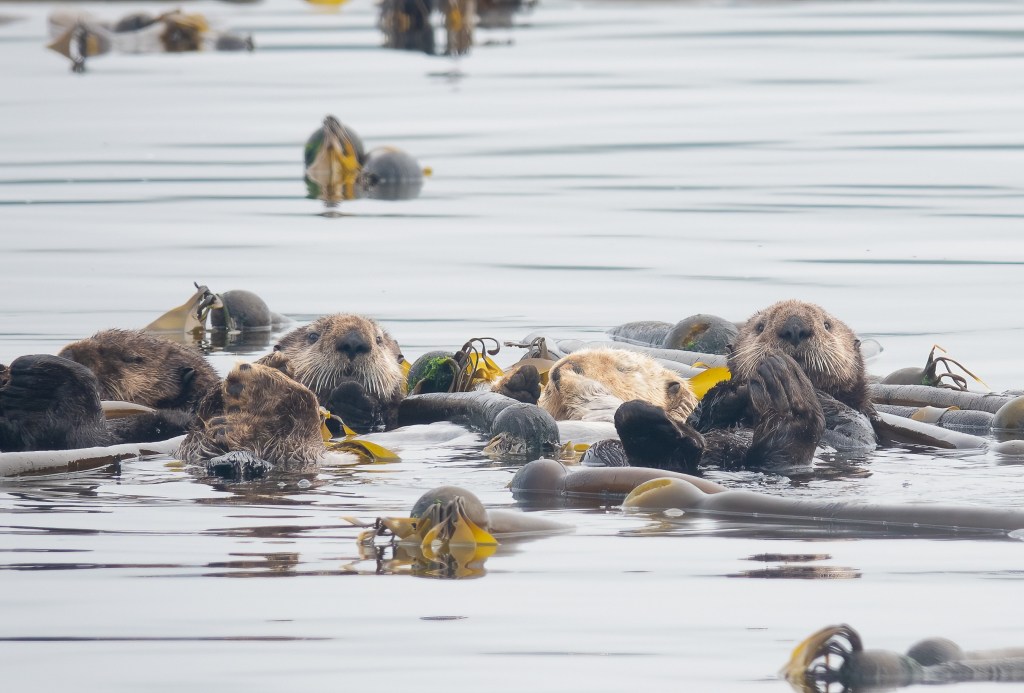
and they gather in cosy social groups, among the kelp forests that are their homes. How many can you find in this picture?
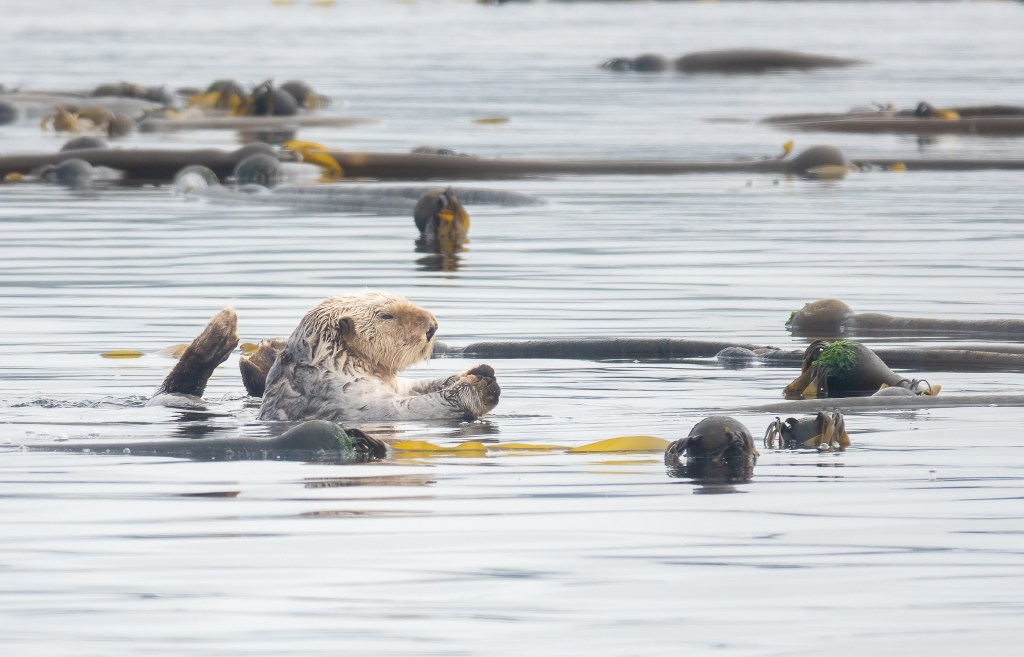
This one is feeding, I think, but I couldn’t see on what.
 Eyes on the Wild
That must have been so entertaining! What a wonderful & fulfilling trip that was. I think 4 Sea Otters in that photo. Any more surprises to share from your trip?
LikeLike
In January 1982, we watched them cracking abalones in the Pacific off Pebble Beach golf course – absolutely endearing and far more interesting than golf.
Jane
Sent from Outlook for iOShttps://aka.ms/o0ukef
LikeLike