There are animals you rarely see, for various reasons. Some are very rare or shy, some are nocturnal, some are tiny, and others are aquatic and therefore usually far away for a land-bound naturalist.
So you set up your CCTV, aka a game camera or a camera trap. The art is in knowing where to put it. In some spots, no animals might pass by for weeks at a time. But if you know your land well, you have learnt to see small signs: scat, tracks, scrapes, etc, that tell you animals come this way more often
My game cameras are run-of-the mill pieces of kit, sold to amateurs and hunters. Professionals attach a seriously good camera to a beam, and get the kind of pictures you see in Wildlife Photographer of the Year.
I start with a place where animals like to cross the stream. And sure enough, a bobcat, an animal I have still never actually seen:
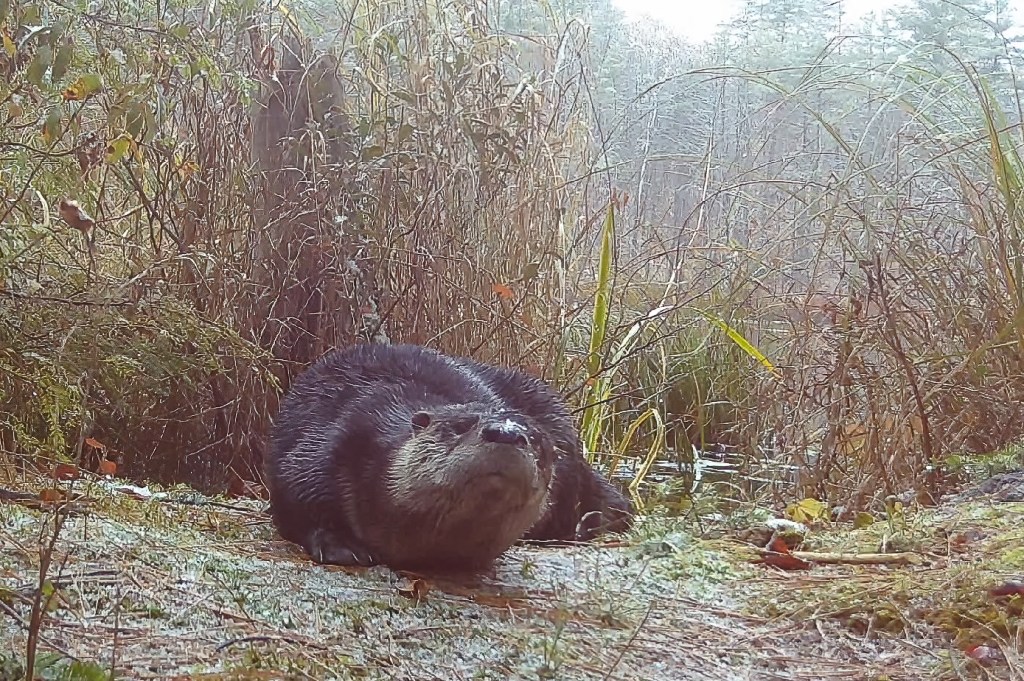
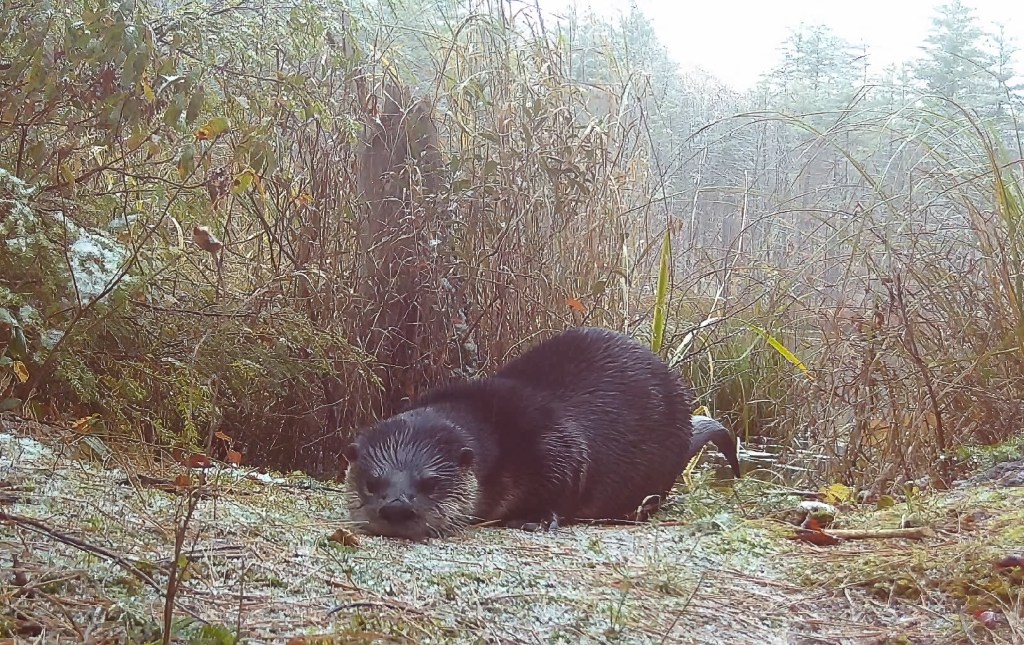
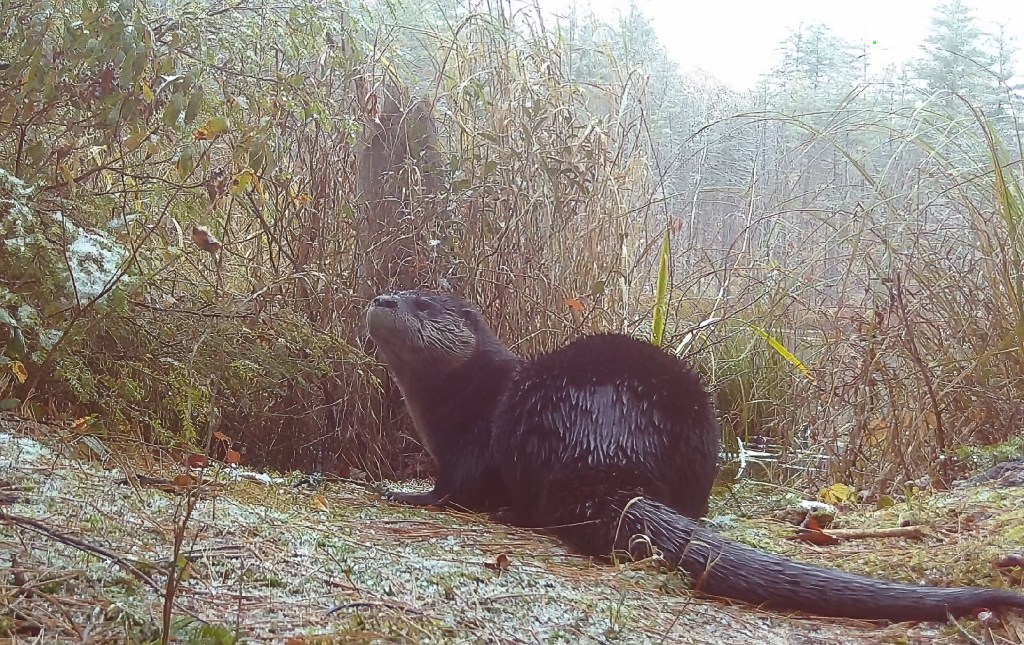
There is a place on the shore of beaver pond where I found fresh otter scat, so I put up the camera. Here is a selection of what I captured First , an otter, on three different days.
Second, a beaver (at night of course) fetching a hemlock branch from a tree he had cut down earlier and dragging it off to the pond:
And the beaver giving itself a thorough face and bib grooming:
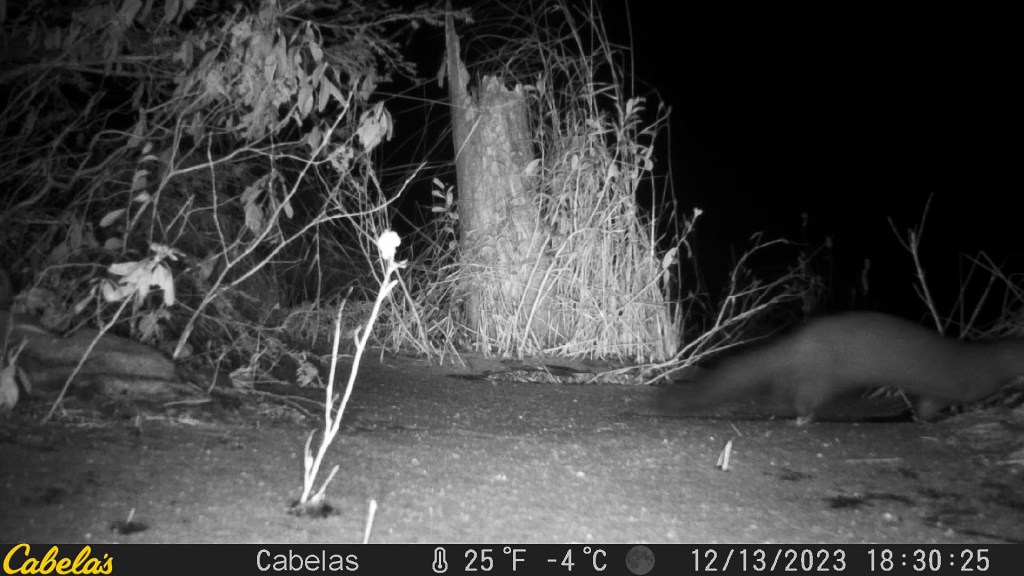
Third, a mink (or the rear section of one!):
And last but not least, Robert Burns’ “Wee, sleeket, cowran, tim’rous beastie”, a mouse:
It’s not the same as seeing the animals for myself, but nonetheless it feels good to know I live and walk amongst them.
 Eyes on the Wild
What fun to peek into the lives of animals!
LikeLike
I’m in love with the otter!
LikeLike