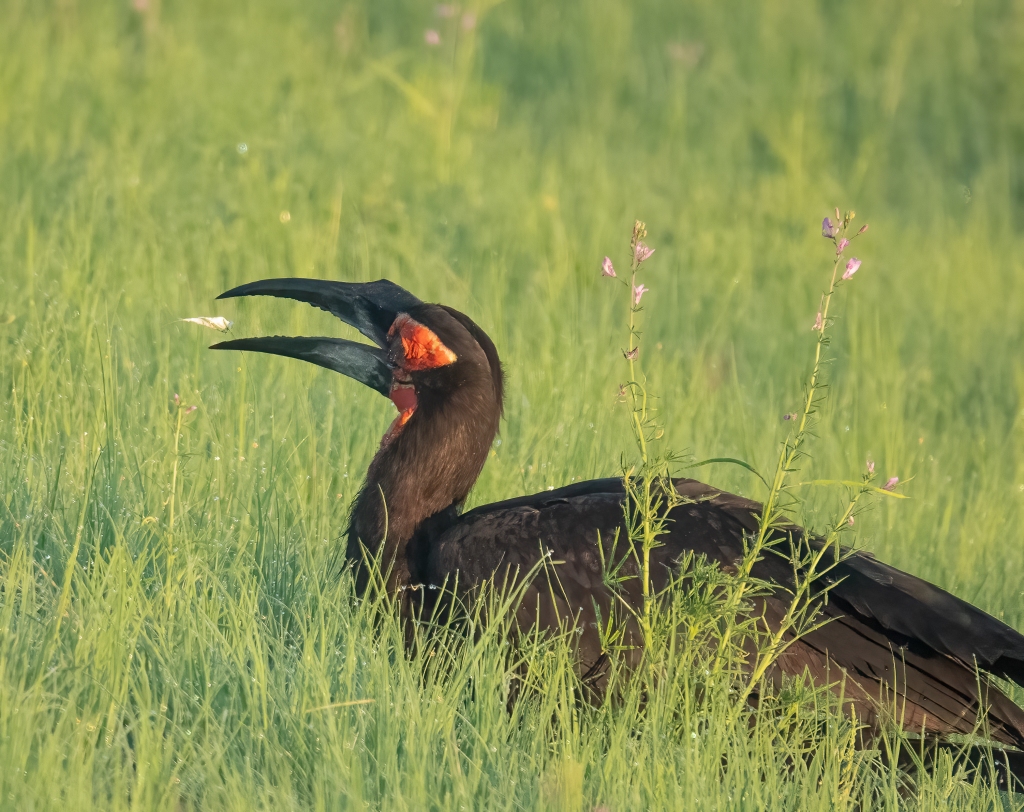
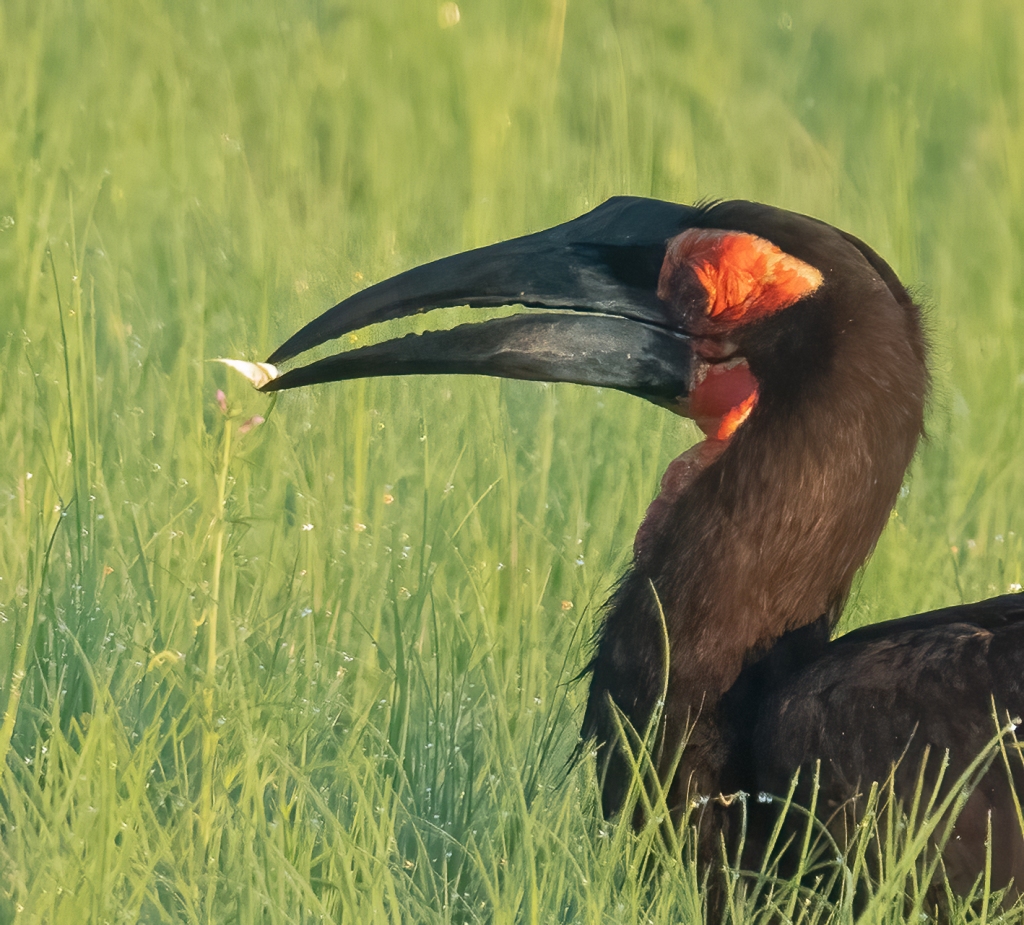
This time, they were eating much much tinier prey, small origami cocoons containing the grubs of some insect. To swallow these, they tossed them the air, just like toucans do. Those big bills don’t always make life easy.
Here is the tasty morsel:
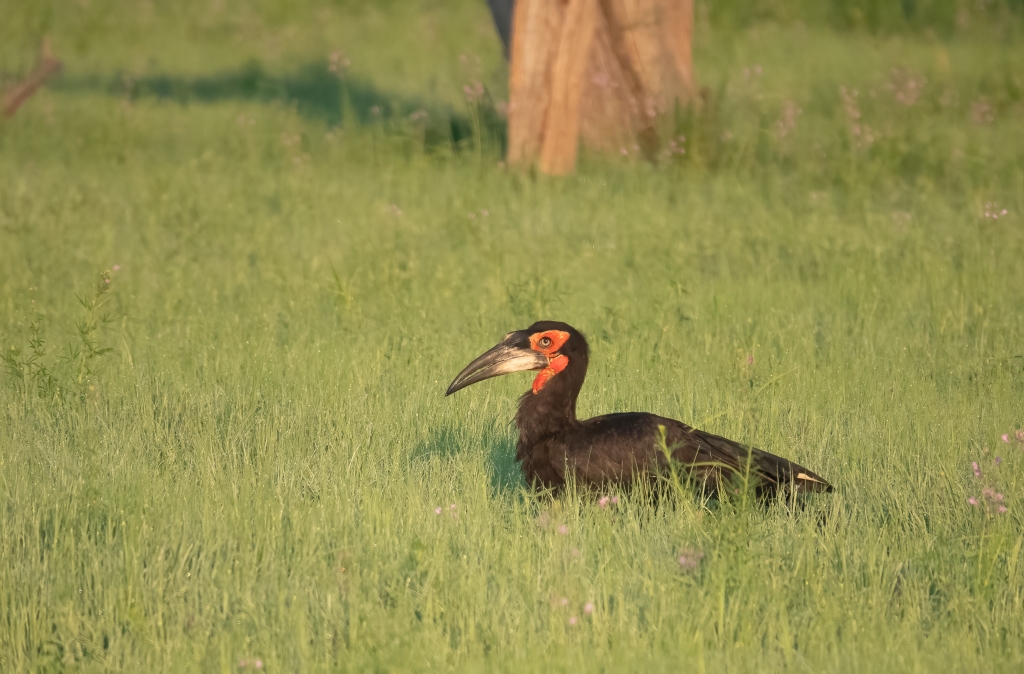
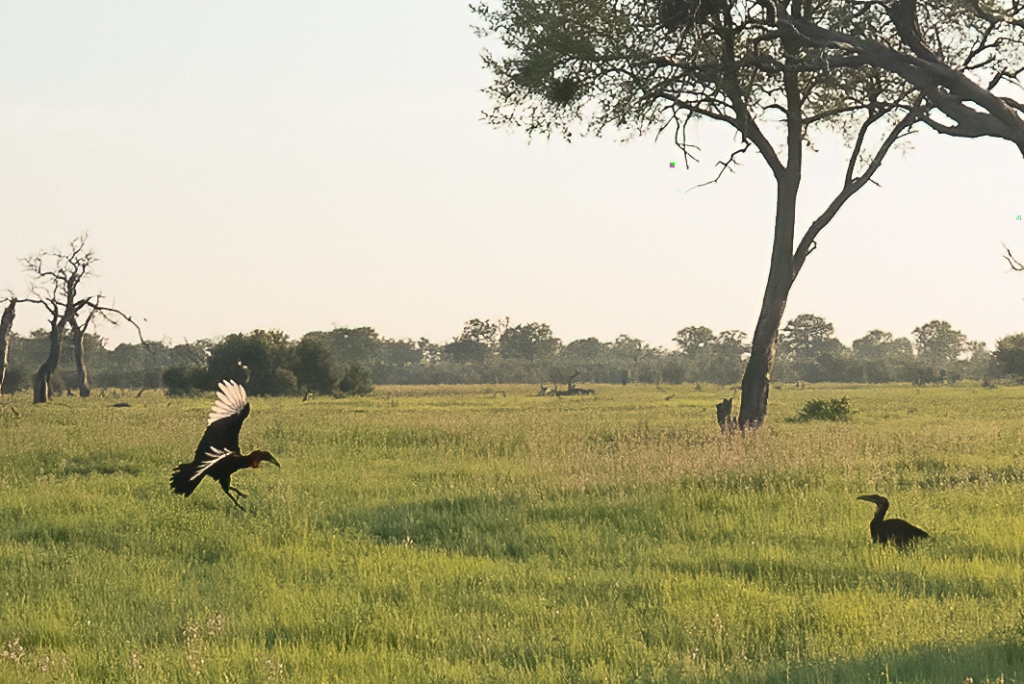
We were watching a nesting pair. This is the male. The folds of bare skin under his beak are usually folded up:
He flew to join his mate, his previously concealed white wing feathers signaling his imminent arrival:
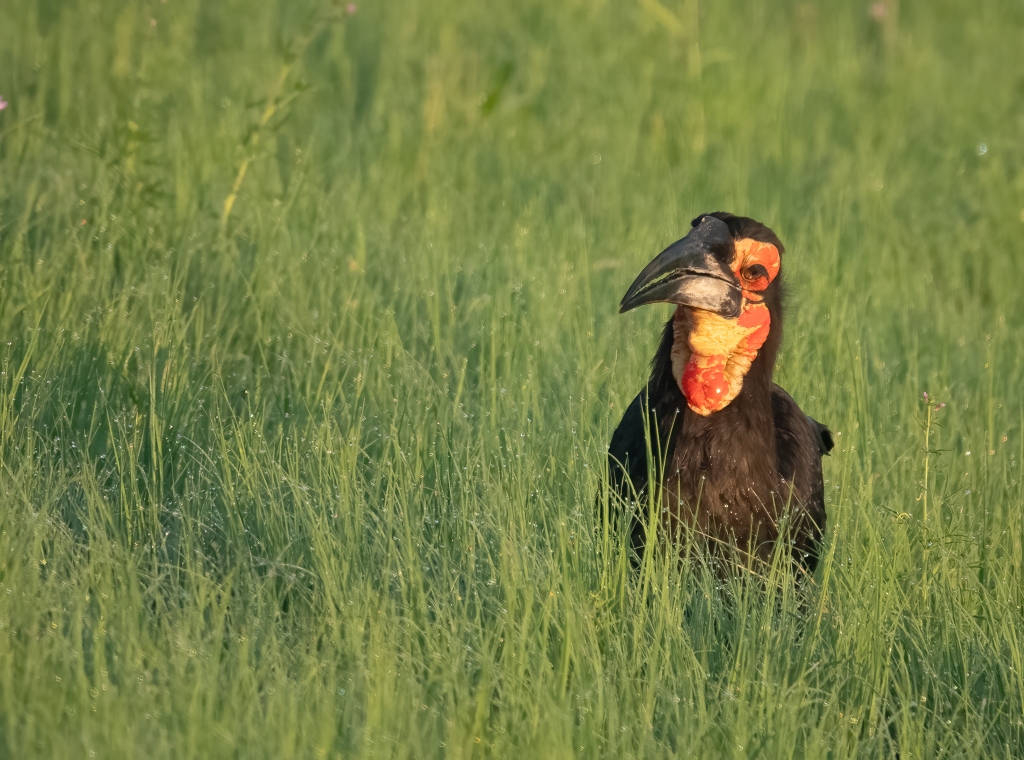
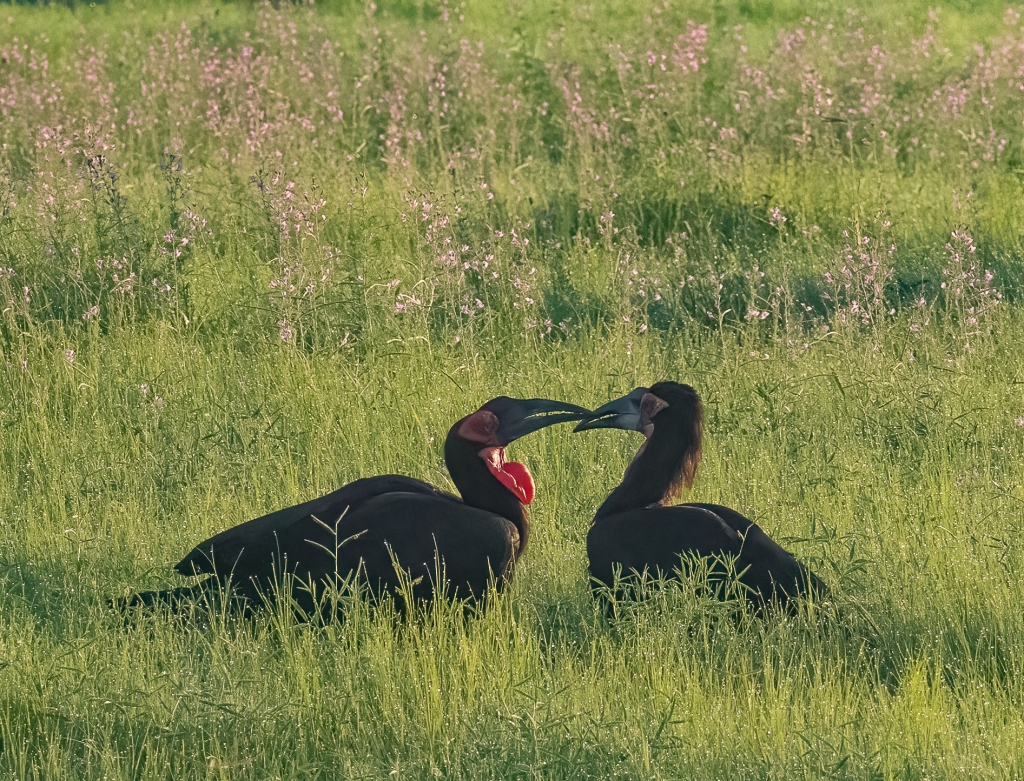
And as they greeted each other lovingly, in front of a Hallmark-worthy wildflower backdrop, those throaty skin folds swelled to form a perfect Valentine:
PS Here is one of those wildflowers, known as a Pretty Lady, or much less romantically a Hairy Spindlepod, Cleome hirta.
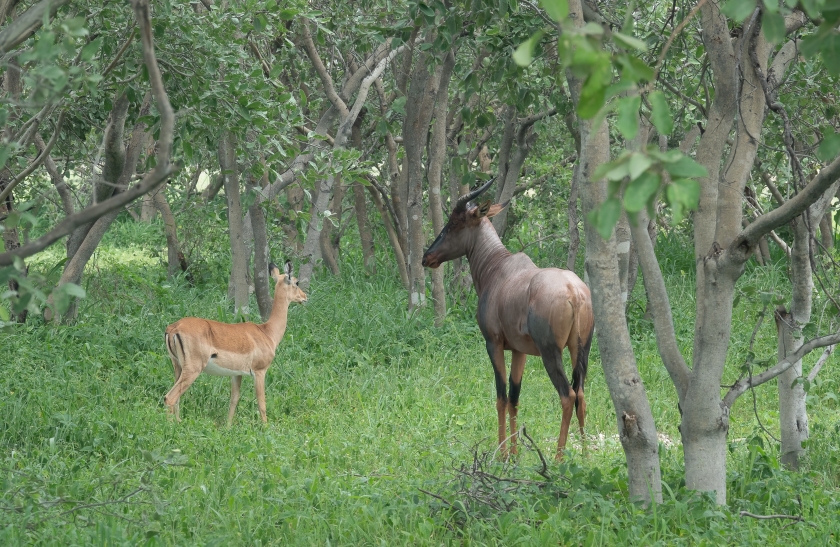
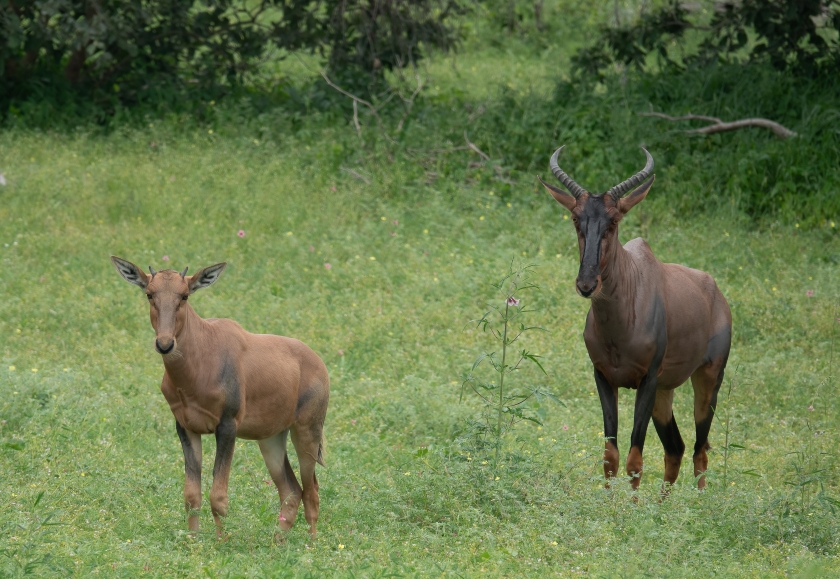
I am always delighted to discover an animal that I have not only never seen before, but never even heard of, and indeed can barely pronounce. Such a one was the Common Tsessebe, Damaliscus lunatus lunatus. These Eureka moments remind you that no matter how old you get, there is still a vast undiscovered world out there to learn about.
First, there was a single male, amongst a group of impala.
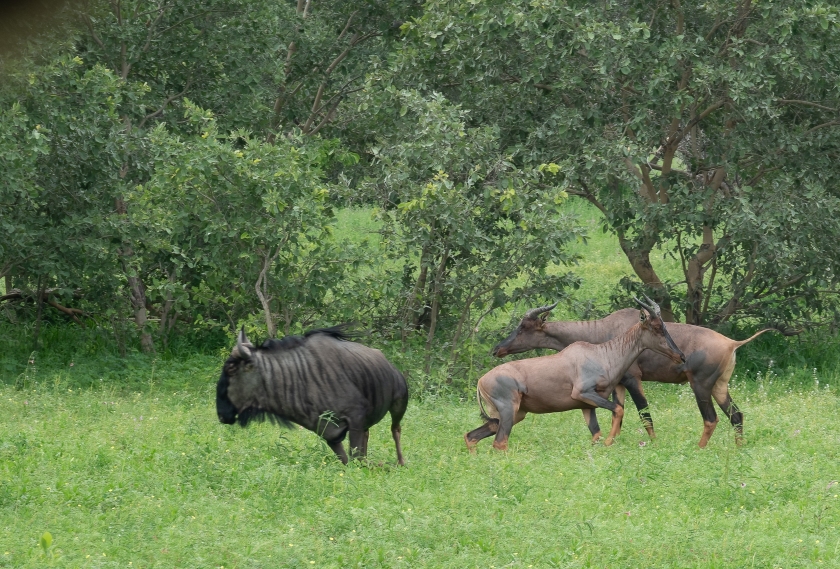
Then, there was a group of females, with a wildebeest.
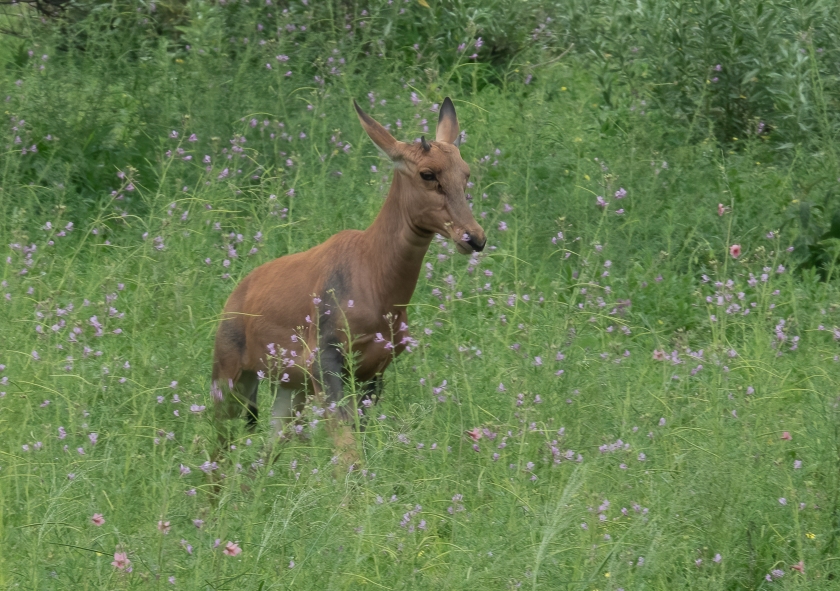
And they had little ones
with tiny horns
The tsessebe is a large strong antelope, the fastest on the planet. It can top 90kmh. I thought to myself “It looks rather like a topi”, and indeed they are closely related, but the horns are differently shaped.
We read a great deal about the huge declines in insect populations worldwide, so I am always thrilled to discover a new bug. Most of these I have never seen before: always something new under the sun.
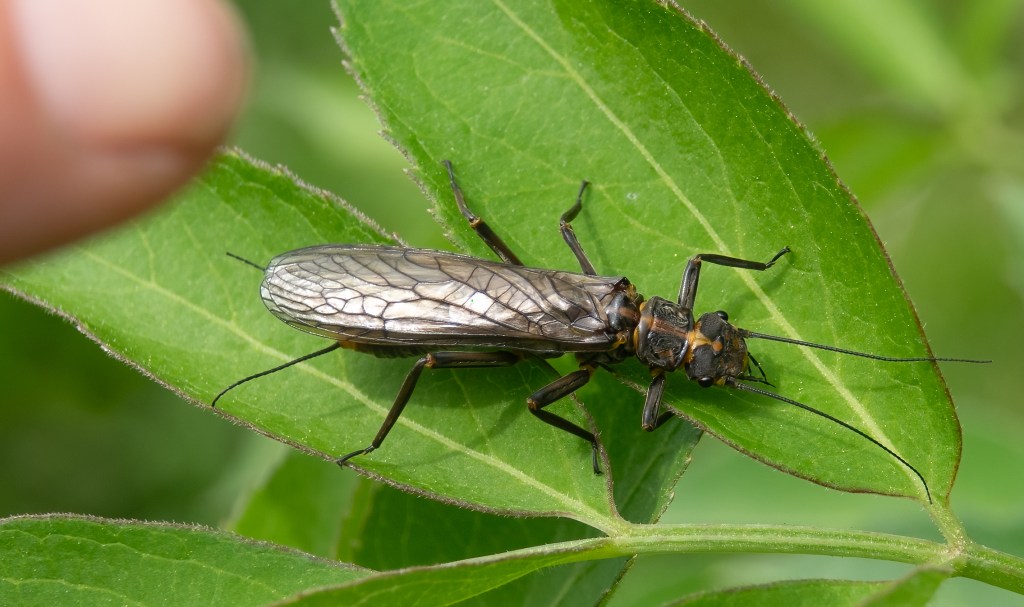
Look at this enormous Stonefly, about 1 1/2 inches long; my finger is there for scale. Its belly was bright orange.
I tried to get an accurate ID, and found, rather excitingly, a photograph of what looks like the same species, labelled by Bugguide as “unknown to science”. I’ve uploaded my photo and am waiting with bated breath for some entomologist to name it after me.
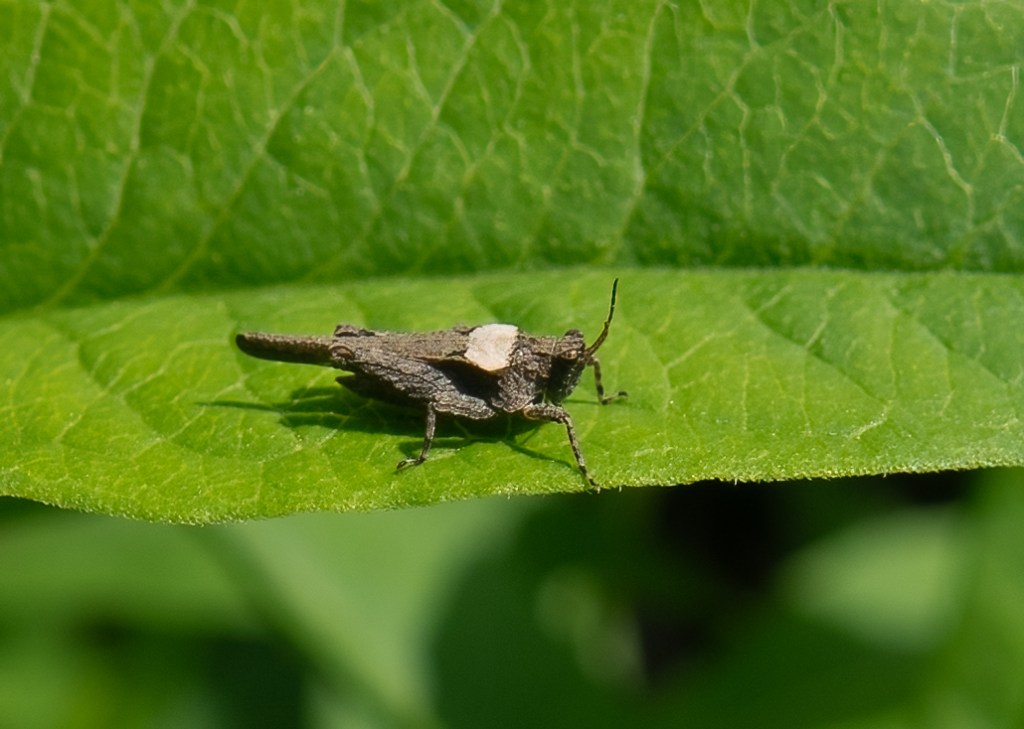
In contrast, here is one of the world’s tiniest grasshoppers, at about 1/4″ long. It rejoices in the modest name of Obscure Pygmy Grasshopper, Tetrix arenosa, in contrast to all those more bombastic Famous Giant Grasshoppers out there. It took some work to ID it, ably assisted by Brandon Woo of Texas A&M.
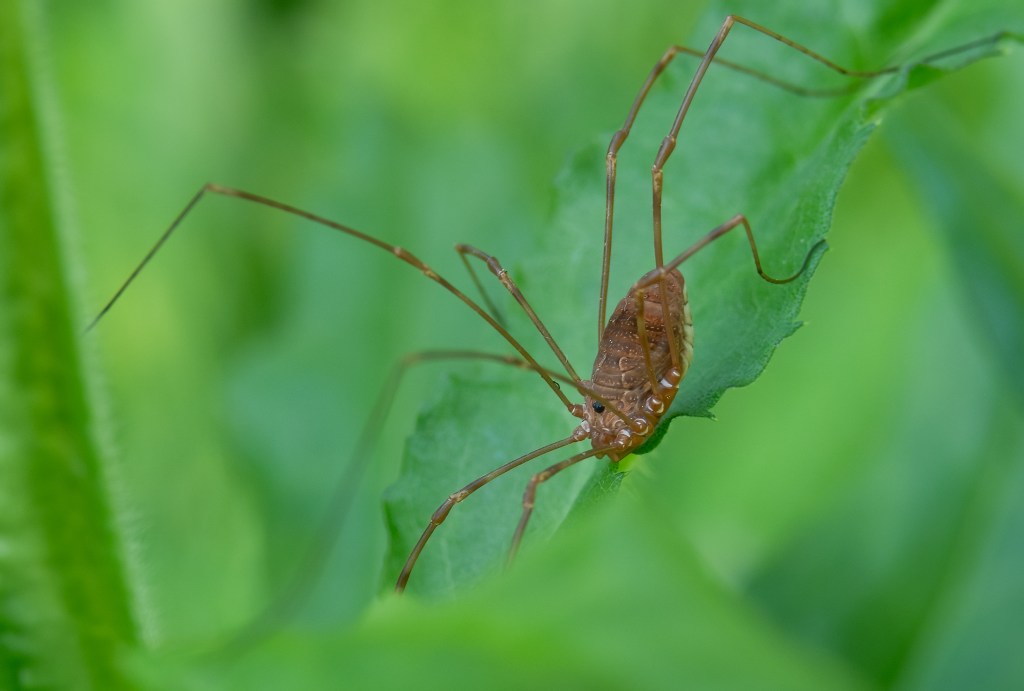
When I was a child, I had an irrational fear of Daddy Longlegs, not strictly insects since they’re eight-legged arachnids, like spiders. Having long since put aside childish things, I now find them fascinating. More properly called harvestmen, in close up they are intricately put together.
This one is, I think, Leiobunum ventricosum. Unlike spiders, they do not produce silk, have a single pair of eyes, and the thorax and abdomen are almost fused into a single body part. The second pair of legs are extra long and double as antennae; you can see it reaching out with one, exploring its world.
I’ll end with two species of damselfly, both bluets, on the edge of my beaver pond. Although these are not new to me, they are beautiful, and remind me that summer is upon us. These four Azure Bluets, Enallagma aspersum, have all recently emerged, and their wings are spread while they harden .
Right next to them was a pair of amorous Vernal Bluets, Enallagma vernale, the male distinguished from the Azure Bluets by having most of its abdomen blue rather than black. The rather drab female attempting to get into the appropriate position has a greenish head and beige body.
I should note that the male is not trying to strangle his bride. During mating he holds her still while she raises her abdomen to receive his sperm.
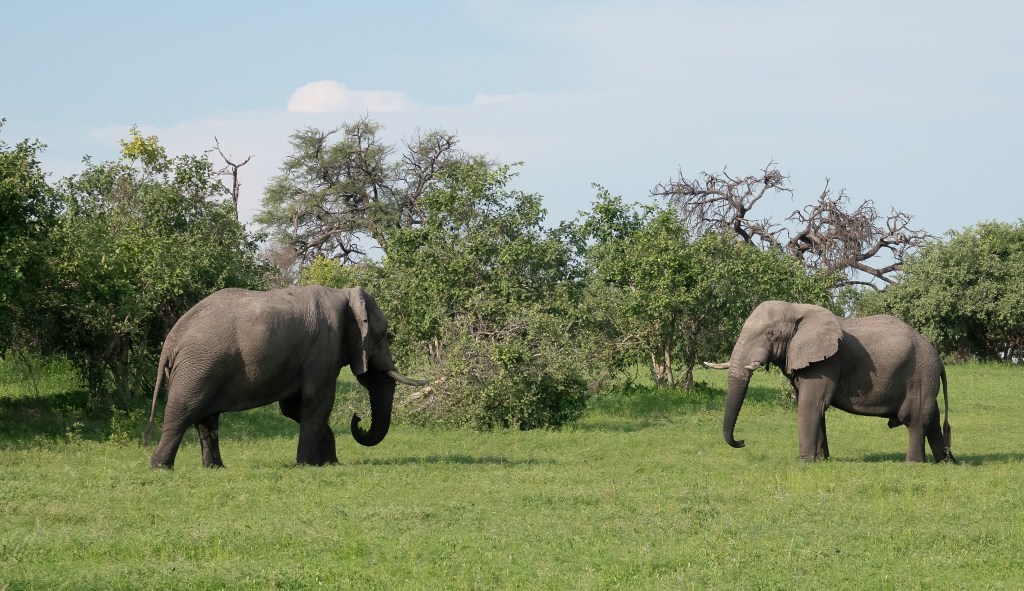
Two solitary elderly male elephants approached each other from opposite directions.
This short video shows what happened; it is briefly silent at the start, but make sure your sound is on high:
The trunk greeting, in which they smell each others’ mouths, is common. Our guide said they were likely to be old friends reuniting, and would now hang out together for a while. Although he suggested that the rumbling sounds you hear are deliberate tummy rumbles/burps, the scientific literature disagrees, and says they are laryngeal in origin (yellow below), mediated via very large resonating cavities including the trunk, in light blue below (from Beeck et al 2022).
Stoeger et al 2012 show that in bonding situations, when the animals are close to each other like the two we watched, the rumbles are emitted orally, not nasally.
As for me, I’m off to lunch with old friends from high school. In this bonding context, any nasal snorting sounds will be caused by laughter.




 Eyes on the Wild