The IUCN Endangered Black-crowned Central American squirrel monkey (Saimiri oerstedii oerstedii) oozes charm.
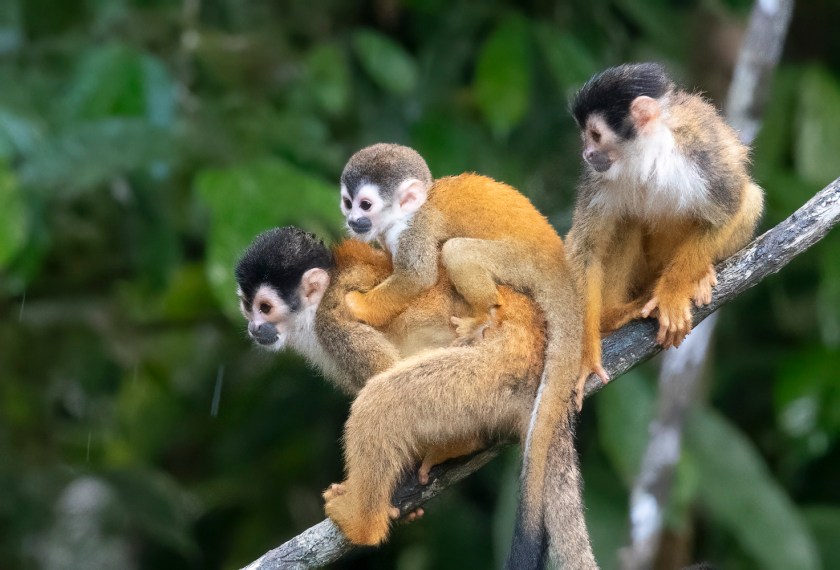
It is small, weighing 24-30 oz, with an 11in long body, to which is attached a 15in tail. The tail is not prehensile, but helps with balance.
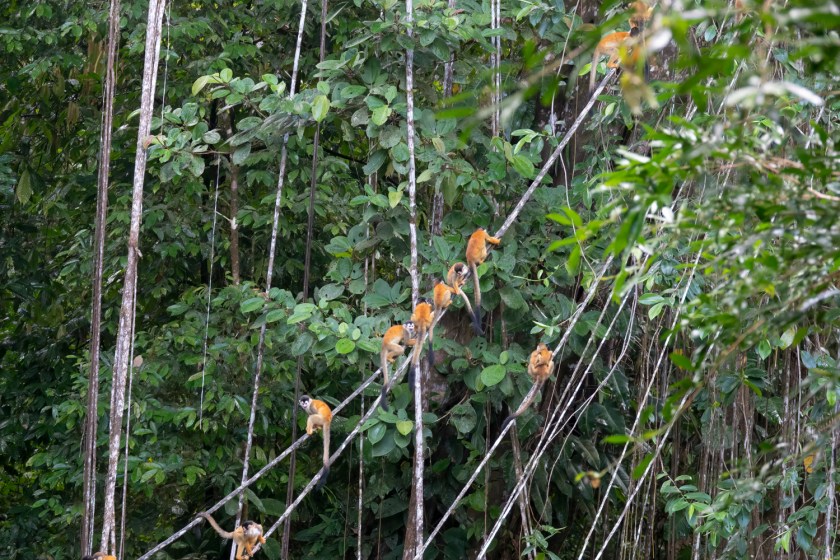
They are very social, living in egalitarian groups of 20-75. The females have no hierarchy, and the males only form a dominance hierarchy during the mating season. They live high in the canopy, moving and feeding in the daytime, and returning to a favorite roost for the night. Our lodge, in the Corcovado National Park on the Osa Peninsula on the Pacific coast of Costa Rica, had put out fruit for them, so down they came from the canopy, in full view of the bar:
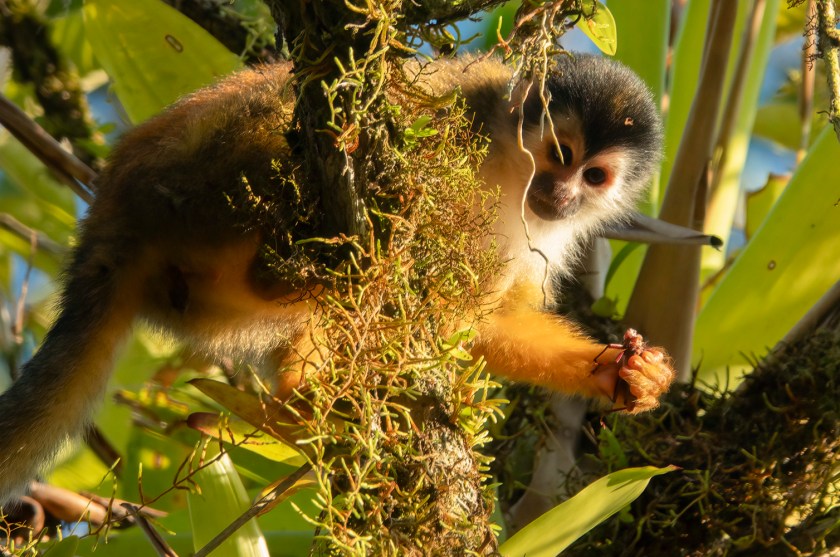
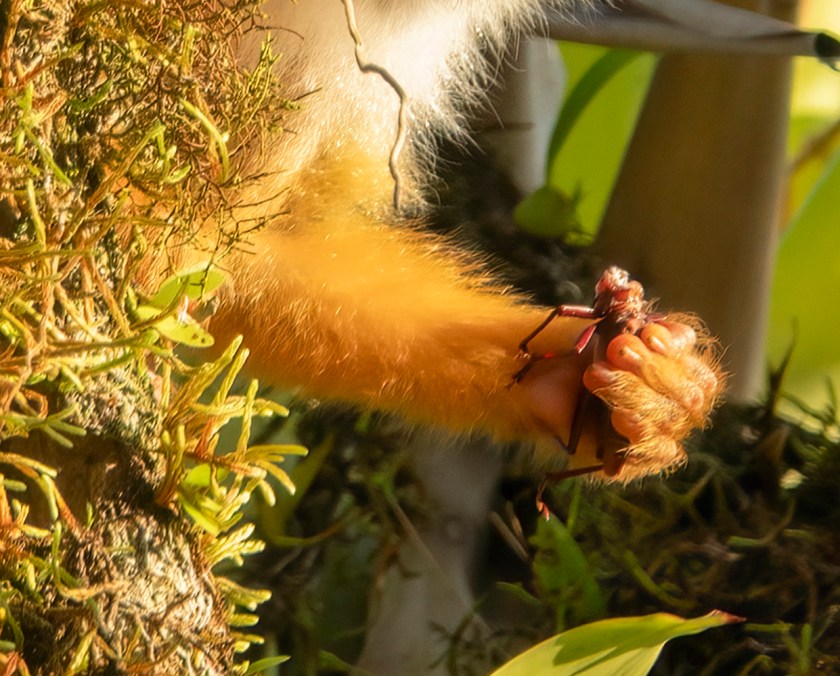
Their food is often fruit, but in fact they are omnivorous. This one has found a large insect or perhaps a spider, an important source of protein, but also apparently delicious:
A number of bird species follow the monkey troupes, because they flush out insects that the birds then snap up.
Squirrel monkey babies are all born in a single week in February or March, so these were only a month or so old. They stay with their mothers for about a year, holding tight to their backs:
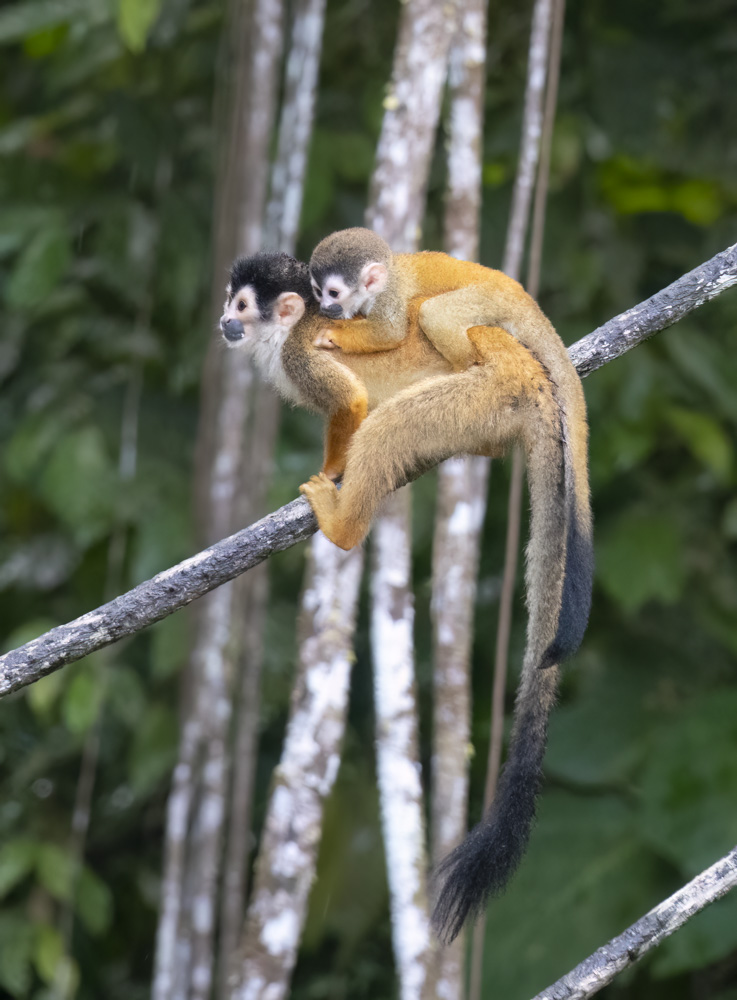
The males may stay with the group for life: it is the sexually mature females who leave for a new group.
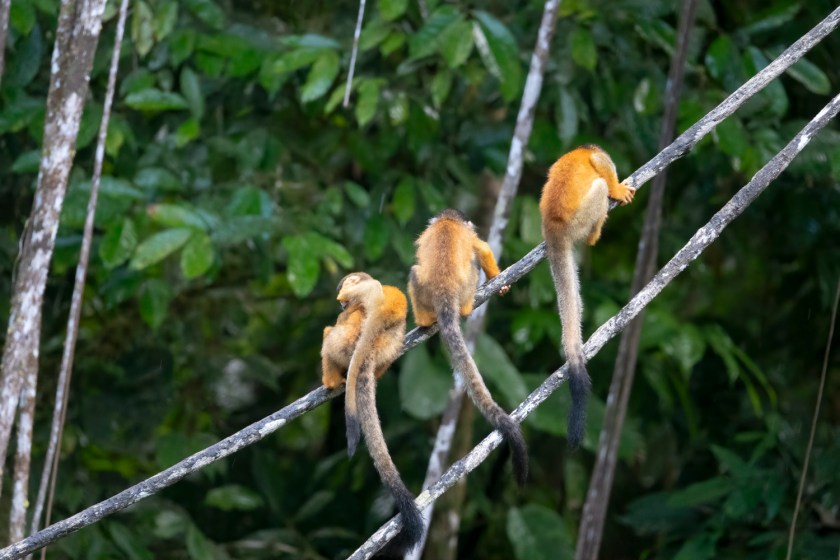
They are a joy to watch. They navigate traffic jams on the cables with ease, overtaking with aplomb:
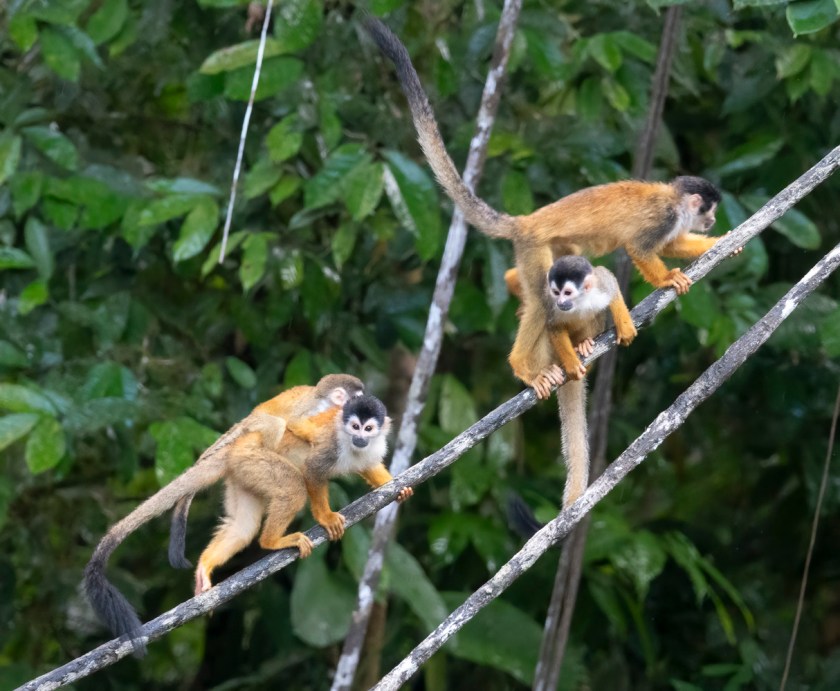
undertaking if necessary.
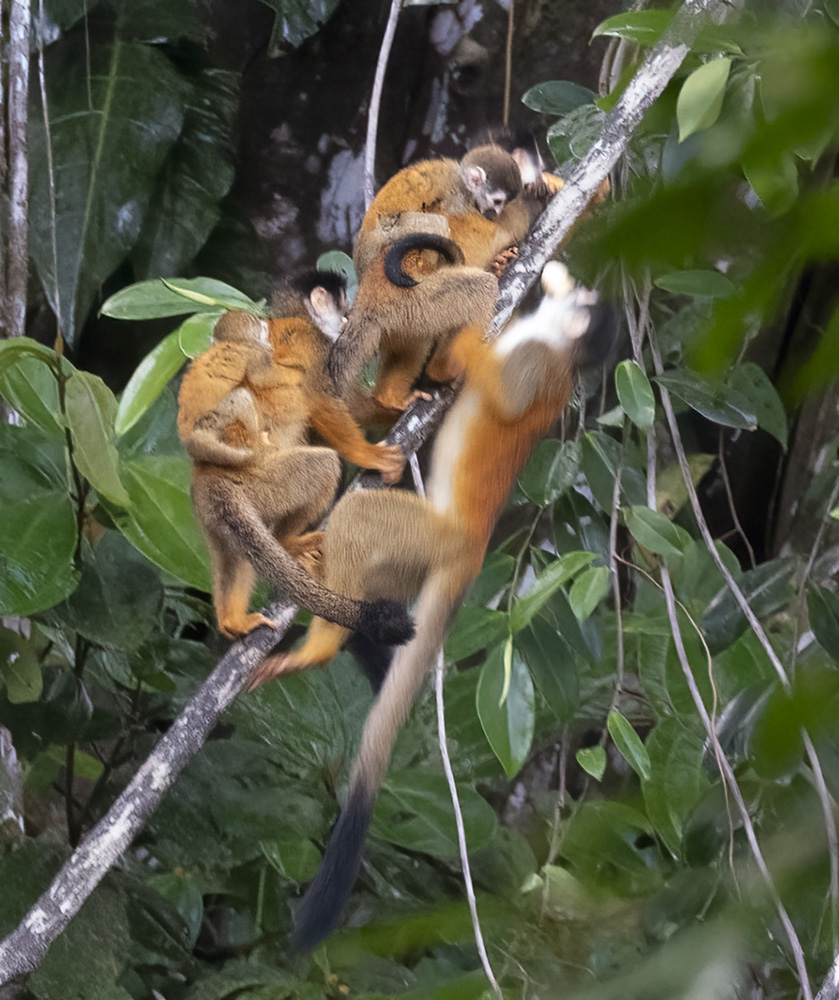
Watch this pair interacting: the left-hand one grabs the other one’s tail and plays with it:
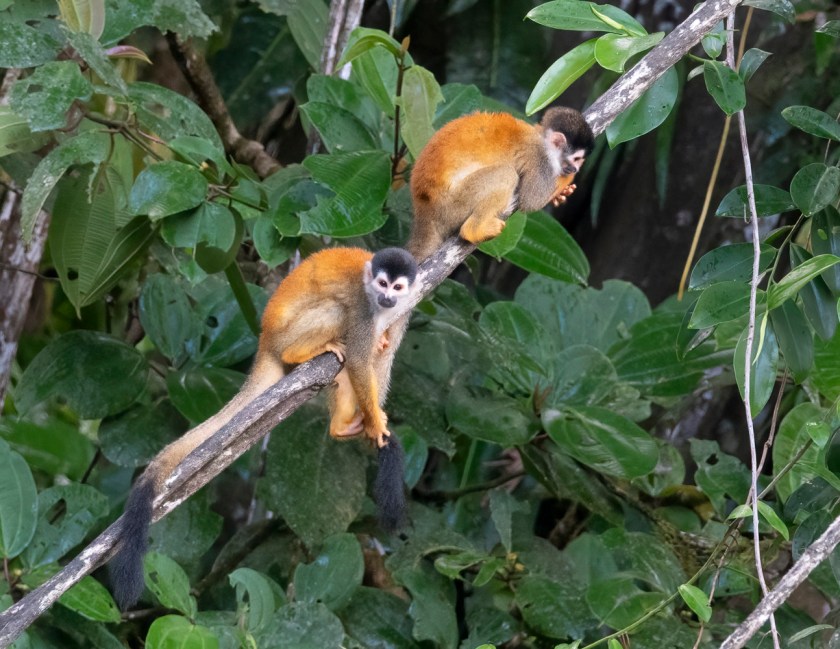
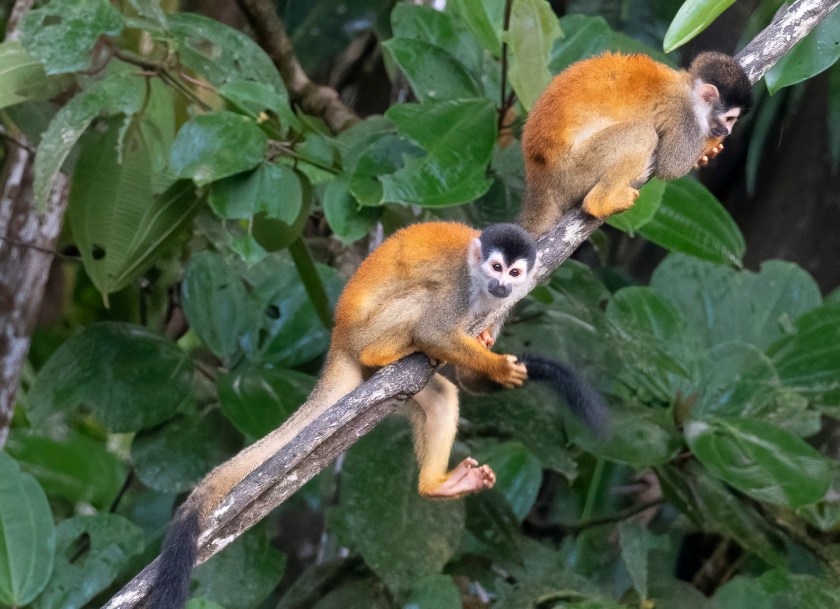
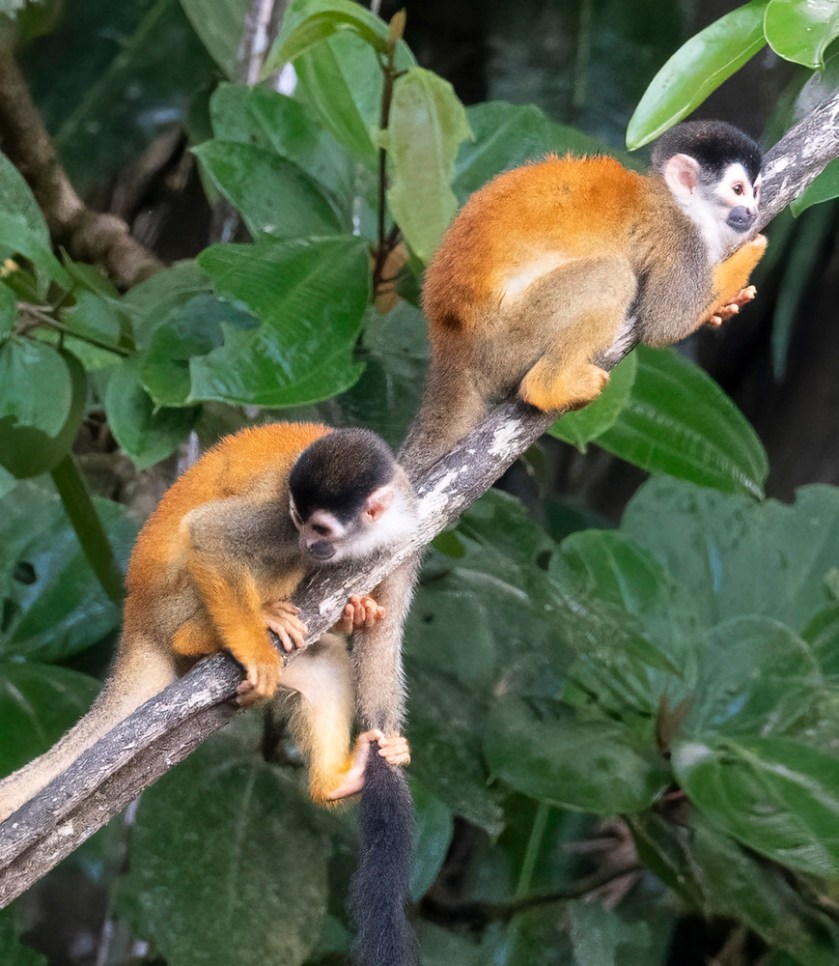
then rapturously accepts grooming from its friend.
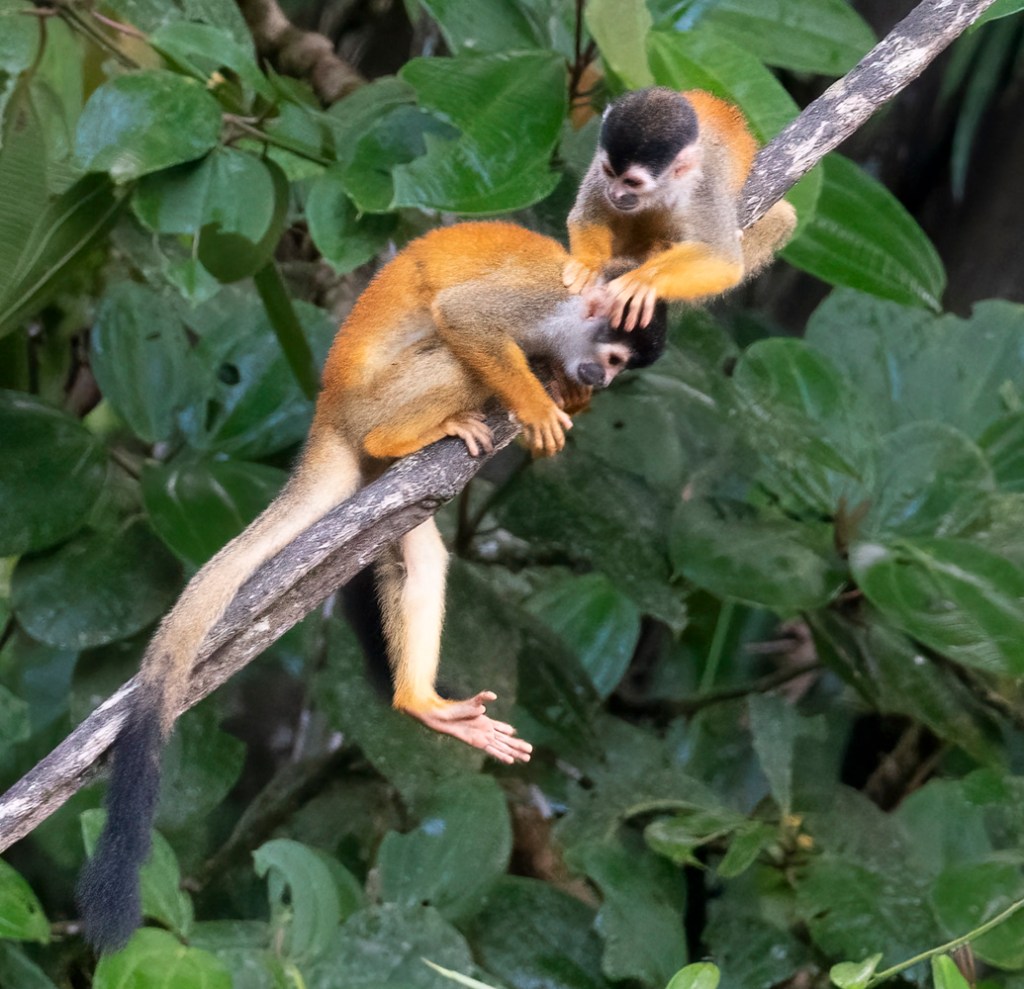
As you can see above, the hind foot is an interesting shape. It turns out that squirrel monkeys have semi-opposable thumbs, as you can see below. Not enough for a precision grip (unlike capuchins), but highly functional nonetheless:
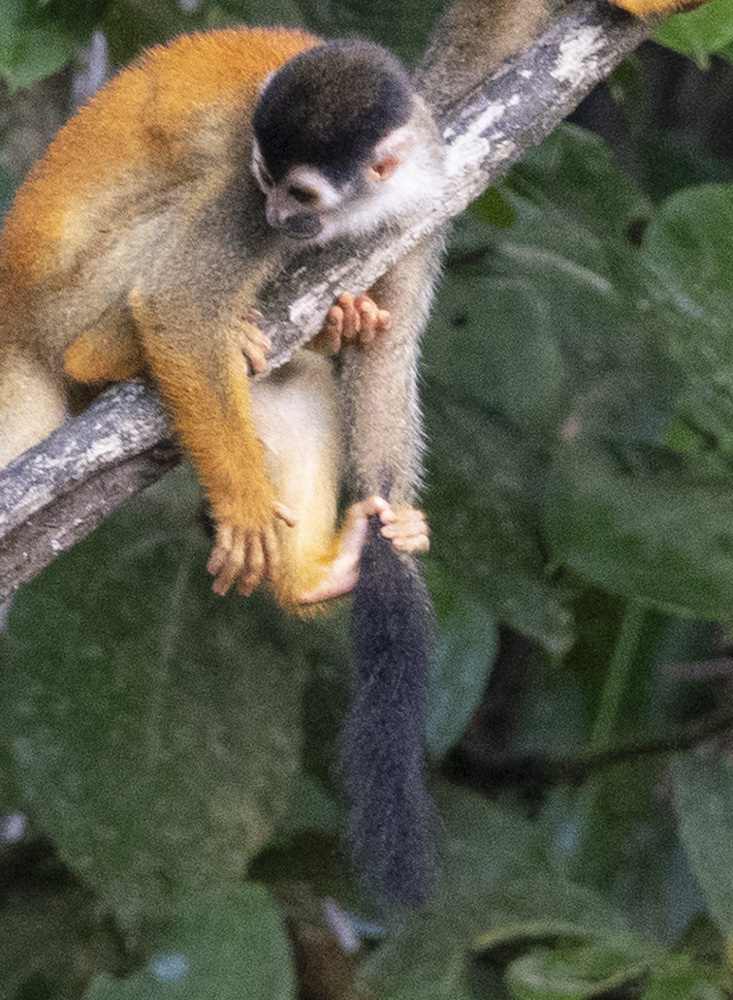
PS My title is inspired by the 2023 finding that having an opposable thumb gives squirrel monkeys the cognitive capacity to be fooled by certain manual magic tricks, just like humans! Surprise!
PPS Interestingly, squirrel monkeys have the largest brains of all primates relative to their body size.


It’s very easy to imagine that watching them, would be highly entertaining…wonderful photos!
LikeLike
I always learn so much from your posts and pictures. Interesting species!
LikeLike
Such interesting sort of scary faces!
LikeLike
It’s good to know who our up-and-coming cognitive rivals are. We should keep an eye on them in case their thumbs become fully opposable.
LikeLike