Guanacos are very endearing animals. About 43″ high at the shoulder, and about 60″ to the top of the head, only a tiny bit shorter than me. This one looked me right in the eye:
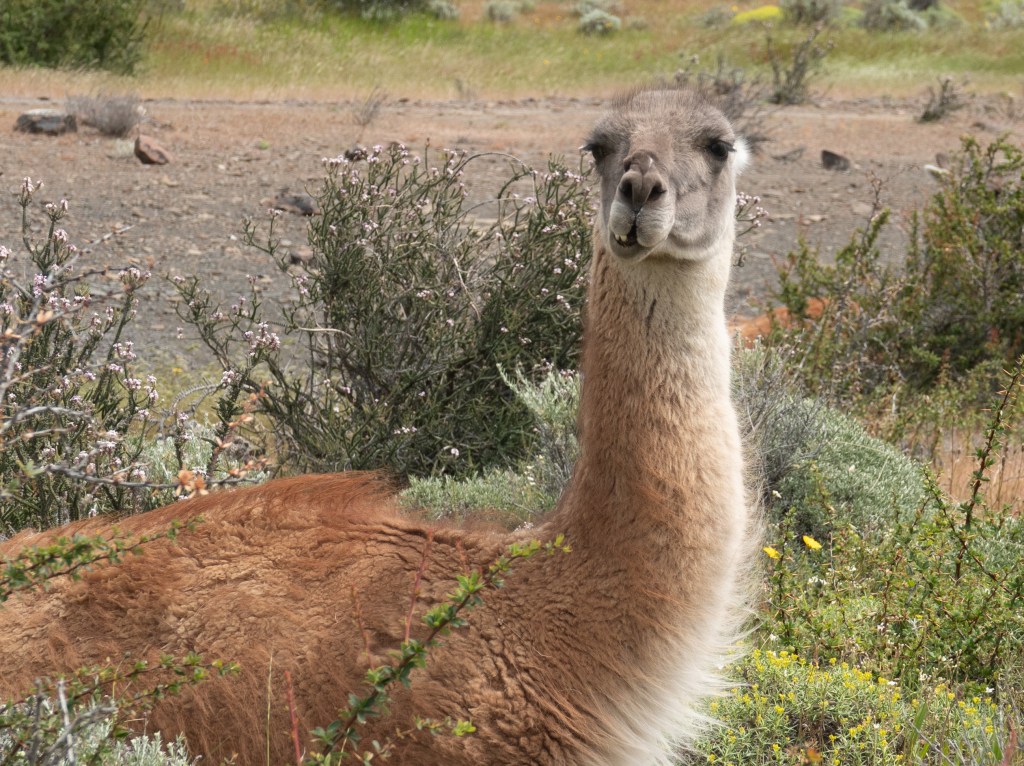
They are related to vicuñas, in the camelid family. Llamas and alpacas are the domesticated versions of guanacos and vicuñas respectively, so you might say that a guanaco is to a llama what a wolf is to a dog! In Chilean Patagonia, there are an estimated 160,000 guanaco, and they are considered of Least Concern, but before the Europeans came there were probably 20-50 million of them in the larger region. They are a major food for the pumas.
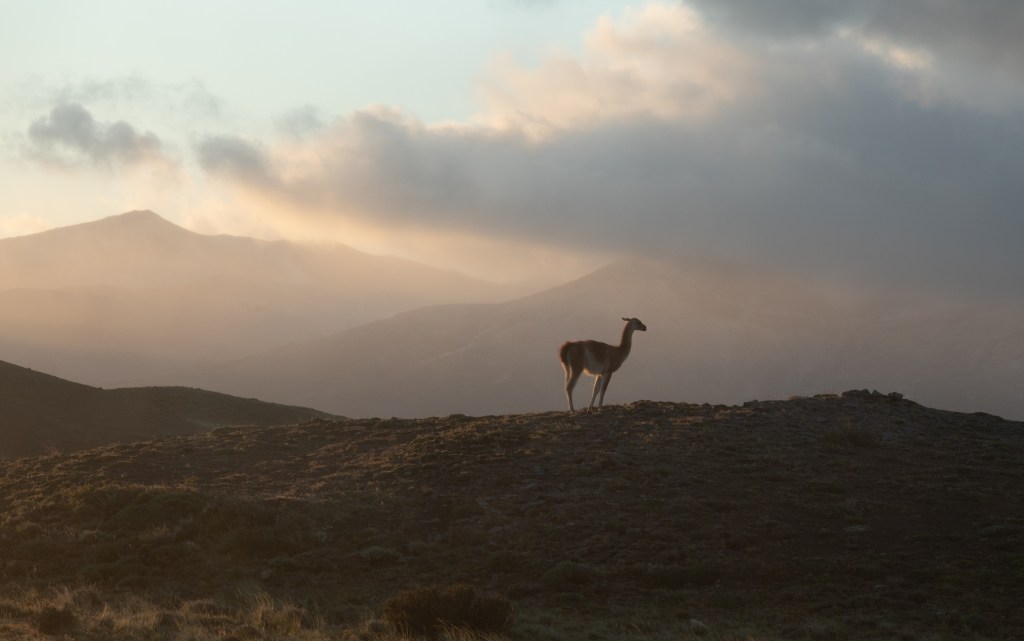
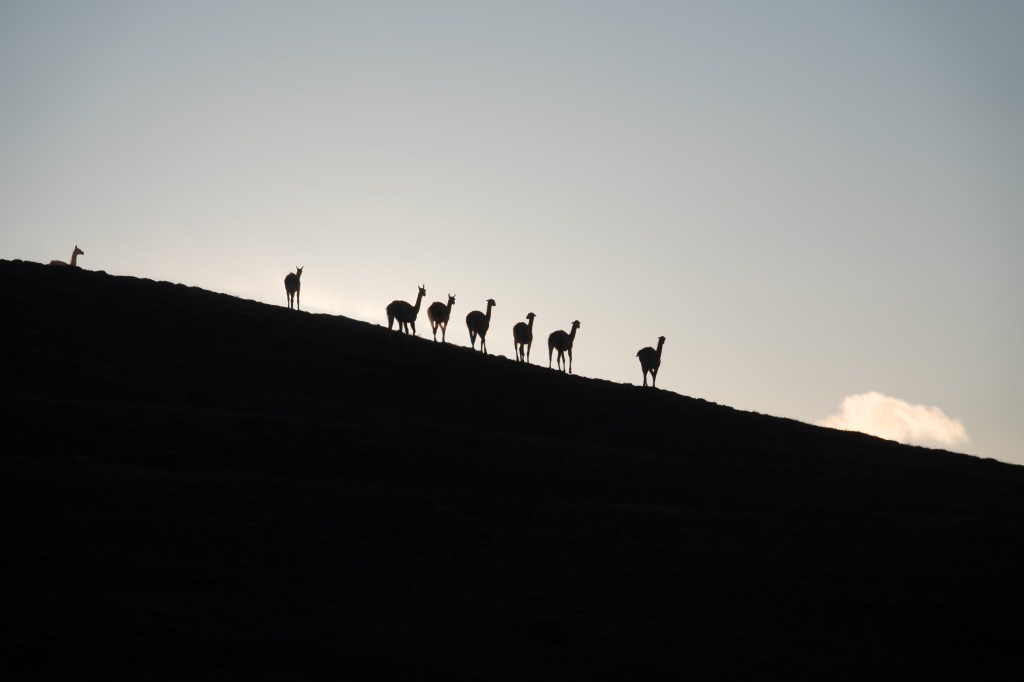
Often the first thing you see is one on the skyline, standing watch:
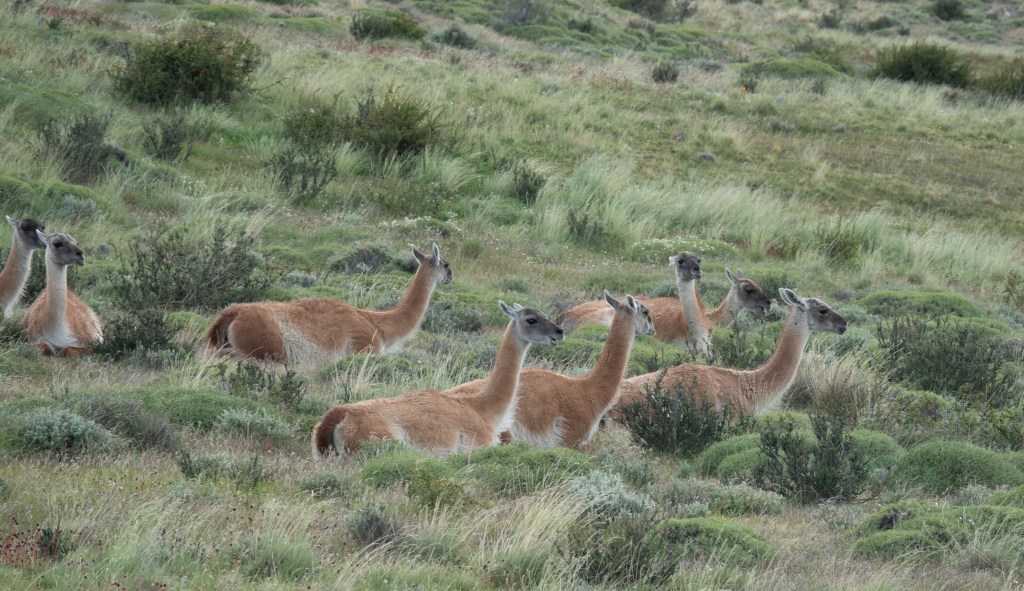
They live in small groups, typically all females and their young, with perhaps one adult male:
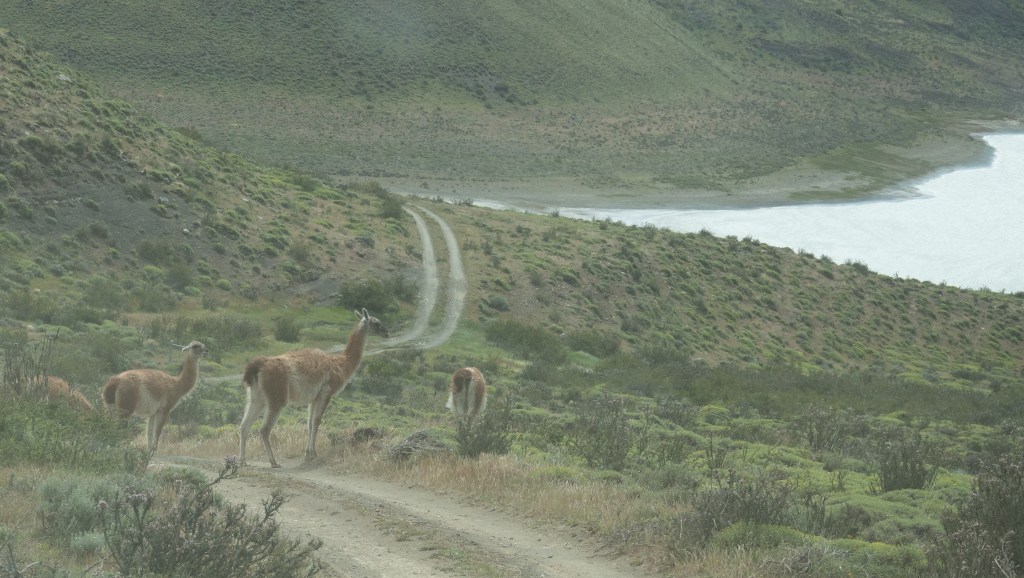
and they were not very bothered by our vehicle:
We encountered two adults alone in a secluded valley, quite far away from us, and it took us a minute or two to realize what was going on:
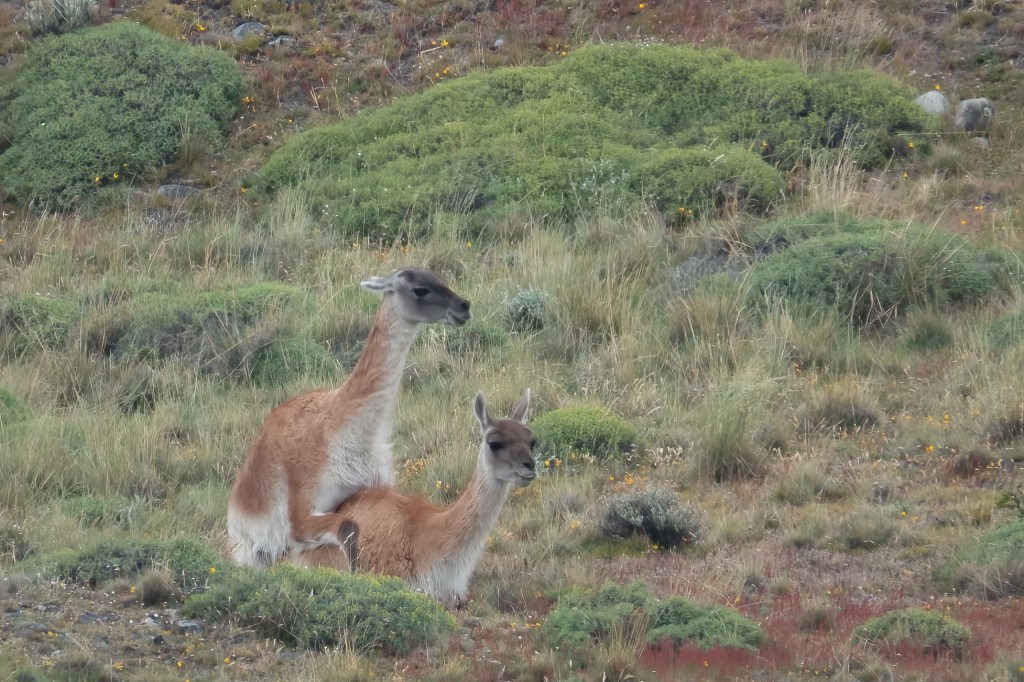
Apparently they can stay in their marital embrace for five hours, and we weren’t sure whether they had just met up, or were ready to part. She seemed resigned, or perhaps bored, and a little hungry:
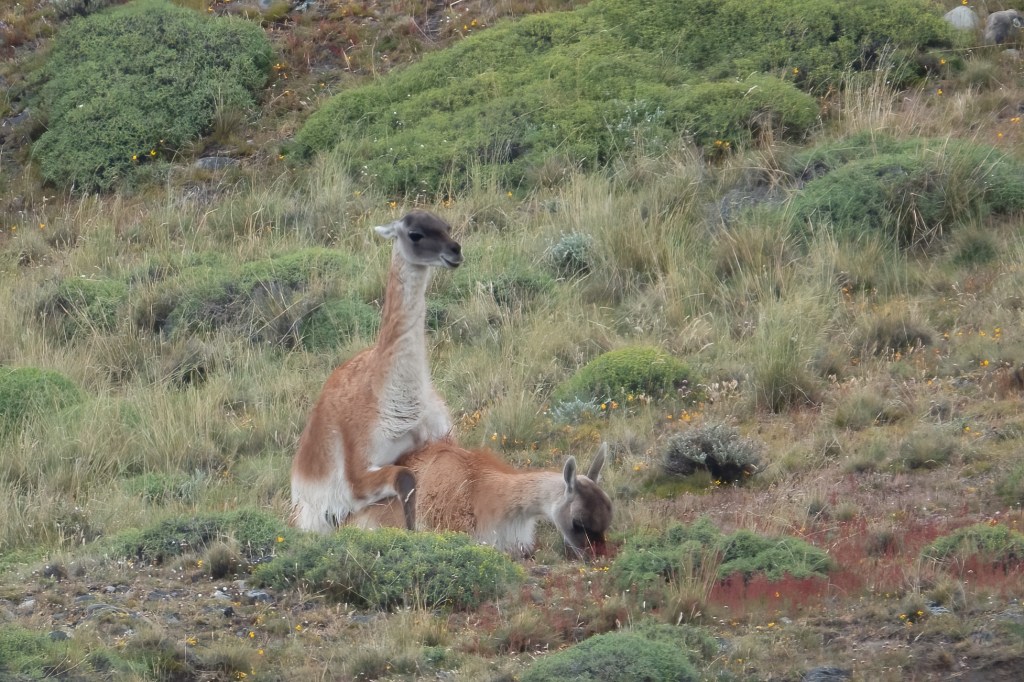
They noticed us, so we gave them some space for their private date, hopefully uninterrupted by any pumas:
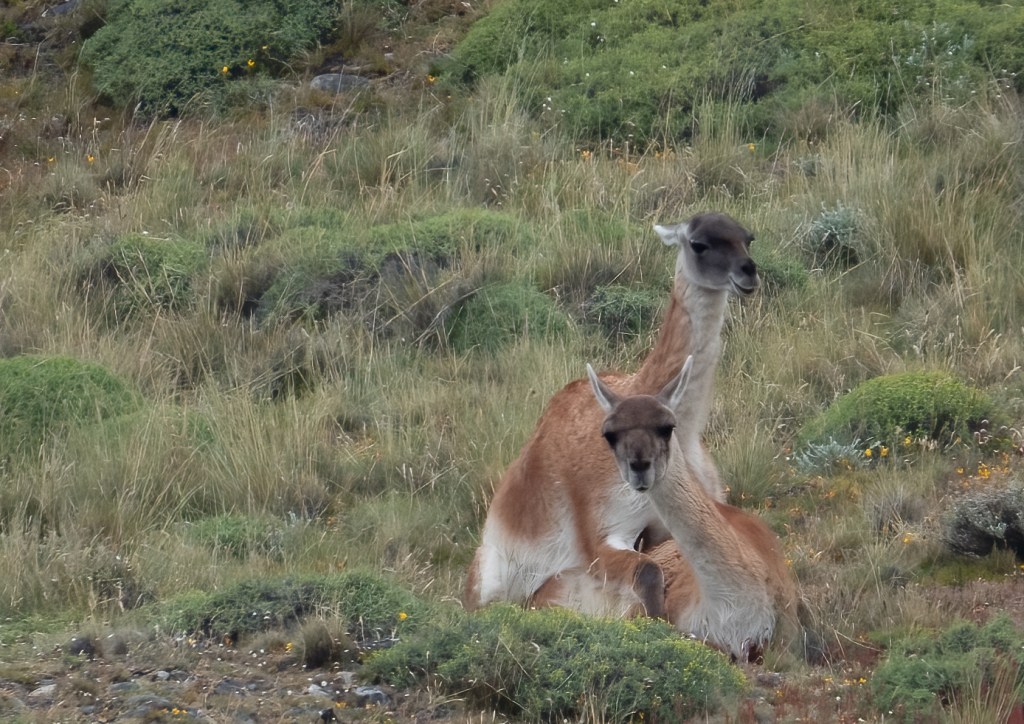
She will give birth just under a year from now. The young ones have a special name, “chulengos”, and we were there during the short season when they are born. Concentrating the births means more of them survive the pumas. The chulengos are irresistible:
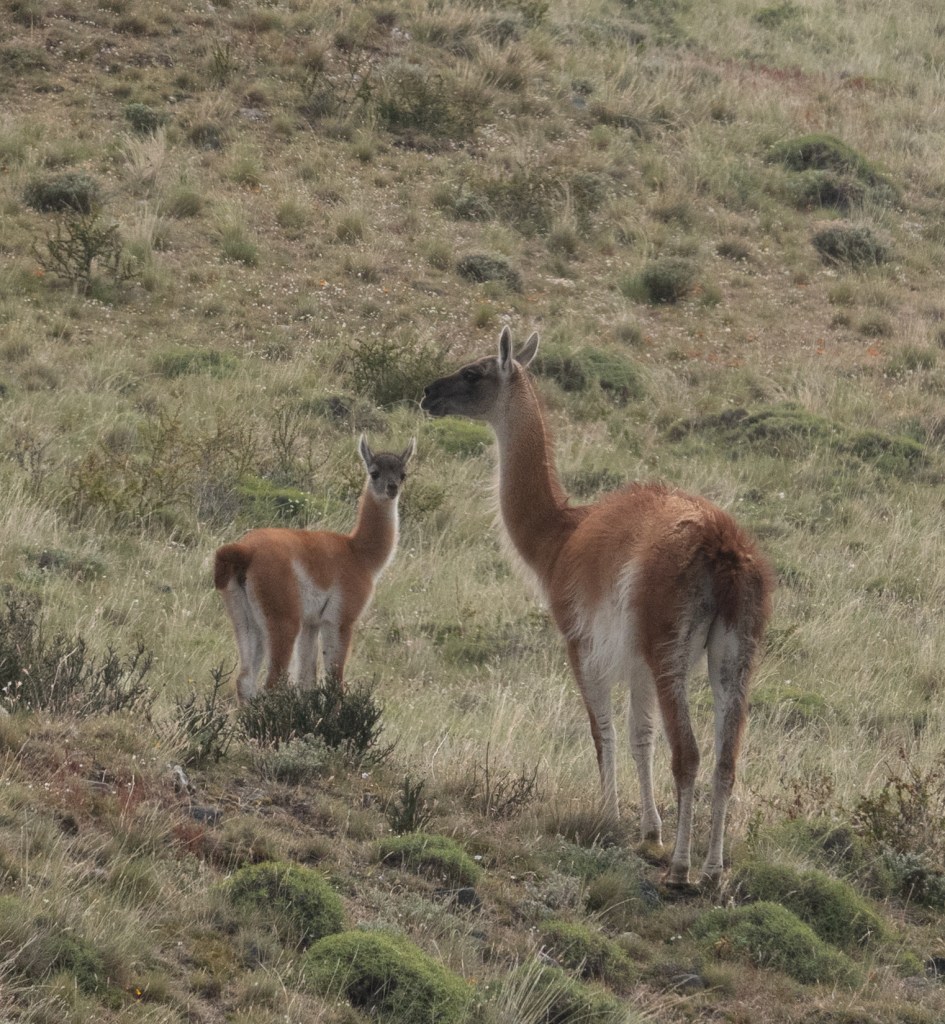
Irresistible to humans, but also to pumas. The very first puma we saw had just killed a chulengo, and a puma is entirely capable of killing an adult guanaco too, as you will see in my next puma post.
But guanacos are fast, and if they notice the puma in time they will usually escape. Hence the need to stay on ridges, so that an ambush is difficult:
Their thick coat is an excellent insulator against the driving winds of the region, and it is prized as a luxury fibre, like alpaca and vicuña. Indeed, there are places where wild guanacos are sheared and released back into the wild.
In closing, I rather liked this double-bodied but triple-headed coven, because it reminded me of author Hugh Lofting’s two-headed Push-me-Pull-you llama:
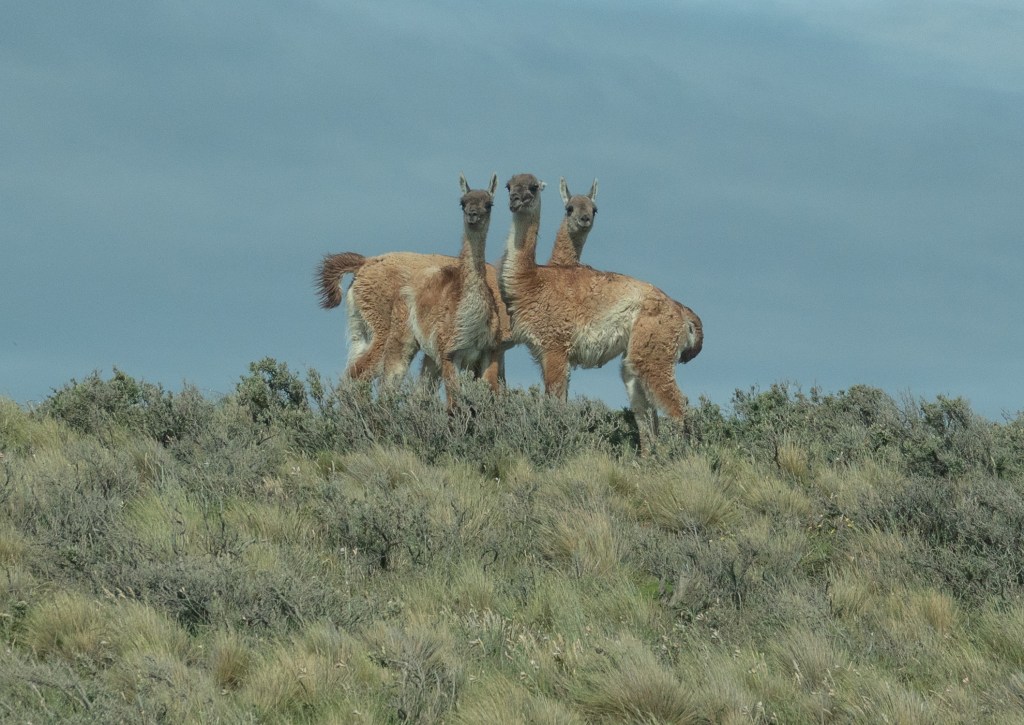
“They were very shy and terribly hard to catch. [Predators…….] get most of their animals by sneaking up behind them while they are not looking. But you could not do this with the pushmi–pullyu — because no matter which way you came towards him, he was always facing you.” [The Story of Doctor Dolittle]
 Eyes on the Wild
Their markings are very pretty. The whole food chain is sad to think about…animals and humans involved…but mostly a necessity…especially for all animals. Snakes eating bird eggs, birds eating other birds, animals eating turtle eggs, praying mantids eating a hummingbird. There are many human practices that I totally disagree with.
LikeLike
Nice, I remember loving Dr. Doolittle. But I’m in admiration of the five hours! I wonder if they ever get urinary tract infections! I remember when a woman started a llama farm near Petaluma. Hard not to like these animals!!
>
LikeLike
This is so interesting! When I think of alpacas, I think of that vice-president, or some other high up person in the government, who was severely criticized for accepting an alpaca coat from somebody. What was his name, and when was ii? In the late 40’s or 3arly 50’’s, I think. I was in Hong Kong, and it wasn’t reported in such detail as it was in the States, when it was a big thing for some time. Anyway, thanks for another animal story!
Janice Anderson janicerobbanderson@gmail.com 620 Sand Hill Road Apt. 121 E Palo Alto, CA 94304
>
LikeLike