0.4oz of determination

Every fall, I buy ornamental squash from local farms. After a winter outside, they are dried out but still sculptural:
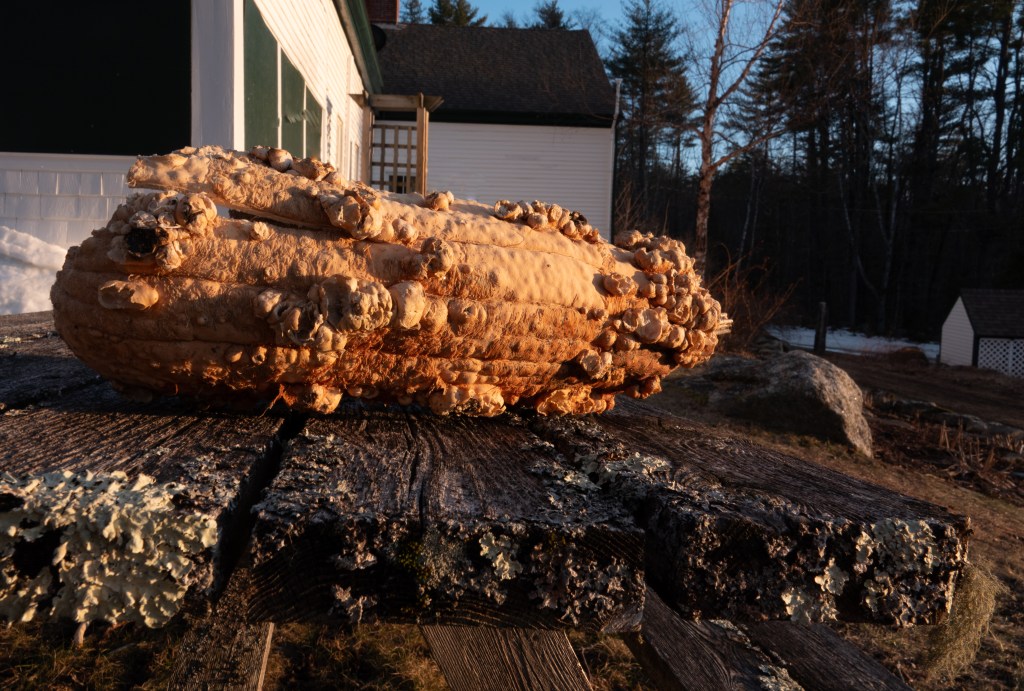
This one was disintegrating fast, and something had burrowed into one end and eaten the seeds inside, creating a useful hollow:
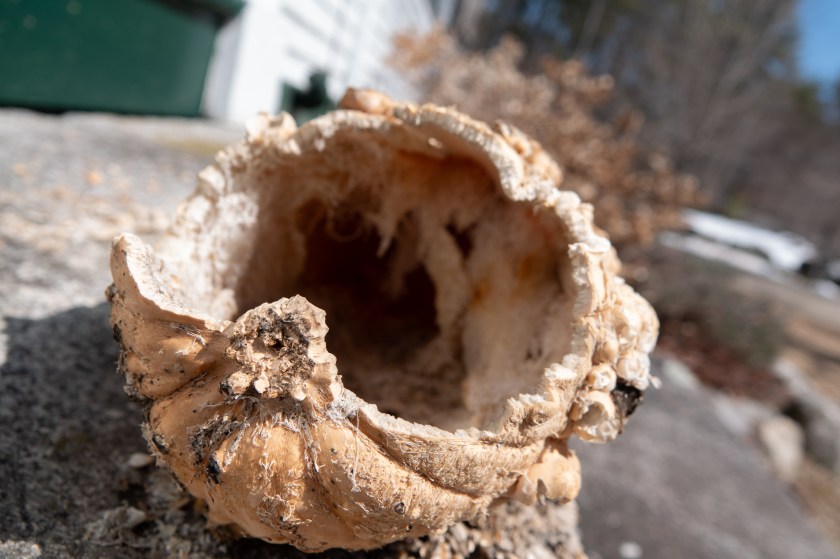
Two years earlier, I had fashioned a decent birdhouse from another gourd, which the wrens had cheerfully taken over to rear their brood, so I wondered if this too could be repurposed. I had heard a wren around, so I hung it in the same messy shrubby brush as before and waited.
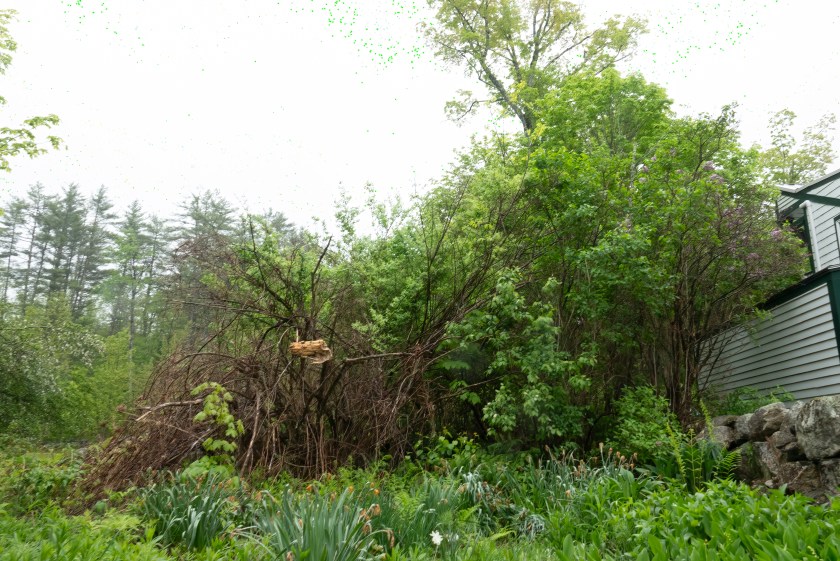
The gourd had broken up somewhat, but still, three days later, a male Northern House Wren, Troglodytes aedon, appeared, singing like crazy to advertise to potential mates that he had taken possession of a nest site:
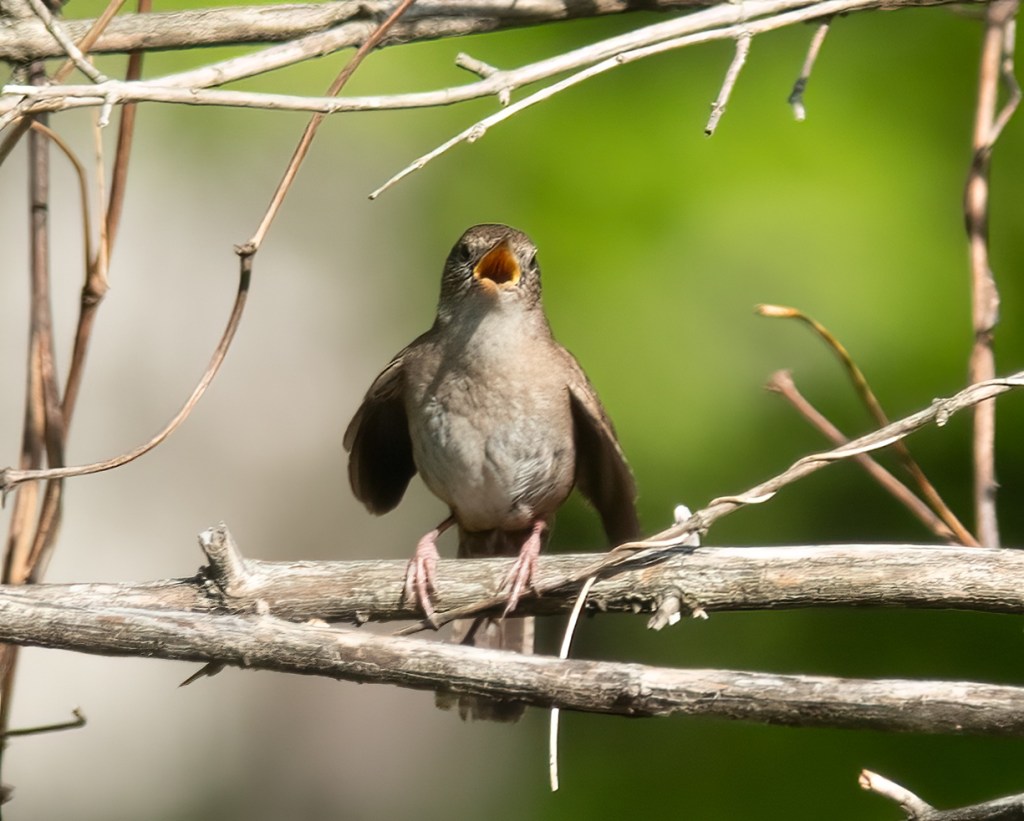
Here is his song:

Having found a nest site, the male starts to build a foundation of 10-400 (!) twigs (visible at bottom left) , and if he is lucky a female arrives:
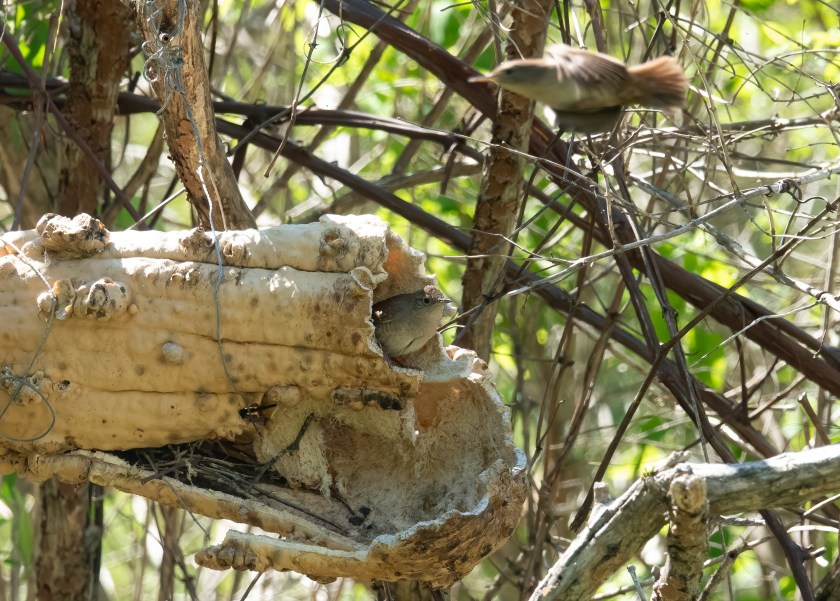
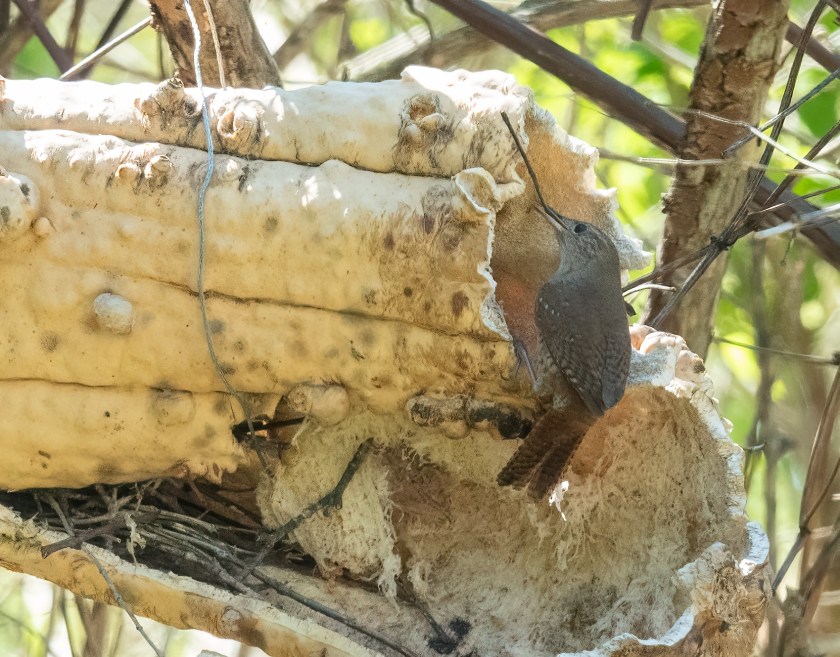
They then both begin to ferry in small twigs, building from the top cavity onto this foundation. The female takes on most of the work after the foundation is complete, and indeed I only saw the two birds together at the start.
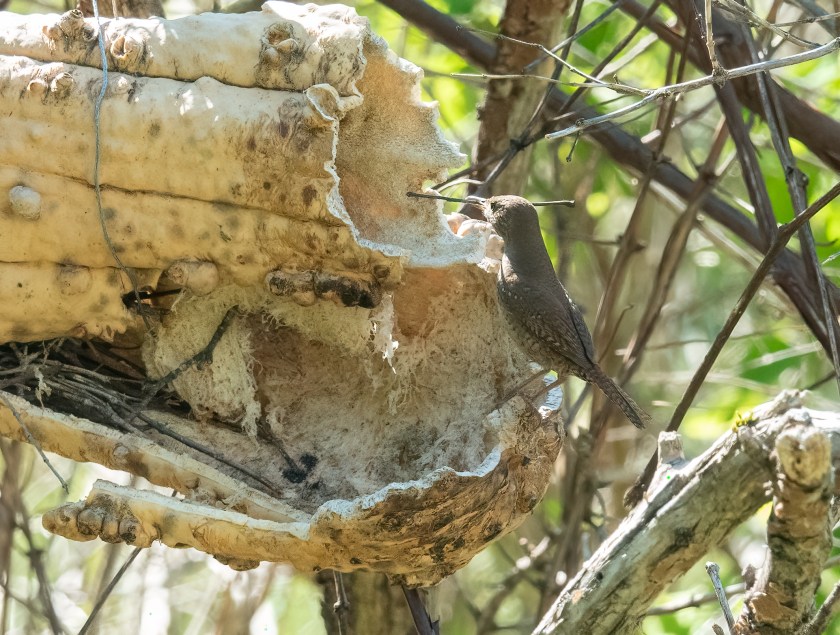
She frequently overestimated the width of the opening.

Some tricky wrestling was involved:

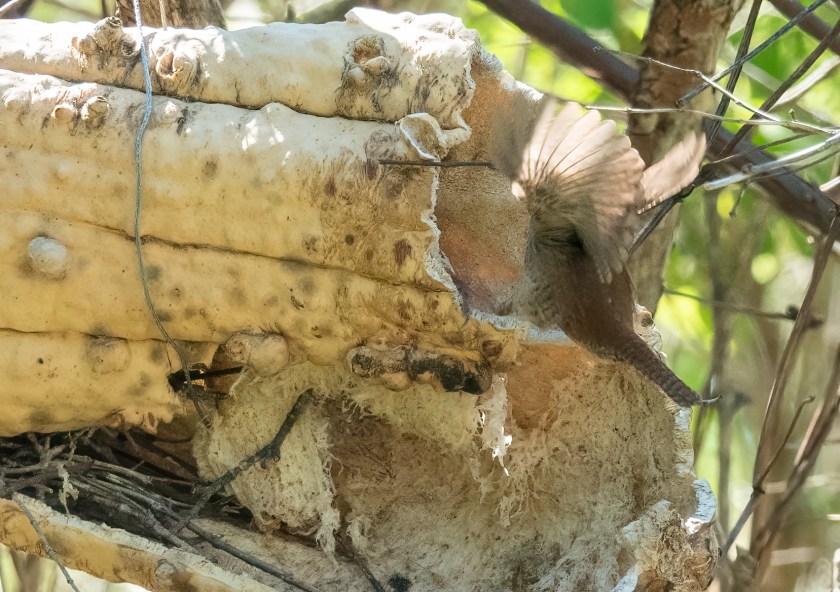
And sometimes the delivery just got dropped:
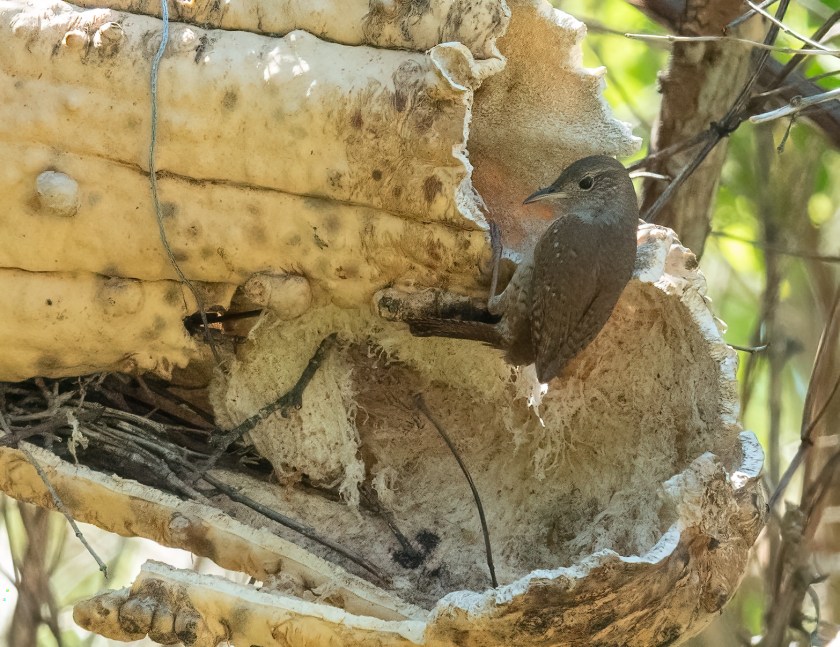
A few minutes later, a different twig caused new problems:
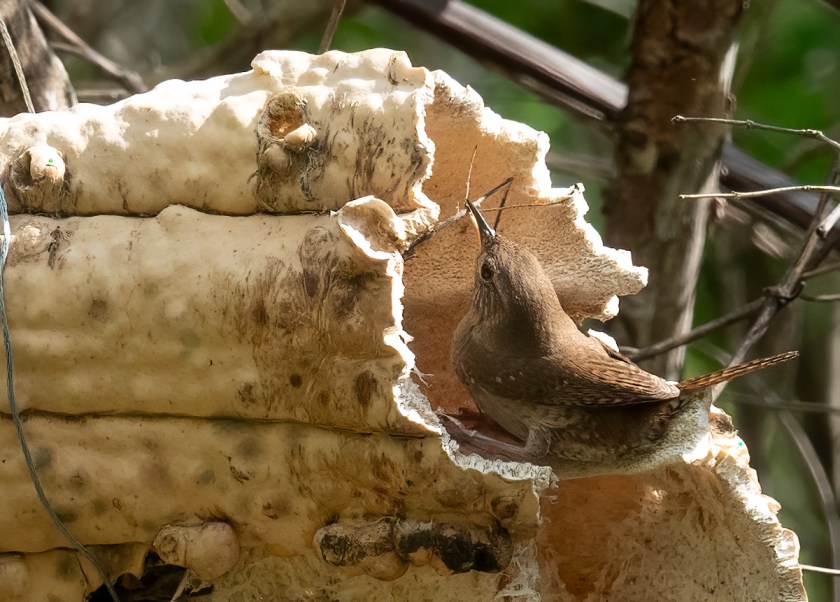
causing a regroup:

But wrens are persistent. She just picked it up and tried again,
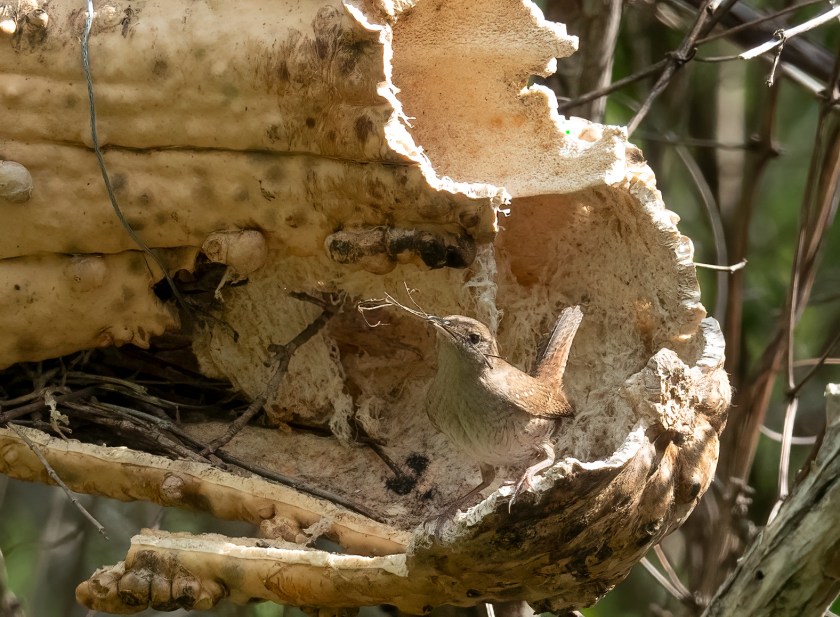
and this time a sideways angle did the trick:

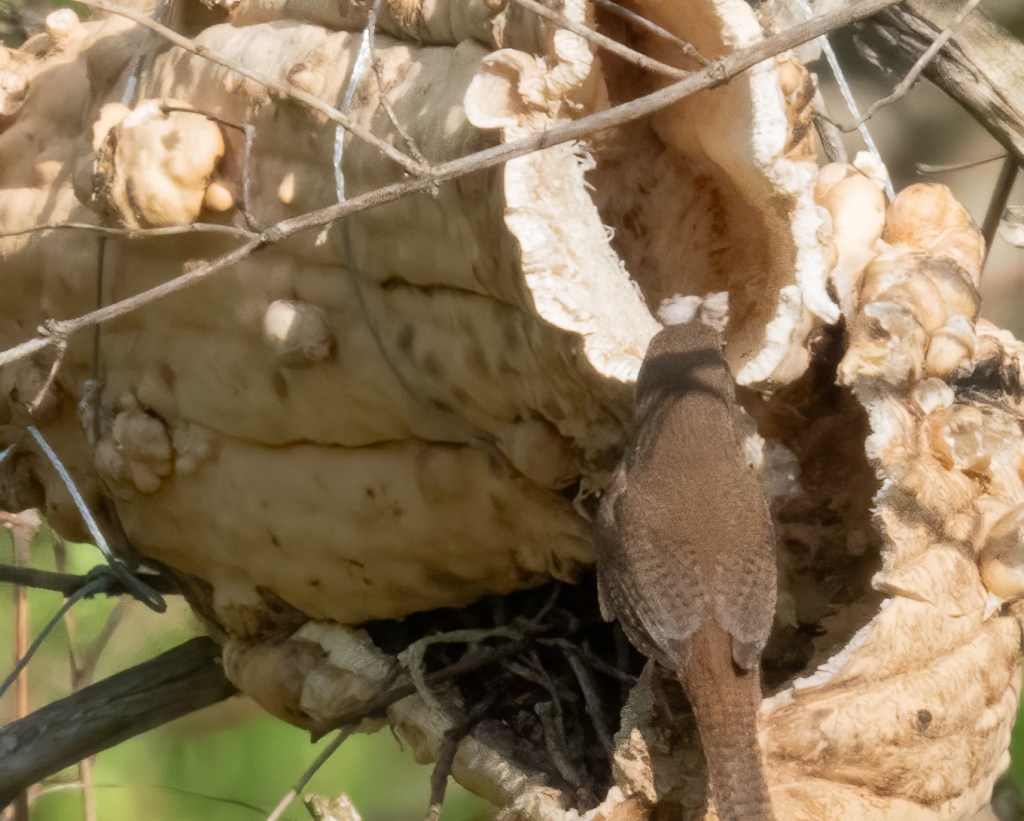
One day later, the main structure must have been complete, and she was bringing in thinner stalks

or grasses:

Pretty impressive work for a bird that weighs no more than 11g, or 0.4oz.

PS Before the female arrives, the male also often adds spider’s nests or other tiny light-colored fluffy things to the foundations, for unknown reasons:
The smallest of predators

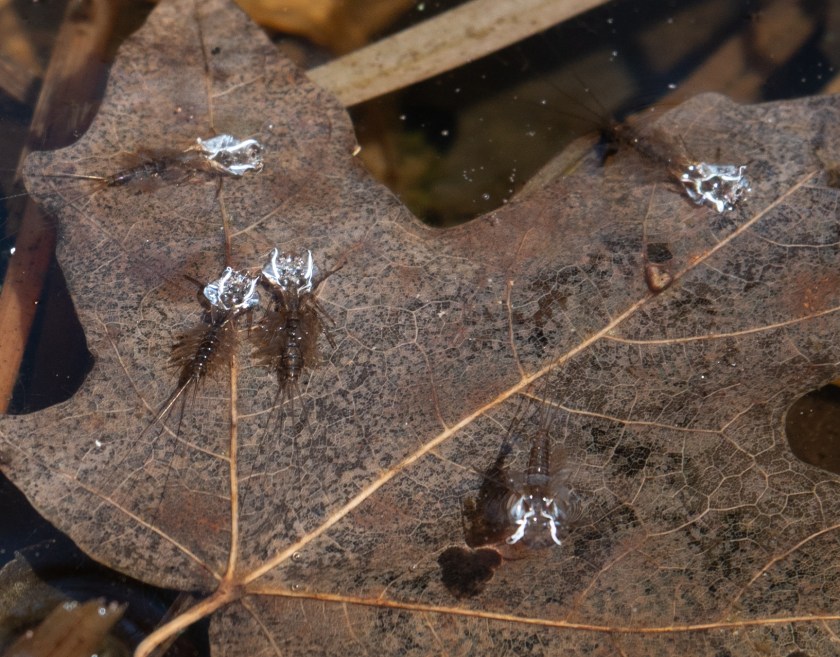
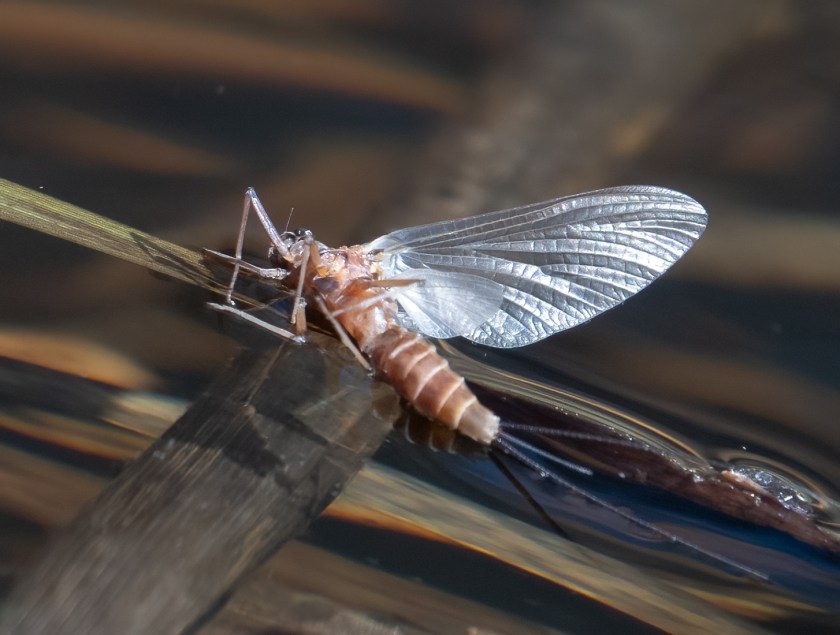
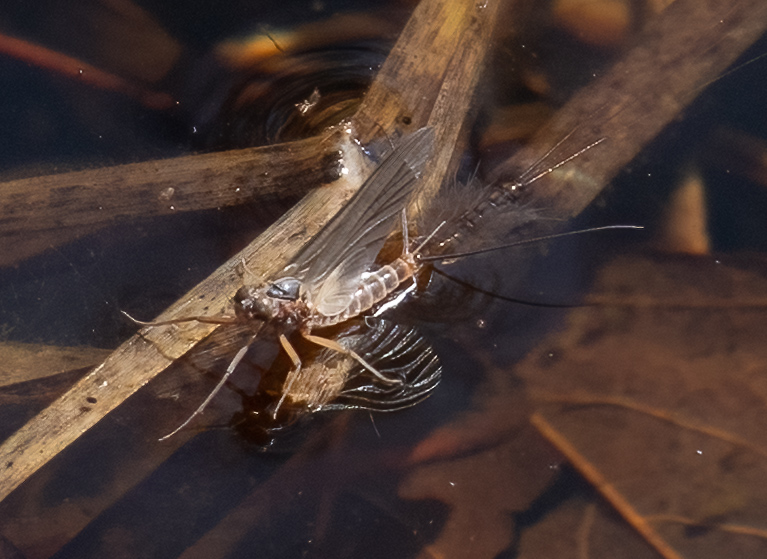
Back in Maine, there is a shallow pond next to my driveway, and when a warm spring day comes along the mayflies emerge. They have been living underwater as nymphs, and now the nymphs rise to the surface and rest on a floating leaf. The sub-imago pushes its way out, leaving the nymphal carapace, the exuvia, behind. This sub-imago lives for less than 24 hours before transforming yet again into the adult mayfly.

Here is one that has just emerged, trailing the dark exuvia behind, complete with its feathery external gills.

A hatch like this can involve great numbers, all at once, and they leave a litter of exuviae as traces of their former lives; the white parts are the edges of the hole through which the mayfly has emerged.

When they first emerge, the wings are crumpled and need time to stiffen.

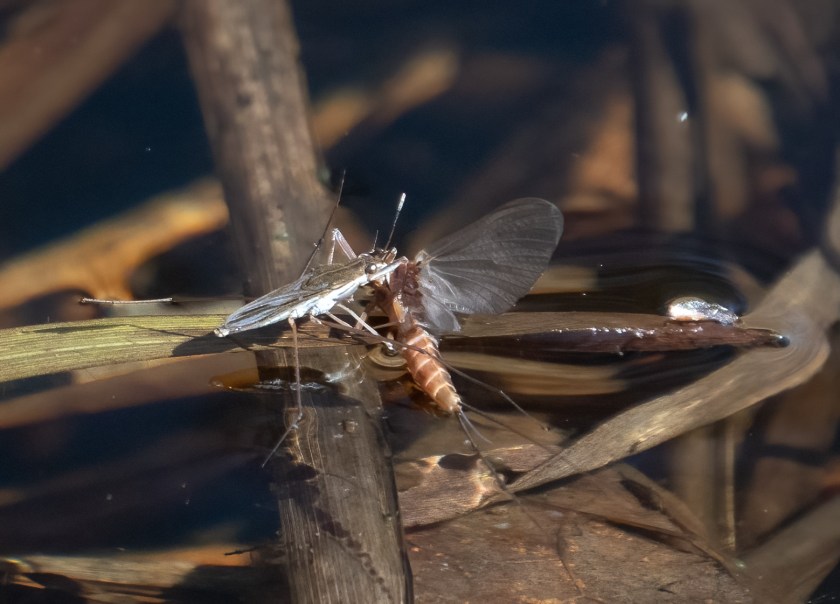
They are helpless until this process is over, and predators take advantage. A 1/2″ long water strider pounces, from behind at left.:

and settles in for a meal.

Water striders are fierce predators. Another one has caught some nameless tiny pond creature for lunch, and in the water below you can see yet another mayfly exuvia.

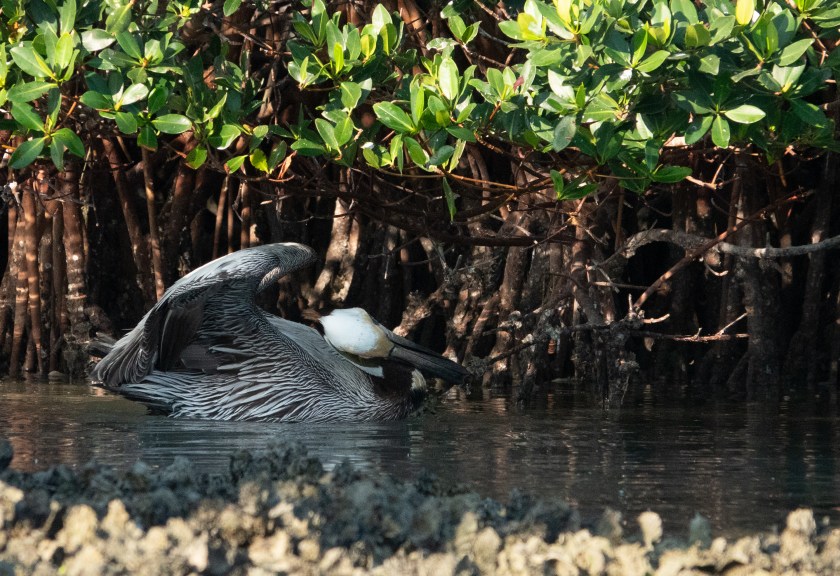
And bigger predators are lurking too, ready to eat both mayfly and water strider:

Brown Pelicans: The Clowns of the Ten Thousand Islands

It is nesting season. These huge ungainly birds nest high in the mangroves:

Pelecanus occidentalis are the smallest of the world’s six pelican species, but nonetheless their wingspan reaches 7ft 6in.

The males collect nesting materials. This one was working hard to break off the perfect twig at water level:

Success!

He then proffers the brand (pr twig) to the female in what I promise you is called by ornithologists a “Nest Material Presentation Display”! He carries the twigs to his mate, big ones at first to build the base, then progressively smaller ones.

By the end, small sprigs to create a soft lining are what she wants:

Irresistible echoes of the dove returning to the Ark.*

It can take 7-10 days to build the nest, which only survives for one season. True love.

PS They are monogamous for the season, but no-one really knows if the pair bond is carried over from year to year. They typically have 3 eggs.

*We just went with the grandkids to the Boston Lyric Opera’s production of Benjamin Britten’s children’s opera Noye’s Fludde. Highly recommended for the right child! The dove was a child in a paper hat flapping her arms.

An Elegant Beachcomber

[A week on the Gulf Coast of Florida for Easter spring break with the grandkids gave me a chance to enjoy some stunning birds in spring… I do apologize if you’re tired of birds; I had a complaint recently from someone who thought there were too many birds, but in the spring they are the most exciting things in the Northern Hemisphere. Soon that will change!]

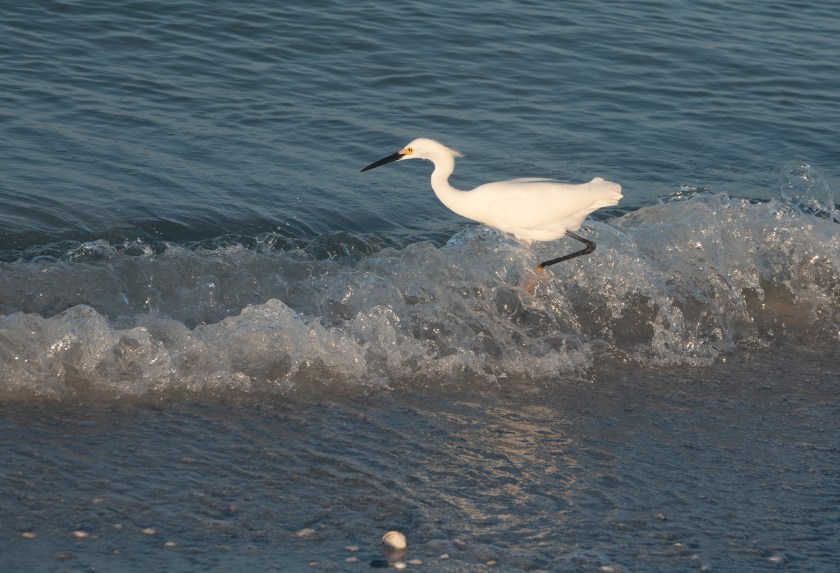
Snowy Egrets, Egretta thula, are quite small, 60cm long with a 100cm wingspan, with black beaks and yellow lores (the skin patches between their beak and their eyes). They hunt in the shallows in the early morning:

If they see something, their strike speed is astonishing; look at the water crater this one creates:

Their heads are not underwater for long:

before the catch appears:

A new hunt:

and success:

proudly displayed:

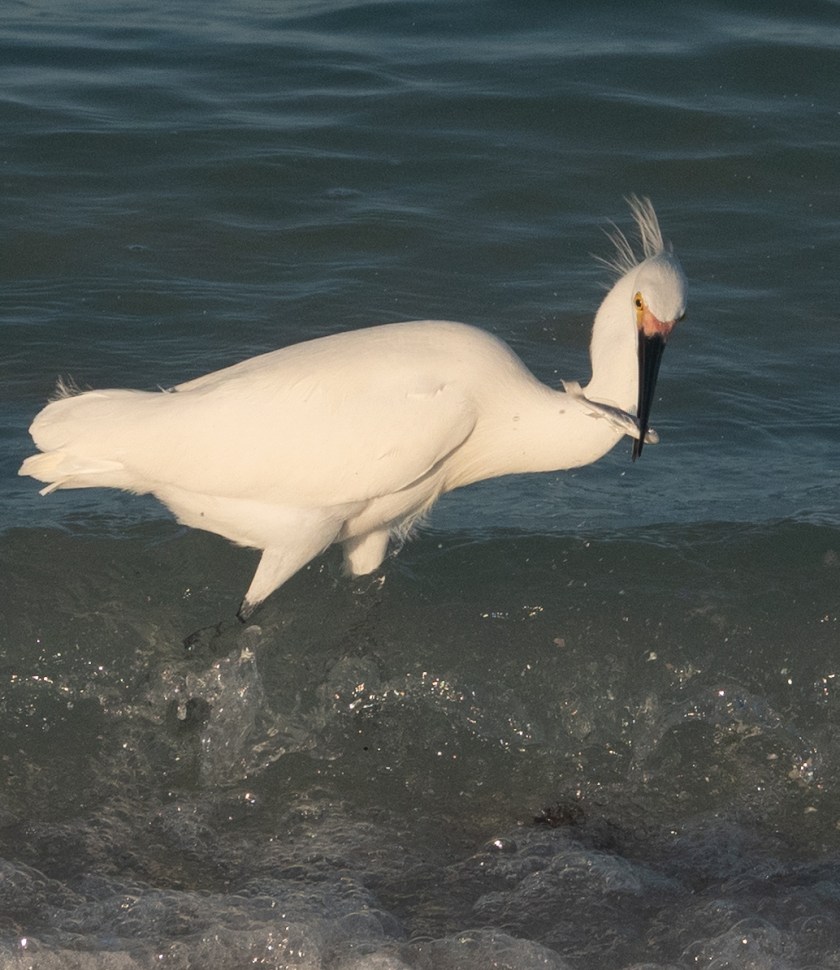
But when breeding is on their minds, for a brief period those skin patches turn orangey red:

the crest gets more impressive:

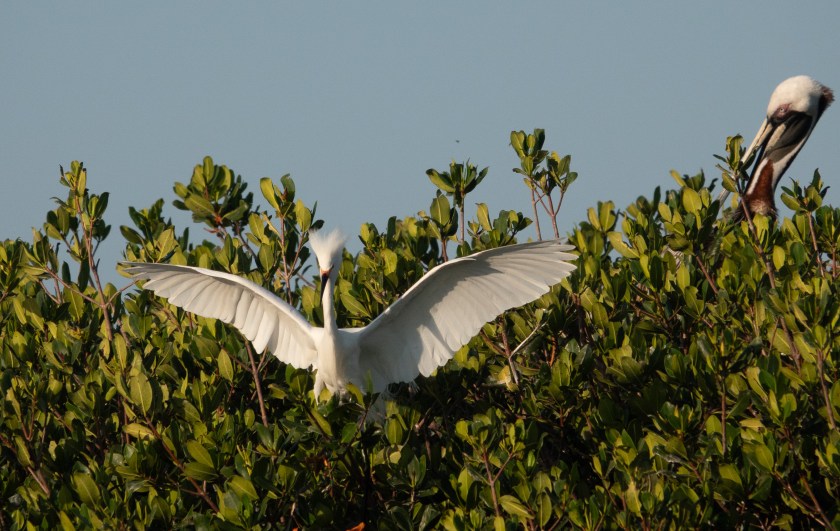
The plumes get longer, and as they nest in the mangroves they show off (while the pelican ignores them):

The target audience for this show is tucked unseen into the mangrove below:

I hope she was impressed.