Back in Maine, there is a shallow pond next to my driveway, and when a warm spring day comes along the mayflies emerge. They have been living underwater as nymphs, and now the nymphs rise to the surface and rest on a floating leaf. The sub-imago pushes its way out, leaving the nymphal carapace, the exuvia, behind. This sub-imago lives for less than 24 hours before transforming yet again into the adult mayfly.
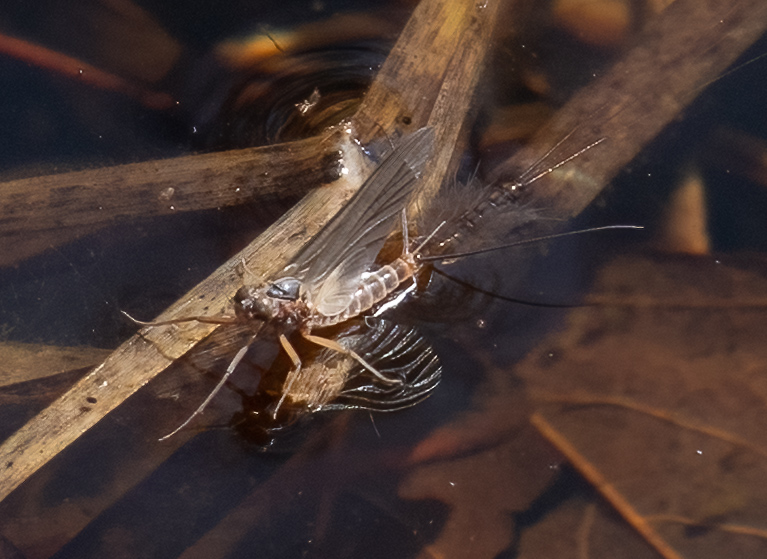
Here is one that has just emerged, trailing the dark exuvia behind, complete with its feathery external gills.
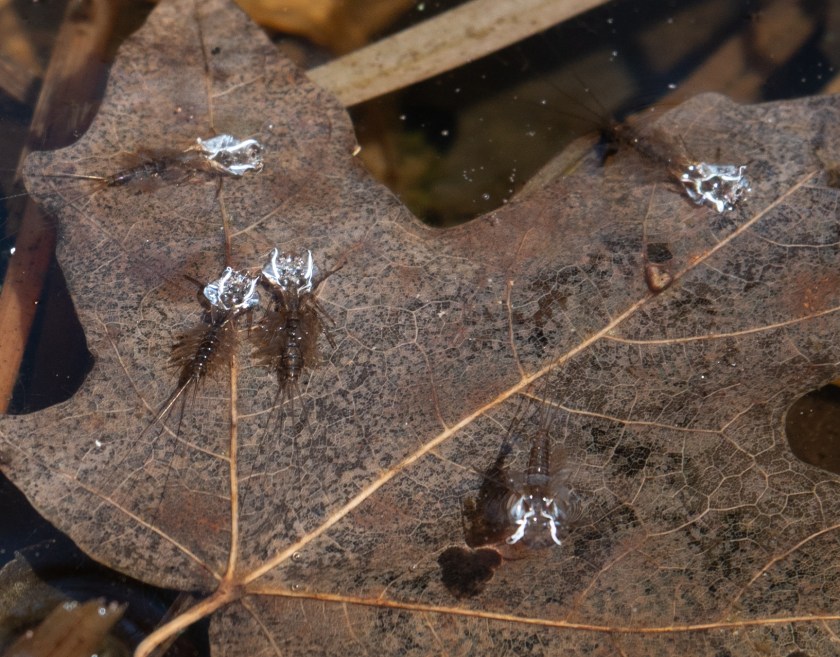
A hatch like this can involve great numbers, all at once, and they leave a litter of exuviae as traces of their former lives; the white parts are the edges of the hole through which the mayfly has emerged.
When they first emerge, the wings are crumpled and need time to stiffen.
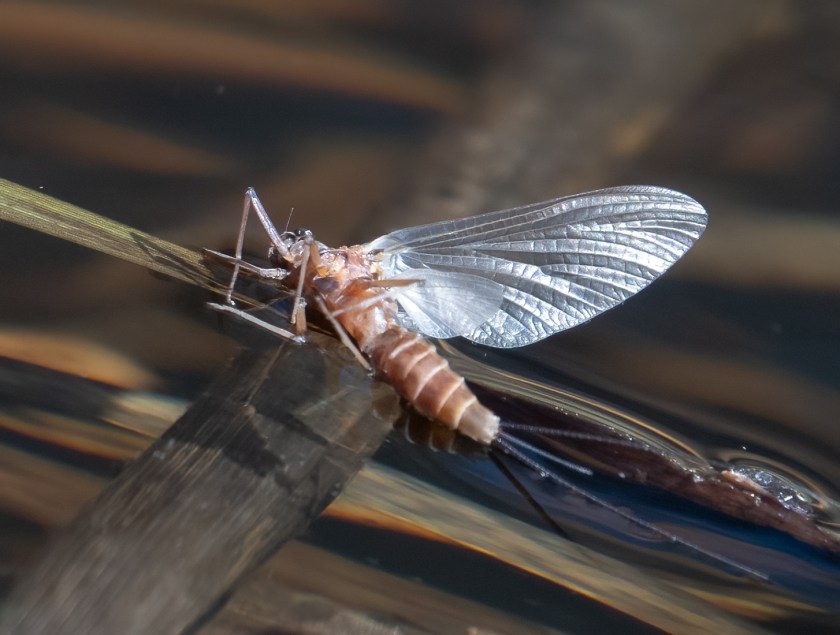
They are helpless until this process is over, and predators take advantage. A 1/2″ long water strider pounces, from behind at left.:

and settles in for a meal.
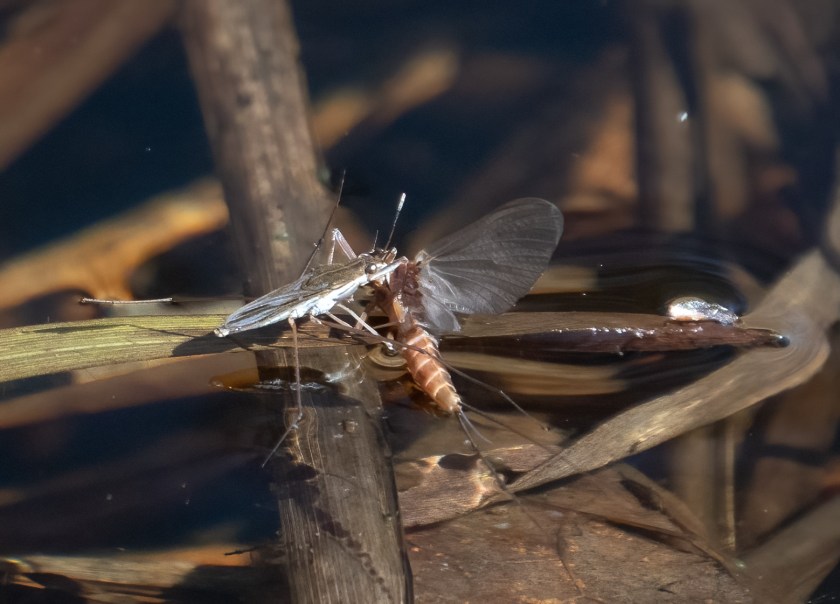
Water striders are fierce predators. Another one has caught some nameless tiny pond creature for lunch, and in the water below you can see yet another mayfly exuvia.

And bigger predators are lurking too, ready to eat both mayfly and water strider:

 Eyes on the Wild
I am so happy to see that little green frog! Have not seen any frogs for years out here in California, very concerning as they once were so common.
LikeLike
Keen observation!!
>
LikeLiked by 1 person