[I have blogged about these strange aphids before, so this is a sort of epilogue to my earlier post, which can find here: https://eyesonthewild.blog/2022/11/12/bugs-with-dreadlocks/ ]
The Woolly Alder Aphid, Prociphilus tessellatus, gets its scientific name from the tessellated (tiled) pattern of wax-gland plates on its back . It is only 1/8″ long, and six of them are clustered in a little rosette in the centre of this photo:
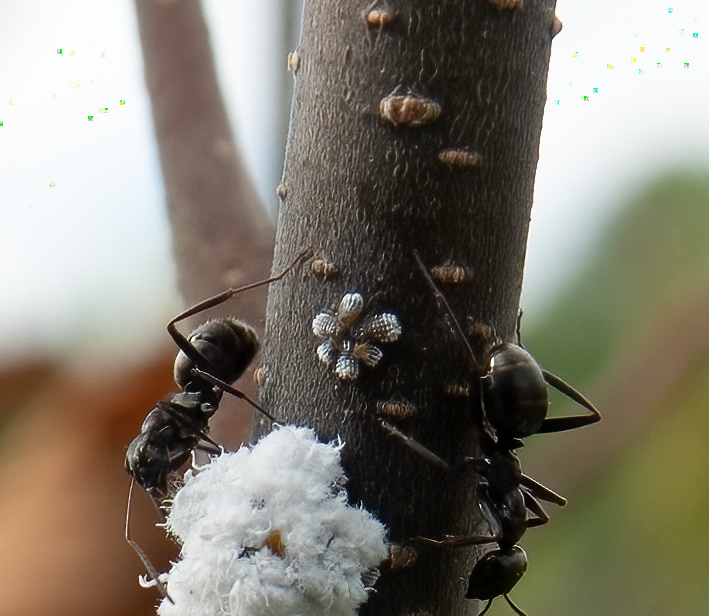
“The glands are composed of greatly enlarged epidermal cells underlying a modified cuticle that forms distinctive wax gland plates. Secreted wax in the form of threads passes out of the cuticle as filaments.. ” In the next photo you can see three aphids with differing amounts of white wax buildup, surrounded by many more entirely submerged beneath their shaggy coatings:
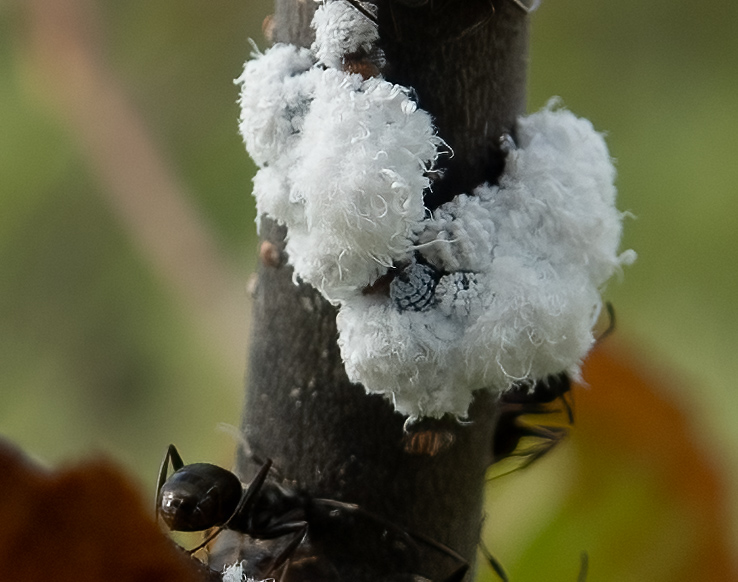
“It is suggested that the primary role of the secreted wax is to prevent the aphids becoming contaminated by their own secreted honeydew and that of other members of the colony.” (both quotes from Smith, R.G. 1999 doi.org/10.1080/002229399300227)
In these photos they are being ‘farmed’ by ants, evidence that, just like other aphids, they too produce honeydew :

Think of the aphids as minute sheep, and the aphids as sheepdogs.
 Eyes on the Wild
Interesting process.
LikeLike