[When we weren’t looking for large mammals in Mongolia, there were smaller creatures to search for, mammals, birds, and insects. And tales to tell.]
Mammals are scarce, but we did see several foxes, and also Tarbagan Marmots, aka Siberian Marmot, Marmota sibirica, a favorite food of the snow leopard.
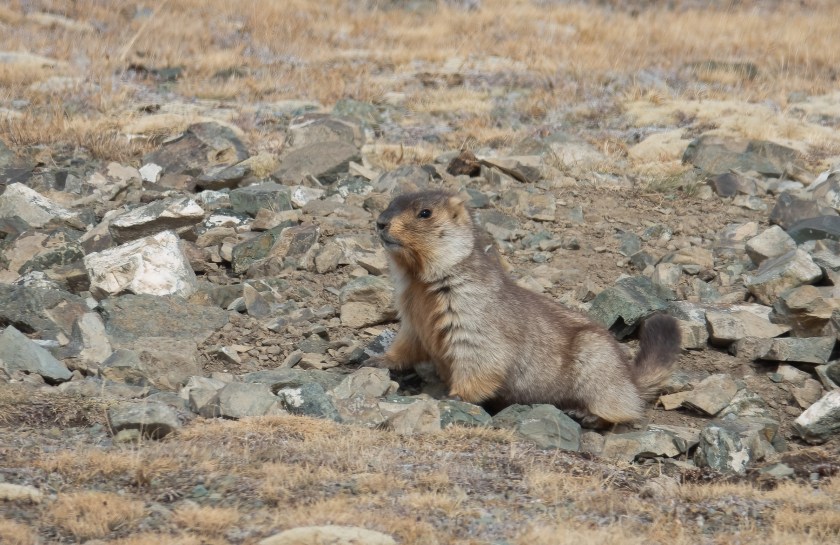
Closely related to groundhogs, Marmota monax, they live at much higher elevations and in much larger social groupings of 13-18 animals. They stay close to their burrows, and dive for cover if a threat seems near.
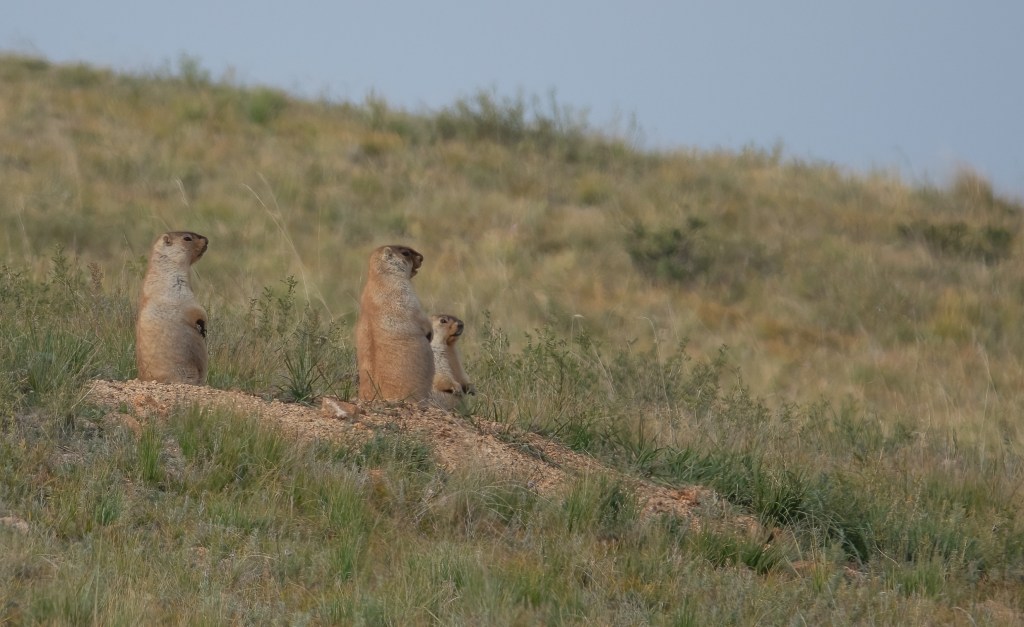
They are considered Endangered by the IUCN , partly due to hunting pressures, and partly because they carry (and catch) bubonic plague. Fleas or ticks can transmit it to humans too, so we did NOT eat marmot or buy marmot fur hats! But despite the plague, Mongolians are fond of their marmots, and build charming statues to them:

I don’t think many Americans would want to build a statue to a groundhog.
Istvan, our guide, was a skilled and knowledgable birder. When there were no leopards, birds were often a possible substitute. Migratory birds had largely gone, so the birds we saw were brave year-round residents of this harsh land. In the summer months, many of them eat invertebrates, but in the winter their diet is mostly seeds. This is a Brown Accentor:
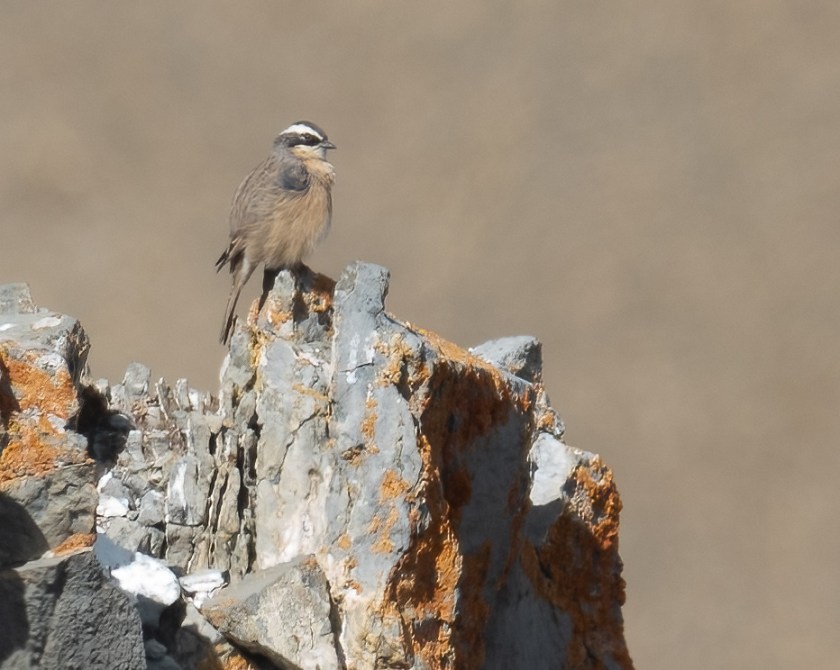
And this is a Mongolian (or Kozlow’s) Accentor, which Istvan got very excited about. I realize that it is a rather nondescript bird, but apparently it is a birding prize.

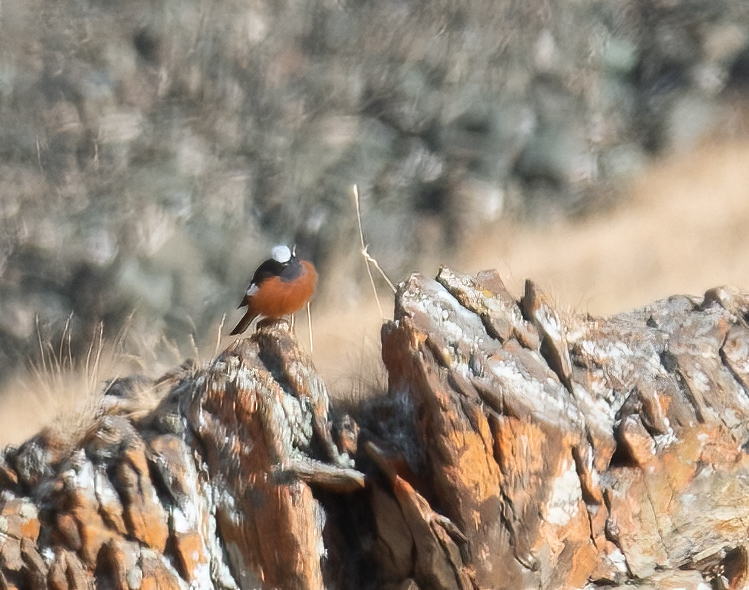
The tiny bird below is a Guldenstaedt’s Redstart. The white area is the top of its head, photographed from above as it looks down!
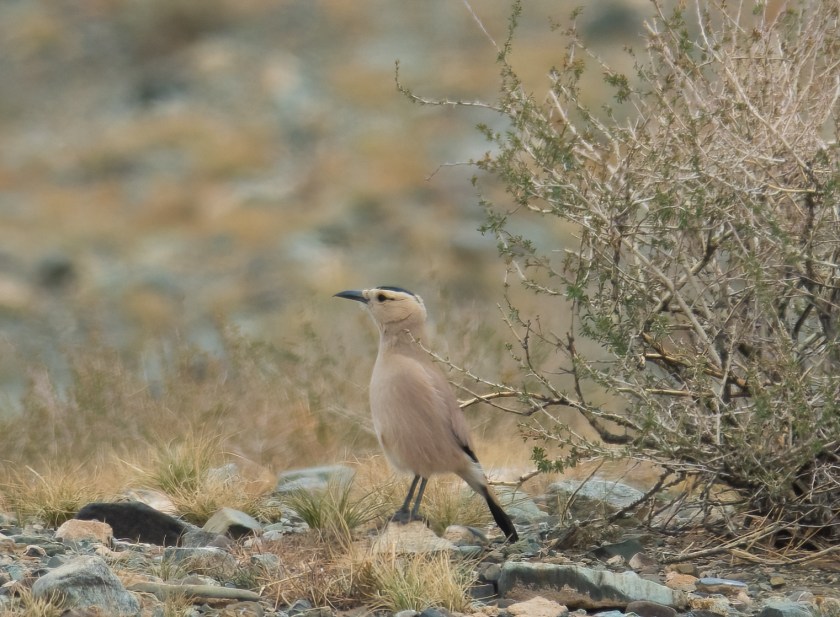
Driving around the foothills, one of our vehicles broke down, so while they fixed it we wandered around for an hour or so, looking for anything really! This is when we saw my favorite bird, the Mongolian Ground Jay, Podoces hendersoni, a very spiffy bird with smart beige and black plumage, and with distinct attitude.


It would be right at home in the world of Bertie Wooster, dressed for luncheon in the country.
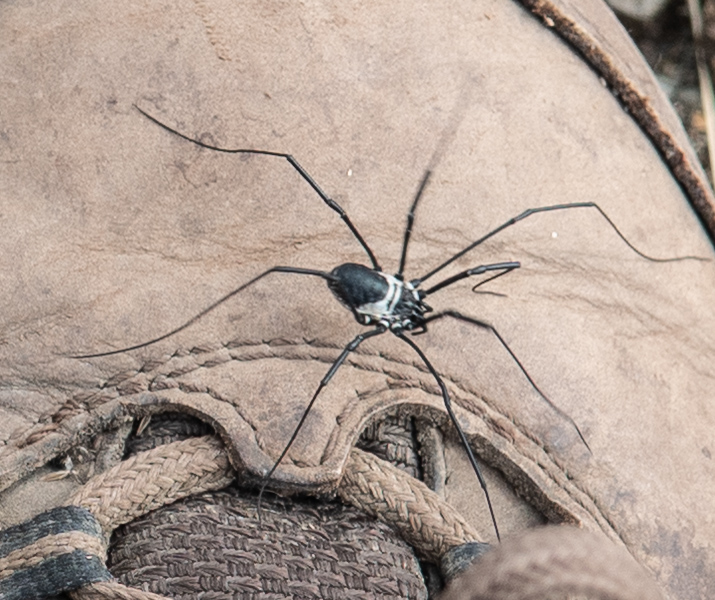
At higher altitudes, there was a rather handsome Daddy Longlegs (Harvestman), that I can’t ID:
PS Istvan told us that we might hear noises in our gers at night, and not to leave any food around. The culprit would be a Midday Jird. This wonderfully named animal is a little rodent with a long furry tail, that hops on its back legs:
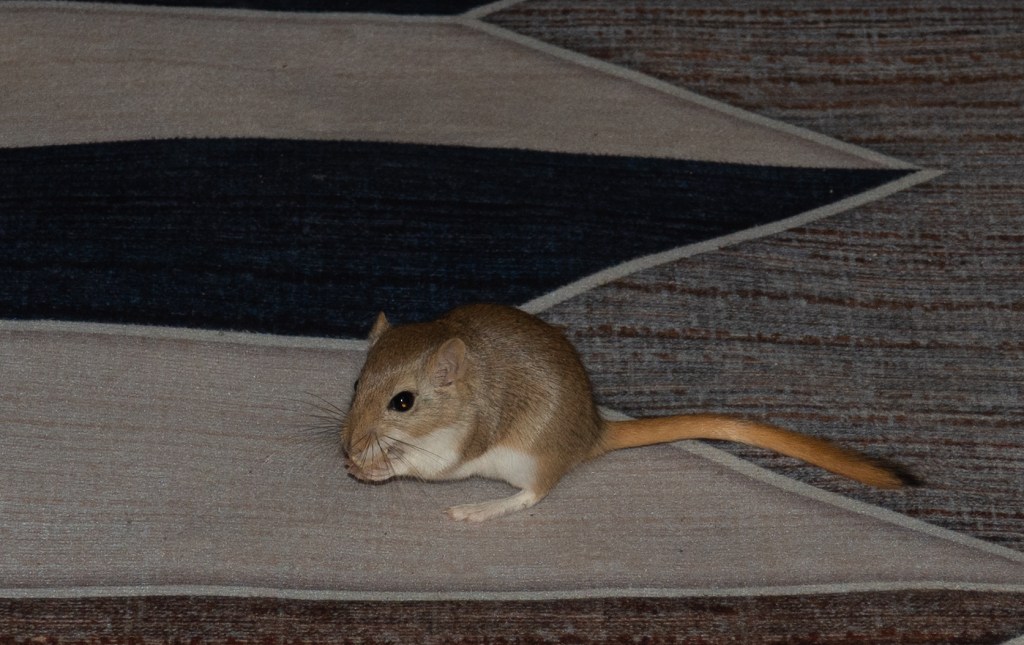
It is actually a gerbil, Meriones meridianus, and since it is largely nocturnal its name seems completely unsuitable!
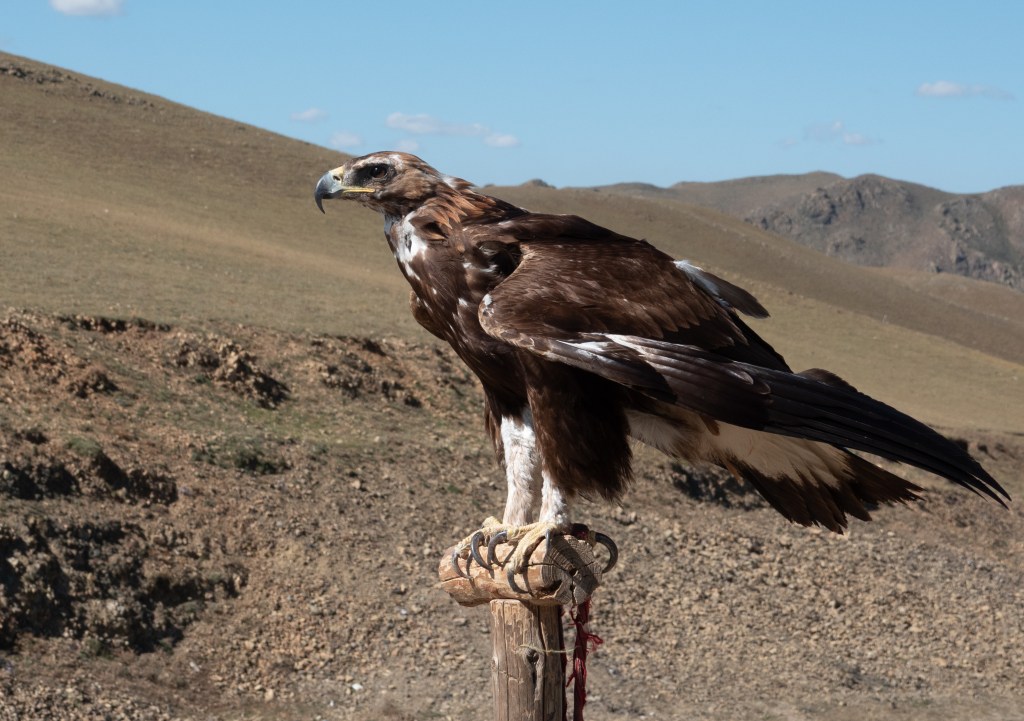
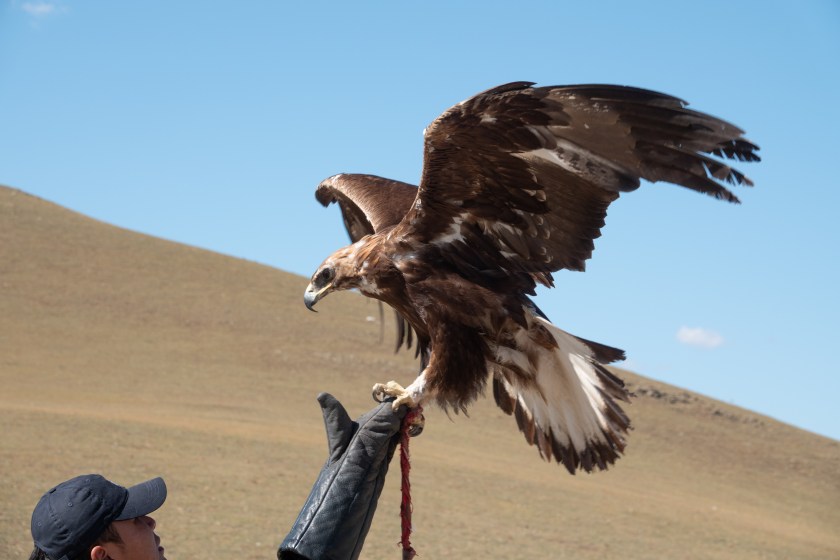
PPS Reverting to birds, we also saw various raptors, soaring on the updrafts, including Golden Eagles, Lammergeiers (aka Bearded Vultures), Cinereous Vultures, and the pheasant-sized endemic Altai Snowcock. But none close enough for worthwhile photos. The pictures below of a magnificent golden eagle were, rather depressingly, taken at a roadside display en route to Ölgii airport next to a souvenir stand.
 Eyes on the Wild
Good idea for the Marmots to stay close to their burrows. Does infringe on their freedom. The birds remind me of a Towhee & a Waxwing. You did see a lot of wildlife.
LikeLike