Wildflowers are organized in my mental catalogue by colour. But sometimes I am confronted with exceptions.
The Turtlehead, Chelone glabra, grows in late summer in wet areas, and has lovely white flower clusters that do indeed look like turtles’ heads, with their mouths open:
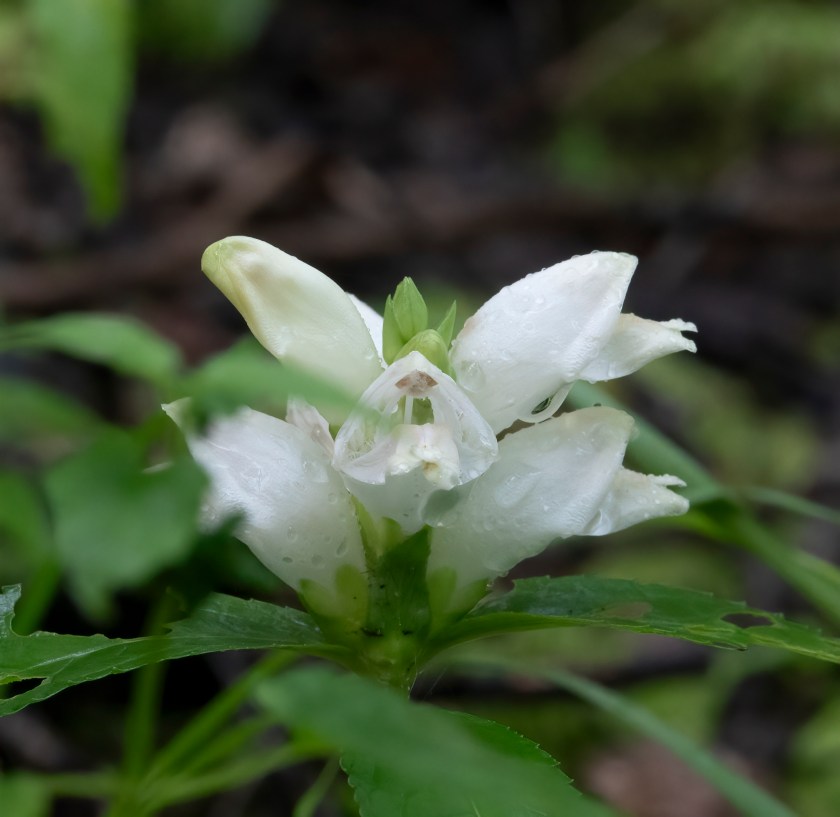
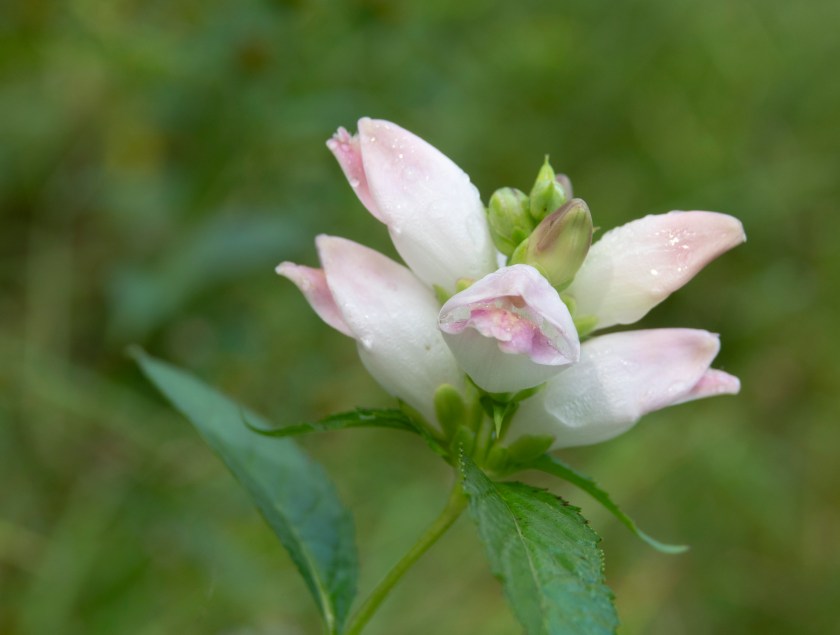
Then other day, however, I found a pink one:
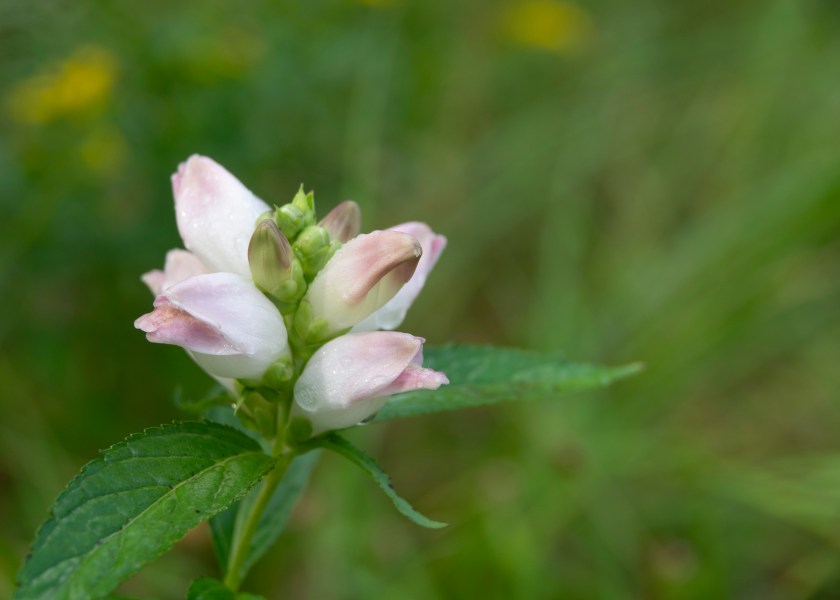
still with that open mouth, but much more enticing in pink:
Also in the White file in my mental catalogue are Ghost Pipes, Monotropa uniflora, formerly known as Indian Pipes. These are plants that lack chlorophyll, and depend on a complex relationship with tree roots and fungi for their energy needs.
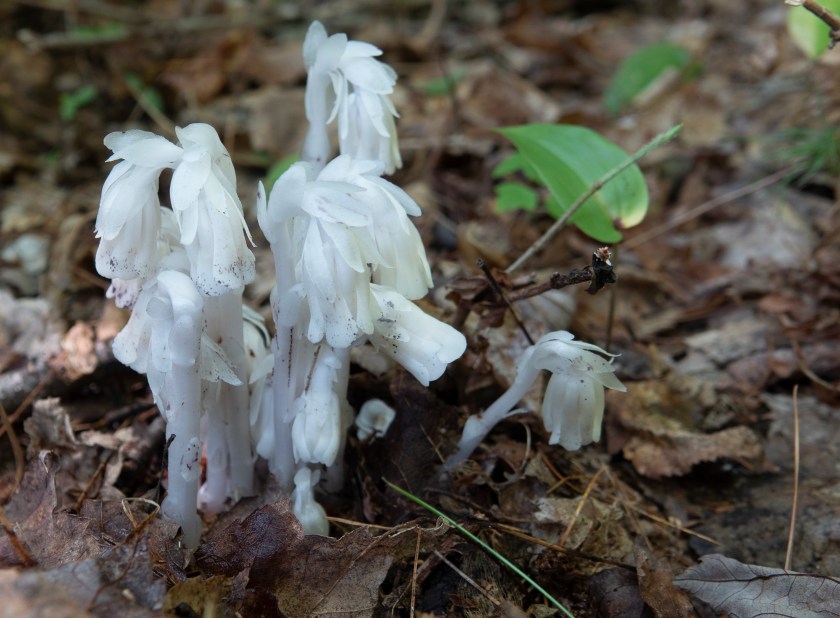
After the flower is fertilized, it moves to point upwards, and eventually turns brownish or blackish, but the transition from white to dark sometimes goes through another phase. The stems turn a delicate pink color:
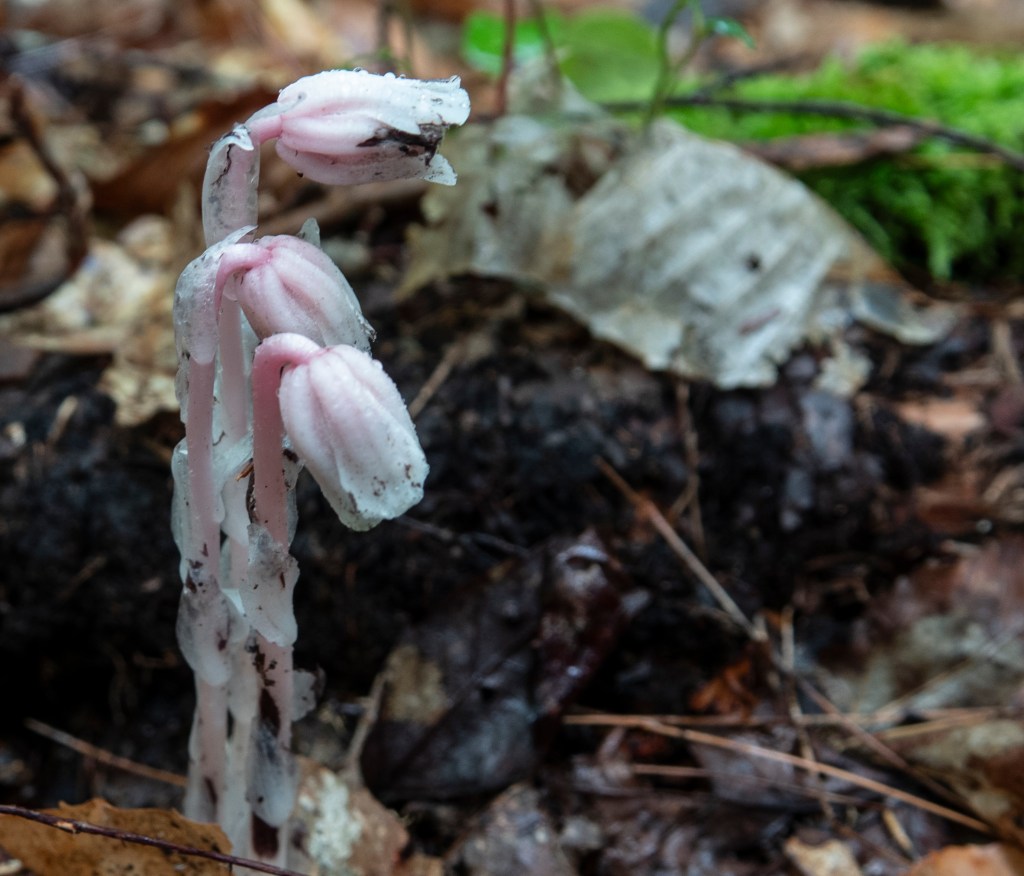
and so do the ovaries:
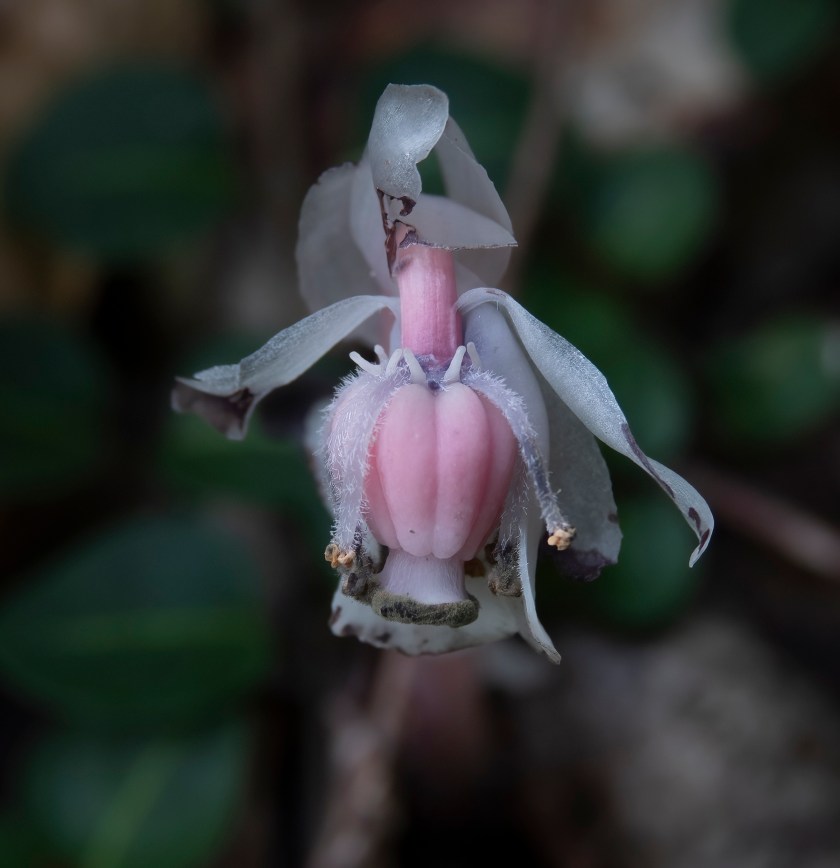
Such unexpected beauty.
PS The Edmonton Native Plant Society website gives a nice clear summary of exactly why “Ghost Pipe is unusual among plants in being a mycoheterotroph. Lacking chlorophyll, it cannot photosynthesize and so, like fungi and animals, it must depend on green, photosynthetic plants (autotrophs, self-feeders) for its organic food (heterotrophy).
Myco means fungus, and ghost pipe gets its sugars by way of fungal hyphae in the soil, which in turn receive them through a symbiotic association with the roots of green plants (mycorrhizae), usually trees. Ghost Pipe, however, is thought to be a parasite, providing nothing in return to either the fungus or the tree.”


Among my faves. I guess the appellation Indian Pipe has been changed…
LikeLike