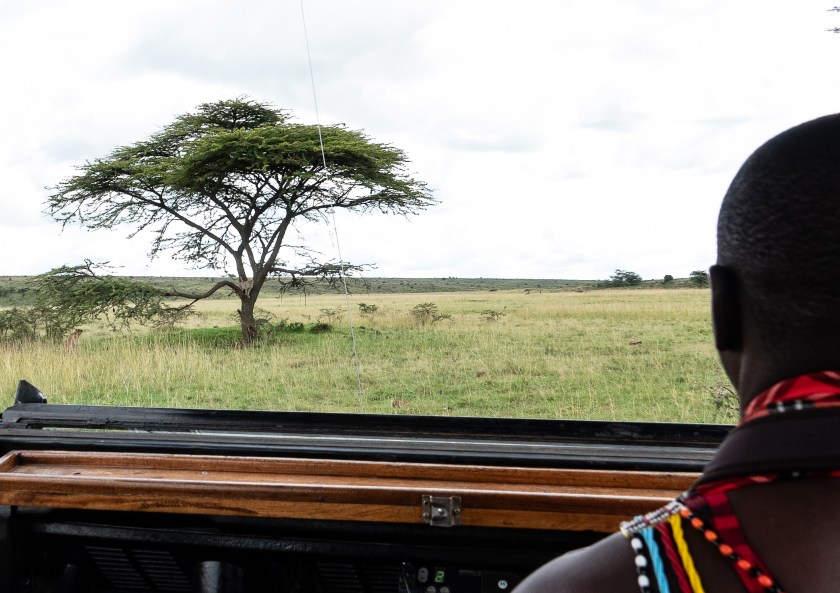
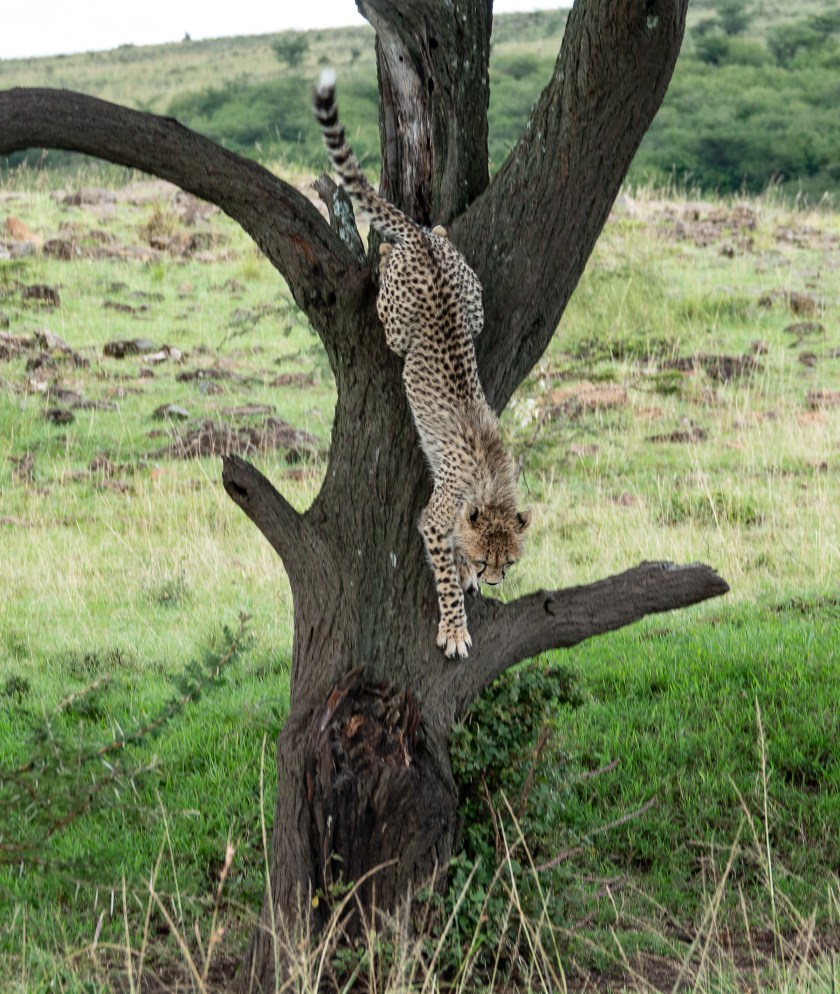
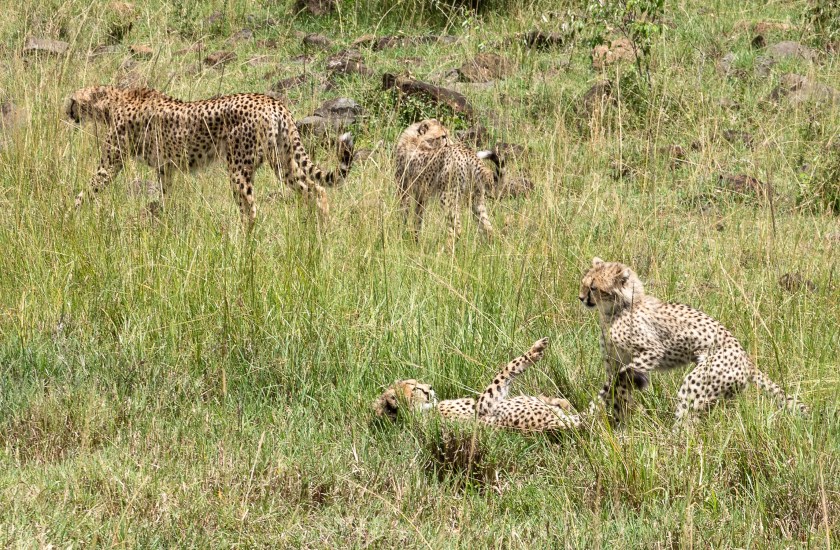
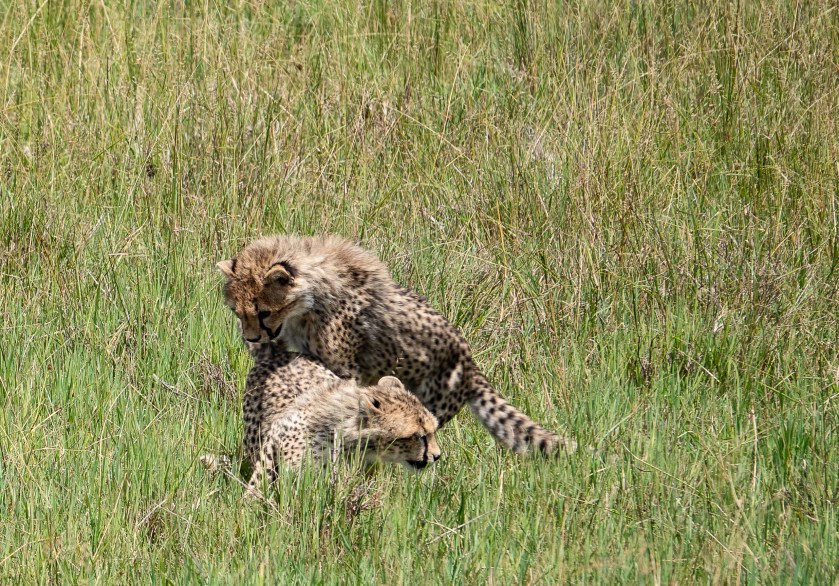
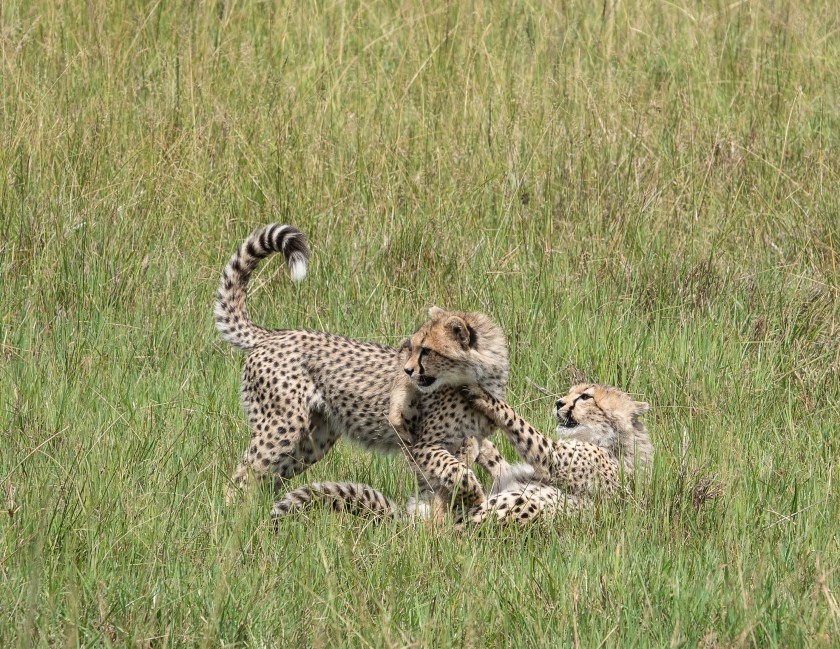
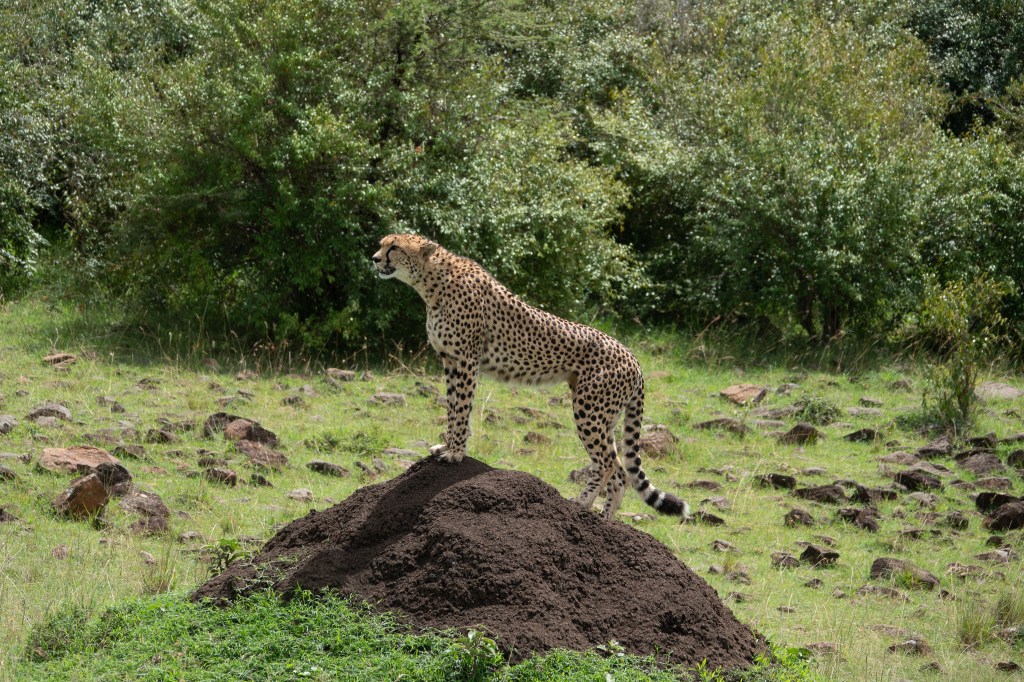
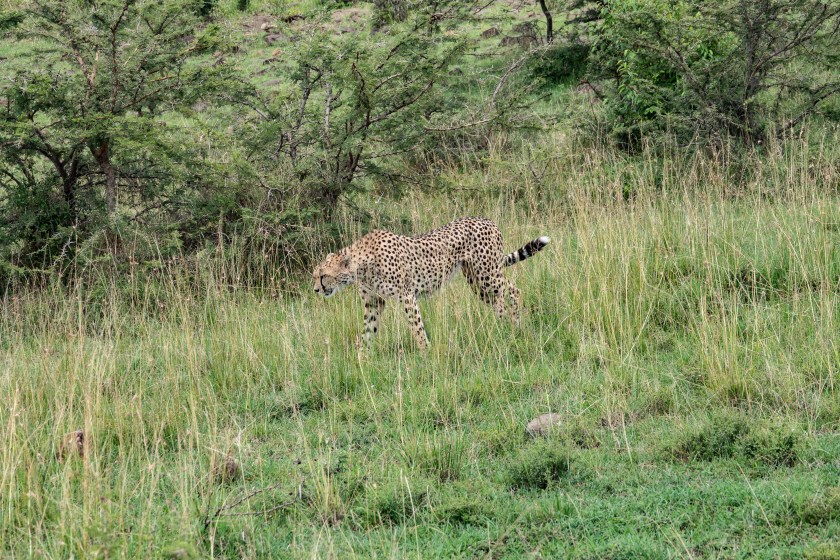
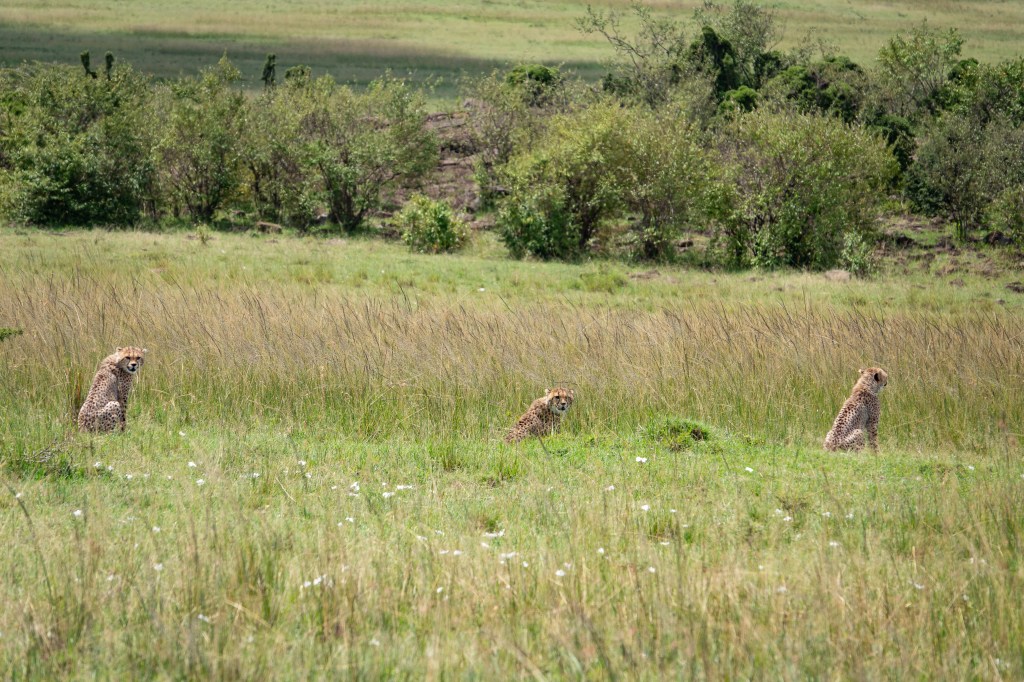
She saw impala on the other side of the valley, and crept through the long grass on her belly, invisible, for as long as she could. Then, when the grass had been grazed short and there was no cover, she kept a termite mound in between her and the impala. In the photo below, the left-hand circle is the cheetah, the termite mound is in the center, and the impala are to the right.

Once she reached the termite mound, she settled down behind it and waited for the impala to come to her, which they foolishly did, oblivious to her presence..
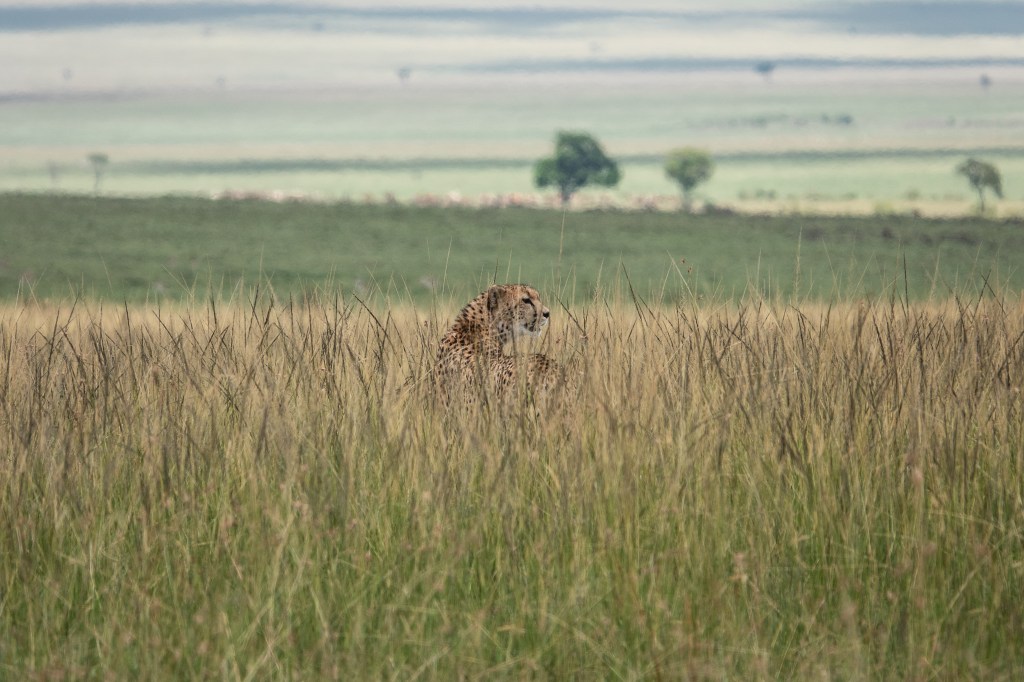
Tinka thought they were still too far away, but the cheetah disagreed. When the impala reached her side of a clump of bushes, she burst out, heading for the one on the right in the picture below, but it saw her, and the one on the left didn’t, so she changed direction and headed for that one. (In case you can’t see her, she is just behind the bushes.)

This was smart: this impala was pregnant, and a fraction slower than the other one. The cheetah is astonishingly fast:
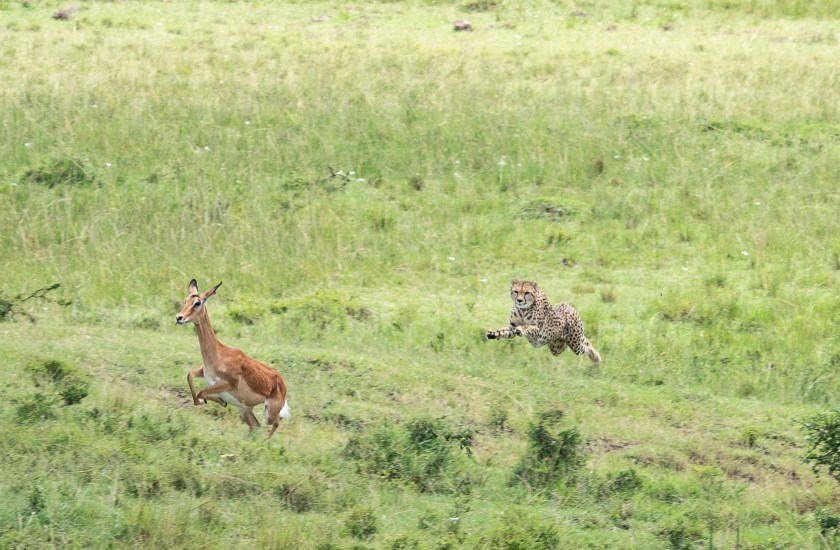
She can reach speeds of nearly 6o mph in a sprint like this, and she accelerates faster than a Lamborghini, and four times faster than Usain Bolt.

The impala sought refuge in a gully: big mistake. This blurry photo shows the moment the cheetah caught her, grabbing her by the throat. The impala is on the left, the cheetah on the right.
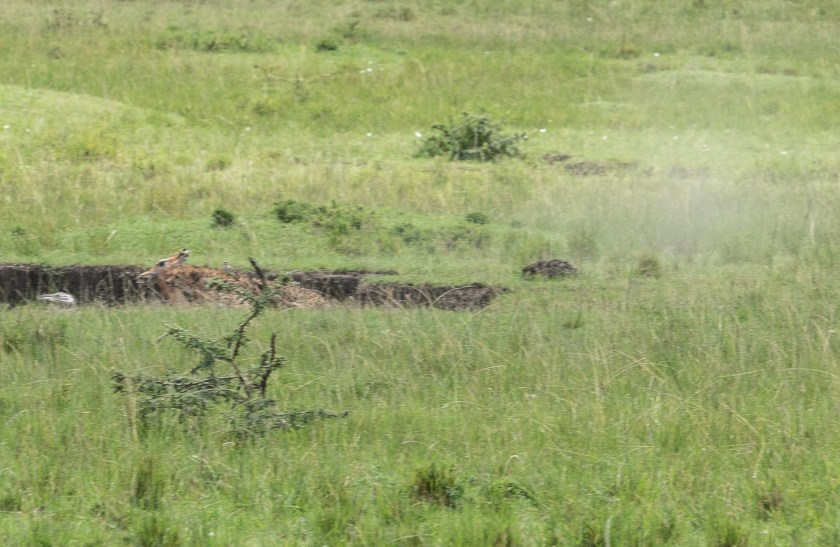
From when she began her final assault it took 11 seconds to the kill.

My guide pointed out that you can see from this shot that the impala’s nipples are enlarged, confirming her pregnancy.
Something they don’t often show on TV is how long it can take for the animals to die. This one took a good five minutes. The cheetah holds it by the throat and asphyxiates it, but every now and again she drops it, thinking it is all over, and the poor thing moves or gasps, so she grabs it again.
This video makes that painfully clear. Not everyone will want to watch. If you listen carefully the poor impala can be heard.
You can also see that the cheetah’s flanks heaving from the exhaustion of the chase, and my guide says that is one reason it took so long for her to finally kill the impala. And she will have to do it all over again two days later.
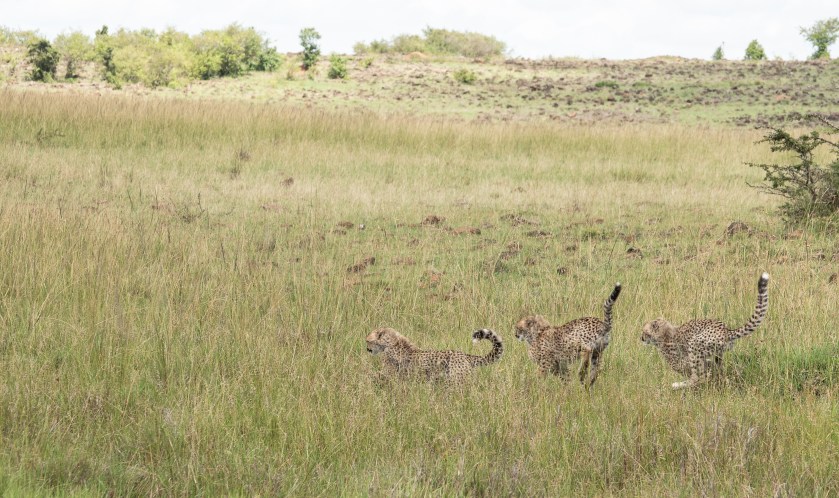
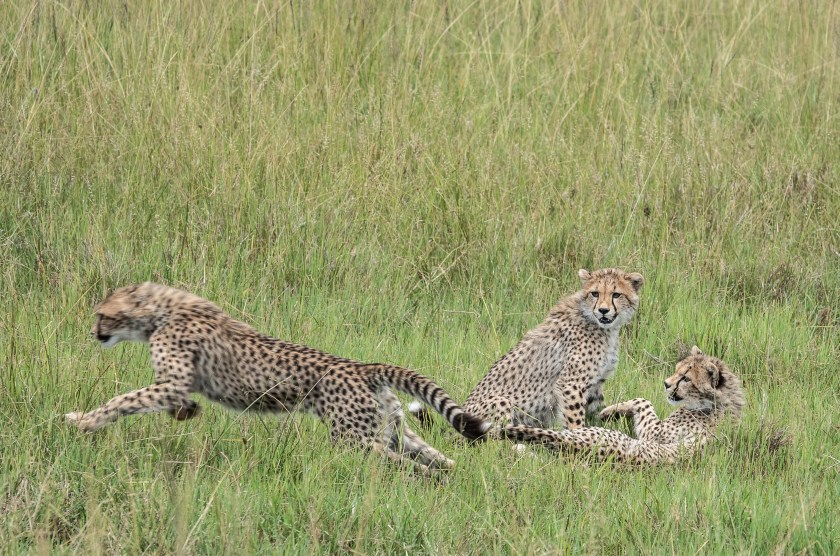
This is glimpse of the realities of how the sacrifice of one mother and her unborn fawn feeds another mother and her three cubs. My next post will show you the feast.
PS More on the cheetah’s speed and acceleration here:
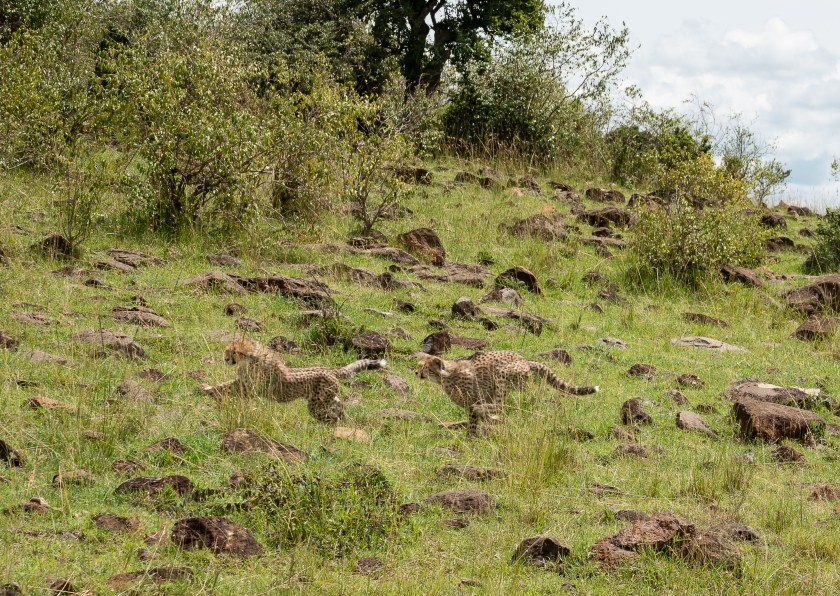
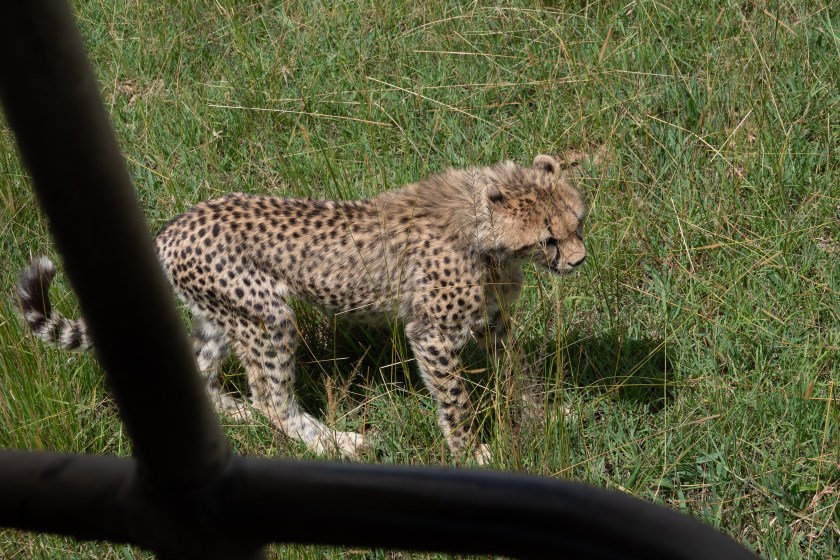
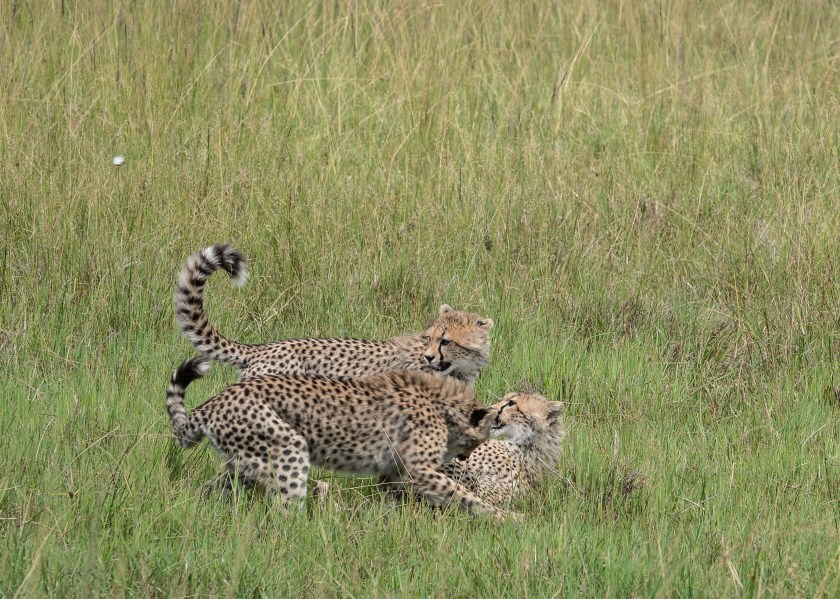
If you point your camera at a cheetah, mother or cub, it is often not there any more. They flash past at dazzling speed, and turn on a dime. This piece is also interesting:
PPS As many of you know, this is not my first safari, and every one has been wonderful . But in case you think you see this every time, it is my first clear look a successful hunt from start to finish in 13 safaris. (Lions and leopards hunt at night.)