The Lofty Ostrich

The ostrich roams the great Sahara.
Its mouth is wide, its neck is narra.
It has such long and lofty legs,
I’m glad it sits to lay its eggs.   (by Ogden Nash)

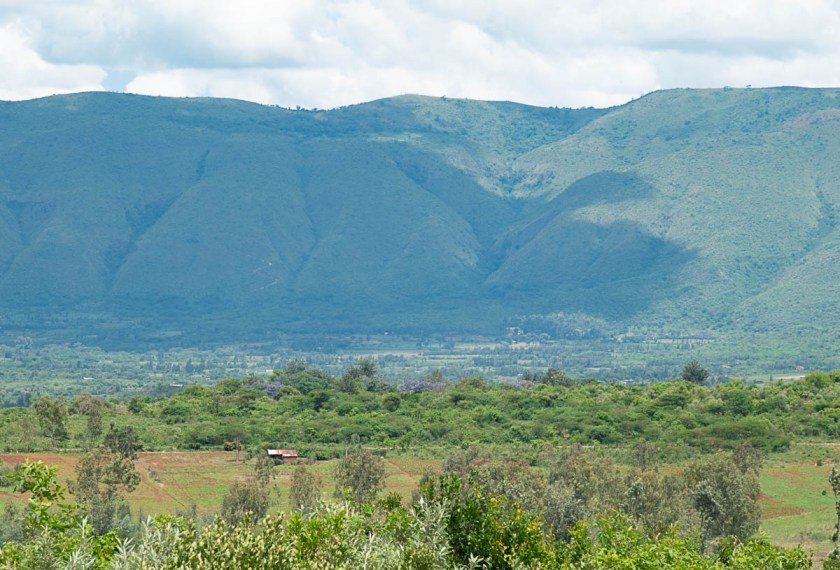
In the 1920’s in Kenya ostriches were farmed for their plumes, and my grandfather made a not-very-successful stab at this on his farm, hidden in the trees behind the small red roofed house,

DSC06193

and now derelict,

DSC06216

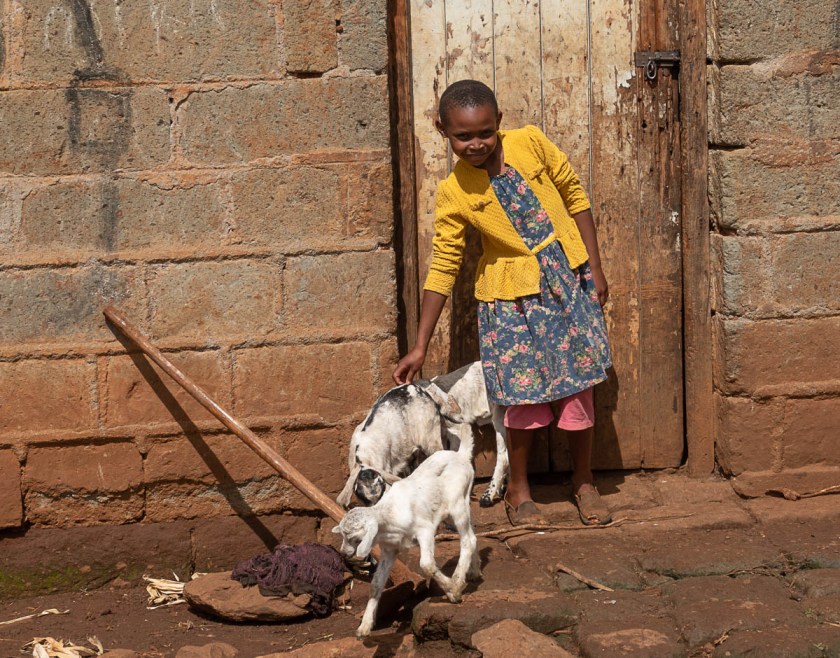
inhabited only by a family with goats:

DSC06227

But wild ostriches flourish in the Maasai Mara. Their scientific name is Struthio camelus, and they do indeed hold their head and neck rather like a camel does. They are the world’s largest bird, standing up to 9 feet tall, and weighing up to 350 lbs.

DSC07711

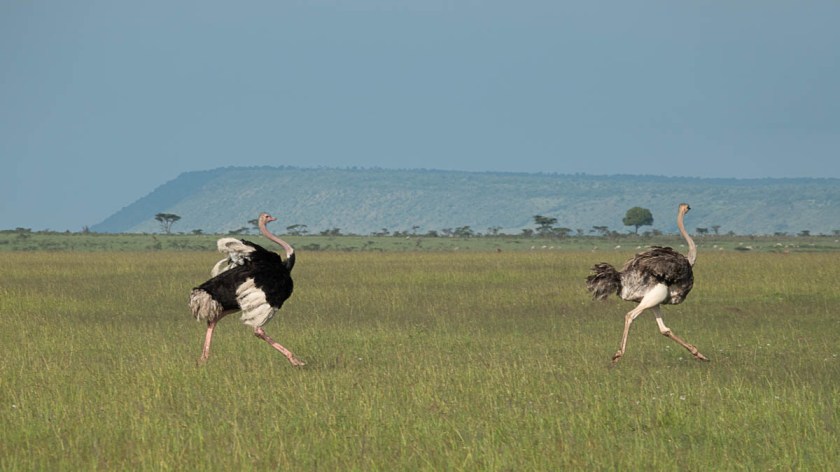
When you drive past in the Land Rover, they take evasive action by running along ahead of and beside you at up to 43mph, using their wings as rudders to change direction:

DSC07720

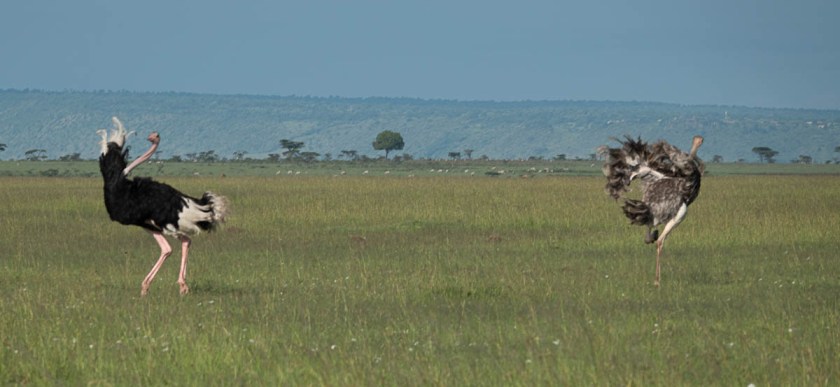
and wiggling their bottoms in a sort of dance as they go:

DSC07721

Their legs are extremely powerful, and a kick can kill a man or indeed a lion. This photo shows both the thigh muscles, and the feathers:

DSC07720

And no, they do not stick their heads in the sand!


Lions couchant

To keep you reading on…

DSC07275

I’ve just returned from a remarkable tripartite trip to Kenya. The first part was a search for the farm near Subukia and the goldmine in Kakamega where my grandfather farmed and prospected 100 years ago, and where my father grew up. The second part was two days in the Maasai Mara, and the third part was a week helping at Saidia Children’s Home in Gilgil.  This is a nature blog, so I will keep quiet about the other parts of my trip, but I will just tell you that I did indeed find the farm and the goldmine, and, more importantly,  that Saidia is a quite remarkable place, which deserves all our support. If you are interested, you can see more here: https://www.orphansupportleague.org

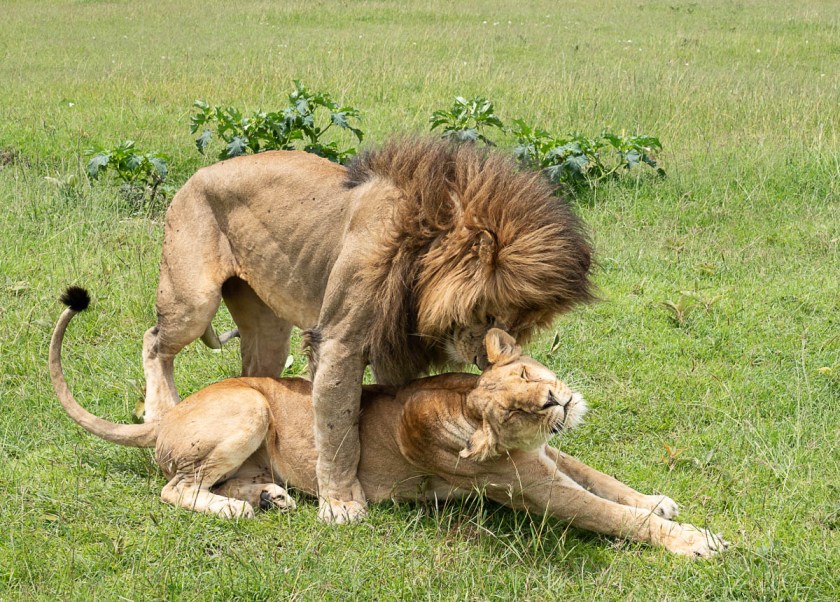
Back to nature. I only had a few days in the wild, and I will start with the most dramatic set of photos: amorous lions!

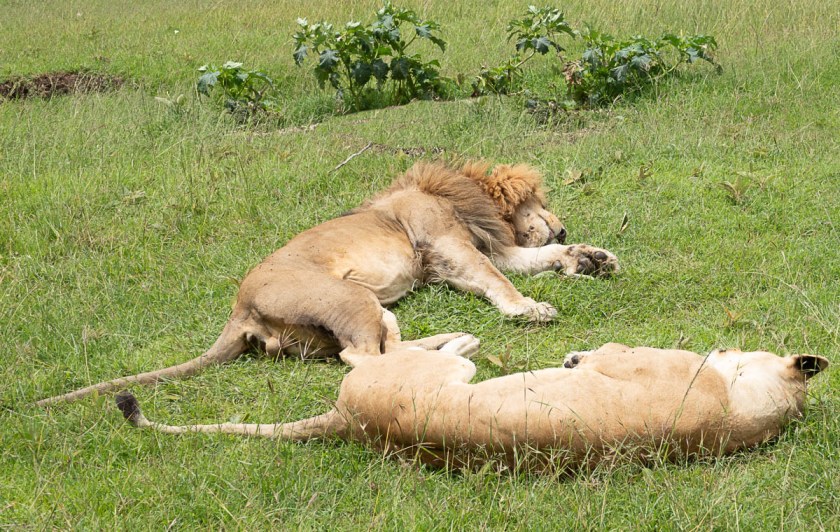
I was with Nemeria, my Maasai guide from Saruni Wild in the Mara North Conservancy. We saw two lions fast asleep:

DSC07252

He told me that a pair like this is there for only one reason: to mate, and that they go off together for 3 or 4 days, and mate “every ten minutes”! So, we settled down to wait. An hour later:

DSC07272

And then the romance unfolded over a grand total of 60 seconds, start to finish. First, a casual overture:

DSC07273

which was not rejected:

DSC07274

and indeed encouraged:

DSC07275

So he got going:

DSC07276

As he was nearly done, a bit of neck-biting:

DSC07292

A triumphant little roar:

DSC07293

And then, exhausted:

DSC07295

They went straight back to sleep:

DSC07296

In case you are wondering whether it was all a bit voyeuristic, you can see that they could not have been less interested in our presence (which was just our one Land Rover, with only me and the guide in it, talking very quietly).

If you think she looks rather pained by the whole thing, lions have barbs on their penis that can be pretty uncomfortable for the female, so you can’t really blame her. Here is a description from the Zambia Tourist Board website:

“The penis is barbed and its withdrawal hurts the female who may twist around and attack the dismounting male. The pain is necessary for feline mating as it is the shock to her system that induces ovulation and permits fertilization.”

In this photo, just after he has withdrawn, you can see that she is in spasm:

DSC07294

Baboons get a grip

[Last post before I head off to Kenya.]

As tiny babies, baboons are carried everywhere, and never seem to fall off no matter how fast their mother runs. Here he is, holding on for dear life, his tiny ear just visible, his miniature tail flying, and his mother’s fur blowing in the wind.

baboon

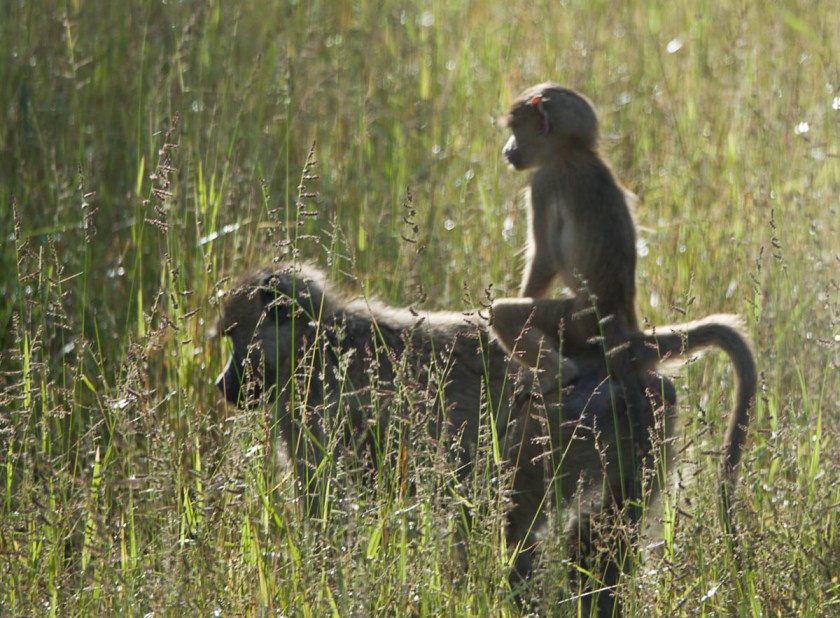
Or, when they are a little older, they ride jockey-style:

Baboons

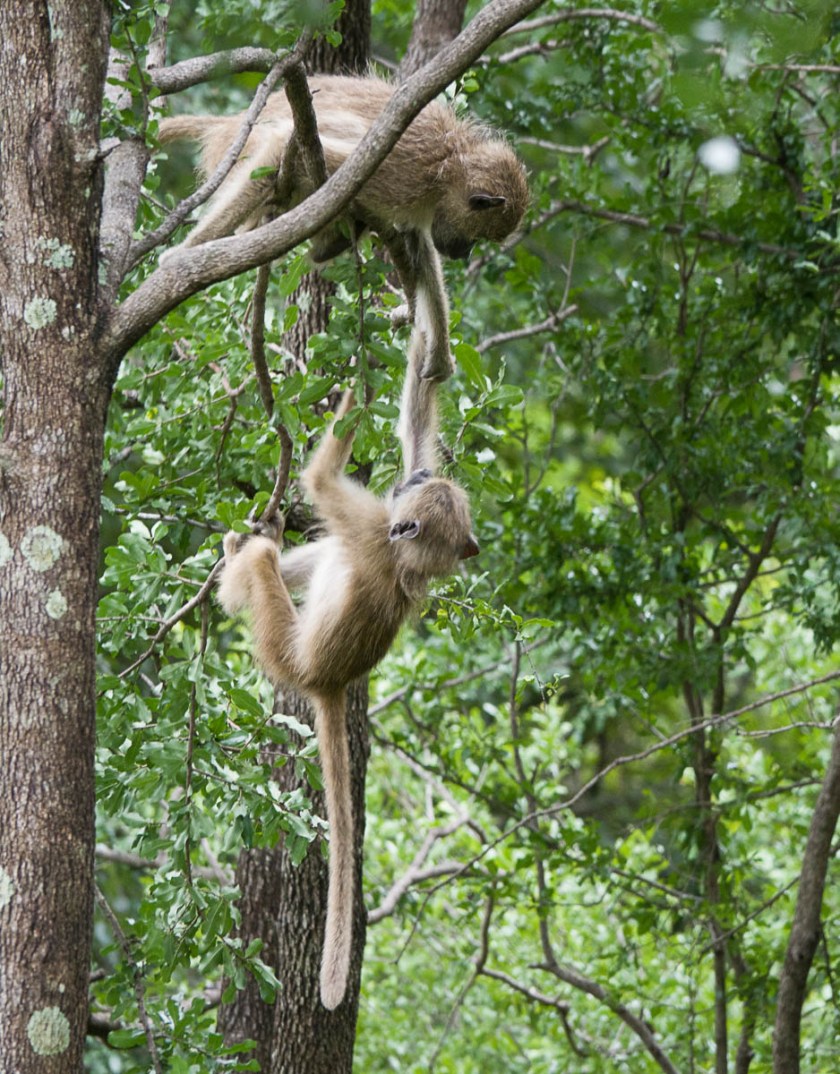
This is all good practice for tree climbing and gymnastics when they become more independent:

BaboonsBaboonsBaboons

These skills are put to good use as adults. This one has climbed a tree to steal a weaver’s nest with, hopefully, eggs or chicks inside:

Baboon with white-browed weaver nest.

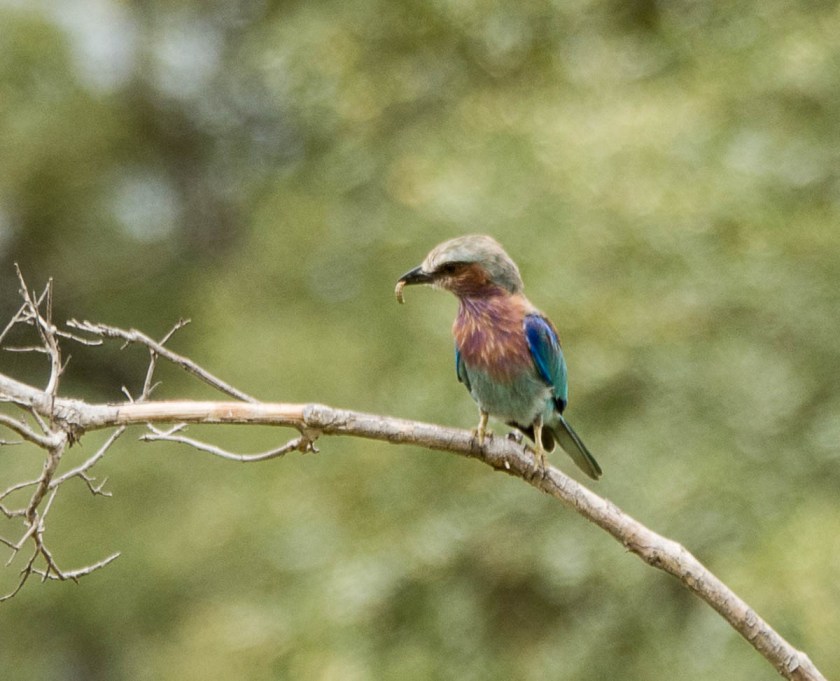
Lilac rollers, all fluffed up

Lilac Rollers live up to their names. Their flight is a soaring, tumbling, acrobatic downwards roll, and their plumage has the most extraordinary colors. They are insectivores:

Lilac-breasted Roller

and on a cool morning, quite something to see, all puffed up with importance:

Lilac-breasted Roller

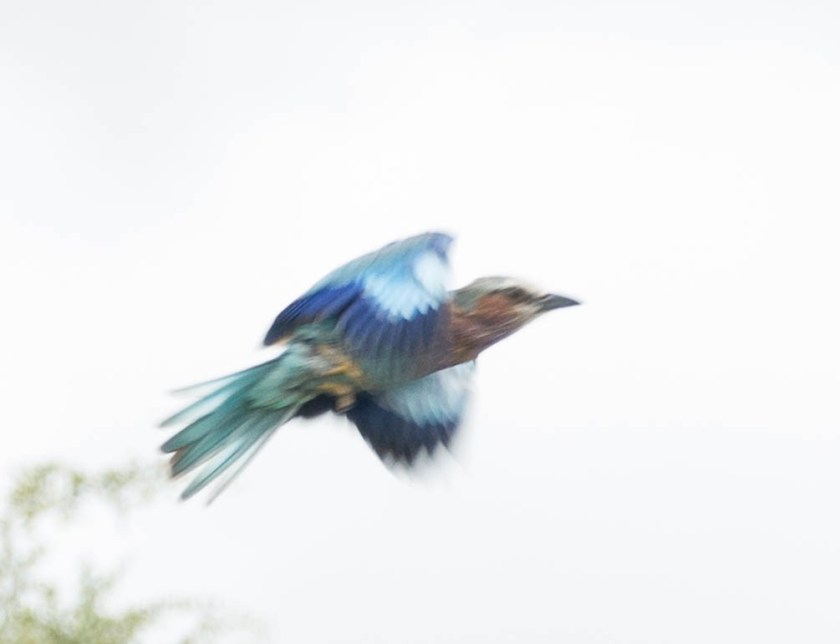
And look at their wing colours in flight:

dsc05455.jpg

‘Twisting-horned billy-goat deer’

Greater Kudu (Tragelaphus strepsiceros) are dramatically handsome antelopes. Their scientific name means “twisting-horned billy-goat deer”, my title for this posting. Bulls weigh 190–315 kg (420–694 lb), and stand up to 160 cm (63 in) tall at the shoulder.

These two males (only the males have horns)  were part of a bachelor group of three.

Kudu. "The Grey Ghosts".

They were sparring to establish dominance before the upcoming mating season.

Kudu jousting

Occasionally their horns get locked together, in which case both may die. Luckily these two disentangled themselves just fine.

Meanwhile the third male was showing his strength by digging with his horns, as evidenced by the dirt and grass stuck on the ends and on his forehead:

Kudu. He has been diggin as a display of strength, note the grass on his horns.


The horns are not like antlers, they are not shed and regrown each season. They have a maximum of two and a half twists, and this last male is just about there, suggesting he is at least six years old. When the ends of the horns show white, they have stopped growing.

Kudu are called the Grey Ghosts, because they disappear so silently into their woodland habitat.

DSC03243

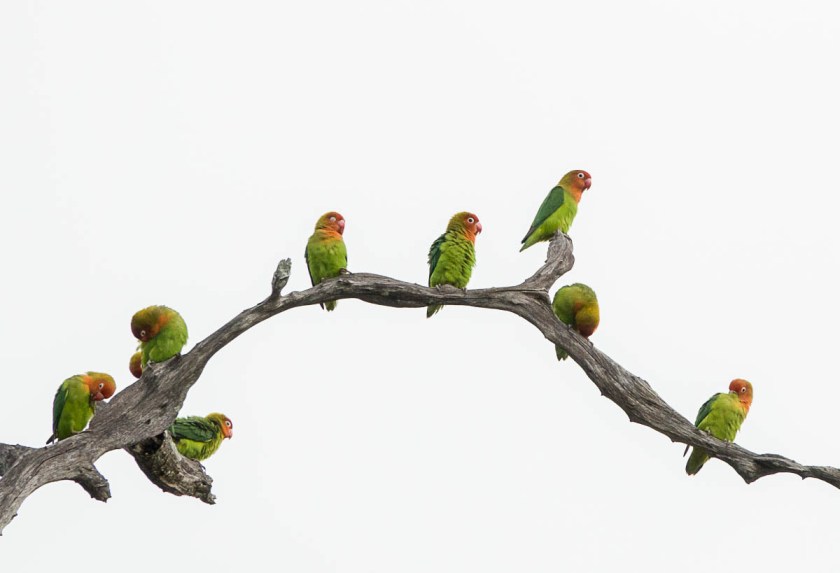
Parrot landings

[I am in London for three days, before going to Kenya to visit an orphanage run by a friend. I still have plenty of Zambia photos left to share, so I thought I would send one post a day until I leave on Wednesday.  Then I’ll be out of email contact for two weeks, I suspect, and will resume on my return.]

I only saw two types of parrot-like birds in the South Luangwa..

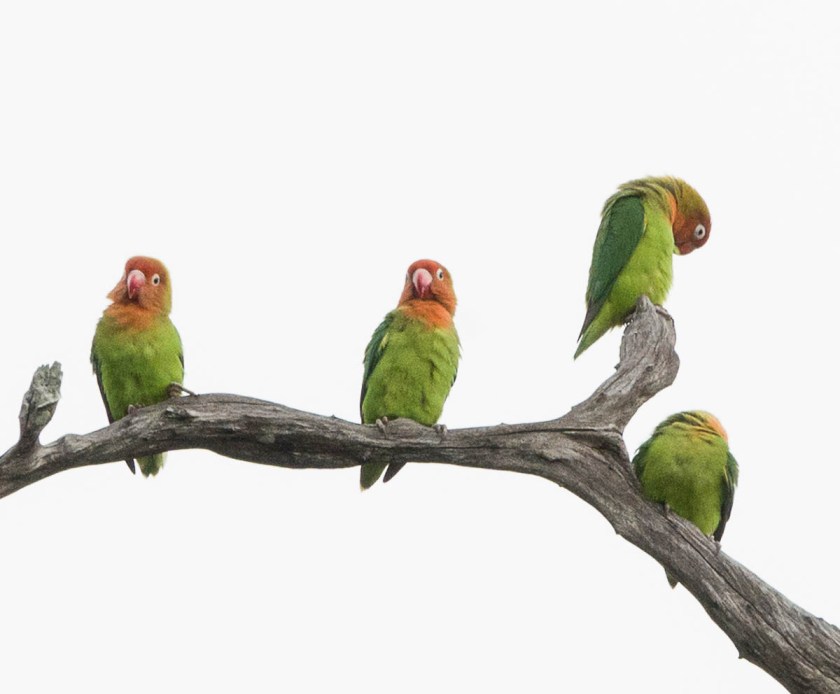
The first was an entire flock of the wonderfully named Lilian’s Lovebirds (Agapornis lilianae), Africa’s smallest parrot at about 5 inches long.Lillian's lovebirds

Lillian's lovebirds

They are Near Threatened, and are endemic to this small area of mopane woodlands. There are thought to be only about 20,000 of these lovely birds left in the wild. I have often wondered who Lilian was, but I have failed to track her (or him?) down. They are monogamous, with the male and female pair forming a tight bond, but in breeding season (when I was there) they collect in larger flocks.

And here is an elegant Cape Parrot, with its enormous bill.

Cape parrot, northern race.

The pair of Cape parrots landed in a tree that was occupied by buffalo weavers, who took quite a dim view of the parrots’ arrival. But after awhile some sort of accommodation was arrived at, and everyone settled down.

Mud, mud, glorious mud

It is mud season in Maine, but also in the South Luangwa valley.

Competing with the kudu on the horn front, the African or Cape Buffalo (Syncerus kaffer) has a formidable pair. The bases of the two horns have fused, forming a continuous bony shield called a boss.

Buffalo

This fellow was one of a pair of old bulls, wandering forlornly around having just come from a comforting roll in the mud. The older animals especially like the mud, because their coat is thinning, with bald spots, and the mud protects against parasites, and the strong sun. A new treatment for male-pattern baldness, perhaps?

You can see the teeth of the one below, showing clearly how the sharp incisors cut the grass, the tongue bundles it up, and the rear molars grind their food down; see how worn they are by this age. Because of this, when they are older they seek out areas with tender young grass that is easier on their teeth.

Buffalo. Note his teeth.

They have poor eyesight, but they are extremely dangerous if you catch their attention, and they charge. They can measure up to 1.7m  (5.6 ft) at the shoulder, and weigh up to 1000Kg (2200lbs), so it is a good idea to get out of the way fast.


Aerial deliveries

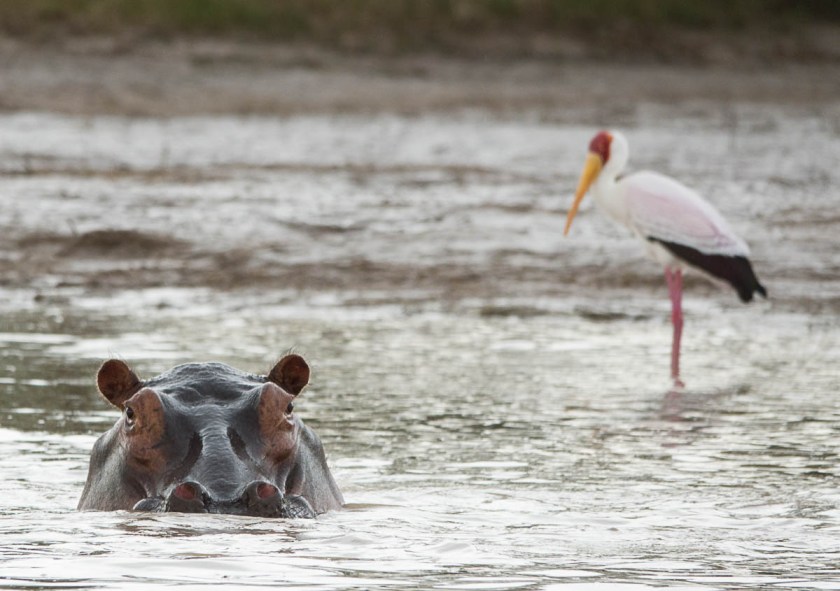
The Yellowbilled Stork (Mycteria ibis), which stands about a meter tall, lives along waterways, and in grasslands:

Hippo and yellow-billed stork

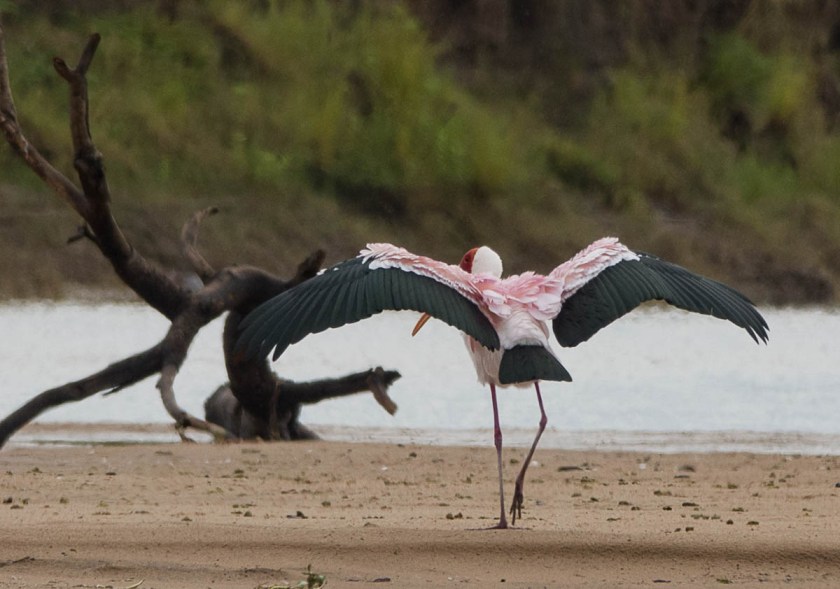
They like water between 10-40 cm deep; any deeper, and they can’t hunt effectively.  In the breeding season, the normally white plumage transforms into a sugared-almond pink tutu:

Yellow-billed Stork in breeding plumage

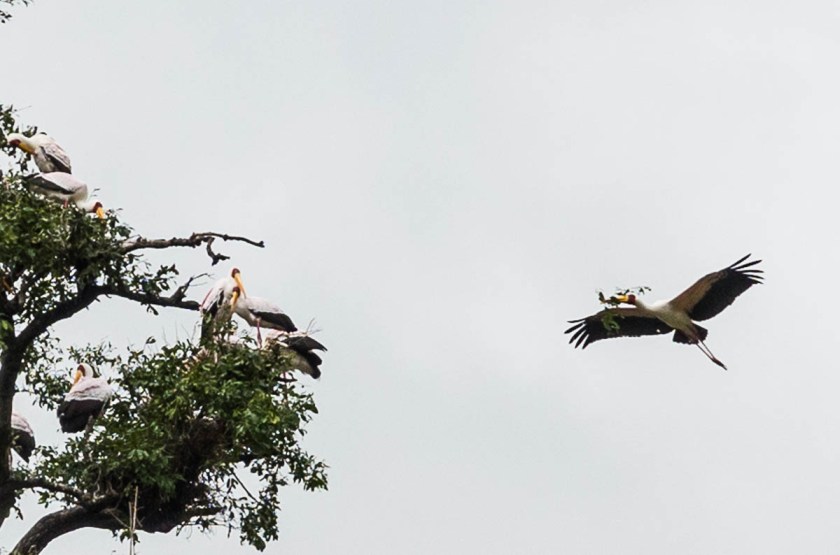
They gather in huge colonies in the treetops to nest.

Yellow-billed stork breeding colony

(NB: All the remaining photos were taken from this same spot with my zoom, so some are not great.)

The males ran a non-stop delivery service of nesting materials: they are years ahead of Amazon’s drone fleet:

Yellow-billed stork breeding colony

When I was there, they were mainly nest-building and beak-clacking in their noisy courting rituals,

Yellow-billed stork breeding colony

but some seemed to have already found their mates:

Yellow-billed stork breeding colony

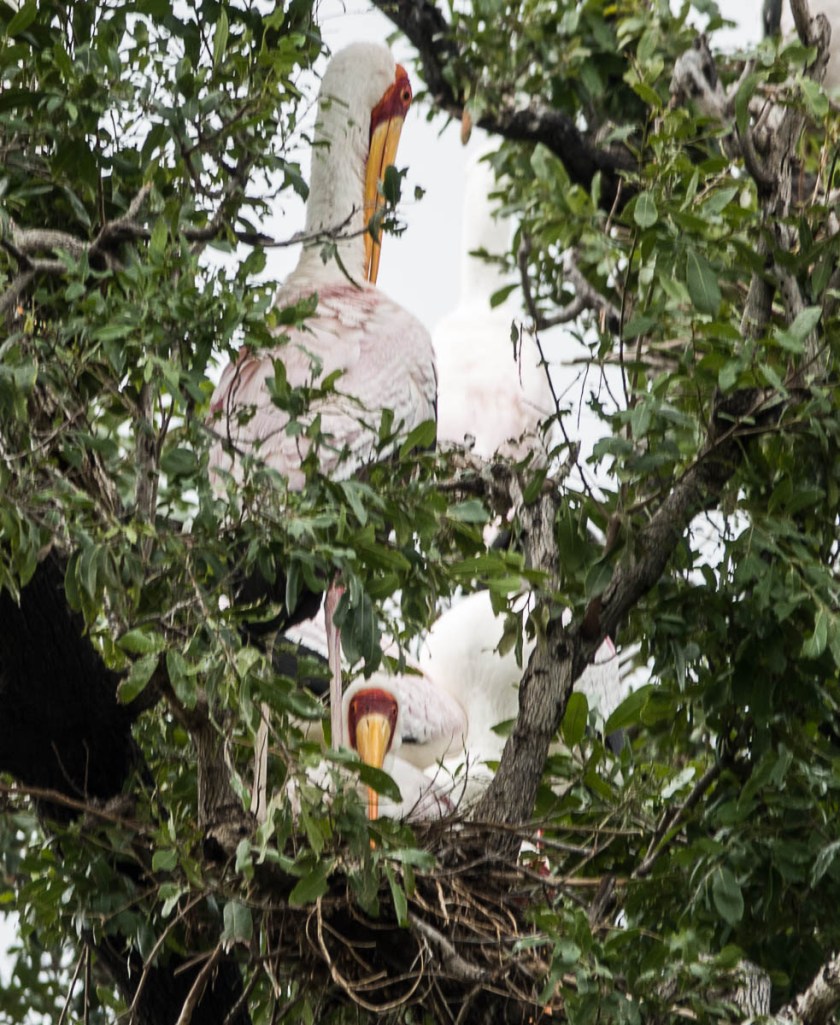
and this female was settling in, while her spouse stood sentinel:

Yellow-billed stork breeding colony

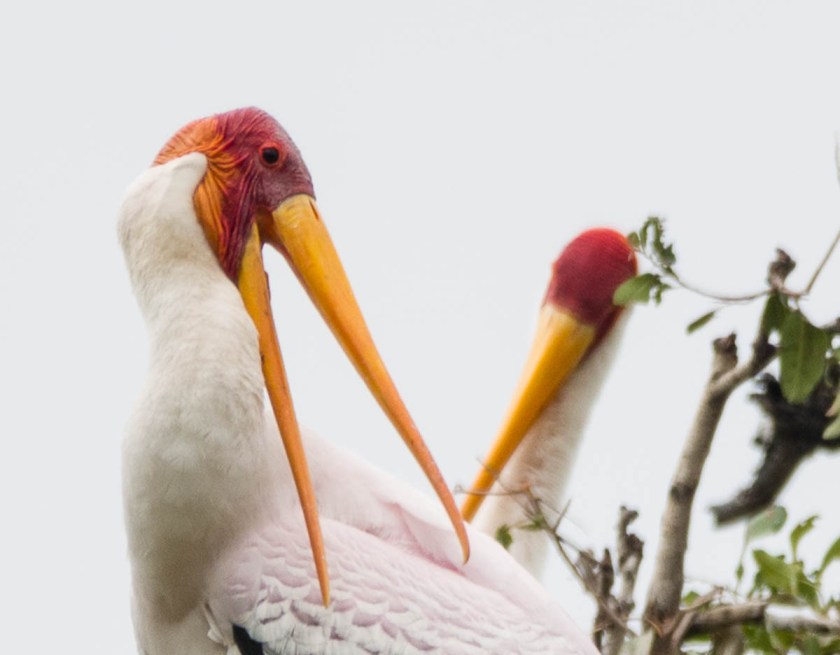
The German common name of this species is ‘Nimmersatt’, meaning ‘never full’, due to the eating habits of the nestling: it increases from 60 grams to 500 grams in weight within the first ten days of life. Imagine if a human baby increased 100-fold in ten days from 6lbs to 500lbs.. (There may be a Hollywood movie idea in there somewhere?)

The chicks must be both greedy and brave to eat food regurgitated from this fearsome naked red head and lethal bill

Yellow-billed stork breeding colony

Let sleeping lions lie .. and zebras beware

Two postings ago I showed you a zebra reacting to an elephant. But the beasts to be truly scared of in the bush are of course these:

Garlic, Ginger's friend.

This is Garlic (above), and his best buddy, Ginger (below), and like most male lions sleeping is their main activity:

Ginger, a male lion who lacks pigment in his mane.

Ginger is nine years old, and he is famous because he lacks the normal black pigment in his mane, tail tip, and pads, a condition called erythrism. It is distinct from albinism, since his coat is not white and his eyes are not red. *

Sleeping lions are harmless enough, but when they wake up, zebras beware.

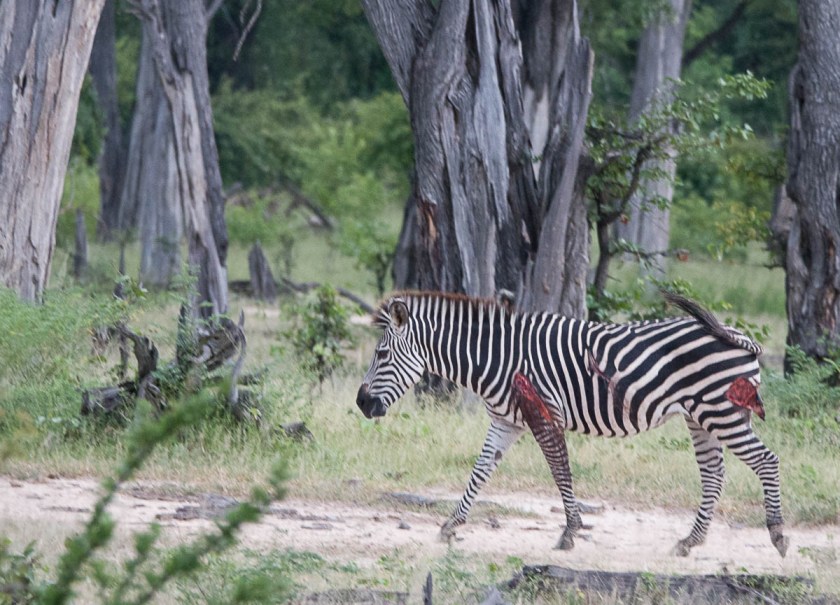
Zebra

This zebra was at the back of a fleeing herd, and the cause of the herd’s alarm is clear: lions. By some miracle, this zebra had got away, but unsurprisingly she was moving stiffly and struggling to keep up with the others. Reassuringly, the guides said she only had flesh wounds and would probably recover.


*More on Ginger’s history here: http://safaritalk.net/topic/15727-ginger-the-golden-lion-of-south-luangwa/

A frog he would a-wooing go..

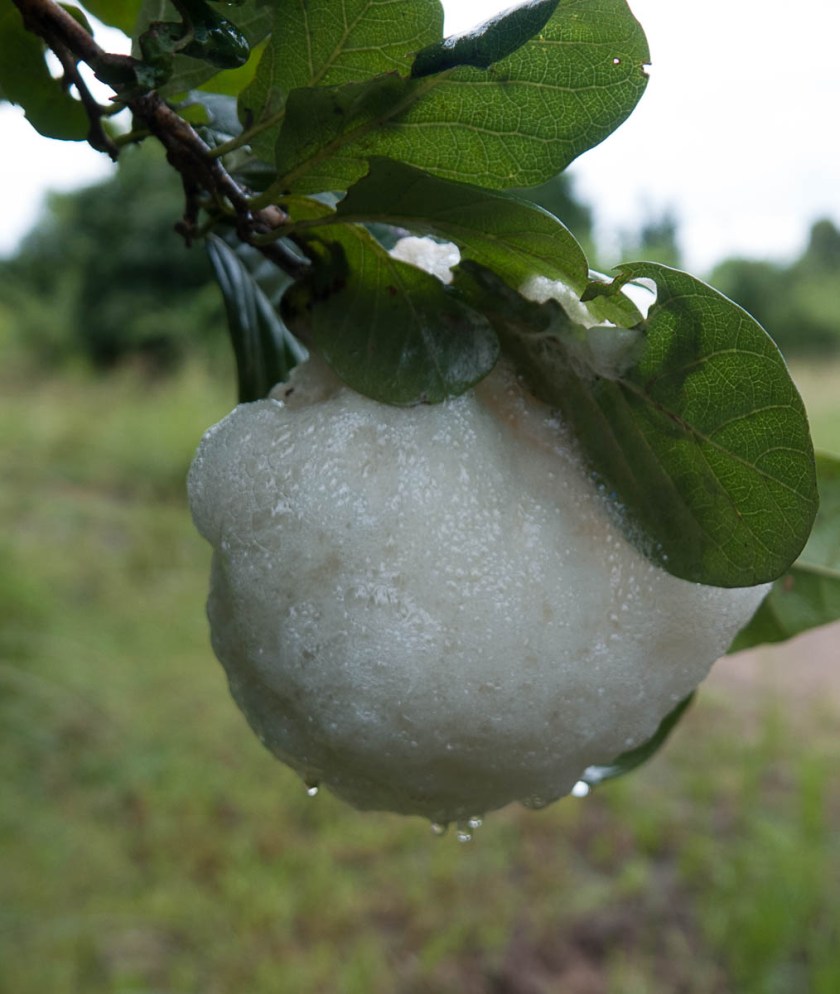
One morning after a night of heavy rain we found this mass of foam hanging over the muddy track.

Frog foam nest. When tadpoles hatch they drop into a puddle below.

About the size of a large grapefruit, it turned out to be the nest of the terrestrial African Foam Nest Tree Frog, Chiromantis xerampelina. Its construction is the culmination of a Bacchanalian orgy.

The female secrets a mucus from her cloaca, together with water from her bladder, and then she and an entourage of males whip this into a foam by churning it with their hind legs. Into this she lays her legs, and the males fertilize them, adding sperm to the mix. There can be up to 12 males, and the whole thing takes a long time, so the female takes breaks in the middle to rest and hydrate.

They build these astonishing nests above muddy puddles, and when the tadpoles hatch they drop into the puddle, where they stay until they grow into frogs. If the puddle dries out too soon, “Tough luck” as one of my guides said.

If you are still reading, you might also be interested to know how these tiny tree frogs survive the intense sun and heat of the long hot dry season. They have unusual skin that resists water loss, but their ventral skin lacks this property, so they curl up, with all the vulnerable parts tucked underneath them, and secrete a special mucus to seal any remaining gaps. There they stay, motionless, drop their breathing rate, and aestivate.

PS: According to Byrne and Whiting (2008) “Offspring of .. polyandrous encounters are more likely to survive than the eggs fertilised by a single male.” So much for monogamy