Peckish

[The red coiffure seemed suitably festive for today. I do hope you have a wonderful holiday.]
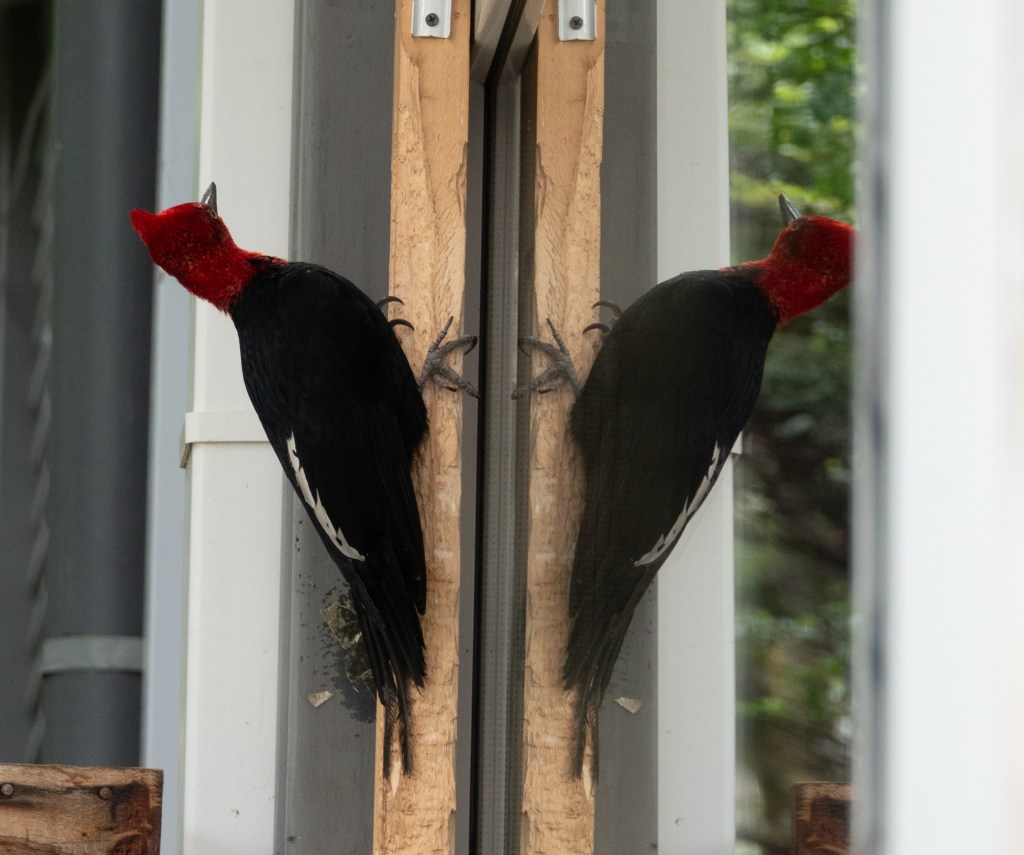
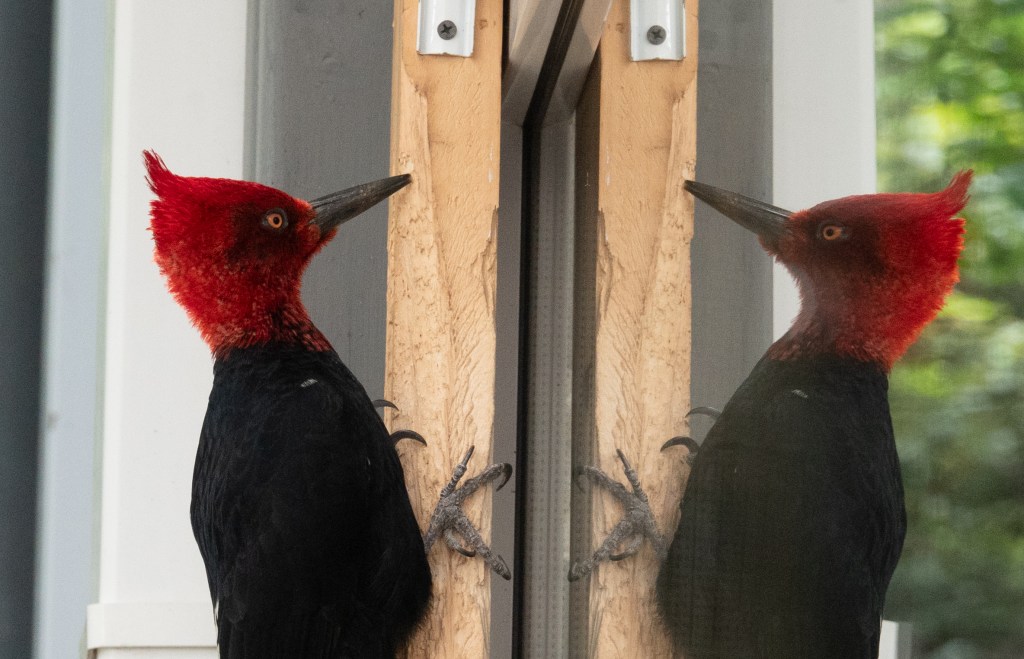
One of the largest woodpeckers in the world lives in Patagonia: the Magellanic Woodpecker, Campephilus magellanicus. This is a handsome male: yes, there’s just one in this photo, though he apparently thinks he’s met a rival, living inside Hotel Lago Grey:

He gives him a sideways look:

Perhaps when he looks back his competition will have thought better of it. No such luck, still there:

So he decides that a war dance is the best strategy :

All this while his mate has been waiting patiently for her Don Quixote to give up tilting at windmills :

And her patience is rewarded. Visions of that glossy curly black quiff draw him back to her side:

They have no close relatives, but the closest may be the extinct ivory-billed woodpecker. The males can weigh up to 360g, a little larger than a Pileated Woodpecker.

Before I leave this post, Patagonia also has the rather drab Chilean Flicker, Colaptes pitius, a species of woodpecker that forages on the ground like its North American counterparts:

It is a male, because it has a dark mustache :

A Tale of Seven Pumas: Numbers 1-2

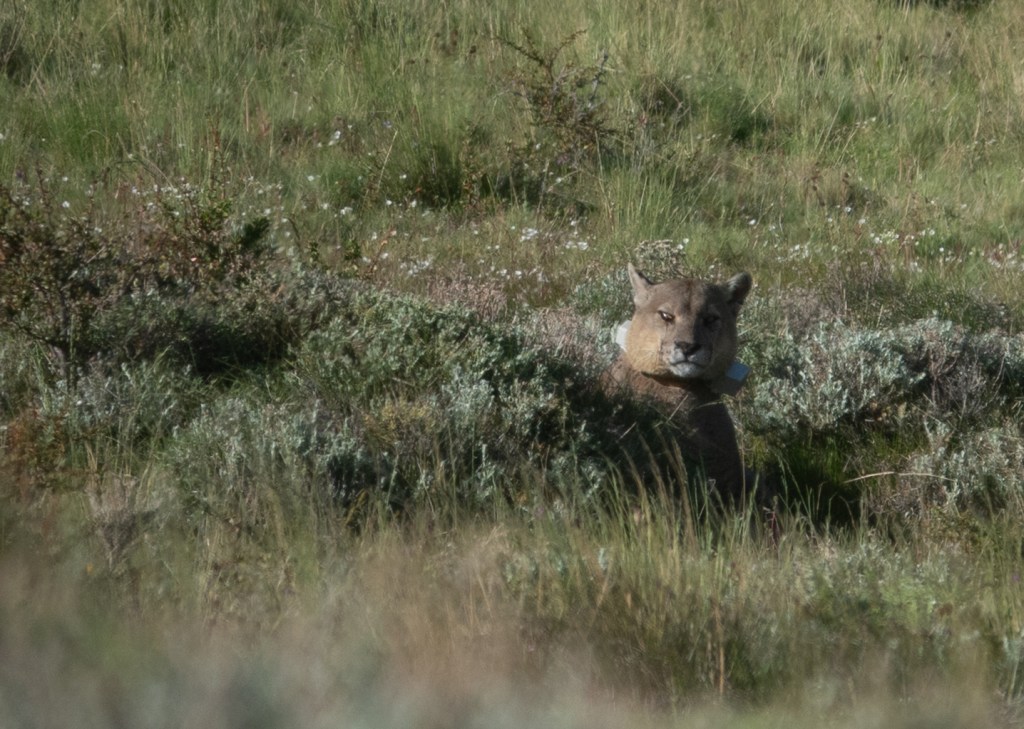
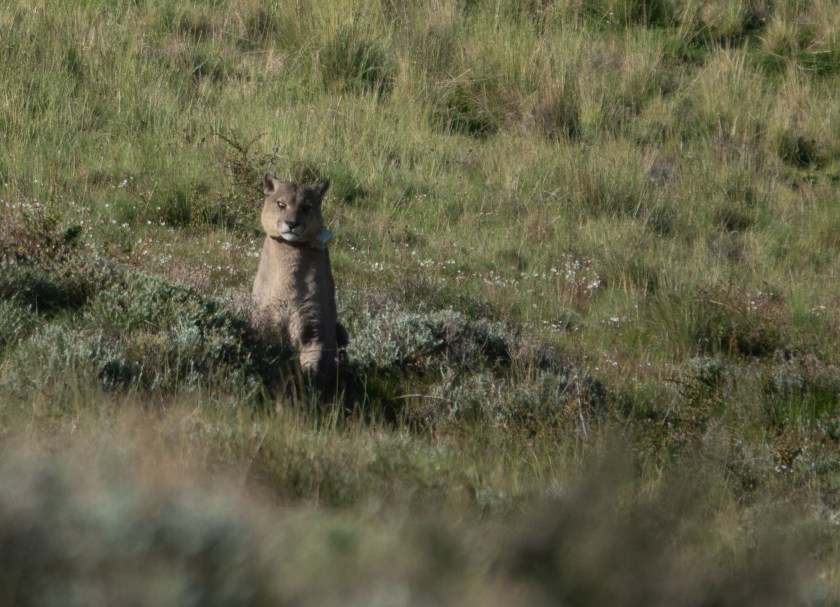
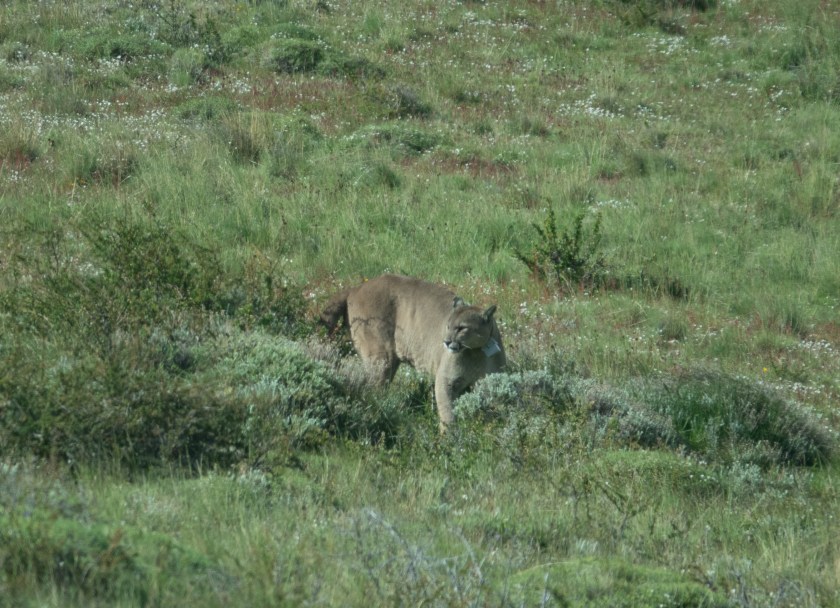
Our particular interest on this Chile trip was trying to find puma (mountain lion) in Patagonia. The local cattle and sheep estancias are slowly converting to wildlife tourism, and instead of shooting the pumas (which are protected in Chile) they now track them and bring people like us to see them. The animals (some more than others) are getting slowly habituated to vehicles, and don’t act as secretively as they once did, and as they still do in most of the US (where they can be legally hunted).

I’ll tell the tale in four blog posts, chronologically, and perhaps with pauses for other things, so you don’t get too blasé about pumas.

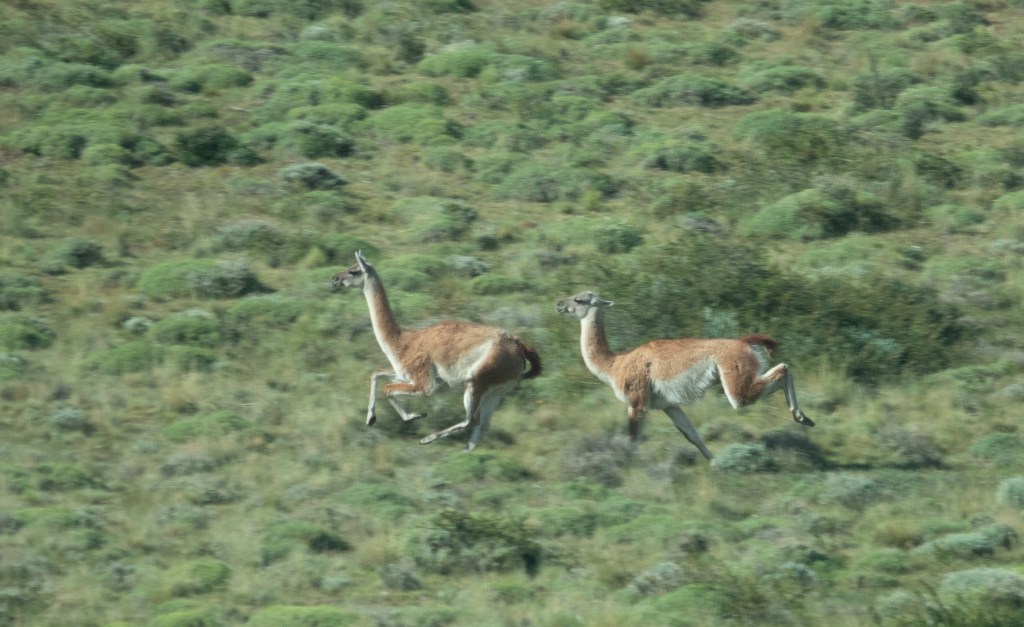
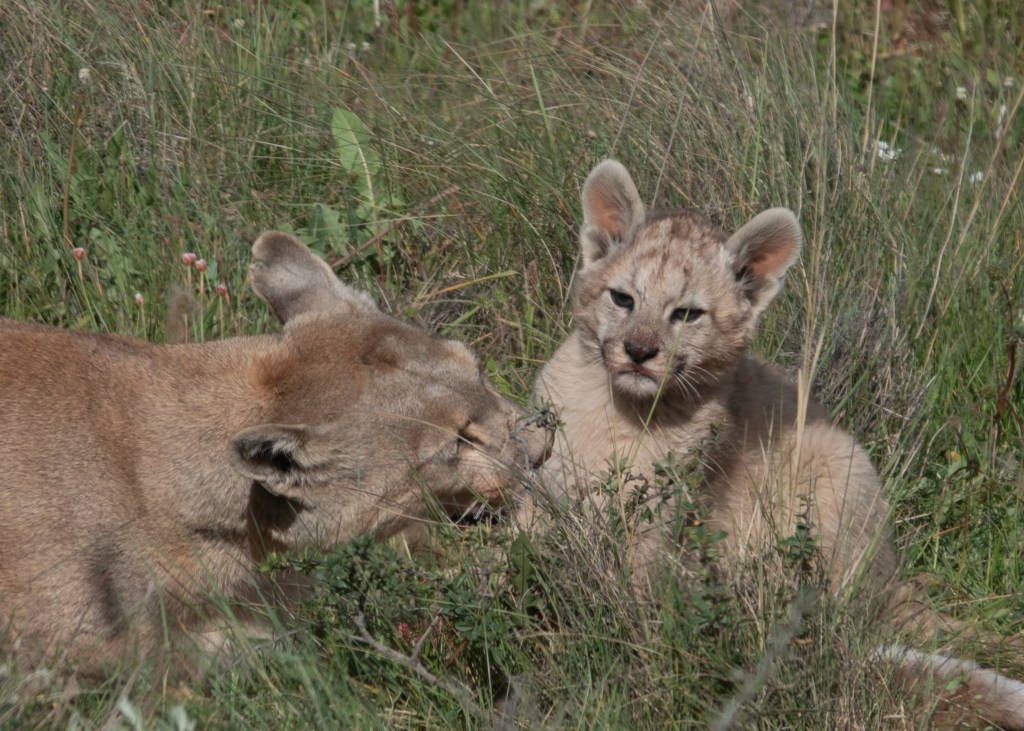
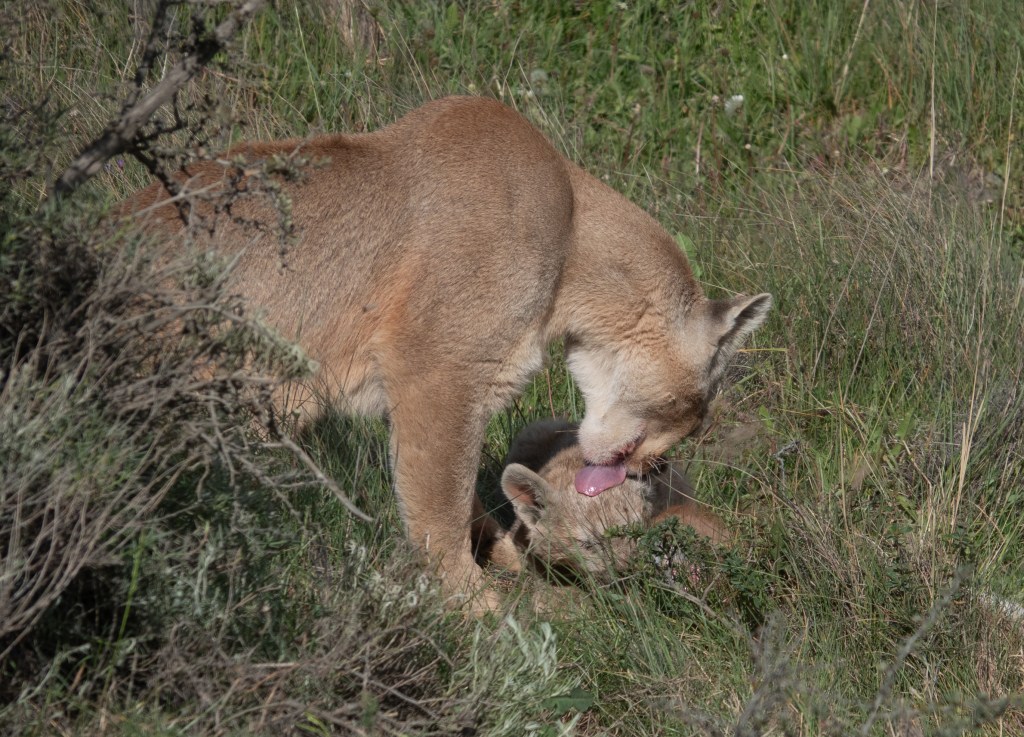
We had been traveling all day from Tierra del Fuego, a 7am start, a 2 hour drive, a ferry across the Straits of Magellan, and another 6 hours on the road. We were almost at our lodge, the Hotel Pehoé on an island in a lake in Torres del Paine National Park. There were a few cars pulled over on the side of the road, so we stopped too. Right by the road a mother puma had killed a baby guanaco for her two cubs, and the mother and one cub were feeding a few feet away, unconcerned. The cub is about two months old.

One cub was nowhere to be seen, but the remaining one was curious and unafraid. In the left foreground you can see the leg of the kill.

The bond between them was almost tangible:

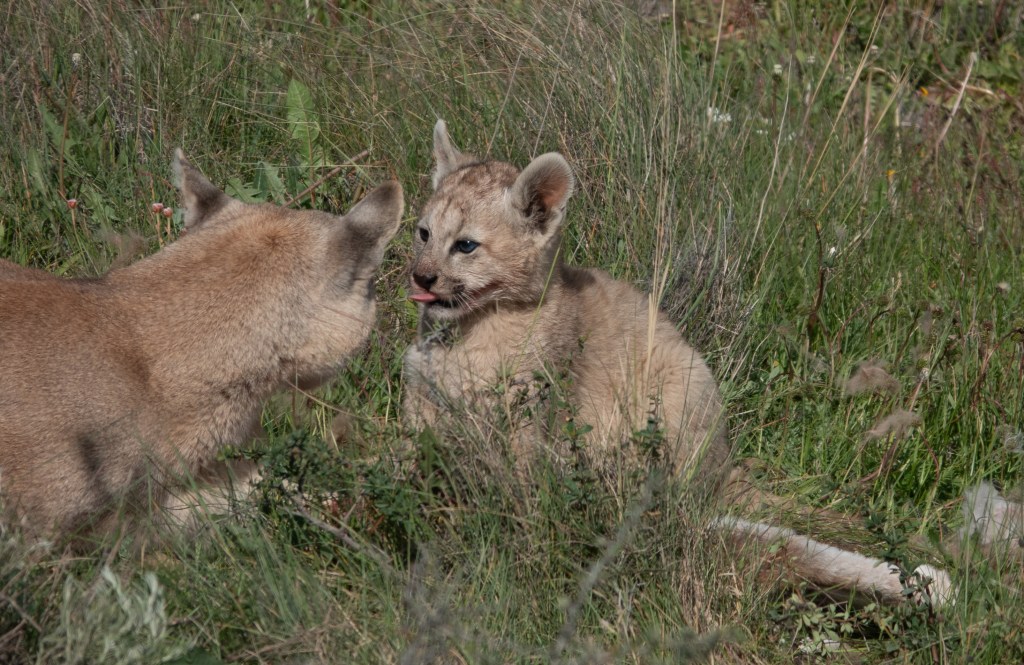
I’m not sure if you can see, but the cub still has blue eyes. The mother groomed her cub thoroughly, from top:

to bottom:

The cub is clearly showing an interest in meat, but it is still nursing as well, which may be what it is trying to do here:

The mother was elegant

and not to be trifled with, keeping a careful eye on her human fans:

After nine minutes they moved slowly off back into the scrub, the cub bounding ahead:

and the mother eventually taking the lead:

And they melted away into the 700 square miles of the park. We were extraordinarily lucky. It is rare to see puma in the national park itself, because the rules require you to stay on the official park road. For the next two days we will be searching outside the park with a tracker.

PS The puma, Puma concolor, has many other names, including mountain lion, and cougar. It is not officially a big cat. There are only five of those, all in the sub-family Pantherinae. Pumas are not in this sub-family, which contains the four cats that can roar – lion, tiger, jaguar and leopard – and their very close non-roaring relative the snow leopard. Instead, they are in the sub-family Felinae, alongside cheetahs, lynx and bobcats.

According to Wikipedia, pumas are the fourth largest cat species worldwide; adults stand up to 90 cm (35 in) tall at the shoulders. Adult males are around 2.4 m (7 ft 10 in) long from nose to tail tip, and females average 2.05 m (6 ft 9 in). Males weigh up to 72 kg (159 lb), and females up to 48 kg (106 lb). The largest recorded cougar, shot in 1901, weighed 105.2 kg (232 lb).

Iriarte et al (1990) show that pumas who live nearer the poles weigh much more than they do closer to the equator. In Patagonia, their mean body weight is 55.6Kg, vs 43.6Kg in Arizona. They’re roughly the size of a cheetah, and much lighter than a lion. But they are perfectly capable, very very rarely, of killing humans

The Chungungo, or Sea Cat

[The next several posts will be from Chile, where we spent a wonderful two weeks in November and December.]

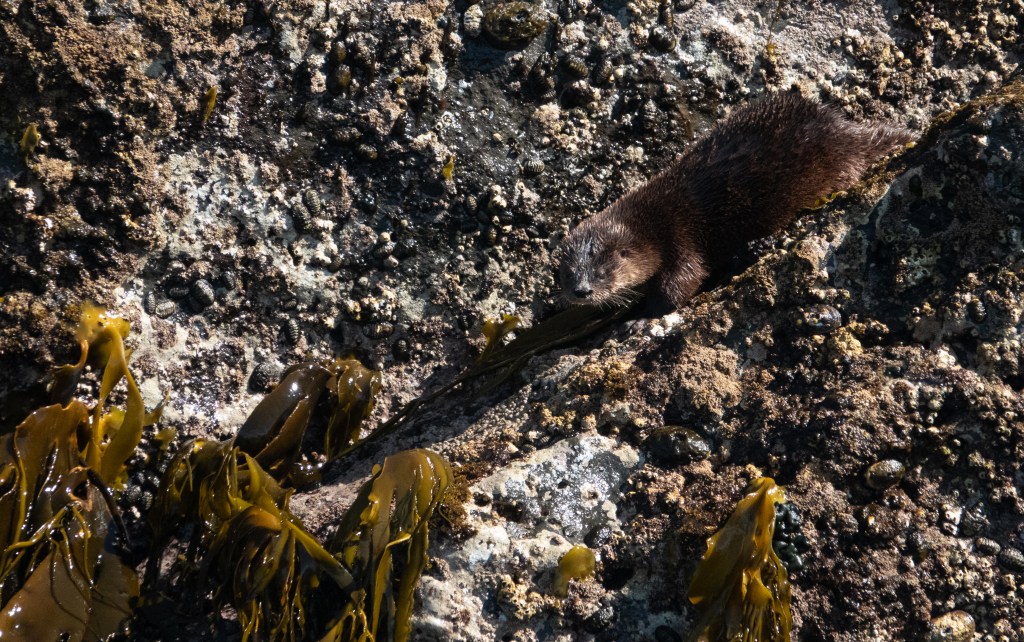
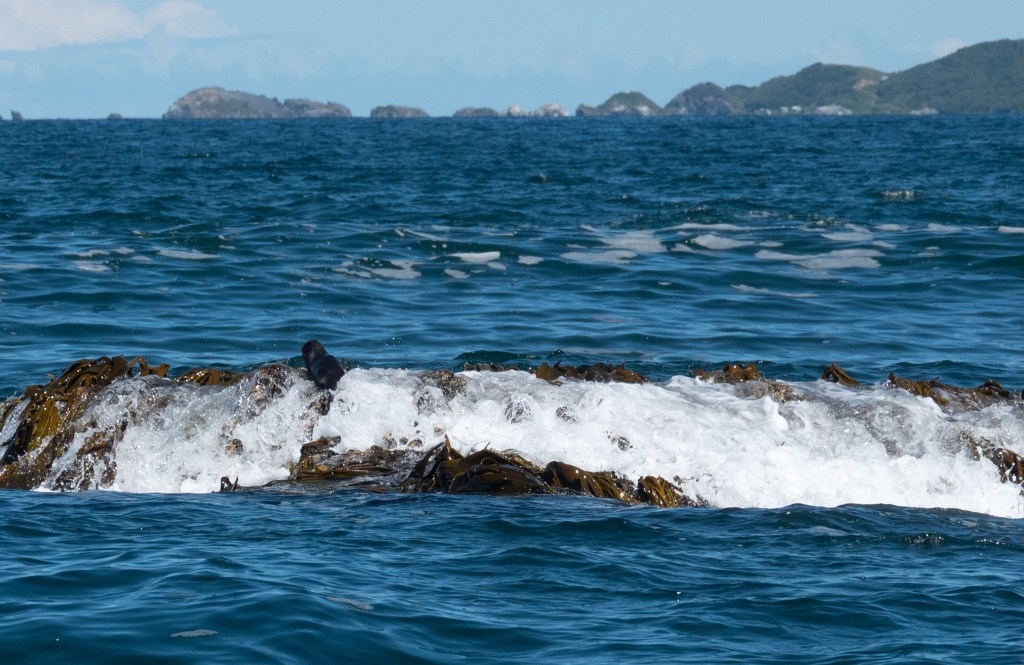
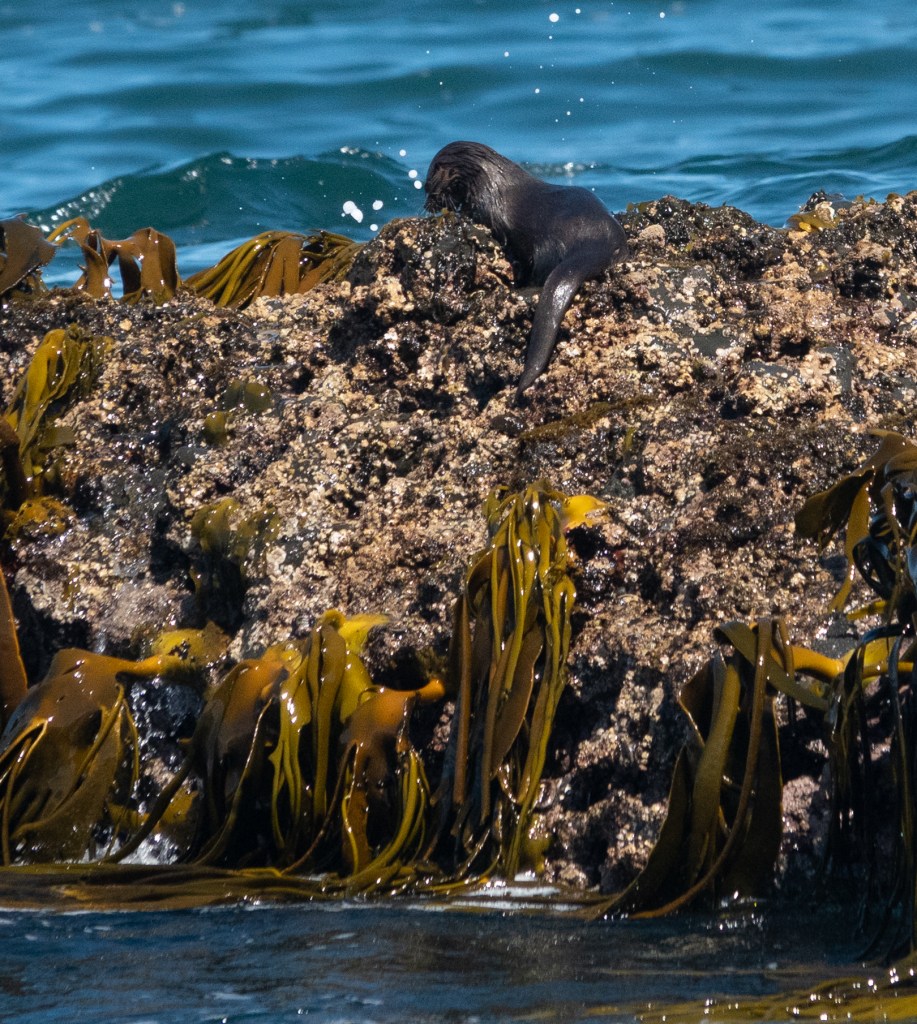
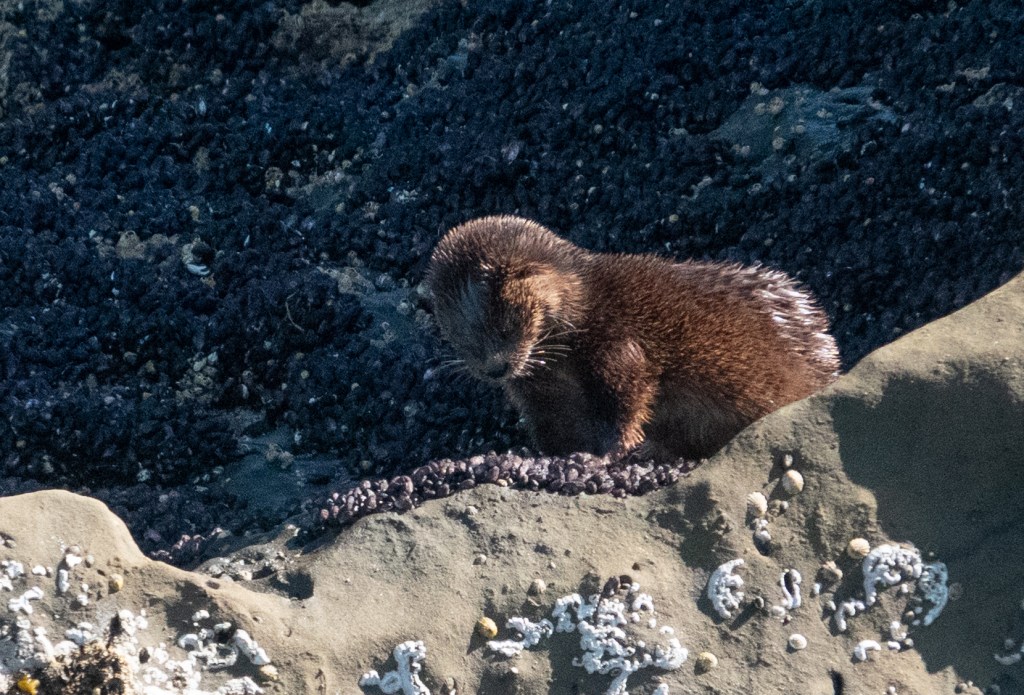
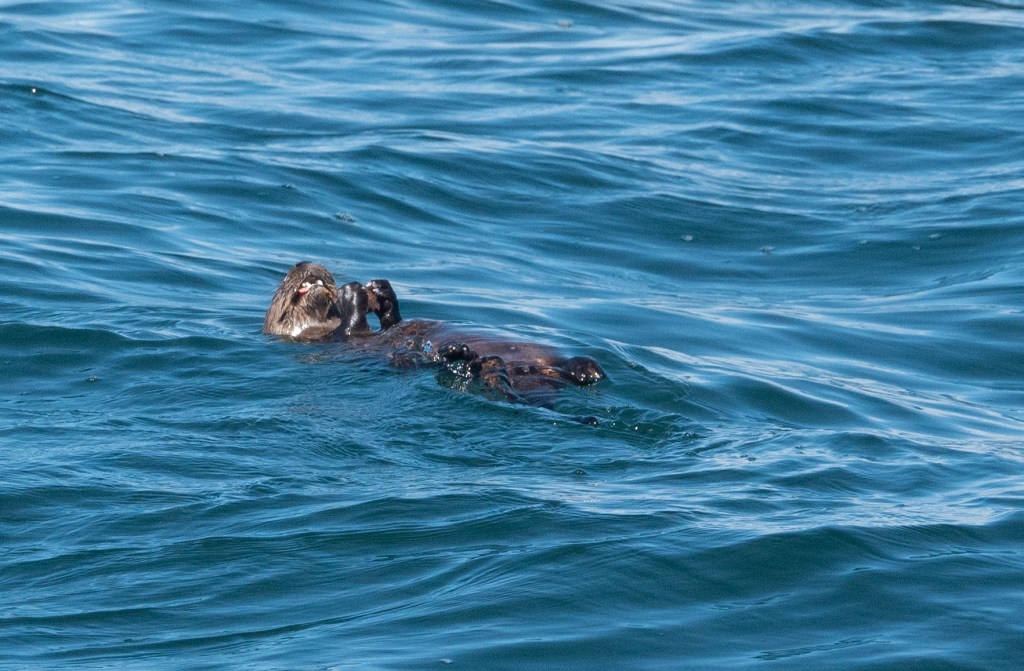
This is a Southern Marine Otter, Lontra felina., also known as a Gato Marino (sea-cat) , or Chungungo.

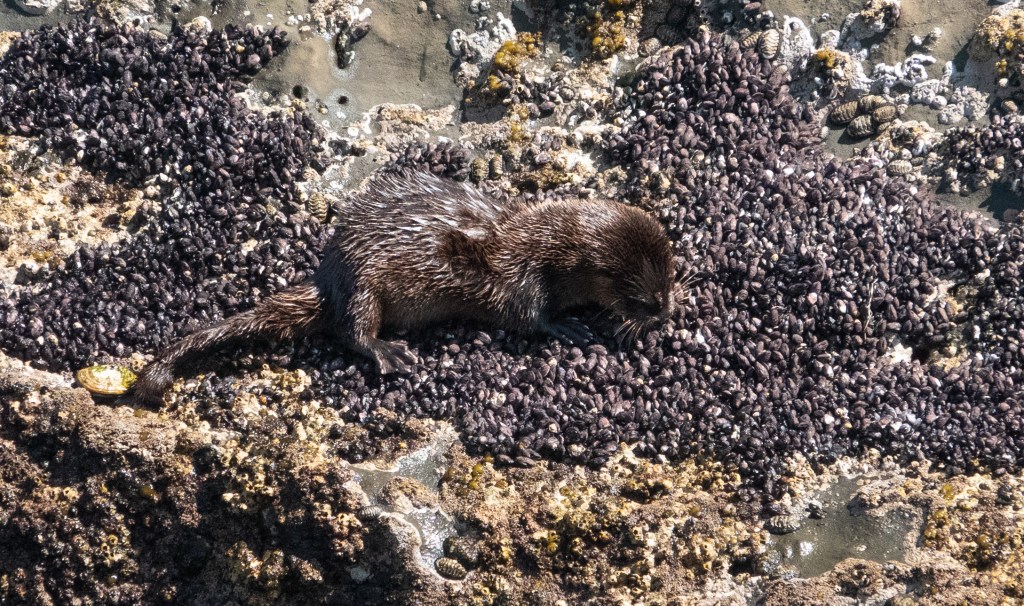
It is the smallest marine mammal, measuring 87 to 115 cm (34 to 45 in) from the nose to the tip of the 13in tail and weighing 3 to 5 kg (6.6 to 11.0 lb). This one is in the Pacific near the mouth of the Maullin River off the coast of Chiloé Island, eating mussels clinging to the rock.

It is found on the Pacific Coast of South America, from Peru to Tierra del Fuego and is the smallest American otter; its closest relative is the North American River Otter., which weighs about three times as much. It is not closely related to the more familiar sea otter of California and the Pacific north west, which can weigh nearly ten times as much.

.

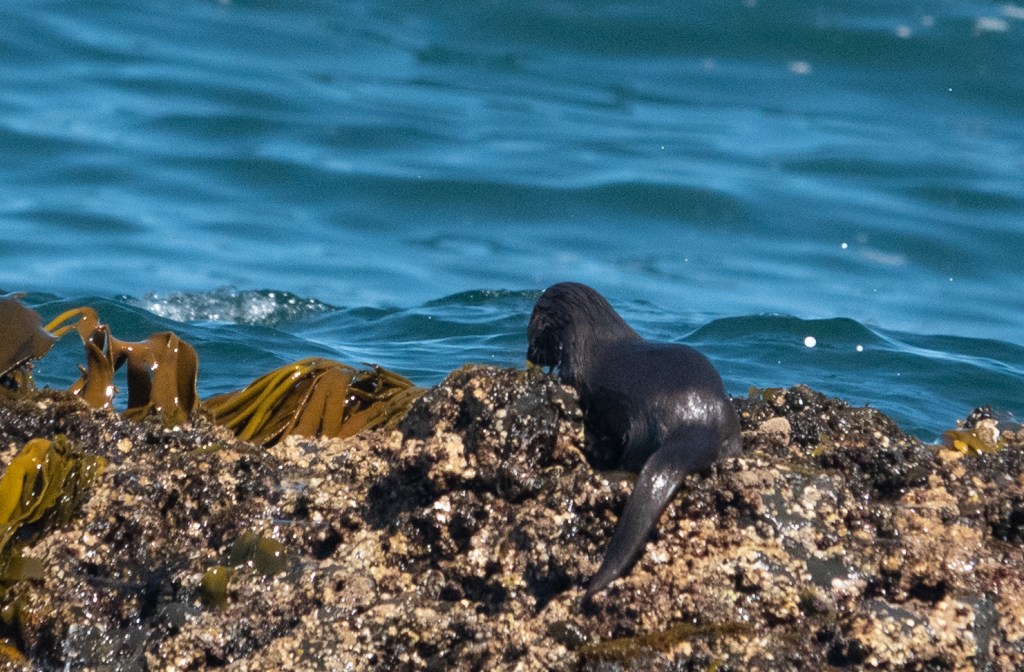
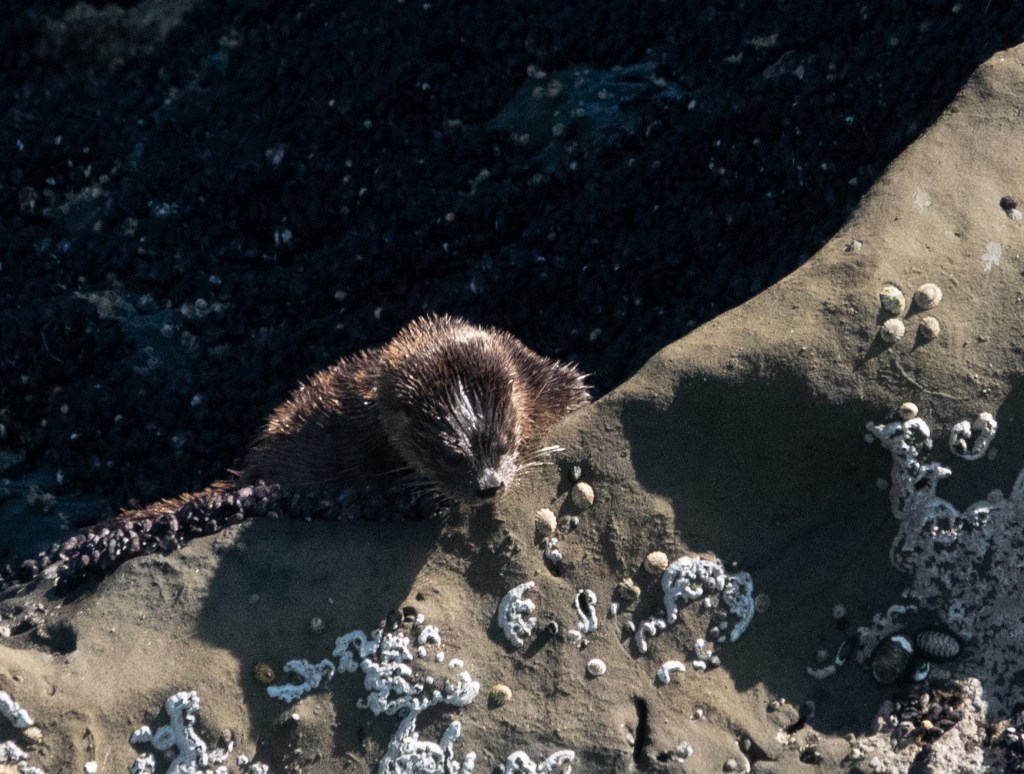
It only lives in salt water, and it likes rough and rocky coasts. Just after this photo was taken it was washed off the rock by a large wave, doing a dramatic mid-air somersault (no photo!).

Their dens are usually in caves, and they apparently spend much of their time on land, unlike the Californian sea otter.

Its coarse fur has 2 cm long guard hairs, covering a dense, insulating undercoat, which is why it was hunted for the fur trade. Now it is very hard to find, and we were lucky to see one after a long hunt.

The marine otter is dark brown with fawn on the throat and belly.

and it has webbed paws, with strong claws that allow it to eat both fish and crustaceans.

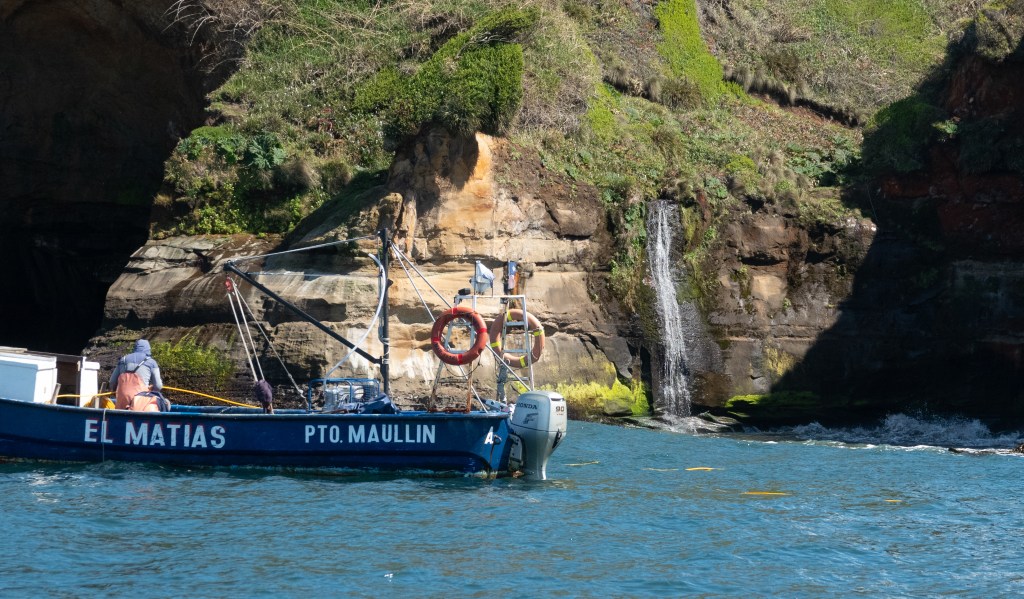
Here, it was following a clamming boat; the yellow hose in the photo below is the air supply to the invisible divers below water.

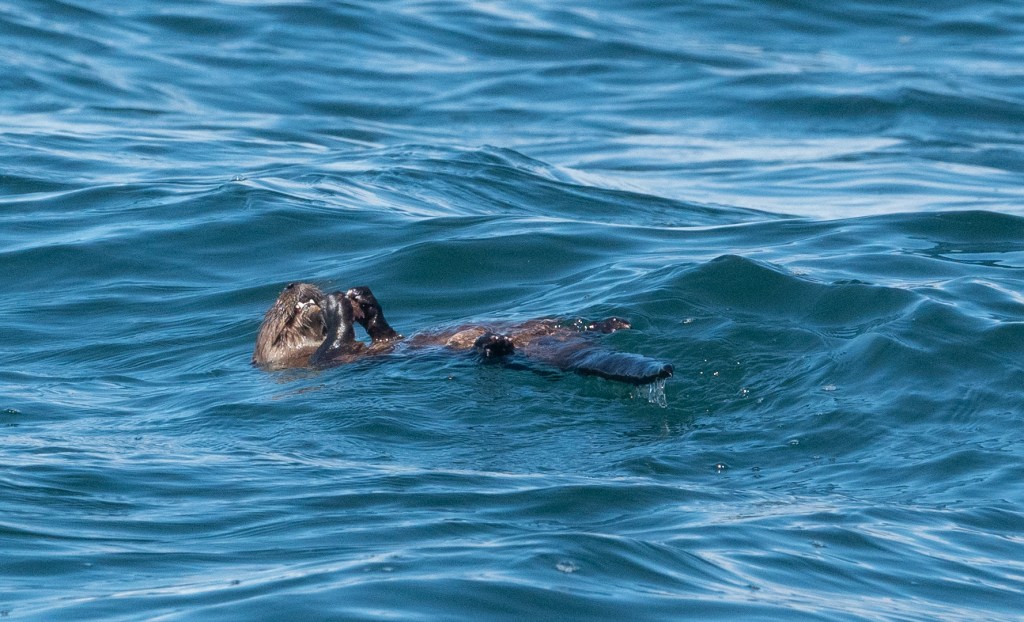
The divers dislodge clams, which the otters love. Like the better known and larger sea otters off California, they feed on their backs:

This charming animal is listed by the IUCN as Endangered . They’re legally protected in both Chile and Peru, but the laws are loosely enforced, and they are sometimes killed by fisherman , or for their fur.

To end with, I found this mini-documentary online that has really wonderful footage of a mother otter and her two cubs, both on land and underwater. The commentary is a little mystical for my taste, but the images are quite lovely.The filmmaker is Ben Goertzen , and it won awards at the Jackson Wild Film Festival in 2019.

At home: “The Gardener of the Patagonian Wetlands” Part II

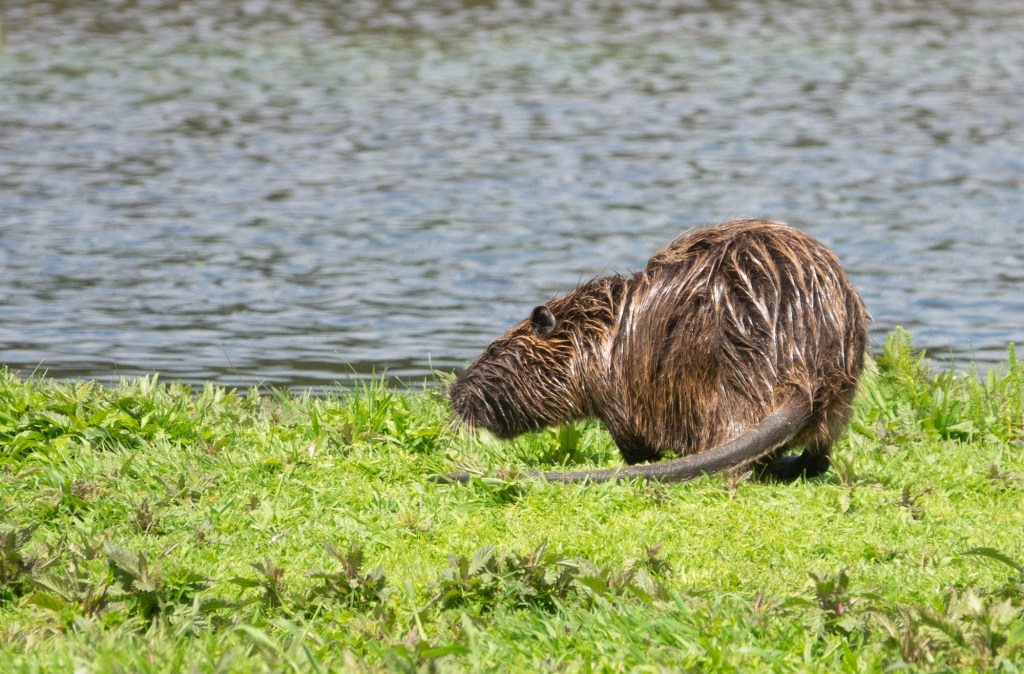
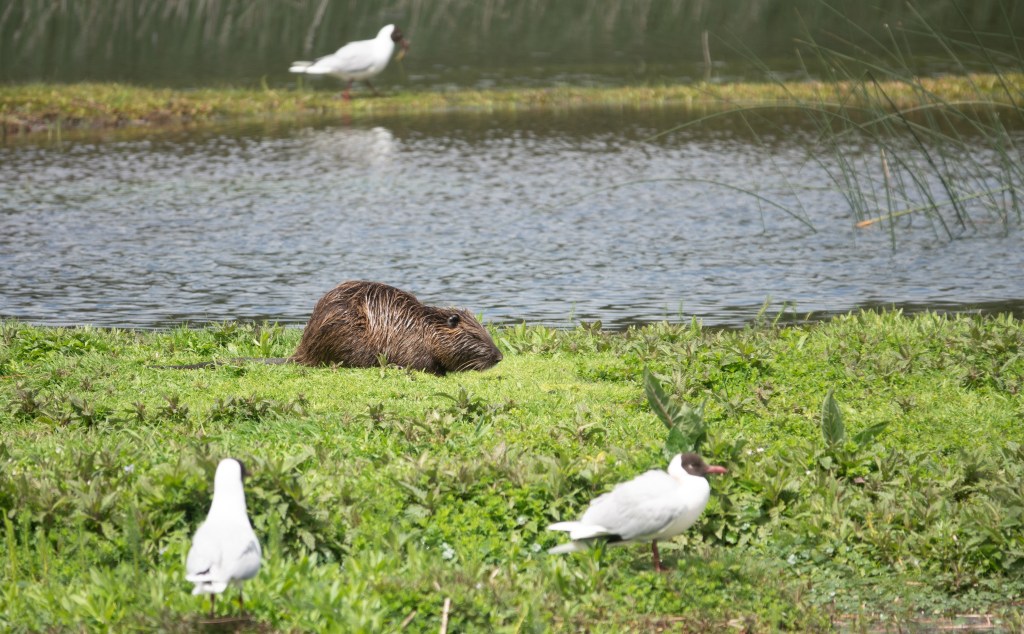
Yesterday morning at 2am I got back from Chile, and I can’t resist an immediate follow-up to yesterday’s coypu blog. Here he is, in his rightful home:

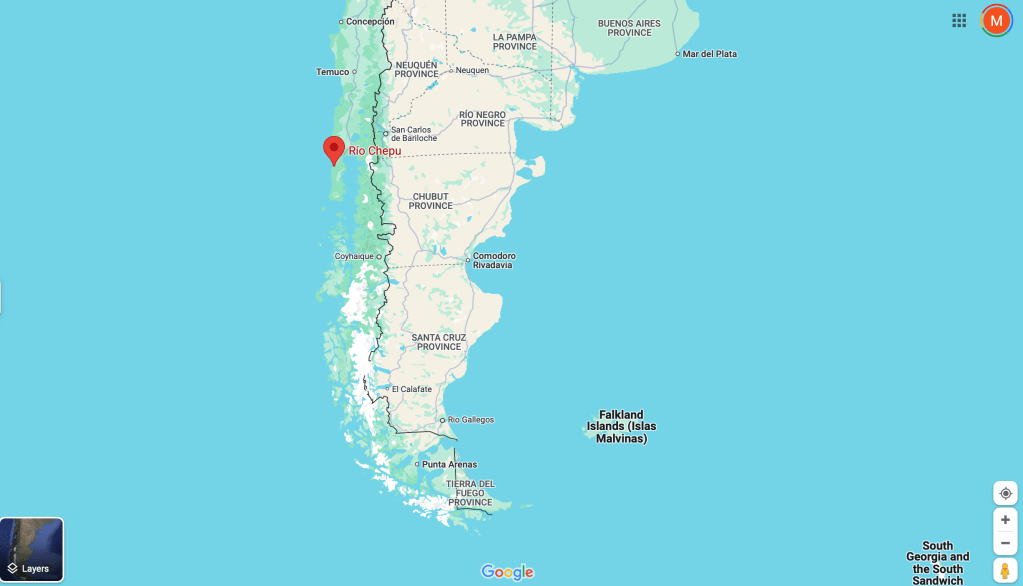
This is near the mouth of the Chepu River, on Chiloé Island in Patagonia in Chile.

I will tell you more about Chiloé in later posts, but for now enjoy “our” coypu, the only one we saw:

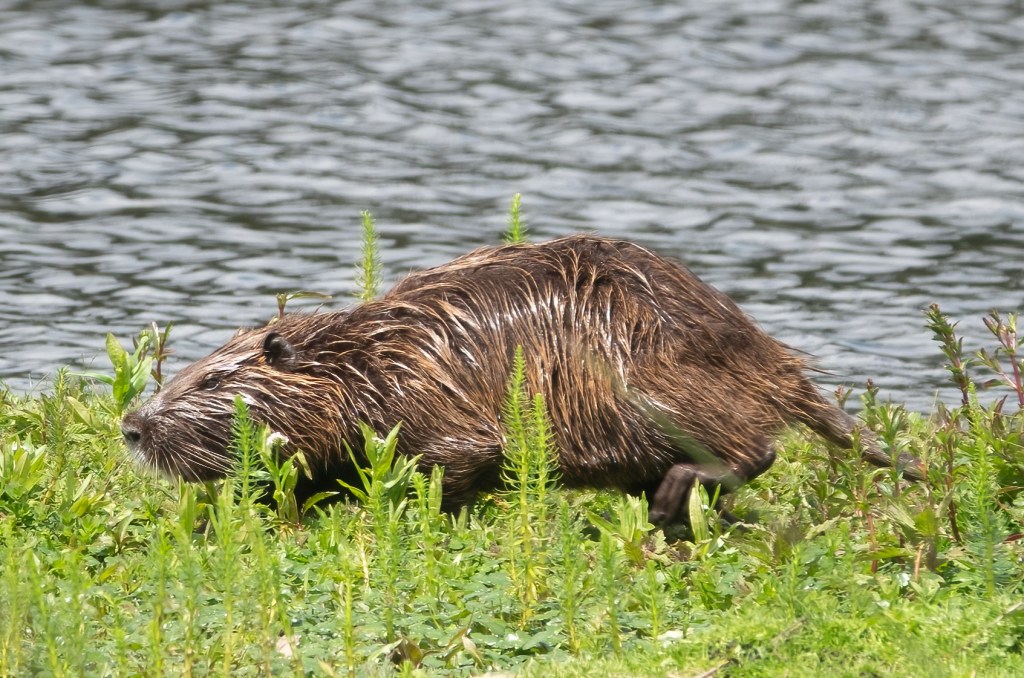
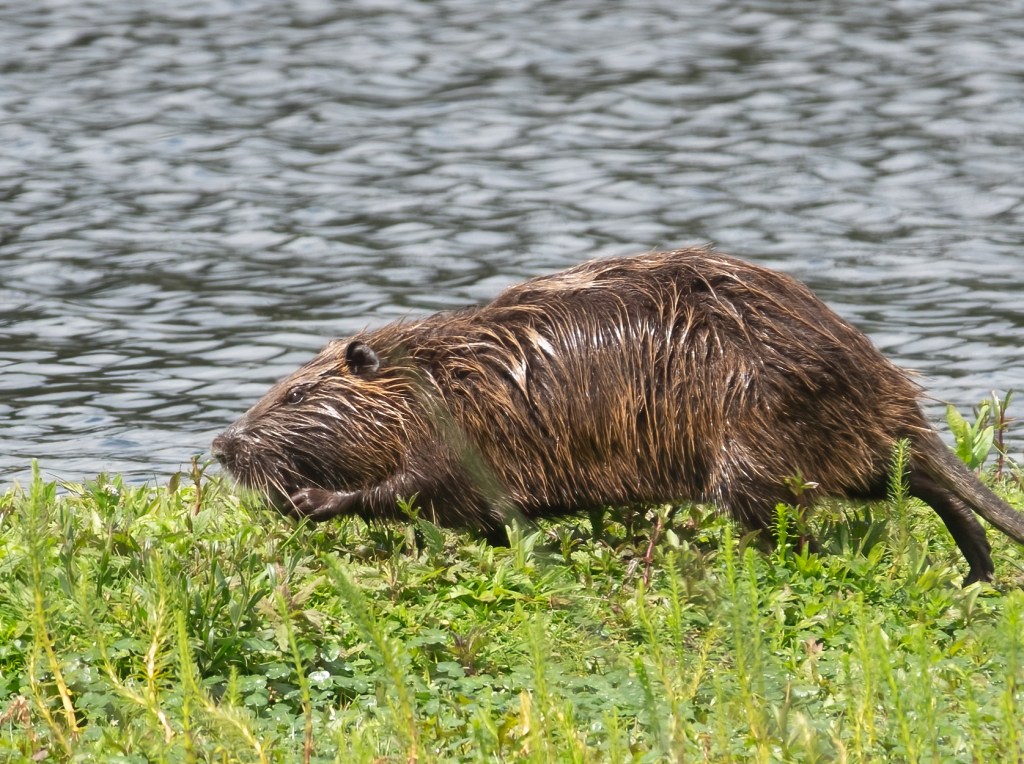
It walked along the grassy islet, showing its webbed hindfeet:

and its dexterous front ones:

Then slipped into the water and swam off (the video is slightly slowed down):

Ironically, and sadly, while they are becoming invasive in Europe they are becoming rare in Chile, as a result largely of hunting. Our guide Jonathan was quite excited to see one.

“The gardener of the Patagonian wetlands”, Part I *

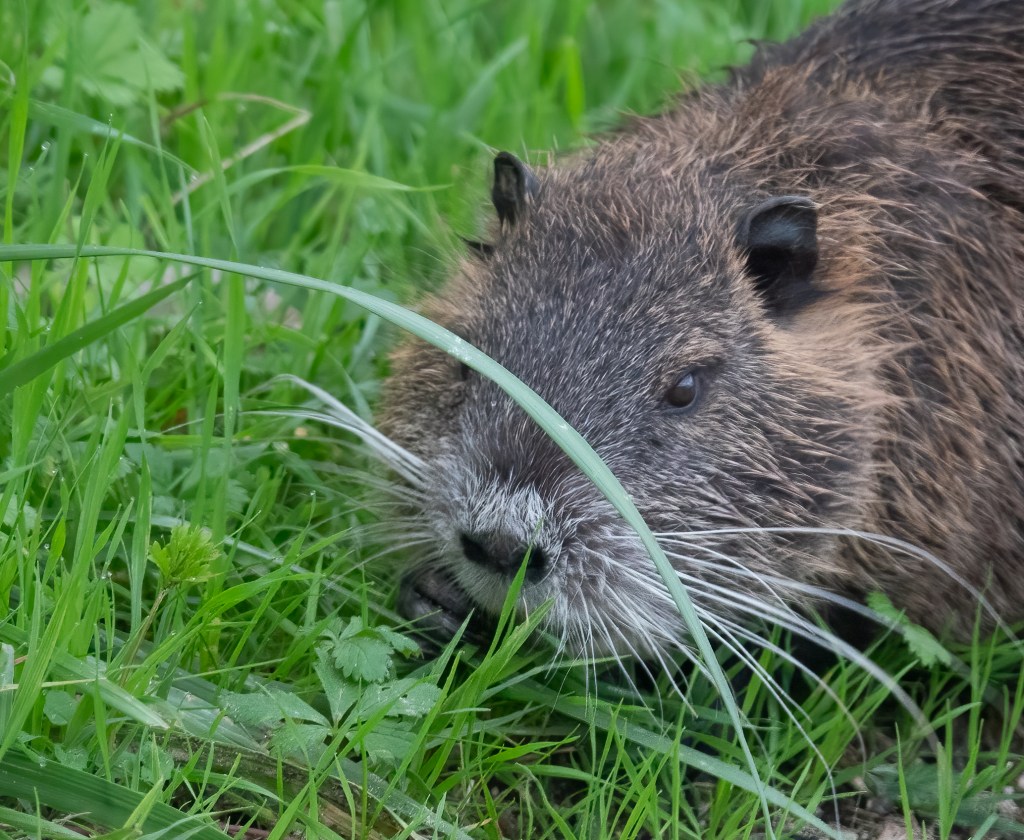
I first saw this animal not in Patagonia, but in the hills of Tuscany, on the edge of a hamlet, next to a tiny stream, or more precisely a ditch. There was a narrow path to the ditch through the long grass and we were discussing what had made it.

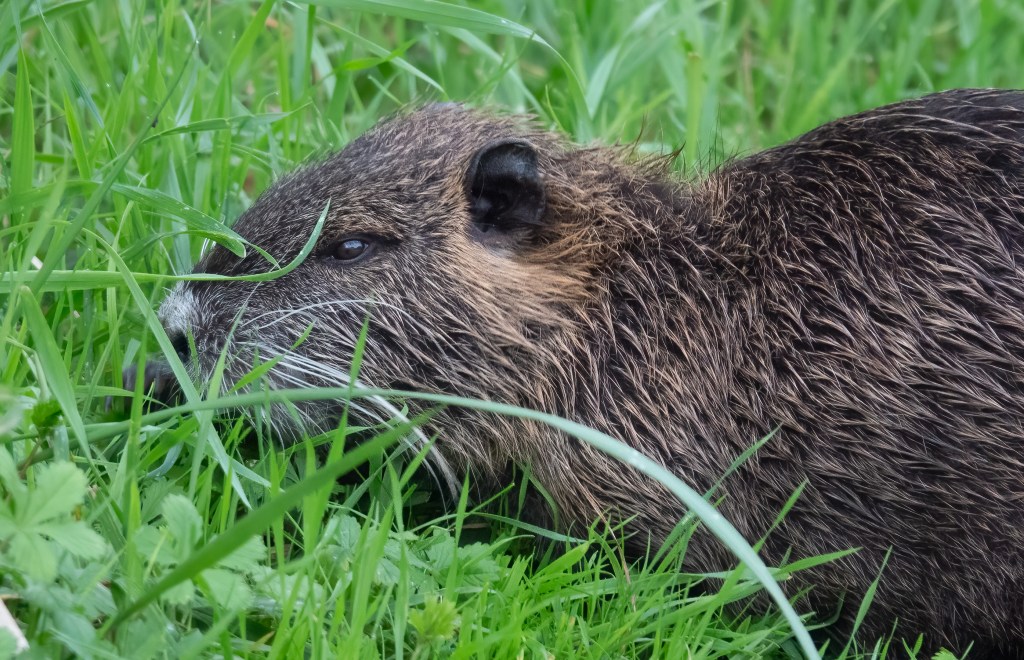
It was a nutria, or coypu. Native to South America, it was brought to Europe and the US for fur farming, and escaped (or was released when the fur farms closed). Its scientific name is Myocastor coypus, literally “mouse beaver”. Its many names are confusing. Coypu is preferred in South America, where nutria can also mean beaver or otter. In Italy it is sometimes called castorino, little beaver, and in Germany Sumpfbiber, or swamp-beaver. In much of Europe and the US it is considered an invasive species, damaging water banks and crops like rice as it burrows into them.

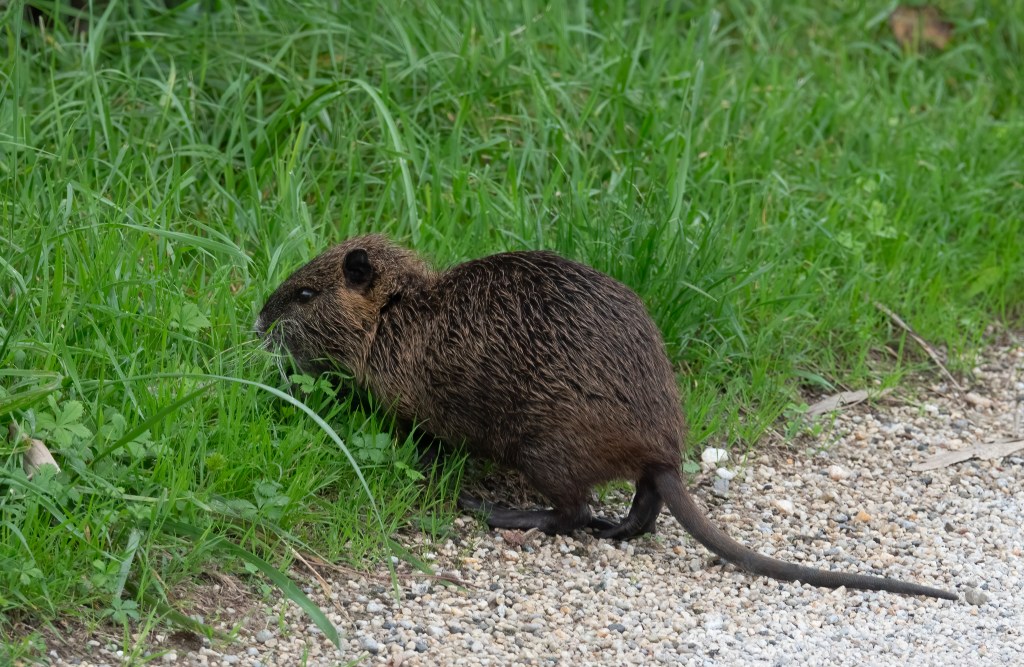
It weighs 10-20lbs:

and has webbed hind feet and a naked tail:

and a white muzzle with long whiskers:

If you rank some other aquatic rodents by size, starting with the smallest, you get muskrat, coypu, beaver, and then capybara. All are vegetarian, but their ranges differ. Coypu and capybara don’t like the cold, which limits their range to balmier latitudes. Nonetheless, once they get loose they can expand their territory amazingly fast. This map showing how they conquered France and beyond is from Schertler et al 2020:

How do they do this?? They live to about three years old in the wild. A litter averages four, but can be as large as thirteen, and they can mate again 2 days after giving birth, so a female can have six or seven litters in her lifetime, potentially adding up to a tally of 91 offspring!.

They were bred for the fur trade because of their remarkable coat. From the outside in, they have 3in long guard hairs, then beneath that a coarse dark brown mid-layer fur, and a thermal undercoat of soft dense grey under fur. This underfur is itself called nutria.

Like beavers, their teeth grow all their lives and are orange. Coypus are mainly nocturnal or crepuscular. They build subterranean burrows and also floating platforms.

I am off to Chile soon, and hope to see them there, where they belong.

PS Coypus get about. They have also surfaced in Japan. This 1996 poem by Ito Shinsuke is transliterated from Japanese; the word nutria has become Japanese nutoria..:

“Shirasagi mo Sugamo mo Koi mo kechirashite/ Sasagase gawa wo Nutoria yuku.”

The English translation:

“Pushing away white herons, ducks, and carp/ The nutria goes his way in the River Sasagase.”

PPS My title is the Argentinian nickname for coypu

What a stinker!

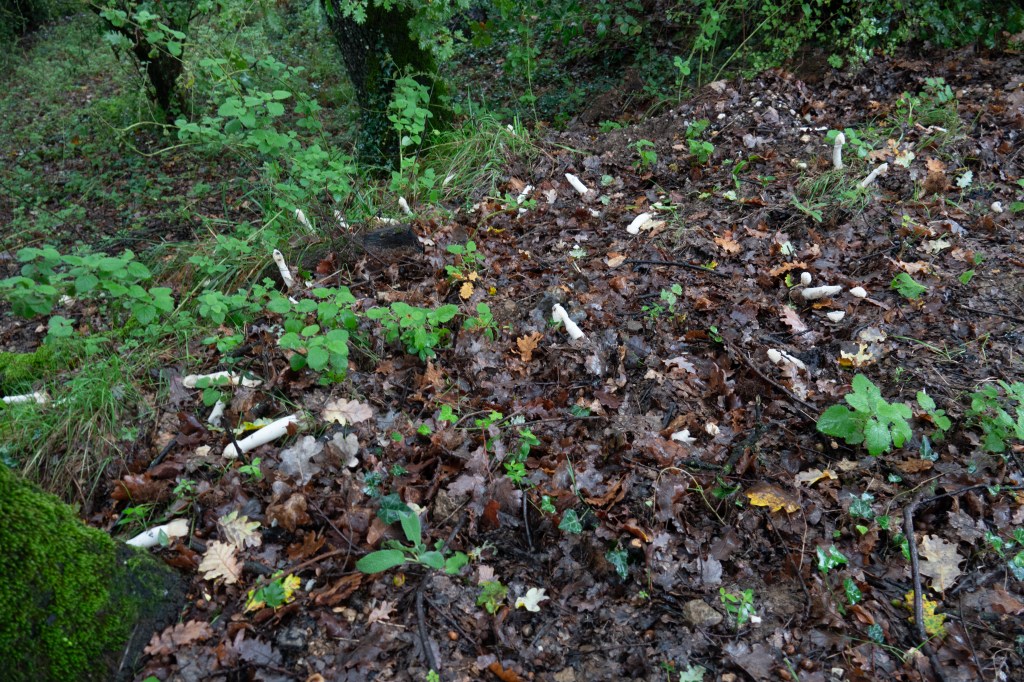
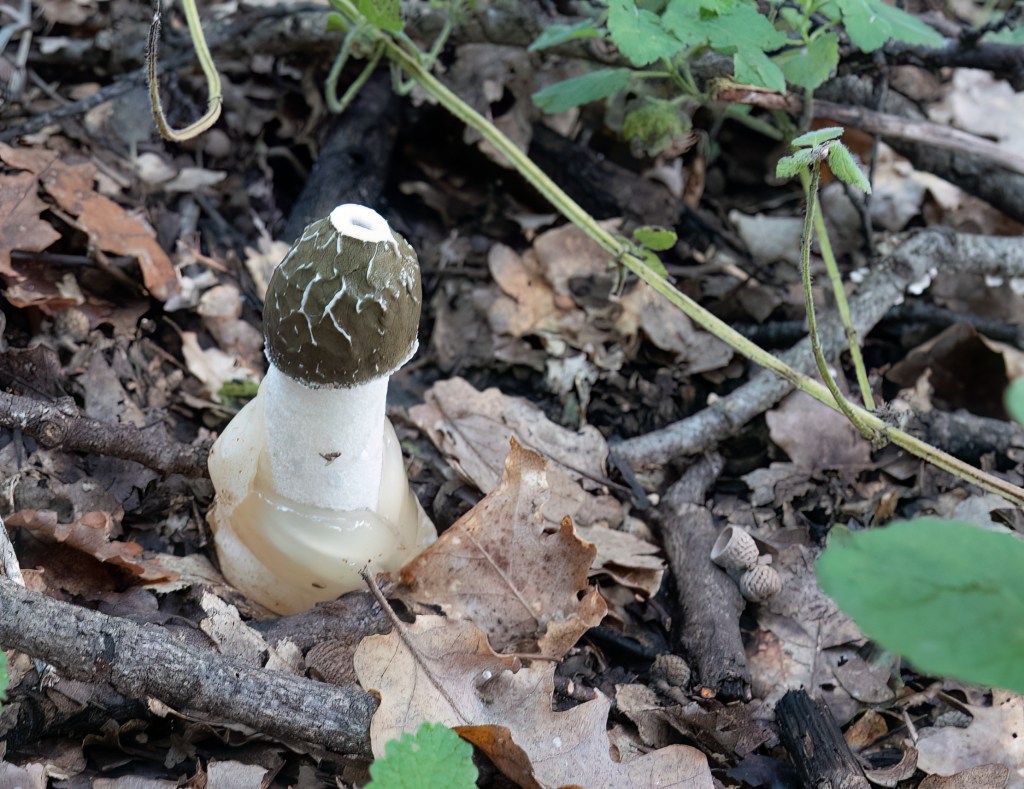
A ghastly smell wafted across the Tuscan path, as if something had died in the bushes. Casting around for a cause, I realized that just ahead was a patch of tall white mushrooms, mostly lying on their sides after a night of heavy rain.

I had stumbled across a patch of Common Stinkhorns, Phallus impudicus. The source of the first half of the scientific name is obvious; the second half means “shameless”:

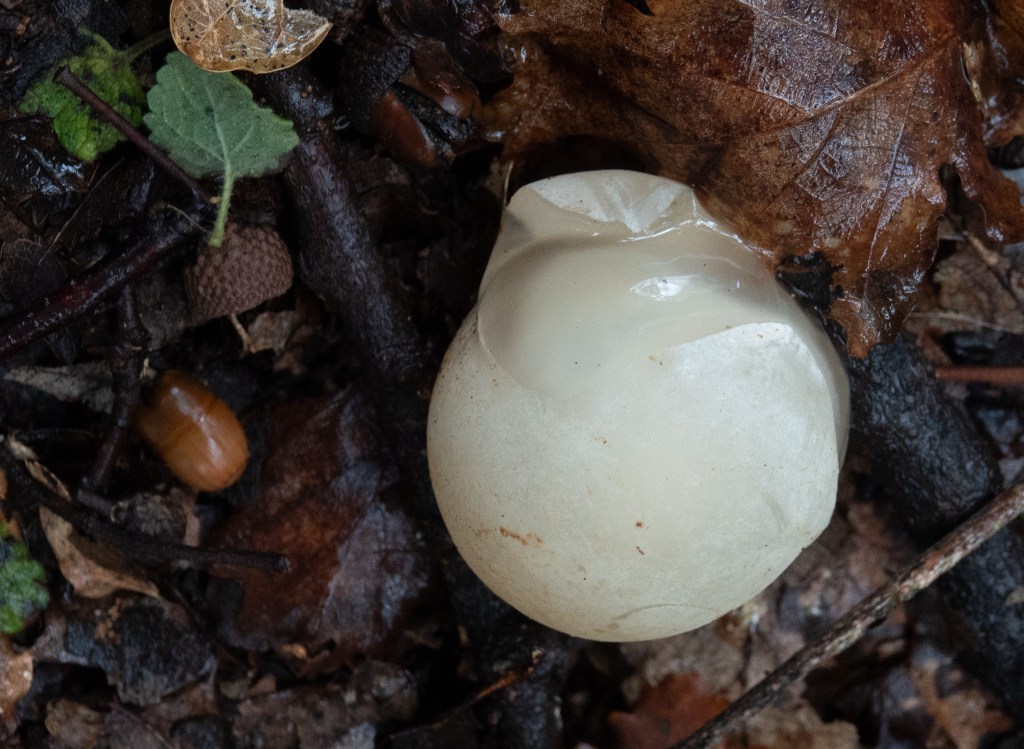
It starts as a spherical blob with a gelatinous rim:

When it starts to emerge, the cap is covered in grey mucus:

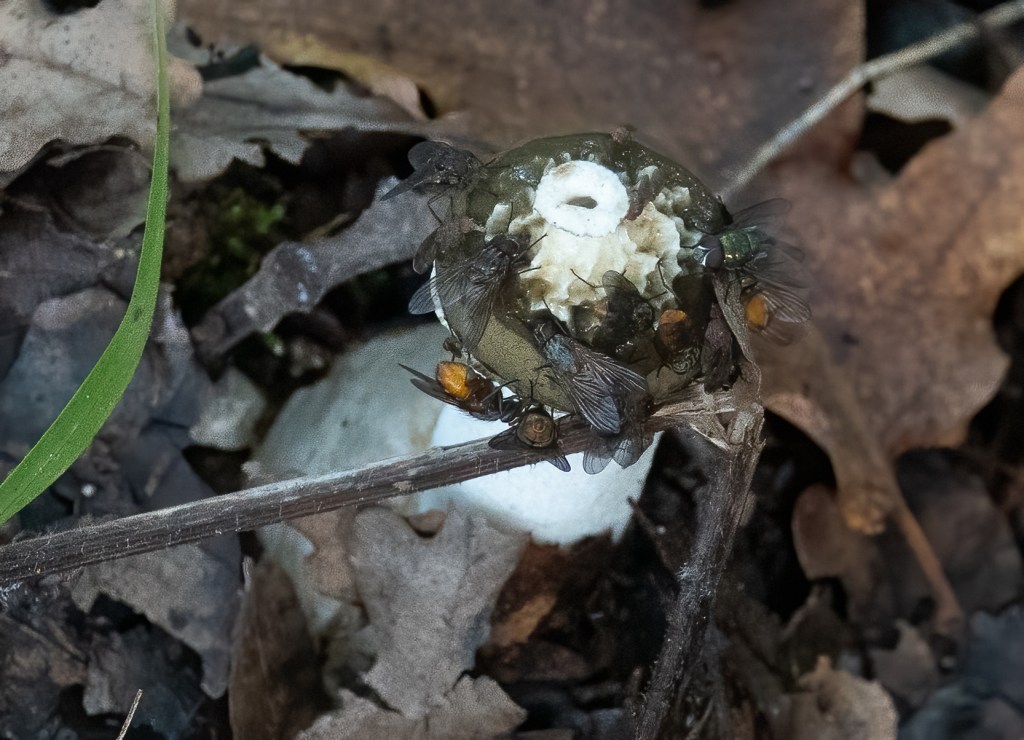
There is a small hole in the top:

The cap develops a textured surface, and the white substrate breaks through:

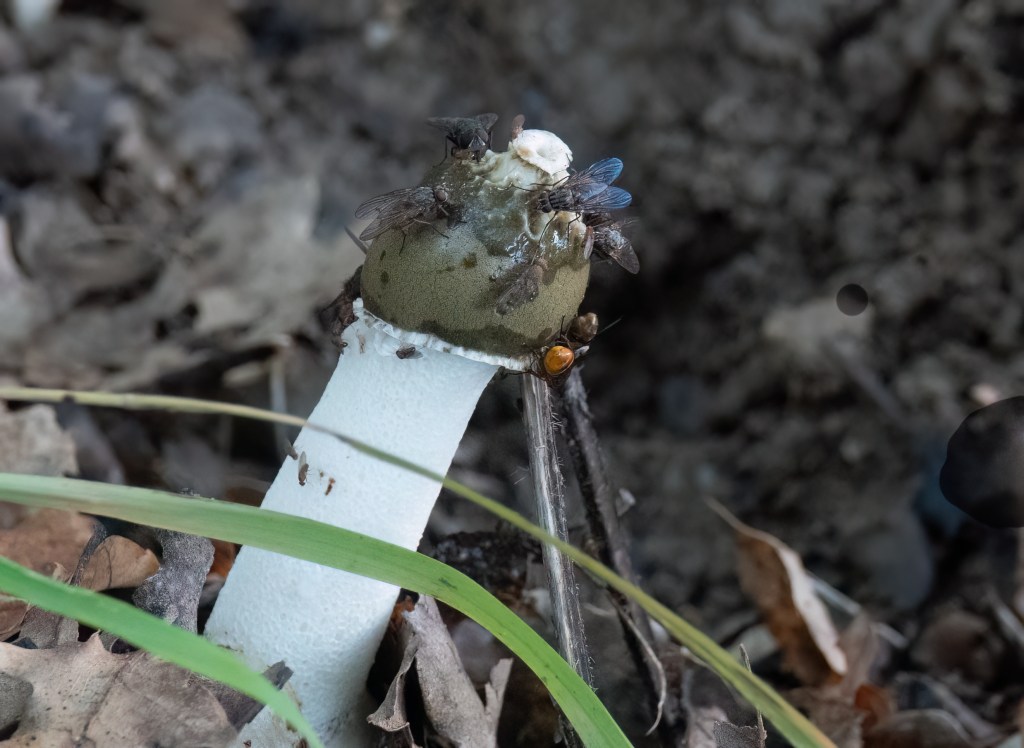
This mucus contains the spores, and its powerful smell attracts insects, lots of them:

The sticky mucus gets on their feet, and when they fly off they carry it with them, spreading the spores. Rain, time, and enough flies, remove the mucus, leaving a white sculptural shape, with a texture like tripe:

still strongly scented and attractive to flies:

:

Chacun a son gout.

The stinkhorn family also includes this bizarre fungus, the Red Cage, Clathrus ruber,  aka called the latticed stinkhorn, or the basket stinkhorn, native to Southern Europe. It reminds me of a Whiffleball.

It emerges from a white circular base, and the grey mucus is on the inside of the basket, where the flies still track it down:

It only lasts about 24 hours, then collapses, and the mucus washes away, leaving a red sea anemone shape:

and fragments of the ribs, exposing the interior texture that held the mucus:

These exotic fungi are apparently quite common in Europe, but to me they are yet another natural wonder. Maybe one day technology will allow me to add a link to this post that brings you its horrendous smell. Or maybe better not.

PS The Red Cage fungus has been introduced to both the UK and the US probably on imported garden mulch.

PPS In Maine, we have the Ravenel’s Stinkhorn, which I posted about a while ago: https://wordpress.com/post/eyesonthewild.blog/3750

Autumn near Siena: galled

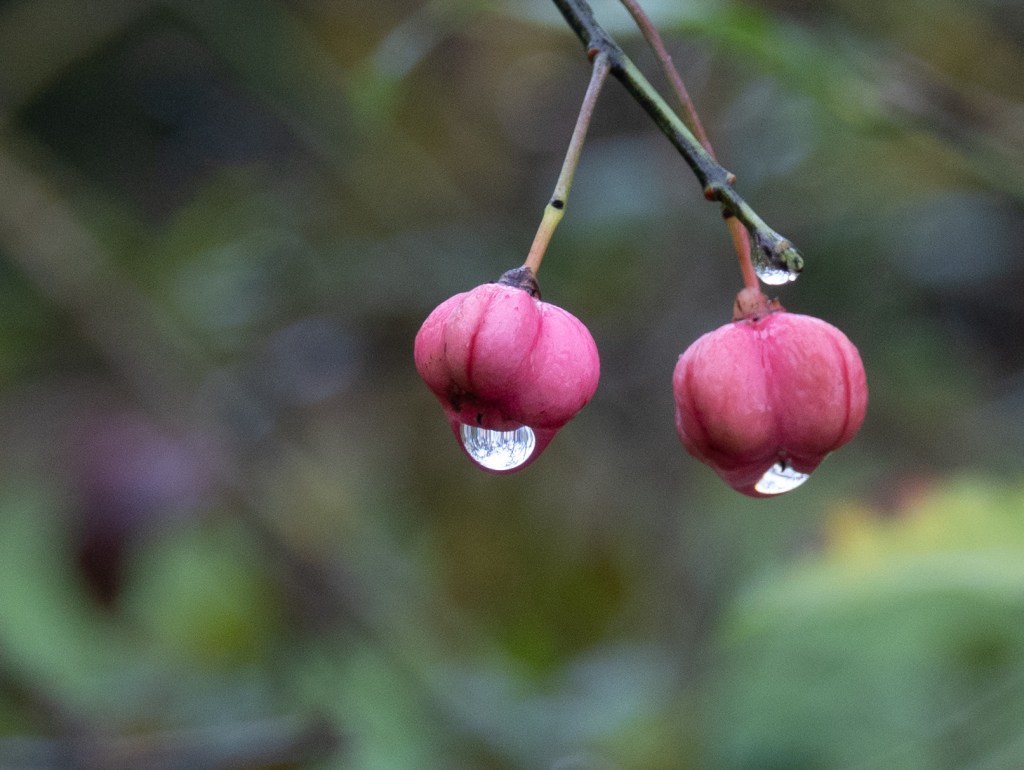
Autumn in Tuscany, where we spent a week in late October, is definitely the land of mists and mellow fruitfulness. We had three days of torrential, biblical rain, at one stage flooding the small bridge that linked us to the outside world. The spindle berries dripped:

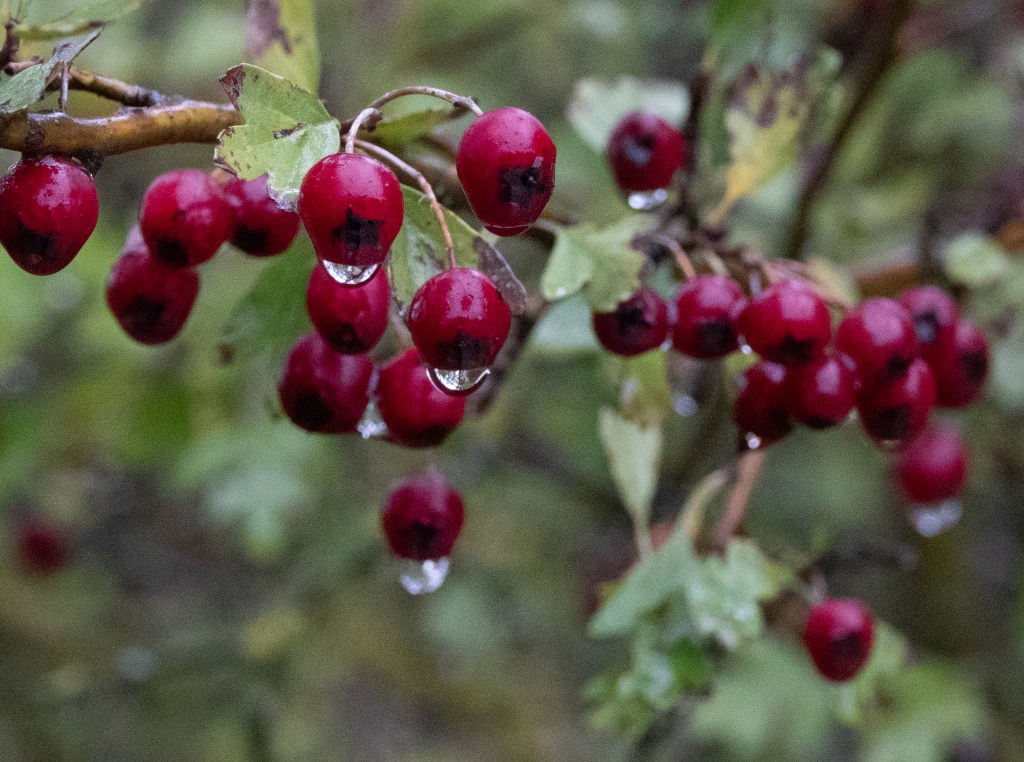
The hawthorn berries dripped:

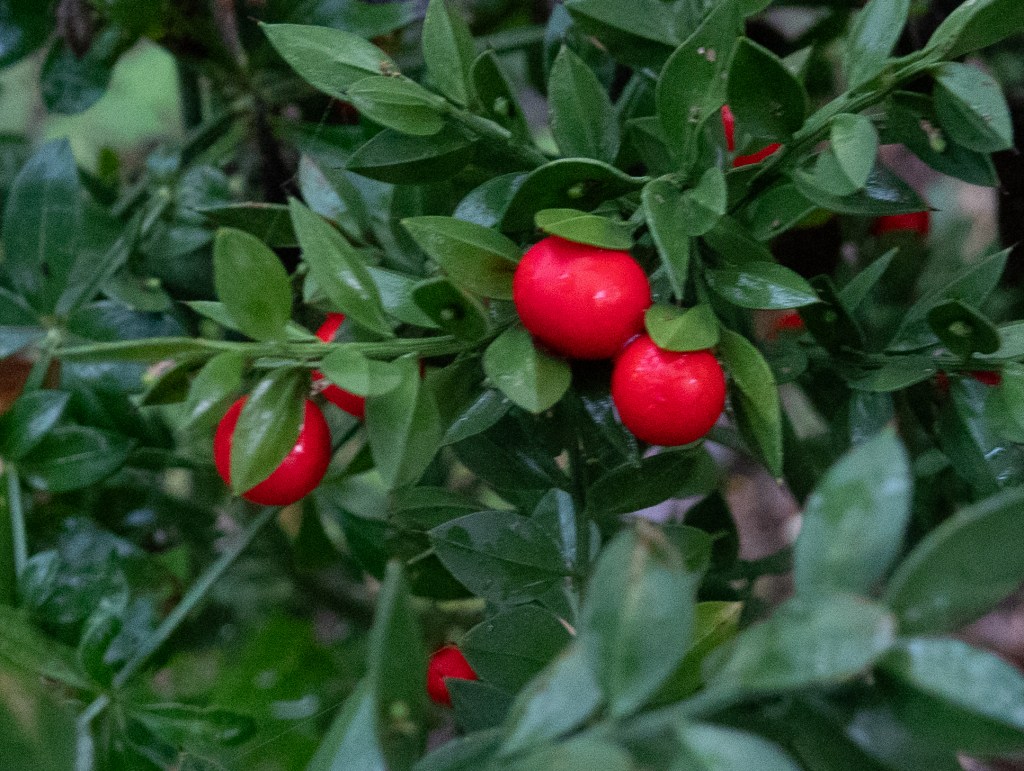
The Butcher’s Broom, Ruscus aculeatus, whose 1 cm berries emerge from the centre of what looks like a small leaf but is actually botanically a modified stem called a cladode, gleamed in the shadows:

Medlars ripened:

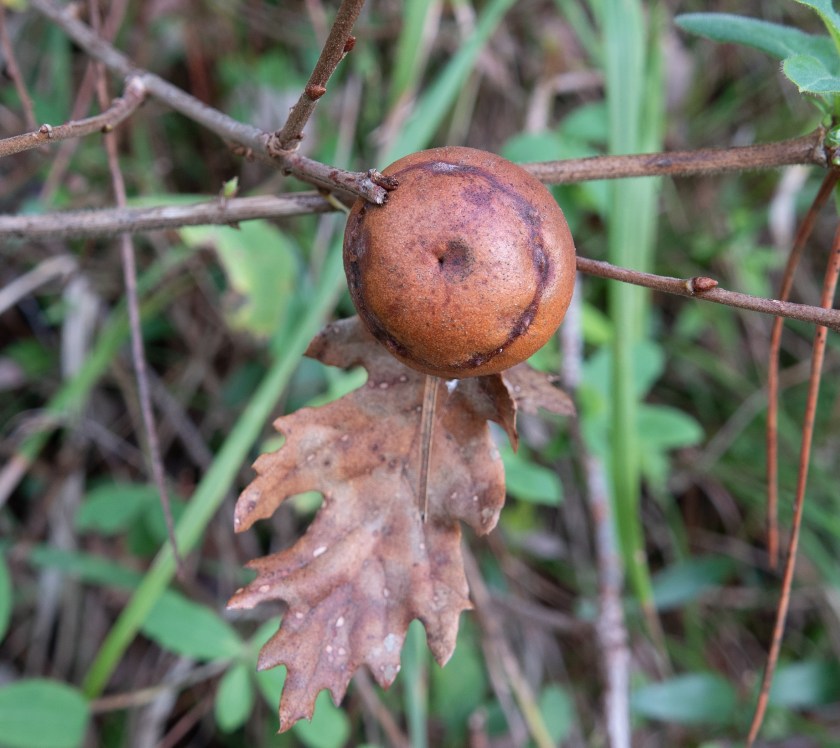
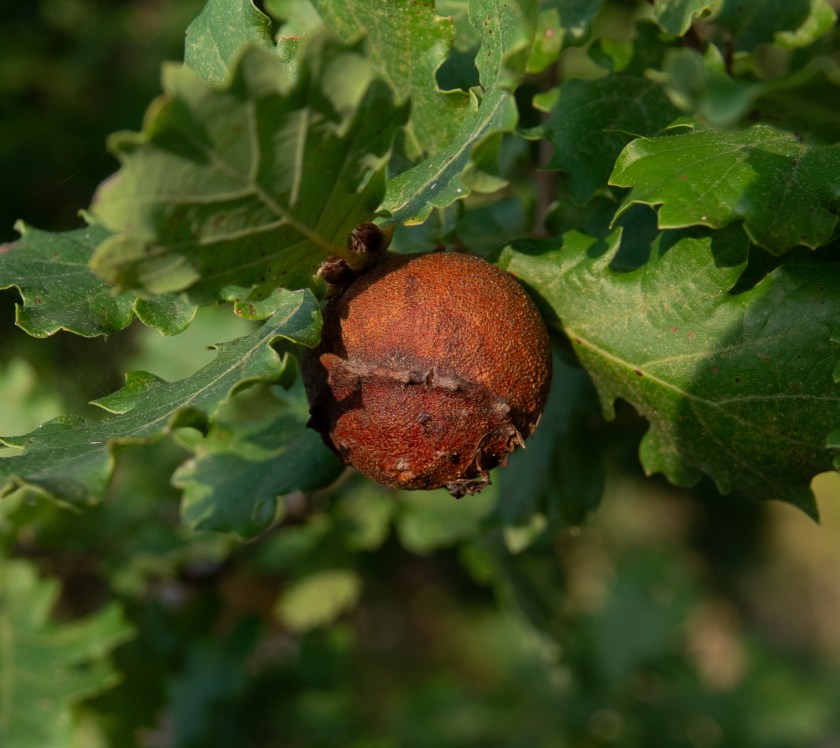
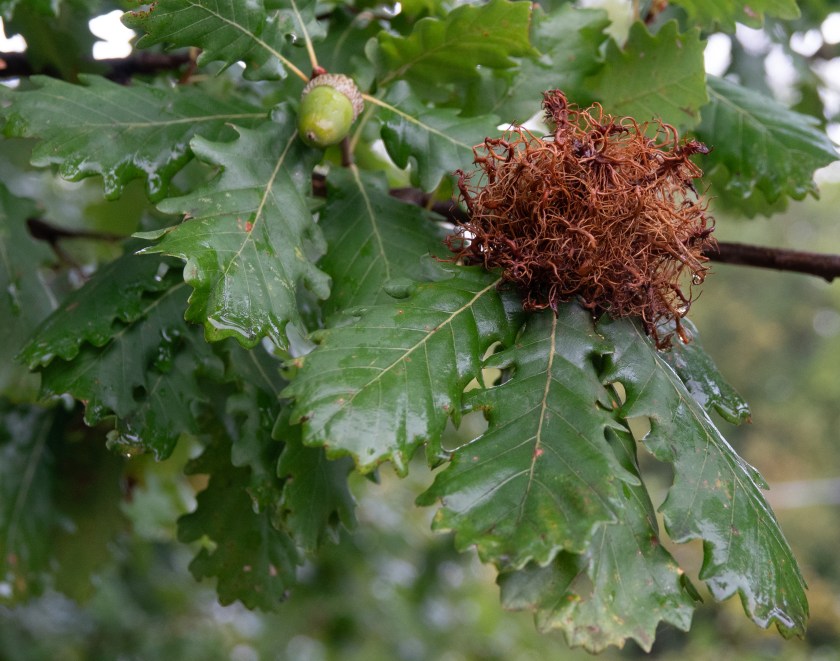
The oak trees were still green, but a variety of galls were swelling. Three different kinds on one branch, sometimes. This first photo looks not unlike varieties of oak apple I know from the US or the UK, but it is bigger, with an encircling coronet, and made by the Andricus quercustozae wasp:

The aptly named Andricus caputmedusae looks innocuously like a sweet chestnut, but it contains a single wasp larva:

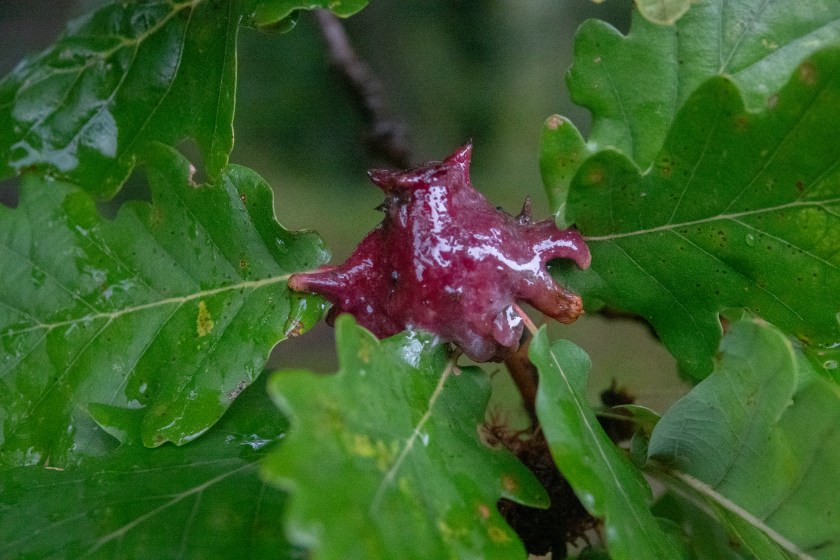
and this shiny purple mass is a small Andricus dentrimitratus; it will grow much bigger:

A good description of how galls are formed and why can be found here: https://lpfw.org/our-region/wildlife/gall-wasps/

“Galls are plant growths (similar to tumors) that are induced by various organisms such as bacteria, fungi, and insects. Gall wasps have evolved to “trick” the plant into forming this growth which they then use for food and shelter as they transform from a larva to an adult. The wasp larvae secrete chemicals that mimic growth hormones in a particular plant upon hatching. The chemicals trick the oak into growing a gall on its flowers, acorns, leaves, or stems. The larva is then encapsulated by the gall as it grows, waiting patiently inside until its metamorphosis is complete. “

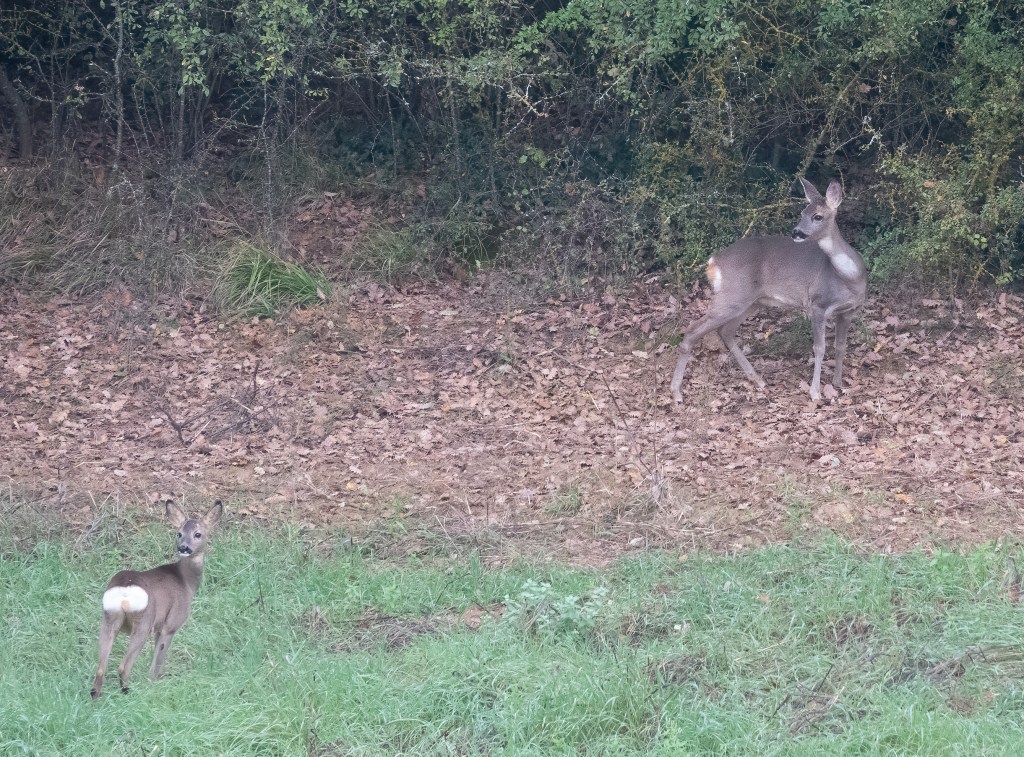
And all around the wild boars were rooting in the undergrowth, and the mother deer and her (two) fawns risked the hunters to emerge in the early morning mist:

I’ll save the mushrooms for an other time.

PS We are only barely beginning to understand how different (but related) wasps can affect a single tree (often an oak) and then cause quite different galls to be created. It appears that different gall types arise from distinct metabolites. If you would like to know more, read here:

https://academic.oup.com/plphys/article/195/1/698/7571489

Dark thoughts

[Oops, this was supposed to go earlier, so the intro is now obsolete!]

With Halloween round the corner, my mind turned to dark and spooky things. So here, to mark the season, is a collection of black fungi to make a coven of witches salivate.

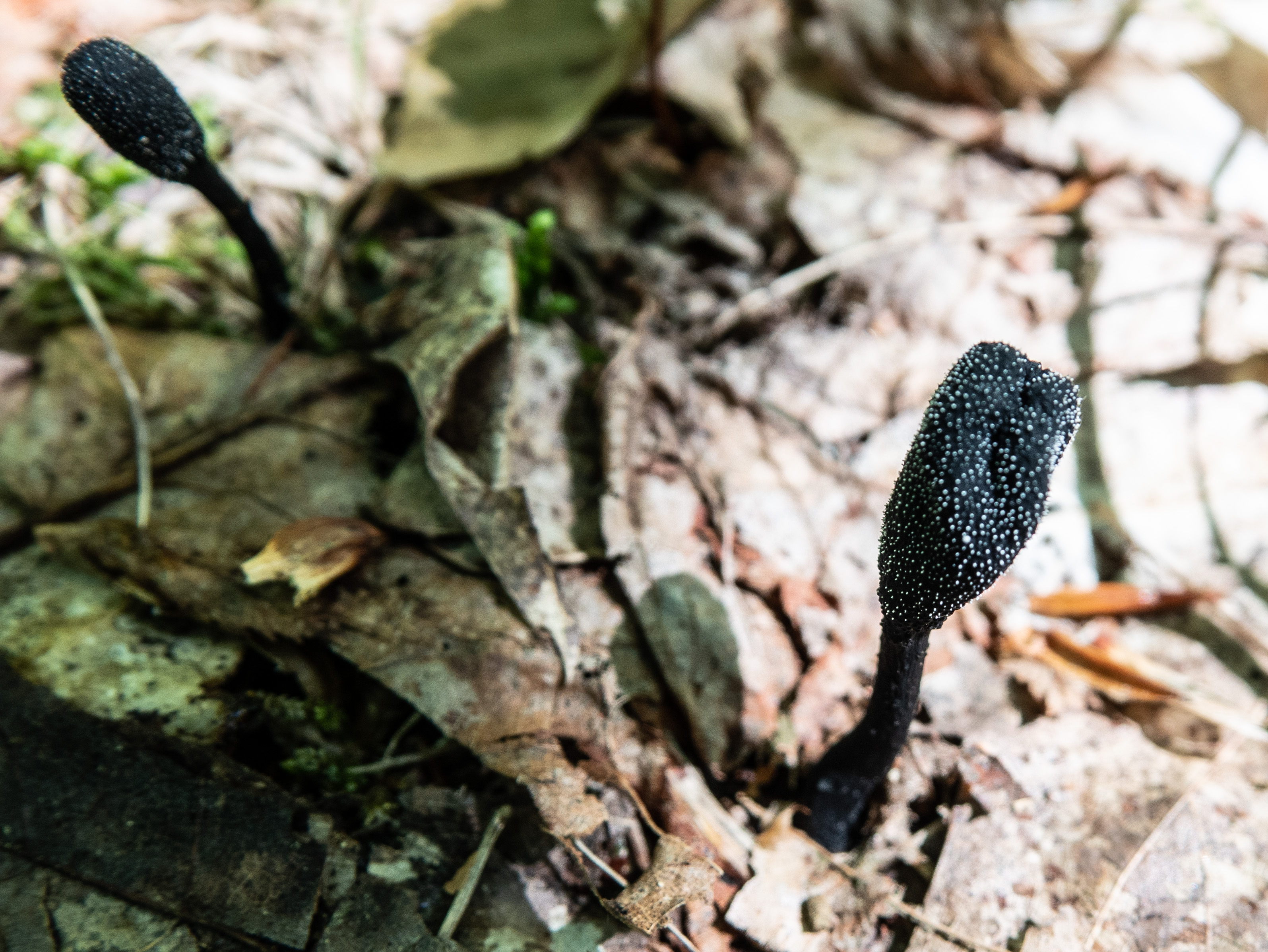
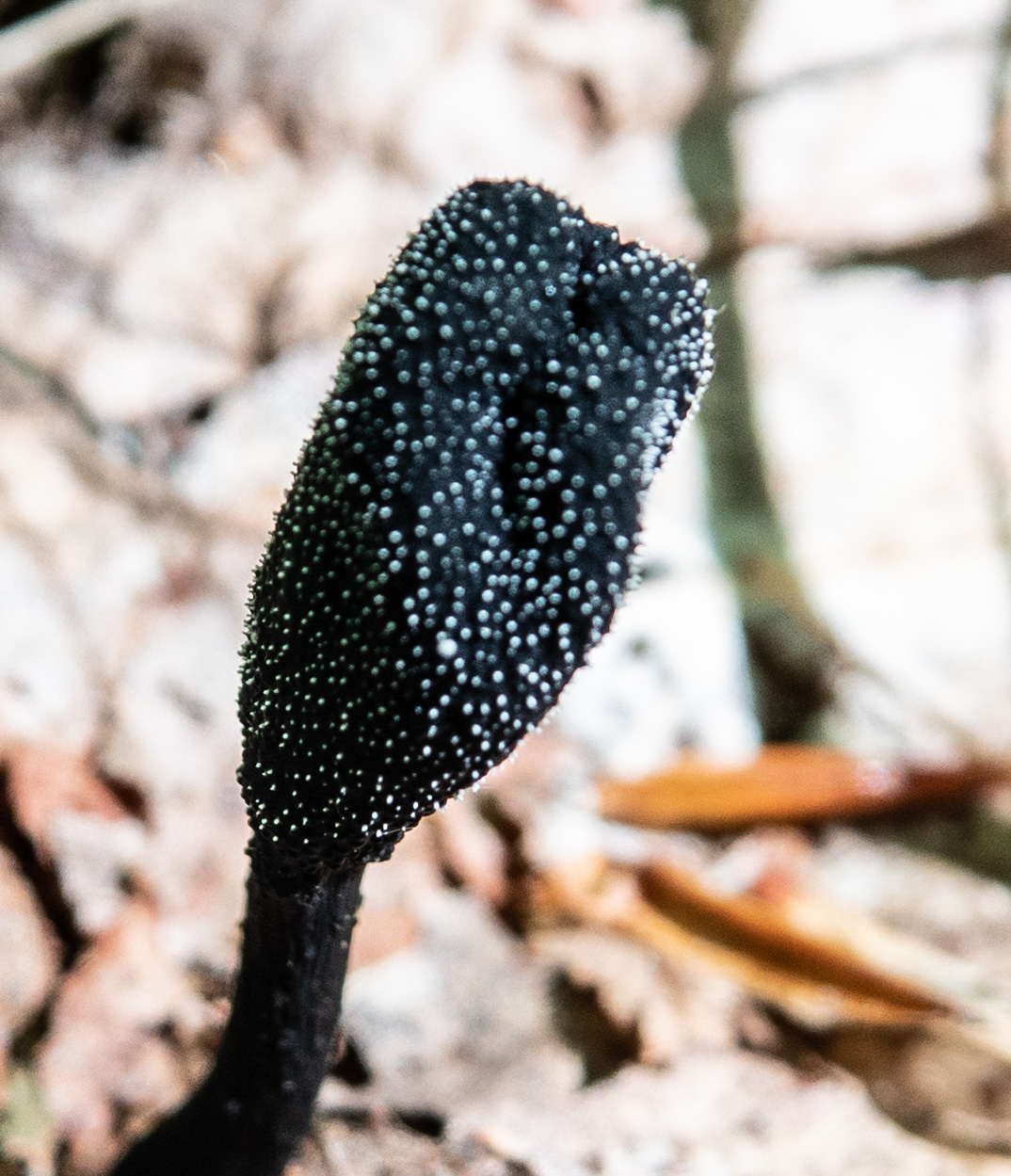
This 1″ tall black fungus is a type of cordyceps, Tolypocladium ophioglossoides.  (Thanks to Parker Veitch for the ID). When it is younger it is a yellowish brown, sometimes called golden thread, because below ground are yellow threads that attach to a type of deer truffle, and the cordyceps is parasitic on the truffle.

Tolypocladium ophioglossoides

In close-up, you can see that the speckles are in fact spores being produced on the perithecia, which are minute flask-like vessels embedded in the fungus but protruding through its skin to release their spores.

Tolypocladium ophioglossoides

In pursuit of this photo I lay on my stomach, and my glasses fell out of my pocket, never to be seen again. My most expensive-ever photo.

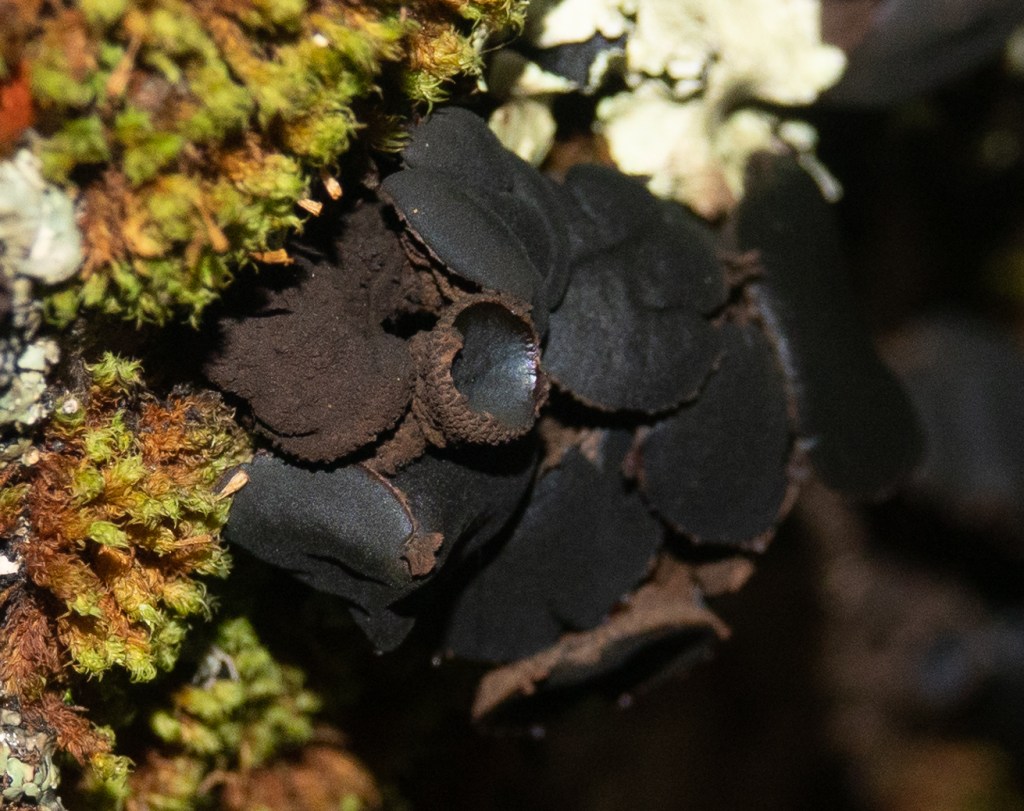
My favorite name amongst the black fungi is Poor Man’s Licorice, Bulgaria inquinans, not edible despite its name.

The smooth side is the fertile surface, and as it ages the rim curls up and in, creating a cup shape.

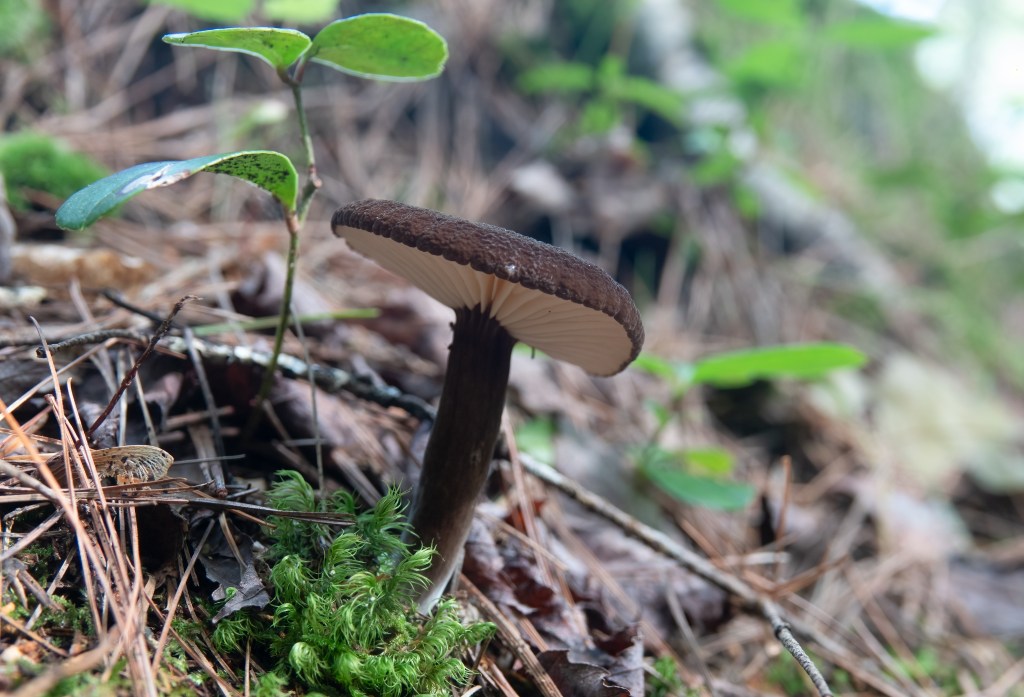
Another misleadingly appetizingly named mushroom is the Chocolate Milky, Lactarius lignyotus.

Wikipedia says it is “edible, but of little interest”, so despite its name it won’t show up in a Starbucks drink any time soon. “Milky” mushrooms are so-called because they exude a white latex when broken.

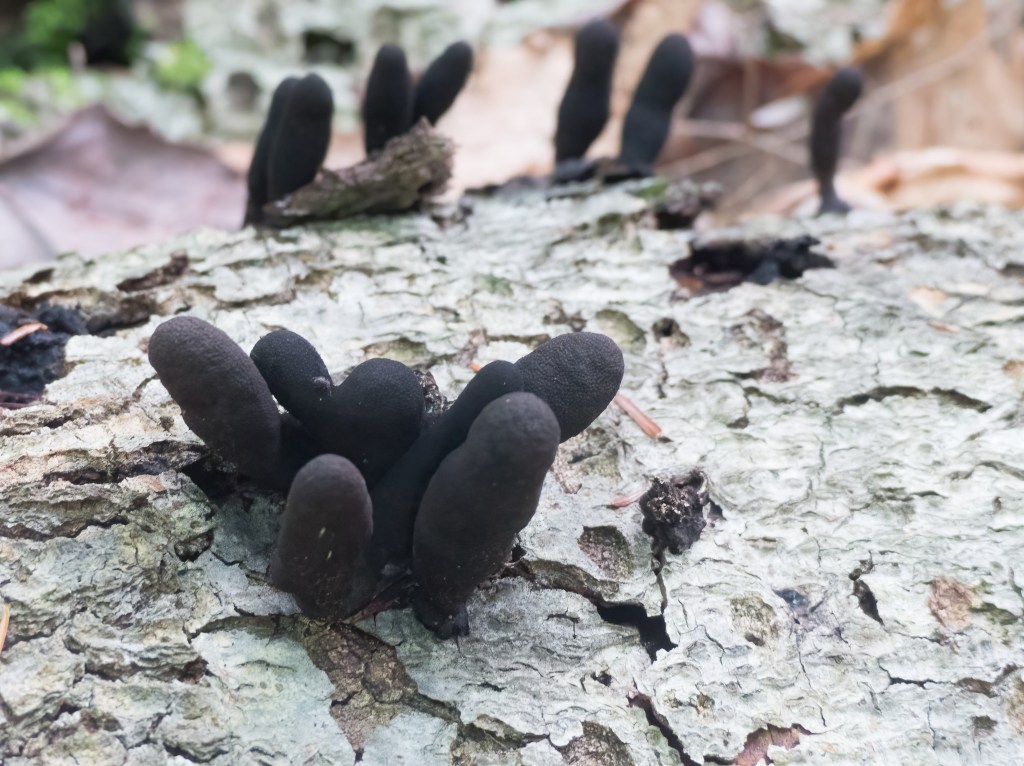
Finally, every witch’s favorite, Dead Man’s Fingers, Xylaria polymorpha.

One feels it could audition for the starring role in Pirates of the Caribbean, waving in the swell, deep on an ocean wreck, alongside Johnny Depp.

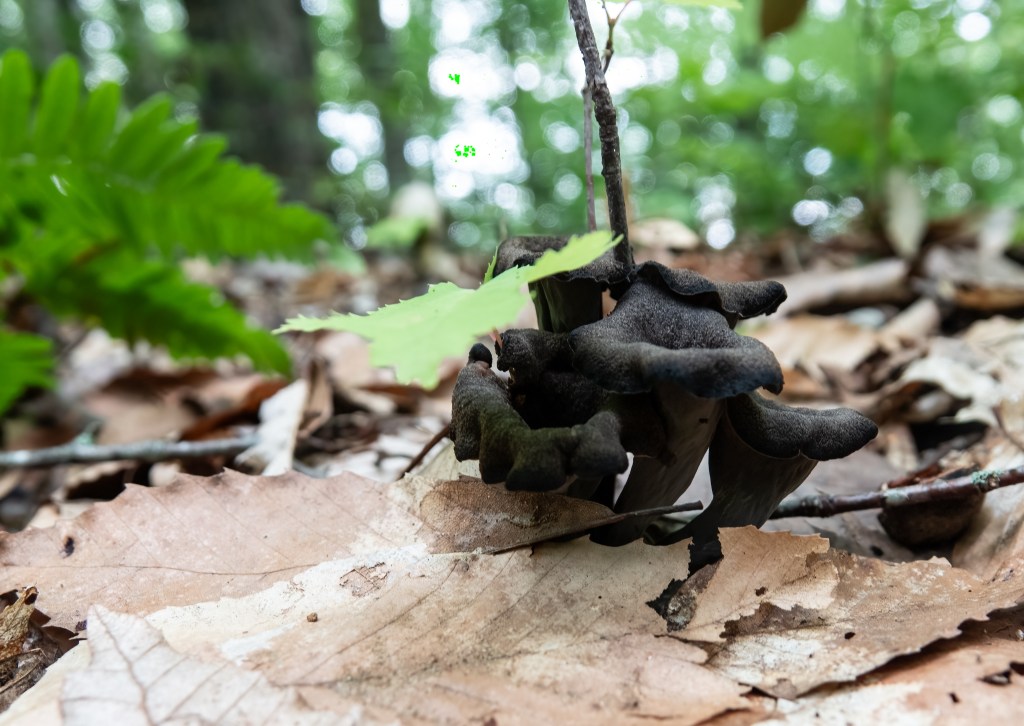
Lest you be left thinking that there’s no such thing as a safe and delicious black mushroom, let me assure you that one of the best of all is the Black Trumpet.

But, as always, never ever pick and eat a mushroom unless you are absolutely sure you know what you are doing.

The importance of good grooming

Not only politicians need to be well-groomed for election day:

I was kayaking on our beaver pond a month ago, and startled a Great Blue Heron, with time only for an action shot, his twelve tail feathers spread, and a curlicue of water droplets trailing from his feet:

On the way back, I was watching for him, and caught him majestically rising in flight:

In close-up, you can see every feather. Each wing has 28 or 29 primary and secondary flight feathers, with several layers of coverts on top, and can propel him at up to 30 mph.

These feathers require constant grooming with that intimidating beak:

So do his newly-growing pectoral feathers, the long feathery breast feathers that are only there in the breeding season. They can eventually be up to a foot long. He is fussy. One tiny inaccessible downy white feather is out of place.

But a precision lunge with that unwieldy-looking beak finally gets a grip:

Then back to fishing:

and a final pose:

PS I think this is a juvenile, because his crown lacks the central white of an adult.

Halloween demands a spider or two

This is an ordinary house spider, bottom left, who has cleverly made two silken egg sacs on the outside of my front door window pane. Each contains up to 250 eggs.

Five days later, she had made one more, and the first one had hatched hundreds of tiny spiderlings:

She did not add any further nests, and the others may winter over.

If you have read this far, you are probably not an arachnophobe, so I invite you to continue as I show you a few more of this summer’s spiders.

This remarkable be-dewed web is a Bowl-and-Doily spider web. The name harks back to an era when everyone lived amongst, and named, the smallest inhabitants of their rural worlds. The spider (not visible here) sits underneath the upper “bowl”, ready to pounce. The lower “doily” protects it from unseen predators from below.

Around here there are various species of jumping spiders, tiny little furry things, often quite charming. They can jump up to 30 times their own 1/4″ length. This is a Common White-cheeked Jumping Spider, Pelegrina proterva, resting on a gall. Its other name hints at its jumping prowess “Reckless Jumper”.

And this is a Whitman’s Jumping Spider, Phidippus whitmani, with furry boxing gloves on its pedipalps.

All jumping spiders have eight eyes, and almost 360 degree vision. They use this to stalk their prey, and attack.

I found a very strange Elongate Stilt Spider, Tetragnatha elongata, on the stalk of a Blue Flag Iris growing on the edge of my pond. Their body is only 8mm long, but their long legs mean the whole spider might be 20mm. Indeed as a group they are called Stretch Spiders.

And then on the same day I encountered two separate orb-weaver spiders. The first constructed this elegant iridescent web; you can just see it sitting in the center:

And the second had just caught a tiny fly and was busy gift wrapping it:

If you’re viewing this on a large enough screen you should see the details. At the top, the silk is emerging from her spinneret, on the underside of her furry abdomen. She passes the silk from the tip of one leg to another and winds it round the doomed victim.

I hope you are lucky enough to encounter more admirable spiders. You can see why E.B. White wrote Charlotte’s Web.

PS I stumbled over a marvelous piece of trivia. Apparently Jumping Spiders go through what looks like REM sleep, which raises the possibility that they may dream! Read all the details here:

https://www.pnas.org/doi/10.1073/pnas.2204754119

PPS In 2023, Brian Gall discovered an unanticipated talent in these Elongate Stilt Spiders. “This species spins webs on the edges of ponds and streams to catch prey. So it’s not unusual for the spiders to tumble into the water. When they do, they rely on surface tension to skitter back to shore. But just how the stilt spiders knew which way to go has been unclear — until now. They appear to use light reflected off the water’s surface. It may help them pinpoint the shoreline, which is less reflective.” For more details of how they worked this out, read here: