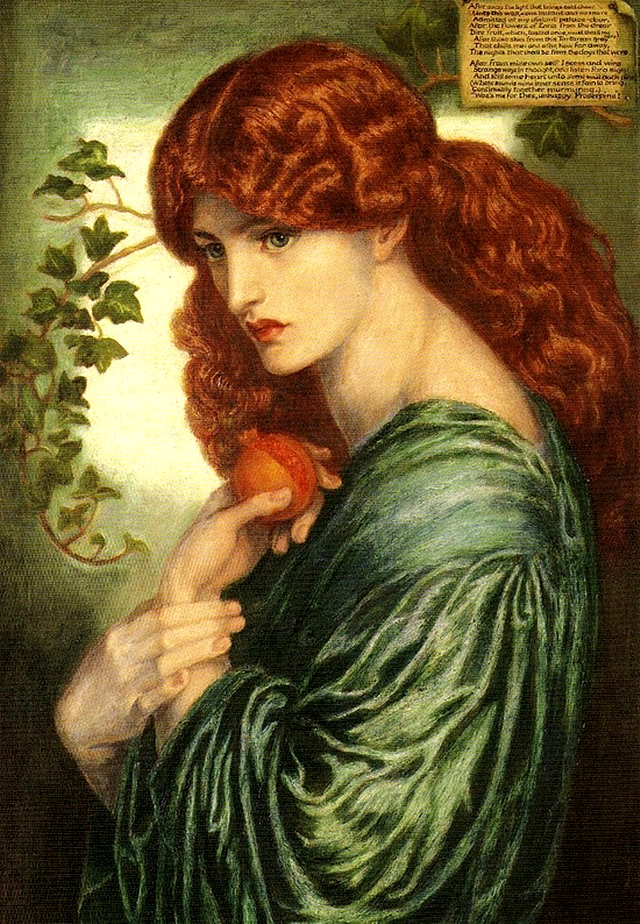
Mirrors of the Soul

Most mammals (including the great apes) and many species of birds have dark brown eyes.
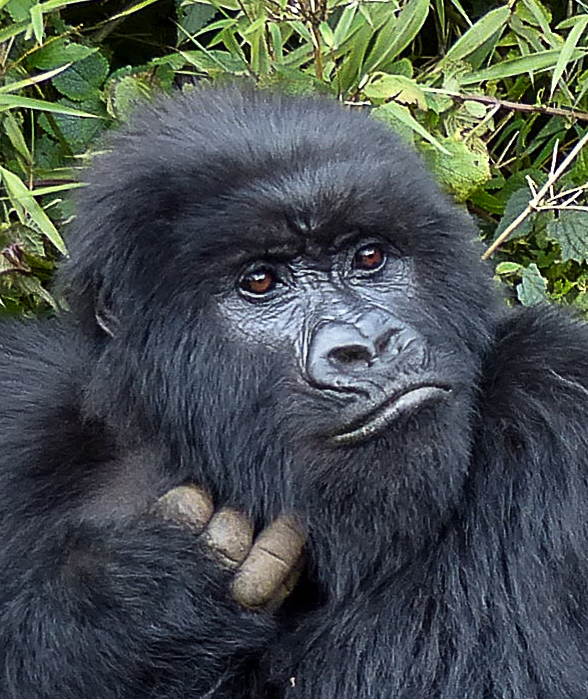
P1090661

We forget that humans are unusual in having a wide variety of eye colors: brown, blue, grey or hazel/green.

And in fact elsewhere in the animal kingdom, we find the same eye colors recurring. This Ugandan Grey-necked Crowned Crane, Balearica regulorum, has pale grayish-blue eyes.

Grey Crowned Crane

This Common Cormorant in Central London has eyes greener than those of any human outside Scifi movies:
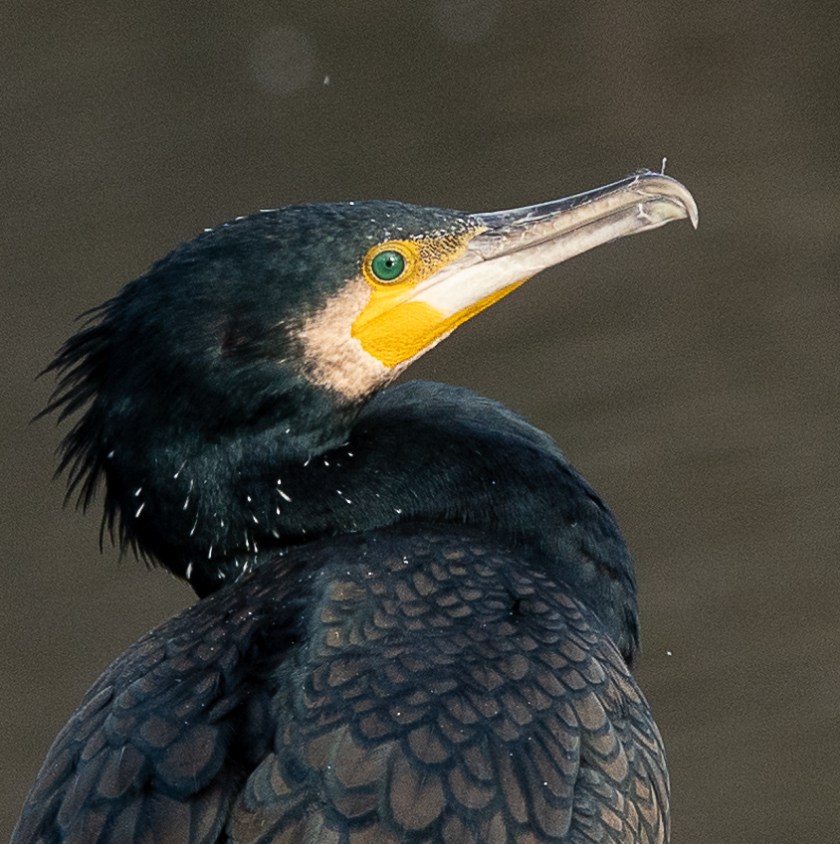
Cormorants

And this dragonfly goes one step further:
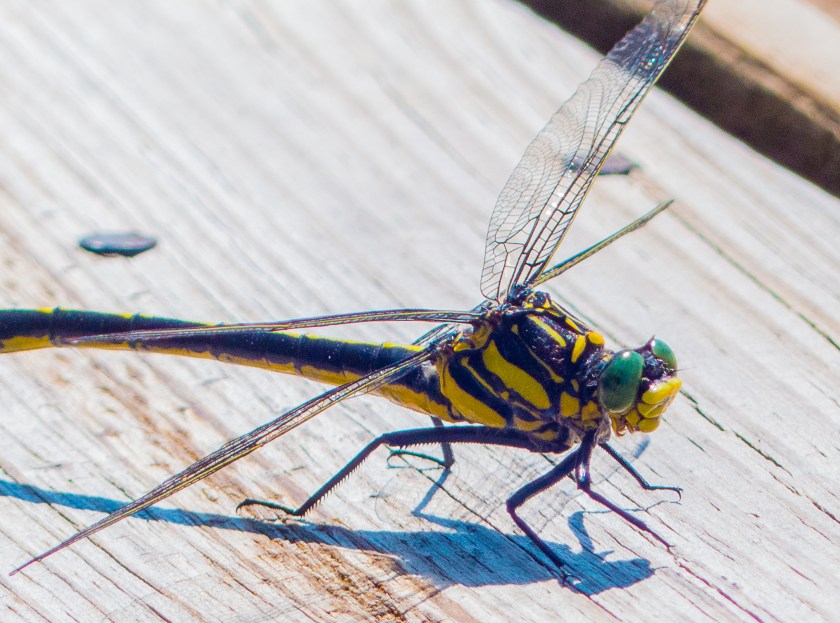
P1070467

But we also find eye colors that in humans would need contact lenses:

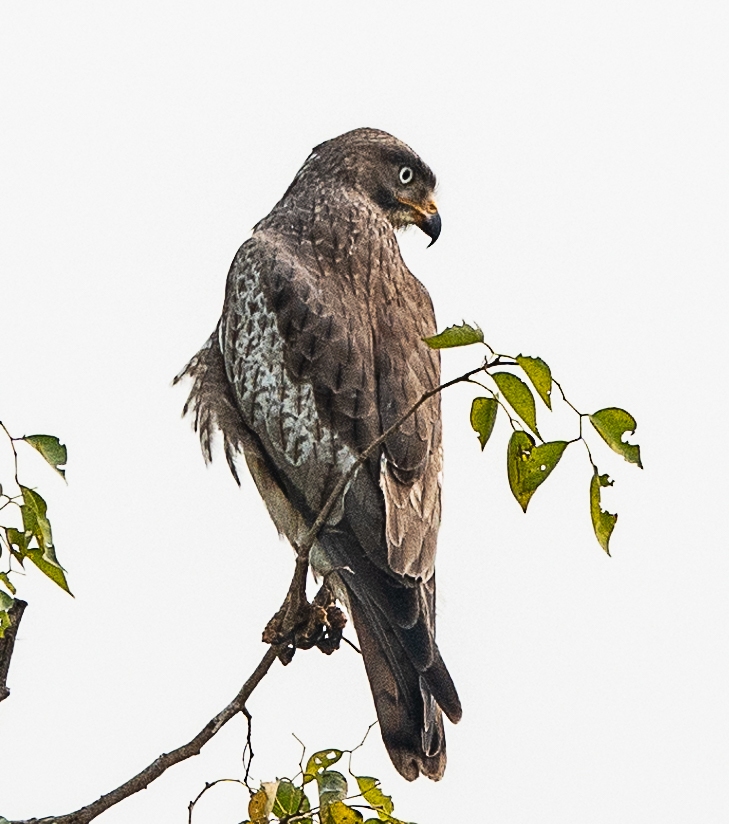
Look at this White-eyed Buzzard in India:White-eyed Buzzard
Or the lemon yellow eyes of the Indian Jungle Owlet:

Jungle Owlet

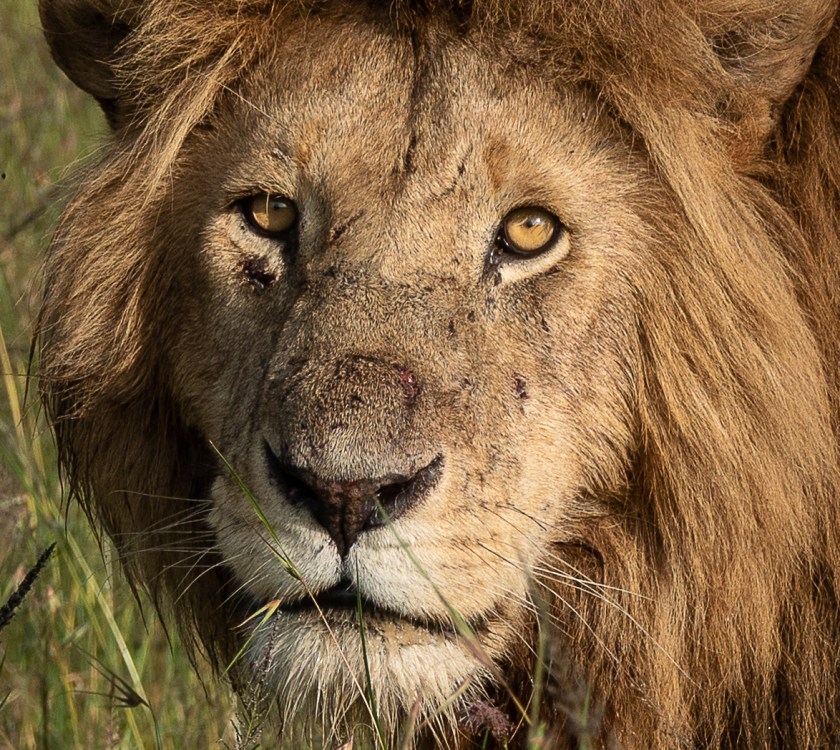
or the tawny eyes of the lion:

dsc07681

and the tangerine eyes: of the Namibian Southern White-faced Scops Owl, Ptilopsis granti
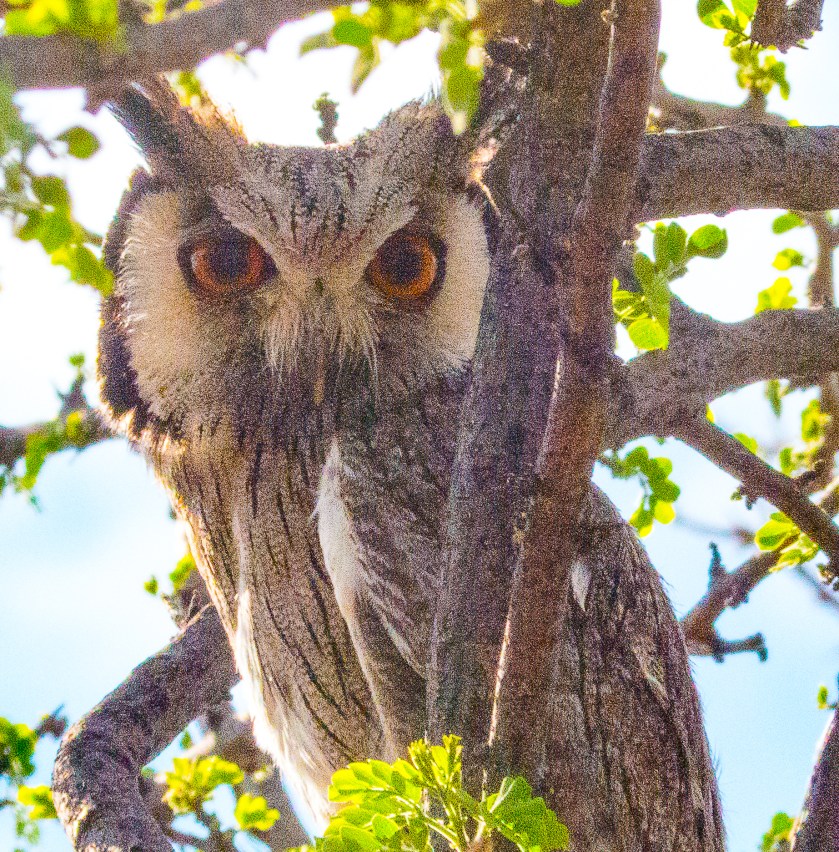
Southern White-faced Scops OwlMaddest of all, the cherry-red eyes of the loon (aka Great Northern Diver):
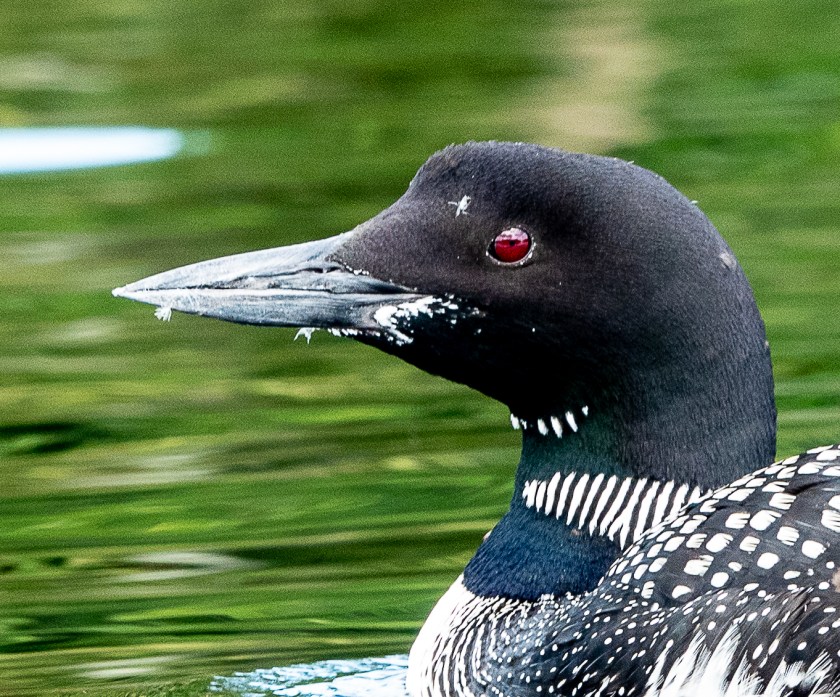
DSC07796

The dragonfly aside, the mechanism for all these eye colors lies in the outer layer of the iris, called the stroma. Dark brown eyes result from the presence of melanin in the stroma.  Blue eyes happen when the stroma contains no pigment and is translucent. This layer scatters the white light, and it scatters the shorter blue wavelengths the most, giving rise to the perception of blue eyes. If the layer has a little more collagen, the blueness is dampened and the eyes look grayish. Green eyes result from the presence of a little melanin only, mixing with the reflected blue to create green.

There are actually two types of melanin, and the full range of colors found in my photos above depends mainly on which type of melanin is found. Here is a great chart, if you’d like to know more.

Melanin Content and Eye Color

Eye color Melanin Presence on Front Layer of Iris Melanin Presence on Back Layer of Iris Dominant Pigment Type
Brown Heavy Normal Eumelanin
Blue Light Normal Eumelanin
Gray Even less than blue Normal Eumelanin
Green More than blue eyes, less than brown Normal Pheomelanin
Hazel More than green, less than brown Normal Pheomelanin and Eumelanin
Amber Heavy Normal Pheomelanin
Red or Violet (in humans) None or extremely little None or extremely little n/a


PS Humans are also unusual in having the colored iris surrounded by a large white area, the sclera. This makes it easy to notice the direction of other people’s gaze, a useful trait when cooperating with others.

Natural eye makeup

Many animals and birds have striking markings around their eyes, made of fur, feathers or just plain skin. Why?

Pale circles round the eye may help gather extra light for animals that feed in reduced light. Dark circles around the eyes may reduce glare for animals that feed in bright light. Often, though, these markings have no precise function. They either disguise the eye, or break up and confuse the head contours, or aid in species recognition. Here are some examples.

The American red squirrel has elegant white semi-circles above and below its eye, probably helpful in noticing predators when feeding in dappled light:

DSC04670

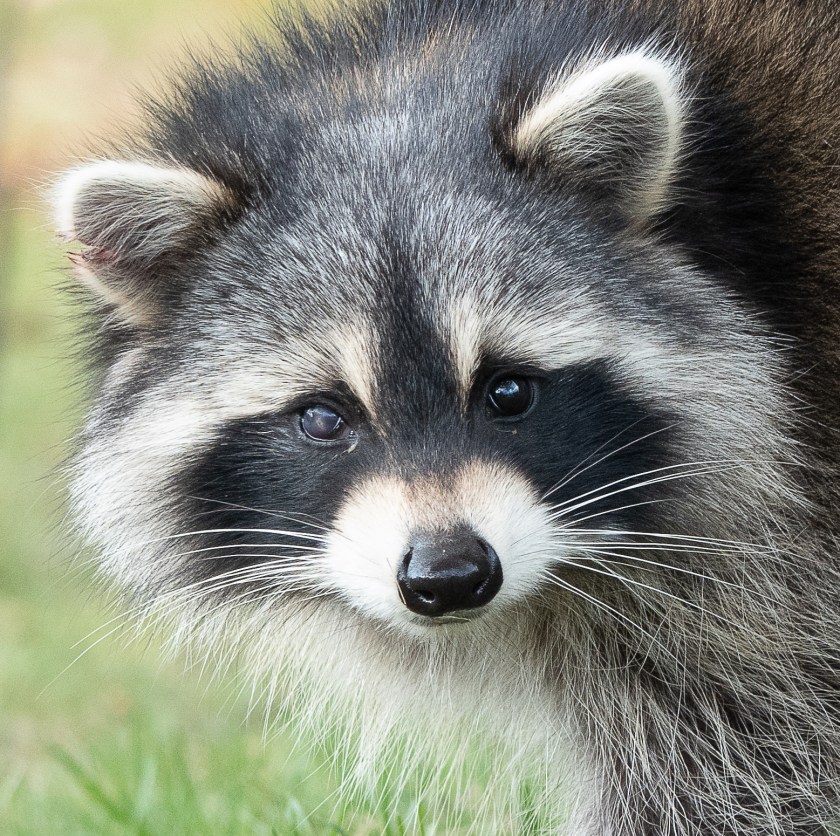
Raccoons famously sport dark highwayman’s masks, but it seems unlikely that reducing glare is their main function, since raccoons are largely nocturnal:

raccoons

Wood frogs too have dark masks, and they live mainly in thick woodland, where the light is not bright. (Though the dark lines in front of the eye may help in accurately targeting prey.)

P1010298

But the Southern Masked Weaver’s dark mask may indeed be an adaptation to reducing the glare of the Namibian desert:

Southern Masked weaver

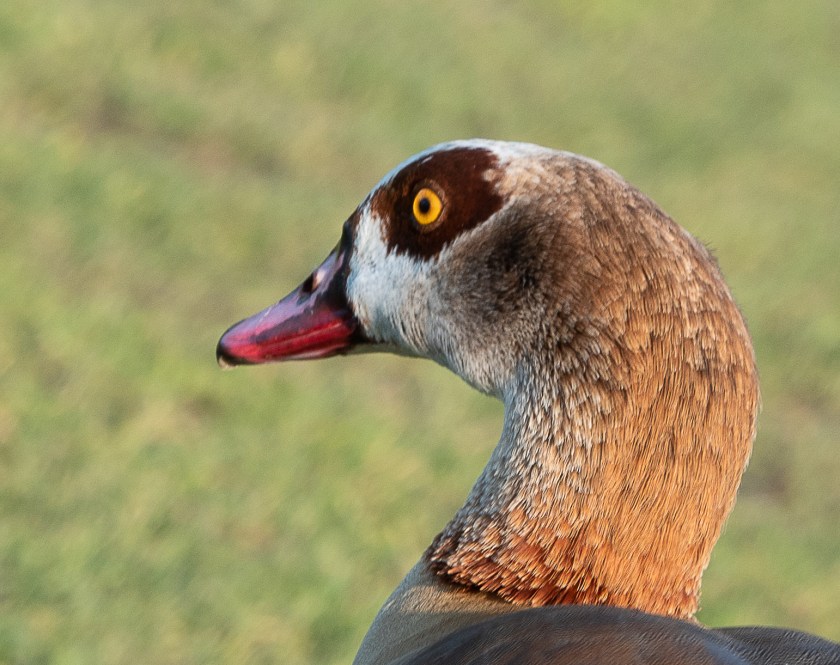
And the Egyptian Goose, although this one now lives in Hyde Park in London, originates from Africa and so its dark eye circles may not just be the result of a late night out, but may have given it an edge in that bright light:

dsc07131

My last few examples are almost certainly not aids to vision of any kind. Just like our eye makeup, they may serve to attract a mate. Whatever works for you…

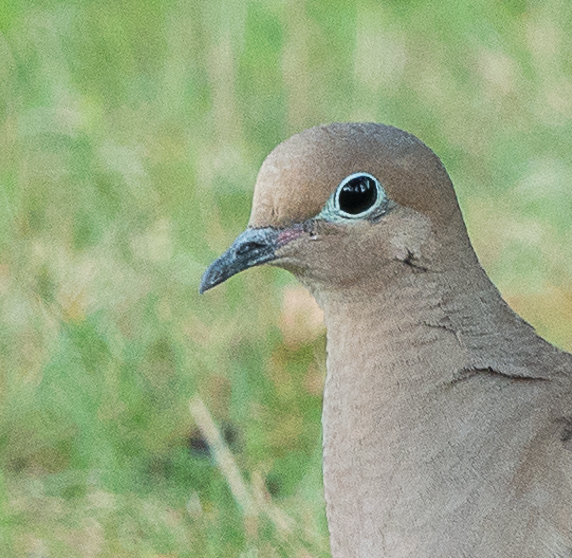
In Maine, the wood doves have pale blue eye-liner: a look I am considering for next summer.

dsc04722

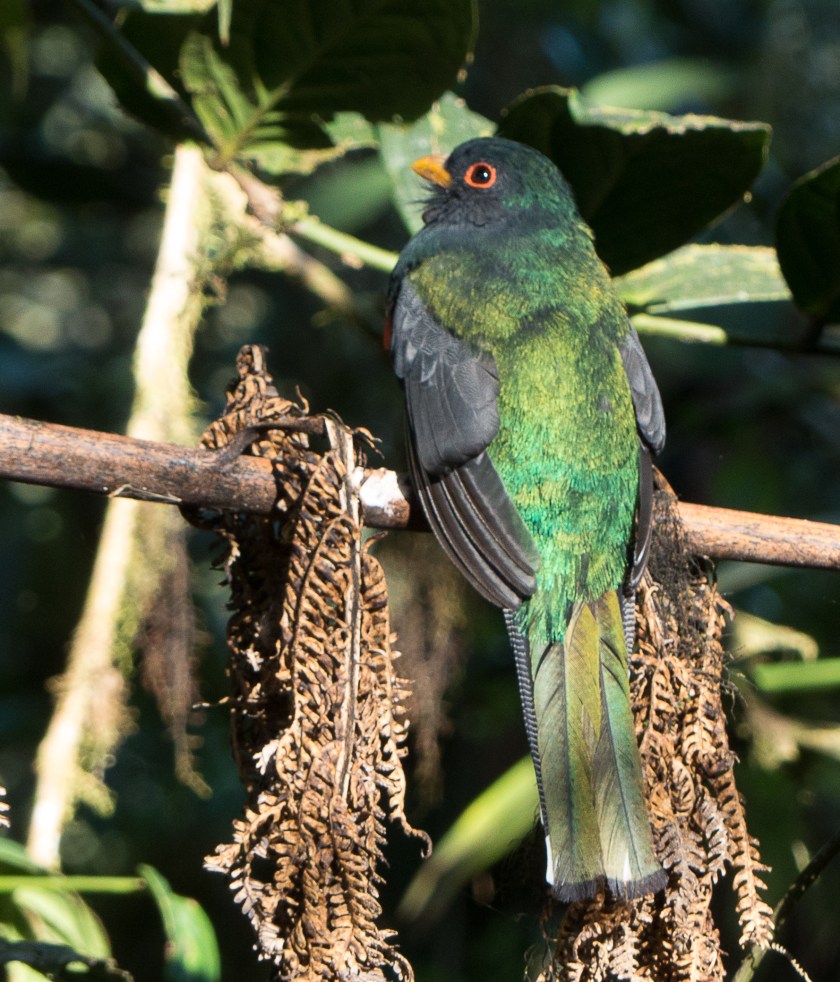
In Ecuador, both the male Masked Trogon  (first photo) and the female (second photo) wear red-rimmed spectacles:

Male masked trogon.

Male masked trogon.

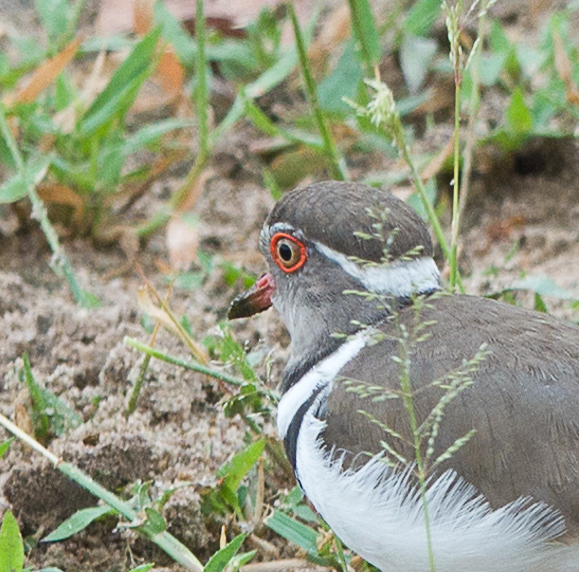
As does the Zambian Three-banded Plover:

Three-banded Plover

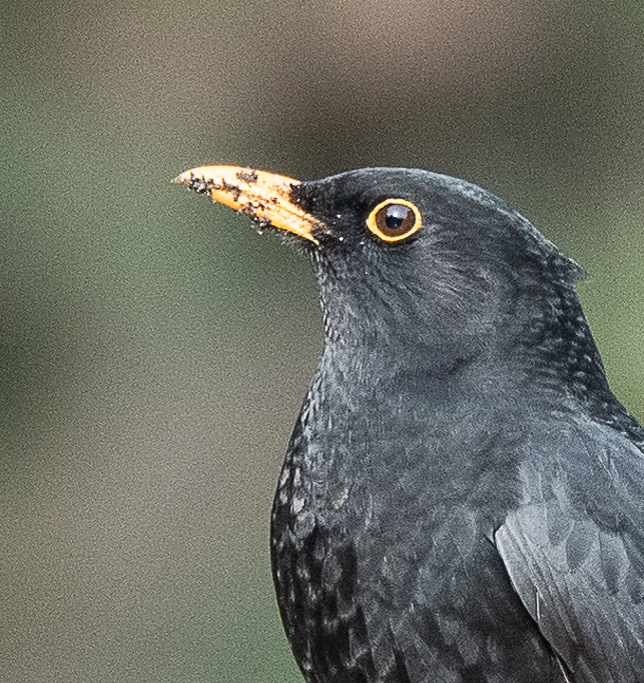
Here in the UK, the common blackbird has sharp yellow circles:

dsc07312

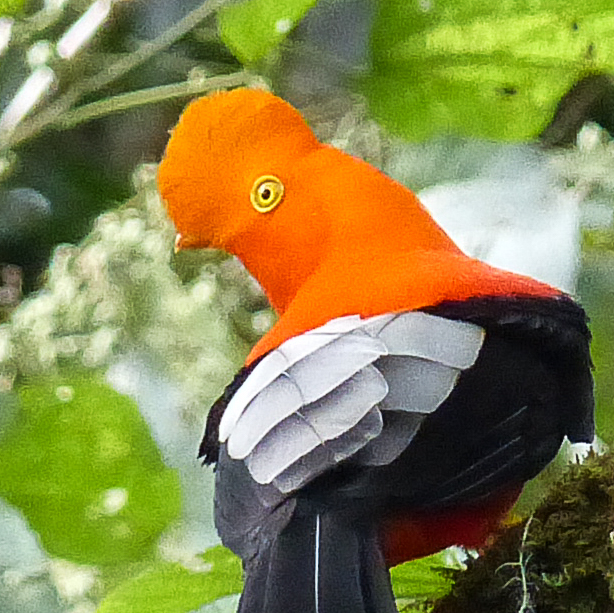
But these are outdone by the Ecuadorian the Cock-of-the-Rock’s astonishing yellow goggles:

Cock-of-the Rock, orange variant on Eastern slope of Andes

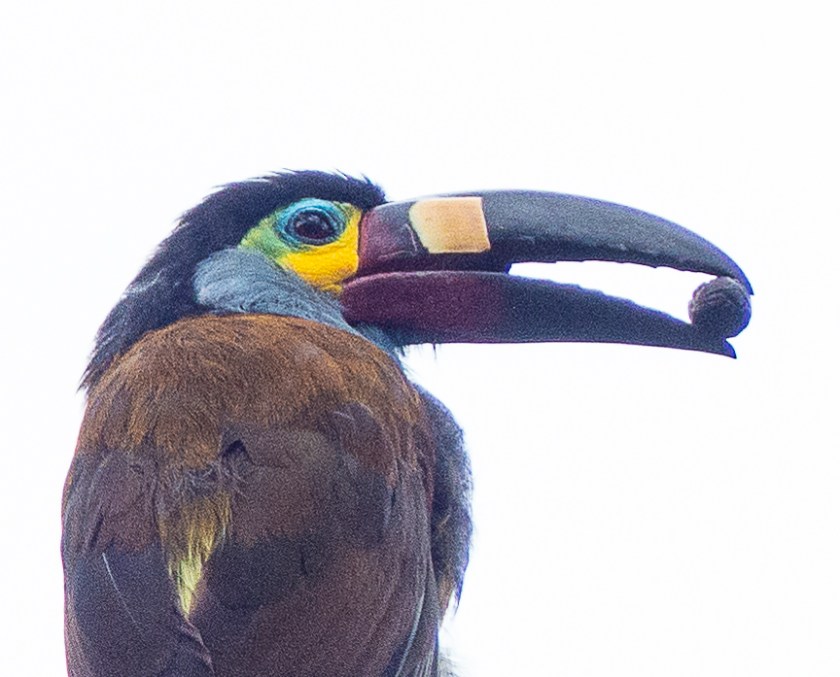
Finally, by popular demand, the Plate-Billed Toucan: not exactly an eye ‘ring’, but the most flamboyant choice of eye shadow shades that I know:Plate-billed Toucan

Humans need more help:

james-charles

[James Charles is sponsored by Covergirl. He is the beauty blogger phenomenon who stopped traffic in Birmingham last week. ].

If you’d like to know more about natural eye makeup, read this:

Ficken, Robert W., Paul E. Matthiae, and Robert Horwich. “Eye marks in vertebrates: aids to vision.” Science 173.4000 (1971): 936-939.

PS There is a separate story about the color of the eyes themselves. Maybe I’ll look at that next.


Feathers fit for a queen

[I think this is my last topic from our Nepal and India trip. So my posts will become more erratic for a while, until after my next trip, to the Bale mountains of Ethiopia, in late February.]

The Common Kingfisher, Albedo atthis, is an accomplished fish catcher, but that is just the start. Preparing the daily catch for eating requires an additional set of skills:*

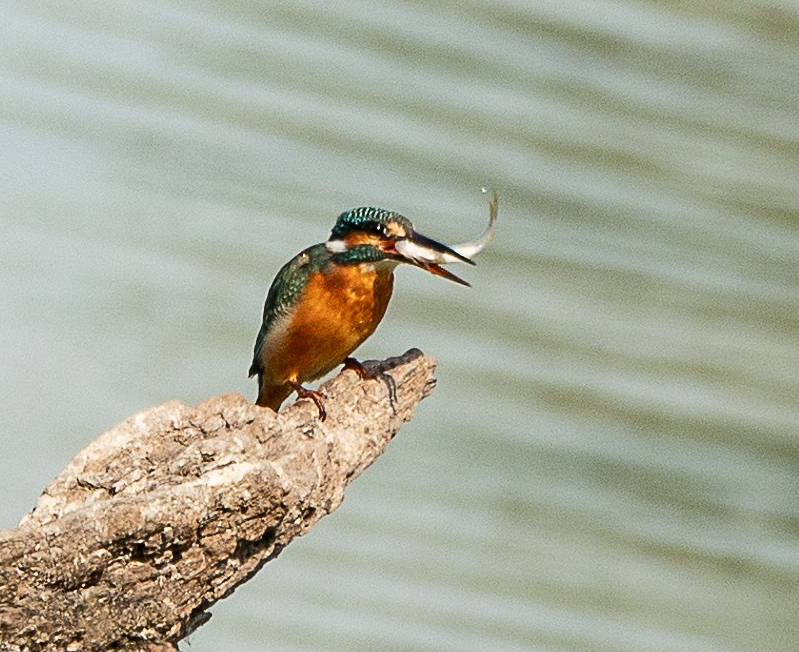
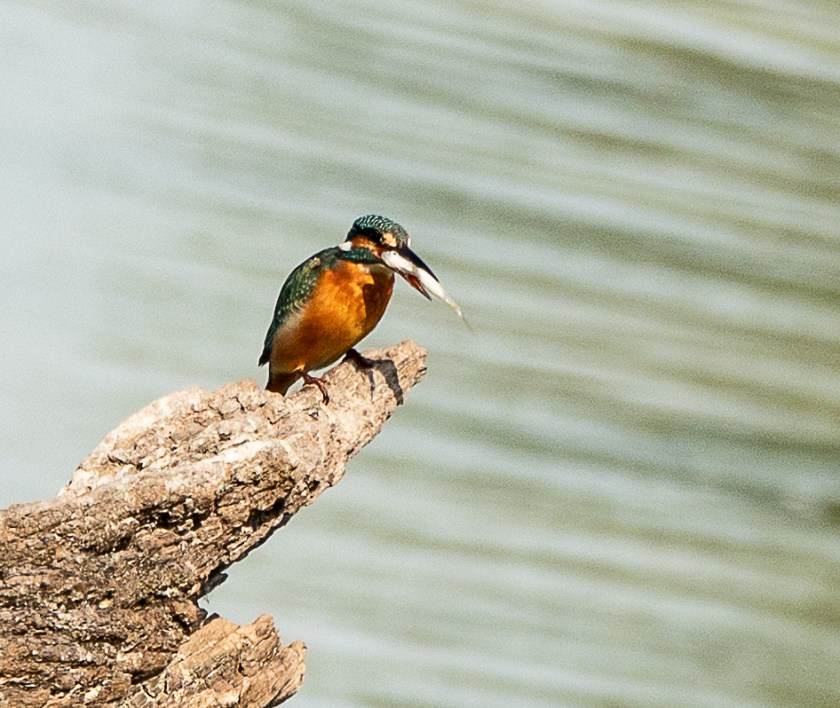
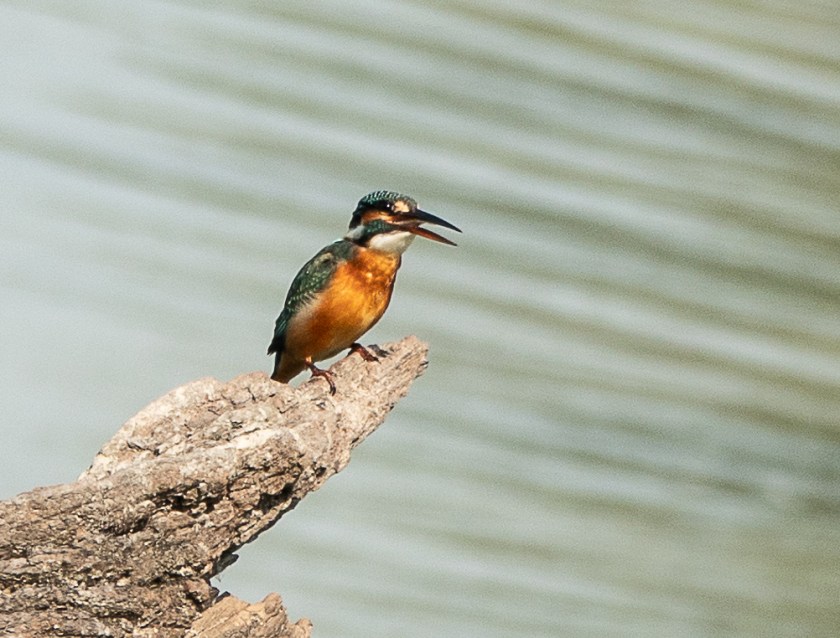
In Assam, this female caught a very wriggly fish:

dsc06174-1.jpg

So she then bashed it on the branch to incapacitate it:

Bue-eared Kingfisher

It was now stunned (moribund? dead? Who knows?) , so she rotated it to get the scales the right way round:

Bue-eared Kingfisher

And down it went, in one gulp:

Bue-eared Kingfisher

Common kingfishers range through Eurasia (including the UK) and North Africa, and are not threatened.  This is a female, because her lower bill is reddish, just visible if I zoom in to the max on the final shot.

Bue-eared Kingfisher

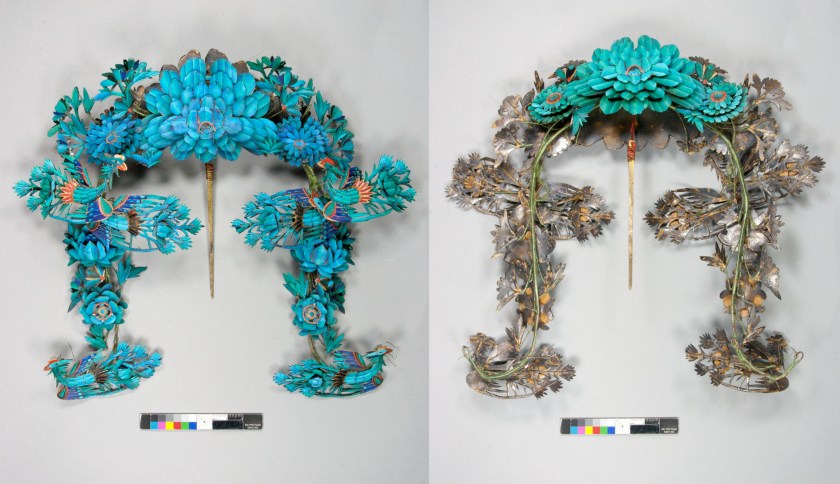
Kingfishers were valued (ie trapped) by the Victorians for their iridescent blue feathers. The Chinese took the use of kingfisher feathers in jewelry to an extraordinary level. This art form was called Tian-tsui (also spelled Diancui), and the demand for the feathers from Cambodian kingfishers was so huge that they became a major source of income for Cambodia, and contributed to the funding for Angkor Wat. They also came close to extinction.

Look at these astonishing pictures of a late 18th century hairpiece :

fig1and2
Photo from National Museum of Scotland blog

You can read about it here, and its restoration:

https://blog.nms.ac.uk/2018/08/02/phoenixes-in-flight-conservation-of-a-chinese-kingfisher-hair-piece/

I don’t know which species of kingfisher these came from, but the Common Kingfisher is found in Cambodia.

*This fish-eating technique is basically the same as that of the Black-necked Stork, as you can see from this previous post.

https://eyesonthewild.blog/2018/12/02/

But the kingfisher has added the step of dashing it against a branch to stun it, something that bee-eaters also do with their prey,

Twinkle twinkle great big bat

[Back to my Nepal and India trip..]

On the road between Nepal and the Indian border the driver suddenly pulled over on the verge, and pointed up.

Flying foxes

High in the trees there were hundreds of Indian Flying Foxes, Pteropus giganteus, one of the largest bats in the world. Like most bats they are nocturnal, but they seem to be quite alert even in the daytime. The odd one was flying around: their wing span can reach 1.5m, or nearly 5 feet.

Flying foxes

They huddle together in small groups for warmth (the mornings are cold in November):

Flying foxes

They wrap up inside their wings to keep the wind out, like the one on the lower left here:

Flying foxes

They have five claws on their remarkable feet, and claws on the ‘thumbs’ of their wings too:

Flying foxes

At the end of this post you can see a drawing of the wing anatomy.

And if I rotate one of the photos, you can see where they get their name:

Flying foxes

They are fructivores, sucking the juice and discarding the pulp.  Although they damage fruit farms, they also pollinate the trees. They are common in India, and essentially harmless, but they do carry disease, particularly the deadly Nipah virus, which can be transmitted to humans who collect and drink the date palm sap from near their roosts. One of the worst outbreaks was in Siliguri, not far from Darjeeling, where we spent a few days.

PS This drawing of the wing anatomy shows the claws on the feet and the wing joints:

Bat-Skeleton-Diagram


*My title comes from Lewis Caroll’s Alice’s Adventures in Wonderland, where the Mad Hatter sings:

Twinkle, twinkle, little bat!
How I wonder what you’re at!
Up above the world you fly,
Like a tea tray in the sky.


Very ugly ducklings

[A brief news report from England: back to India next time.]

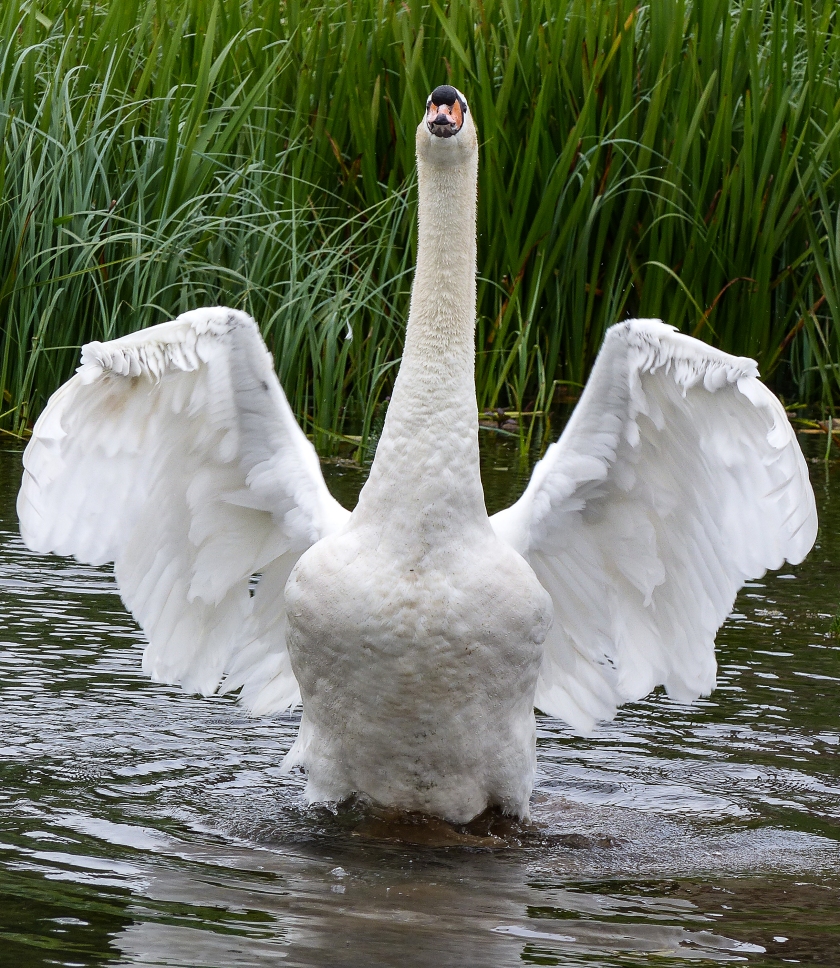
I was wandering round Kensington Gardens in central London last weekend, and found a group of six swans. Two were adults, and four were last year’s young, still in their ugly duckling plumage. Two of them had the most peculiar wing feathers, stuck out at an angle and reduced to toothpicks :

dsc07079

They seemed otherwise fine, behaving normally, feeding alongside the others. I didn’t know if it was a strange moult, or a problem, so on the advice of my birding friend Jane I emailed The Swan Lifeline,  https://www.swanlifeline.org.uk, who confirmed it was a disease known as Angel Wing.

dsc07011

Jasmine and her colleagues sprang into action. By 11am the next day they had got permission from the Queen (via her representative, the park warden!) driven up to London, and met me at the water’s edge . They sprinkled food on the water, and as the foolish birds came over, they grabbed them with one swift expert scoop .

dsc07112

To my surprise the adult parents did not come to the defense of their young, just watched with interest.

Next step: tying the feet together with a piece of soft cloth.

dsc07116dsc07114

then swaddling them in a custom-made red straitjacket.

dsc07119

And finally into a bright yellow carrier. Interestingly, by this point they are quite calm, just looking around with interest. And the rest of their uncaring family are polishing off the left-over food in the background.

dsc07123

Off they go to be looked after and eventually released somewhere safe from predators, probably a private lake with an island that foxes can’t get to.

dsc07125

There is a short video here: listen to the noise and fuss that the more aggressive male makes:

The cause of Angel’s Wing is not clear. One theory is that it is dietary, caused by too many carbohydrates, especially white bread. In Hyde Park these swans are fed by well-intended passers-by, often with not just bread but biscuits or cake too. But it may have a genetic component, since only two of the four cygnets were affected. Read more here: https://en.wikipedia.org/wiki/Angel_wing

Whatever the cause, there is no cure, and the wings will never grow proper flight feathers like these:

p1140772

So these poor swans will never fly, which is why they must be protected from predators. They will be otherwise fine, and are even capable of breeding.


Janus butterflies*

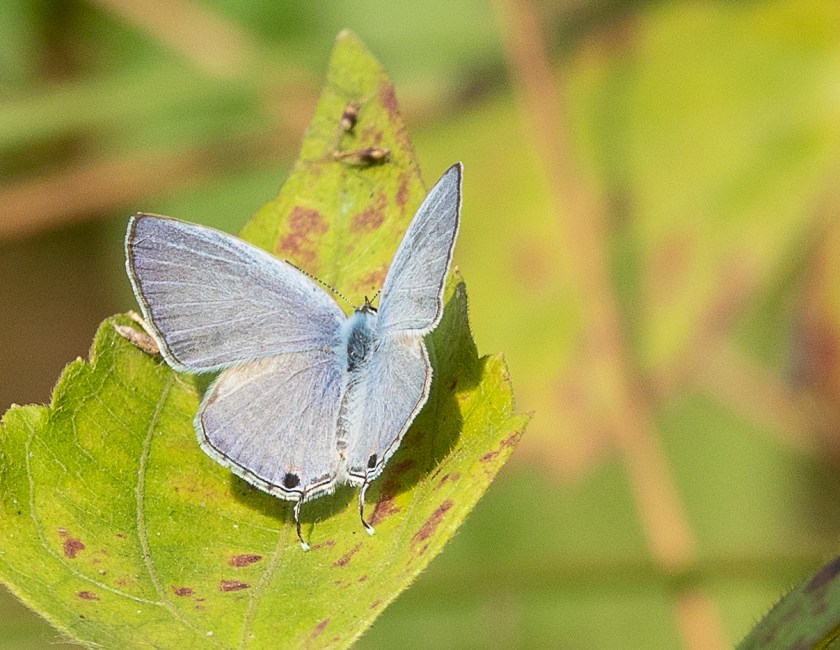
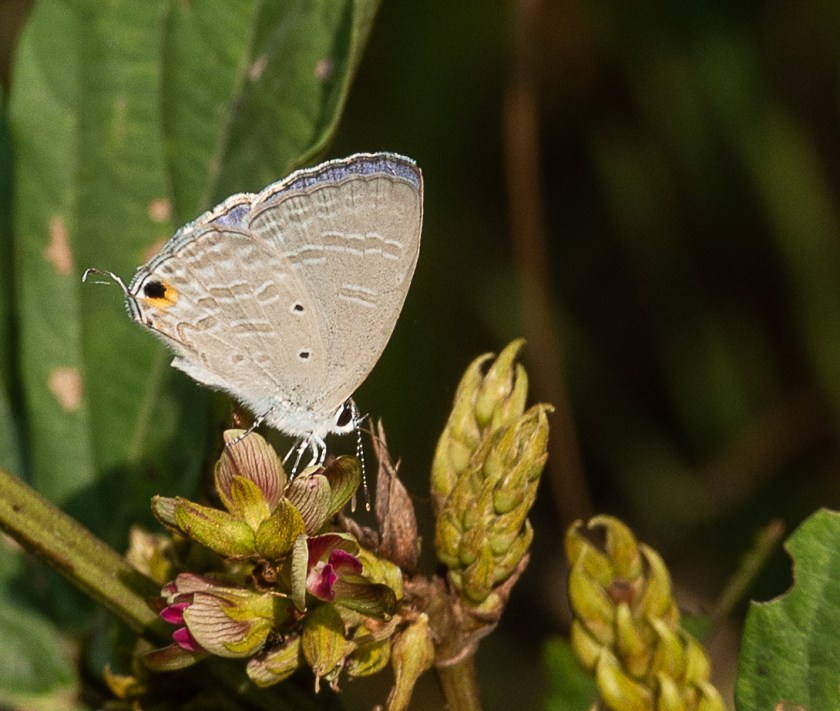
Many butterflies have “tails” on their hindwings. This small Blue at Koshi Tappu in Nepal is a good example:

DSC09055

When its wings are closed it looks like this:

DSC09056

One hypothesis is that the combination of these long wiggly protuberances and the eye spots at their base mimics the antennae and eyes of a butterfly’s head. A predator is then confused, and instead of attacking the head it goes for the much less important hindwing. Mind you, a butterfly whose wings have chunks missing probably won’t fare so well either.

Here is an entirely different Nepalese butterfly, with similar wiggly tails, though the eye spots, at least on the upper side, are not so obvious.:

DSC09260

And this one in Ecuador has gone overboard:

p1150787

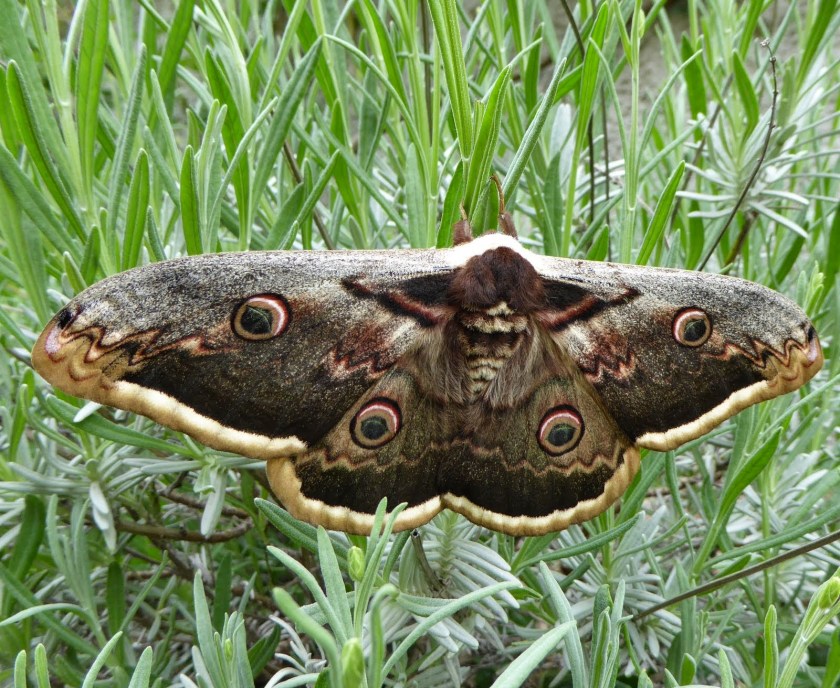
Since Darwin’s day, eye spots on butterflies have been thought to pay a role in confusing predators (and attracting mates). Butterflies and moths can have eye spots without fake antennae, as this Grand Paon de Nuit (Grand Peacock of the Night) , Saturnia pyri, near Carcassonne, France, so dramatically displays:

Saturnia pyri, Grand Paon de Nuit (Great Peacock of the Night).. Top side.

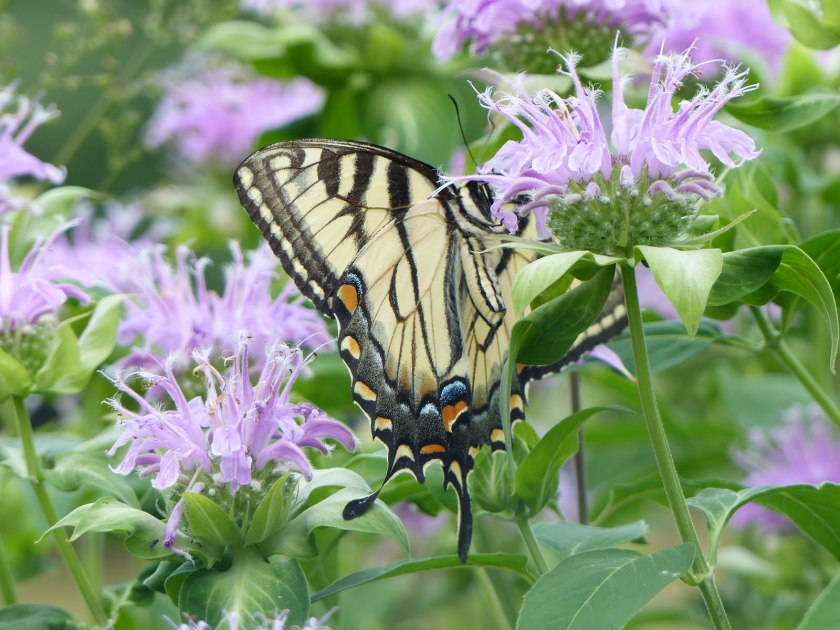
They can also have fake antennae without eyespots, as this Swallowtail butterfly in Maine shows:

p1180173

In 1980, scientists from the Smithsonian showed that the more “false head” features a butterfly had, the more likely it was to be attacked on that part of the wing, so apparently deception works!

* Janus was the Roman god of beginnings and endings, the past and the future, and he was always depicted with two faces. He is also associated with deception, which is why I chose his name for my title. I am not the first person to think of this link. This moth’s scientific name is Automeris janus:

phpthumb.php(Thanks to the lepbarcoding.org website for this photo. The URL refused to copy, so I hope the unnamed photographer will forgive my use of this photo.)

The tails of two squirrels

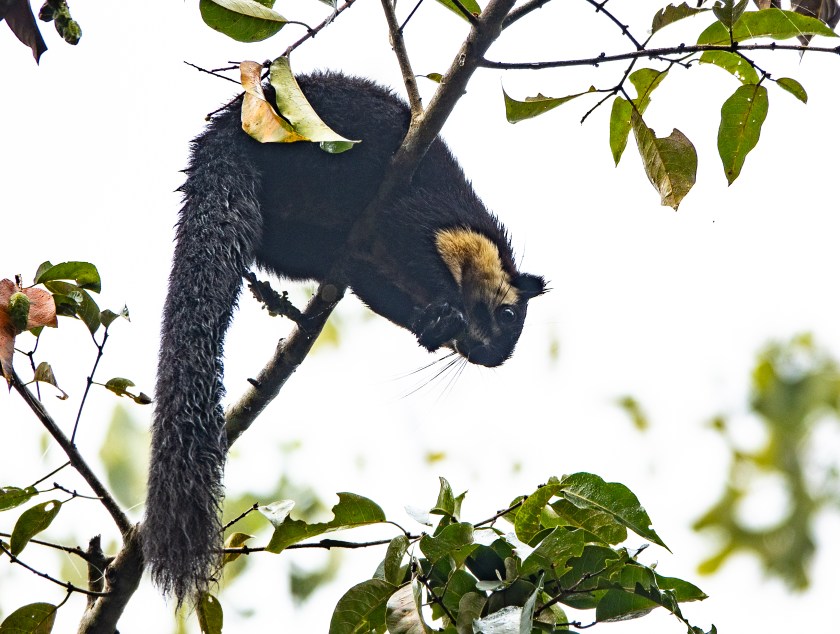
The Malayan Giant Squirrel , or Black Giant Squirrel, Ratufa bicolor, is a squirrel on steroids. Far above in the canopy it looks more like a monkey, being a total of 1.2 meters long, half of which is tail. This one’s tail looks just like a long ponytail, still wet from the shower

DSC06369

They live in forests from eastern Nepal and northeast India (where I photographed this one) all the way through southeast Asia to western Indonesia. They are almost entirely arboreal, rarely descending to the ground.

Malayan Giant Squirrel

They eat seeds, fruits, and leaves, and have ear tufts like our British red squirrel:

DSC06369

Like most solitary squirrels, they are polygynandrous (a new word I learnt while researching this); not only do the males mate with multiple females, but when the female is in season she mates with five or six males, and a litter may have several different fathers. Despite the orgies, numbers are thought to have dropped by 30% in the last ten years because of habitat loss*, and it doesn’t help that until recently they were sold in large quantities in the food markets in Vientiane in Lao.

More familiar in scale, but quite cute, is the Hoary-bellied Himalayan Squirrel, Callosciurus pygerythrus, so called because each hair has two light yellow rings, giving its coat a hoary or grizzled look.

Hoary-bellied Squirrel

Although it is a smallish squirrel, about 40 cm from head to tail-tip, its tail is also impressive, and nearly as long as the rest of its body. Unfortunately it has arranged its tail behind the tree trunk, but if you look carefully you can just see the tip emerging in the top right-hand corner of the next photo:

Hoary-bellied Squirrel

It is common and not threatened, despite also being widely eaten in some areas of Lao. The ones in the foreground of this photo look like Hoary-bellied squirrels to me:

https://travel.mongabay.com/laos/images/laos_1288.html

*The Malayan Giant Squirrel is classified as Near Threatened, mainly due to deforestation, since they live high in the canopy of tall trees.
A reader asked me what the huge tail is for, since it seems more of a liability than a plus. I have poked around to find an answer, and as I suspected it is probably mainly used as a counterweight when leaping through the canopy, but it may also attract mates (a lot of them!), and in other species of squirrel it is known to be used in communication.
The Takshak

The Tokay Gecko, Gekko gecko, is a sizable lizard, whose eyes I discussed in a blog last year. I had never seen one in the wild. Our guide pointed to a tree trunk, and said “Look!”. We gazed blankly at some nice bark, apparently devoid of life.

Tokay Gecko

Eventually, deep in the tree, we saw what he was pointing at:

DSC00417

But he kept pointing, to a different crack a foot or two away, and then we saw the really wonderful thing:

DSC00422

There were three babies and several eggs, deep inside the tree. The freshly laid eggs have a sticky surface that adheres to the tree, and both adults guard the eggs through 2-6 months of incubation. They will grow as large as 35cm, with a ferocious bite.

Tokay geckos show this blue-grey coloration in low light, becoming grey with red-orange spots in bright light.

They are called takshak in Assam, where we saw them, after sounds they make in the mating season.. you can I hope hear it if you click on the link below:


Buffalo romance

[Like my last post, this concerns an animal whose descendants are common farm animals. But it is also a Brief Encounter for the New Year!]

Water buffalo, Bubalus bubalis, have been domesticated for around 5000 years,  but their progenitor the wild water buffalo, Bubalus arnee, is now rare. The IUCN Red List considers them Endangered. The global population is estimated at 3,400, and 90% of these are in Assam, especially in Kaziranga.

We saw them in Koshi Tappu in Nepal, which has around 400, and of course in Kaziranga. They are huge, the males weighing up to 1200Kg or 2600lbs.

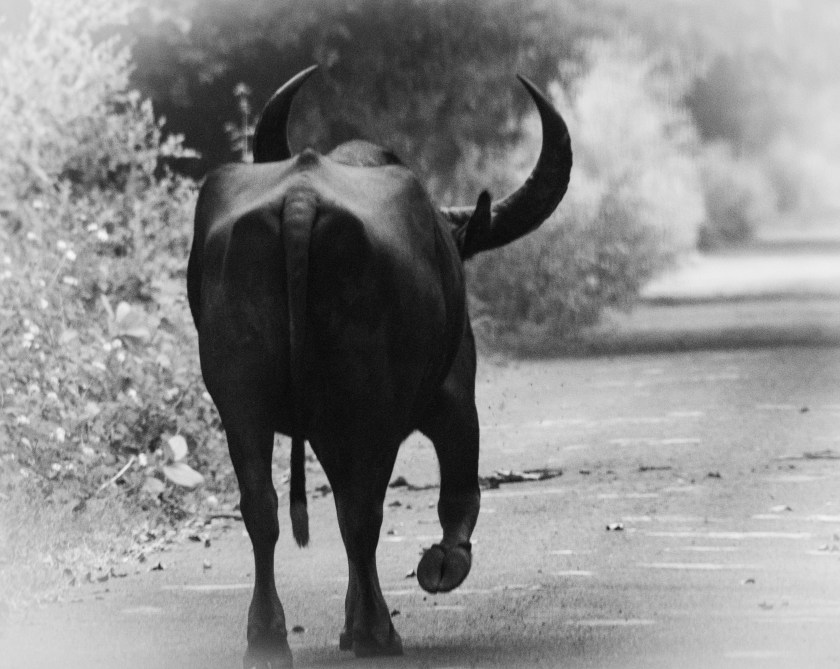
In Koshi Tappu, we followed one along a park road and you can get a sense of his size and power, and those horns, which can spread up to 2 meters, the largest of any living bovid:

Wild Water Buffalo

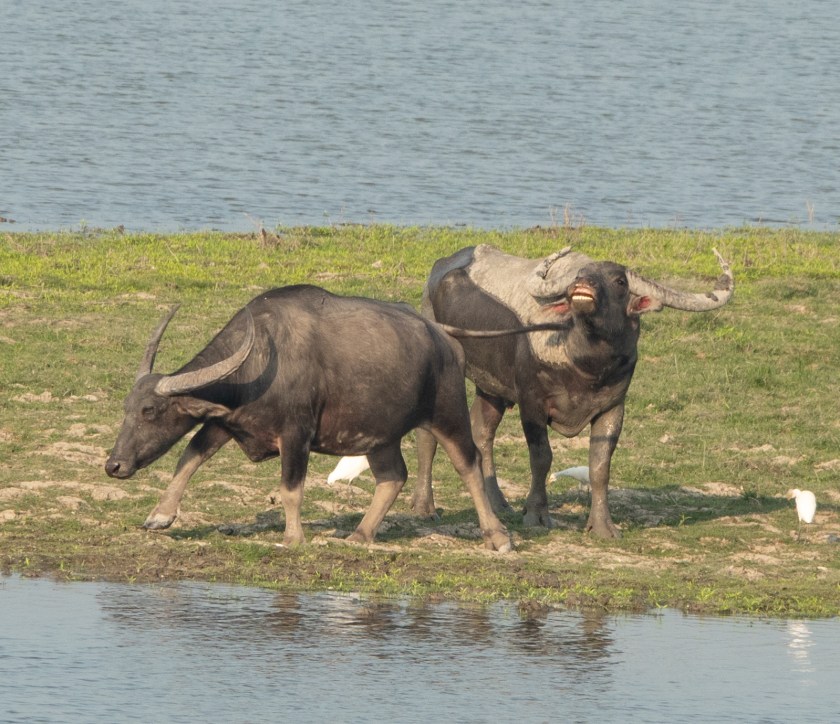
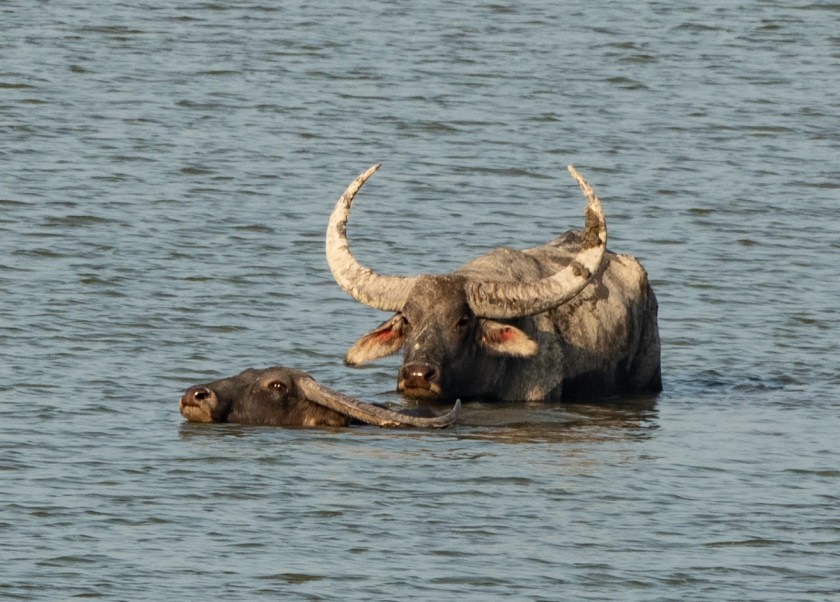
In Kaziranga, a male is scenting to see if a female is receptive.

Wild water buffalo, scenting

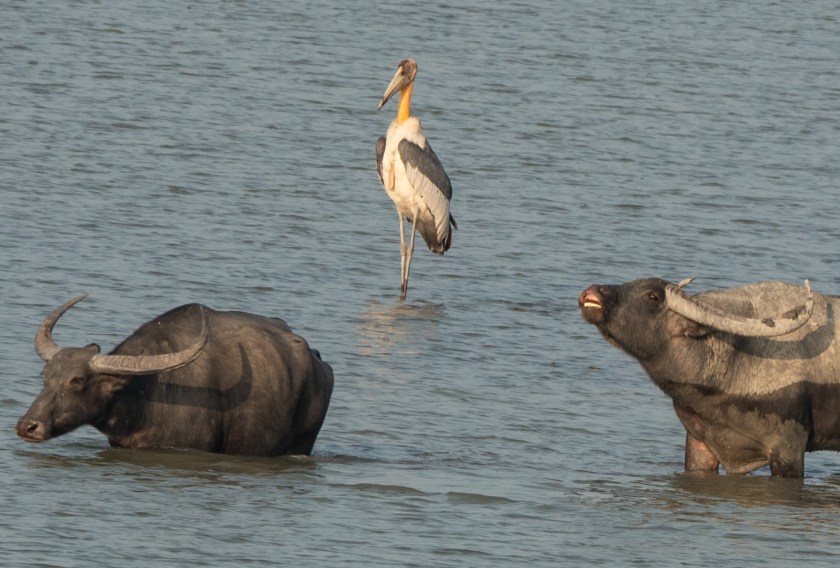
He follows her out into the lake, still checking her perfume. The Greater Adjutant Stork is unimpressed, but then he is nearly five feet tall, up to the shoulder height of a smallish wild water buffalo.

Wild water buffalo, scenting

The female buffalo’s pheromones seem to be sufficiently fragrant to win his approval..

Wild water buffalo, scenting

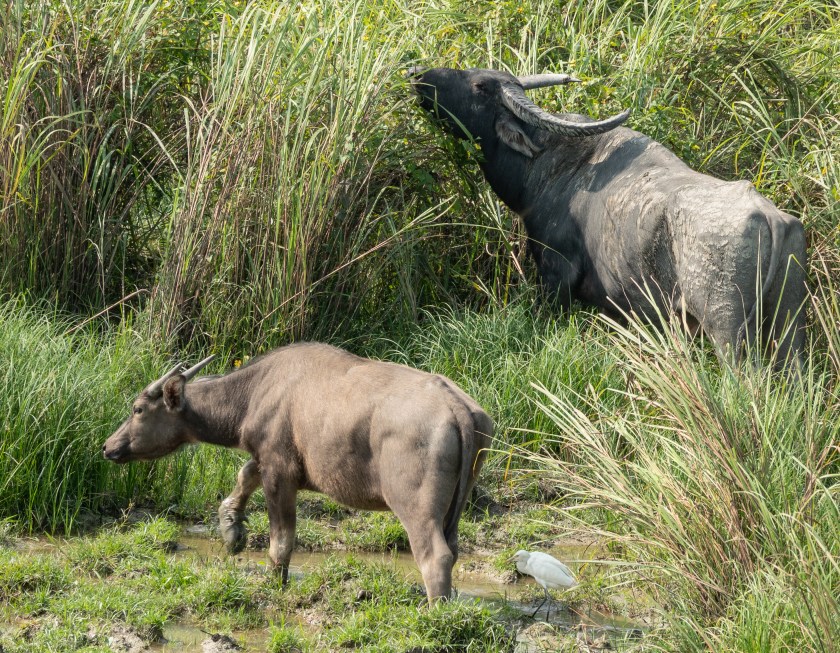
But they will go somewhere more private for consummation. And months later (about 320 days gestation, and a few months more) this will be the result; they are brown at birth and don’t start to darken till about 6 months of age:

Wild water buffalo

One of the threats to the wild water buffalo is interbreeding with the domestic population, and indeed we watched them wandering in amongst domestic herds, but these are all wild.

PS Note the cattle egret following the baby around, hoping for insects disturbed by its hooves.

Redheads

Have you ever pondered on the origins of the domestic chicken? I thought not.  Read on..

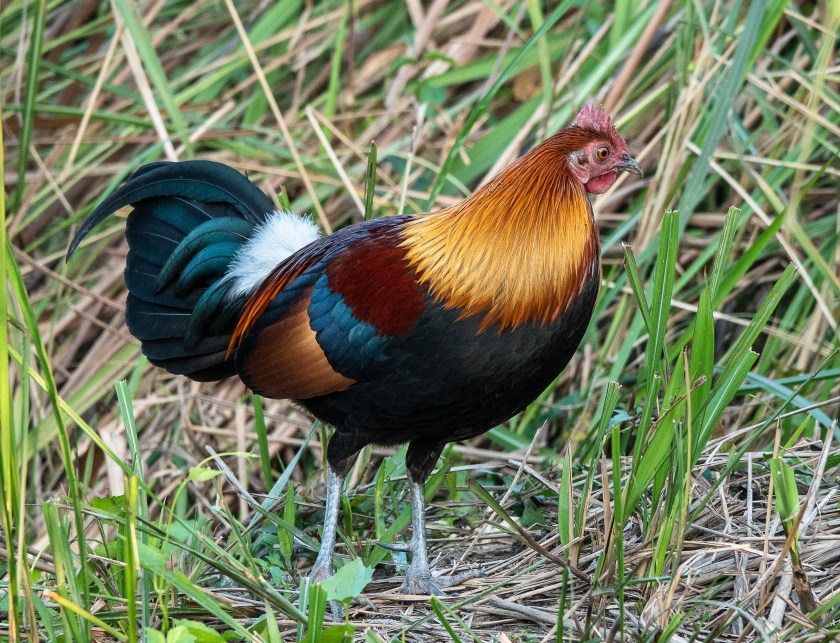
Chickens seem have been domesticated by around 7,500 years ago, most probably from the wild Red Junglefowl, Gallus gallus.  We saw this one in Kaziranga: just look at him:

DSC06269

In close-up he is draped in blazing orange feathered locks, just like Lizzie Siddall*:

DSC06267

And he is equipped with spurs that are not to be trifled with; they have a bony core and an outer horny layer, and are formed for the vestiges of the former fifth toe, which most birds have lost completely:

Male Red Jungle Fowl

Our domestic roosters just can’t compete.

There is some fear that truly wild Red Junglefowl are becoming rare because of contamination of the gene pool by domestic chickens. Let’s hope not.

*Lizzie Siddall was a pre-Raphaelite artist, and also the wife, muse and model for her husband Dante Gabriel Rossetti. She was famous for her red hair:

Proserpina_by_Dante_Gabriel_Rossetti

Or if you prefer you could imagine The Red Woman, Melisandre, from Game of Thrones, played by Carice van Houten!