A ghastly smell wafted across the Tuscan path, as if something had died in the bushes. Casting around for a cause, I realized that just ahead was a patch of tall white mushrooms, mostly lying on their sides after a night of heavy rain.
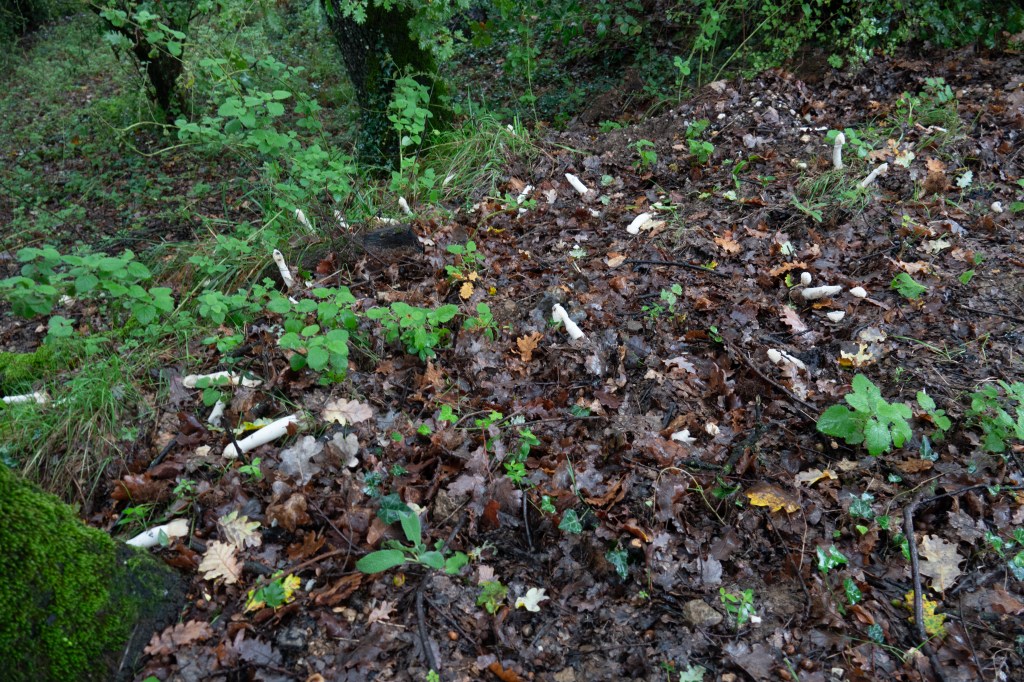
I had stumbled across a patch of Common Stinkhorns, Phallus impudicus. The source of the first half of the scientific name is obvious; the second half means “shameless”:

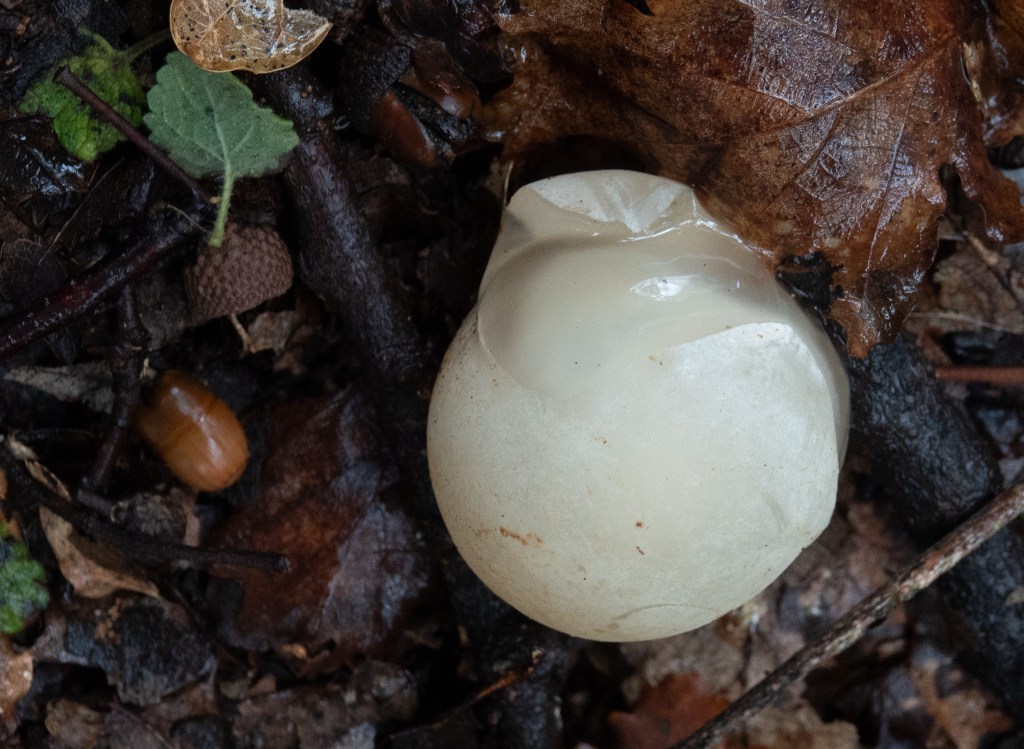
It starts as a spherical blob with a gelatinous rim:
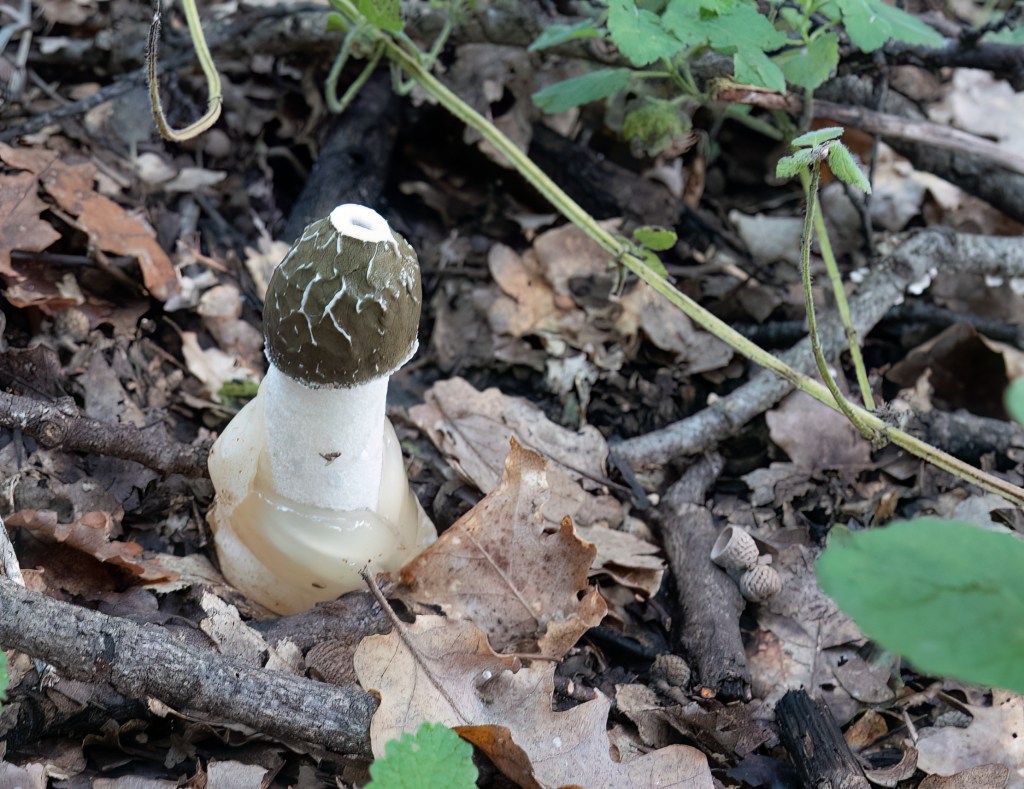
When it starts to emerge, the cap is covered in grey mucus:

There is a small hole in the top:

The cap develops a textured surface, and the white substrate breaks through:
This mucus contains the spores, and its powerful smell attracts insects, lots of them:
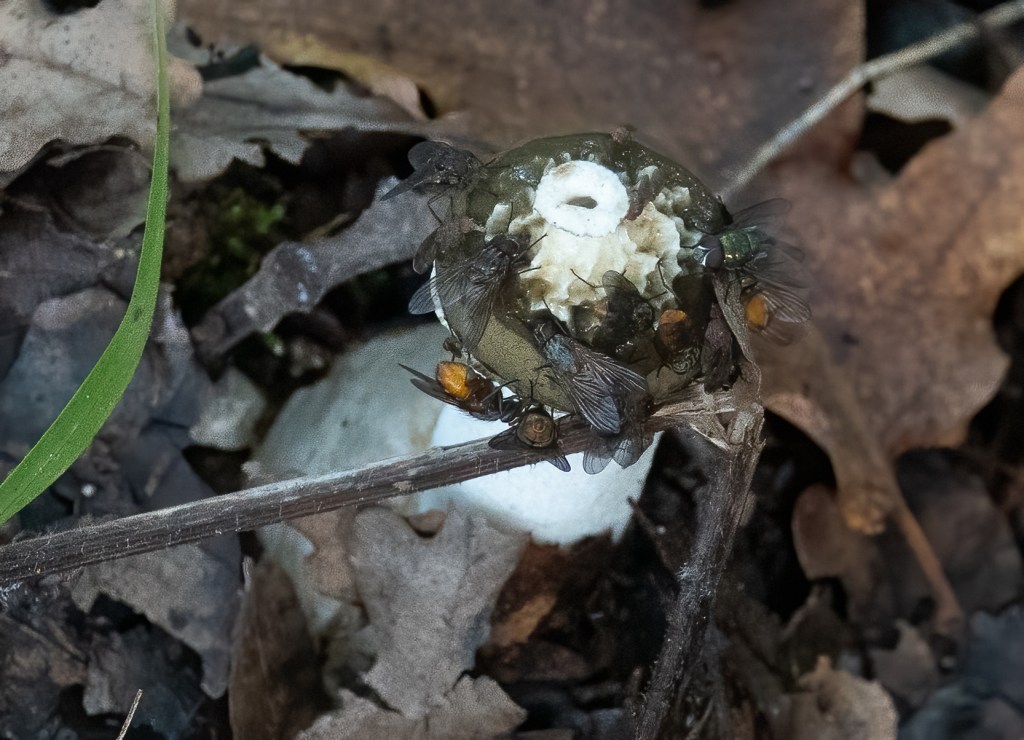
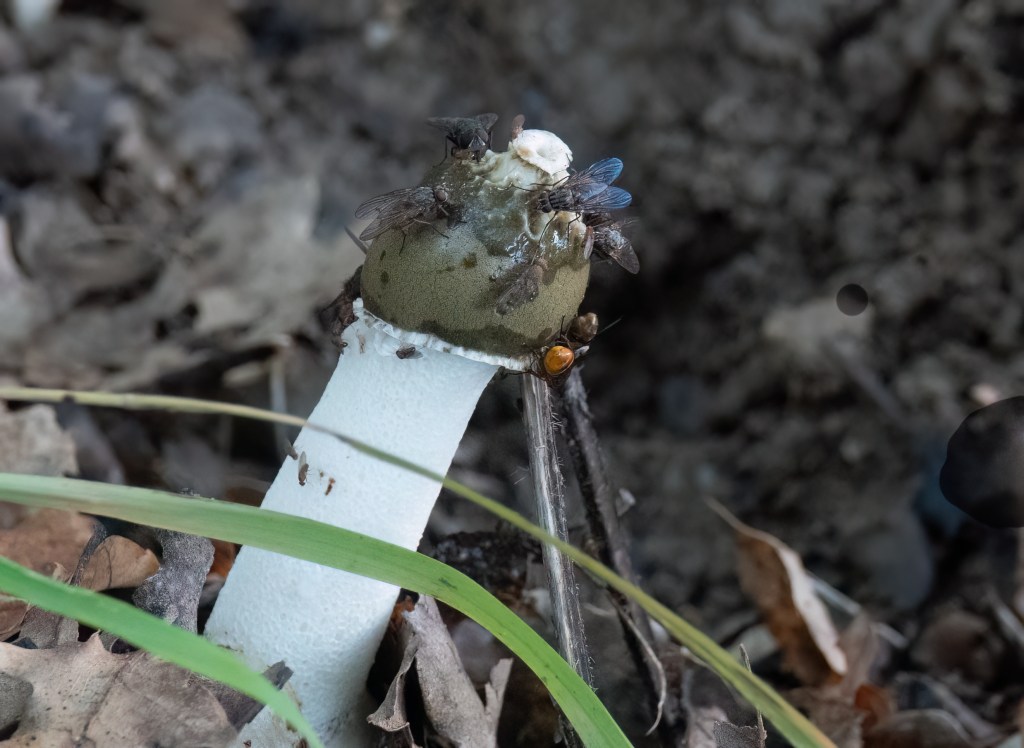
The sticky mucus gets on their feet, and when they fly off they carry it with them, spreading the spores. Rain, time, and enough flies, remove the mucus, leaving a white sculptural shape, with a texture like tripe:

still strongly scented and attractive to flies:
:

Chacun a son gout.
The stinkhorn family also includes this bizarre fungus, the Red Cage, Clathrus ruber, aka called the latticed stinkhorn, or the basket stinkhorn, native to Southern Europe. It reminds me of a Whiffleball.

It emerges from a white circular base, and the grey mucus is on the inside of the basket, where the flies still track it down:

It only lasts about 24 hours, then collapses, and the mucus washes away, leaving a red sea anemone shape:

and fragments of the ribs, exposing the interior texture that held the mucus:

These exotic fungi are apparently quite common in Europe, but to me they are yet another natural wonder. Maybe one day technology will allow me to add a link to this post that brings you its horrendous smell. Or maybe better not.
PS The Red Cage fungus has been introduced to both the UK and the US probably on imported garden mulch.
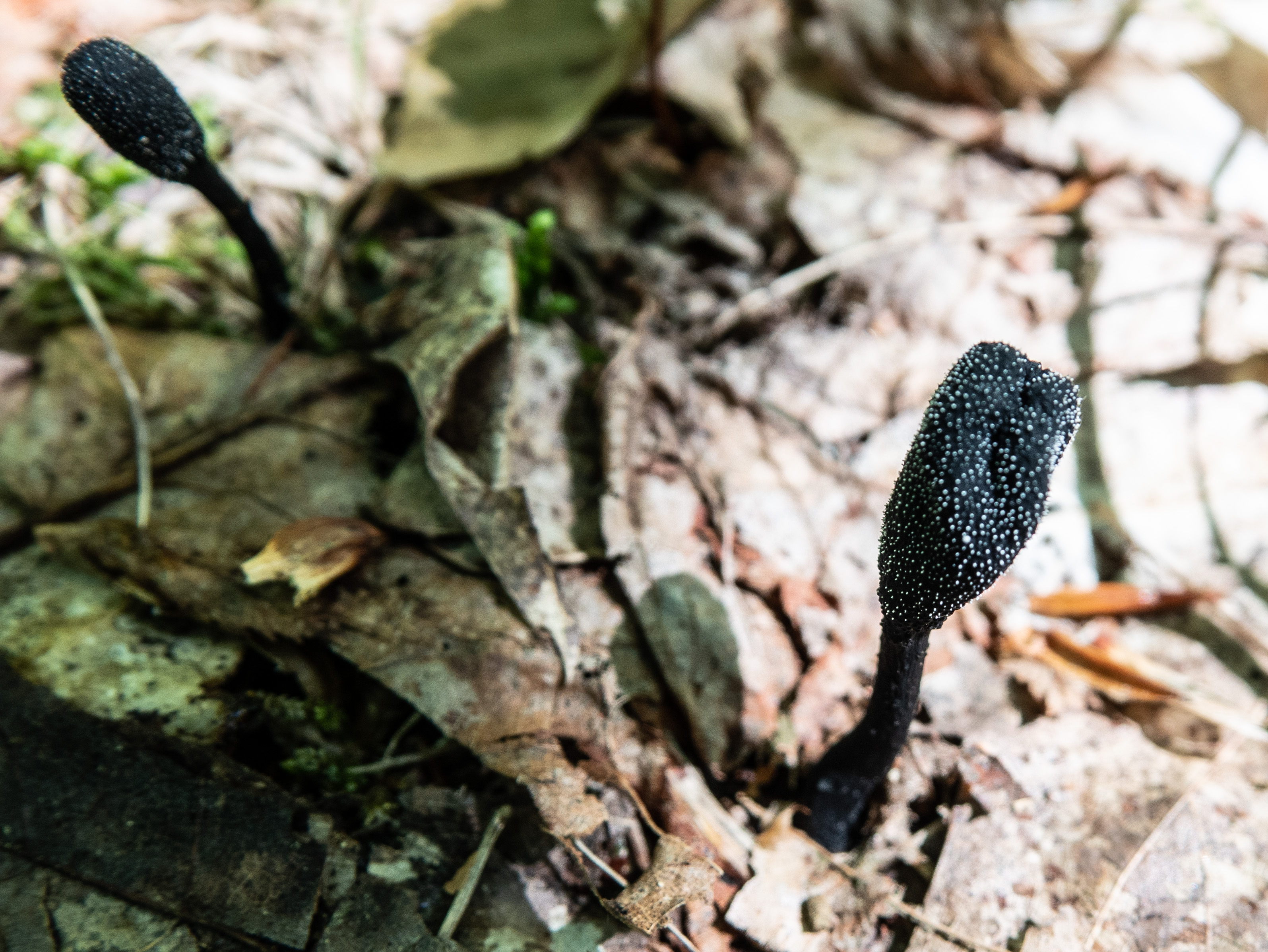
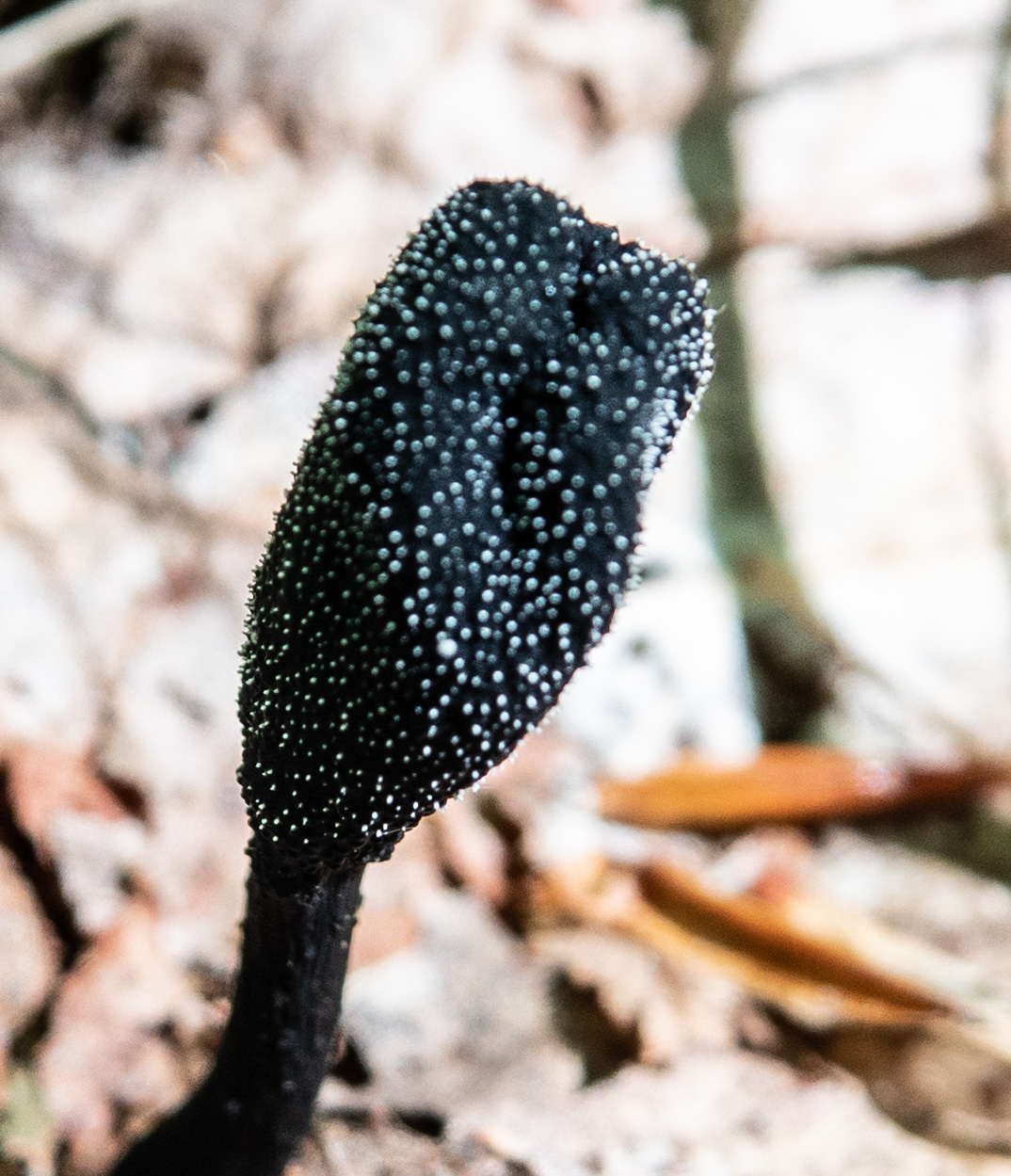
PPS In Maine, we have the Ravenel’s Stinkhorn, which I posted about a while ago: https://wordpress.com/post/eyesonthewild.blog/3750




















 Eyes on the Wild