Wapiti, anyone?

[The other large mammal in Mongolia’s Hustai National Park is the wapiti. It took me some considerable time to understand what we were looking for, because our guide used the names wapiti, moose, elk, and red deer interchangeably. In Eurasia, “elk” is often used for what Americans call moose, but there are no moose in Hustai. We were, it turned out, looking for a close relative of the North American elk, Cervus canadensis, but the subspecies sibiricus. To avoid the confusion with moose, the park rangers call them by the Cree name “wapiti”. “Red deer” was in fact a red herring: it was once thought that red deer, Cervus elaphus, and elk were the same species, but that is now known to be incorrect. C. canadensis has a wider rump patch and paler-hued antlers. ]

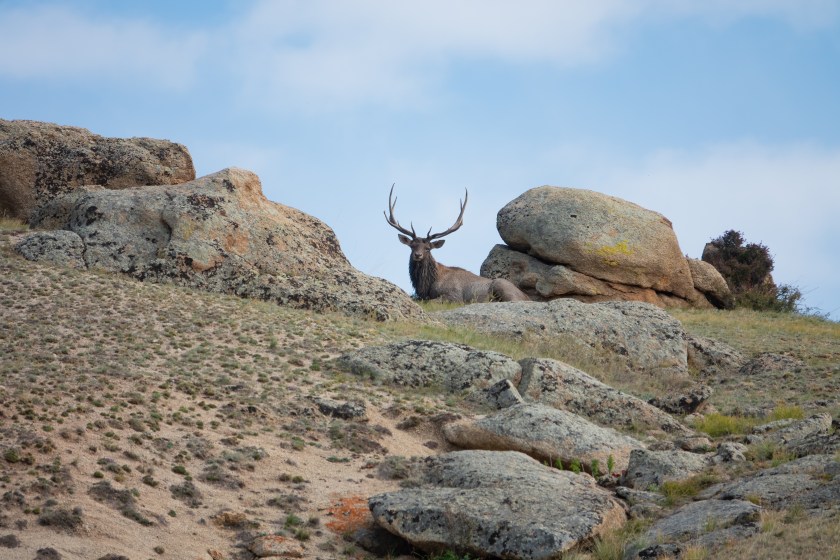
So, let’s stick with wapiti! Hustai has around 1300 of them, and they are not endangered. Here is a handsome bull wapiti, resting from his day’s exertions. It is the mating season, so he either has a herd of twenty or more females to keep under control, or he is trying to win a herd away from another male. Either way, an exhausting job.
This is a group of females:

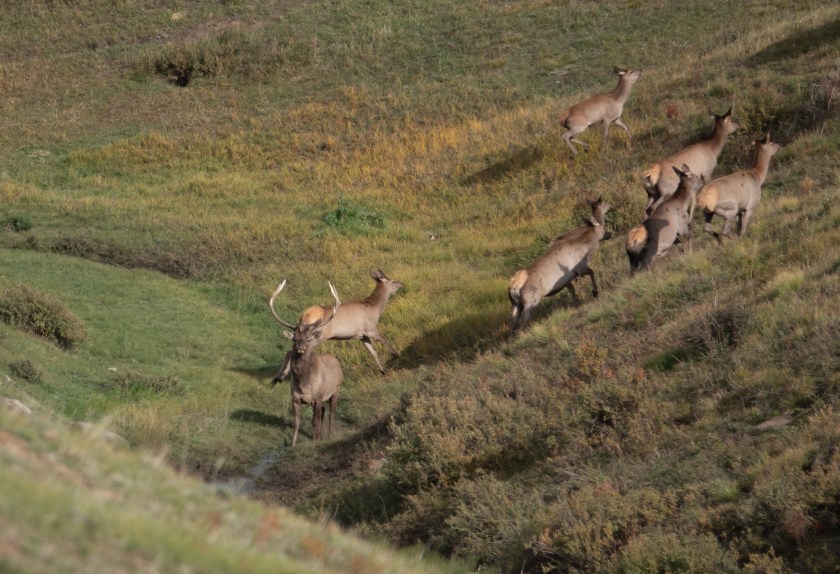
Their lord and master rounds them up:

and moves them higher up the hill to a safer spot:

If he senses another male nearby, he may bellow, or rather “bugle”, an eerie sound. He stretches out his neck, and lowers his larynx to make his voice deeper and thus make himself seem bigger.

There was a larger male somewhere off to the left, but there was also a very young male right next to him, a so-called “spike” male (bottom left), whose antlers have not yet branched; eventually, the dominant male will throw him out of the herd.

The male bugled frequently, but best of all was one morning at dawn when we had gone to look for wolves, and we heard wapiti bugling intermingled with wolves howling. Magical.

The herd moved down towards us to drink from a tiny stream.

The male kept a very close eye on both them and us:
When some of them headed across the stream his displeasure was clear:

and they thought better of it:

After all this effort, his reward is near: the tongue licking the air is scenting an enticing female:

A man’s job is never done.
Miracles do happen

I have lived in Maine on and off for 43 years, and never seen a bobcat. I have caught them on camera traps, and seen tracks, but that’s it. Until now.

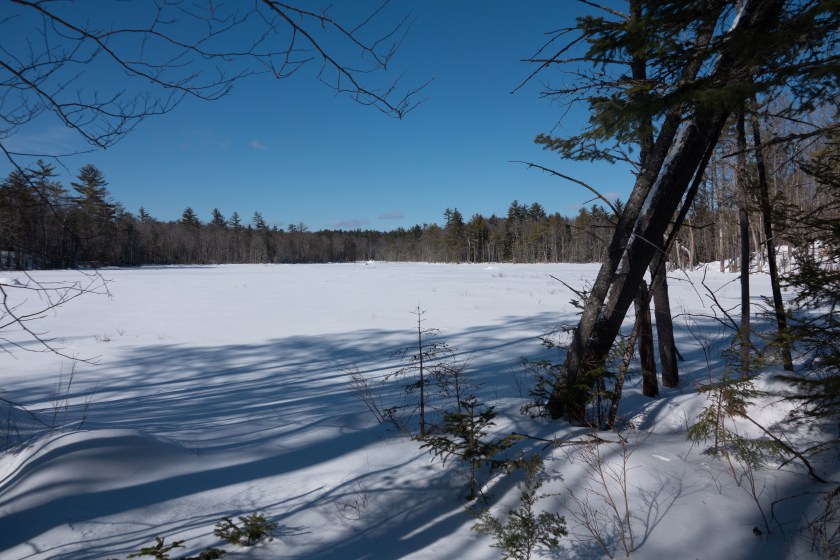
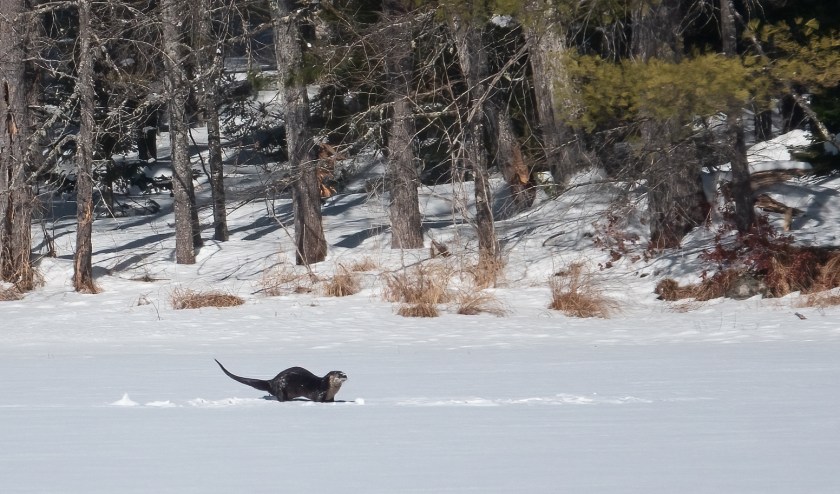
I was out for the second time that day snowshoeing and hoping to see otters. None. I had turned for home, and as always I looked over my shoulder one last time in case they had appeared as I left.

And there one was, on the far side of the pond. So, I headed back out for a closer look:

The otter dived under the ice, but there was another shape on the snow, rounder and fluffier:

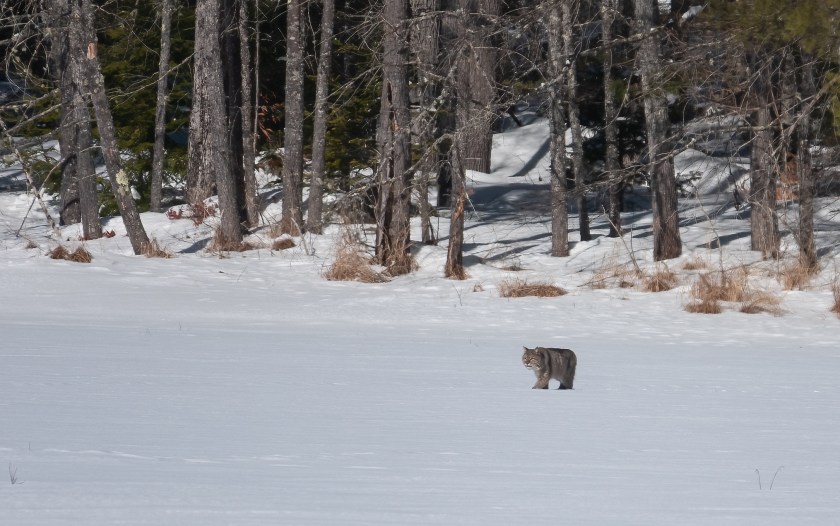
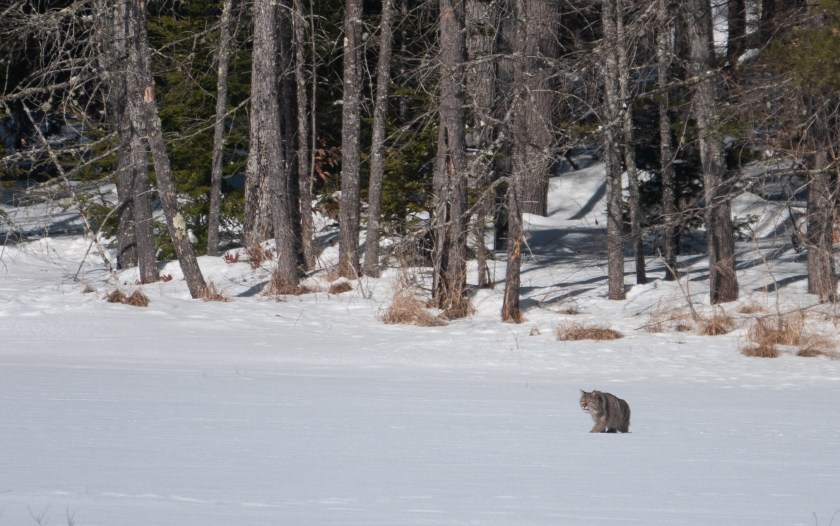
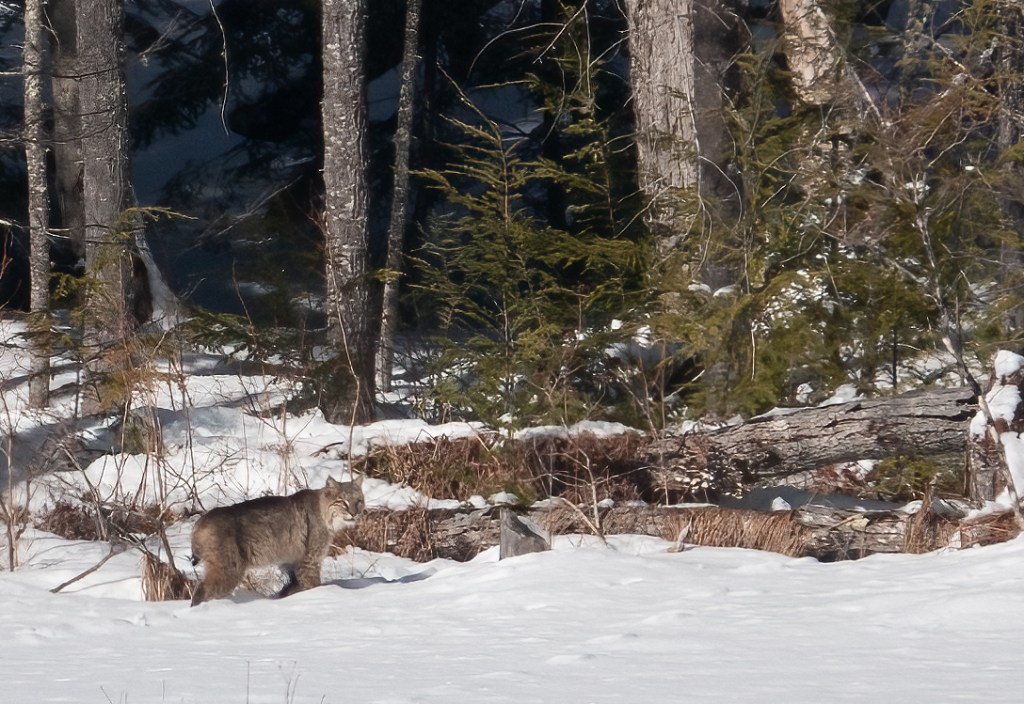
My first ever bobcat, Lynx rufus. I took a few shots from very far away. It was barely moving, carefully placing one silent rear paw in front of the other:

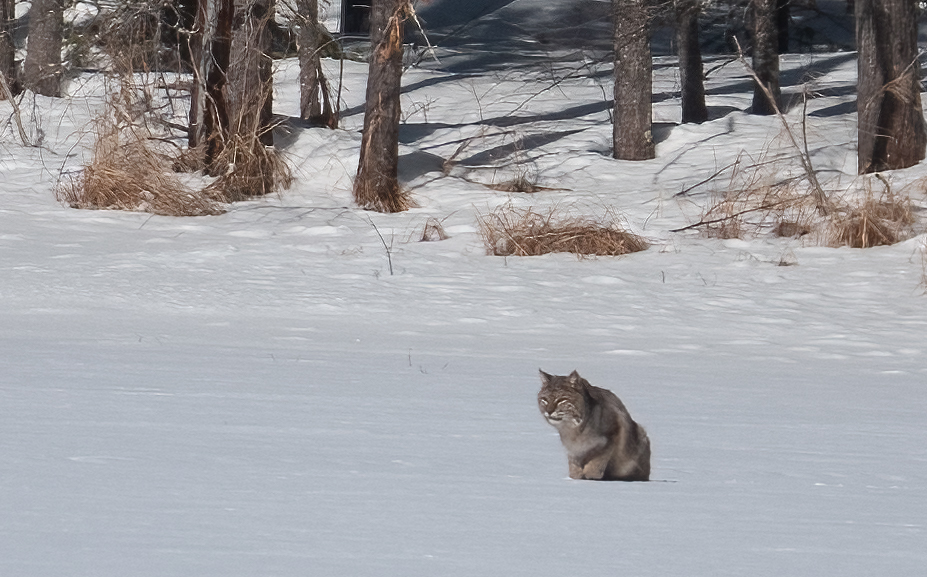
then settling into a crouch:

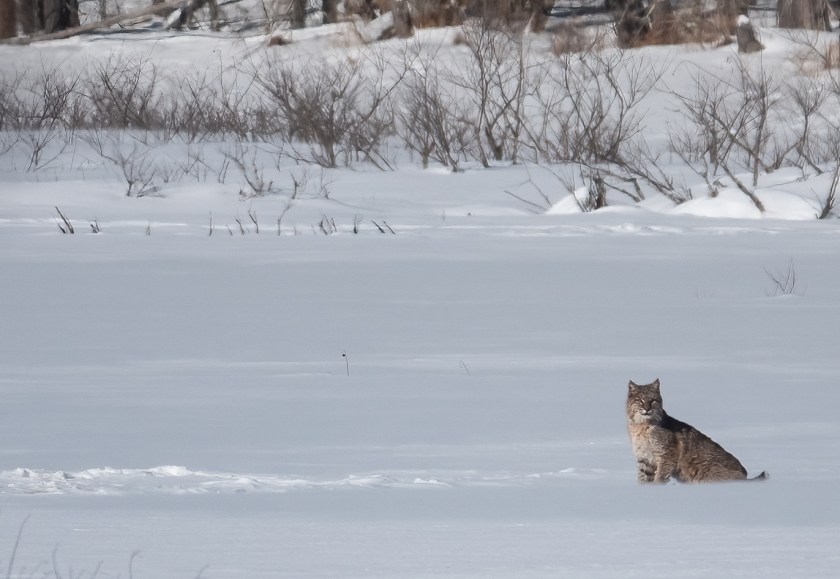
I wasn’t sure, but I wondered if it was preparing to stake out the otter hole. I was a very long way away, so I moved a little closer. From my new angle, I could see that it was now right next to the otter hole (the disturbed snow to its left):

But it smelled me or heard me or saw me,

and took off, just letting me snatch a short video:

It stopped on the edge of the woods, and looked back reproachfully:

Three minutes of a privileged glimpse into its world.

I have since tried to discover if bobcats hunt otters. There is the occasional reference to otter remains being found in the stomach contents of bobcats, but that’s about it, and these could easily have been either carrion, or very young otters. An adult otter would be a formidable prey, being much the same weight as a bobcat. Look at this video of a bobcat recoiling from an angry otter: https://www.youtube.com/shorts/TJZlFwmdo64

Their main food is snowshoe hares, but they do very occasionally eat fish, so they may have been trying to steal the otter’s catch. See Newbury and Hodges 2018 for more on their diet. Bobcats’ feet don’t cope well with deep snow (unlike Canada Lynx), and we have had plenty of snow this winter, at the northern edge of their range, so my bobcat may be very hungry indeed.

Scott Lindsay, Regional Wildlife Biologist at the Maine Dept. of Inland Fisheries & Wildlife, agrees that it was unlikely to be hunting otters, and he tells me that bobcats are curious, and it was probably just checking things out.

PS Maine has a total bobcat population of around 1500, and a female’s home range is about 23 square kilometers. So it is not surprising that they are hard to see! There’s some useful,information here, including how you tell the difference between a bobcat and a Canadian Lynx.

https://www.maine.gov/ifw/fish-wildlife/wildlife/species-information/mammals/bobcat.html

Back at the Ranch: Hanging out on the Ice

For some time I’ve been sending you blogs from Chile, but back at home, even though winter is fairly quiet, there are things to report, so here is a Maine update.

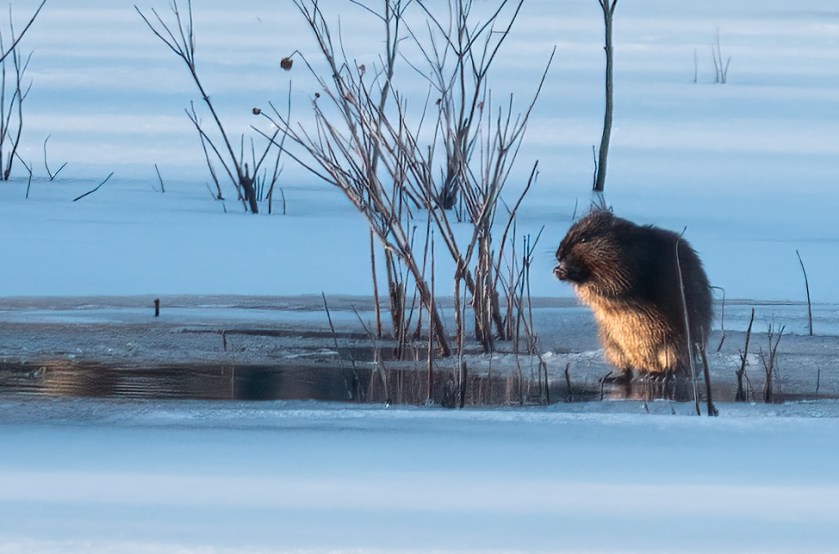
The beaver pond is frozen, and the beavers are supposed to be safely in their lodges, but mine hadn’t got the memo. New Year’s Eve was warmish, and and in the late afternoon I saw a small moving object in the distance on the ice, rear left:

The beaver had decided to catch a few rays:

After half an hour the sun had sunk below the horizon, so he slid back into the water:

but remerged a little later chewing on a twig he had found under the ice, presumably in his stash. I’ve never seen one out in the open in the middle of winter before.

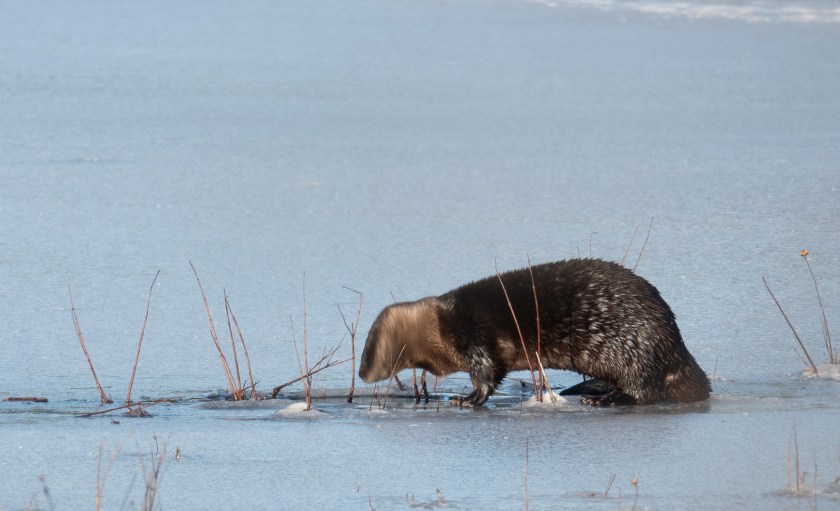
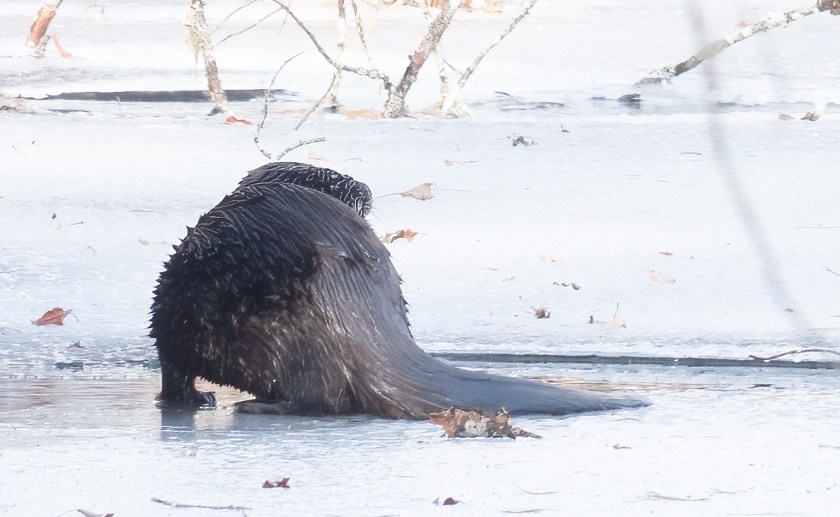
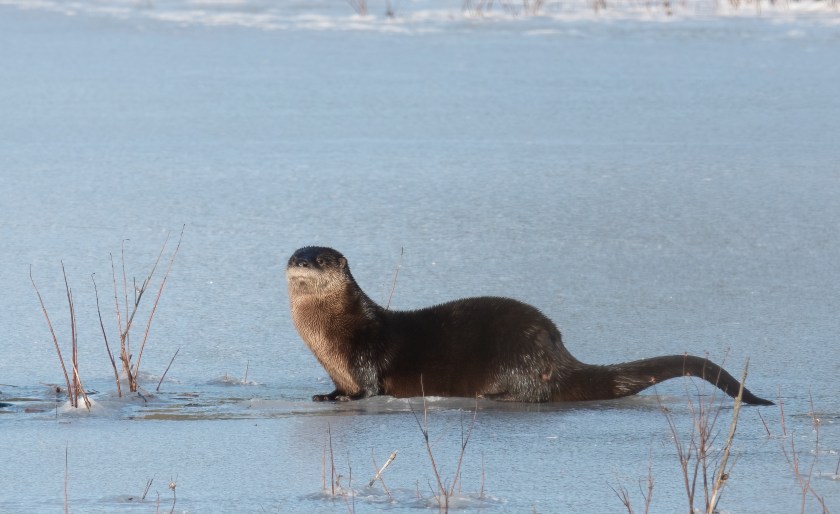
The otters, on the other hand, are regulars all winter long. I will see them three days in a row, then not at all for several days, and then they return. This one had just come out of the water. He is shaking just his head (blurry), while holding his body still (sharp):

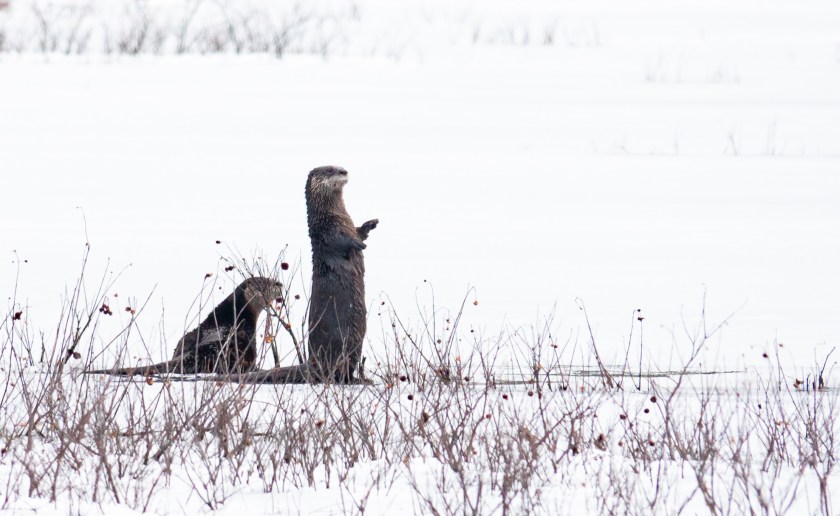
They are vigilant out on the ice, but tolerate my presence so long as I am not too close:

This one is pretending to be a mongoose. Once in a while one emerges very close to me, and usually doesn’t stick around:

They pose too:

But best of all is when they play; I think this is probably a mother and two nearly fully-grown cubs. The video is about 2 minutes; they go in and out of the water, and near the end they briefly look straight at the camera.

Back to Chile next time.