Nature at the edge of the modern world

In between the Altai and Hustai NP, we usually had a night before or after in or near Ulaanbaatar, the capital. It is now home to 1/2 of Mongolia’s population, 1.7 million people and growing. It is down in a valley and with a big pollution problem:
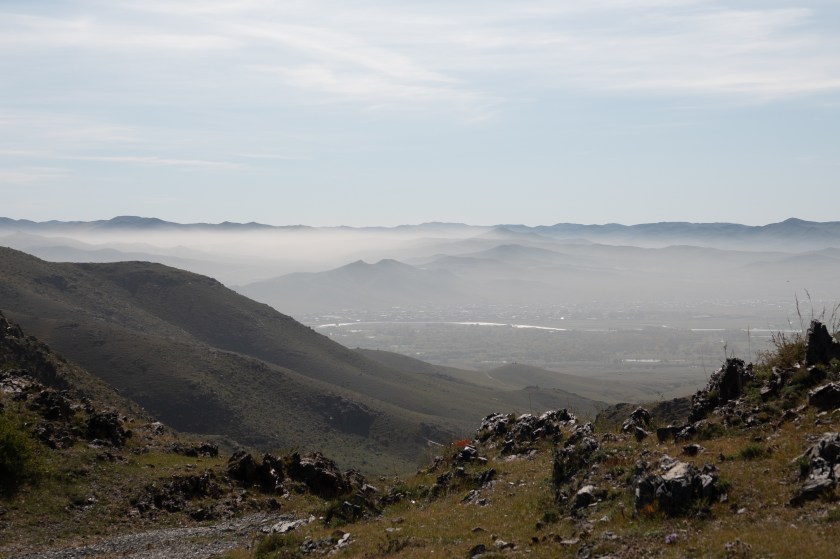
But there is still nature nearby.

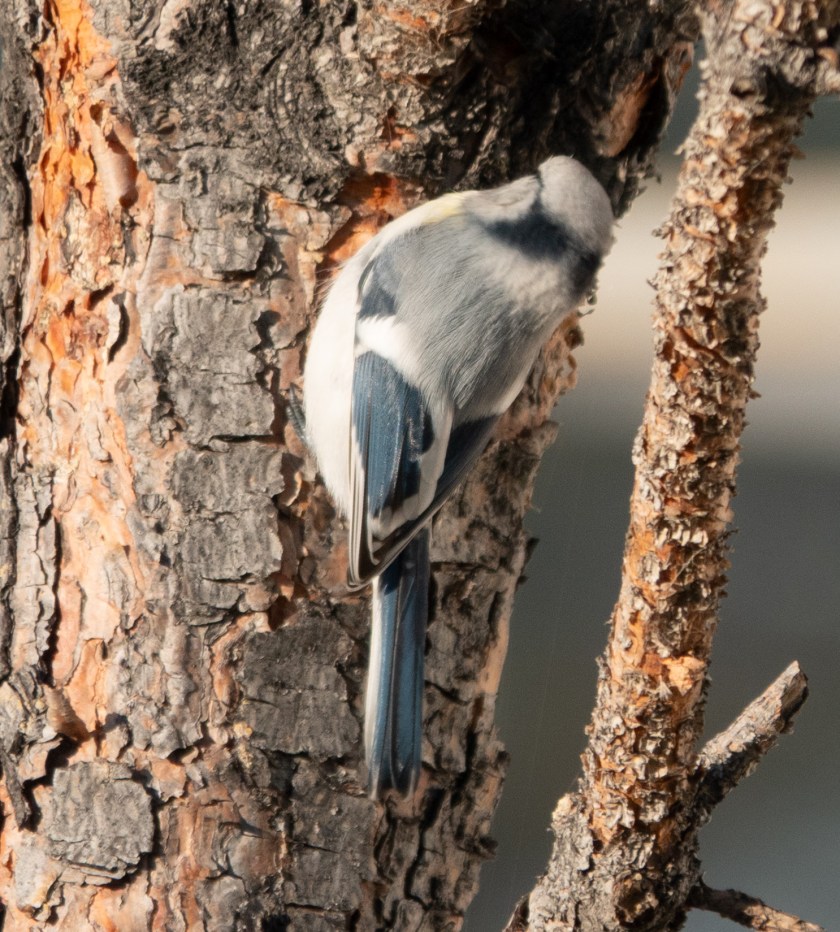
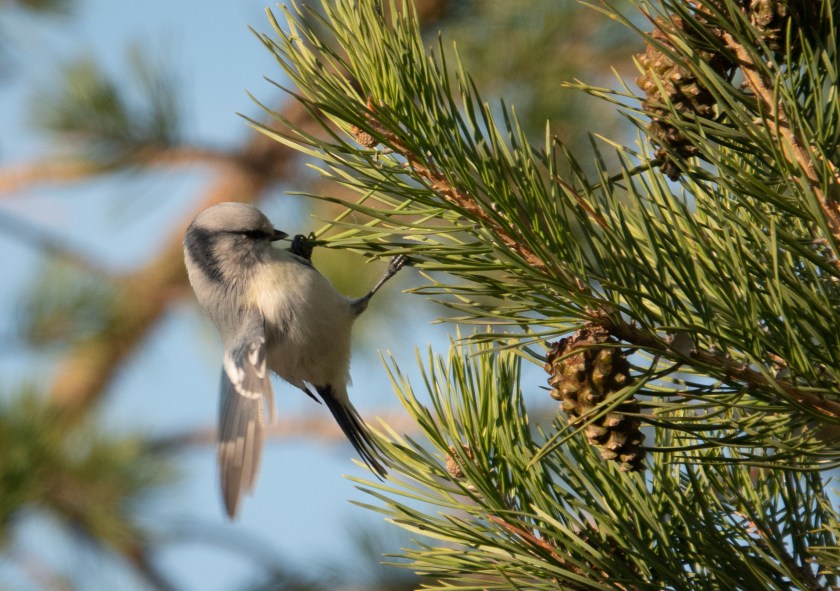
Our hotel was outside Ulaanbaatar, called the Hotel Mongolica. It was near a river, and farmland, all marred by a serious litter problem. But there were flowers and birds in the grounds that made up for this. Here is an Azure Tit, a really delightful little thing:

A black kite:

and an Azure-winged Magpie:

A few wildflowers:
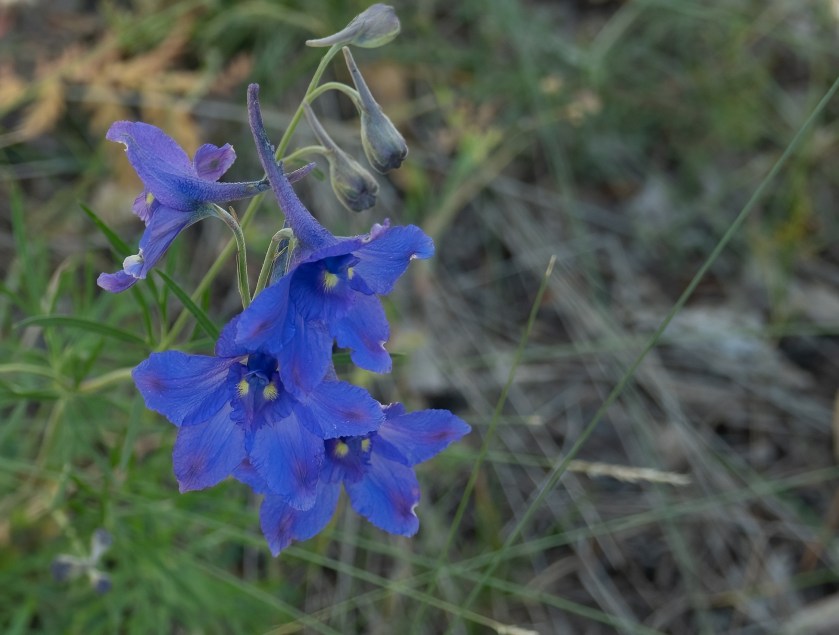
Siberian Larkspur
Spiny Pennywort, Orostachys spinosa

and farmland behind the hotel:

with a watchful dog:

In Hustai we saw an even finer dog, a Bankhar Dog, much to the excitement of our interpreter. This is the dog that went into battle with Genghis Khan, and Marco Polo brought one back to Venice with him. The best of them, like the one below, have spots above the eyes, giving rise to the name Mongolian Four-Eye Dog. Mongolians believe they are thus able to see into the spirit world. Genetic analysis suggests they are the ancestors of all breeds of livestock guard dogs.

I want one.

PS There is a depressing coda to the story of Bankhar dogs. Wikipedia says:

“As infrastructure and travel made the Bankhar dog’s native regions more accessible, non-native dogs began to intermix with the breed. During the Communist era of Mongolia, Bankhar dogs were let loose or exterminated to forcibly relocate nomadic groups into socialist-style settlements. Their pelts became fashionable for stylish Russian coats, and the largest dogs were killed to feed the growing dog coat industry. By the 1980s, the breed had almost disappeared.”

On the upside, they are now much sought-after, and perhaps the breed will recover. Read more here: https://www.bankhar.org/bankhar-dogs/

Small joys in the vastness: Amur Falcons and Gentians

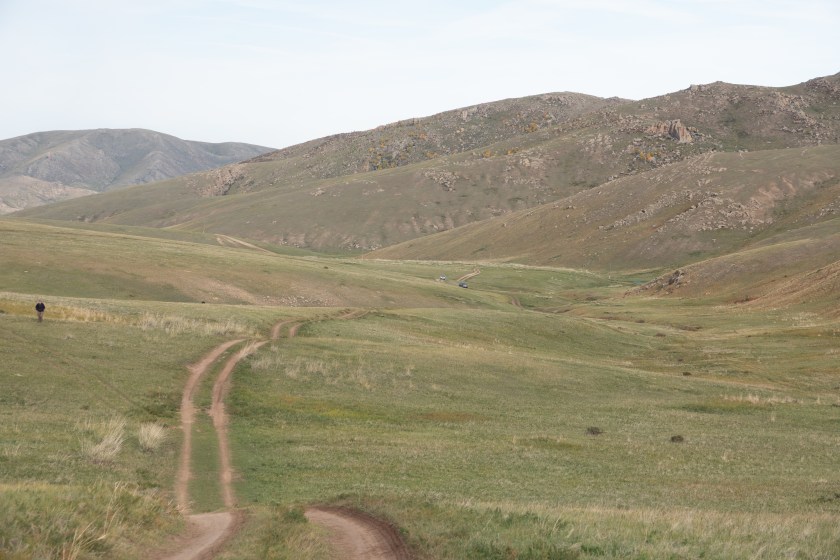
Mongolia’s Hustai National Park is about 500 sq km in size, mainly hilly grasslands with rocky granite outcrops, on a smaller scale than the Altai, but open and empty nonetheless (though apparently in the summer it can get crowded.) At dawn the wolves howled at the rising sun.

We walked a little, sat on the closely-grazed turf,

and admired the remaining wildflowers, all low to the ground:

Dwarf Porcelain-flowered Gentian
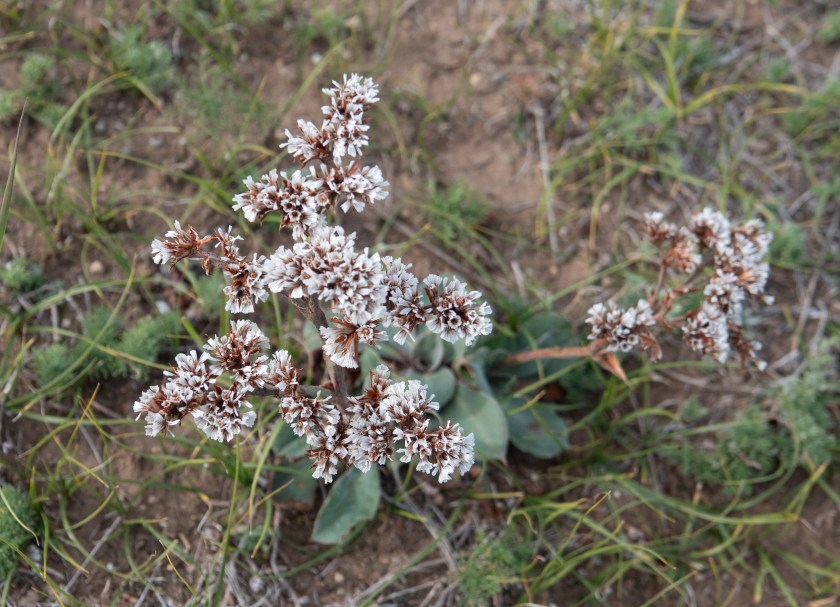
Dwarf Statice
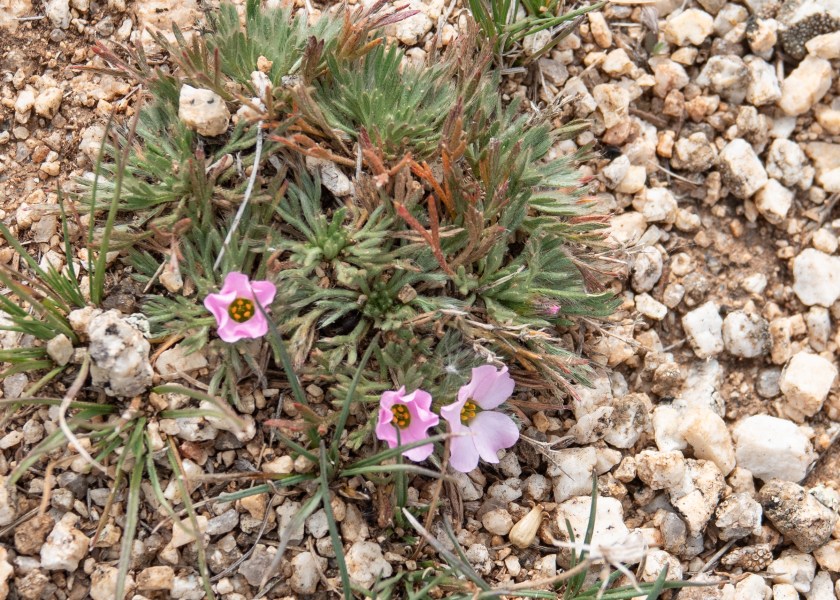
Chamaerhodos altaica
Fetid Dragonhead, Dracocephalum foetidum
Ground Thistle, Cirsium esculentum

We drove out of the park to a nearby river, with Ruddy Shelducks on the bank, and an endless herd of sheep and goats passing in the far distance:

In a tiny stream a Meadow Bunting was washing itself :

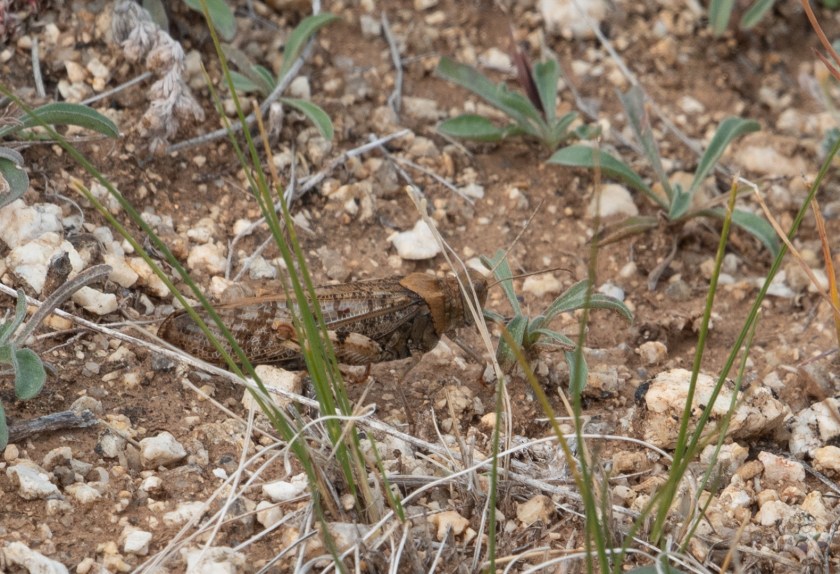
Everywhere there were Band-winged Grasshoppers that flew up on brightly colored wings, impossible to photograph in flight, but here is one on the ground:

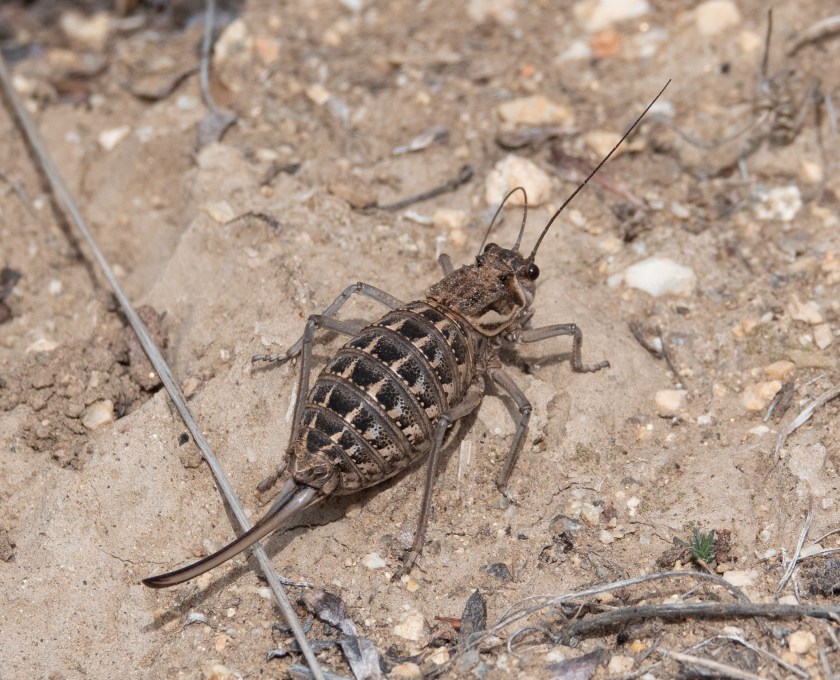
And a very impressive female Armored Ground Cricket, Deracantha onos:

And all around rock piles arranged by giants (our vehicle is to the right of the further rock pile, for scale):

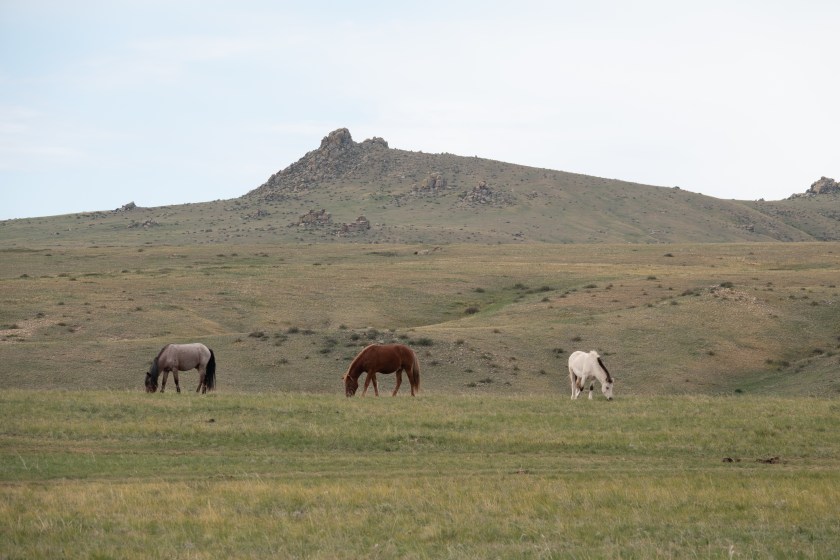
with domestic horses grazing nearby:

As we left the park, an Amur Falcon watched us from a fencepost:

Wapiti, anyone?

[The other large mammal in Mongolia’s Hustai National Park is the wapiti. It took me some considerable time to understand what we were looking for, because our guide used the names wapiti, moose, elk, and red deer interchangeably. In Eurasia, “elk” is often used for what Americans call moose, but there are no moose in Hustai. We were, it turned out, looking for a close relative of the North American elk, Cervus canadensis, but the subspecies sibiricus. To avoid the confusion with moose, the park rangers call them by the Cree name “wapiti”. “Red deer” was in fact a red herring: it was once thought that red deer, Cervus elaphus, and elk were the same species, but that is now known to be incorrect. C. canadensis has a wider rump patch and paler-hued antlers. ]

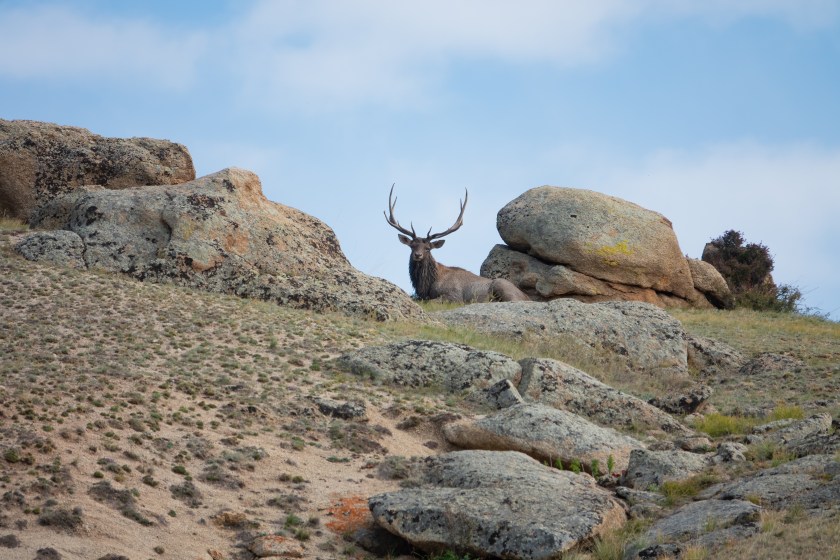
So, let’s stick with wapiti! Hustai has around 1300 of them, and they are not endangered. Here is a handsome bull wapiti, resting from his day’s exertions. It is the mating season, so he either has a herd of twenty or more females to keep under control, or he is trying to win a herd away from another male. Either way, an exhausting job.

This is a group of females:

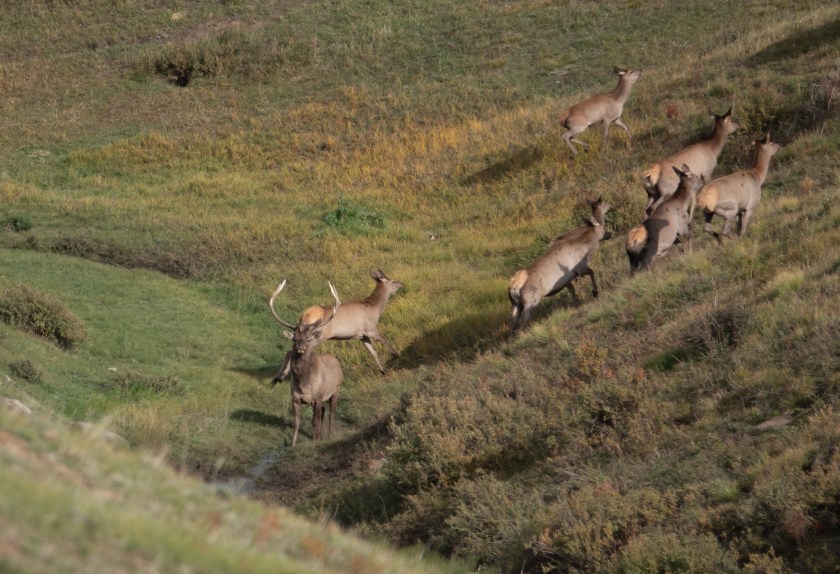
Their lord and master rounds them up:

and moves them higher up the hill to a safer spot:

If he senses another male nearby, he may bellow, or rather “bugle”, an eerie sound. He stretches out his neck, and lowers his larynx to make his voice deeper and thus make himself seem bigger.

There was a larger male somewhere off to the left, but there was also a very young male right next to him, a so-called “spike” male (bottom left), whose antlers have not yet branched; eventually, the dominant male will throw him out of the herd.

The male bugled frequently, but best of all was one morning at dawn when we had gone to look for wolves, and we heard wapiti bugling intermingled with wolves howling. Magical.

The herd moved down towards us to drink from a tiny stream.

The male kept a very close eye on both them and us:

When some of them headed across the stream his displeasure was clear:

and they thought better of it:

After all this effort, his reward is near: the tongue licking the air is scenting an enticing female:

A man’s job is never done.

The Unpronounceable Prehistoric Horse

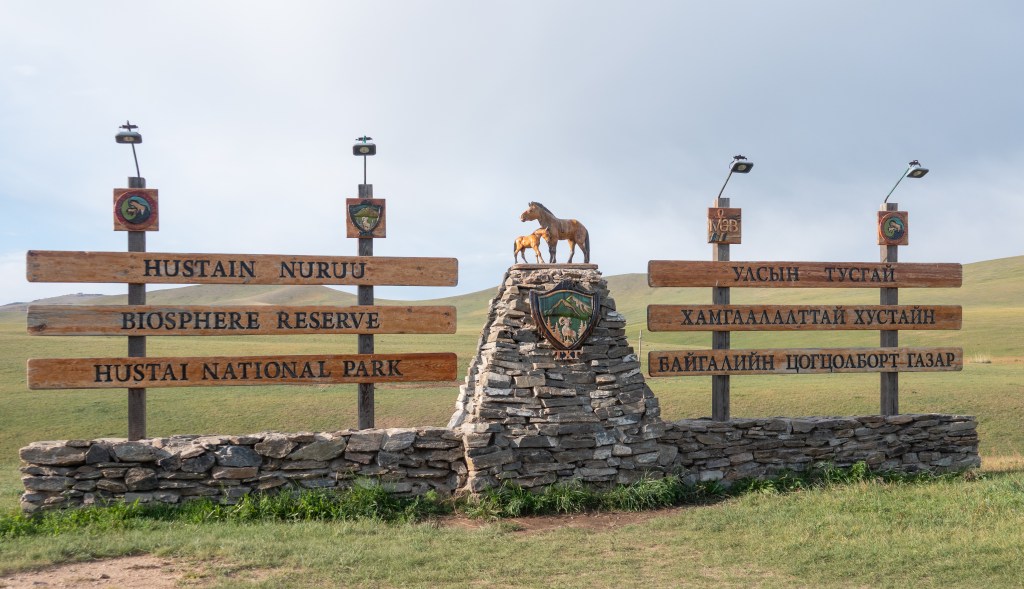
Our second major destination in Mongolia was Hustai National Park, less than two hours drive from the capital Ulaanbaatar, not nearly as isolated as the Altai, and at a lower elevation.

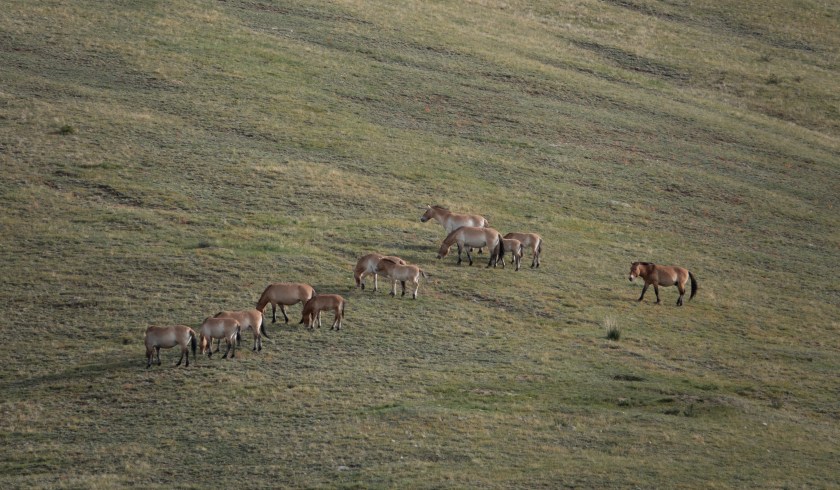
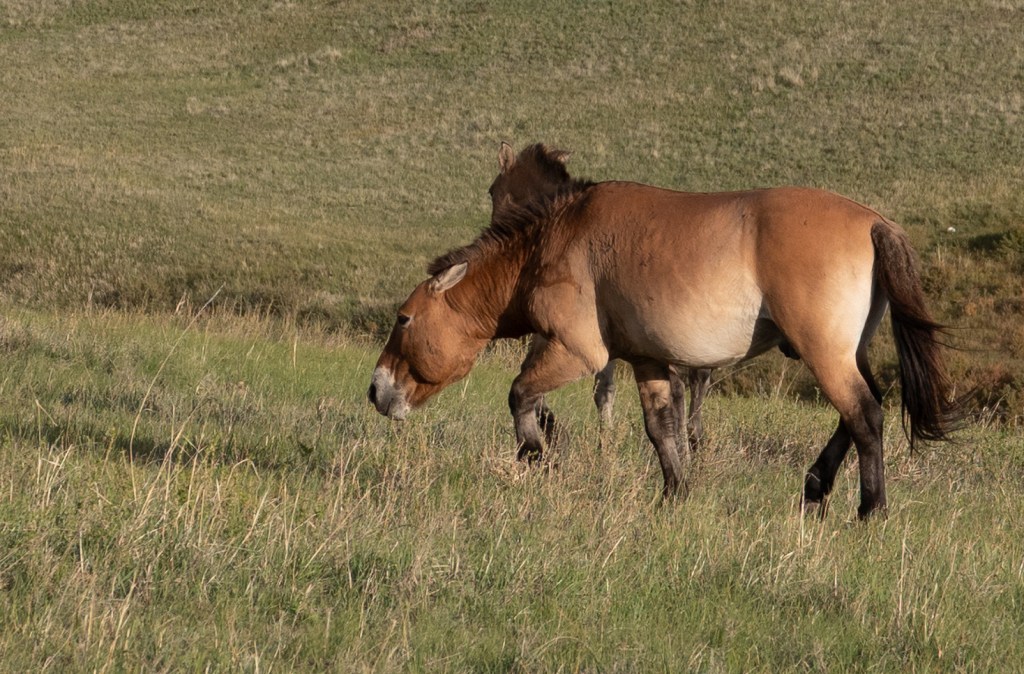
We had two main goals: Pallas’s Cat, and Przewalski’s Horse. Only the second of these wishes came true, and this post is about those horses, known locally as takhi. Below, from a distance, is a typical social unit: the stallion is at right, with two or three mature mares, and their offspring of up to three years old.

Closer up, these are handsome animals:

They are special because their lineage separated from that of domestic horses at least 38,000 years ago, perhaps as much as 160,000 years ago. They have 33 chromosome pairs compared to 32 for ordinary horses. Other “wild” horses are actually feral domestic horses, but these are truly wild. They were extinct in the wild, and were brought back from about twelve animals in zoos, re-released into their ancestral central Asian homelands. The total population is now thought to be around 2000 animals, of which around 120 live in Hustai National Park.

They are stocky, 12-14 hands high, and strong. They weigh about 300Kg.

The stallion keeps a close eye on his females and foals, making sure they stay together:

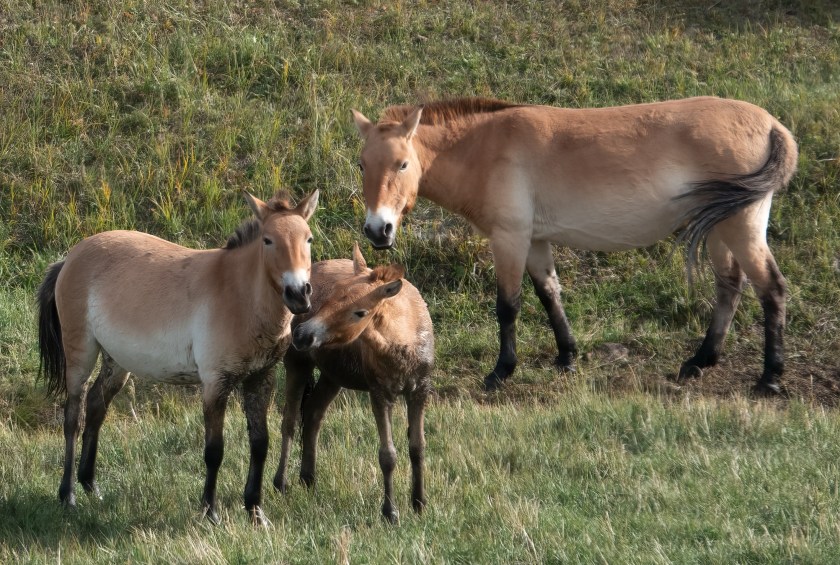
The affection between mothers and foals is evident:

Przewalski’s horses have a distinctive appearance.

Their overall coloring is something called pangaré, in which there is pale fur around the eyes, muzzle, and belly. This is thought to be protective, and is found in other wild equines such as the African wild ass. Starting with the head, their profile is convex, not to say Roman:

and their stiff upstanding dark mane has paler hairs at the base, and no forelock:

At the rear, their back has a thin dark dorsal stripe, and the base of the tail (the dock) is longer than in domestic horses, while the tail hairs are shorter:

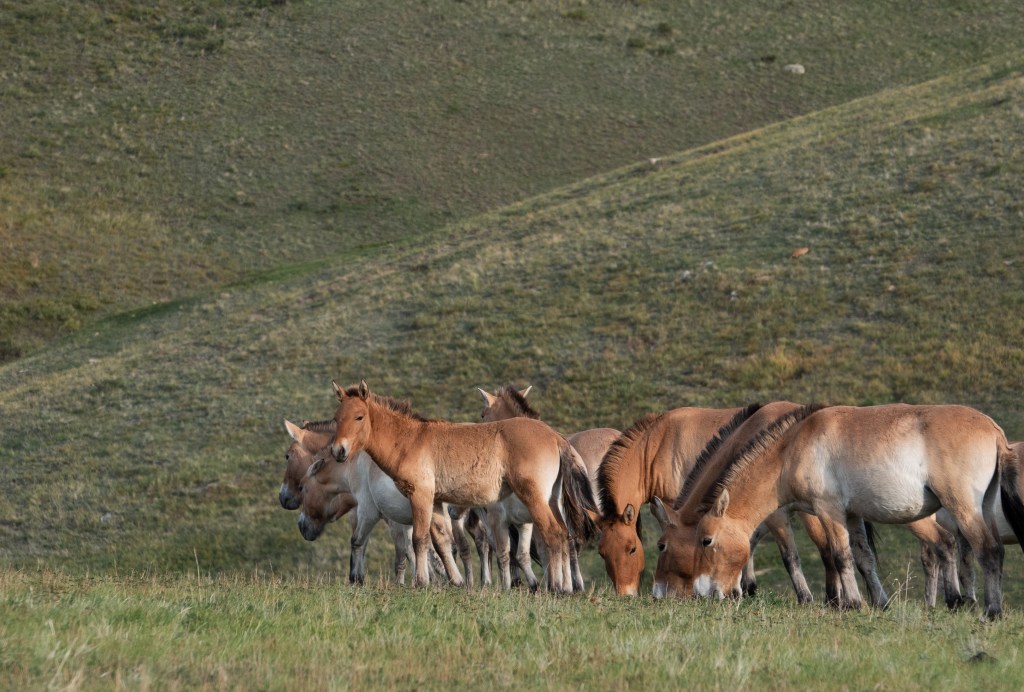
Finally, their legs have horizontal stripes, or bars, easiest to see on the forest of legs in the front group below:

All of these traits are instances of “primitive markings”, found in other wild equines and more rarely in domestic dun horses.

The painting below is from the Lascaux caves in France, dated to about 20,000 years ago, and looks remarkably like a Przewalski’s horse.

PS There are frequent incursions of herds of domestic horses from outside the unfenced national park. A domestic stallion is not strong enough to mount a Przewalski’s mare, so any foal she has will always be pure-blood Przewalski’s. The reverse is not true, so a foal born to a domestic mare could have been sired by a Przewalski’s stallion. The local herders thus encourage their herds to enter the park, and the rangers shoo them out again, in an ongoing game!

PPS For full details of the challenges of bringing back a diverse population from only 12 ancestors, see here: https://pmc.ncbi.nlm.nih.gov/articles/PMC9686875/