I first saw this animal not in Patagonia, but in the hills of Tuscany, on the edge of a hamlet, next to a tiny stream, or more precisely a ditch. There was a narrow path to the ditch through the long grass and we were discussing what had made it.
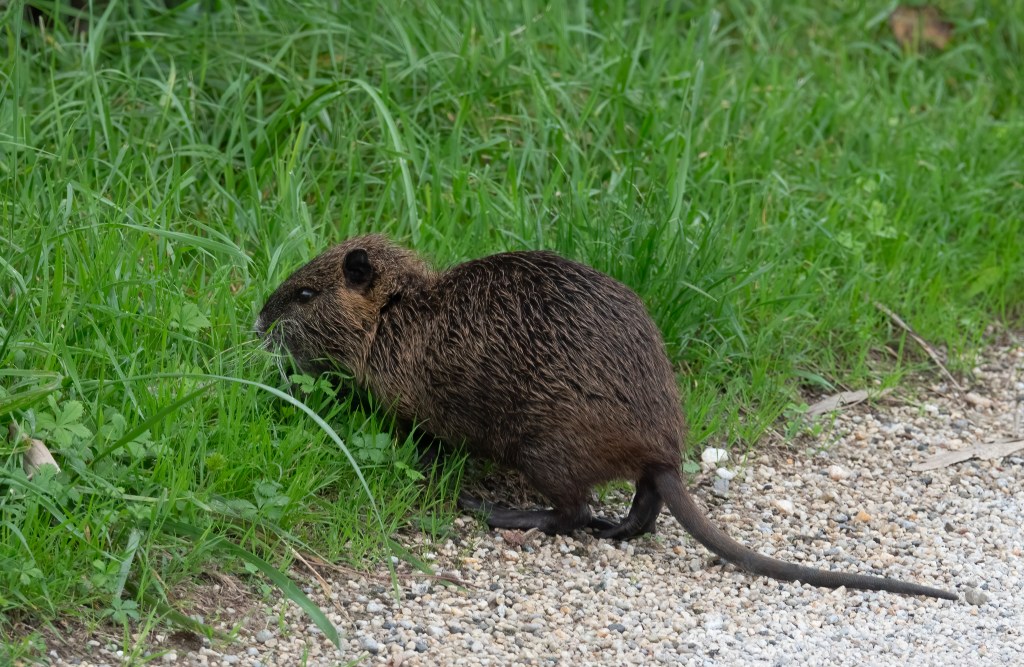
It was a nutria, or coypu. Native to South America, it was brought to Europe and the US for fur farming, and escaped (or was released when the fur farms closed). Its scientific name is Myocastor coypus, literally “mouse beaver”. Its many names are confusing. Coypu is preferred in South America, where nutria can also mean beaver or otter. In Italy it is sometimes called castorino, little beaver, and in Germany Sumpfbiber, or swamp-beaver. In much of Europe and the US it is considered an invasive species, damaging water banks and crops like rice as it burrows into them.
It weighs 10-20lbs:

and has webbed hind feet and a naked tail:

and a white muzzle with long whiskers:
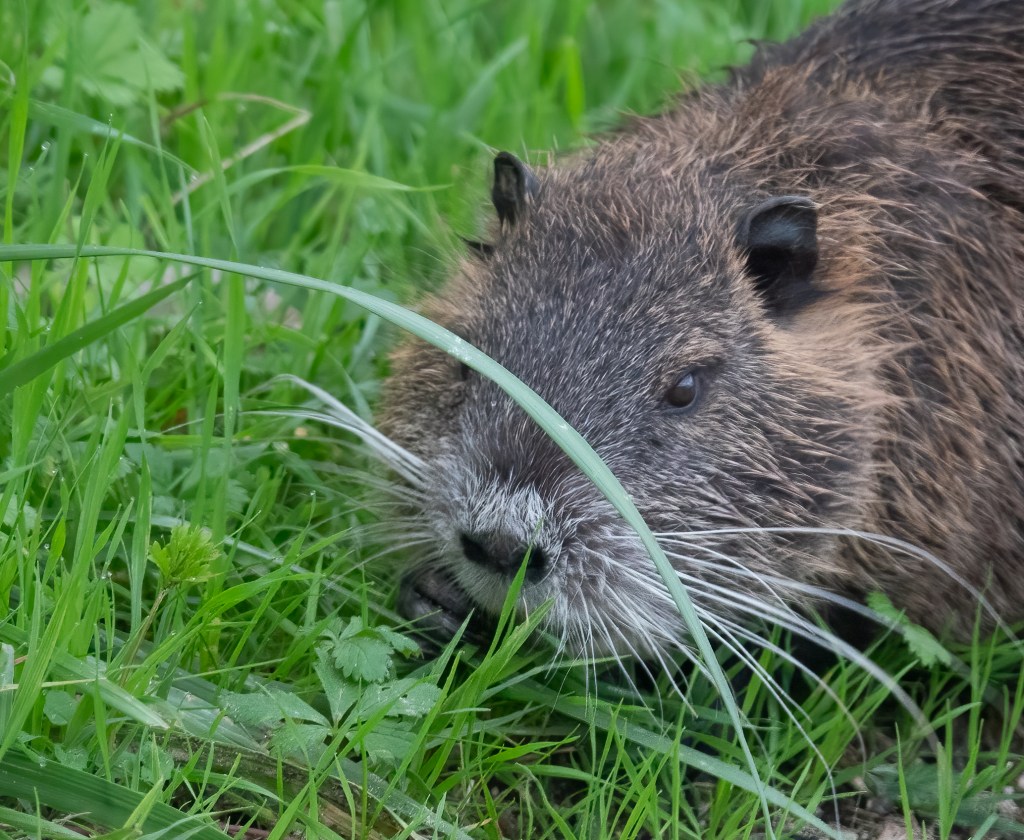
If you rank some other aquatic rodents by size, starting with the smallest, you get muskrat, coypu, beaver, and then capybara. All are vegetarian, but their ranges differ. Coypu and capybara don’t like the cold, which limits their range to balmier latitudes. Nonetheless, once they get loose they can expand their territory amazingly fast. This map showing how they conquered France and beyond is from Schertler et al 2020:

How do they do this?? They live to about three years old in the wild. A litter averages four, but can be as large as thirteen, and they can mate again 2 days after giving birth, so a female can have six or seven litters in her lifetime, potentially adding up to a tally of 91 offspring!.
They were bred for the fur trade because of their remarkable coat. From the outside in, they have 3in long guard hairs, then beneath that a coarse dark brown mid-layer fur, and a thermal undercoat of soft dense grey under fur. This underfur is itself called nutria.
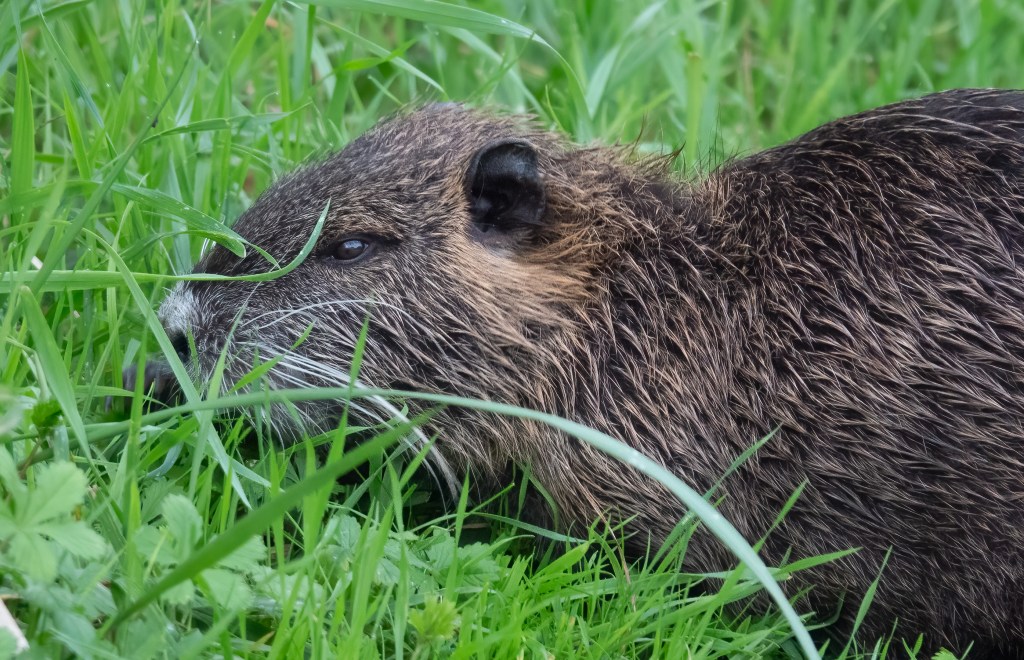
Like beavers, their teeth grow all their lives and are orange. Coypus are mainly nocturnal or crepuscular. They build subterranean burrows and also floating platforms.

I am off to Chile soon, and hope to see them there, where they belong.
PS Coypus get about. They have also surfaced in Japan. This 1996 poem by Ito Shinsuke is transliterated from Japanese; the word nutria has become Japanese nutoria..:
“Shirasagi mo Sugamo mo Koi mo kechirashite/ Sasagase gawa wo Nutoria yuku.”
The English translation:
“Pushing away white herons, ducks, and carp/ The nutria goes his way in the River Sasagase.”
PPS My title is the Argentinian nickname for coypu


Nice photos! Does remind me of a small Capybara…have a great time in Chile!
LikeLike