Some orchids are flamboyant, like the Pink Lady’s Slipper or the Purple Fringed orchid, both of which I have shown you before. But here in Maine many orchids are small and/or subtle colored. They nonetheless repay a closer look; those tiny flowers are still seductive to a passing insect.
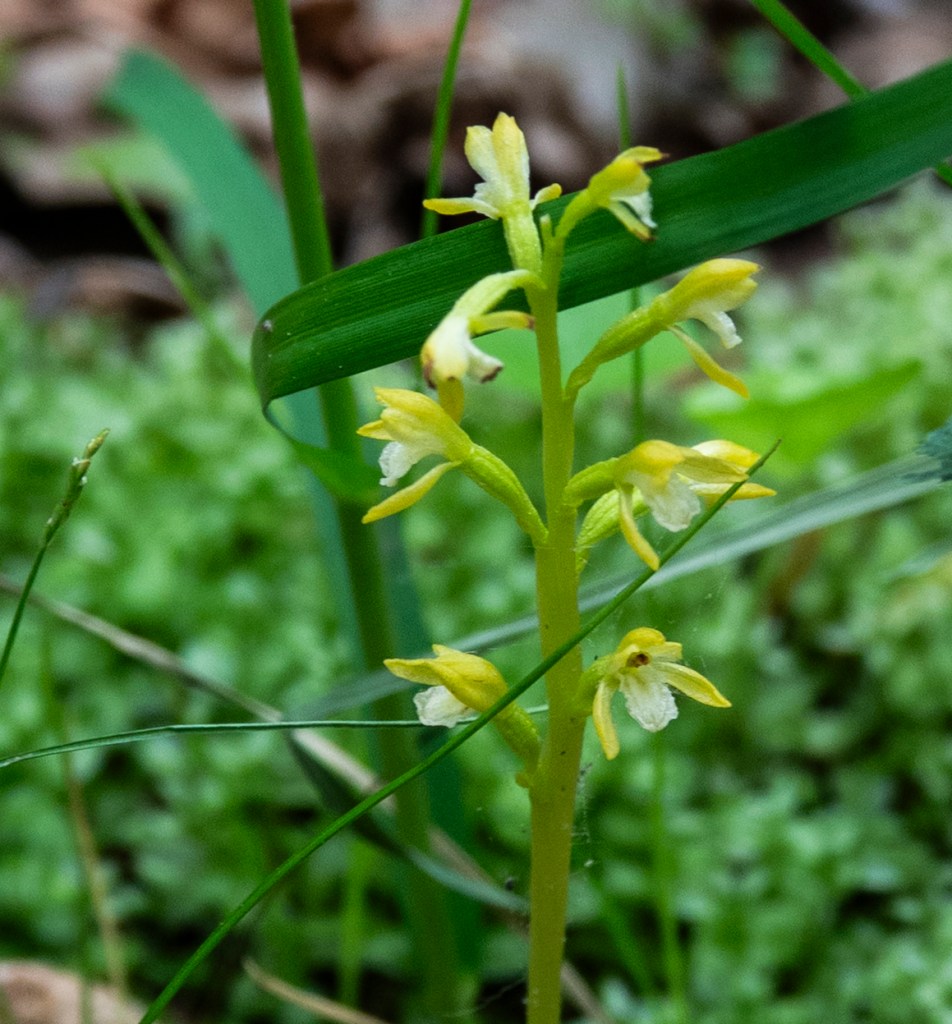
The Early Coral-root Orchid, Corallorhiza trifida, is an inconspicuous leafless orchid, typically 4-8″ tall, that depends on a close relationship with a fungus from which it gets most of its nutrients. But it does have chlorophyll, and can also make some of its own food via photosynthesis.
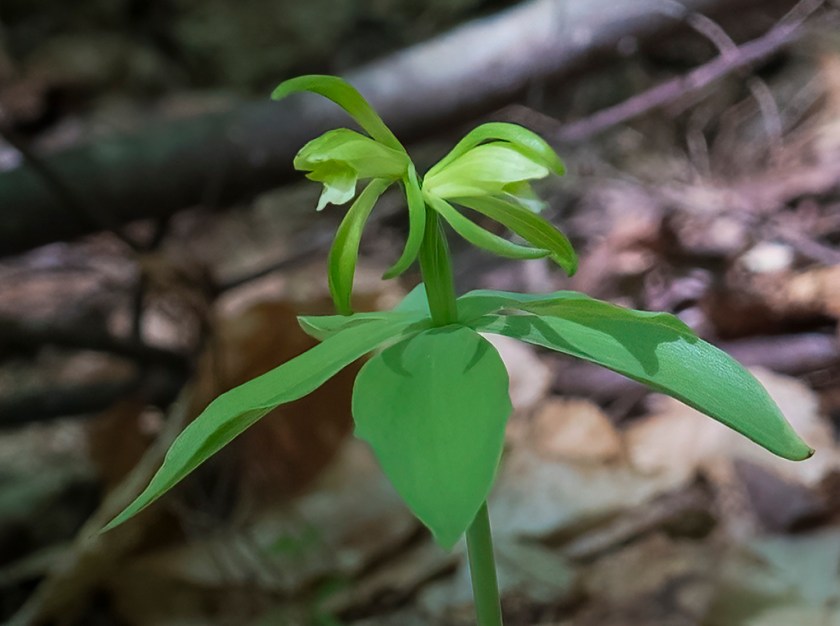
Excitingly, for a nature nerd like me, I was recently shown a secluded place where the Small Whorled Pogonia, Isotria medeoloides, grows.
This tiny orchid, only 4 inches high, pushes through the shady upland forest floor at the start of June:
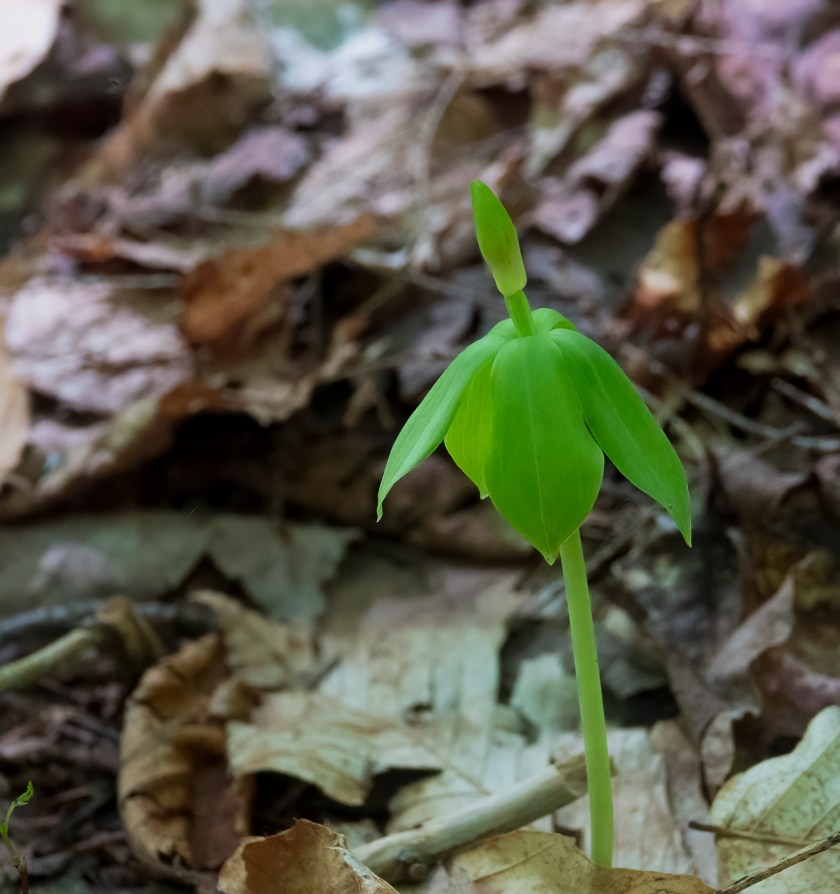
It is classified as rare, so its locations are often kept secret to thwart orchid collectors.
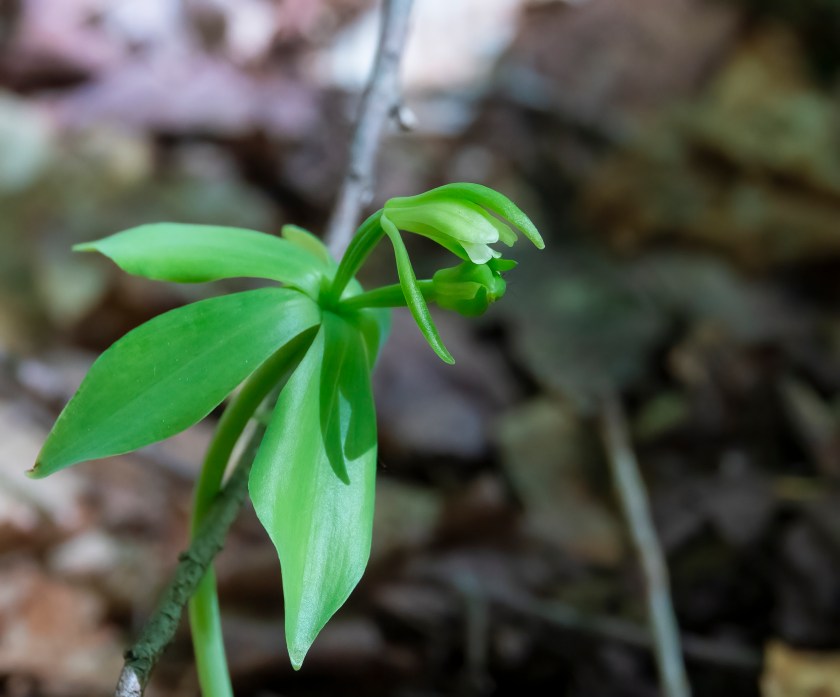
Once fully open, you can see the two side sepals that frame the flower proper:
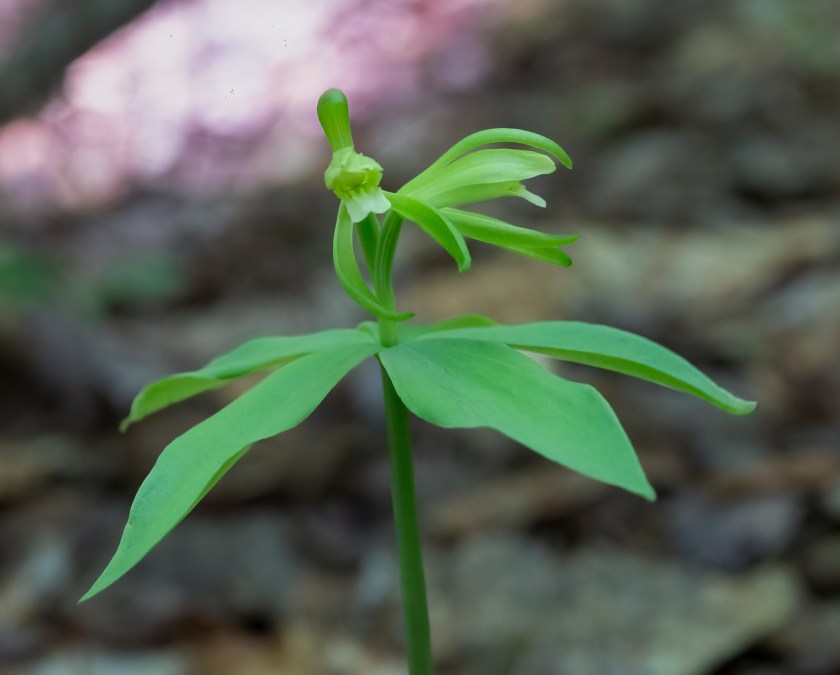
It cannot easily compete with other vegetation, so it likes a fairly bare forest floor.
Finally, in late summer, in boggy areas one can occasionally find the Yellow Nodding Ladies Tresses, Spiranthes ochroleuca:
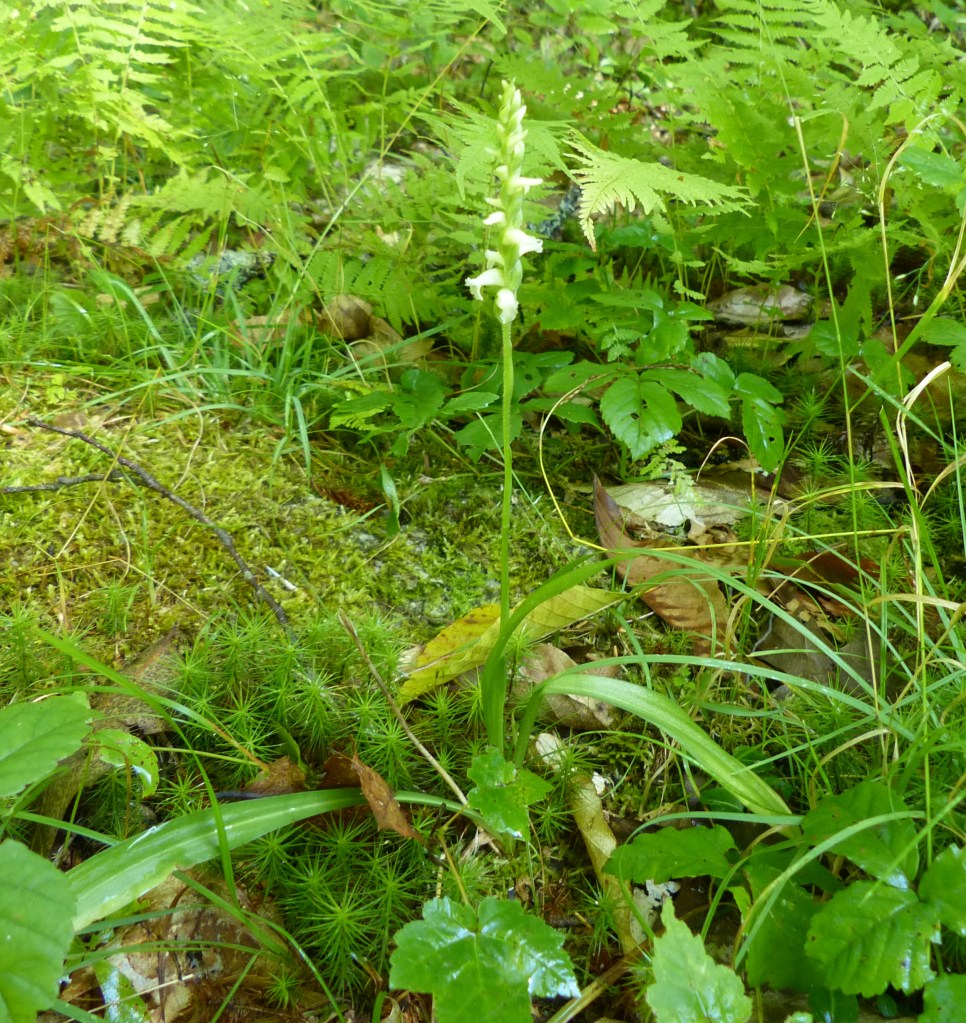
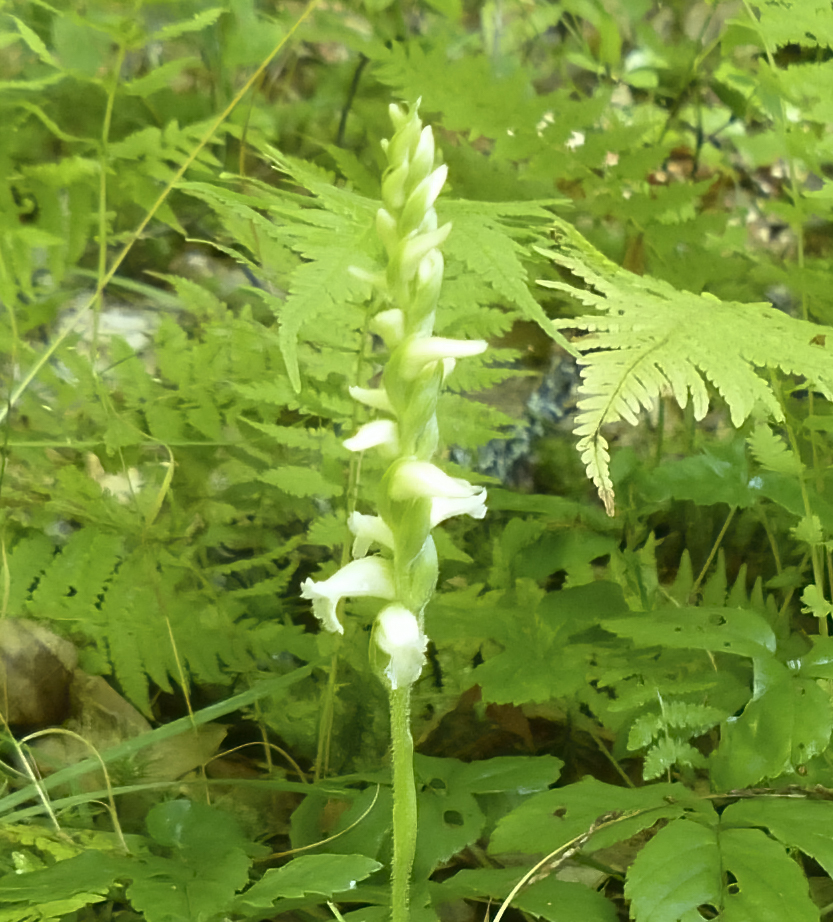
or Nodding Ladies Tresses, Spiranthes cernua:
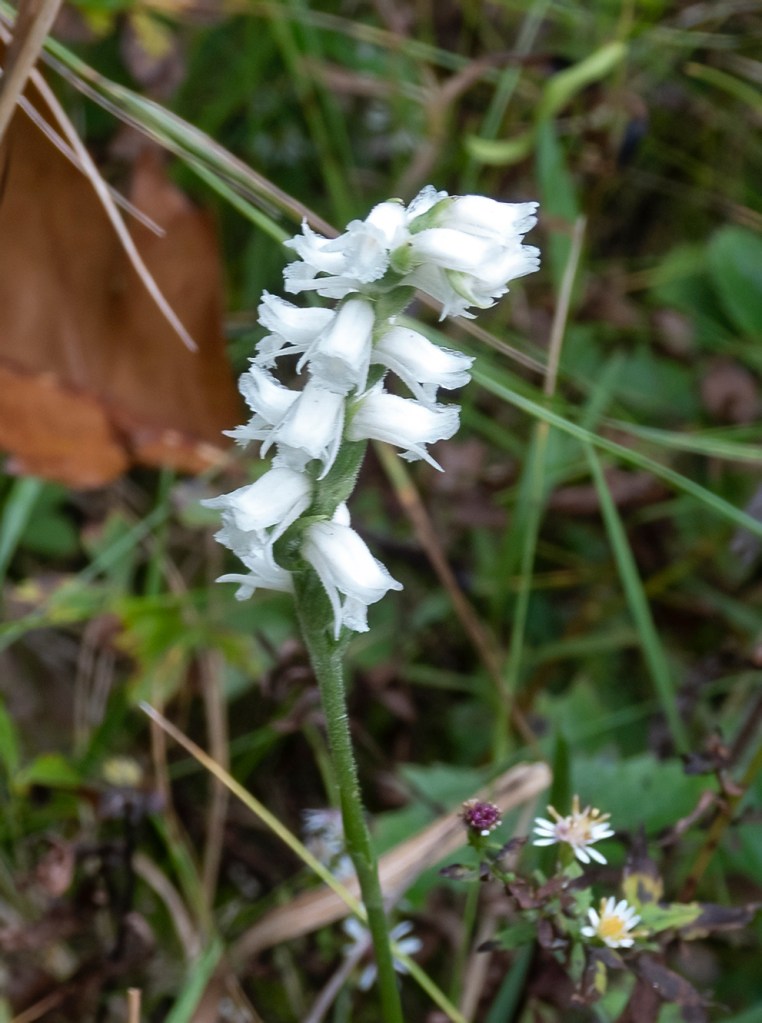
So next time you think of orchids, forget the tropical rain forests and remember the north woods instead.


It’s usually unexpected to see dainty wildflowers in the woods…but what a special treat!
LikeLike
Great discoveries! Especially the rare orchid!
I often forget that Virginia has over 60 wild orchids. We keep an eye out for them in the woods. I think I’ve seen crane-fly orchids and downy rattlesnake plantain, but I’m not great at identifying things. In any case, your photos and blog remind us of how grateful we are for this time of year and the forest’s lushness and beauty. I’m also grateful for the strawberries flourishing in our garden. Not orchids, but slightly more delicious.
LikeLike