The Great Spangled Fritillary butterfly is every bit as spectacular as the monarch, and can also have a four-inch wingspan.
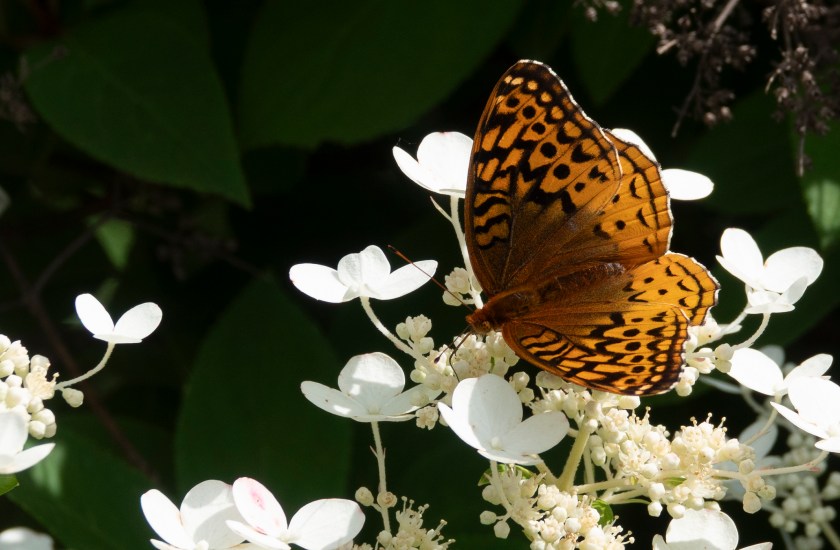
But they get much less attention, probably because they are not endangered, do not take part in a dramatic long-distance migration, and are not fussy milkweed eaters. Adults feed on all sorts of summer-flowering plants, including beebalm, hydrangea and black-eyed susan.
But they are still interesting. The two sexes are slightly different colors. When they mate, the difference in color between the darker female and the paler male is easy to see:

The copulation takes anything from one hour to several hours. The male uses his claspers to hold the female tightly, and if she flies off to a new flower he holds on for dear life and is carried along with her:
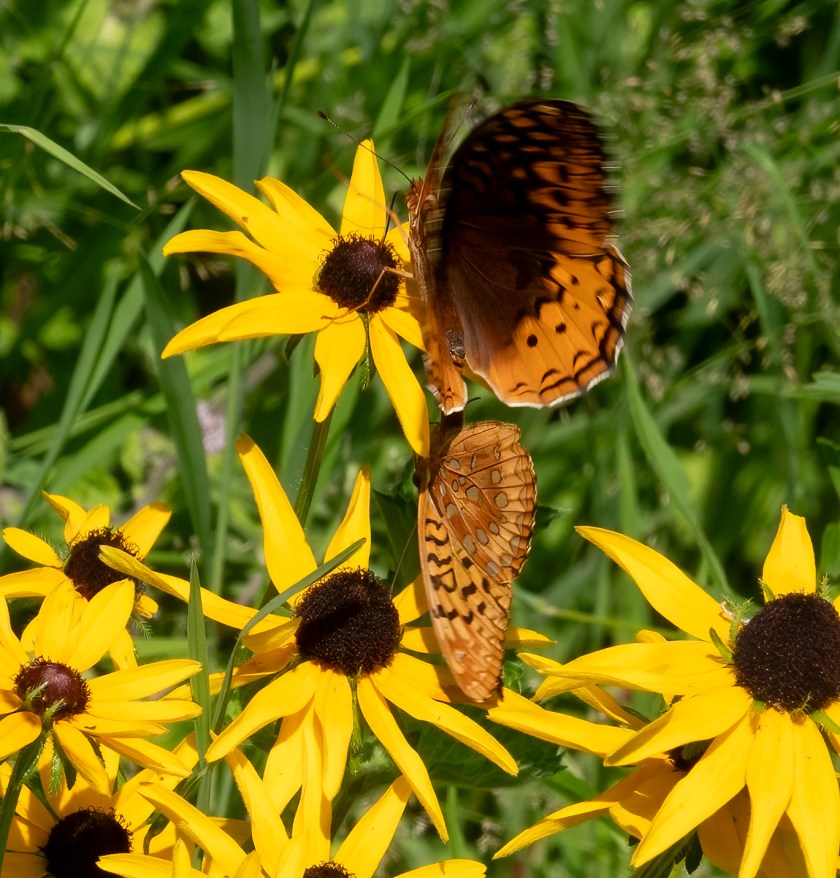
He delivers a package of sperm called a spermatophore:
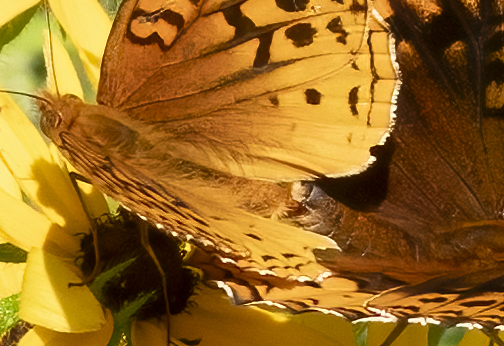
The female is able to store this for months until she is ready to lay her eggs. This is not usually until late summer or early fall, near violet plants, which are the only plants the caterpillars eat. The tiny new caterpillars hatch that fall, but the violets are by now dormant, so the caterpillars hide in the leaf litter through the winter, and only emerge when the first violets put out their leaves in the spring. They are nocturnal and secretive, and I have never seen one.
This stunning butterfly shares its name with a small but charming flower, the Snake’s Head Fritillary, Fritillaria meleagris. What they have in common is a checkered appearance: here is the flower, growing near my front steps. (It is not native here; I planted these).
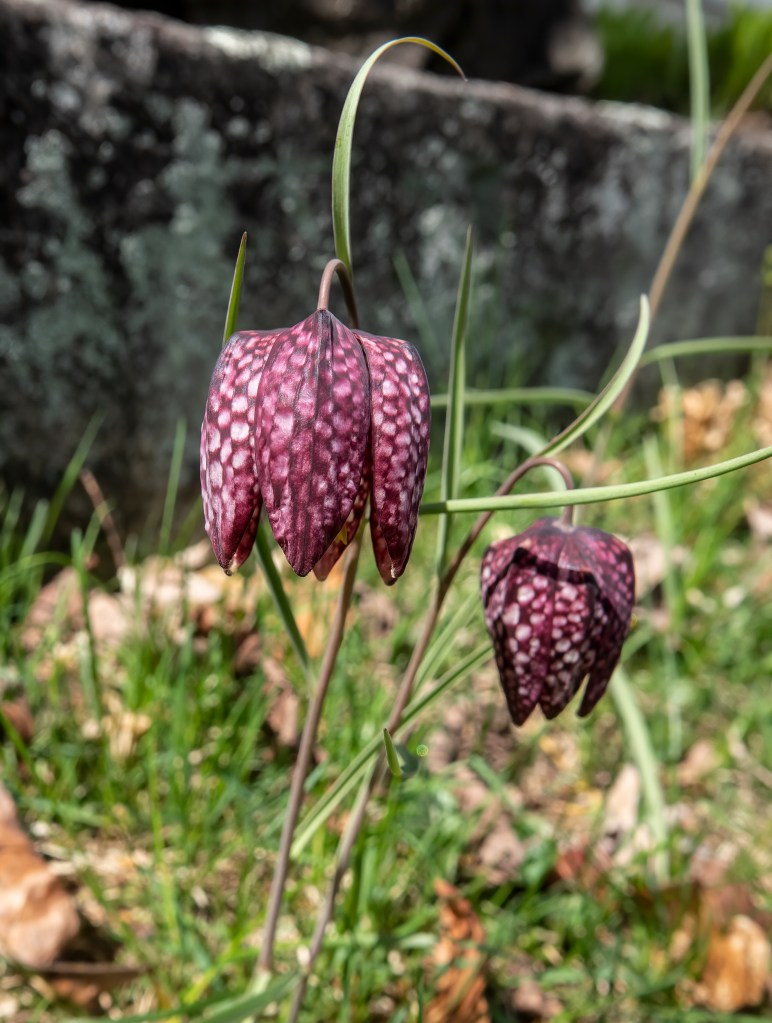
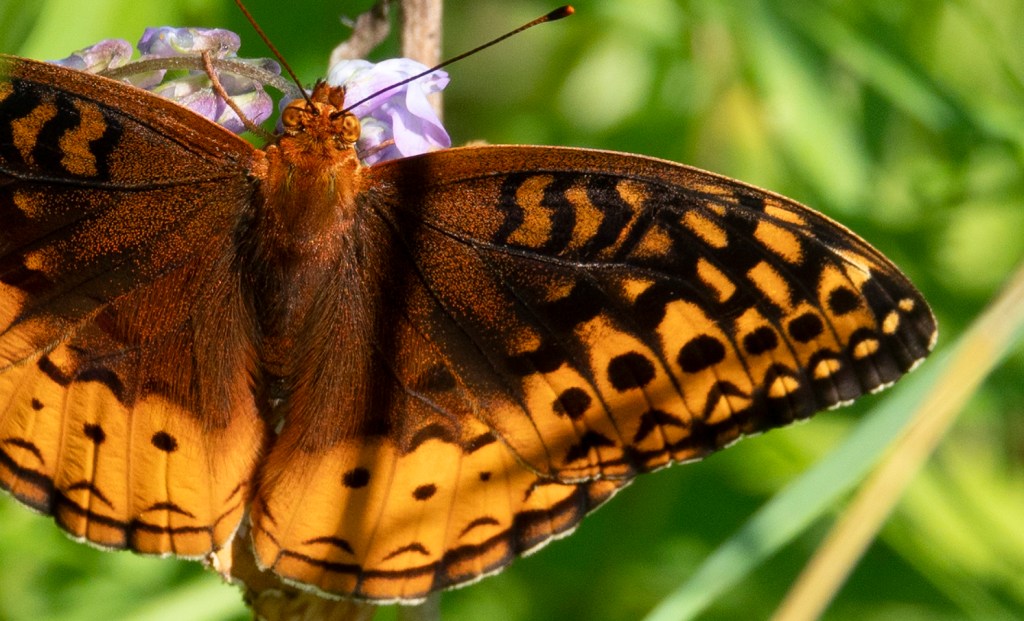
The word fritillary comes from the Latin word fritillus which means “dice-box” or a container for casting dice. The pattern on the top right section of the wing looks like a collection of dice.
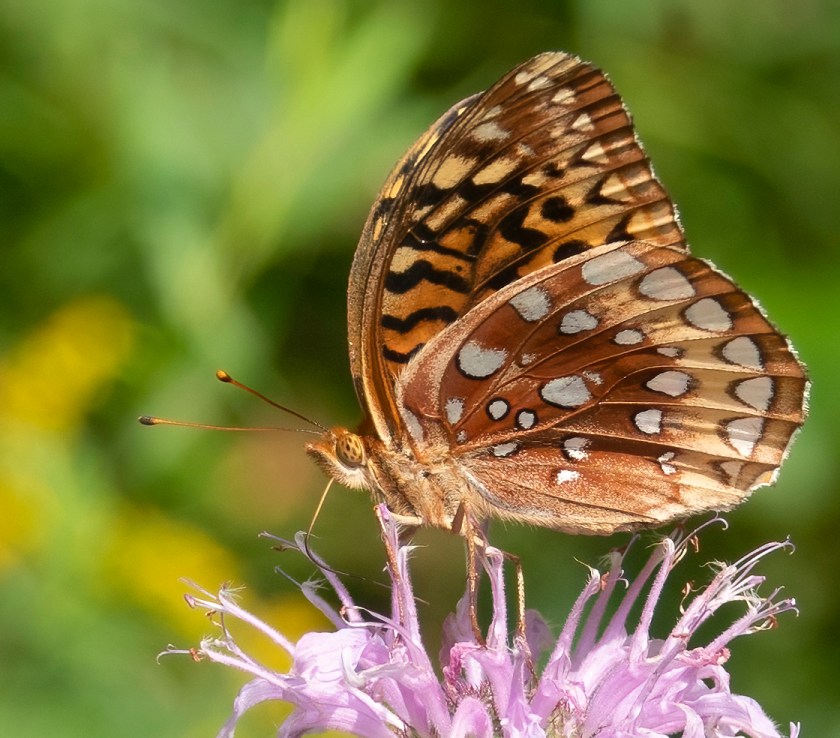
The rest of the butterfly’s name, “spangled” comes from its underwing, adorned with silvery patches like a little girl’s party dress:


Nice! And interesting!!
>
LikeLike
they are gorgeous…only remember seeing one.
LikeLike
as a child I collected now butterflies are rare
LikeLike