What’s in a name: Calligraphy Beetles, Twice-stabbed Stinkbugs and more

One of the best insect names I know is the Calligraphy Beetle. This one is  Calligrapha confluens, and both the larva and the beetle itself feed only on alder.
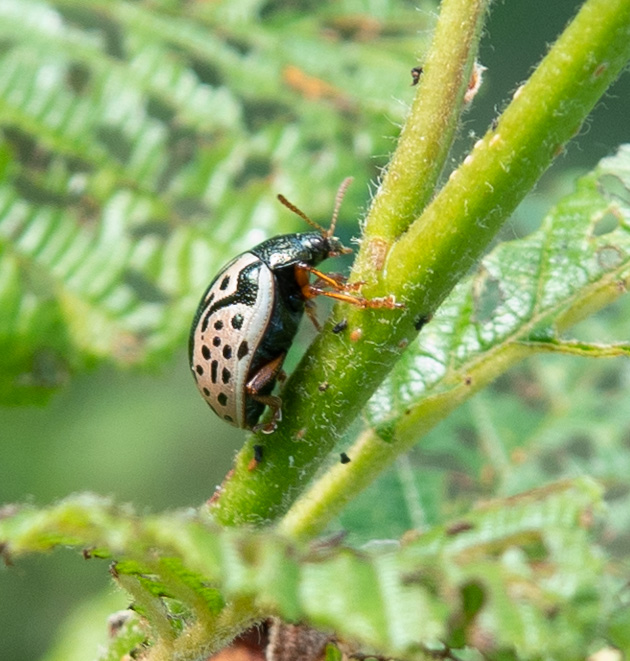
Calligraoha conflouens, feeding on alder

I like to imagine  that an ancient Tang dynasty Chinese scholar took brush and ink, and wrote a poem to this beetle on its carapace, in lü shi, or regulated verse.

Here is its patterning from above:
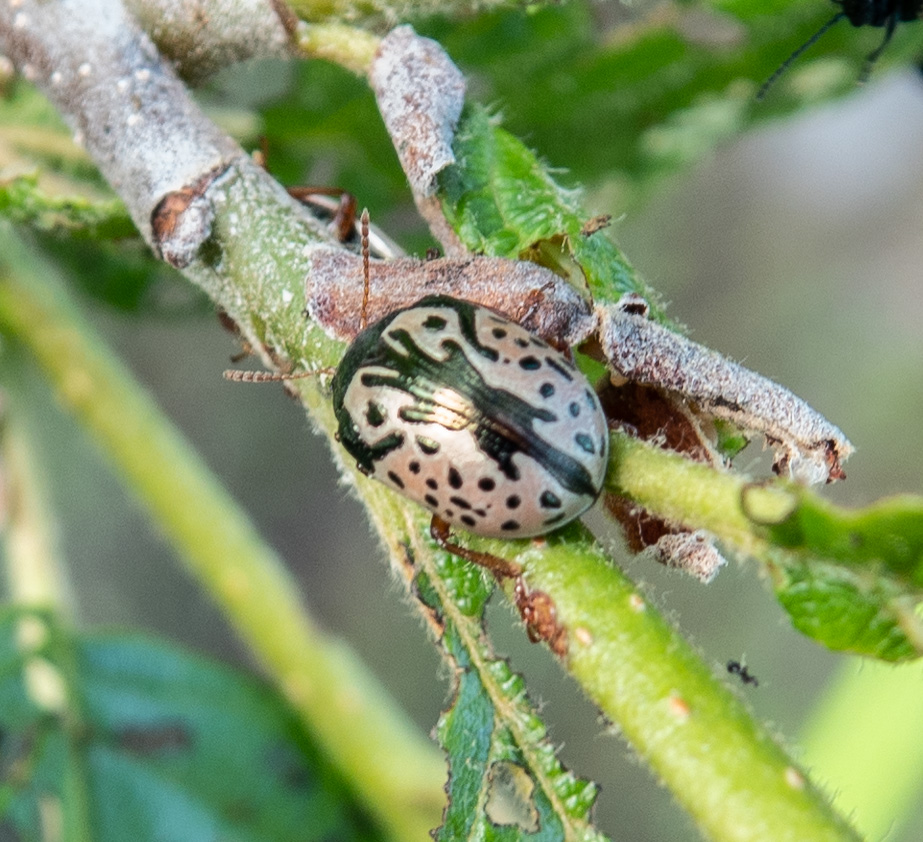
Calligraoha conflouens, feeding on alder

It is not a ladybug (lady bird for you Brits), but in the family Chrysomelidae, or Leaf Beetles.

I found a quite different bug yesterday, which I assumed to be related, but it isn’t. This one is a Twice-stabbed Stinkbug, Cosmopepla linteriana, on a mint leaf. 
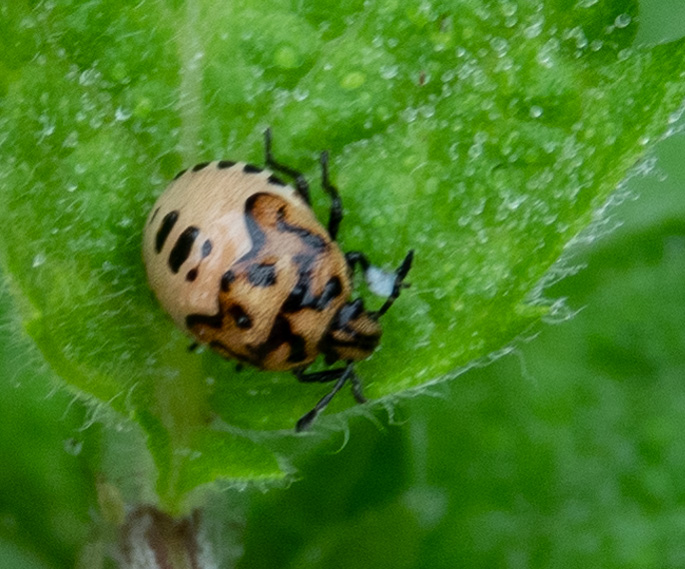
It is a nymph, i.e. not yet an adult, and when it is all grown up it will be black and red, with two bloody spots that give it its name:
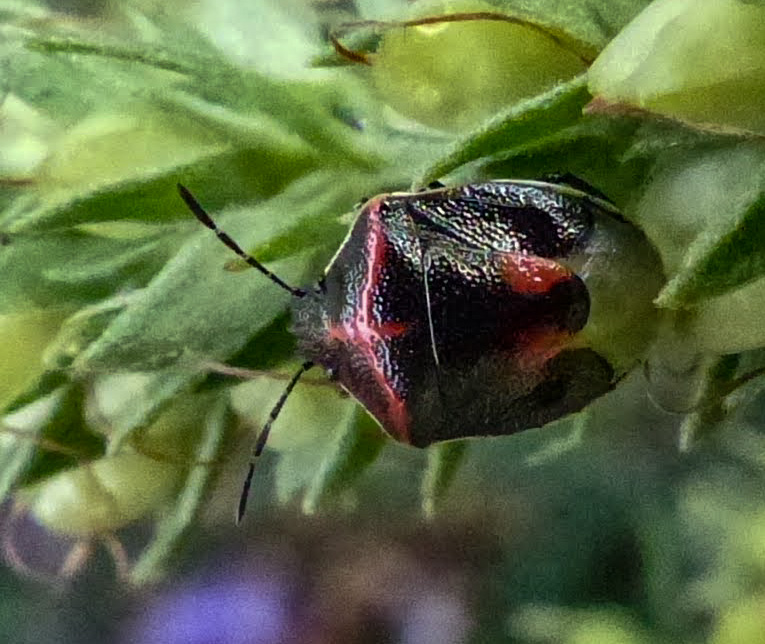
Like all stinkbugs they produce a smell in self-defence. I have never smelled it, because I cannot bring myself to bully the tiny stink bug.

This is a very smart Spotted Cucumber Beetle, on a rose. And look what is hiding underneath the petal:
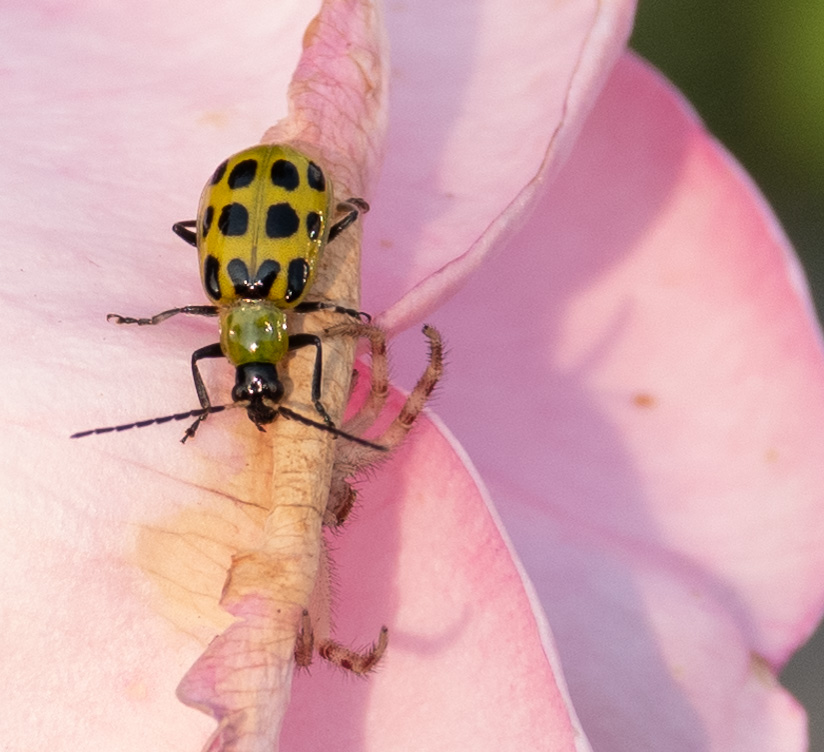
This beetle delights in the scientific name of Diabrotica undecimpunctata howardi, which would appear to imply it has 11 spots, but I count 12. Maybe the eponymous Mr Howard couldn’t count? Or I suppose the central two closest to the head are almost merged? Dapper though it is, it is a major agricultural pest of cucurbits and corn.

So now you see how exquisite beetles can be, you can see why the Egyptians carved scarabs in their honor, like these fron the Met’s collection.
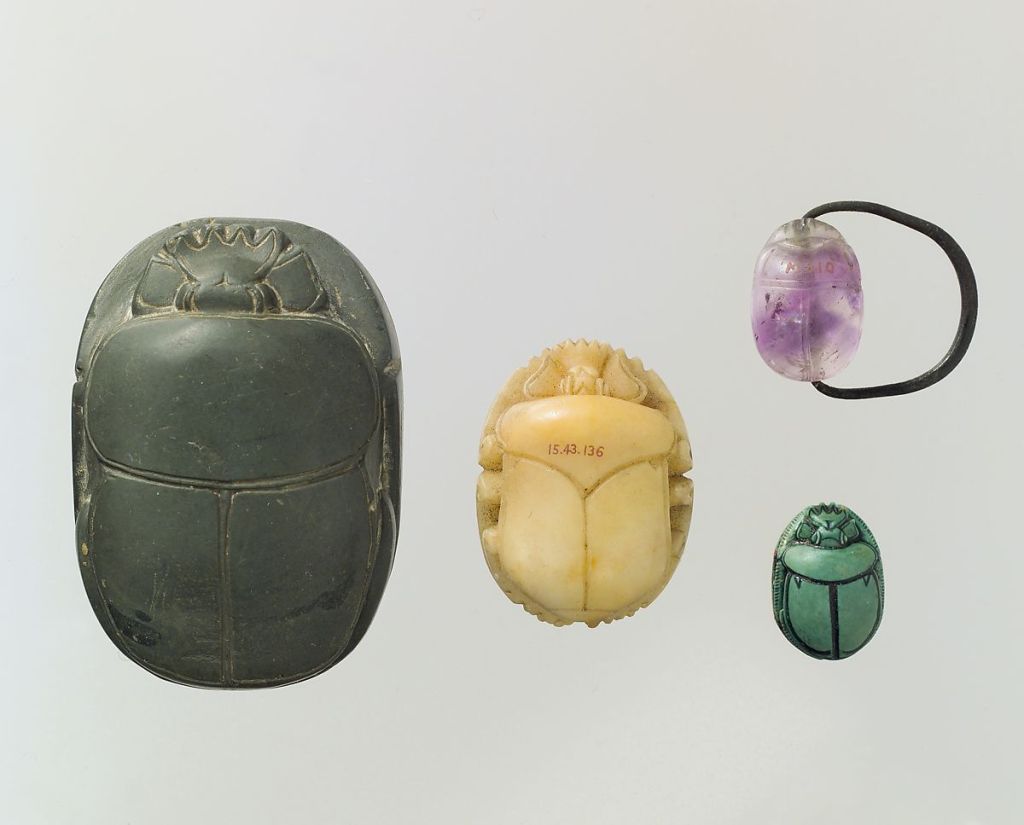
PS I have more lovely beetles, which I will save for another time.

Hawking

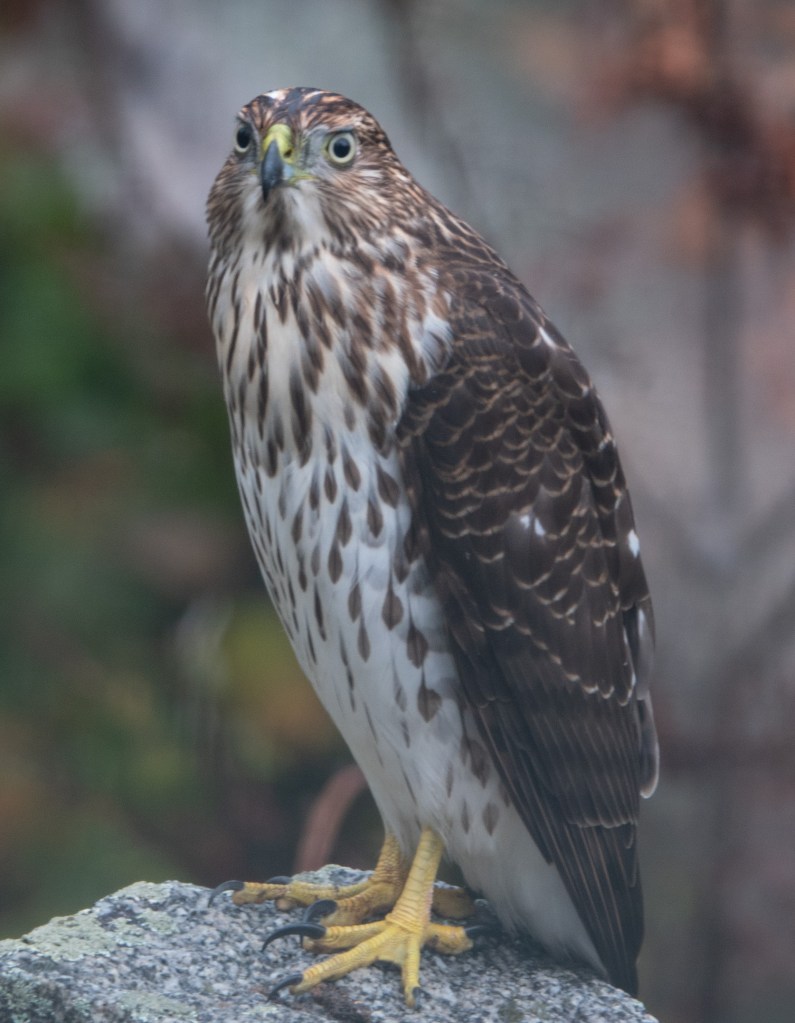
It has been a good few days for hawks around here. Soon they will fly south, but not quite yet. This is a juvenile Cooper’s Hawk, grooming itself after rain on top of an old beaver’s lodge in the middle of my wetlands:
I mis-identified it as a red-shouldered hawk, but the moderator at Cornell’s eBird website kindly emailed me the right ID. A week earlier, a pair had been circling overhead, so this is probably their teenager, sulking alone in the middle of the pond.

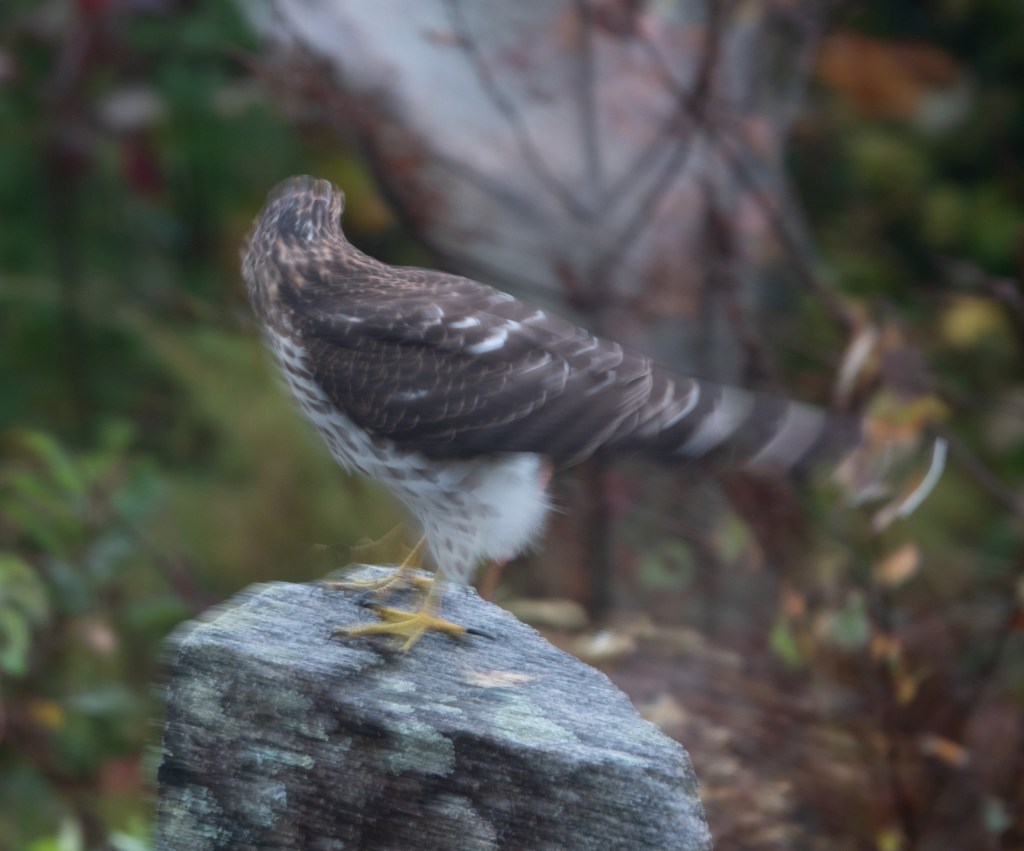
A couple of days later, I looked out of my bedroom window at 7.15am, and there below me on the granite fencepost was another one, or maybe the same one (as the hawk flies, the pond and the house are only a mile apart):

It was grooming itself, but I only got one blurry action shot. Still, you can see its white fluffy leg feathers and long tail.

Soimetimes they are called chicken hawks, and I suspect that is because of their call:

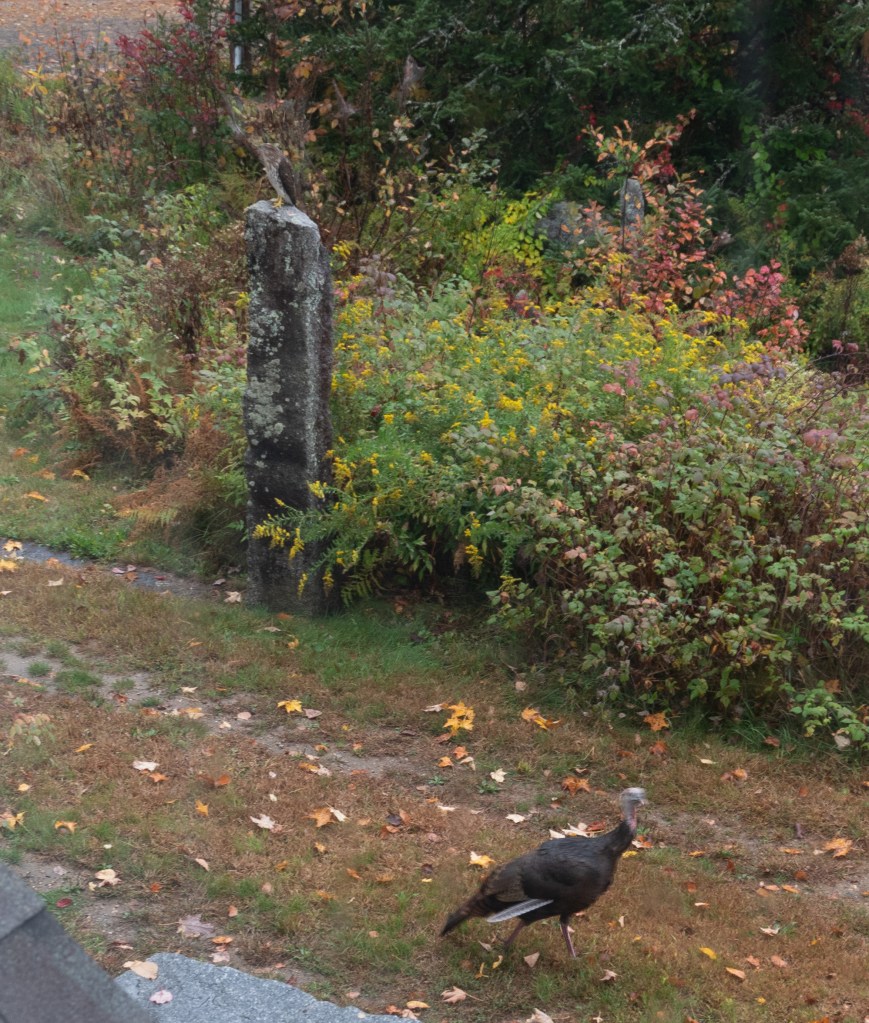
Cooper’s Hawks are medium-sized hawks. Males (smaller than females) are 14-18in long, including the tail. At one point a turkey (bottom right) walked past, but it was far bigger than the hawk (top left), so they just ignored each other:

I was rather hoping that the name of the hawk had some obscure connection to wooden barrels and casks, but no, it is named after a Mr Cooper. Maybe his ancestors made casks?

Cooper’s Hawks were in trouble in the mid-20th century, probably because of DDT, but the population seems to have recovered and is now stable. They eat birds (often hunting round bird-feeders), and small mammals like chipmunks, which we have (had?) in abundance in our garden. They breed here, and may over-winter, though some fly south. This nest, high up in a pine, is typical, and could be theirs, but I am not sure:

I’ve also seen two American Kestrels, and a Northern Harrier, a Merlin, and three Bald Eagles, not bad for one week. None of the photos are worth showing you!

Eastern Tigers

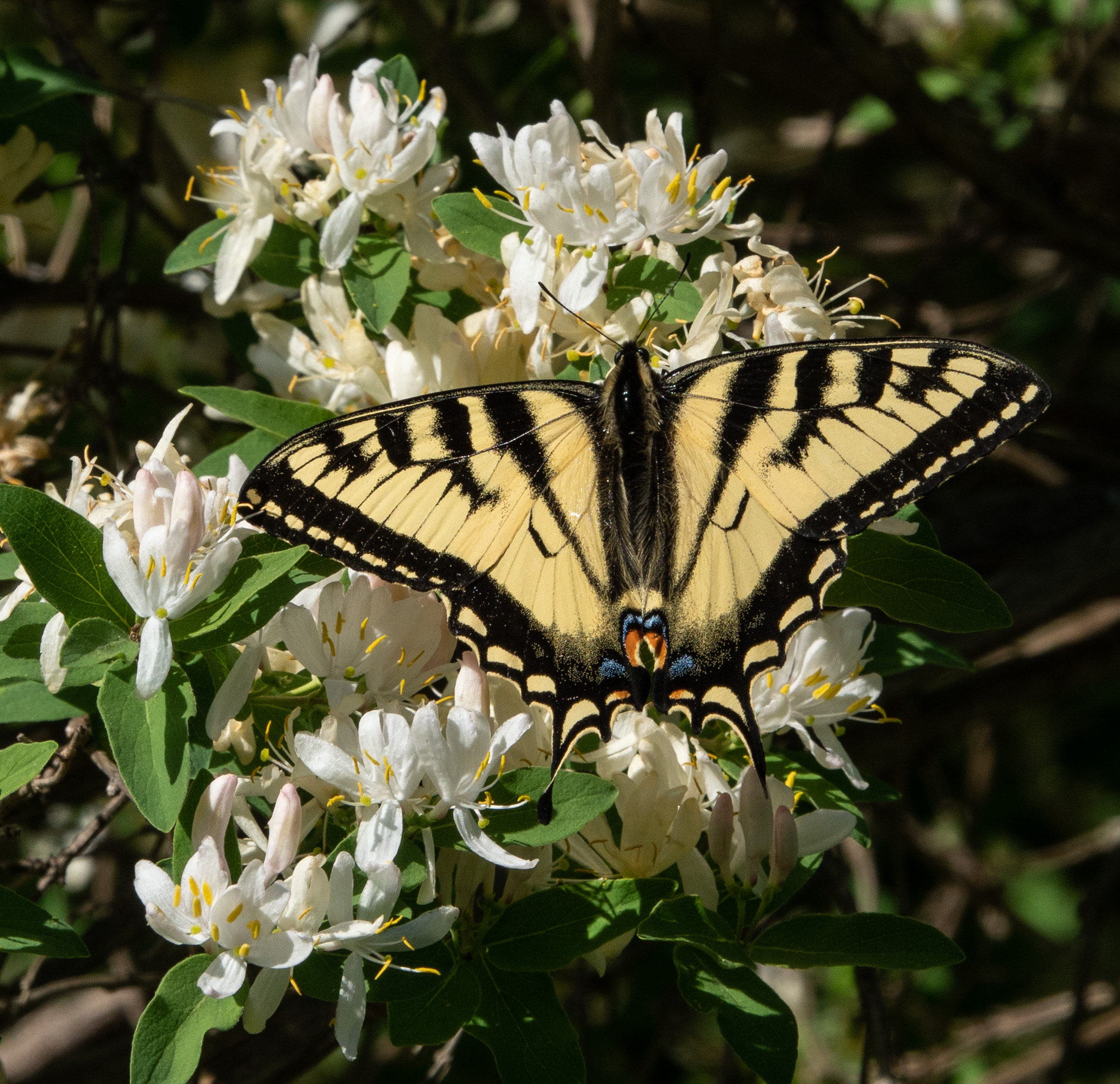
This dramatic Eastern Tiger Swallowtail butterfly was everywhere early this summer, to my delight. On honeysuckle:

swallowtail on honeysuckel

or milkweed:

Eastern Swallowtail

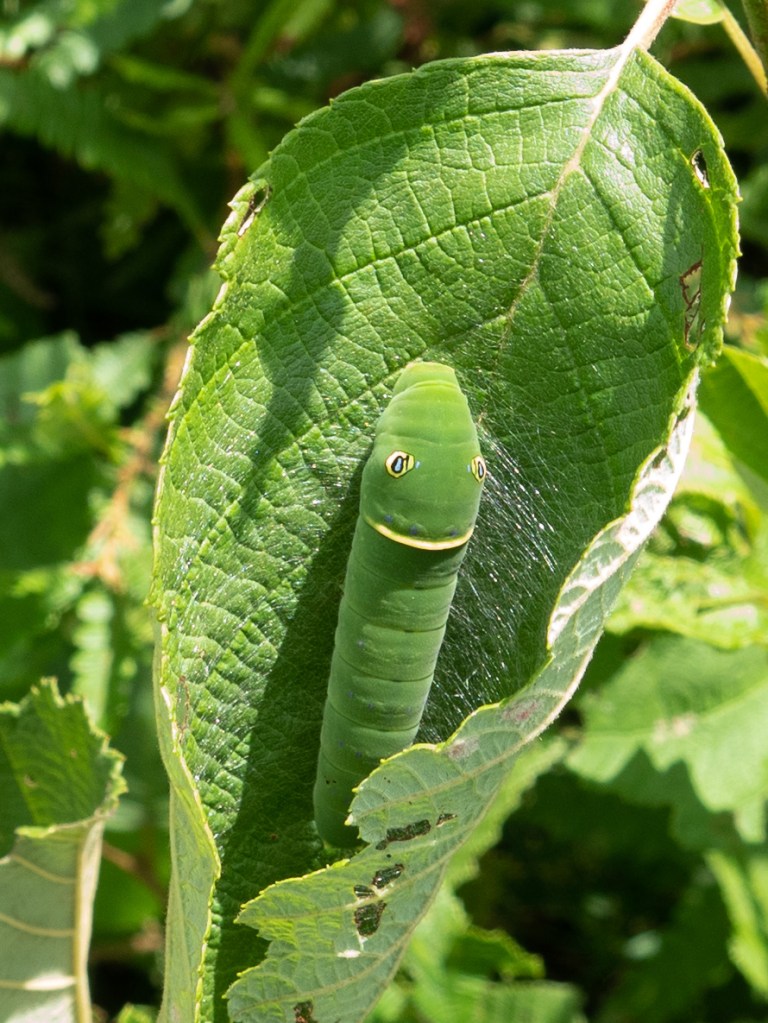
In a previous incarnation, it was a large green caterpillar, with fake “eye” markings to deceive predators; the actual head is the reddish section to the extreme left:

Eastern Tiger Swallowtail

When threatened, it coils in its front end to create a very convincing – looking face, and those flaps even make its feet look big.

Eastern Tiger Swallowtail 

They curl up a leaf with silk threads, creating a little woven silken pad to which they can anchor themselves to rest. I watched this one for days, and it never moved (unless I touched it gently), and then one morning  it was gone, leaving its bed behind:

Had it gone off to pupate, or had something swooped down and eaten it?? We will never know.

Turkey tussle


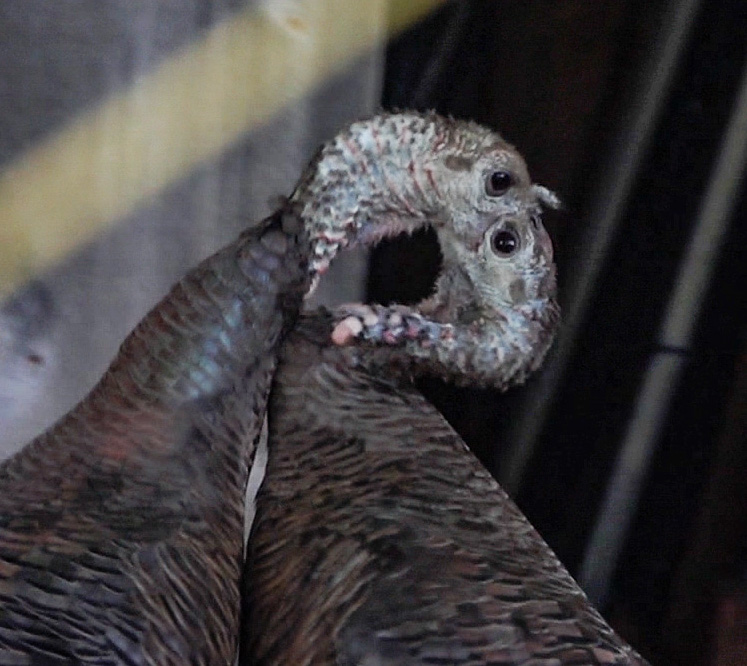
Early one morning, a tent that we had pitched in the back yard was lurching drunkenly from side to side. The cause: two young male turkeys, locked together in combat. They appeared to be stuck in an intimate embrace, each one eating the other’s beak:

Turkeys fighting

They took turns in being the dominant one, the winner forcing the loser’s head right back as if at any moment a cervical vertebra would dislocate.

The overall impression was of a strange unfamiliar beast with two eyes, one above the other, two necks and two bodies. The locking mechanism was pretty similar to this Bollywood screen kiss, each actor mouthing the other’s lip:

Clearly, though, these turkeys were not in love, but at war. At first I thought they were unable to extricate themselves, but eventually I realized that was wrong. Like a pair of Siamese twins they skidded around the grass, bumping into the tent and nearby chairs, all in total silence. (The two videos below do not seem to be playing reliably, so I apologize if you have trouble.)

They kept it up for about ten minutes, then separated, and returned to feeding, apparently none the worse for wear. My reading suggests this behavior is quite common in mating season, but this was mid-June, some time after mating season was over, so I suspect they were young birds, sparring.

Those wrestlers on TV might be able to learn a trick or two.

Aliens

This post would make suitable source material for a sci-fi movie or a Stephen King novel. Those of you with weak stomachs look away.

Some wasps lead a rather unsavory lifestyle.

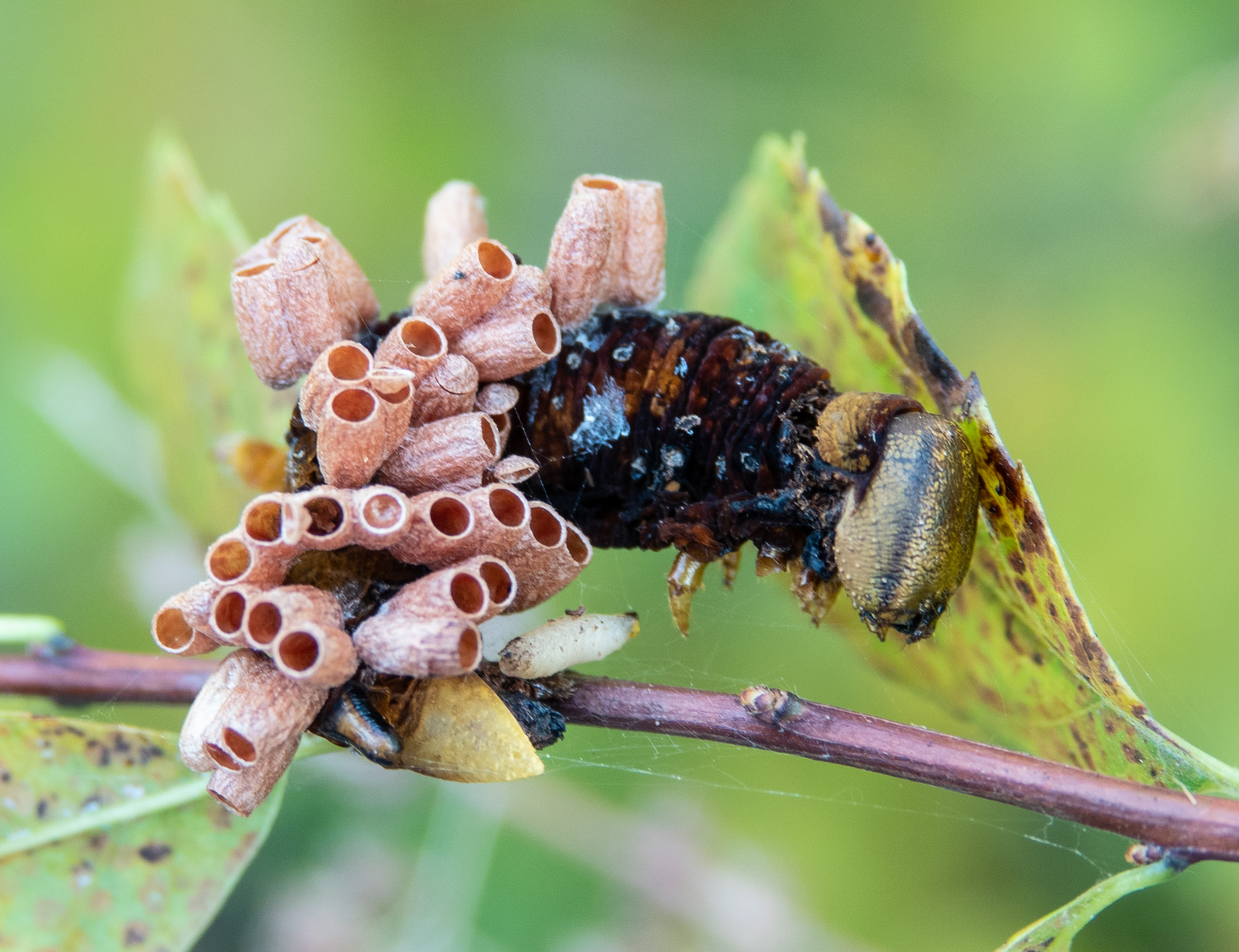
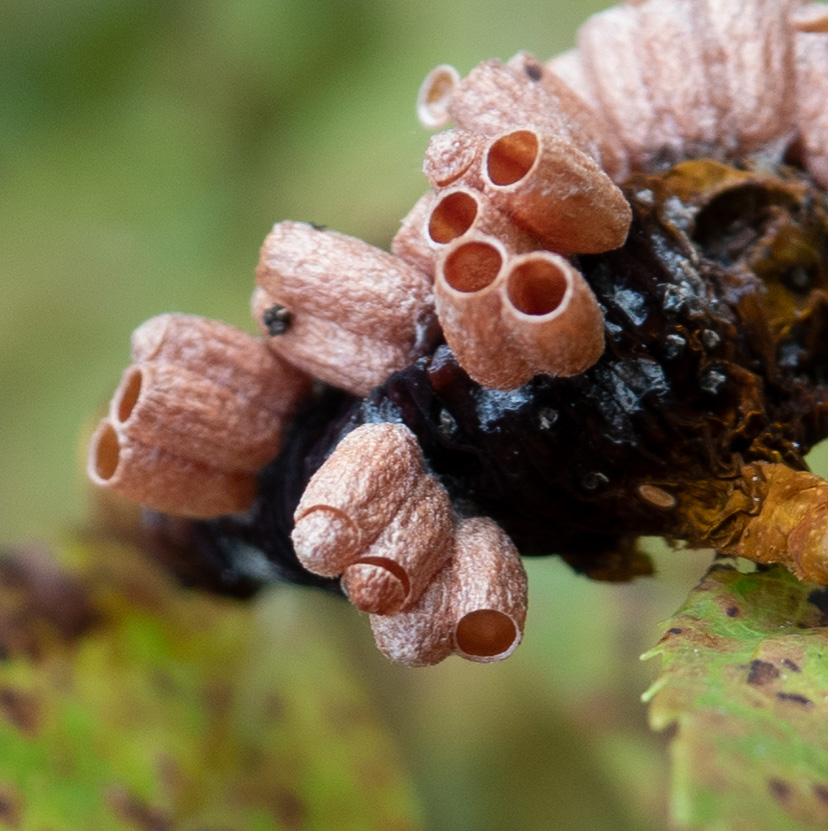
Feeding your young is always a challenge, which these parasitic wasps solve by paralyzing a caterpillar, and laying their eggs in its living body.  The larvae feed on the still living victim, then build these silken cocoons within which they pupate, to eventually emerge as wasps.

DSC01324

When it is time to emerge, they cut around the top of the cocoon with elegant precision, creating a tiny lid. It reminds me of Hercule Poirot preparing to eat his boiled egg.

DSC01331

When I tried to ID this specific wasp, BugGuide initially said “Unidentified parasitic Apocrita”, which seems a rather appropriate name for an insect which ends the life of its host apocryphally. But my wonderful friendly expert Brandon Woo said it was in the family Braconidae, and then Charley Eiseman updated the BugGuide ID, confirming this, and telling me it was in the sub-family Microgastrinae, more specifically in the genus Microplitis.  The internet is a wonderful thing, generous experts at your fingertips.

Moose quest

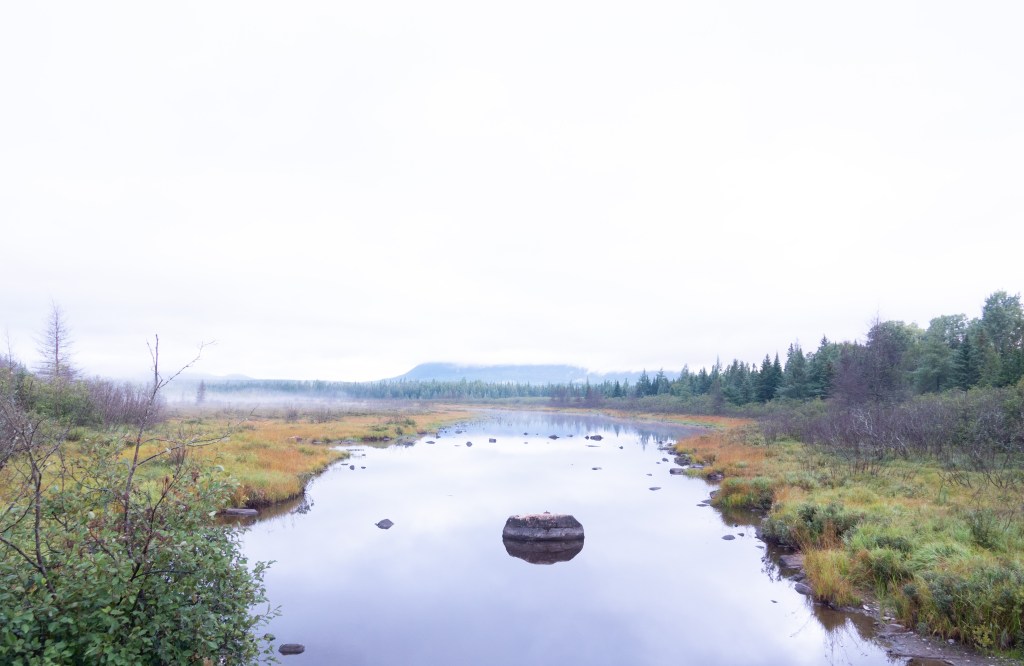
5.30am, early morning, in Kokadjo, near Moosehead Lake in Northern Maine, 60 miles from the Canadian border:

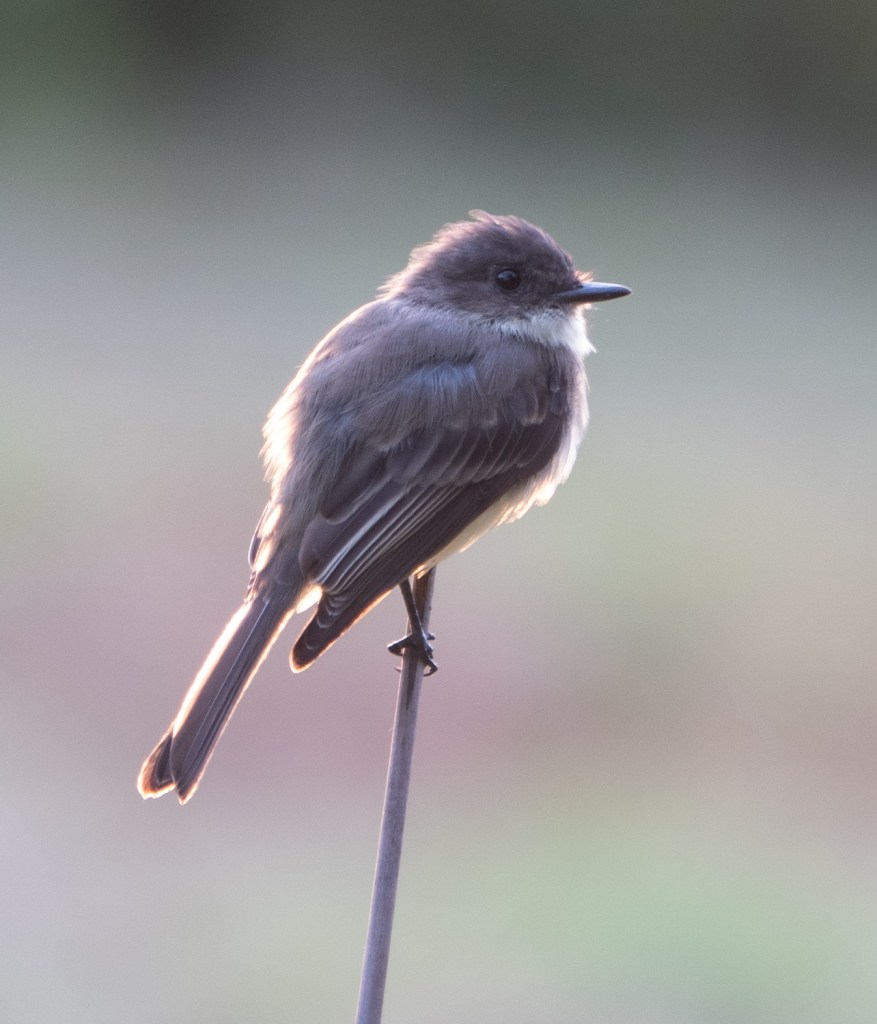
A phoebe in the early morning mist:

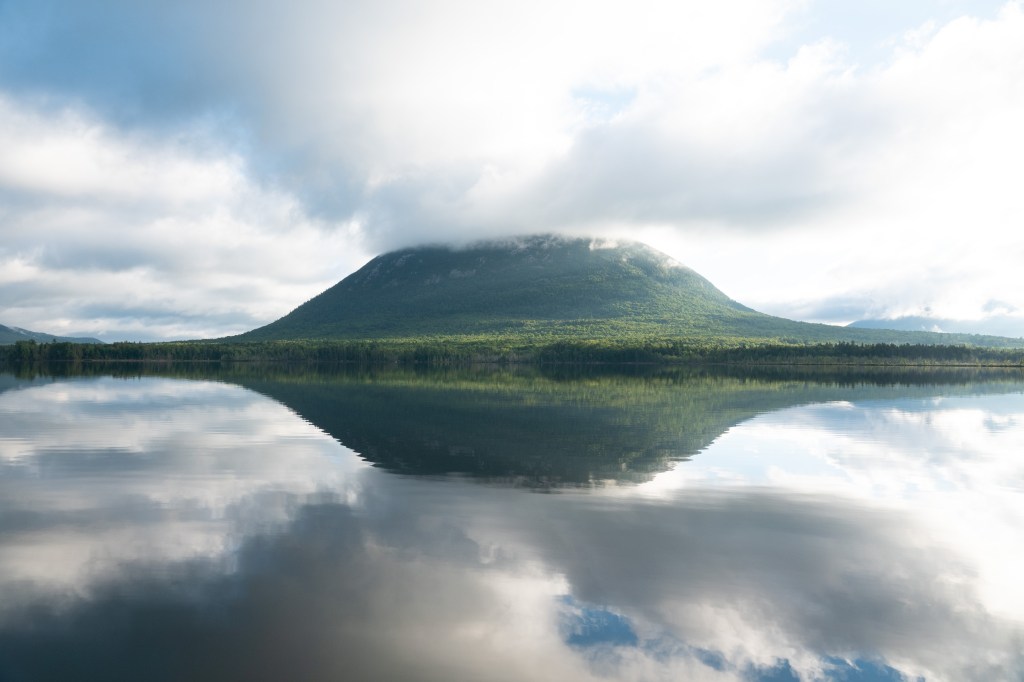
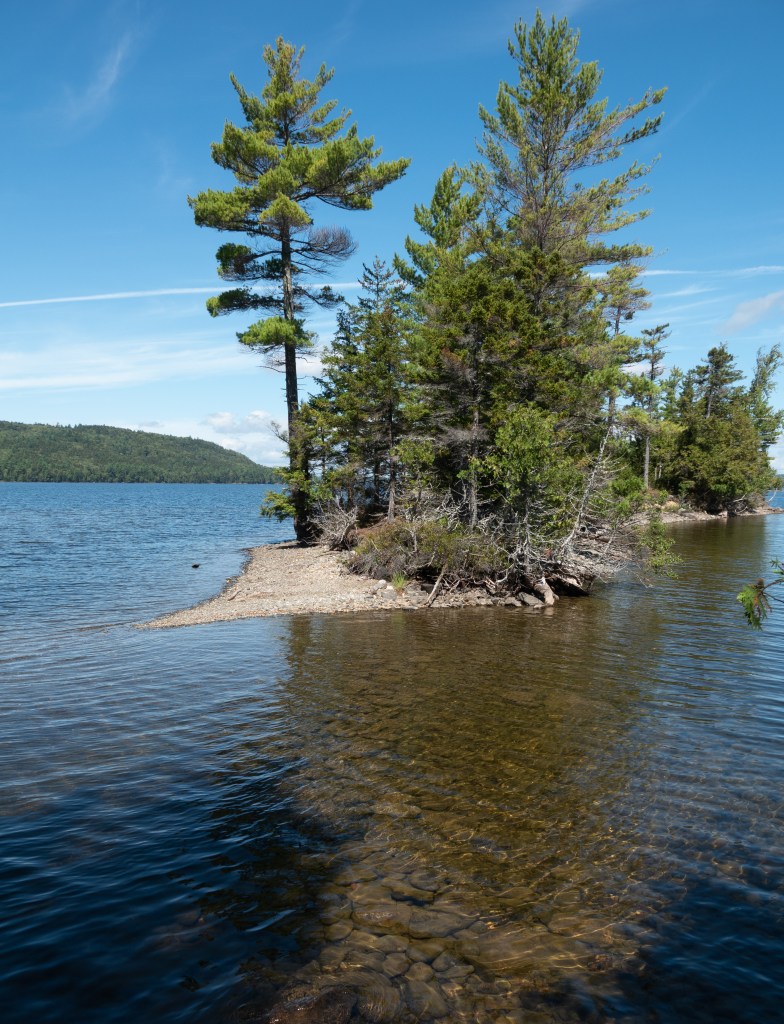
We canoed across the lake towards an elegant hummock:

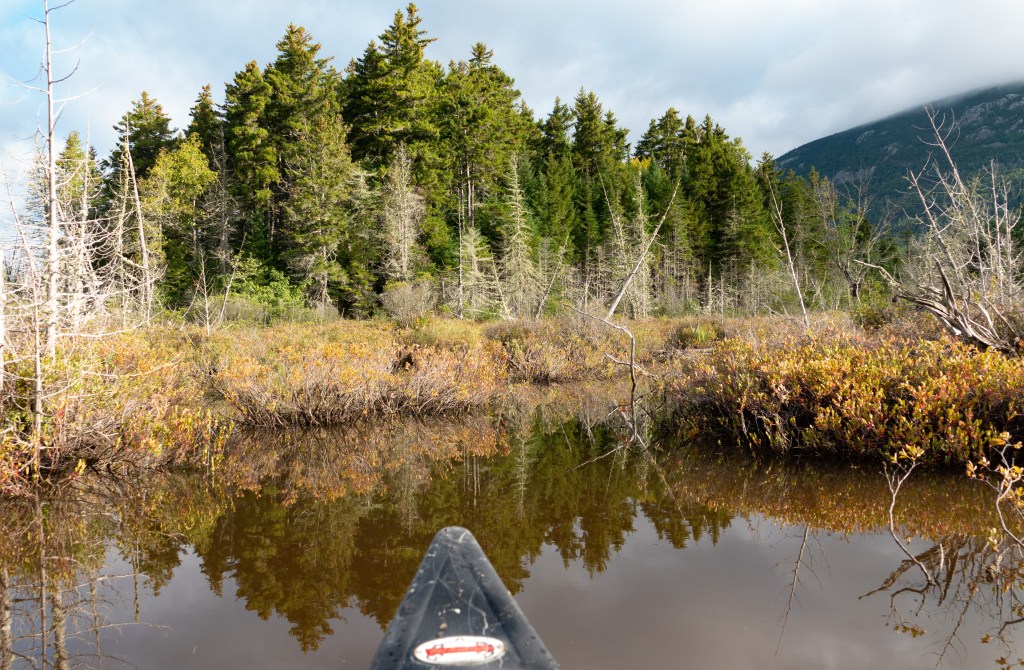
and then into an ever-narrowing bay-let:

One moose in the far distance, , that slowly turned and strolled away. So we stopped for breakfast, attracting a Gray Jay (aka Canada Jay), well-known hangers on at campsites:

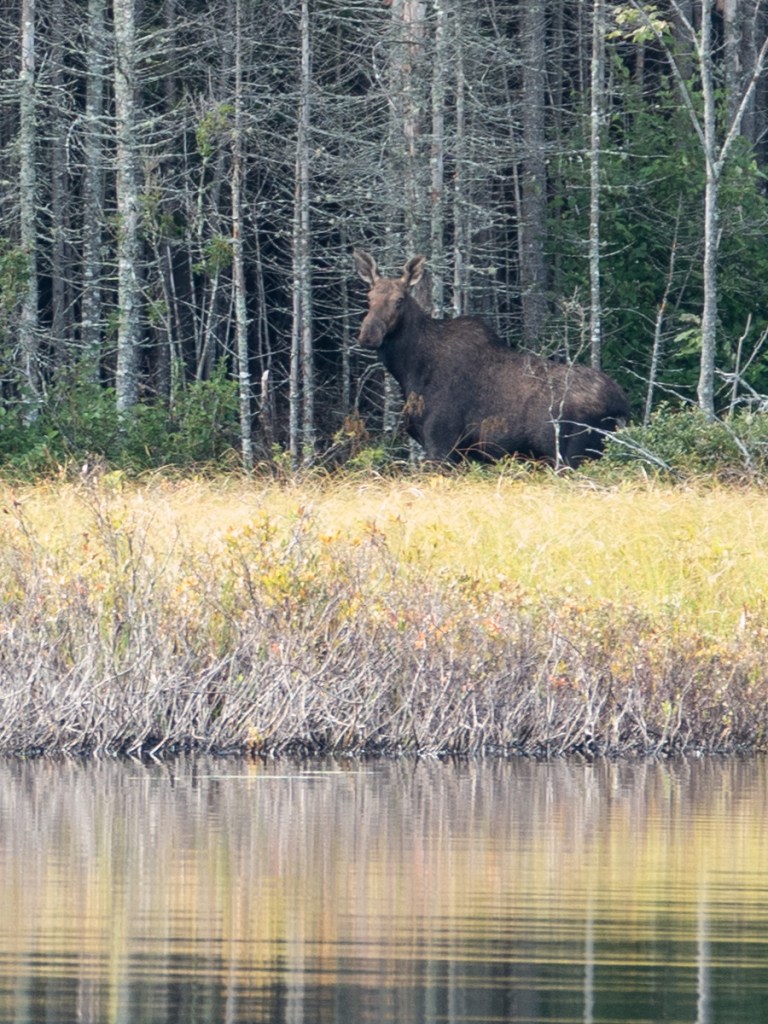
And then just as we were leaving, the guide pointed out a mother and calf ahead. The calf scarpered (and neither of us even saw it), but the mother lingered:

We have moose where we live in south-western Maine; you see droppings, but the population is small, and I have only ever seen 4 or 5, in nearly 40 years. All told, we saw five moose that morning, all cows, and the one calf. Thankyou Mark Patterson.

Look but don’t touch: The thuggish, sluggish caterpillar

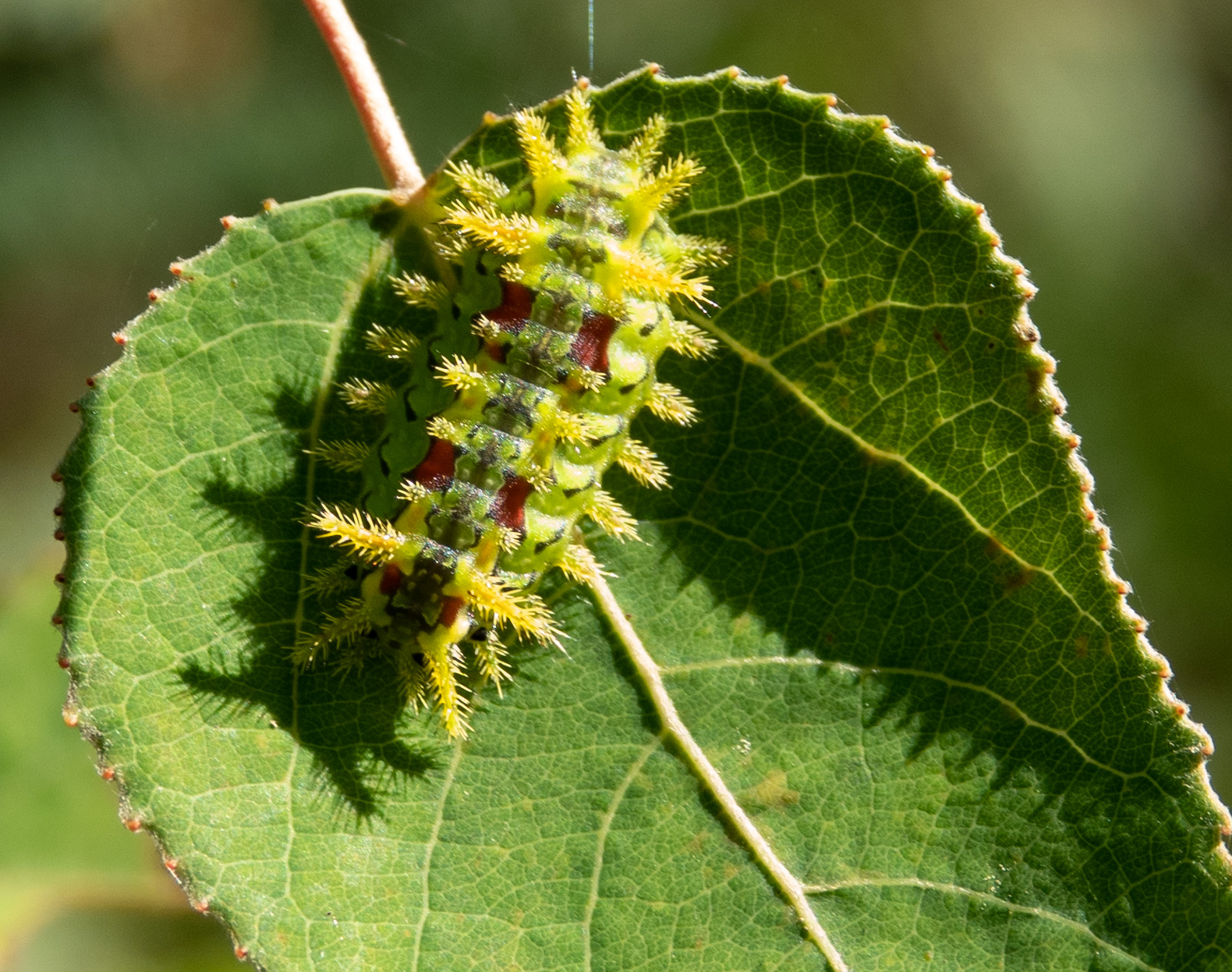
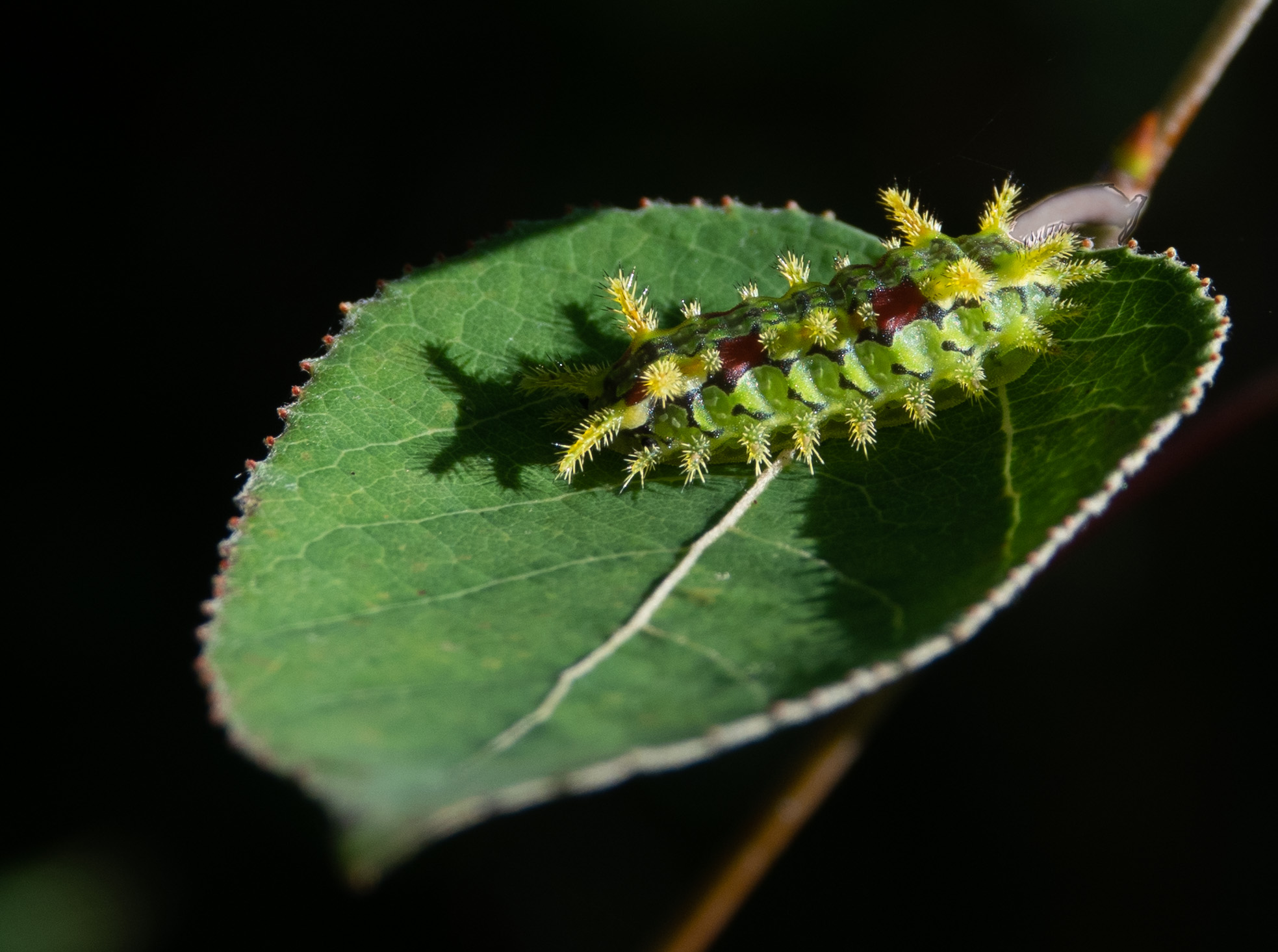
The Spiny Oak Slug, Euclea delphinii, is not a slug at all, but a flamboyantly decorated caterpillar, looking scared of its own shadow:

DSC02112

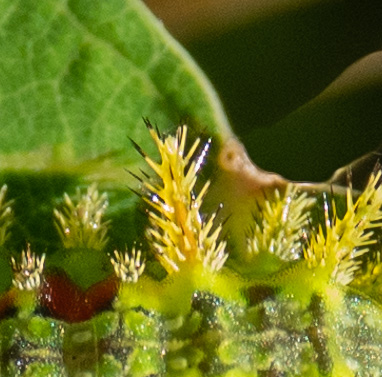
Can you see that it is wide and flat, not cylindrical like most caterpillars? Rows of yellow or orange stinging spines line the caterpillar from head to rear, with longer pairs at the head and the tail.  They have sharp black tips, shown in close-up below.

euclea delphinii,  spiny oak slug.

These venomous spines deter predators, and touching them is a mistake! They can be extremely painful. If you get a spine embedded in your skin, try to remove it with Scotchtape, and then use baking soda. Some people may even have an allergic reaction that needs medical attention. (Information from insectidentification.org)

My caterpillar was stationary, but slug caterpillars are so-called because they move rather like slugs. They lack any functional prolegs. Instead, they have suckers, and produce a sort of liquid silk lubricant,  so they move by undulating across the smooth leaf surface.   The Caterpillar Lab has a great video of one in motion:


And a final pose:

Yip John A Segur West


Got the blues

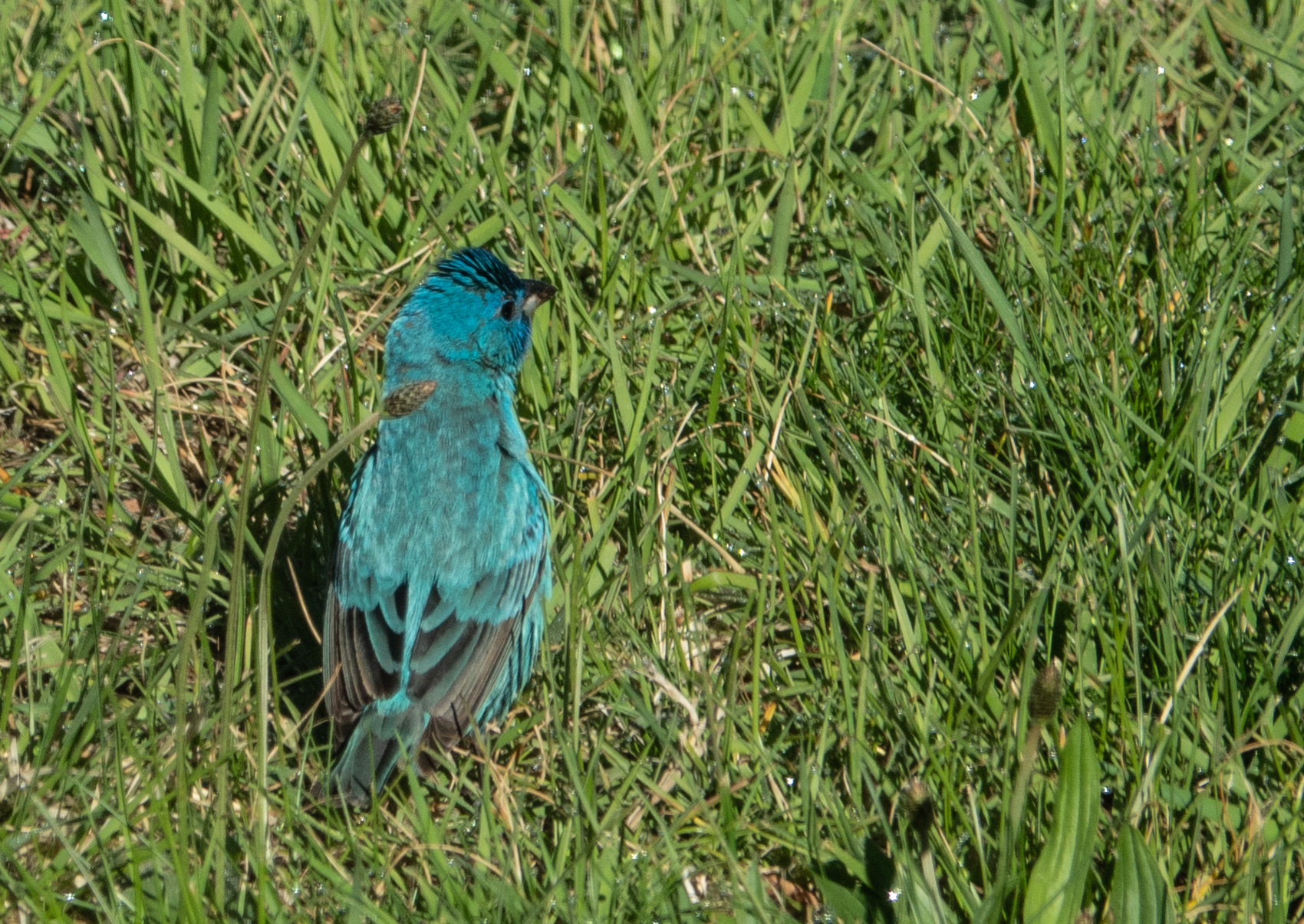
Western Maine is a low key, laid back sort of place, not flashy or full of itself. But these three birds seem to have escaped from exotic lands, flaunting their azure plumage in our Northern forests.

My first is (I think) an Eastern Bluebird, because he had a rusty belly when he flew up into a tree:

Eastern Bluebird

I do concede however, that I could be wrong: maybe he too is …. ..the same as my next bird.

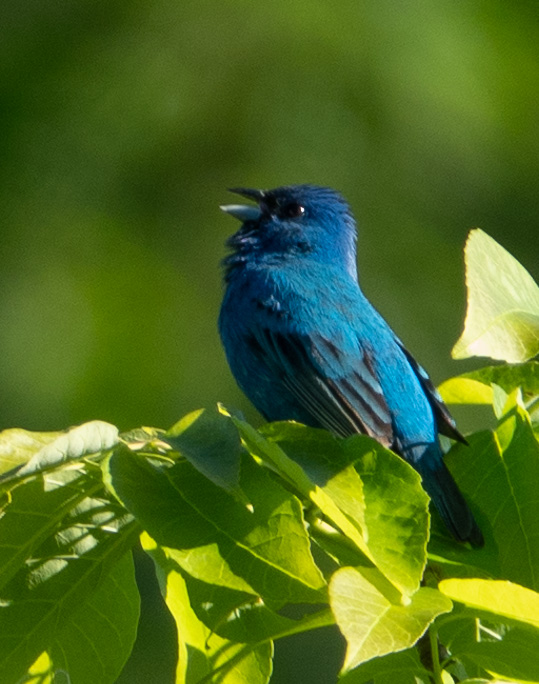
My second is a male Indigo Bunting, Passerina cyanea, singing from the treetops on June 9th. This is completely typical: they sing from the highest point they can find, all summer.

DSC07066

There is a recoding and rather a good description of their song and how they learn it here:

https://www.allaboutbirds.org/guide/Indigo_Bunting/sounds

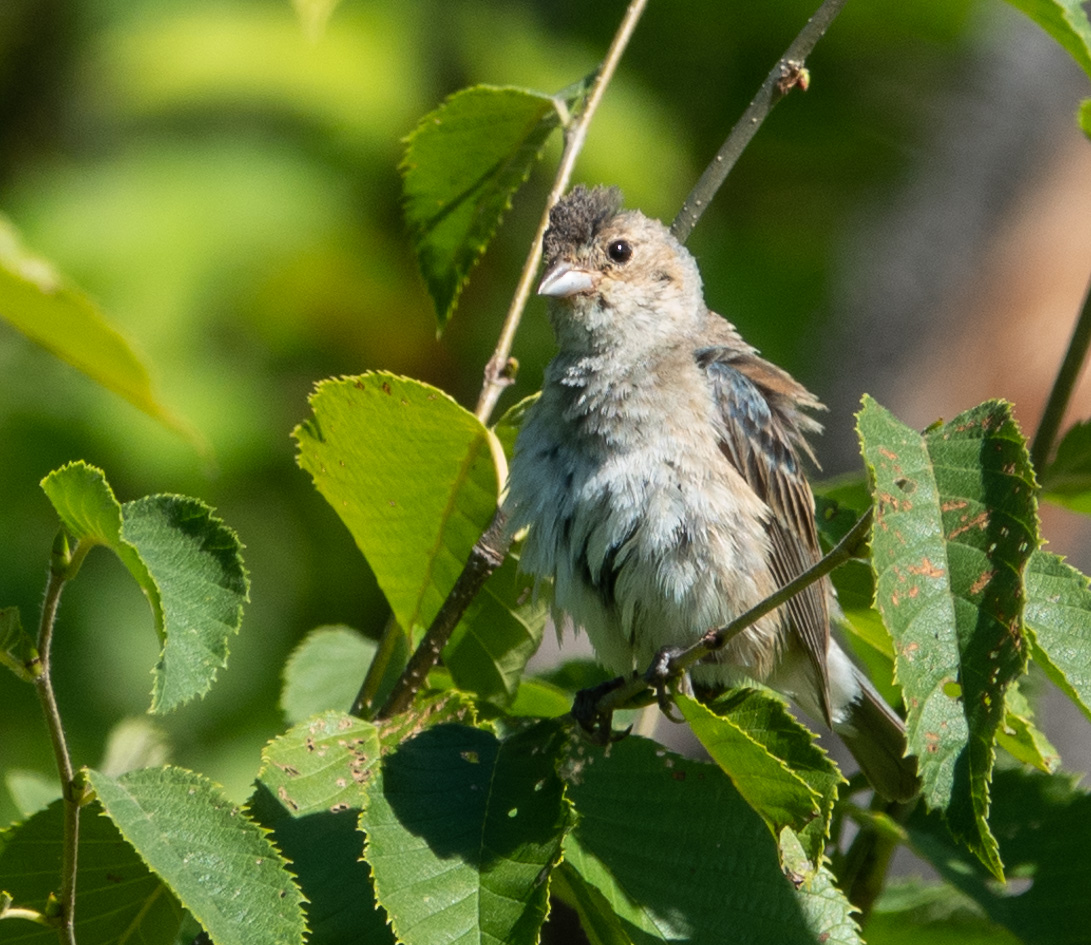
I am so pleased someone named it the Indigo Bunting instead of the Blue Bunting: how often do you get to use the word indigo, unless you are reciting the colors of the rainbow, or are into natural dyes. And its Latin name is cyanea, after another great color word, cyan! When they are just fledged, the blue just peaks through their beige feathers, but this week this teenager was on the same tree that his father liked, two months ago, so I can  be confident of its identity.

Juvenile indigo bunting

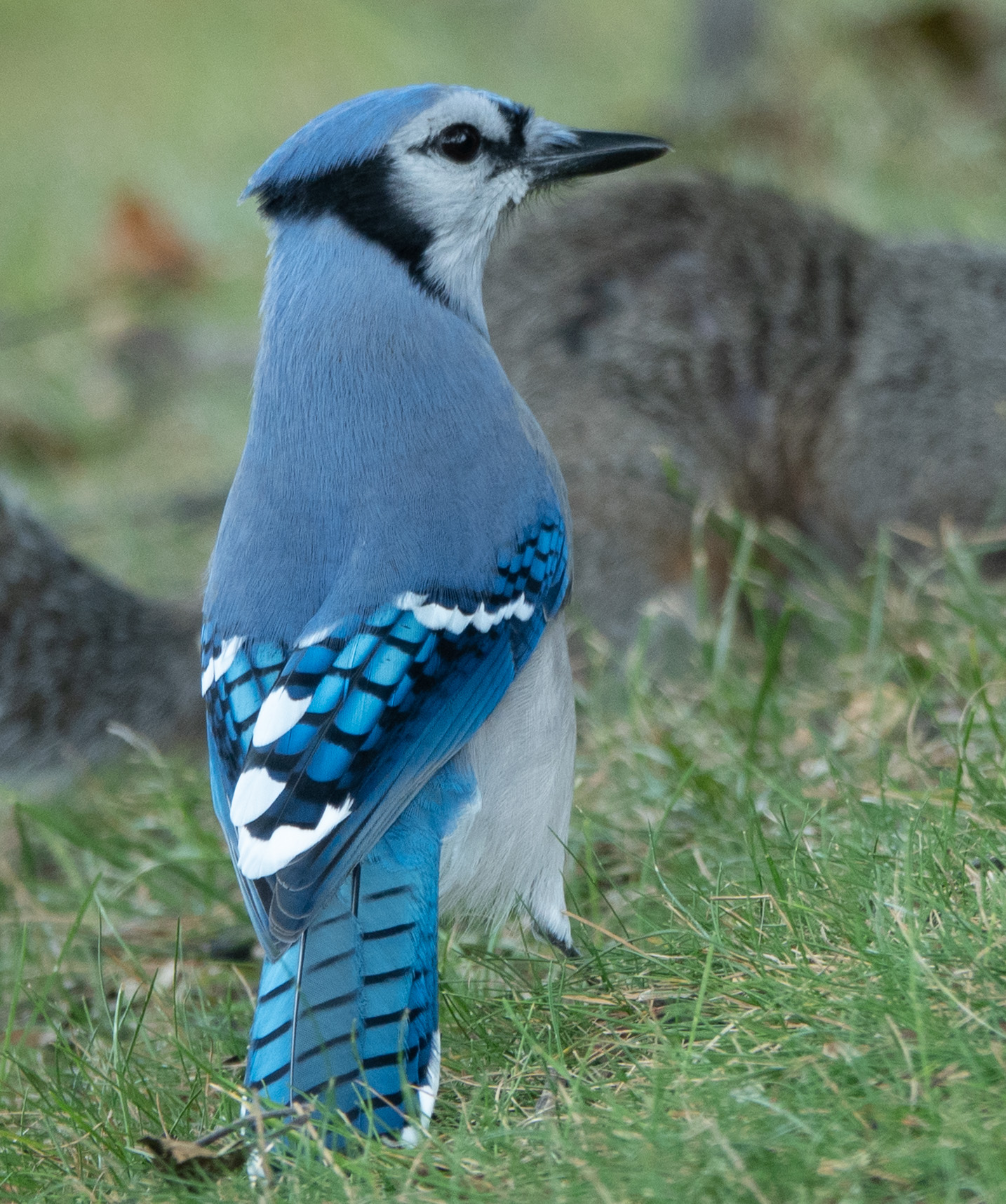
My third is the American Bluejay, Cyanocitta cristata, noisy, arrogant, and a year-round resident up here.

Bluejay

He has a fine crest, not raised in this photo.

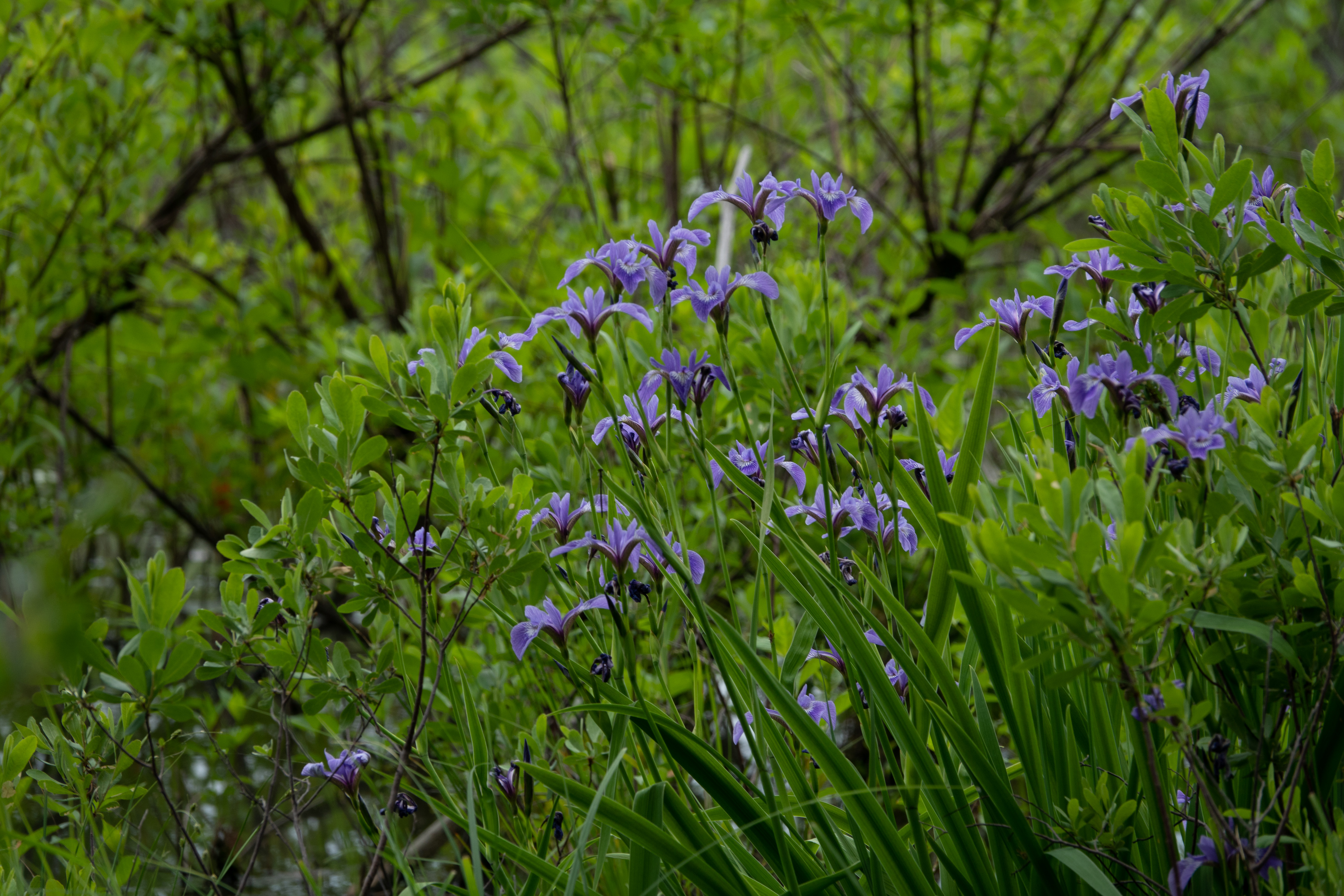
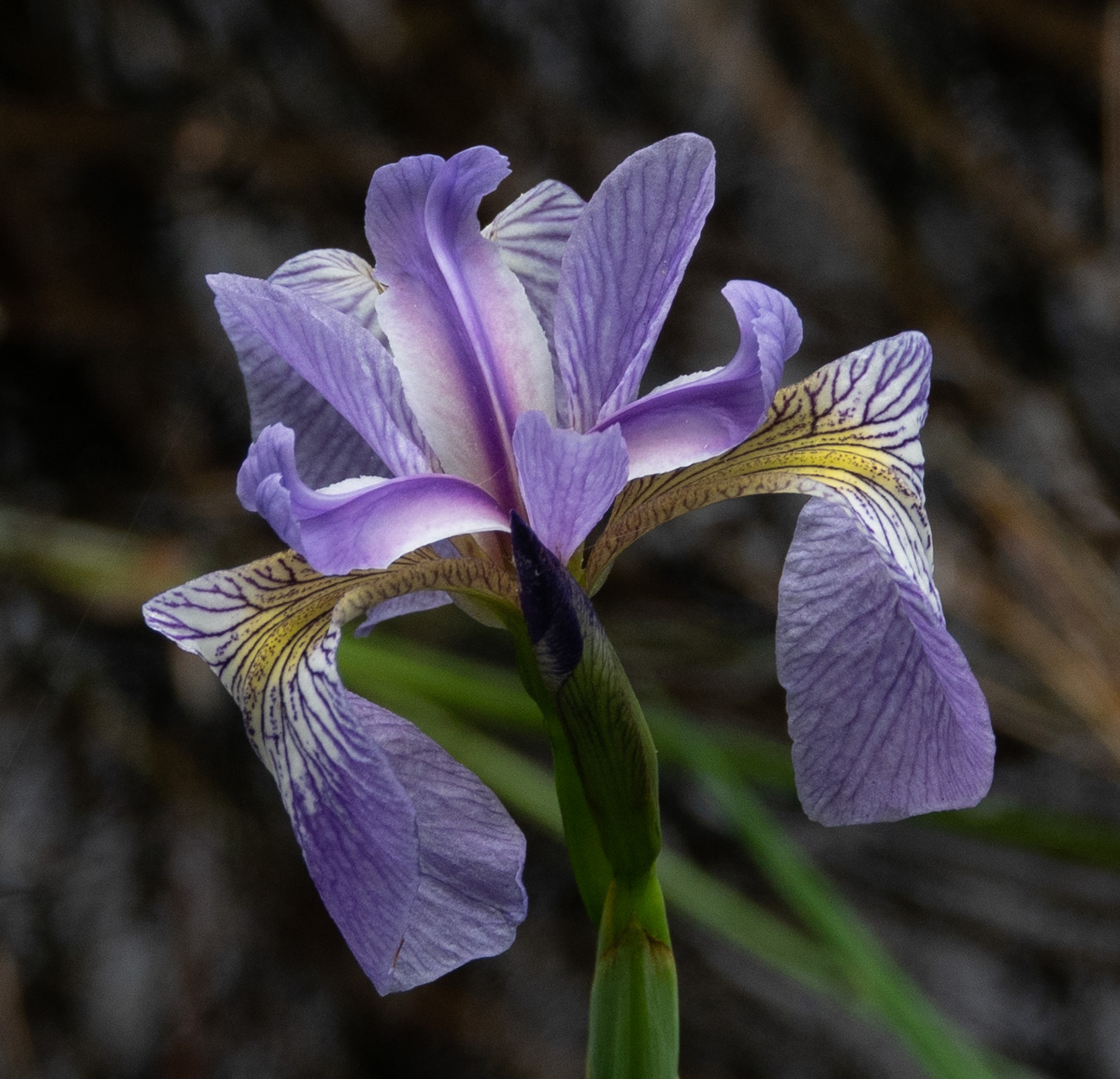
One last blue vision: a wild native Blue Flag Iris, Iris versicolor. There was a big clump in the swampy area at the edge of my beaver pond on June 10th, and although they are purplish blue, I consider them as qualifying for this post by virtue of their name:

Blue flag iris, I. versicolor

Look close, and  marvel:

Blue flag iris, I. versicolor

For me, these birds and flowers are a cure for the blues.

Beaver buffet

There was so much to tell you about in the spring that I saved this post to send during the dog days of summer, and here we are…

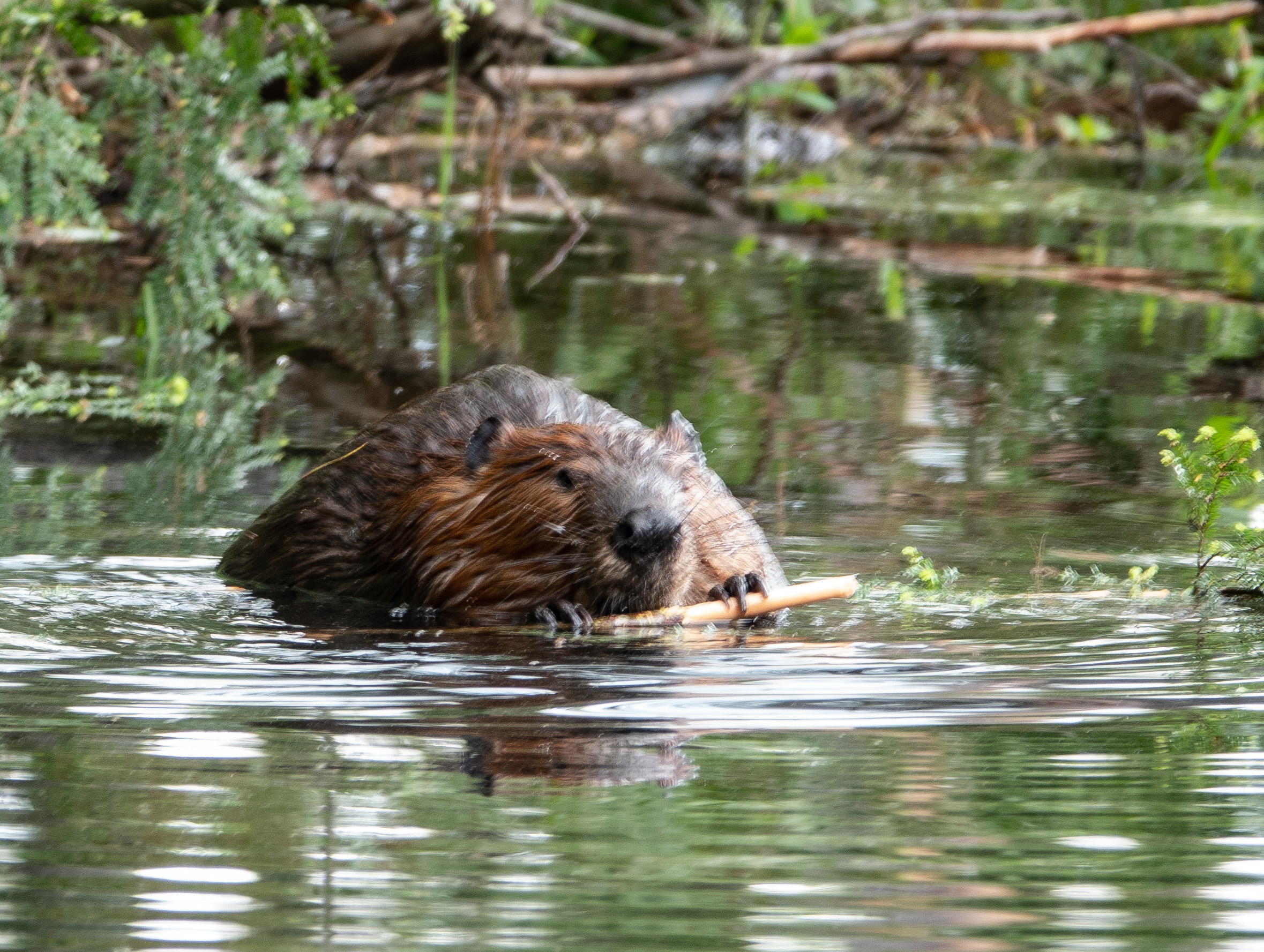
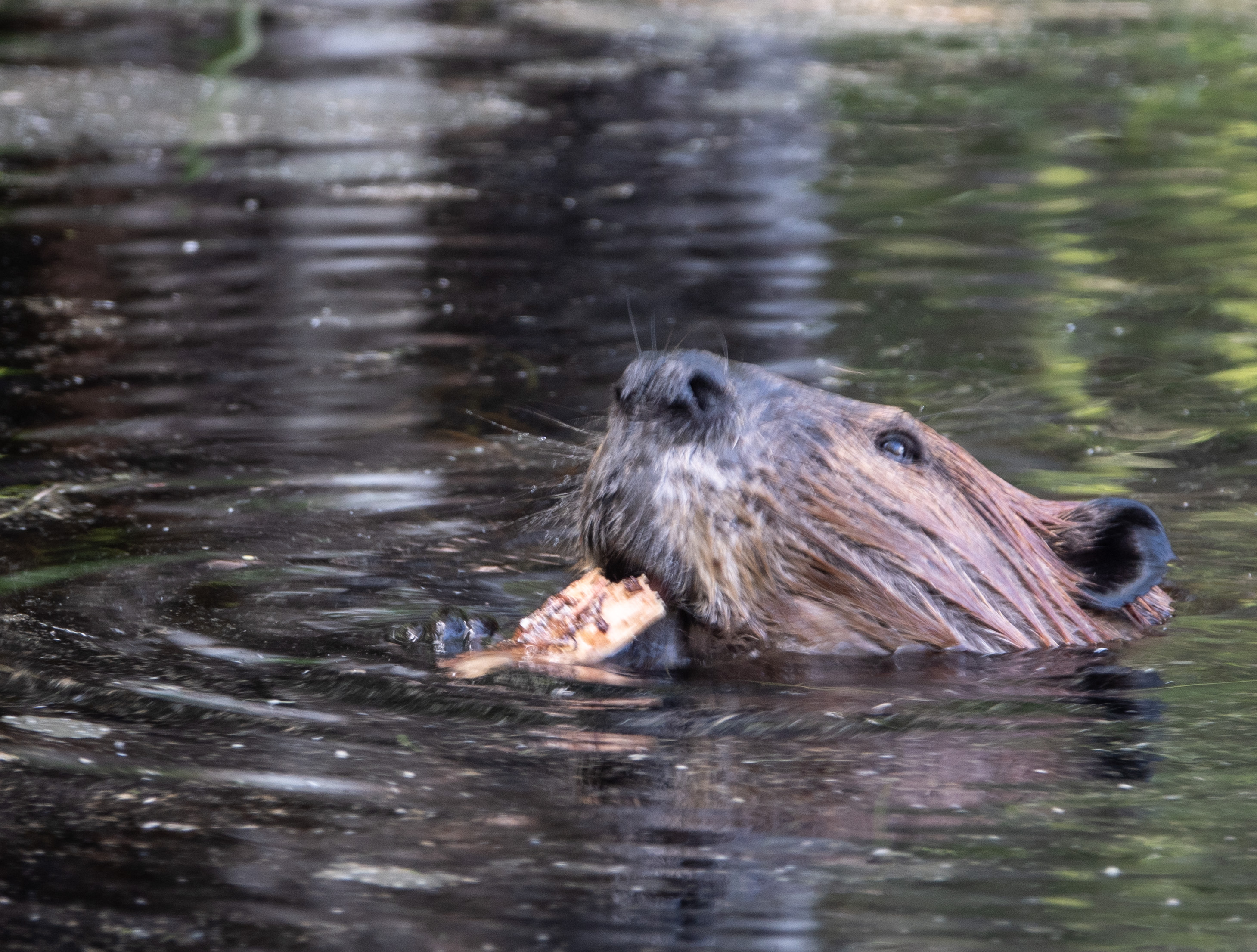
In spring, I expect to see beavers eating green stuff, but this one was still enjoying his hemlock twigs. He or she took it to the shallows, and delicately nibbled at the bark, or rather the cambium beneath the bark.

beaver on granny's pond

His technique reminds me of my grandson eating an ear of corn:

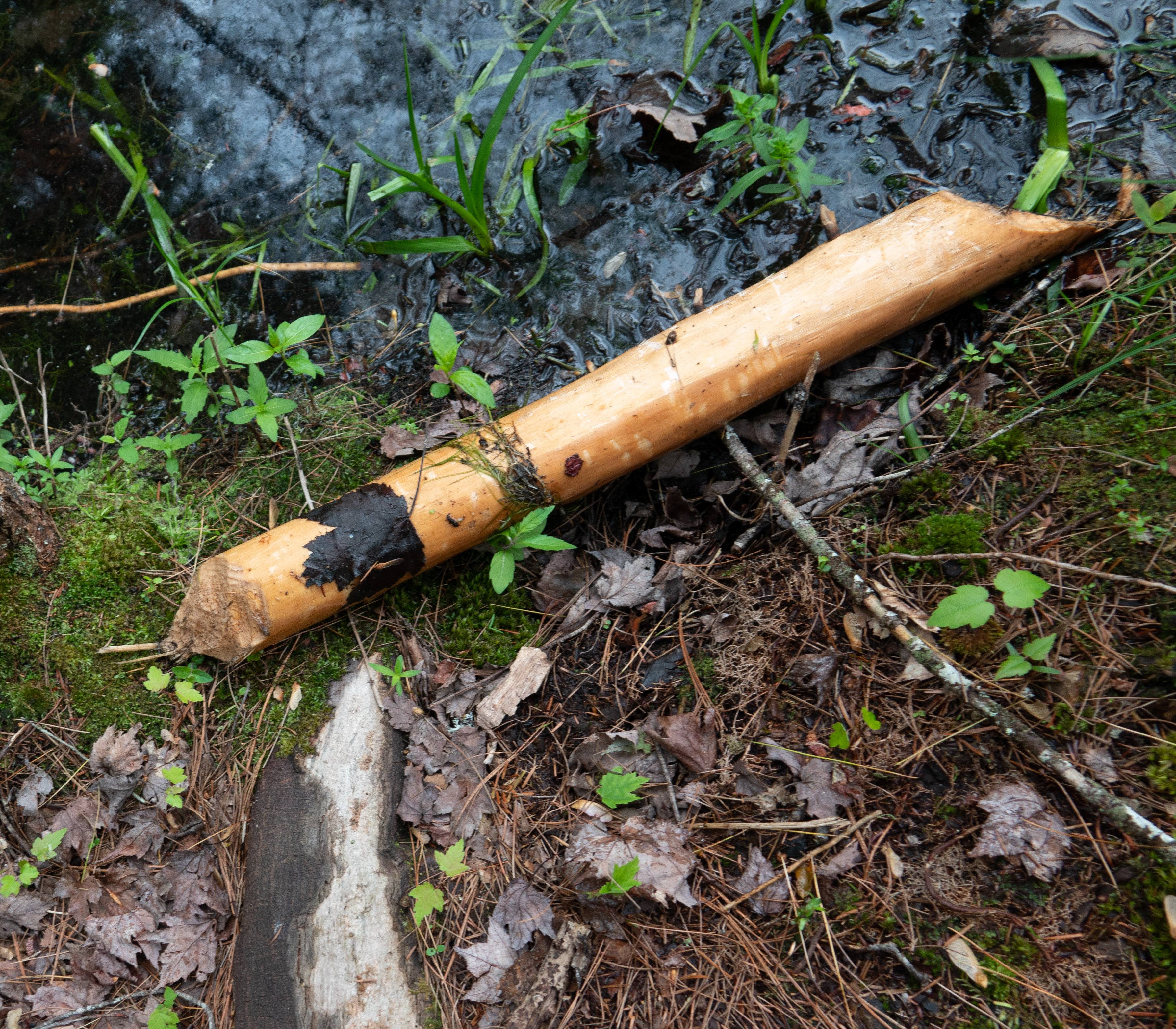
You can find the by-products all round the pond: sticks cut into a convenient length for moving and eating later (think packed lunch), and then denuded of their bark.

beaver on granny's pond

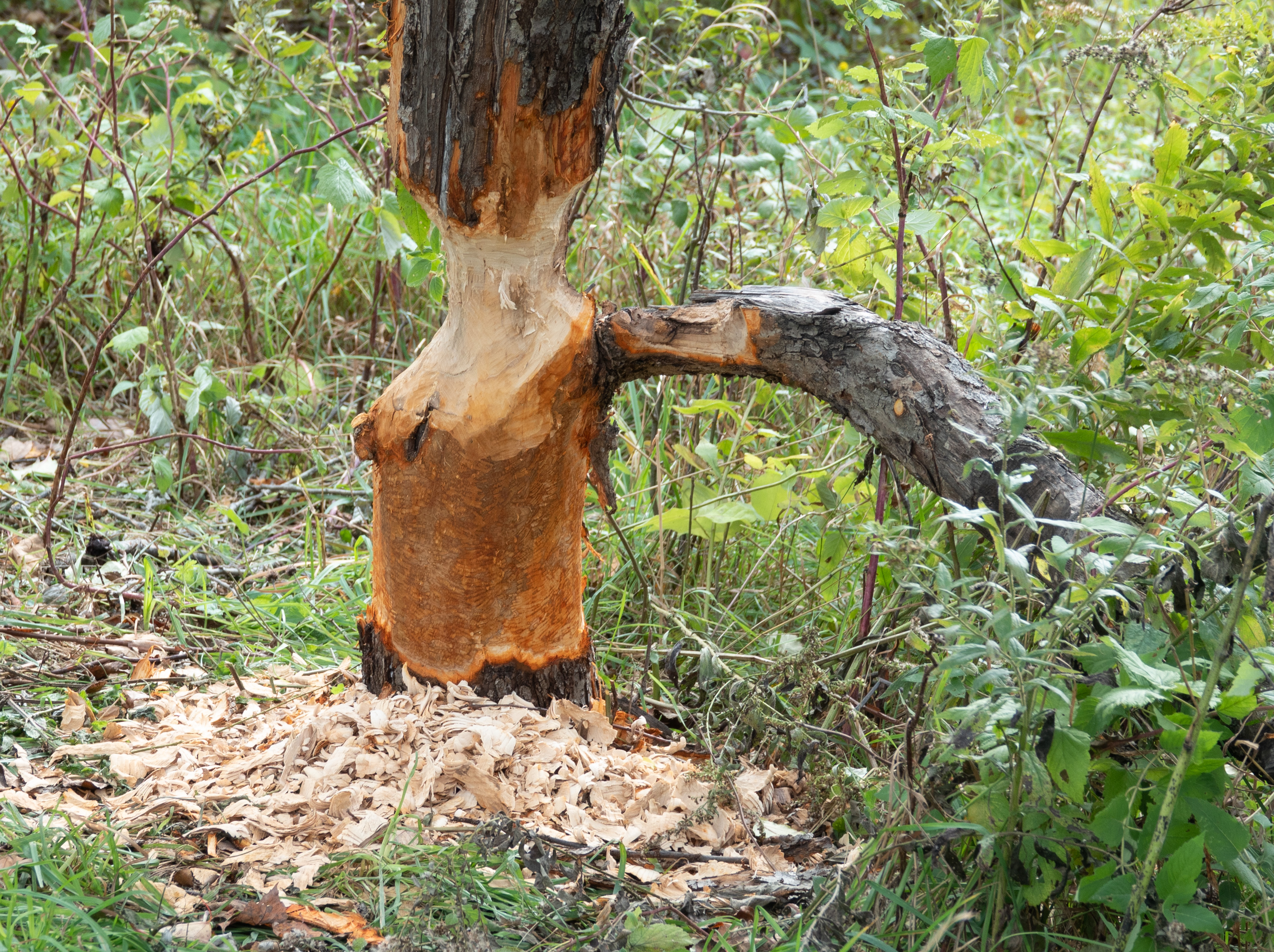
Sometimes they just eat it on the tree, and leave the tree standing:

beaver

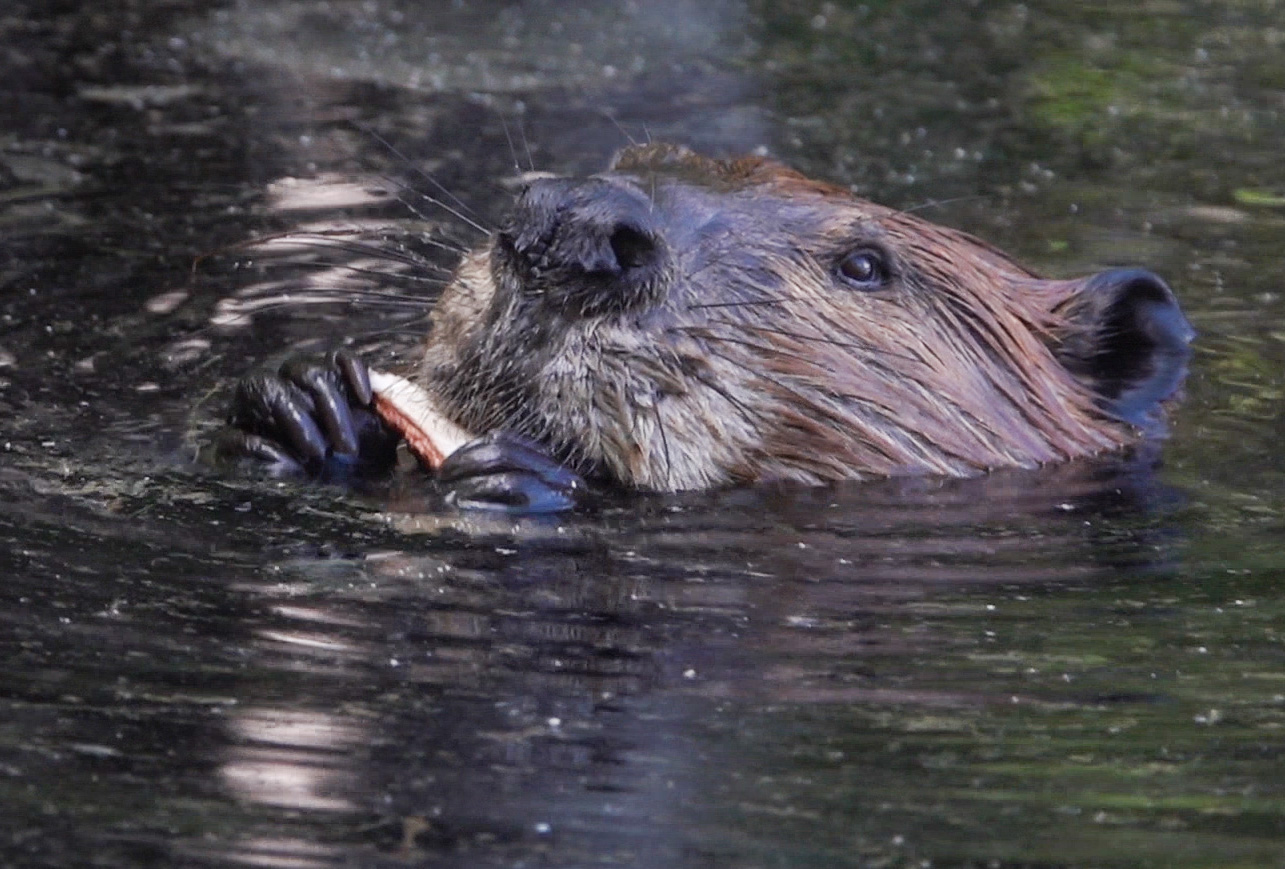
In a few days he was back, in the same place, this time with a large white slice of what I think was the root of a cattail (called bulrush in England). These roots (or rather rhizomes) are nutritious, with roughly the protein content of maize or rice.

Beaver eating cattail root

You can see how dexterous they are, though of course they do not have opposable thumbs:

Beaver eating cattail root

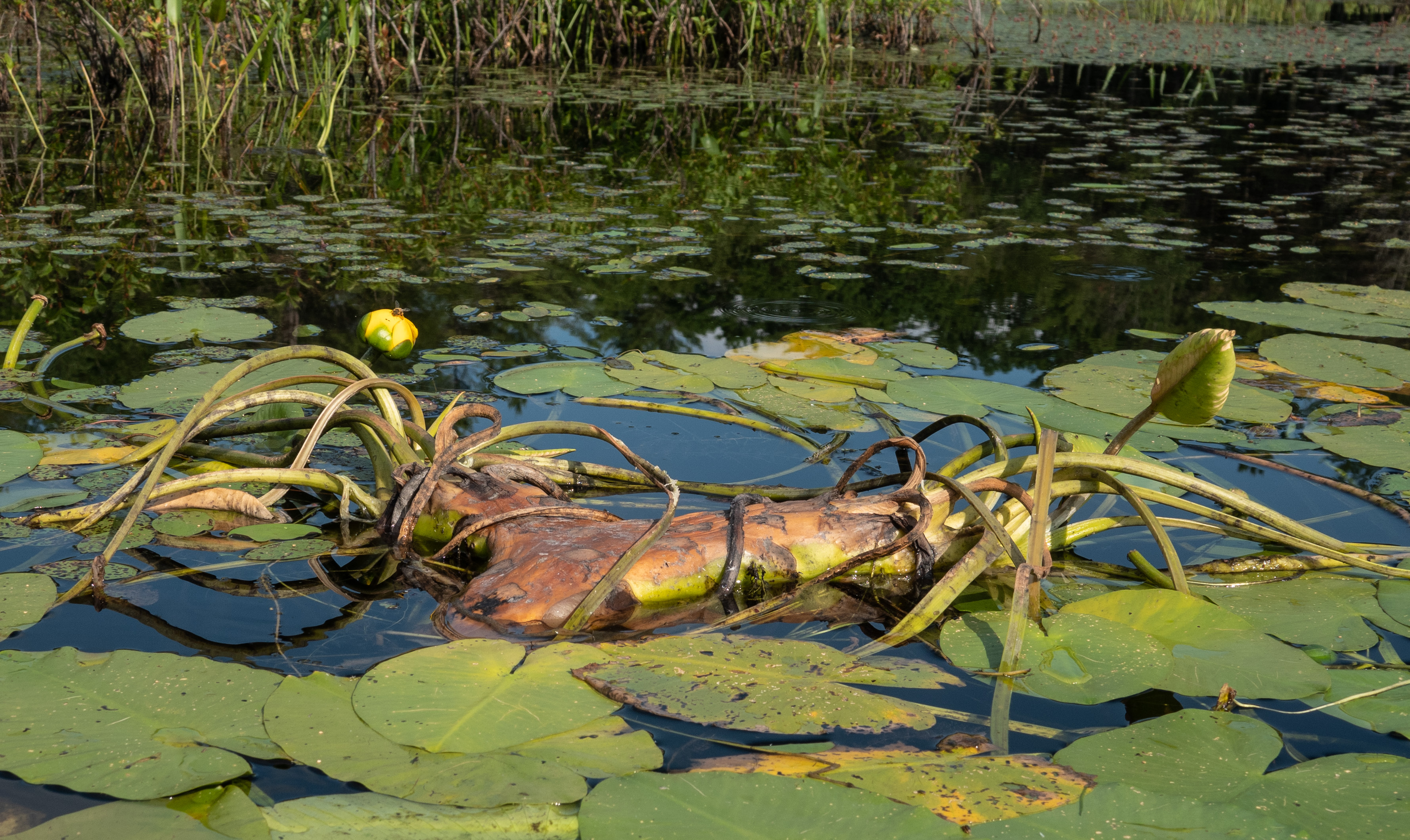
The roots of aquatic plants are one of their favorite foods at this time of year, and you can see them floating around the edge of the pond, the result of their depredations.

Spatterdock root eatern by beavers

In this video you can hear him chewing, above the background noise of the stream cascading over the dam:

I have not seen him for many weeks, but I am hoping he returns in the fall, getting his lodge and his food supplies ready for winter. Watch this space.


The gardener’s nemesis

Not every post can be about elegant swallows. Sometimes what catches my attention is less obviously appealing.

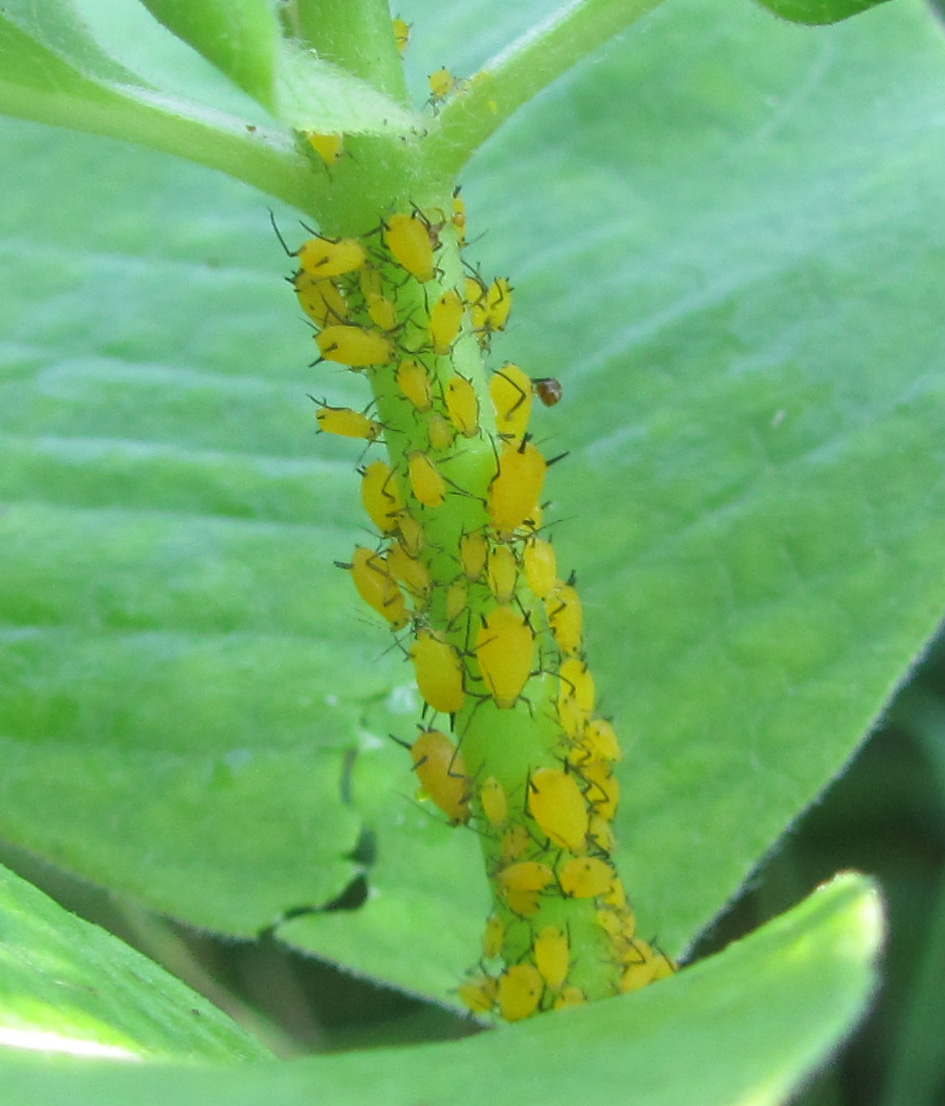
My father hated greenflies, because they attacked his beloved roses. Greenflies are a type of aphid, and here in Maine we have a number of different species, in a rainbow of colors, including the bright yellow Oleander Aphid, Aphis nerii, common on milkweed:

aphids

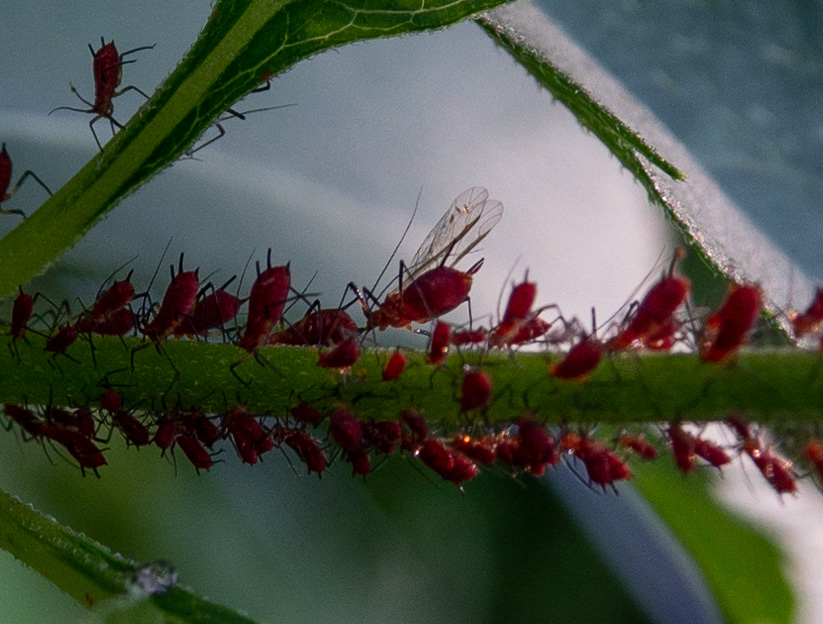
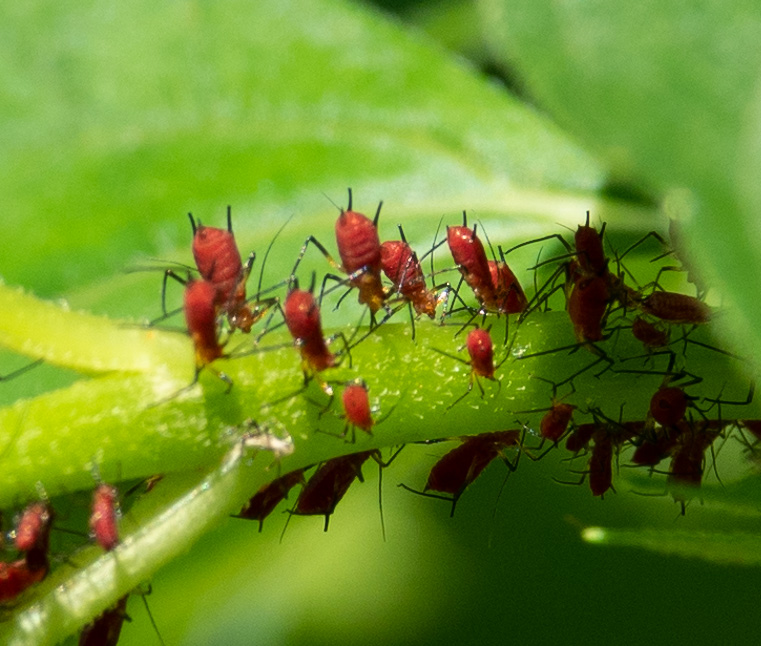
and these ruby red ones, probably Uroleucon nigrotuberculatum.

DSC00188

If you can suspend your distaste, they turn out to be rather interesting.  They reproduce partly by parthogenesis: the adult female produces live young, clones, without the need of a male. In the autumn, they also reproduce sexually: rather like modern humans, there is no one right way.

Although most aphids don’t have wings, as you can see in the photos above, if the neighborhood gets too crowded the female cleverly gives birth to some offspring with wings, and these then fly off to populate a new plant instead of adding to the throngs on the current one.  The biggest one below has wings:

DSC00170

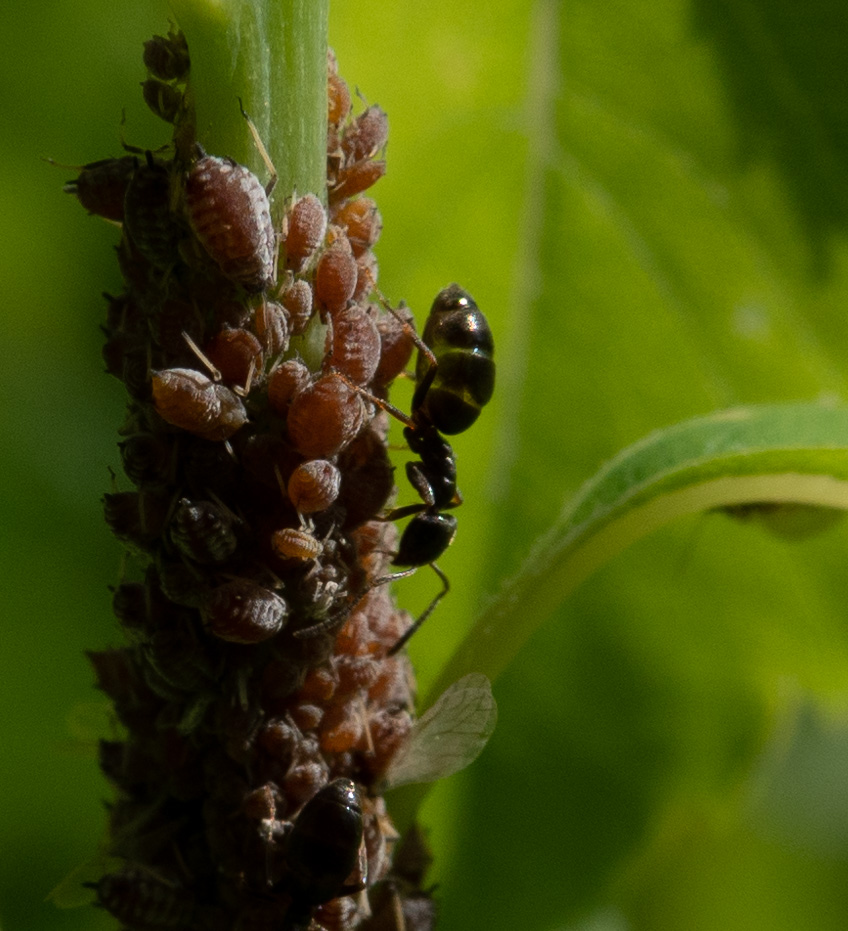
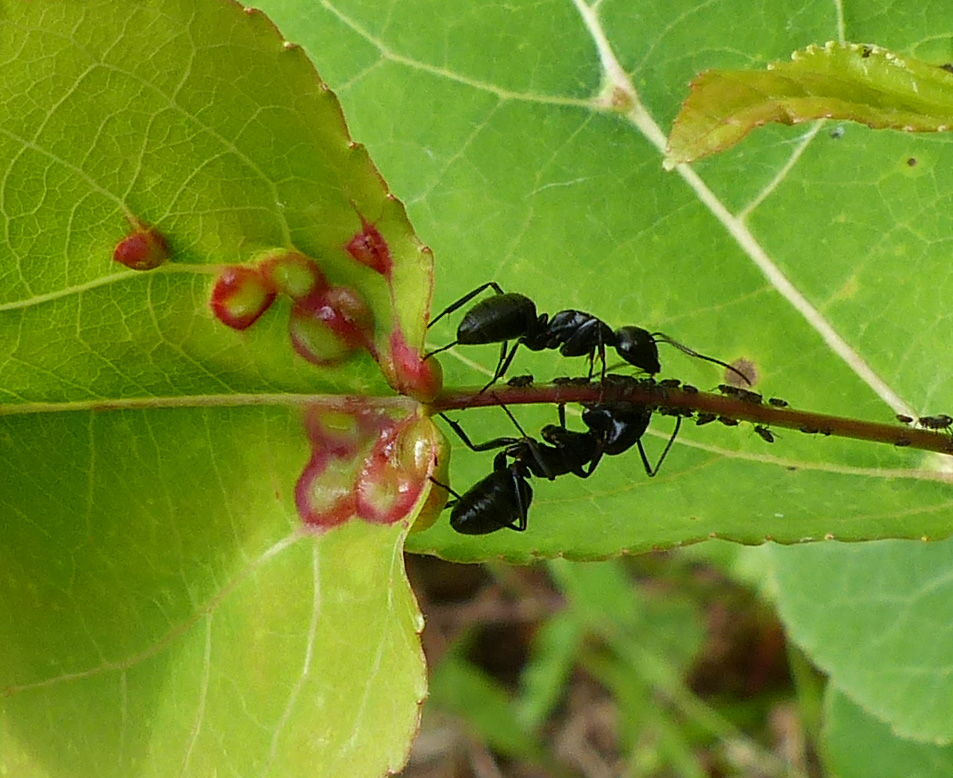
If you are a gardener, you are no fan of aphids, but if you are an ant, your attitude is entirely different! Some species of ants actually farm aphids for their honeydew:

Ants farming aphids

The aphid sucks sap from the plant, sometimes in huge quantities. Because it can’t digest it all, it excretes a sweet sugary liquid, called honeydew. The ants use their antennae to stroke the aphids, which encourages the secretion of the honeydew, which the ants then drink. The aphids below are tiny, but just visible on the leaf stalk, and the top ant is reaching out to stroke one:

aphids

The aphids benefit because the ants protect them from predators such as ladybugs, and also move them from wilting to healthy plants. In some species, the ants will store aphid eggs in their nests through the winter and then put them back on the plants in the spring. This partnership is an example of what biologists call mutualism, since both parties benefit from the arrangement.

The spiky cornicles that project from the abdomen are used to exude pheromones for defense purposes; the honeydew is, rather off-puttingly, exuded from the rectum!

If you have read this far, congratulations: you too are obsessed by natural minutiae.